Table of Contents
- 8 Commercial Litigation Mistakes Companies Make in the First 30 Days
- Why The First 30 Days Matter So Much
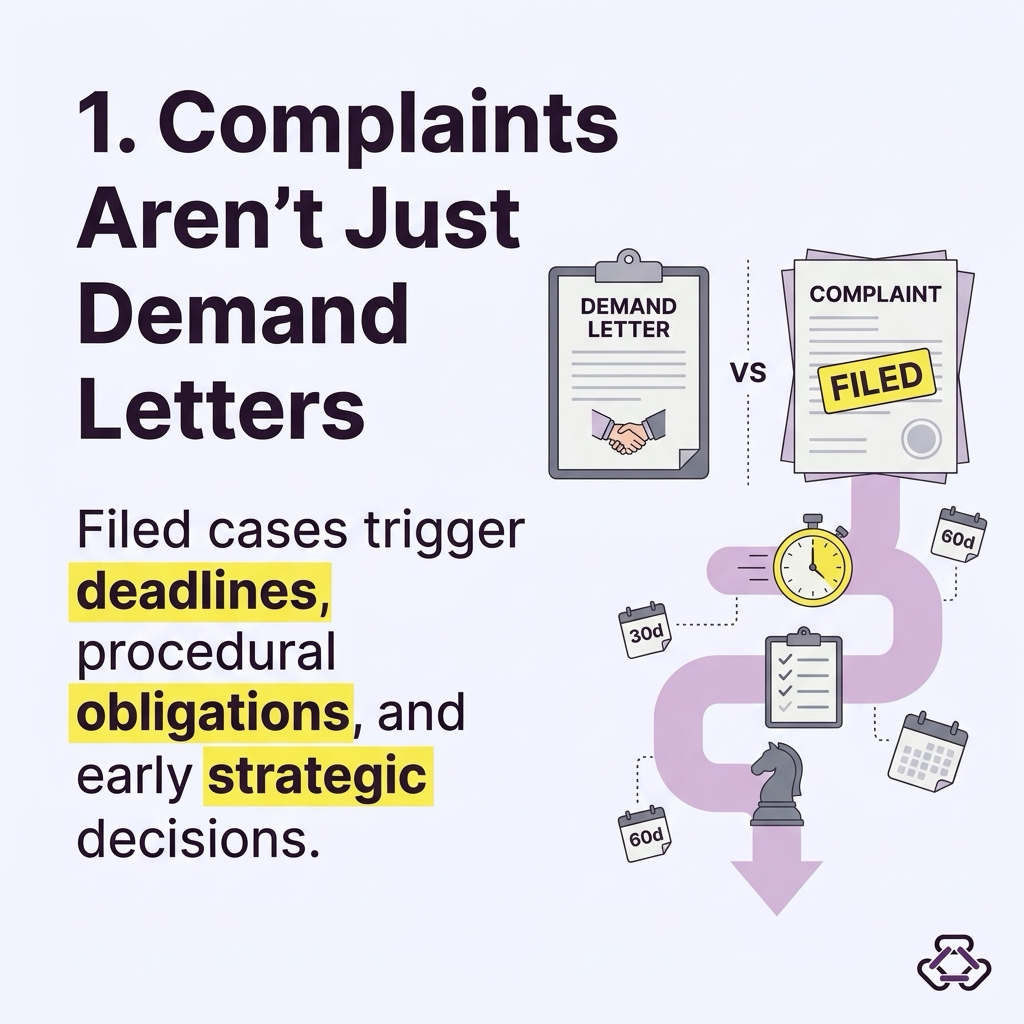
- 1. Treating The Complaint Like A Negotiation Letter
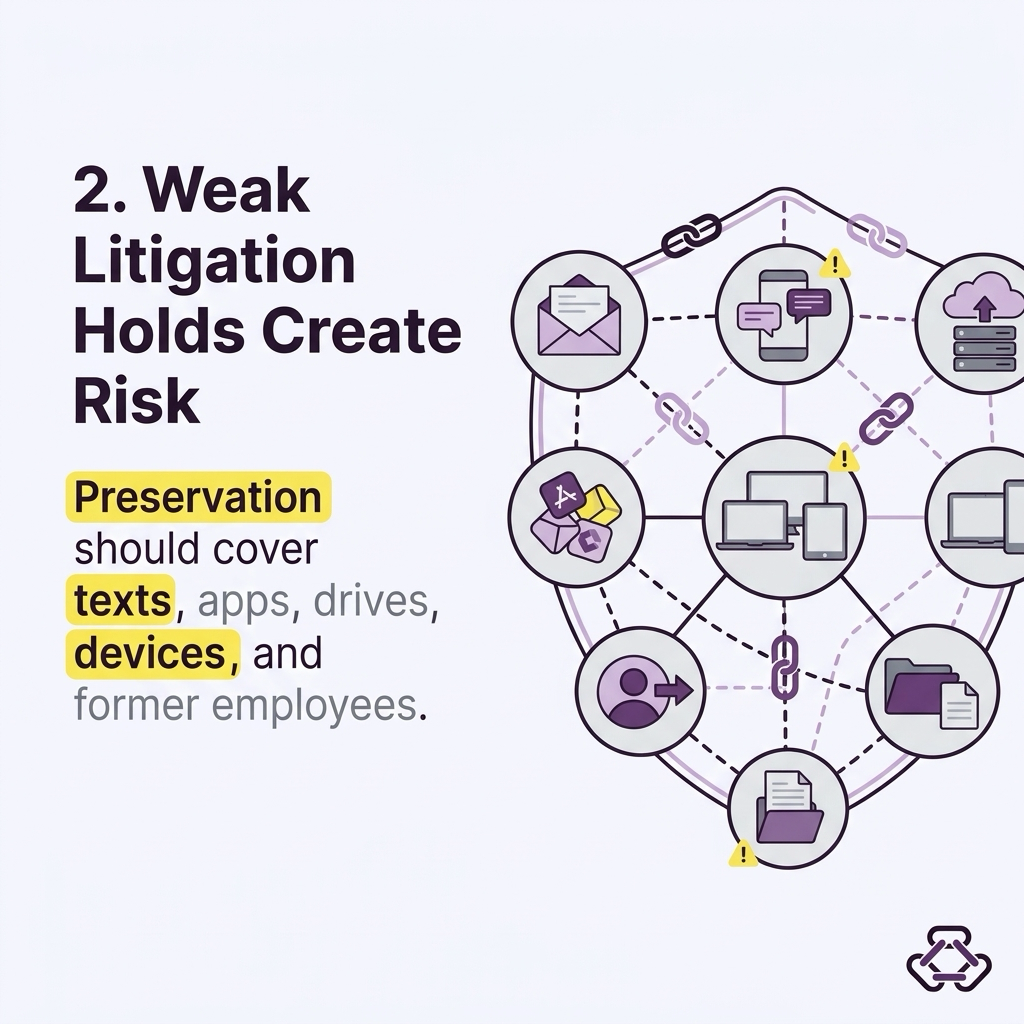
- 2. Failing To Issue A Real Litigation Hold
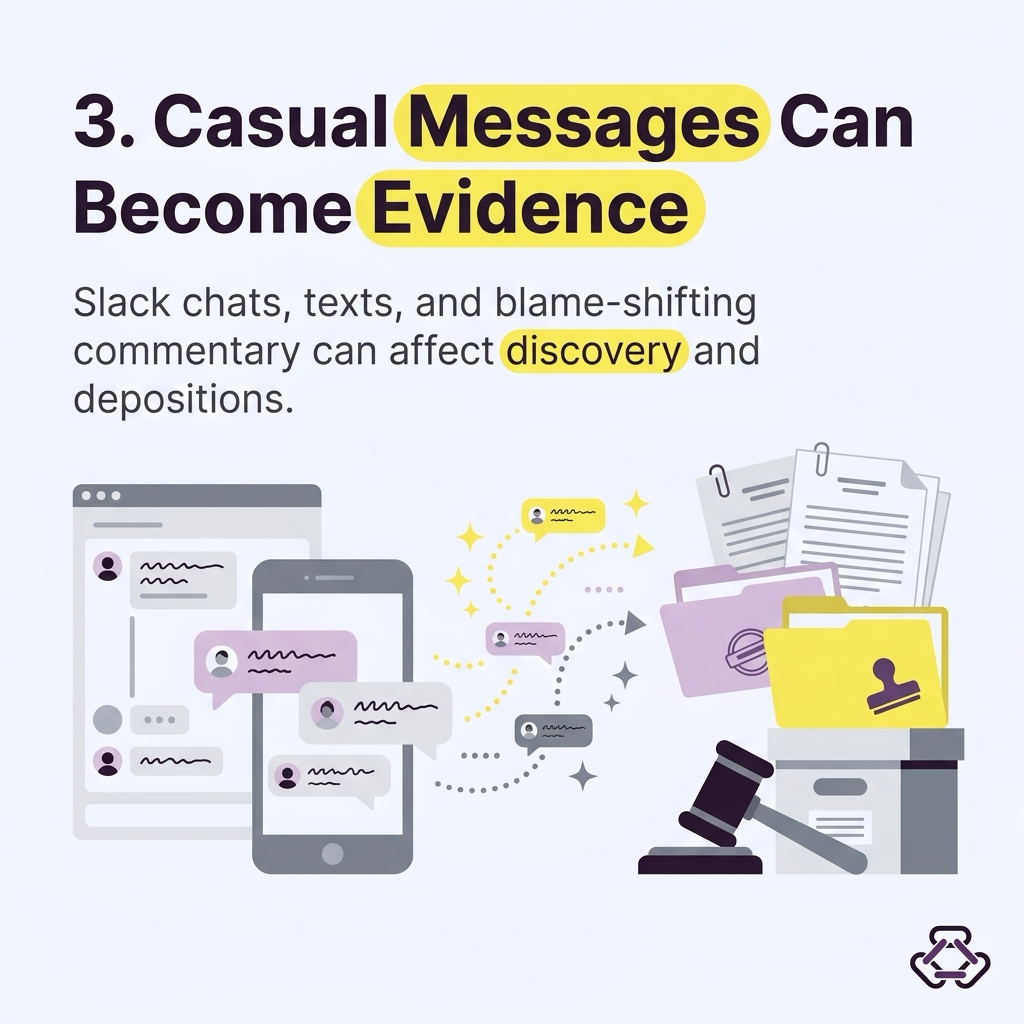
- 3. Letting Employees Keep Talking Casually About The Dispute
- 4. Ignoring Insurance, Indemnity, And Contractual Defense Rights
- 5. Picking Litigation Counsel Without Looking At Case Similarity
- 6. Taking An Overly Aggressive Public Position Too Early
- 7. Waiting Too Long To Build The Facts Internally
- 8. Underestimating How Fast Discovery Problems Become Leverage Problems
- What Companies Often Do Instead
- A Final Tip: The First 30 Days Are Often About Positioning, Not Posturing

Type
Great Grandchild
Status
Approved
Title (YouTube)
Images Failed (Social)
Images Failed (Social)
Do not index
Parent item
Publish Date (TikTok)
Jan 9, 2027 13:15
Videos Post IDs (Social)
Hashtags (Social)
#LegalAdvice #LegalHelp #BusinessLitigation #CommercialLitigation
Caption
Caption X
Cover

OG Image

Alt Image Text
Flat vector illustration of commercial litigation mistakes in the first 30 days, showing a business team, legal documents, digital evidence, deadlines, and early case risk.
Images

Videos
Publish Date (Social)
Dec 18, 2026 13:00
Scheduled (Social)
Scheduled (Social)
Images Posted (Social)
Images Posted (Social)
Videos Posted (Social)
Videos Posted (Social)
Videos Failed (Social)
Videos Failed (Social)
Featured
Created time
Apr 3, 2026 10:11 PM
Sub-item
Authors
CTA Practice Area (Social)
Business Litigation
TikTok Failed (Social)
TikTok Failed (Social)
Videos Post Links (Social)
YT Auto Captions Removed
TikTok Post Links (Social)
Images Post IDs (Social)
YT Post ID
Video Pending Manual (Social)
TikTok Posted (Social)
TikTok Posted (Social)
TikTok Post IDs (Social)
Video Cover (Social)
Images Post Links (Social)
First Comment (Social)
YT Embedded
Images Delete (Social)
Videos Delete (Social)
Carousel Video URL (Social)
8 Commercial Litigation Mistakes Companies Make in the First 30 Days
The first 30 days after a business dispute turns into litigation often shape everything that follows. Early emails, rushed decisions, incomplete document preservation, and off-the-cuff executive statements can all become part of the record. And in commercial cases, the record is often the case.
In general terms, this early window matters because commercial litigation moves fast, evidence is usually digital, and courts increasingly expect parties to preserve and exchange information in a disciplined way. Federal courts require early disclosures under Rule 26, and Rule 37 can come into play when electronically stored information is not preserved reasonably once litigation is anticipated or underway. Rule 26 and Rule 37 are not abstract procedural rules for large public companies only; they often affect closely held businesses, startups, franchise operators, contractors, and multi-entity business groups too.
If your company is trying to understand the bigger picture, it may help to start with a broader overview of how business-court disputes usually unfold from pleading through discovery and trial risk. In this post, you’ll learn the eight mistakes companies often make in the first month of a commercial case, why those mistakes can become expensive later, and what an attorney may look at right away to protect the business.
Scroll to the bottom for every post in this series.
Why The First 30 Days Matter So Much
Commercial disputes are common and getting more attention from courts. According to the federal judiciary, U.S. district courts reported 290,896 civil filings in fiscal year 2024. At the state-court level, the National Center for State Courts reported that civil filings grew in 2024, driven in part by an 11% increase in contract cases. Federal court statistics and state-court caseload data both suggest that contract and business disputes remain a major part of the litigation landscape.
That matters because many companies still treat the first month like a public-relations problem or an operations problem, when it is often both of those plus an evidence problem. By the time leadership realizes that deleted texts, overwritten Slack messages, or inconsistent internal talking points may matter, the other side may already be building a spoliation argument or using those inconsistencies to pressure a settlement.
1. Treating The Complaint Like A Negotiation Letter
One of the most common mistakes is assuming a filed complaint is just another demand letter with a caption.
Sometimes parties do settle quickly after a complaint is filed. But once litigation formally begins, deadlines are real, procedural obligations begin to stack up, and internal communications often become more sensitive. A company that delays legal analysis because it believes “this will probably blow over” may lose valuable time to evaluate jurisdiction, venue, arbitration provisions, indemnity rights, insurance coverage, or emergency remedies.
This is especially risky in courts known for active case management. For example, the Delaware Court of Chancery’s updated guidelines emphasize practical case-management expectations and early organization. Delaware’s October 2024 guidelines reflect how seriously sophisticated business courts take early motion practice, scheduling, and discovery planning.
Here’s what this often means in practice: the first month is not just about drafting an answer. It may also involve analyzing whether the case belongs in another court, whether counterclaims exist, whether a temporary restraining order is possible, whether an arbitration clause changes the forum, and whether related entities or individuals face exposure.
An attorney with demonstrable experience in highly-similar matters may be able to spot these issues earlier than a generalist brought in after deadlines start closing.
2. Failing To Issue A Real Litigation Hold
This is one of the biggest early mistakes, and it shows up in companies of every size.
Once litigation is filed—or even reasonably anticipated—courts may expect reasonable preservation steps. Under Rule 37(e), a court may address loss of electronically stored information if it “should have been preserved” and cannot be restored or replaced through additional discovery. The rule text and notes are worth taking seriously because sanctions disputes often start with surprisingly ordinary business practices: auto-delete settings, employee phone upgrades, rolling overwrites, and departing employees losing access.
A litigation hold is not just an email saying “don’t delete anything.” In many commercial cases, relevant information may live across email, text messages, shared drives, cloud platforms, contract management systems, accounting software, project-management tools, mobile devices, and personal devices used for business communications. The Sedona Conference’s recent commentary on mobile-device data highlights how mobile sources now present major preservation and collection issues, especially when businesses rely on texts and app-based messaging for day-to-day decisions. Sedona’s 2025 commentary discusses preservation techniques, legal hold notices, and the complications surrounding device-based evidence.
A weak hold often looks like this:
- it goes only to executives, not actual custodians
- it mentions email but not texts or messaging apps
- it ignores former employees
- it does not suspend auto-delete rules
- it is never updated as issues evolve
- nobody confirms receipt or compliance
Some companies also confuse “tell IT not to wipe laptops” with a full preservation plan. Those are not the same thing.
3. Letting Employees Keep Talking Casually About The Dispute
The first 30 days often produce the worst internal communications in the case.
Leaders are stressed. Sales teams are nervous. Finance wants numbers. Managers want explanations. People start speculating on Slack, forwarding outside articles, guessing motives, assigning blame, and trying to “clean up the story.” Those messages may later be discoverable, and even when they are not directly admissible, they can shape deposition strategy and settlement leverage.
Commercial cases frequently turn on intent, knowledge, notice, reliance, damages, and internal decision-making. Casual internal commentary can complicate each of those themes. Statements like “we knew this was coming,” “delete old versions,” “let’s get our story straight,” or “they were right about the change order” can become extraordinarily expensive.
This is one reason many businesses look for counsel quickly, not only for filing strategy but also for internal communication discipline. Legal counsel may help create a more controlled reporting structure, identify who speaks for the company, and separate business operations from legal fact development.
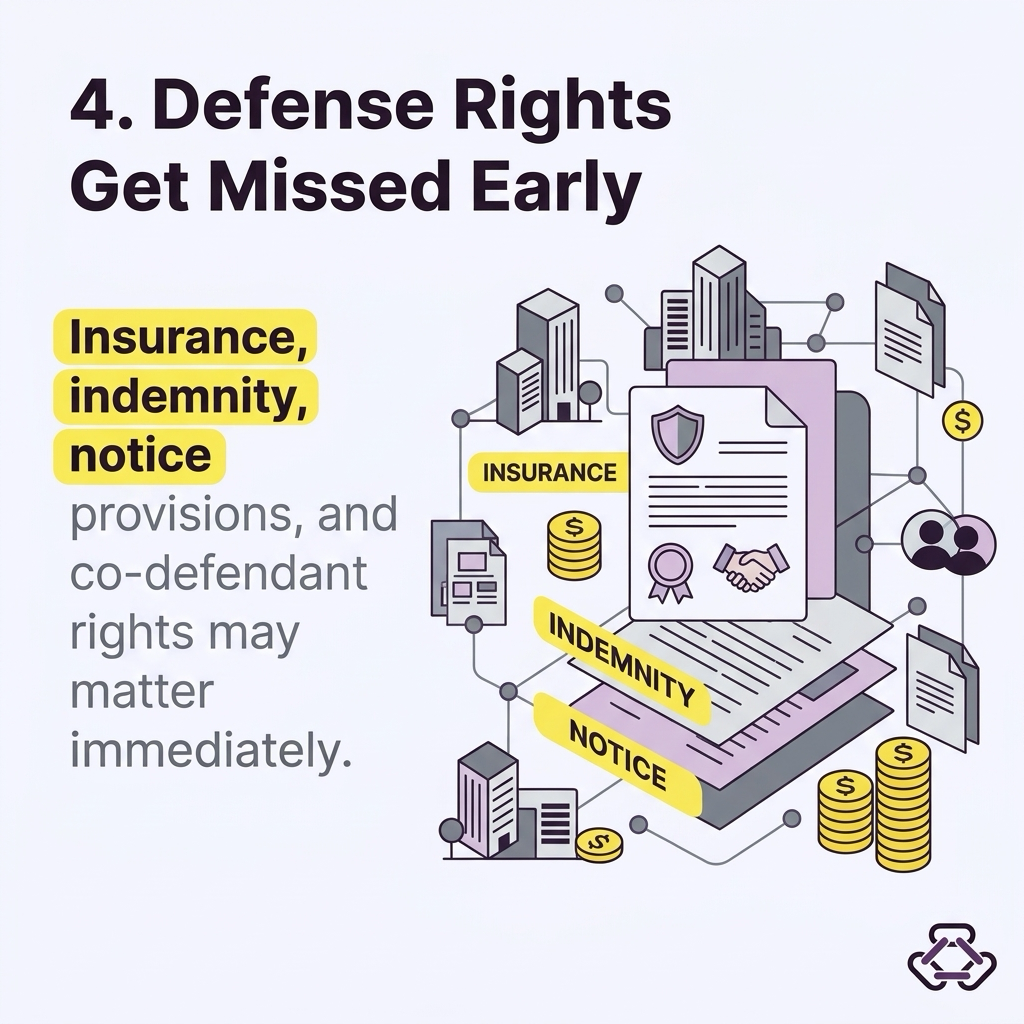
4. Ignoring Insurance, Indemnity, And Contractual Defense Rights
A surprising number of companies spend the first month focused entirely on the allegations while missing the money structure behind the defense.
Depending on the case, there may be:
- directors and officers coverage
- errors and omissions coverage
- cyber or media coverage
- employment-related coverage
- vendor or subcontractor indemnity obligations
- additional insured rights
- contractual defense or notice provisions
- rights against co-defendants or predecessors
Federal Rule 26 specifically contemplates disclosure of certain insurance agreements. Rule 26 reflects how relevant insurance can be to the case from an early stage. Yet businesses often wait too long to give notice to carriers, gather policy materials, or review service contracts for defense and indemnity language.
That delay can create a second problem: inconsistent positions. A company may tell the court one thing, the carrier another, and a vendor something else entirely. Untangling that later is harder than coordinating it early.
In general terms, when the claim touches a contract chain, a transaction structure, or multiple entities, the first month is often when attorneys map who may share defense costs, who may owe indemnity, and who may become adverse later.
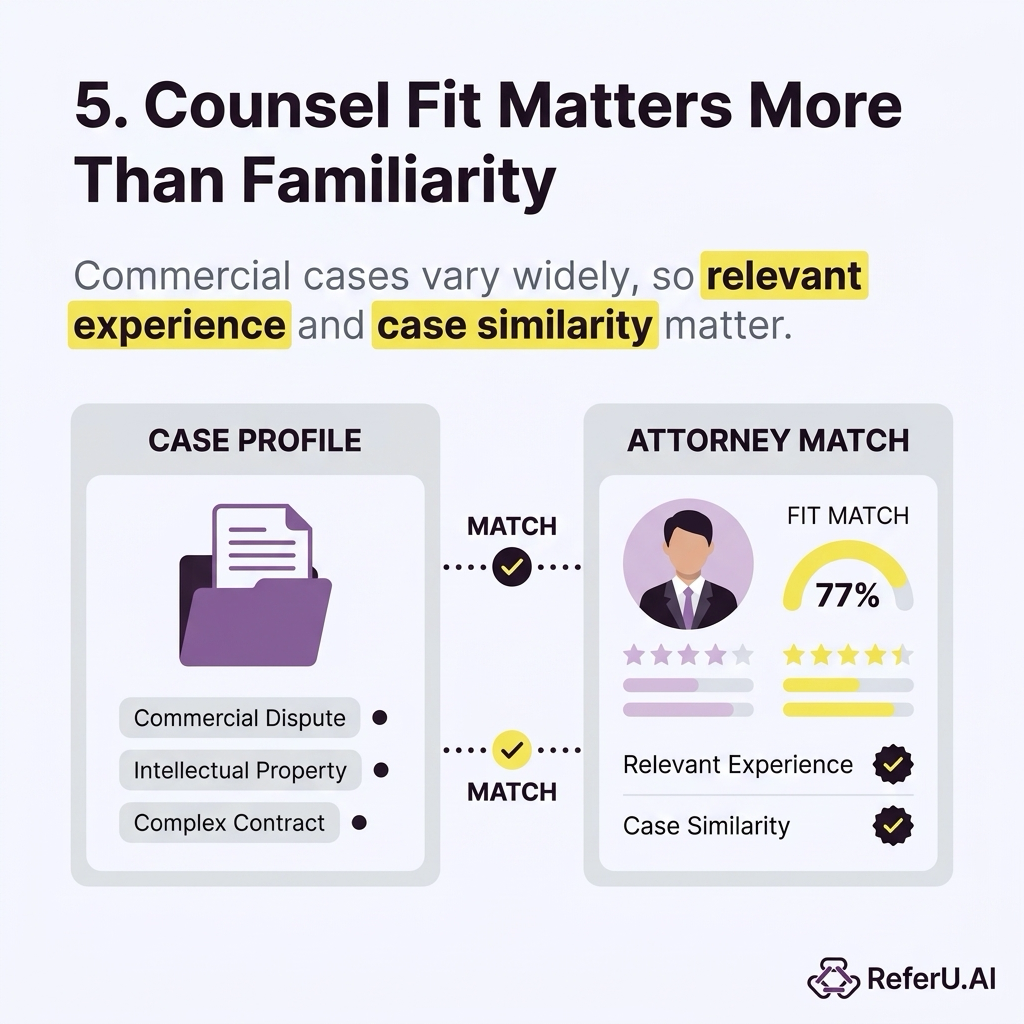
5. Picking Litigation Counsel Without Looking At Case Similarity
Many businesses hire counsel under pressure, and that is understandable. The mistake is not moving quickly. The mistake is choosing based only on brand familiarity, personal relationships, or general corporate work without asking whether the lawyer has documented experience in highly-similar matters.
Commercial litigation is broad. A shareholder books-and-records dispute is not the same as a supply-chain contract case. An earnout fight is not the same as a trade-secret injunction. A franchisor-franchisee dispute is not the same as a post-acquisition indemnification claim. The early strategic choices can be very different: motion to dismiss versus expedited discovery, forensic collection versus accounting reconstruction, arbitration stay versus emergency injunctive relief.
That is why fit matters. Some businesses benefit from learning more about what companies often try to do before the complaint is ever filed, but once litigation is underway, the question often becomes whether counsel has relevant experience with the claims, the forum, the judge, the discovery profile, and the business context. Likewise, if preservation is already becoming a concern, it may help to think in more detail about protecting business records, messages, and internal files once a dispute turns legal.
ReferU.AI is built around this problem. Instead of attorney advertising or subjective endorsements, ReferU.AI focuses on matching users with attorneys based on objective criteria, including case similarity, court records, and documented experience in similar disputes.
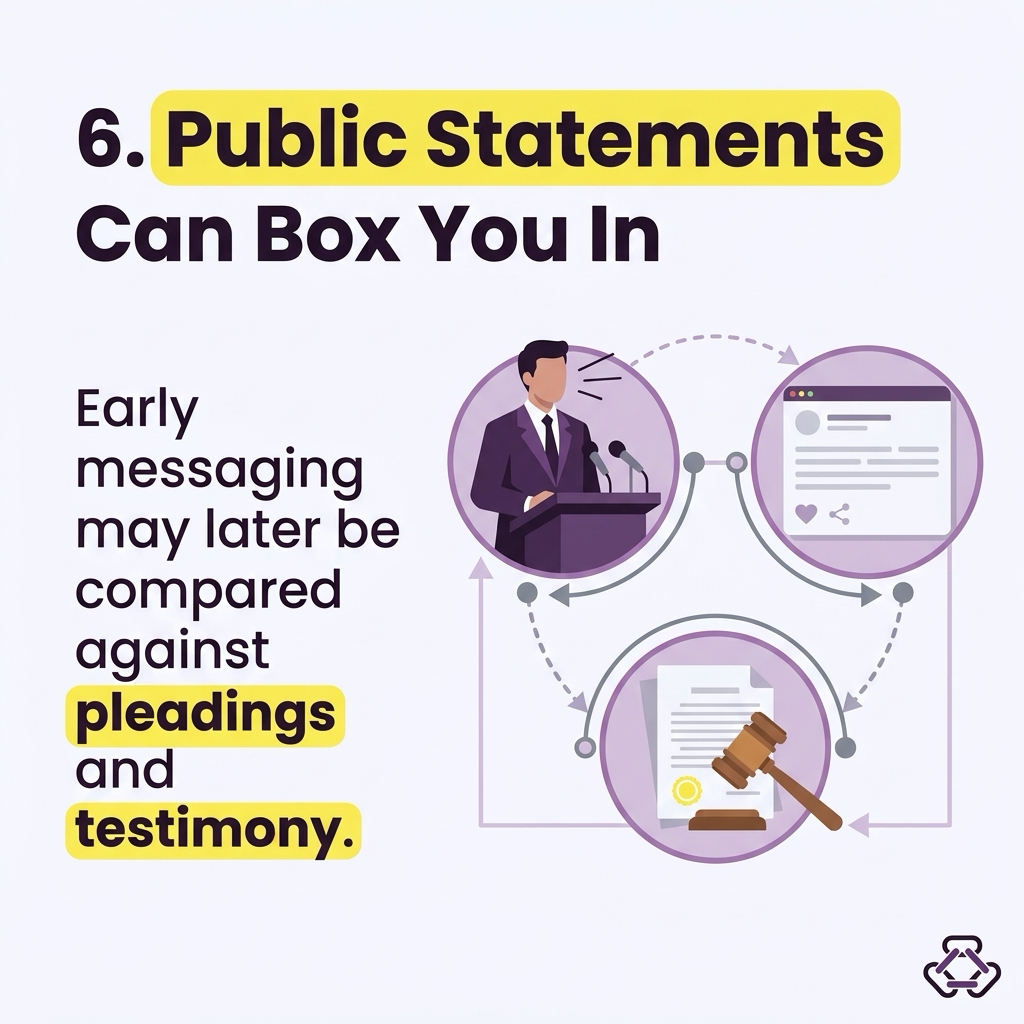
6. Taking An Overly Aggressive Public Position Too Early
Companies often feel pressure to “say something” in the first few days. Investors ask questions. Employees want reassurance. Customers hear rumors. Competitors may exploit uncertainty.
The legal risk comes when a public statement locks the business into a version of the facts before counsel has completed an initial investigation. Press releases, LinkedIn posts, customer emails, and executive statements can later be compared against pleadings, discovery responses, and deposition testimony.
Even accurate statements can create avoidable friction if they:
- overstate certainty
- minimize known facts
- accuse the other side of fraud or bad faith without support
- imply evidence has already been reviewed when it has not
- suggest the company has no exposure before damages are assessed
Some people in similar situations focus only on courtroom filings, but external communications can become exhibits too. In business cases involving reputational harm, noncompetes, trade secrets, partnerships, or investor disputes, public messaging often becomes part of the litigation strategy whether the company intended that or not.
An attorney may help a company balance operational messaging with litigation realities, especially where securities issues, confidentiality obligations, or customer-facing contracts are involved.
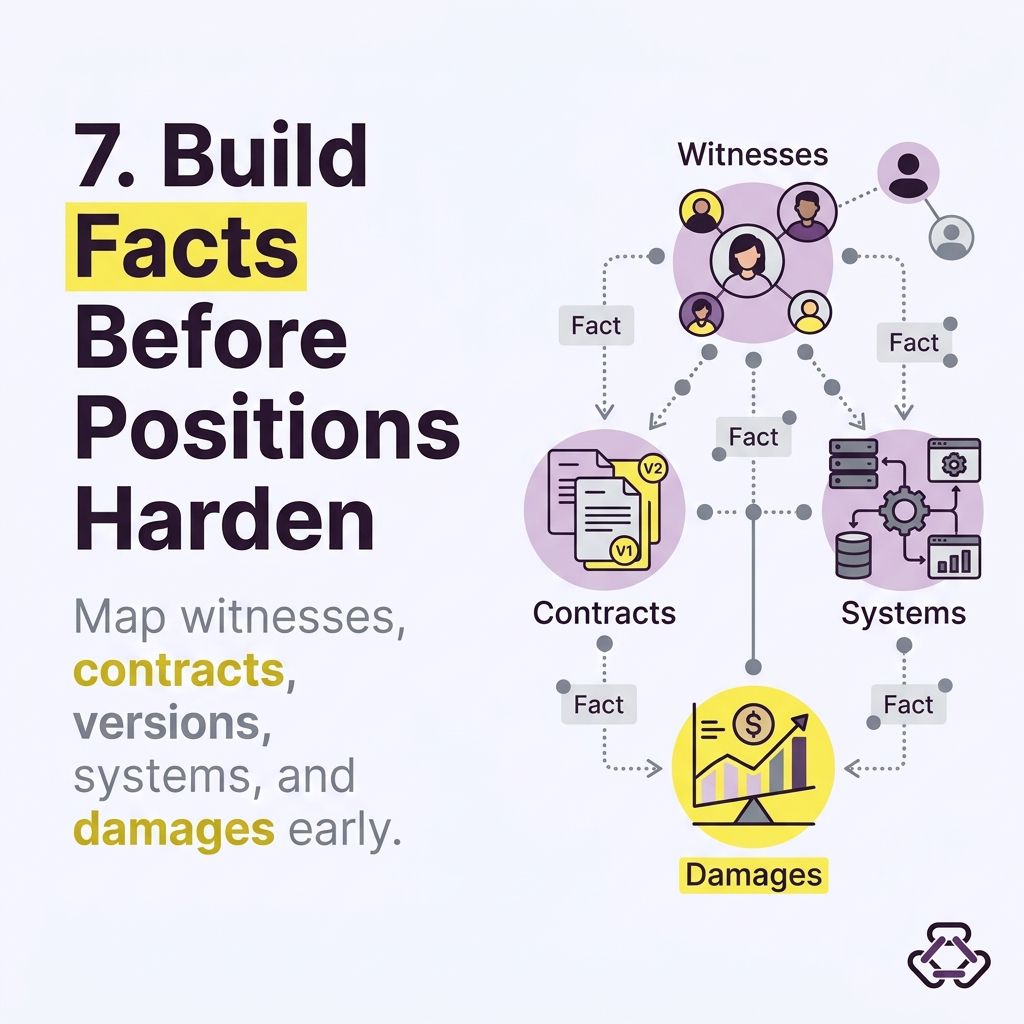
7. Waiting Too Long To Build The Facts Internally
Another common mistake is assuming facts will become clearer later through discovery. Sometimes they do. But in the first 30 days, the company often has the best opportunity to identify who knows what, what systems hold relevant information, what contract versions exist, and where the weak spots are.
That internal fact-build usually includes questions like:
- Who negotiated the deal?
- Which version of the contract controlled?
- Were there amendments by email or course of conduct?
- What happened before the relationship broke down?
- Which employees used text or encrypted messaging?
- Are there side letters, draft term sheets, or internal approvals?
- Did anyone raise concerns internally at the time?
- How are damages being measured?
- Are there related disputes with vendors, customers, or former employees?
This process is different from “gather every document in the company.” It is more targeted. The goal is often to understand the factual terrain early enough to make better decisions about pleadings, settlement posture, counterclaims, insurance notice, and discovery sequencing.
Courts increasingly expect proportional, informed discovery planning. The federal rules and committee materials around discovery continue to emphasize managing scope and disclosure in a structured way. The federal rules materials published by the U.S. Courts and recent amendments activity reflect that early planning remains central to modern civil litigation.
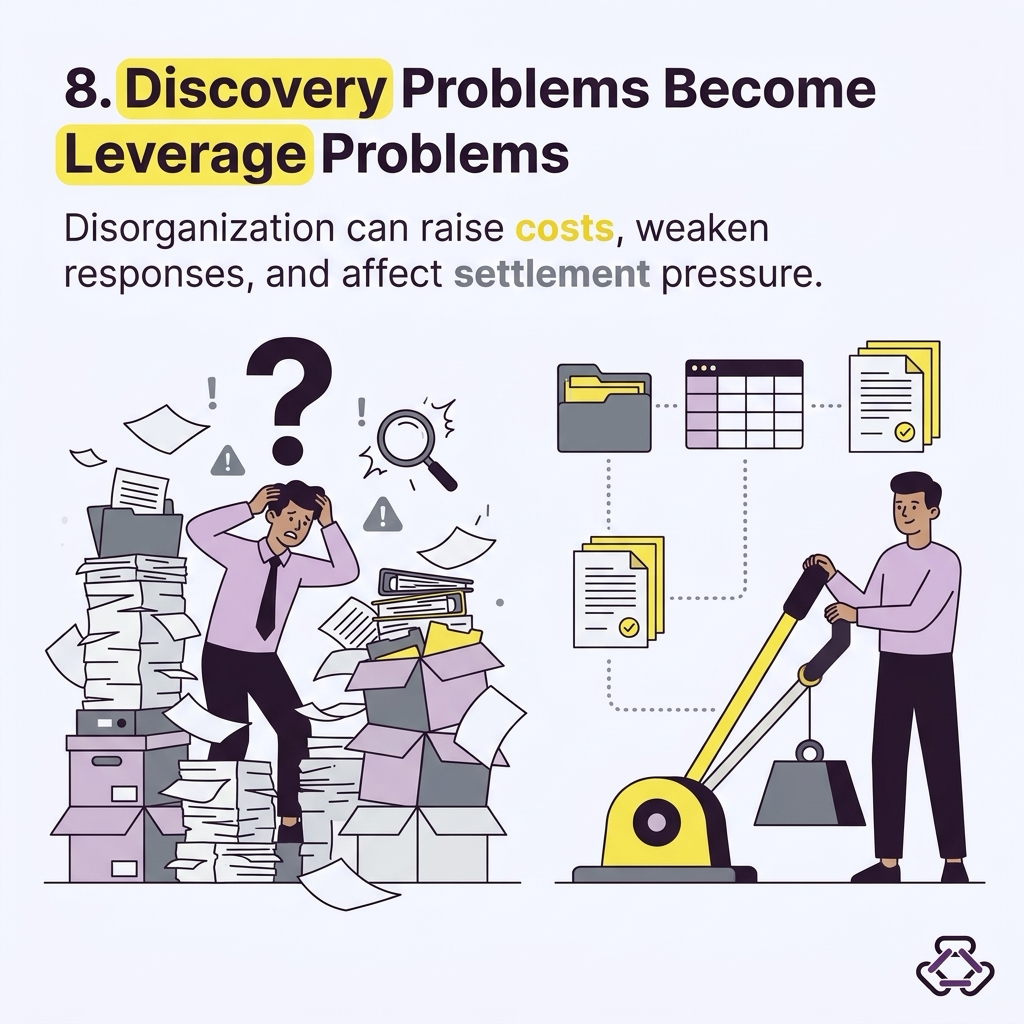
8. Underestimating How Fast Discovery Problems Become Leverage Problems
Many companies think discovery fights happen later. Technically, that is true. Strategically, the seeds are planted right away.
If the company enters the case without a preservation map, clear custodians, centralized documents, and coordinated legal messaging, the opposing side may quickly sense disorganization. That can influence everything from meet-and-confer dynamics to settlement demands to motion practice.
And courts do notice preservation failures. Business-court reporting from the ABA has recently highlighted decisions in which parties were faulted for failing to take reasonable steps to preserve electronically stored information, including failing to issue holds and allowing automatic deletion to continue. ABA coverage of business-court developments reflects how preservation missteps continue to matter in sophisticated commercial cases.
This is often where the first 30 days stop being “administrative” and start becoming outcome-shaping. A missed preservation step can raise costs. A vague factual narrative can weaken a response strategy. A poor counsel fit can lead to expensive resets. A sloppy public statement can become impeachment material. None of that guarantees the company loses the case, of course. But it can make the path more expensive and less controlled.
What Companies Often Do Instead
When businesses handle the first month well, the pattern usually looks more disciplined:
- litigation counsel is engaged early and with relevant experience
- the complaint is analyzed for forum, claims, deadlines, and business exposure
- a real litigation hold is issued and monitored
- key custodians and data sources are identified quickly
- internal communications are routed more carefully
- insurance and indemnity rights are reviewed early
- leadership aligns legal, operational, and public messaging
- factual themes are tested before the company takes hard public positions
For readers looking for a more practical roadmap, it may also help to review broader guidance on what business owners often want to understand before deciding how to respond to a lawsuit. The more organized the first month is, the more options the company may preserve later.
A Final Tip: The First 30 Days Are Often About Positioning, Not Posturing
Commercial litigation rewards preparation more than bravado.
A company does not gain much from sounding confident if it has not preserved the evidence, identified the right witnesses, analyzed the contracts, or matched with counsel who has demonstrable experience in similar cases. In general terms, the strongest early posture is often a quiet, organized one: preserve first, assess fast, communicate carefully, and build facts before taking irreversible positions.
If your business is facing a lawsuit, a demand that appears headed toward litigation, or a fast-moving dispute where the first month may affect the rest of the case, ReferU.AI can help you find an attorney based on documented experience, case similarity, and objective evidence from court records.
Visit ReferU.AI to get matched with an attorney who has demonstrable experience in cases like yours — for free.
