Table of Contents
- Declaratory Judgment Actions: A Beginner’s Guide to Clarifying Business Rights in Court
- What Is A Declaratory Judgment Action?
- Why Would A Business File One Instead Of Waiting?
- What Kinds Of Business Disputes Often Lead To Declaratory Relief?
- Contract Interpretation Disputes
- Corporate Governance And Ownership Disputes
- Insurance Coverage And Defense Obligations
- Intellectual Property And Threatened Enforcement
- Regulatory Or Statutory Applicability Questions
- What Does “Actual Controversy” Mean?
- Is A Declaratory Judgment The Same As An Injunction Or Damages Claim?
- Does Filing First Guarantee The Court Will Hear The Case?
- What Are The Main Benefits For A Business?
- It Can Clarify Rights Before A Costly Breach
- It Can Narrow The Issues
- It Can Improve Business Planning
- It Can Shift The Posture Of The Dispute
- What Are The Risks Or Downsides?
- The Court May Find The Dispute Too Speculative
- The Court May Decline To Exercise Jurisdiction
- Filing Can Escalate The Conflict
- It May Not Resolve Everything
- Forum And Timing Mistakes Can Be Expensive
- What Does A Business Usually Have To Show?
- How Do State And Federal Declaratory Actions Differ?
- What Evidence And Documents Tend To Matter Most?
- What Happens After The Court Issues A Declaratory Judgment?
- When Does It Make Sense To Talk With A Business Litigation Attorney?
- A Short Summary For Beginners

Type
Great Grandchild
Status
Approved
Title (YouTube)
Images Failed (Social)
Images Failed (Social)
Do not index
Parent item
Publish Date (TikTok)
Jan 2, 2027 08:45
Videos Post IDs (Social)
Hashtags (Social)
#LegalAdvice #LegalHelp #BusinessLitigation #DeclaratoryJudgment
Caption
Caption X
Cover

OG Image

Alt Image Text
Flat vector illustration of declaratory judgment actions clarifying business rights in court, with business professionals, contracts, and a courthouse symbol resolving legal uncertainty.
Images

Videos
Publish Date (Social)
Dec 14, 2026 09:00
Scheduled (Social)
Scheduled (Social)
Images Posted (Social)
Images Posted (Social)
Videos Posted (Social)
Videos Posted (Social)
Videos Failed (Social)
Videos Failed (Social)
Featured
Created time
Apr 3, 2026 10:14 PM
Sub-item
Authors
CTA Practice Area (Social)
Business Litigation
TikTok Failed (Social)
TikTok Failed (Social)
Videos Post Links (Social)
YT Auto Captions Removed
TikTok Post Links (Social)
Images Post IDs (Social)
YT Post ID
Video Pending Manual (Social)
TikTok Posted (Social)
TikTok Posted (Social)
TikTok Post IDs (Social)
Video Cover (Social)
Images Post Links (Social)
First Comment (Social)
YT Embedded
Images Delete (Social)
Videos Delete (Social)
Carousel Video URL (Social)
Declaratory Judgment Actions: A Beginner’s Guide to Clarifying Business Rights in Court
Business disputes do not always begin with a lawsuit for damages. In many cases, the first real problem is uncertainty: Who is right under the contract? What do the company’s governing documents actually allow? Does a threatened claim have legal merit? A declaratory judgment action is one way courts resolve that uncertainty before the dispute turns into something even more disruptive.
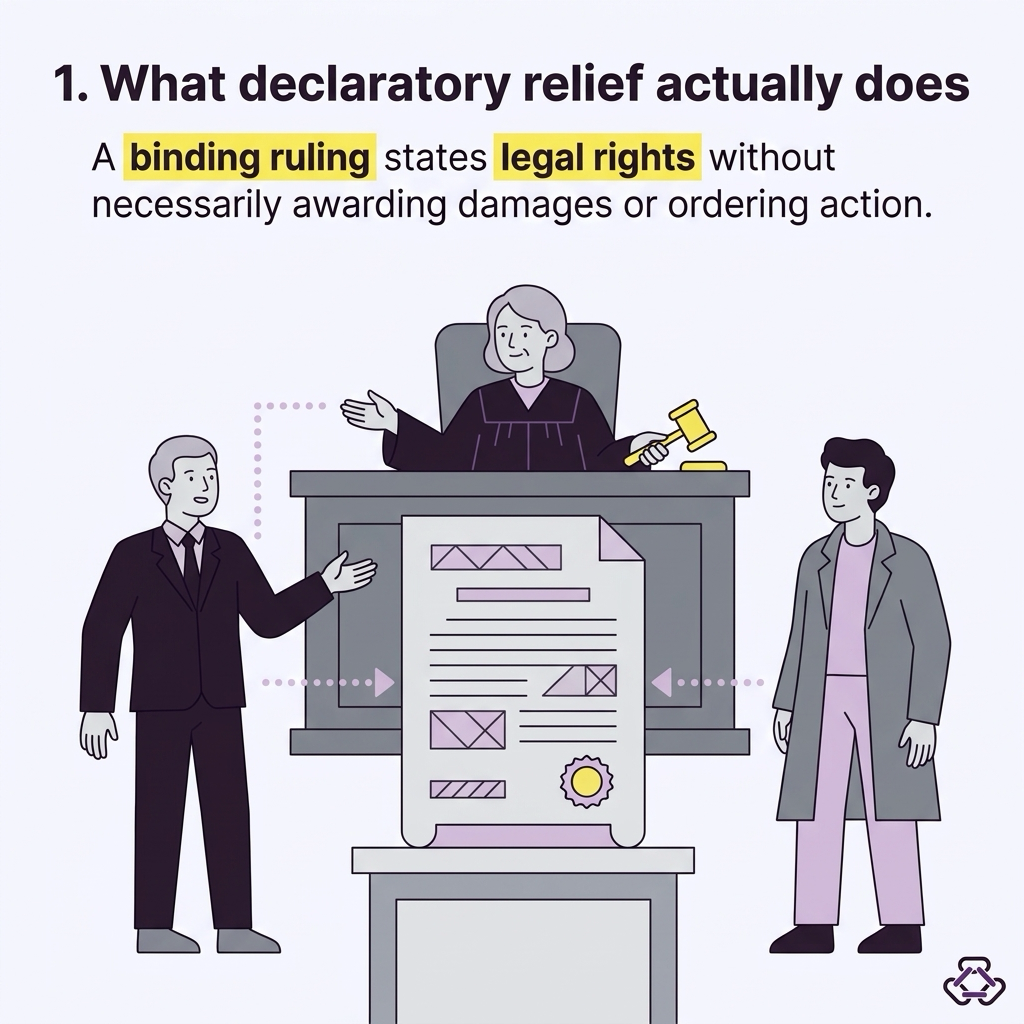
A declaratory judgment is a binding court ruling that states the legal rights and obligations of the parties, without necessarily awarding damages or ordering anyone to take immediate action. Federal courts can issue that kind of relief in “a case of actual controversy” under the Declaratory Judgment Act, 28 U.S.C. §§ 2201–2202, and the federal rules expressly recognize actions for declaratory relief in Rule 57. State courts often have similar statutes as well, such as New York’s CPLR 3001.
For business owners, founders, executives, boards, investors, and counterparties, declaratory relief can be a practical way to ask a court to clarify legal rights before a dispute spirals. If you want a broader overview of how this tool fits into preemptive business litigation, this guide pairs well with our article on getting a court to clear up contract rights before uncertainty gets more expensive.
In this post you’ll learn what a declaratory judgment action is, when businesses use it, what courts look for, what it can and cannot do, and why timing and forum selection often matter so much.
Scroll to the bottom for every post in this series.
What Is A Declaratory Judgment Action?
A declaratory judgment action is a lawsuit asking the court to declare the parties’ legal rights or obligations. The U.S. Courts glossary describes a declaratory judgment as a judge’s statement about someone’s rights. The Constitution Annotated further explains that, unlike an advisory opinion, a declaratory judgment is a binding adjudication that establishes the rights and legal relations of the parties.
In plain English, that often means a business is asking the court to answer a focused legal question such as:
- Does this contract mean what the other side says it means?
- Is a non-compete, indemnity clause, or pricing term enforceable?
- Does a shareholder agreement permit a particular transaction?
- Does an insurer owe defense or coverage?
- Is a threatened claim legally valid before anyone takes a costly next step?
A declaratory judgment case is often less about collecting money right away and more about getting clarity that changes leverage, risk, and decision-making.
Why Would A Business File One Instead Of Waiting?
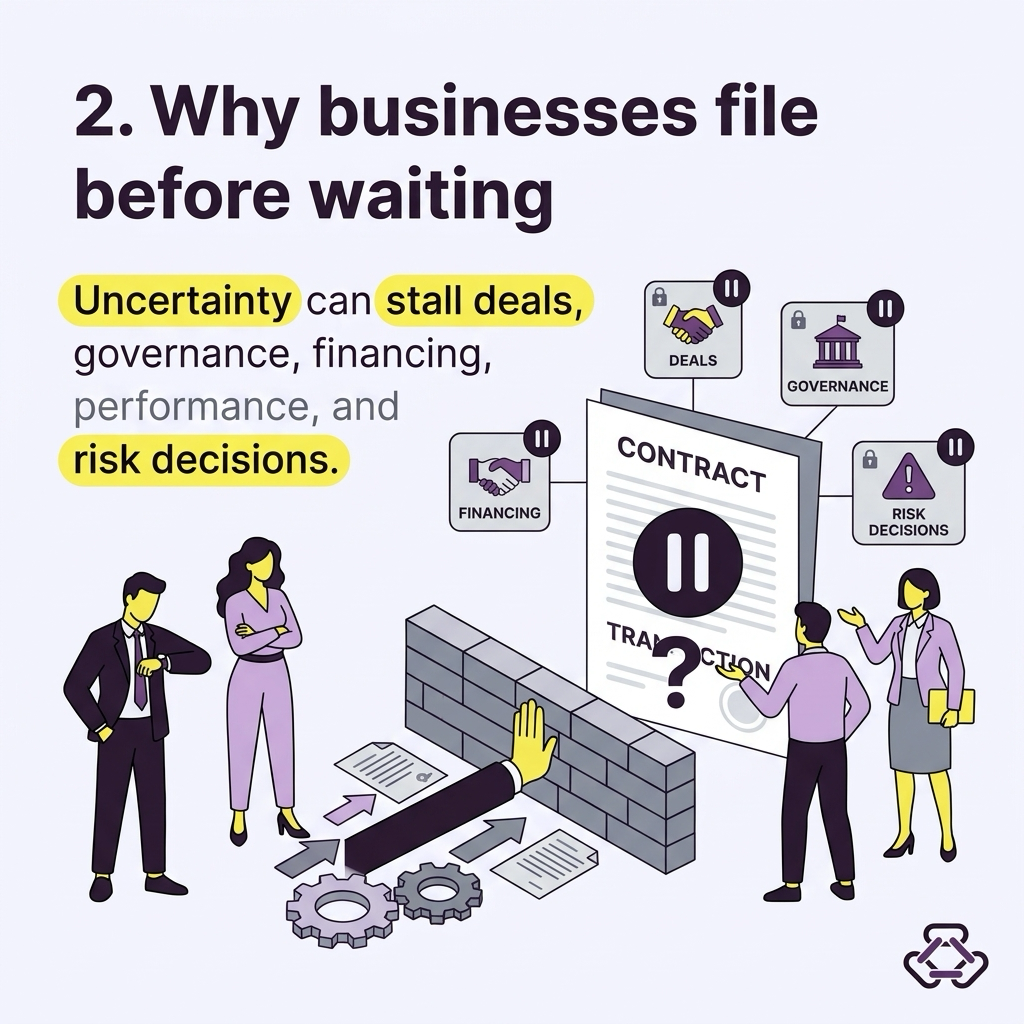
Waiting can be expensive. Contract uncertainty can stall financing, freeze transactions, derail vendor relationships, complicate governance, or increase the risk of an avoidable breach. Courts have recognized that declaratory relief exists to resolve real disputes before they ripen into more damaging conflict. Federal law authorizes courts to declare rights even when “further relief” is not yet being sought under 28 U.S.C. § 2201.
That matters in business because uncertainty itself can be harmful. According to the federal judiciary’s Judicial Business 2024 reporting, federal district courts continued to receive large volumes of civil matters, including contract actions, and Table C-2 shows 29,102 contract actions filed in fiscal year 2024 in U.S. district courts alone, underscoring how common contract-related litigation remains in the federal system (table here). On the state side, the State Justice Institute’s summary of the Court Statistics Project reported an 11% increase in contract cases contributing to rising civil filings in 2024.
For some businesses, the question is not whether litigation risk exists. The question is whether living with unresolved legal ambiguity is already creating operational harm.
What Kinds Of Business Disputes Often Lead To Declaratory Relief?
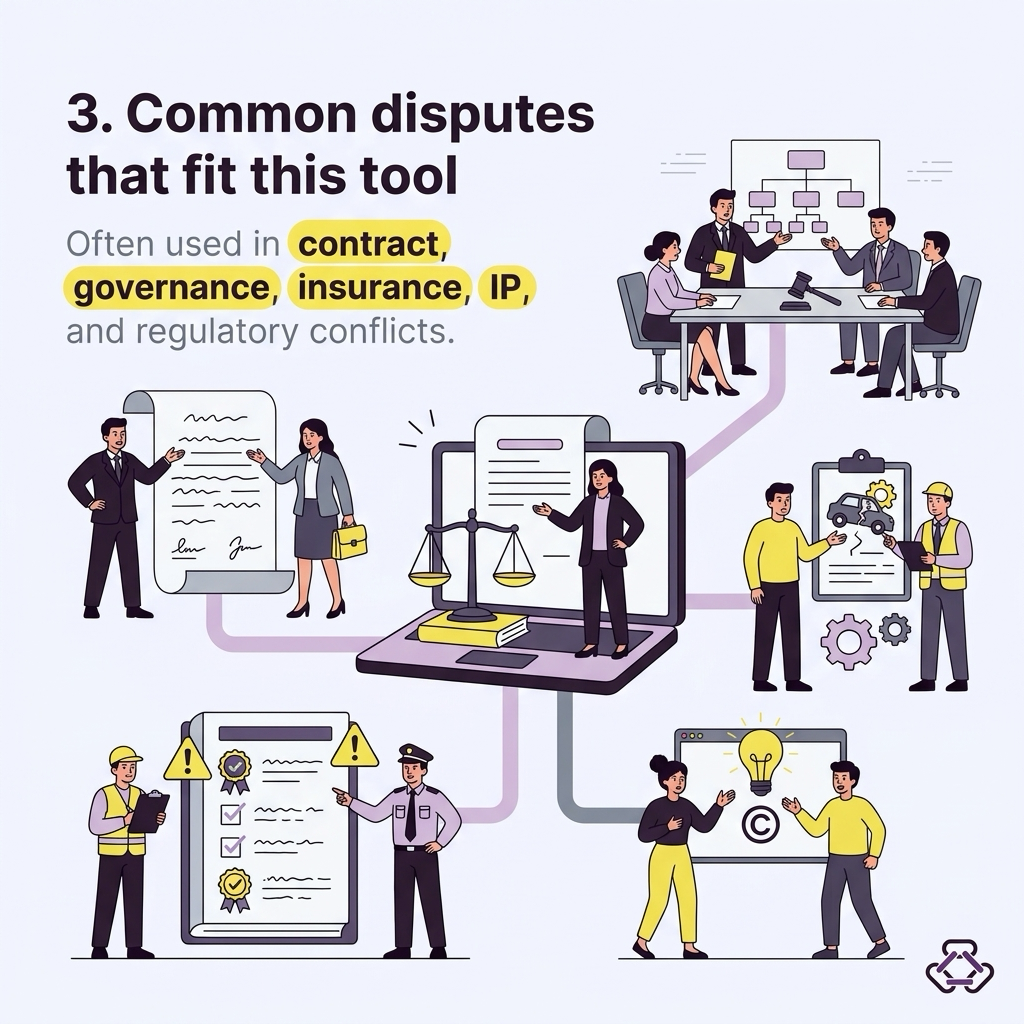
Declaratory judgment actions show up across many business settings, but a few categories appear again and again.
Contract Interpretation Disputes
This is one of the most common uses. A company may want a ruling on the meaning of a pricing term, exclusivity clause, earnout provision, indemnity obligation, renewal right, termination right, or forum-selection clause. Where a dispute turns primarily on legal interpretation rather than a long list of disputed facts, declaratory relief can help narrow the fight.
Corporate Governance And Ownership Disputes
Businesses also use declaratory actions to clarify rights under bylaws, operating agreements, shareholder agreements, voting agreements, or board resolutions. Examples can include disputes over voting power, authority to remove managers, rights to inspect records, approval thresholds, or whether a transaction was validly authorized.
Insurance Coverage And Defense Obligations
Insurance-related declaratory cases are extremely common. A policyholder or insurer may ask the court to determine whether a policy covers a claim, whether a defense is owed, or how exclusions apply.
Intellectual Property And Threatened Enforcement
In federal practice, declaratory relief is also a familiar tool in patent and other IP disputes. In MedImmune, Inc. v. Genentech, Inc., the U.S. Supreme Court explained that an “actual controversy” can exist even when a party has not yet taken the final risky step of breaching or inviting enforcement. That decision is often cited for the idea that a business may be able to seek judicial clarification without first exposing itself to maximum liability.
Regulatory Or Statutory Applicability Questions
Sometimes the issue is whether a law, regulation, or administrative framework applies to the business at all. In some settings, declaratory relief may be used to test the legality or applicability of a rule before penalties or enforcement fully unfold.
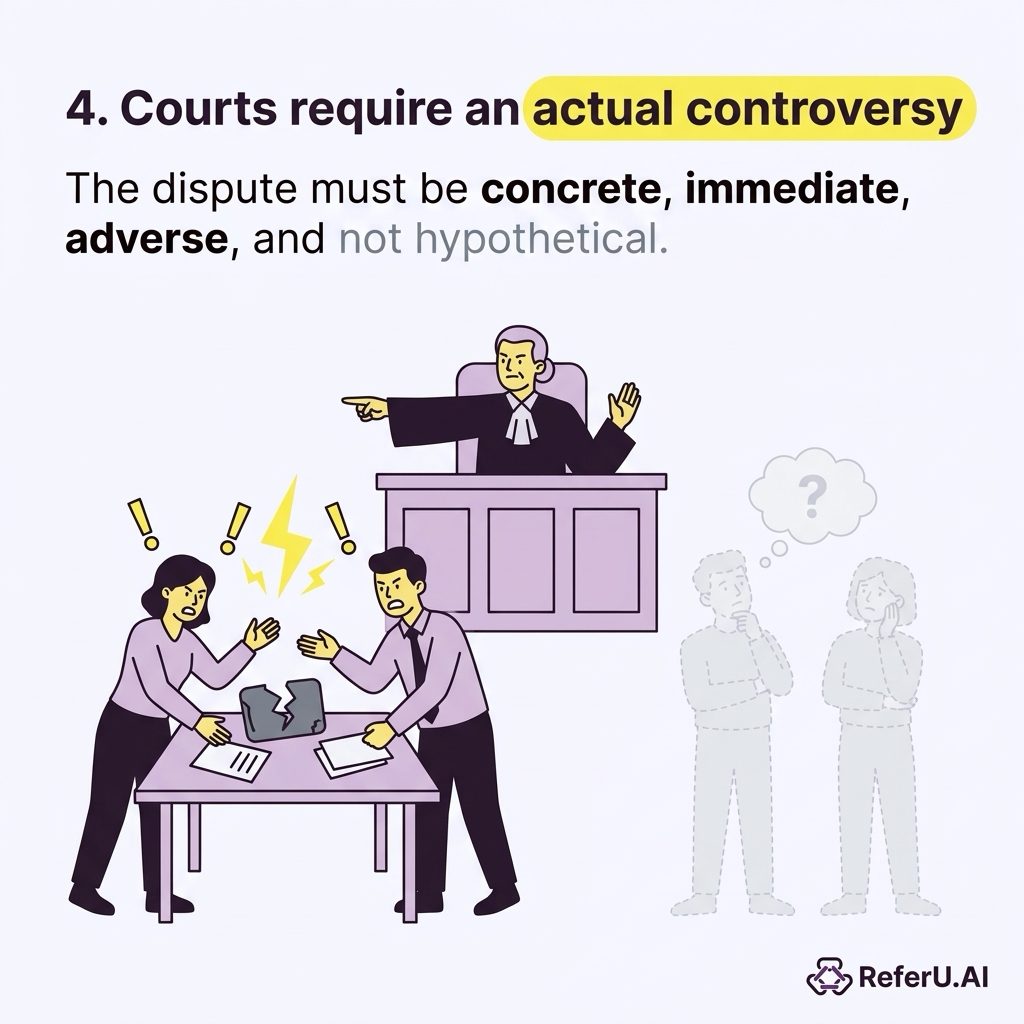
What Does “Actual Controversy” Mean?
This is one of the most important concepts for beginners.
Federal courts do not issue advisory opinions. The dispute has to be real. The Constitution Annotated explains that federal judicial power extends only to actual “cases” and “controversies,” and the Declaratory Judgment Act mirrors that requirement. The Legal Information Institute’s discussion of advisory opinions and declaratory judgments notes that declaratory relief is available when there is a concrete dispute, not a hypothetical disagreement.
So what does that look like in business terms?
Usually, the controversy is real enough when:
- the parties have adverse legal positions,
- the dispute is immediate rather than speculative,
- the court’s declaration would affect real business conduct, and
- the question is not just academic.
For example, a vague fear that someone might someday object to a contract term may not be enough. But a demand letter, a threatened enforcement position, a live disagreement over contractual performance, or a deadlocked governance dispute may present the kind of immediacy courts often look for.
State courts use similar concepts. New York’s CPLR 3001 authorizes declaratory judgments concerning the rights and legal relations of parties to a justiciable controversy, which is another way of saying the dispute has to be concrete enough for judicial resolution.
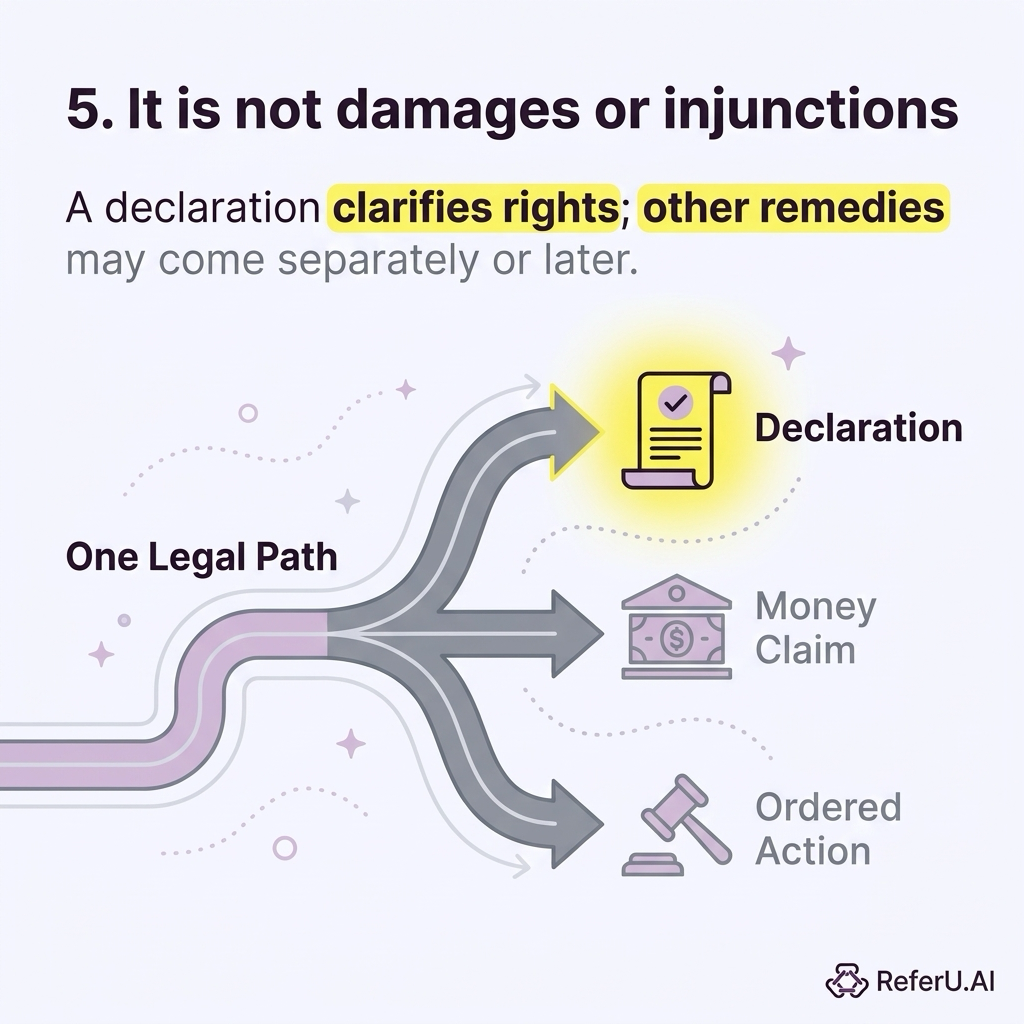
Is A Declaratory Judgment The Same As An Injunction Or Damages Claim?
No. These remedies do different jobs.
A declaratory judgment tells the parties what their legal rights and obligations are.
An injunction orders someone to do something or stop doing something.
A damages claim asks for money.
Sometimes a lawsuit includes more than one of these remedies. A business might ask the court to declare that a contract allows termination, and also request an injunction preventing interference with that termination. Or a company may seek a declaration about indemnity rights now and pursue damages later, depending on what happens next.
Federal law expressly allows “further necessary or proper relief” after a declaratory judgment under 28 U.S.C. § 2202. In general terms, that means a declaration can be the first major step, not always the last one.
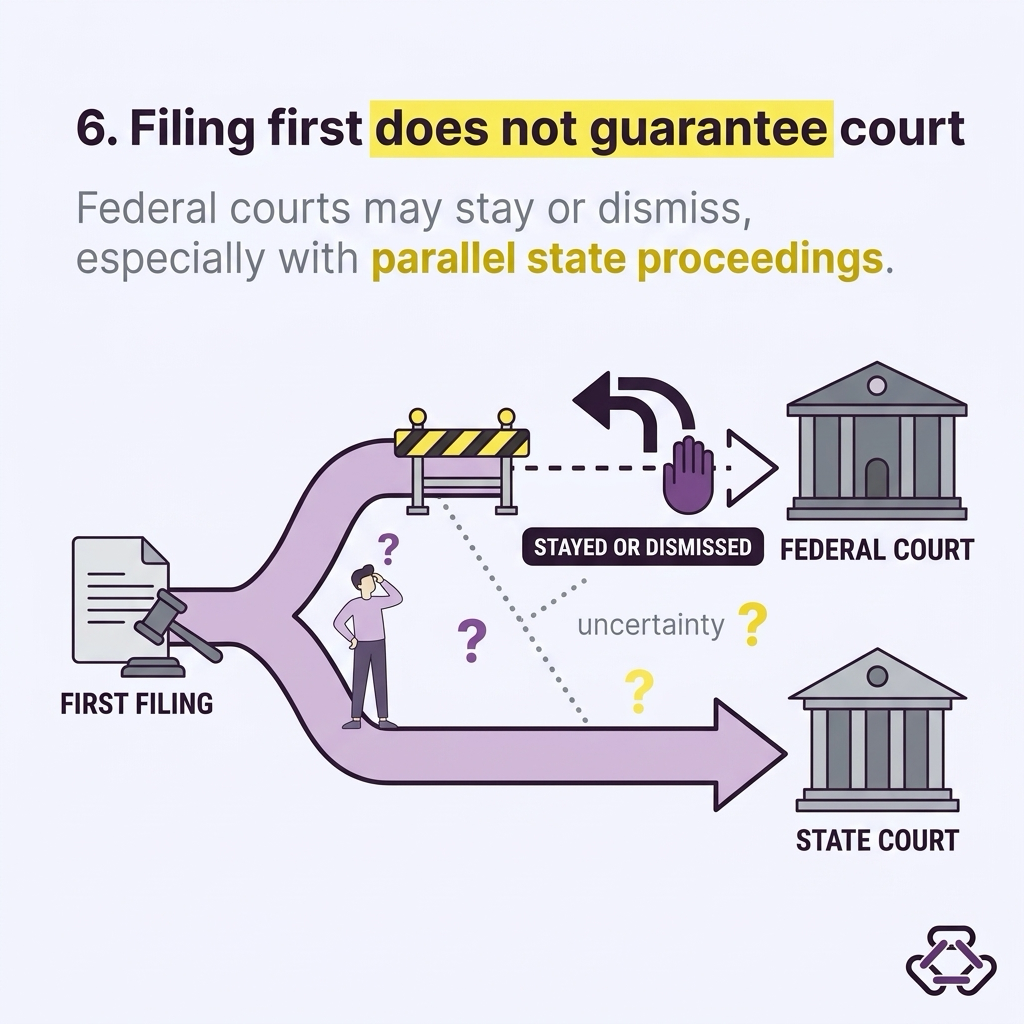
Does Filing First Guarantee The Court Will Hear The Case?
Not always.
This is a point many businesses find surprising. Even when a federal court has jurisdiction, declaratory relief is often discretionary. In Wilton v. Seven Falls Co. and Brillhart v. Excess Insurance Co., the Supreme Court recognized that federal courts have substantial discretion to stay or dismiss declaratory judgment actions, especially when parallel state proceedings are already pending and the same issues can be resolved there.
That often means a business cannot assume that “filing first” automatically locks in the preferred forum or guarantees that the case will move forward on the company’s chosen timetable.
Courts may look at issues such as:
- whether a parallel case is already pending elsewhere,
- whether the dispute is mainly a state-law issue,
- whether the declaratory action would efficiently resolve the controversy,
- whether the filing appears reactive or procedural rather than substantive, and
- whether hearing the case would create duplicative litigation.
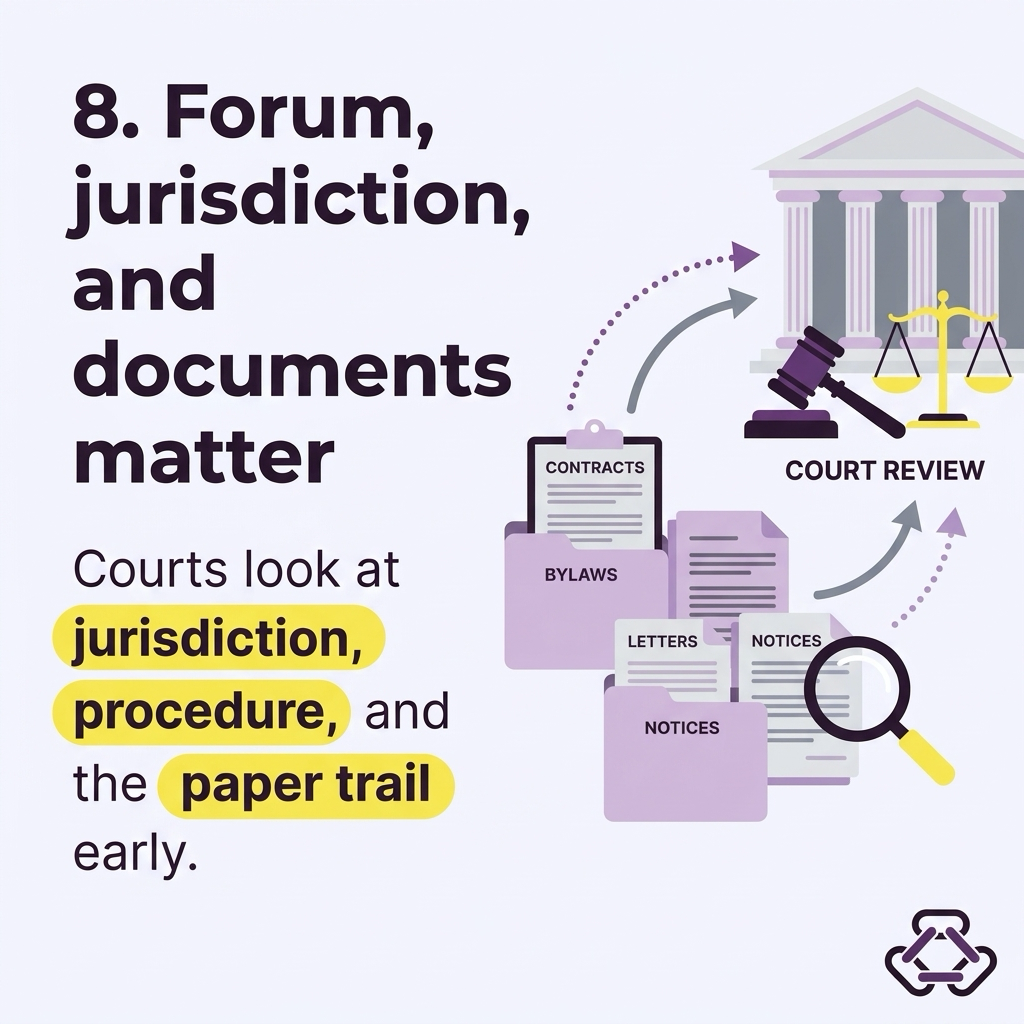
This is one reason declaratory actions can be powerful but technical. A lawsuit that looks smart at a high level may still run into jurisdictional, procedural, or discretionary obstacles if it is not framed carefully.
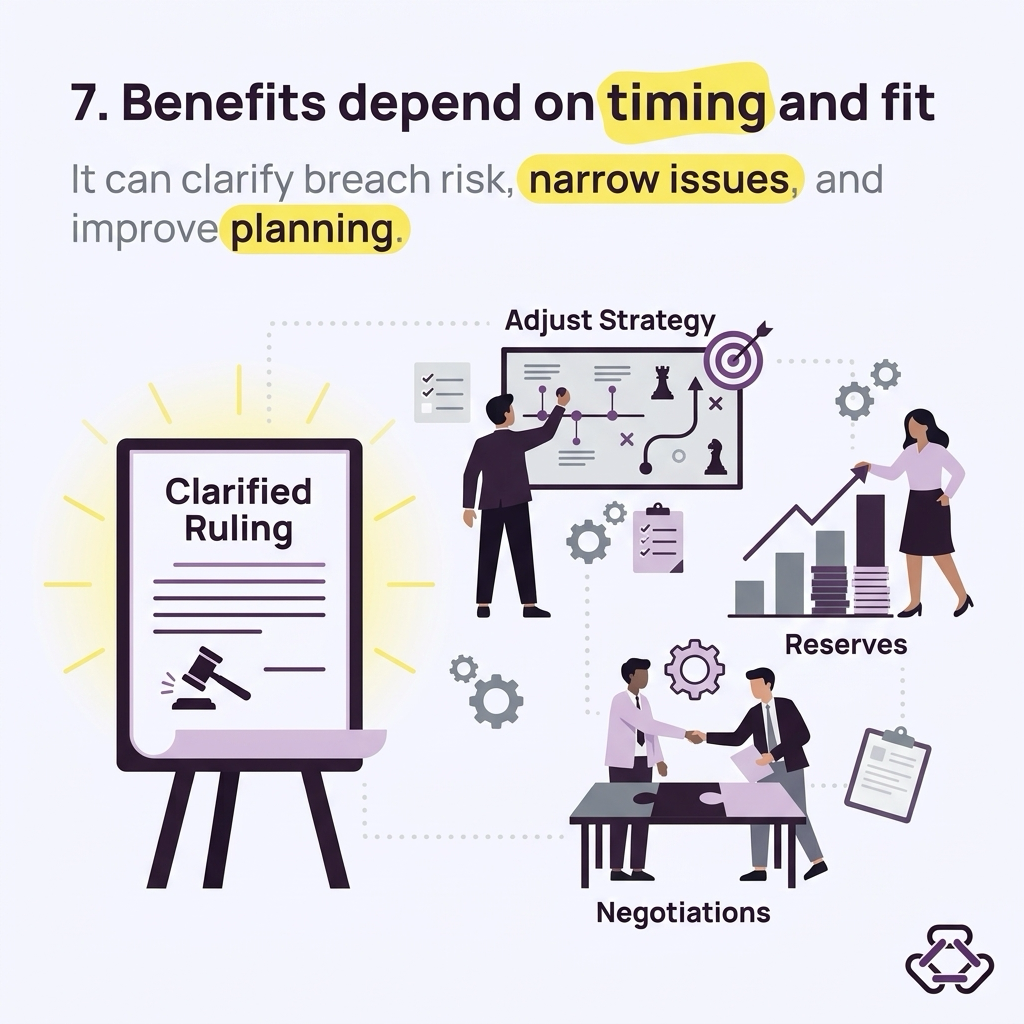
What Are The Main Benefits For A Business?
When declaratory relief fits the facts, it can offer several practical advantages.
It Can Clarify Rights Before A Costly Breach
A company may be able to ask for a legal ruling without deliberately violating an agreement first. The Supreme Court’s reasoning in MedImmune is often part of that conversation in federal practice.
It Can Narrow The Issues
Even if the case does not end immediately, a declaration on a key legal issue can simplify negotiations, guide future conduct, or reduce the number of claims that remain in dispute.
It Can Improve Business Planning
Legal uncertainty affects pricing, reserves, board decisions, disclosures, financing, and deal timing. A clear ruling can change the company’s risk assessment in a meaningful way.
It Can Shift The Posture Of The Dispute
Sometimes declaratory relief allows a business to move from defense to offense procedurally, particularly when the other side is relying on ambiguity or threats without actually filing suit.
What Are The Risks Or Downsides?
Declaratory judgment actions are not a universal shortcut.
The Court May Find The Dispute Too Speculative
If the controversy is not concrete enough, the case can be dismissed.
The Court May Decline To Exercise Jurisdiction
Filing Can Escalate The Conflict
A declaratory action formalizes the dispute. In some situations, that can create leverage. In others, it can accelerate motion practice, counterclaims, or parallel litigation.
It May Not Resolve Everything
A declaration can answer a central legal question while leaving factual disputes, damages issues, or related claims for later phases.
Forum And Timing Mistakes Can Be Expensive
Jurisdiction, venue, removal risk, abstention doctrines, and state-versus-federal strategy often matter a great deal in these cases. Businesses trying to evaluate that decision may also find it useful to think about the broader question of whether asking the court first makes more sense than waiting to get sued.
What Does A Business Usually Have To Show?
The exact pleading standards vary by jurisdiction and claim, but most declaratory actions revolve around a few common showings:
- A real, present dispute exists.
- The parties have adverse legal interests.
- The requested declaration would resolve or materially clarify the controversy.
- The court has jurisdiction and the case is procedurally proper.
In federal court, jurisdiction still has to come from somewhere. The Declaratory Judgment Act does not create federal jurisdiction by itself. The lawsuit still needs an independent basis, such as federal-question jurisdiction or diversity jurisdiction. That principle is reflected in the text of 28 U.S.C. § 2201, which authorizes declaratory relief only “within” the court’s existing jurisdiction.
That detail matters because many business contract and governance disputes belong in state court unless diversity or another basis for federal jurisdiction exists.
How Do State And Federal Declaratory Actions Differ?
The broad idea is similar, but the details can differ in important ways.
Federal practice is shaped by Article III, the Declaratory Judgment Act, and Rule 57. Federal courts also have the discretionary overlay discussed in Wilton and Brillhart.
State courts often have their own declaratory judgment statutes and case law. For example, New York’s CPLR 3001 authorizes declaratory relief where there is a justiciable controversy. Some states also have specialized business courts or complex commercial divisions, which can influence how quickly and efficiently a declaratory case proceeds.
That difference in forum can affect:
- speed,
- motion practice,
- available judges or divisions,
- pleading standards,
- discovery scope,
- and the likelihood of parallel proceedings.
For businesses, the choice between state and federal court is often strategic as much as doctrinal.
What Evidence And Documents Tend To Matter Most?
In business declaratory actions, the case usually turns on documents early.
Common examples include:
- contracts and amendments,
- bylaws, operating agreements, or shareholder agreements,
- board consents and minutes,
- demand letters,
- notices of default or termination,
- insurance policies,
- correspondence showing the dispute became concrete,
- and transaction documents tied to the contested right.
When the dispute centers on legal interpretation of written language, the court may be able to resolve significant issues through motions practice rather than a full trial. That is one reason declaratory relief often appears in commercial disputes where the paper trail is strong.
Businesses also sometimes underestimate how much the framing matters. The wording of the requested declaration can influence whether the court sees the case as a focused controversy or an attempt to obtain broad legal advice. That distinction is often crucial.
What Happens After The Court Issues A Declaratory Judgment?
A declaratory judgment is not just commentary. It is a binding judgment between the parties, subject to appeal. The Constitution Annotated describes it as binding, and federal law provides that such a declaration has “the force and effect of a final judgment” under 28 U.S.C. § 2201.
After that, a few things may happen:
- the parties may settle because the key issue is now clarified,
- one side may seek additional relief under § 2202
- the litigation may continue on damages or factual questions,
- or the losing side may appeal.
In practical terms, a declaratory judgment often changes the leverage landscape even if it does not end the entire dispute on day one.
When Does It Make Sense To Talk With A Business Litigation Attorney?
A declaratory judgment action can look deceptively simple from the outside: ask the court to clarify rights. But in practice, these cases often involve technical questions about ripeness, jurisdiction, abstention, venue, parallel proceedings, contract interpretation, and the scope of relief.
Some business leaders explore this option after receiving a demand letter. Others do so when a board deadlock, ownership fight, or contract interpretation issue begins interfering with operations. In situations like that, an attorney may help evaluate whether declaratory relief is likely to provide meaningful clarity or whether another approach may fit better.
And because these disputes are often highly fact-specific, documented experience can matter. A lawyer who has actually handled highly similar matters may be better positioned to identify the procedural risks early, frame the controversy precisely, and assess whether a declaratory action is likely to move the business toward resolution rather than deeper uncertainty.
A Short Summary For Beginners
A declaratory judgment action is a lawsuit asking the court to clarify legal rights before or alongside a larger fight. For businesses, that can be especially useful in contract, governance, insurance, IP, and regulatory disputes where uncertainty is already causing disruption. But declaratory relief is not automatic. Courts look for a real controversy, a meaningful dispute between adverse parties, proper jurisdiction, and a reason the declaration would actually resolve something concrete.
If your company is dealing with legal uncertainty and you are trying to identify counsel with demonstrable experience in closely related business disputes, Visit ReferU.AI to get matched with an attorney who has demonstrable experience in cases like yours — for free.
