Table of Contents
- 5 Declaratory Judgment Mistakes That Waste Leverage
- Why Declaratory Judgment Can Create Or Destroy Leverage
- 1. Filing Before There Is A Real “Actual Controversy”
- What This Mistake Looks Like In Practice
- Why Timing Is So Important
- 2. Confusing Declaratory Relief With An Independent Basis For Federal Jurisdiction
- Why This Matters Strategically
- The Leverage Cost
- 3. Asking The Court The Wrong Question
- A Weakly Framed Declaratory Claim Often Sounds Like This
- A Better Strategic Frame Usually Focuses On The Real Source Of Business Risk
- 4. Ignoring Discretion, Abstention, And Parallel Proceedings
- Why Businesses Miss This
- The Leverage Problem With A Race-To-Courthouse Filing
- 5. Treating Declaratory Judgment As A Substitute For A Broader Litigation Plan
- What A Narrow Litigation View Misses
- Declaratory Relief Often Works Best When It Is Tied To A Clear Business Objective
- How To Spot These Mistakes Before They Become Expensive
- The Bigger Picture For Businesses
- Final Takeaway

Type
Great Grandchild
Status
Approved
Title (YouTube)
Images Failed (Social)
Images Failed (Social)
Do not index
Parent item
Publish Date (TikTok)
Jan 2, 2027 06:15
Videos Post IDs (Social)
Hashtags (Social)
#LegalAdvice #LegalHelp #BusinessLitigation #DeclaratoryJudgment
Caption
Caption X
Cover

OG Image

Alt Image Text
Flat vector illustration of declaratory judgment mistakes that waste leverage in business disputes, showing a business character, courthouse, contract documents, and visual symbols of premature filing, wrong forum, and lost strategic leverage.
Images

Videos
Publish Date (Social)
Dec 14, 2026 07:30
Scheduled (Social)
Scheduled (Social)
Images Posted (Social)
Images Posted (Social)
Videos Posted (Social)
Videos Posted (Social)
Videos Failed (Social)
Videos Failed (Social)
Featured
Created time
Apr 3, 2026 10:14 PM
Sub-item
Authors
CTA Practice Area (Social)
Business Litigation
TikTok Failed (Social)
TikTok Failed (Social)
Videos Post Links (Social)
YT Auto Captions Removed
TikTok Post Links (Social)
Images Post IDs (Social)
YT Post ID
Video Pending Manual (Social)
TikTok Posted (Social)
TikTok Posted (Social)
TikTok Post IDs (Social)
Video Cover (Social)
Images Post Links (Social)
First Comment (Social)
YT Embedded
Images Delete (Social)
Videos Delete (Social)
Carousel Video URL (Social)
5 Declaratory Judgment Mistakes That Waste Leverage
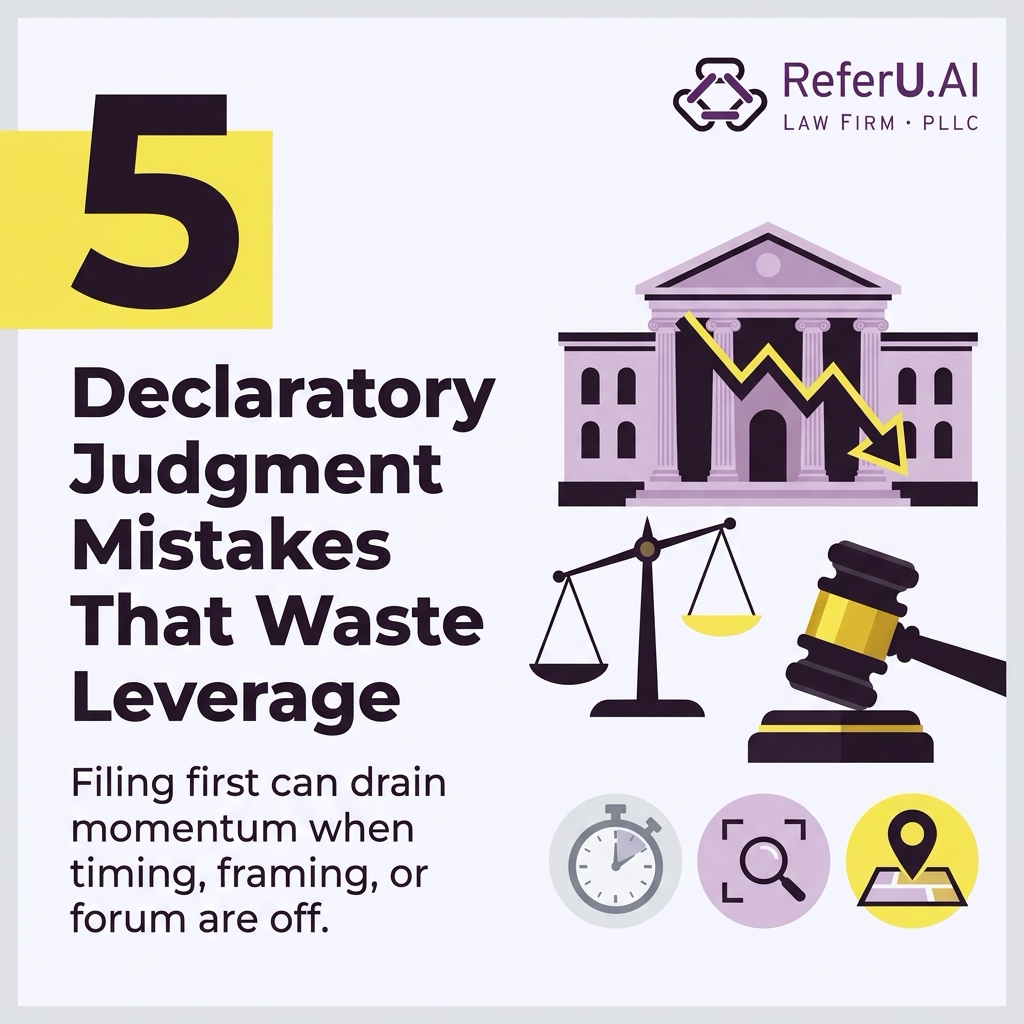
Businesses often look at declaratory judgment as a way to turn uncertainty into clarity. In the right dispute, that can be true. A declaratory judgment action can let a company ask a court to define the parties’ rights before the conflict gets more expensive, more public, or harder to control. But leverage is not the same thing as filing first. When the case is premature, in the wrong forum, or framed around the wrong question, the filing can drain momentum instead of creating it.
If you want a broader foundation first, it may help to start with this overview of how declaratory judgment works in contract and business disputes. In this post, we’ll focus on the mistakes that often undercut the strategic value of declaratory relief.
Scroll to the bottom for every post in this series.
Why Declaratory Judgment Can Create Or Destroy Leverage
Under the federal Declaratory Judgment Act, a federal court may declare the rights and legal relations of interested parties in a “case of actual controversy.” The statute gives courts a remedy, but it does not create jurisdiction by itself, and it does not invite advisory opinions. The Supreme Court has repeatedly emphasized that declaratory relief is limited to real, concrete disputes between parties with adverse legal interests, not hypothetical disagreements about what might happen later. See 28 U.S.C. § 2201, Aetna Life Ins. Co. v. Haworth, and MedImmune, Inc. v. Genentech, Inc..
That framework matters because leverage in a declaratory judgment case usually comes from one thing: present, concrete legal uncertainty that is expensive enough to justify immediate judicial involvement. If the dispute is ripe, framed well, and filed in a court likely to keep the case, the plaintiff may gain timing control, issue definition, and early clarity. If not, the other side may gain the better argument: that the case is speculative, procedural, duplicative, or forum-driven.
Here are five mistakes that often waste that leverage.
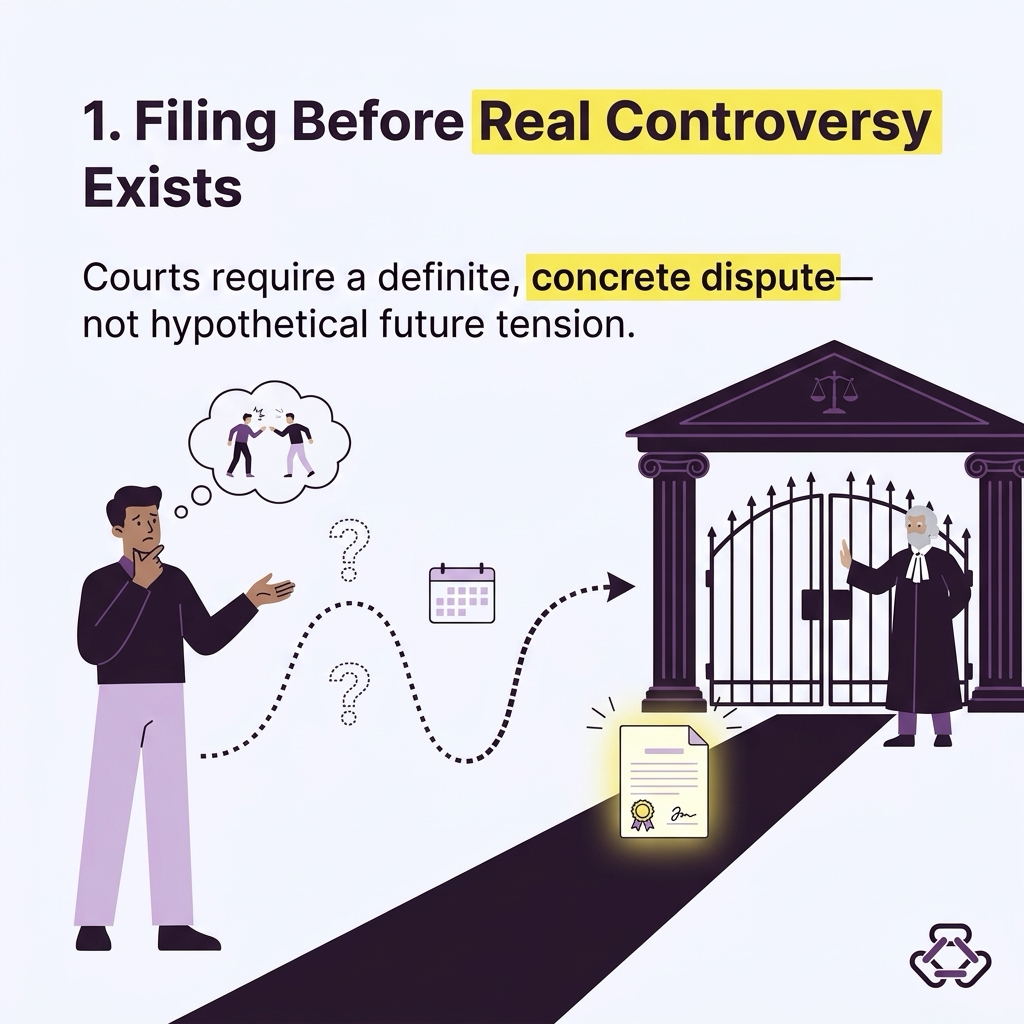
1. Filing Before There Is A Real “Actual Controversy”
The first mistake is treating declaratory judgment like a business planning tool instead of a judicial remedy. Courts do not issue declarations simply because a company wants reassurance. The controversy has to be real and immediate enough to qualify as an Article III case or controversy in federal court.
The Supreme Court described the required controversy as one that is “definite and concrete,” involving adverse legal interests and capable of specific relief, rather than a request for an opinion on hypothetical facts. That language from Aetna still shapes the analysis. In MedImmune, the Court similarly focused on whether the facts show a substantial controversy of sufficient immediacy and reality to warrant declaratory relief.
What This Mistake Looks Like In Practice
Businesses sometimes file too early when:
- a contract counterparty has raised concerns, but not taken a position with concrete legal consequences
- an investor or board dispute is still internal and fluid
- a regulator has made informal comments without final action
- the feared lawsuit depends on multiple future events that may never occur
- the requested declaration addresses only one abstract legal issue, not the dispute that is actually driving the conflict
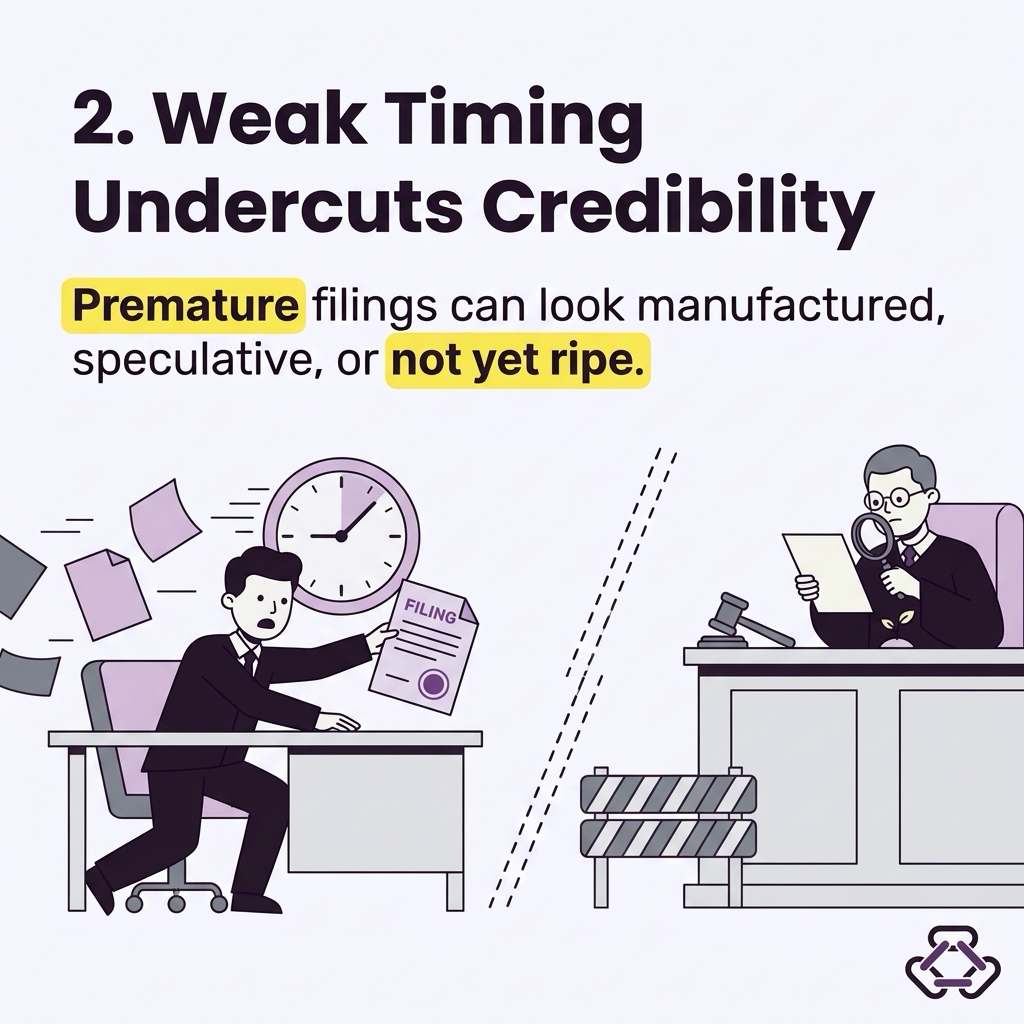
This is where leverage slips away. A premature filing can make the plaintiff look like it is trying to manufacture urgency rather than resolve a live dispute. In some courts, that can lead to dismissal for lack of ripeness or lack of an actual controversy. In others, it can lead to a practical loss of credibility from the very beginning.
Why Timing Is So Important
Declaratory judgment tends to work better when the record already shows:
- a demand letter, default notice, or reservation of rights
- a concrete disagreement over contract meaning, governance authority, coverage, or statutory application
- operational or financial consequences already unfolding
- a dispute narrow enough that a declaration would actually settle something meaningful
In general terms, the stronger the present adversity, the stronger the case for declaratory relief. The weaker the immediacy, the easier it becomes for the other side to characterize the case as a request for an advisory opinion. The Department of Justice’s discussion of declaratory actions makes the same basic point: the statute is procedural, limited to constitutional “cases” and “controversies,” and not available as a shortcut around those limits.
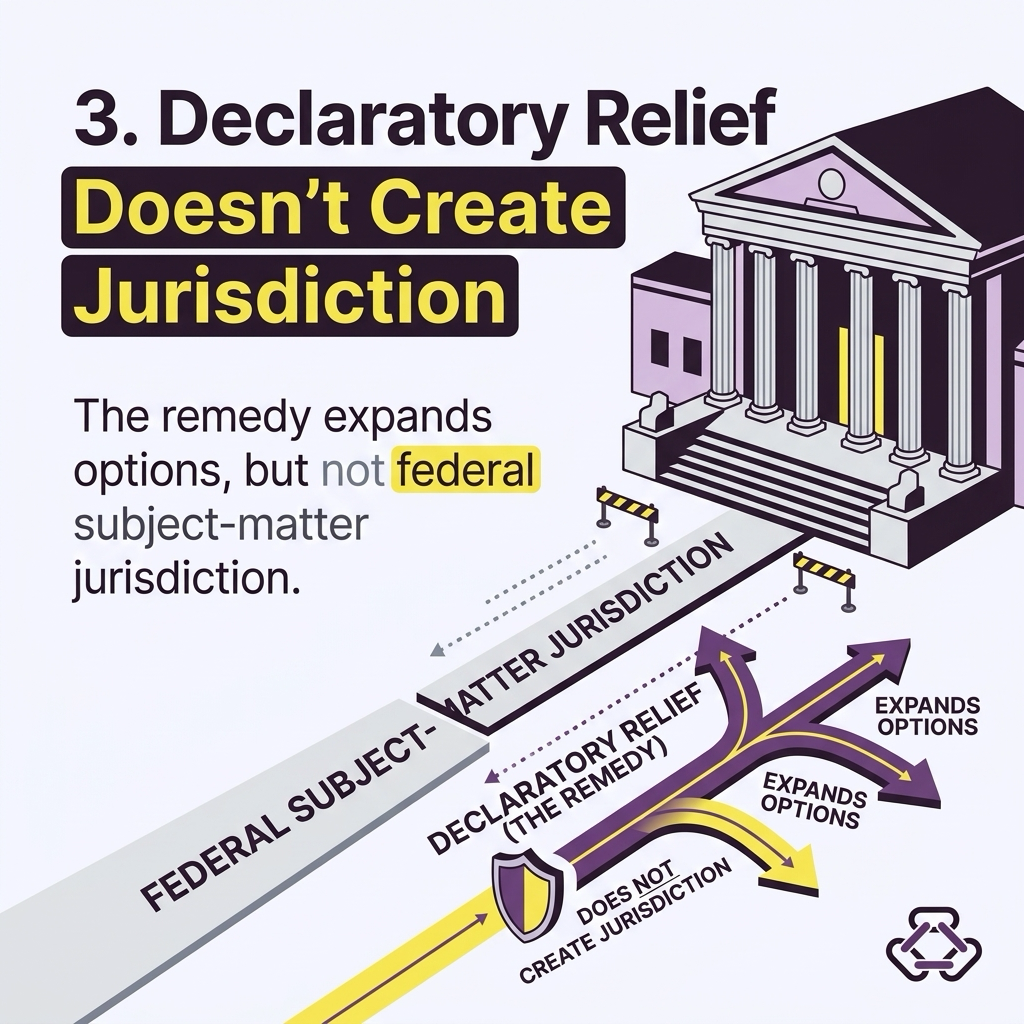
2. Confusing Declaratory Relief With An Independent Basis For Federal Jurisdiction
A second mistake is assuming that asking for declaratory relief is enough to get into federal court. It is not.
The Declaratory Judgment Act expands the range of remedies available in federal court, but it does not itself create subject-matter jurisdiction. The Supreme Court said that directly in Skelly Oil Co. v. Phillips Petroleum Co.: the Act enlarges remedies, not jurisdiction.
Why This Matters Strategically
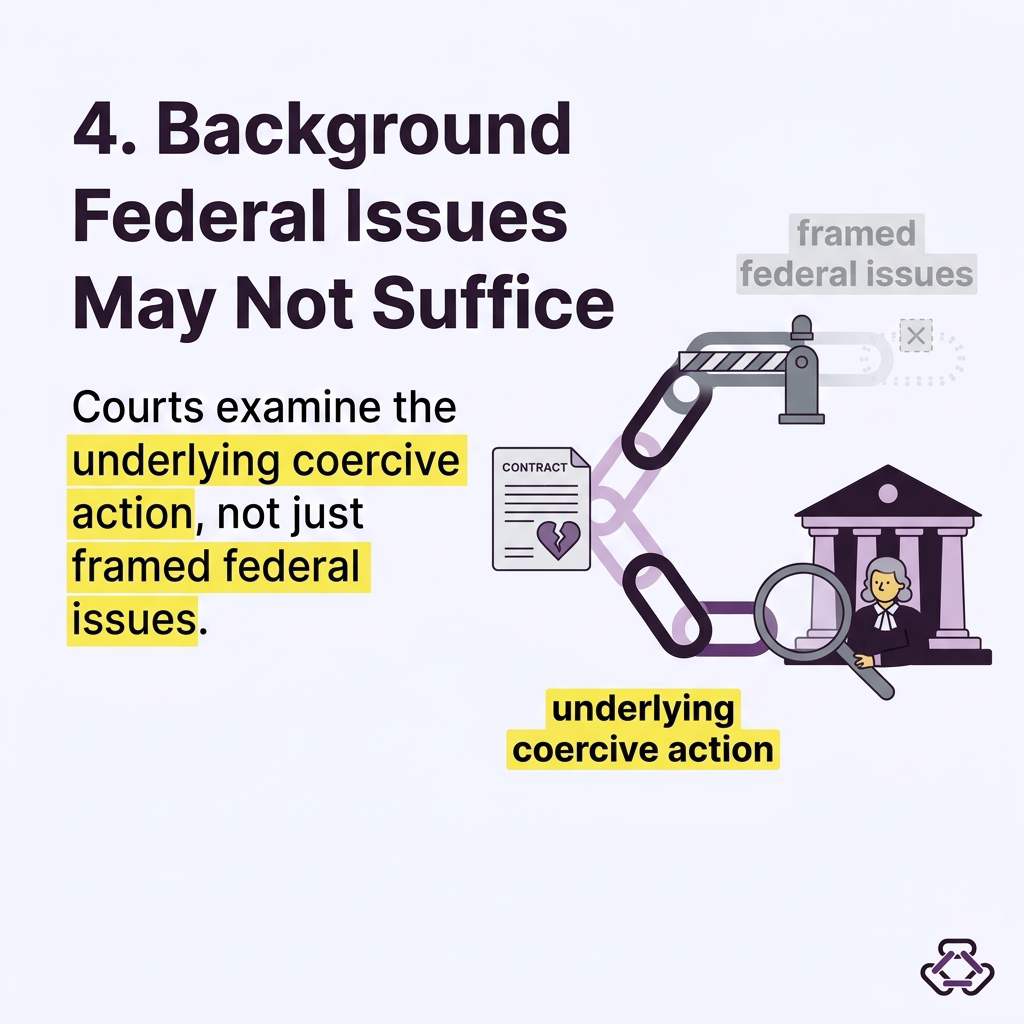
A business may think, “We have a federal issue in the background, so we can file for a declaration in federal court.” But the jurisdiction analysis is often more complicated than that. Federal courts still look for a valid jurisdictional basis, such as diversity jurisdiction or federal-question jurisdiction. And in declaratory judgment cases, courts often examine the underlying coercive action that would exist absent the declaratory claim.
That can create surprises in disputes involving:
- contracts that reference federal law but are still fundamentally state-law claims
- anticipated federal defenses that do not create federal-question jurisdiction
- multi-party business disputes where complete diversity is missing
- requests for declarations that are narrower than the real underlying claims
A filing built on a weak jurisdiction theory may hand the other side an early procedural win. Instead of discussing the merits, everyone spends the opening phase arguing over remand, dismissal, or whether the plaintiff tried to reverse-engineer federal jurisdiction.
The Leverage Cost
This mistake often wastes leverage in two ways:
- It delays the merits. The case turns into a threshold fight over where it belongs.
- It signals strategic overreach. Judges tend to notice when a declaratory complaint looks like a repackaged defense rather than a freestanding controversy.
That does not mean federal court is off the table. It means the jurisdiction question often deserves the same level of analysis as the merits question. Some businesses also benefit from comparing federal and state declaratory remedies before filing, because many states have their own declaratory judgment statutes or rules based on versions of the Uniform Declaratory Judgments Act. The Uniform Law Commission’s model act helps explain why declaratory relief exists so broadly, but state-by-state differences can still matter in practice.
3. Asking The Court The Wrong Question
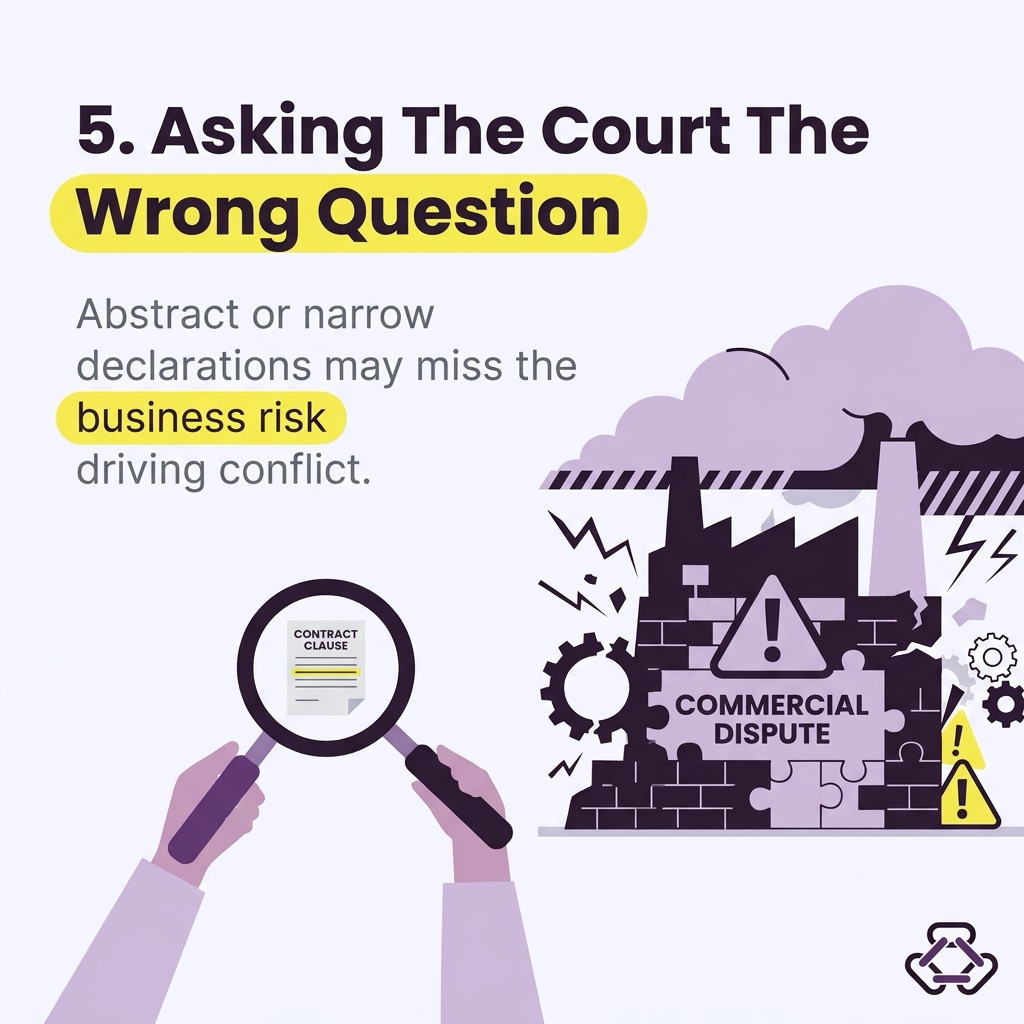
Even when the dispute is real and the court has jurisdiction, a declaratory judgment filing can still lose force if it asks for a declaration that is too narrow, too abstract, or too detached from the real business problem.
This is one of the most common leverage mistakes in contract and governance disputes. A company may ask the court to interpret one sentence in an agreement when the live controversy is really about termination rights, control rights, payment triggers, fiduciary authority, exclusivity, or indemnity. Or it may ask the court to answer a legal sub-issue that would not actually resolve the uncertainty driving the conflict.
The Supreme Court has warned against using declaratory judgment to obtain an advance ruling on a collateral issue rather than resolving the actual controversy. The Constitution Annotated discussion of advisory opinions and declaratory judgments highlights that concern and discusses Calderon v. Ashmus, where the Court rejected an attempt to use declaratory relief to decide only a collateral legal question.
A Weakly Framed Declaratory Claim Often Sounds Like This
- “Declare the parties’ rights under the agreement”
- “Declare that plaintiff is in compliance”
- “Declare the statute does not apply”
- “Declare that defendant’s interpretation is wrong”
Those phrases are not always defective, but standing alone they can be too vague to do much work.
A Better Strategic Frame Usually Focuses On The Real Source Of Business Risk
Examples might include:
- whether a termination notice was effective
- whether a noncompete provision is enforceable in the present transaction
- whether a board action was valid under the governing documents
- whether a policy requires defense or indemnity for a defined underlying claim
- whether a regulation presently applies to a specific business activity
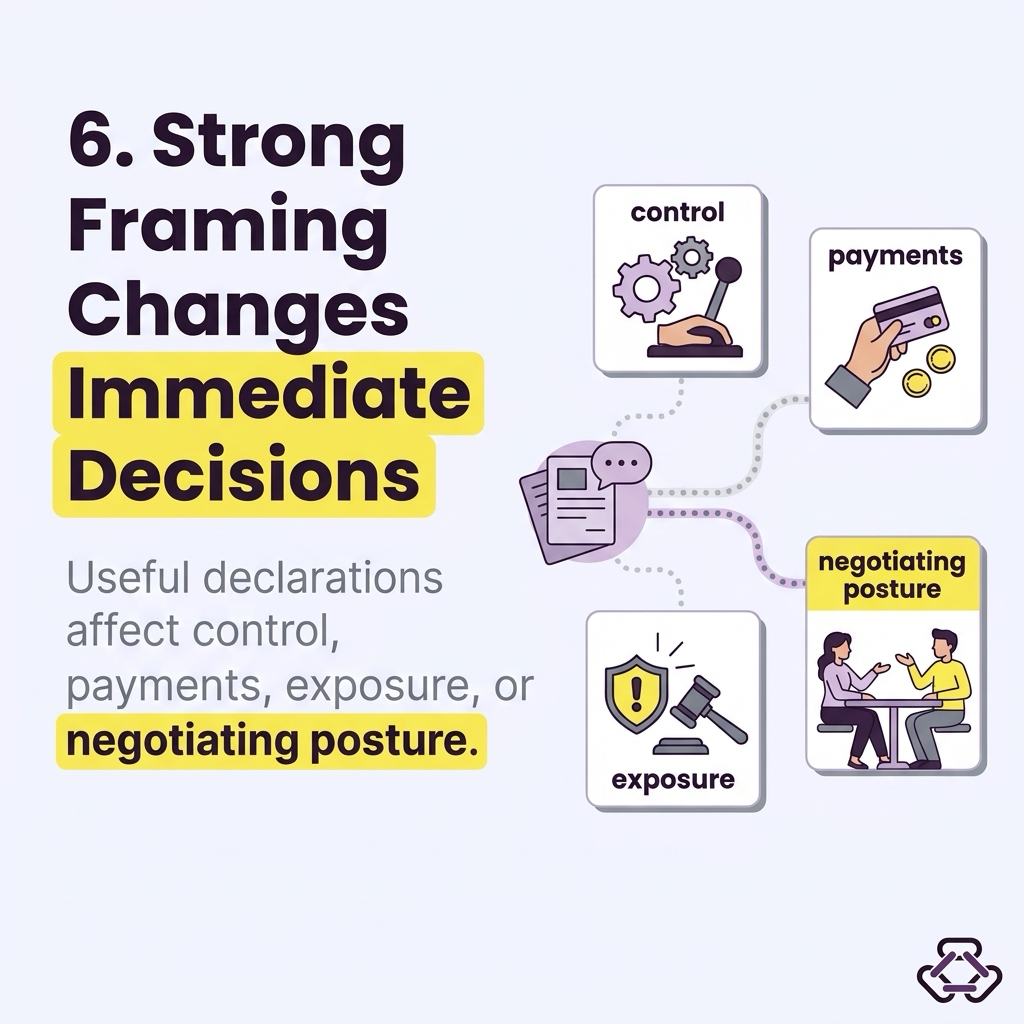
Here’s what this often means: the most useful declaratory claim is usually the one that changes the parties’ immediate decision tree. If a declaration would not alter conduct, payment obligations, governance control, litigation exposure, or negotiating posture, the claim may not add much leverage even if it survives.
This is also why businesses often spend too little time on claim framing. A declaratory complaint is not just a request for clarity; it is a proposal for what question the court will answer first. If the proposed question is weak, the leverage is weak. If you want a deeper look at that issue, one natural next step is thinking about how the dispute gets framed for declaratory relief in the first place.
4. Ignoring Discretion, Abstention, And Parallel Proceedings
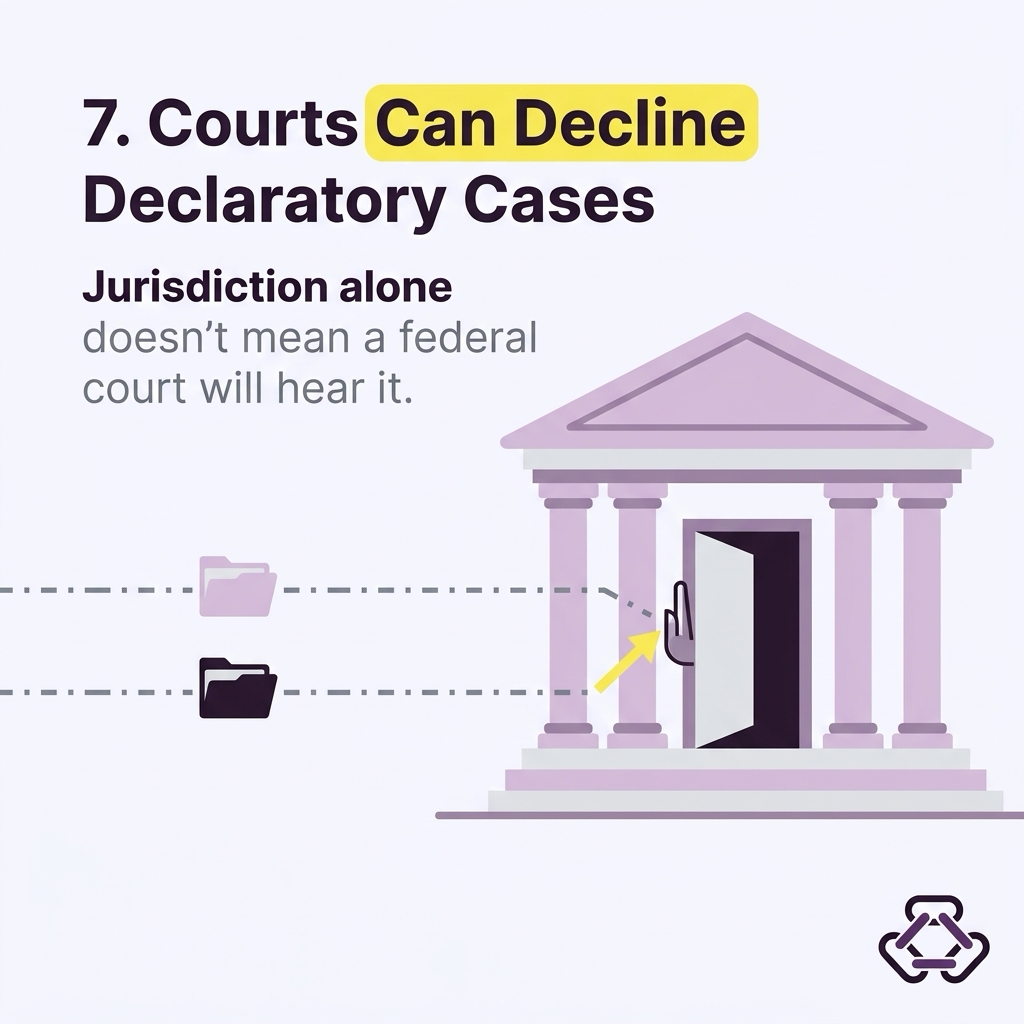
A fourth mistake is assuming that if jurisdiction exists, the federal court will automatically hear the case. In declaratory judgment litigation, that assumption can be expensive.
The federal statute says a court may declare rights, not that it is required to do so. In Wilton v. Seven Falls Co., the Supreme Court reaffirmed that district courts have substantial discretion in deciding whether to entertain a declaratory judgment action, especially when there is parallel state litigation. The Court relied on Brillhart, which asked whether the controversy could be better settled in the pending state proceeding.
Why Businesses Miss This
From a business perspective, filing first can feel like a clean way to seize initiative. But when related litigation is pending elsewhere, or likely to be filed immediately, the court may look past the race-to-file dynamic and ask practical questions such as:
- Will the declaration resolve the uncertainty?
- Is there a parallel state case involving the same issues?
- Would hearing both cases create duplication or inconsistent rulings?
- Does the filing look like procedural fencing?
- Is state law doing most of the work in the case?
Courts around the country analyze those factors in different ways, but the theme is consistent: declaratory relief is discretionary, and duplicative litigation is a recurring problem. That concern appears throughout federal case law and secondary analysis, including discussions collected by the ABA Business Law Section on ripeness and declaratory litigation.
The Leverage Problem With A Race-To-Courthouse Filing
If the other side can plausibly say, “This declaratory case was filed only to grab forum control while the real dispute is already headed somewhere else,” the plaintiff may lose the advantage it was trying to create.
In business disputes, this often happens when:
- a contract fight is already unfolding in state court
- a governance case is pending in the entity’s home state
- the declaratory complaint mirrors defenses to an expected coercive action
- the requested declaration would not dispose of the parallel dispute anyway
A declaratory filing can still make sense in the shadow of other proceedings. But the analysis tends to be strategic, not automatic. Some companies benefit from first asking whether waiting to be sued might actually be the cleaner move in a particular dispute, especially when forum fights and abstention risks are high.
5. Treating Declaratory Judgment As A Substitute For A Broader Litigation Plan
The fifth mistake is seeing declaratory judgment as the strategy, instead of as one tool inside a broader strategy.
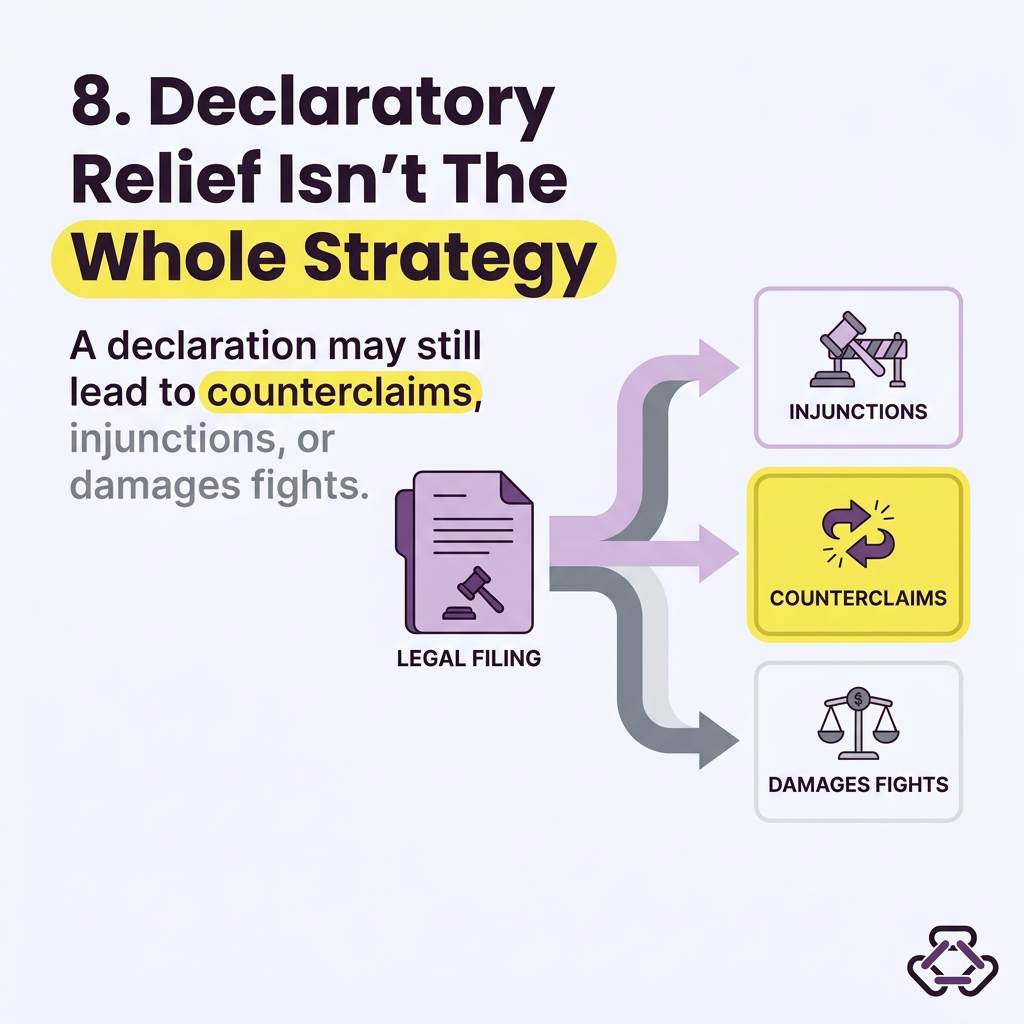
A declaratory claim may clarify rights. It may not end the dispute. Depending on the case, the declaration may still be followed by damages claims, injunction requests, enforcement motions, contract termination fights, governance remedies, or appeals. Section 2201 states that a declaration has the force and effect of a final judgment, and 28 U.S.C. § 2202 allows further necessary or proper relief based on that declaration. But the path from declaration to business resolution is rarely automatic.
What A Narrow Litigation View Misses
A company may file for declaratory relief without fully mapping:
- what record it will need quickly
- whether factual disputes will undercut the “clarity” story
- whether damages or injunctive relief may be needed alongside the declaration
- whether the other side will counterclaim aggressively
- whether the filing changes customer, investor, lender, or regulatory dynamics
- whether the requested declaration helps settlement or hardens positions
This is often where leverage is quietly lost. A declaratory complaint may create a public dispute without creating a practical exit. It may force issue selection before the facts are developed. It may trigger counterclaims that expand exposure. It may clarify one contract provision while leaving the larger commercial relationship even less stable.
Declaratory Relief Often Works Best When It Is Tied To A Clear Business Objective
For example:
- preserving a transaction timeline
- clarifying control over a board or entity before a vote or closing
- confirming obligations under a contract before termination, suspension, or major payment decisions
- resolving coverage or indemnity uncertainty affecting defense strategy
- obtaining a legal ruling that meaningfully structures settlement talks
When the business objective is concrete, declaratory relief can sometimes sharpen leverage. When the objective is vague—“get clarity,” “go on offense,” or “show confidence”—the filing may be harder to justify and easier to attack.
This is one reason sophisticated parties often evaluate declaratory relief alongside case posture, remedy mix, and forum realities. Businesses facing these issues also tend to ask very practical threshold questions, such as whether the dispute is ripe enough, whether the declaration would truly resolve the uncertainty, and what the filing changes by next week rather than next year.
How To Spot These Mistakes Before They Become Expensive
In general terms, declaratory judgment tends to be strongest when five things line up:
- The controversy is real now. There is current adversity, not just future tension.
- The court has a clear jurisdictional basis. The filing is not trying to stretch the remedy into jurisdiction.
- The requested declaration addresses the real dispute. The question is concrete and outcome-relevant.
- The forum choice can survive discretionary scrutiny. Parallel proceedings and abstention risks have been evaluated.
- The filing fits a larger plan. The plaintiff knows what leverage the declaration is supposed to create and what comes next if it succeeds.
When one or more of those elements is missing, the filing can become a leverage trap. Instead of forcing clarity, it may invite dismissal, delay, duplication, or a stronger counteroffensive.
The Bigger Picture For Businesses
Declaratory judgment is often appealing because it feels proactive. In the right case, it can be. But proactive and premature are not the same thing. The same filing that looks decisive in a boardroom can look speculative in a courtroom if the controversy is not ripe, the question is poorly framed, or the forum strategy is thin.
That is especially true in contract, governance, and business-control disputes, where the legal issue may be only one part of a larger commercial conflict. A declaration can sometimes reset the negotiating landscape. Other times, it can simply announce the fight earlier and at greater expense.
That’s why businesses often look for counsel with documented experience in highly similar matters—not just lawyers familiar with declaratory judgments in the abstract, but lawyers who can evaluate timing, forum, claim framing, and downstream consequences based on evidence from real cases.
Final Takeaway
Declaratory judgment can be a useful way to convert legal uncertainty into a binding court ruling. But leverage usually comes from precision, timing, and fit—not from filing first for its own sake. The most common mistakes are filing without a real controversy, overlooking jurisdiction limits, asking the wrong question, ignoring abstention and parallel-case risks, and treating declaratory relief as the whole game rather than one part of it.
For businesses dealing with contract uncertainty, governance conflict, or pre-suit positioning, the real question is often less “Can we file?” and more “What does this filing realistically accomplish in this dispute, in this forum, at this moment?”
Visit ReferU.AI to get matched with an attorney who has demonstrable experience in cases like yours — for free.
