Table of Contents
- 7 Supply Agreement Mistakes That Undercut Recovery
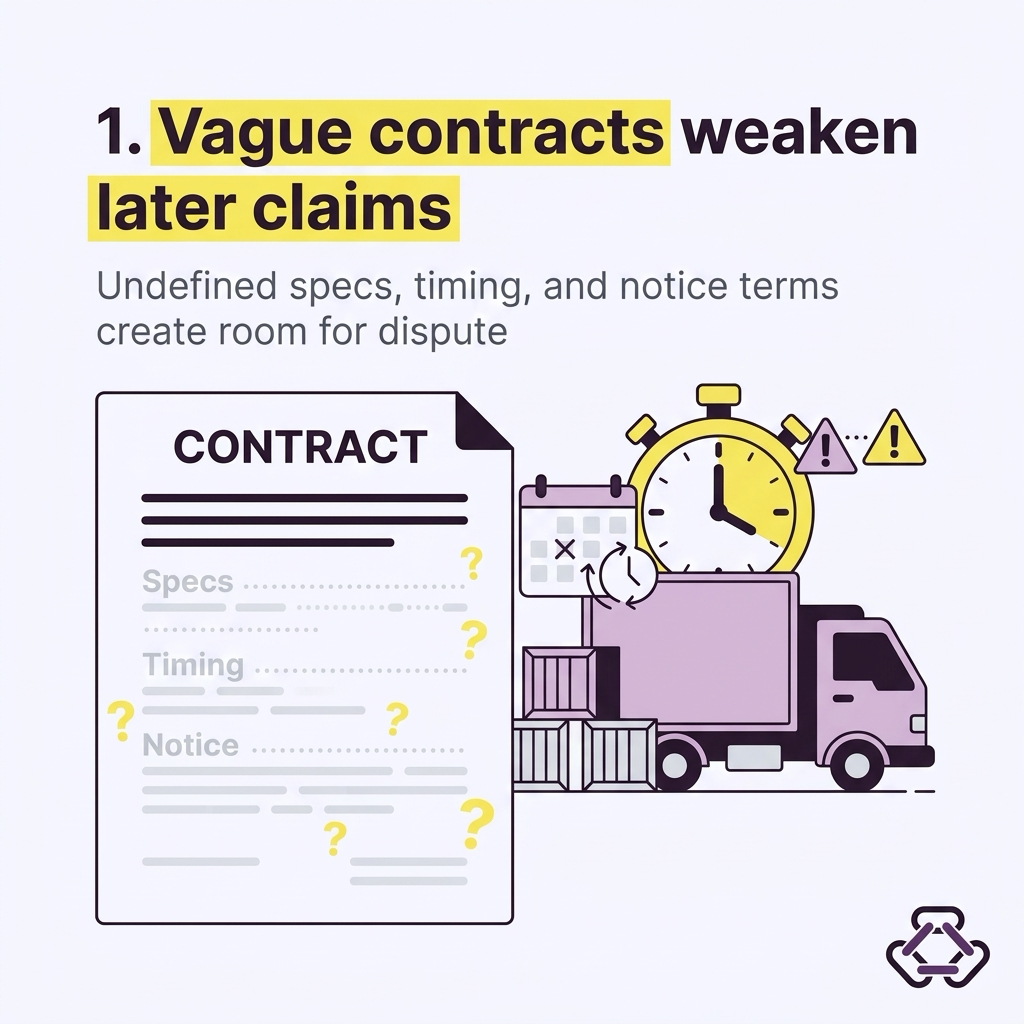
- 1. Treating The Contract Like A Purchase Order File Instead Of A Recovery Blueprint
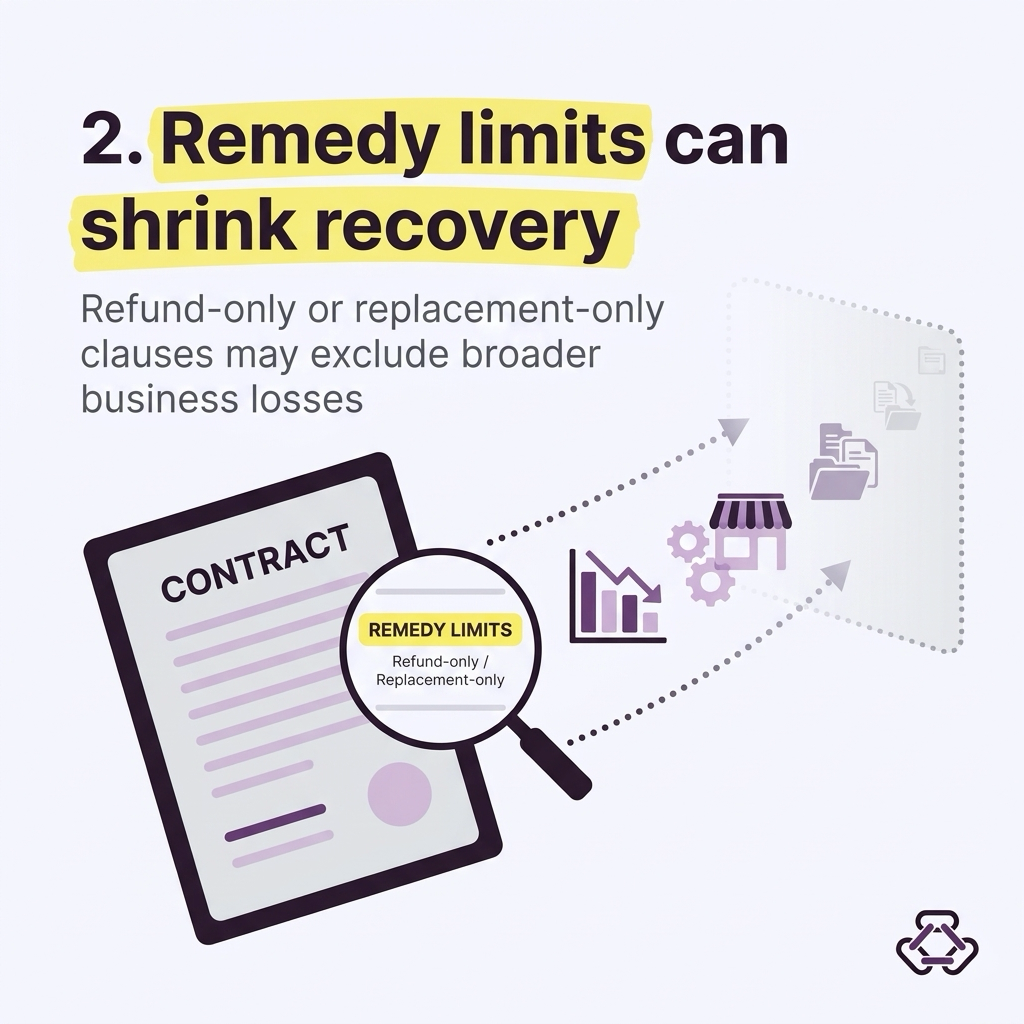
- 2. Overlooking Remedy Limitations Until After The Breach Happens
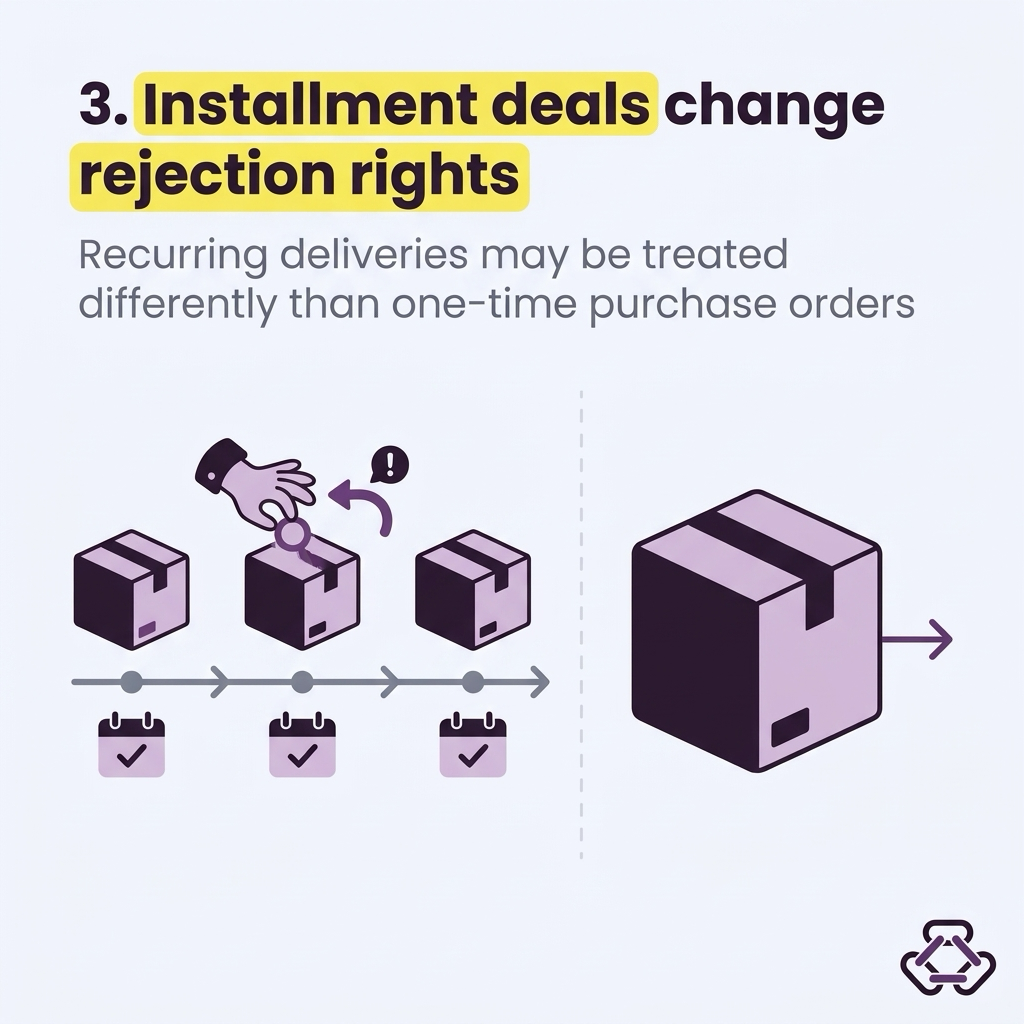
- 3. Confusing A One-Off Delivery Contract With An Installment Contract
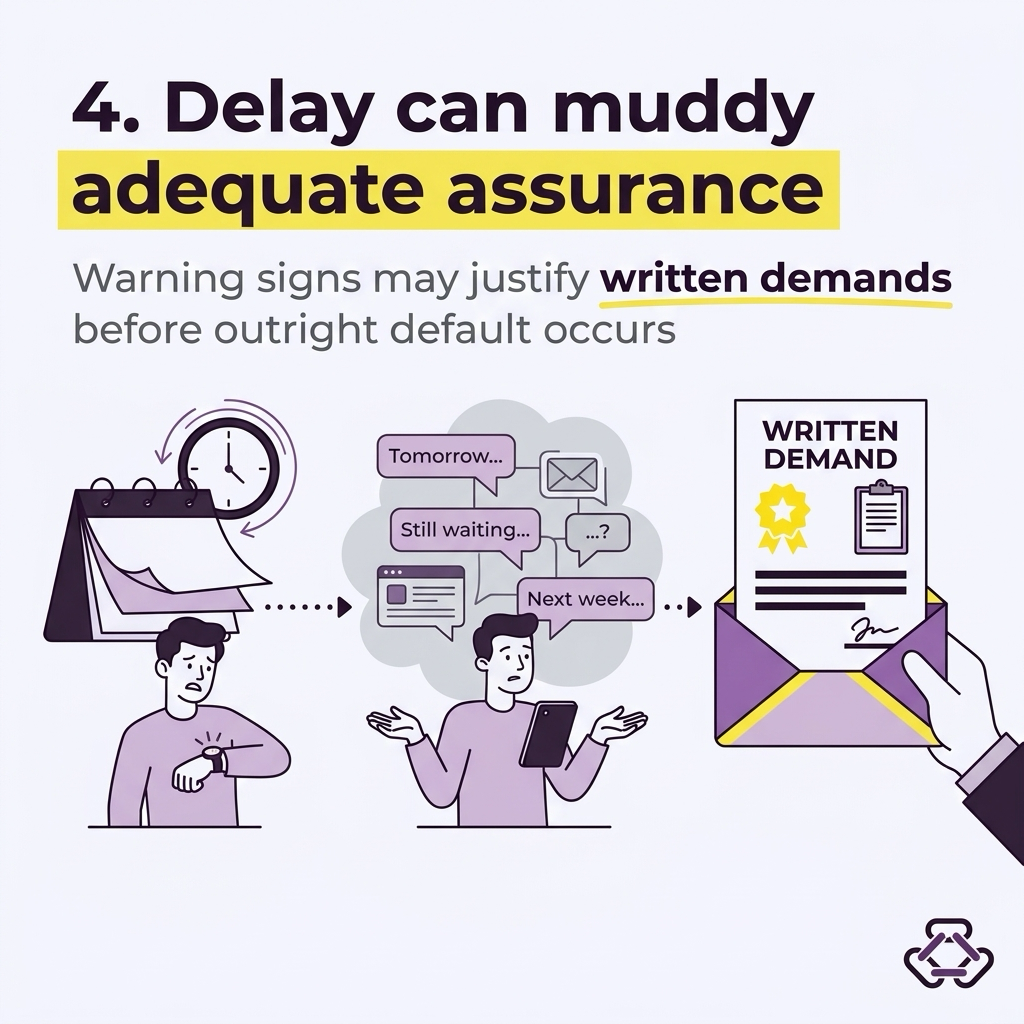
- 4. Waiting Too Long To Demand Adequate Assurance
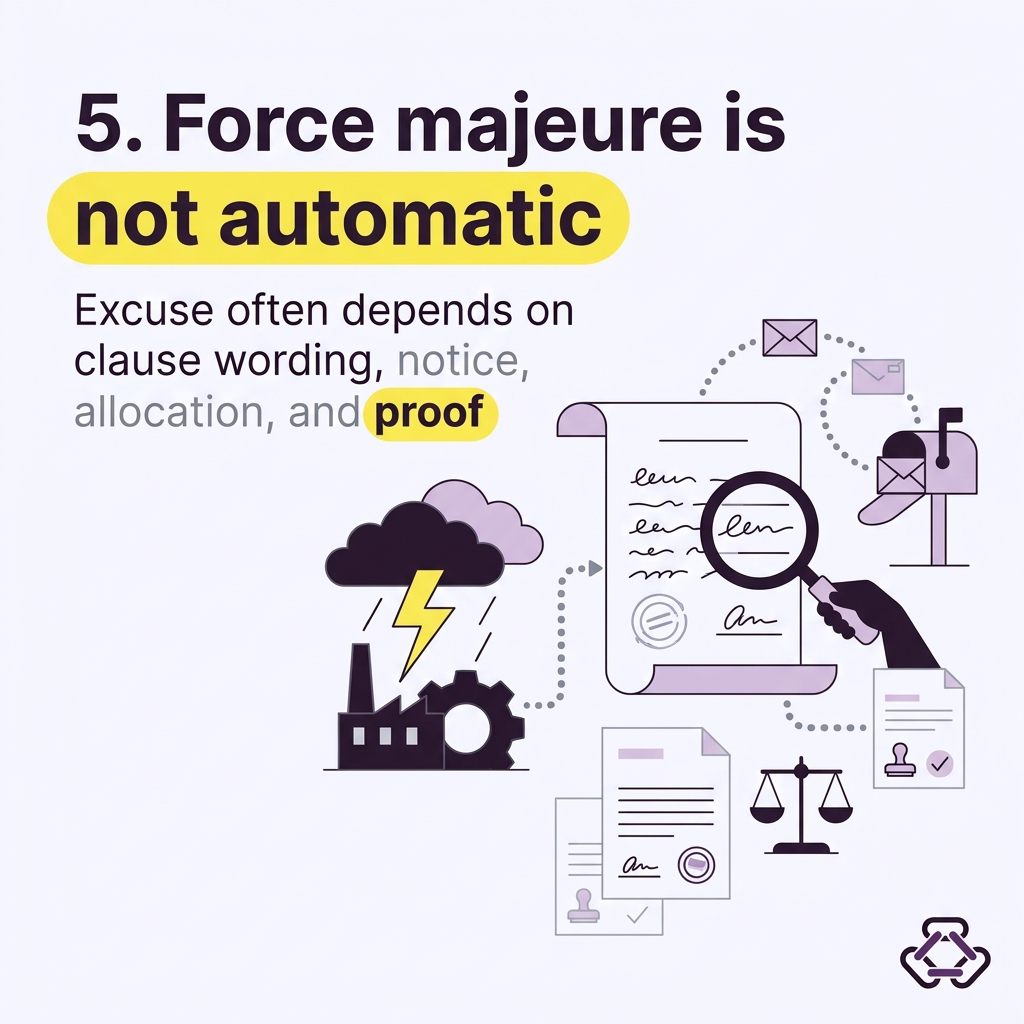
- 5. Assuming “Force Majeure” Automatically Covers Supplier Trouble
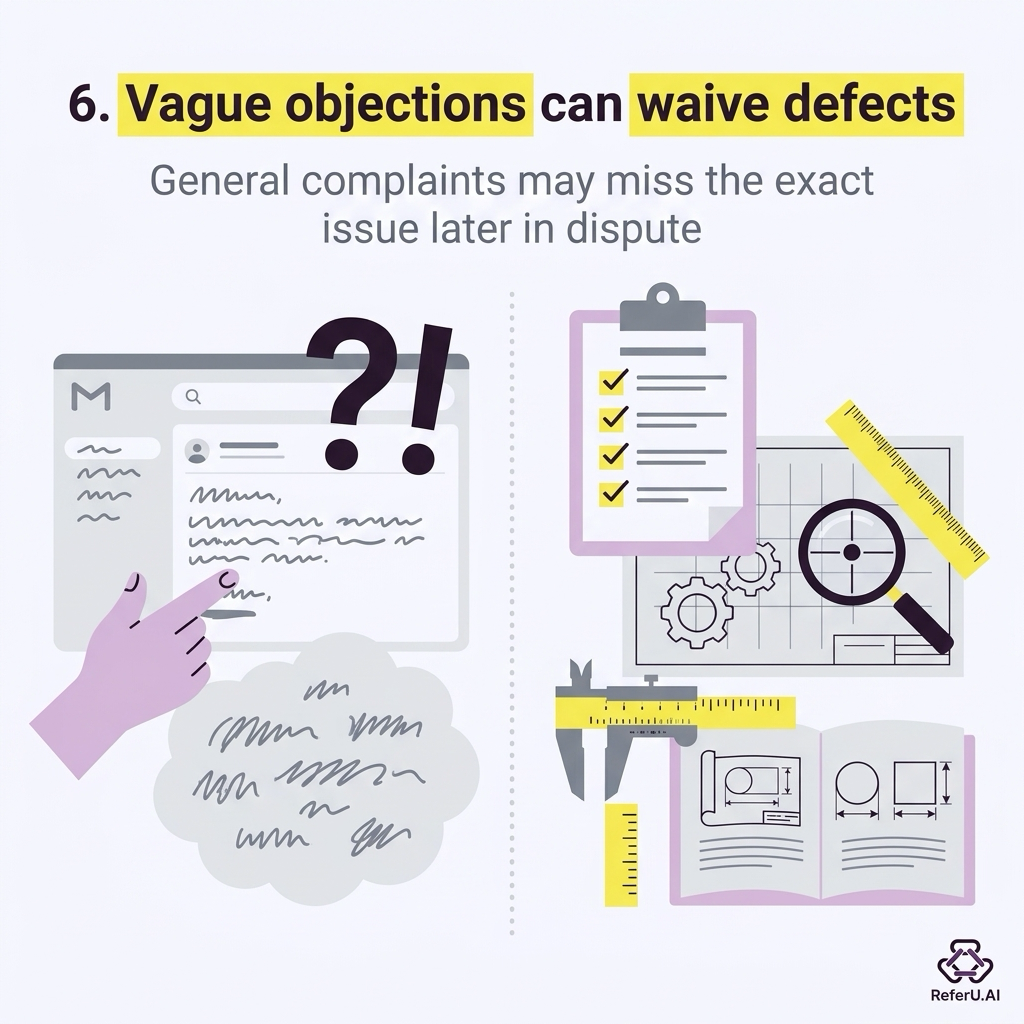
- 6. Failing To Preserve The Right Objections In The Right Way
- They Blur The Breach
- They Blur Causation
- They Blur Mitigation
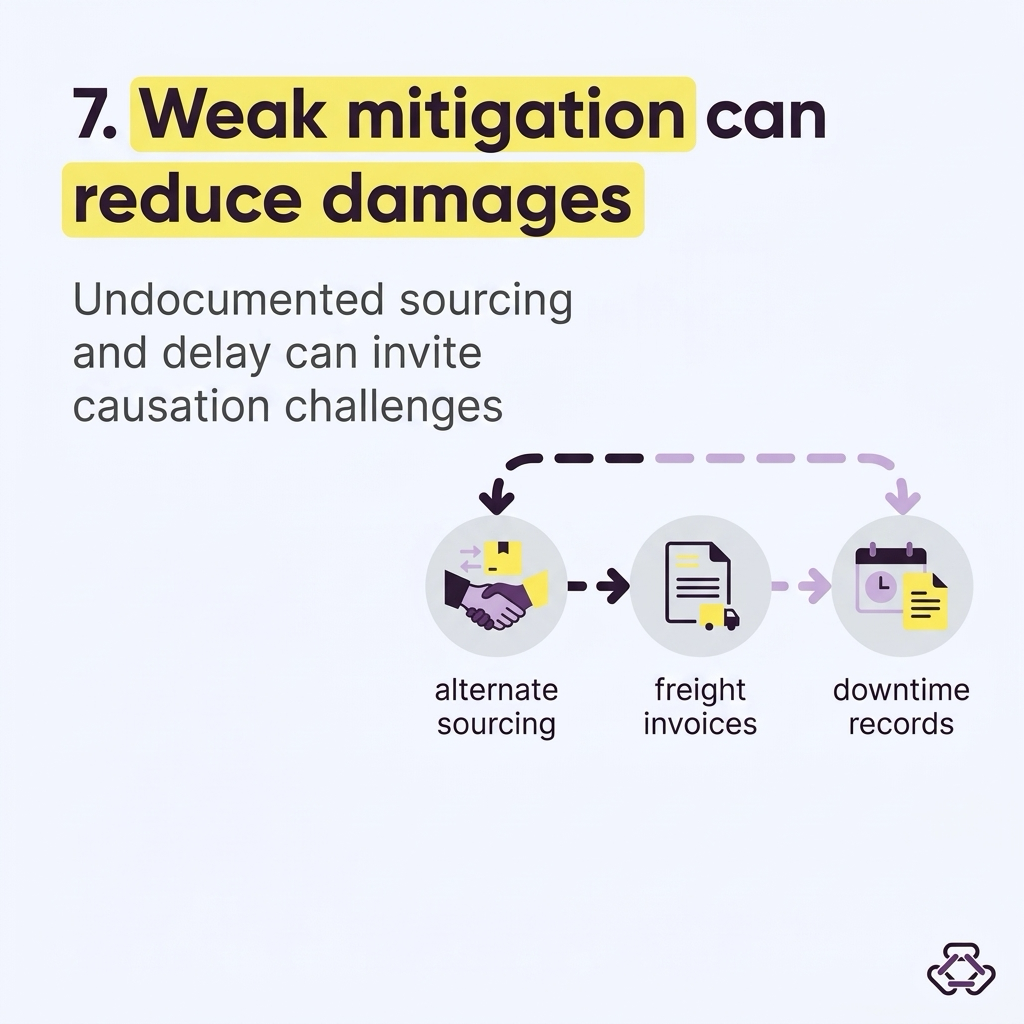
- 7. Waiting Too Long To Mitigate And Measure Damages
- Why These Mistakes Matter More Than Companies Expect
- The Bottom Line

Type
Great Grandchild
Status
Approved
Title (YouTube)
Images Failed (Social)
Images Failed (Social)
Do not index
Parent item
Publish Date (TikTok)
Jan 5, 2027 15:15
Videos Post IDs (Social)
Hashtags (Social)
#LegalAdvice #LegalHelp #BusinessLitigation #VendorSupplyAgreement
Caption
Caption X
Cover

OG Image

Alt Image Text
Flat vector illustration of supply agreement mistakes affecting recovery in supply chain disputes, with a contract, disrupted deliveries, boxes, and business characters reviewing problems.
Images

Videos
Publish Date (Social)
Dec 16, 2026 10:00
Scheduled (Social)
Scheduled (Social)
Images Posted (Social)
Images Posted (Social)
Videos Posted (Social)
Videos Posted (Social)
Videos Failed (Social)
Videos Failed (Social)
Featured
Created time
Apr 3, 2026 10:12 PM
Sub-item
Authors
CTA Practice Area (Social)
Business Litigation
TikTok Failed (Social)
TikTok Failed (Social)
Videos Post Links (Social)
YT Auto Captions Removed
TikTok Post Links (Social)
Images Post IDs (Social)
YT Post ID
Video Pending Manual (Social)
TikTok Posted (Social)
TikTok Posted (Social)
TikTok Post IDs (Social)
Video Cover (Social)
Images Post Links (Social)
First Comment (Social)
YT Embedded
Images Delete (Social)
Videos Delete (Social)
Carousel Video URL (Social)
7 Supply Agreement Mistakes That Undercut Recovery
Supply agreements often look straightforward when the relationship is healthy: price, quantity, delivery dates, quality specs, payment terms. But when shipments start arriving late, defective, incomplete, or not at all, the contract language that once felt routine can suddenly shape whether a company can recover real business losses.
That matters because supplier disruptions can ripple far beyond a single missed shipment. The National Institute of Standards and Technology has noted that upstream hazards can suppress payroll, GDP, and employment across manufacturing supply chains, underscoring how supplier failures can affect much more than one invoice or one truckload of goods (NIST). At the same time, NIST has emphasized growing concerns around supply chain traceability and the difficulty many companies face in proving exactly what happened, when, and where in complex supply networks (NIST).
In this post, you’ll learn seven common supply agreement mistakes that can quietly weaken a company’s position when a dispute turns into a damages fight. If you want a broader foundation first, this overview of supplier-contract disputes and commercial damages can help frame the bigger picture.
Scroll to the bottom for every post in this series.
1. Treating The Contract Like A Purchase Order File Instead Of A Recovery Blueprint
A lot of companies negotiate supply agreements around operations, not litigation. That makes sense on the front end. The problem appears later, when the contract does not clearly define the promises that matter most in a dispute.
If the agreement is vague about product specifications, inspection procedures, delivery windows, packaging, change control, forecasting, allocation, substitute sourcing, or notice requirements, a future claim often becomes harder to prove. An attorney looking at the file may end up asking basic questions that the contract never answered: What exactly counted as nonconforming goods? Was time of delivery central or just approximate? Did the supplier commit to a fixed output or only commercially reasonable efforts? Was a shortage a breach, an excused allocation, or just a planning dispute?
For contracts involving the sale of goods, Article 2 of the Uniform Commercial Code often becomes central. Under UCC 2-601, a buyer’s rights on improper delivery can be broad in a non-installment setting when goods “fail in any respect” to conform, but those rights can look different in installment arrangements and under the parties’ own contract language (Cornell LII). That is one reason precision on the front end often affects leverage on the back end.
In general terms, the more a supply agreement reads like a detailed operating manual, the easier it may be to connect breach, causation, and damages later. The more it reads like a short commercial memo, the more room there may be for argument.
2. Overlooking Remedy Limitations Until After The Breach Happens
One of the most expensive contract mistakes is discovering, too late, that the agreement limits recovery to replacement goods, repair, credit, or refund. Many companies focus heavily on price and continuity of supply but spend far less time on the remedies section. That section may become the most important paragraph in the entire contract once performance breaks down.
Under UCC 2-719, parties can agree to contractual limitations on remedies, and commercial limitations on consequential damages are generally not treated the same way as personal-injury limitations in consumer settings (Cornell LII). In practical terms, that often means a supplier agreement may attempt to exclude categories such as lost profits, lost production, lost customers, downtime, recall costs, expedited freight, or other downstream losses.
That can materially undercut recovery in a real-world vendor dispute. A company may have suffered losses far beyond the value of the undelivered or defective goods, but if the contract excludes consequential damages and narrows the remedy to refund or replacement, the legal and economic landscape changes quickly.
There is also another layer: some limited remedies can fail in operation. UCC 2-719 recognizes that where circumstances cause an exclusive or limited remedy to fail of its essential purpose, the analysis may shift (Cornell LII). Whether that argument works depends heavily on facts, contract wording, governing law, and case law in the relevant jurisdiction. An attorney might help determine whether a limitation is enforceable as written, vulnerable in application, or inconsistent with how the parties actually performed.
This is one reason sophisticated businesses often review supply agreements not just for how they start, but for how a claim would be measured if the relationship collapses.
3. Confusing A One-Off Delivery Contract With An Installment Contract
This mistake can quietly distort expectations about rejection, cancellation, and damages.
Many buyers assume any nonconforming delivery gives them the right to reject everything and end the relationship. But installment contracts are often treated differently. Under UCC 2-612, the standard can turn on whether the nonconformity “substantially impairs” the value of that installment or, in more serious cases, the whole contract (Cornell Wex; ABA Business Law Section).
That distinction matters because supply relationships are commonly structured around recurring releases, rolling forecasts, partial deliveries, and long-term production schedules. A buyer may think it has “perfect tender” rights across the board, while the supplier argues the agreement is an installment contract and the buyer overreacted by canceling too broadly. If that fight happens, the recovery analysis may become more complicated. Suddenly the dispute is not just about the supplier’s breach; it is also about whether the buyer’s response was contractually justified.
In many commercial cases, recovery gets reduced not because there was no breach, but because the parties disagree over the scope of the breach and the scope of the response. That is why contract structure matters. A recurring supply arrangement may look operationally routine while carrying very different legal consequences than a single-delivery purchase.
If your team is already dealing with missed shipments or recurring defects, it may also help to understand how these commercial relationships break down over time, especially where the dispute involves repeated performance problems rather than one isolated failure.
4. Waiting Too Long To Demand Adequate Assurance
Not every supply dispute starts with an outright default. Often the warning signs arrive first: unexplained delays, deteriorating quality, evasive communications, missed milestones, rumors of financial trouble, raw-material shortages, labor instability, or sudden requests to change terms midstream.
When reasonable grounds for insecurity arise in a sale-of-goods contract, UCC 2-609 allows a party to demand adequate assurance of performance in writing and, if commercially reasonable, suspend its own unperformed obligations while waiting for that assurance. Failure to provide adequate assurance within a reasonable time, not exceeding 30 days, can amount to repudiation (Cornell LII).
This tool is often underused. Businesses sometimes continue shipping payments, placing releases, consuming inventory, and hoping the issue resolves itself. By the time they escalate, the record may show weeks or months of tolerance, mixed messaging, and informal workarounds. That can complicate later arguments about when insecurity became serious, whether suspension was justified, and when the other side effectively repudiated.
In general terms, a well-timed adequate-assurance demand can do several things at once:
- create a cleaner written record,
- pin down the supplier’s position,
- clarify whether performance problems are temporary or structural,
- support later mitigation decisions, and
- reduce ambiguity about when the dispute truly matured.
Companies often think of legal escalation as something that happens after failure. In many supply cases, the most important legal positioning happens during the uncertainty stage.
5. Assuming “Force Majeure” Automatically Covers Supplier Trouble
When a supplier says performance became impossible because of labor shortages, transportation disruptions, government action, energy constraints, raw-material scarcity, or upstream vendor failures, many buyers assume the issue falls under force majeure and there is little to argue about.
That assumption can weaken recovery.
First, the actual force majeure clause matters. Some clauses are broad; others are narrow. Some expressly cover epidemics, embargoes, or government orders. Others exclude price increases, market changes, and foreseeable supply constraints. Some require prompt written notice and detailed mitigation efforts. Others are silent or incomplete.
Second, the UCC has its own framework. Under UCC 2-615, delay or nondelivery may be excused where performance has been made impracticable by the occurrence of a contingency whose nonoccurrence was a basic assumption of the contract, but the seller also has obligations relating to fair allocation and seasonable notice (Cornell LII). Cornell’s Wex also notes that doctrines like commercial frustration and impracticability are interpreted narrowly, especially where the risk was foreseeable or effectively allocated by contract (Cornell Wex).
That narrow treatment is a major point. A supplier’s performance becoming more expensive or less convenient is not always the same as legal excuse. In many disputes, the real question is not whether disruption occurred. It is whether the contract allocated that disruption risk to one party, whether the event truly made performance impracticable, and whether required notice and allocation steps were followed.
This issue has become more prominent as supply chains grow more complex and traceability problems make it harder to verify root cause. NIST has highlighted that one of the recurring supply chain challenges is the absence of reliable provenance and event-tracking data across manufacturing ecosystems (NIST). In litigation terms, weak traceability can become weak proof.
6. Failing To Preserve The Right Objections In The Right Way
A company can have a legitimate quality or delivery claim and still damage its recovery position by documenting objections poorly.
That happens more often than people think. Operations teams may send emails saying goods are “not acceptable” or “late again,” but never tie the objection to a precise contract specification, batch issue, inspection result, shelf-life requirement, tolerance variance, test protocol, or release number. Sometimes the company accepts goods under pressure to keep production moving, then later tries to broaden the claim without a clean notice trail.
UCC 2-605 addresses waiver of a buyer’s objections by failure to particularize. In certain settings, a buyer that rejects goods but fails to state a particular defect that could have been identified by reasonable inspection may later be precluded from relying on that unstated defect (Cornell LII). Related provisions in Article 2 also address acceptance, revocation, and notice of breach, which can become critical once goods are received, used, reworked, or integrated into downstream production (Cornell LII).
From a recovery standpoint, vague objections can create three separate problems:
They Blur The Breach
If the defect theory shifts over time, the opposing side may argue the buyer never clearly identified what was wrong.
They Blur Causation
If the buyer cannot connect the alleged nonconformity to a production stop, customer complaint, line failure, warranty issue, or lost sale, damages become more contestable.
They Blur Mitigation
If records do not show what was rejected, what was accepted under reservation, what was reworked, what substitute goods were sourced, and what business loss followed, the damages presentation may lose force.
This is why companies in active disputes often spend substantial time reconstructing inspection logs, warehouse records, nonconformance reports, customer complaints, freight records, cure requests, and internal escalation emails. A stronger paper trail often translates into a stronger damages story.
7. Waiting Too Long To Mitigate And Measure Damages
A surprising number of recovery problems come not from the original breach, but from what happened next.
When a key supplier fails, the buyer is usually forced into real-time business decisions: source elsewhere, buy partial substitute quantities, redesign, expedite freight, qualify a new vendor, idle a line, ration inventory, prioritize key customers, or suspend part of the business. Those decisions may all be commercially sensible. But if they are undocumented, delayed, or internally inconsistent, the other side may later challenge both mitigation and damages.
Under UCC 2-712, after a seller’s breach a buyer may “cover” by making in good faith and without unreasonable delay any reasonable purchase or contract for substitute goods, and may recover the difference between the cost of cover and the contract price together with incidental and consequential damages, less expenses saved (Cornell LII). That sounds simple in theory. In practice, the debate often centers on what counts as reasonable timing, reasonable substitute sourcing, and provable downstream loss.
For example:
- Was the replacement source comparable?
- Were the substitute prices commercially reasonable?
- Did the buyer wait too long to source elsewhere?
- Did the buyer bypass lower-cost alternatives?
- Were lost profits actually caused by the breach, or by weak demand, internal production issues, or unrelated customer decisions?
- Were there expenses saved that offset some claimed losses?
These issues become even more complicated when the contract excludes consequential damages, limits cover rights, or requires supplier approval for alternate sourcing.
The practical reality is that damages in supply disputes are often built from operational evidence, not just legal arguments. Purchase records, ERP data, line downtime logs, margin analysis, customer chargebacks, expedited freight invoices, scrap reports, and substitute-vendor onboarding costs may all become part of the recovery picture. In many cases, the companies that recover more effectively are the ones that can tell a disciplined story: breach, response, mitigation, cost impact, and business consequence.
Why These Mistakes Matter More Than Companies Expect
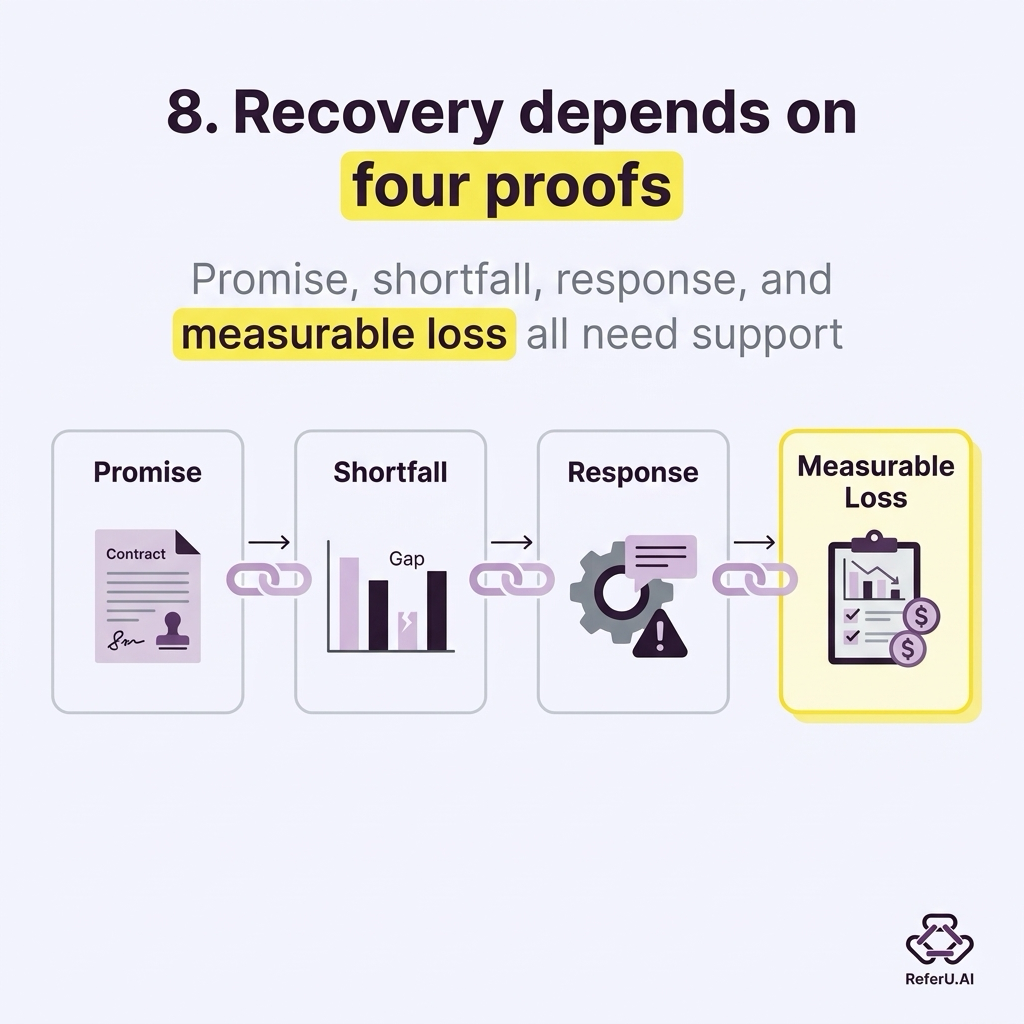
Supply agreement disputes are rarely just “contract cases.” They tend to be evidence cases layered on top of contract language. The written agreement sets the framework, but the recovery outcome often depends on how clearly the business can show four things:
- What the supplier promised
- How performance fell short
- What the buyer did in response
- How the shortfall translated into measurable loss
When any one of those elements is weak, recovery can shrink.
That is also why companies sometimes underestimate the value of early legal analysis. An attorney experienced in highly similar matters may be able to identify whether a dispute is really about breach, excuse, waiver, acceptance, limitation of remedy, inadequate notice, or causation. Those are very different disputes, even when they all begin with the same operational complaint: “our vendor didn’t perform.”
The Bottom Line
The biggest supply agreement mistakes often happen long before a claim is filed. A vague contract, a buried remedy limitation, a misunderstood installment structure, a delayed adequate-assurance demand, an overbroad force majeure assumption, weak defect notices, or inconsistent mitigation can all undercut recovery later.
In general terms, companies facing a supplier dispute often benefit from getting clarity early on contract language, notice history, performance records, and damages support. The sooner that analysis starts, the easier it may be to preserve leverage, frame the dispute accurately, and evaluate what recovery paths remain realistic.
Visit ReferU.AI to get matched with an attorney who has demonstrable experience in cases like yours — for free.
