Table of Contents
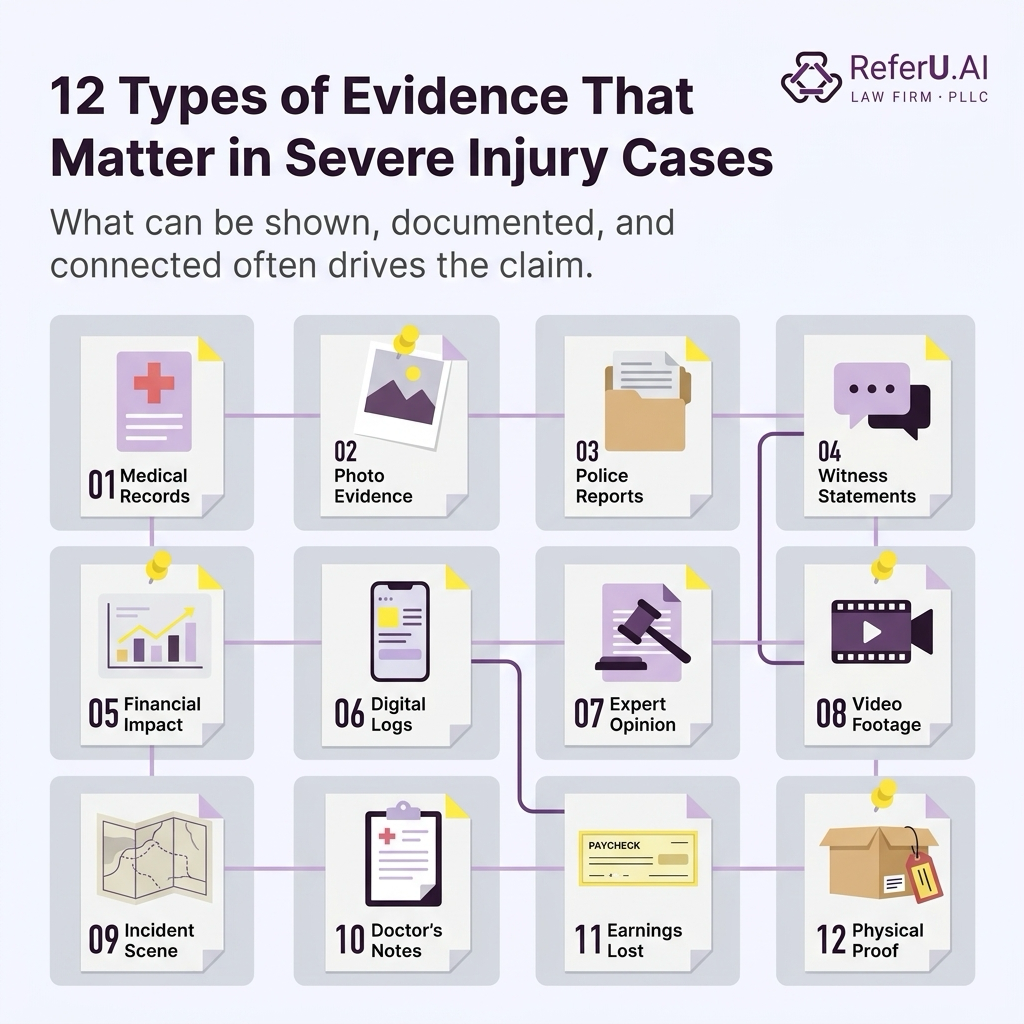
- 12 Types of Evidence That Matter in Severe Injury Cases
- Why Evidence Matters More In Severe Injury Cases
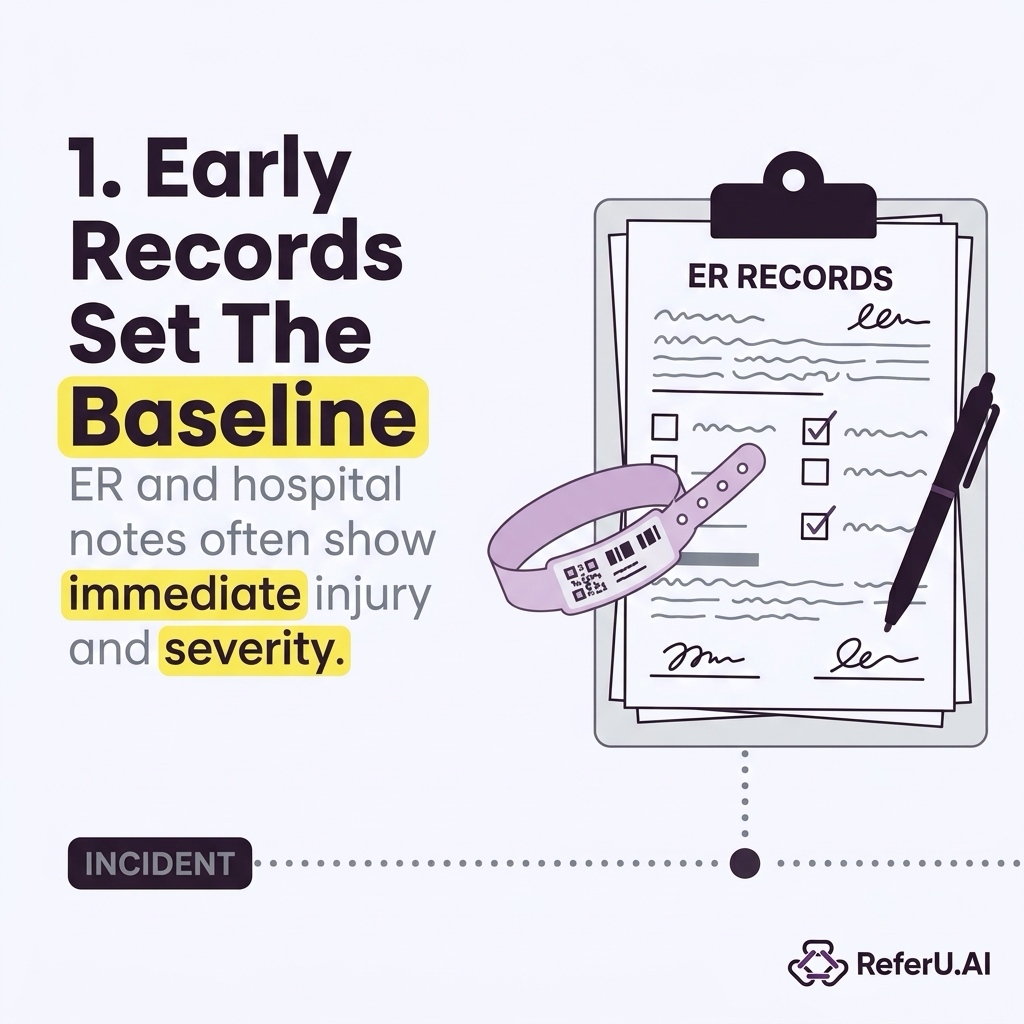
- 1. Emergency Room And Initial Hospital Records
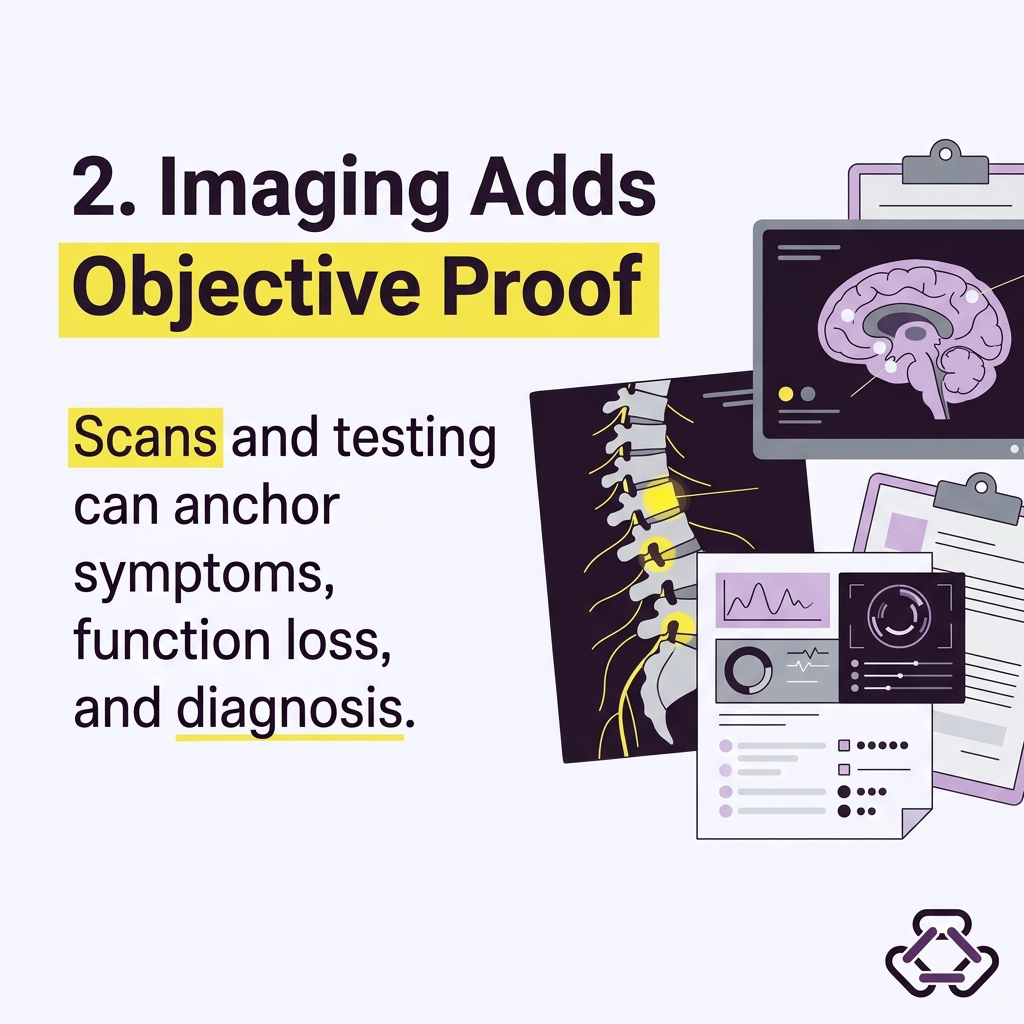
- 2. Diagnostic Imaging And Objective Test Results
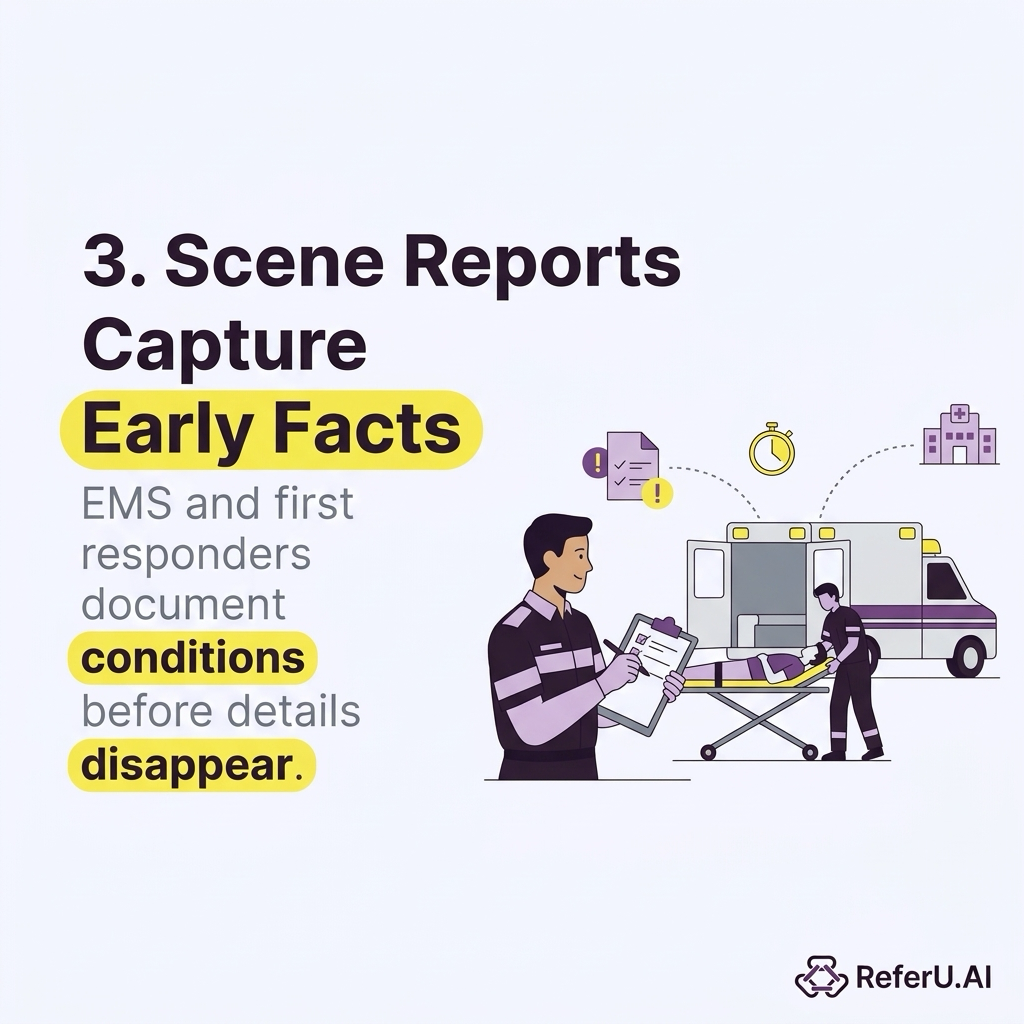
- 3. EMS, Ambulance, And First Responder Reports
- 4. Police Reports, Incident Reports, And Official Investigations
- 5. Photographs And Video From The Scene
- 6. Surveillance Footage, Dashcams, Bodycams, And Digital Media
- 7. Witness Statements
- 8. Treating Physician Opinions And Specialist Records
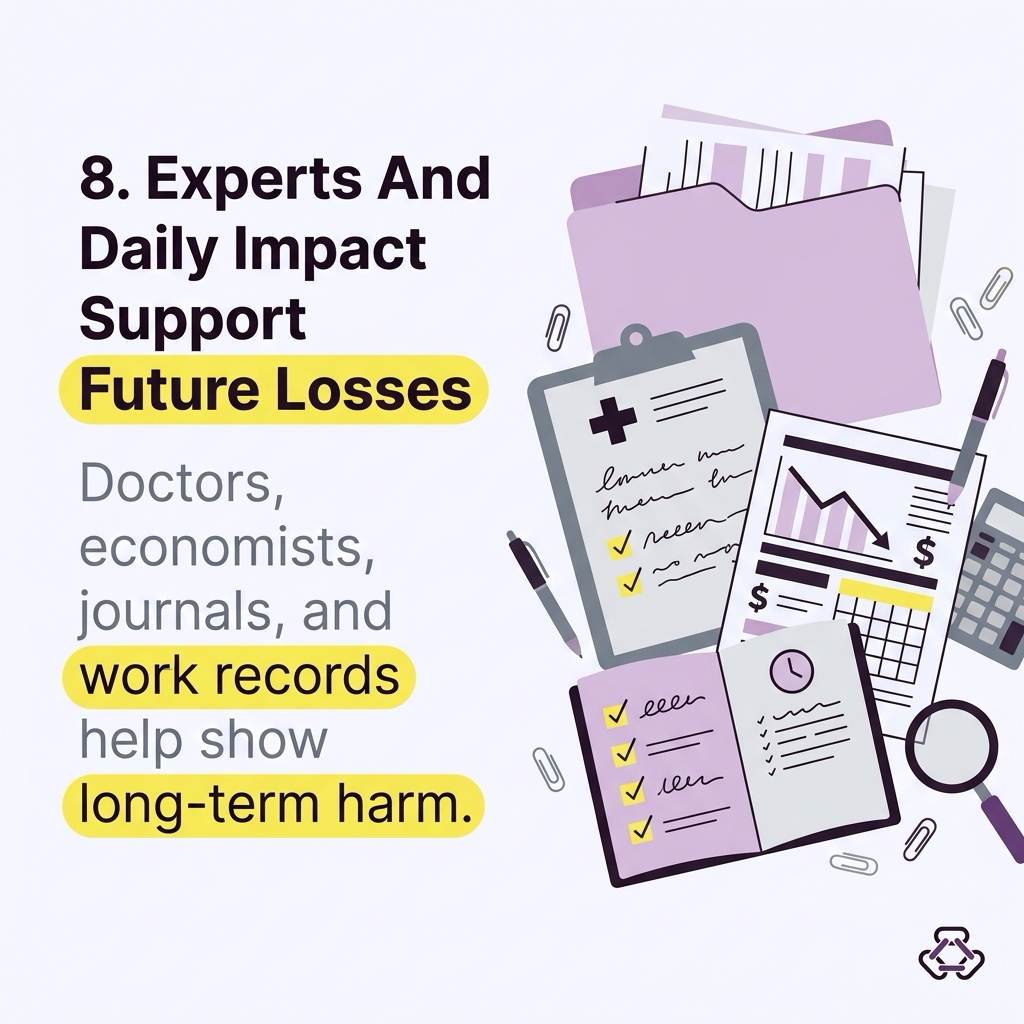
- 9. Expert Testimony On Causation, Life Care Planning, And Economics
- 10. Employment, Wage, And Vocational Evidence
- 11. Evidence Of Daily Limitations And Human Loss
- 12. Preservation Evidence And The Missing-Piece Problem
- What Makes Evidence Persuasive, Not Just Available
- Final Thoughts

Type
Great Grandchild
Status
Approved
Title (YouTube)
Images Failed (Social)
Images Failed (Social)
Do not index
Publish Date (TikTok)
Apr 8, 2027 07:15
Videos Post IDs (Social)
Hashtags (Social)
#LegalAdvice #LegalHelp #PersonalInjury #CatastrophicInjury
Caption
Caption X
Cover

OG Image

Alt Image Text
Flat vector illustration of evidence types in severe injury cases, showing medical records, accident photos, reports, witnesses, and future damages documentation.
Images

Videos
Publish Date (Social)
Feb 8, 2027 12:30
Scheduled (Social)
Scheduled (Social)
Images Posted (Social)
Images Posted (Social)
Videos Posted (Social)
Videos Posted (Social)
Featured
Created time
Apr 7, 2026 01:39 PM
Sub-item
Authors
CTA Practice Area (Social)
Personal Injury
TikTok Failed (Social)
TikTok Failed (Social)
Videos Post Links (Social)
TikTok Post Links (Social)
Images Post IDs (Social)
YT Post ID
Video Pending Manual (Social)
TikTok Posted (Social)
TikTok Posted (Social)
TikTok Post IDs (Social)
Video Cover (Social)
Images Post Links (Social)
First Comment (Social)
Videos Failed (Social)
Videos Failed (Social)
YT Embedded
Images Delete (Social)
Videos Delete (Social)
Carousel Video URL (Social)
12 Types of Evidence That Matter in Severe Injury Cases
Severe injury claims often turn on one practical question: what can be shown, documented, and connected to the harm. In high-stakes cases involving traumatic brain injuries, spinal cord damage, amputations, crush injuries, burns, or other life-altering trauma, evidence does more than tell a story. It helps establish how the injury happened, how serious it is, who may be legally responsible, and what the losses may look like over time.
That matters because these cases are rarely limited to one hospital bill or one missed paycheck. They often involve future treatment, rehabilitation, home modifications, lost earning capacity, and long-term daily limitations. If you want a broader overview of how these claims are valued, this guide on long-term harm and future damages adds useful context.
In this post, you’ll learn 12 types of evidence that often carry real weight in severe injury cases, why each one matters, and how attorneys often use them to build a clearer, evidence-based picture of the claim.
Scroll to the bottom for every post in this series.
Why Evidence Matters More In Severe Injury Cases
In many personal injury claims, there is some disagreement about fault or about the extent of the harm. In severe injury cases, those disputes are often amplified because the financial stakes are higher and the medical issues are more complex.
That complexity is common in the real world. The CDC’s traumatic brain injury data notes that TBI remains a major cause of death and disability in the United States. For workplace trauma, OSHA’s severe injury reporting rules require employers to report inpatient hospitalizations, amputations, and loss of an eye, which reflects how often catastrophic-level injuries become a regulatory issue as well as a legal one. Roadway injury cases also frequently begin with official crash documentation; NHTSA explains that its crash data systems rely on official police crash reports for injury and fatality cases.
In general terms, stronger evidence often helps with four core issues:
- Liability: what happened, and who may be at fault
- Causation: whether the incident actually caused the injury being claimed
- Damages: the medical, financial, and functional impact of the injury
- Future losses: whether long-term care and earning losses can be supported by reliable proof
Federal evidence rules also show why foundations matter. Courts often require proof that an item is what the proponent claims it is under Rule 901 on authentication, and expert opinions are screened for reliability under Rule 702. In plain language, it is not just about having evidence. It is also about whether that evidence can be connected, explained, and presented in a reliable way.
1. Emergency Room And Initial Hospital Records
The first wave of medical records is often some of the most important evidence in a severe injury case.
These records may capture:
- the patient’s initial complaints
- visible trauma
- imaging orders and findings
- Glasgow Coma Scale scores in brain injury cases
- surgical intervention
- physician impressions about mechanism of injury
- early observations about pain, cognition, mobility, or neurological deficits
Why does this matter? Because early medical records are often created before litigation is front of mind. That can make them especially persuasive. They may help show that the injury was immediate, serious, and consistent with the reported event.
Medical records can also matter from an evidentiary standpoint. Hearsay exceptions for business and medical records are recognized under Rule 803, though admissibility still depends on foundation and jurisdiction-specific rules.
In severe injury cases, these initial records often become the baseline against which every later dispute is measured.
2. Diagnostic Imaging And Objective Test Results
X-rays, CT scans, MRIs, EMGs, nerve conduction studies, neuropsychological testing, and other diagnostic tools can be central pieces of objective proof.
These materials may help document:
- fractures
- spinal cord involvement
- disc herniation or impingement
- intracranial bleeding
- diffuse axonal injury indicators
- nerve damage
- cognitive deficits
- loss of function
Objective testing does not always tell the whole story, especially with some brain injuries or chronic pain conditions. But it often gives the case an anchor. When imaging lines up with symptoms, treatment, and functional limitations, the claim may become easier to understand for insurers, mediators, and juries.
This is one reason attorneys often spend time assembling not just the written reports, but also the actual films, image sets, and specialist interpretations.
3. EMS, Ambulance, And First Responder Reports
Paramedic and emergency medical services records can be powerful because they capture the scene close in time to the event.
They may include observations about:
- consciousness or confusion
- bleeding
- pain complaints
- entrapment
- visible deformity
- oxygen issues
- transport urgency
- statements made at the scene
- mechanism of injury
In transportation cases, first-responder observations often help bridge the gap between the accident scene and the hospital. In workplace or premises cases, they may preserve facts that disappear quickly once the area is cleaned, repaired, or reopened.
These reports can also be useful when later testimony changes. A calm, routine statement in an EMS narrative may become very important months later.
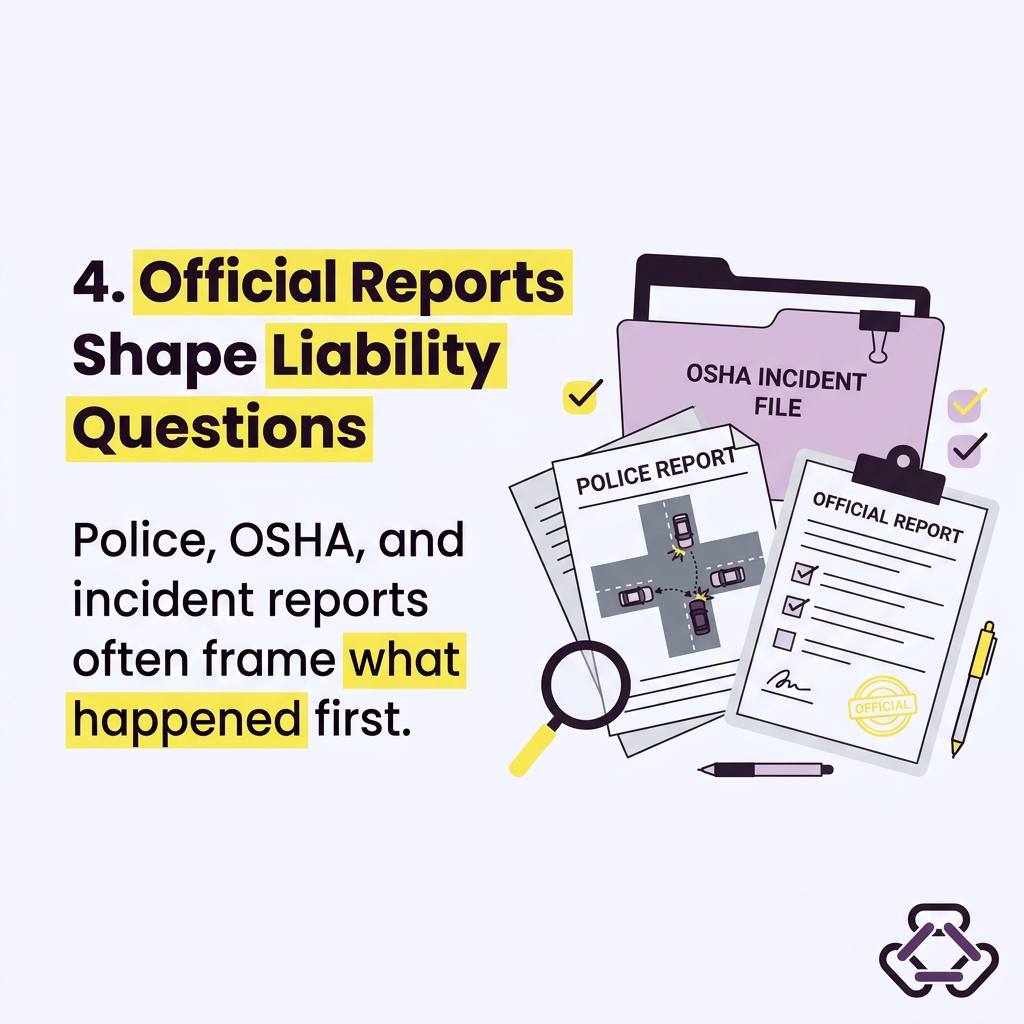
4. Police Reports, Incident Reports, And Official Investigations
Official reports are often the first structured narrative of what happened.
Depending on the case, that may include:
- police crash reports
- workplace incident reports
- OSHA investigative materials
- fire marshal reports
- property owner incident reports
- product safety findings
For roadway claims, police crash reports are foundational enough that NHTSA’s crash-report-based systems specifically depend on an official law-enforcement report. In workplace settings, OSHA requires reporting of severe work-related injuries, including inpatient hospitalization, amputation, or loss of an eye.
These reports are not always perfect. Officers may arrive after the event, witnesses may disagree, and some forms contain shorthand or mistakes. Even so, they often shape the early liability discussion and point attorneys toward missing evidence, witnesses, surveillance, or regulatory violations.
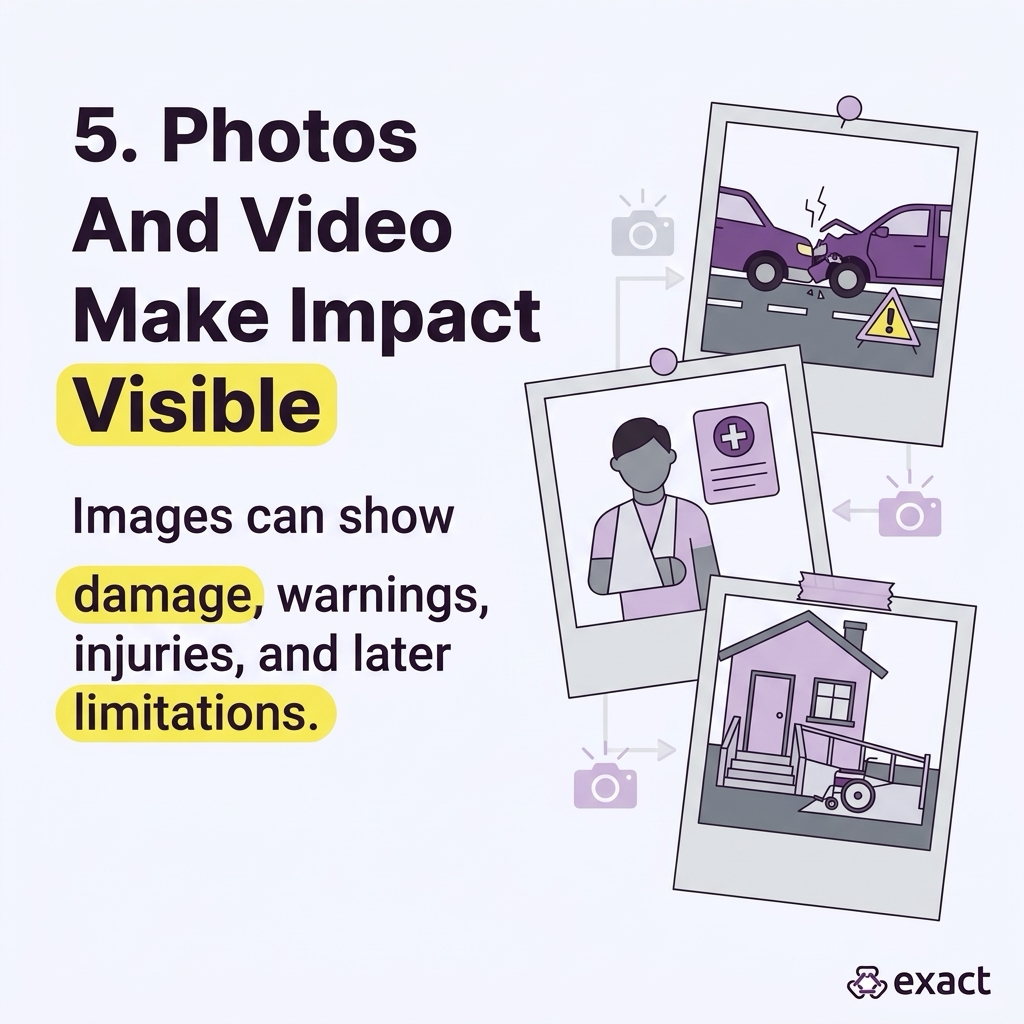
5. Photographs And Video From The Scene
Visual evidence can change the way a case is understood.
Photos and video may show:
- property damage
- blood or debris
- skid marks
- machinery condition
- missing guards or warnings
- weather and lighting conditions
- burn patterns
- visible bodily injuries
- the physical demands of daily life after the injury
In a severe injury case, photos taken on day one may carry very different weight from photos taken six months later. Early images may show bruising, swelling, surgical hardware, immobilization devices, and acute trauma. Later images may show scarring, muscle wasting, wheelchair-accessible changes, home equipment, or continuing limitations.
Courts still look for authenticity. Under Rule 901, the proponent generally has to show that the photograph or video is what it is claimed to be. That is one reason metadata, timestamps, witness identification, and careful preservation often matter.
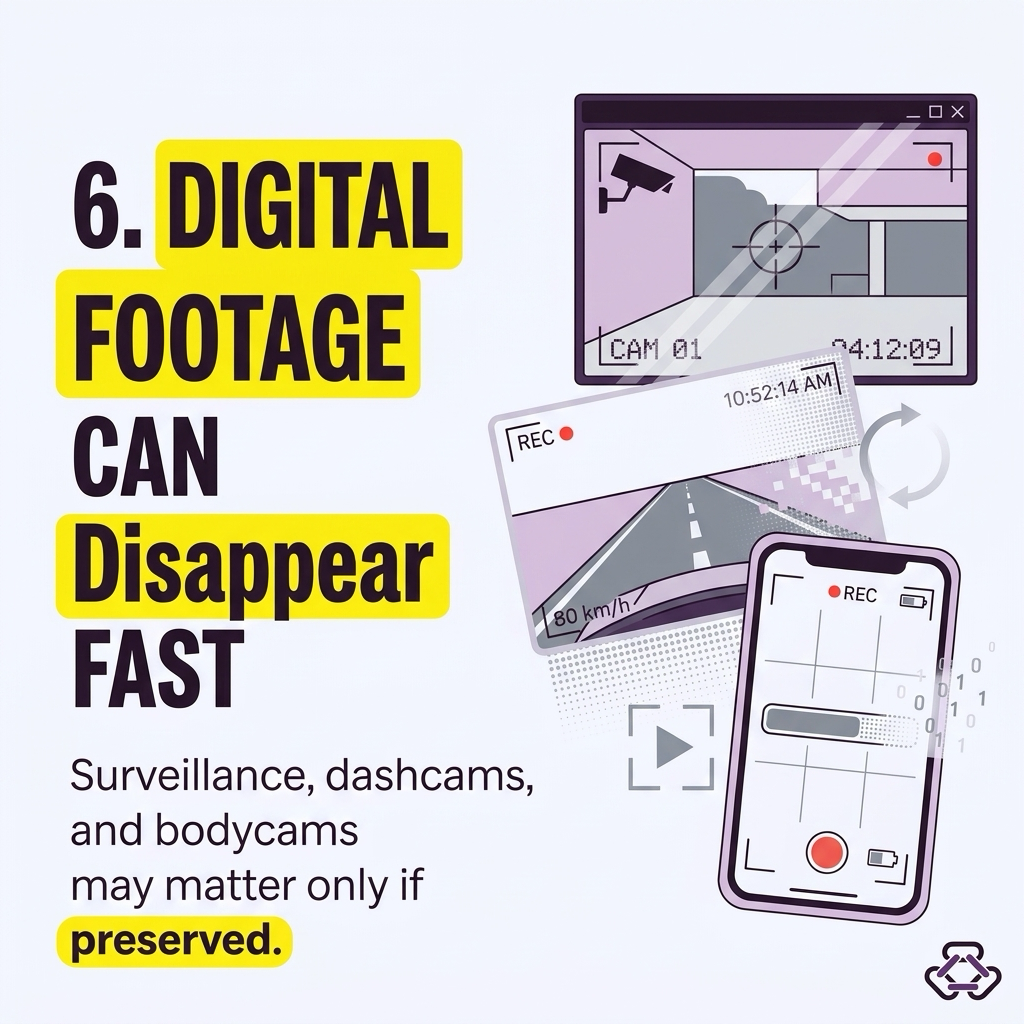
6. Surveillance Footage, Dashcams, Bodycams, And Digital Media
Some of the strongest evidence in a severe injury case is recorded automatically.
Examples include:
- traffic camera footage
- store surveillance
- warehouse or factory video
- dashcam recordings
- police bodycam footage
- doorbell camera footage
- phone videos from bystanders
This evidence may clarify:
- how the event unfolded
- timing
- speed or movement
- conditions at the scene
- whether warnings existed
- post-incident response
- visible symptoms immediately after the injury
The catch is that digital evidence can disappear quickly. Many systems overwrite footage in days or weeks. That is why preservation often becomes a major issue early in litigation. Federal civil procedure rules specifically discuss preservation and the consequences of failing to preserve electronically stored information. Rule 26 addresses early disclosure and preservation discussions, while Rule 37 addresses sanctions related to lost electronically stored information.
Some courts also address spoliation through case law and sanctions frameworks. The practical takeaway is straightforward: when digital evidence exists, its value may depend heavily on whether someone moved quickly enough to preserve it.
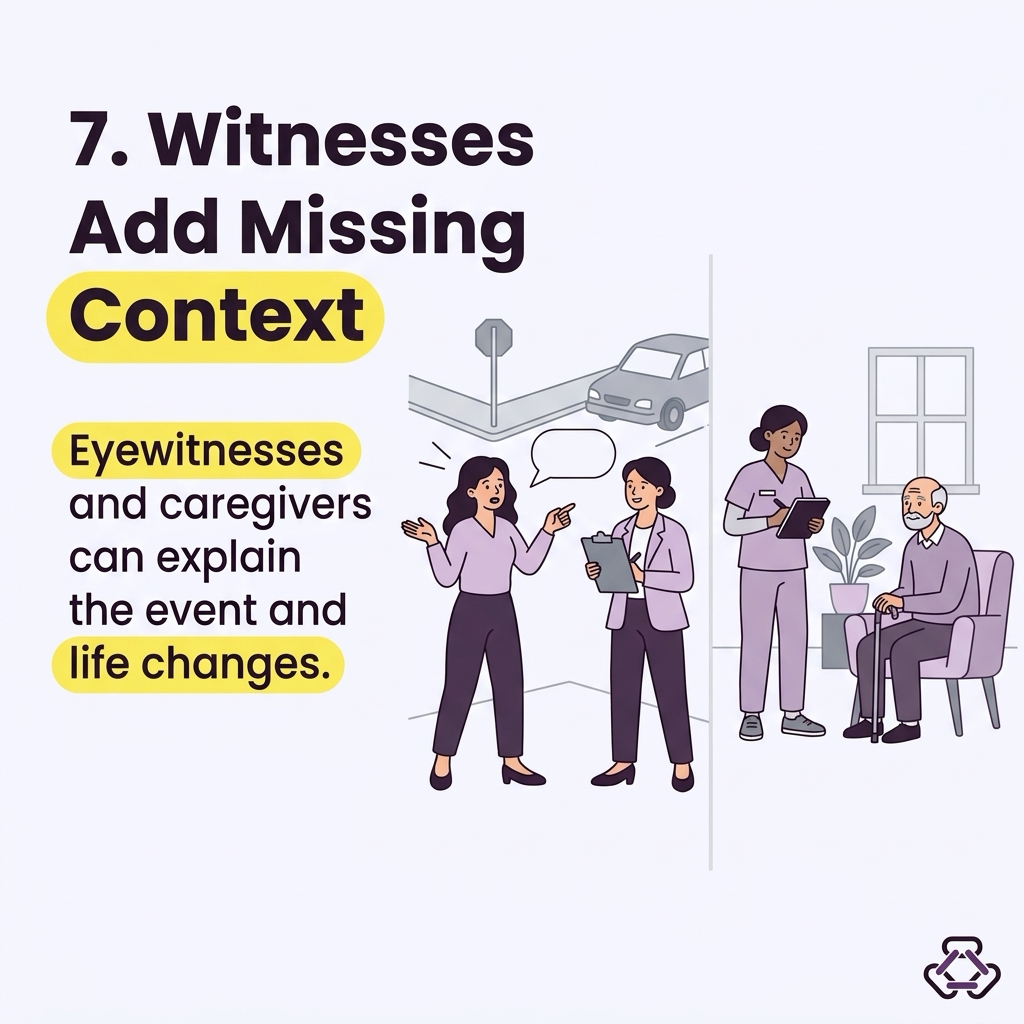
7. Witness Statements
Witnesses can fill in facts that documents cannot.
That may include:
- eyewitnesses to the event
- coworkers
- family members
- friends
- caregivers
- supervisors
- treating providers
Eyewitness testimony may help establish how the injury happened. Family and caregiver testimony may help explain how life changed afterward. In severe injury cases, both are often important.
For example, a spouse may describe the difference between a person’s pre-injury and post-injury functioning: memory issues, sleep disruption, pain behavior, mood changes, inability to drive, difficulty bathing, or the need for help transferring from bed to wheelchair. That kind of evidence can make abstract medical language more concrete.
There is also a legal line between lay and expert testimony. Under Rule 701, lay witnesses may testify based on their own perceptions, while specialized technical opinions typically fall under expert rules.
8. Treating Physician Opinions And Specialist Records
Treating doctors often provide some of the most credible opinions in a severe injury case because they have seen the patient over time.
Their records and testimony may address:
- diagnosis
- prognosis
- need for surgery
- permanent restrictions
- future care
- medication needs
- pain management
- cognitive deficits
- rehabilitation expectations
- disability and functional capacity
In a catastrophic claim, specialists may include neurologists, neurosurgeons, orthopedic surgeons, physiatrists, pain physicians, neuropsychologists, burn specialists, or rehabilitation doctors.
These opinions often matter most when they connect three things clearly:
- what the injury is
- how the incident caused it
- what the condition is likely to require in the future
That future-facing component is especially important in cases involving permanent impairment. If you’re digging deeper into that topic, it helps to understand how long-term care costs and future damages are evaluated in catastrophic injury litigation.
9. Expert Testimony On Causation, Life Care Planning, And Economics
Severe injury cases often depend on experts because the issues go beyond everyday experience.
Common experts include:
- accident reconstructionists
- biomechanical engineers
- vocational experts
- life care planners
- economists
- neuropsychologists
- rehabilitation experts
- safety experts
- product defect experts
Federal courts evaluate expert evidence under Rule 702, which focuses on whether the expert is qualified, whether the testimony will help the factfinder, and whether the opinion is based on sufficient facts and reliable methods.
Future medical expense evidence is a major example. In Medicare-related settlement contexts, CMS guidance describes life care plans as tools used to project future medical treatment and costs, while also noting that such plans are not automatically conclusive and should be supported by physician recommendations and documentation. That is a useful reminder that a life care plan is often strongest when it is grounded in actual medical records, provider input, and case-specific facts.
Economic experts may then translate those future needs into projected dollar amounts, including lost earning capacity, household service losses, and the cost of ongoing care.
10. Employment, Wage, And Vocational Evidence
A severe injury can affect far more than current wages. It may alter a person’s career path, work capacity, benefits, advancement opportunities, and retirement trajectory.
Useful records often include:
- pay stubs
- W-2s and tax returns
- attendance records
- job descriptions
- performance reviews
- union records
- disability paperwork
- employer correspondence
- vocational testing
- retraining assessments
This category of evidence often helps answer questions like:
- Was the person working full time before the injury?
- Did the job require lifting, driving, climbing, travel, or precision tasks?
- Can the person return to the same work?
- If not, what work remains realistically available?
- How does the injury affect future earning capacity?
In catastrophic cases, this evidence can become a major driver of damages, especially for younger workers or people in physically demanding or specialized occupations.
11. Evidence Of Daily Limitations And Human Loss
Not all serious harm shows up neatly on a bill or scan.
Evidence of day-to-day impact may include:
- pain journals
- activity logs
- caregiver notes
- calendars showing treatment frequency
- home modification records
- adaptive equipment receipts
- testimony about sleep, mobility, or hygiene challenges
- videos showing transfers, therapy, or assistive-device use
This category often helps show what life actually looks like after the injury. In a severe injury case, a jury may hear about “limitations with activities of daily living,” but evidence becomes more meaningful when it shows specifics: needing help getting dressed, missing family events, struggling with stairs, forgetting instructions, no longer cooking, no longer driving, or requiring supervision.
In spinal cord injury matters, long-term consequences are often substantial. The National Spinal Cord Injury Statistical Center’s 2025 facts and figures report that life expectancy after traumatic spinal cord injury remains lower than that of the general population and varies significantly by injury severity. Those long-term realities are part of why evidence about daily functioning can carry so much weight.
12. Preservation Evidence And The Missing-Piece Problem
Sometimes, one of the most important evidence issues is what is gone.
That may involve:
- deleted phone data
- overwritten surveillance
- repaired machinery
- discarded vehicle parts
- destroyed maintenance logs
- missing driver logs
- altered scene conditions
- lost electronically stored information
In litigation, this is often discussed as spoliation. Federal Rule 37 addresses failures to preserve electronically stored information and the range of measures courts may consider depending on prejudice and intent. Cornell’s summary of Rule 37 explains that courts may allow evidence and argument about lost information, limit claims or defenses, or take stronger measures in certain circumstances. Case law also shows that preservation duties often turn on notice and context, as reflected in discussions such as MetLife Auto & Home v. Joe Basil Chevrolet.
For injured people, the missing-piece problem can be frustrating because they often do not control the truck, machine, store camera, employment records, or corporate email system where crucial proof exists. An attorney may help determine what preservation steps are available, what requests can be sent, and how to respond if key evidence has already disappeared.
What Makes Evidence Persuasive, Not Just Available
A large file is not always a strong file.
In general terms, the most persuasive evidence in severe injury cases tends to be:
- timely: created close to the event
- consistent: lines up across records, witnesses, and objective findings
- authenticated: can be shown to be genuine
- specific: describes actual limitations, treatment, and costs
- connected: ties the incident to the injury and the injury to the damages
- future-oriented: addresses what the person is likely to face going forward
That is often why severe injury cases benefit from a deliberate evidence strategy rather than a stack of disconnected records. Medical proof, liability proof, digital proof, and damages proof usually work best when they support each other.
Final Thoughts
Severe injury cases are often built on more than one dramatic piece of proof. More often, they are built on layers of evidence: emergency records, imaging, official reports, witness accounts, expert analysis, employment history, and documentation of long-term daily impact.
When those layers line up, the case tends to become clearer and more credible. When evidence is missing, inconsistent, or poorly preserved, the path can get harder.
For people dealing with traumatic injuries, one practical challenge is finding a lawyer with demonstrable experience in highly similar matters — not just someone who generally handles injury claims, but someone whose background reflects relevant work with complex damages, future care issues, and evidence-heavy litigation. Visit ReferU.AI to get matched with an attorney who has demonstrable experience in cases like yours — for free.
