Table of Contents
- How to Respond to a Creditor Claim Against an Estate
- Why A Creditor Claim Matters So Much In Probate
- How To Respond To A Creditor Claim Against An Estate
- 1. Confirm Whether The Estate Is Actually In Probate
- 2. Identify The Deadline That Applies
- 3. Review Whether The Claim Was Properly Filed
- 4. Compare The Claim To The Estate’s Records
- 5. Determine Whether The Claim Is Valid, Invalid, Or Only Partly Valid
- 6. Check Priority Before Paying Anyone
- 7. Respond Formally, Not Informally
- 8. Be Careful With Rejections, Because They Often Trigger Lawsuit Deadlines
- 9. Watch For Tax Claims, Government Claims, And Secured Claims
- 10. Don’t Distribute Estate Assets Too Early
- Common Defenses And Disputes In Estate Creditor Claims
- When An Executor Or Family May Want Legal Help Quickly
- A Practical Checklist For Responding
- Final Thoughts

Type
Great Grandchild
Status
Approved
Title (YouTube)
Images Failed (Social)
Images Failed (Social)
Do not index
Parent item
Publish Date (TikTok)
Feb 22, 2027 15:15
Videos Post IDs (Social)
Hashtags (Social)
#LegalAdvice #LegalHelp #ProbateLitigation #EstateCreditorClaims
Caption
Caption X
Cover

OG Image

Alt Image Text
Flat vector illustration of an executor reviewing a creditor claim against an estate with probate documents, calendar deadlines, and balanced scales representing a probate response process.
Images


Videos
Publish Date (Social)
Jan 13, 2027 14:30
Scheduled (Social)
Scheduled (Social)
Images Posted (Social)
Images Posted (Social)
Videos Posted (Social)
Videos Posted (Social)
Videos Failed (Social)
Videos Failed (Social)
Featured
Created time
Apr 3, 2026 04:15 PM
Sub-item
Authors
CTA Practice Area (Social)
Probate Litigation
TikTok Failed (Social)
TikTok Failed (Social)
Videos Post Links (Social)
YT Auto Captions Removed
TikTok Post Links (Social)
Images Post IDs (Social)
YT Post ID
Video Pending Manual (Social)
TikTok Posted (Social)
TikTok Posted (Social)
TikTok Post IDs (Social)
Video Cover (Social)
Images Post Links (Social)
First Comment (Social)
YT Embedded
Images Delete (Social)
Videos Delete (Social)
Carousel Video URL (Social)
How to Respond to a Creditor Claim Against an Estate
Handling an estate often feels administrative right up until a creditor claim lands in the mail. Then it can get personal, fast. A hospital bill, credit card balance, tax notice, or lawsuit threat can raise questions about deadlines, priority, and whether the claim is even valid.
If you’re serving as an executor or personal representative, this is one of the most sensitive parts of probate. In general terms, a creditor claim is not something to ignore, but it also is not something to pay automatically. Probate law often gives the estate a process for reviewing, allowing, rejecting, and disputing claims. Deadlines can be short, and the consequences for getting the order wrong can be serious.
In this post you’ll learn how creditor claims against estates typically work, how to respond step by step, what documents to review before making any decision, and when an attorney may help protect the estate and the person administering it. If you want a broader overview of the topic first, this estate debt and probate claims overview can help frame the bigger picture.
Scroll to the bottom for every post in this series.
Why A Creditor Claim Matters So Much In Probate
A creditor claim is a formal demand for payment from estate assets. In many states, probate creates a structured claims process: creditors receive notice, file claims within a statutory deadline, and the personal representative reviews those claims before distributions are made. The Uniform Probate Code reflects this basic framework, although each state modifies it in its own way through local statutes and court rules (Cornell LII).
That structure matters because estates do not pay debts the same way living people do. After death, debts are generally paid according to probate law, usually from estate assets rather than from relatives personally. Federal consumer guidance explains that when someone dies, debts are usually paid by the estate, and family members are often not personally responsible unless a separate legal basis exists, such as joint liability or certain community-property rules (Consumer Financial Protection Bureau).
For executors, the stakes can go beyond inconvenience. If an estate is insolvent, paying the wrong creditor first can expose the fiduciary to personal risk in some circumstances. The IRS states that under the federal priority statute, a representative of an insolvent estate can face personal liability if they pay other debts before debts due to the United States that they knew about (IRS).
How To Respond To A Creditor Claim Against An Estate
1. Confirm Whether The Estate Is Actually In Probate
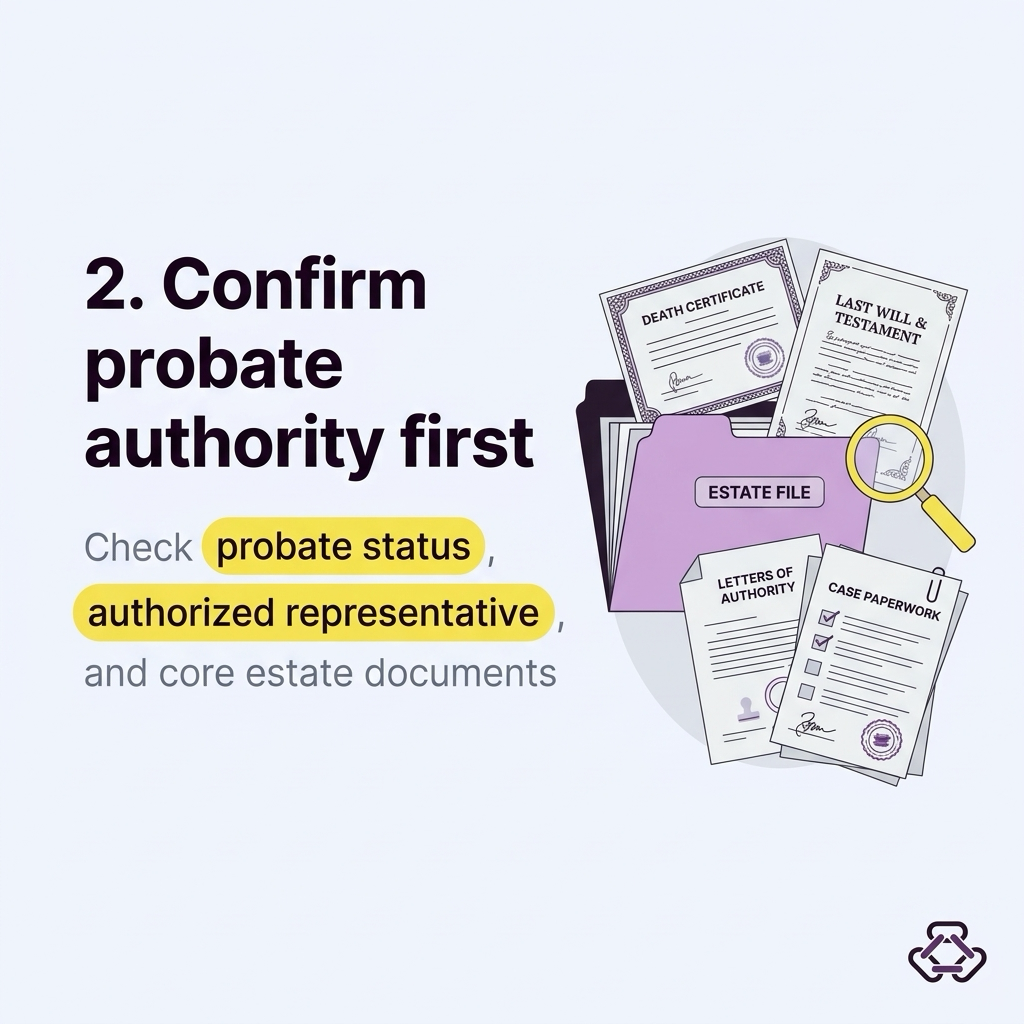
The first question is basic but important: is there an open probate estate, and are you the person authorized to act?
A creditor claim procedure usually applies only if a probate estate has been opened and a personal representative has authority under letters testamentary or letters of administration. If no estate has been opened, the options available to creditors and families can look very different under state law. Some states also use simplified procedures for small estates, and those may affect how claims are handled.
Before responding, gather:
- the death certificate
- letters testamentary or letters of administration
- the will, if there is one
- probate case number
- published or mailed notice to creditors
- the claim itself and any attachments
This paperwork often determines both who has authority and when the response clock began.
2. Identify The Deadline That Applies
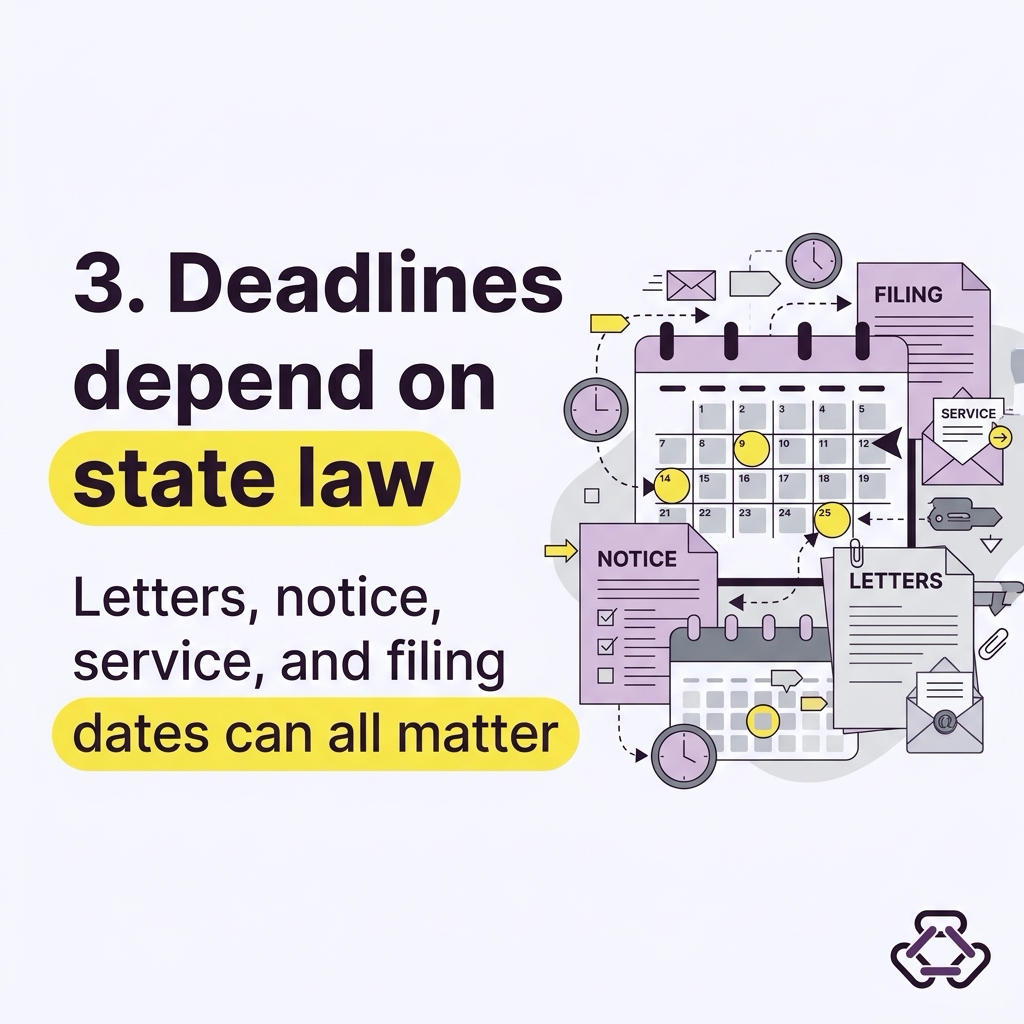
Deadlines in probate creditor matters are intensely state-specific. That is one reason families and executors often get tripped up.
For example, California generally requires a creditor to file a claim by the later of four months after letters are first issued or 60 days after notice is given to the creditor, subject to exceptions and special rules (California Probate Code via California Legislature). Florida generally bars many claims unless they are filed by the later of three months after first publication of notice to creditors or, for creditors entitled to service, 30 days after service (Florida Senate).
Once a claim is filed, the estate may also face a separate deadline to allow or object to it. In California, when a claim is filed, the personal representative is to allow or reject it in whole or in part, file that action with the clerk, and give notice to the creditor; if no action is taken within 30 days, the creditor may treat that inaction as a rejection on the 30th day (California Probate Code). In Florida, a written objection generally may be filed on or before the later of four months from first publication or 30 days from timely filing or amendment of the claim (Florida Statutes § 733.705).
Here’s what this often means: the date the claim arrived in your mailbox may not be the only date that matters. The date letters were issued, the date creditor notice was published, and the date formal notice was served can all affect the analysis.
3. Review Whether The Claim Was Properly Filed
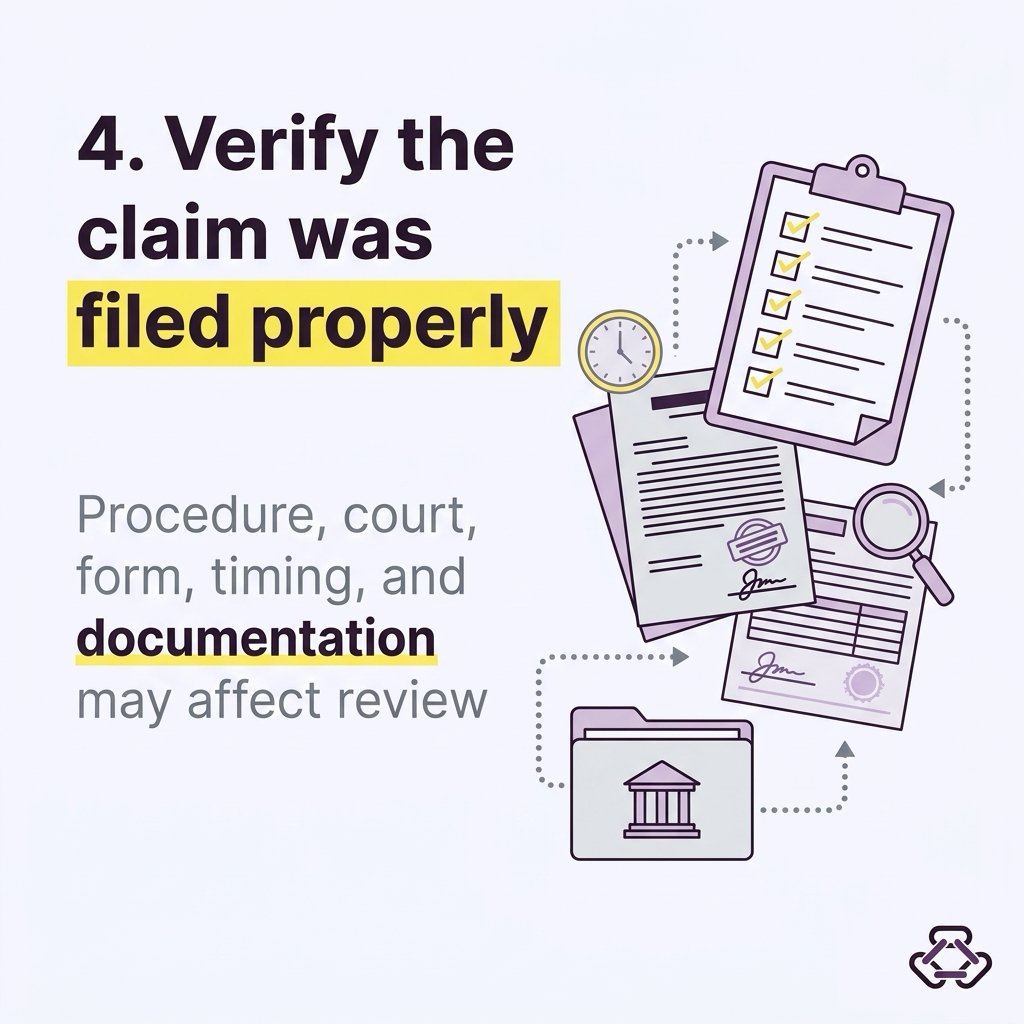
Not every demand letter is a valid probate claim.
Some claims are filed with the court. Some are presented to the personal representative. Some require a specific court form. California, for example, has a dedicated probate form for a creditor’s claim, DE-172 (California Courts). New York courts note that there are not standard statewide court forms to submit a claim against an estate, which highlights how much procedures vary by jurisdiction (New York Courts).
A claim review often includes questions like:
- Was it filed in the correct court or delivered to the correct representative?
- Was it filed on time?
- Does it identify the creditor clearly?
- Does it state a sum certain, or explain how the amount is calculated?
- Does it attach supporting documents?
- Is it contingent, unmatured, secured, or disputed?
- Is it actually a probate claim, or is it a lien, lawsuit, tax assessment, or other obligation governed by special rules?
This is one place where a calm paper-trail approach helps. A weakly documented claim is not automatically invalid, but poor documentation can matter when the estate evaluates whether to allow or dispute it.
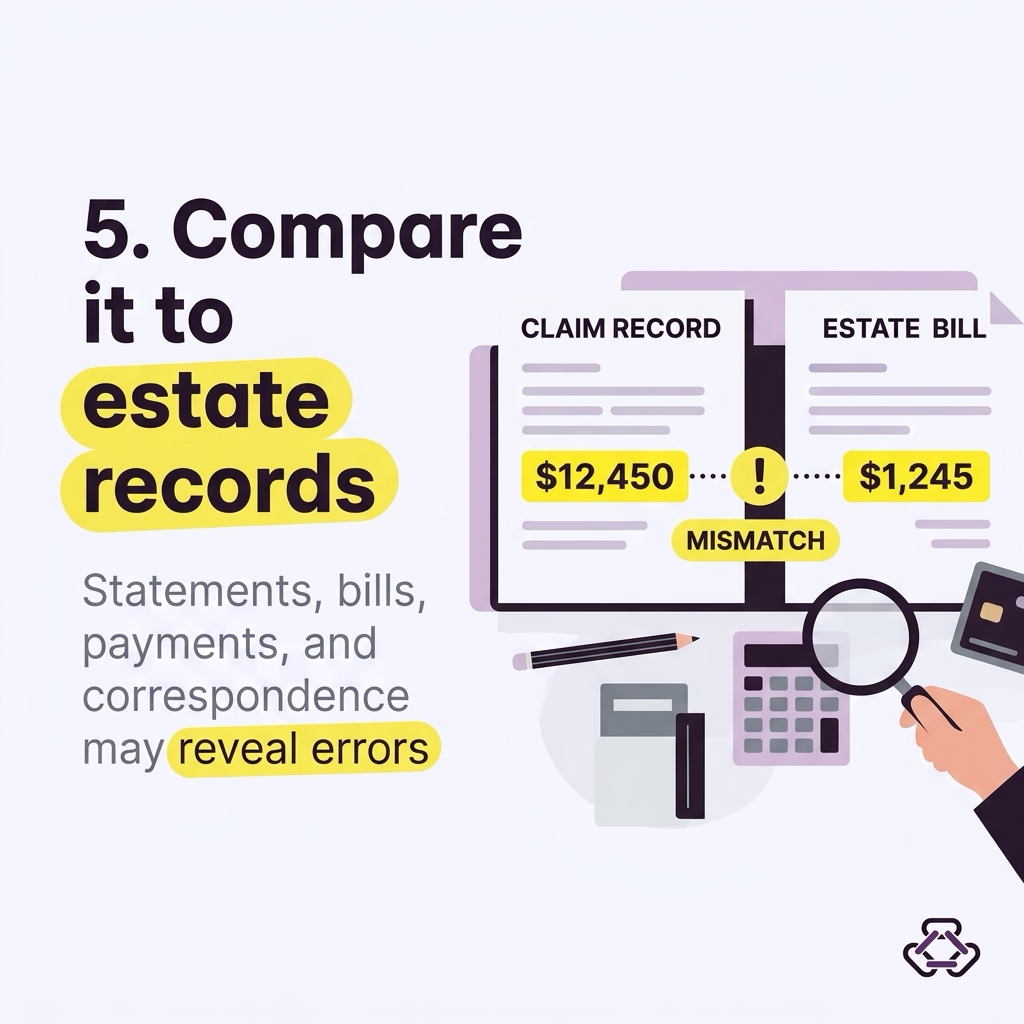
4. Compare The Claim To The Estate’s Records
Before the estate pays or rejects anything, compare the claim with what the decedent’s records show.
Look at:
- account statements
- loan agreements
- promissory notes
- medical billing records
- judgments
- tax notices
- cancelled checks
- emails or correspondence
- settlement agreements
- proof of prior payment
- insurance explanations of benefits
Sometimes the numbers match cleanly. Sometimes they do not. Estates often encounter claims that are duplicated, inflated by fees, missing credits, beyond a limitations period, or directed at the wrong person.
The CFPB has also warned that debt collectors may contact family members after a death and that a collector generally may not suggest a person is responsible for a debt if they are not legally responsible (CFPB). That can be especially relevant when the claim arrives as a collection letter rather than a formal probate filing.
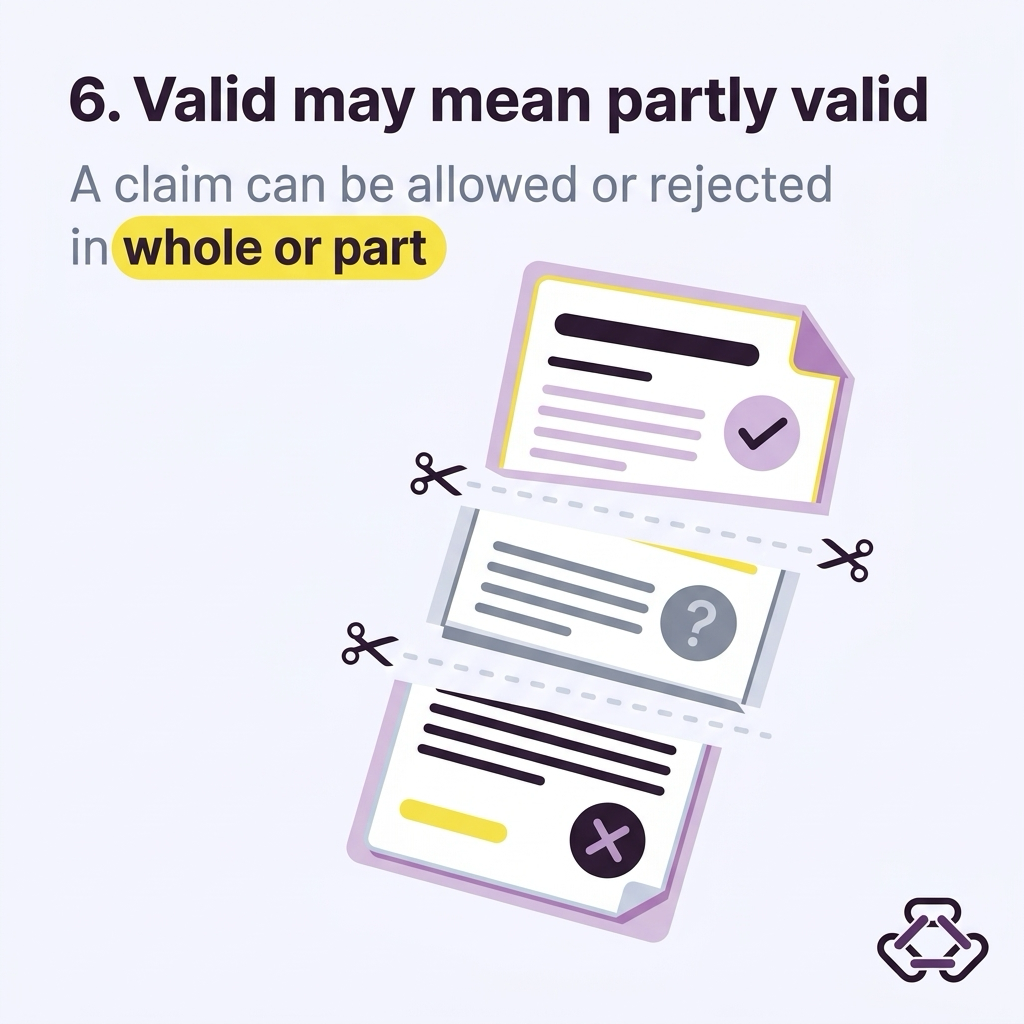
5. Determine Whether The Claim Is Valid, Invalid, Or Only Partly Valid
Many executor concerns come down to three buckets:
Clearly valid claims. These may include documented final medical bills, taxes, mortgage arrears, utility balances, or judgments that match the estate’s records.
Clearly questionable claims. These may include debts already paid, claims filed late, unsupported collection balances, time-barred obligations, or bills that belong to someone else.
Partially valid claims. These are common. A creditor may have a valid underlying debt but the wrong amount, an incorrect interest calculation, or unsupported add-on fees.
California’s probate framework expressly allows a claim to be allowed or rejected in whole or in part, which is a useful reminder that the estate’s options are not always all-or-nothing (California Courts DE-174).
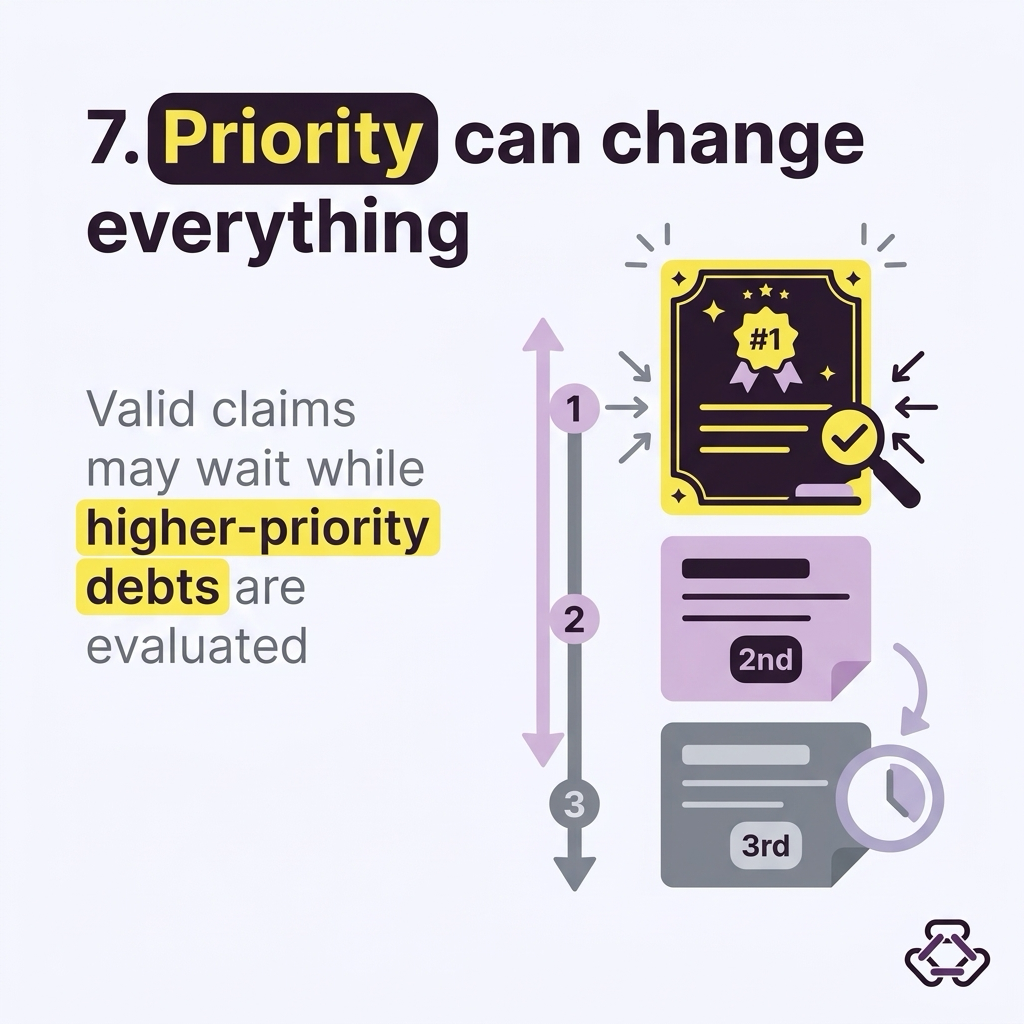
6. Check Priority Before Paying Anyone
Even when a claim is legitimate, the next issue is often priority. Estate debts are not always paid first-come, first-served.
State law typically establishes an order for administrative expenses, funeral costs, taxes, secured debts, and general unsecured claims. The exact sequence varies by jurisdiction. Florida’s probate code, for example, classifies claims for payment and treats filing and objection deadlines separately from priority rules (Florida Senate).
Federal claims can complicate that analysis. The IRS states that a fiduciary who knows of federal debts and pays lower-priority debts first in an insolvent estate may face personal liability under 31 U.S.C. § 3713 (IRS). IRS guidance for estates also notes that debts due to the United States can have priority consequences during administration (IRS Publication 559).
Here’s what this often means in practice: even a valid creditor may not be paid immediately if the estate is still gathering assets, waiting on tax information, or evaluating whether higher-priority obligations exist.
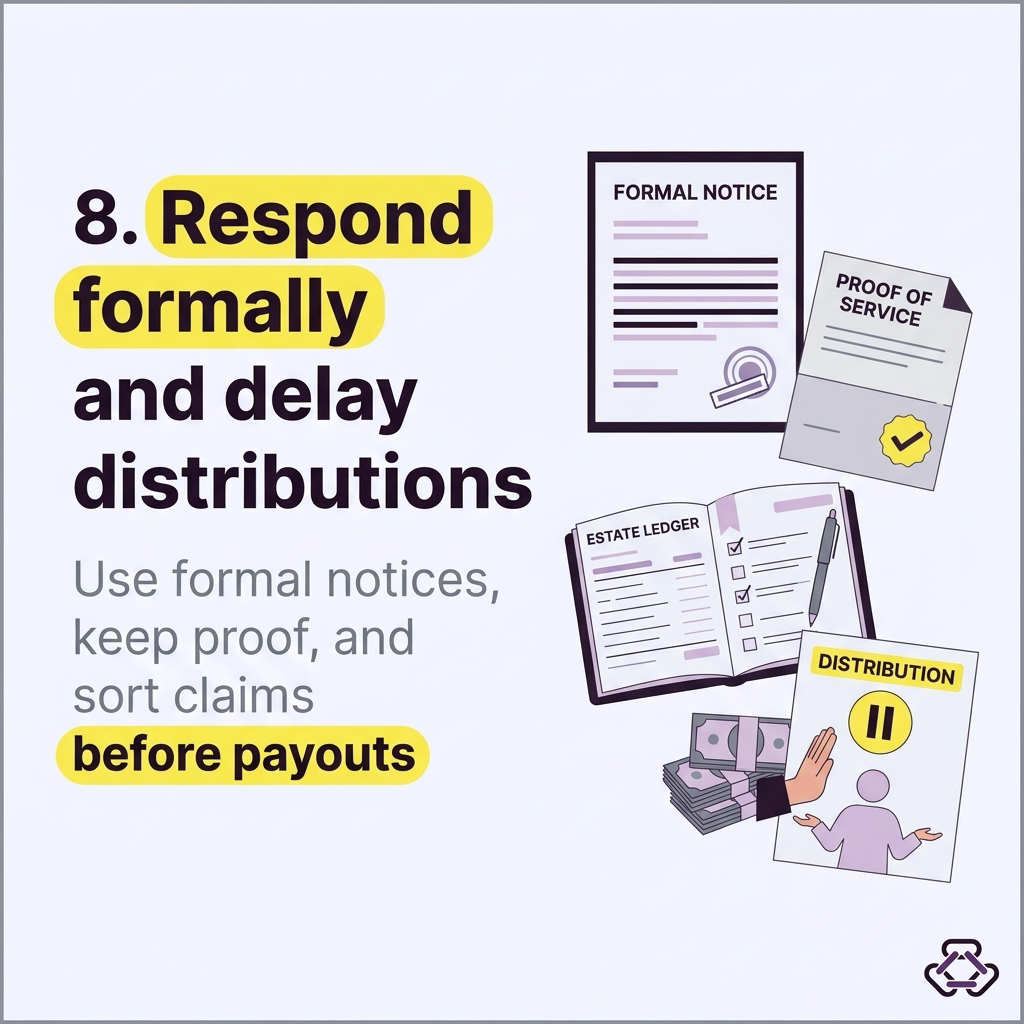
7. Respond Formally, Not Informally
One of the most common mistakes is handling a claim casually by phone or email and assuming that is enough.
Probate usually expects a formal response. In California, the personal representative uses Form DE-174 to state whether the claim is approved or rejected in whole or in part, and to notify the creditor accordingly (California Courts). The California Probate Code also requires the allowance or rejection to be filed with the clerk and notice given to the creditor (California Probate Code).
In Florida, a written objection is filed and served under the probate rules, and failure to serve the objection can amount to abandonment of it (Florida Statutes § 733.705).
A formal response process often includes:
- documenting when the claim was received
- calendaring all deadlines
- preparing the appropriate court filing or notice
- serving the creditor correctly
- preserving proof of mailing or service
- keeping a clean estate ledger
That paper record can matter later if the claim turns into litigation.
8. Be Careful With Rejections, Because They Often Trigger Lawsuit Deadlines
Rejecting a claim can be appropriate, but it often changes the procedural posture quickly.
In California, the Judicial Council’s notice on rejected creditor claims explains that from the date notice of rejection is given, the creditor generally has 90 days to act on a due claim, with caveats for special statutes and claim types (California Judicial Council form materials). In other states, an objection may require the creditor to bring an independent action within a set time or risk forfeiting the claim.
That means rejecting a claim may not end the matter. It may simply move the dispute from probate administration into probate litigation or civil litigation tied to the estate.
9. Watch For Tax Claims, Government Claims, And Secured Claims
Not all claims are ordinary unsecured debts.
Tax claims can involve income tax, estate tax, property tax, or other government liabilities. The IRS’s probate guidance discusses notices to creditors and the government’s ability to protect tax interests in estate administration (IRS). Federal estate tax liens can also attach by operation of law in certain circumstances (IRS).
Secured claims may involve mortgages, car loans, judgment liens, or other claims tied to specific property. Payment decisions may depend on whether the estate plans to keep, sell, surrender, or refinance the asset.
Government reimbursement claims and Medicaid-related issues may involve additional statutes, notices, and recovery rules that do not behave like a standard credit card claim.
These categories often call for extra caution because their deadlines, remedies, and enforcement tools can be different from ordinary probate creditors.
10. Don’t Distribute Estate Assets Too Early
Beneficiaries often ask when distributions are coming. That pressure can be intense, especially when the estate appears straightforward.
But distributions made before claims are sorted out can create problems. If new liabilities surface, the estate may have to seek funds back, delay closing, or explain why estate assets were paid out before debts and expenses were resolved.
Many probate courts and practitioner guides describe creditor review as a core part of post-appointment administration, along with inventory, tax work, and accountings (Santa Clara Superior Court).
In general terms, an estate with open claims is often not ready for final distributions.
Common Defenses And Disputes In Estate Creditor Claims
Estate representatives often encounter disputes involving:
- Late filing
- Lack of documentation
- Wrong debtor
- Duplicate billing
- Improper interest or fees
- Insurance payments not credited
- Time-barred debt
- Claim filed in the wrong forum
- Non-probate asset issues
- Priority disputes in insolvent estates
The CFPB notes that in most states, collectors can still attempt to collect some old debts after the statute of limitations expires, but suing or threatening suit on time-barred debt can violate the law (CFPB). In the estate setting, limitation periods can interact with probate-specific filing deadlines in complicated ways. An attorney might help determine which deadline controls.
When An Executor Or Family May Want Legal Help Quickly
Some estate claims are routine. Others are a signal that administration could become contested.
Legal help often becomes especially relevant when:
- the estate appears insolvent
- the claim is large
- the claim involves taxes or government reimbursement
- the personal representative is also a creditor
- the creditor threatens litigation
- a rejection deadline is close
- the estate owns a business
- the debt may be secured by real property
- family members are disputing whether to pay
- multiple creditors are competing for limited assets
If you’re trying to understand the broader framework before deciding how to respond, this guide to probate debts, notice rules, and claim priority may help connect the dots.
A Practical Checklist For Responding
Here is a simple working checklist:
- Confirm that probate is open and identify the authorized representative.
- Record the date the claim was received and the date it was filed.
- Identify the state-law deadline for response or objection.
- Pull the decedent’s records and compare them to the claim.
- Determine whether the claim is valid, invalid, or partially valid.
- Review claim priority and whether the estate may be insolvent.
- Prepare the correct formal allowance, rejection, or objection paperwork.
- Serve the creditor properly and keep proof of service.
- Avoid paying or distributing assets until the claims picture is clearer.
- Consult estate counsel if the claim is disputed, high-value, or time-sensitive.
Final Thoughts
Responding to a creditor claim against an estate is rarely just about one bill. It is often about deadlines, procedure, documentation, priority, and fiduciary risk all at once. Some claims are legitimate and straightforward. Others call for careful scrutiny. And in insolvent or disputed estates, one early decision can affect everyone involved.
An attorney may help evaluate whether the claim was filed correctly, whether it is enforceable, how state priority rules apply, and how to protect the estate while probate moves forward.
Visit ReferU.AI to get matched with an attorney who has demonstrable experience in cases like yours — for free.
