Table of Contents
- 10 Questions Founders Ask When a Business Breakup Becomes Unavoidable
- 1. Is This A Negotiation Problem Or A Legal Dispute Now?
- 2. What Documents Actually Control The Breakup?
- 3. Can I Be Forced Out, Or Can I Force A Buyout?
- 4. How Is The Company Valued When Nobody Agrees?
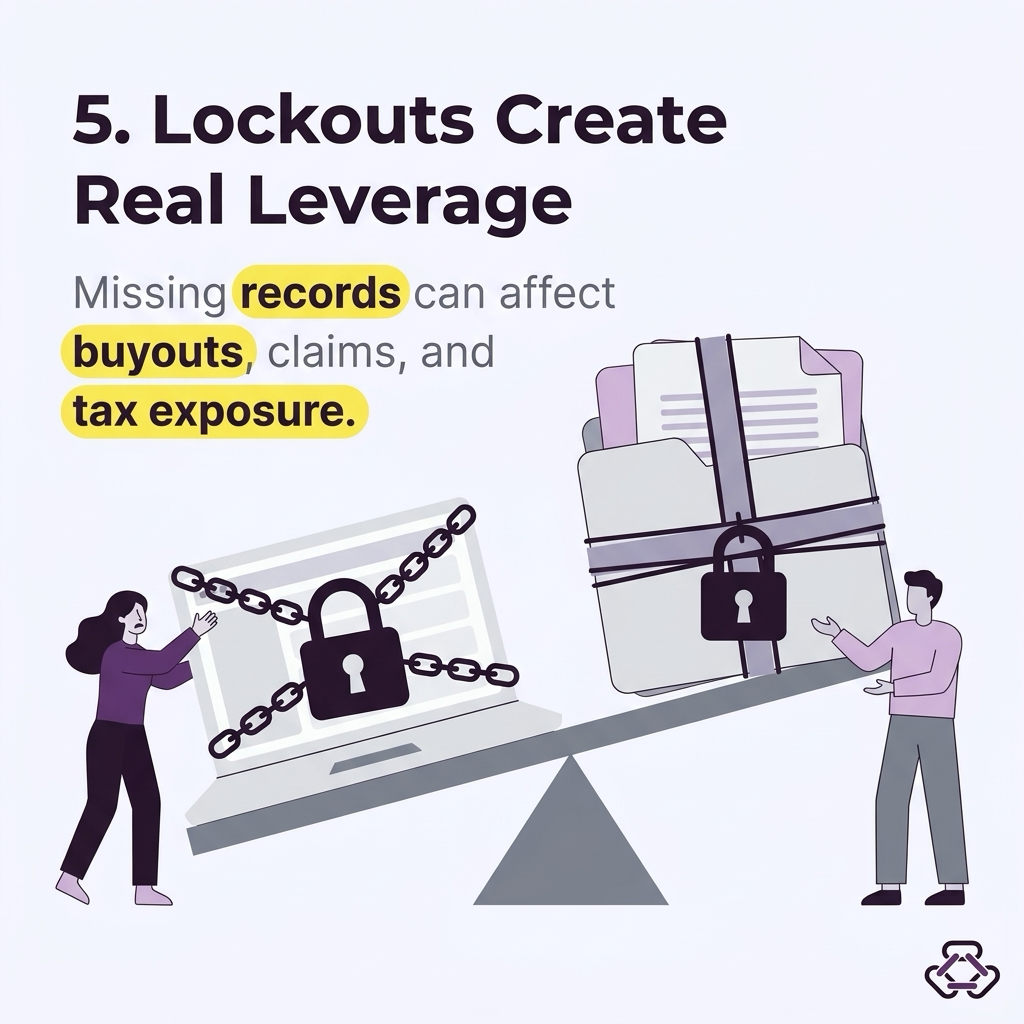
- 5. What If The Other Founder Is Locking Me Out Of Information?
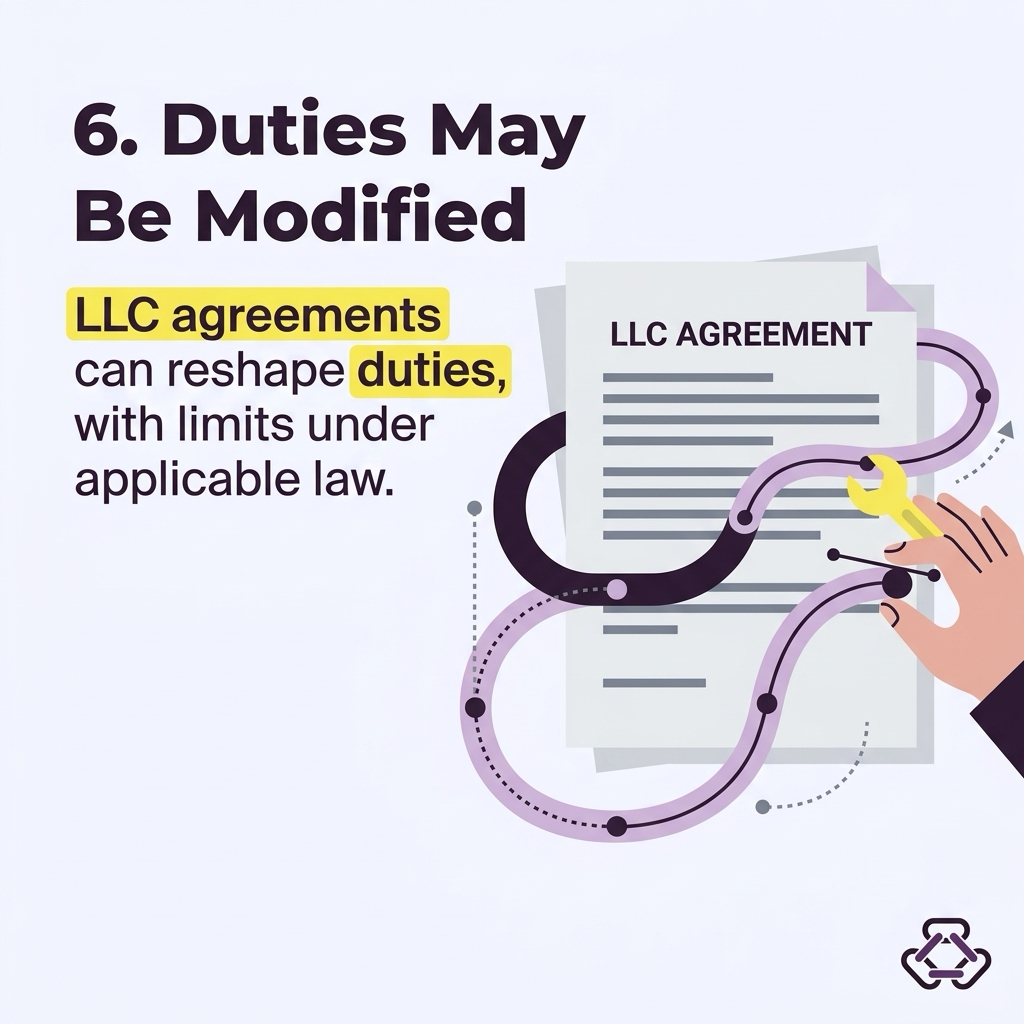
- 6. Do Fiduciary Duties Still Matter If Our Agreement Says Almost Everything?
- 7. Are Noncompetes, Nonsolicits, And IP Restrictions Going To Follow Me Out?
- 8. Is Dissolution The Realistic Endgame, Or Is That Mostly A Threat?
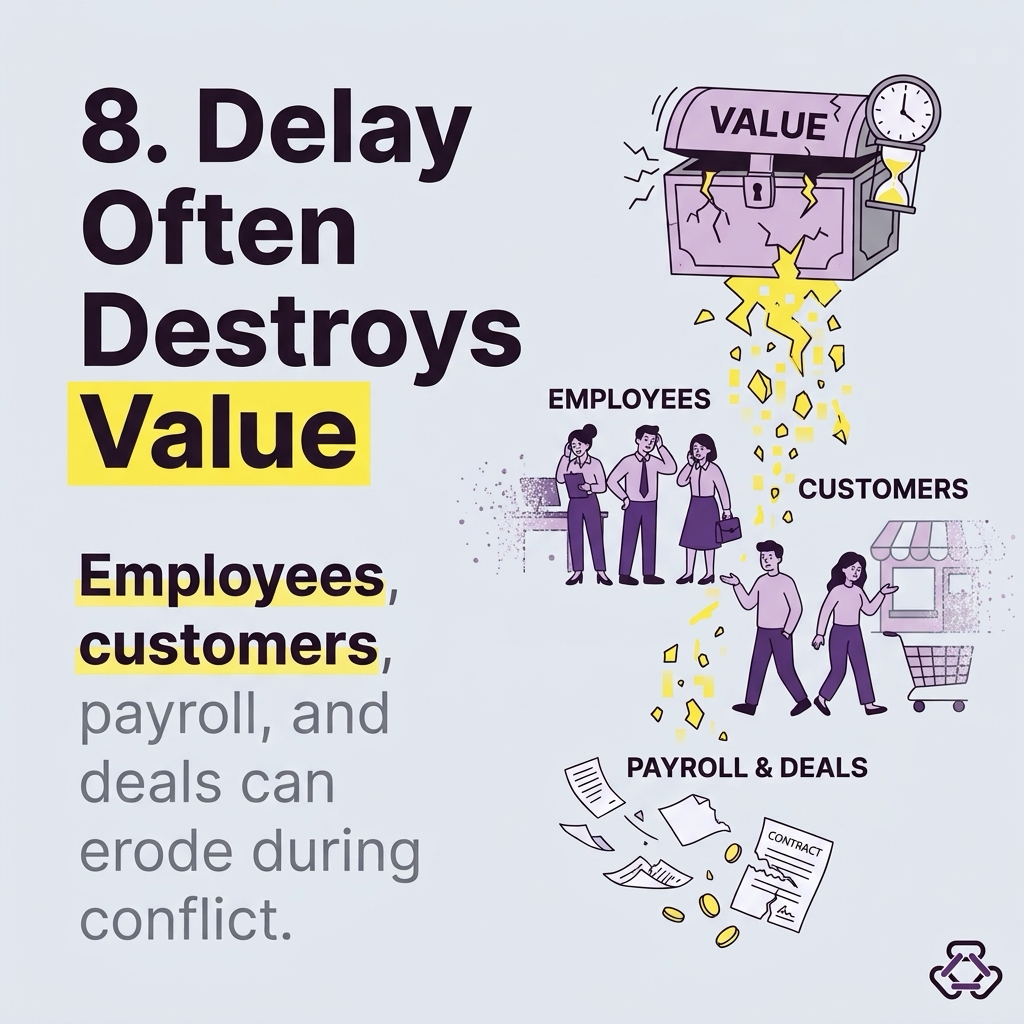
- 9. What Happens To Employees, Customers, And Value While We Fight?
- 10. When Does It Make Sense To Bring In A Business Divorce Attorney?
- Final Tip: The Biggest Risk Is Usually Delay, Not Drama

Type
Great Grandchild
Status
Approved
Title (YouTube)
Images Failed (Social)
Images Failed (Social)
Do not index
Parent item
Publish Date (TikTok)
Jan 10, 2027 07:15
Videos Post IDs (Social)
Hashtags (Social)
#LegalAdvice #LegalHelp #BusinessLitigation #BusinessDivorce
Caption
Caption X
Cover

OG Image

Alt Image Text
Flat vector illustration of a business breakup and founder disputes, with two co-founders separating ownership, contracts, finances, and company assets.
Images



Videos
Publish Date (Social)
Dec 19, 2026 06:30
Scheduled (Social)
Scheduled (Social)
Images Posted (Social)
Images Posted (Social)
Videos Posted (Social)
Videos Posted (Social)
Videos Failed (Social)
Videos Failed (Social)
Featured
Created time
Apr 3, 2026 10:11 PM
Sub-item
Authors
CTA Practice Area (Social)
Business Litigation
TikTok Failed (Social)
TikTok Failed (Social)
Videos Post Links (Social)
YT Auto Captions Removed
TikTok Post Links (Social)
Images Post IDs (Social)
YT Post ID
Video Pending Manual (Social)
TikTok Posted (Social)
TikTok Posted (Social)
TikTok Post IDs (Social)
Video Cover (Social)
Images Post Links (Social)
First Comment (Social)
YT Embedded
Images Delete (Social)
Videos Delete (Social)
Carousel Video URL (Social)
10 Questions Founders Ask When a Business Breakup Becomes Unavoidable
Founders usually spend a lot of time planning how to build a company and very little time planning how to separate from a co-owner. That gap can get expensive fast. In the U.S., small businesses remain a huge part of the economy, with the SBA reporting 36.2 million small businesses accounting for almost 46% of private-sector employment in 2025, and the Census Bureau reporting about 5.9 million employer firms in 2023 alone. When ownership relationships break down inside companies of that scale, the fallout rarely stays personal for long. It reaches payroll, customers, voting rights, IP, tax filings, and enterprise value. SBA Office of Advocacy U.S. Census Bureau
In founder disputes, one of the hardest moments is the one where everyone realizes the relationship may not be repairable. At that point, the real issue is not who is more frustrated. The issue is what rights exist on paper, what leverage exists in practice, and how to separate ownership without destroying the company in the process.
If you want broader context before diving into the tactical questions, it may help to start with this overview of how ownership splits, buyouts, valuation fights, and litigation strategy often fit together.
Below are 10 of the questions founders often ask when a business breakup becomes unavoidable.
Scroll to the bottom for every post in this series.
1. Is This A Negotiation Problem Or A Legal Dispute Now?
Many founder breakups begin as a communication failure and then turn into a legal dispute because the company keeps operating while trust disappears. A missed capital call, disputed expense reimbursements, access restrictions, competing visions for the business, or unilateral hiring decisions can all start as “relationship problems.” Over time, those same facts may become evidence in a books-and-records fight, fiduciary-duty claim, dissolution petition, or injunction request.
In general terms, the dividing line is whether one founder can still rely on the other to honor governance rules, share information, and avoid harming the business while exit talks happen. Once access to bank records, cap table information, tax returns, customer contracts, or board materials becomes contested, the problem often moves beyond personality conflict.
This is also where business form matters. A Delaware LLC, for example, is built around freedom of contract, and Delaware’s LLC Act states that the policy of the statute is to give “maximum effect” to the enforceability of LLC agreements. The same statute also allows LLC agreements to limit or eliminate certain duties, while preserving the implied covenant of good faith and fair dealing. In practical terms, that often means the operating agreement can matter more than people expect when the breakup starts. Delaware Code, 6 Del. C. § 18-1101
A founder who thinks “we just need one more meeting” may later discover that the other side has already shifted into document preservation, counsel engagement, and leverage-building mode. That is often the point where an attorney’s early involvement changes the trajectory.
2. What Documents Actually Control The Breakup?
Founders often assume the answer is “our operating agreement” or “our bylaws.” Sometimes that is true. Often it is incomplete.
The controlling documents may include:
- certificate of formation or incorporation
- operating agreement, shareholder agreement, or partnership agreement
- voting agreements
- buy-sell provisions
- vesting and repurchase documents
- employment and invention assignment agreements
- board consents and written actions
- capitalization records
- deadlock, mediation, arbitration, or forum-selection clauses
- restrictive covenant agreements
- tax elections and loan documents
A lot of business divorce litigation grows out of inconsistent paperwork. The founders remember one deal, the company records reflect another, and the equity ledger suggests a third version. If one owner was promised board control, supermajority consent rights, tag-along rights, redemption rights, or a valuation mechanism, the answer is usually found in signed documents and company actions, not memory.
That is one reason founder breakups can feel so disorienting. The fight is rarely only about fairness. It is about which paper trail a court or arbitrator will treat as authoritative.
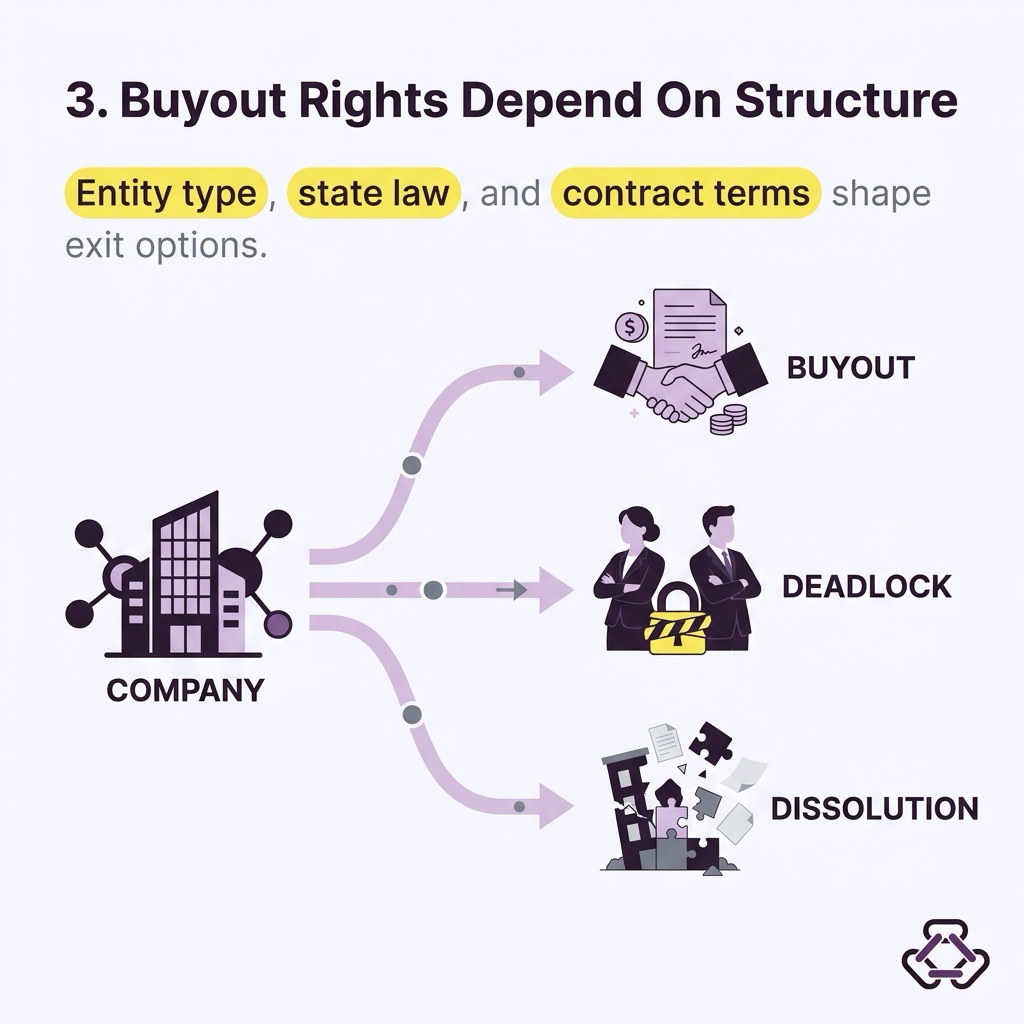
3. Can I Be Forced Out, Or Can I Force A Buyout?
This is one of the first questions almost every founder asks, and the honest answer is usually: it depends on the governing documents, the entity type, and the state law involved.
Some agreements contain clear buy-sell provisions, shotgun clauses, call rights, put rights, redemption mechanisms, or trigger events tied to death, disability, termination, breach, deadlock, or bankruptcy. Other companies have nothing that clean. In those cases, founders often find themselves arguing about whether a buyout is available at all, whether dissolution is the only real exit path, and whether minority or non-managing owners have any practical leverage.
Under the Model Business Corporation Act, one basis for judicial dissolution in some corporate disputes includes director deadlock, shareholder deadlock in electing successors, oppressive conduct by those in control, or misapplication and waste of assets. That does not mean every state adopts the MBCA the same way, but it illustrates how deadlock and oppression often become central themes in closely held corporation disputes. American Bar Association, Model Business Corporation Act § 14.30
For Delaware LLCs, judicial dissolution can become relevant when it is no longer “reasonably practicable” to carry on the business in conformity with the LLC agreement, a standard frequently litigated in founder deadlock disputes. Delaware Code Online
A founder wondering whether they can “just make the other side buy me out” may be thinking commercially rather than legally. Sometimes a forced purchase right exists. Sometimes it does not. Sometimes the real leverage comes from claims involving access to information, misuse of assets, or conduct harming the enterprise.
If valuation and exit mechanics are the core issue, it may also help to read more about how buyout rights, company value, and exit terms often get analyzed in ownership splits.
4. How Is The Company Valued When Nobody Agrees?
This is where many founder disputes stop sounding emotional and start sounding mathematical, even though the emotions are still very much there.
A founder may think the business is worth what the last investor implied. Another may argue EBITDA. Another may point to asset value, discounted cash flow, customer concentration risk, or the fact that one founder’s personal relationships are doing most of the revenue generation. And then there is the separate question of what exactly is being valued: the whole company, a minority interest, a controlling block, vested equity only, or equity reduced by contractual repurchase rights.
The IRS’s long-standing valuation framework in Revenue Ruling 59-60 remains highly influential in business valuation work involving closely held interests. The IRS has repeatedly described revenue rulings as official guidance, and later IRS materials continue to reference 59-60 as the foundational approach for valuing closely held business interests. IRS Internal Revenue Bulletin IRS Chief Counsel Memorandum Discussing Revenue Ruling 59-60
In founder breakups, valuation fights commonly involve questions like:
- What is the valuation date?
- Is the company valued as a going concern or in distress?
- Are founder loans treated as debt or equity?
- Does a minority discount apply?
- Does a marketability discount apply?
- How are contingent liabilities treated?
- What happens to unvested equity or forfeitable shares?
- Is the departing founder’s misconduct, if alleged, relevant to price?
These are rarely abstract questions. They can shift dollar outcomes dramatically. They can also decide whether negotiation stays alive or collapses into litigation.
5. What If The Other Founder Is Locking Me Out Of Information?
This is often the moment a business breakup becomes impossible to ignore.
Founders who no longer receive financial statements, tax returns, payroll records, board notices, or cap table updates often feel they are being erased in real time. Sometimes the explanation is bad communication. Sometimes it is active exclusion. Either way, information asymmetry creates leverage, and leverage changes settlement dynamics.
Delaware law gives inspection rights in important contexts. For corporations, Section 220 is the well-known books-and-records statute. Delaware Code, 8 Del. C. § 220 Delaware LLC law also contains books-and-records rights under Section 18-305, which is one reason operating agreement language becomes so important in LLC disputes. Delaware Code Online
Access disputes matter because founders cannot realistically evaluate a buyout, a claim, or even basic tax exposure without reliable records. And tax issues can become especially serious. In a 2023 review of business divorce decisions, the ABA highlighted a New York case where failure to pay tax liabilities and related conduct supported allegations of oppression in a dissolution proceeding. ABA Business Law Today
When a founder says, “I just want to know what’s going on,” the underlying legal issue is often far broader: books and records, fiduciary compliance, diversion of assets, self-dealing, tax risk, or preparation for a dilution event.
6. Do Fiduciary Duties Still Matter If Our Agreement Says Almost Everything?
In LLC disputes, this is one of the most misunderstood questions.
In Delaware, LLC agreements can be drafted very broadly, and the statute expressly allows the limitation or elimination of liabilities for breach of duties, including fiduciary duties, subject to the implied covenant of good faith and fair dealing. Delaware Code, 6 Del. C. § 18-1101(e)
That does not mean “anything goes.” It means the agreement often becomes the first place to look when someone claims the managing founder diverted opportunities, approved insider compensation, withheld distributions, blocked information, or structured an exit for personal advantage.
In corporations and many non-Delaware entities, traditional fiduciary concepts may play a larger or at least differently structured role. The point is not that fiduciary law disappears. The point is that founders often assume loyalty and fairness standards are obvious, when in reality the governing documents and jurisdiction may reshape those duties significantly.
This is one reason business breakup cases can turn on a close reading of provisions that seemed unimportant when everyone was still aligned.
7. Are Noncompetes, Nonsolicits, And IP Restrictions Going To Follow Me Out?
Frequently, yes, but the answer depends on the specific contract language and current law.
A founder leaving a company may still face confidentiality duties, invention-assignment provisions, customer nonsolicits, employee nonsolicits, restrictive covenants in equity documents, and ownership disputes around code, trademarks, trade secrets, or domain names. If the founder plans to start something new, those provisions can become just as important as the buyout price.
This area also remains legally fluid. For example, the FTC’s widely discussed noncompete rule is not in effect and not enforceable after federal court action, and the FTC stated on its own site that it took steps to dismiss its appeal in September 2025. So founders dealing with restrictive covenants in 2026 are still operating in a world where state law, contract language, and specific deal context continue to matter. Federal Trade Commission
A breakup involving engineers, sales teams, or key customer relationships can quickly turn into a dispute over who owns the pipeline, who can hire whom, and what information is off-limits after separation. Founders often underestimate how fast those issues become emergency-motion territory.
8. Is Dissolution The Realistic Endgame, Or Is That Mostly A Threat?
Usually, it is both a remedy and a bargaining chip.
Judicial dissolution is generally treated as an extraordinary remedy, not the first choice. Courts often look for ways to preserve a viable business if a less destructive option exists. The MBCA includes not only dissolution provisions, but also a mechanism for election to purchase in lieu of dissolution. American Bar Association, MBCA §§ 14.30-14.34
That matters because dissolution pressure can move parties toward a negotiated exit, especially where:
- there is true management deadlock
- voting control is split 50/50
- banking relationships are deteriorating
- tax filings are at risk
- key staff are leaving
- customers are seeing instability
- one owner is allegedly freezing out another
At the same time, not every founder can credibly threaten dissolution. The governing agreement may narrow that path. The company may remain functional despite bad blood. Or the economics of winding up may be so destructive that both sides are better served by some form of buyout, recapitalization, or operational separation.
Founders often ask, “Would a court really shut this down?” An attorney might help determine whether dissolution is a practical possibility, a pressure point, or neither.
9. What Happens To Employees, Customers, And Value While We Fight?
This question tends to arrive late, even though it may be the most important one commercially.
A founder breakup can reduce enterprise value long before any judge rules on anything. Employees become anxious, customers delay renewals, vendors tighten terms, lenders ask questions, and competitors start recruiting. The legal merits may still matter, but value leakage often becomes the hidden cost center.
That is why founders in these disputes often focus on interim arrangements such as:
- spending controls
- limits on extraordinary transactions
- rules for external communications
- payroll and tax compliance safeguards
- temporary access protocols
- neutral valuation processes
- standstill agreements
- mediation or structured settlement timelines
The business may survive the breakup, but that often depends on whether the separation process is managed as a value-preservation exercise rather than a loyalty test.
For many founders, this is the moment where planning ahead for an ownership split without wrecking enterprise value starts to feel less theoretical and more urgent.
10. When Does It Make Sense To Bring In A Business Divorce Attorney?
Usually earlier than founders first assume.
A lot of founders wait until one of the following happens:
- funds disappear or distributions stop
- access to records gets cut off
- counsel sends a demand letter
- a founder is removed from management
- customers hear about the dispute
- a financing or sale is at risk
- tax or payroll issues surface
- a TRO, injunction, or dissolution petition is threatened
By then, informal problem-solving may already be closing. The legal work is not only about filing suit. It is also about preserving evidence, clarifying control rights, managing communications, preventing accidental waiver, evaluating emergency remedies, and improving the odds of a workable exit.
In many founder disputes, the attorney’s value shows up before a complaint is filed. A lawyer may help identify whether the problem is really a governance dispute, a valuation dispute, a fiduciary-duty issue, a compensation fight, a dilution fight, or some combination of all five. That diagnosis often shapes whether the business can be preserved at all.
And if the conflict is already escalating, founders often benefit from counsel with documented experience in highly similar matters, because business breakup disputes can move quickly from negotiation into books-and-records proceedings, injunction work, arbitration, or dissolution-related litigation.
Final Tip: The Biggest Risk Is Usually Delay, Not Drama
When a business breakup becomes unavoidable, the most expensive mistake is often pretending it is still temporary. The legal and financial questions tend to harden quickly: who controls the company, who has access to records, how value will be measured, whether fiduciary or contractual duties were breached, and whether the business can continue without court involvement.
Founders do not always need a scorched-earth response. In many cases, a careful strategy focused on documents, valuation, leverage, and business continuity creates more room for resolution than panic does. But once ownership trust is gone, clarity becomes valuable fast.
If you’re dealing with a founder split, buyout fight, deadlock, or ownership separation, Visit ReferU.AI to get matched with an attorney who has demonstrable experience in cases like yours — for free.
