Table of Contents
- Business Divorce Explained: Ownership Separation, Valuation, Buyouts, and Litigation Strategy
- What A Business Divorce Usually Involves
- Why Business Divorces Happen
- Deadlock
- Exclusion From Management
- Compensation And Distribution Fights
- Self-Dealing Or Diversion
- Differing Exit Goals
- Family, Founder, And Successor Tension
- The First Documents That Usually Matter
- Ownership Separation Does Not Always Mean Dissolution
- One Owner Buys Out The Other
- The Business Is Sold To A Third Party
- The Company Is Dissolved And Wound Up
- The Owners Separate Business Lines
- A Court Imposes Interim Governance Relief
- Valuation Is Where Many Business Divorces Become Expensive
- Common Valuation Questions
- What Standard Of Value Applies?
- What Is The Valuation Date?
- Are Discounts Applied?
- What About Owner Compensation?
- Is The Company Being Valued As A Going Concern Or A Liquidation?
- How Are Personal Goodwill And Enterprise Goodwill Handled?
- Buyouts Sound Simple Until The Terms Start Moving
- Litigation Strategy Often Starts Before The Lawsuit
- 1. Define The Endgame Early
- 2. Secure The Evidence
- 3. Evaluate Direct And Derivative Claims
- 4. Consider Whether Emergency Relief Changes The Leverage
- 5. Use Valuation Experts Early, Not Just At Trial
- 6. Pressure-Test Collectability And Structure
- Common Claims In Business Divorce Litigation
- The Entity Type Can Change The Entire Fight
- LLCs
- Corporations
- Partnerships
- Why Many Cases Settle After The Hard Part Begins
- Questions Owners Often Ask In The Middle Of A Breakup
- What Often Makes An Attorney Especially Valuable Here
- Final Takeaway

Type
Grandchild
Status
Approved
Title (YouTube)
Images Failed (Social)
Images Failed (Social)
Do not index
Publish Date (TikTok)
Jan 10, 2027 12:15
Videos Post IDs (Social)
Hashtags (Social)
#LegalAdvice #LegalHelp #BusinessLitigation #BusinessDivorce
Caption
Caption X
Cover

OG Image

Alt Image Text
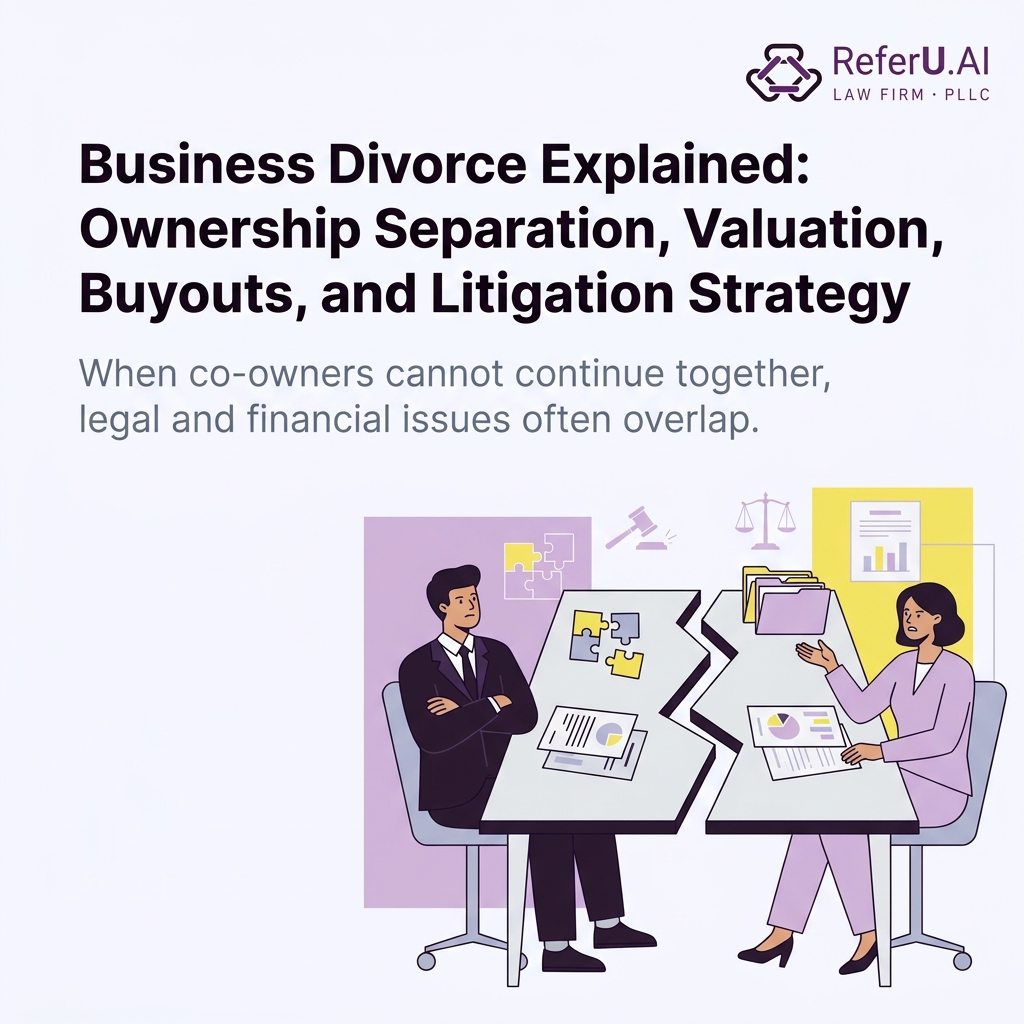
Flat vector illustration of business divorce explained with ownership separation, valuation, buyouts, and litigation strategy between two business owners.
Images

Videos

Publish Date (Social)
Dec 19, 2026 09:00
Scheduled (Social)
Scheduled (Social)
Images Posted (Social)
Images Posted (Social)
Videos Posted (Social)
Videos Posted (Social)
Videos Failed (Social)
Videos Failed (Social)
Featured
Created time
Apr 3, 2026 10:11 PM
Sub-item
Authors
CTA Practice Area (Social)
Business Litigation
TikTok Failed (Social)
TikTok Failed (Social)
Videos Post Links (Social)
YT Auto Captions Removed
TikTok Post Links (Social)
Images Post IDs (Social)
YT Post ID
Video Pending Manual (Social)
TikTok Posted (Social)
TikTok Posted (Social)
TikTok Post IDs (Social)
Video Cover (Social)

Images Post Links (Social)
First Comment (Social)
YT Embedded
YT Embedded
Images Delete (Social)
Videos Delete (Social)
Carousel Video URL (Social)
Business Divorce Explained: Ownership Separation, Valuation, Buyouts, and Litigation Strategy
When business owners stop being able to work together, the fallout can look a lot like a personal breakup: conflict over control, accusations about money, and deep disagreement about what happens next. In legal and business circles, that situation is often called a business divorce.
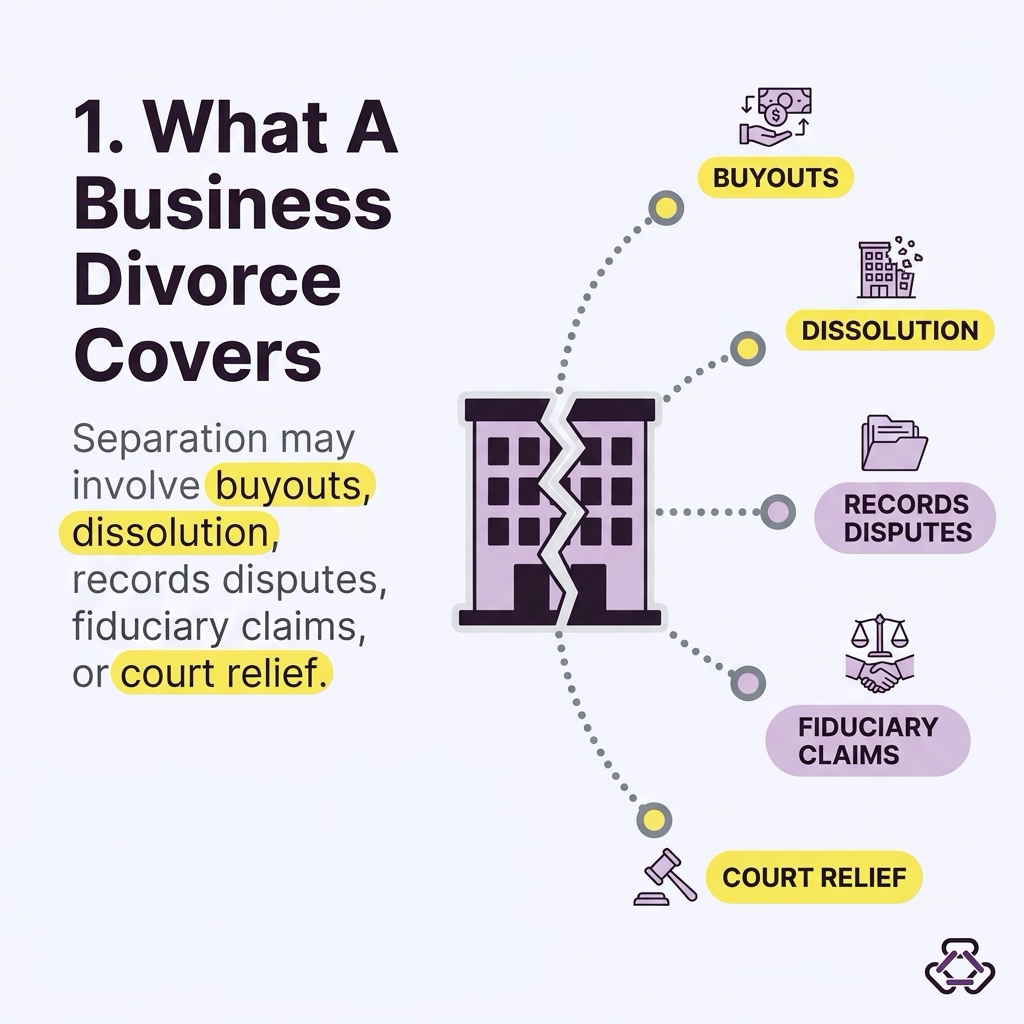
A business divorce is the separation of co-owners in a closely held company, partnership, or LLC. It may involve a buyout, a negotiated exit, a forced sale, judicial dissolution, claims for breach of fiduciary duty, requests for company records, or emergency court relief. In many cases, it involves several of those at once.
If you want a simpler foundation first, this broader guide to business breakups and commercial disputes gives helpful context. This post goes deeper into the separation itself: ownership rights, valuation fights, buyout structures, and how litigation strategy often shapes the outcome long before trial.
Scroll to the bottom for every post in this series.
What A Business Divorce Usually Involves
A business divorce is not a single claim. It is a cluster of legal and financial issues that arise when owners can no longer continue together. Depending on the entity type and governing documents, the dispute may center on:
- Who controls day-to-day operations
- Whether one owner can be removed or frozen out
- Whether profits were diverted
- Whether books and records have been withheld
- Whether a buy-sell agreement controls the exit
- How the company or ownership interest is valued
- Whether the business can continue without court intervention
- Whether dissolution, sale, or a buyout is the endgame
These disputes often arise in closely held businesses because there usually is no ready public market for the ownership interest. The American Bar Association notes that minority owners in closely held firms can be especially vulnerable because they are effectively “locked in” and often cannot exit except on terms dictated by those in control (ABA Business Law Today).
That lock-in problem is one reason business divorce cases become so intense. If the company is the owner’s main asset, paycheck, and identity, separation is rarely just a clean paper transaction.
For a more introductory walkthrough of how these disputes start and unfold, you may want to read this plain-English overview of untangling a company when the owners can’t stay together.
Why Business Divorces Happen
Most business divorces do not begin with one dramatic event. They often build slowly.
Common triggers include:
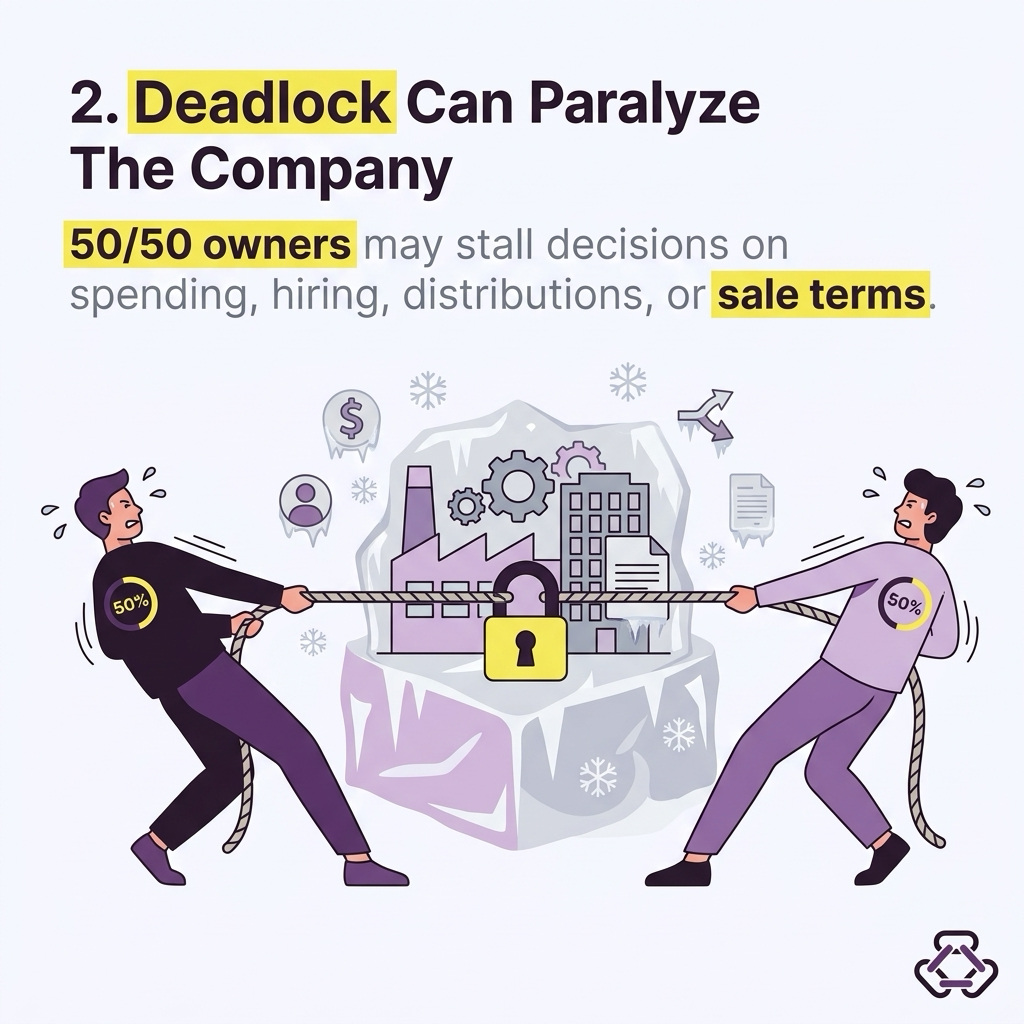
Deadlock
A 50/50 ownership structure can work well until it doesn’t. Once the owners disagree on hiring, spending, expansion, distributions, or sale terms, the company can become paralyzed. In some states, deadlock can support court-appointed custodians, provisional directors, or dissolution-related remedies. Delaware, for example, provides procedures involving corporate deadlock and custodians under Section 226 of its corporation law and judicial dissolution for LLCs under Section 18-802 of the Delaware LLC Act (Delaware Court of Chancery forms referencing these statutes).
Exclusion From Management
One owner may lose access to company bank records, customer data, payroll information, or decision-making. In closely held companies, exclusion often becomes a core factual issue because many owners invested with the expectation of active participation, not passive ownership.
Compensation And Distribution Fights
A controlling owner may take salary, bonuses, perks, or related-party payments while telling the minority owner there is “no money” for distributions. That can become both a valuation issue and a fiduciary-duty issue.
Self-Dealing Or Diversion
Disputes often intensify when one side believes company opportunities, contracts, intellectual property, or key staff were shifted to a different entity.
Differing Exit Goals
One owner may want to sell. Another may want to continue operating. Another may want a buyout but only at a premium number. Strategy can break down quickly when the parties are solving different problems.
Family, Founder, And Successor Tension
A surprising number of business divorces involve siblings, spouses, longtime friends, or second-generation family ownership. Personal history often makes the legal dispute harder, not easier.
The First Documents That Usually Matter
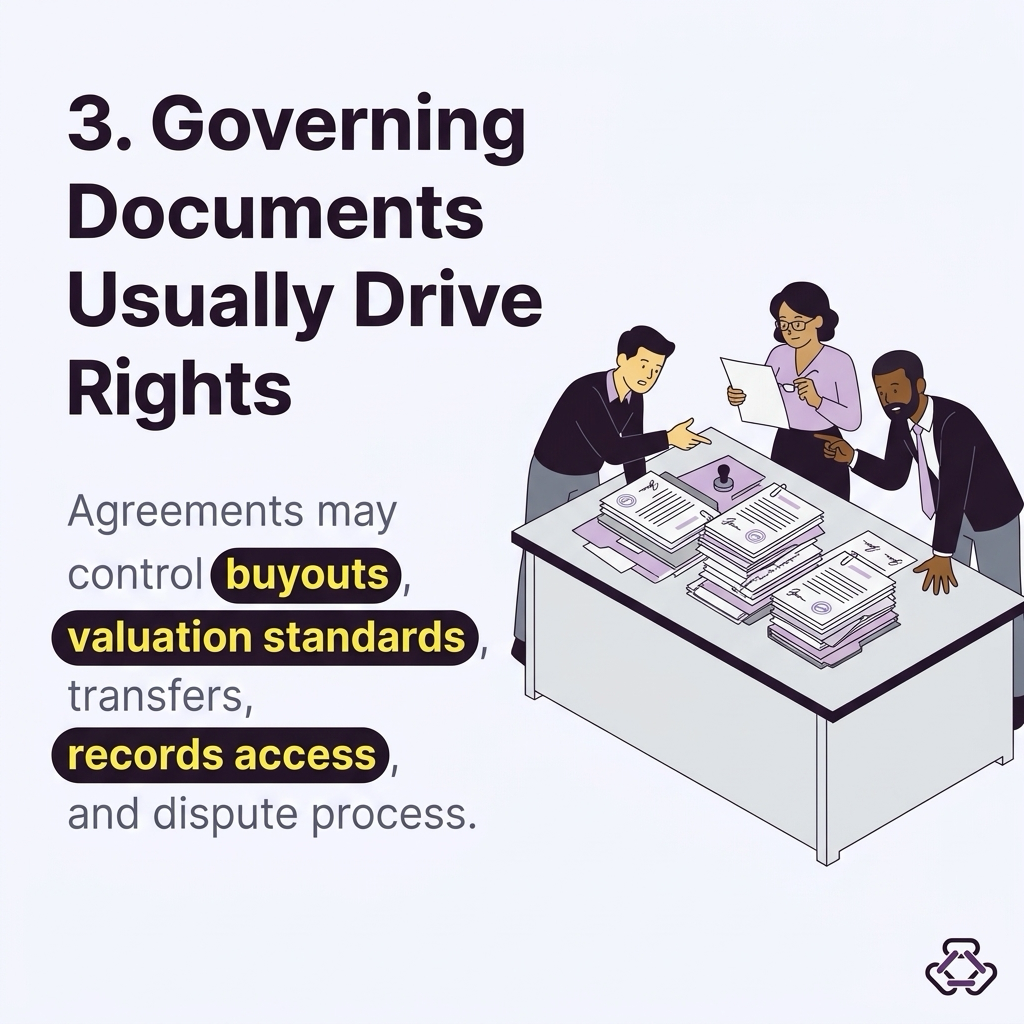
Before anyone can meaningfully evaluate leverage, exposure, or exit rights, the governing documents usually take center stage.
Those often include:
- Operating agreement
- Shareholders’ agreement
- Partnership agreement
- Buy-sell agreement
- Bylaws
- Employment agreements
- Equity grant documents
- Promissory notes
- Restrictive covenant agreements
- Capital call provisions
- Prior amendments, emails, side letters, or board consents
These documents often answer the biggest early questions:
- Is there a mandatory buyout mechanism?
- Is there a trigger event for separation?
- Does the agreement define “fair value,” “fair market value,” or “book value”?
- Are discounts allowed?
- Is financing of a buyout permitted over time?
- Can one owner force a sale?
- Is mediation or arbitration required first?
- Are there limits on transfers?
- Are there rights to inspect records?
- Are there fee-shifting clauses?
If you are trying to understand how owners often prepare for this stage without damaging the company further, this guide on getting ready for an ownership split without crushing business value is a useful companion.
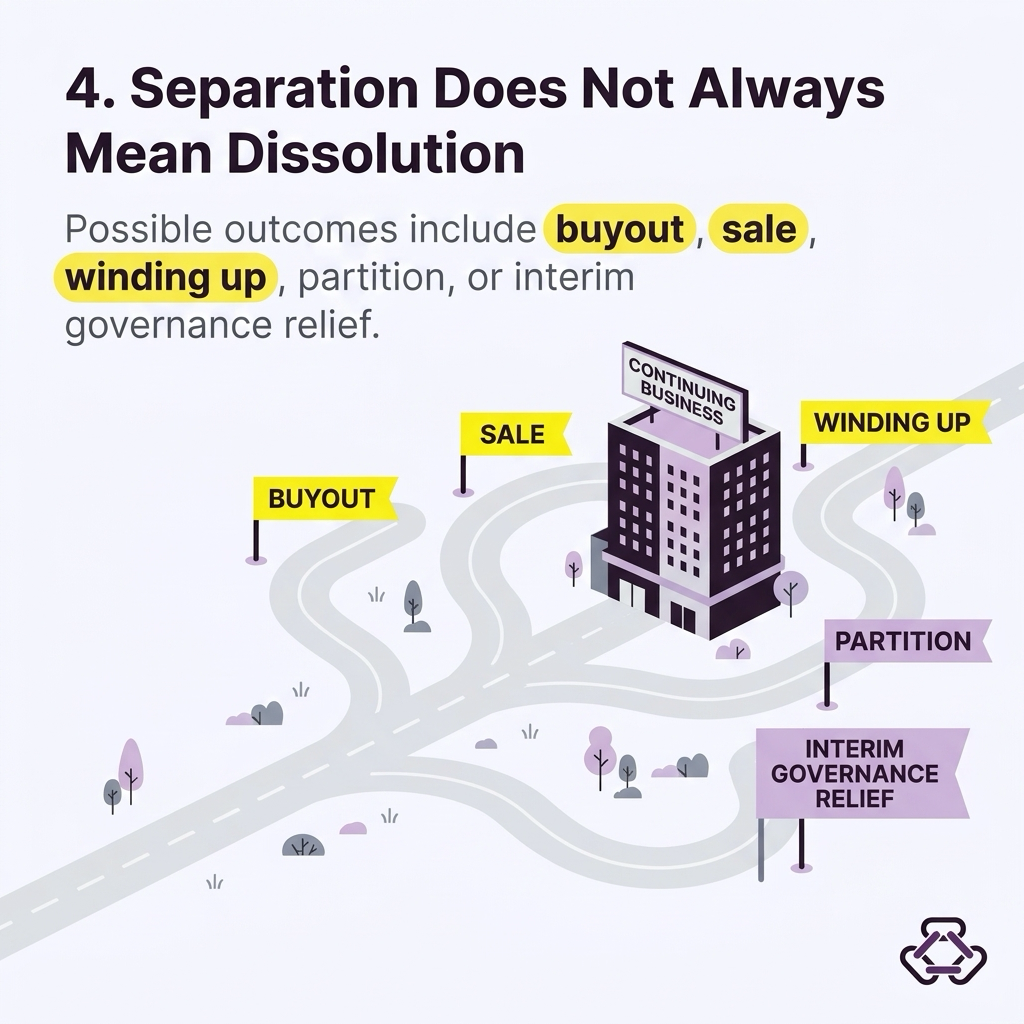
Ownership Separation Does Not Always Mean Dissolution
One of the biggest misconceptions in business divorce disputes is that a breakup automatically means the company dies. Often, it doesn’t.
Possible paths include:
One Owner Buys Out The Other
This is often the cleanest business solution if there is enough liquidity, lender support, or a workable payout schedule.
The Business Is Sold To A Third Party
This can work when neither side wants to stay, or when neither side can afford the buyout. It can also be a fallback if the parties disagree so strongly that continued operation destroys value.
The Company Is Dissolved And Wound Up
In a true dissolution, the entity stops operating, assets are liquidated or distributed, creditors are paid, and the remaining value is allocated under the governing documents and applicable law. That route can be especially disruptive if the business has goodwill tied to ongoing operations.
The Owners Separate Business Lines
In some disputes, the practical result is a negotiated partition: customers, divisions, geography, or assets are divided in a settlement.
A Court Imposes Interim Governance Relief
Sometimes the immediate issue is not final separation but preserving the company long enough to reach one. Courts may address access to records, elections, voting rights, or temporary management questions before the endgame is resolved.
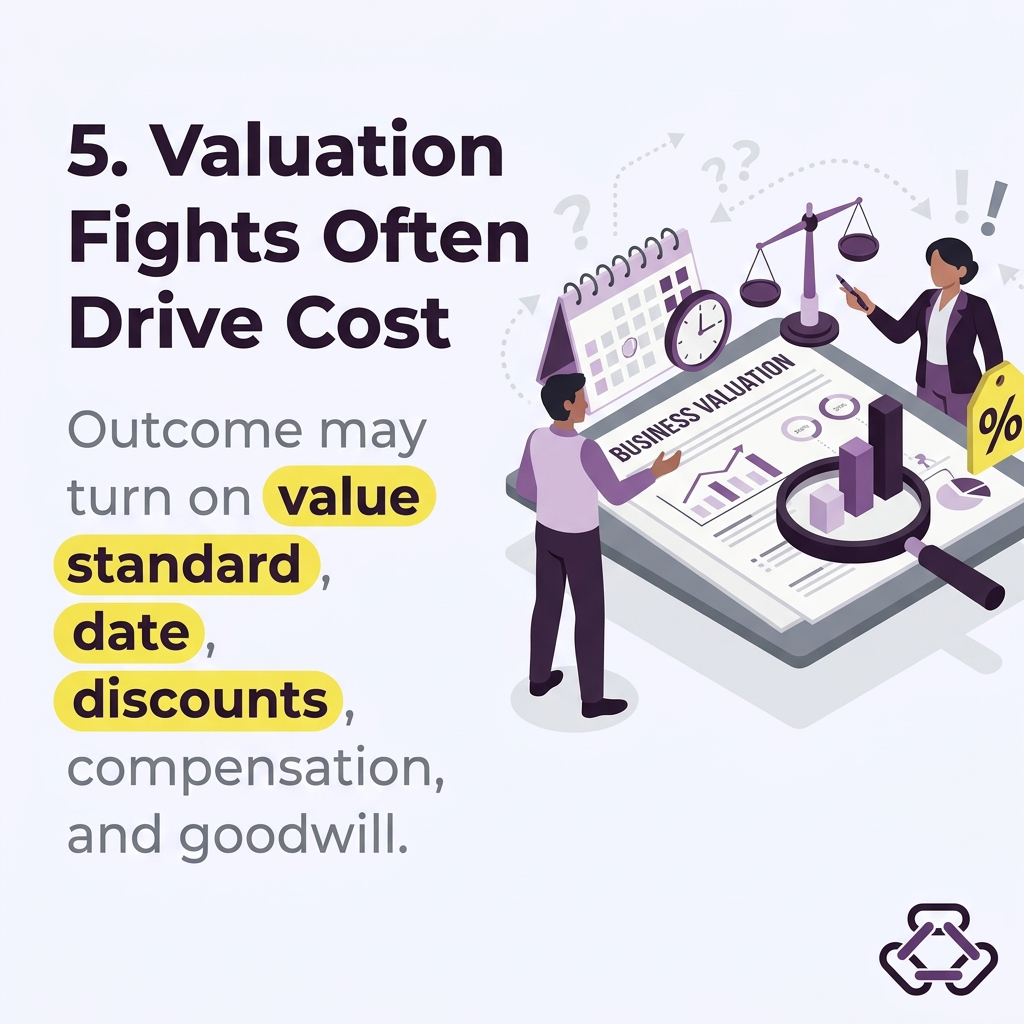
Valuation Is Where Many Business Divorces Become Expensive
Valuation fights are often the center of gravity in a business divorce.
The number itself matters, of course. But so do the assumptions behind it.
The IRS’s long-standing valuation framework for closely held interests traces back to Revenue Ruling 59-60, which remains a common reference point in valuation work involving private businesses (IRS valuation resources). In practice, experts often examine earnings, assets, market comparables, cash flow, management dependence, transfer restrictions, and the economic reality of the company’s actual operations.
Common Valuation Questions
What Standard Of Value Applies?
This issue alone can reshape the outcome. The fight may be over fair market value, fair value, book value, or a contract-defined term. Those are not interchangeable. Different statutes and agreements can use different definitions, and different jurisdictions may apply them differently.
What Is The Valuation Date?
Was the company valued before the conflict erupted, at the date of demand, at filing, at trial, or at closing of the buyout? If performance changed during the dispute, the chosen date may swing the numbers dramatically.
Are Discounts Applied?
In private-company disputes, parties often argue about discounts for lack of marketability or lack of control. Whether those discounts are permitted depends heavily on the governing documents, the claim being asserted, and the law of the state involved. The IRS continues to maintain technical job aids addressing issues such as lack of marketability in closely held valuations, which shows how central discount analysis remains in practice (IRS valuation assistance materials).
What About Owner Compensation?
If one owner has been underpaying or overpaying themselves, EBITDA and cash flow may be distorted. “Add-backs” and normalization adjustments become battlegrounds.
Is The Company Being Valued As A Going Concern Or A Liquidation?
A profitable operating company is not valued the same way as a distressed company headed for shutdown. The premise of value matters.
How Are Personal Goodwill And Enterprise Goodwill Handled?
That issue can become especially important in founder-led businesses where clients or revenue depend heavily on one person.
For a focused look at these buyout and valuation issues, this article on making sense of exit rights, company value, and buyout terms goes deeper into the mechanics.
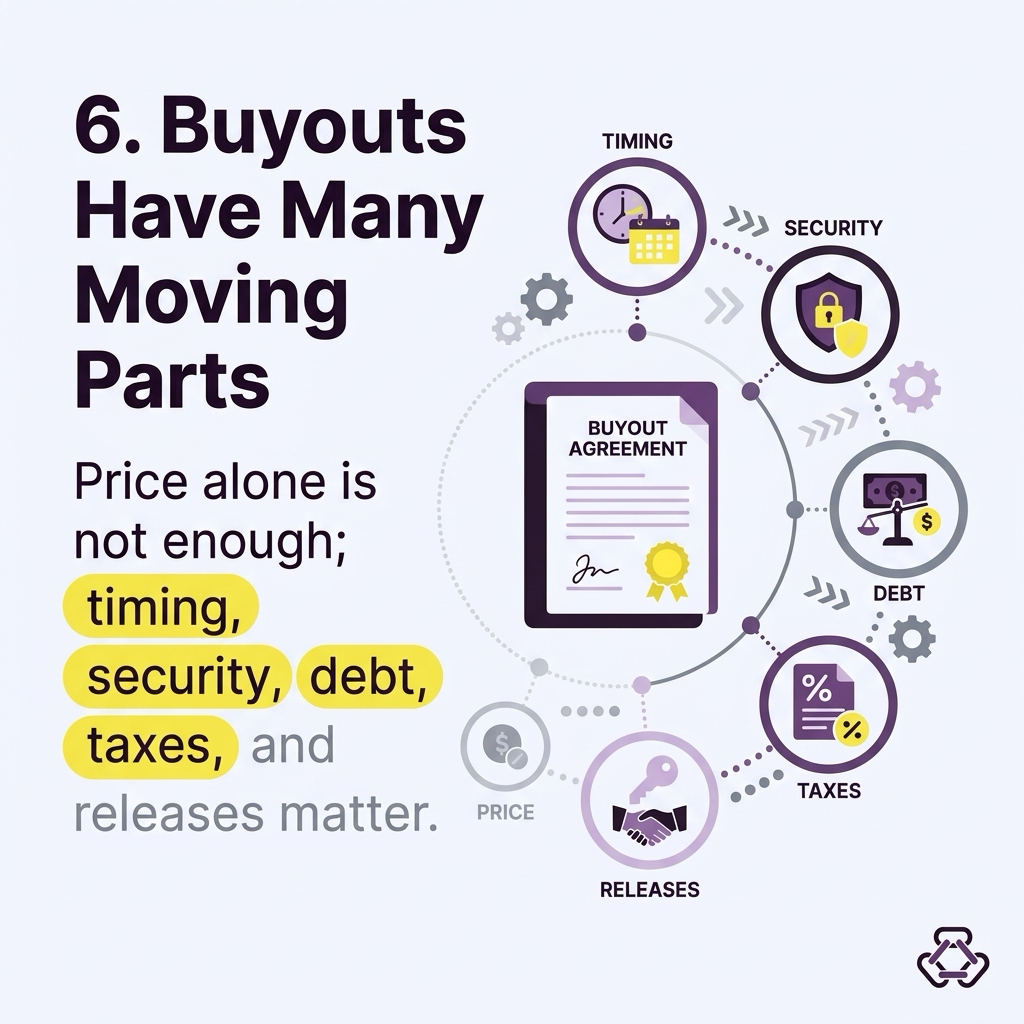
Buyouts Sound Simple Until The Terms Start Moving
“Just buy me out” is often the first demand in a business divorce. It is rarely the last word.
A buyout has multiple moving parts:
- Purchase price
- Valuation process
- Payment timing
- Interest
- Security for deferred payments
- Tax allocation
- Treatment of debt
- Treatment of unpaid distributions
- Releases
- Non-compete and non-solicit terms
- Transition duties
- Access to books during payout period
- Personal guaranty issues
That is why even when the parties agree in principle, they may still end up in court. A vague exit provision can generate major litigation over what the buyout clause was actually supposed to accomplish.
The ABA’s 2025 survey of business divorce developments highlights how courts continue to confront disputes involving oppression claims, judicial buyout requests, deadlock, and valuation methodology fights, including disputes over discounted cash flow analysis and premature efforts to impose buyouts before a full record is developed (ABA Business Law Today).
That pattern is common: the remedy and the valuation process become the case.
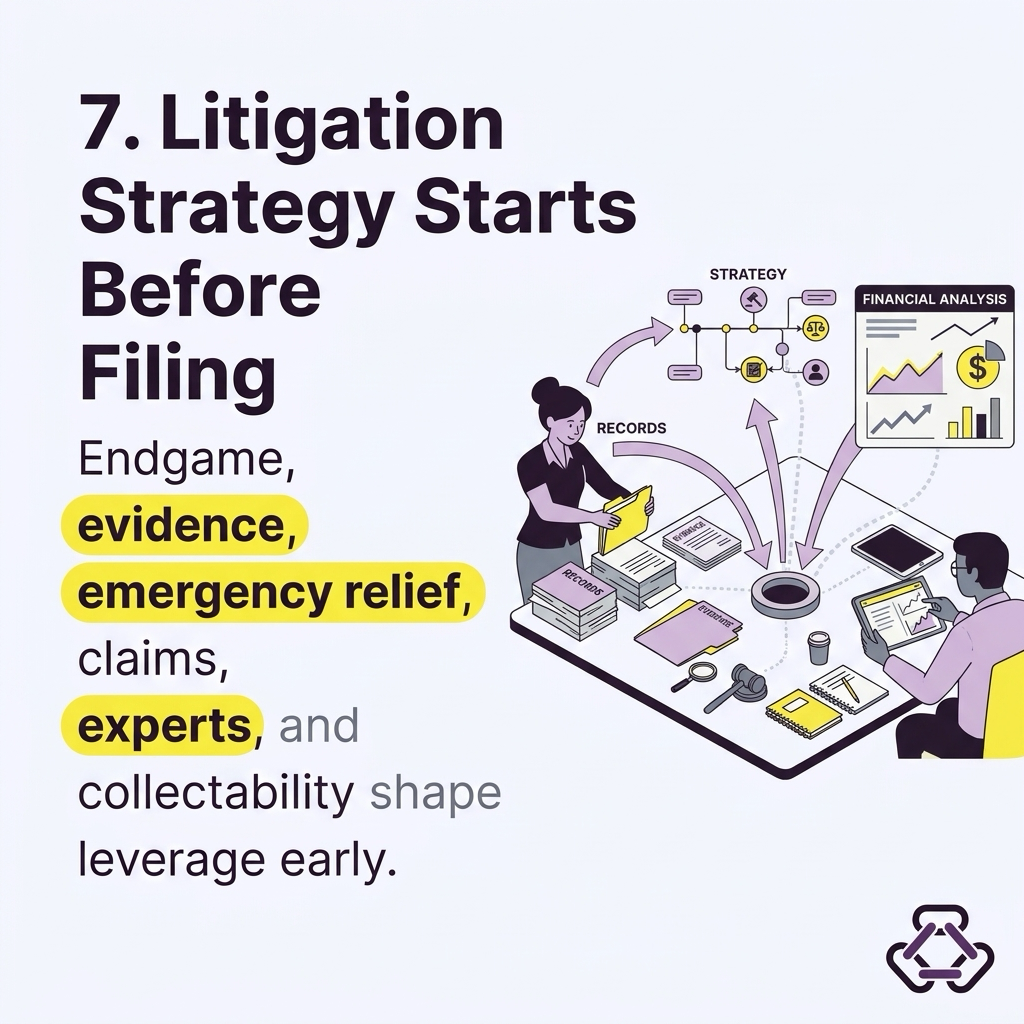
Litigation Strategy Often Starts Before The Lawsuit
In business divorce matters, litigation strategy is not just about trial themes. It often begins before a complaint is filed.
1. Define The Endgame Early
Is the real objective a buyout, control, dissolution, access to information, or leverage for settlement? Different goals call for different claims and different timing.
An owner seeking a negotiated exit may still prepare as if the case will be litigated. An owner seeking control may focus more heavily on governance rights, records access, injunctive relief, and removal issues.
2. Secure The Evidence
Many business divorce disputes turn on records that are internally controlled:
- General ledger
- Tax returns
- Bank statements
- Payroll data
- Customer contracts
- Board minutes
- Cap table
- Slack, email, and text communications
- Loan documents
- Related-party transactions
- Vendor and affiliate payments
If one side controls the systems, delay can become costly. Courts often draw serious conclusions from missing or withheld records, especially where valuation and misuse of funds are central.
3. Evaluate Direct And Derivative Claims
Some claims belong to the owner personally. Others belong to the company. That distinction can affect standing, remedies, settlement structure, and who receives damages.
4. Consider Whether Emergency Relief Changes The Leverage
In some business divorces, the urgent issue is preserving the business. If money is being diverted, records are being destroyed, employees are being poached, or a sale is being pushed through without proper process, temporary court intervention may become part of the strategy.
5. Use Valuation Experts Early, Not Just At Trial
A testifying valuation expert is one piece of the puzzle. But even before formal expert work begins, financial analysis can shape case framing, damages theories, and settlement posture.
6. Pressure-Test Collectability And Structure
A buyout order is one thing. Getting paid is another. If the other side cannot finance the deal, a “victory” on price may not translate into an actual exit.
Common Claims In Business Divorce Litigation
The exact causes of action vary by state and entity type, but common claims include:
- Breach of fiduciary duty
- Minority oppression
- Freeze-out or squeeze-out conduct
- Breach of operating agreement or shareholder agreement
- Declaratory judgment
- Accounting
- Books and records actions
- Derivative claims
- Dissolution petitions
- Fraud or misrepresentation
- Conversion
- Tortious interference
- Unjust enrichment
In closely held business disputes, oppression-style theories often arise when an owner’s reasonable expectations of participation, compensation, information access, or economic return have allegedly been frustrated. The ABA has described those concerns as central to the vulnerability of minority owners in locked-in entities (ABA Business Law Today).
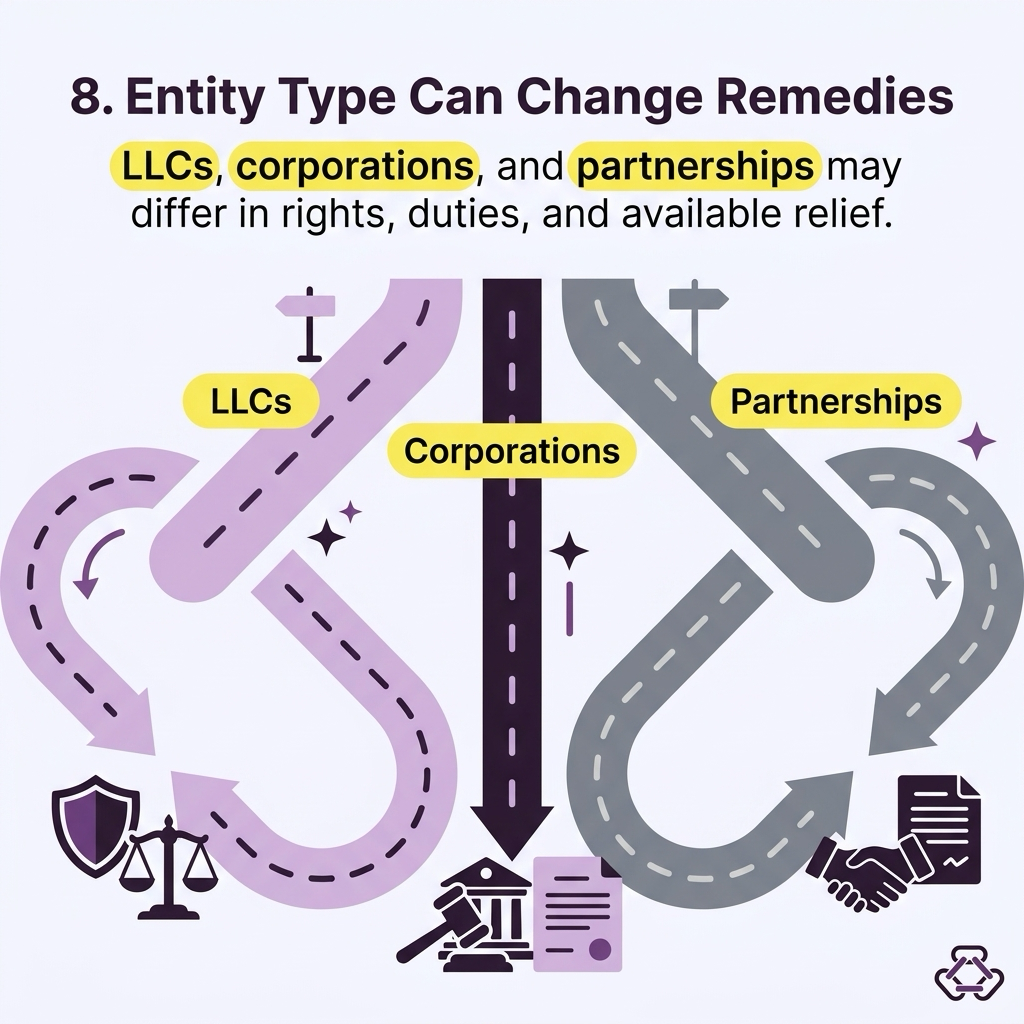
The Entity Type Can Change The Entire Fight
Not all business divorces are created equal.
LLCs
LLCs are contract-heavy. The operating agreement often carries enormous weight. Rights that owners assume exist may be expanded, limited, or reshaped by the contract.
Corporations
Shareholder rights, board procedures, statutory remedies, and oppression doctrines may be more developed in corporate law depending on the state.
Partnerships
Partnership disputes often involve fiduciary duties, authority, withdrawals, accountings, and winding-up questions. Informal conduct between the parties can matter a great deal.
Even where broad themes overlap, the remedies available in one entity form may look very different in another.
Why Many Cases Settle After The Hard Part Begins
A lot of business divorce matters settle only after each side understands the litigation risk more clearly.
That typically happens after:
- Records are produced
- Cash flow is reconstructed
- The valuation range becomes narrower
- The court signals how it views the dispute
- A preliminary injunction is granted or denied
- One side realizes the business cannot survive prolonged warfare
That last point matters. A business divorce can destroy enterprise value if the owners keep fighting in a way that scares customers, lenders, vendors, or employees. Some of the most damaging outcomes come from tactical overreach rather than the original disagreement.
If that sounds familiar, this piece on mistakes that turn an ownership negotiation into a legal war offers practical examples of how escalation happens.
Questions Owners Often Ask In The Middle Of A Breakup
Business owners in this position tend to circle around the same concerns:
- Can my partner lock me out?
- Can I stop them from draining the company?
- What if there is no buy-sell agreement?
- Can I force a sale?
- Can they force me to sell?
- How is the company actually valued?
- What if the company’s books are unreliable?
- What happens to my salary or distributions during the case?
- Will this become public?
- Can the business survive the dispute?
Those are not small questions. They are often the questions that determine whether the business remains viable at all.
For a more direct FAQ-style treatment, this article covering the biggest questions founders ask when a split becomes unavoidable may help frame the next stage of the conversation.
What Often Makes An Attorney Especially Valuable Here
Business divorce cases usually sit at the intersection of contract interpretation, entity law, valuation, and litigation tactics. That combination can make attorney fit unusually important.
Some lawyers are excellent trial lawyers but less experienced with ownership-structure disputes. Others know deal documents well but do less courtroom work. Others understand valuation theory but not emergency relief practice.
In practical terms, owners often look for counsel with documented experience in highly similar matters involving:
- Closely held business breakups
- Partner or member deadlock
- Fiduciary-duty claims
- Buyout and dissolution disputes
- Financial record reconstruction
- Valuation-heavy litigation
- Emergency business-preservation issues
That kind of case similarity can matter because business divorce disputes move quickly from emotion to leverage to numbers. An attorney with relevant experience may be better positioned to evaluate what facts actually change negotiating power.
Final Takeaway
A business divorce is rarely just a disagreement between owners. It is often a high-stakes struggle over control, value, information, and exit rights. The legal path may involve negotiation, a contract-driven buyout, a contested valuation, emergency court intervention, or full-scale litigation. Much depends on the governing documents, the entity type, the quality of the financial records, and the strategy chosen early in the dispute.
For owners trying to protect the business while separating from each other, the most important question is often not just “Who is right?” It is “What structure gets this resolved without losing more value than necessary?”
Visit ReferU.AI to get matched with an attorney who has demonstrable experience in cases like yours — for free.


