Table of Contents
- Business Divorce: A Beginner’s Guide to Untangling a Company When Owners Cannot Stay Together
- What Is A Business Divorce?
- Why Do Business Divorces Happen?
- Common Triggers
- What Documents Matter First?
- The Key Papers Usually Include
- What If There Is No Good Agreement?
- How Does A Business Divorce Usually End?
- 1. One Owner Buys Out The Other
- 2. The Owners Sell The Company
- 3. The Business Splits Operationally
- 4. The Business Dissolves
- 5. Litigation Forces A Resolution
- How Is The Company Valued?
- Valuation Questions Often Include
- What Legal Claims Show Up In Business Divorce Cases?
- Common Claims
- Can Mediation Or Arbitration Help?
- What Happens To Taxes, Debts, And Personal Guarantees?
- What Are The Earliest Warning Signs That A Business Divorce Is Coming?
- Early Red Flags
- What Can Owners Do In The Early Stage?
- Preserve Information
- Avoid Informal Side Deals
- Understand The Entity Type
- Think Beyond Price
- Get The Right Lawyer Early
- Why Attorney Fit Matters In A Business Divorce
- Final Thoughts For Beginners

Type
Great Grandchild
Status
Approved
Title (YouTube)
Images Failed (Social)
Images Failed (Social)
Do not index
Parent item
Publish Date (TikTok)
Jan 10, 2027 11:15
Videos Post IDs (Social)
Hashtags (Social)
#LegalAdvice #LegalHelp #BusinessLitigation #BusinessDivorce
Caption
Caption X
Cover

OG Image

Alt Image Text
Flat vector illustration of a business divorce between company owners, showing a private company split, buyout and valuation dispute with separated partners and divided business assets.
Images



Videos
Publish Date (Social)
Dec 19, 2026 08:30
Scheduled (Social)
Scheduled (Social)
Images Posted (Social)
Images Posted (Social)
Videos Posted (Social)
Videos Posted (Social)
Videos Failed (Social)
Videos Failed (Social)
Featured
Created time
Apr 3, 2026 10:11 PM
Sub-item
Authors
CTA Practice Area (Social)
Business Litigation
TikTok Failed (Social)
TikTok Failed (Social)
Videos Post Links (Social)
YT Auto Captions Removed
TikTok Post Links (Social)
Images Post IDs (Social)
YT Post ID
Video Pending Manual (Social)
TikTok Posted (Social)
TikTok Posted (Social)
TikTok Post IDs (Social)
Video Cover (Social)
Images Post Links (Social)
First Comment (Social)
YT Embedded
Images Delete (Social)
Videos Delete (Social)
Carousel Video URL (Social)
Business Divorce: A Beginner’s Guide to Untangling a Company When Owners Cannot Stay Together
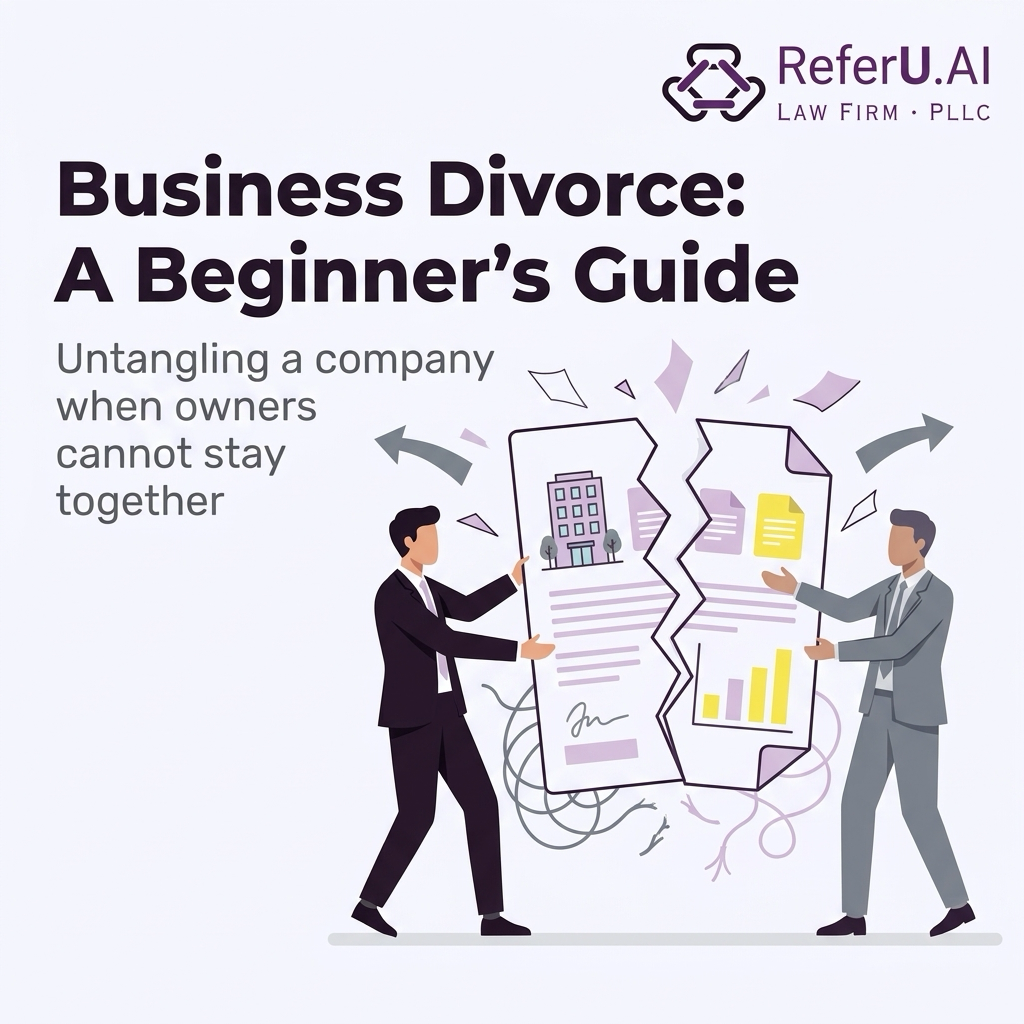
When business owners stop functioning as partners, the company can start to feel like a marriage heading toward separation. Operations slow down. Trust fades. Financial decisions become tense. Access to records, compensation, customers, and control can suddenly become disputed. In closely held companies, that breakdown is often described as a business divorce.
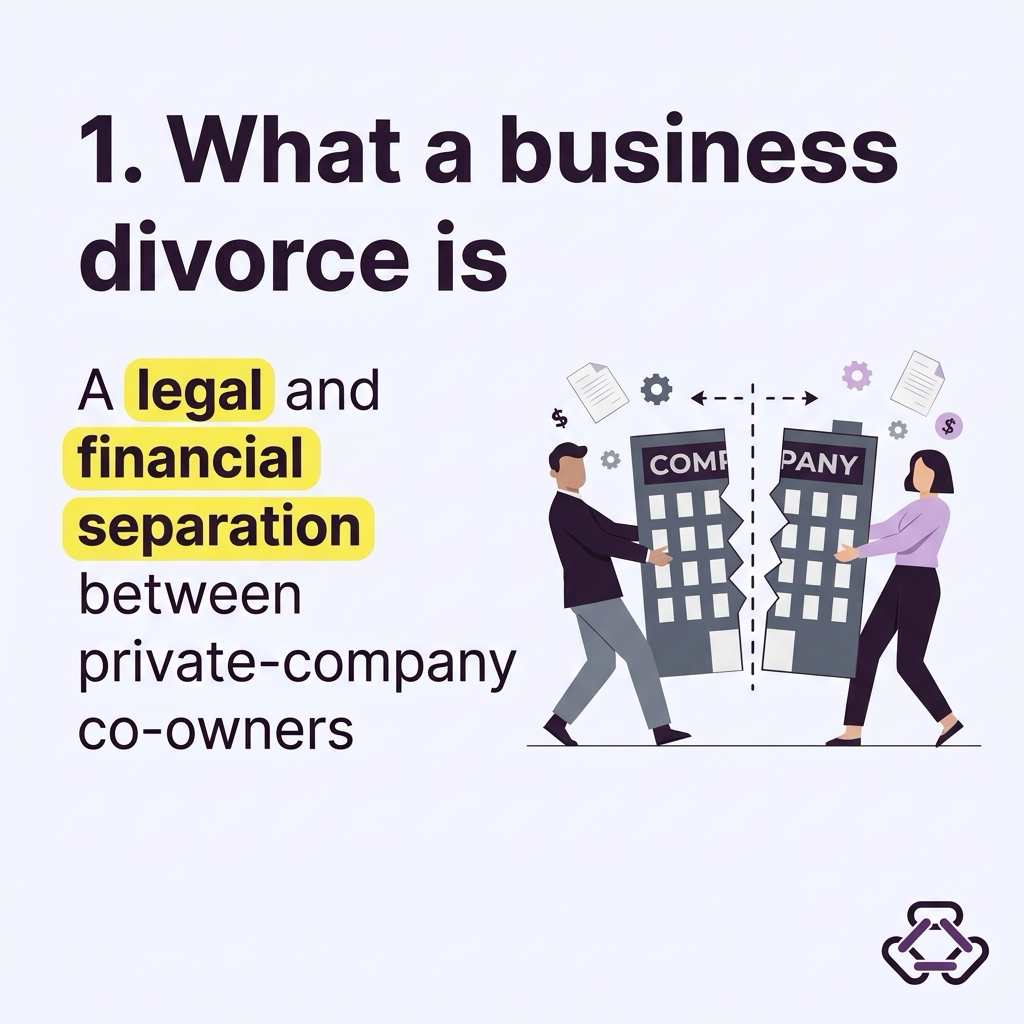
A business divorce is the legal and financial separation of co-owners in a private company. It may involve a negotiated buyout, a management split, a sale of the company, a dissolution, or litigation over ownership rights and fiduciary duties. The exact path often depends on the company’s governing documents, the entity type, and the law of the state where the business was formed. The American Bar Association has noted that these disputes are often highly emotional because the owners’ personal history and financial future are deeply tied to the company’s survival and value (ABA Business Law Today).
If you are new to this topic, the good news is that business divorces usually follow recognizable patterns. In this post you’ll learn what a business divorce is, what usually causes it, what documents tend to matter most, how buyouts and valuations often work, when litigation enters the picture, and why early legal guidance can help preserve leverage and business value. If you want a broader overview of the legal and financial mechanics, this deeper overview of ownership splits and litigation strategy adds more context.
Scroll to the bottom for every post in this series.
What Is A Business Divorce?
A business divorce is a dispute-driven separation between company owners. It commonly arises in closely held corporations, LLCs, partnerships, and family businesses where ownership is concentrated among a small group of people.
Unlike a public-company shareholder dispute, a private-company breakup often has no easy market exit. One owner usually cannot simply sell their stake on an exchange and move on. That is one reason these conflicts can become so disruptive. In closely held corporations, minority owners may find themselves locked in economically if distributions stop, information dries up, or management excludes them from decision-making, a dynamic often described in legal writing as a squeeze-out or freeze-out (The Florida Bar Journal).
In general terms, a business divorce may include:
- A negotiated buyout of one owner
- A sale of the entire business to a third party
- A division of business lines or assets
- Judicial dissolution
- Claims for breach of fiduciary duty, self-dealing, oppression, or misappropriation
- Emergency requests involving access to books, records, bank accounts, or company control
Why Do Business Divorces Happen?
Most business divorces do not begin with a single dramatic event. They often build slowly.
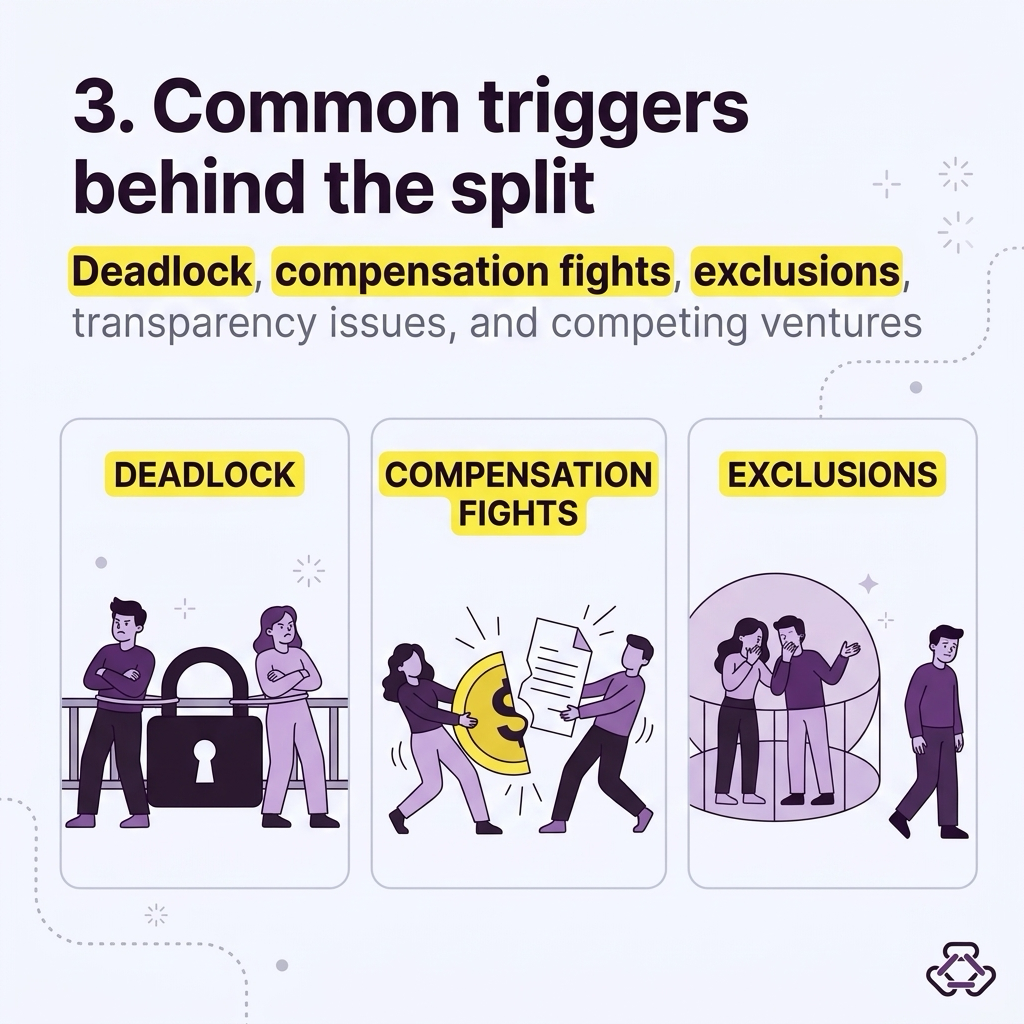
Common Triggers
A breakup may start after one or more of these problems appears:
- Deadlock between 50/50 owners
- Unequal effort, where one owner believes the other stopped contributing
- Compensation disputes, including salary, draws, and distributions
- Alleged misuse of company money
- Self-dealing or related-party transactions
- Exclusion from management
- Lack of transparency around finances
- Competing ventures or poaching customers, staff, or opportunities
- Different visions for growth, debt, hiring, or exit timing
- Family or personal conflict spilling into the business
The legal framing varies by state and entity type, but a recurring issue is fiduciary duty. Partnership and LLC disputes often involve accusations that someone acted disloyally, diverted value, or put personal interests ahead of the company. State law can differ significantly, which is one reason a local attorney often becomes central very early in the process.
What Documents Matter First?
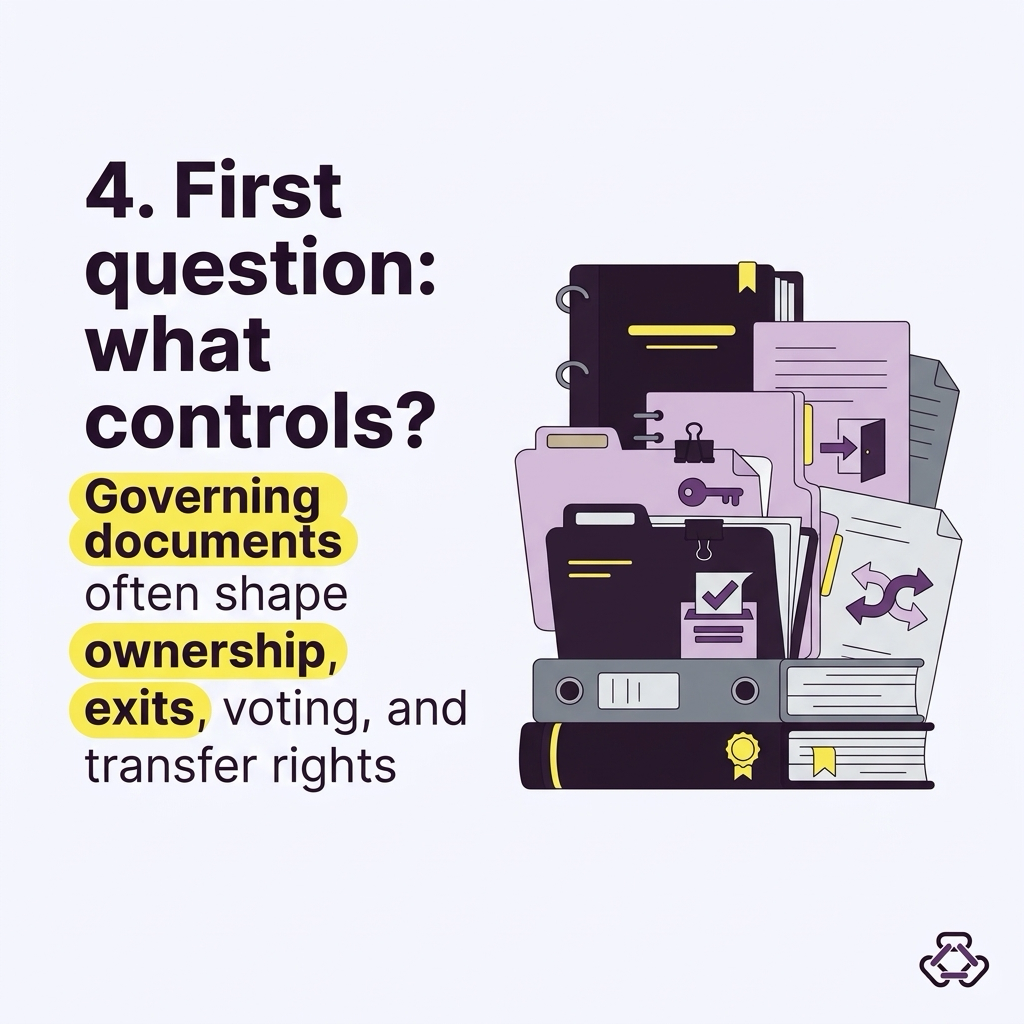
When owners cannot stay together, the first serious question is usually not “who is right?” It is “what controls?”
An attorney will often start by reviewing the documents that govern ownership, management, transfer rights, and exit procedures.
The Key Papers Usually Include
- Operating agreement
- Shareholder agreement
- Partnership agreement
- Buy-sell agreement
- Bylaws
- Articles or certificate of formation/incorporation
- Employment agreements
- Equity grant documents
- Board or member consents
- Loan agreements and guaranties
- Tax returns, profit-and-loss statements, and balance sheets
These documents may answer some of the biggest early questions:
- Can one owner force a sale?
- Is there a contractual buyout formula?
- Are there transfer restrictions?
- Does the agreement require mediation or arbitration?
- Who controls day-to-day operations?
- What voting threshold applies to major actions?
- What happens on death, disability, misconduct, or departure?
In LLC disputes, state statutes also matter. For example, Delaware law provides for judicial dissolution of an LLC by the Court of Chancery when “it is not reasonably practicable to carry on the business” in conformity with the LLC agreement (Delaware Code, § 18-802). That does not mean dissolution is automatic; it means the operating agreement and the practical reality of the business both matter.
What If There Is No Good Agreement?
This is one of the most common and most expensive problems.
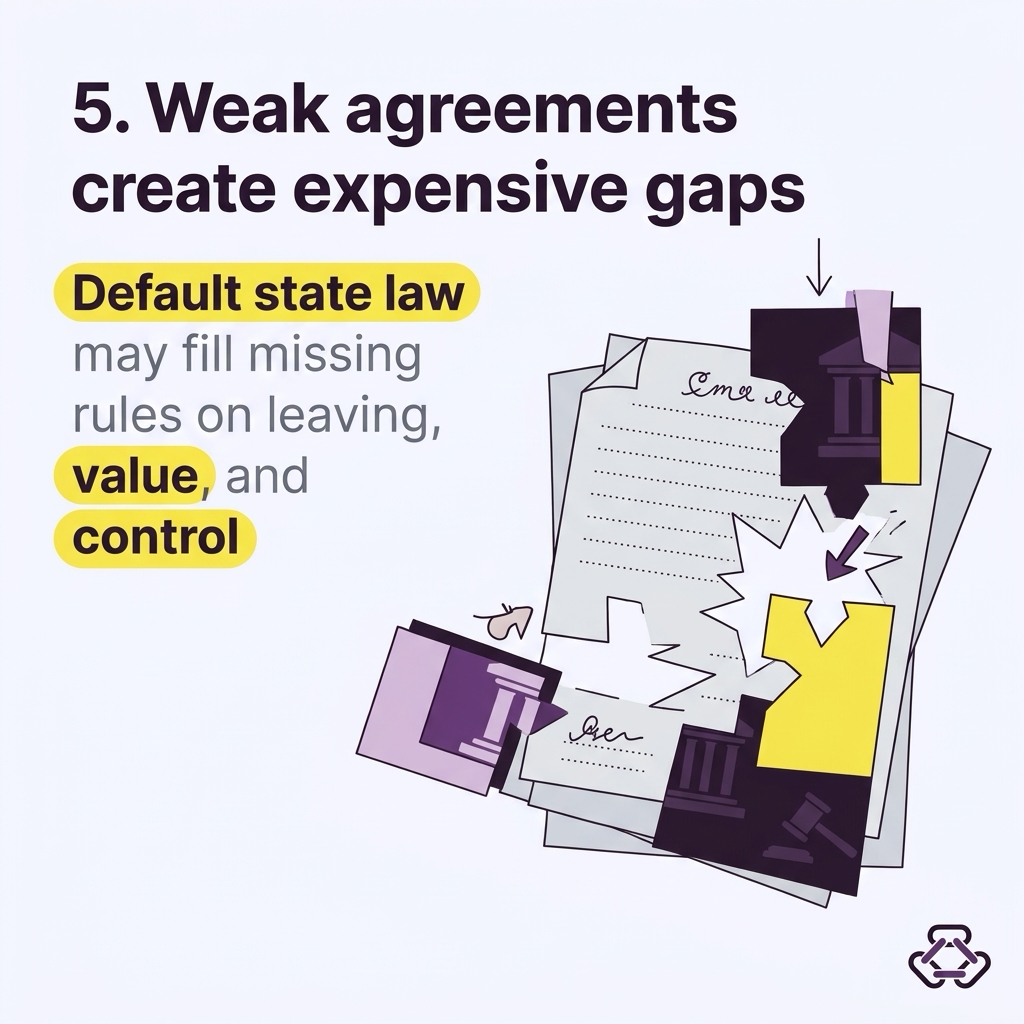
Many owners launch a company with a handshake, a short online template, or formation paperwork that says almost nothing about disputes. When the relationship breaks down, they discover the documents do not explain how someone leaves, how value is set, who controls distributions, or how deadlock gets resolved.
Here’s what this often means: default state law begins filling the gaps. That can produce outcomes nobody expected.
For example, in partnership matters, federal tax obligations may continue even after the business relationship breaks apart. The IRS explains that when a partnership terminates before the end of its tax year, a final short-period Form 1065 is generally required (IRS Publication 541). In other words, the breakup may create tax reporting issues at the same time the owners are fighting about money, records, and control.
A thin agreement also tends to increase conflict over valuation, access to books, expense reimbursements, intellectual property, and whether one owner can keep operating the business after the split. If you are dealing with that situation, it may also help to read about preparing for an ownership split without wrecking enterprise value, because process mistakes in the early stage often make resolution harder.
How Does A Business Divorce Usually End?
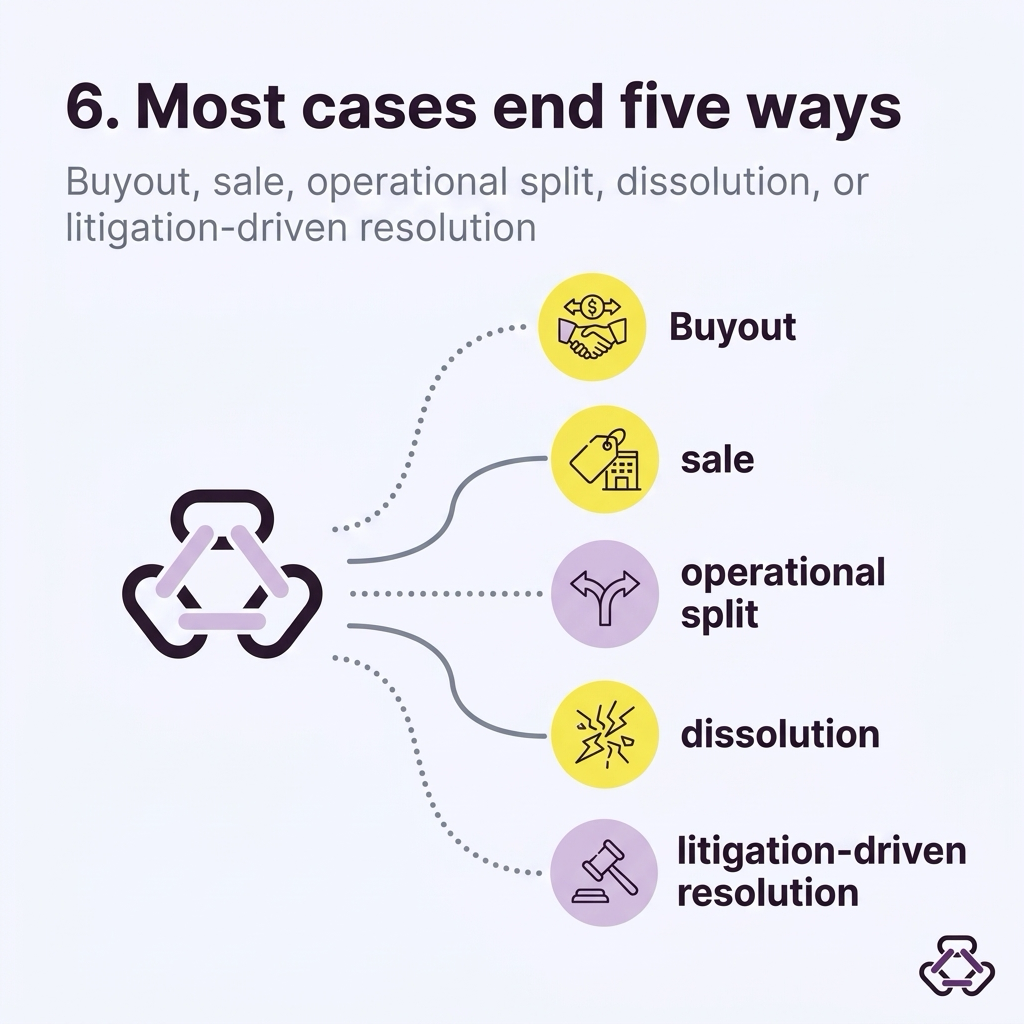
There is no single ending. A business divorce can resolve in several different ways depending on leverage, cash flow, documents, and the owners’ goals.
1. One Owner Buys Out The Other
This is often the cleanest business outcome when the company is viable and one side wants to keep operating. The real fight is usually over price, terms, and risk allocation.
The buyout may involve:
- A lump-sum payment
- Installment payments
- Offsets for disputed expenses or misconduct
- Release from personal guaranties
- Non-compete or non-solicit terms where enforceable
- Access to records for tax and post-closing issues
- Indemnity provisions for unknown liabilities
2. The Owners Sell The Company
Sometimes neither side can realistically buy out the other. In that situation, a sale to a third party may produce a more objective market answer.
3. The Business Splits Operationally
Occasionally the owners divide product lines, territories, customer groups, or assets and continue separately. This can work in some service businesses, family businesses, and companies with clearly separable divisions.
4. The Business Dissolves
Dissolution can be voluntary or court-ordered. It usually involves winding up, paying creditors, collecting receivables, dealing with taxes, and distributing remaining assets according to ownership rights and state law.
5. Litigation Forces A Resolution
Litigation may lead to a settlement, a court-supervised buyout, injunctive relief, appointment of a receiver in some cases, or dissolution. Even when cases settle, the litigation process often shapes the negotiating power of both sides.
How Is The Company Valued?
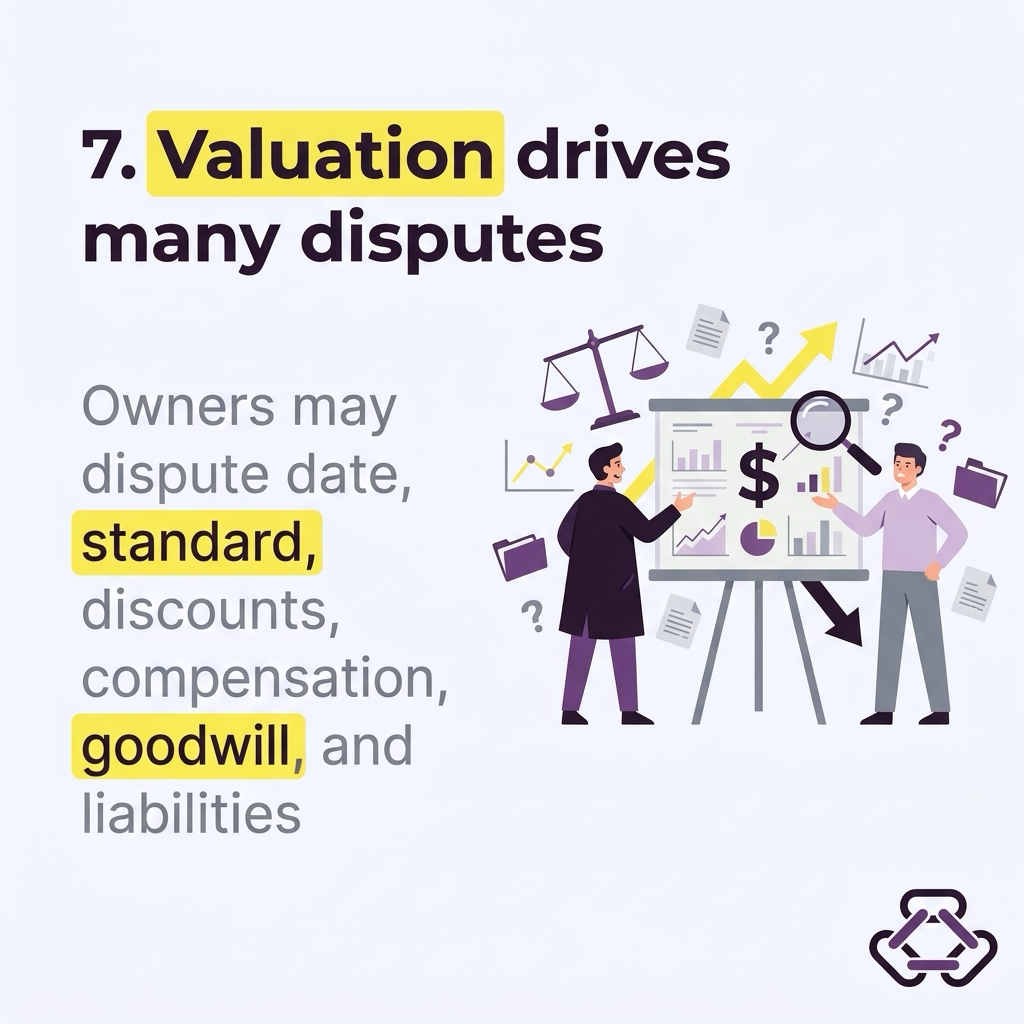
Valuation is often the center of the entire dispute.
Owners rarely disagree only about the number. They also disagree about what exactly is being valued, on what date, under what standard, and with what adjustments.
Valuation Questions Often Include
- Is the stake a controlling interest or a minority interest?
- Is the standard fair value, fair market value, or a contract-defined formula?
- Should discounts for lack of control or marketability apply?
- Are owner compensation and perks above or below market?
- Are customer relationships tied to one owner personally?
- Were earnings manipulated before the dispute?
- Is goodwill personal, enterprise-based, or both?
- Are pending lawsuits or tax liabilities affecting value?
Bar and valuation professionals routinely describe closely held business valuation as fact-intensive and highly dependent on the purpose of the appraisal. The Washington State Bar has noted that valuing a closely held business requires a thorough investigation of the facts, records, and context surrounding the company (Washington State Bar News).
That is one reason experienced counsel often works closely with forensic accountants and valuation experts. A business divorce is rarely just a legal dispute. It is also a financial reconstruction project.
What Legal Claims Show Up In Business Divorce Cases?
The answer depends on the state and entity type, but several claims appear often.
Common Claims
- Breach of fiduciary duty
- Minority oppression or squeeze-out claims
- Breach of contract
- Fraud or misrepresentation
- Conversion or misappropriation
- Accounting claims
- Books-and-records actions
- Declaratory judgment
- Judicial dissolution
- Derivative claims on behalf of the company
In closely held corporations, minority-owner conflicts often center on exclusion from information, compensation games, dilution, or insiders paying themselves while withholding distributions. The Florida Bar Journal describes this pattern as a common problem in close corporations because there is typically no liquid market for the minority owner’s shares (The Florida Bar Journal).
This is where state-specific law becomes especially important. The available remedies in Florida may differ from Texas, Delaware, New York, or California. A company’s formation state and governing documents can change the analysis materially.
Can Mediation Or Arbitration Help?
Often, yes.
The American Bar Association has highlighted ADR tools as especially useful in business divorce matters because owner disputes are frequently emotional, expensive, and tied to the future viability of the company (ABA Business Law Today). Mediation can create room for practical tradeoffs that a court may not be able to craft as easily, such as phased exits, customer-transition plans, guaranty releases, or temporary management protocols.
Arbitration may also come into play if the operating agreement or shareholder agreement requires it. That can affect confidentiality, timing, discovery, and appeal rights.
Still, ADR is not always a soft alternative. In many business breakups, mediation works only after each side has assembled records, legal theories, and a credible damages or valuation story.
What Happens To Taxes, Debts, And Personal Guarantees?
This is where many owners get blindsided.
Even if the owners stop speaking, the company may still owe taxes, rent, payroll obligations, vendor balances, and loan payments. If an owner signed a personal guaranty, leaving the company does not automatically remove that exposure.
The IRS states that a terminated partnership generally has filing obligations for the short tax year ending on the termination date, including Form 1065 and related statements where applicable (IRS Publication 541). That means tax cleanup is often part of the exit process, not an afterthought.
Other practical issues may include:
- Unpaid payroll taxes
- Sales tax exposure
- PPP, EIDL, or commercial loan compliance questions
- Lease assignments
- Equipment financing
- Customer deposits
- Pending litigation or demand letters
This is one reason business divorce cases often involve more than a business litigator alone. Depending on the facts, owners may also work with tax counsel, accountants, valuation experts, or insolvency professionals.
What Are The Earliest Warning Signs That A Business Divorce Is Coming?
Many owners can identify the moment things “felt different,” even if the formal dispute came later.
Early Red Flags
- One owner cuts off access to bank or accounting systems
- Financial reports stop arriving
- Payroll or distributions become inconsistent
- A partner starts using separate vendors or separate books
- Customers are told conflicting stories
- Major decisions are made without required votes
- One owner is frozen out of operations
- Company money starts funding personal expenses
- New entities appear that seem to overlap with the old business
Some people in similar situations try to “wait it out.” Sometimes that works. Sometimes it gives the other side more time to shape the paper trail, move customers, reposition cash flow, or define the narrative. If you are trying to spot trouble before it becomes litigation, this topic connects closely with understanding the mistakes that often turn a business split into full-scale war.
What Can Owners Do In The Early Stage?
Without turning this into legal advice, there are a few practical themes that often matter early.
Preserve Information
Disputes over email, ledgers, tax returns, payroll records, contracts, and bank statements can become central very quickly.
Avoid Informal Side Deals
A text-message agreement about “just taking over” the business may create more confusion than closure if ownership documents, lender consent, tax allocations, and transfer formalities are not addressed.
Understand The Entity Type
A 50/50 LLC deadlock may look very different from a minority shareholder dispute in a close corporation or a general partnership dissolution.
Think Beyond Price
In many ownership splits, the hardest issues are not just valuation. They are debt exposure, guaranties, customer transition, employee departures, IP ownership, and taxes.
Get The Right Lawyer Early
A lawyer with documented experience in closely held business disputes may help frame the problem accurately from the start: negotiation, injunction, valuation dispute, books-and-records action, dissolution petition, or some combination of those.
Why Attorney Fit Matters In A Business Divorce
Business divorce cases can turn on details that are easy to miss if counsel does not regularly handle ownership disputes.
For example:
- Some cases are really valuation fights disguised as governance disputes
- Some are oppression cases dressed up as compensation disputes
- Some involve emergency control issues that change the business in days
- Some require deep familiarity with LLC agreements and deadlock remedies
- Some are primarily accounting and tracing matters
- Some call for immediate coordination with tax professionals and valuation experts
That is why attorney fit is not just about general business-law experience. It is often about demonstrable experience in highly similar matters: owner freezes, buyout disputes, deadlocks, fiduciary-duty claims, judicial dissolution requests, or closely held company litigation with competing valuation narratives.
If your situation is escalating, it may also help to compare the kind of counsel typically involved in buyout rights, valuation disputes, and exit-term analysis, because the lawyer who handles a contract review is not always the same lawyer who regularly manages a contested ownership separation.
Final Thoughts For Beginners
A business divorce is rarely just a disagreement between co-owners. It is usually a mix of law, finance, control, valuation, and personal history. The earlier the real issues are identified, the more room there may be to preserve options, protect records, and reduce unnecessary damage to the company.
If you are facing a possible ownership split, an attorney might help you determine what governs the dispute, what leverage exists, what the company may be worth, and which path fits the facts: buyout, sale, mediation, litigation, or dissolution.
Visit ReferU.AI to get matched with an attorney who has demonstrable experience in cases like yours — for free.
