Table of Contents
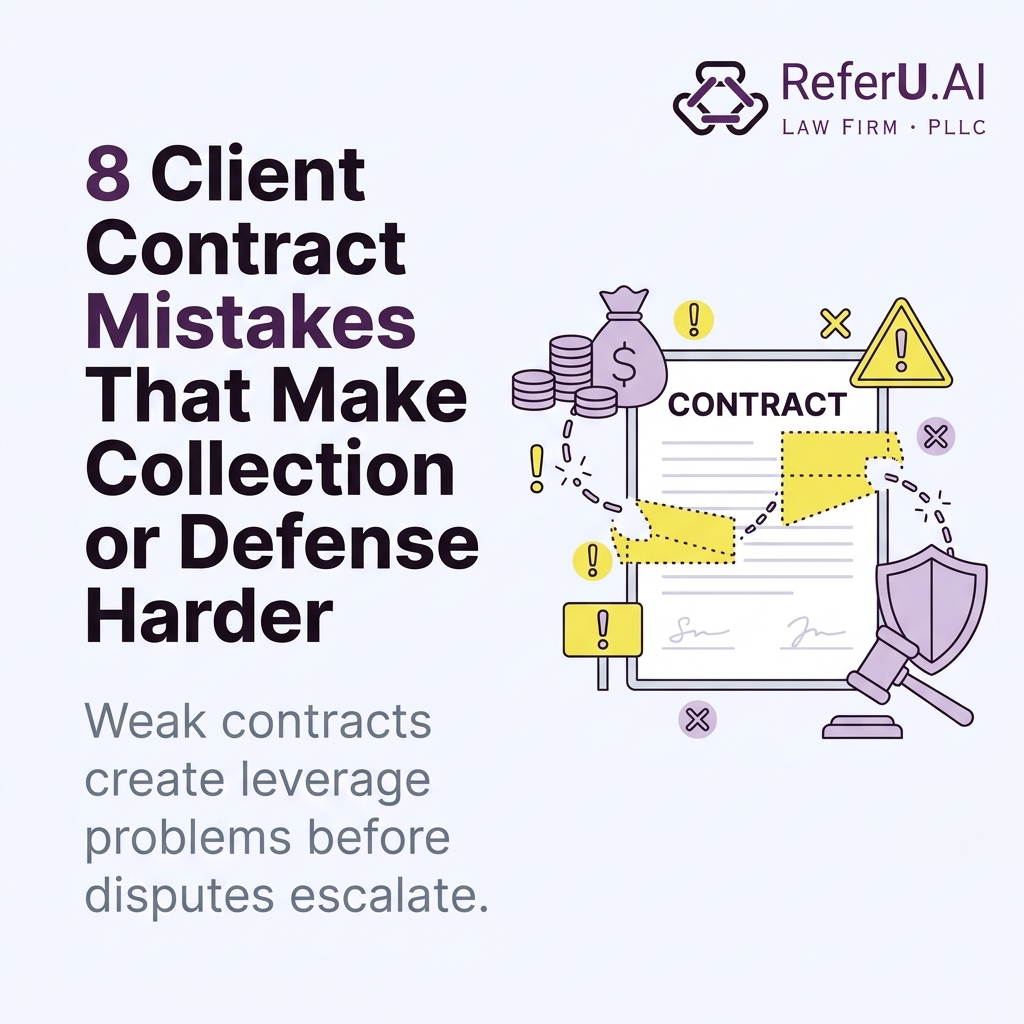
- 8 Client Contract Mistakes That Make Collection or Defense Harder
- 1. Using A Scope Of Work That Sounds Clear But Is Not Actually Specific
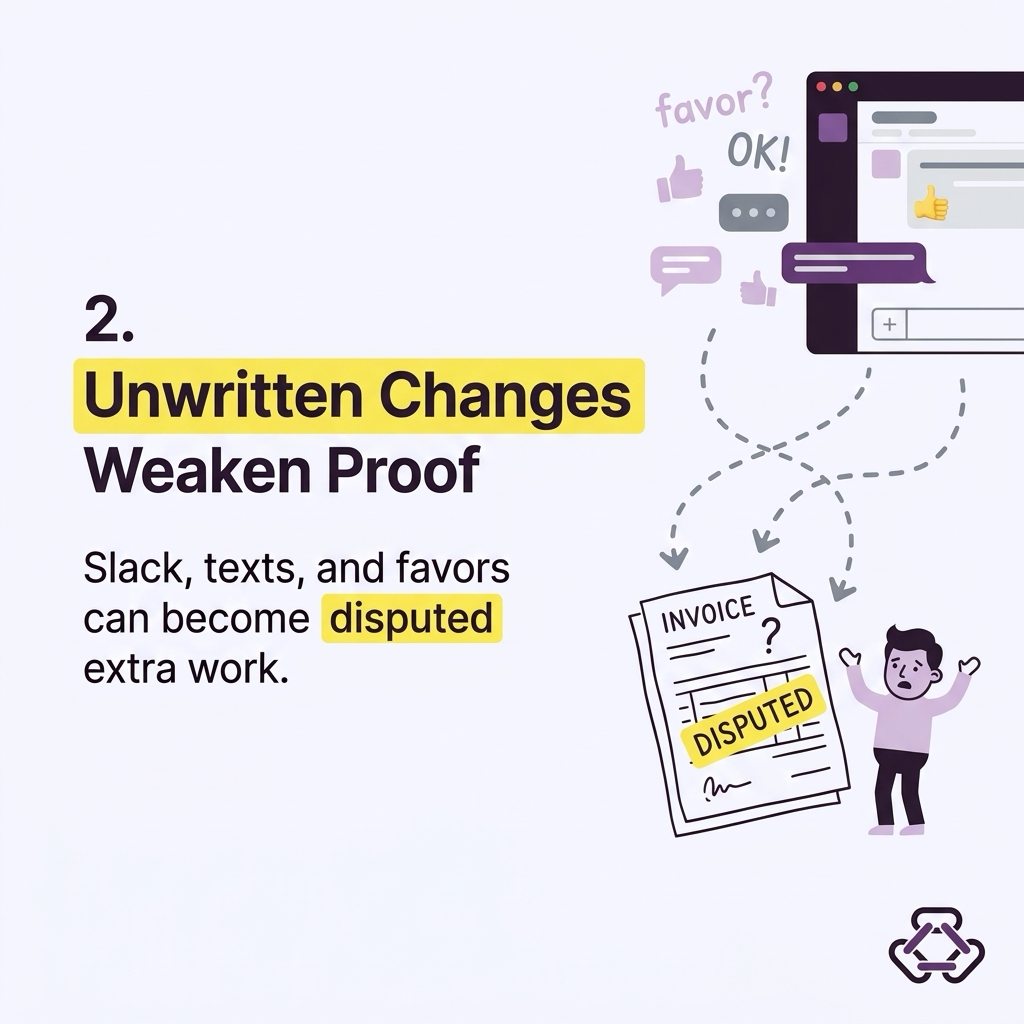
- 2. Failing To Document Changes In Writing
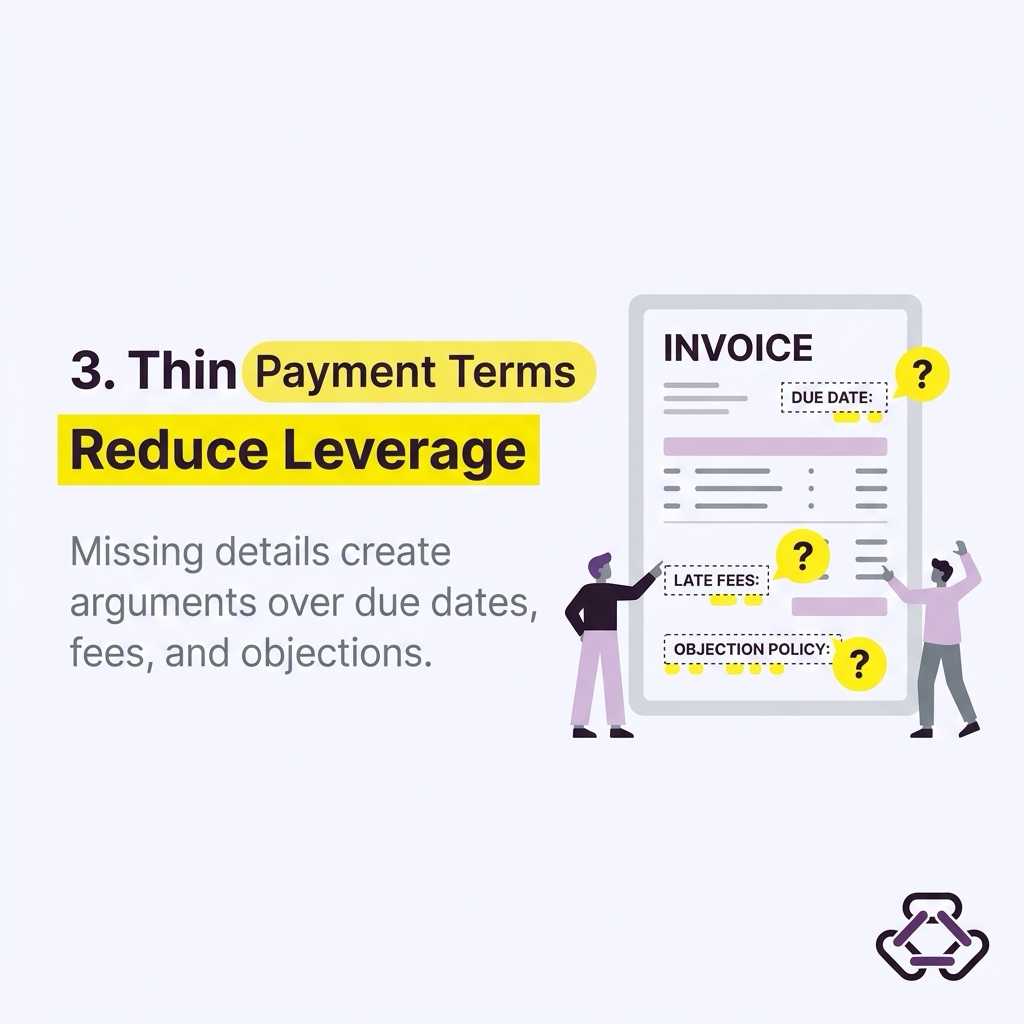
- 3. Leaving Payment Terms Too Thin To Enforce Cleanly
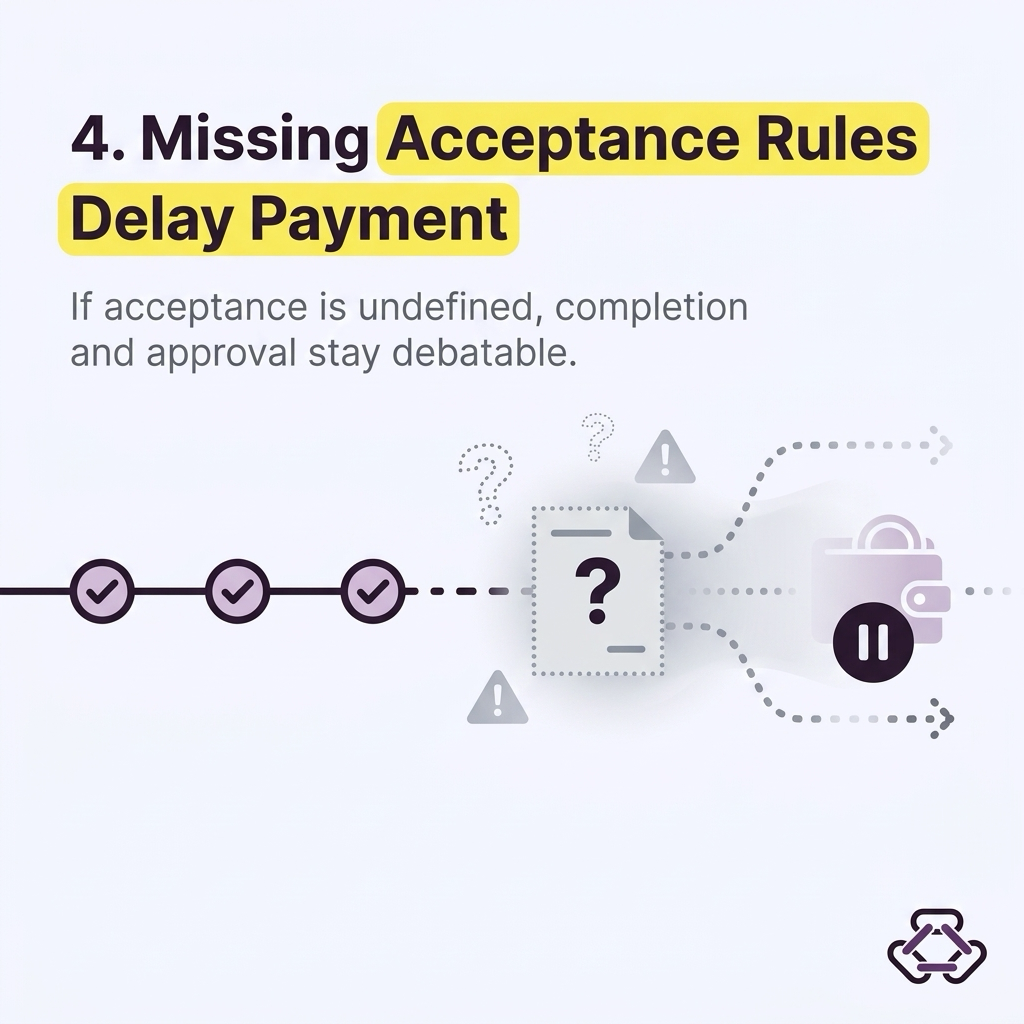
- 4. Ignoring Acceptance Procedures And Milestones
- 5. Using A Dispute Resolution Clause Without Thinking Through The Consequences
- 6. Forgetting The Clauses That Matter Only After The Relationship Breaks Down
- 7. Treating Emails, Texts, And Invoices As Separate From The Contract File
- 8. Waiting Too Long To Get A Lawyer Involved
- Why These Mistakes Matter So Much In Collection Cases
- Why These Mistakes Matter Just As Much In Defense
- A Short Summary

Type
Great Grandchild
Status
Approved
Title (YouTube)
Images Failed (Social)
Images Failed (Social)
Do not index
Publish Date (TikTok)
Jan 5, 2027 09:15
Videos Post IDs (Social)
Hashtags (Social)
#LegalAdvice #LegalHelp #BusinessLitigation #CustomerClientDisputes
Caption
Caption X
Cover

OG Image

Alt Image Text
Flat vector illustration of client contract mistakes making collection or defense harder, with a disputed contract, unpaid invoice, scattered approvals, and scope confusion.
Images


Videos
Publish Date (Social)
Dec 16, 2026 07:00
Scheduled (Social)
Scheduled (Social)
Images Posted (Social)
Images Posted (Social)
Videos Posted (Social)
Videos Posted (Social)
Videos Failed (Social)
Videos Failed (Social)
Featured
Created time
Apr 3, 2026 10:12 PM
Sub-item
Authors
CTA Practice Area (Social)
Business Litigation
TikTok Failed (Social)
TikTok Failed (Social)
Videos Post Links (Social)
YT Auto Captions Removed
TikTok Post Links (Social)
Images Post IDs (Social)
YT Post ID
Video Pending Manual (Social)
TikTok Posted (Social)
TikTok Posted (Social)
TikTok Post IDs (Social)
Video Cover (Social)
Images Post Links (Social)
First Comment (Social)
YT Embedded
Images Delete (Social)
Videos Delete (Social)
Carousel Video URL (Social)
8 Client Contract Mistakes That Make Collection or Defense Harder
Client disputes rarely begin with the lawsuit. In many businesses, the real trouble starts much earlier — when the contract is vague, the scope shifts informally, approvals happen in scattered emails, or the payment section leaves too much open to argument.
That matters whether your company is trying to collect unpaid invoices or defend against claims that the work was late, defective, or outside the agreed scope. A contract that looks “good enough” during onboarding can become expensive once a client relationship breaks down.
Courts around the country continue to carry heavy civil caseloads, and state court data has shown rising contract filings in recent years, which gives businesses even more reason to think carefully about how agreements are built before a dispute lands in litigation or arbitration. The National Center for State Courts’ Court Statistics Project reported an increase in contract cases, and federal court profile data reflects how significant civil backlogs can affect timing and cost.
In this post you’ll learn eight common client contract mistakes that often make collection or defense harder, why these issues create leverage problems, and how an attorney may help evaluate the contract language, documents, and dispute posture before things escalate. If you want a broader overview of how these conflicts develop, this guide to business disputes over client contracts gives useful context.
Scroll to the bottom for every post in this series.
1. Using A Scope Of Work That Sounds Clear But Is Not Actually Specific
One of the most common contract problems is a scope section that feels detailed when everyone is optimistic, but becomes slippery once money is on the line.
A vague scope often includes phrases like:
- “marketing support as needed”
- “website revisions”
- “ongoing consulting”
- “reasonable assistance”
- “industry-standard deliverables”
Language like that may be workable in a healthy relationship. In a dispute, it often invites two very different stories. The client may say the project included more work, more revisions, or a broader result. The business may say the work requested went beyond the deal and triggered additional fees.
This problem becomes especially important in service contracts, because many business-client disputes turn on performance rather than just the existence of an agreement. Under general contract principles, courts often look to the parties’ words, course of performance, and surrounding facts when deciding what the agreement required. The Uniform Commercial Code expressly recognizes the relevance of course of performance, course of dealing, and usage of trade in transactions it governs, and similar interpretive ideas often appear in broader contract disputes as well. See Cornell’s UCC overview and general definitions section.
Here’s what this often means in practice: the less precise the scope, the more room there is for a nonpaying client to argue that your invoice is inflated or your work was incomplete. On the defense side, a vague scope can also make it harder to show that your business substantially performed the contract.
Some businesses reduce this risk by separating the master services agreement from a project-specific statement of work that identifies deliverables, assumptions, exclusions, revision limits, deadlines, client dependencies, and acceptance steps. That kind of structure often creates a cleaner record if a payment dispute develops later.
2. Failing To Document Changes In Writing
Scope creep rarely arrives with that label attached. It tends to show up in Slack threads, text messages, call summaries, and “quick favors” that slowly turn into extra work.
When a contract does not require signed change orders, or when the parties ignore that requirement, collection becomes harder because the invoice may include labor the client never formally accepted. Defense becomes harder because the client may frame the dispute as unauthorized billing, delay, or failure to deliver the “real” project.
For goods transactions, writing requirements can become even more important. Under UCC § 2-201, a contract for the sale of goods priced at $500 or more generally is not enforceable unless there is a sufficient writing signed by the party against whom enforcement is sought, subject to exceptions. Cornell’s Legal Information Institute and its UCC sales explainer summarize that rule. Even outside Article 2, written confirmation of changes often becomes one of the most valuable pieces of evidence in a business dispute.
A common pattern looks like this:
- original project price is modest
- client requests additional rounds, deliverables, or custom work
- team performs the work to preserve the relationship
- invoice goes out
- client disputes the overage and points back to the original quote
At that point, the business may still have a valid claim, but the proof is messier. An attorney reviewing the file often looks for contemporaneous writings that connect the added work to client approval, pricing, and timing.
3. Leaving Payment Terms Too Thin To Enforce Cleanly
A surprising number of business contracts say almost nothing beyond “payment due upon receipt” or “net 30.” That may seem sufficient until the client stops paying and starts raising complaints.
Thin payment language often leaves major questions unanswered:
- When is an invoice deemed received?
- Are deposits nonrefundable?
- Is there a right to pause work for nonpayment?
- Do partial payments waive objections?
- What happens if the client disputes only part of an invoice?
- Are late charges allowed, and if so, how are they calculated?
- Are collection costs or attorney’s fees recoverable if permitted by applicable law?
If these points are not addressed, the collection side of the case can become less predictable. A client may argue there was no hard due date, no agreed finance charge, no agreement to cover fees, or no procedure for raising objections to an invoice.
That does not automatically defeat collection, but it can reduce leverage. It may also affect settlement posture, because a claim for $40,000 can look very different if the contract does or does not include fee-shifting or cost-recovery language.
Some businesses also overlook the interaction between contract language and state law. Provisions involving interest, liquidated damages, automatic renewal, venue, or fee recovery may be treated differently depending on the jurisdiction. An attorney may help analyze whether the language is likely to be enforced as written where the dispute is actually being fought.
4. Ignoring Acceptance Procedures And Milestones
A lot of client conflicts are really fights about one question: When was the work accepted?
If the contract does not define acceptance, a customer may delay payment by arguing that the deliverable was still under review, still subject to revision, or never formally approved. The business, on the other hand, may believe the project was effectively completed weeks earlier.
That gap matters because acceptance language often affects:
- when invoices become due
- whether the client can reject the work
- whether the dispute is about punch-list items or total nonperformance
- whether the client’s continued use of the work supports the business’s position
In software, creative, consulting, construction-adjacent, and professional service engagements, acceptance procedures can be one of the most important parts of the contract. Businesses often benefit from clarity around review windows, deemed acceptance, testing criteria, and the distinction between material defects and minor revisions.
Without that structure, the defense side of a case may get harder too. If a client sues and says the work failed, a business may have difficulty showing the client accepted milestones, continued using the deliverables, or approved progress before the relationship collapsed.
This is one reason many contract disputes are really document disputes. The contract sets the rules, but the emails, approvals, and version history often determine how those rules play out.
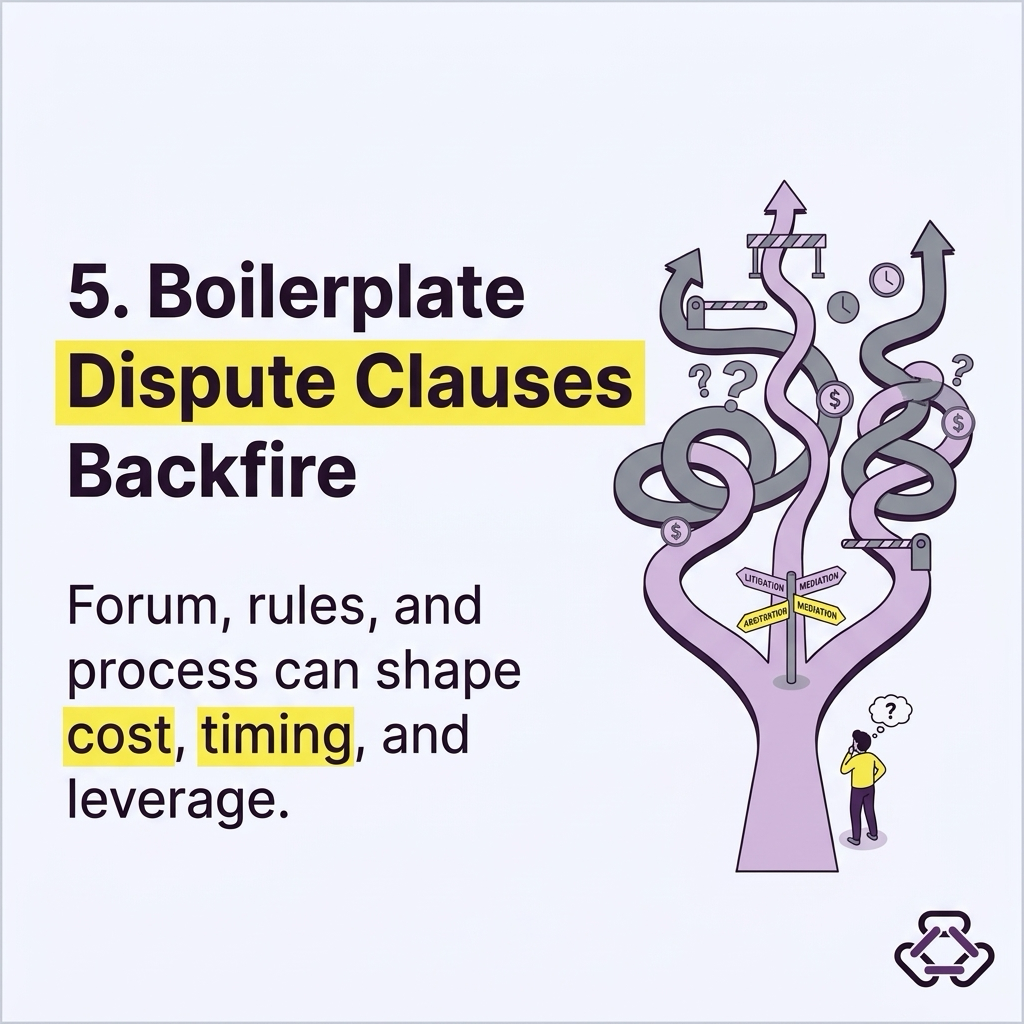
5. Using A Dispute Resolution Clause Without Thinking Through The Consequences
Dispute resolution clauses are often copied from old templates with very little discussion. But the difference between litigation, arbitration, and mediation can have a major effect on leverage, timing, confidentiality, discovery, and cost.
Both the American Arbitration Association and JAMS publish clause-drafting resources because small wording changes can significantly affect how a future dispute unfolds. A clause may address forum, number of arbitrators, governing rules, emergency relief, consolidation, venue, confidentiality, and whether mediation comes first.
Problems tend to arise when the contract says something like “any disputes will be arbitrated” but leaves out the details. Then, once a conflict starts, the parties end up fighting over the process before they even reach the merits.
That can make collection harder in at least two ways:
- the claimant may spend time and money litigating where the dispute belongs
- the economics of the forum may change whether it is practical to pursue the claim at all
It can also make defense harder. A business facing a claim may lose procedural advantages it expected to have, or end up in a venue far from its records and witnesses.
The same issue appears with forum-selection and governing-law clauses. If the contract is silent, you may see threshold disputes over where the case belongs and which state’s law applies. Those questions can influence enforceability of fee clauses, limitation periods, damages provisions, and restrictive covenants.
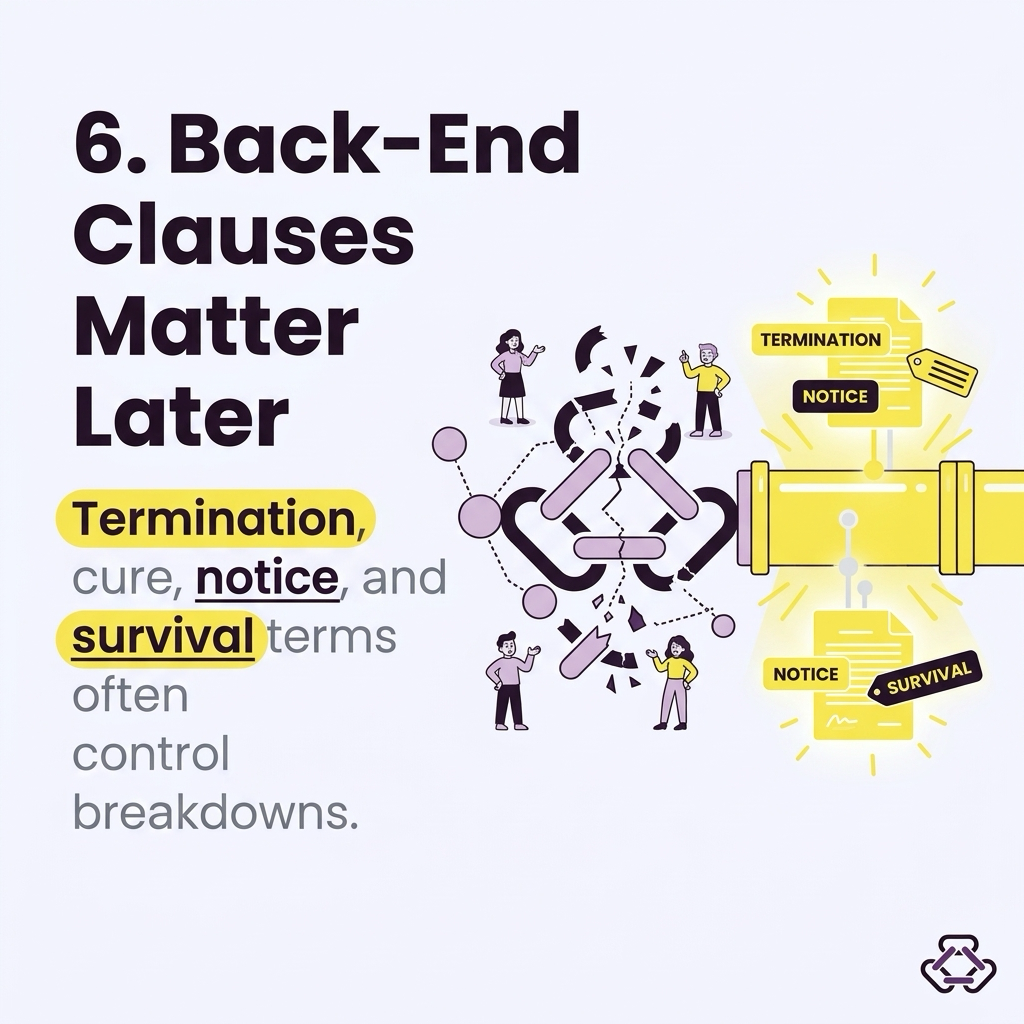
6. Forgetting The Clauses That Matter Only After The Relationship Breaks Down
Many contracts focus heavily on the business deal and barely touch the breakup.
That is understandable. At signing, everyone is usually focused on scope, price, deadlines, and launch. But once the relationship deteriorates, the “back-end” clauses often become the most important sections in the entire agreement.
These commonly include:
- termination rights
- notice requirements
- cure periods
- suspension rights
- limitation of liability
- indemnity
- warranty disclaimers where legally permitted
- attorney’s fees and costs
- governing law and venue
- survival language
Even the difference between termination and cancellation can matter. Under UCC terminology for sales contracts, “termination” and “cancellation” are distinct concepts with different effects on remedies tied to breach. Cornell’s UCC § 2-106 explains that distinction.
In service contracts, unclear off-ramp language often leads to recurring questions:
- Was there a right to terminate for convenience?
- Was written notice required?
- Did the breaching party get a chance to cure?
- Did prior payment obligations survive termination?
- Did confidentiality, ownership, or indemnity provisions continue afterward?
When those answers are fuzzy, both sides may have colorable arguments. That uncertainty can increase the cost of resolution and reduce the odds of an early businesslike settlement.
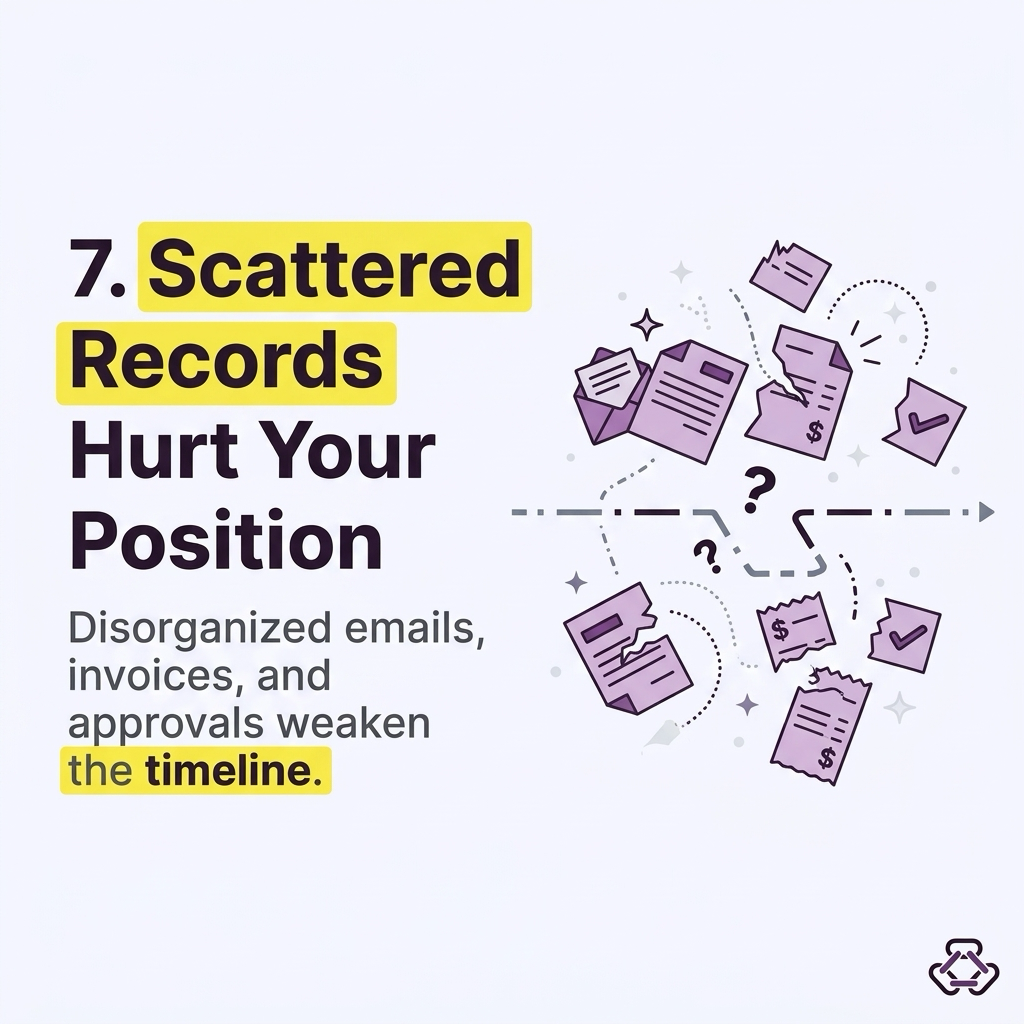
7. Treating Emails, Texts, And Invoices As Separate From The Contract File
A business may think it has a contract problem when it really has a recordkeeping problem.
In modern client relationships, the operative agreement often lives across multiple places:
- the signed contract
- exhibits and statements of work
- emailed proposals
- invoice notes
- approval emails
- project-management tools
- chat messages
- calendar invites
- redlined drafts
When these records are scattered, it becomes harder to prove what changed, what was delivered, what the client approved, and when objections were first raised.
That can be especially damaging in collection matters because clients often defend nonpayment by saying they complained early, the deliverables were defective, or the charges were never authorized. If the business cannot quickly assemble a clean chronology, it may lose momentum.
It can also hurt the defense side. If a company is accused of breaching the contract, disorganized records can make a fixable dispute look more serious than it is.
Courts and arbitrators often care a great deal about contemporaneous documents. A polished narrative prepared later may carry less weight than a clear email sent at the time of the event. That is one reason businesses dealing with conflict often start by organizing the documentary record before deciding whether to sue, negotiate, or respond to a demand.
If your issue involves scope drift, approvals, and billing fights, the broader landscape of client contract disputes in business relationships can help frame where those records fit.
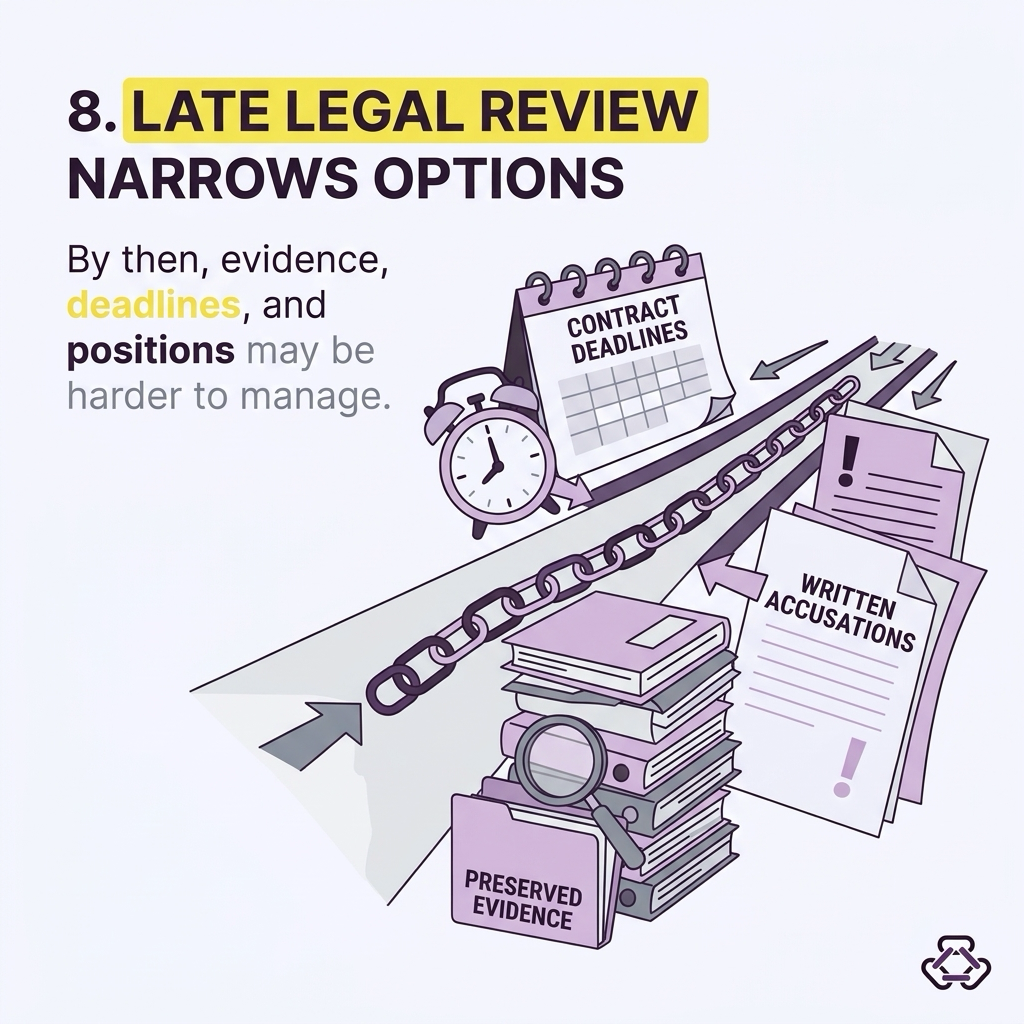
8. Waiting Too Long To Get A Lawyer Involved
A lot of companies reach counsel only after positions harden:
- the client has stopped paying
- accusations are already in writing
- the team sent emotional emails
- access to systems or deliverables has been cut off
- key evidence is scattered
- deadlines in the contract may have passed
At that point, the attorney may still be able to help substantially, but some options may be narrower than they would have been earlier.
This is not only about lawsuits. Early legal review can affect demand strategy, preservation of evidence, notice compliance, negotiation posture, and how the contract is framed before the other side locks in its story.
Timing can also matter because limitation periods vary by claim and jurisdiction, and contract terms sometimes include their own notice deadlines, cure periods, or pre-suit dispute procedures. Forum choice matters too. Federal data shows civil cases can take significant time to reach trial, with median civil filing-to-trial timing measured in many months, which often shapes practical settlement decisions. See the U.S. Courts national district profile.
There is also a strategic issue many businesses underestimate: the lawyer you hire for a contract dispute may influence the quality of the initial case assessment more than the raw contract language alone. Two attorneys may read the same agreement very differently depending on their experience with similar industries, dispute forums, and patterns in local courts.
That is one reason generalized lawyer directories often feel unsatisfying in business-dispute situations. A company with a revenue-critical client conflict is usually looking for relevant, documented experience in highly similar matters — not just a broad practice label.
Why These Mistakes Matter So Much In Collection Cases
When a business sues for unpaid invoices, people sometimes assume the case is simple: there was a contract, the work was done, and the client did not pay.
In reality, collection cases are often defended through contract ambiguity. The customer may raise offset claims, quality disputes, delay arguments, unauthorized-change arguments, or termination defenses. Each of the mistakes above gives the nonpaying party more room to do that.
In general terms, collection gets harder when the file cannot answer basic questions fast:
- What exactly was promised?
- What changed?
- Who approved it?
- When was it delivered?
- When was it accepted?
- When was payment due?
- What happened after the first missed payment?
- What remedies and fees does the contract actually allow?
If those answers are clean, a dispute may resolve faster. If not, even a valid receivables claim can become expensive to pursue.
Why These Mistakes Matter Just As Much In Defense
The same contract flaws can also hurt companies defending against breach, overbilling, or performance claims.
For example:
- a vague scope may make the claimant’s expectations sound reasonable
- missing acceptance language may blur whether the work was approved
- weak termination clauses may create arguments over who ended the deal first
- poor recordkeeping may undercut the defense narrative
- a sloppy dispute-resolution clause may force the case into an inefficient forum
In other words, the contract is often both the sword and the shield. Weak drafting does not only reduce collection leverage. It can also make defense more expensive and less predictable.
A Short Summary
Client contract disputes often become harder not because one side is obviously right or wrong, but because the agreement and records leave too much room for competing stories.
The eight mistakes that commonly create those problems are:
- vague scope language
- undocumented changes
- thin payment terms
- missing acceptance procedures
- poorly thought-out dispute resolution clauses
- weak termination and remedy provisions
- scattered contract records
- delayed attorney involvement
If your business is facing nonpayment, performance accusations, or a breakdown in a key customer relationship, an attorney may help evaluate the contract, the evidence, and the most efficient path forward based on the actual dispute posture and the governing law.
Visit ReferU.AI to get matched with an attorney who has demonstrable experience in cases like yours — for free.
