Table of Contents
- Customer and Client Contract Disputes Explained: Scope Creep, Nonpayment, Performance Fights, and Termination
- What Counts As A Customer Or Client Contract Dispute?
- Why Scope Creep So Often Becomes A Legal Problem
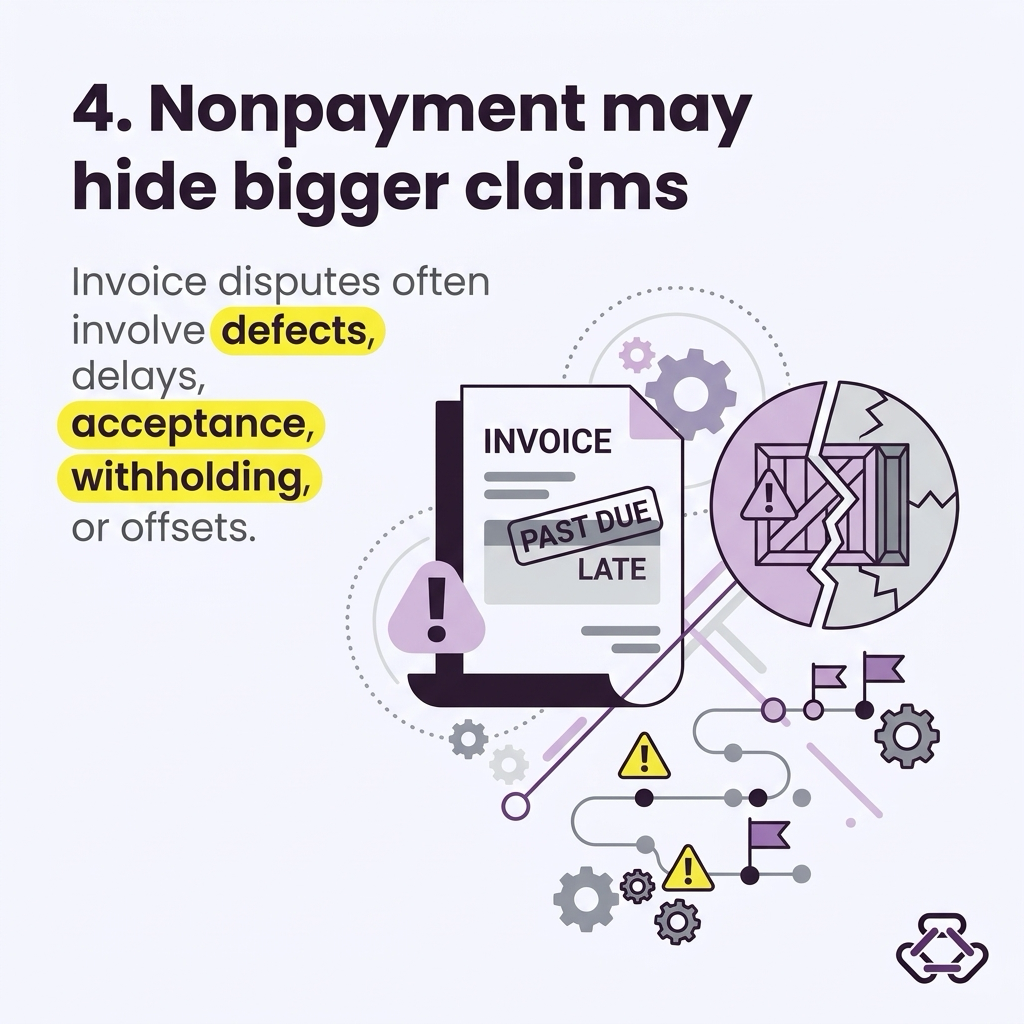
- What “Nonpayment” Usually Means In A Contract Fight
- What Performance Fights Usually Turn On
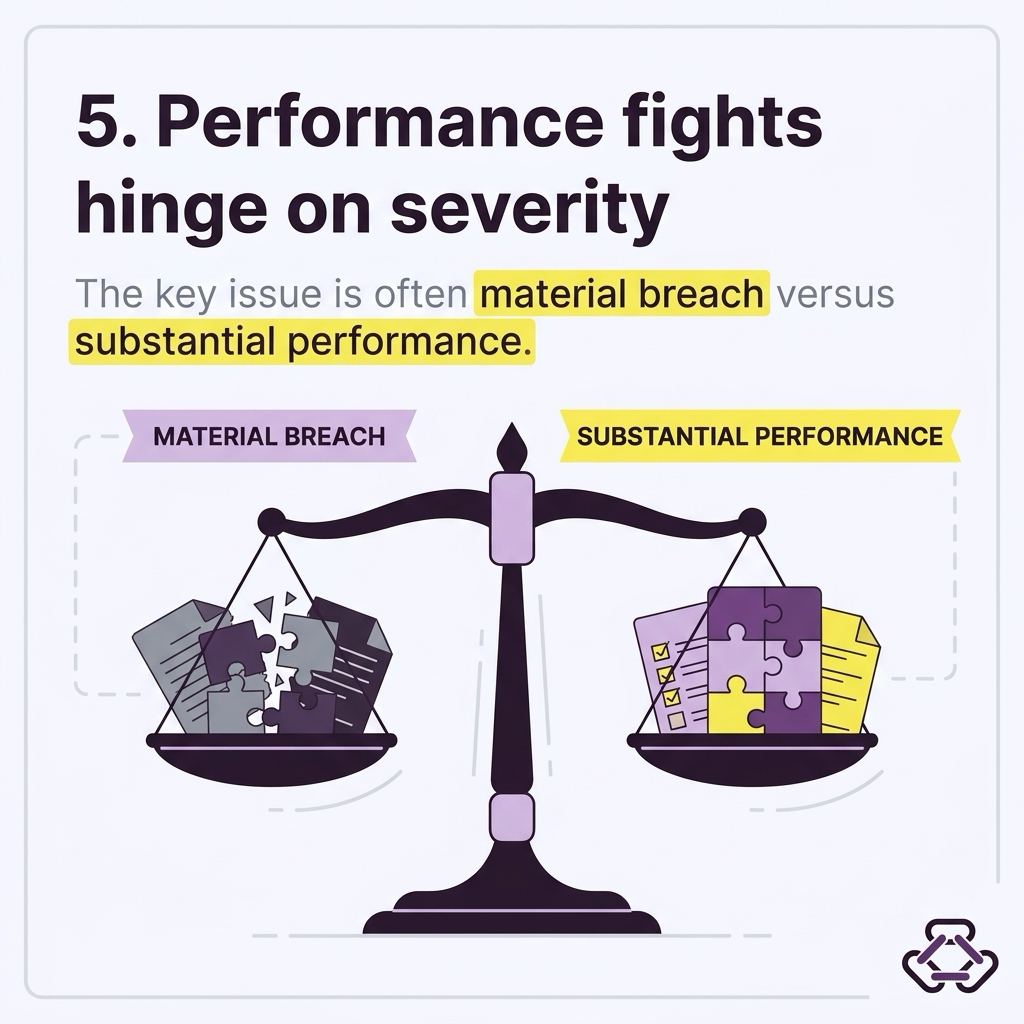
- Material Breach Versus Minor Defects
- Substantial Performance
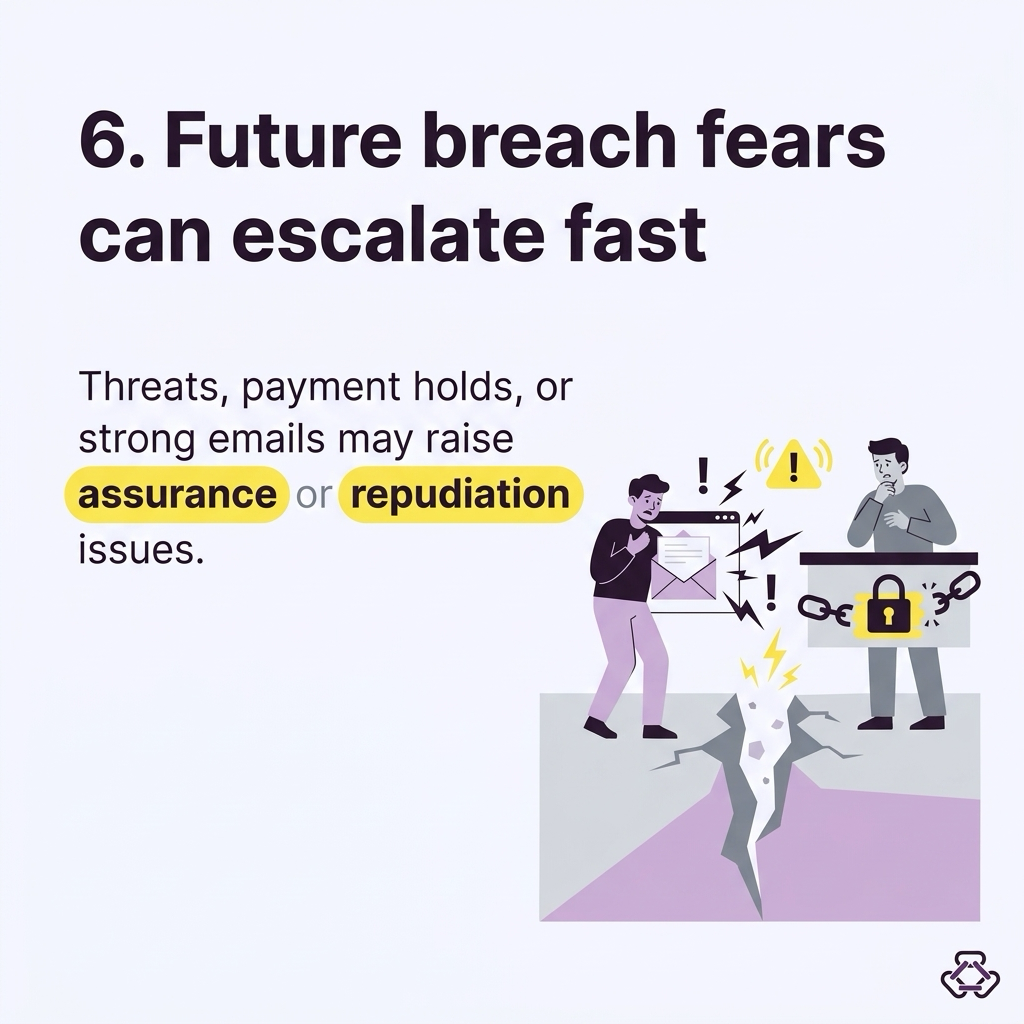
- Adequate Assurance
- Anticipatory Repudiation
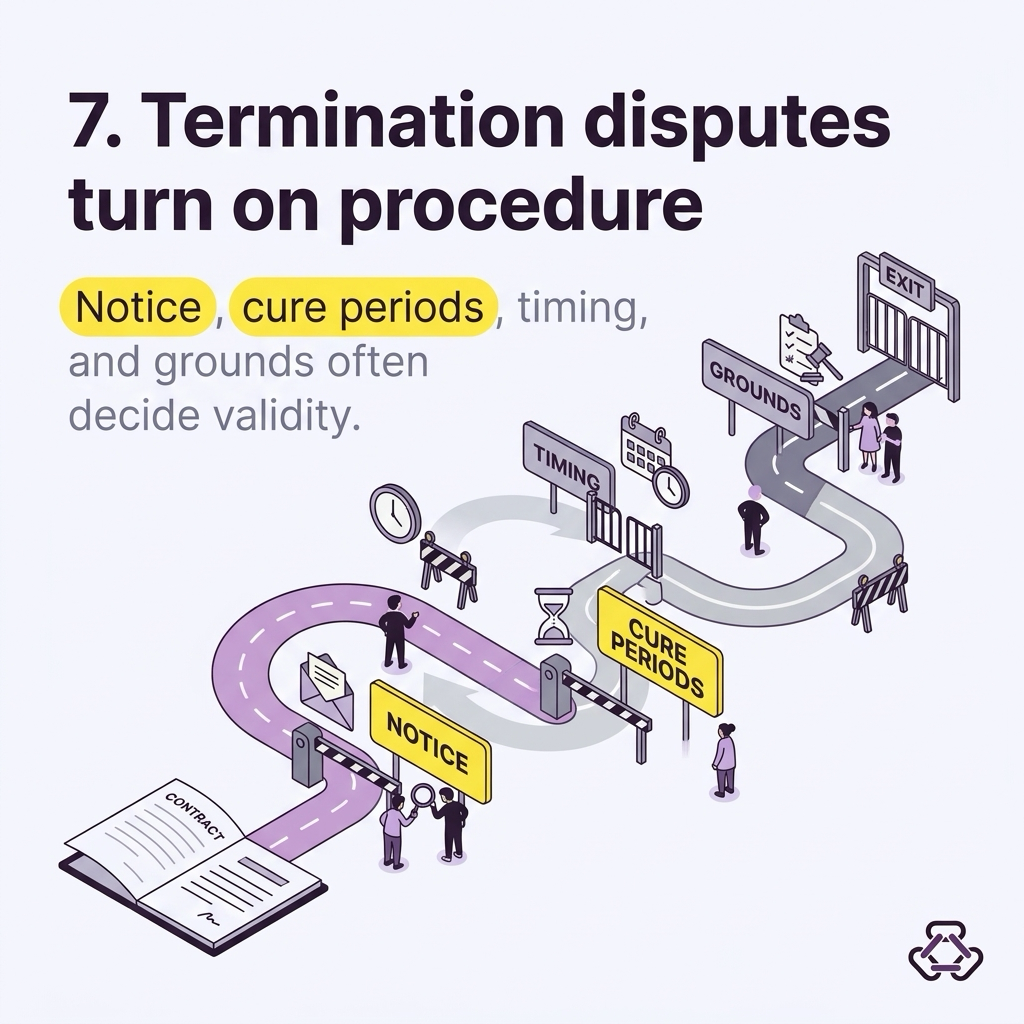
- How Termination Disputes Usually Happen
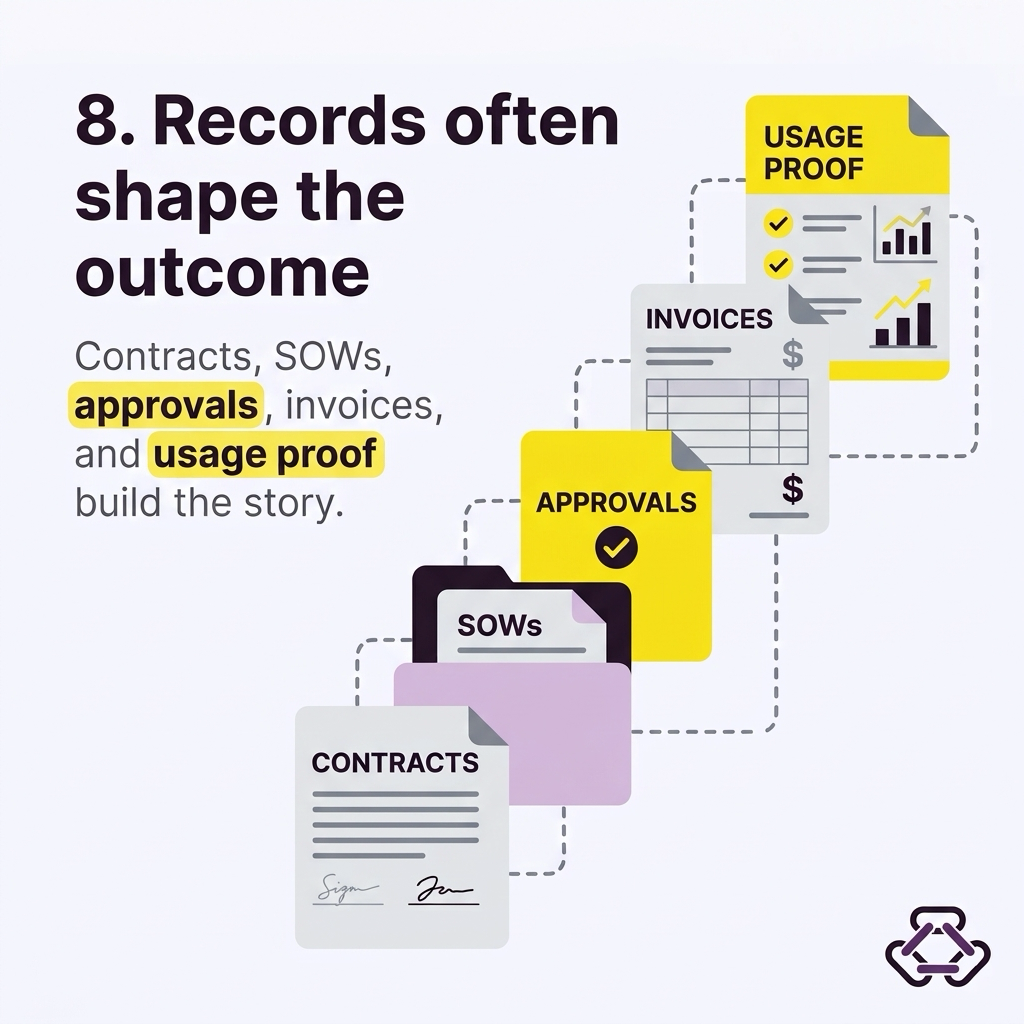
- Which Documents Usually Matter Most
- Why These Cases Can Escalate Quickly
- What Businesses Often Get Wrong Early
- When An Attorney May Change The Trajectory Of The Dispute
- Short Summary

Type
Grandchild
Status
Approved
Title (YouTube)
Images Failed (Social)
Images Failed (Social)
Do not index
Publish Date (TikTok)
Jan 5, 2027 13:15
Videos Post IDs (Social)
Hashtags (Social)
#LegalAdvice #LegalHelp #BusinessLitigation #CustomerClientDisputes
Caption
Caption X
Cover

OG Image

Alt Image Text
Flat vector illustration of customer and client contract disputes with scope creep and nonpayment, showing a business contract disagreement over performance and termination.
Images

Videos

Publish Date (Social)
Dec 16, 2026 09:00
Scheduled (Social)
Scheduled (Social)
Images Posted (Social)
Images Posted (Social)
Videos Posted (Social)
Videos Posted (Social)
Videos Failed (Social)
Videos Failed (Social)
Featured
Created time
Apr 3, 2026 10:12 PM
Authors
CTA Practice Area (Social)
Business Litigation
TikTok Failed (Social)
TikTok Failed (Social)
Videos Post Links (Social)
YT Auto Captions Removed
TikTok Post Links (Social)
Images Post IDs (Social)
YT Post ID
Video Pending Manual (Social)
TikTok Posted (Social)
TikTok Posted (Social)
TikTok Post IDs (Social)
Video Cover (Social)

Images Post Links (Social)
First Comment (Social)
YT Embedded
YT Embedded
Images Delete (Social)
Videos Delete (Social)
Carousel Video URL (Social)
Customer and Client Contract Disputes Explained: Scope Creep, Nonpayment, Performance Fights, and Termination
If your business depends on a handful of customer or client relationships, a contract dispute can feel less like a legal abstraction and more like a threat to revenue, staffing, reputation, and day-to-day operations. A project that started with optimism can drift into extra work no one clearly approved. An invoice can age past 30, 60, or 90 days while both sides argue about what was delivered. A termination notice can arrive before anyone agrees on whether the other side actually breached.
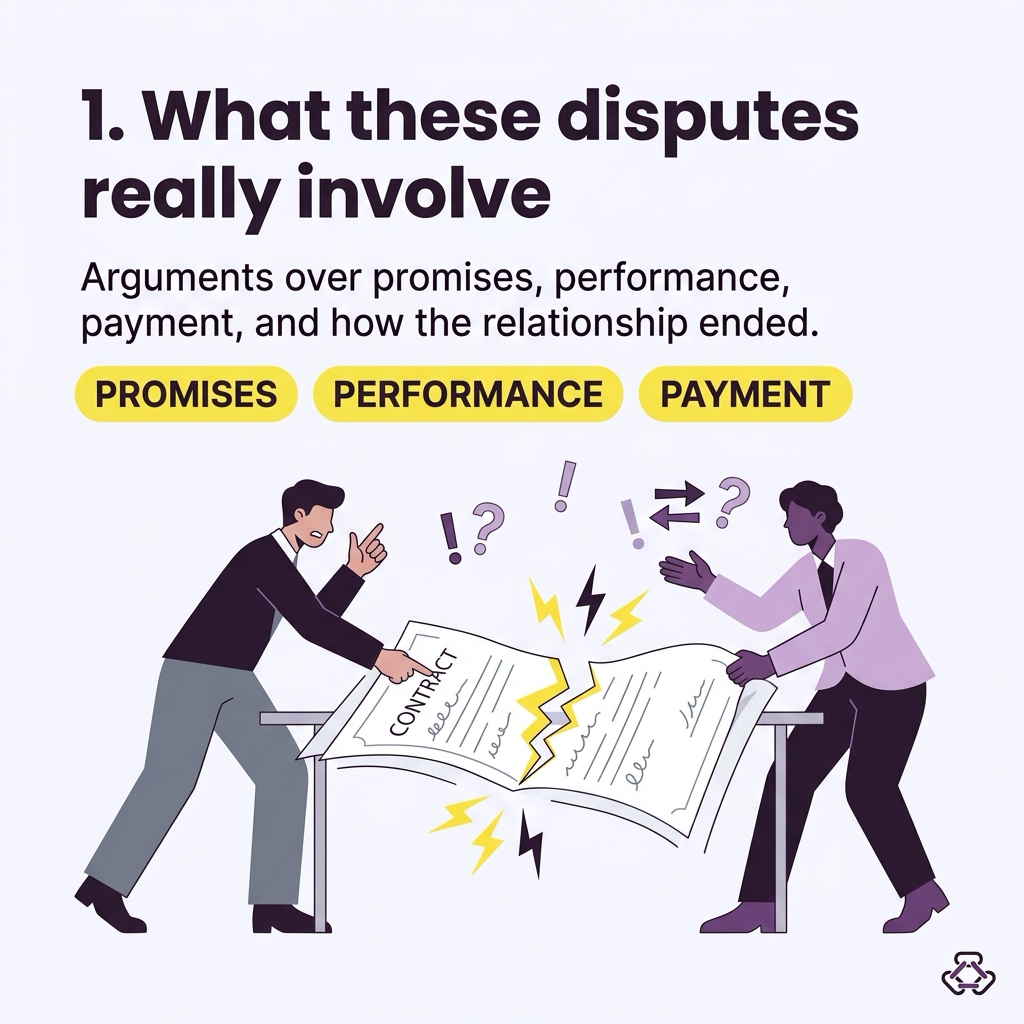
In general terms, customer and client contract disputes are disagreements over what the contract required, whether each side performed, whether payment is due, and what happens when the relationship breaks down. These fights often center on four pressure points: scope creep, nonpayment, performance disputes, and termination.
In this post you’ll learn how these disputes usually develop, what legal concepts often shape them, what documents tend to matter most, and why early legal analysis can change the range of options available. If you want a broader overview of where these issues fit in the larger commercial-dispute landscape, this guide on business and contract litigation issues gives helpful context.
Scroll to the bottom for every post in this series.
What Counts As A Customer Or Client Contract Dispute?
A customer or client contract dispute usually arises when one side says, “That is not what we agreed to,” and the other side says, “It is,” or “You accepted it anyway.”
These disputes show up in service agreements, master service agreements, statements of work, consulting contracts, agency agreements, software implementation deals, marketing retainers, professional services engagements, and recurring B2B customer relationships. They can also overlap with goods disputes, especially where a transaction involves both products and services. The legal rules may differ depending on whether the deal is governed mainly by common-law contract principles or by Article 2 of the Uniform Commercial Code for sales of goods, including rules on tender, rejection, cancellation, and anticipatory repudiation explained by Cornell Law School’s Legal Information Institute at UCC § 2-503, § 2-106, § 2-610, § 2-611, and § 2-725.
At a practical level, many disputes come down to a few recurring questions:
- What exactly was promised?
- What changed after the contract was signed?
- Did one side materially breach, or did it substantially perform?
- Was payment withheld because of an actual defect, or as leverage?
- Did the contract permit termination, cancellation, suspension, or a cure period?
- What damages can be proven with business records?
If you are looking specifically at revenue pressure and customer-facing contract risk, this overview of revenue-critical customer disputes may be a useful companion.
Why Scope Creep So Often Becomes A Legal Problem
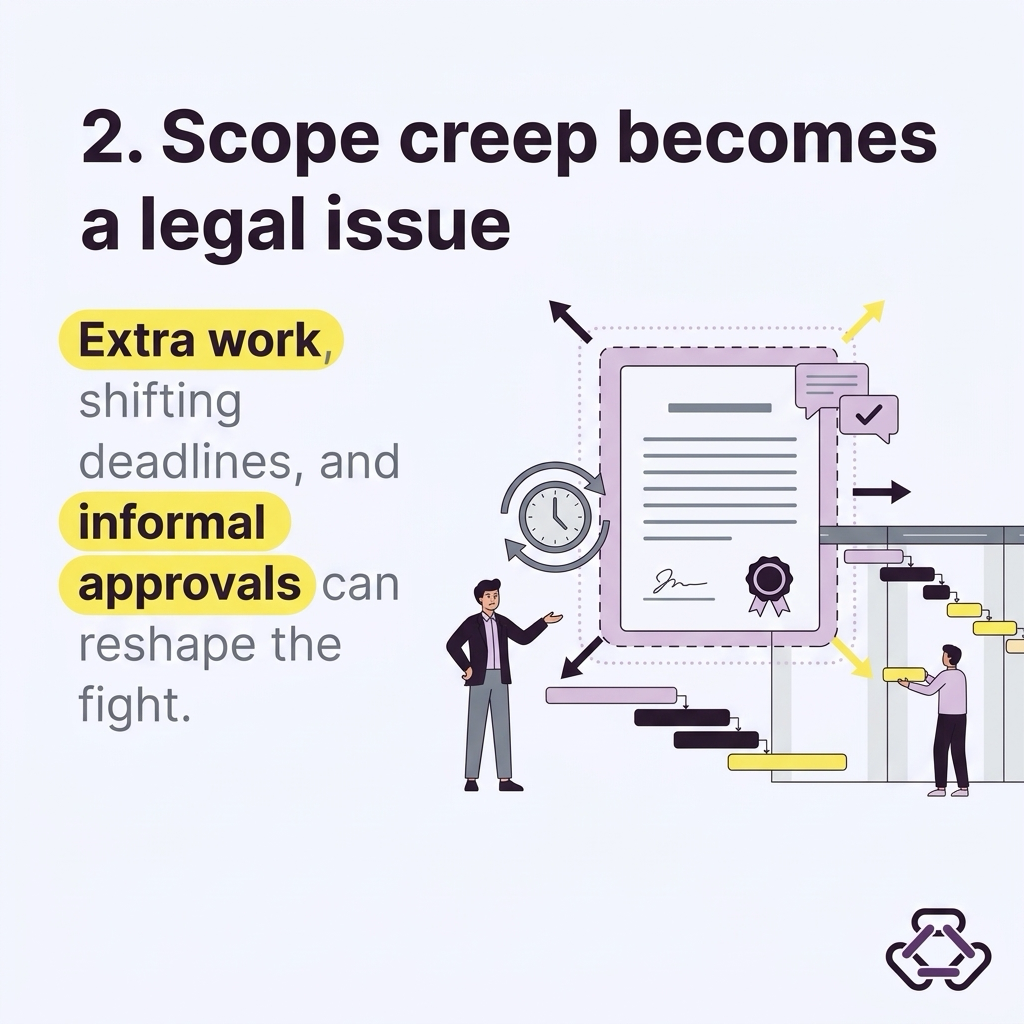
“Scope creep” sounds operational, but it often becomes legal the moment extra work, schedule extensions, or added costs collide with a contract that was written too generally or administered too loosely.
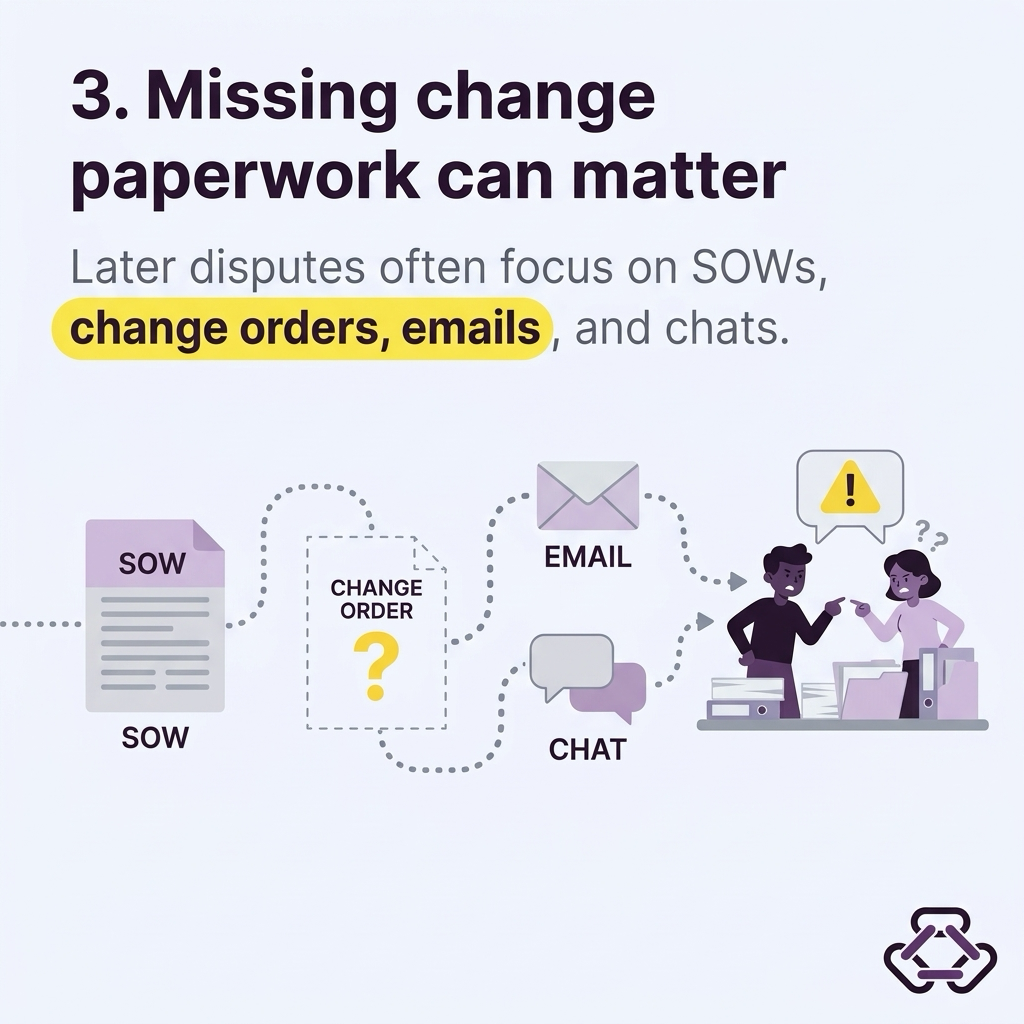
The American Bar Association notes that disputes over extra work and change orders are a staple of litigation, especially where one side claims the work was outside the original scope and the other argues it was already included. The ABA also describes a change order as a written document acknowledging a change in required work and any adjustment to price or schedule, which captures why missing paperwork can become the center of the fight later on (American Bar Association).
In customer and client relationships, scope creep often appears in familiar ways:
- repeated “quick” requests outside the original SOW
- stakeholder additions after kickoff
- informal approvals in email or chat
- shifting deadlines without written schedule updates
- work performed to preserve the relationship, even though pricing was unresolved
- customer assumptions that prior flexibility changed the contract going forward
One reason these disputes get messy is that courts may look not only at the written contract, but also at the parties’ conduct, communications, and course of performance. The ABA has also discussed how even a contract requiring written change orders can become harder to enforce rigidly if the parties consistently handled changes informally and then performed them anyway (American Bar Association).
Here’s what this often means in real life: a business may believe it has been accommodating a valued client, while the client may believe those accommodations became part of the deal. Once payment is disputed, every extra request, status email, approval thread, and revised draft can suddenly matter.
For a deeper look at the documentation side of this issue, it may help to review this post on keeping SOWs, change orders, and approvals organized.
What “Nonpayment” Usually Means In A Contract Fight
Nonpayment is not always just nonpayment. Sometimes it is a simple collections issue. Sometimes it is a disguised breach claim. Sometimes it is leverage in a larger renegotiation.
A client refusing to pay may argue:
- the work was late
- the deliverables were defective
- the scope was never approved
- conditions for invoicing were not satisfied
- milestones were missed
- the contract allowed withholding
- offsets or credits apply
- the relationship was terminated before the invoice came due
On the other side, the service provider may argue:
- the work was accepted
- the client used the deliverables
- the objections came only after the invoice arrived
- the contract did not permit withholding
- change requests increased time and cost
- any defects were minor and curable
- the client’s conduct waived strict compliance with earlier requirements
This is one reason accounts-receivable disputes can become evidence-heavy very quickly. The dispute may not turn on one invoice alone. It may turn on the full timeline of performance, approval, revision, use, complaints, and attempted cure.
Cornell’s explanation of substantial performance is helpful here. Under common-law contract principles, a party’s performance does not always have to match the contract perfectly if it still fulfills the agreement’s main purpose. But if the deviation is too significant and undermines the contract’s purpose, the issue may rise to a material breach instead (Cornell Law School, Wex). That distinction can shape whether payment is still due, whether deductions are appropriate, and whether the other side had grounds to stop performing.
If you are dealing with a live invoice dispute, this article on responding when a client says they will not pay or claims poor performance goes deeper into the practical response framework.
What Performance Fights Usually Turn On
Performance disputes often sound emotional on the surface and technical underneath. One side says, “They failed.” The other says, “We delivered what the contract called for.” The legal outcome often depends on how the contract defines performance, acceptance, specifications, timing, and cure.
The American Law Institute explains that the Restatement (Second) of Contracts remains a core guide to modern common-law contract doctrine and is widely relied on by courts across the country (American Law Institute). Within that broader framework, commercial disputes frequently revolve around a few concepts.
Material Breach Versus Minor Defects
Not every mistake is a contract-ending event. In many jurisdictions, a breach is considered material when it goes to the heart of the bargain. The ABA has discussed this distinction in the context of whether a breach defeats the object of the parties’ agreement and whether the other side’s duty to perform is excused (American Bar Association).
That matters because businesses often escalate too early or too late. A minor defect may support a price adjustment, punch-list completion, or damages argument without necessarily justifying termination. A truly material failure may change the entire posture of the dispute.
Substantial Performance
In service disputes, substantial performance can be central. If the provider completed the core work and any deviations were limited or fixable, the argument may become less about total nonperformance and more about offsets, completion costs, or value differences. Cornell’s overview makes clear that substantial performance does not excuse major failures, but it can affect available remedies where the contract’s essential purpose was largely met (Cornell Law School, Wex).
Adequate Assurance
Sometimes the dispute is not over a completed breach but over fear of an upcoming one. Under UCC § 2-609, a party with reasonable grounds for insecurity may demand adequate assurance of performance, and accepting one improper delivery or payment does not automatically waive the right to seek assurance about future performance (Cornell Law School, UCC § 2-609). Although this section directly governs sales of goods, some courts and commentators have looked to it by analogy in other contract settings, as reflected in decisions discussed by Cornell’s case materials (Cornell Law School).
In a business relationship that is wobbling but not yet broken, this concept can be important. A careful legal assessment may help determine whether the other side’s statements amount to ordinary frustration, a demand for rework, or something closer to repudiation.
Anticipatory Repudiation
If one side clearly indicates that future performance will not happen, the law may treat that as anticipatory repudiation. Under UCC § 2-610, where the repudiation substantially impairs the value of the contract, the aggrieved party may await performance for a commercially reasonable time or pursue breach remedies (Cornell Law School, UCC § 2-610). Under § 2-611, repudiation can sometimes be retracted before the next performance is due, unless the other side has already cancelled, materially changed position, or treated the repudiation as final (Cornell Law School, UCC § 2-611).
This area gets risky fast because strong language in emails, payment holds, internal escalations copied to the counterparty, or aggressive termination drafts can all shape later arguments about who actually broke the contract first.
How Termination Disputes Usually Happen
Termination is one of the most misunderstood parts of a business contract. Many parties use the word loosely, but legally the label can matter.
Under UCC § 2-106, termination generally means ending the contract under a power created by agreement or law otherwise than for breach, while cancellation means ending it because of the other side’s breach, with breach remedies preserved (Cornell Law School, UCC § 2-106). Even outside the UCC, contracts often distinguish between:
- termination for convenience
- termination for cause
- suspension rights
- nonrenewal
- expiration
- cancellation after breach
- immediate termination for insolvency, illegality, confidentiality breaches, or missed deadlines designated as essential
The legal fight often becomes less about whether the relationship ended and more about whether it ended validly.
Common flashpoints include:
- failure to give the required notice
- failure to provide a contractually required cure period
- terminating for cause based on a non-material issue
- terminating after accepting repeated similar conduct
- terminating while still using the other side’s work product
- confusing expiration, nonrenewal, and breach-based cancellation
- invoking one ground for termination in the letter and a different one in litigation
The ABA recently highlighted how timing and notice requirements can become outcome-determinative in contract disputes, especially when parties try to rely on conditions and deadlines without strict compliance (American Bar Association). In some settings, even a late payment of arbitration fees has led courts to find waiver of arbitration rights and material breach consequences, illustrating how procedural missteps can reshape the forum and leverage of the dispute (American Bar Association).
Which Documents Usually Matter Most
When a contract case moves from business disagreement to legal dispute, the record often decides the tone of the case before testimony ever begins.
The most important documents frequently include:
- the master agreement
- every applicable statement of work
- amendments and addenda
- pricing exhibits
- change orders
- approval emails
- project schedules
- acceptance or rejection notices
- invoices and payment history
- issue logs, tickets, and meeting notes
- termination letters
- internal communications about performance concerns
- proof the client used or benefited from the work
Businesses are often surprised by how much turns on organization, not just substance. A company may have a decent legal position in theory, but a weak evidentiary presentation in practice. That gap can affect settlement leverage, early motion practice, and credibility.
For a practical look at preventing self-inflicted problems, this piece on common contract mistakes that make collection or defense harder is worth reading.
Why These Cases Can Escalate Quickly
Contract disputes are common enough that they sit within a broad and active civil-litigation environment. According to the federal judiciary’s 2025 reporting, civil case filings in U.S. district courts increased 4 percent to 303,563 in 2025, underscoring how substantial the overall business-dispute landscape remains (U.S. Courts).
Of course, many customer and client contract fights never reach a final court judgment. They may settle early, move into arbitration, end with a negotiated transition, or narrow to a payment resolution. But escalation can happen quickly because these disputes often involve more than one legal claim at once:
- breach of contract
- declaratory relief over rights and obligations
- unjust enrichment in the alternative
- account stated or collection theories
- fraud or misrepresentation allegations
- confidentiality or intellectual-property disputes
- requests for emergency relief when customer relationships, data access, or deliverables are at stake
In some relationships, termination also raises access issues involving software, data, logins, code repositories, client files, or transition assistance. That is one reason many businesses prefer to involve counsel before taking the final step of cutting off performance.
What Businesses Often Get Wrong Early
A surprising number of commercial disputes become harder because of what happened before the legal fight began.
Common early errors include:
- sending angry emails that overstate the facts
- withholding payment without tying the decision to contract language
- continuing to demand work while claiming total breach
- terminating first and documenting later
- failing to preserve project records
- overlooking notice and cure provisions
- assuming verbal approvals are enough without confirming scope and price
- treating every defect as “material” without analyzing the actual impact on the bargain
Another frequent issue is silence. A business may accept revised work, continue using deliverables, renew the relationship, or pay some invoices while staying vague about objections. Later, the record may look inconsistent. That does not automatically defeat a claim or defense, but it can complicate the argument.
If your business is trying to think through the larger fallout of a broken commercial relationship, this discussion of the questions companies often ask when a major client relationship falls apart may help frame the analysis.
When An Attorney May Change The Trajectory Of The Dispute
Many business owners first look at these disputes as operational problems: close out the project, collect the invoice, move on. Sometimes that works. Sometimes the dispute is already legally dense even if nobody has filed anything yet.
An attorney with relevant experience in highly similar matters may help evaluate:
- whether the breach argument is likely to be framed as material or minor
- whether performance appears complete enough to support payment
- whether there is a cure issue
- whether notice and termination language were followed
- whether there is an arbitration clause, fee-shifting clause, or forum-selection clause
- whether the record supports quick resolution or points toward litigation
- whether a pre-suit demand may help or hurt
- whether preserving the relationship still makes business sense
That kind of analysis is often especially valuable where the amount in dispute is significant, the customer relationship is strategic, or the contract controls future renewals, referrals, recurring revenue, or intellectual-property rights.
Short Summary
Customer and client contract disputes usually revolve around a simple theme: the written deal, the lived relationship, and the paper trail no longer line up. Scope creep can blur what was included. Nonpayment can mask a deeper fight over value and acceptance. Performance disputes often hinge on material breach versus substantial performance. Termination battles usually turn on notice, cure, contractual rights, and timing.
In general terms, the strongest positions are often built not just on legal doctrine, but on organized facts: the contract, the changes, the approvals, the objections, the invoices, and the communications that show what really happened.
Visit ReferU.AI to get matched with an attorney who has demonstrable experience in cases like yours — for free.


