Table of Contents
- How to Review Franchise Agreements, Manuals, and Performance Obligations in a Franchise Fight
- Why These Documents Matter So Much In A Franchise Dispute
- Step 1: Start With The Franchise Agreement, Not The Latest Email
- Look For The Core Business Deal
- Compare The Main Agreement To Amendments, Addenda, And Guarantees
- Step 2: Pull The FDD And Compare It To The Agreement
- Why The FDD Still Matters After Signing
- Step 3: Review The Operations Manual Like A Litigation Exhibit
- Questions To Ask About The Manual
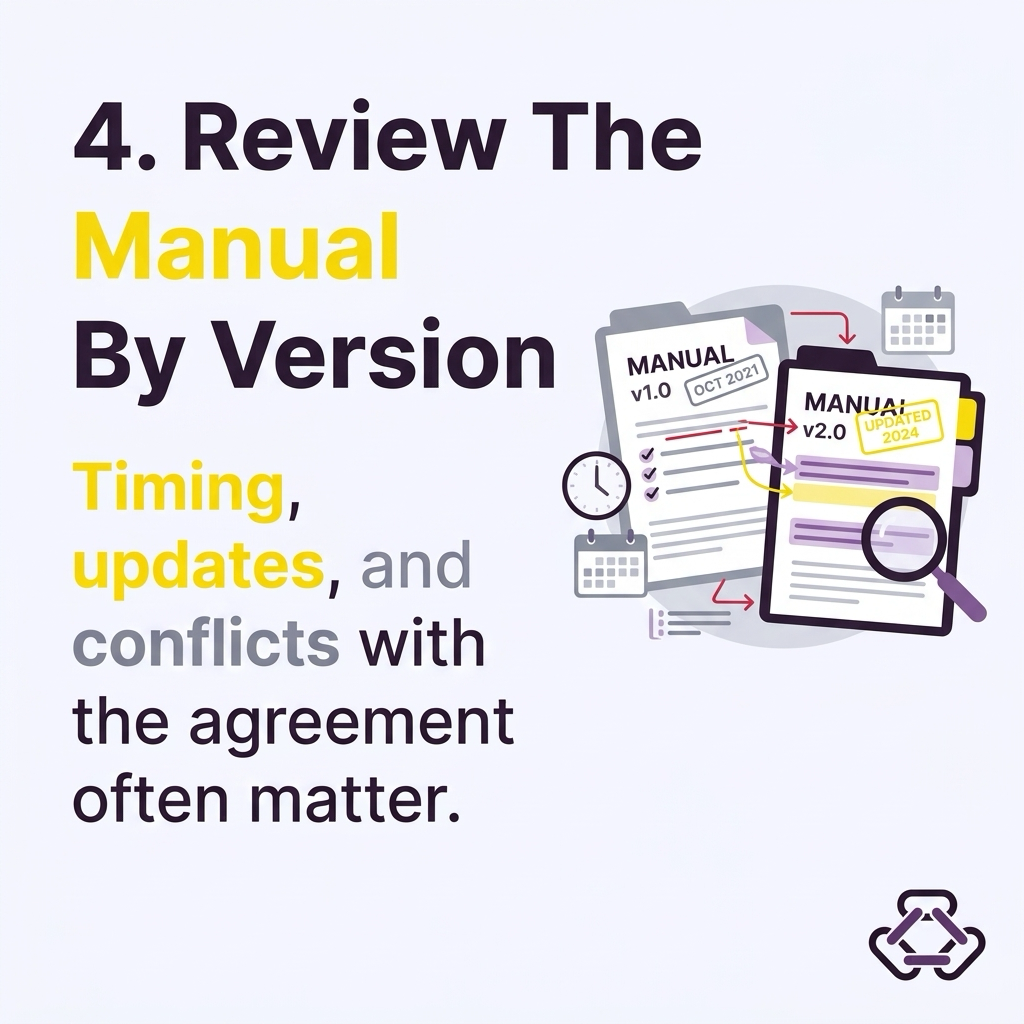
- Why Version History Matters
- Step 4: Identify Every Performance Obligation On Both Sides
- Common Franchisee Performance Obligations
- Common Franchisor Performance Obligations
- Step 5: Separate Material Breaches From Irritations
- Why Materiality Becomes A Fight Inside The Fight
- Step 6: Read The Default And Cure Provisions Against The Actual Timeline
- Build A Real Timeline
- Step 7: Look For Evidence Outside The Contract Package
- Key Extra-Contract Evidence
- Step 8: Evaluate Whether Manual Changes Went Beyond The Contract
- Step 9: Check State Relationship Laws Before Drawing Conclusions
- Step 10: Turn The Document Review Into A Case Theory
- Why Attorney Review Can Change The Direction Of The Fight
- Final Thoughts

Type
Great Grandchild
Status
Approved
Title (YouTube)
Images Failed (Social)
Images Failed (Social)
Do not index
Publish Date (TikTok)
Jan 3, 2027 14:15
Videos Post IDs (Social)
Hashtags (Social)
#LegalAdvice #LegalHelp #BusinessLitigation #FranchiseDisputes
Caption
Caption X
Cover

OG Image

Alt Image Text
Flat vector illustration of franchise agreement review and performance obligations analysis in a franchise dispute, with manuals, contracts, and compliance documents spread across a table.
Images

Videos
Publish Date (Social)
Dec 15, 2026 07:30
Scheduled (Social)
Scheduled (Social)
Images Posted (Social)
Images Posted (Social)
Videos Posted (Social)
Videos Posted (Social)
Videos Failed (Social)
Videos Failed (Social)
Featured
Created time
Apr 3, 2026 10:13 PM
Sub-item
Authors
CTA Practice Area (Social)
Business Litigation
TikTok Failed (Social)
TikTok Failed (Social)
Videos Post Links (Social)
YT Auto Captions Removed
TikTok Post Links (Social)
Images Post IDs (Social)
YT Post ID
Video Pending Manual (Social)
TikTok Posted (Social)
TikTok Posted (Social)
TikTok Post IDs (Social)
Video Cover (Social)
Images Post Links (Social)
First Comment (Social)
YT Embedded
Images Delete (Social)
Videos Delete (Social)
Carousel Video URL (Social)
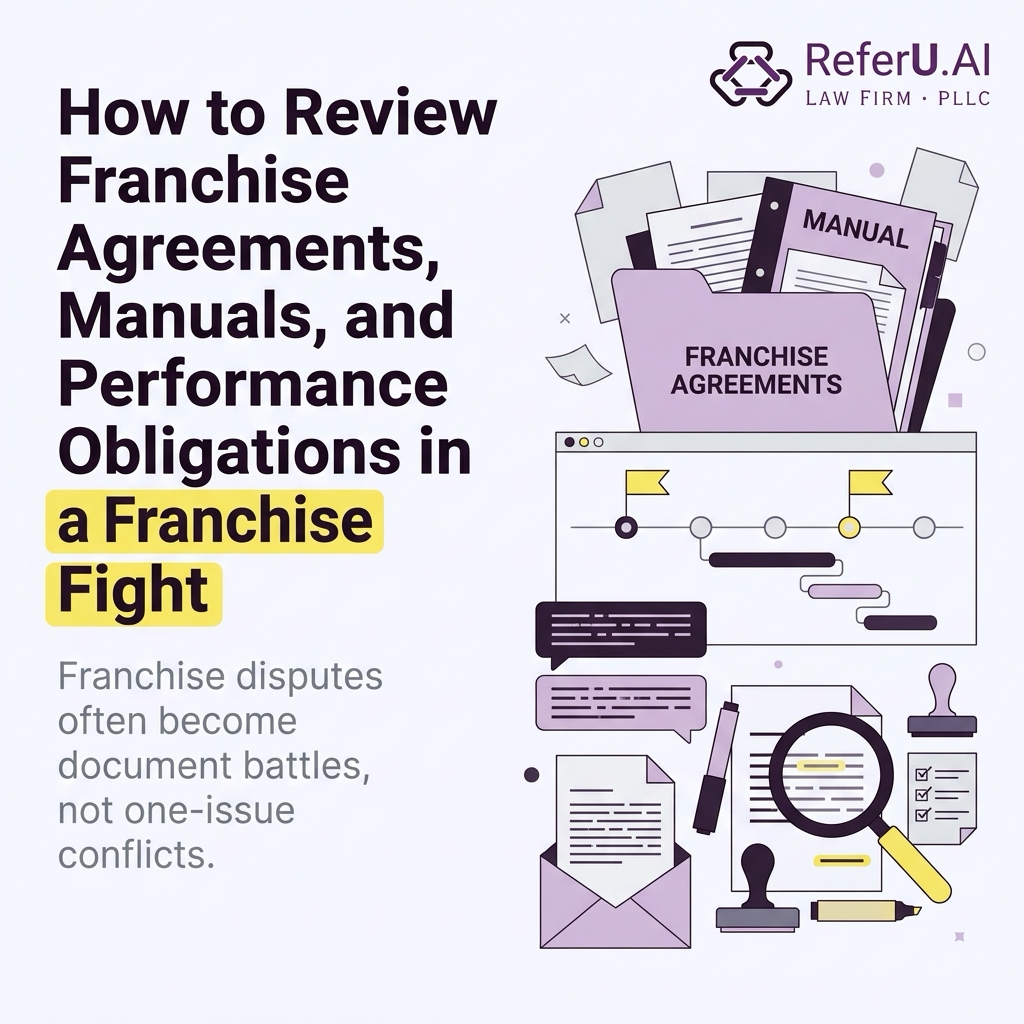
How to Review Franchise Agreements, Manuals, and Performance Obligations in a Franchise Fight
Franchise disputes often look simple at first. A default notice arrives. A brand representative points to the operations manual. A franchisee points back to the contract and says the franchisor never delivered the promised support. Suddenly the fight is not just about one bad audit, one missed fee payment, or one store visit. It becomes a document battle.
That is why careful document review tends to sit at the center of almost every serious franchise conflict. The franchise agreement defines the relationship. The Franchise Disclosure Document, or FDD, may provide context about what was disclosed before signing. The operations manual often supplies the day-to-day rules. Email directives, system updates, scorecards, training records, and inspection reports can shape what each side says the other was obligated to do.
If you are trying to make sense of a franchise conflict, it may help to start with the broader landscape of how franchise breakups often develop around termination, territory, fees, defaults, and brand control. In this post you’ll learn how to review the key documents and performance obligations that commonly drive a franchise fight, and why the details often matter far more than the slogans.
Scroll to the bottom for every post in this series.
Why These Documents Matter So Much In A Franchise Dispute
In general terms, franchise cases are rarely decided by one sentence in one contract. They usually turn on how multiple documents interact over time.
The Federal Trade Commission’s Franchise Rule requires franchisors to provide prospective franchisees with a disclosure document containing 23 specific categories of information, including litigation history, fees, territory, and the assistance and training the franchisor says it will provide. The FTC’s compliance guide also explains that Item 11 addresses assistance, advertising, computer systems, training, and operating manuals, including either the manual’s table of contents or an opportunity to review the manual before purchase if certain conditions are met. FTC Franchise Rule and the FTC Franchise Rule Compliance Guide both give useful background on how these disclosures are structured.
That matters in litigation because many fights revolve around questions like these:
- What exactly did the franchisor promise in the agreement?
- What did the manual require at the time of the alleged default?
- Were later manual changes consistent with the contract?
- Did the franchisor actually provide the training, support, technology, or brand resources it described?
- Did the franchisee materially fail to meet operational standards?
- Did state franchise relationship laws add notice, cure, or repurchase protections?
Those are not abstract questions. They can affect termination rights, damages, leverage in settlement talks, and whether a dispute looks like a routine enforcement action or something closer to overreach.
Step 1: Start With The Franchise Agreement, Not The Latest Email
When a franchise relationship starts falling apart, many people focus on the most recent event: a default letter, a site inspection, a denied transfer, or an abrupt demand to remodel. But the first serious review usually starts with the signed franchise agreement and every amendment to it.
Look For The Core Business Deal
The agreement often answers the baseline questions:
- term length
- renewal conditions
- protected or non-exclusive territory
- royalty and marketing fees
- technology requirements
- supplier restrictions
- inspection rights
- reporting obligations
- default and cure provisions
- transfer rights
- post-termination restrictions
- dispute resolution clauses
- governing law and venue
This is where the structure of the fight begins. A franchisor may rely on provisions that say the franchisee must comply with the system and operating manual at all times. A franchisee may focus on clauses requiring training, field support, site selection assistance, advertising support, technology access, or territorial protections.
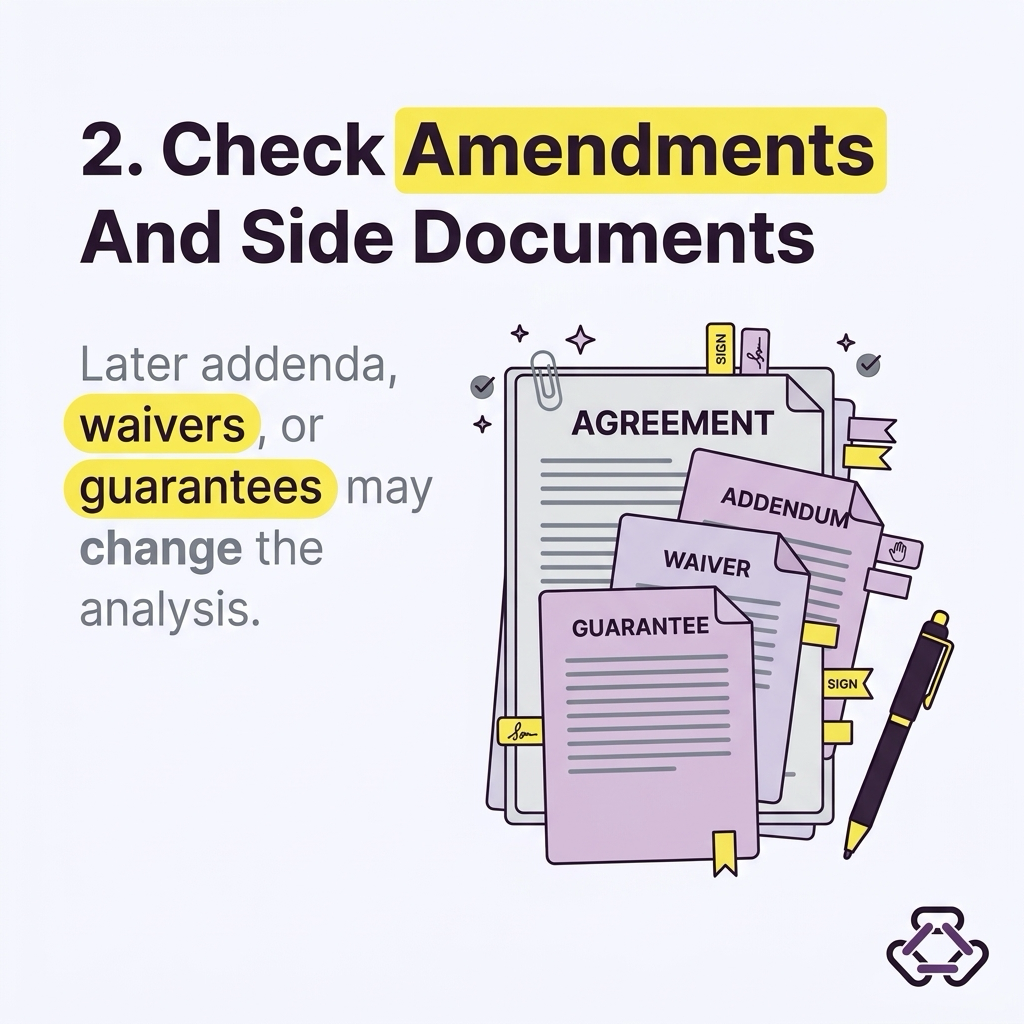
Compare The Main Agreement To Amendments, Addenda, And Guarantees
Many franchise disputes get harder because the operative contract is not just one document. There may be:
- amendments
- renewal agreements
- personal guarantees
- area development agreements
- multi-unit addenda
- software or e-commerce addenda
- pandemic-era modifications
- settlement agreements from older defaults
A later amendment can quietly change obligations in a way that becomes central in a lawsuit or arbitration. Sometimes the default analysis changes completely once someone finds a side letter, waiver, or negotiated carveout.
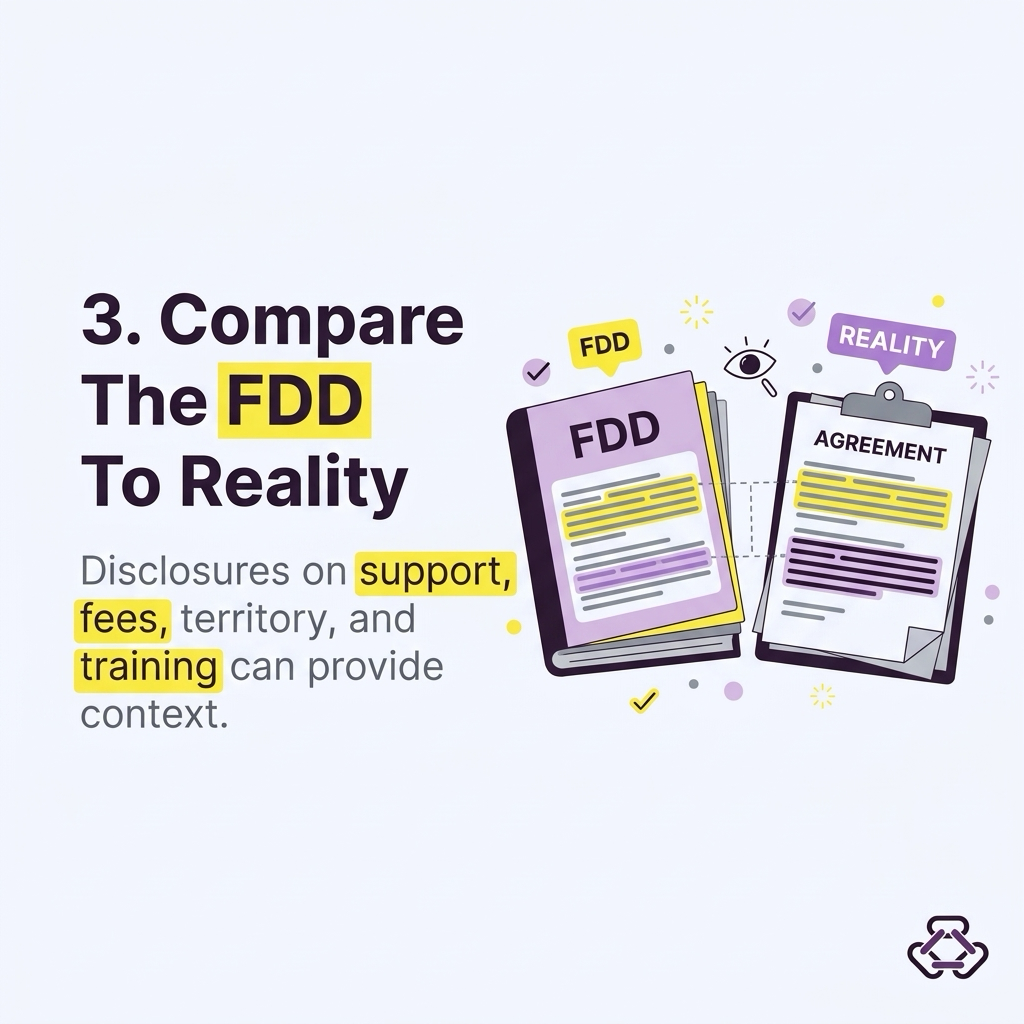
Step 2: Pull The FDD And Compare It To The Agreement
The FDD is not always the contract being enforced, but it can still be important context in a franchise fight. The FTC notes that the disclosure document is designed to give prospects information about the offered franchise before they sign. Item 11 focuses on franchisor assistance, advertising, computer systems, and training, while other items address fees, territory, and litigation history. The FTC also publishes consumer-oriented guidance encouraging prospects to examine training, advertising, and operational support details closely. See the FTC’s Franchise Fundamentals overview.
Why The FDD Still Matters After Signing
In a dispute, lawyers often compare the signed agreement with the FDD that was in circulation at the time of sale or renewal. That review may surface issues such as:
- differences between promised support and delivered support
- software or equipment costs that grew beyond what was disclosed
- undisclosed limits on territory or channels of distribution
- inconsistencies in training or startup assistance descriptions
- affiliate or guarantor roles that matter in performance disputes
NASAA’s franchise disclosure framework remains important because registration states continue to use the modern disclosure regime built around the 2008 Franchise Registration and Disclosure Guidelines. NASAA’s franchise disclosure guidelines remain a key part of how state filings are organized, and states like New York require franchisors to file and renew FDD materials through NASAA’s electronic filing system. See the New York Attorney General’s franchise registration guide.
In plain English, the FDD can help show what the system represented to franchisees before the relationship matured into a fight.
Step 3: Review The Operations Manual Like A Litigation Exhibit
This is where many franchise battles become intensely fact-specific.
The FTC’s compliance guide explains that Item 11 requires disclosure regarding the operating manual and, in many cases, the table of contents or an opportunity to review the manual before purchase. That alone tells you something important: regulators treat the manual as a significant part of the franchise system, not a side document. See the FTC compliance guide.
The American Bar Association’s Franchise Law Journal has described the typical franchise agreement as requiring the franchisee to comply with the operations manual faithfully and continuously, while also noting a major tension in franchise relationships: manuals may be revised over time, but they generally are not supposed to reverse or vary the franchise agreement itself. That distinction often becomes crucial in disputes over costly system changes, new vendors, equipment swaps, and remodeled operating standards. See the ABA discussion in the Franchise Law Journal.
Questions To Ask About The Manual
When reviewing the manual, it often helps to ask:
- Which version applied when the alleged default occurred?
- Was the manual provided in full, or only in part?
- Were updates documented with dates and version control?
- Did the agreement authorize unilateral changes?
- Did a “guideline” function in practice as a mandatory requirement?
- Did any manual provision conflict with the agreement?
- Did compliance require major new spending?
- Was the same rule enforced consistently across the system?
Why Version History Matters
If a franchisor claims the franchisee violated system standards, timing can be everything. A rule added after the alleged misconduct may be less persuasive than a longstanding documented requirement. On the other side, if a franchisee says the franchisor imposed unreasonable or economically disruptive changes, version history may help show when those demands first appeared and how aggressively they were enforced.
In many cases, the manual becomes the best evidence of whether the dispute is really about brand consistency or about moving goalposts.
Step 4: Identify Every Performance Obligation On Both Sides
A franchise fight is rarely one-sided. Franchisors usually focus on franchisee compliance. Franchisees often focus on franchisor support failures. A serious review looks at both.
The International Franchise Association’s materials on responsible franchising emphasize alignment on long-term obligations and mutual commitment to operational obligations within the franchise relationship. While that is not law by itself, it reflects a core reality of the model: both parties usually claim the other side stopped performing first. See IFA’s discussion of Responsible Franchising and its Code of Ethics.
Common Franchisee Performance Obligations
A franchisee’s obligations often include:
- paying royalties and required fees
- following brand standards
- using approved suppliers
- maintaining technology and reporting systems
- meeting training requirements
- complying with operational hours and staffing rules
- maintaining cleanliness, quality, and customer service standards
- protecting trademarks and confidential information
Common Franchisor Performance Obligations
A franchisor’s obligations may include:
- initial training
- opening support
- ongoing field support
- marketing or advertising administration
- technology platforms
- approved product and supplier systems
- brand standards guidance
- territorial administration
- renewal processing
- system-wide consistency in enforcement
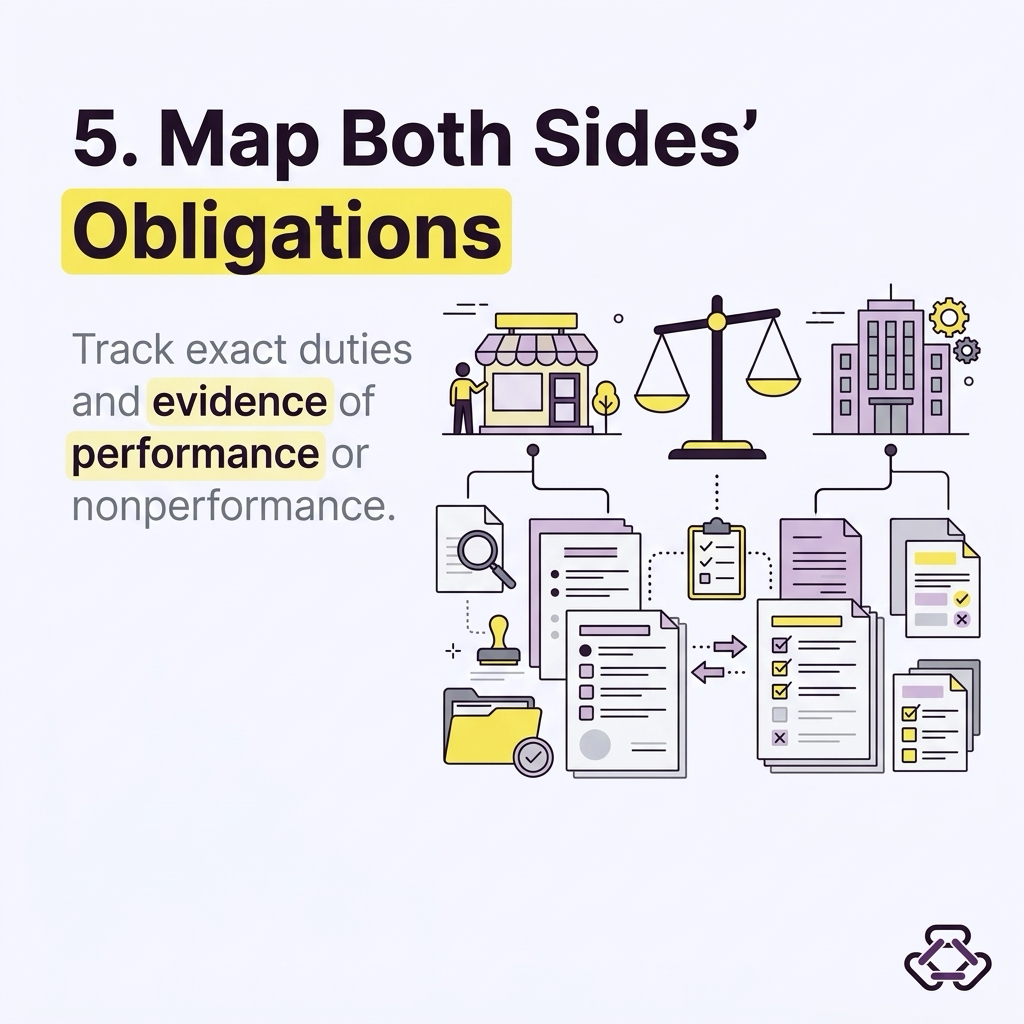
A useful review often maps each obligation into a chart with four columns:
- Source document
- Exact obligation
- Evidence of performance or nonperformance
- Dispute significance
That kind of issue chart can turn a messy relationship history into a usable litigation narrative.
Step 5: Separate Material Breaches From Irritations
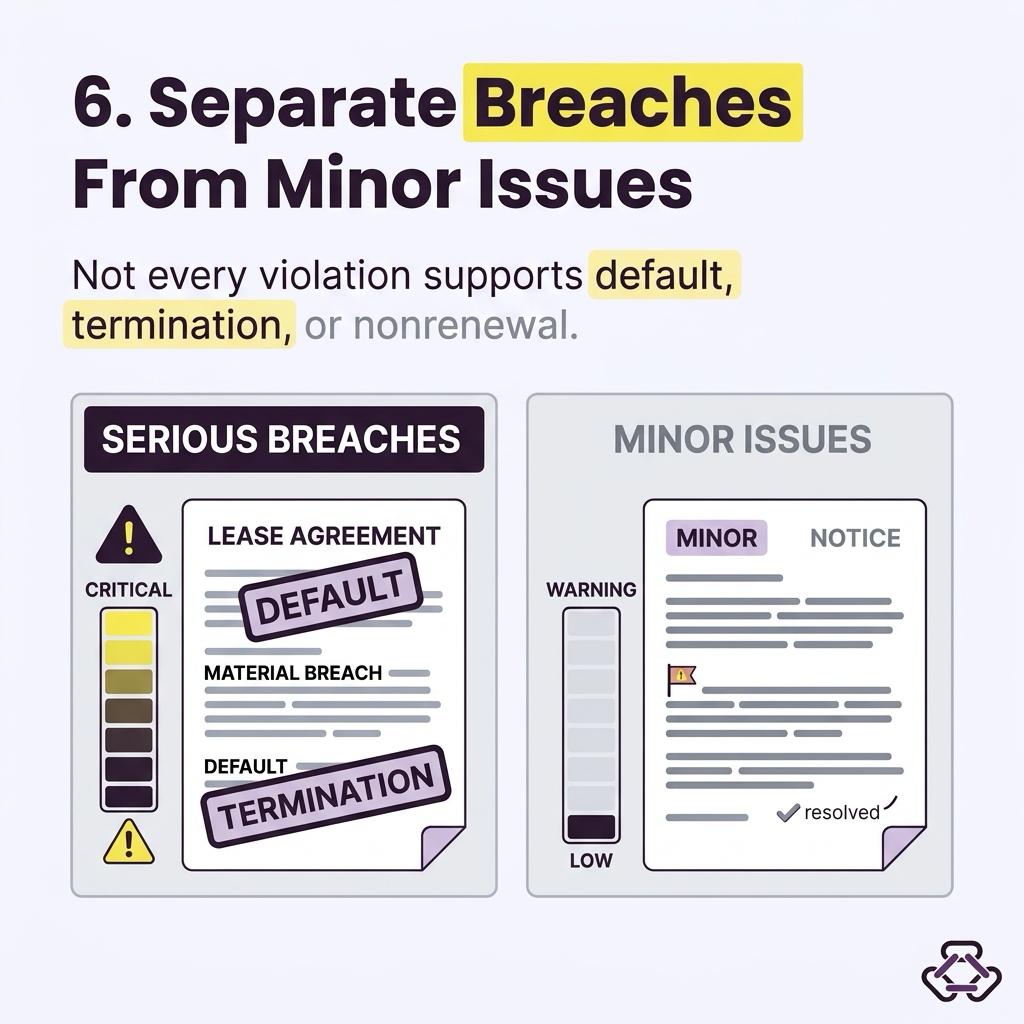
Not every problem rises to the level of default or termination.
That point matters because state franchise relationship laws in some jurisdictions place limits on termination and nonrenewal, often using concepts such as good cause, notice, and an opportunity to cure. For example, Minnesota’s franchise statute restricts certain termination and nonrenewal conduct and includes notice-and-cure provisions, with special rules in some circumstances. Minnesota Statutes Chapter 80C is one example of an official state source that franchise lawyers often review in relationship disputes.
California is another state frequently discussed in franchise litigation because its franchise relationship law has good-cause and notice provisions, and later changes expanded repurchase protections in some termination scenarios. A useful practitioner summary from the IFA’s legal symposium notes that several states have buyback provisions and that California’s rules can require repurchase of certain inventory, supplies, fixtures, and furnishings in defined situations after termination. See the IFA’s paper on defaults and terminations.
Why Materiality Becomes A Fight Inside The Fight
A franchisor may say repeated operational failures damaged goodwill and brand consistency. A franchisee may say the cited defaults were minor, selectively enforced, or curable. That is why it often helps to distinguish:
- missed payments versus disputed charges
- minor inspection failures versus serious health-and-safety concerns
- one-off deviations versus repeated documented noncompliance
- advisory suggestions versus mandatory standards
- technical contract breaches versus conduct that materially affects goodwill
This part of the analysis often shapes whether a termination looks defensible, premature, retaliatory, or negotiable.
Step 6: Read The Default And Cure Provisions Against The Actual Timeline
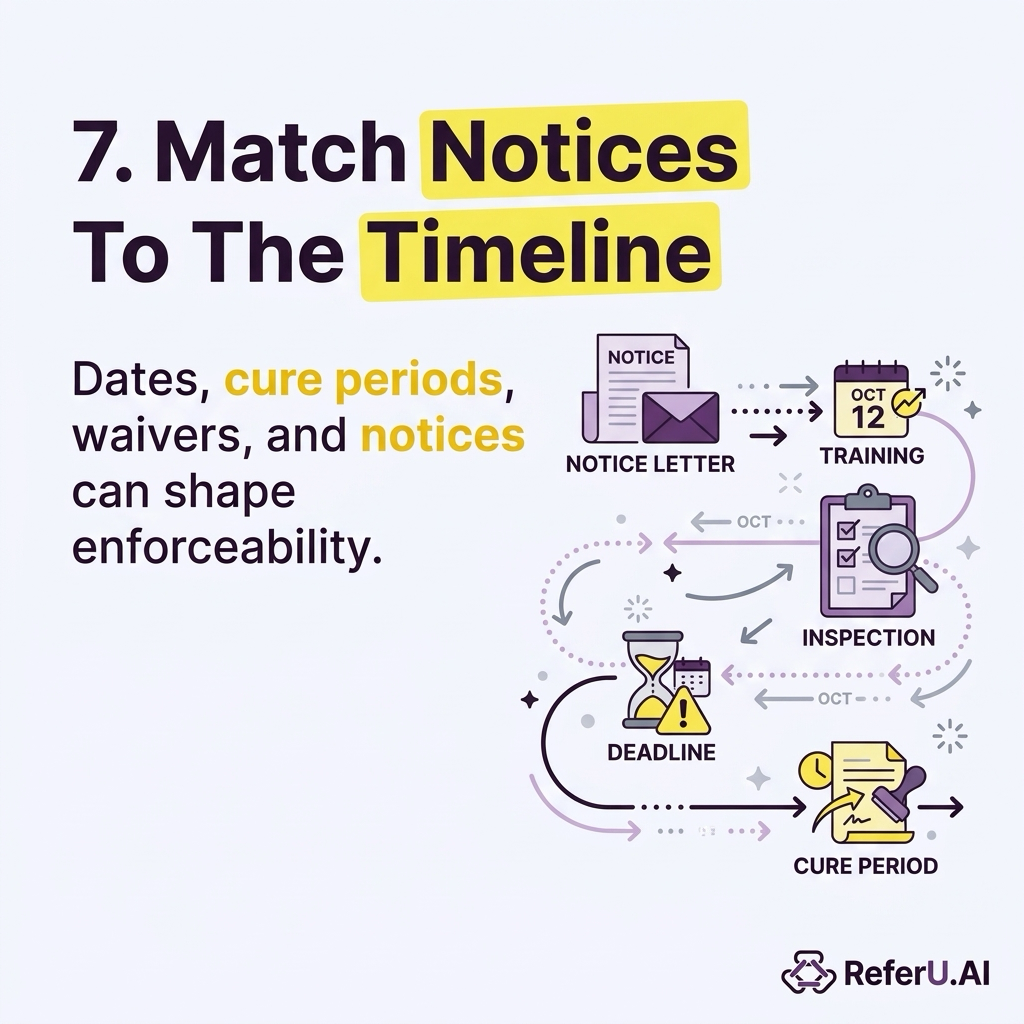
A surprising number of franchise disputes turn on chronology.
Build A Real Timeline
Gather and place in order:
- signed agreement date
- FDD receipt date
- opening date
- training dates
- remodel demands
- audit results
- inspection reports
- customer complaints
- software rollouts
- fee disputes
- default notices
- cure efforts
- termination notice
- de-identification deadlines
- transfer or sale discussions
Then compare the timeline to the contract and any applicable state law.
If the franchisor gave a default notice, the questions often include:
- Did the notice cite the correct contract provisions?
- Was the cure period correct?
- Were all alleged defaults stated clearly?
- Did the franchisee partially cure?
- Did the franchisor accept performance after the alleged breach?
- Did prior waivers or tolerances matter?
- Was the asserted default actually “incurable,” or only described that way?
That document-and-timeline approach can be especially important if you are also reading about what happens when a default notice arrives and termination starts to feel imminent, because the enforceability of the next step often depends on whether the notice process was handled correctly.
Step 7: Look For Evidence Outside The Contract Package
Even though the agreement and manual are central, franchise fights often expand beyond them.
Key Extra-Contract Evidence
Relevant materials may include:
- onboarding and training materials
- webinar recordings
- operations bulletins
- field consultant reports
- email instructions from brand staff
- point-of-sale data
- mystery shop reports
- vendor communications
- advertising fund reports
- peer comparisons across the franchise system
- mediation communications
- financial projections or rollout assumptions
Why do these matter? Because they may show how the parties actually operated. A franchisor’s internal emails may reveal inconsistent enforcement. A franchisee’s own messages may acknowledge awareness of a standard. A training deck may show the support model that was actually delivered. A field report may undercut the rhetoric in a later default notice.
In some disputes, the strongest evidence is not the contract language. It is the course of dealing.
Step 8: Evaluate Whether Manual Changes Went Beyond The Contract
This issue shows up often in mature franchise systems.
The ABA discussion noted above reflects a longstanding franchise tension: the manual often changes, but the manual is generally not supposed to override the agreement itself. That does not make every update invalid. Franchisors often retain broad discretion to evolve system standards. But disputes can arise where manual revisions effectively alter the economics of the deal.
Examples include:
- forced equipment replacement
- required third-party delivery platforms
- mandatory pricing controls
- expanded hours with no market justification
- supplier changes that raise costs sharply
- remodel demands not clearly tied to contractual timing
- technology migrations with substantial subscription fees
In practical terms, the legal question often becomes whether the update fits within the franchisor’s reserved authority to maintain and evolve brand standards, or whether it crosses into a material rewrite of the bargain.
That is the kind of issue an attorney may analyze by comparing the agreement language, the historical manual versions, the FDD disclosures, and how similarly situated franchisees were treated.
Step 9: Check State Relationship Laws Before Drawing Conclusions
One of the easiest mistakes in a franchise fight is assuming the signed agreement tells the whole story.
It often does not.
Federal law through the FTC Franchise Rule focuses heavily on disclosure. But franchise relationship issues such as termination, nonrenewal, cure rights, and repurchase obligations are often shaped by state statutes and state case law. Minnesota’s official statute is one example, and practitioner materials from the IFA note that multiple states impose restrictions or buyback obligations in certain termination scenarios. See Minnesota Statutes Chapter 80C and the IFA’s defaults and terminations paper.
That can affect questions like:
- whether “good cause” is required
- how much notice is required
- whether cure rights apply
- whether immediate termination is allowed
- whether the franchisor has repurchase obligations
- whether nonrenewal is treated differently from termination
Because these issues vary by state and by the facts, broad assumptions can be risky.
Step 10: Turn The Document Review Into A Case Theory
Once the paper trail is organized, the next step is usually not just “read more.” It is building a coherent theory of the dispute.
For a franchisor, the theory may be that the franchisee repeatedly failed to meet objective system standards despite notice and opportunities to cure.
For a franchisee, the theory may be that the franchisor imposed extra-contractual burdens, delivered inconsistent support, enforced standards selectively, or accelerated toward termination without a fair cure process.
Either way, the strongest theories often rely on objective criteria:
- contract text
- manual language
- dated revisions
- inspection data
- payment history
- training records
- official notices
- state-law requirements
That evidence-based approach tends to be far more persuasive than generalized claims that one side was “unfair.”
Why Attorney Review Can Change The Direction Of The Fight
Franchise disputes are document-heavy, deadline-sensitive, and often expensive. They can also move fast once default, termination, de-identification, injunctive relief, or post-termination restrictive covenants enter the picture.
An attorney with documented experience in franchise disputes may help identify:
- which obligations are actually enforceable
- where the manual and agreement diverge
- whether the notice and cure process was handled correctly
- what state relationship law may add to the analysis
- whether the dispute is moving toward litigation, arbitration, emergency motion practice, or negotiated exit
That kind of review can be especially valuable when the business is still operating and each new communication may affect leverage.
Final Thoughts
A franchise fight often turns into a contest over paper, process, and performance. The agreement sets the framework. The FDD provides background and disclosure context. The operations manual often supplies the operational rules. State law can change the termination analysis. And the timeline can reveal whether the conflict is really about brand protection, business economics, selective enforcement, or a relationship that has been deteriorating for a long time.
If the documents no longer line up with the reality of the relationship, or if one side is using those documents aggressively, a careful legal review may bring clarity to what is really being enforced and what is actually in dispute.
Visit ReferU.AI to get matched with an attorney who has demonstrable experience in cases like yours — for free.
