Table of Contents
- 7 Non-Compete Mistakes That Increase Litigation Risk
- Why Non-Compete Litigation Risk Has Become More Complicated
- 1. Using One Boilerplate Agreement Across Multiple States
- 2. Drafting Restrictions That Are Broader Than The Business Interest At Stake
- 3. Failing To Separate Non-Compete Issues From Trade Secret Issues
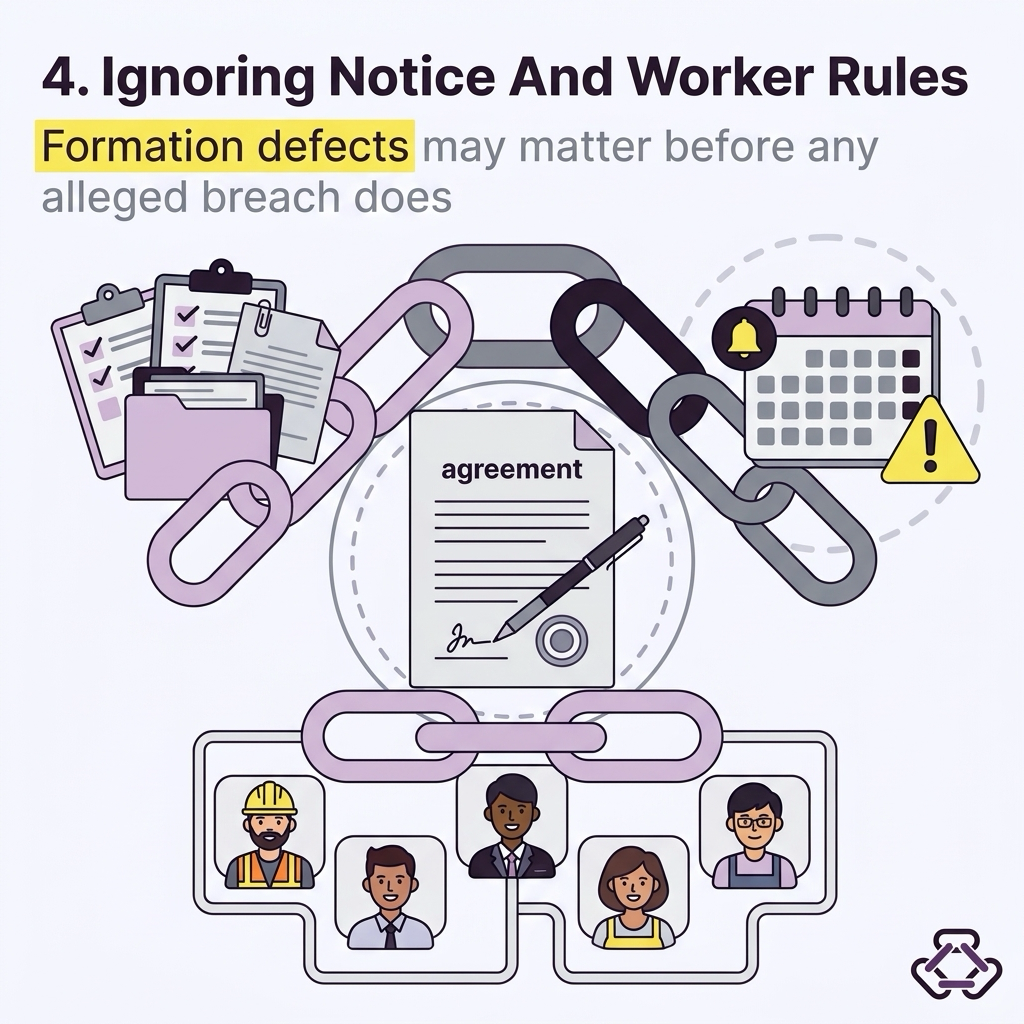
- 4. Ignoring Notice, Consideration, And Worker-Category Requirements
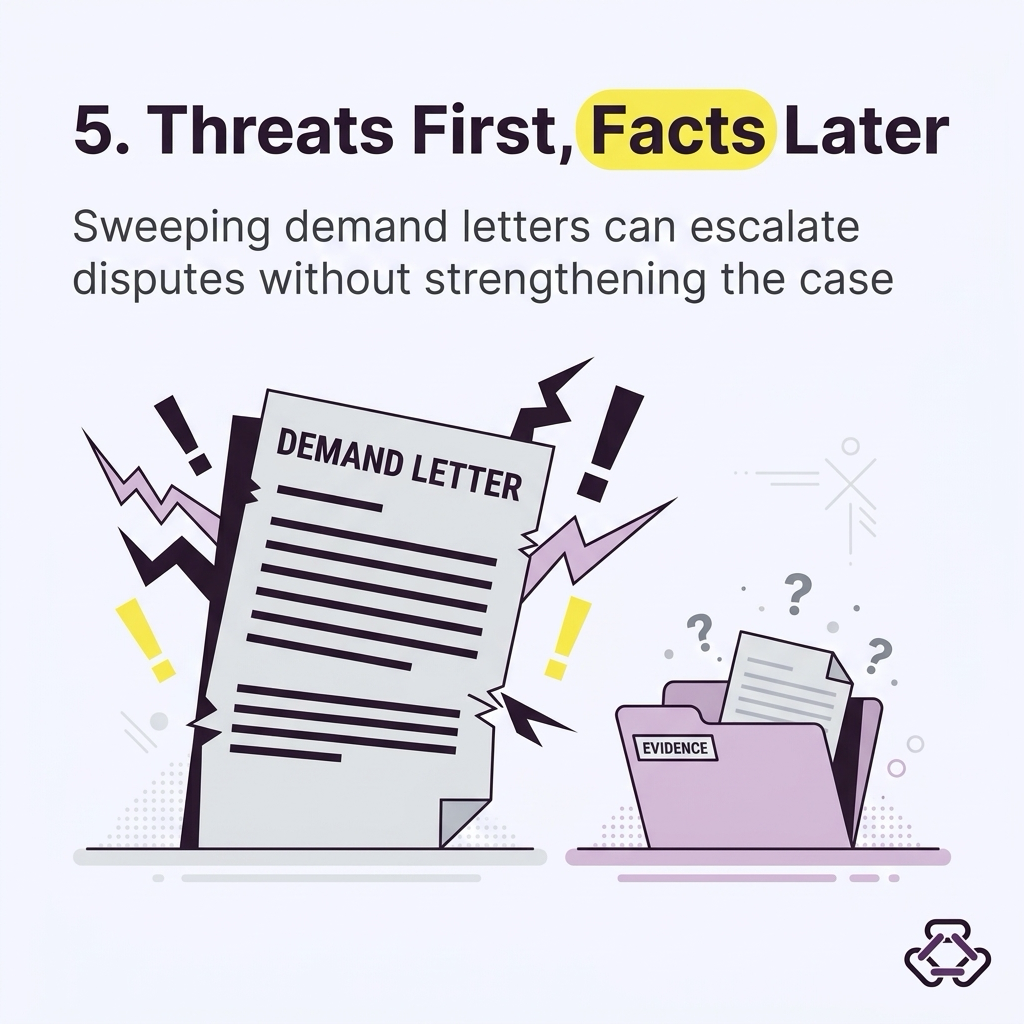
- 5. Using Aggressive Enforcement Threats Without The Facts To Back Them Up
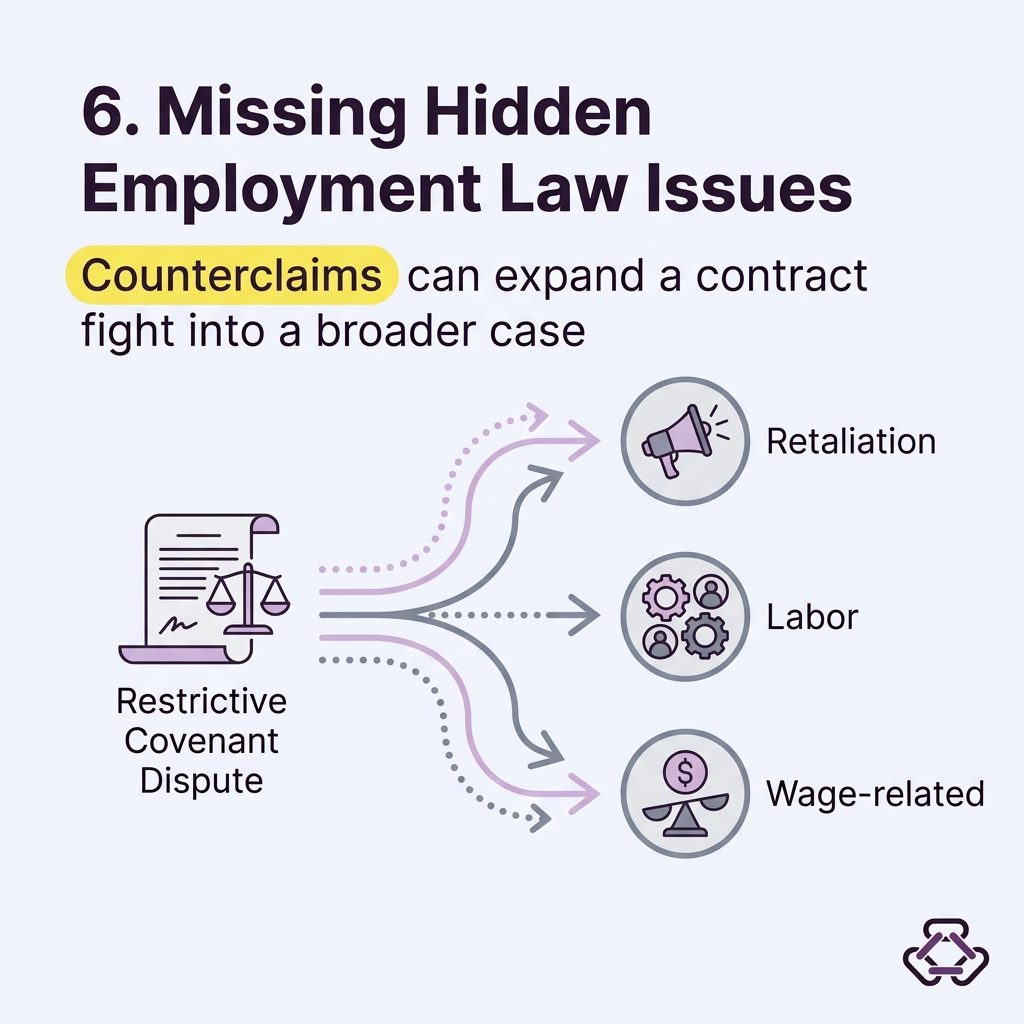
- 6. Overlooking Other Employment Law Problems Hidden Inside The Restrictive Covenant Strategy
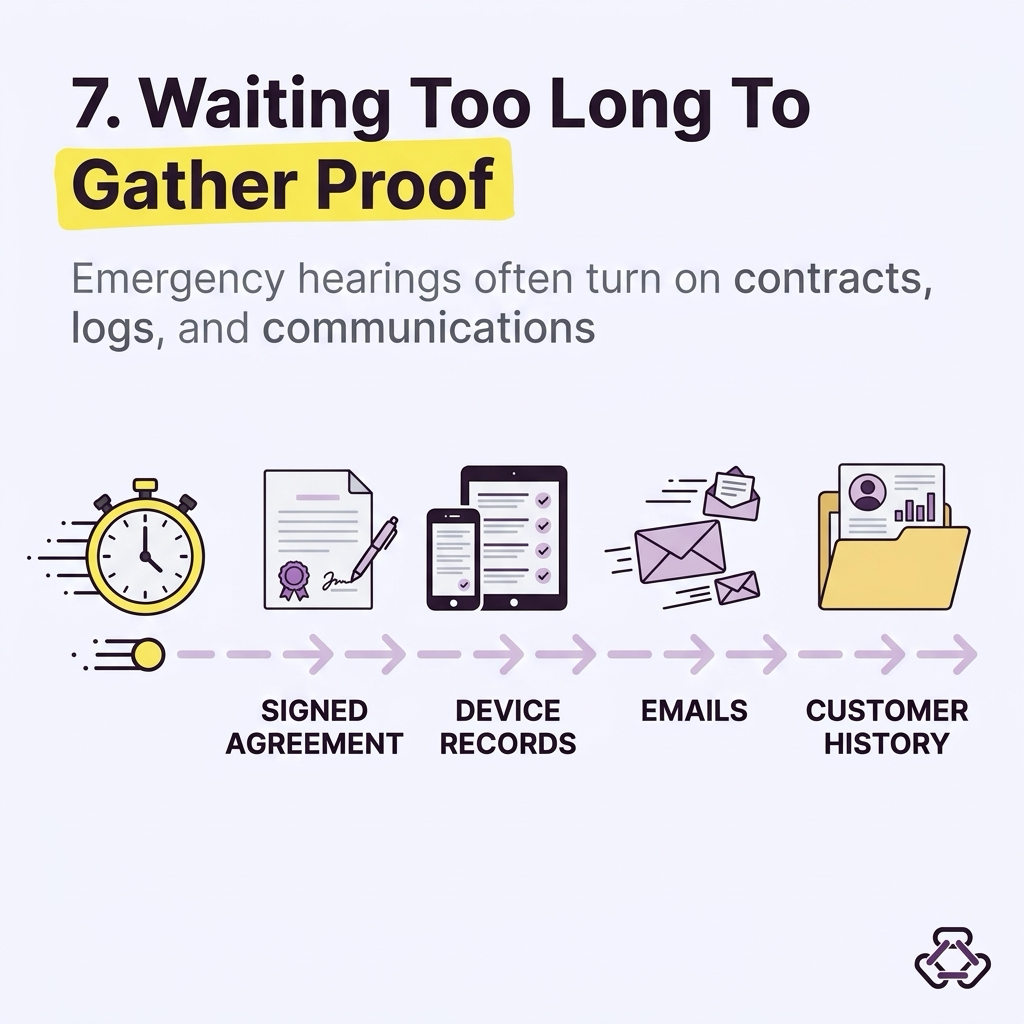
- 7. Waiting Until After The Departure To Build The Evidence File
- How These Mistakes Usually Show Up In Real Litigation
- A Final Word On Reducing Risk Before A Dispute Escalates

Type
Great Grandchild
Status
Approved
Title (YouTube)
Images Failed (Social)
Images Failed (Social)
Do not index
Parent item
Publish Date (TikTok)
Jan 6, 2027 16:15
Videos Post IDs (Social)
Hashtags (Social)
#LegalAdvice #LegalHelp #BusinessLitigation #NonCompeteNonSolicitation
Caption
Caption X
Cover

OG Image

Alt Image Text
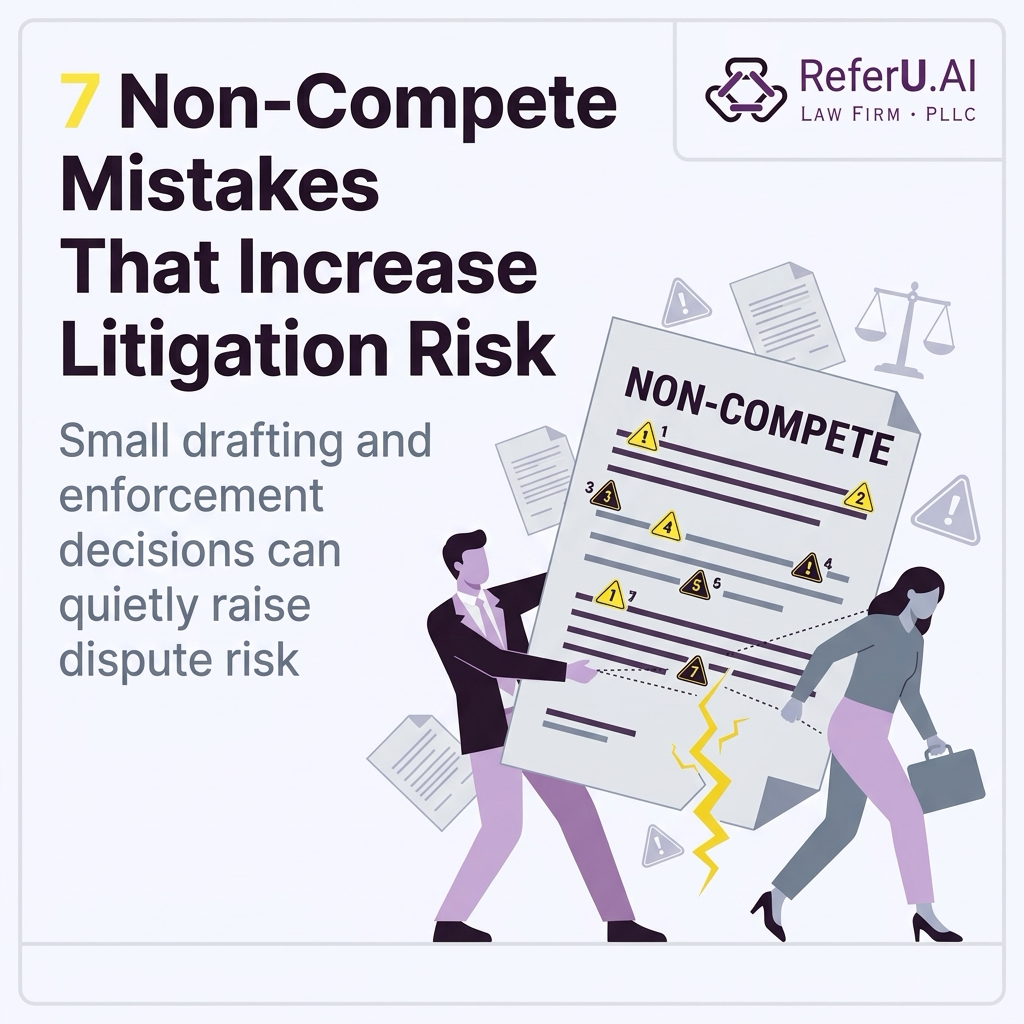
Flat vector illustration of non-compete mistakes and litigation risk, showing a contract, legal warning symbols, and employer-employee tension during offboarding.
Images

Videos
Publish Date (Social)
Dec 17, 2026 07:00
Scheduled (Social)
Scheduled (Social)
Images Posted (Social)
Images Posted (Social)
Videos Posted (Social)
Videos Posted (Social)
Videos Failed (Social)
Videos Failed (Social)
Featured
Created time
Apr 3, 2026 10:12 PM
Sub-item
Authors
CTA Practice Area (Social)
Business Litigation
TikTok Failed (Social)
TikTok Failed (Social)
Videos Post Links (Social)
YT Auto Captions Removed
TikTok Post Links (Social)
Images Post IDs (Social)
YT Post ID
Video Pending Manual (Social)
TikTok Posted (Social)
TikTok Posted (Social)
TikTok Post IDs (Social)
Video Cover (Social)
Images Post Links (Social)
First Comment (Social)
YT Embedded
Images Delete (Social)
Videos Delete (Social)
Carousel Video URL (Social)
7 Non-Compete Mistakes That Increase Litigation Risk
Non-compete disputes often start long before anyone files a lawsuit. In many cases, the real problem is not a single clause or one dramatic act of competition. It is a chain of small drafting, enforcement, and offboarding decisions that quietly raise the odds of an injunction hearing, emergency motion practice, or an expensive defense.
That is why companies, founders, HR leaders, executives, and employees often benefit from understanding where restrictive covenant fights actually come from. If you want a broader overview of how these disputes work from both the business and employee side, it may help to start with a plain-English overview of restrictive covenant fights.
In this post, you’ll learn seven common non-compete mistakes that tend to increase litigation risk, why they matter, and what attorneys often look at first when a dispute begins. The goal here is not legal advice. It is a practical map of the issues that frequently turn an employment disagreement into a lawsuit.
Scroll to the bottom for every post in this series.
Why Non-Compete Litigation Risk Has Become More Complicated
Non-compete law has become more fragmented in recent years. At the federal level, the FTC announced a nationwide non-compete rule in 2024, but the agency now says the rule is not in effect and not enforceable, after a federal court blocked enforcement and the FTC later moved to dismiss its appeal in 2025. The FTC has also said it may continue case-by-case enforcement activity even without the nationwide rule taking effect. That leaves businesses and workers in a landscape driven largely by state law, contract language, and fact-specific litigation strategy rather than one uniform national standard (FTC, Mass.gov).
State law also varies dramatically. California broadly prohibits many employee non-compete provisions by statute, including making it unlawful to include a noncompete clause in an employment contract unless a statutory exception applies (California Legislature). Minnesota voids many employment non-compete covenants and also limits out-of-state adjudication and choice-of-law provisions for employees who primarily live and work there (Minnesota Revisor). Massachusetts permits some noncompetition agreements, but its statute imposes guardrails, including notice timing requirements and limits on enforcement against certain categories of workers, such as nonexempt employees and workers terminated without cause or laid off (Massachusetts Legislature).
In other words, litigation risk often goes up when people assume “a non-compete is a non-compete” everywhere. It usually isn’t.
1. Using One Boilerplate Agreement Across Multiple States
This is one of the most common mistakes behind avoidable lawsuits.
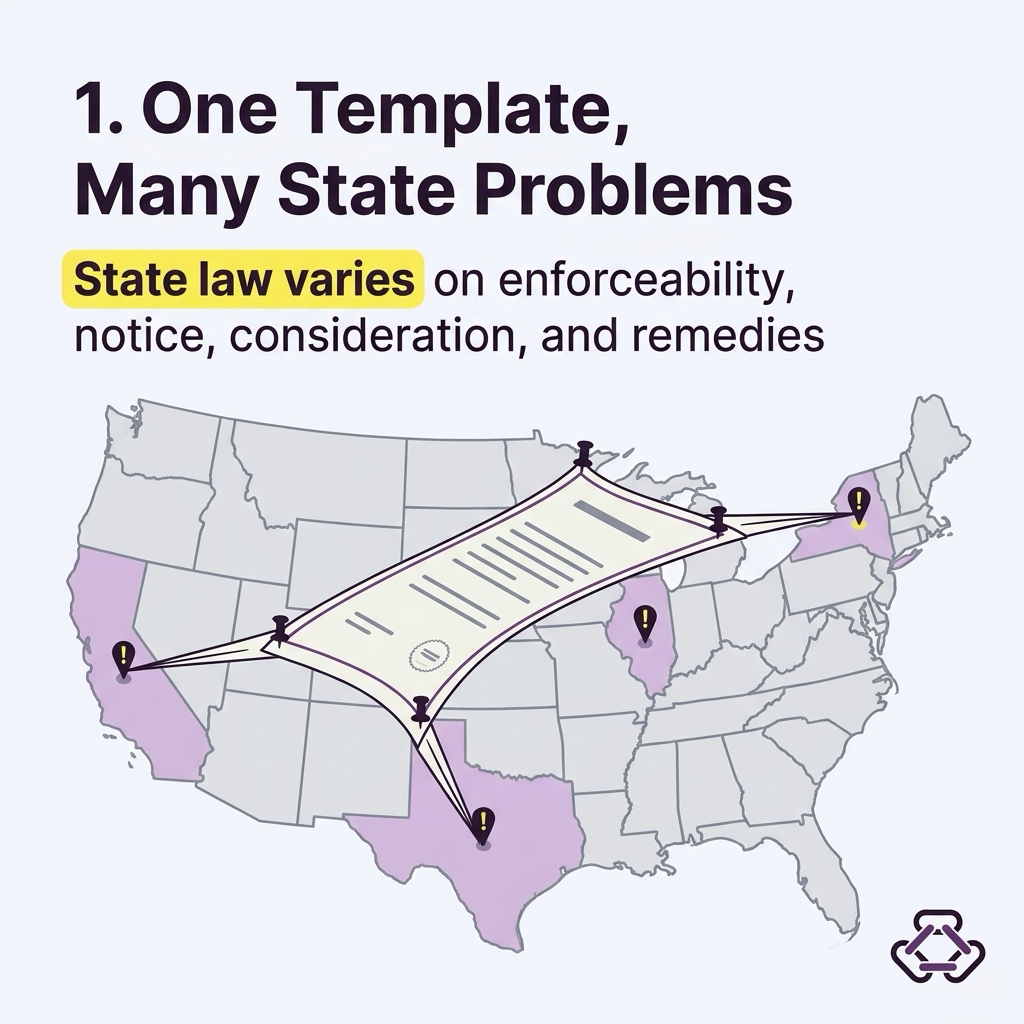
A company with workers in California, Minnesota, Massachusetts, Illinois, New York, and Texas may be tempted to use one restrictive covenant template for everyone. That can look efficient internally, but it often creates serious problems once a departure occurs. The legal standards for enforceability, required consideration, notice, scope, and available remedies can differ sharply by state.
For example, California’s statutory framework is hostile to most employee non-competes, while Minnesota now voids many employment non-compete covenants altogether (California Legislature, Minnesota Revisor). Massachusetts allows certain noncompetes, but only within a narrower statutory framework that includes formal requirements like advance notice and garden leave or other mutually agreed consideration (Massachusetts Legislature).
When a company uses a nationwide template without tailoring it, several things can happen:
- the agreement may be partly or fully unenforceable;
- the other side may argue the company overreached;
- the court may spend early motion practice focused on choice-of-law and forum issues rather than the alleged misconduct;
- the business may lose leverage in a preliminary injunction hearing.
From the employee side, signing a broad agreement without understanding which state’s law may apply can create a different kind of risk: a dispute about venue, emergency relief, and whether a new job start date gets delayed while the parties fight over enforceability.
2. Drafting Restrictions That Are Broader Than The Business Interest At Stake
Courts often look for a legitimate business interest before enforcing a restrictive covenant. That usually means things like trade secrets, confidential information, customer goodwill, or specialized relationships, not a generalized desire to limit ordinary competition. Massachusetts summarizes this idea in its case law and statutory materials, noting that restrictive covenants are typically evaluated for reasonableness, legitimate business interest, and consistency with public policy (Mass.gov).
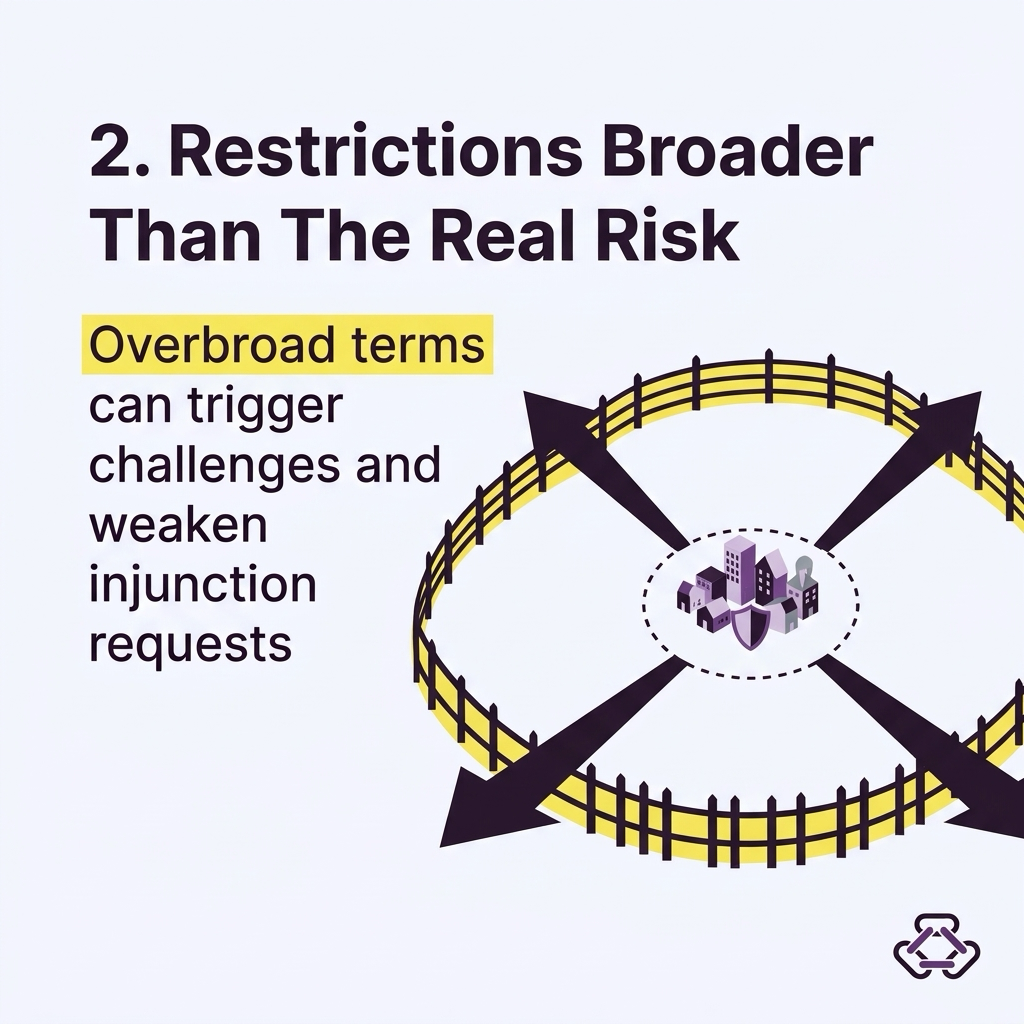
The mistake is drafting a restriction that goes far beyond what the employer actually needs to protect. Common examples include:
- a nationwide geographic restriction for a local sales role;
- a two-year ban where the real concern is a short sales cycle;
- a bar on working in any capacity for a competitor, even in unrelated roles;
- restrictions covering prospects, clients, vendors, and recruiting activity all at once, regardless of the employee’s actual duties.
This kind of overreach can increase litigation risk in two ways. First, it can invite a direct challenge to enforceability. Second, it can create a credibility problem. When the contract reads like a sweeping anti-competition device rather than a targeted protection of confidential information or customer relationships, judges may become more skeptical of emergency requests for injunctive relief.
For employees and executives, broad language can also create uncertainty that affects negotiations with a future employer. Sometimes the dispute starts because no one can tell whether the restriction actually covers the planned role.
3. Failing To Separate Non-Compete Issues From Trade Secret Issues
Not every departure involving confidential information calls for a non-compete claim. And not every non-compete dispute is really about a valid trade secret concern.
That distinction matters because trade secret law can provide its own remedies, sometimes without an enforceable non-compete at all. The Defend Trade Secrets Act created a federal civil cause of action for certain trade secret misappropriation claims, and in extraordinary circumstances it allows ex parte seizure to preserve evidence or prevent dissemination (Congress.gov). Many states also protect trade secrets through versions of the Uniform Trade Secrets Act or related statutes (Uniform Law Commission).
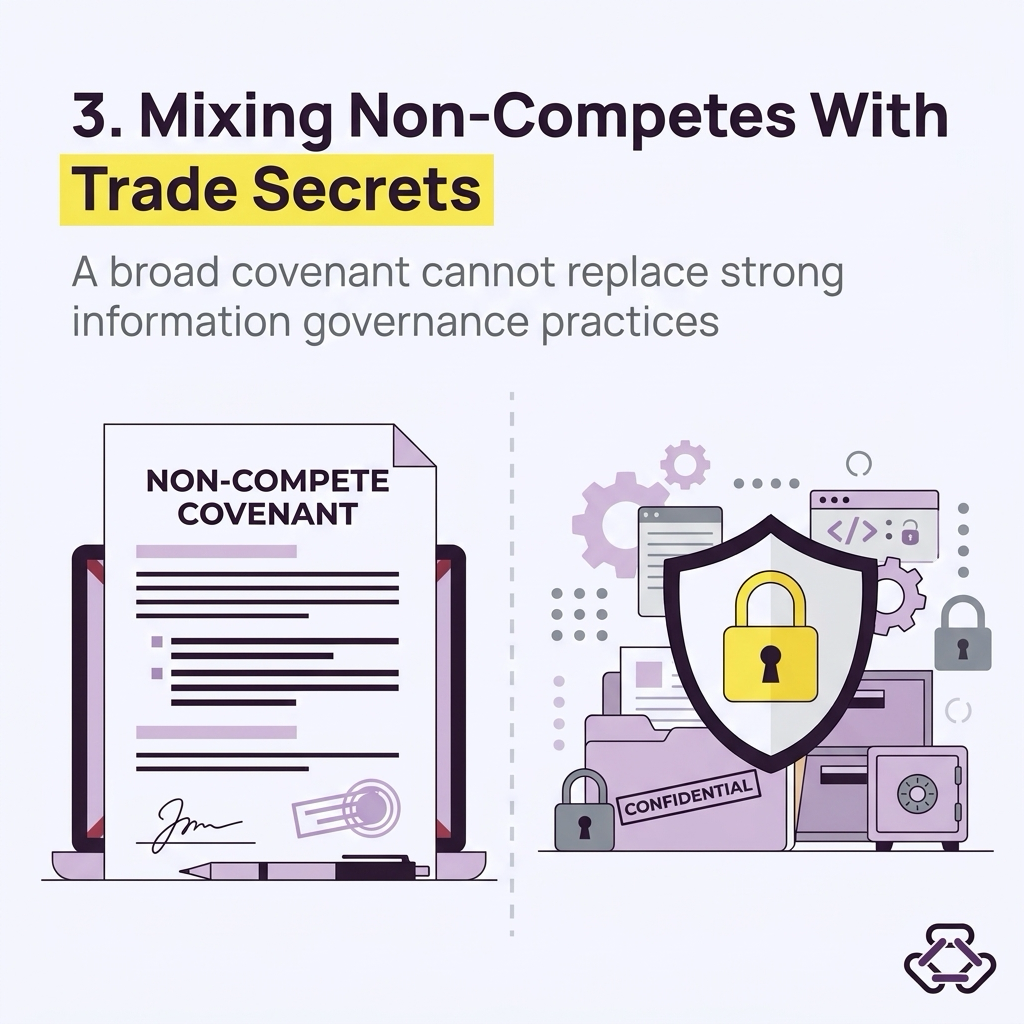
A recurring mistake is treating a non-compete like a substitute for information governance. If a company has weak access controls, vague confidentiality practices, poor data classification, and sloppy offboarding, then a broad non-compete may not solve the underlying problem. In litigation, the other side may ask questions like:
- What exactly was confidential?
- Who had access to it?
- Was it actually treated like a secret?
- Was there evidence of downloading, forwarding, or retention?
- Was the alleged risk concrete or speculative?
On the other side, employees sometimes make the mistake of assuming that if a non-compete is questionable, taking documents, contact lists, or proprietary materials is legally insignificant. That assumption can be dangerous. Even where a non-compete is weak or void, separate claims involving confidentiality, fiduciary duty, trade secrets, or computer access can still drive litigation.
4. Ignoring Notice, Consideration, And Worker-Category Requirements
A lot of restrictive covenant disputes come down to formation problems rather than competition itself.
Some states impose statutory rules about when a non-compete can be presented, what consideration supports it, and which workers can be bound. Massachusetts is a strong example. Its statute includes notice requirements and makes noncompetition agreements unenforceable against several worker categories, including nonexempt employees, many interns and students, employees aged 18 or younger, and employees who were terminated without cause or laid off (Massachusetts Legislature).
Minnesota goes even further for many employment relationships by declaring employment non-compete covenants void, while expressly distinguishing non-disclosure agreements and some non-solicitation provisions from that definition (Minnesota Revisor).
This creates risk when employers:
- roll out agreements during onboarding without required lead time;
- present restrictive covenants after employment begins without adequate additional consideration;
- use the same covenant for exempt and nonexempt personnel;
- continue using older forms after a state statute changes;
- overlook termination-category restrictions, especially after layoffs or “without cause” separations.
For employees, another common problem is assuming a signed agreement is automatically enforceable because it was part of onboarding paperwork. In practice, attorneys often examine whether statutory prerequisites were satisfied before they even get to breach allegations.
5. Using Aggressive Enforcement Threats Without The Facts To Back Them Up
Some disputes become lawsuits because the first demand letter goes too far.
If a former employer sends a sweeping cease-and-desist letter accusing a departing worker and the new employer of trade secret theft, solicitation, unfair competition, and conspiracy without a developed factual record, that can escalate the matter quickly. The recipient may file first in a favorable forum, seek declaratory relief, preserve evidence for counterclaims, or refuse to negotiate because the opening position appears exaggerated.
This is especially risky in a climate where regulators have shown concern about overbroad labor-market restraints. The DOJ and FTC have long warned that some labor-market agreements, including naked no-poach and wage-fixing arrangements, can violate antitrust law, and the agencies’ HR guidance has emphasized that these issues are not merely theoretical (DOJ, DOJ). In 2025, the FTC’s business guidance also reiterated that wage-fixing and no-poach agreements may create antitrust exposure, including criminal exposure in some contexts (FTC).
That does not mean every enforcement letter creates antitrust issues. It does mean overreaching can complicate a case beyond ordinary contract enforcement.
A more defensible approach in many disputes involves a narrower factual theory: identifying the customers at issue, the data allegedly taken, the timing of the conduct, and the specific contractual provisions arguably implicated. That tends to matter because judges often see emergency restrictive covenant applications early, before full discovery. Specificity frequently carries more weight than volume.
6. Overlooking Other Employment Law Problems Hidden Inside The Restrictive Covenant Strategy
Non-compete disputes do not exist in a vacuum. A restrictive covenant may intersect with wage-and-hour rules, retaliation law, labor law, whistleblower protections, discrimination claims, and severance agreement rules.
For example, the National Labor Relations Board has said employers may not offer severance agreements that broadly require employees to waive labor-law rights through sweeping confidentiality and non-disparagement language that interferes with Section 7 rights under the NLRA (NLRB). The NLRB has also published worker guidance discussing non-competes and related contract provisions that may interfere with protected concerted activity in some circumstances (NLRB).
Retaliation issues can also appear where an employee previously raised discrimination, wage, safety, or compliance concerns. The EEOC’s retaliation guidance explains that anti-retaliation protections can cover internal complaints, agency participation, and other protected activity (EEOC).
Why does this raise litigation risk? Because a business that views the case only as “former employee violated the non-compete” may miss the possibility that the departing worker will answer with counterclaims. Once that happens, the dispute can expand far beyond contract interpretation.
Employees can make a parallel mistake too: focusing only on whether the covenant looks unfair, while overlooking how prior communications, downloads, recruiting activity, or severance language may affect the bigger case.
7. Waiting Until After The Departure To Build The Evidence File
By the time a temporary restraining order or preliminary injunction is on the table, the clock is usually moving fast. Courts often want evidence quickly: signed agreements, onboarding records, job descriptions, access logs, customer assignments, forensic facts, communications, and proof of business harm.
One of the biggest mistakes is waiting until after a resignation to gather and organize that information.
In practice, restrictive covenant cases often turn on mundane evidentiary details:
- Was the right contract version signed?
- Was it countersigned?
- Was there proof of delivery and notice?
- What territory or accounts did the employee actually handle?
- Which customers moved, and when?
- Was there evidence of solicitation, or only competition?
- What harm was concrete and immediate?
- Did the company preserve devices, logs, and exit interview materials?
Without that record, even a facially reasonable agreement can be difficult to enforce in emergency proceedings. And from the defense side, failing to preserve texts, emails, offer letters, onboarding materials from the new employer, and evidence of independent customer relationships can also undermine the response.
This is one reason many businesses and employees look for counsel very early in the dispute cycle. Restrictive covenant cases often move faster than ordinary commercial cases, especially when injunctive relief is requested.
How These Mistakes Usually Show Up In Real Litigation
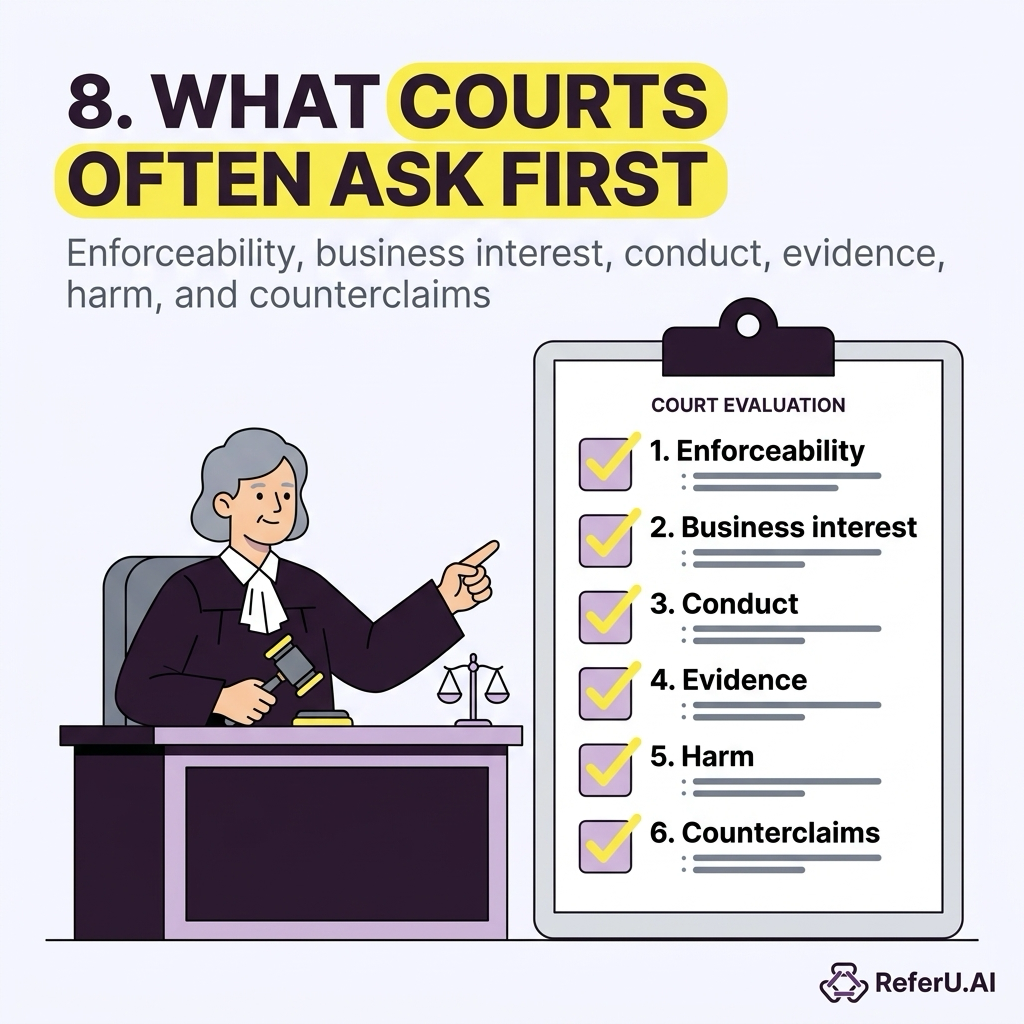
Most non-compete lawsuits are not really about abstract legal theory. They tend to revolve around a handful of practical questions:
- Is the agreement enforceable in this state?
- Is the restriction narrowly tied to a legitimate business interest?
- What exactly did the departing worker do?
- Is there evidence of solicitation, misuse of confidential information, or immediate harm?
- Are there counterclaims that change the leverage on both sides?
That is why the same factual pattern can produce very different outcomes depending on the contract language, the state involved, the offboarding process, and the quality of the evidence.
If a company has a narrow agreement, state-specific drafting, strong confidentiality practices, and reliable evidence, its litigation position often looks very different from a company relying on a generic nationwide template and generalized suspicion. If an employee has a careful transition record, avoids taking proprietary information, and gets legal analysis before making contact with customers or coworkers, the defense posture often looks very different too.
A Final Word On Reducing Risk Before A Dispute Escalates
Non-compete litigation risk often rises because the parties discover basic problems too late: the wrong agreement, the wrong state law, weak proof of harm, overbroad enforcement demands, or hidden employment-law issues that turn a contract dispute into a broader case.
In general terms, the safest path is rarely guesswork. A lawyer handling restrictive covenant disputes may be able to evaluate enforceability, identify fact gaps, assess emergency injunction exposure, and separate legitimate trade secret concerns from clauses that may not hold up. That kind of early analysis can matter on both sides of the dispute.
If you’re dealing with a non-compete, non-solicit, trade secret, or employee-movement dispute, finding counsel with demonstrable experience in highly similar matters can make the early case assessment more grounded and evidence-based. Visit ReferU.AI to get matched with an attorney who has demonstrable experience in cases like yours — for free.
