Table of Contents
- Non-Compete and Non-Solicitation Disputes Explained: Restrictive Covenants, Enforcement, and Defense
- What Are Restrictive Covenants?
- Why These Disputes Escalate So Quickly
- How Courts Often Analyze Enforceability
- Is There A Legitimate Business Interest?
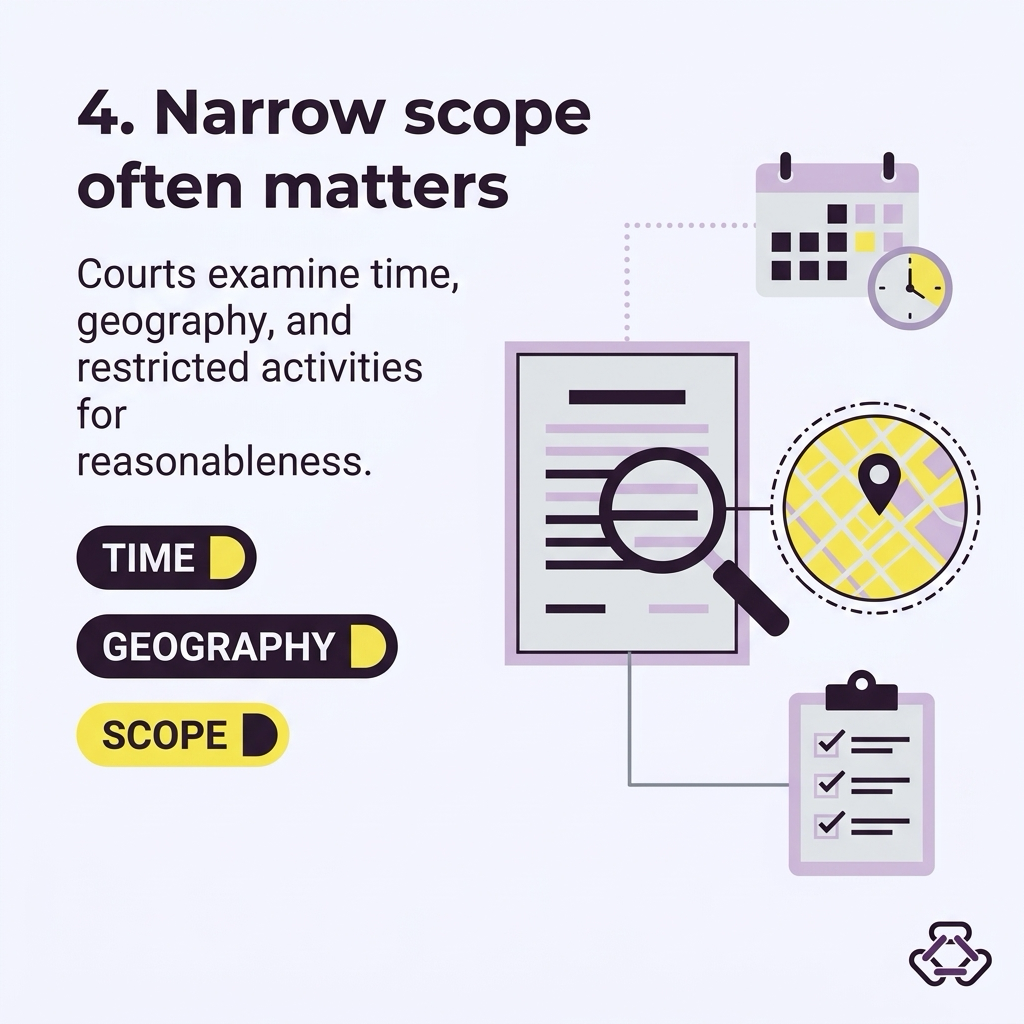
- Is The Restriction Narrow Enough?
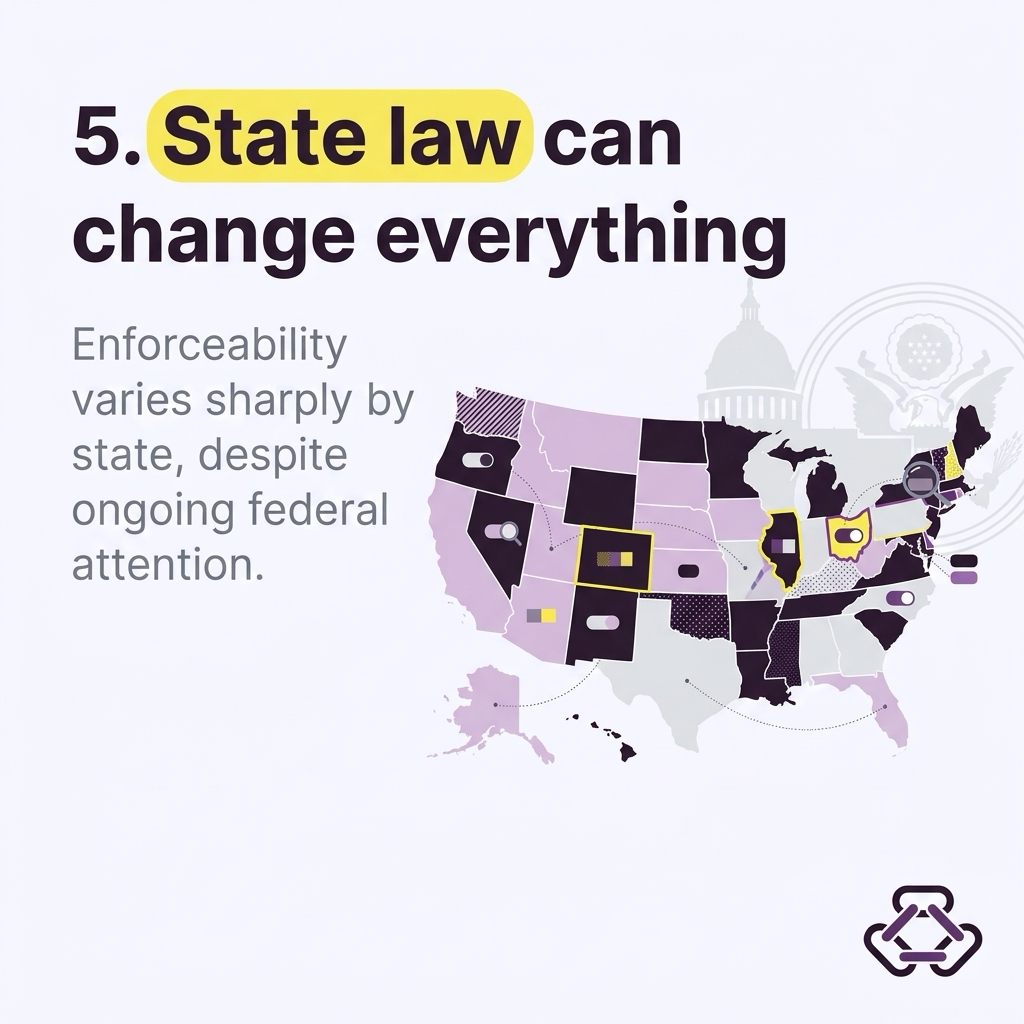
- Does State Law Permit This Type Of Restriction At All?
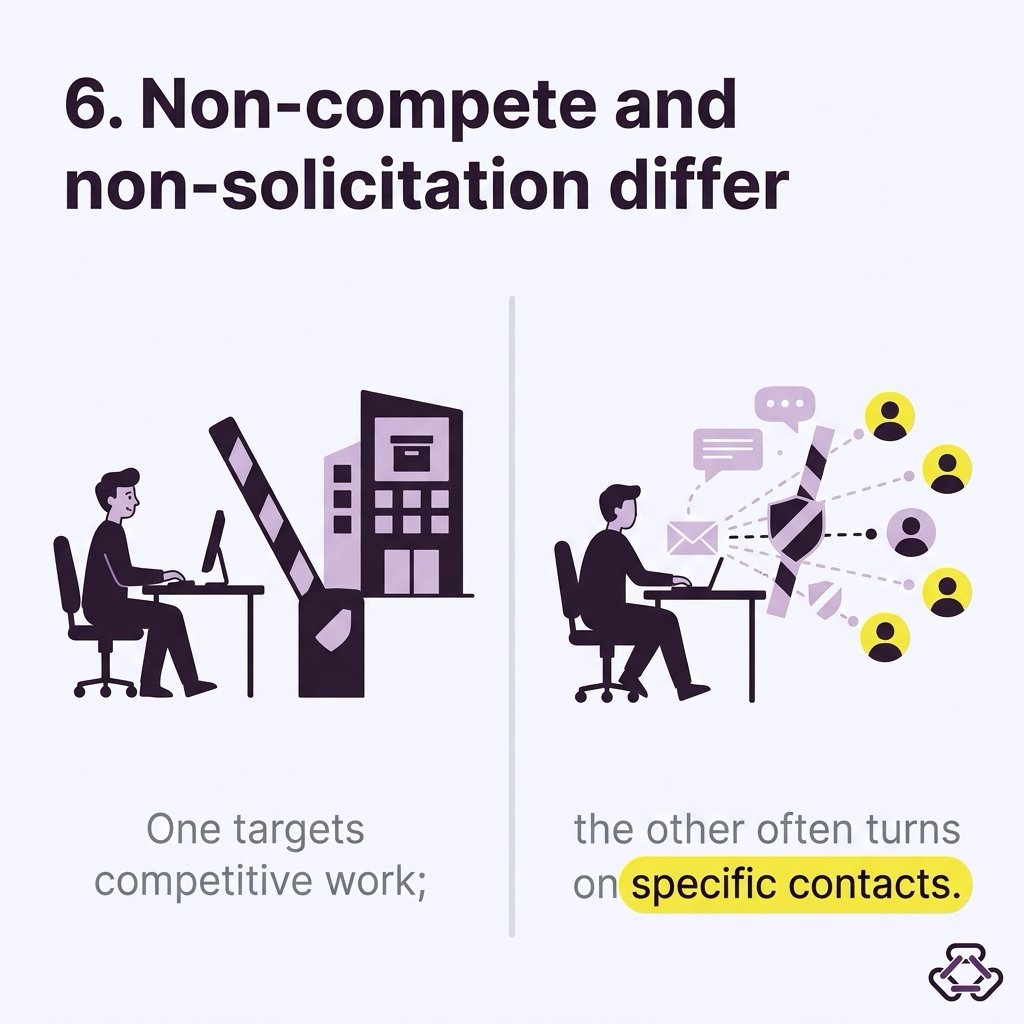
- Non-Compete Vs. Non-Solicitation: Why The Distinction Matters
- Non-Compete Claims
- Non-Solicitation Claims
- What Plaintiffs Usually Try To Prove
- 1. A Valid Agreement Exists
- 2. The Defendant Engaged In Restricted Conduct
- 3. The Business Faces Irreparable Harm
- 4. The Requested Relief Is Narrow And Justified
- What Defendants Commonly Argue
- The Covenant Is Void Or Unenforceable
- The New Role Is Not Competitive
- There Was No Solicitation
- The Employer Cannot Show Real Harm
- The Employer Is Really Litigating A Trade Secret Case Without Trade Secrets
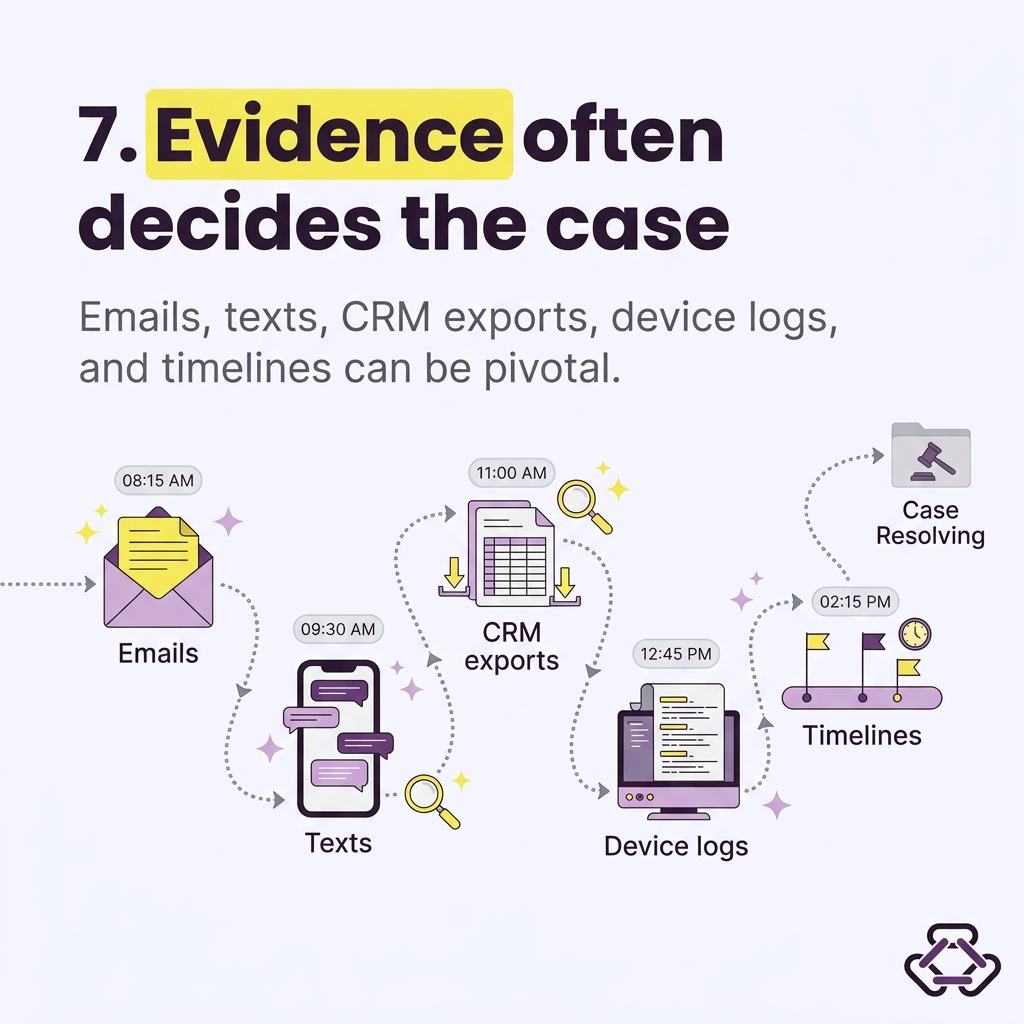
- Evidence Often Decides The Case
- Common Litigation Flashpoints
- Emergency Injunction Requests
- Trade Secret Overlap
- Choice-Of-Law Fights
- Employee Raiding Allegations
- Customer Communications
- Why Drafting And Exit Conduct Matter So Much
- The Federal Backdrop In 2026
- Questions Businesses And Executives Often Ask At The Start
- What Often Makes A Case Stronger Or Weaker
- The Bottom Line

Type
Grandchild
Status
Approved
Title (YouTube)
Images Failed (Social)
Images Failed (Social)
Do not index
Publish Date (TikTok)
Jan 7, 2027 09:15
Videos Post IDs (Social)
Hashtags (Social)
#LegalAdvice #LegalHelp #BusinessLitigation #NonCompeteNonSolicitation
Caption
Caption X
Cover

OG Image

Alt Image Text
Flat vector illustration of non-compete and non-solicitation disputes involving restrictive covenants, with a departing employee, protected client relationships, contracts, and legal enforcement and defense symbols.
Images


Videos

Publish Date (Social)
Dec 17, 2026 09:00
Scheduled (Social)
Scheduled (Social)
Images Posted (Social)
Images Posted (Social)
Videos Posted (Social)
Videos Posted (Social)
Videos Failed (Social)
Videos Failed (Social)
Featured
Created time
Apr 3, 2026 10:12 PM
Authors
CTA Practice Area (Social)
Business Litigation
TikTok Failed (Social)
TikTok Failed (Social)
Videos Post Links (Social)
YT Auto Captions Removed
TikTok Post Links (Social)
Images Post IDs (Social)
YT Post ID
Video Pending Manual (Social)
TikTok Posted (Social)
TikTok Posted (Social)
TikTok Post IDs (Social)
Video Cover (Social)

Images Post Links (Social)
First Comment (Social)
YT Embedded
YT Embedded
Images Delete (Social)
Videos Delete (Social)
Carousel Video URL (Social)
Non-Compete and Non-Solicitation Disputes Explained: Restrictive Covenants, Enforcement, and Defense
When a business relationship breaks down after an employee departure, a dispute often centers on a small set of contract clauses with very large consequences: non-compete, non-solicitation, confidentiality, and related restrictive covenants. These provisions are often designed to protect customer relationships, goodwill, confidential information, and trade secrets. They also regularly become the focus of emergency court filings, business interruption, and career uncertainty.
That tension is exactly why restrictive covenant fights sit at the intersection of employment law, contract law, trade secret law, and high-stakes business litigation. If you want a broader framework for where these disputes fit in the commercial-litigation landscape, it may help to start with this guide to business and contract lawsuits more broadly.
In this post, you’ll learn what restrictive covenants are, how courts often analyze enforceability, why non-solicitation claims can look different from non-compete claims, what kinds of evidence tend to matter, and how plaintiffs and defendants commonly frame their arguments. Because this area changes quickly, the legal landscape in 2026 is especially important: federal agencies have taken aggressive positions, but state law still drives most day-to-day enforcement analysis, and those state rules vary sharply across the country. The FTC announced in 2025 that it had taken steps to dismiss its appeal after its nationwide non-compete rule was blocked, leaving state law as the primary battleground for most disputes, while the NLRB’s General Counsel has continued taking the position that overbroad mobility restrictions may interfere with protected employee rights under federal labor law (FTC, NLRB, NLRB employee-rights guidance).
Scroll to the bottom for every post in this series.
What Are Restrictive Covenants?
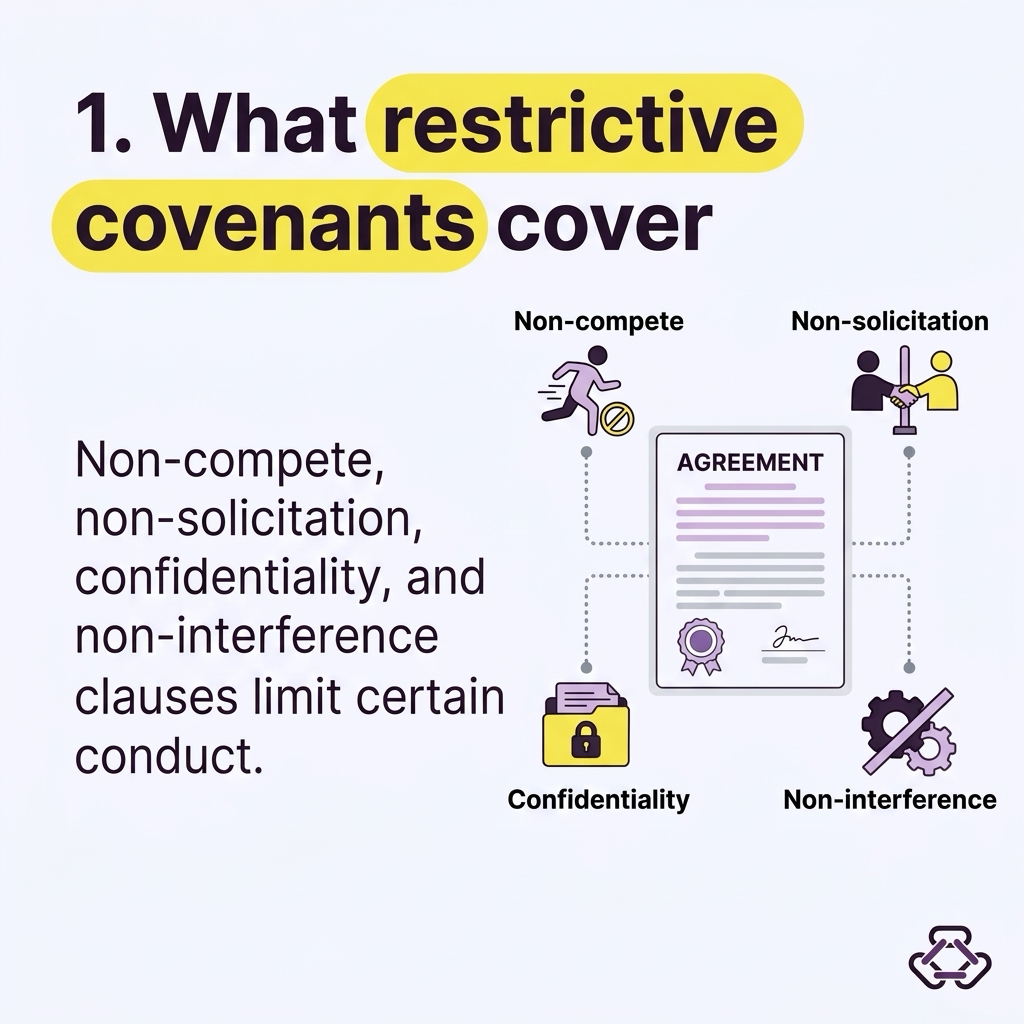
A restrictive covenant is a contract provision that limits certain conduct during or after a business relationship. In employment and business-departure disputes, the most common examples include:
- Non-compete clauses, which restrict working for or starting a competing business for a period of time and often within a geographic area
- Non-solicitation clauses, which restrict contacting customers, clients, referral sources, vendors, or employees
- Confidentiality and nondisclosure clauses, which restrict use or disclosure of confidential information
- Non-interference clauses, which may prohibit disrupting contracts, relationships, or internal teams
Not every restrictive covenant is treated the same way. A narrow confidentiality clause aimed at trade secrets is often analyzed differently from a broad post-employment ban on competitive work. Many courts are more skeptical of clauses that restrain a person’s ability to earn a living than clauses aimed at preventing misuse of trade secrets or active raiding of customers.
That distinction matters because a lawsuit may be labeled “non-compete litigation” even when the actual fight is mostly about solicitation, customer diversion, trade secrets, or employee poaching. If you want a more focused overview of how those cases usually begin, this primer on how restrictive covenant lawsuits typically unfold can help.
Why These Disputes Escalate So Quickly
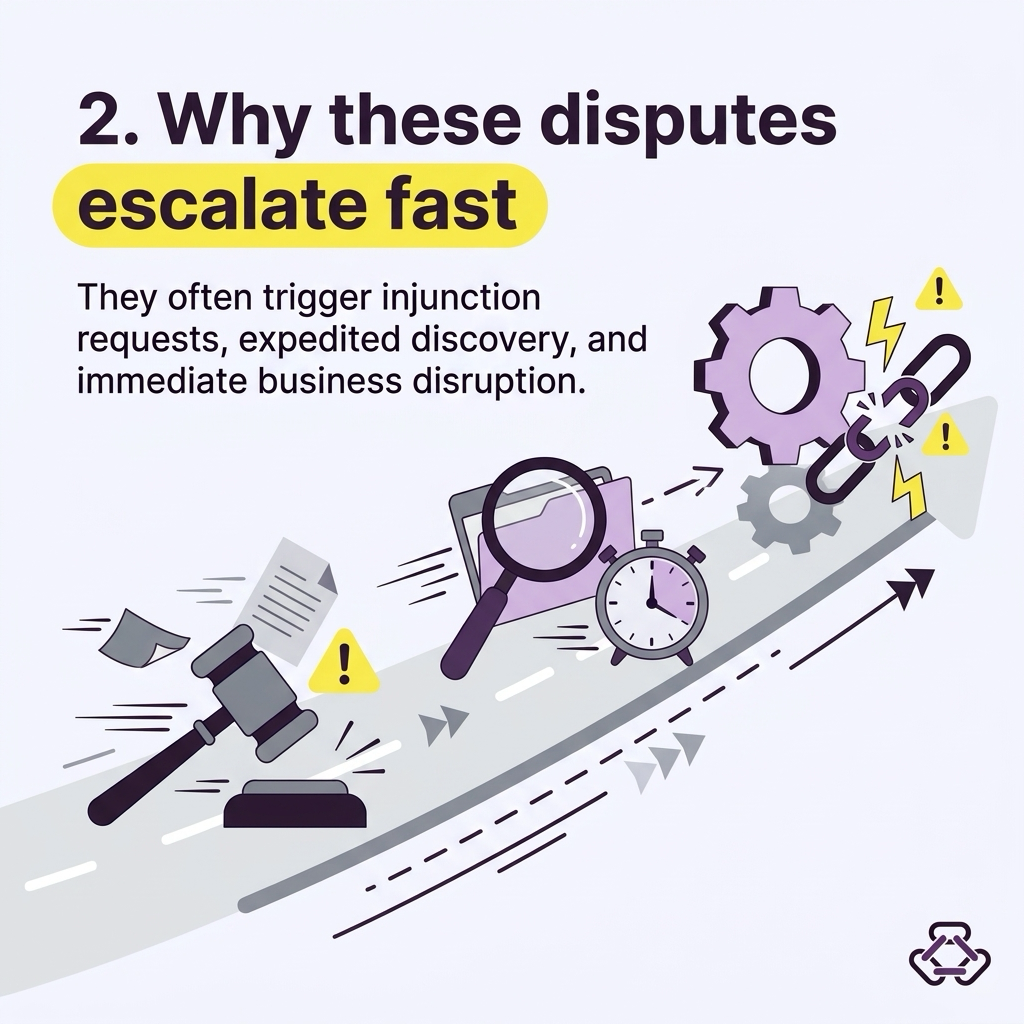
Restrictive covenant disputes often move faster than ordinary contract cases. A business may claim that a departing executive, salesperson, physician, recruiter, or founder is already calling customers, moving accounts, taking co-workers, or using confidential information at a competitor. The responding party may argue that the clause is void, overbroad, unsupported by law, or being used as leverage rather than protection.
That is why these cases frequently involve requests for:
- temporary restraining orders
- preliminary injunctions
- expedited discovery
- return of company devices or files
- inspection of accounts, communications, or forensic evidence
- declarations about what contacts occurred and when
The urgency is not just procedural. For the company, the concern is often loss of goodwill, customer relationships, pricing information, pipeline information, or trade secrets. For the departing individual, the concern is often income disruption, reputational harm, delayed onboarding, frozen compensation, or being sidelined from an industry segment.
How Courts Often Analyze Enforceability
Although standards vary by state, courts often ask a similar set of questions:
Is There A Legitimate Business Interest?
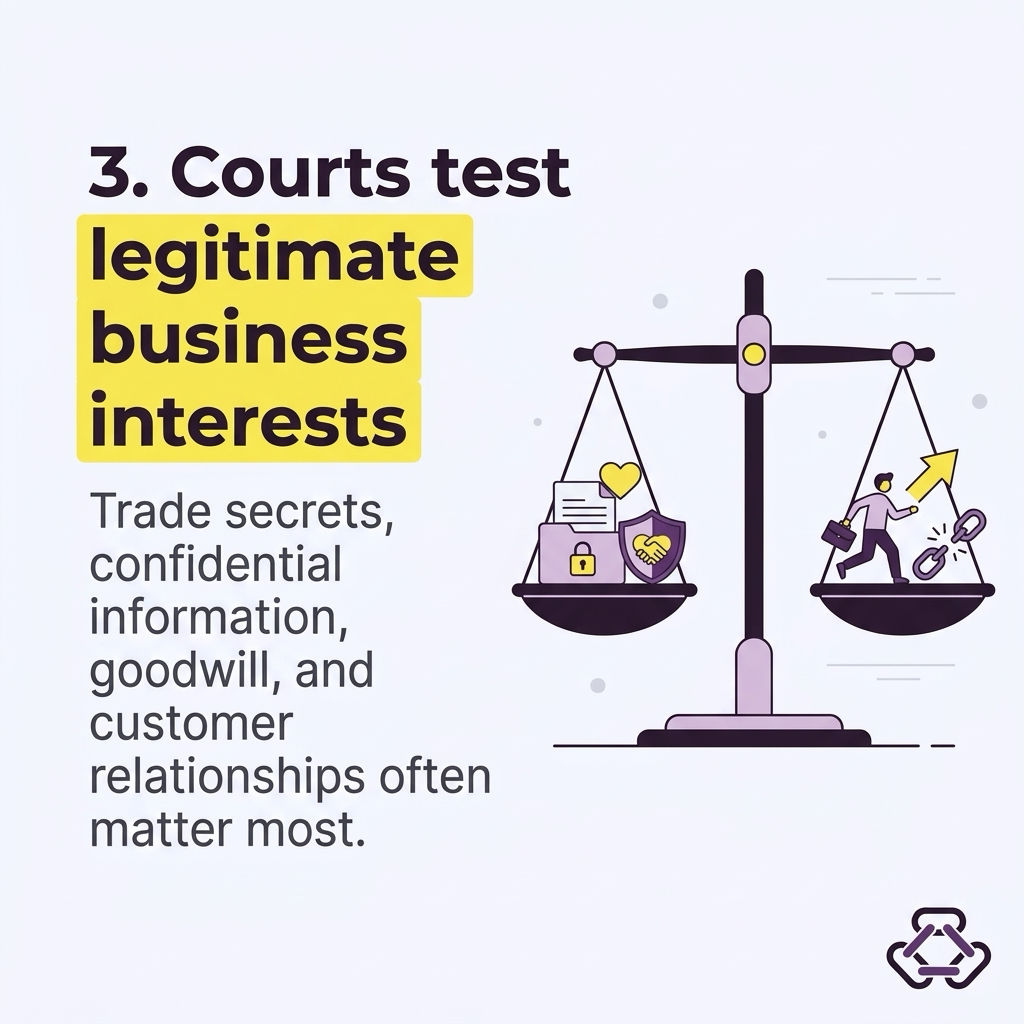
Many courts look for a legitimate interest worth protecting, such as trade secrets, confidential information, customer goodwill, or substantial customer relationships. Business-law commentary published through the American Bar Association and state bar sources commonly identifies those as recurring protectable interests in restrictive covenant litigation (ABA, Florida Bar).
This is one reason companies often plead non-compete claims alongside trade secret theories. Most states have some version of trade secret protection influenced by the Uniform Trade Secrets Act, and federal law also provides a cause of action under the Defend Trade Secrets Act. In practice, that means a covenant dispute may turn less on abstract competition and more on whether the employee had access to genuinely protected information.
Is The Restriction Narrow Enough?
Courts commonly examine whether the restriction is reasonable in time, geography, and scope of restricted activity. A clause that bars any work for any competitor in any role may draw more scrutiny than one limited to a specific line of business, a short time period, and defined customers.
Does State Law Permit This Type Of Restriction At All?
This is where the landscape gets complicated. State approaches vary dramatically:
- California broadly treats post-employment non-competes as void, subject to limited statutory exceptions, and recent state action reinforced that existing unlawful non-competes are void and that employers faced notice obligations in early 2024 (California AG).
- Minnesota banned most new post-employment non-competes entered on or after July 1, 2023 (Robins Kaplan summary of enacted law).
- Washington heavily restricts enforceability based in part on annual earnings thresholds, and the state’s Labor & Industries guidance publishes those thresholds each year; for 2026, the threshold for employees is listed at roughly $126,858.83, with a higher threshold for independent contractors (Washington L&I, Washington State Register).
- Illinois has adopted statutory limits and notice rules, including a 2025 notice requirement regarding certain void covenants entered with workers employed after January 1, 2023 (Illinois General Assembly).
- Massachusetts regulates non-competes through the Massachusetts Noncompetition Agreement Act, which includes formal requirements such as notice language and “garden leave” or other agreed consideration (Littler summary).
- Texas generally permits enforcement if the covenant is ancillary to an otherwise enforceable agreement and contains reasonable limits as to time, geography, and scope (discussion of Texas statute § 15.50).
Because of these differences, a clause that looks enforceable in one state may be vulnerable in another. That is one reason parties often spend substantial effort on threshold issues like governing law, place of employment, where conduct occurred, and whether a specific state’s public policy overrides a contract’s choice-of-law clause.
If you want a more detailed breakdown of the practical checklist lawyers often use at the start of a case, this article on sorting out whether a covenant is likely enforceable before filing or responding is a useful next read.
Non-Compete Vs. Non-Solicitation: Why The Distinction Matters
People often use “non-compete” as a catch-all phrase, but the legal and factual issues can be different.
Non-Compete Claims
A non-compete claim usually alleges that someone is working for a competitor, launching a competing business, or performing prohibited competitive services within a restricted territory or time period.
Typical questions include:
- Is the new role actually competitive?
- Is the restricted market clearly defined?
- Is the person performing the same function?
- Is the clause broader than the employer’s actual protectable interest?
Non-Solicitation Claims
A non-solicitation claim often turns on who contacted whom, when, and for what purpose. That can involve:
- customers or clients
- referral sources
- employees or team members
- vendors or strategic partners
These cases can become fact-intensive quickly. A departing employee might say customers followed voluntarily. The company might say the movement was planned before departure. A single email, text chain, calendar invite, LinkedIn message, or CRM export can take on outsized importance.
In some jurisdictions, customer non-solicitation provisions are treated more favorably than broad non-competes. In others, they face serious scrutiny if they function as disguised restraints on competition. California, for example, has long been hostile to post-employment restraints, and recent enforcement guidance has reinforced that broad unlawful non-competes are void under state policy (California AG).
What Plaintiffs Usually Try To Prove
A business seeking enforcement often tries to show four things.
1. A Valid Agreement Exists
The company often starts with signed contracts, offer letters, equity documents, partnership agreements, or separation papers. But even here, technical issues may matter: signature problems, notice failures, missing consideration, later amendments, and conflicting agreements can all become major points of attack. Massachusetts litigation, for example, has highlighted how statutory formalities can be outcome-determinative (Schwartz Hannum).
2. The Defendant Engaged In Restricted Conduct
This usually requires evidence of actual competition, actual solicitation, or actual misuse of information. Mere suspicion may not be enough for lasting injunctive relief.
3. The Business Faces Irreparable Harm
In injunction practice, the plaintiff often argues that damages alone are not enough because customer relationships, goodwill, confidential information, and market position are difficult to restore once lost.
4. The Requested Relief Is Narrow And Justified
Courts may be more receptive when requested relief is tailored to defined customers, specific information, or a short transition period rather than a blanket ban on earning a living.
What Defendants Commonly Argue
A person or company defending a restrictive covenant case may frame the dispute very differently.
The Covenant Is Void Or Unenforceable
This can involve public-policy arguments, statutory bans, low-wage thresholds, lack of consideration, overbreadth, stale restrictions, or defective drafting.
The New Role Is Not Competitive
Job title alone may not answer the question. A defendant may argue that the actual duties differ, the territory differs, the product line differs, or the person is not targeting the same customers.
There Was No Solicitation
In many cases, the defense is not “nothing happened,” but rather “customers moved on their own,” “the contact was informational,” or “the communication did not ask for business.”
The Employer Cannot Show Real Harm
Some defenses focus on the absence of measurable loss, the employer’s own business problems, weak causation, or the fact that the allegedly protected information was widely known or outdated.
The Employer Is Really Litigating A Trade Secret Case Without Trade Secrets
This comes up often. Courts may look skeptically at efforts to enforce broad restraints when the underlying concern appears speculative or unsupported by concrete evidence of confidential-information misuse.
Evidence Often Decides The Case
Restrictive covenant disputes are won and lost on facts, not labels. The key evidence often includes:
- employment agreements and amendments
- confidentiality policies and onboarding materials
- emails, text messages, chat logs, and LinkedIn communications
- customer lists, pricing files, pipeline reports, and CRM exports
- device logs, downloads, forwarding history, and access records
- resignation timing and pre-departure communications
- testimony from customers, co-workers, recruiters, or referral sources
- compensation records and market-territory data
- forensic imaging and metadata
When a case involves solicitation or competitive harm, chronology matters. A timeline showing what was accessed, copied, said, and transferred before and after departure can become one of the most important case themes. For a practical checklist, this guide on building proof of competition, solicitation, and business harm walks through the kinds of materials parties often gather early.
Common Litigation Flashpoints
Several recurring issues tend to intensify these disputes.
Emergency Injunction Requests
Many restrictive covenant cases start with a request for immediate relief. That compresses the timeline and can force both sides to litigate core facts before full discovery.
Trade Secret Overlap
A covenant claim is often paired with trade secret or confidentiality allegations because those theories can strengthen the argument for urgent relief.
Choice-Of-Law Fights
A contract may point to one state, while the employee worked in another. If the second state has a stronger anti-non-compete policy, the enforceability fight can change dramatically.
Employee Raiding Allegations
A company may claim that a former executive or manager orchestrated a team departure. That can shift the case from one person’s job move to a broader claim of coordinated competitive harm.
Customer Communications
Post-departure announcements are often heavily scrutinized. A neutral notice of a new role may be argued one way; a message inviting immediate business transfer may be argued another.
Why Drafting And Exit Conduct Matter So Much
Many disputes are shaped long before the lawsuit is filed. Overbroad drafting, inconsistent enforcement, unclear definitions, outdated templates, and informal exit practices can all increase litigation exposure. On the other side, poorly handled departures, rushed downloads, ambiguous messages to customers, and sloppy device returns can create damaging inferences even where the legal restrictions are questionable.
That is why many early disputes revolve around avoidable friction points. This roundup of mistakes that often make non-compete fights worse highlights patterns that regularly show up in litigation.
The Federal Backdrop In 2026
Although restrictive covenant litigation is still mostly driven by state law, federal developments remain part of the story.
The FTC’s 2024 rule banning most non-competes did not go into effect nationwide, and by September 2025 the FTC had announced steps to dismiss its appeal after the rule was blocked in federal court (FTC). As a result, parties still typically analyze enforceability under state statutes and common law.
At the same time, the NLRB General Counsel has continued taking the position that overly broad non-competes and similar restrictions can chill Section 7 rights under the National Labor Relations Act, particularly for covered private-sector employees acting to improve working conditions collectively (NLRB memo, NLRB rights guidance). That does not replace state contract law, but it adds another layer to risk analysis in some workplace settings.
In practical terms, 2026 is not a “non-competes are gone” environment. It is a high-variation, state-specific, fact-driven environment where enforceability depends heavily on who signed what, where they worked, how narrow the restrictions are, what happened after departure, and what evidence exists.
Questions Businesses And Executives Often Ask At The Start
When a restrictive covenant dispute first appears, the immediate questions are usually practical:
- Is the covenant even enforceable in this state?
- Does the new role actually violate it?
- What if customers reached out first?
- What evidence exists on phones, laptops, or personal accounts?
- Can the employer get an injunction quickly?
- Is settlement possible without admitting wrongdoing?
- Does the confidentiality clause matter more than the non-compete?
- What if the employee never signed the latest version?
- How does this affect severance, equity, or deferred compensation?
Those are often the same questions that shape the first week of the case. If you want a concise issue-spotting list, this article on the first questions companies and executives usually ask when the fight starts is worth reviewing.
What Often Makes A Case Stronger Or Weaker
In general terms, restrictive covenant cases tend to become stronger when the facts are specific and narrow: a defined group of customers, clear access to sensitive information, documented pre-departure planning, targeted solicitation, and tailored contract language tied to real business interests.
They often become weaker when the theory is broad and vague: a generic claim that someone “knows too much,” a worldwide ban untethered to actual duties, unclear signatures, inconsistent enforcement across employees, or a lack of evidence that any customer or confidential information was actually affected.
An attorney can often help separate emotional reactions from legally relevant facts. That distinction matters because these cases frequently begin with fear, anger, and assumptions, but they are usually decided by documents, timelines, state law, and credibility.
The Bottom Line
Non-compete and non-solicitation disputes are not just contract disagreements. They are often fast-moving business conflicts about employee mobility, customer ownership, confidential information, and competitive harm. Some cases center on enforceability. Others turn on what actually happened after a departure. Many involve both.
Because the law varies so much by state, and because emergency relief can change leverage at the very beginning of a case, early case assessment often focuses on a small number of decisive issues: the contract language, the governing law, the real business interest at stake, the scope of the restriction, and the available evidence.
If you’re dealing with a restrictive covenant dispute, finding counsel with demonstrable experience in highly similar matters can make the early evaluation more grounded in evidence rather than guesswork. Visit ReferU.AI to get matched with an attorney who has demonstrable experience in cases like yours — for free.


