Table of Contents
- 9 Questions Businesses and Executives Ask When a Restrictive Covenant Fight Begins
- Why These Cases Escalate So Quickly
- 1. Is The Restrictive Covenant Even Enforceable?
- 2. Which State’s Law Will Control The Fight?
- 3. Is This Really A Non-Compete Case, Or Is It Actually About Trade Secrets?
- 4. What Can The Other Side Ask A Court To Do Right Away?
- 5. What Evidence Actually Moves These Cases?
- 6. How Much Does Intent Matter?
- 7. How Exposed Is The New Employer?
- 8. Is Settlement Realistic, Or Is Litigation Basically Inevitable?
- 9. When Is It Time To Involve Counsel With Actual Restrictive Covenant Experience?
- What Businesses And Executives Often Overlook In The First 72 Hours
- Final Thoughts

Type
Great Grandchild
Status
Approved
Title (YouTube)
Images Failed (Social)
Images Failed (Social)
Do not index
Parent item
Publish Date (TikTok)
Jan 6, 2027 15:15
Videos Post IDs (Social)
Hashtags (Social)
#LegalAdvice #LegalHelp #BusinessLitigation #NonCompeteNonSolicitation
Caption
Caption X
Cover

OG Image

Alt Image Text
Flat vector illustration of a restrictive covenant fight with business leaders and an executive facing urgent legal and business questions, featuring contract, customer relationship, confidentiality, and decision path symbols.
Images


Videos
Publish Date (Social)
Dec 17, 2026 06:30
Scheduled (Social)
Scheduled (Social)
Images Posted (Social)
Images Posted (Social)
Videos Posted (Social)
Videos Posted (Social)
Videos Failed (Social)
Videos Failed (Social)
Featured
Created time
Apr 3, 2026 10:12 PM
Sub-item
Authors
CTA Practice Area (Social)
Business Litigation
TikTok Failed (Social)
TikTok Failed (Social)
Videos Post Links (Social)
YT Auto Captions Removed
TikTok Post Links (Social)
Images Post IDs (Social)
YT Post ID
Video Pending Manual (Social)
TikTok Posted (Social)
TikTok Posted (Social)
TikTok Post IDs (Social)
Video Cover (Social)
Images Post Links (Social)
First Comment (Social)
YT Embedded
Images Delete (Social)
Videos Delete (Social)
Carousel Video URL (Social)
9 Questions Businesses and Executives Ask When a Restrictive Covenant Fight Begins
When a restrictive covenant dispute starts, the first few days often feel unusually compressed. An executive resigns, a competitor appears in the picture, customer calls start coming in, and suddenly everyone is asking the same thing: What happens now?
These disputes can move fast because they often involve requests for emergency relief, access to confidential information, customer relationships, and the possibility of immediate business disruption. They also unfold in a legal environment that has become more complicated, not less. The Federal Trade Commission’s 2024 noncompete rule is not in effect and not enforceable, following a federal court order issued on August 20, 2024, and the FTC later took steps to dismiss its appeal on September 5, 2025. At the same time, state law continues to change in important ways, which means the answer in one state may look very different from the answer in another. FTC summary
If you are looking for a broader overview of how these disputes work, it may help to start with this overview of non-compete and non-solicitation cases. In this post, we’ll focus on the questions businesses and executives commonly ask right after the fight begins.
Scroll to the bottom for every post in this series.
Why These Cases Escalate So Quickly
Restrictive covenant cases often involve some combination of a non-compete, non-solicitation, non-disclosure, confidentiality, or trade secret claim. In many disputes, the real pressure point is not the contract language alone. It is the fear that relationships, information, or goodwill may walk out the door before a court has time to sort things out.
That is one reason emergency motions are common. Under the federal Defend Trade Secrets Act, a court may grant an injunction to prevent actual or threatened misappropriation, but the statute also says an order cannot prevent a person from entering an employment relationship, and any conditions on that employment must be based on evidence of threatened misappropriation, not merely on what the person knows. 18 U.S.C. § 1836 The Restatement of Employment Law similarly frames enforceability around whether a covenant is reasonably tailored in scope, geography, and time to protect a legitimate employer interest such as trade secrets, confidential information, customer relationships, or investment in the employee’s market reputation. Judicature summary of Restatement
That mix of urgency and fact-specific law is why many companies and departing executives start asking the same core questions.
1. Is The Restrictive Covenant Even Enforceable?
This is usually the first question, and for good reason. A signed agreement does not automatically mean a court will enforce it as written.
In general terms, courts often look at whether the restriction protects a legitimate business interest and whether it is reasonably limited in duration, geography, and scope of prohibited activity. The specific test varies by state, and some states are far more skeptical of noncompetes than others. Judicature summary of Restatement Recent state-level changes also continue to narrow enforceability in certain industries and for certain categories of workers. For example, Virginia expanded protections against noncompetes for nonexempt employees in 2025, and Washington enacted a near-total ban on employee and independent contractor noncompetes in 2026, with a future effective date of June 30, 2027. Ogletree on Virginia Ogletree on Washington
This early enforceability analysis often shapes everything that follows: settlement posture, emergency motion practice, internal communications, and the risk tolerance of both sides. That is also why some readers find it useful to compare this issue with a deeper discussion of how enforceability gets evaluated before anyone sues.
2. Which State’s Law Will Control The Fight?
This question can be outcome-determinative.
Many agreements include choice-of-law and forum-selection clauses, but those clauses do not always end the analysis. A court may still examine whether the selected state has a reasonable relationship to the dispute and whether applying that law would conflict with the public policy of another state with a stronger interest in the employment relationship.
That matters because state approaches to restrictive covenants differ dramatically. Some states permit tailored enforcement in a relatively traditional way. Others sharply restrict noncompetes or treat customer non-solicitation and confidentiality provisions differently from outright non-compete restraints. Some states are also more receptive than others to doctrines tied to threatened trade secret misuse.
For businesses, this often means the contract’s venue clause is only part of the map. For executives, it means “my agreement says Delaware” or “the company is based in Texas” may not fully answer where the legal risk lands. An attorney may help determine whether the contract language, place of employment, location of customers, and the state’s public policy point in the same direction or in competing ones.
3. Is This Really A Non-Compete Case, Or Is It Actually About Trade Secrets?
A surprising number of restrictive covenant fights become trade secret cases in disguise.
The headline allegation may be “breach of non-compete” or “breach of non-solicitation,” but the real concern is often confidential pricing, product roadmaps, sales strategies, source code, manufacturing methods, or customer-specific intelligence. That distinction matters because trade secret claims can create separate remedies and sometimes a stronger path to emergency relief if the evidence supports actual or threatened misuse.
Under the DTSA, federal courts can issue injunctions against actual or threatened misappropriation, but not simply because someone possesses knowledge in their head. LII text of the DTSA The American Bar Association notes that courts in some jurisdictions recognize versions of the “inevitable disclosure” theory, while others reject it, and the doctrine remains highly state-specific. ABA discussion of trade secret protection
This is one reason document preservation matters so early. If the case is really about information, the important evidence may include download logs, USB activity, forwarded emails, cloud transfers, device imaging, messaging history, CRM records, and access logs. If you want a more detailed roadmap for that side of the case, it may help to read about building proof of competition, solicitation, and business harm.
4. What Can The Other Side Ask A Court To Do Right Away?
Often, quite a lot.
In the first days of a restrictive covenant dispute, a company may seek a temporary restraining order, a preliminary injunction, expedited discovery, a return-of-property order, forensic inspection of devices or accounts, or preservation relief. In trade secret cases, the DTSA also includes an ex parte civil seizure mechanism in narrow circumstances, though that remedy is exceptional and tightly constrained. 18 U.S.C. § 1836
For executives and new employers, the urgent question is usually more practical: Can a court stop me from working? The answer often depends on the specific covenant, the state, the role, the evidence, and whether the dispute centers on customer competition, solicitation, or threatened misuse of confidential information. In some matters, the immediate relief sought is not a complete employment ban but restrictions on accounts, product lines, regions, or categories of information.
That nuance matters. A complaint may sound existential, while the eventual court order—if one issues at all—may be narrower and more operational.
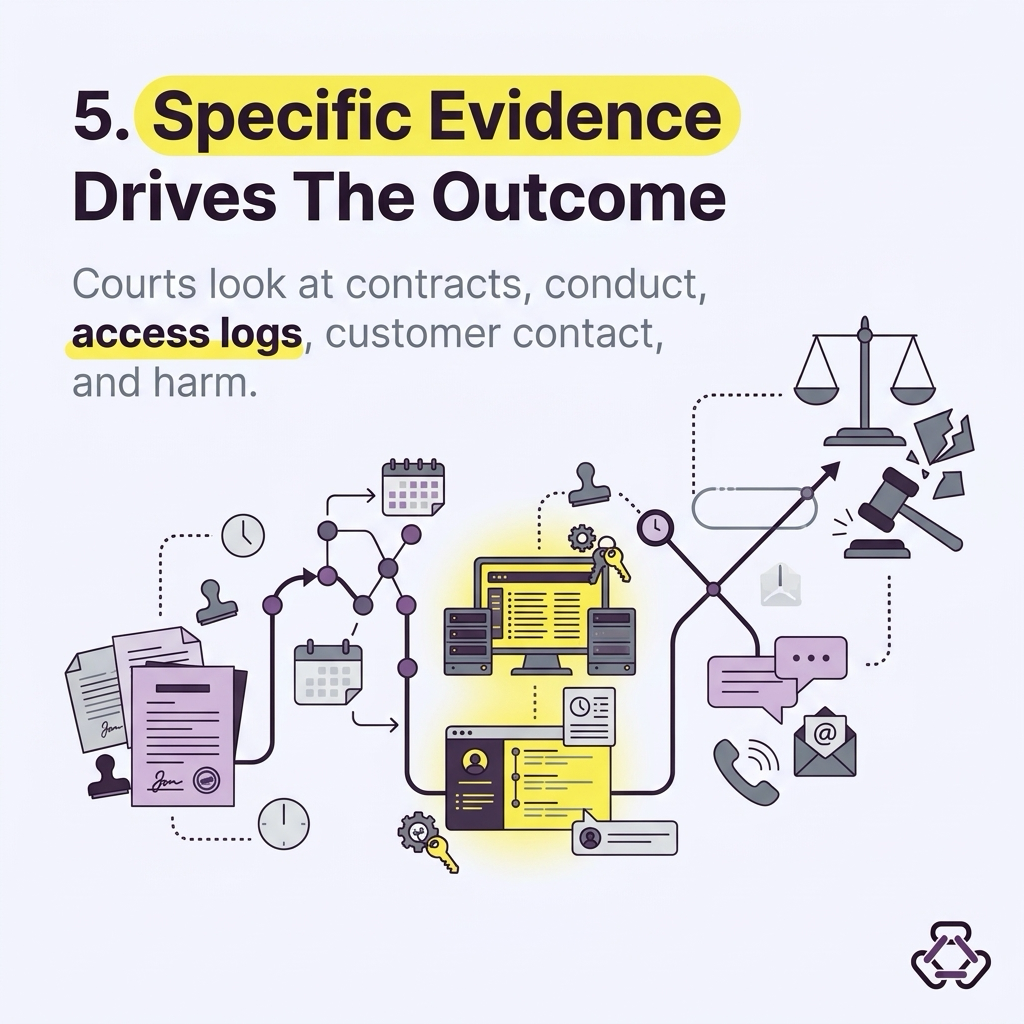
5. What Evidence Actually Moves These Cases?
Restrictive covenant disputes are often won or lost on specifics, not general impressions.
Courts tend to care about details such as:
- the exact contract language
- what the employee actually did in the old role
- what the employee is expected to do in the new role
- whether customers were contacted
- whether confidential information was accessed, copied, or transferred
- whether the employer consistently protected the information it now calls confidential
- whether the alleged harm is concrete or speculative
The Restatement’s framework around protectable interests helps explain why evidence matters so much: the restriction generally has to connect to something a court views as legitimately protectable, like trade secrets, confidential information, or customer relationships. Judicature summary of Restatement
That is why internal panic emails and broad accusations can backfire. If a company claims trade secret risk but cannot identify the information with reasonable specificity, or if it tolerated loose data controls before the departure, the emergency narrative may weaken. By the same token, a departing executive who says “I took nothing” but has unexplained forwarding activity or suspicious downloads may face a much steeper road.
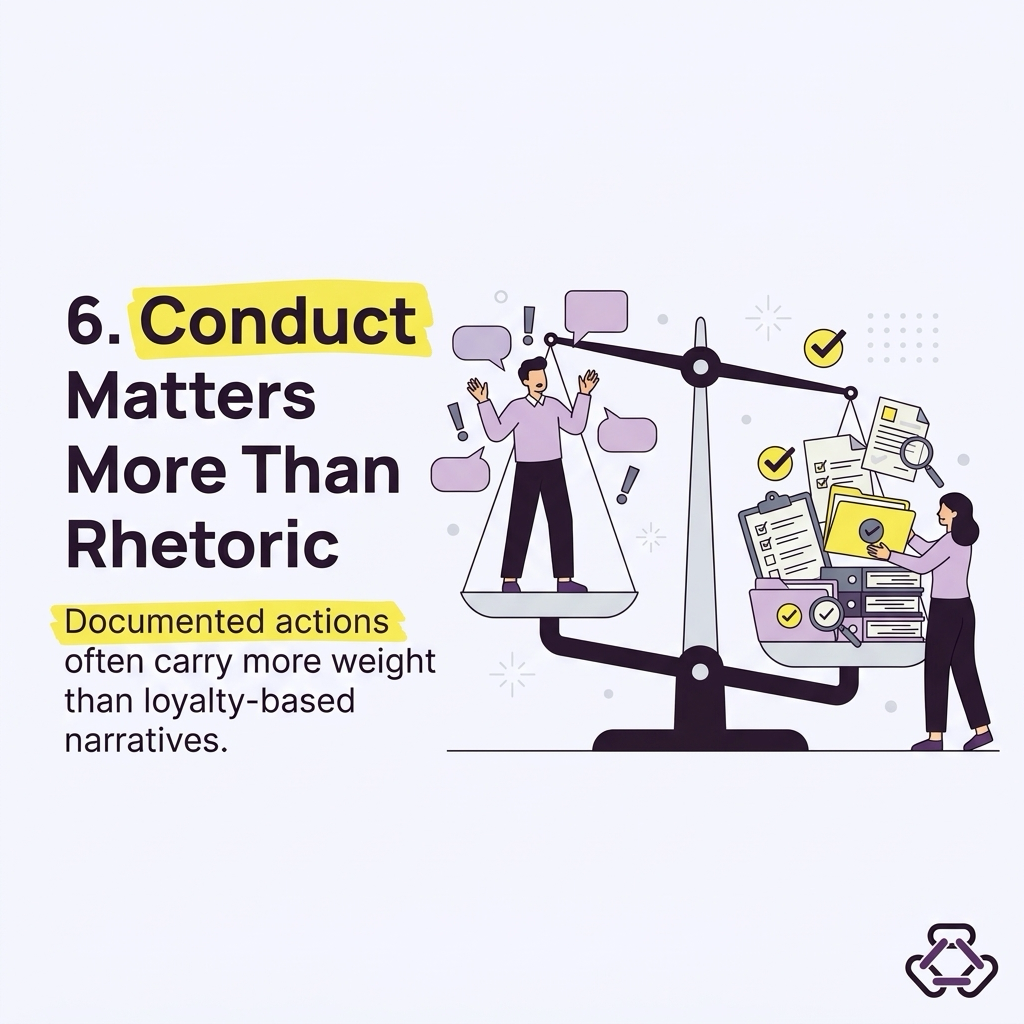
6. How Much Does Intent Matter?
A lot, but usually not in the simplistic way people expect.
Many business leaders initially frame these cases as a morality play: loyal versus disloyal, honest versus dishonest, fair versus unfair. Courts often look more closely at conduct and evidence than at rhetoric. Bad facts matter, but documented facts matter more.
For example, in trade secret cases, intent can become relevant where there is evidence of concealment, deletion, unusual transfer activity, competing plans formed before departure, or customer outreach timed around resignation. Under the DTSA, willful and malicious misappropriation can support exemplary damages up to two times the damages award, and bad-faith claims or bad-faith opposition to terminating an injunction can support attorney’s fees. LII text of the DTSA
At the same time, not every competitive move is wrongful. Moving to a competitor is not, by itself, proof of misappropriation. The ABA’s survey of inevitable-disclosure law underscores that many courts require more than the employee’s knowledge base to justify restrictions on new employment. ABA discussion of trade secret protection
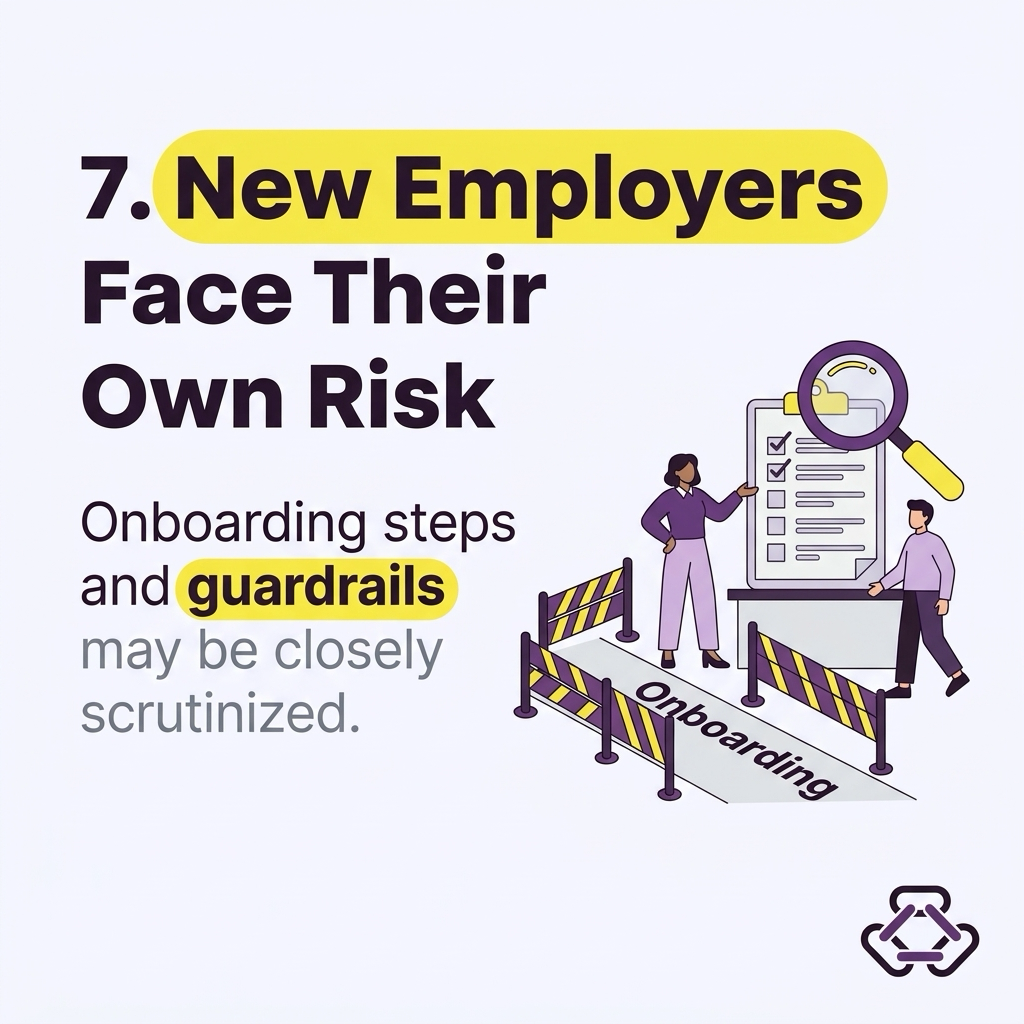
7. How Exposed Is The New Employer?
This is one of the most underappreciated questions in the entire dispute.
When a company hires an executive from a competitor, it may step into the case quickly—sometimes as a defendant, sometimes as the practical source of discovery, and often as the entity whose systems, instructions, and guardrails will be scrutinized. Courts may look at whether the new employer created a clean onboarding process, restricted access to overlapping accounts, instructed the new hire not to use prior confidential information, and documented efforts to avoid cross-contamination.
That issue has become more important as companies take worker mobility seriously while also trying to avoid being accused of inducing breaches or benefiting from trade secret misuse. The FTC’s worker-focused antitrust guidance and recent enforcement activity show that agencies remain attentive to labor-market restrictions, even though the FTC’s broad noncompete rule itself is not in effect. FTC antitrust guidelines for business activities affecting workers FTC noncompete page
For new employers, the legal and business question is often less “Can we hire this person?” and more “How do we structure the role in a way that reduces avoidable litigation risk?”
8. Is Settlement Realistic, Or Is Litigation Basically Inevitable?
Settlement is often realistic, but the window can be narrow.
A large number of restrictive covenant disputes resolve after emergency motions are filed—or even before filing—through temporary standstill arrangements, account carve-outs, geographic limits, customer restrictions, return-of-information protocols, or short-term cooling-off periods. That is partly because both sides face uncertainty. The company may not know whether a judge will enforce the covenant. The executive may not know whether the court will infer competitive harm from the facts. The new employer may want to contain disruption before discovery expands.
Still, some cases escalate because the business stakes are too high. If the departing employee handled major accounts, strategic product information, acquisition planning, compensation strategy, or key engineering work, the company may view early litigation as part of loss containment rather than pure contract enforcement.
This is also where avoidable errors tend to make things worse. Overbroad threats, delayed evidence collection, inconsistent internal messaging, and aggressive customer communications can all increase exposure. For readers thinking proactively, it may help to compare these patterns with common errors that can drive non-compete litigation risk higher.
9. When Is It Time To Involve Counsel With Actual Restrictive Covenant Experience?
Usually earlier than most people expect.
These cases often compress employment law, trade secret law, emergency injunction practice, digital forensics, internal investigation, and business strategy into a single fast-moving problem. A general commercial litigator may be helpful in many disputes, but restrictive covenant fights often turn on niche issues: enforceability standards by state, TRO procedure, preservation protocols, electronic evidence, customer communication strategy, and whether a court is likely to treat the case as a contract dispute, a trade secret matter, or both.
For businesses, early counsel involvement can help preserve evidence, shape internal messaging, evaluate venue and claims, and narrow requested relief to what a court may actually entertain. For executives, early counsel involvement can help assess personal exposure, clarify the practical effect of the covenant, manage communications with the former employer, and reduce the risk of creating bad facts after the departure.
That is especially important because the “latest law” in this area is easy to misunderstand. A lot of people still assume the FTC’s 2024 rule eliminated noncompetes nationwide. It did not. As of April 4, 2026, the FTC states that the rule is not in effect and not enforceable. FTC rule summary The real legal analysis still depends heavily on state law, facts, and the exact restraint at issue.
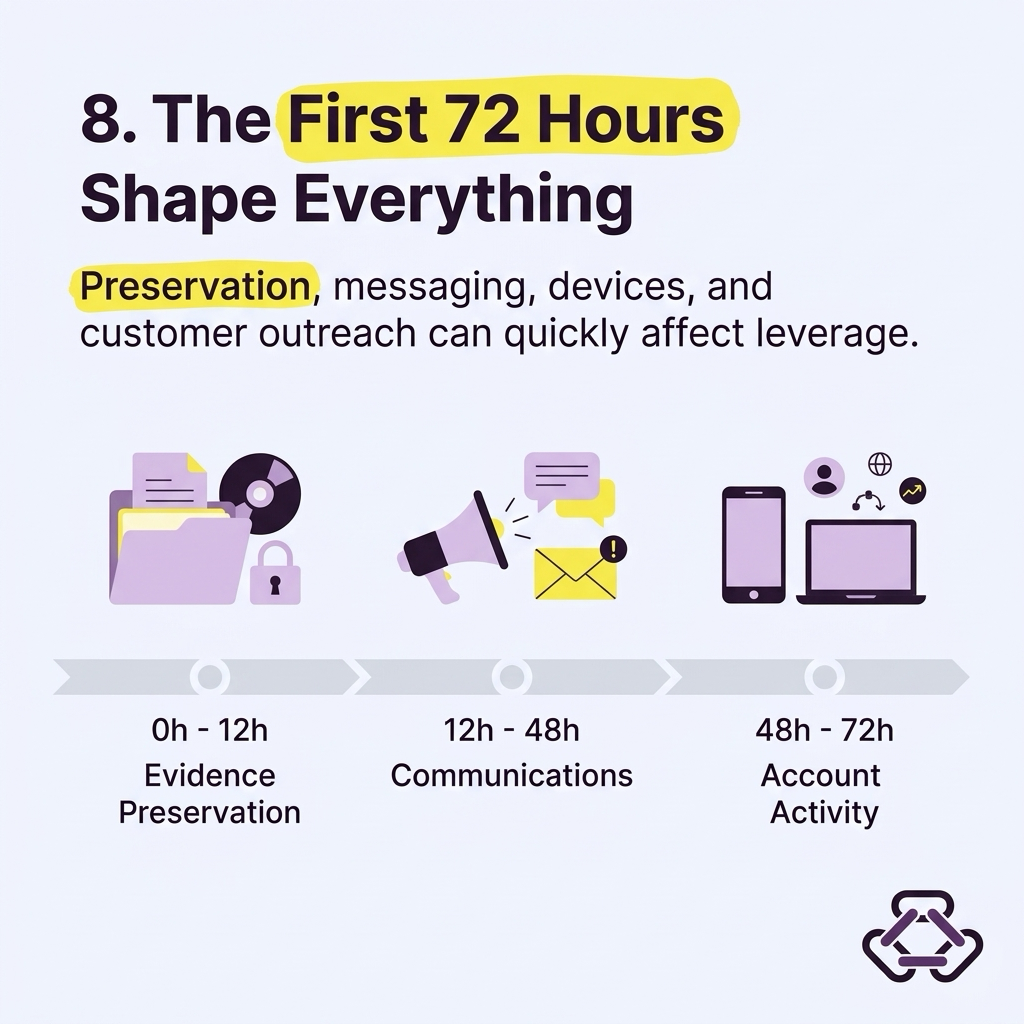
What Businesses And Executives Often Overlook In The First 72 Hours
The first 72 hours often shape the whole case.
Businesses sometimes focus so heavily on the departing executive that they overlook internal evidence preservation, device access records, CRM audit trails, and whether the company actually enforced its own confidentiality policies consistently. Executives sometimes focus so heavily on the noncompete language that they overlook the separate risk created by personal devices, text messages, cloud accounts, auto-forwarding rules, and customer outreach after resignation.
There is also a human layer to these disputes that rarely gets enough attention. Customers get nervous. Teams start speculating. Competitors listen closely. Recruiters pay attention. Investors may hear about the conflict before the parties even appear in court. The legal fight is real, but so is the reputational management problem sitting next to it.
That combination is why restrictive covenant disputes tend to reward a measured, evidence-based response. Broad assumptions rarely age well once sworn declarations, metadata, and customer testimony enter the picture.
Final Thoughts
When a restrictive covenant fight begins, the first question is rarely the only question. Enforceability, state law, trade secret exposure, emergency remedies, evidence, intent, new-employer risk, and settlement posture all tend to surface at once.
For some companies, the central issue is protecting customer relationships and confidential information. For some executives, the central issue is preserving the ability to keep working while avoiding unnecessary escalation. For many disputes, both things are true at the same time.
If your business or your career is suddenly tied up in a non-compete, non-solicitation, or trade secret dispute, the most useful next step is often finding counsel with documented experience in highly similar matters, based on objective criteria and court-record evidence.
Visit ReferU.AI to get matched with an attorney who has demonstrable experience in cases like yours — for free.
