Table of Contents
- Business Settlement Agreements: A Beginner’s Guide to Resolving Commercial Disputes Without Trial
- What Is A Business Settlement Agreement?
- Why Businesses Often Resolve Disputes Without Trial
- When A Business Settlement Agreement Usually Comes Into Play
- Before A Lawsuit Is Filed
- During Litigation
- In Mediation
- During Or After Arbitration
- What A Business Settlement Agreement Usually Includes
- Identification Of The Parties And The Dispute
- Payment Terms
- Release Of Claims
- Confidentiality
- No Admission Of Liability
- Dismissal Of The Case
- Default Remedies
- Governing Law And Forum
- What Makes Commercial Settlements Different From Consumer Or Personal Dispute Settlements
- Common Issues That Can Reopen A “Resolved” Business Dispute
- Unclear Release Language
- Weak Definitions
- Payment Timing Problems
- Missing Enforcement Terms
- Conflict With Existing Contracts
- Confidentiality Assumptions
- How Mediation Often Shapes The Final Agreement
- Does A Business Settlement Agreement End Everything?
- What To Gather Before Having A Lawyer Review The Deal
- Why Attorney Selection Matters In Commercial Settlement Work
- Questions Businesses Often Ask About Settlement Agreements
- Is A Settlement Agreement Enforceable Like Any Other Contract?
- Can A Business Keep The Settlement Confidential?
- Can One Side Sue Again After Signing?
- What If The Other Side Stops Paying?
- Is Mediation Required Before Settlement?
- A Short Summary For Beginners

Type
Great Grandchild
Status
Approved
Title (YouTube)
Images Failed (Social)
Images Failed (Social)
Do not index
Publish Date (TikTok)
Jan 1, 2027 07:45
Videos Post IDs (Social)
Hashtags (Social)
#LegalAdvice #LegalHelp #BusinessLitigation #SettlementAgreements
Caption
Caption X
Cover

OG Image

Alt Image Text
Flat vector illustration of a business settlement agreement resolving commercial disputes through negotiation and mediation without trial.
Images

Videos
Publish Date (Social)
Dec 13, 2026 12:00
Scheduled (Social)
Scheduled (Social)
Images Posted (Social)
Images Posted (Social)
Videos Posted (Social)
Videos Posted (Social)
Videos Failed (Social)
Videos Failed (Social)
Featured
Created time
Apr 3, 2026 10:14 PM
Sub-item
Authors
CTA Practice Area (Social)
Business Litigation
TikTok Failed (Social)
TikTok Failed (Social)
Videos Post Links (Social)
YT Auto Captions Removed
TikTok Post Links (Social)
Images Post IDs (Social)
YT Post ID
Video Pending Manual (Social)
TikTok Posted (Social)
TikTok Posted (Social)
TikTok Post IDs (Social)
Video Cover (Social)
Images Post Links (Social)
First Comment (Social)
YT Embedded
Images Delete (Social)
Videos Delete (Social)
Carousel Video URL (Social)
Business Settlement Agreements: A Beginner’s Guide to Resolving Commercial Disputes Without Trial
When a business dispute starts draining time, money, and attention, many owners and executives picture a courtroom battle as the inevitable end. In reality, a large share of business disputes resolve before trial, often through negotiated settlement, mediation, or arbitration. Federal court data and ADR provider data both point in the same direction: full-blown trial is relatively uncommon, while negotiated resolution is a routine part of commercial conflict management. U.S. Courts, American Arbitration Association, AAA B2B Infographic PDF
That is where a business settlement agreement comes in. It is the document that turns a handshake, email exchange, or mediation deal into an enforceable resolution. If drafted carefully, it can define payment terms, release legal claims, address confidentiality, allocate tax treatment, and reduce the odds that the same dispute reappears six months later.
This beginner’s guide explains the basics in plain English. In this post you’ll learn what a business settlement agreement is, when companies use one, what terms usually matter most, where problems tend to arise, and how a lawyer with relevant commercial dispute experience may help evaluate risk before a company signs.
If you want a broader overview of how these deals fit into litigation strategy, it may help to start with this guide on ending a lawsuit through a well-structured settlement.
Scroll to the bottom for every post in this series.
What Is A Business Settlement Agreement?
A business settlement agreement is a contract used to resolve an existing commercial dispute or a credible threat of one. The dispute might involve:
- breach of contract
- unpaid invoices
- partnership or shareholder conflict
- vendor or supplier issues
- intellectual property claims
- employment-related business disputes
- fraud or misrepresentation allegations
- construction, real estate, or service-performance disagreements
In general terms, the agreement says: here is what each side will do, here is what each side gives up, and here is how the dispute ends.
Sometimes the settlement happens before a lawsuit is filed. Sometimes it happens after months of litigation, discovery, or mediation. Sometimes it comes out of arbitration. Either way, the agreement usually becomes the roadmap for closure.
Why Businesses Often Resolve Disputes Without Trial
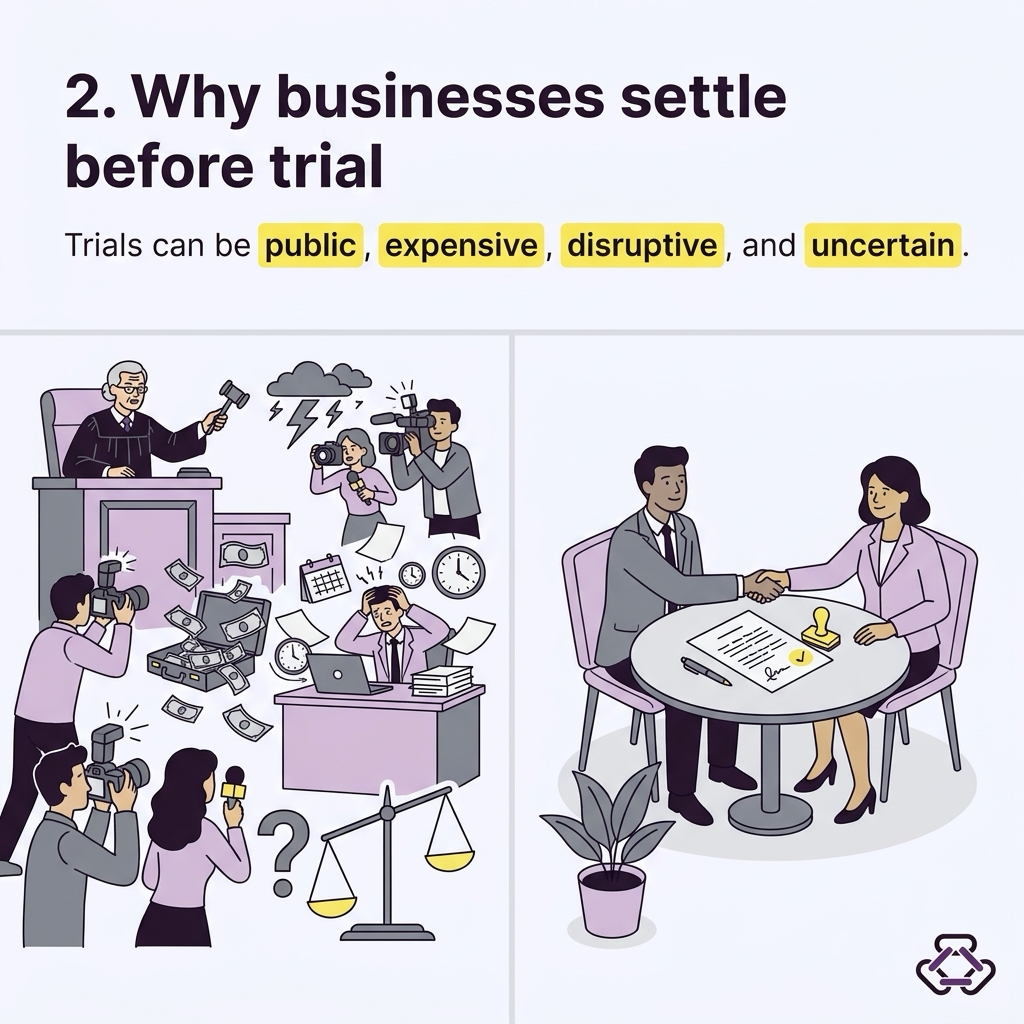
Trials are public, expensive, disruptive, and uncertain. Even where a company feels confident about its facts, the process can take a long time. The American Arbitration Association’s 2024 business-to-business infographic says median time to award in U.S. district court civil cases was 31.6 months, while AAA B2B matters moved much faster depending on claim size. AAA B2B Infographic PDF
Mediation has also become a standard path in commercial disputes. The AAA reports $12 billion in dispute for mediations in 2024 and a 90% recommend rate for its mediation services. American Arbitration Association
For many companies, settlement is not about weakness. It is about business priorities. A negotiated resolution may help preserve customer relationships, avoid executive distraction, protect cash flow forecasting, and narrow reputational exposure. It also allows parties to design solutions a court may not award, such as staged payments, revised supply terms, future business commitments, or non-disparagement language.
When A Business Settlement Agreement Usually Comes Into Play
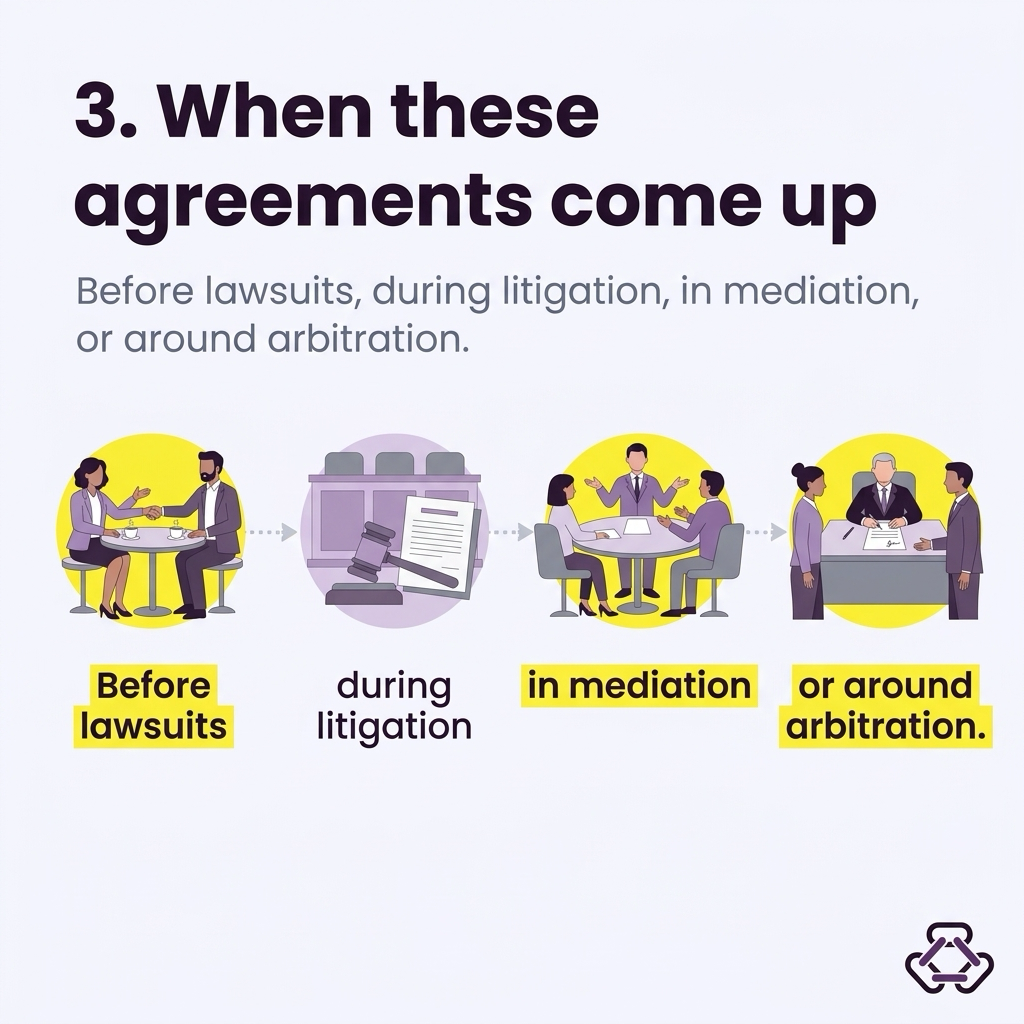
A settlement agreement often appears at one of these stages:
Before A Lawsuit Is Filed
One side sends a demand letter. The other side responds through counsel. The parties exchange information and try to work out a deal before filing. This can reduce legal spend and business disruption.
During Litigation
Once a complaint is filed, settlement can happen at any point: after a motion to dismiss, during document discovery, after depositions, on the eve of trial, or even during trial. Many courts also encourage settlement conferences or ADR programs as part of case management. For example, the Northern District of California’s ADR local rules protect much of what is said during a settlement conference as confidential, while recognizing limited exceptions, including disclosure of the terms of a binding settlement agreement on the record. Northern District of California ADR Local Rules
In Mediation
Mediation is often where the business deal gets done. The mediator does not impose a ruling. Instead, the process is designed to help parties negotiate toward a resolution. If they reach agreement, counsel often prepares a term sheet or full settlement contract.
During Or After Arbitration
Arbitration may feel more private and faster than court, but many arbitration matters still settle before a final award. AAA materials repeatedly emphasize negotiated resolution as a major feature of the ADR landscape. American Arbitration Association, AAA Press Release
What A Business Settlement Agreement Usually Includes
No two disputes are identical, but several core clauses appear again and again.
Identification Of The Parties And The Dispute
The agreement usually names all relevant entities and individuals and briefly describes what conflict is being resolved. That matters because vague drafting can create arguments later about who was covered and which claims were actually settled.
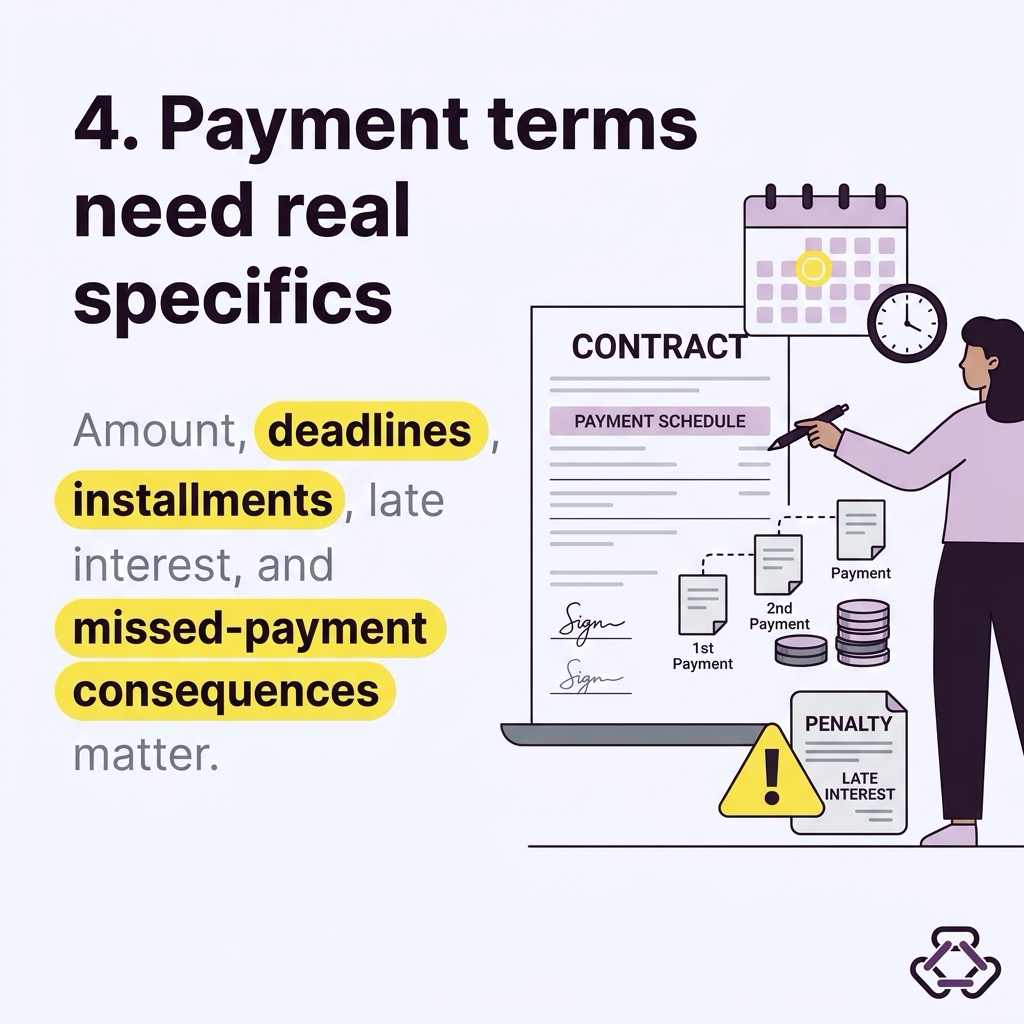
Payment Terms
If money is changing hands, the agreement often covers:
- total settlement amount
- payment deadline
- installments or lump sum
- method of payment
- interest on late payments
- acceleration if a payment is missed
- whether attorneys’ fees are included
This is one of the most practical parts of the agreement. A settlement that looks fine in principle can become contentious if the payment mechanics are unclear.
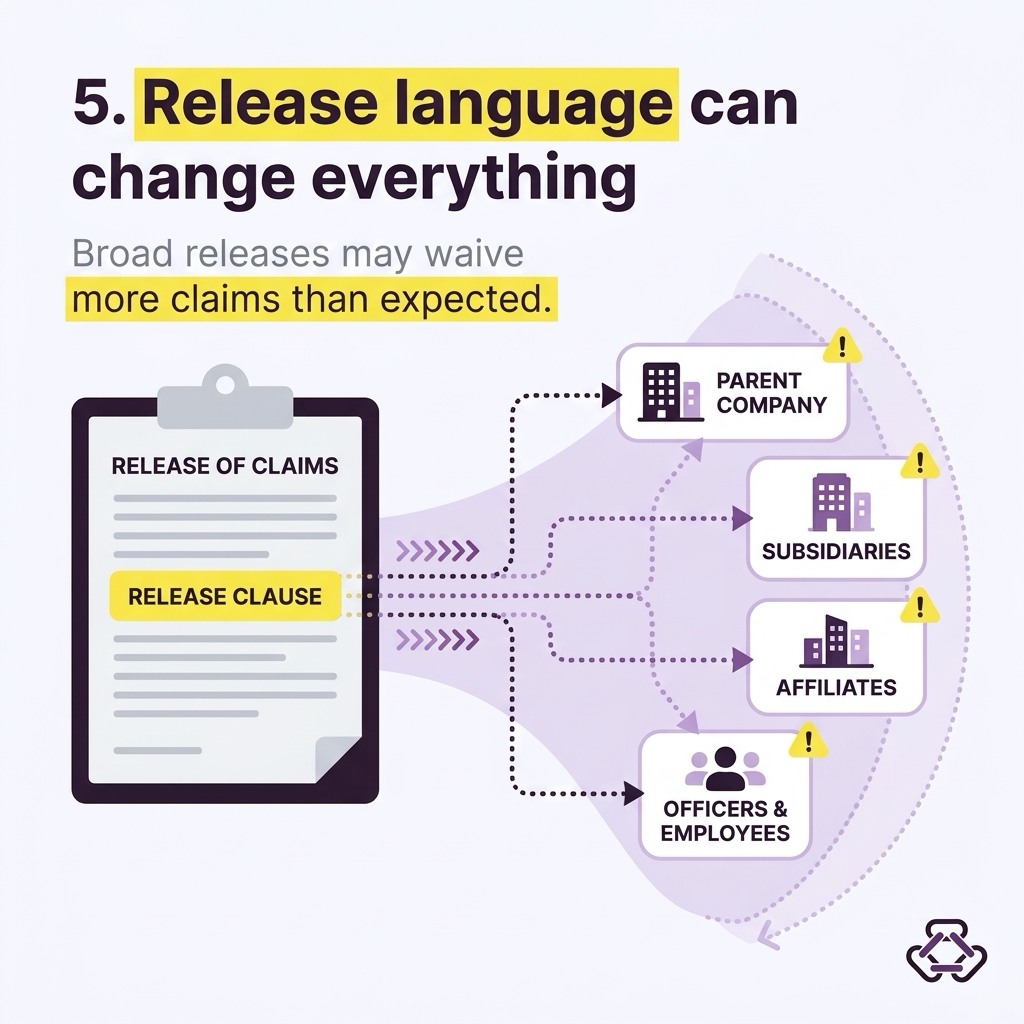
Release Of Claims
A release clause explains what legal claims each side is giving up. Some releases are narrow and cover only the claims asserted in the dispute. Others are much broader and aim to cover all known and unknown claims arising out of a business relationship.
This area often deserves very close review. A broad release may affect claims a company did not realize it was waiving, including claims tied to affiliates, officers, employees, successors, or future discovery of old facts. If you want a more detailed walkthrough of settlement structure, this article on how releases, confidentiality, payment terms, and exit planning fit together gives additional context.
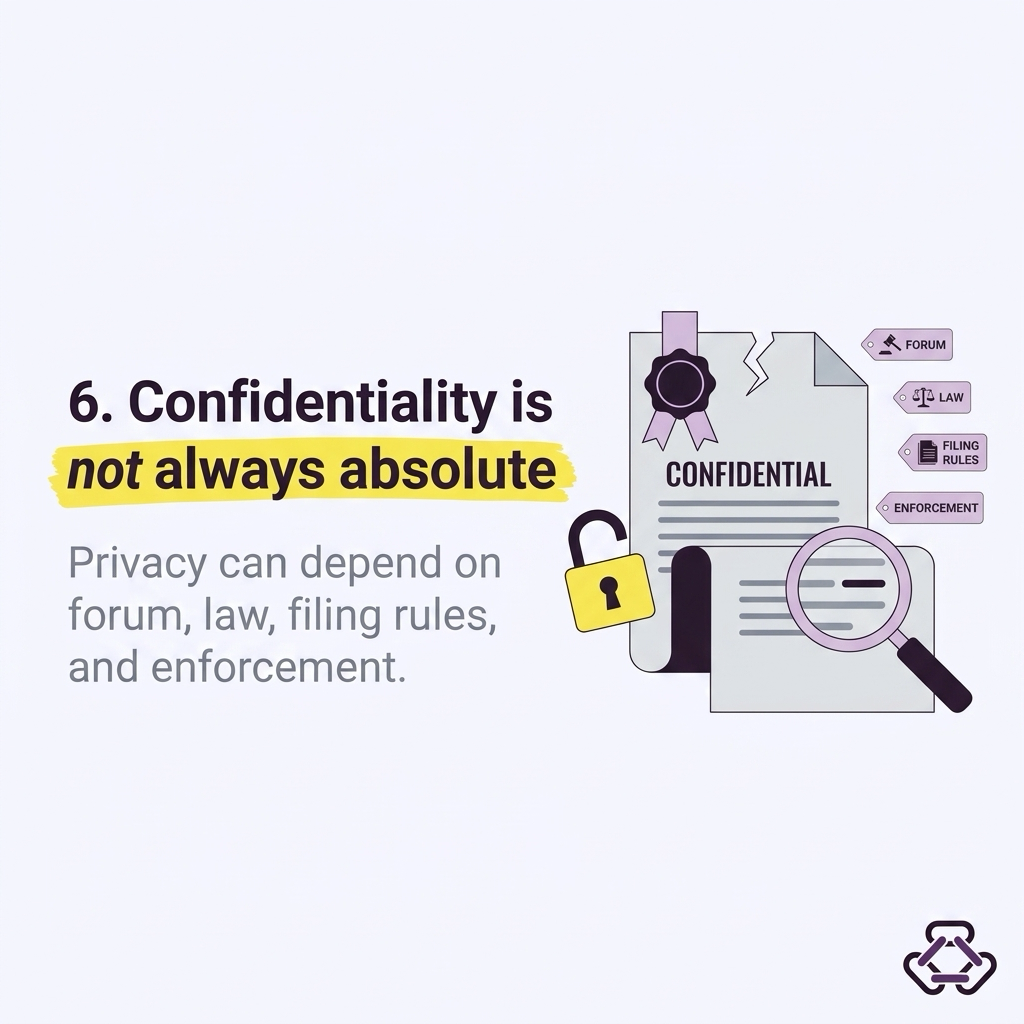
Confidentiality
Many businesses expect settlement terms to stay private. Sometimes that works. Sometimes the expectation is broader than the law allows.
For example, federal law governing certain administrative dispute resolution proceedings includes specific confidentiality rules and exceptions, including disclosure relevant to determining the existence or meaning of an agreement or to enforcing it. Cornell Legal Information Institute And when the U.S. Department of Justice is involved in civil settlements, its policy generally rejects confidentiality provisions in final settlement agreements or consent decrees, absent rare exceptions. Cornell Legal Information Institute
In private business disputes, confidentiality can still be a major feature, but its scope often depends on the forum, the subject matter, public filing requirements, and public-policy limits.
No Admission Of Liability
Many commercial settlements state that the agreement is a compromise of disputed claims and not an admission of fault, wrongdoing, or legal liability. This can matter for reputational concerns and collateral disputes.
Dismissal Of The Case
If litigation is pending, the agreement usually explains whether the case will be dismissed immediately, dismissed after payment clears, or stayed pending performance. Timing matters here. A dismissal filed too soon can reduce leverage if the other side later defaults.
Default Remedies
What happens if one side does not perform? A well-drafted agreement may include:
- notice-and-cure periods
- stipulated judgment mechanisms where allowed
- acceleration of unpaid sums
- fee-shifting for enforcement work
- venue or arbitration clauses for future enforcement disputes
This is one area where commercial settlement problems often reappear. A vague default section can turn one dispute into two.
Governing Law And Forum
The agreement often names the state law that applies and where enforcement actions will be brought. That may matter a great deal if the parties are in different states or if a prior contract already contains venue or arbitration language.
What Makes Commercial Settlements Different From Consumer Or Personal Dispute Settlements
Business settlements often involve more moving parts than a simple one-time payment. A commercial dispute may include supply chains, licensing rights, software access, inventory returns, indemnity obligations, insurance involvement, board approvals, or tax reporting issues.
The parties may also care about future business operations, not just closure. For example:
- a distributor may want revised territory rights
- a founder may want a buyout and non-disparagement clause
- a vendor may want payment plus return of proprietary materials
- a software company may want a transition period before service termination
Because of that, commercial settlements are often part legal document and part business separation plan.
Common Issues That Can Reopen A “Resolved” Business Dispute
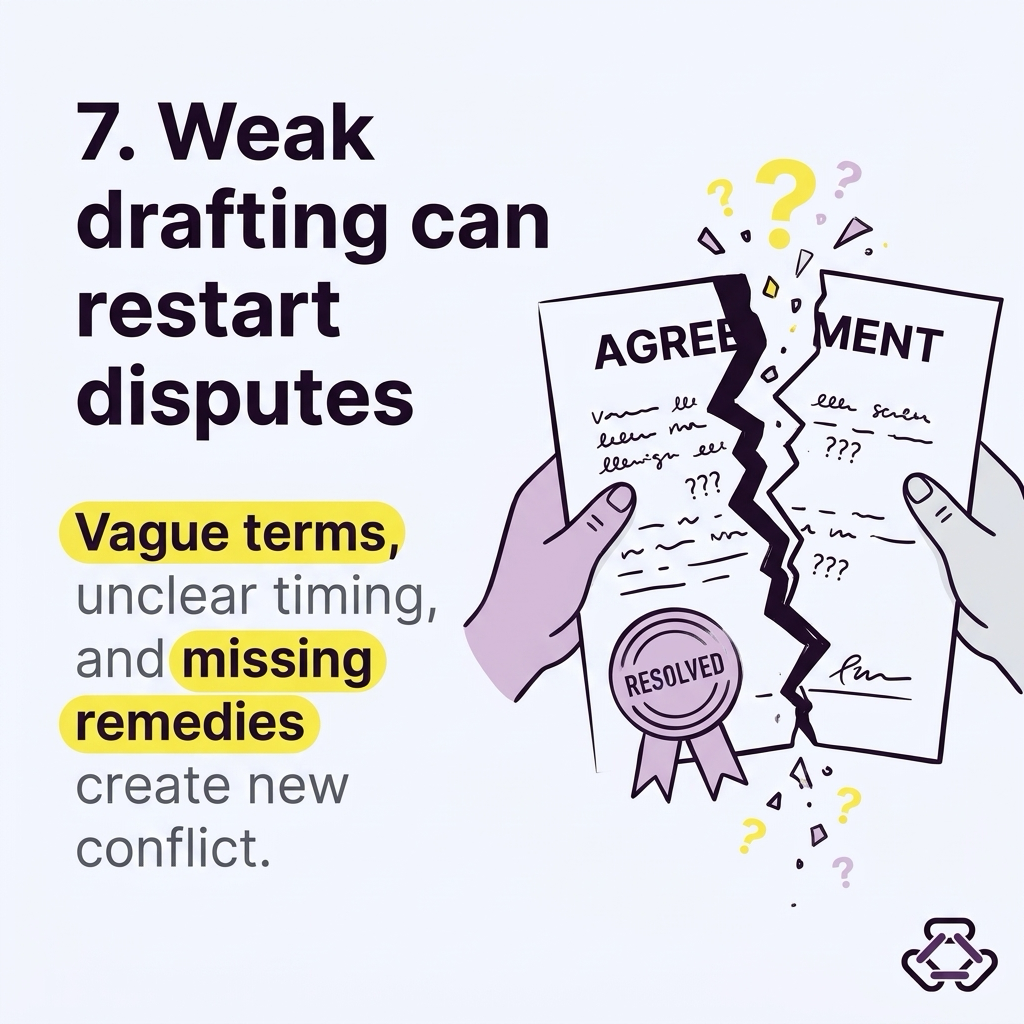
Many disputes do not come back because the parties changed their minds. They come back because the agreement left room for argument.
Here are some common trouble spots:
Unclear Release Language
If the release is too broad, one side may later claim it wiped out unrelated claims. If it is too narrow, the other side may argue the dispute was never fully resolved.
Weak Definitions
Terms like “affiliates,” “confidential information,” “business relationship,” or “disparagement” can look harmless until a conflict arises about what they cover.
Payment Timing Problems
A settlement that says payment will be made “promptly” is inviting debate. Specific dates, milestones, and consequences for delay often reduce friction.
Missing Enforcement Terms
If one side breaches, the agreement may work better when it already addresses venue, attorneys’ fees, cure rights, and available remedies.
Conflict With Existing Contracts
The settlement may interact with earlier contracts containing arbitration clauses, indemnity terms, guaranties, or merger provisions. An attorney may help determine which document controls.
Confidentiality Assumptions
Some businesses assume “confidential” means invisible to everyone forever. In practice, disclosure obligations, enforcement actions, accounting rules, regulatory issues, insurance reporting, lender obligations, or court filing rules may affect how private the deal actually is.
For readers focused on preventing repeat disputes, it may help to also read about the kinds of settlement mistakes that can bring a fight back later. And for a closer look at contract language, a companion piece on key clauses companies often review before signing a commercial settlement can add more detail.
How Mediation Often Shapes The Final Agreement
Mediation is common in commercial disputes because it offers flexibility that litigation often does not. Parties can discuss business concerns that are only partly legal, such as continued supply, client messaging, or phased disengagement.
That said, the mediation “deal” is only the beginning. The enforceable result usually comes from the written settlement document. Federal confidentiality law in ADR settings expressly recognizes that communications may become relevant when courts are asked to determine the existence, meaning, or enforcement of an agreement reached in the process. Cornell Legal Information Institute
In practical terms, that is one reason businesses often treat the drafting stage seriously. The negotiation may feel finished, but the wording of the final document often decides whether peace holds.
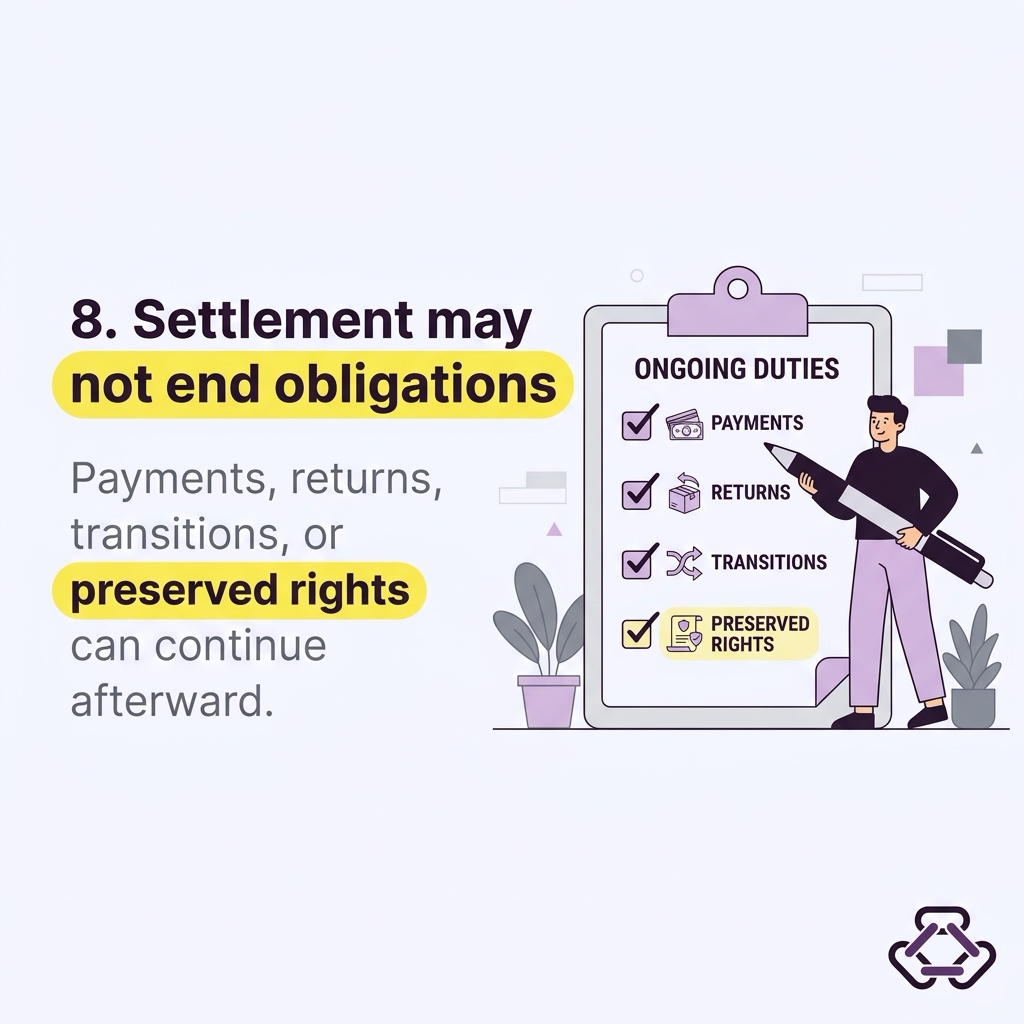
Does A Business Settlement Agreement End Everything?
Sometimes yes. Sometimes not entirely.
A settlement agreement can fully resolve the identified dispute, but businesses may still have ongoing obligations after signing, such as:
- installment payments
- returning property or data
- issuing a joint statement
- completing a product transition
- dismissing claims in multiple forums
- complying with non-disparagement or confidentiality terms
- handling tax forms or accounting treatment
Also, certain claims or rights may be carved out. For example, the agreement might preserve rights to enforce the settlement itself, maintain insurance claims, collect on guaranties, or address future conduct unrelated to the underlying dispute.
This is why companies often look carefully at what is being released, what is being preserved, and what happens if the business relationship continues in some form.
What To Gather Before Having A Lawyer Review The Deal
If a company is considering settlement, a lawyer can usually assess the situation more efficiently with a focused set of materials, such as:
- the underlying contract or contracts
- amendments, purchase orders, invoices, and statements of work
- demand letters and email exchanges
- filed pleadings, if litigation already exists
- mediation term sheets or handwritten deal points
- insurance communications
- internal notes on business objectives
- a damages summary or payment history
The more clearly the facts and business goals are organized, the easier it may be to identify where the real risk sits: amount, timing, scope of release, confidentiality, tax treatment, or enforceability.
Why Attorney Selection Matters In Commercial Settlement Work
Business settlements can look straightforward on the surface and still carry substantial downstream consequences. A lawyer who regularly handles highly similar commercial disputes may spot issues that are easy to miss, such as hidden release problems, enforcement gaps, collateral exposure, guarantor issues, or conflicts with prior contracts.
That is especially relevant when the dispute involves large invoices, shareholder tension, trade secrets, cross-border business relationships, ongoing service obligations, or multiple related entities. In those situations, businesses often look for counsel with documented experience, relevant experience, and demonstrable experience in comparable matters, rather than relying on advertising language or broad practice-area labels.
If the negotiation stage is still active, a related resource on how to negotiate a business settlement that really closes the loop may also be useful.
Questions Businesses Often Ask About Settlement Agreements
Is A Settlement Agreement Enforceable Like Any Other Contract?
Often yes. In general terms, courts usually treat settlement agreements as contracts, which means clarity, authority to sign, mutual assent, and lawful terms matter.
Can A Business Keep The Settlement Confidential?
Sometimes, but not always in the way parties expect. Confidentiality may depend on the forum, filing requirements, public-policy limits, industry rules, and whether future enforcement becomes necessary. Government settlements can involve additional transparency rules. Cornell Legal Information Institute
Can One Side Sue Again After Signing?
That often depends on the release language, carve-outs, and whether later conduct is outside the scope of the agreement. A broad release can close more doors than a party intended. A narrow release can leave more room for future claims.
What If The Other Side Stops Paying?
The answer usually depends on the agreement’s default provisions. Some settlements include cure periods, confession or stipulated judgment concepts where permitted, fee-shifting, or fast-track enforcement clauses.
Is Mediation Required Before Settlement?
Not always. Some contracts require mediation or arbitration before litigation. Others do not. Even without a contractual requirement, parties often choose mediation because it can shorten the path to resolution.
A Short Summary For Beginners
A business settlement agreement is the contract that turns a commercial dispute into a defined resolution. It often covers payment, release of claims, confidentiality, dismissal of the case, and remedies if something goes wrong later. For many businesses, settlement offers a way to reduce cost, uncertainty, and disruption without waiting years for trial or award. AAA B2B Infographic PDF, U.S. Courts
The key issue is rarely just whether to settle. The more important question is often how the agreement is written and whether it reflects the company’s real legal and business risks. In many commercial disputes, the difference between closure and a second round of litigation comes down to the language on the page.
Visit ReferU.AI to get matched with an attorney who has demonstrable experience in cases like yours — for free.
