Table of Contents
- Settlement Agreements Explained: Releases, Payment Terms, Confidentiality, and Litigation Exit Strategy
- What Is A Settlement Agreement In A Business Dispute?
- Why The Settlement Document Often Matters More Than The Handshake
- What Is A Release, And Why Is It So Important?
- General Releases Vs. Limited Releases
- Mutual Vs. One-Way Releases
- Unknown Claims And Future Claims
- How Payment Terms Shape Real-World Risk
- Lump Sum Vs. Installments
- Conditional Dismissal And Litigation Leverage
- Taxes, Reporting, And Allocation Language
- What Confidentiality Clauses Actually Do
- Confidentiality Is Rarely Absolute
- Confidentiality Vs. Non-Disparagement
- Ethical And Public Policy Limits
- How Settlement Agreements Fit Into A Litigation Exit Strategy
- Ending The Case Is Not Always The Same As Ending The Relationship
- Enforcement Planning Is Part Of The Exit
- Common Settlement Mistakes That Keep Disputes Alive
- Vague Release Language
- Weak Default Provisions
- Poor Dismissal Coordination
- Overbroad Confidentiality Terms
- Forgetting About Tax Language
- What Businesses Often Look For Before Signing
- Why Attorney Selection Matters In Settlement-Focused Business Disputes
- A Short Takeaway On Settlement Agreements

Type
Grandchild
Status
Approved
Title (YouTube)
Images Failed (Social)
Images Failed (Social)
Do not index
Publish Date (TikTok)
Jan 1, 2027 09:15
Videos Post IDs (Social)
Hashtags (Social)
#LegalAdvice #LegalHelp #BusinessLitigation #SettlementAgreements
Caption
Caption X
Cover

OG Image

Alt Image Text
Flat vector illustration of settlement agreements and litigation exit strategy, showing business parties resolving a dispute with release terms, payment terms, confidentiality, and case closure symbols.
Images

Videos

Publish Date (Social)
Dec 13, 2026 12:30
Scheduled (Social)
Scheduled (Social)
Images Posted (Social)
Images Posted (Social)
Videos Posted (Social)
Videos Posted (Social)
Videos Failed (Social)
Videos Failed (Social)
Featured
Created time
Apr 3, 2026 10:14 PM
Sub-item
Authors
CTA Practice Area (Social)
Business Litigation
TikTok Failed (Social)
TikTok Failed (Social)
Videos Post Links (Social)
YT Auto Captions Removed
TikTok Post Links (Social)
Images Post IDs (Social)
YT Post ID
Video Pending Manual (Social)
TikTok Posted (Social)
TikTok Posted (Social)
TikTok Post IDs (Social)
Video Cover (Social)

Images Post Links (Social)
First Comment (Social)
YT Embedded
YT Embedded
Images Delete (Social)
Videos Delete (Social)
Carousel Video URL (Social)
Settlement Agreements Explained: Releases, Payment Terms, Confidentiality, and Litigation Exit Strategy
When a business dispute is close to resolution, the conversation often shifts from “Are we settling?” to “What exactly are we signing?” That second question is where many of the real risks live.
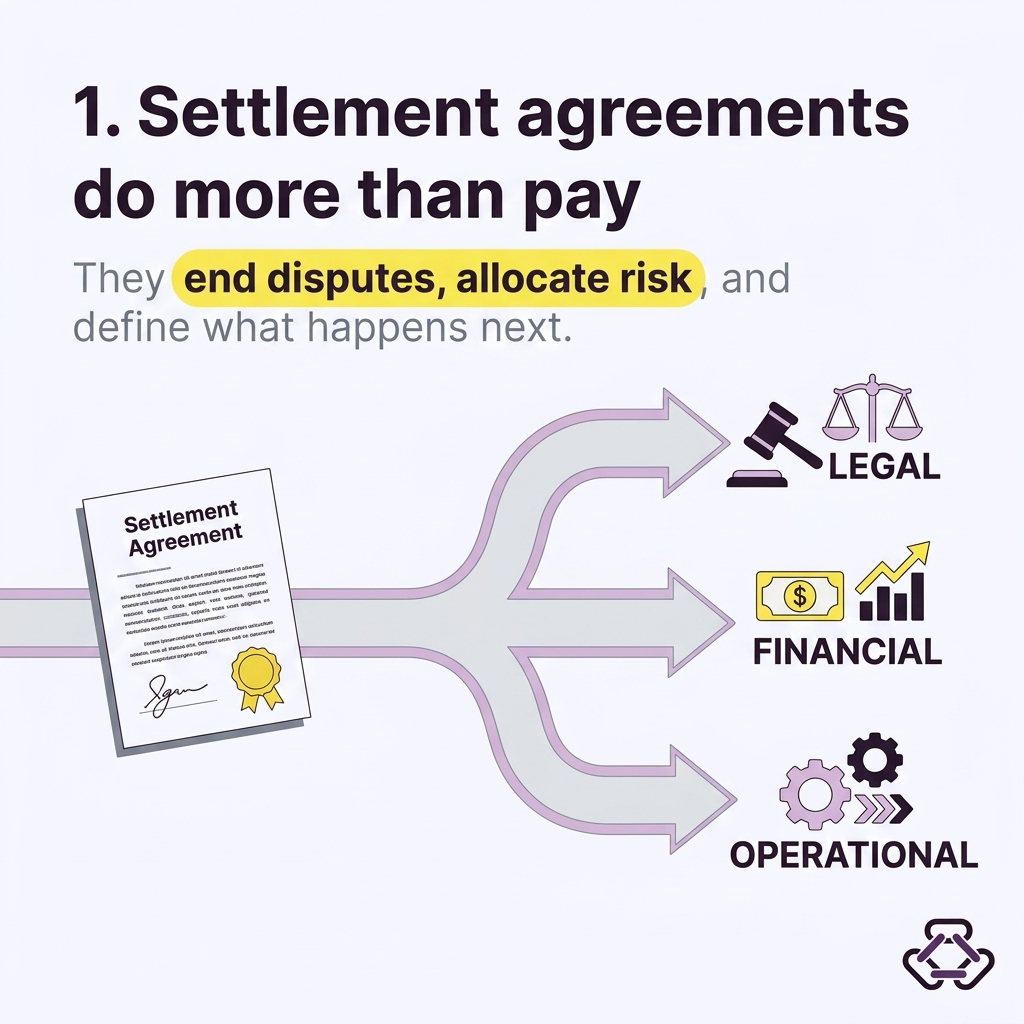
A settlement agreement is more than a promise to make a payment and move on. In practical terms, it is the document that ends the dispute, allocates risk, and defines what happens next. It may include a release of claims, payment timing, confidentiality obligations, dismissal mechanics, tax language, default remedies, and provisions that shape whether the conflict stays over or quietly reappears months later.
This post explains how settlement agreements typically work in commercial disputes, with a focus on releases, payment terms, confidentiality, and litigation exit strategy. You’ll also see why the wording of the agreement often matters just as much as the dollar amount. If you want a broader overview of resolving a case outside trial, this guide on ending a commercial dispute without going through trial provides helpful context before you dive into the details.
Scroll to the bottom for every post in this series.
What Is A Settlement Agreement In A Business Dispute?
A settlement agreement is a binding contract that resolves a dispute between parties. In business litigation, it often serves two functions at once: it ends the legal fight and creates a roadmap for what each side will do after the case resolves.
That may sound simple, but the agreement usually carries more weight than many business owners first expect. Once signed, it may control:
- which claims are released
- who gets paid, how much, and when
- whether the case is dismissed with or without prejudice
- whether one side can talk publicly about the dispute
- what happens if a payment is missed
- whether the court keeps jurisdiction to enforce the deal
- how taxes, liens, interest, or reporting are handled
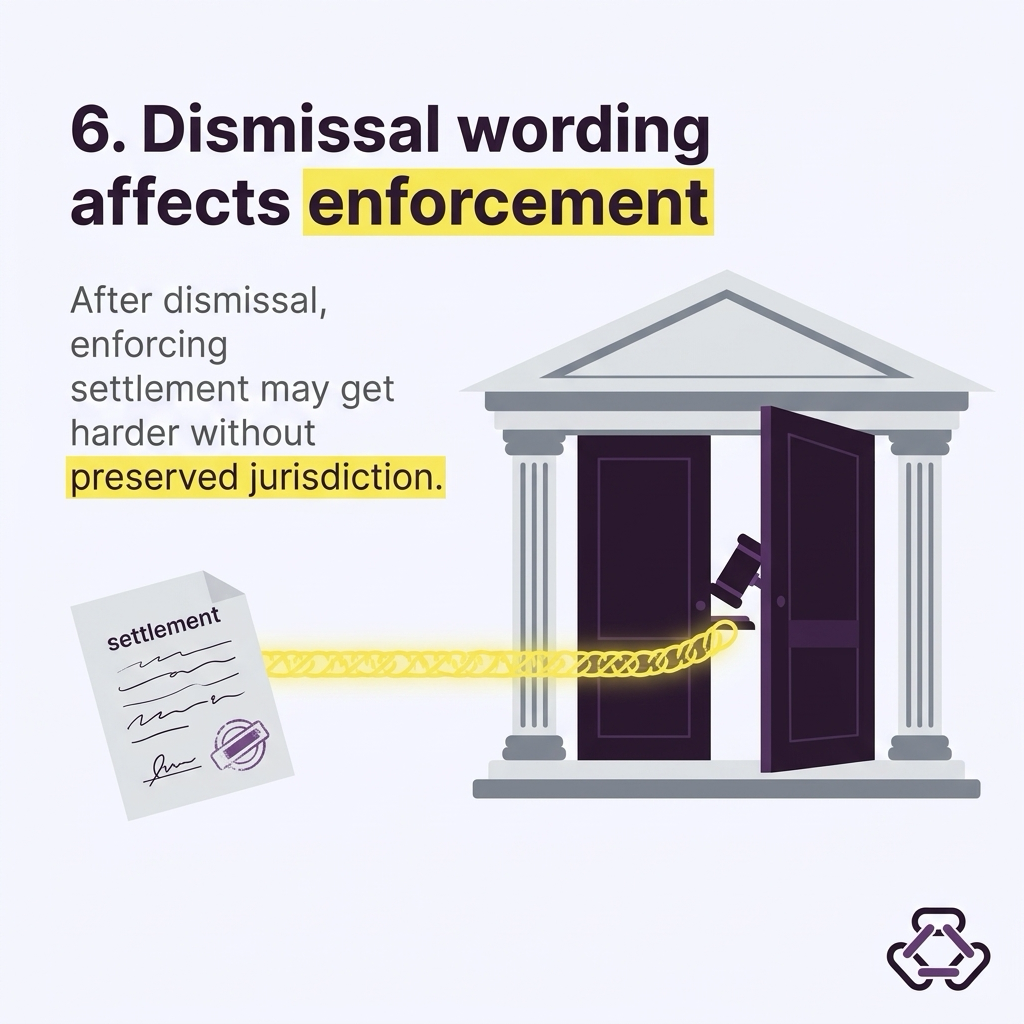
In federal court, dismissal mechanics matter. Under Rule 41 of the Federal Rules of Civil Procedure, parties can voluntarily dismiss an action by stipulation or motion. But enforcement after dismissal can become more complicated if the dismissal papers do not preserve the court’s ability to enforce the settlement. The U.S. Supreme Court addressed that issue in Kokkonen v. Guardian Life Insurance Co. of America, which is why litigation counsel often focus closely on the wording of dismissal orders and settlement enforcement language.
If your dispute sits inside a larger commercial fight—such as contract claims, owner conflicts, fraud allegations, or a business breakup—it may also help to review the bigger picture in this overview of business and contract litigation issues that often lead to settlement talks.
Why The Settlement Document Often Matters More Than The Handshake
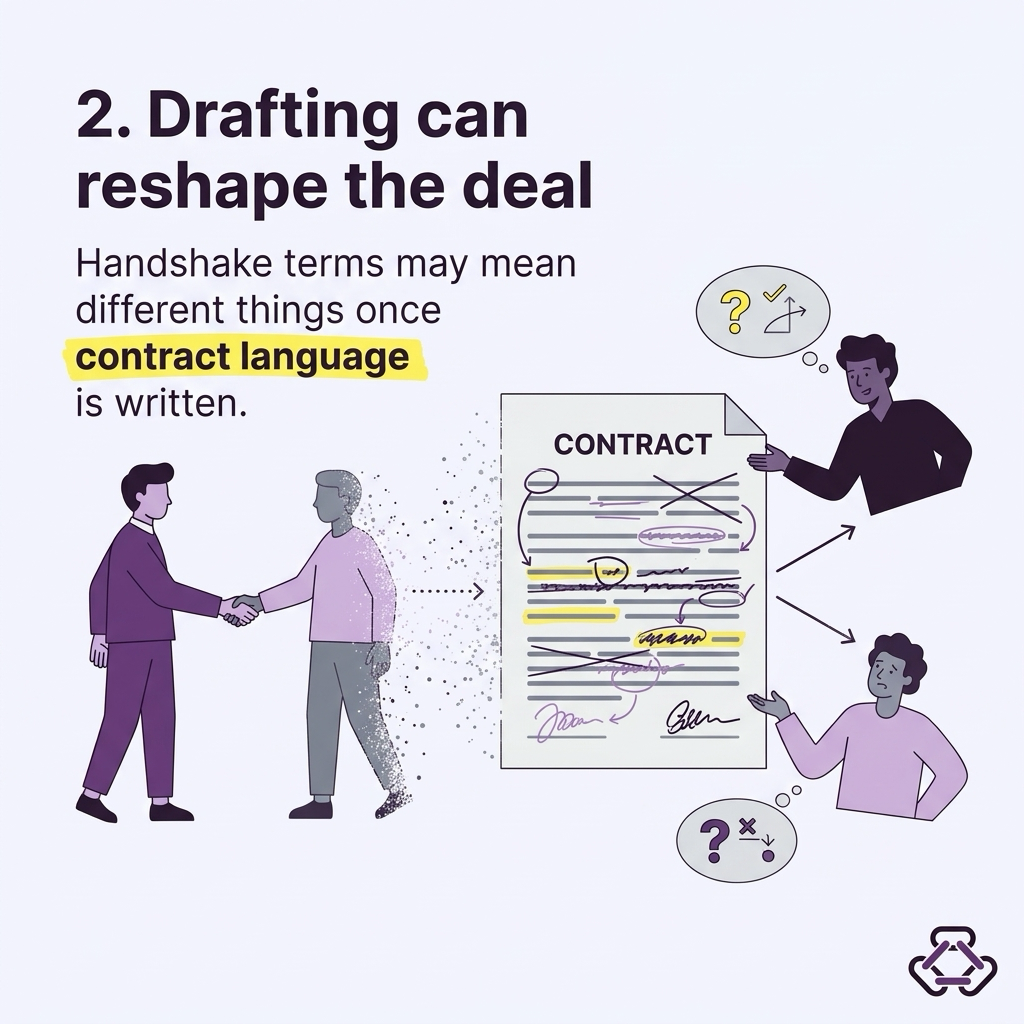
Many settlements are reached in principle before the final paper is drafted. Someone says, “We have a deal at $450,000,” and both sides feel the hard part is over.
In reality, the drafting phase often determines whether the deal actually delivers peace.
That is because different people may hear the same verbal agreement very differently. One side may think the payment buys a complete walk-away. The other may think it resolves only the lawsuit on file, leaving related claims, guaranty claims, affiliate claims, or future indemnity claims untouched. One party may assume confidentiality covers the amount only. The other may assume it covers the allegations, the negotiations, and even internal communications.
This gap between business expectation and contract language is one reason settlement disputes happen after settlement. For a practical discussion of how parties try to close those gaps during negotiations, this article on structuring a business settlement so it actually ends the conflict is a useful companion piece.
What Is A Release, And Why Is It So Important?
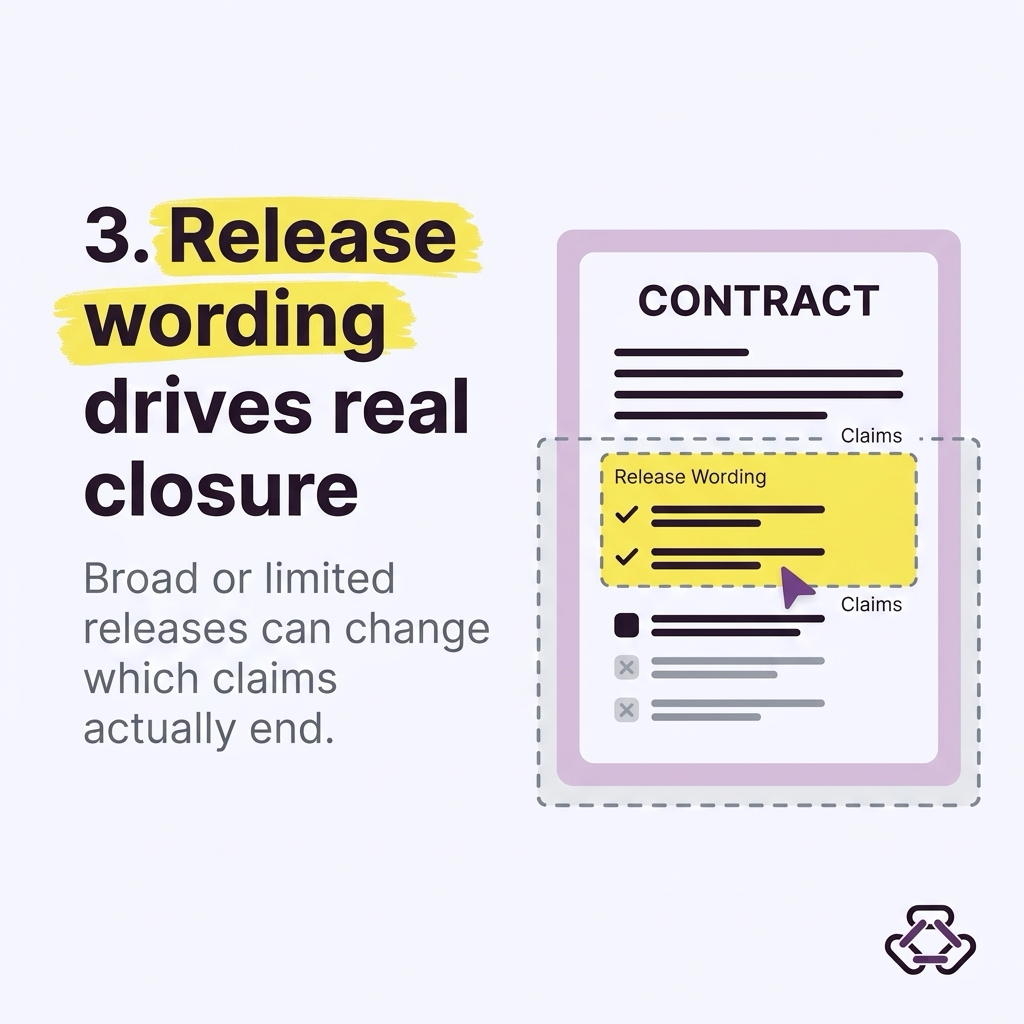
A release is the part of the agreement where one or both sides give up legal claims. In most business settlements, the release is the central exchange: money, performance, or other consideration is given in return for closure.
General Releases Vs. Limited Releases
Some releases are narrow. They cover only the specific claims asserted in the lawsuit.
Others are broad. They may cover:
- known and unknown claims
- claims arising from the same facts
- claims through the date of signing
- claims held by affiliates, officers, members, shareholders, employees, heirs, or successors
- claims sounding in contract, tort, statute, equity, contribution, or indemnity
The difference matters. A release that sounds routine can be far broader than the business team intended.
For example, a company might think it is settling a payment dispute under one supply agreement, while the draft release also sweeps in claims relating to side letters, oral amendments, guaranties, fiduciary issues, or misconduct discovered later but tied to the same relationship.
Mutual Vs. One-Way Releases
Commercial settlements are not always symmetrical. Sometimes both sides release all claims. Sometimes only one side gives a release because only one side is receiving compensation. In other situations, one side releases affirmative claims while the other preserves collection rights or obligations under a continuing contract.
That structure may be commercially rational, but it often changes bargaining power and post-settlement risk.
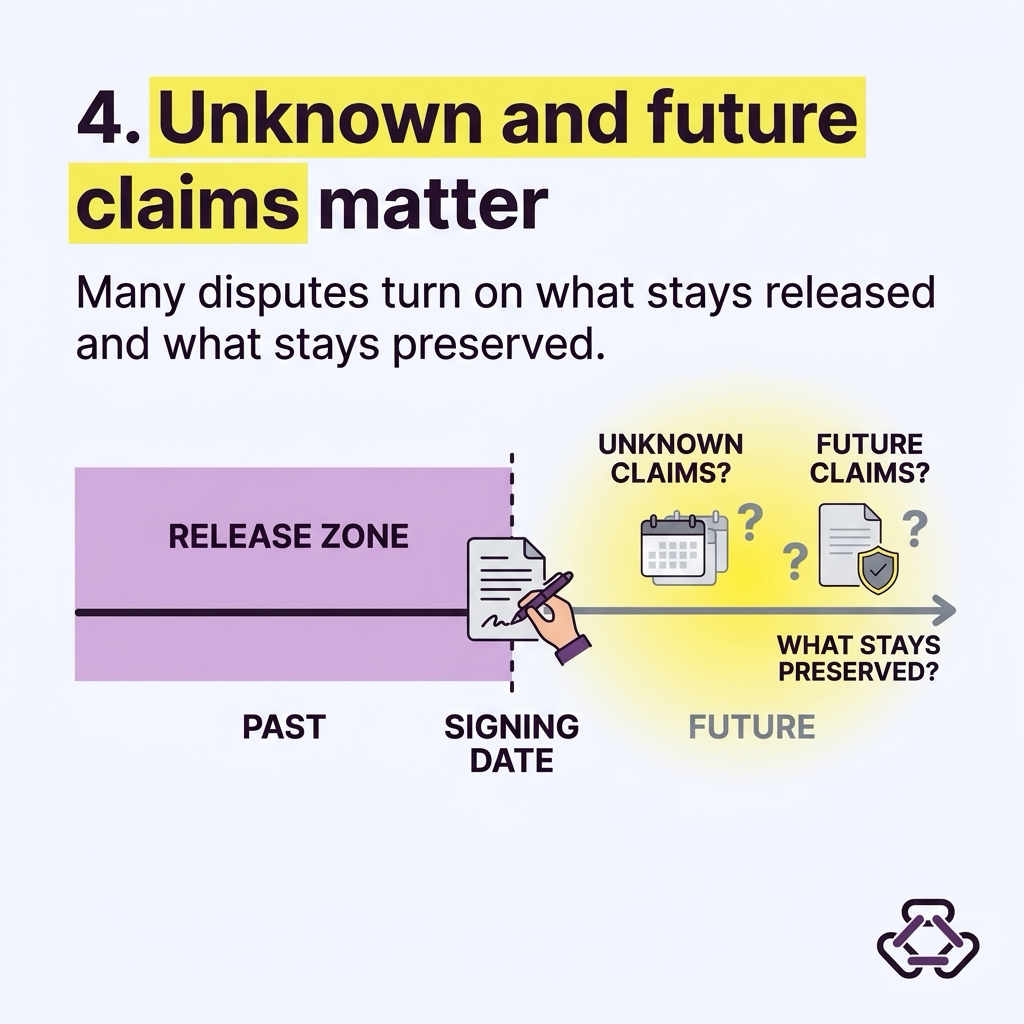
Unknown Claims And Future Claims
One of the biggest pressure points is whether the release includes unknown claims. Some parties want finality broad enough to cover claims they do not yet know about. Others want to preserve claims based on future-discovered misconduct, unpaid future obligations, or conduct occurring after the effective date.
Regulators also recognize limits in some contexts. For example, the EEOC explains that parties cannot waive the right to challenge unlawful discrimination that occurs after the effective date of a settlement agreement in that setting, which illustrates a broader legal principle: a settlement usually resolves past or existing disputes, not every future issue imaginable. See the EEOC’s Guide to Settlement for Unrepresented Complainants.
If you want a deeper look at this drafting area, this article on checking release language, confidentiality language, and default provisions before signing goes further into the fine print.
How Payment Terms Shape Real-World Risk
Settlement agreements often look financially simple on page one and become much more consequential by page six.
Lump Sum Vs. Installments
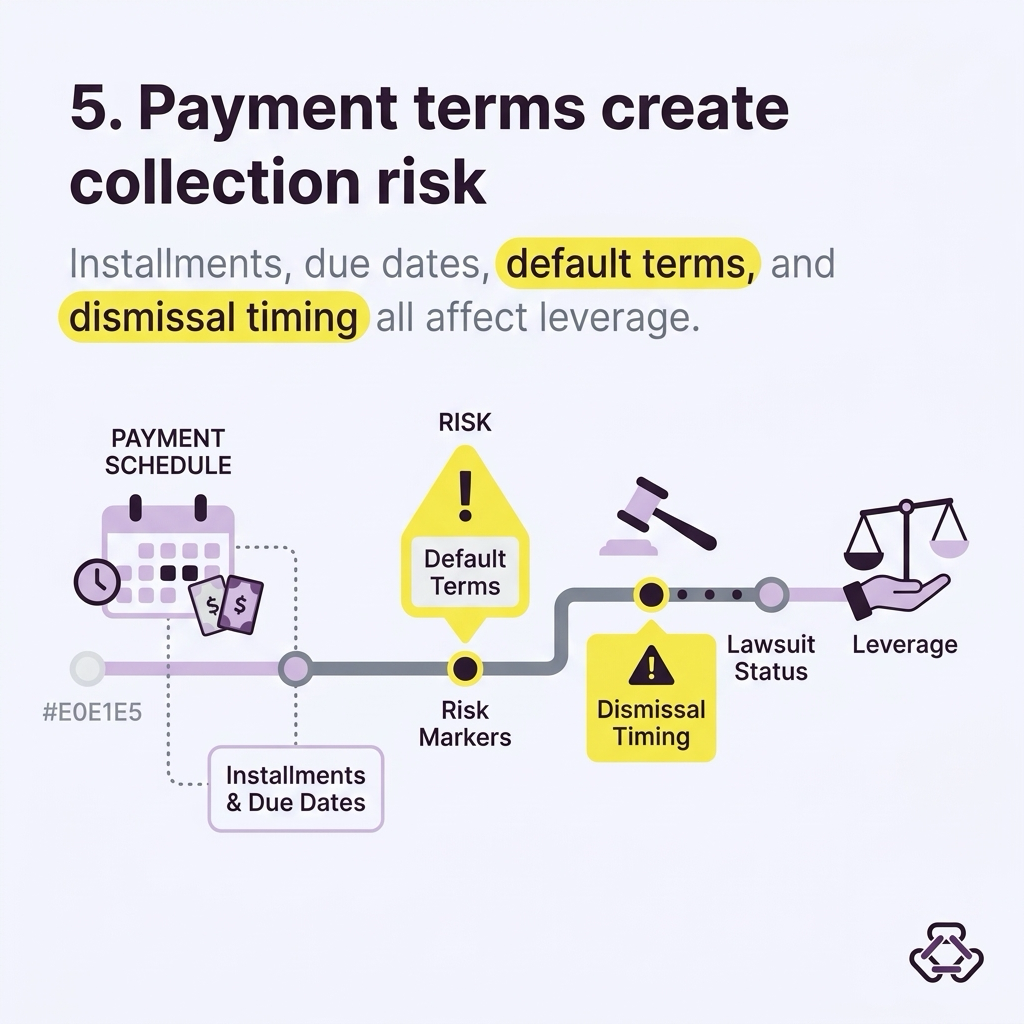
A lump-sum payment may offer a clean break. Installments may help preserve cash flow or make settlement possible where an immediate full payment is unrealistic. But installment settlements create a second layer of risk: what happens if a payment is late, partial, disputed, or never made?
That is why payment clauses often address:
- due dates
- method of payment
- wire instructions
- whether time is of the essence
- grace periods
- acceleration after default
- interest on late payments
- confession-of-judgment or stipulated-judgment structures where permitted
- whether dismissal happens immediately or only after full payment
Conditional Dismissal And Litigation Leverage
In some cases, the plaintiff agrees to dismiss the lawsuit immediately upon signing. In others, dismissal occurs only after payment clears. Sometimes the action is stayed while installment payments are made. Each structure shifts leverage.
That is part of the broader litigation exit strategy. A party accepting payments over time may prefer not to give up all procedural leverage on day one. A paying party may want certainty that the case will not remain active longer than necessary.
Federal procedure adds another consideration: once a case is dismissed, enforcement may require a separate action unless the court’s dismissal order incorporates the settlement or expressly retains jurisdiction, as discussed in Kokkonen. That is one reason settlement and dismissal are often negotiated together, not separately.
Taxes, Reporting, And Allocation Language
Payment provisions can also carry tax consequences. The IRS explains that the tax treatment of settlement proceeds depends on the origin and nature of the claim, and settlement agreements may allocate amounts among categories such as lost profits, wages, emotional distress, attorneys’ fees, or physical injury-related damages. In general, the IRS indicates it often respects an allocation that is consistent with the substance of the settled claims. See the IRS page on tax implications of settlements and judgments and Publication 4345, Settlements—Taxability.
In business cases, this can matter quite a bit. A payment characterized as compensation for lost profits may be treated differently from a return of capital, reimbursement, or payment tied to a specific contractual obligation. An attorney and tax professional may help evaluate whether the draft language aligns with the economic substance of the dispute.
What Confidentiality Clauses Actually Do
Confidentiality is one of the most frequently negotiated settlement terms and one of the most misunderstood.
Some parties want privacy because public disclosure could affect investor confidence, customer relationships, vendor negotiations, employment morale, or competitive positioning. Others resist confidentiality because they want the freedom to explain what happened to lenders, auditors, insurers, board members, or future counterparties.
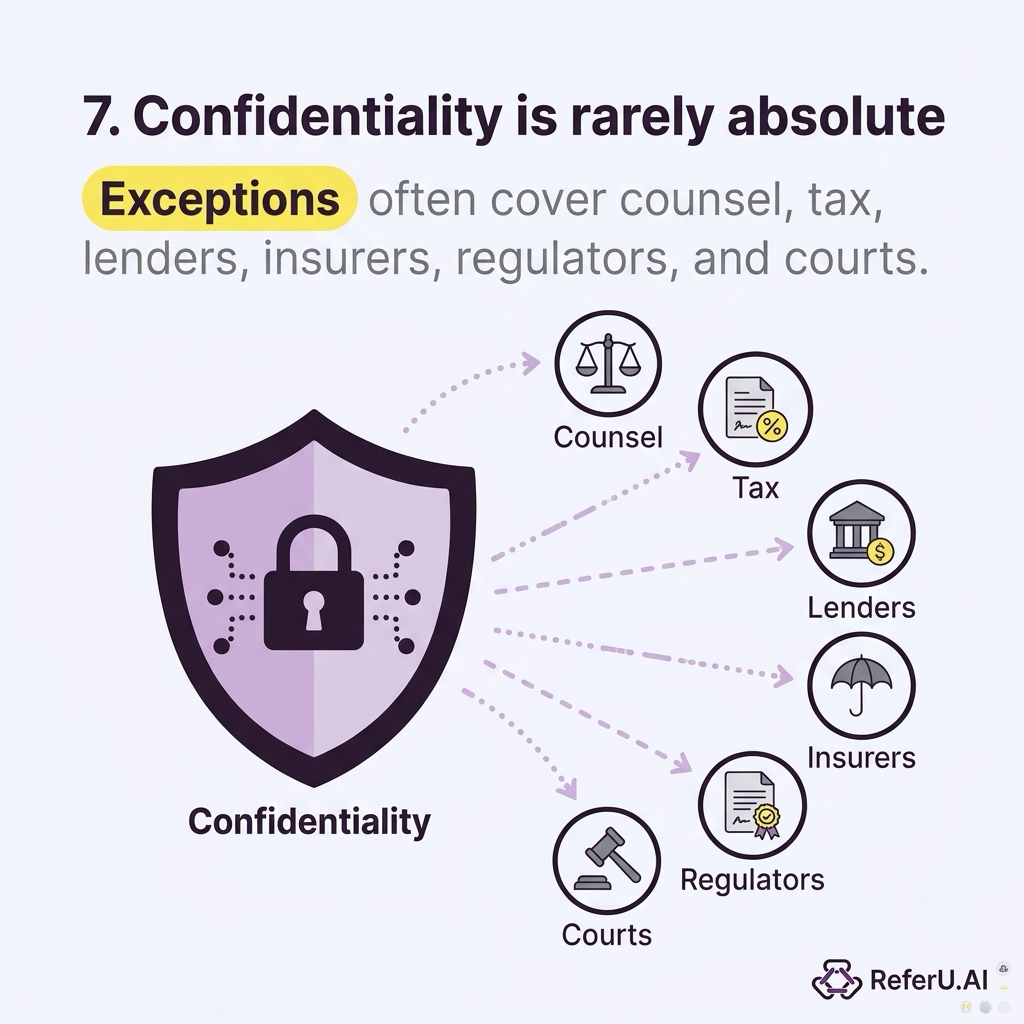
Confidentiality Is Rarely Absolute
Many confidentiality clauses include exceptions for disclosures to:
- legal counsel
- accountants and tax advisers
- insurers
- lenders
- regulators
- board members or investors
- spouses in some contexts
- courts or arbitrators
- parties responding to subpoena, court order, or legal process
That means “confidential” often really means confidential except for a fairly long list of necessary disclosures.
The EEOC notes in its ADR guidance that even where parties agree to keep settlement terms confidential, information may still be shared with offices that have a legitimate implementation-related need for it. See the EEOC’s ADR Questions and Answers. While that guidance arises in the employment context, it reflects a practical reality that appears in many business settlements too: contractual confidentiality does not erase legal reporting, compliance, or operational obligations.
Confidentiality Vs. Non-Disparagement
These are related but distinct concepts. A confidentiality clause restricts disclosure of specified information. A non-disparagement clause addresses statements that may harm reputation or business interests. Sometimes both appear together; sometimes one is far broader than the parties realize.
Ethical And Public Policy Limits
Settlement confidentiality is not unlimited. The American Bar Association has discussed concerns about confidentiality clauses that interfere with access to information, lawyer ethics, or broader public interests, especially where the clause restricts more than disclosure of settlement terms. See the ABA article on confidentiality in settlement agreements.
In some practice areas, statutes also place restrictions on confidentiality provisions, particularly involving discrimination, harassment, or other protected categories. Those rules vary by jurisdiction and claim type, which is one reason generic language copied from an old agreement can create avoidable problems.
How Settlement Agreements Fit Into A Litigation Exit Strategy
A settlement is not just a document. It is an exit plan from active conflict.
The most effective exit plans usually account for three separate timelines:
- The legal timeline — dismissal, retention of jurisdiction, releases, and enforcement
- The financial timeline — payment timing, tax reporting, liens, and defaults
- The operational timeline — who says what internally and externally, what contracts continue, and how the parties interact after signature
Ending The Case Is Not Always The Same As Ending The Relationship
Some settlements end the entire business relationship. Others resolve one dispute while the parties continue as customer and supplier, joint venturers, landlord and tenant, or co-owners in some transitional form.
That distinction changes the drafting. If the parties will keep doing business together, the agreement may address future purchase orders, amendment procedures, communication channels, dispute-escalation steps, return of property, data handling, or ongoing performance milestones.
Enforcement Planning Is Part Of The Exit
One of the most overlooked questions is simple: If the agreement is breached, what happens next?
Possible approaches include:
- motion practice in the existing case if jurisdiction is preserved
- filing a separate breach-of-contract action
- entering a consent judgment or stipulated judgment if triggered
- arbitration of settlement disputes
- liquidated damages or fee-shifting clauses where enforceable
- injunctive relief for confidentiality or non-use violations
The right structure often depends on the posture of the case, the parties’ leverage, the forum, and the kind of breach the parties are most worried about.
If this topic is on your radar, you may also find it helpful to read about common clause-level issues that can change a settlement’s practical effect.
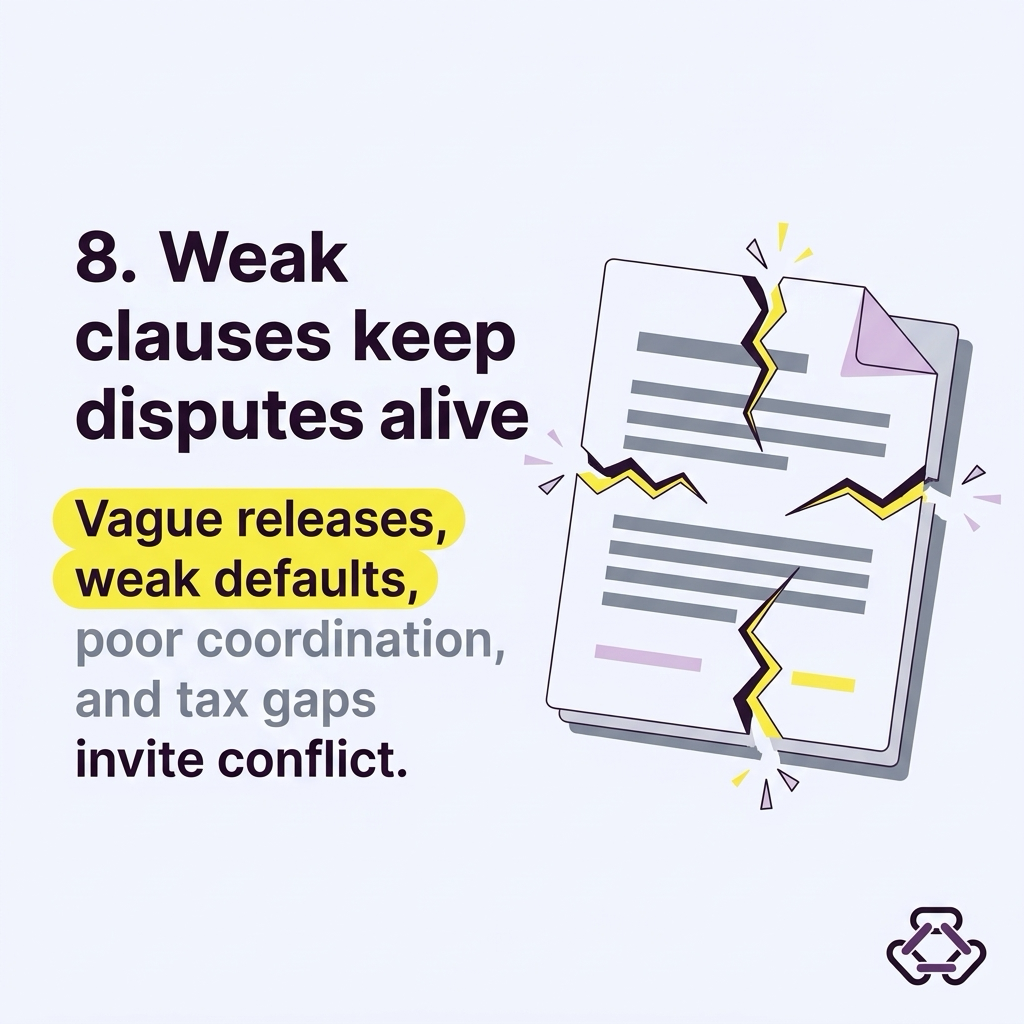
Common Settlement Mistakes That Keep Disputes Alive
Many post-settlement fights do not happen because the parties changed their minds. They happen because the agreement left room for different interpretations.
Common examples include:
Vague Release Language
A release that is too broad, too narrow, or internally inconsistent may create a new dispute about what got resolved.
Weak Default Provisions
If the agreement says payment is due in 30 days but says little else, a missed payment can force the parties into avoidable procedural fights about notice, cure periods, acceleration, and damages.
Poor Dismissal Coordination
Parties sometimes dismiss the case without confirming how enforcement will work later. In federal court, that can matter because dismissal alone does not automatically preserve jurisdiction to enforce the settlement. Rule 41 and Kokkonen are often central here.
Overbroad Confidentiality Terms
A clause that sounds appealing in principle may be difficult to follow in practice if it ignores disclosures required for tax filings, financing, insurance, audit work, or legal compliance.
Forgetting About Tax Language
Settlement language and payment allocation may influence reporting and later disputes with the other side or tax authorities. The IRS repeatedly emphasizes that the facts, circumstances, and nature of the claims drive tax treatment, not just labels placed on a check. See IRS Publication 4345.
For a fuller discussion of recurring drafting errors, this piece on the settlement mistakes that often bring business disputes back to life expands on these themes.
What Businesses Often Look For Before Signing
By the time a settlement agreement is circulated, fatigue often sets in. The parties have spent months arguing, paying attorneys, producing documents, and evaluating litigation risk. That is exactly when careful review tends to matter most.
In general terms, businesses often want clarity on questions like:
- Exactly who is being released?
- Are affiliates, insurers, officers, or guarantors included?
- Does the release cover unknown claims?
- When is payment due, and what counts as payment?
- What happens if there is a late or missed payment?
- When is the case dismissed?
- Will the court retain enforcement jurisdiction?
- What can be said publicly, privately, and internally?
- Are there carve-outs for legal, tax, and regulatory disclosures?
- Does the agreement preserve any ongoing contractual obligations?
- Are attorneys’ fees recoverable in enforcement litigation?
- Is there a merger clause saying the written agreement controls over prior discussions?
Those are some of the clause-level issues that often decide whether a settlement is clean and durable or fragile and temporary. This overview of key commercial settlement provisions worth understanding before signature offers a useful checklist-style companion.
Why Attorney Selection Matters In Settlement-Focused Business Disputes
Settlement drafting is often treated as administrative work that happens after the hard part. In many business disputes, it is actually the moment where legal strategy, contract drafting, procedural rules, tax awareness, and business judgment all intersect.
An attorney with documented experience in highly similar matters may help evaluate questions such as:
- whether the release language fits the dispute that is actually being resolved
- whether the payment structure creates new collection risk
- whether confidentiality terms are realistic and enforceable
- whether dismissal wording aligns with the intended enforcement path
- whether the agreement preserves leverage where performance will happen over time
- whether the wording is consistent with the client’s operational goals after litigation ends
That kind of fit is often difficult to assess from advertising or general reputation alone. In commercial disputes, the more useful question is often whether the lawyer has demonstrable experience handling settlements, defaults, releases, and enforcement issues in comparable business conflicts.
A Short Takeaway On Settlement Agreements
A settlement agreement is often the document that determines whether litigation ends with closure or just changes form. The headline issues—releases, payment terms, confidentiality, and exit strategy—are not side topics. They are usually the heart of the deal.
If the language is precise and aligned with the parties’ actual business goals, settlement can create a genuine off-ramp from a costly dispute. If the language is vague, overbroad, or poorly coordinated with the dismissal process, the parties may find themselves fighting again over what they thought they already resolved.
Visit ReferU.AI to get matched with an attorney who has demonstrable experience in cases like yours — for free.


