Table of Contents
- How to Negotiate a Business Settlement That Actually Ends the Fight
- Why Some Business Settlements Fail Even After Everyone “Agrees”
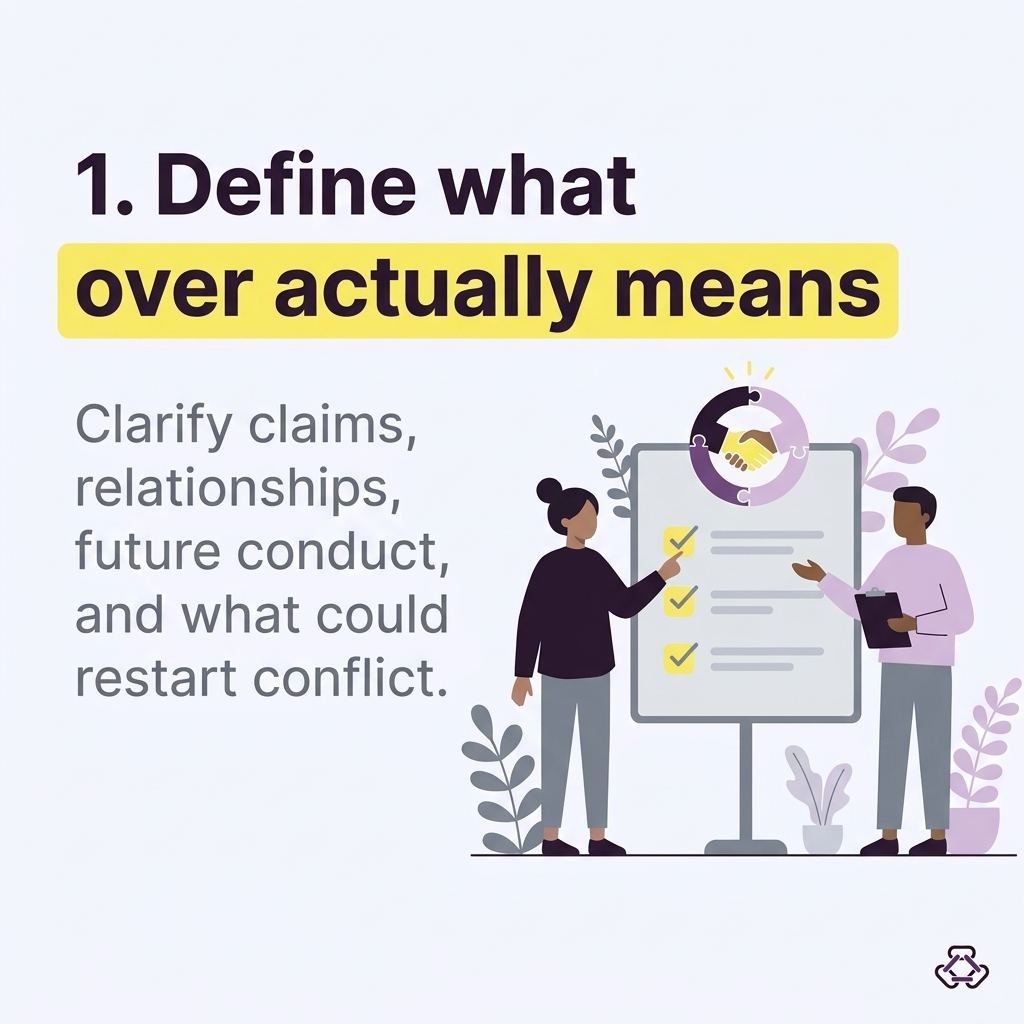
- Step 1: Define What “The Fight Is Over” Actually Looks Like
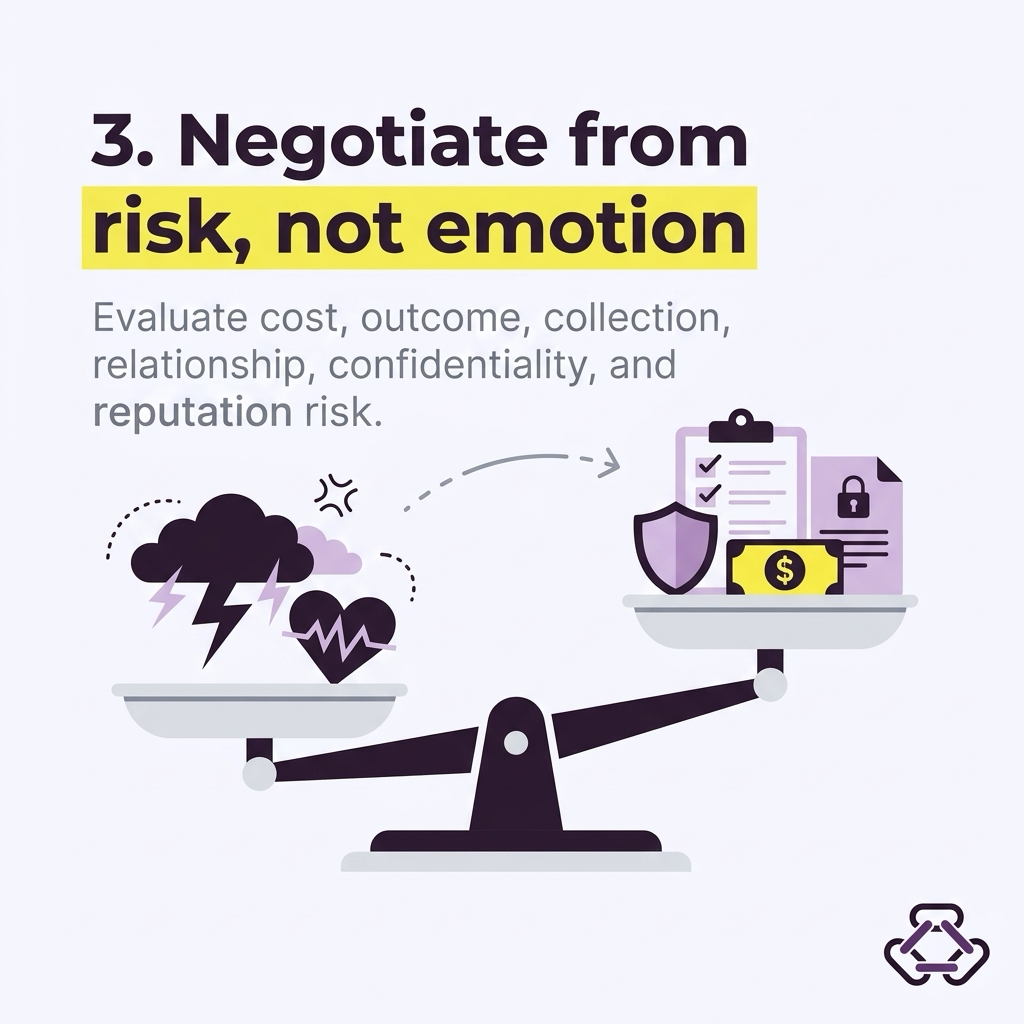
- Step 2: Build Your Negotiation Around Risk, Not Emotion
- Litigation Cost Risk
- Outcome Risk
- Collection Risk
- Relationship Risk
- Confidentiality And Reputation Risk
- Step 3: Decide Whether Direct Negotiation Or Mediation Fits Better
- Step 4: Treat The First Offer As A Strategy Document, Not Just A Number
- What Problem Is Being Solved?
- What Is Included In The Economic Package?
- What Non-Monetary Terms Matter?
- What Happens Procedurally?
- What Happens If The Deal Breaks?
- Step 5: Negotiate The Terms That Usually Reopen The Conflict Later
- Release Language
- Payment Mechanics
- Confidentiality
- Non-Disparagement
- No Admission Of Liability
- Dismissal And Forum For Enforcement
- Default Remedies
- Step 6: Understand What Settlement Communications Do And Do Not Protect
- Step 7: Get Specific About Execution, Not Just Agreement
- Step 8: Plan For Compliance And Enforcement Before The Ink Dries
- Step 9: Use The Drafting Process To Test Whether The Deal Is Real
- Step 10: Bring In Counsel Who Handle Similar Commercial Disputes
- A Business Settlement Is Only As Good As Its Ending

Type
Great Grandchild
Status
Approved
Title (YouTube)
Images Failed (Social)
Images Failed (Social)
Do not index
Publish Date (TikTok)
Jan 1, 2027 07:15
Videos Post IDs (Social)
Hashtags (Social)
#LegalAdvice #LegalHelp #BusinessLitigation #SettlementAgreements
Caption
Caption X
Cover

OG Image

Alt Image Text
Flat vector illustration of business settlement negotiation and business dispute resolution, showing two parties moving from conflict and tangled contract issues to a structured agreement that ends the fight.
Images

Videos
Publish Date (Social)
Dec 13, 2026 11:30
Scheduled (Social)
Scheduled (Social)
Images Posted (Social)
Images Posted (Social)
Videos Posted (Social)
Videos Posted (Social)
Videos Failed (Social)
Videos Failed (Social)
Featured
Created time
Apr 3, 2026 10:14 PM
Sub-item
Authors
CTA Practice Area (Social)
Business Litigation
TikTok Failed (Social)
TikTok Failed (Social)
Videos Post Links (Social)
YT Auto Captions Removed
TikTok Post Links (Social)
Images Post IDs (Social)
YT Post ID
Video Pending Manual (Social)
TikTok Posted (Social)
TikTok Posted (Social)
TikTok Post IDs (Social)
Video Cover (Social)
Images Post Links (Social)
First Comment (Social)
YT Embedded
Images Delete (Social)
Videos Delete (Social)
Carousel Video URL (Social)
How to Negotiate a Business Settlement That Actually Ends the Fight
Business disputes rarely stay contained. A payment issue turns into a contract fight. A contract fight turns into claims about reputational harm, customer relationships, intellectual property, or future competition. And even when both sides say they want to settle, many agreements only pause the conflict instead of ending it.
That is the real challenge: not just reaching a number, but reaching a settlement that closes the loop.
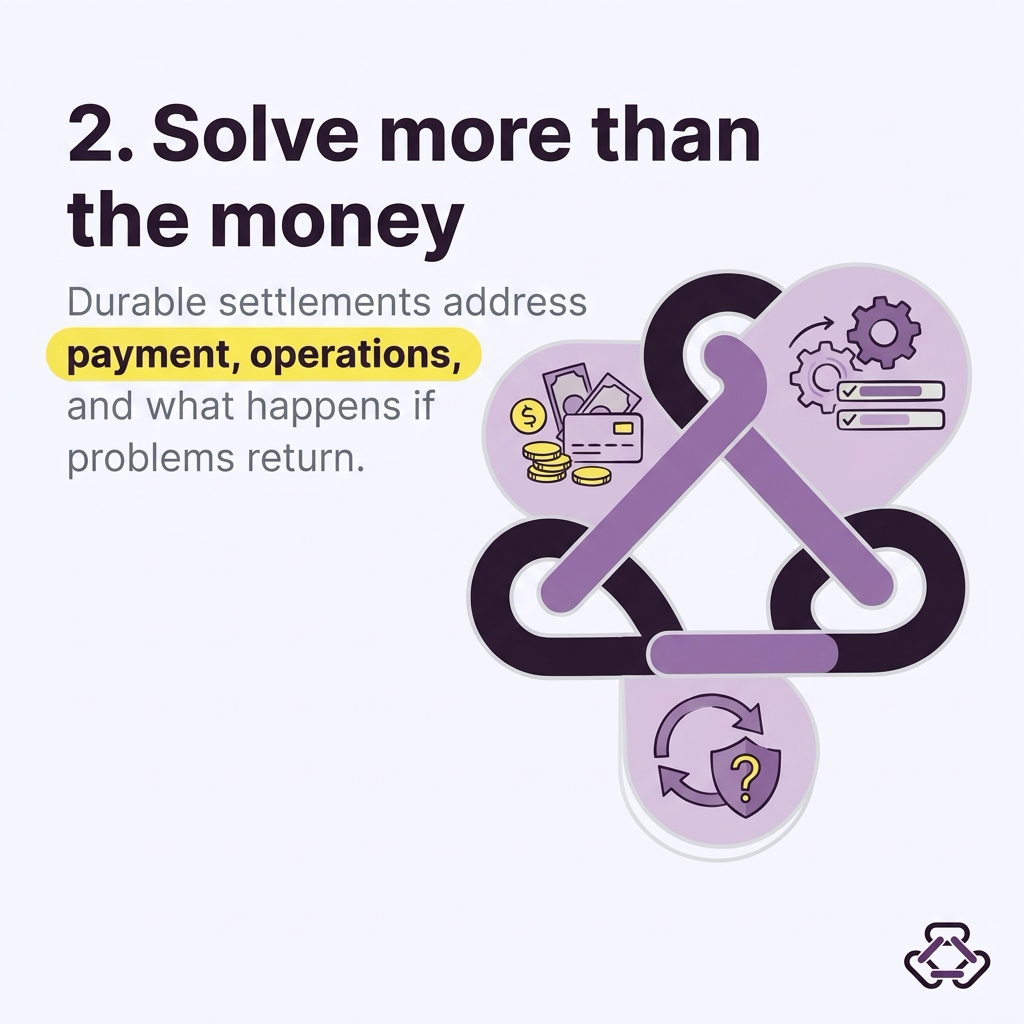
In general terms, the most durable business settlements do three things at once. They address the money, they address the operational fallout, and they spell out what happens next if something goes wrong. Courts and legal organizations consistently describe settlement and mediation as processes that work best when parties move beyond positions and examine underlying interests, risks, costs, and practical business priorities. The federal courts’ ADR materials, for example, explain that mediation often helps parties explore not just legal issues but also business-driven or creative solutions, especially where relationships, multiple stakeholders, or communication barriers are part of the conflict (U.S. District Court for the Northern District of California; U.S. District Court for the Southern District of New York). In this post you’ll learn how that translates into an actual negotiation strategy, what terms often matter more than the opening dollar amount, and how businesses can structure a resolution that is more likely to stay resolved.
If you want a deeper look at the actual contract language that often makes or breaks the deal, it may help to read this guide on the settlement terms that control releases, payment structure, confidentiality, and litigation exit planning.
Scroll to the bottom for every post in this series.
Why Some Business Settlements Fail Even After Everyone “Agrees”
A lot of commercial settlements unravel for a simple reason: the parties agreed on the headline but not the ending.
That headline might be a payment amount, a walk-away, a transition period, or a mutual non-disparagement promise. But once the drafting starts, old disputes reappear in new forms. One side wants a broader release. The other wants carve-outs. One side expects confidentiality. The other cannot legally or practically give it. One side expects installment payments with flexibility. The other wants acceleration, collateral, confession-of-judgment language where allowed, or a stipulated dismissal tied to funding.
The American Bar Association has noted that settlement advocacy is different from trial advocacy because the goal is resolution rather than total victory, and that aggressive posturing can create resistance instead of progress (American Bar Association). That framing matters in business disputes because many settlement failures are not caused by a lack of legal arguments. They are caused by misaligned expectations about risk, leverage, and the practical mechanics of performance.
Another recurring issue is timing. The ABA has also observed that meaningful settlement often becomes possible only after the parties reach a more informed view of the facts and litigation risk, and that a useful rule of thumb is to compare the cost of continued litigation with the settlement advantage still realistically available from pressing forward (American Bar Association). In plain English, if both sides are still negotiating in the dark, the fight may continue no matter how many calls occur.
Step 1: Define What “The Fight Is Over” Actually Looks Like
Before discussing numbers, it often helps to define the end state.
That sounds obvious, but in many business disputes the parties are solving different problems. One company wants cash recovery. The other wants certainty. One side wants to preserve a vendor relationship. The other wants a clean split. One side cares most about public silence. The other cares most about avoiding admissions and preventing future claims by affiliates or principals.
A useful settlement objective usually includes questions like:
- Is this a full exit or a managed relationship reset?
- Which claims are being resolved, and whose claims are included?
- Is the dispute only about past conduct, or also about future conduct?
- What performance has to occur after signing?
- What would restart the conflict?
Federal court mediation guidance often emphasizes that settlement works best when parties identify interests, priorities, and practical needs alongside the legal merits (Northern District of California ADR Program). In business cases, that may include future sourcing rights, inventory returns, customer transition protocols, use of intellectual property, website edits, non-solicitation expectations, tax treatment, or the timing of a public announcement.
If those items are left fuzzy, the deal may look complete while the dispute remains alive underneath.
Step 2: Build Your Negotiation Around Risk, Not Emotion
Commercial disputes often carry a personal edge. Founders may feel betrayed. Partners may feel frozen out. Vendors may feel exploited. But anger is rarely a stable framework for settlement.
The ABA has written candidly that businesses sometimes litigate out of anger or principle, even when the financial cost and business disruption make that path difficult to justify over time (American Bar Association). Here’s what this often means in practice: a negotiation becomes far more productive when both sides evaluate risk categories instead of replaying grievances.
Those risk categories often include:
Litigation Cost Risk
Even a straightforward business case can involve pleadings, discovery fights, ESI preservation, depositions, expert analysis, dispositive motions, and trial preparation. The more documents, decision-makers, and counterclaims involved, the more expensive and time-consuming the path can become.
Outcome Risk
A party may feel morally right and still face evidentiary problems, causation issues, damages proof problems, or contract interpretation disputes. Settlement exists partly because trial outcomes remain uncertain.
Collection Risk
A judgment and a recovery are not always the same thing. If the other side’s finances are strained, the collection analysis often changes the settlement value discussion.
Relationship Risk
Some companies can afford scorched-earth litigation. Others have supply-chain, referral, licensing, or industry-network reasons to prefer a quieter solution.
Confidentiality And Reputation Risk
Public filings can expose allegations, pricing structures, customer lists, internal communications, and business practices. The ABA notes that confidentiality can be one advantage of settlement over litigation, although whether confidentiality is enforceable or appropriate depends on the context and governing law (American Bar Association).
When negotiations are framed around those realities, parties often move from “Who was more wrong?” to “What package of terms creates enough certainty to stop spending time and money on this fight?”
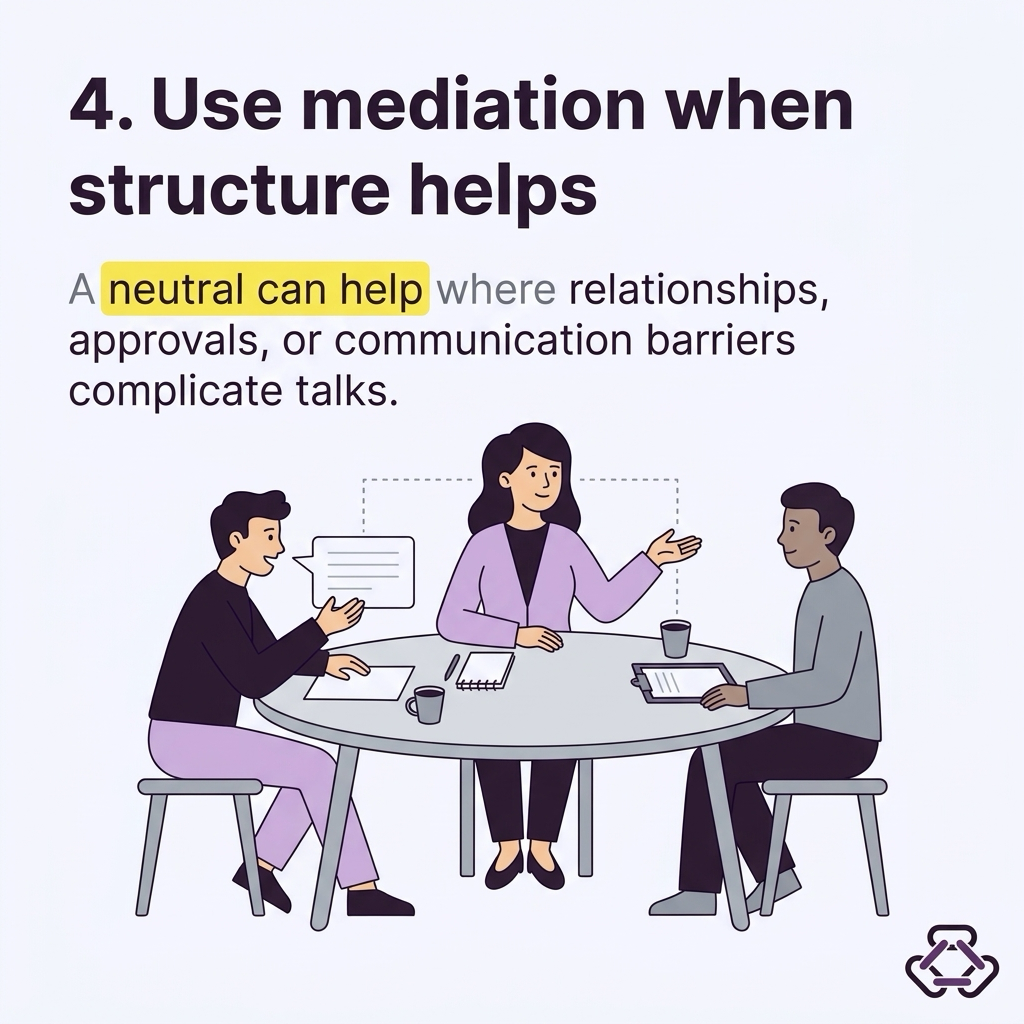
Step 3: Decide Whether Direct Negotiation Or Mediation Fits Better
Some business disputes settle best lawyer-to-lawyer. Others move only when a neutral is involved.
Mediation can be especially useful where there are ongoing relationships, multiple parties, communication barriers, or a desire for business-driven solutions beyond a simple damages payment. Federal court ADR programs describe mediation as a flexible, non-binding, confidential process in which a neutral helps the parties test strengths and weaknesses, identify common ground, and generate options for resolution (Northern District of California ADR Program; Southern District of New York Mediation Program).
A few signs mediation may be worth considering:
- the dispute has become personal;
- decision-makers are not hearing each other directly;
- there are insurance, lender, board, or investor approval layers;
- non-monetary terms matter as much as the cash;
- one side wants to preserve a business relationship while the other wants a clean exit;
- the case value gap remains wide even after exchange of key information.
Mediation is not magic. But it often creates a structure that allows the real interests to surface without every point becoming a direct concession between opponents.
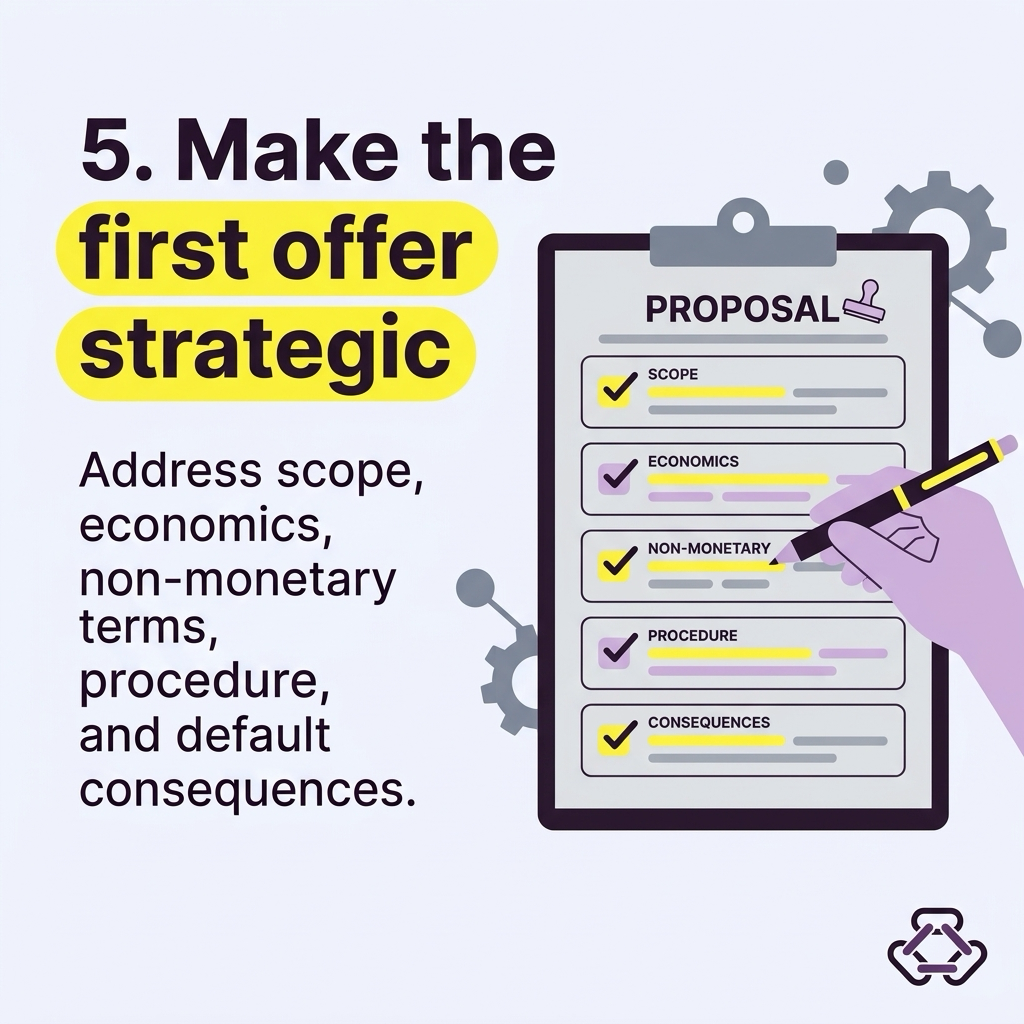
Step 4: Treat The First Offer As A Strategy Document, Not Just A Number
A business settlement offer usually communicates much more than price. It signals how the offering party sees the facts, the risk, the pressure points, and the path to resolution.
The ABA recommends gathering the factual record, relevant agreements, legal support, damages analysis, and information about the other side’s incentives before drafting a settlement proposal. It also notes that effective offers often address both monetary and non-monetary terms, including payment schedule, confidentiality, mutual releases, and contingencies for non-payment (American Bar Association).
In practical terms, a strong opening proposal often answers these questions:
What Problem Is Being Solved?
Say whether the proposal is meant to resolve all claims, certain claims, or a specific business issue.
What Is Included In The Economic Package?
Spell out principal payment, installment timing, interest if any, credits, offsets, tax reporting assumptions, and whether attorneys’ fees or costs are included.
What Non-Monetary Terms Matter?
Examples may include return of property, deletion of statements, customer transition obligations, inventory disposition, license termination, joint announcements, or neutral references in certain contexts.
What Happens Procedurally?
If litigation is pending, identify whether the case will be stayed, dismissed without prejudice until payment clears, dismissed with prejudice on signing, or dismissed in stages.
What Happens If The Deal Breaks?
Default remedies are often where a settlement either becomes real or starts to weaken.
A short number-only offer may start a conversation, but a well-structured term sheet often does more to end a dispute.
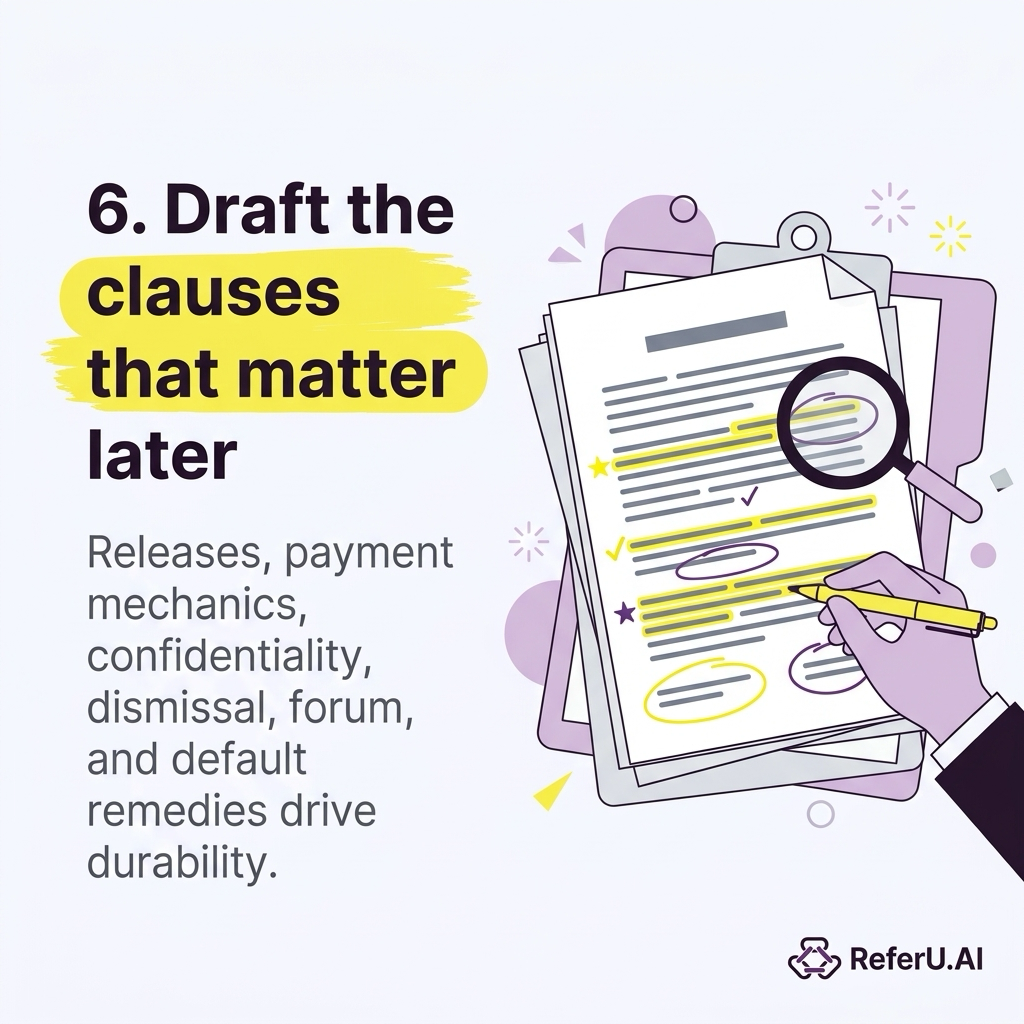
Step 5: Negotiate The Terms That Usually Reopen The Conflict Later
Many business owners focus on the settlement amount and discover later that the harder issues were hidden in the drafting. If the goal is an agreement that actually ends the fight, several clauses deserve close attention.
Release Language
A release determines which claims are being waived and by whom. The scope might be narrow, broad, mutual, limited to known claims, or extend to affiliates, officers, employees, insurers, and successors. A release that is too vague can generate a second dispute about whether a later claim was already waived. A release that is too broad can create concern about unknown exposures.
Payment Mechanics
If payment is not made in one wire immediately at signing, details matter: due dates, grace periods, wiring instructions, conditions precedent, acceleration language, security, personal guaranties where relevant, and whether any dismissal papers are held in escrow pending performance.
Confidentiality
Confidentiality sounds simple until it is not. Some businesses want the existence of the settlement confidential, others care only about amount, and others want broad non-disclosure covering negotiations and underlying allegations. But confidentiality can be limited by law, prior disclosures, insurance reporting obligations, tax and audit requirements, lender requests, regulatory duties, whistleblower protections, and litigation filing rules in some contexts. The ABA has discussed how confidentiality terms can create separate enforceability disputes if not drafted carefully (American Bar Association; American Bar Association).
Non-Disparagement
In business cases, this term often matters more than parties expect. It may cover executives, employees, agents, affiliates, online statements, customer communications, and internal talking points. The boundaries and remedies often deserve precision.
No Admission Of Liability
This is standard in many settlements, but it is still worth stating clearly.
Dismissal And Forum For Enforcement
If a lawsuit is already filed, the settlement may say when dismissal occurs and where later enforcement disputes will be heard. That forum selection issue can shape leverage if a payment default later occurs.
Default Remedies
Default provisions often determine whether the agreement has teeth. Some settlements allow notice and cure, then entry of judgment or reinstatement of dismissed claims where permitted. Others cap remedies to contract damages. The right structure depends heavily on jurisdiction, procedural posture, and the leverage each side is trying to preserve.
If you want a broader breakdown of these moving parts, this article on the key terms businesses often review before signing a commercial resolution gives additional context.
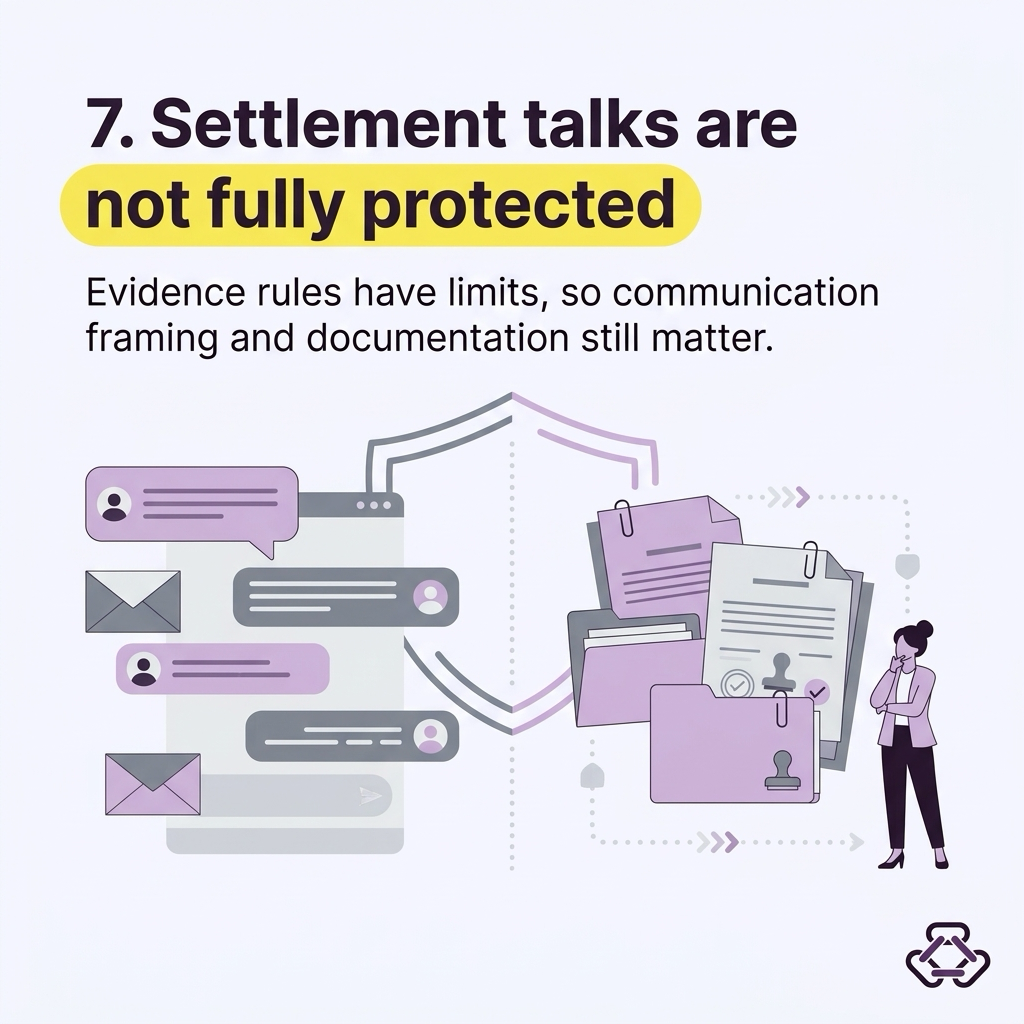
Step 6: Understand What Settlement Communications Do And Do Not Protect
A lot of business people assume that anything said during settlement talks is automatically off-limits forever. That is too simplistic.
Under Federal Rule of Evidence 408, compromise offers and certain statements made during compromise negotiations are generally not admissible to prove or disprove the validity or amount of a disputed claim, or to impeach by prior inconsistent statement in the ways the rule addresses. But the rule has limits, exceptions, and context-specific applications. It does not automatically shield otherwise discoverable evidence simply because it came up during settlement discussions, and the precise treatment of statements can vary depending on posture and jurisdictional law (Legal Information Institute, Cornell Law School).
Here’s what this often means in practice: parties and counsel usually benefit from being deliberate about how settlement communications are framed, documented, labeled, and separated from ordinary business communications. A casual email mixing factual admissions, operational updates, and settlement language can create avoidable complications later.
That is one reason experienced counsel often structure negotiation communications carefully instead of treating every conversation as interchangeable.
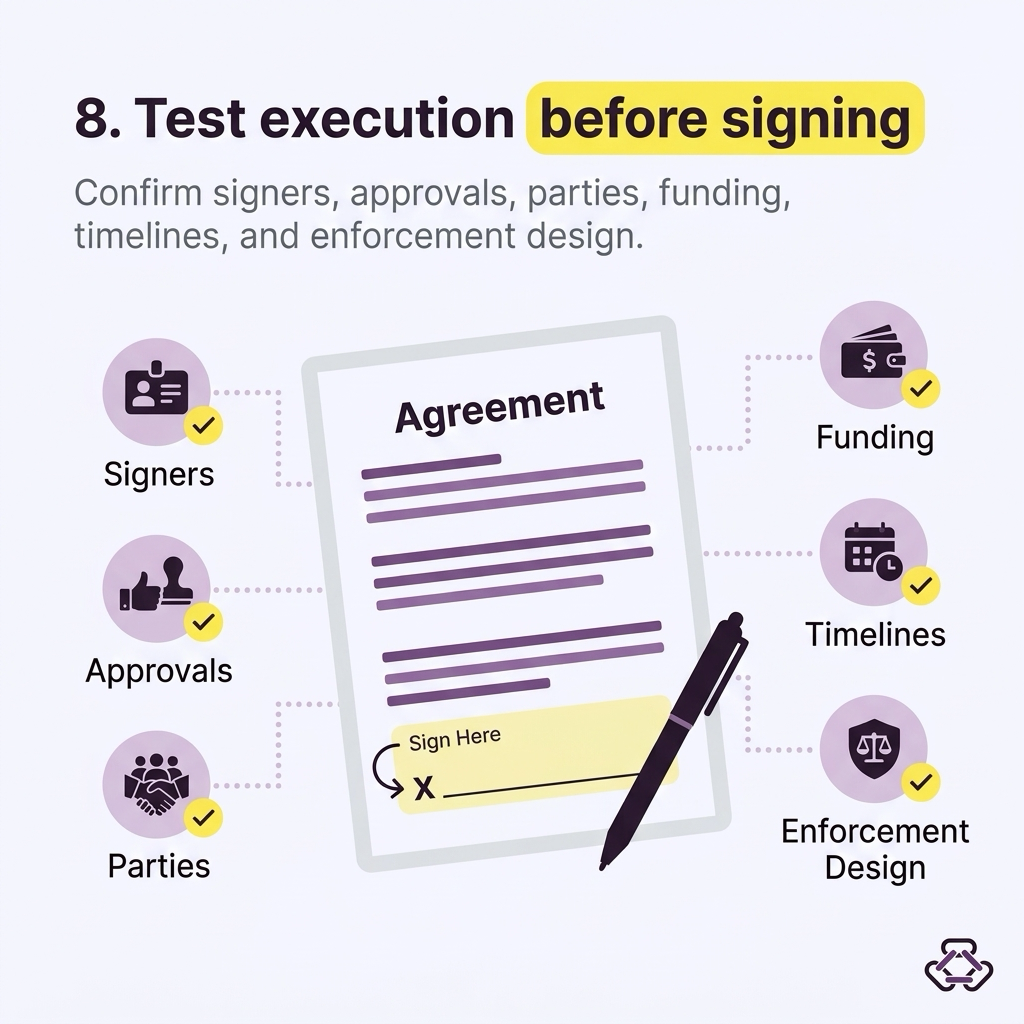
Step 7: Get Specific About Execution, Not Just Agreement
A settlement that “in principle” resolves the matter is often only halfway done.
The real work includes execution details such as:
- who signs and in what capacity;
- whether board, lender, insurer, or investor approval is required;
- whether all entities in the dispute are parties to the agreement;
- whether affiliates or individual guarantors are included;
- whether settlement funds are actually available on the proposed timetable;
- whether there are tax forms, payoff letters, lien releases, or dismissal papers to exchange;
- whether any injunctive or operational obligations begin before money changes hands.
This is also where ordinary contract principles matter. The ABA notes that settlement agreements are subject to legal scrutiny and should align with contract law principles to support validity and enforceability (American Bar Association). In other words, ambiguity at signing can become expensive clarity litigation later.
In commercial cases, execution problems often arise because someone at the table had authority to negotiate but not authority to bind, or because related entities central to the dispute were left outside the final paper. That can leave a business believing the dispute is over while exposure remains open through a non-signatory.
Step 8: Plan For Compliance And Enforcement Before The Ink Dries
A surprising number of commercial settlements are drafted as if breach is unthinkable. But if the dispute already escalated once, the possibility of a second conflict is part of the real-world analysis.
That does not mean every settlement needs a punitive enforcement model. It does mean the parties usually benefit from clarity on what happens if payment is late, confidentiality is breached, disparagement resumes, or operational obligations are missed.
Possible enforcement design questions include:
- Is there a notice-and-cure period?
- Does one missed installment accelerate the remainder?
- Are liquidated damages being considered, and are they likely to be enforceable under applicable law?
- Can the original action be restored, or is enforcement limited to a separate contract claim?
- Will a court retain jurisdiction to enforce?
- Is there an attorneys’ fees provision for enforcement disputes?
- Is there a designated forum and governing law?
This is one of the biggest differences between a settlement that ends a fight and a settlement that only changes the caption on the next lawsuit.
Step 9: Use The Drafting Process To Test Whether The Deal Is Real
Sometimes the first draft reveals that there was never a real meeting of the minds. That is not always bad news. It may surface the true remaining gaps early enough to solve them.
For example, the parties may discover they disagree on:
- whether the release is mutual;
- whether future business conduct is restricted;
- whether the settlement amount is contingent on confidentiality;
- whether public statements are allowed;
- whether insurers are funding part of the deal;
- whether tax treatment is part of the bargain;
- whether a default revives original claims or only triggers contract remedies.
A careful drafting phase can function as a final diligence process. If the paper becomes much more complicated than expected, that may be a signal that the dispute itself was broader than the term-sheet language suggested.
Step 10: Bring In Counsel Who Handle Similar Commercial Disputes
Business settlement negotiation is rarely just about bargaining style. It is often about knowing where commercial resolutions break down, how release language interacts with related claims, how confidentiality and enforcement provisions operate in practice, and how to structure a dismissal so one missed payment does not undo the entire purpose of the deal.
That is where attorney fit matters. A lawyer with demonstrable experience in highly similar matters may be better positioned to spot friction points before they turn into another round of litigation. In a business dispute, that relevant experience might involve vendor and supplier conflicts, founder disputes, partnership breakups, licensing issues, trade-secret allegations, unpaid invoice litigation, earnout disputes, franchise disagreements, or post-transaction indemnity fights.
In general terms, many companies are not just looking for any litigator. They are looking for someone whose background reflects documented experience, objective fit, and case similarity based on court records. That kind of matching can be especially important when the settlement itself is likely to be as consequential as the claims that started the case.
A Business Settlement Is Only As Good As Its Ending
The most effective commercial settlements usually do more than split the difference. They define the end state, price the real risks, address the operational issues behind the lawsuit, and create a clear enforcement path if performance breaks down. Courts and bar organizations alike describe settlement as a process grounded in informed evaluation, communication, and practical problem-solving rather than theatrics or total victory (Northern District of California ADR Program; Southern District of New York Mediation Program; American Bar Association).
If your company is negotiating a resolution and the real concern is whether the agreement will actually hold, an attorney with relevant commercial dispute experience may help identify the terms that make closure real instead of temporary.
Visit ReferU.AI to get matched with an attorney who has demonstrable experience in cases like yours — for free.
