Table of Contents
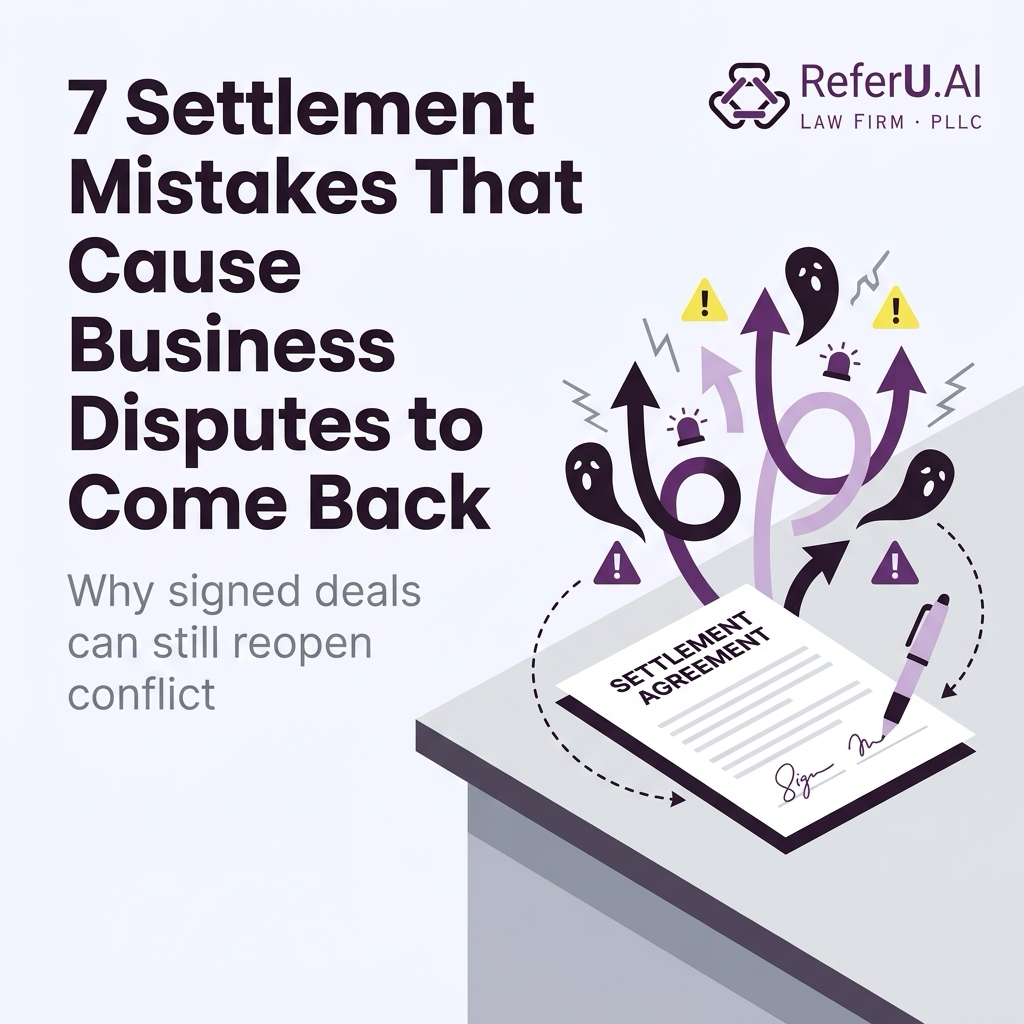
- 7 Settlement Mistakes That Cause Business Disputes to Come Back
- Why Settlements Reopen In The First Place
- Table Of Contents
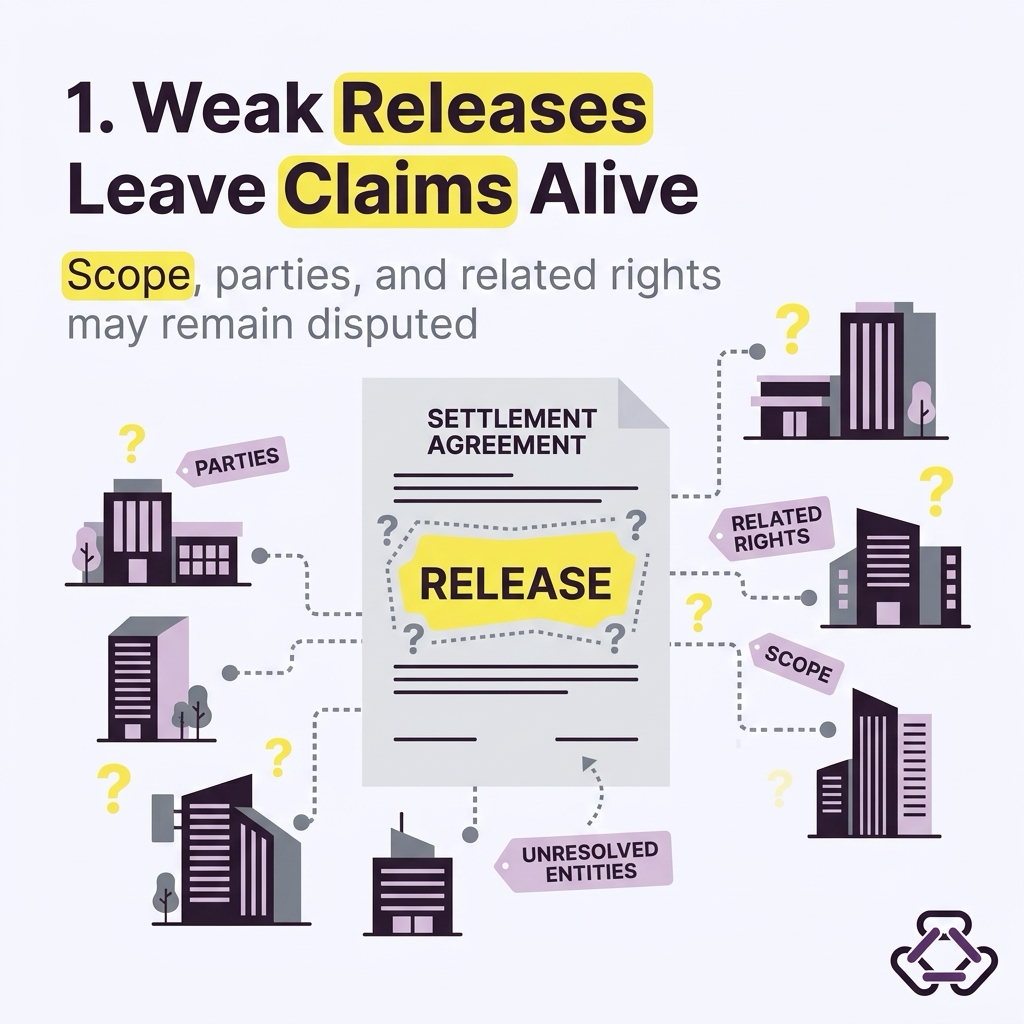
- 1. Using A Release That Does Not Actually End The Claims
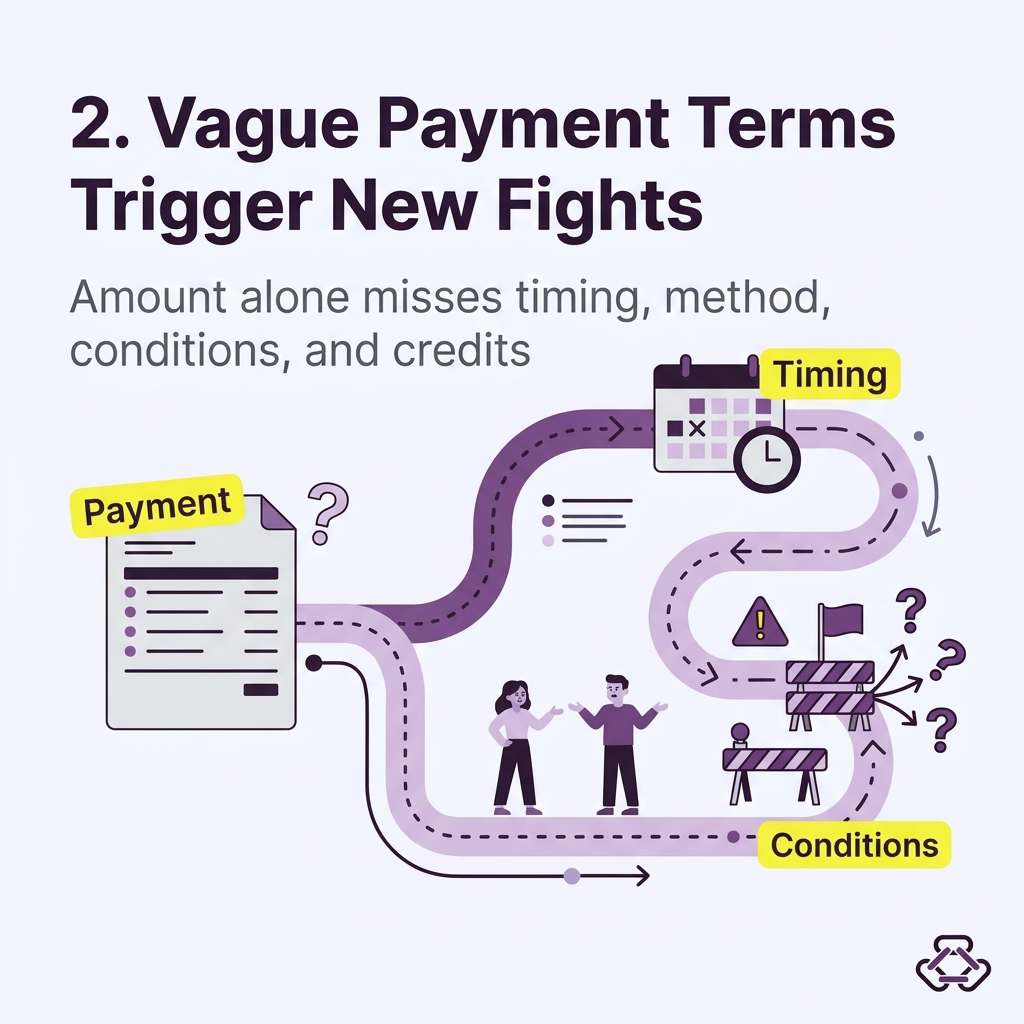
- 2. Leaving Payment Mechanics Too Vague
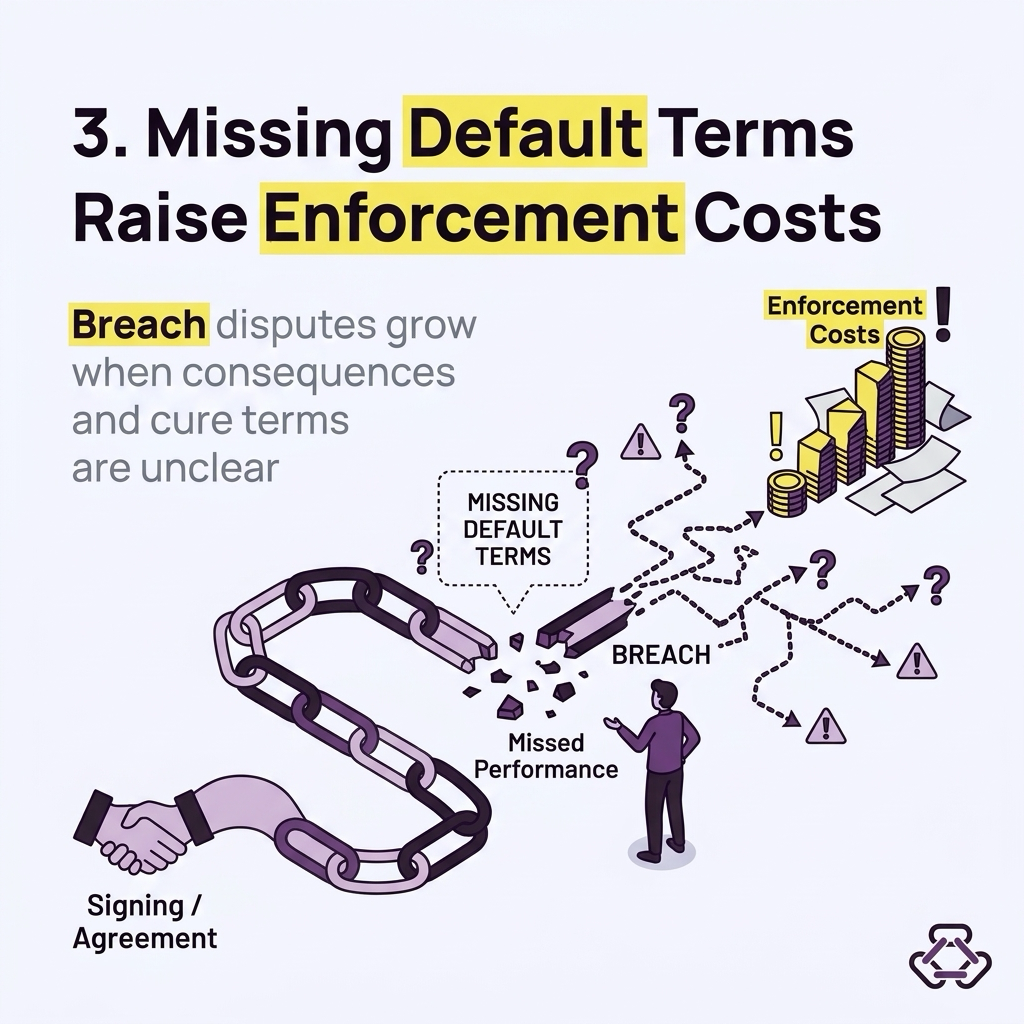
- 3. Ignoring What Happens If Someone Defaults
- 4. Treating Confidentiality As Boilerplate
- 5. Overlooking Tax Reporting And Allocation Issues
- 6. Letting The Wrong Person Sign The Deal
- 7. Assuming The Court Will Automatically Enforce The Settlement
- A Final Tip: The Cheapest Settlement Is Not Always The One With The Lowest Dollar Amount
- Closing Thoughts

Type
Great Grandchild
Status
Approved
Title (YouTube)
Images Failed (Social)
Images Failed (Social)
Do not index
Publish Date (TikTok)
Dec 31, 2026 16:15
Videos Post IDs (Social)
Hashtags (Social)
#LegalAdvice #LegalHelp #BusinessLitigation #SettlementAgreements
Caption
Caption X
Cover

OG Image

Alt Image Text
Flat vector illustration of settlement mistakes causing business disputes to return, showing a fragile business settlement with payment, release, confidentiality, authority, tax, default, and enforcement issues.
Images

Videos
Publish Date (Social)
Dec 13, 2026 10:30
Scheduled (Social)
Scheduled (Social)
Images Posted (Social)
Images Posted (Social)
Videos Posted (Social)
Videos Posted (Social)
Videos Failed (Social)
Videos Failed (Social)
Featured
Created time
Apr 3, 2026 10:14 PM
Sub-item
Authors
CTA Practice Area (Social)
Business Litigation
TikTok Failed (Social)
TikTok Failed (Social)
Videos Post Links (Social)
YT Auto Captions Removed
TikTok Post Links (Social)
Images Post IDs (Social)
YT Post ID
Video Pending Manual (Social)
TikTok Posted (Social)
TikTok Posted (Social)
TikTok Post IDs (Social)
Video Cover (Social)
Images Post Links (Social)
First Comment (Social)
YT Embedded
Images Delete (Social)
Videos Delete (Social)
Carousel Video URL (Social)
7 Settlement Mistakes That Cause Business Disputes to Come Back
A business dispute can feel finished the day everyone agrees on terms. Then a payment arrives late, a release turns out to be narrower than expected, a confidentiality clause creates a new argument, or one side claims the person who signed never had authority in the first place. Suddenly the “resolution” becomes a second round of conflict.
That pattern is more common than many business owners expect. Settlement agreements are contracts, and when they are vague, incomplete, or hard to enforce, the underlying dispute often reappears in a different form. In general terms, the goal is not just reaching a deal. The goal is reaching a deal that actually closes the file.
In this post, you’ll learn seven settlement mistakes that often cause commercial disputes to come back, why those mistakes matter, and where experienced counsel often focus their review. If you want a broader foundation first, it may help to start with this overview of how commercial settlements are structured from release language through payment and exit planning.
Scroll to the bottom for every post in this series.
Why Settlements Reopen In The First Place
Most business settlements do not unravel because the parties forgot there had been a disagreement. They unravel because the written agreement leaves room for a new one.
Courts generally treat settlement agreements like contracts, which means ordinary contract principles often control questions about formation, authority, interpretation, breach, and remedies. Federal courts also do not automatically retain power to enforce a private settlement after dismissal unless the court expressly retains jurisdiction or incorporates the settlement into its order, a point the U.S. Supreme Court addressed in Kokkonen v. Guardian Life Insurance Co. of America. That procedural issue alone can turn an allegedly “finished” case into a separate enforcement fight.
The commercial reality is easy to understand: if a settlement leaves uncertainty about money, scope, timing, taxes, confidentiality, or enforcement, the dispute may come back wearing a contract label instead of a tort, partnership, vendor, or shareholder label.
Table Of Contents
1. Using A Release That Does Not Actually End The Claims
The release is often the heart of the settlement. It is the language that tells everyone what claims are being given up, by whom, and against whom. If that language is too narrow, one side may later argue that related claims survived. If it is too broad or poorly coordinated with the facts, another fight may break out over whether the release is enforceable as written.
A few recurring issues show up in business disputes:
- the release covers only the named plaintiff but not affiliates, owners, subsidiaries, successors, or agents
- it releases existing claims but says little about unknown claims, accrued claims, or related proceedings
- it resolves one contract but not related guarantees, side letters, purchase orders, or indemnity rights
- it fails to identify whether the release is mutual or one-sided
- it does not line up with the actual business structure of the parties involved
Courts regularly enforce releases according to their text, including in commercial cases where a party later argues they did not fully appreciate what they signed. The ABA has also highlighted recent business-court decisions underscoring that releases can carry serious consequences even when one side later claims not to have understood the documents. See the ABA’s discussion of recent business court developments.
This is one reason businesses often spend substantial time reviewing release language before signing. If you want a more detailed walkthrough, this companion resource on release terms, confidentiality, payment language, and litigation exit strategy offers a useful starting point.
2. Leaving Payment Mechanics Too Vague
Businesses often focus on the settlement amount and not enough on how payment will actually happen. But many post-settlement disputes are less about the headline number and more about the mechanics underneath it.
Common trouble spots include:
- no exact payment date
- no installment calendar
- no wire instructions or method of payment
- no rule for when payment is deemed made
- no handling for disputed invoices, offsets, chargebacks, or credits
- no statement about whether payment is contingent on dismissal, dismissal with prejudice, delivery of releases, board approval, or some other event
A settlement that says “Defendant will pay $250,000” may sound complete. In practice, that can leave open several questions: one check or several, taxable or not, payable to which entity, by what deadline, after what conditions, and with what consequence if the date slips?
The U.S. Department of Justice’s General Civil Settlement Principles also reflect a broader point familiar in commercial matters: settlement terms are often evaluated in light of practical enforceability, the consequences of litigation, and the ability of the other side to satisfy obligations. In business disputes, a settlement that does not address payment logistics may resolve the legal claim while preserving the operational conflict.
Businesses working through this stage often compare their draft against practical negotiation guidance, especially when the goal is a cleaner ending rather than just a signed document. That is where content on negotiating a business settlement that truly closes the dispute would normally fit into the workflow, particularly when payment structure is part of the leverage discussion.
3. Ignoring What Happens If Someone Defaults
A surprising number of settlement agreements spell out the obligations in detail and say almost nothing about breach. That omission can be expensive.
If one side misses a payment, leaks confidential terms, refuses to dismiss a case, or violates a non-disparagement provision, the next question becomes: what now? If the agreement does not answer that clearly, the parties may end up litigating the default instead of the original dispute.
Default provisions often address issues such as:
- notice and cure periods
- whether one missed installment accelerates the balance
- whether interest applies, and at what rate
- whether attorneys’ fees may be recoverable in an enforcement action
- whether injunctive relief is available for confidentiality or non-use violations
- whether prior claims revive if the settlement is breached
- the venue, forum, and governing law for enforcement
This matters because an enforcement pathway that is predictable may reduce the odds of strategic noncompliance. It can also influence leverage during negotiation. Some parties become more willing to perform when the consequences of breach are clearly documented.
For a more clause-focused review, many companies benefit from looking closely at the kinds of settlement provisions businesses often examine before signing, especially default remedies, release structure, and enforcement language.
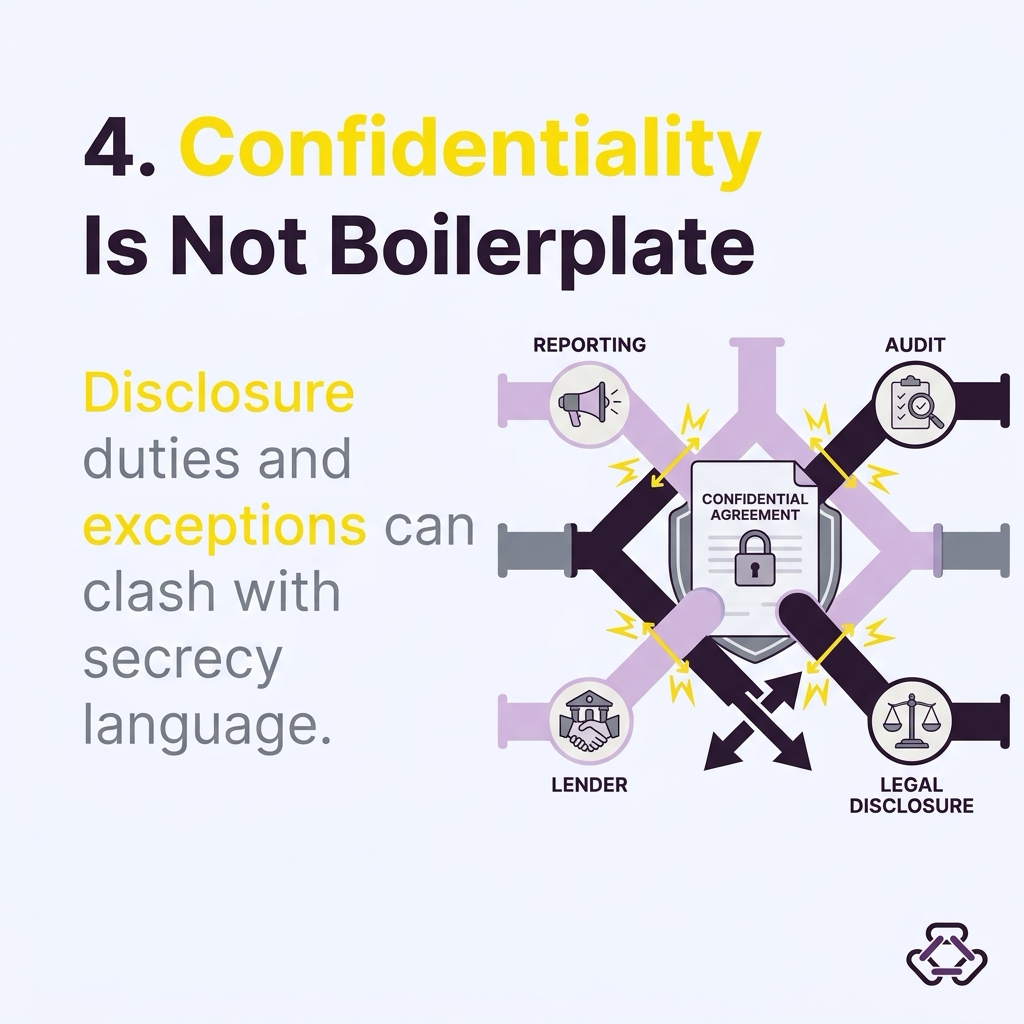
4. Treating Confidentiality As Boilerplate
Confidentiality is one of the most misunderstood parts of a settlement agreement. Parties often assume that adding a short confidentiality paragraph solves the issue. In reality, confidentiality clauses can create fresh disputes if they are unrealistic, overbroad, or inconsistent with law and business reality.
For example:
- public companies may have disclosure obligations
- regulated businesses may have reporting duties
- tax reporting can require disclosure of payment information
- lenders, auditors, insurers, and board members may need access
- employees and vendors may need limited operational information
- ongoing litigation, subpoenas, or government inquiries may override expectations of secrecy
The American Bar Association has discussed the limits and practical complications of settlement confidentiality in its article on confidentiality in settlement agreements. Even outside the public-sector context, confidentiality language can create problems when it is disconnected from real-world disclosure obligations. A Massachusetts state audit similarly noted that some confidentiality language may not be enforceable in contexts involving public-records requirements, illustrating the broader point that confidentiality clauses are not self-executing magic words; they operate within other legal frameworks. See Mass.gov’s audit discussion.
Another misconception is that settlement communications are universally secret. Under Federal Rule of Evidence 408, compromise offers and negotiations are limited in how they may be used as evidence for certain purposes, but that rule is not a blanket confidentiality rule. The ABA has noted that settlement-related material may still be discoverable in some contexts and may be admissible for purposes not barred by Rule 408. See its discussion of the admissibility of settlement-related evidence at trial.
Here’s what this often means in practical terms: a confidentiality clause works best when it says who may disclose, what may be disclosed, to whom, when, and under which exceptions.
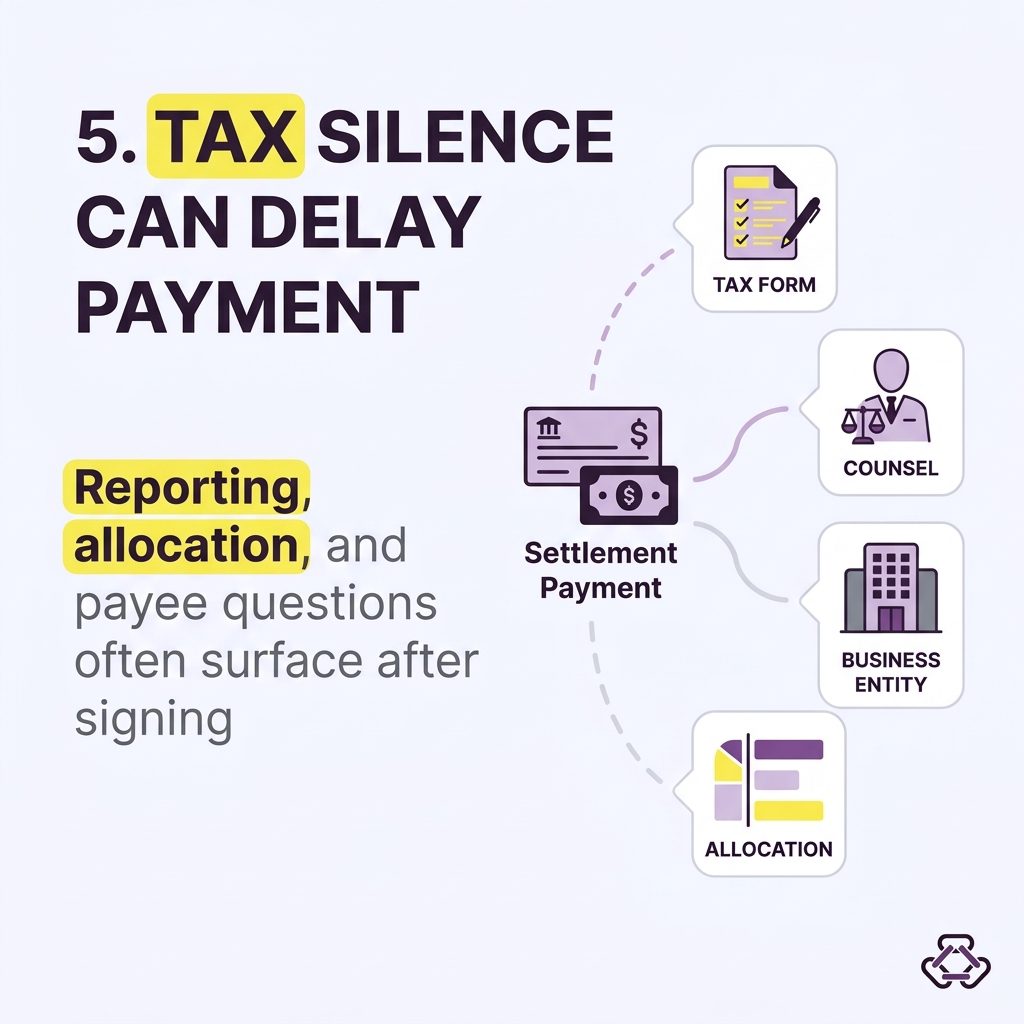
5. Overlooking Tax Reporting And Allocation Issues
Tax language is easy to postpone and expensive to ignore. Businesses sometimes sign the settlement first and work out reporting later. That is often where avoidable conflict begins.
The IRS explains that the tax treatment of settlement payments depends on the nature of the claim and the payment. It also notes that if a settlement agreement is silent on tax characterization, the IRS may look to the payor’s intent in characterizing the payment and determining information-reporting obligations. See the IRS guidance on tax implications of settlements and judgments.
That creates a familiar commercial problem: one side may view the payment as contract damages, another may view part of it as fees, and the paperwork later tells a different story. Disputes may then surface over:
- whether a Form 1099 will issue
- who receives it
- whether payment goes jointly to party and counsel
- whether amounts are allocated among claims
- whether any portion is interest, fees, wages, or business income
- whether separate checks are being used
- whether the agreement reflects the tax reporting position both sides expected
The ABA’s Business Law Today has also emphasized that settlement agreements often benefit from express tax reporting language because once a form is issued, it can be difficult to unwind the reporting consequences later. See Avoid Legal Settlement Tax Fallacies.
In business disputes, tax ambiguity does more than create accounting headaches. It can reopen negotiations after signature, delay payment, complicate year-end reporting, and create friction between principals, finance teams, and outside advisors.
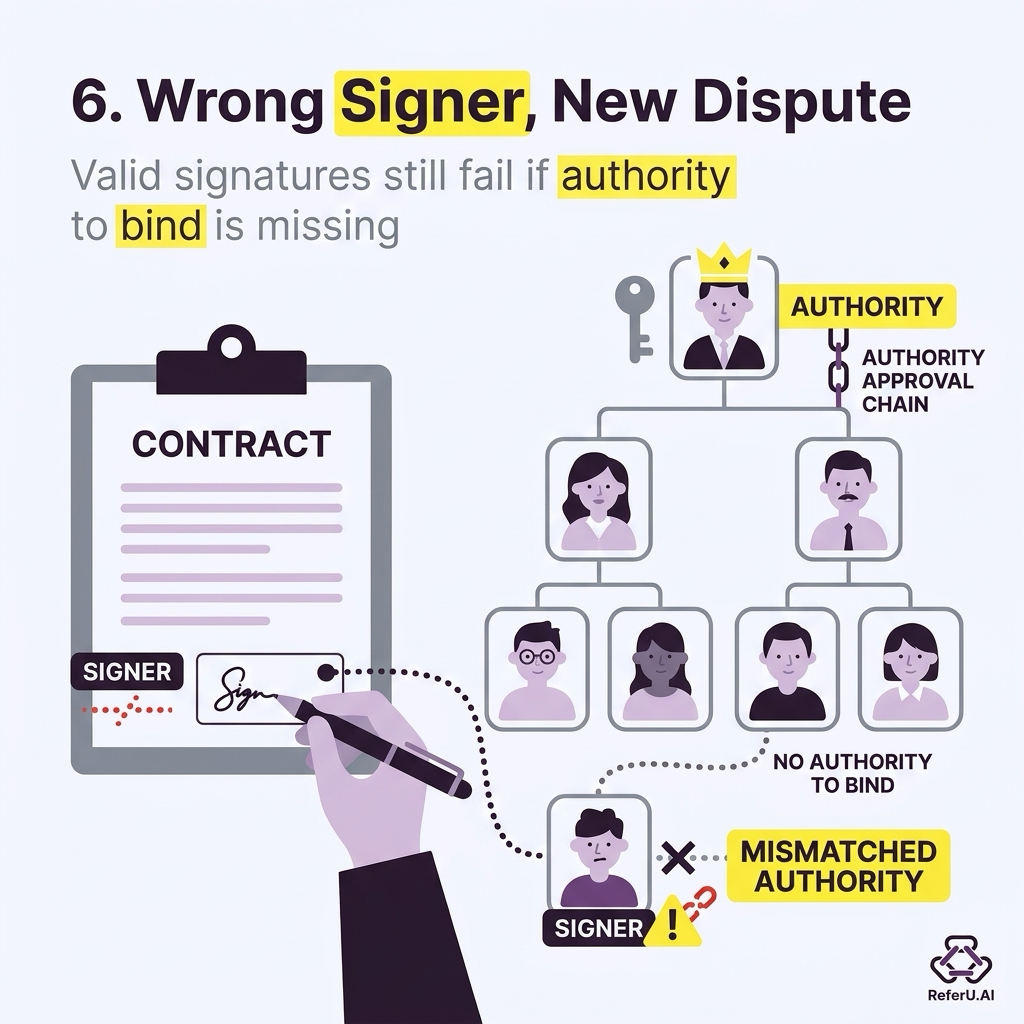
6. Letting The Wrong Person Sign The Deal
Sometimes the settlement terms are fine, but the signatory is the problem.
In a commercial dispute, questions about authority can arise when the settlement is signed by:
- an employee without delegated authority
- one member of a multi-member LLC acting alone
- a founder after control has shifted
- litigation counsel without clear client authorization
- a parent or affiliate representative for the wrong entity
- a business unit leader who can negotiate but not bind the company
This issue can become even more complicated when signatures are electronic. Under the federal E-SIGN Act, a contract or signature generally may not be denied legal effect solely because it is in electronic form. The statutory text is available through Congress.gov and GovInfo. But legal validity of the signature format does not answer a separate question: did the person signing actually have authority to bind the business?
That distinction matters. A valid e-signature from the wrong person can still produce a live dispute over formation and enforceability. This is one reason companies often pair signature blocks with representations about authority, corporate capacity, and, where relevant, board or member approval.
Businesses looking more closely at this stage often focus on how to review the operative clauses before signature, including authority language, entity identification, and who is actually being bound.
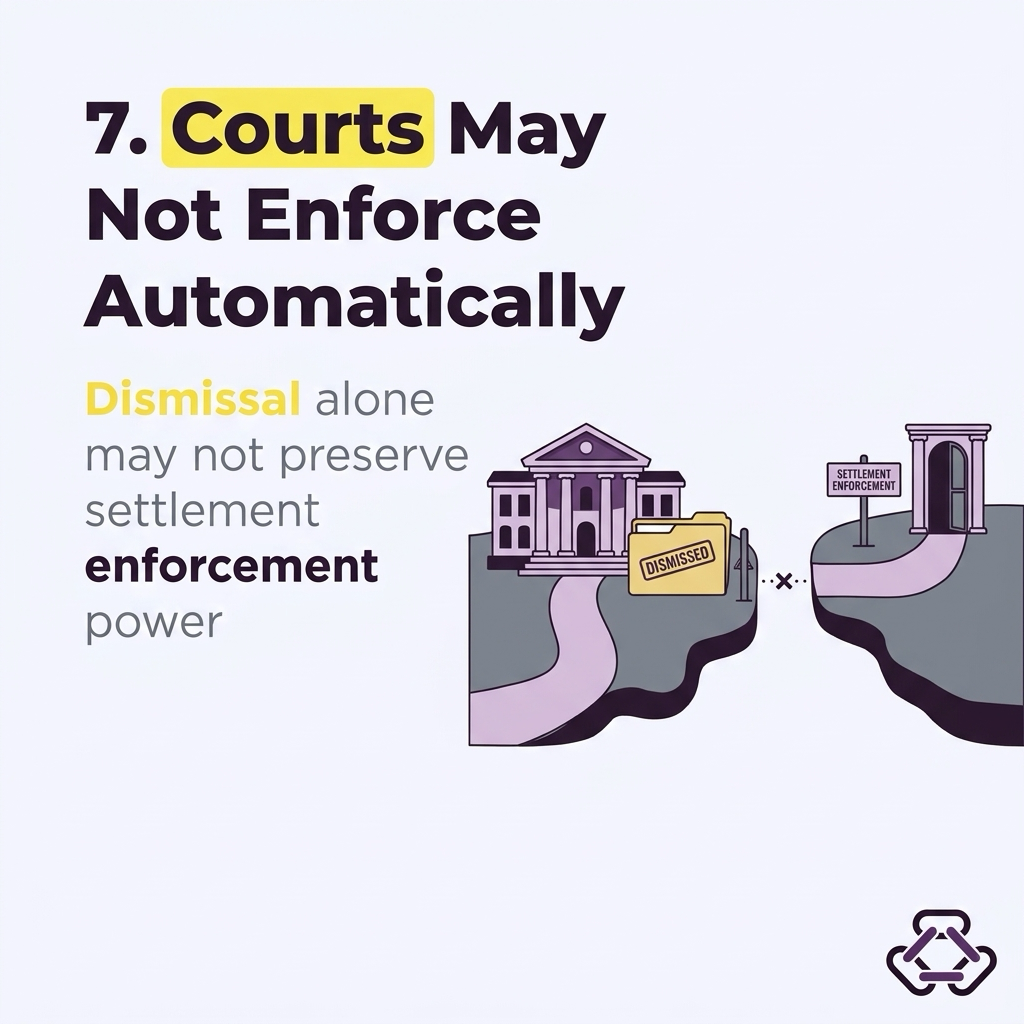
7. Assuming The Court Will Automatically Enforce The Settlement
This is one of the most costly assumptions in litigation-based settlements.
Parties frequently believe that once a lawsuit is dismissed, the same court will automatically police the settlement if someone breaches it. That is not always how it works. In Kokkonen, the Supreme Court explained that enforcement of a settlement agreement is generally a separate contract matter unless the dismissal order either incorporates the settlement terms or expressly retains jurisdiction to enforce the agreement. The Court’s opinion is available at Justia’s Supreme Court archive.
That rule can change strategy in a very practical way. If the dismissal papers do not preserve an enforcement path, a party may later find itself filing a new lawsuit in a different forum just to collect the agreed amount or enforce a release.
Recent lower-court decisions continue to apply that principle. For example, courts have rejected post-dismissal enforcement efforts where neither incorporation nor explicit retention language was present, as discussed in decisions cited in sources such as Go New York Tours, Inc. v. Tour Central Park Inc..
In general terms, this is less about procedural trivia and more about closure. If the enforcement roadmap is missing, the “end” of the case may simply become the beginning of the enforcement case.
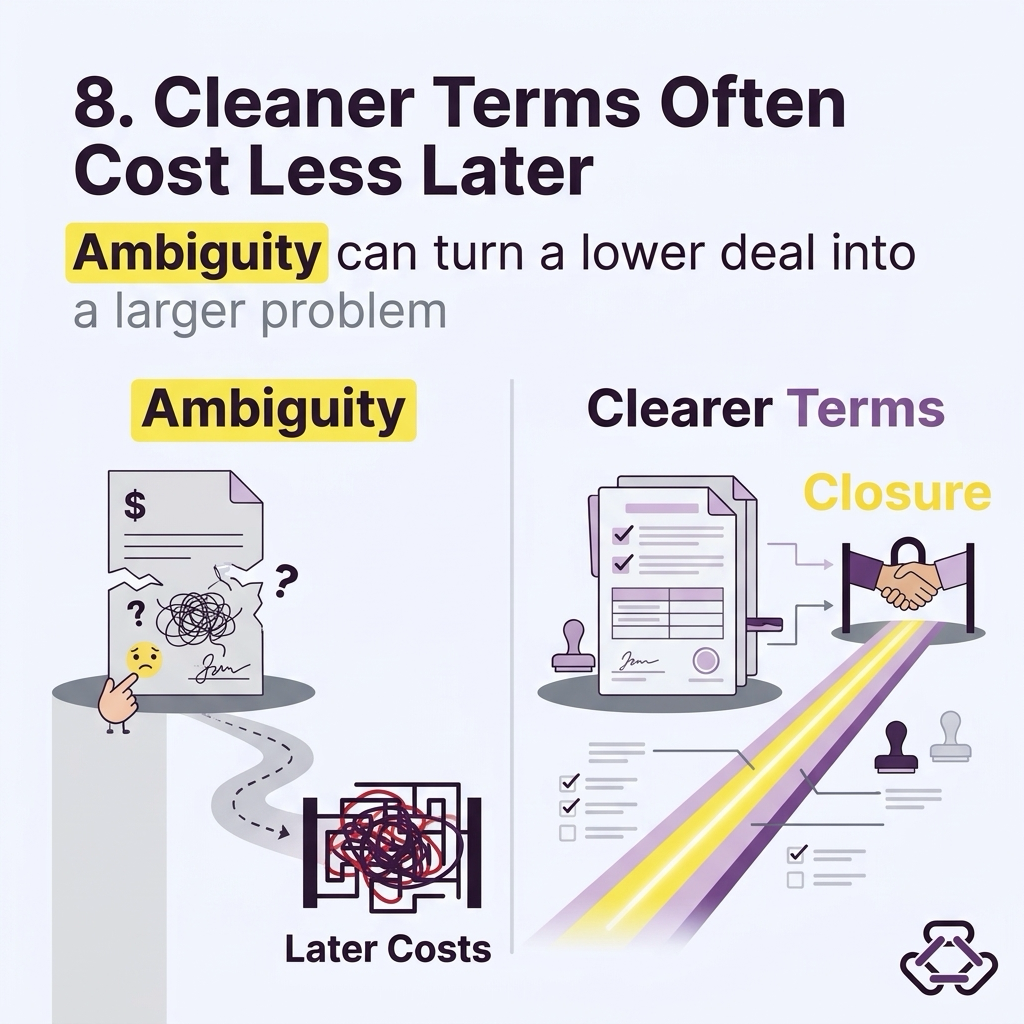
A Final Tip: The Cheapest Settlement Is Not Always The One With The Lowest Dollar Amount
A settlement can look efficient on paper and still be expensive in practice if it leaves behind ambiguity. A lower payment figure attached to weak releases, fuzzy tax language, missing default remedies, or no enforcement mechanism may cost more later than a cleaner deal negotiated upfront.
That is why businesses often evaluate settlement terms through a broader lens:
- Does this document resolve the actual dispute, not just part of it?
- Does it address how payment, dismissal, confidentiality, and performance will work in real life?
- Does it reduce the chance of a second lawsuit?
- Does it create a clear path if the other side does not comply?
If you are working through a commercial settlement, it may help to compare your agreement against a broader checklist covering release language, payment terms, confidentiality provisions, and litigation exit planning.
Closing Thoughts
Business disputes often come back not because settlement failed in theory, but because the written terms left too much room for a second disagreement. Narrow releases, vague payment mechanics, missing default provisions, overconfident confidentiality language, tax ambiguity, authority problems, and weak enforcement planning are all common reasons a “done deal” becomes unfinished again.
An attorney with documented experience in highly similar business disputes may help identify those risks before signature and assess whether the settlement language actually matches the commercial reality of the case.
Visit ReferU.AI to get matched with an attorney who has demonstrable experience in cases like yours — for free.
