Table of Contents
- 10 Questions Companies Ask After Client Lists, Pricing, or Internal Files Walk Out the Door
- 1. Was The Information Actually A Trade Secret?
- 2. Does It Matter If The Person Helped Create The Files?
- 3. If It Was Only Downloaded Or Emailed, Does That Count As Misappropriation?
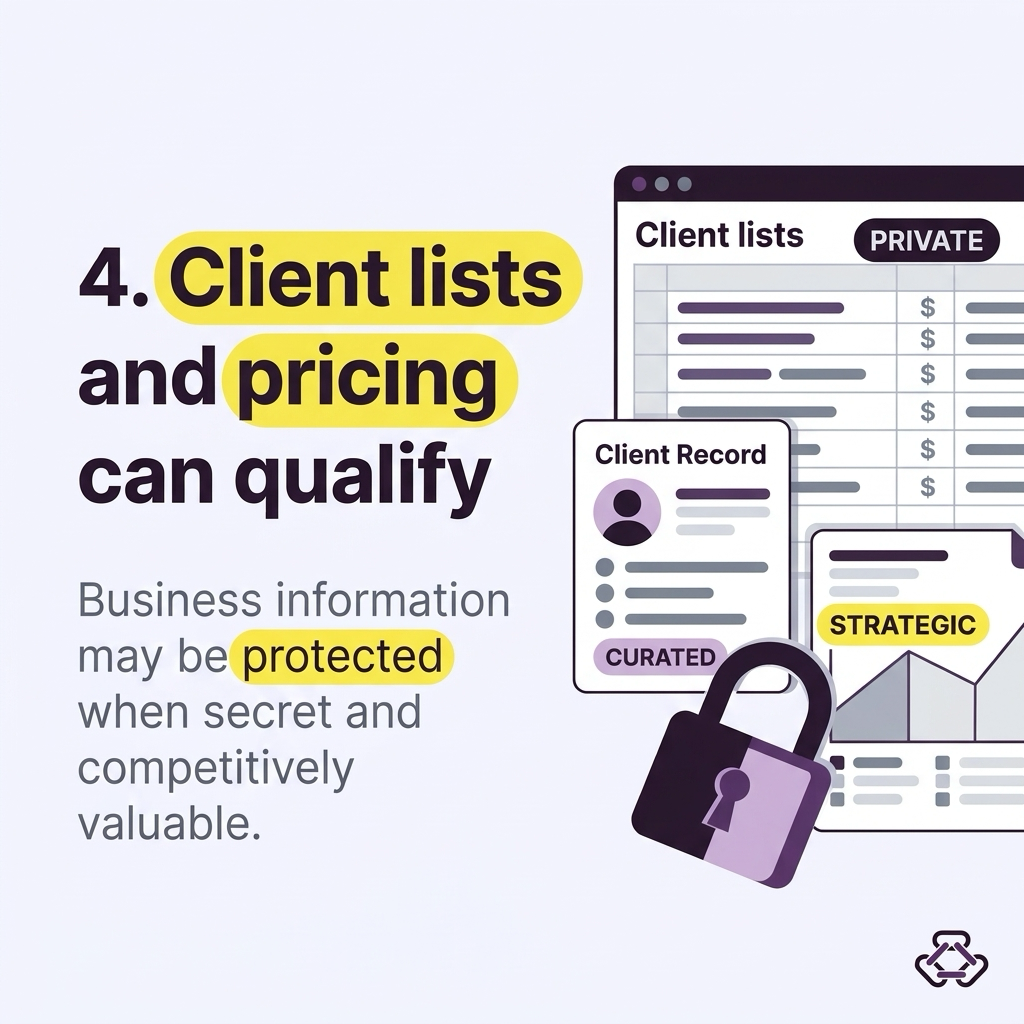
- 4. What If The Files Included Client Lists Or Pricing Instead Of Source Code Or A Formula?
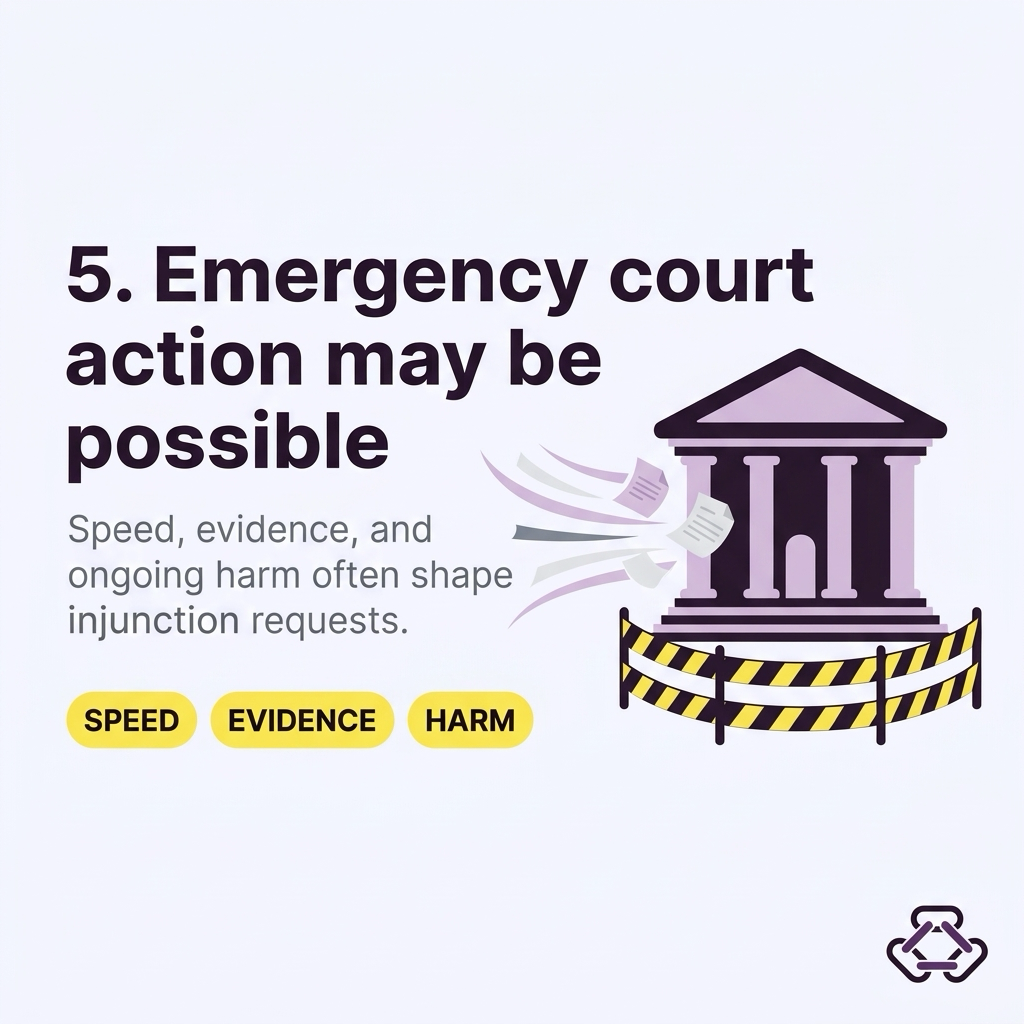
- 5. Can A Court Stop The Former Employee Or Competitor Right Away?
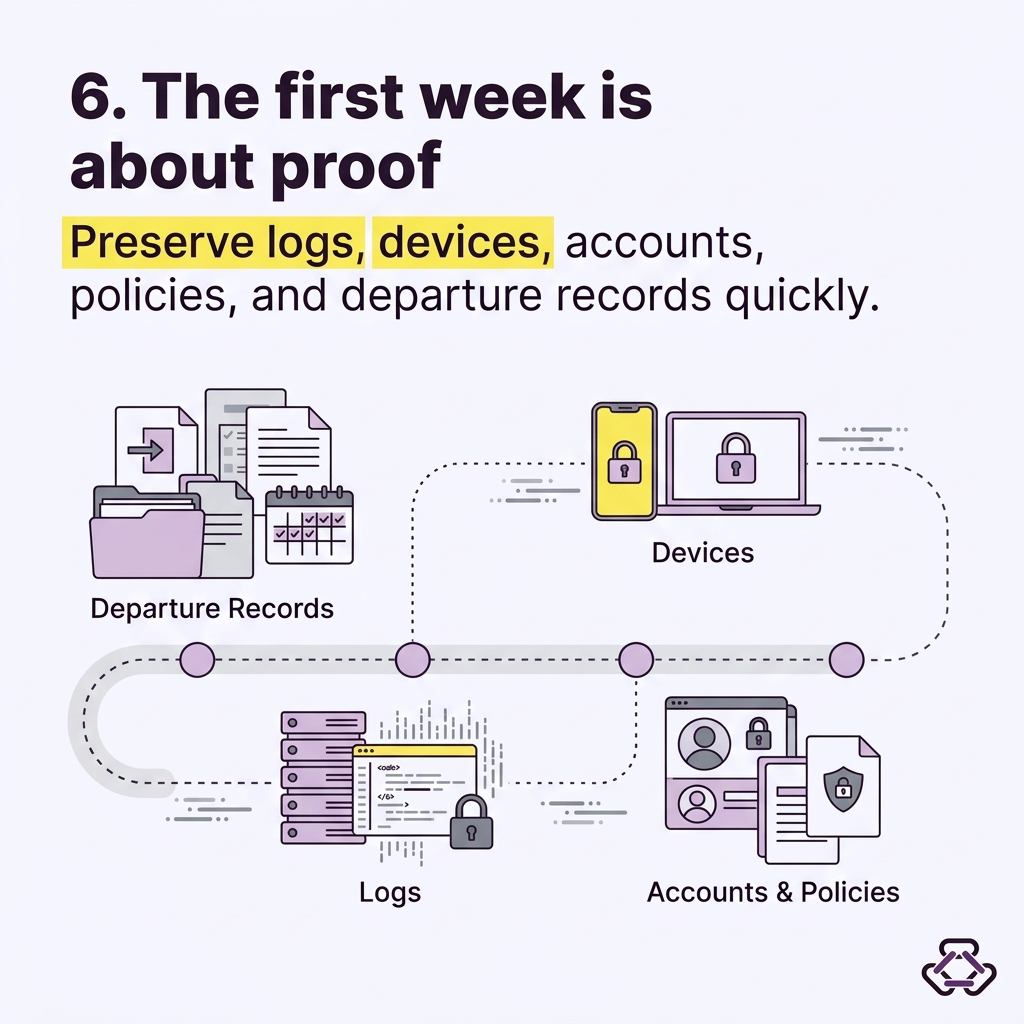
- 6. What Kind Of Proof Usually Matters Most In The First Week?
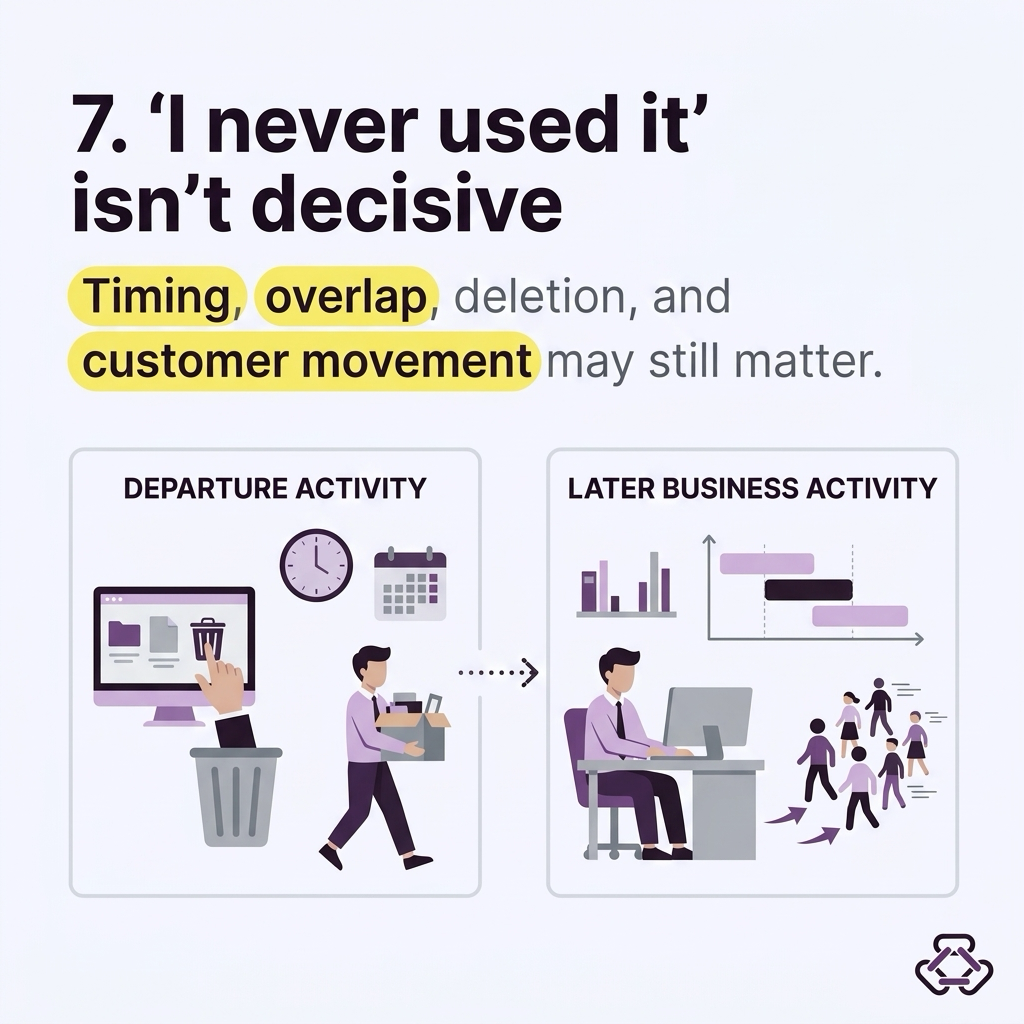
- 7. What If The Employee Says They Never Used The Files?
- 8. Is This Only A Civil Case, Or Could There Be Criminal Exposure Too?
- 9. What Damages Or Remedies Are Even Available?
- 10. When Does It Make Sense To Bring In A Trade Secret Attorney?
- Final Thoughts

Type
Great Grandchild
Status
Approved
Title (YouTube)
Images Failed (Social)
Images Failed (Social)
Do not index
Publish Date (TikTok)
Jan 7, 2027 16:15
Videos Post IDs (Social)
Hashtags (Social)
#LegalAdvice #LegalHelp #BusinessLitigation #TradeSecret
Caption
Caption X
Cover

OG Image

Alt Image Text
Flat vector illustration of a trade secret dispute involving client lists, pricing, and internal files leaving a company office.
Images

Videos
Publish Date (Social)
Dec 17, 2026 12:30
Scheduled (Social)
Scheduled (Social)
Images Posted (Social)
Images Posted (Social)
Videos Posted (Social)
Videos Posted (Social)
Videos Failed (Social)
Videos Failed (Social)
Featured
Created time
Apr 3, 2026 10:12 PM
Sub-item
Authors
CTA Practice Area (Social)
Business Litigation
TikTok Failed (Social)
TikTok Failed (Social)
Videos Post Links (Social)
YT Auto Captions Removed
TikTok Post Links (Social)
Images Post IDs (Social)
YT Post ID
Video Pending Manual (Social)
TikTok Posted (Social)
TikTok Posted (Social)
TikTok Post IDs (Social)
Video Cover (Social)
Images Post Links (Social)
First Comment (Social)
YT Embedded
Images Delete (Social)
Videos Delete (Social)
Carousel Video URL (Social)
10 Questions Companies Ask After Client Lists, Pricing, or Internal Files Walk Out the Door
When a departing employee leaves with a customer list, pricing spreadsheet, source code archive, sales playbook, or internal proposal deck, the first reaction is often a mix of panic and uncertainty. Was anything actually stolen? Is this a trade secret case? Can a court step in before the information spreads? And what happens if the files are already in a competitor’s hands?
Those questions are common because trade secret disputes move fast, and the early decisions can shape everything that follows. Federal law under the Defend Trade Secrets Act and state trade secret laws can offer powerful remedies, but these cases often turn on specifics: what the information was, who accessed it, what protections were in place, and what happened next. The law also draws an important line between lawful employee mobility and unlawful misuse of confidential business information. The broader legal framework around confidential data disputes and emergency relief helps explain why those distinctions matter so much.
In this post, you’ll learn the 10 questions companies often ask after client lists, pricing, or internal files walk out the door, along with what those questions often mean in practical terms and why an attorney may become important very quickly.
Scroll to the bottom for every post in this series.
1. Was The Information Actually A Trade Secret?
This is usually the first and biggest question.
Under the Uniform Trade Secrets Act framework, a trade secret generally is information that derives independent economic value from not being generally known and is subject to reasonable efforts to keep it secret. Cornell’s Legal Information Institute summarizes the standard this way. Federal law under the Defend Trade Secrets Act follows a similar structure for civil claims involving trade secrets used in interstate or foreign commerce. The federal statute is here.
That sounds abstract, but in real disputes the question often becomes much more concrete:
- Was the customer list public, or did it reflect curated buying history, preferences, margins, and decision-makers?
- Was the pricing information generic, or did it reveal discount strategy, deal thresholds, and internal margin tolerances?
- Were the internal files ordinary business records, or did they contain confidential process, product, engineering, or commercial strategy?
Older trade secret authorities have long recognized that a trade secret may include customer compilations, pricing methods, discount codes, and office-management methods when secrecy creates competitive value. Cornell’s reproduction of Restatement language reflects that point. More recent commentary from the American Bar Association also notes that courts regularly examine whether customer information and pricing data were actually kept secret and whether they carried competitive value in context. See this ABA discussion of recent employee-mobility and trade secret cases.
In general terms, the answer is often less about labels like “confidential” and more about evidence. If the company treated the material as sensitive, limited access, documented confidentiality obligations, and can explain why the information matters competitively, the claim may look very different than a case involving loosely shared files or public-facing contacts.
2. Does It Matter If The Person Helped Create The Files?
Yes, and it’s one of the most misunderstood issues in these disputes.
Employees often assume that if they helped build a customer list, created pricing templates, or drafted internal documents, they are free to take copies when they leave. Trade secret law usually looks at ownership and secrecy, not just authorship. A person can contribute to the creation of valuable internal information and still face claims if they retain, disclose, or use it outside authorized boundaries.
That is one reason companies often ask whether the files were “their files” or “company files.” In many cases, the better question is whether the information belonged to the business, was developed within the scope of employment, was stored on company systems, or was governed by confidentiality agreements and access controls.
The U.S. Patent and Trademark Office’s trade secret toolkit highlights common “reasonable efforts” companies use to protect trade secrets, including limiting access, using confidentiality agreements, training employees, labeling confidential materials, controlling digital access, and confirming the return or destruction of confidential information at departure. USPTO’s toolkit discusses these measures directly.
So even where a departing employee had a hand in developing the files, that fact alone may not answer whether taking or using them was allowed. An attorney might help sort out the difference between personal know-how, general skill and experience, and protected company information.
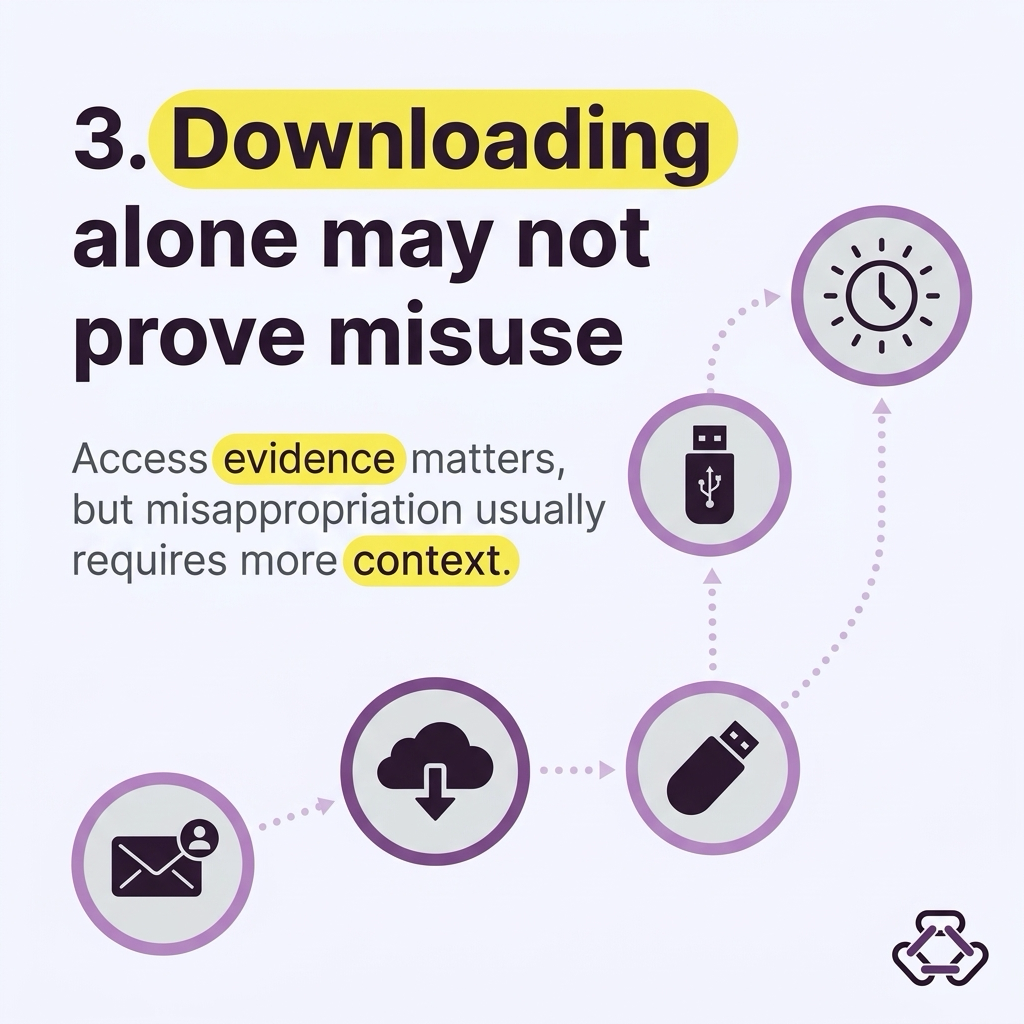
3. If It Was Only Downloaded Or Emailed, Does That Count As Misappropriation?
Sometimes yes, sometimes not automatically.
A suspicious download, mass forwarding to a personal email account, USB transfer, screenshot capture, cloud sync, or printing spree often raises immediate concern. But in litigation, “they took files” and “they misappropriated trade secrets” are related, not identical, ideas.
A trade secret claim usually asks several separate questions:
- Was the information protectable?
- Was it acquired, disclosed, or used through improper means or in breach of a duty?
- Did the defendant actually use it, disclose it, retain it, or threaten to do so?
That is why companies often spend the first days gathering forensic and access evidence. Login records, download logs, forwarding history, cloud activity, device connections, and post-resignation account behavior may become central. If you want a deeper look at the proof issues that often decide these disputes, it helps to understand how businesses typically try to establish trade secret status, access, and misuse.
Federal law allows civil claims where a trade secret is misappropriated, and it authorizes injunctions against actual or threatened misappropriation, plus damages, reasonable royalties, and in some cases exemplary damages and attorney’s fees. Those remedies appear in 18 U.S.C. § 1836.
In practical terms, a mere download may not prove full-blown misuse by itself, but it can become very important evidence, especially when paired with timing, concealment, competitor contact, deletion activity, or sudden customer movement.
4. What If The Files Included Client Lists Or Pricing Instead Of Source Code Or A Formula?
Many companies assume trade secret law mainly protects technical material like algorithms, product formulas, and manufacturing methods. In reality, business-side information can also be central to these cases.
Customer lists may be highly valuable when they are not just names pulled from public sources, but curated records showing buying patterns, preferences, contacts, contract timing, churn risk, pricing history, and internal relationship notes. Pricing data can also carry trade secret significance when it reveals how a business structures deals, discounts strategically, or protects margins.
Cornell’s trade secret references and Restatement materials both recognize that trade secret protection can extend beyond technical innovations to business information, including specialized customer lists and pricing-related systems when the information is secret and economically valuable. See Cornell’s trade secret overview and the Restatement excerpt hosted by Cornell.
That said, these cases can become harder when the alleged secret is mixed with public or easily recreated information. ABA commentary has noted decisions where plaintiffs ran into trouble because customer information was shared broadly, given to third parties, or was otherwise accessible in ways that weakened secrecy arguments. This ABA 2024 roundup touches on that issue.
So when client lists or pricing walk out the door, the real issue often is not whether those categories can ever qualify. They often can. The harder question is whether this specific list or this specific pricing file was protected and competitively valuable in a way the law recognizes.
5. Can A Court Stop The Former Employee Or Competitor Right Away?
Sometimes, yes. But “right away” usually depends on speed, evidence, and the risk of ongoing harm.
Under the Defend Trade Secrets Act, courts may grant injunctions to prevent actual or threatened misappropriation, though the statute also limits orders that would effectively block someone from working based merely on what they know. The statute says restrictions on employment have to be based on evidence of threatened misappropriation, not simply the employee’s knowledge. That limitation is written into 18 U.S.C. § 1836.
This is a major point in modern trade secret disputes. Many employers are rethinking how to protect confidential information because noncompete law has been in flux. The FTC states that its 2024 final noncompete rule is not in effect and not enforceable, after court action blocked enforcement; the agency appealed and later took steps in 2025 to dismiss its appeal. The FTC’s own fact sheet gives that status update. As a result, confidentiality agreements, access controls, and trade secret claims remain especially important tools in many disputes.
Courts can also issue ex parte seizure orders under the DTSA in extraordinary circumstances, though Congress designed that remedy narrowly. The statute allows seizure only in exceptional situations. Congressional materials similarly describe injunctions, damages, reasonable royalties, exemplary damages up to double compensatory damages, and fee awards in certain cases. A Congressional Research Service summary outlines those remedies.
In practical terms, companies asking about emergency relief are usually also asking whether they can show immediacy: active solicitation, imminent disclosure, product launch risk, ongoing retention, or evidence that the files are already being used.
6. What Kind Of Proof Usually Matters Most In The First Week?
The first week often revolves around preservation and reconstruction.
Common early evidence includes:
- access logs
- email forwarding records
- cloud storage activity
- USB connection logs
- device return condition
- printing history
- messaging app use
- exit interview documents
- confidentiality agreements
- acceptable use policies
- screenshots, photos, or copied folders
- sudden customer contact by a former employee or new employer
Just as important is preserving the company’s own records. Electronic evidence issues can become central quickly, and the broader litigation world treats preservation of relevant electronically stored information as a core early obligation once litigation is reasonably anticipated. The Sedona Conference’s primer discusses preservation and legal hold concepts for ESI. Federal courts and litigants regularly focus on preserving devices, accounts, and document repositories before evidence is lost or overwritten. This federal e-discovery resource discusses the scope of preservation across devices, email, and file locations.
That early evidence often shapes whether a company pursues negotiation, forensic inspection, emergency motion practice, or a full damages case. Some businesses lose leverage here by waiting too long, preserving too little, or failing to isolate the systems most likely to show what happened.
7. What If The Employee Says They Never Used The Files?
That defense comes up often, and it does not always end the case.
A company may still ask:
- Why were the files downloaded just before resignation?
- Why were they sent to a personal account?
- Why was deletion activity concentrated near departure?
- Why did the employee’s new role closely overlap the protected material?
- Why did clients move right after the departure?
- Why does the competitor’s proposal or pricing suddenly look familiar?
Trade secret law can reach actual or threatened misappropriation, not only a clean confession of active use. The DTSA expressly authorizes injunctions for actual or threatened misappropriation. At the same time, courts are cautious about turning trade secret law into a disguised noncompete rule. Congress and later commentary have emphasized that employment restrictions cannot rest solely on what a person remembers. Congressional and CRS materials note this balance.
This is where facts become decisive. Some cases rise or fall on circumstantial evidence, forensics, timing, side-by-side comparisons, and whether the alleged secrets appear in later business activity. ABA case updates regularly show how courts scrutinize proof of use, access, secrecy, and business overlap in detail. See this ABA decisions roundup for examples.
In other words, “I never used it” may be the beginning of the evidentiary fight, not necessarily the end of it.
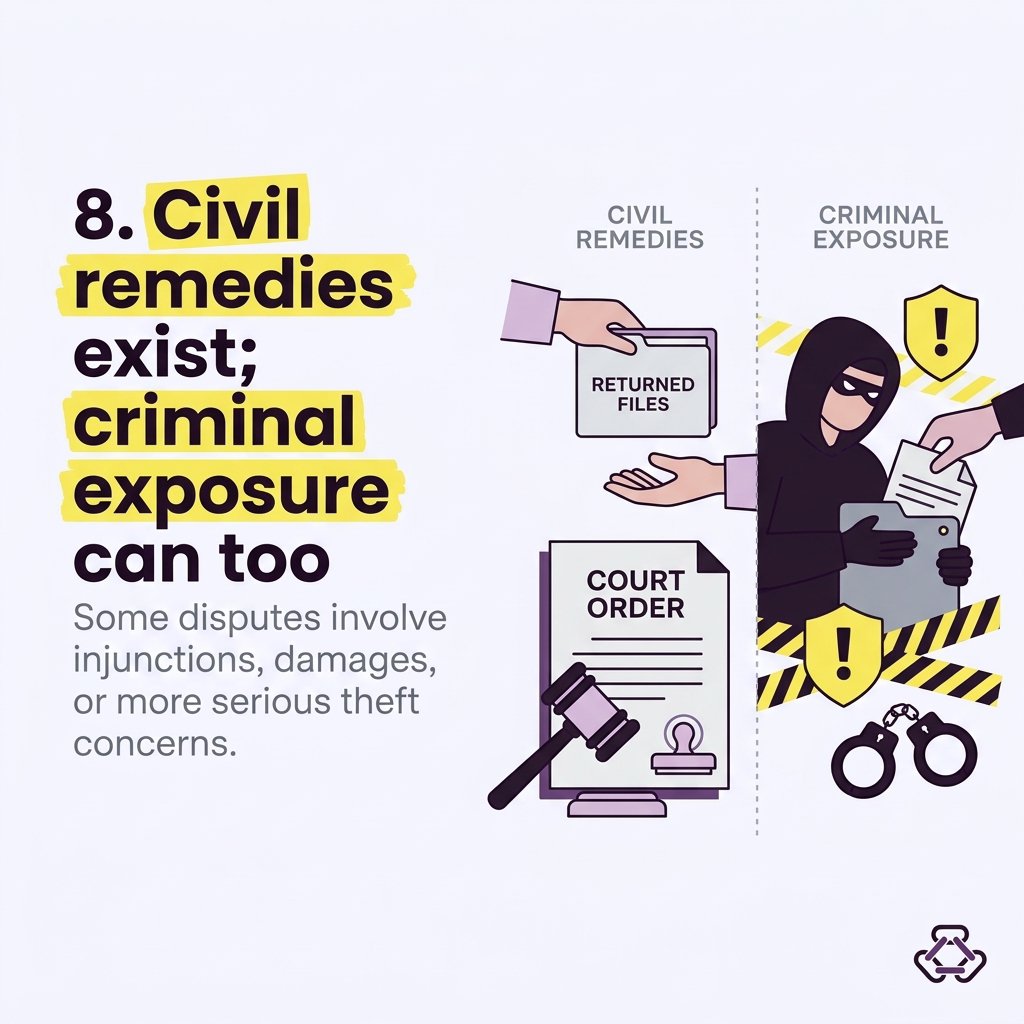
8. Is This Only A Civil Case, Or Could There Be Criminal Exposure Too?
Sometimes both are on the table.
Most businesses start by evaluating civil remedies: injunctions, return of materials, forensic inspection, damages, and negotiated restrictions. But some trade secret theft scenarios may also raise criminal issues under the Economic Espionage Act, especially where there is intentional theft, concealment, foreign transfer risk, or coordinated misconduct.
Cornell notes that misappropriating a trade secret used in interstate or foreign commerce can trigger criminal consequences under federal law. That overview appears here. The Department of Justice has also brought criminal trade secret cases involving employees who took proprietary technical information from U.S. companies. This DOJ case example describes one such prosecution.
For many companies, the immediate question is not whether prosecutors will become involved, but whether the facts suggest a routine departure dispute or something more serious: covert copying, wiped devices, false statements, external transfers, or evidence pointing to intentional theft for competitive advantage.
An attorney may help evaluate how those facts fit into the larger picture, including whether the company’s communications and preservation steps align with possible civil claims and any parallel criminal concerns.
9. What Damages Or Remedies Are Even Available?
Companies often ask this after the initial shock wears off.
Under the DTSA, available remedies can include injunctions, damages for actual loss, damages for unjust enrichment not otherwise accounted for, or a reasonable royalty in some cases. If misappropriation is found to be willful and malicious, exemplary damages up to two times compensatory damages may be available, and attorney’s fees can also be awarded in certain bad-faith or willful-misappropriation situations. Those remedies are set out in the statute.
Congressional summaries of trade secret law describe the same general menu of remedies. The CRS material is helpful here.
But the more urgent issue in many cases is not final damages. It is containment:
- getting devices back
- preserving evidence
- stopping disclosure
- preventing further customer contact using protected information
- securing certifications of return or deletion
- arranging neutral forensic review where appropriate
That is why some of the most important decisions happen early, before a damages model is fully developed. Businesses facing these disputes often look for counsel who can handle both emergency relief and the technical proof issues that support it. If the immediate challenge is figuring out what to do next, it may help to understand how companies often respond when a former employee or competitor takes confidential information.
10. When Does It Make Sense To Bring In A Trade Secret Attorney?
Usually earlier than many companies expect.
Trade secret disputes often combine employment issues, restrictive covenants, digital forensics, emergency motion practice, customer relationship facts, and state-specific unfair competition law. Delay can complicate all of that. Evidence can disappear. Devices can be wiped. Customers can move. Internal narratives can harden before the facts are fully known.
Early counsel involvement often helps companies evaluate questions like:
- Is the information likely protectable?
- What claims are available under federal and state law?
- Is emergency relief realistic?
- What evidence needs to be preserved immediately?
- How should the company communicate with the former employee, new employer, customers, or vendors?
- Is there risk in overreaching?
- Is there a business resolution worth exploring before litigation escalates?
These are not always simple “file suit or don’t file suit” decisions. In many matters, the real value comes from fast factual assessment, careful preservation, and a strategy grounded in objective evidence rather than assumptions.
That becomes especially important because courts often look closely at whether the company itself behaved like the information was valuable and secret. Businesses that want to strengthen their position often spend time reviewing the common mistakes that can make emergency trade secret relief harder to obtain, including weak access controls, inconsistent labeling, delayed action, and poor departure protocols.
Final Thoughts
When client lists, pricing files, or internal business records walk out the door, the instinct to ask “Do we have a case?” is understandable. But in many situations, the better early questions are more specific: what exactly left, how valuable was it, how well was it protected, who had access, what evidence exists, and what is happening now?
Trade secret and confidential information disputes often move quickly because the business harm can spread quickly too. A company may not know on day one whether the issue involves a misunderstanding, a preventable confidentiality breach, or a full misappropriation claim. What often matters most is building a clear factual picture while the evidence is still fresh.
Visit ReferU.AI to get matched with an attorney who has demonstrable experience in cases like yours — for free.
