Table of Contents
- How to Prove Trade Secret Status, Access, and Misuse in a Business Dispute
- Why These Three Issues Usually Drive The Case
- Step 1: Identify The Alleged Trade Secret With Precision
- Why Specificity Matters
- Evidence That Helps Show Trade Secret Status
- Step 2: Show The Information Had Independent Economic Value
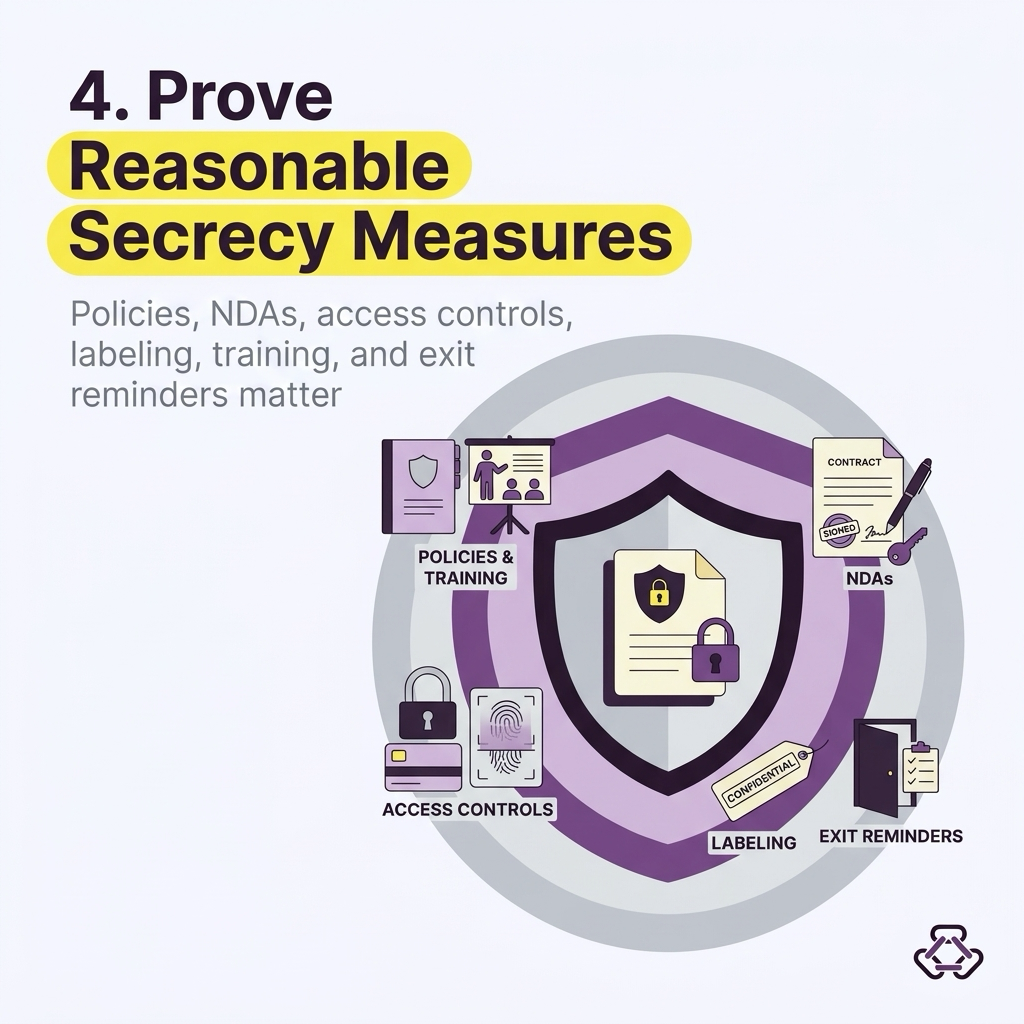
- Step 3: Prove Reasonable Measures To Keep The Information Secret
- Common Proof Of Reasonable Measures
- The Practical Problem With “Everyone Had Access”
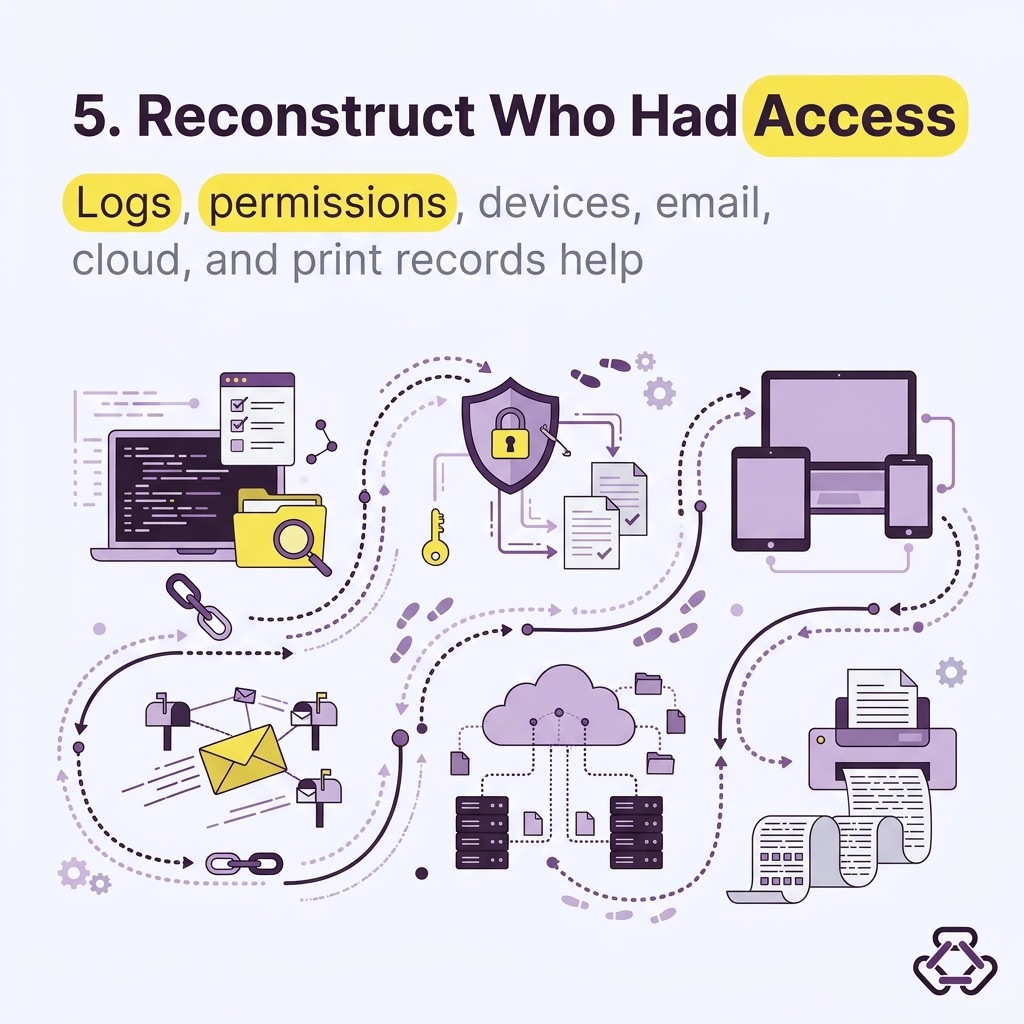
- Step 4: Build The Access Story
- Sources Of Access Evidence
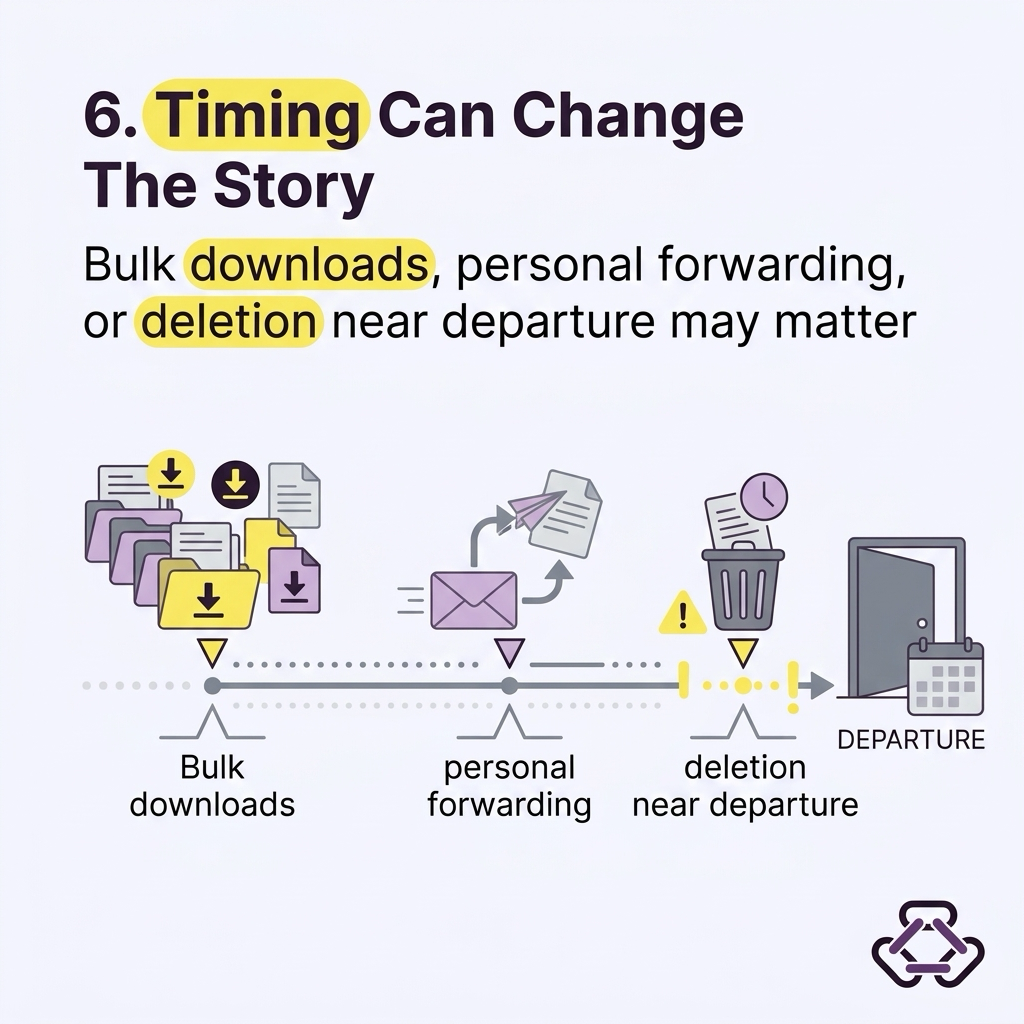
- Timing Often Matters As Much As Permission
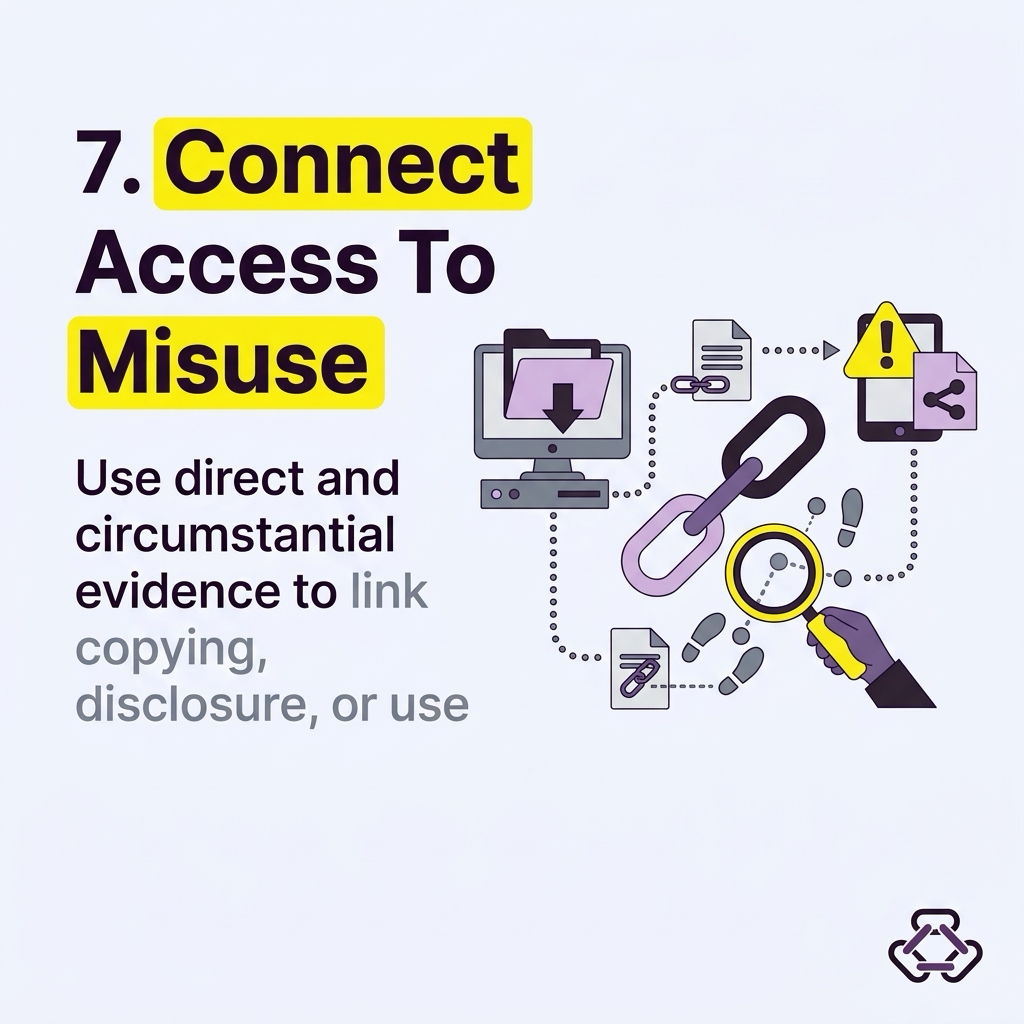
- Step 5: Connect Access To Misuse
- Direct Evidence Of Misuse
- Circumstantial Evidence Of Misuse
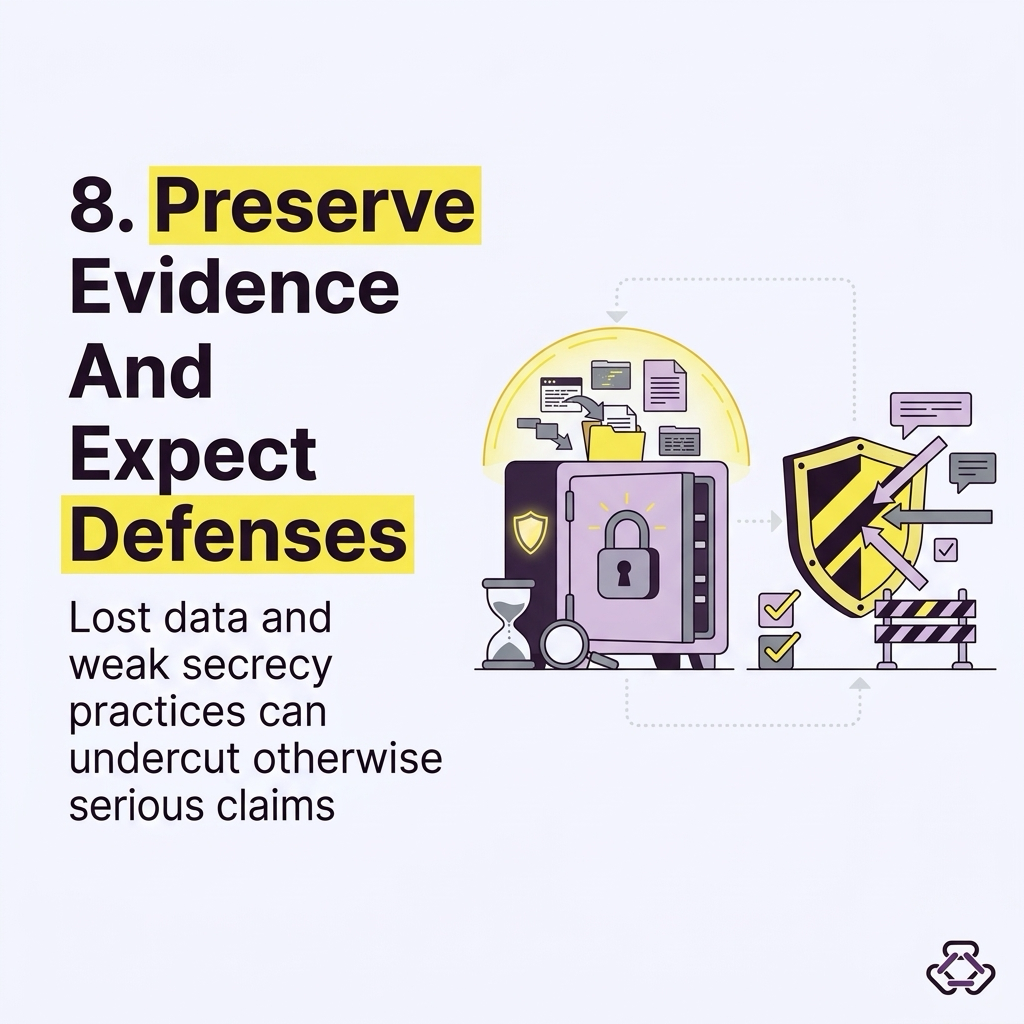
- Step 6: Preserve The Digital Evidence Early
- Step 7: Anticipate The Other Side’s Defenses
- “It Wasn’t Secret”
- “There Were No Reasonable Measures”
- “The Person Had Permission”
- “We Built It Ourselves”
- “The Plaintiff Cannot Identify The Trade Secret”
- Step 8: Understand Why Injunction Evidence Can Look Different From Damages Evidence
- Common Evidence Buckets In Real Trade Secret Disputes
- 1. Contractual Evidence
- 2. Policy Evidence
- 3. Technical Evidence
- 4. Business Value Evidence
- 5. Timeline Evidence
- 6. Comparison Evidence
- Where Businesses Commonly Undercut Their Own Proof
- How An Attorney May Help Organize The Proof
- A Short Summary

Type
Great Grandchild
Status
Approved
Title (YouTube)
Images Failed (Social)
Images Failed (Social)
Do not index
Publish Date (TikTok)
Jan 8, 2027 07:15
Videos Post IDs (Social)
Hashtags (Social)
#LegalAdvice #LegalHelp #BusinessLitigation #TradeSecret
Caption
Caption X
Cover

OG Image

Alt Image Text
Flat vector illustration of trade secret status and misuse in a business dispute, showing secure files, access tracking, cloud data, and evidence review.
Images

Videos
Publish Date (Social)
Dec 17, 2026 13:30
Scheduled (Social)
Scheduled (Social)
Images Posted (Social)
Images Posted (Social)
Videos Posted (Social)
Videos Posted (Social)
Videos Failed (Social)
Videos Failed (Social)
Featured
Created time
Apr 3, 2026 10:12 PM
Sub-item
Authors
CTA Practice Area (Social)
Business Litigation
TikTok Failed (Social)
TikTok Failed (Social)
Videos Post Links (Social)
YT Auto Captions Removed
TikTok Post Links (Social)
Images Post IDs (Social)
YT Post ID
Video Pending Manual (Social)
TikTok Posted (Social)
TikTok Posted (Social)
TikTok Post IDs (Social)
Video Cover (Social)
Images Post Links (Social)
First Comment (Social)
YT Embedded
Images Delete (Social)
Videos Delete (Social)
Carousel Video URL (Social)
How to Prove Trade Secret Status, Access, and Misuse in a Business Dispute
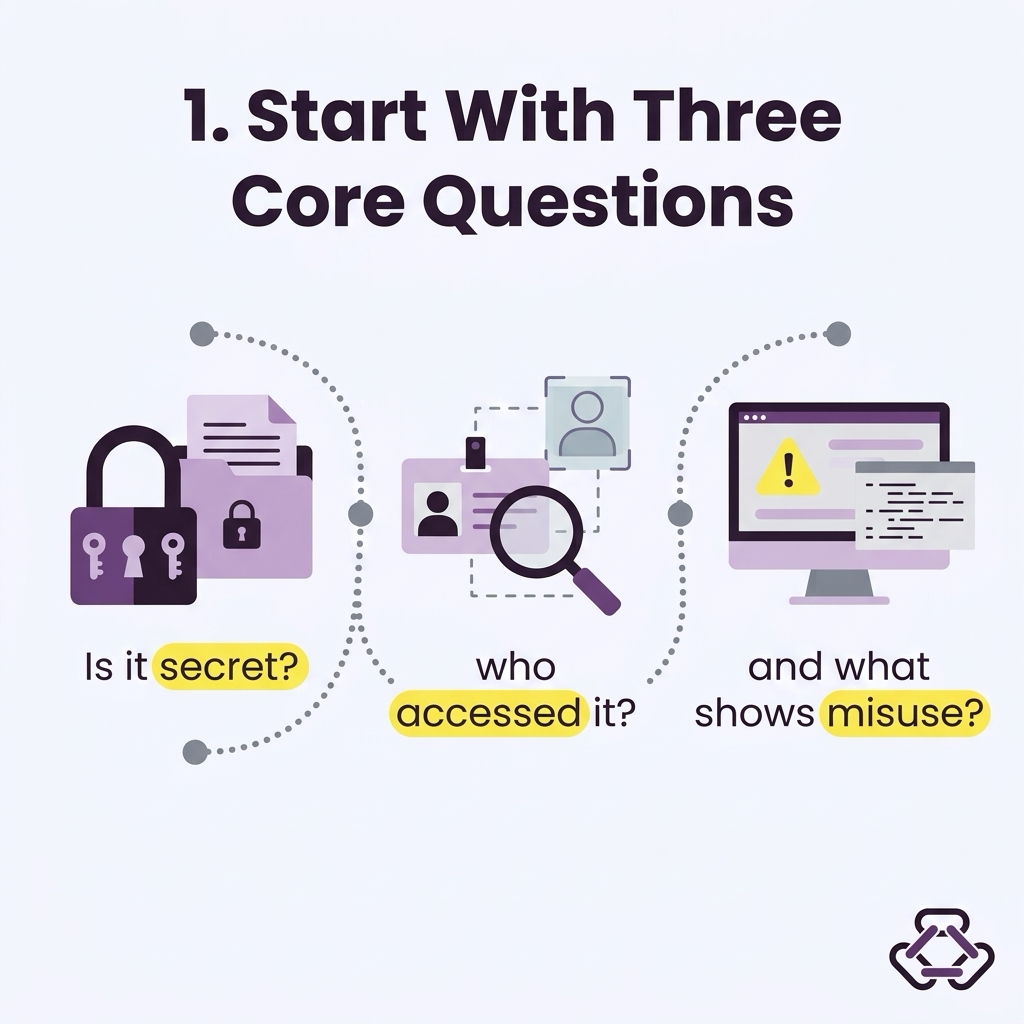
A trade secret case often turns on three practical questions: Was the information actually a trade secret? Who had access to it? And what facts point to misuse? Those questions sound simple, but in real business disputes, the proof can get technical fast.
That is especially true when the dispute involves former employees, outside vendors, cloud systems, personal devices, or large downloads that happened quietly over time. A company may believe valuable information walked out the door. The harder part is organizing the evidence in a way that fits the legal framework courts actually use.
In this post you’ll learn how companies often prove trade secret status, access, and misuse in litigation, what kinds of documents and digital evidence tend to matter most, and where businesses sometimes weaken their own claims. If you want a broader overview of how these disputes usually unfold, this guide on what trade secret cases often involve from start to finish may help as background.
Scroll to the bottom for every post in this series.
Why These Three Issues Usually Drive The Case
Under the federal Defend Trade Secrets Act, a plaintiff generally has to show that the information qualifies as a trade secret and that it was misappropriated. The statute defines a trade secret broadly, but it also requires proof that the owner took reasonable measures to keep it secret and that the information derived independent economic value from not being generally known. The DTSA also defines misappropriation to include improper acquisition, disclosure, or use. 18 U.S.C. §§ 1836 and 1839; LII’s overview of trade secret law.
State-law claims often follow a similar structure because most states have adopted some version of the Uniform Trade Secrets Act. As the Legal Information Institute notes, the UTSA definition focuses on information that has economic value because it is not generally known and that is subject to reasonable efforts to maintain secrecy. LII’s UTSA summary.
That is why trade secret disputes often become evidence disputes about:
- Status: what the information is, why it matters commercially, and how it was protected
- Access: who could reach it, download it, forward it, print it, or copy it
- Misuse: what happened next, and whether the evidence supports improper acquisition, disclosure, or use
Step 1: Identify The Alleged Trade Secret With Precision
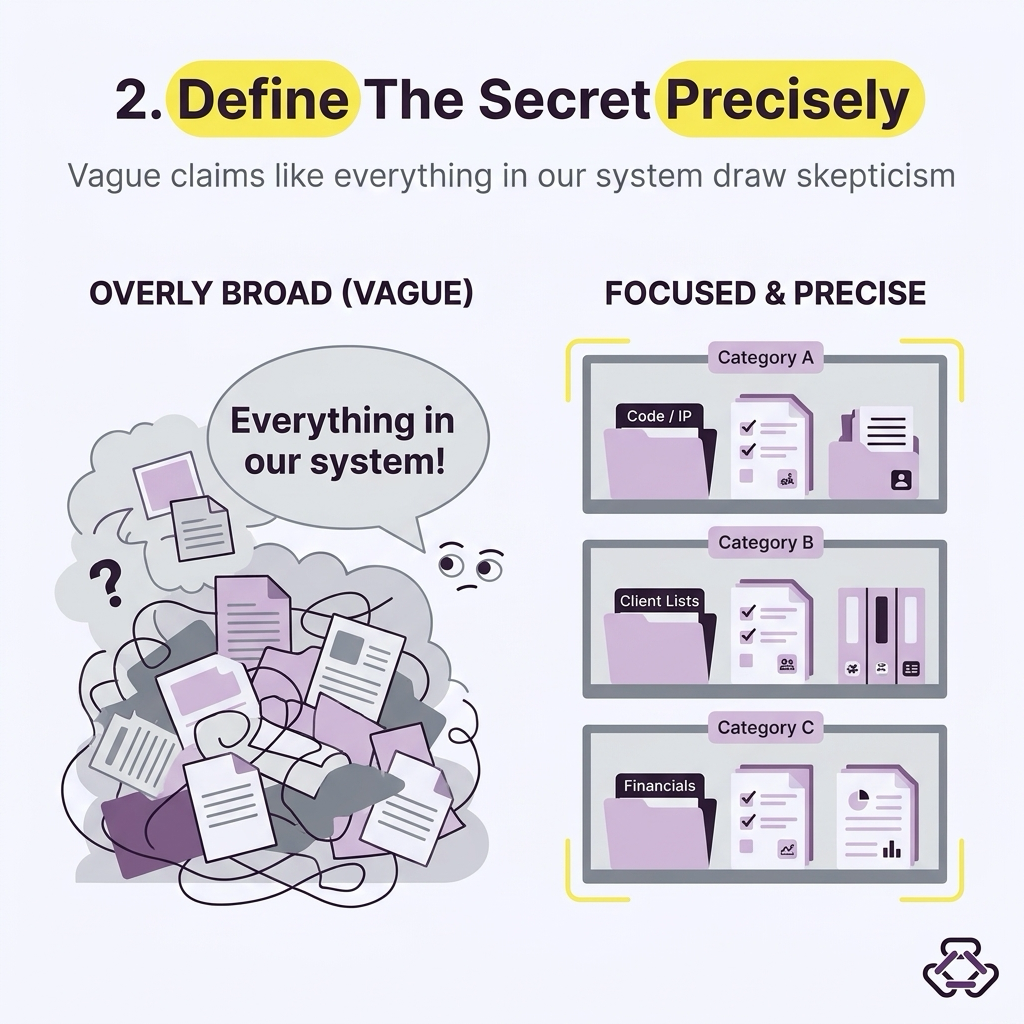
One of the first challenges in any trade secret case is defining the secret itself. Courts often look skeptically at descriptions that are too vague, too broad, or framed as “everything in our system.” In practical terms, companies usually do better when they can identify specific categories of information and explain why each category matters.
Examples often include:
- source code or technical specifications
- manufacturing methods or formulas
- pricing models
- customer lists with nonpublic buying preferences
- supplier terms
- product roadmaps
- internal cost structures
- nonpublic market strategy documents
The legal definition is broad enough to include formulas, patterns, compilations, programs, devices, methods, techniques, and processes, among other forms of information. 18 U.S.C. § 1839; LII summary.
Why Specificity Matters
A judge or jury usually wants to understand what exactly was secret before moving to whether it was taken or used. A company may have a stronger presentation when it can separate:
- public information
- internal but routine information
- confidential information that is useful but not trade-secret level
- truly sensitive information that has independent economic value because competitors do not know it
That distinction matters because not every internal file becomes a trade secret simply because it sits behind a login. The Congressional Research Service has noted that trade secrets can include business and financial information such as supplier lists, but the information still has to meet the legal test for secrecy and value. CRS overview of U.S. trade secret law.
Evidence That Helps Show Trade Secret Status
Businesses often rely on a combination of:
- internal data inventories
- confidentiality labels on documents
- restricted folder structures
- access-control settings
- employee handbooks and policies
- NDAs, invention agreements, and confidentiality clauses
- customer or vendor confidentiality provisions
- testimony explaining why the information is competitively valuable
- proof the material is not published or readily ascertainable
The “reasonable measures” piece is especially important. Commentary collected by the World Intellectual Property Organization highlights common protective measures such as confidentiality provisions in employment contracts, company confidentiality policies, and exit reminders. NIST has likewise described secure environments, access limitations, and data-protection controls as part of handling sensitive confidential business information. NIST on handling confidential information.
Step 2: Show The Information Had Independent Economic Value
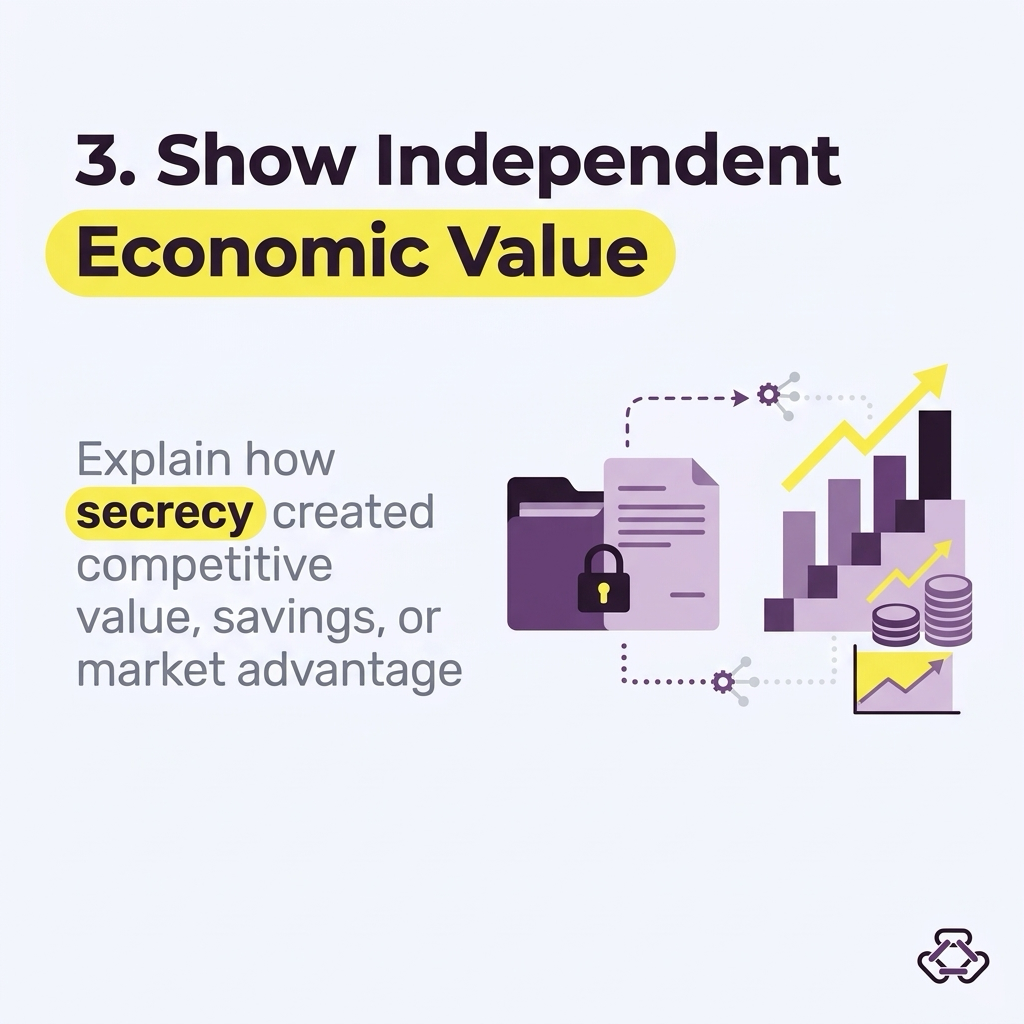
After identifying the information, the next issue is often why secrecy mattered economically. Courts generally look for evidence that the information gave the company an advantage, saved time or money, or could help a competitor if obtained.
That proof may come from:
- development costs
- research time
- margins tied to the information
- evidence competitors do not have the same information
- testimony that the information would shorten a competitor’s path to market
- proof that customer relationships were built through nonpublic data rather than publicly available names
For example, a customer list may be more defensible when it includes nonpublic decision-maker details, historical purchasing behavior, pricing tolerances, renewal timing, technical requirements, or internal notes that would not be available from ordinary research. By contrast, a list of names taken from public sources may be harder to frame as a trade secret. The UTSA-based approach reflected by LII turns on whether the information is not generally known and not readily ascertainable by proper means. LII trade secret overview.
In some regulated contexts, federal regulations use similar logic and ask whether the material is commercially valuable and customarily kept in strict confidence. See, for example, 21 C.F.R. § 20.61 and 40 C.F.R. § 350.7.
Step 3: Prove Reasonable Measures To Keep The Information Secret
This is often where businesses unexpectedly lose leverage. A company may sincerely view information as secret, but litigation usually focuses on what the company actually did to protect it.
Courts often evaluate whether secrecy measures were reasonable under the circumstances, not whether they were perfect. That usually leads to a fact-intensive review of both legal controls and technical controls. The DTSA’s text expressly requires that the owner take “reasonable measures” to keep the information secret. 18 U.S.C. § 1839.
Common Proof Of Reasonable Measures
Evidence often includes:
- role-based access restrictions
- password protection or multi-factor authentication
- encryption
- document labeling
- confidentiality training
- onboarding acknowledgments
- NDAs with employees, contractors, and vendors
- segmentation of repositories
- approval workflows for exports or downloads
- device return procedures
- exit interviews reminding departing workers of confidentiality obligations
Public guidance and commentary consistently point in this direction. WIPO notes that written confidentiality obligations, policies, and tailored clauses for employees with access to sensitive information are common protective measures. WIPO commentary. NIST’s materials likewise describe limiting distribution, maintaining secure environments, and applying data-protection controls to confidential business information. NIST.
The Practical Problem With “Everyone Had Access”
A recurring issue in trade secret cases is overexposure. If a company let broad groups of employees access sensitive files without a clear business reason, never labeled them confidential, allowed unrestricted downloads to personal devices, and had no meaningful exit controls, the defense may argue the company did not treat the material as secret in practice.
That does not always end the claim. But it can make the proof harder, especially where the alleged secret overlaps with routine business materials.
Step 4: Build The Access Story
Once the trade secret itself is identified, the next major issue is access: who had the opportunity to take or use it?
In many cases, access is not disputed in the broad sense. A former employee may have legitimately viewed the information while employed. The dispute often centers on the scope and timing of access and whether access expanded or changed around departure, competition, or failed negotiations.
Sources Of Access Evidence
Businesses often use:
- identity and access management logs
- shared-drive permissions
- cloud activity logs
- email forwarding history
- USB or external drive logs
- print logs
- VPN logs
- Slack, Teams, or messaging exports
- mobile-device management records
- badge access records
- source-code repository logs
The Federal Rules of Civil Procedure allow discovery of electronically stored information, and Rule 34 specifically addresses the production, inspection, copying, testing, or sampling of documents and ESI. Rule 34.
In practical terms, that means the access question is often reconstructed through digital evidence, sometimes with the help of forensic experts. The Sedona Conference has published commentary devoted to forensic issues in trade secret disputes and to equitable remedies in these cases, reflecting how central electronic evidence has become. Sedona on forensic issues; Sedona commentary on equitable remedies.
Timing Often Matters As Much As Permission
A person may have had authorized access during employment, but the timeline may still support suspicion if the records show:
- unusual bulk downloads shortly before resignation
- access to projects outside the employee’s normal role
- forwarding to personal email
- late-night file transfers
- use of unauthorized storage devices
- downloads after accepting a competitor position
- deletion activity immediately before departure
That kind of evidence does not automatically prove misuse. But it often becomes part of a larger circumstantial case.
Step 5: Connect Access To Misuse
Misuse is where many businesses feel the strongest intuition and the weakest proof. A company may believe, often with good reason, that someone took valuable information. But a court usually looks for evidence that ties access to improper acquisition, disclosure, or use.
The DTSA and UTSA frameworks both recognize that improper means or breach of confidence can support a claim. At the same time, lawful alternatives such as independent development and reverse engineering remain important defenses. LII trade secret overview; CRS discussion of misappropriation and fair means.
Direct Evidence Of Misuse
Direct evidence can include:
- copied files found on personal devices
- confidential documents attached to personal email
- cloud uploads to personal accounts
- external-drive transfers
- admissions in messages or interviews
- competitor documents containing identical proprietary material
- source code or design files that match unusually closely
Circumstantial Evidence Of Misuse
More often, misuse is shown circumstantially, through patterns like:
- a former employee downloading sensitive materials, then quickly launching a competing product
- a new employer suddenly mirroring internal pricing or strategy
- confidential customer notes appearing in solicitation efforts
- metadata showing copying, renaming, or migration of files
- deletion activity that suggests concealment
- overlap between the taken materials and the defendant’s later conduct
This is where counsel often works with forensic specialists to map file names, timestamps, user accounts, devices, and destination systems into a usable narrative.
Step 6: Preserve The Digital Evidence Early
In trade secret disputes, the case can be won or lost before a complaint is even filed if relevant data disappears. Electronically stored information may live in email, laptops, phones, cloud drives, collaboration tools, code repositories, personal accounts, and backup systems. Once litigation is reasonably anticipated, preservation issues become serious.
Rule 37(e) addresses failures to preserve ESI and authorizes certain measures when electronically stored information that should have been preserved is lost because a party failed to take reasonable steps and the information cannot be restored or replaced through additional discovery. Rule 37.
That is one reason many trade secret matters move quickly to:
- preserve devices
- suspend auto-delete policies
- secure cloud logs
- collect relevant custodians’ data
- image laptops or phones where appropriate
- maintain chain-of-custody records
Discovery rules also allow courts to enter protective orders to guard trade secrets and other confidential information during litigation. Rule 26. The Sedona Conference likewise emphasizes protective measures and judicial management of sensitive information during discovery. Sedona Principle 9.
Step 7: Anticipate The Other Side’s Defenses
A strong trade secret claim often accounts in advance for the defenses that commonly appear.
“It Wasn’t Secret”
The defense may argue the information was public, widely shared internally, disclosed to third parties without safeguards, or readily ascertainable through proper means. That argument often targets weak confidentiality practices.
“There Were No Reasonable Measures”
This usually focuses on gaps in policy and practice: no NDAs, broad access, no labeling, no technical controls, no exit reminders, or no documentation showing the business treated the information as sensitive.
“The Person Had Permission”
Authorized access during employment can complicate the case, but it is not the end of the analysis. Misappropriation can still arise from improper disclosure or use, or from acquisition through breach of duty or confidentiality obligations. LII trade secret overview.
“We Built It Ourselves”
Independent development is a classic defense. The plaintiff may respond by looking closely at the timeline, similarities, metadata, communications, and whether the speed of development appears difficult to explain without use of the confidential material.
“The Plaintiff Cannot Identify The Trade Secret”
This defense often gains traction when the plaintiff relies on sweeping categories without explaining what is actually secret and why.
Step 8: Understand Why Injunction Evidence Can Look Different From Damages Evidence
Many companies first focus on emergency relief. In that setting, the immediate question is often whether the evidence supports an injunction aimed at preventing further use or disclosure while the case proceeds.
Under the DTSA, courts may grant injunctions, though the statute places limits on orders that would prevent a person from entering into an employment relationship and bars injunctions that conflict with applicable state laws restricting restraints on lawful professions or businesses. 18 U.S.C. § 1836.
That means the evidence for early relief often emphasizes:
- immediacy of the risk
- ongoing possession of confidential data
- continuing access or threatened disclosure
- overlap between the information and the defendant’s new role
- forensic signs of copying or transfer
- why money alone may not fully address the harm
Later in the case, damages evidence may expand to include unjust enrichment, actual loss, and in some cases exemplary damages and attorney’s fees where the statute’s standards are met. 18 U.S.C. § 1836.
Common Evidence Buckets In Real Trade Secret Disputes
In practical terms, businesses often end up gathering proof from six recurring buckets.
1. Contractual Evidence
This includes NDAs, employment agreements, invention-assignment agreements, vendor contracts, and confidentiality provisions.
2. Policy Evidence
This includes handbooks, security policies, data-classification rules, acceptable-use policies, remote-work policies, and exit procedures.
3. Technical Evidence
This includes permissions, logs, endpoint alerts, download histories, cloud sync data, source-control history, and forensic images.
4. Business Value Evidence
This includes development cost records, strategy documents, product roadmaps, customer intelligence, and testimony on competitive advantage.
5. Timeline Evidence
This includes resignation notices, interviews with competitors, creation dates, deletion events, file transfers, customer outreach, and competing product launches.
6. Comparison Evidence
This includes side-by-side review of documents, code, designs, pricing structures, customer files, or internal planning materials.
A trade secret case often gets stronger when these categories reinforce one another rather than standing alone.
Where Businesses Commonly Undercut Their Own Proof
Even sophisticated companies sometimes create avoidable problems. Common issues include:
- calling information “trade secret” in litigation but not treating it that way beforehand
- failing to identify exactly what was taken
- waiting too long to preserve laptops, phones, and logs
- relying on assumptions instead of forensic review
- mixing public, confidential, and trade-secret material together without distinction
- ignoring the role of third-party vendors, contractors, and personal accounts
- overclaiming broad swaths of information that a court may view as ordinary business data
This is one reason early case framing matters so much. The strongest cases often present a narrow, evidence-based theory rather than an all-purpose accusation.
How An Attorney May Help Organize The Proof
Trade secret disputes sit at the intersection of business facts, employment issues, digital forensics, civil procedure, and emergency remedies. An attorney with relevant experience in highly similar matters may help determine:
- which information is most defensible as a trade secret
- whether the existing secrecy measures are likely to matter
- what preservation steps may reduce later evidentiary problems
- whether the facts point more toward injunction strategy, damages strategy, or both
- how to pursue discovery without disclosing more sensitive information than necessary
That fit can matter because the useful evidence in one case may look very different in another. A software case may revolve around repository logs and code comparison. A sales case may turn on CRM exports, pricing files, and customer migration patterns. A manufacturing case may focus on process documents, formulas, and vendor communications.
A Short Summary
To prove a trade secret case, businesses often work through three connected questions.
First, trade secret status usually depends on identifying specific information, explaining its economic value, and showing reasonable secrecy measures. Second, access is often reconstructed through contracts, permissions, logs, devices, and timing. Third, misuse is commonly proven through a mix of direct and circumstantial evidence, especially digital evidence that connects access to improper acquisition, disclosure, or use.
When those elements are documented early and presented clearly, the case tends to be easier to understand. When they are vague, overbroad, or poorly preserved, even a serious problem can become harder to prove.
Visit ReferU.AI to get matched with an attorney who has demonstrable experience in cases like yours — for free.
