Table of Contents
- Trade Secret Litigation: A Beginner’s Guide to Protecting Proprietary Business Information
- What Is Trade Secret Litigation?
- What Counts As A Trade Secret?
- What Does “Reasonable Measures” Mean?
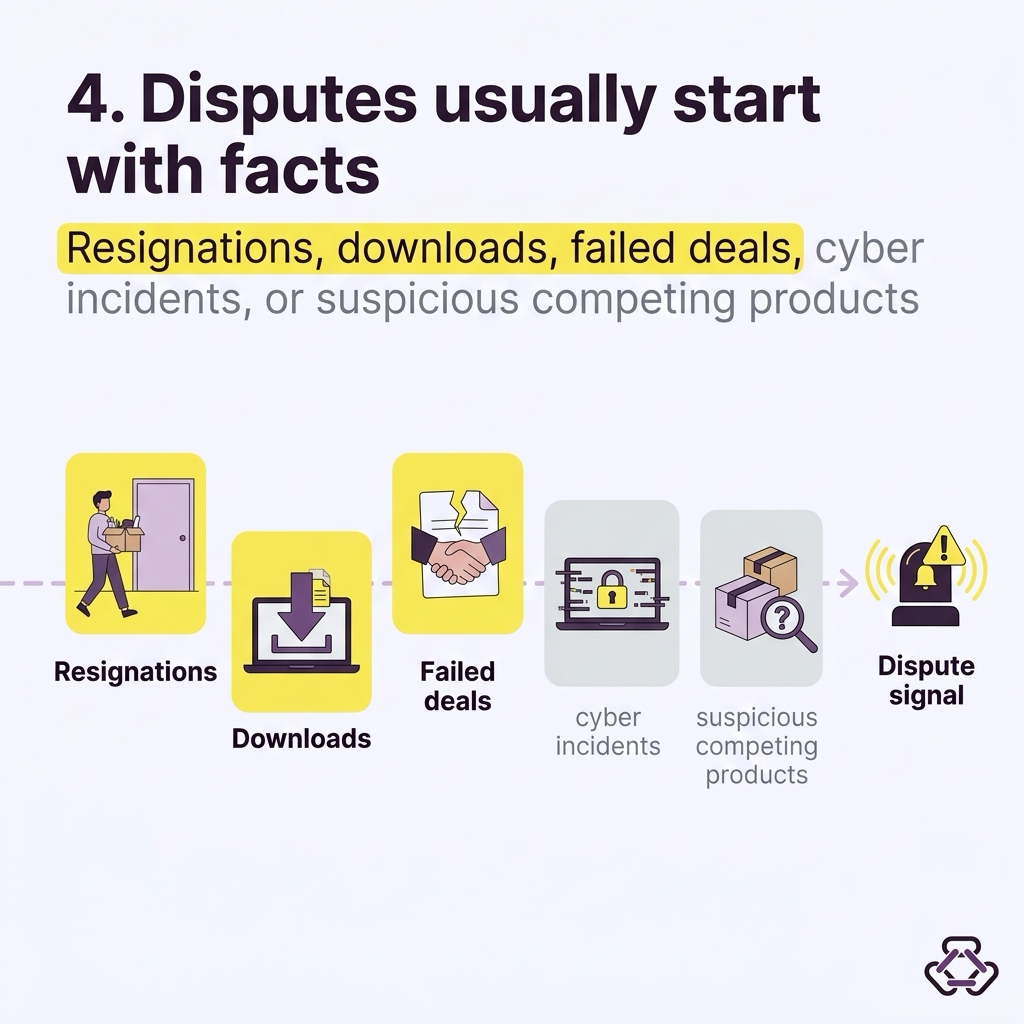
- How Do Trade Secret Disputes Usually Start?
- Employee Departures
- Failed Partnerships And Vendor Relationships
- Cyber Intrusions Or Unauthorized Access
- Competitive Product Launches
- Customer Or Supplier Poaching With Nonpublic Information
- What Laws Usually Apply?
- The Uniform Trade Secrets Act
- The Defend Trade Secrets Act
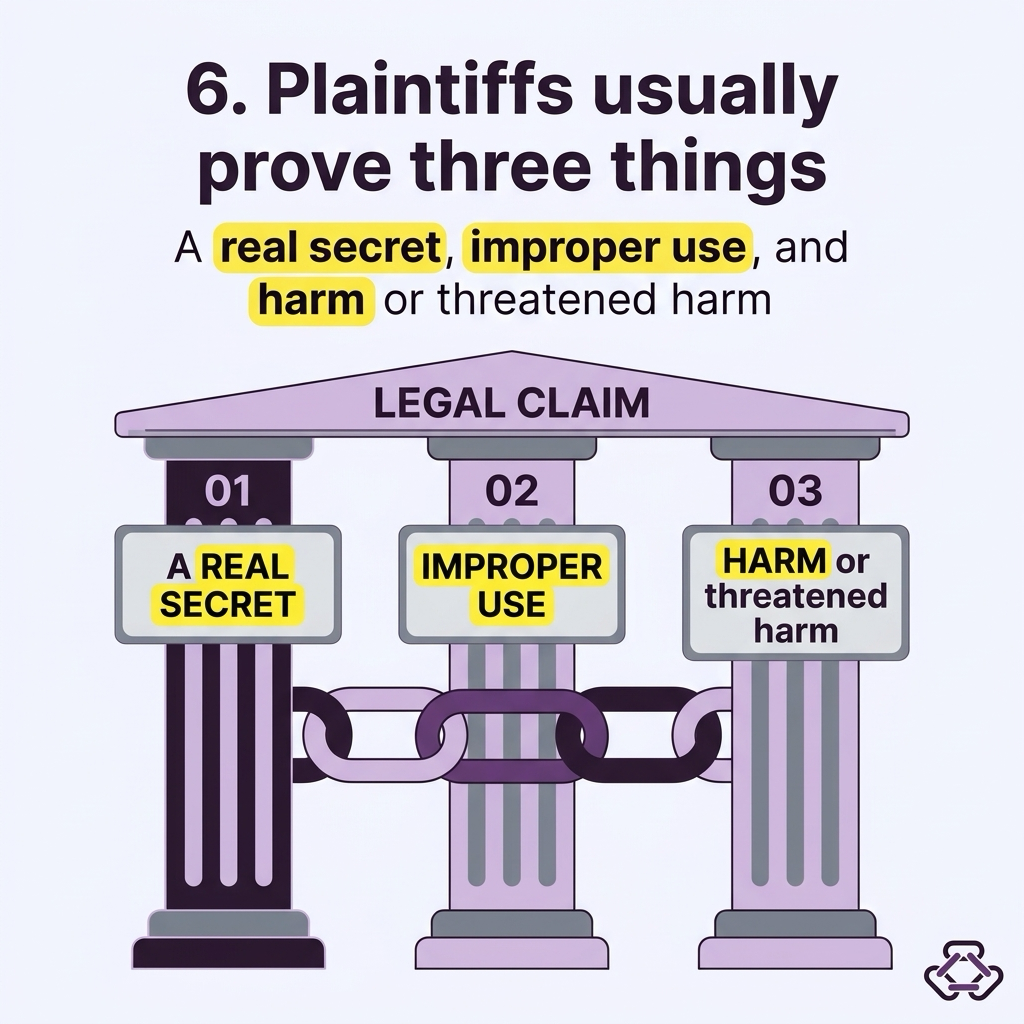
- What Does A Plaintiff Usually Have To Prove?
- 1. A Trade Secret Actually Existed
- 2. The Defendant Acquired, Used, Or Disclosed It Improperly
- 3. The Misappropriation Caused Harm Or Threatened Harm
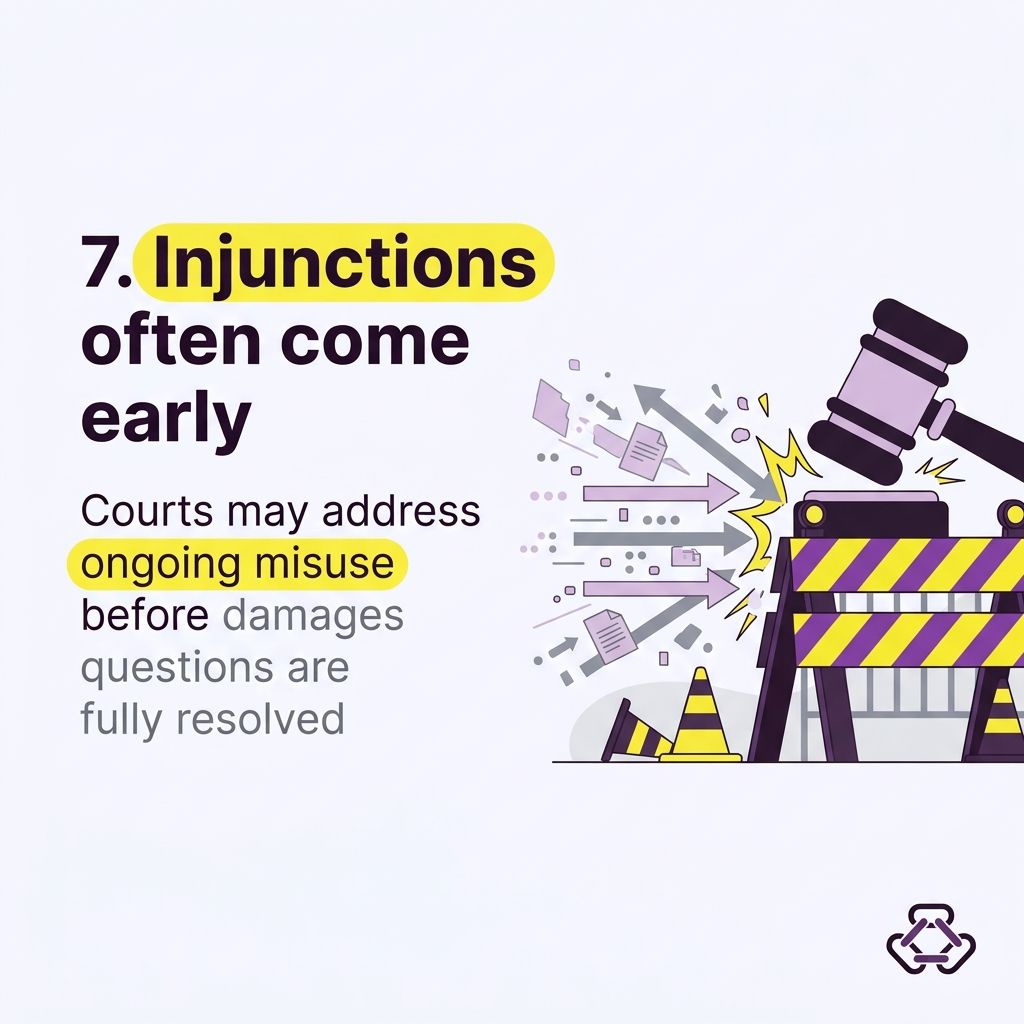
- Why Are Injunctions Such A Big Part Of Trade Secret Litigation?
- What Happens At The Beginning Of A Case?
- Internal Investigation
- Demand Letters Or Negotiation
- Filing For Emergency Relief
- Protective Orders
- Expedited Discovery
- Forensic Preservation And Inspection
- What Remedies May Be Available?
- Injunctive Relief
- Damages
- Ex Parte Seizure In Extraordinary Cases
- Attorneys’ Fees And Enhanced Damages In Some Circumstances
- Criminal Referral In Serious Cases
- How Expensive And Complex Are These Cases?
- What Defenses Commonly Appear In Trade Secret Cases?
- What Can Businesses Learn Before Litigation Starts?
- A Short Summary For Beginners

Type
Great Grandchild
Status
Approved
Title (YouTube)
Images Failed (Social)
Images Failed (Social)
Do not index
Publish Date (TikTok)
Jan 8, 2027 09:15
Videos Post IDs (Social)
Hashtags (Social)
#LegalAdvice #LegalHelp #BusinessLitigation #TradeSecret
Caption
Caption X
Cover

OG Image

Alt Image Text
Flat vector illustration of trade secret litigation and proprietary business information, showing secure confidential files, legal protection symbols, and a blocked attempt to access sensitive business data.
Images

Videos
Publish Date (Social)
Dec 17, 2026 14:30
Scheduled (Social)
Scheduled (Social)
Images Posted (Social)
Images Posted (Social)
Videos Posted (Social)
Videos Posted (Social)
Videos Failed (Social)
Videos Failed (Social)
Featured
Created time
Apr 3, 2026 10:11 PM
Sub-item
Authors
CTA Practice Area (Social)
Business Litigation
TikTok Failed (Social)
TikTok Failed (Social)
Videos Post Links (Social)
YT Auto Captions Removed
TikTok Post Links (Social)
Images Post IDs (Social)
YT Post ID
Video Pending Manual (Social)
TikTok Posted (Social)
TikTok Posted (Social)
TikTok Post IDs (Social)
Video Cover (Social)
Images Post Links (Social)
First Comment (Social)
YT Embedded
Images Delete (Social)
Videos Delete (Social)
Carousel Video URL (Social)
Trade Secret Litigation: A Beginner’s Guide to Protecting Proprietary Business Information
For many companies, the most valuable assets are not machines, buildings, or inventory. They are the things competitors cannot see at a glance: source code, formulas, pricing models, manufacturing processes, customer data, product roadmaps, internal research, and the know-how that keeps a business ahead. When that information is taken, copied, disclosed, or used without permission, trade secret litigation often becomes part of the conversation.
If that sounds abstract, it usually is not. In real life, these disputes often begin with a resignation, a suspicious download, a new competing product, a vendor relationship gone sideways, or a deal that suddenly collapses after confidential information was shared. If you want a deeper overview of the bigger picture around misappropriation claims, departures, injunctions, and competitive harm, this broader explainer on what tends to happen after confidential information is taken adds useful context.
This post is a beginner’s guide for business owners, founders, executives, and in-house teams trying to understand the basics. In this post you’ll learn what a trade secret is, what trade secret litigation usually looks like, what courts often focus on, what remedies may be available, and why timing can matter so much when proprietary business information is at risk.
Scroll to the bottom for every post in this series.
What Is Trade Secret Litigation?
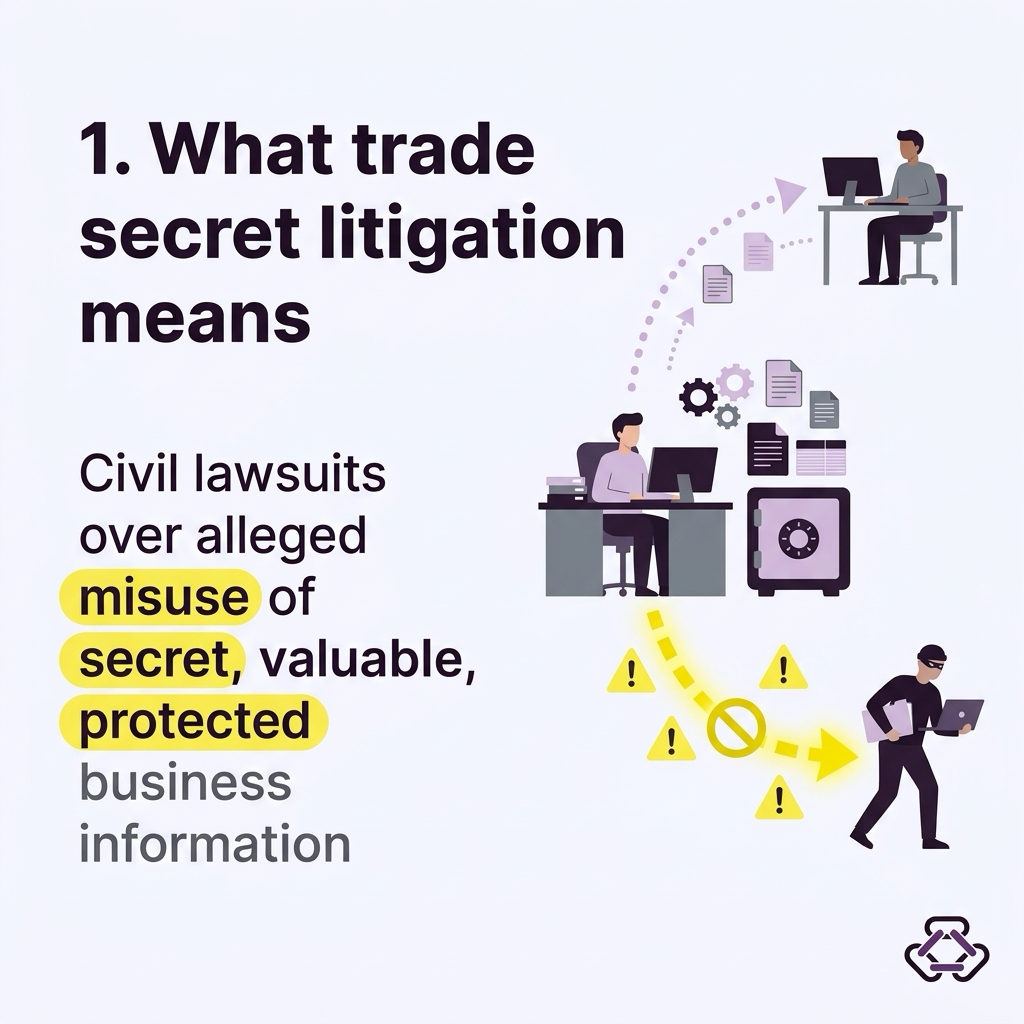
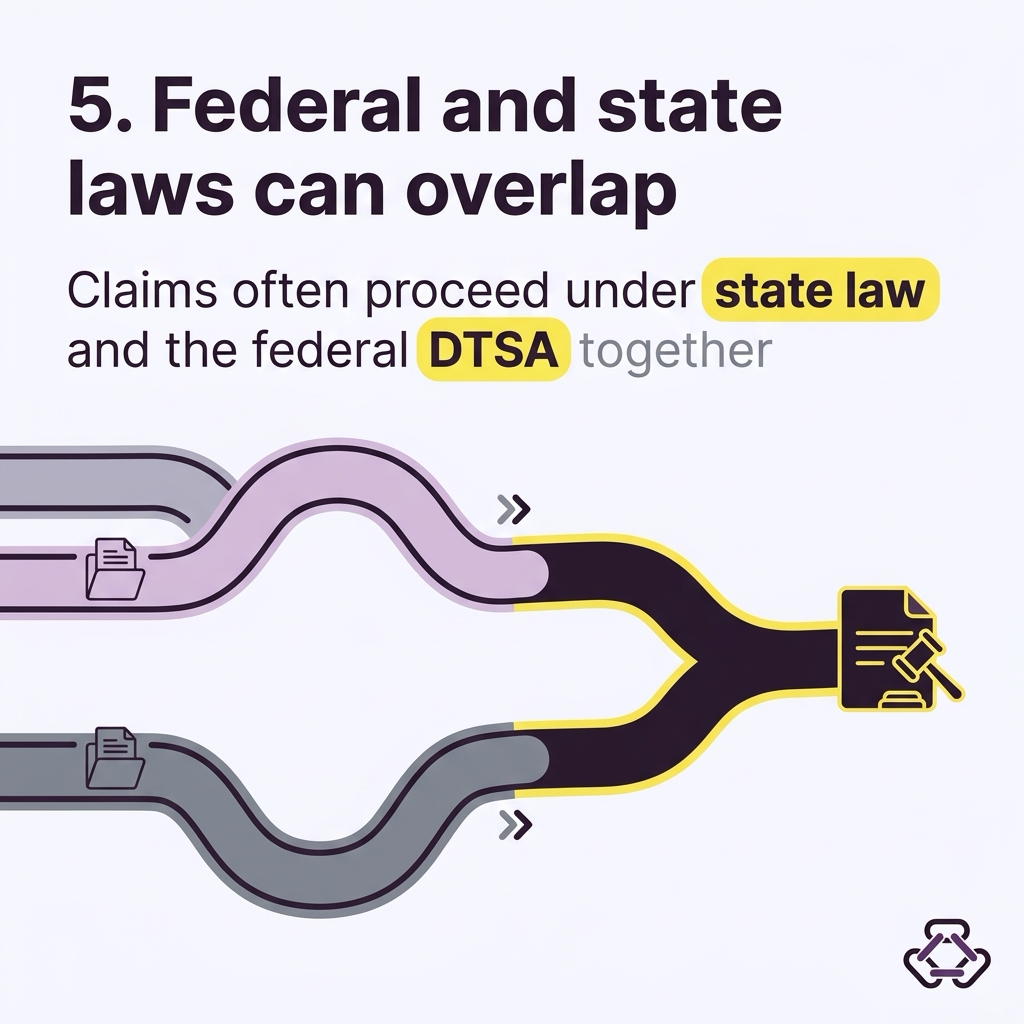
Trade secret litigation is a civil lawsuit involving the alleged misappropriation of confidential business information that derives value from not being generally known and is protected through reasonable secrecy measures. In the United States, these cases are commonly brought under state trade secret law and, in many situations, under the federal Defend Trade Secrets Act of 2016 (DTSA) as well. The DTSA created a federal civil cause of action for trade secret misappropriation, while state-law claims often proceed under versions of the Uniform Trade Secrets Act (UTSA) or related doctrines. Congressional Research Service and Cornell Law School’s Legal Information Institute
In plain English, trade secret litigation is about this question: Did someone improperly acquire, use, or disclose business information that was actually secret and actually protected?
That sounds simple, but these cases are rarely simple. Courts often look at a cluster of issues all at once:
- Was the information truly secret?
- Did it have independent economic value?
- Did the company take reasonable steps to protect it?
- Who had access?
- How was it allegedly taken or used?
- Is there ongoing harm right now?
- Is emergency court relief appropriate?
Those issues explain why these disputes often move quickly at the beginning and become technically detailed very fast.
What Counts As A Trade Secret?
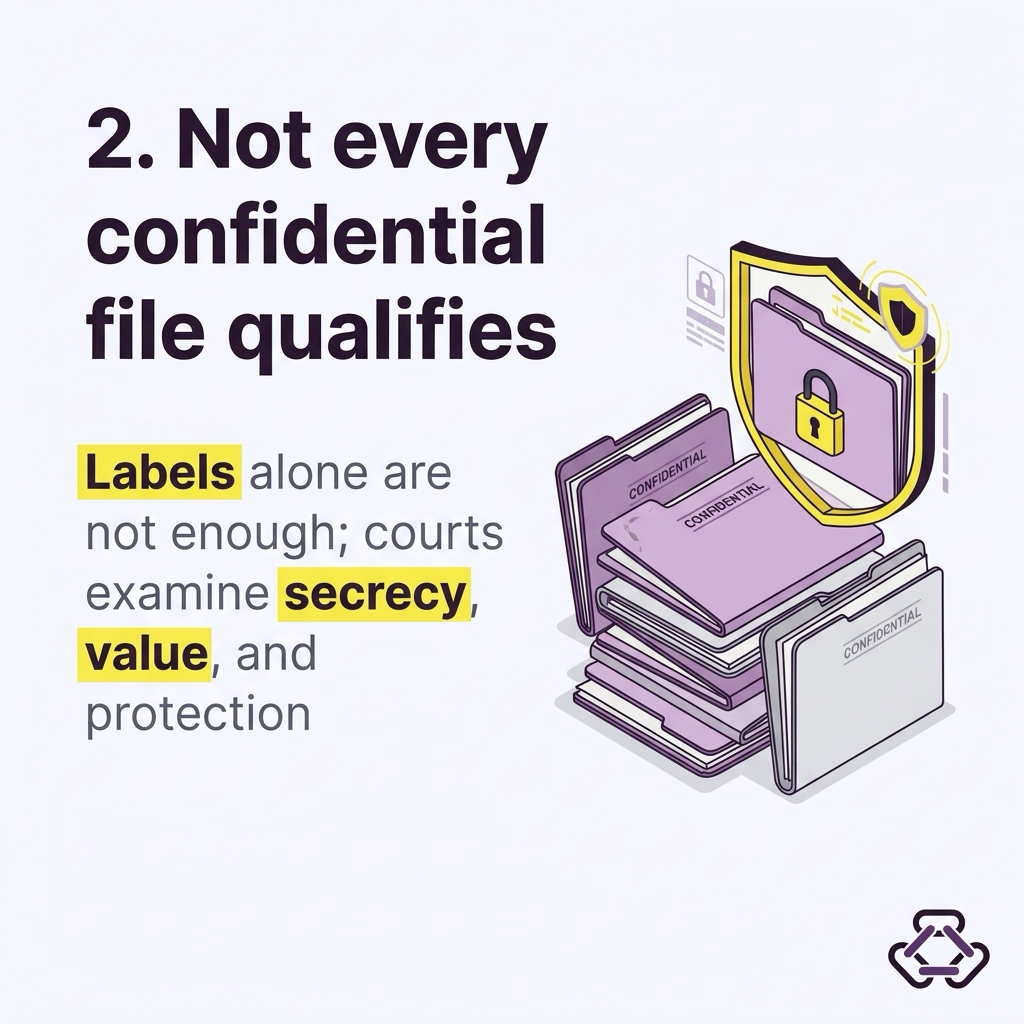
Not every confidential document qualifies as a trade secret. A company may label almost anything “confidential,” but litigation turns on more than labels.
Under federal and state frameworks, information generally qualifies as a trade secret when it is not generally known or readily ascertainable, has independent economic value because it is secret, and has been protected by reasonable measures to maintain secrecy. Congressional Research Service; Federal Judicial Center Trade Secret Case Management Judicial Guide
Examples often include:
- Source code and software architecture
- Manufacturing methods
- Chemical formulas
- Algorithms and models
- Product design specifications
- Nonpublic pricing strategies
- Supplier terms
- Customer lists, if they are not readily available and reflect protected effort
- Internal business plans
- Technical research and testing results
What usually matters is not just the category, but the specificity. Courts often expect the plaintiff to identify the trade secret with enough detail to put the other side on notice and define the boundaries of what is actually at issue. The Federal Judicial Center’s judicial guide notes a growing consensus that the identification must be specific enough to let the defendant understand the claim and assess relevance in discovery. Federal Judicial Center Trade Secret Case Management Judicial Guide
That is one reason trade secret cases often begin with fights over whether the plaintiff has clearly described the secret at all.
What Does “Reasonable Measures” Mean?
This is one of the most important ideas in trade secret law.
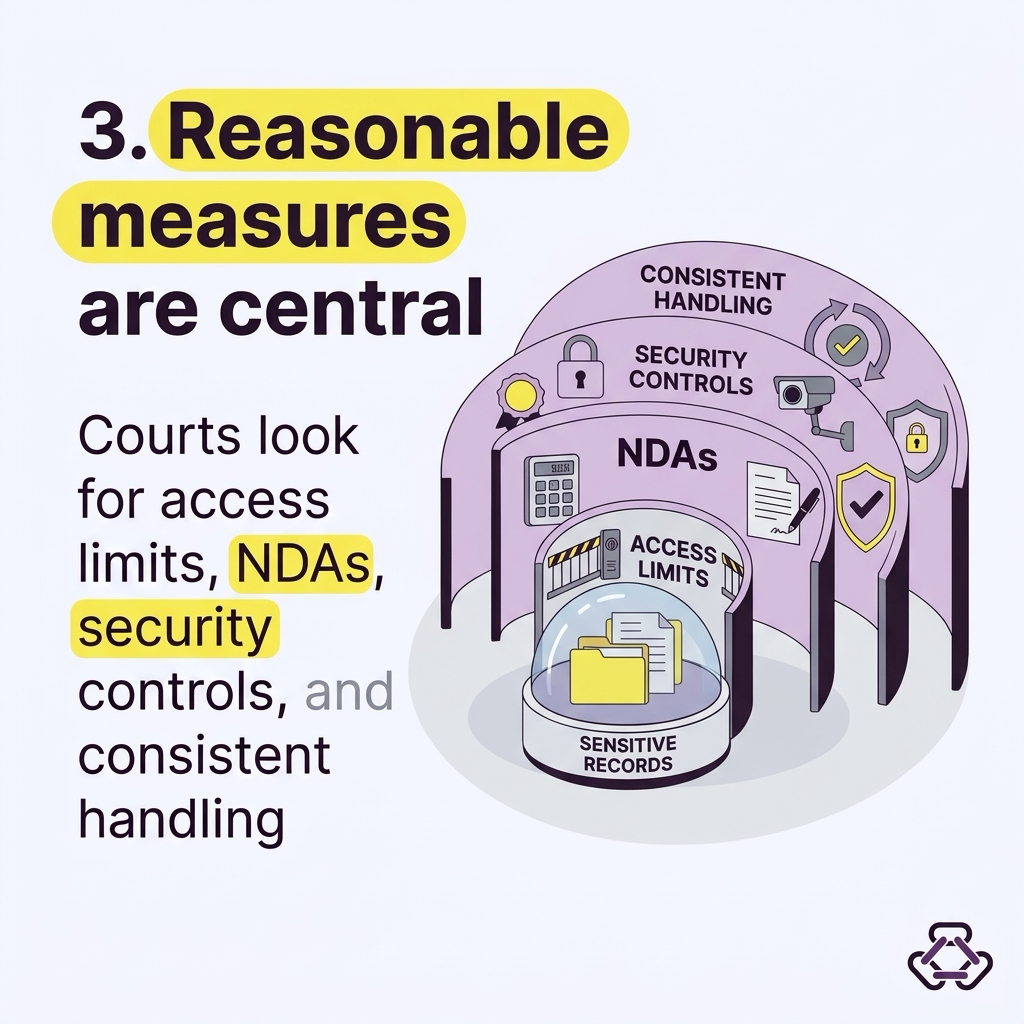
A business does not usually have to prove perfect secrecy. But it often has to show that it acted like the information mattered. The Congressional Research Service notes that reasonable measures may include limiting access on a need-to-know basis, restricting physical access, requiring nondisclosure agreements, and securing computer networks. Congressional Research Service
The Federal Judicial Center’s guide frames this as a statutory requirement, not just a nice fact to have in the background. It also notes that what counts as reasonable can vary by industry, threat level, and context. Federal Judicial Center Trade Secret Case Management Judicial Guide
In general terms, companies in stronger positions often have evidence such as:
- NDAs or confidentiality provisions
- employee onboarding and exit certifications
- access controls and permissions
- password protections and multifactor authentication
- download restrictions
- document labeling
- monitoring or audit logs
- vendor confidentiality agreements
- segmenting sensitive files from ordinary business materials
- policies limiting use of personal devices or personal cloud storage
This is where many disputes become uncomfortable. A business may genuinely view information as proprietary, but litigation may reveal loose controls, broad internal access, inconsistent labeling, or years of casual handling. That does not always end a claim, but it can complicate it.
How Do Trade Secret Disputes Usually Start?
Most trade secret cases do not begin in court. They begin with a fact pattern.
Common triggers include:
Employee Departures
An employee leaves for a competitor, starts a new business, or downloads large volumes of files before resigning. In some cases, the issue is not open theft but suspicious timing, device activity, or overlap between old confidential work and new competitive activity.
Failed Partnerships And Vendor Relationships
A company shares technical or commercial information during diligence, collaboration, manufacturing, distribution, or software integration. The relationship ends, and the information later appears in a competing offering or is used in a way the owner did not expect.
Cyber Intrusions Or Unauthorized Access
Trade secret disputes can overlap with cybersecurity incidents. The FBI has repeatedly described theft of trade secrets and economic espionage as significant threats to U.S. businesses and the broader economy. FBI remarks on economic espionage and trade secret theft
Competitive Product Launches
A competitor releases a product or service that appears to mirror protected features, methods, or internal commercial intelligence that was not publicly available.
Customer Or Supplier Poaching With Nonpublic Information
A departing team member or business partner may allegedly use nonpublic pricing, margins, purchasing history, or strategic account information to target the same relationships.
These cases are highly fact-driven, which is why businesses often start by investigating what happened before deciding what legal theories fit best.
What Laws Usually Apply?
Two frameworks dominate U.S. civil trade secret litigation.
The Uniform Trade Secrets Act
Most states, the District of Columbia, Puerto Rico, and the U.S. Virgin Islands use some version of the UTSA, according to the Congressional Research Service. CRS also notes that New York relies on common law and North Carolina uses a similar but different statute. Congressional Research Service
The Defend Trade Secrets Act
The DTSA allows civil trade secret claims in federal court when the trade secret relates to a product or service used in interstate or foreign commerce. Importantly, the DTSA does not replace state law. It creates a parallel federal path. Congressional Research Service
That means many complaints include both federal and state claims.
The DTSA is also known for a remedy that gets a lot of attention: ex parte seizure in extraordinary circumstances. Under 18 U.S.C. § 1836, a court may issue a seizure order without advance notice to the other side, but the statute places significant safeguards around that process, including law-enforcement execution, a prompt hearing, and a cause of action for wrongful or excessive seizure. 18 U.S.C. § 1836
In practice, that remedy tends to be discussed more often than it is granted. Courts usually treat it as exceptional.
What Does A Plaintiff Usually Have To Prove?
At a basic level, a trade secret plaintiff often tries to establish three things:
1. A Trade Secret Actually Existed
This usually involves showing secrecy, economic value, and reasonable protective efforts.
2. The Defendant Acquired, Used, Or Disclosed It Improperly
That may involve evidence of copying, downloads, forwarding emails, retaining files after departure, using confidential information in a competing business, or sharing it with outsiders who were not authorized to receive it.
3. The Misappropriation Caused Harm Or Threatened Harm
The harm may involve lost sales, unfair head starts, disrupted customer relationships, reduced bargaining leverage, or damage that is hard to measure precisely because the value lies in secrecy itself.
The challenge is that direct evidence is not always available early. That is why these cases often rely on forensic evidence, circumstantial timing, access history, device imaging, cloud logs, and comparisons between the allegedly protected information and the accused product or conduct.
If your interest is in the proof side of the equation, businesses often spend significant time on evidence of trade secret status, access, and misuse before the case is ready for a meaningful injunction hearing or settlement discussion.
Why Are Injunctions Such A Big Part Of Trade Secret Litigation?
In many business disputes, money damages are the main endgame. Trade secret cases are different because once secrecy is lost, it may be difficult to restore.
That is why plaintiffs often seek immediate restraining orders or preliminary injunctions. The goal is usually to prevent further use, disclosure, transfer, deletion, or dissemination while the case is still being sorted out.
According to the Federal Judicial Center’s judicial guide, courts commonly grapple early with expedited discovery, forensic inspections, confidentiality protections, and the scheduling of preliminary injunction proceedings. In some cases, hearings are set within days or weeks; in others, limited forensic discovery comes first. Federal Judicial Center Trade Secret Case Management Judicial Guide
Early injunction requests often focus on questions like:
- Is there evidence of current or threatened misuse?
- Is the harm difficult to repair later with money alone?
- Can the court craft a narrow order that protects secrecy without overreaching?
- Has the plaintiff moved quickly enough to show real urgency?
- Are there less restrictive alternatives?
Timing matters here. Delay can become an argument. If a business waits too long after learning about suspicious conduct, the other side may argue that the harm was not truly urgent. That timing issue is one reason companies often ask urgent questions after client lists, pricing files, or technical documents appear to have walked out the door.
What Happens At The Beginning Of A Case?
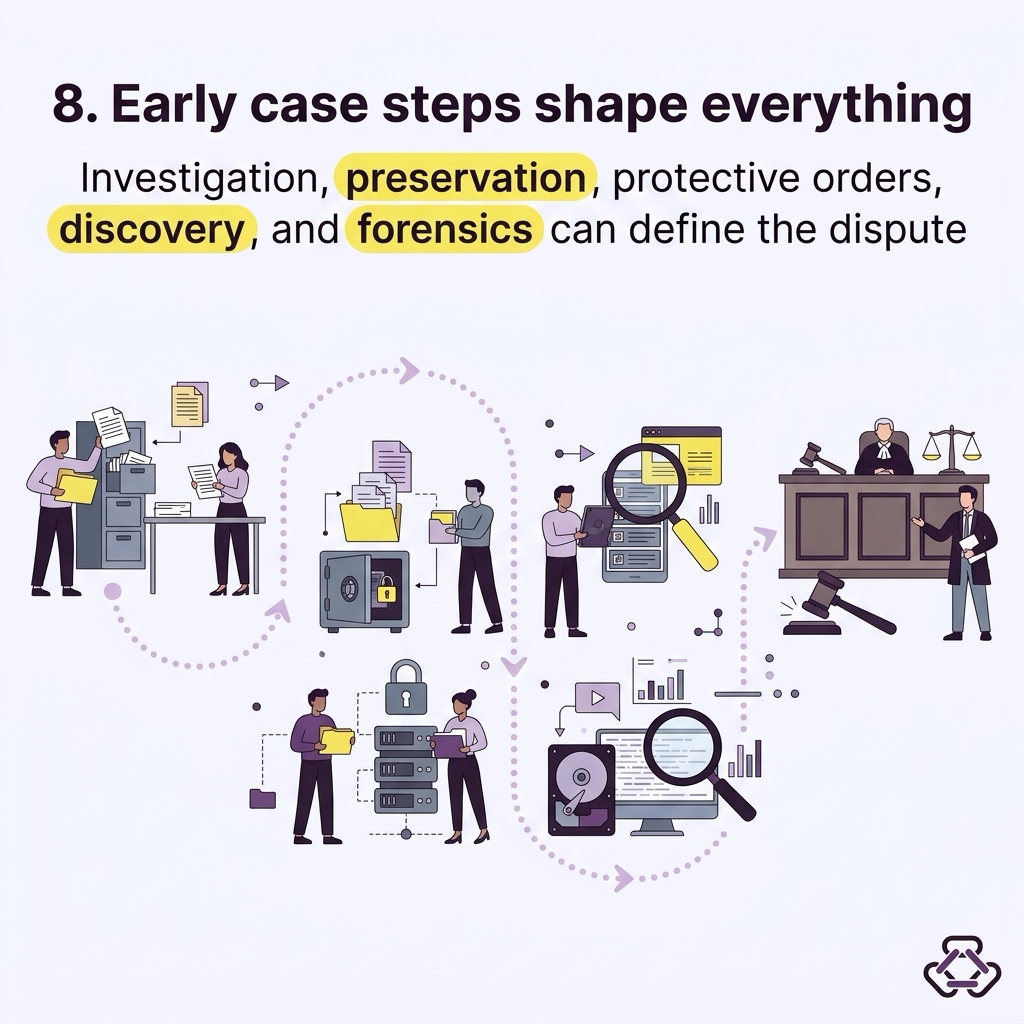
The first phase of trade secret litigation is often a race to preserve information and define the dispute.
A typical early sequence may include:
Internal Investigation
The company gathers facts, identifies the people involved, preserves devices and logs, and assesses what information is at stake.
Demand Letters Or Negotiation
Some disputes begin with notice letters, requests for return or deletion, certifications, and discussion about preserving evidence.
Filing For Emergency Relief
If the risk appears ongoing, the plaintiff may file for a temporary restraining order, preliminary injunction, or other immediate relief.
Protective Orders
Because the lawsuit itself can expose sensitive information, courts often enter protective orders early to govern who may access confidential materials.
Expedited Discovery
The Federal Judicial Center notes that courts frequently manage limited, fast-tracked discovery in these cases, including depositions, document requests, third-party discovery, software or facility inspections, and disputes over whether early discovery counts against later discovery limits. Federal Judicial Center Trade Secret Case Management Judicial Guide
Forensic Preservation And Inspection
Forensics often becomes central. The same judicial guide discusses early forensic quarantine, imaging, inspection protocols, access rules, privacy protections, and allocation of costs. Federal Judicial Center Trade Secret Case Management Judicial Guide
This early phase can shape the entire case. A missed preservation issue, an overbroad claim, or a weak description of the alleged secrets may affect everything that follows.
What Remedies May Be Available?
Trade secret litigation can lead to several forms of relief, depending on the facts and the governing law.
Injunctive Relief
Courts may order someone to stop using or disclosing the information, return materials, preserve evidence, permit forensic review, or avoid certain competitive conduct for a limited time.
Damages
A plaintiff may pursue damages tied to actual loss, unjust enrichment, or, in some cases, a reasonable royalty framework. The exact measure varies by jurisdiction and facts.
Ex Parte Seizure In Extraordinary Cases
As noted above, the DTSA authorizes ex parte seizure in extraordinary circumstances, with significant safeguards and a prompt post-seizure hearing. 18 U.S.C. § 1836
Attorneys’ Fees And Enhanced Damages In Some Circumstances
Depending on the law and proof, fee shifting or enhanced damages may come into play in cases involving willful and malicious conduct, bad-faith claims, or bad-faith defenses.
Criminal Referral In Serious Cases
Some fact patterns also raise criminal issues. The FBI provides a checklist for reporting suspected economic espionage or theft of trade secrets, including the estimated value of the secret, why it is valuable, whether it has military or export-controlled applications, and the extent to which any part is publicly available. FBI reporting checklist
That does not mean every civil dispute becomes a criminal matter. But in some cases, especially where intentional theft or cross-border conduct is alleged, parallel risk may exist.
How Expensive And Complex Are These Cases?
Trade secret litigation can become expensive quickly because it often involves:
- emergency motion practice
- technical subject matter
- device and cloud forensics
- expert testimony
- confidentiality disputes
- expedited timelines
- parallel state and federal claims
- employment, contract, and unfair-competition overlap
It is also a growing and specialized field. The Federal Judicial Center published a substantial Trade Secret Case Management Judicial Guide to assist judges in handling the complexity of federal trade secret cases, which says a lot about how procedurally and evidentially demanding these matters can become. Federal Judicial Center Trade Secret Case Management Judicial Guide
On the economic side, government materials continue to describe trade secret theft as a major national issue. The Department of Justice’s Intellectual Property Report to Congress cites estimates placing the low-end cost of trade secret theft to U.S. firms at $180 billion annually and the high end at $540 billion. DOJ Annual Intellectual Property Report to Congress
Those estimates are broad and not case-specific, but they help explain why courts, companies, and federal agencies treat these disputes seriously.
What Defenses Commonly Appear In Trade Secret Cases?
A beginner’s guide would be incomplete without noting that accusations and proof are not the same thing. Defendants often argue:
- the information was not truly secret
- the information was generally known in the industry
- the plaintiff failed to protect it adequately
- the accused person relied on general skill and experience, not protected secrets
- the plaintiff has described the alleged trade secret too vaguely
- the information was independently developed
- the alleged urgency is overstated
- the requested injunction would unfairly restrain lawful competition
One area where courts have not always spoken with one voice is the idea of inevitable disclosure—the theory that a former employee’s new role will inevitably lead to use of the former employer’s trade secrets. The Congressional Research Service notes disagreement among federal courts on how the DTSA interacts with that concept, reflecting differences in state law as well. Congressional Research Service
That split is one reason experienced counsel often matters in this space. The same fact pattern can look different depending on jurisdiction, pleadings, evidence, and the exact relief being requested.
What Can Businesses Learn Before Litigation Starts?
Trade secret litigation often exposes operational habits that had gone untested for years.
In general terms, companies often learn that legal protection is strongest when the business can show a clean connection between the value of the information and the steps taken to protect it. Courts tend to look for evidence, not just concern after the fact.
That usually means the practical record matters:
- who had access
- why they had access
- what policies governed use
- what the employee or vendor agreed to
- what happened at exit
- what the logs show
- how quickly the company investigated
- whether the business can identify the trade secret with precision
For companies already facing a dispute, this often becomes less about abstract policy and more about immediate documentation, preservation, and strategy.
A Short Summary For Beginners
Trade secret litigation is about protecting business information that gains value from remaining secret. To bring a strong claim, companies often need more than a confidentiality label. They typically need evidence that the information was genuinely secret, economically valuable, and protected through reasonable measures. They also usually need proof of improper acquisition, disclosure, or use.
These cases move quickly because once proprietary information spreads, the damage can be difficult to contain. Early injunctions, forensic work, preservation issues, and detailed definitions of the alleged secrets often shape the entire dispute. And because state and federal trade secret law can overlap, the procedural choices may become as important as the underlying facts.
If your business is dealing with a suspicious departure, copied files, sudden competitive misuse, or confidential information showing up where it does not belong, an attorney might help you evaluate the evidence, urgency, and available options. Visit ReferU.AI to get matched with an attorney who has demonstrable experience in cases like yours — for free.
