Table of Contents
- 8 Trade Secret Mistakes That Make Emergency Relief Harder to Win
- Why Emergency Relief In Trade Secret Cases Is So Demanding
- 1. Treating “Confidential” As If It Automatically Means “Trade Secret”
- What This Often Looks Like In Practice
- 2. Waiting Too Long To Seek Relief
- Why Courts Care About Delay
- 3. Failing To Show Reasonable Secrecy Measures
- The Litigation Problem Hidden Inside Governance Problems
- 4. Asking For An Order That Is Too Vague Or Too Broad
- Why Narrow Tailoring Matters
- 5. Neglecting Digital Forensics And Preservation Early
- The Emergency Motion Consequence
- 6. Overlooking The Irreparable Harm Showing
- Weak Harm Narratives Often Sound Like This
- 7. Using Public Filings Carelessly
- Why This Matters Beyond Embarrassment
- 8. Assuming Ex Parte Seizure Is A Routine Shortcut
- Relief That May Be More Realistic In Many Cases
- A Final Point: Emergency Relief Is Often Won Before The Motion Is Filed
- Summary

Type
Great Grandchild
Status
Approved
Title (YouTube)
Images Failed (Social)
Images Failed (Social)
Do not index
Publish Date (TikTok)
Jan 8, 2027 06:15
Videos Post IDs (Social)
Hashtags (Social)
#LegalAdvice #LegalHelp #BusinessLitigation #TradeSecret
Caption
Caption X
Cover

OG Image

Alt Image Text
Flat vector illustration of trade secret mistakes and emergency relief, showing confidential files slipping toward a competitor while legal obstacles, delay, weak secrecy measures, and evidence problems make court protection harder to win.
Images




Videos
Publish Date (Social)
Dec 17, 2026 13:00
Scheduled (Social)
Scheduled (Social)
Images Posted (Social)
Images Posted (Social)
Videos Posted (Social)
Videos Posted (Social)
Videos Failed (Social)
Videos Failed (Social)
Featured
Created time
Apr 3, 2026 10:12 PM
Sub-item
Authors
CTA Practice Area (Social)
Business Litigation
TikTok Failed (Social)
TikTok Failed (Social)
Videos Post Links (Social)
YT Auto Captions Removed
TikTok Post Links (Social)
Images Post IDs (Social)
YT Post ID
Video Pending Manual (Social)
TikTok Posted (Social)
TikTok Posted (Social)
TikTok Post IDs (Social)
Video Cover (Social)
Images Post Links (Social)
First Comment (Social)
YT Embedded
Images Delete (Social)
Videos Delete (Social)
Carousel Video URL (Social)
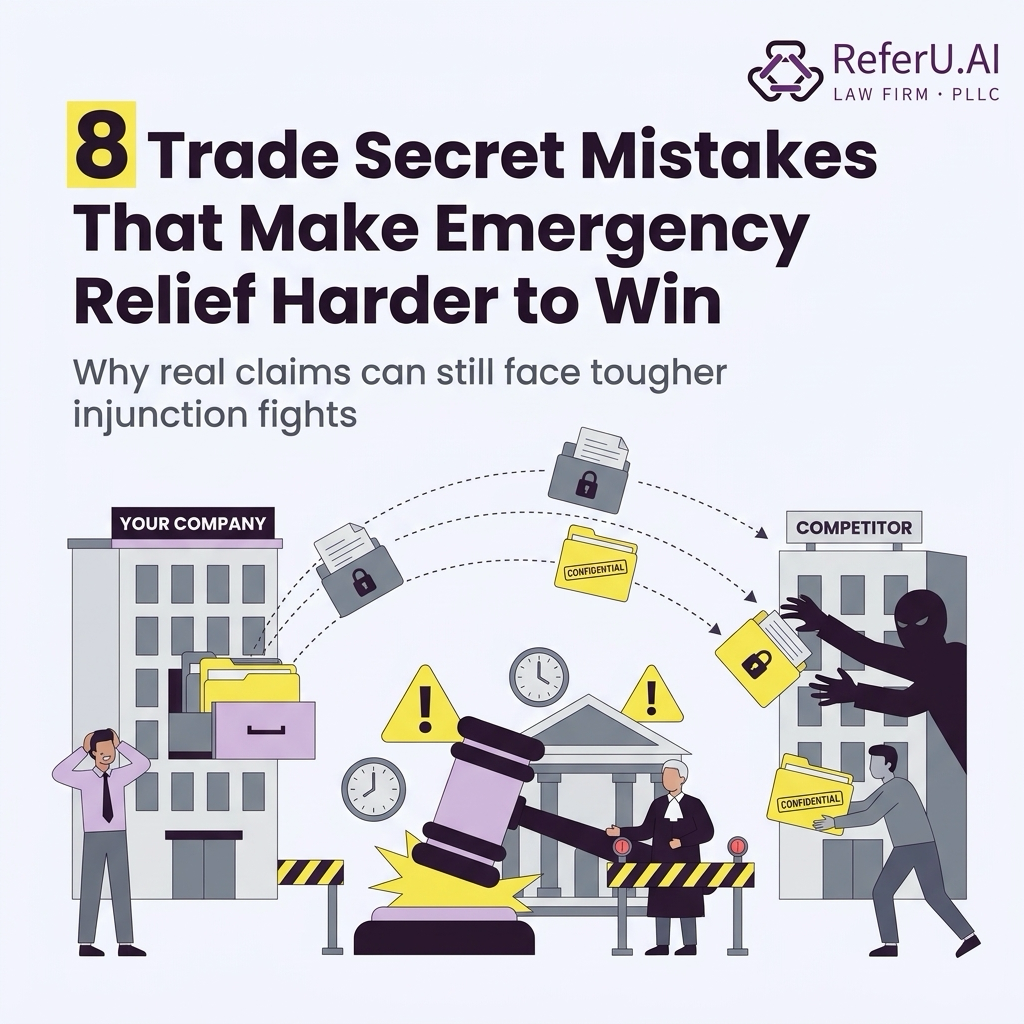
8 Trade Secret Mistakes That Make Emergency Relief Harder to Win
When confidential files leave with a departing employee or show up inside a competitor’s operation, business leaders often focus on one question: How fast can a court stop the damage? In many trade secret disputes, that question turns into a request for a temporary restraining order, preliminary injunction, or other emergency relief under Federal Rule of Civil Procedure 65 and, in some cases, the federal Defend Trade Secrets Act.
But emergency relief is rarely just about proving that information was taken. Courts also look at secrecy measures, speed, evidence quality, irreparable harm, and whether the requested order is specific and fair. In other words, a company can have a real trade secret problem and still make emergency relief harder to obtain.
If you want a broader overview of how these claims work, this plain-English breakdown of trade secret disputes, injunctions, and competitive harm helps frame the bigger picture. In this post, we’ll focus on the litigation mistakes that often complicate the emergency phase.
Scroll to the bottom for every post in this series.
Why Emergency Relief In Trade Secret Cases Is So Demanding
In federal court, a party seeking a preliminary injunction is generally dealing with four familiar factors: likelihood of success on the merits, likelihood of irreparable harm without relief, the balance of equities, and the public interest. Those standards are summarized by Cornell’s Legal Information Institute in its overview of preliminary injunctions. Rule 65 also requires injunction orders to state their reasons, spell out the terms specifically, and describe in reasonable detail the conduct being restrained, which matters a great deal in trade secret cases where the disputed information can be technical, digital, and highly specific.
The DTSA adds another layer. It authorizes injunctive relief in civil trade secret actions and includes an ex parte seizure mechanism, but Congress framed seizure as an extraordinary measure, not ordinary motion practice. The statute itself is detailed and demanding, and the Department of Justice has described ex parte seizure as an extraordinary remedy.
That legal backdrop explains why avoidable mistakes can become expensive very quickly.
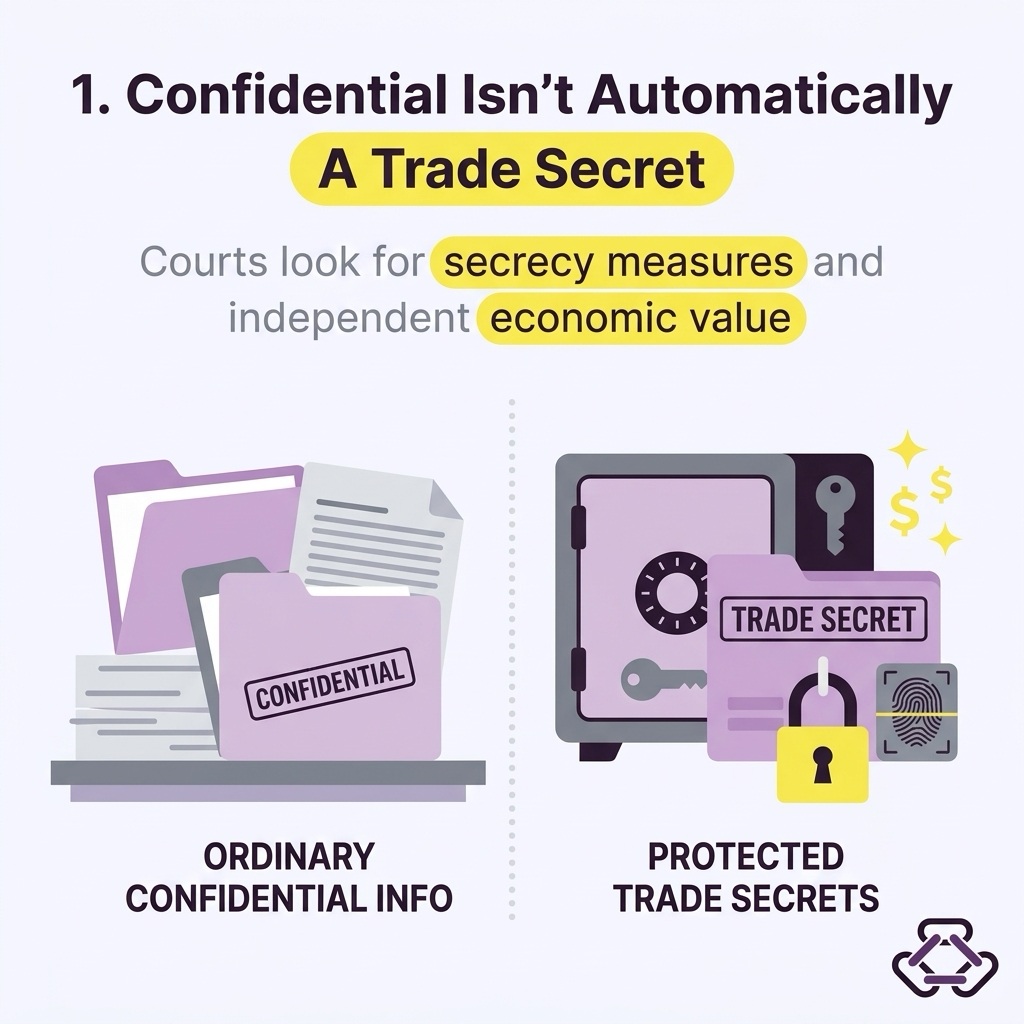
1. Treating “Confidential” As If It Automatically Means “Trade Secret”
This is one of the most common problems. A business may know that pricing data, source code, customer intelligence, or manufacturing methods are sensitive. But in court, “sensitive” and “trade secret” are not always the same thing.
Under the DTSA, a trade secret includes many forms of business, technical, and economic information only if two elements are present: the owner took reasonable measures to keep it secret, and the information derives independent economic value from not being generally known or readily ascertainable through proper means under 18 U.S.C. § 1839(3). The same basic framework appears in the Uniform Trade Secrets Act, which remains the foundation in most states.
That becomes a problem when a company goes into court describing the material at a very high level: “our customer list,” “our methods,” “our know-how,” or “our files.” Courts often want a much tighter showing. What information exactly is at issue? Why is it valuable? Why isn’t it public or easily recreated? What concrete steps were taken to protect it?
If that record is thin, an emergency motion can start to look overbroad. And overbreadth tends to create resistance.
What This Often Looks Like In Practice
A company alleges that a former employee downloaded internal documents before resigning. But the motion papers do not identify which documents contain true trade secrets, which contain ordinary confidential business material, and which may be available from customers, vendors, or public sources. That kind of blurry record can undercut both likelihood of success and the scope of any proposed injunction.
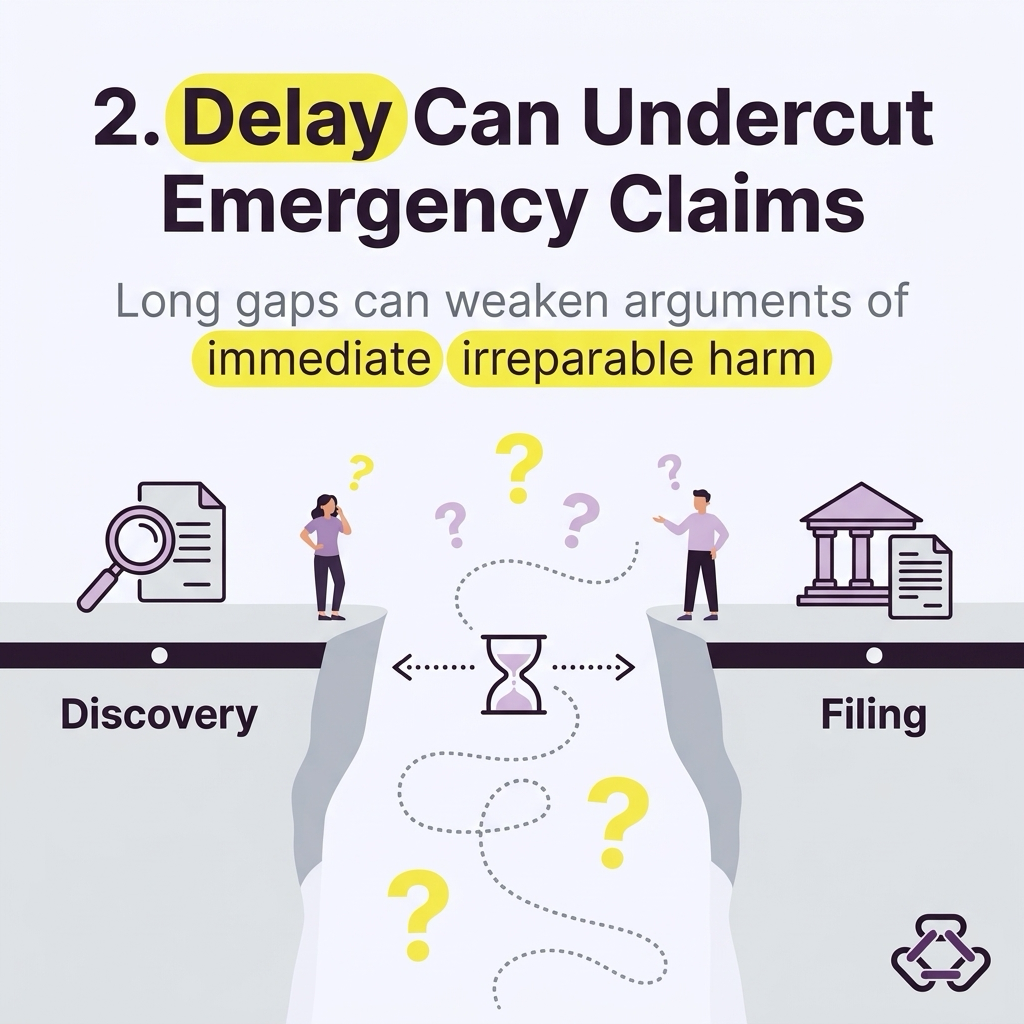
2. Waiting Too Long To Seek Relief
Delay can be devastating in emergency motion practice. Courts often view long gaps between discovery of the problem and the filing of an injunction request as inconsistent with claims of immediate, irreparable harm.
That does not mean every short investigation is harmful. In many situations, a business may need a brief period to secure accounts, review logs, interview custodians, and assess what was accessed. But when weeks or months pass without a persuasive explanation, the argument that the situation is truly urgent often becomes harder to sustain.
This timing issue shows up often in trade secret matters because digital misconduct can be discovered in stages. First there is a suspicious resignation. Then there are odd downloads. Then maybe a competitor announces a similar product or starts soliciting the same accounts. By the time leadership decides to litigate, the timeline may already be working against the “emergency” label.
For companies trying to evaluate the first days after information leaves the building, this companion discussion about responding after a former employee or competitor takes confidential information is often where the practical questions begin. The early response can shape the injunction record.
Why Courts Care About Delay
Emergency relief is meant to prevent imminent harm, not simply punish past conduct. If the moving party appears to have tolerated the risk for an extended period, judges may infer that money damages or ordinary case scheduling could be enough. That inference can weaken the irreparable-harm showing even when the underlying conduct is serious.
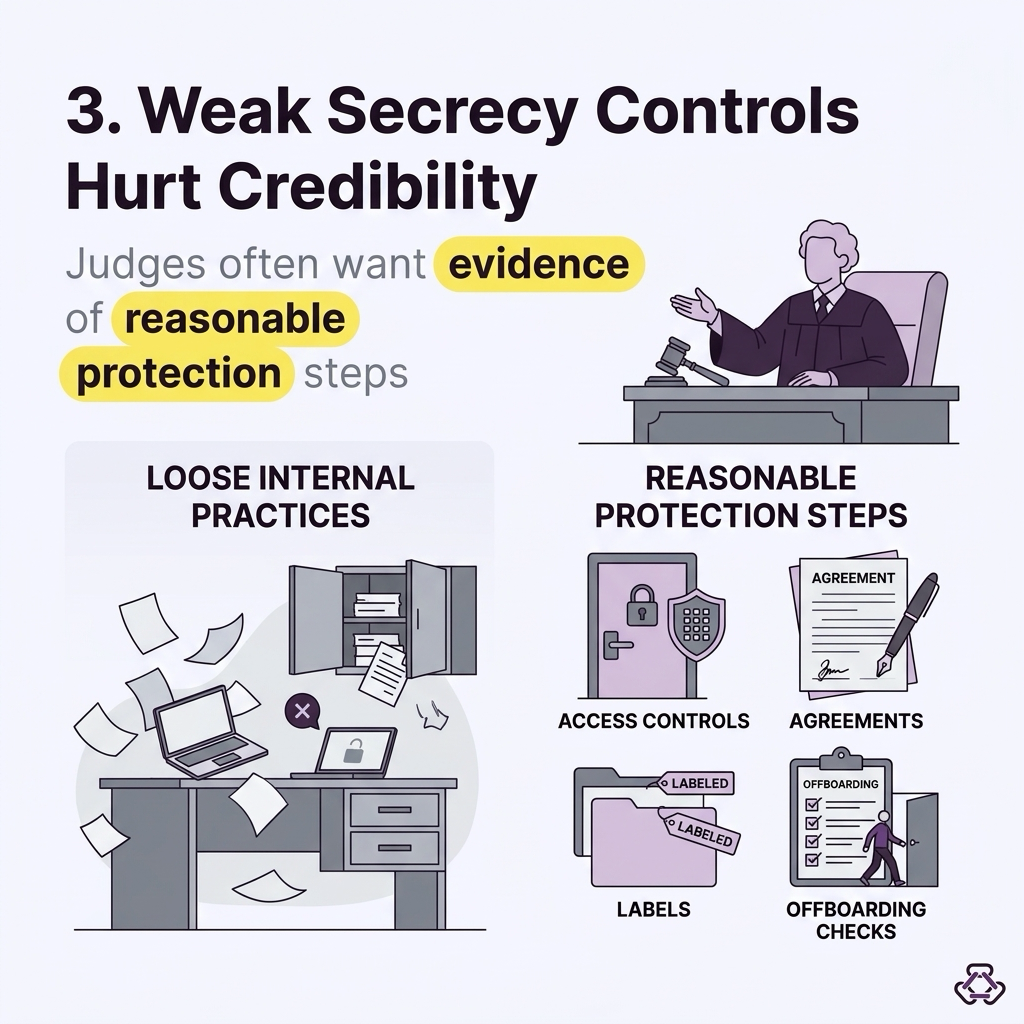
3. Failing To Show Reasonable Secrecy Measures
Trade secret law does not generally require perfect secrecy. It usually asks for reasonable secrecy measures under the circumstances. But “reasonable” still requires evidence.
Cornell’s trade secret overview notes that trade secret status depends heavily on the extent of the claimant’s efforts to guard secrecy and warns that protection can be lost when the owner fails to take reasonable protective measures in its summary of trade secret law. Federal law says much the same in the statutory definition under 18 U.S.C. § 1839.
A business asking for emergency relief may run into trouble if the record shows loose controls, such as:
- shared credentials or broad open access
- no confidentiality agreements for key personnel or vendors
- no exit-certification process
- no document classification system
- no logging or access restrictions for sensitive repositories
- routine emailing of key files to personal accounts without enforcement consequences
When those facts appear in declarations or cross-examination, the case can start to look less like “theft of a carefully protected secret” and more like “dispute over poorly controlled business information.”
The Litigation Problem Hidden Inside Governance Problems
Some companies do have internal policies, but they are outdated, inconsistently enforced, or disconnected from actual workflows. For emergency motions, judges often want specifics: who had access, how access was restricted, what agreements were signed, what happened at offboarding, and how the information was labeled or compartmentalized.
That is why trade secret cases often turn on details that feel operational rather than dramatic.
4. Asking For An Order That Is Too Vague Or Too Broad
Rule 65 requires injunctions to be specific and to describe in reasonable detail the acts restrained or required under Rule 65(d). In trade secret cases, that requirement becomes a major drafting issue.
A company may feel tempted to ask the court to bar a former employee from “using any confidential information” or stop a competitor from “competing unfairly.” The problem is that courts often want narrower boundaries. They may be reluctant to enter orders that are hard to interpret, hard to enforce, or likely to interfere with lawful competition, employee mobility, or work involving general knowledge and skill.
The DTSA itself reflects that caution. Its injunction provision limits relief that would conflict with applicable state-law restraints on lawful professions and prevents injunctions that simply block a person from entering into an employment relationship absent evidence of threatened misappropriation, not merely what the statute describes as the information the person knows under 18 U.S.C. § 1836(b)(3).
Why Narrow Tailoring Matters
Courts are often more receptive to relief that is tied to:
- specific files, repositories, or data categories
- return and non-use obligations
- forensic preservation
- limited inspection protocols
- customer non-solicitation measures tied to identified information
- restrictions on particular product features or launch conduct supported by evidence
Broad asks can make a motion feel punitive. Narrow asks can make it feel judicially manageable.
5. Neglecting Digital Forensics And Preservation Early
Many trade secret disputes are won or lost in the metadata. Download logs, USB histories, cloud-sync records, mobile device artifacts, forwarding rules, messaging platforms, and post-departure access patterns can tell a much clearer story than suspicion alone.
Yet some businesses delay forensic preservation, wipe devices during offboarding, reassign laptops too quickly, or fail to suspend automated deletion. That can leave major evidentiary gaps at exactly the moment the court is being asked to act fast.
Federal courts increasingly treat preservation of electronically stored information as a serious front-end issue. The judiciary’s model ESI materials recognize that parties often need to address preservation methods, sensitive information, and records of discovery early in the case, as reflected in the federal courts’ National ESI Protocol materials. The Sedona Conference’s commentary on equitable remedies in trade secret litigation also discusses relief such as preservation orders, turnover of devices, and forensic inspection in appropriate cases.
The Emergency Motion Consequence
If the company cannot explain what happened on the relevant devices, when the files moved, whether they were opened after departure, or where they now reside, the court may hesitate to issue strong relief. Judges are more comfortable entering targeted orders when the technical record is concrete.
This is one reason businesses often spend the first phase of a dispute trying to establish trade secret status, access, and misuse with precision. If that part of the case is still coming into focus, a detailed guide on proving secrecy, access, and misuse in a business dispute can help frame the evidentiary questions that often matter most.
6. Overlooking The Irreparable Harm Showing
Even when misappropriation appears plausible, emergency relief usually rises or falls on harm that money alone may not fully repair. Courts often look for evidence of threatened loss of market position, disclosure that cannot be undone, erosion of customer relationships, product launch distortion, or other injuries that are difficult to quantify cleanly.
Cornell’s overview of preliminary injunction standards emphasizes irreparable harm as one of the central factors in federal practice in its preliminary injunction explainer. In trade secret cases, that analysis can be especially fact-sensitive because some information loses value once disclosed, while other losses may be modeled as ordinary damages.
Weak Harm Narratives Often Sound Like This
- “They took files, so harm is obvious.”
- “A competitor now has our information, so damages are impossible to calculate.”
- “We may lose business if this continues.”
Courts often want more. Which customers are at risk? What bidding cycle, product cycle, pricing strategy, or development head start is implicated? Is there an upcoming launch, renewal, negotiation, or sales push? Has the information already been used or disclosed? Is disclosure likely to spread further if no order enters now?
The more concrete the harm narrative, the more coherent the emergency request tends to become.
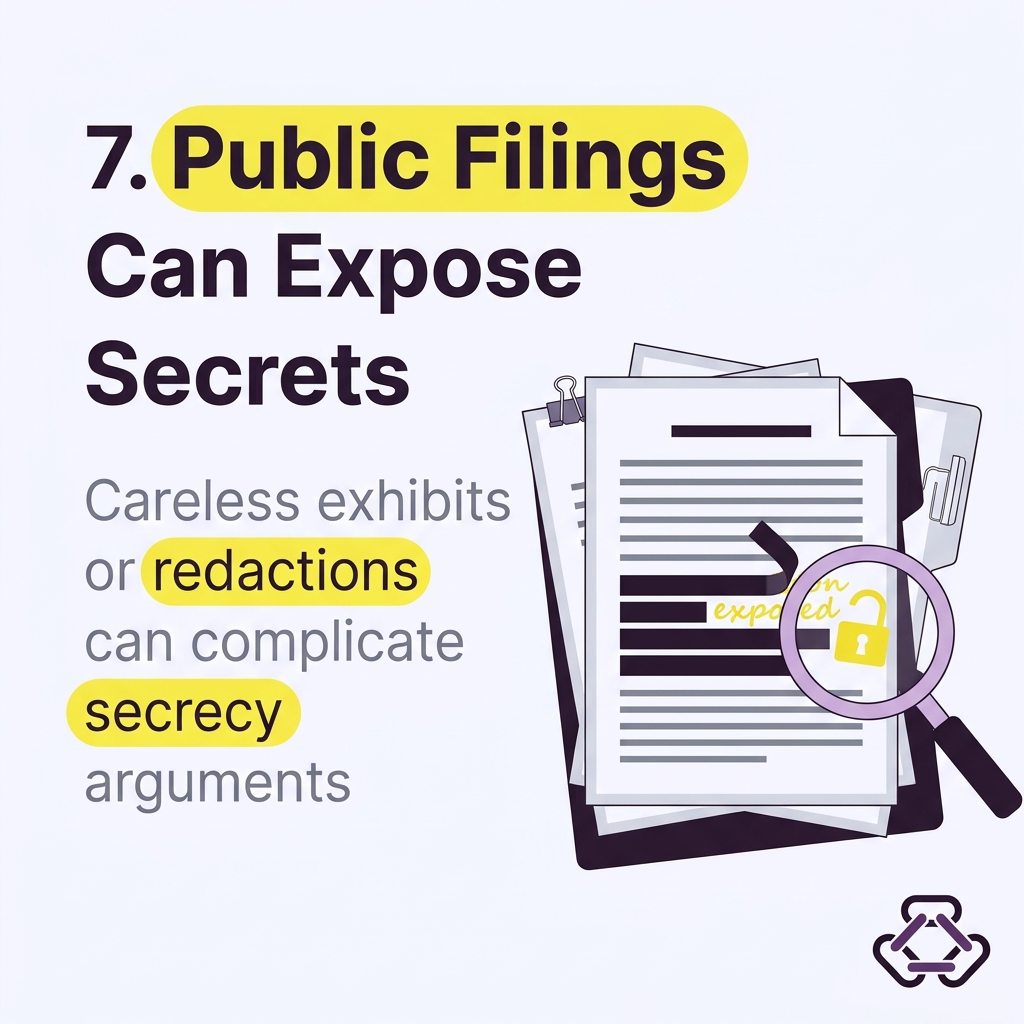
7. Using Public Filings Carelessly
This mistake is surprisingly common. In the rush to seek relief, parties sometimes attach the very information they are trying to protect in publicly filed exhibits, overly detailed complaints, or sloppy redactions.
That can create multiple problems at once. It may complicate arguments about secrecy, trigger avoidable dissemination, and create a procedural mess around sealing and service. Courts have filing rules and local procedures for sealed materials, but they vary by jurisdiction. Even at the federal level, sealed filing access and service procedures can be highly court-specific, as district courts periodically remind litigants in notices about sealed documents and service rules.
Why This Matters Beyond Embarrassment
Trade secret injunction motions often depend on giving the judge enough detail to understand the secret without unnecessarily placing the information into the public domain. That tension is manageable, but it requires careful motion drafting, thoughtful exhibit handling, and attention to local rules.
A public filing mistake does not always destroy trade secret protection automatically, but it can create arguments the other side would be happy to make.
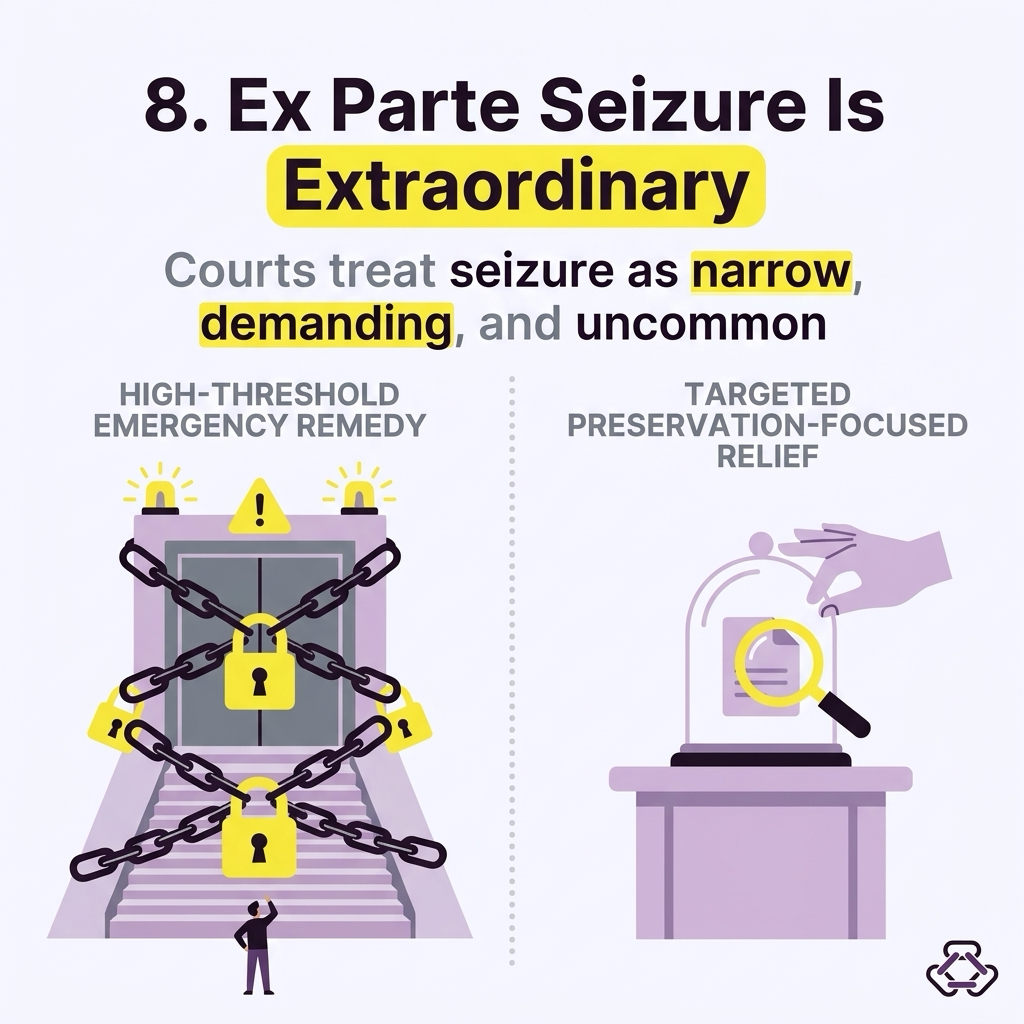
8. Assuming Ex Parte Seizure Is A Routine Shortcut
The DTSA includes a civil ex parte seizure mechanism, which can sound like a powerful emergency tool. In practice, it is narrow and intentionally demanding. The statute sets out extensive requirements, including specific factual showings and protections against wrongful seizure under 18 U.S.C. § 1836(b)(2). The Department of Justice has likewise described ex parte seizure as an extraordinary remedy, not something courts hand out casually.
That matters because some companies approach seizure as the first and obvious move whenever data leaves with an employee. But if the facts do not justify it, the request can backfire. It may make the plaintiff appear overaggressive, distract from more realistic forms of relief, and invite a fight over overreach rather than misappropriation.
Relief That May Be More Realistic In Many Cases
Depending on the record, courts may be more receptive to orders involving:
- expedited preservation
- imaging or neutral forensic collection
- return of identified devices or storage media
- restricted access protocols
- targeted non-use and non-disclosure directives
- short-notice hearings on a TRO or preliminary injunction
Those forms of relief can still be powerful. They are often easier to justify than seizure.
A Final Point: Emergency Relief Is Often Won Before The Motion Is Filed
Trade secret emergency motions tend to reflect months or years of business practices plus the first few days of crisis response. That is why the key mistakes are often not purely legal mistakes. They are documentation mistakes, governance mistakes, drafting mistakes, timing mistakes, and evidence mistakes.
In many situations, leaders are trying to answer practical questions under pressure:
- What exactly was taken?
- Was it actually a trade secret?
- Who had access?
- What logs exist?
- Has the information already been used?
- What relief is narrow enough to be credible but strong enough to matter?
Those are not easy questions, especially when the stakes involve customer relationships, product timing, source code, pricing data, or strategic plans. Some companies also find themselves sorting through related issues like employee departures, restrictive covenants, forensic imaging, and competitor communications all at once. That’s part of why businesses often look for counsel with documented experience handling highly similar matters rather than treating trade secret litigation like generic commercial litigation.
Summary
Emergency relief in a trade secret case can become harder to obtain when a company:
- blurs the line between confidential information and a true trade secret
- waits too long to seek court intervention
- cannot show reasonable secrecy measures
- asks for vague or overbroad restrictions
- misses early forensic preservation opportunities
- underdevelops the irreparable harm story
- mishandles public filings and sealing issues
- treats ex parte seizure as routine rather than extraordinary
When confidential business information is at risk, the quality of the early legal strategy often shapes everything that follows. Visit ReferU.AI to get matched with an attorney who has demonstrable experience in cases like yours — for free.
