Table of Contents
- 7 Asylum Filing Mistakes That Can Seriously Damage a Claim
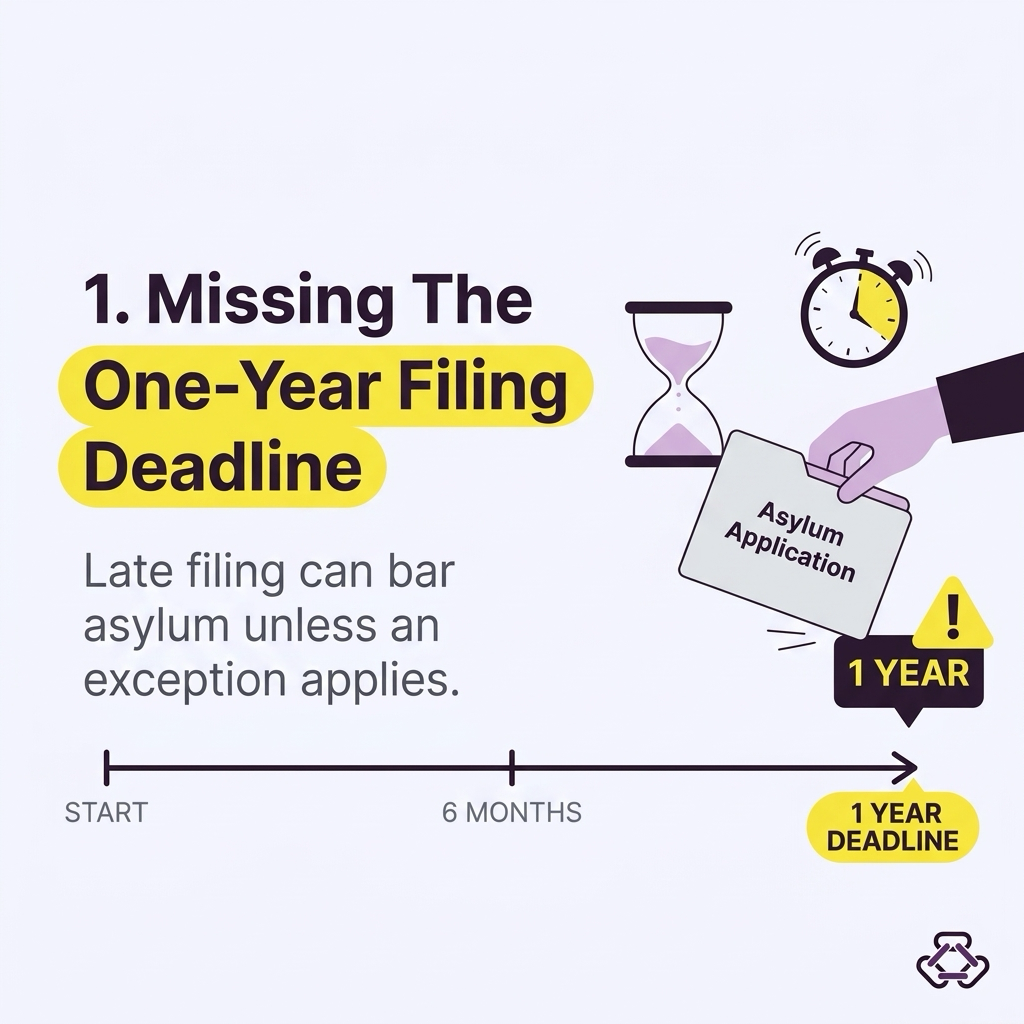
- 1. Missing The One-Year Filing Deadline
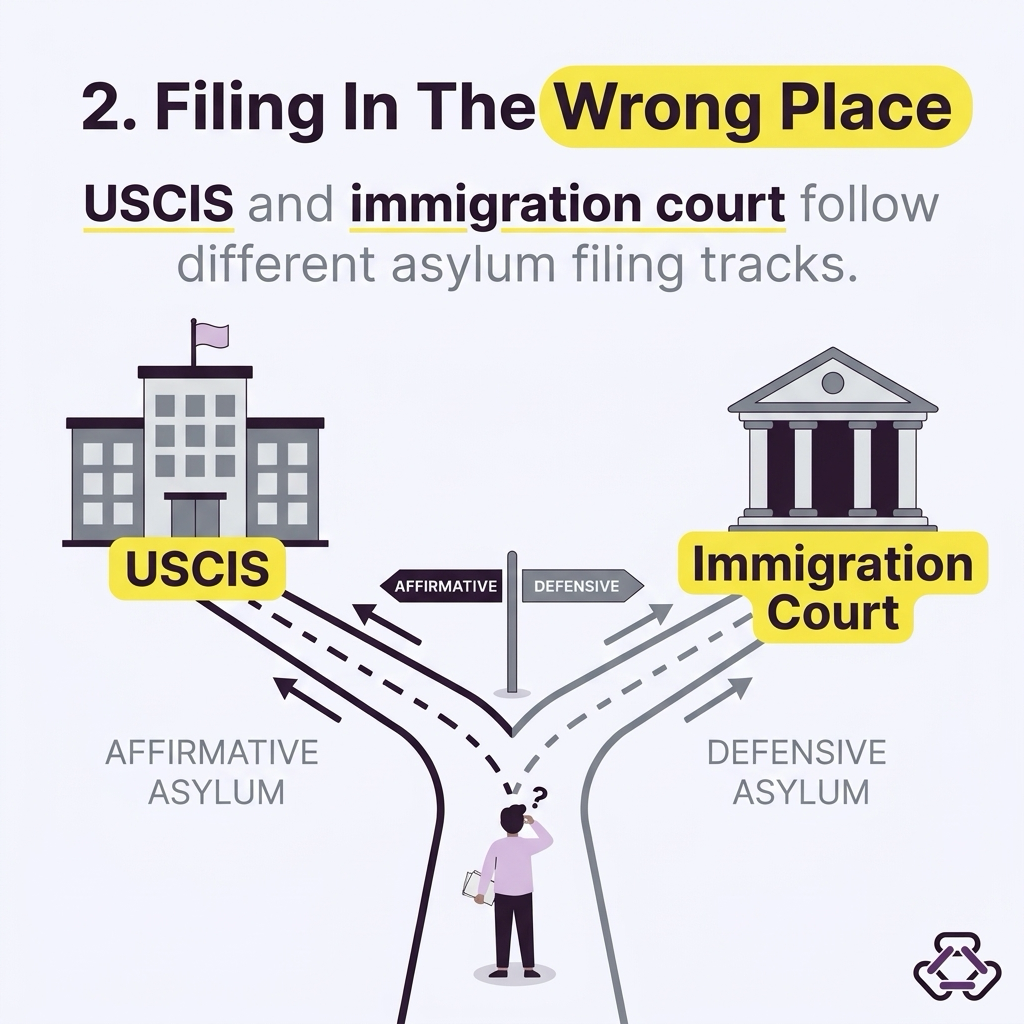
- 2. Filing The Wrong Kind Of Case In The Wrong Place
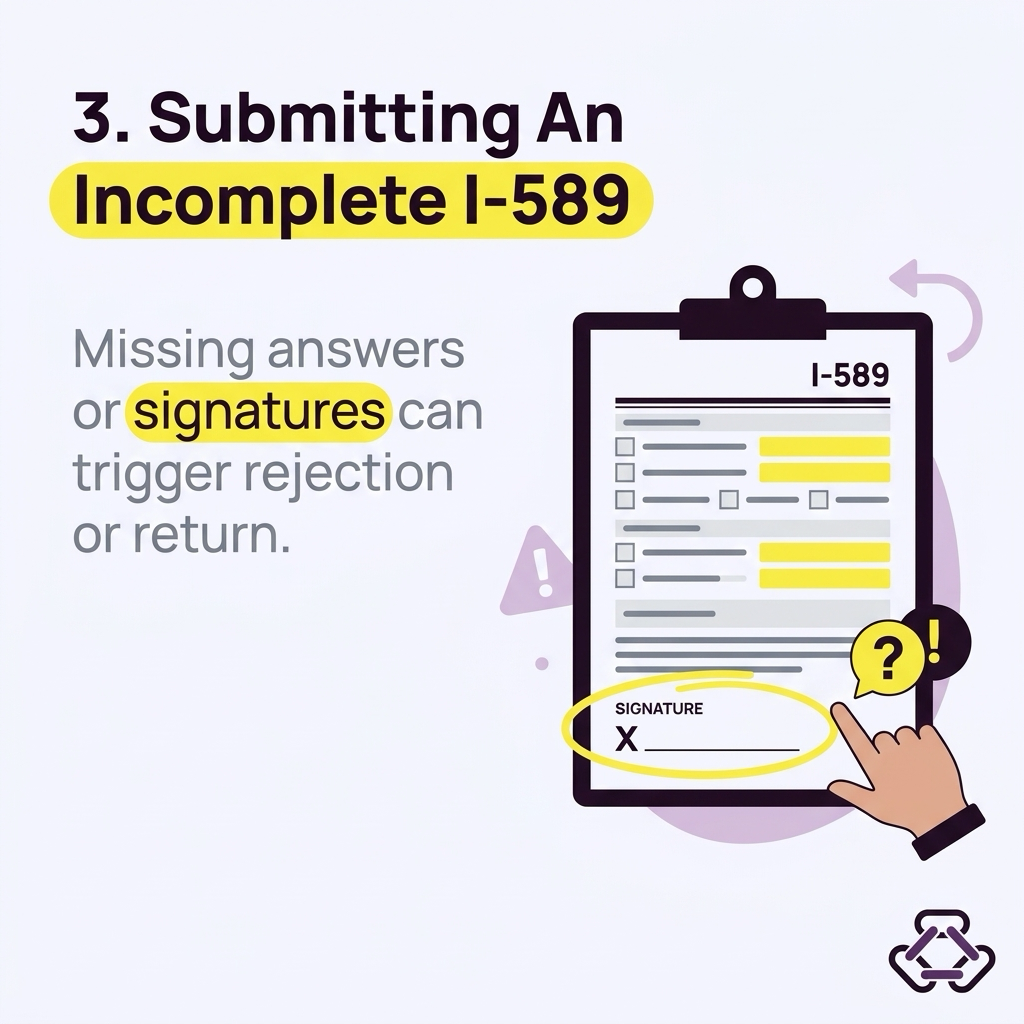
- 3. Turning In An Incomplete Or Improperly Signed Form I-589
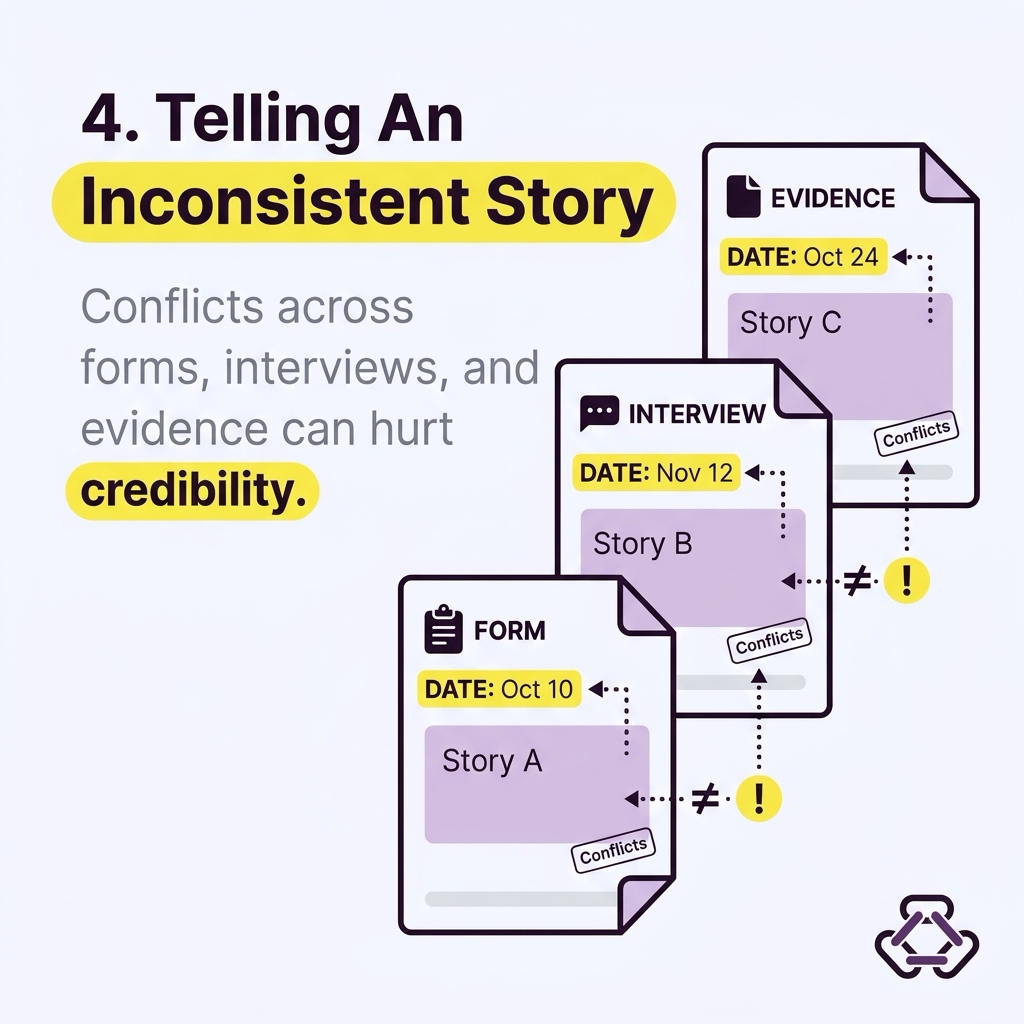
- 4. Telling An Inconsistent Story Across Forms, Interviews, And Evidence
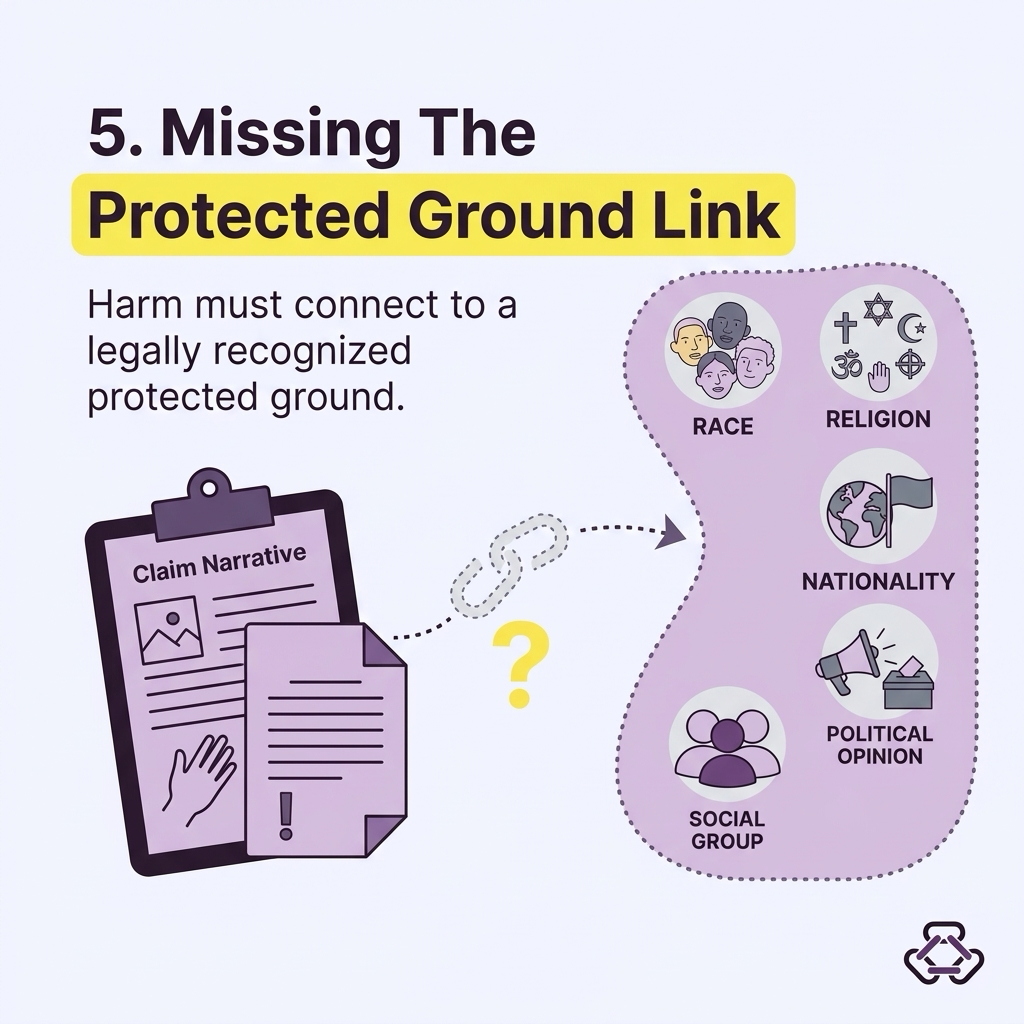
- 5. Failing To Connect The Harm To A Protected Ground
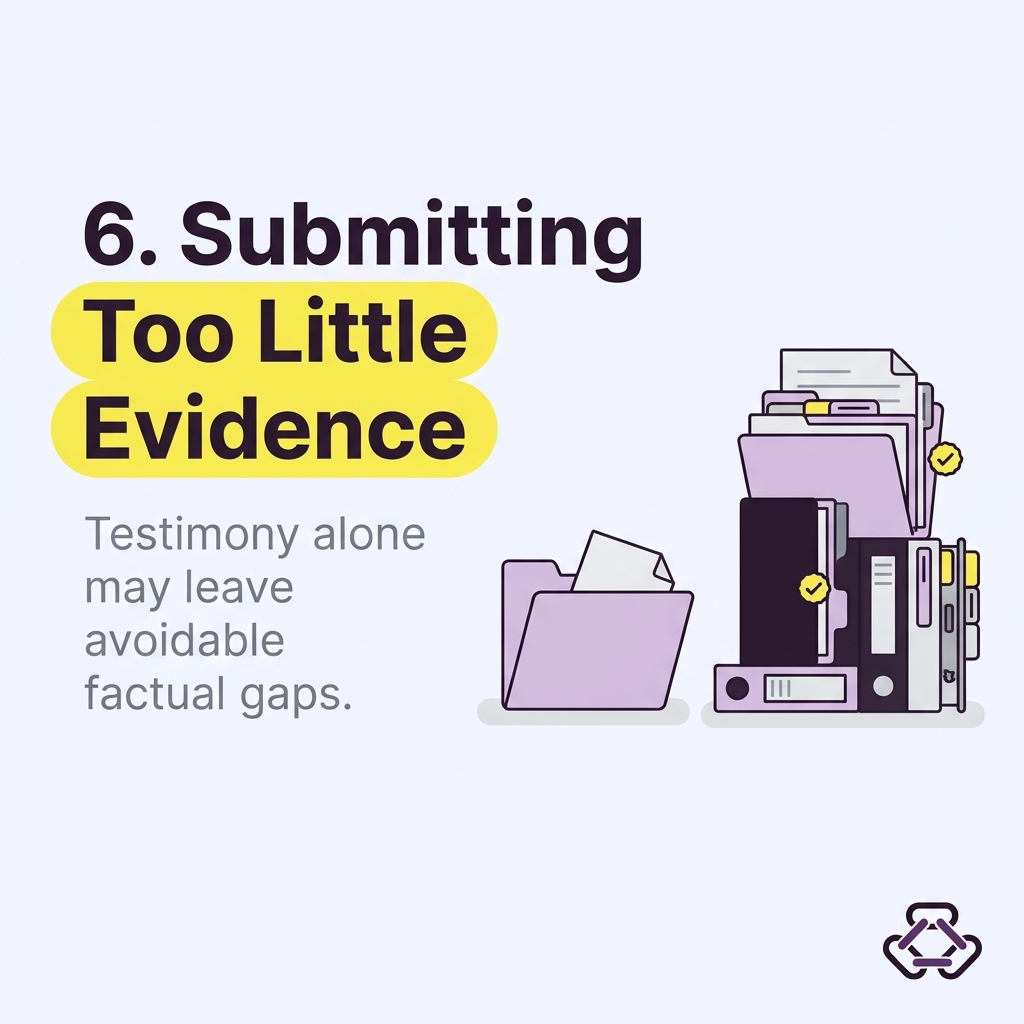
- 6. Submitting Too Little Corroborating Evidence
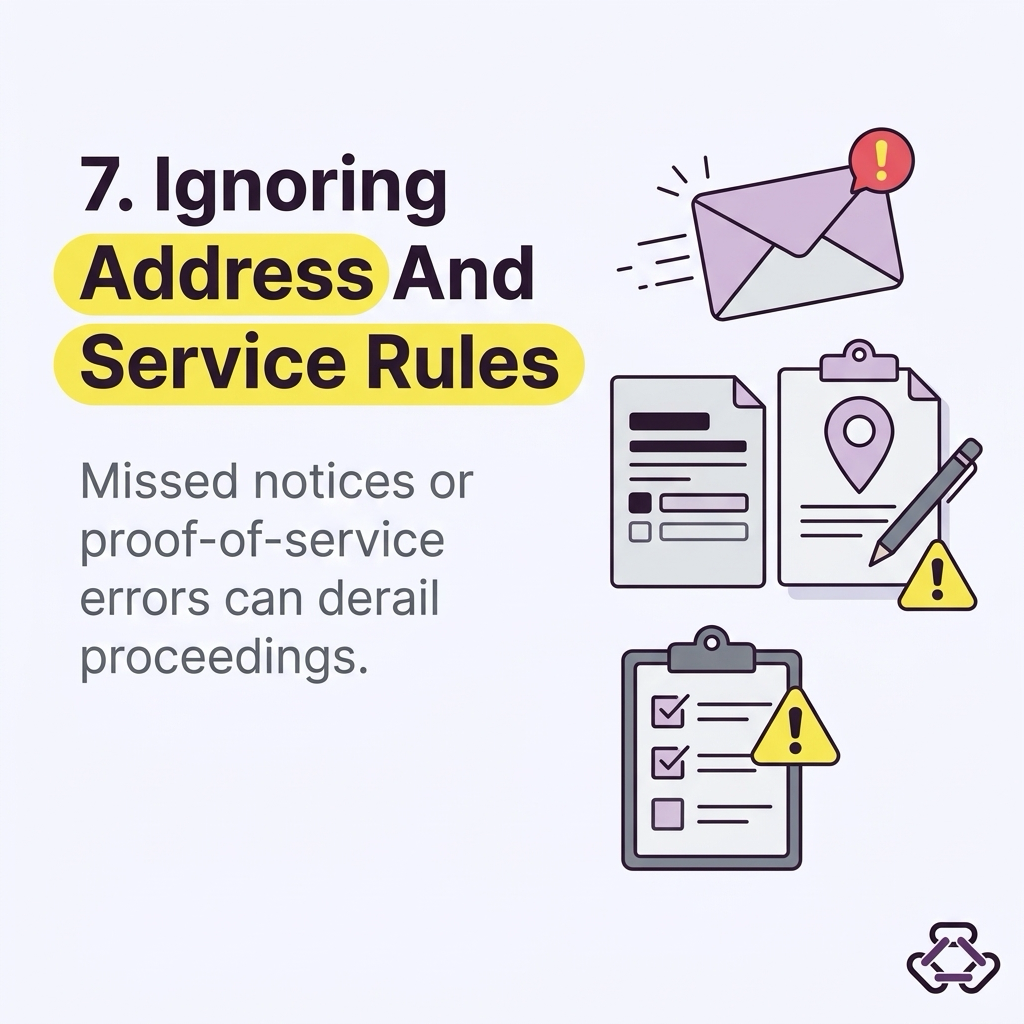
- 7. Ignoring Address Changes, Court Notices, And Service Rules
- A Final Tip: Small Errors Can Become Big Credibility Problems
- The Bottom Line

Type
Great Grandchild
Status
Approved
Title (YouTube)
Images Failed (Social)
Images Failed (Social)
Do not index
Publish Date (TikTok)
Apr 25, 2027 11:15
Videos Post IDs (Social)
Hashtags (Social)
#LegalAdvice #LegalHelp #Immigration #Asylum
Caption
Caption X
Cover

OG Image

Alt Image Text
Flat vector illustration of asylum filing mistakes and asylum deadline errors, showing an applicant surrounded by paperwork problems, missed timing, and missing evidence.
Images

Videos
Publish Date (Social)
Feb 19, 2027 07:00
Scheduled (Social)
Scheduled (Social)
Images Posted (Social)
Images Posted (Social)
Videos Posted (Social)
Videos Posted (Social)
Featured
Created time
Apr 7, 2026 12:01 AM
Sub-item
Authors
CTA Practice Area (Social)
Immigration
TikTok Failed (Social)
TikTok Failed (Social)
Videos Post Links (Social)
TikTok Post Links (Social)
Images Post IDs (Social)
YT Post ID
Video Pending Manual (Social)
TikTok Posted (Social)
TikTok Posted (Social)
TikTok Post IDs (Social)
Video Cover (Social)
Images Post Links (Social)
First Comment (Social)
Videos Failed (Social)
Videos Failed (Social)
YT Embedded
Images Delete (Social)
Videos Delete (Social)
Carousel Video URL (Social)
7 Asylum Filing Mistakes That Can Seriously Damage a Claim
Filing for asylum can feel overwhelming even when a person has a real fear of returning home. The process is paperwork-heavy, credibility-focused, and full of deadlines that can affect whether a case is heard at all. A mistake does not always end a claim, but some mistakes can create problems that are difficult to fix later.
In this post, you’ll learn seven common asylum filing mistakes that can seriously damage a claim, why they matter, and what applicants and families often look at when trying to avoid them. If you want a broader overview of the system first, it may help to start with this plain-English overview of how asylum deadlines, credibility, evidence, and protection fit together.
Scroll to the bottom for every post in this series.
1. Missing The One-Year Filing Deadline
One of the most damaging mistakes is waiting too long to file.
In general terms, U.S. asylum law requires a person to file within one year of their last arrival in the United States unless an exception applies. USCIS explains that late filing can bar asylum, although there are exceptions for changed circumstances and extraordinary circumstances. USCIS also notes that even when an exception exists, the applicant still has to file within a reasonable time under the circumstances. See the official USCIS guidance on asylum bars, affirmative asylum eligibility and exceptions, and the current Form I-589 instructions.
For people in immigration court, the Department of Justice’s EOIR policy materials also list asylum applications as due within one year after arrival. The court system has been moving large numbers of cases quickly in recent years, which can make timing errors even more costly. EOIR reported completing more than 722,000 cases during the first 11 months of FY 2025, while also reducing its pending caseload by more than 447,000 cases since January 20, 2025. That faster pace can leave less room for delay or confusion about filing dates. You can review EOIR’s announcement here and its filing deadline chart here.
Why this mistake is so serious:
- A late filing dispute can become a case within the case
- The applicant may have to prove the timeline with documents and testimony
- If the asylum claim is time-barred, the person may be pushed to rely on other forms of protection that have different standards and fewer benefits
Some people in similar situations gather entry records, parole papers, travel history, notices, and proof of any event that might support a changed- or extraordinary-circumstances exception. If you want a fuller explanation of timing issues, this broader asylum resource gives useful background.
2. Filing The Wrong Kind Of Case In The Wrong Place
Another major problem is misunderstanding the difference between affirmative and defensive asylum.
An affirmative asylum application is generally filed with USCIS when the person is not yet in removal proceedings. A defensive asylum application is filed with the immigration court when the person is already in proceedings before an immigration judge. USCIS explains the affirmative process on its Form I-589 page, and EOIR explains that a defensive asylum application is filed with the immigration court in its policy materials on delivery and receipt.
This mistake can happen in several ways:
- Sending a filing to the wrong agency
- Assuming that a USCIS filing updates the immigration court case
- Thinking court proceedings and USCIS asylum processing are interchangeable
- Missing court-specific requirements because the applicant focused only on USCIS rules
This is one reason people often spend time learning the structure of the process before filing. A separate discussion of affirmative and defensive asylum basics would naturally fit here if you’re building a full asylum content hub, because confusion about forum and procedure is one of the most common early problems in asylum cases.
When a case is in immigration court, filing rules can be technical. EOIR’s document guidance explains that defensive asylum applicants submit the original application to the immigration court, and other filings may have additional formatting and service requirements. You can review that guidance in EOIR’s section on documents.
3. Turning In An Incomplete Or Improperly Signed Form I-589
A claim can also be damaged before the facts are ever reviewed if the application is incomplete.
USCIS has warned that if Form I-589 is filed with missing information, the agency may return it as incomplete. USCIS also states that applicants should answer all questions and use “none,” “not applicable,” or “unknown” when appropriate rather than leaving blanks. That guidance appears in USCIS’s page on I-589 intake and processing reminders and in the current Form I-589 instructions.
The signature sections matter just as much. The current I-589 instructions state that failure of the preparer to sign, where required, can result in the application being returned as incomplete. USCIS also says the applicant has to sign the application personally. If an interpreter or preparer helped, those sections generally have to be completed accurately as well. The official instructions are here.
Common examples include:
- Missing pages or attachments
- Leaving major dates blank
- Forgetting prior addresses, travel, or family details
- Omitting interpreter or preparer information
- Filing an old edition or ignoring current filing instructions
- Sending copies that are illegible
This mistake is especially dangerous near the one-year deadline. USCIS has explained that if an applicant filed before the deadline but the filing was rejected as not properly filed, the applicant may try to argue an exception if the corrected application was refiled within a reasonable time. But that turns a straightforward timely filing into a more complicated legal issue. USCIS discusses that point in its affirmative asylum FAQ.
For people trying to avoid this type of problem, it often helps to compare the form against a checklist and supporting statement before anything is mailed or uploaded. A companion post on putting together the asylum application package step by step would be a natural next read in a content series like this.
4. Telling An Inconsistent Story Across Forms, Interviews, And Evidence
Credibility can shape almost every part of an asylum case.
Many applicants assume the key question is whether the harm they describe is serious enough. That matters, but consistency matters too. If the story changes across the I-589, personal declaration, border interview records, credible fear records, court testimony, medical documents, police reports, or family letters, the government may treat those inconsistencies as a credibility problem.
This does not mean every difference is fatal. Trauma, translation issues, memory gaps, and rushed earlier interviews can all affect how facts were recorded. But major inconsistencies can still damage the claim if they involve core facts such as:
- Who harmed the applicant
- Why the harm happened
- Dates of detention, assault, or threats
- Political, religious, ethnic, or social-group identity
- Whether the government was involved or unable to protect
- Whether the applicant relocated safely inside the home country
USCIS emphasizes interview preparation and accuracy, including the importance of reviewing what was filed and bringing supporting documents to the interview. See USCIS’s guidance on preparing for your affirmative asylum interview.
Applicants sometimes make this mistake by trying to make the story sound stronger. Ironically, exaggeration can be more damaging than a simpler truthful account. In asylum law, a claim that is detailed, internally consistent, and supported where possible often carries more weight than a dramatic story with avoidable contradictions.
That is why people often spend substantial time lining up dates, events, names, and locations before filing. If you’re building evidence and a declaration at the same time, a practical guide to collecting corroborating proof can help explain how documents and testimony work together.
5. Failing To Connect The Harm To A Protected Ground
Not every dangerous situation qualifies for asylum.
A person may have experienced real violence, threats, or trauma and still face a challenge if the application does not clearly connect the persecution to one of the protected grounds recognized in U.S. asylum law: race, religion, nationality, political opinion, or membership in a particular social group. USCIS’s asylum materials and Form I-589 instructions repeatedly frame the claim around this required connection. See the official Form I-589 page and instructions.
This is a common problem in cases involving:
- General criminal violence
- Domestic violence without a clearly developed legal theory
- Gang targeting without explaining the persecutor’s motive
- Family disputes presented without a protected-ground analysis
- Political activity described vaguely
- Religious conversion or practice discussed without detail
Here’s what this often means: the application may describe what happened, but not fully explain why it happened in a way the asylum statute recognizes.
For example, “my country is dangerous” is not enough by itself. Neither is “criminals wanted money.” The application often becomes much stronger when it clearly explains the persecutor’s motive, the applicant’s protected identity or opinion, and the evidence showing that connection.
This is where country conditions research, affidavits, and a carefully drafted declaration often matter a great deal. UNHCR maintains country information and guidance resources that are often useful for background context, though case-specific legal analysis usually turns on how that country evidence fits the applicant’s own facts. You can review UNHCR’s country materials here.
6. Submitting Too Little Corroborating Evidence
A detailed personal statement is important, but many cases benefit from more than testimony alone.
Corroborating evidence may include:
- Identity documents
- Police records
- Medical records
- Threat messages
- News reports
- Membership records
- Photos
- Social media posts
- Affidavits from witnesses, relatives, or community members
- Expert declarations
- Country conditions reports
USCIS has said applicants are strongly urged to attach written statements and documents supporting the claim. That appears in the agency’s guidance on properly filing Form I-589. EOIR also has document rules for filings in immigration court, including separate proof-of-service requirements for supporting documents in many situations. That guidance is available in EOIR’s appendix on certificates of service.
A weak evidence package can hurt a claim in several ways:
- It may leave avoidable factual gaps
- It may make the applicant’s testimony look unsupported
- It may create unnecessary credibility fights
- It may become harder to respond if the judge or officer asks, “Where is the proof?”
At the same time, “more documents” is not always the same as “better documents.” Untranslated records, undated letters, vague affidavits, or screenshots without context may not help much. Evidence usually works best when it is organized around the legal theory of the case.
For many applicants, this is the stage where legal representation can make a noticeable difference. Government Accountability Office material available through TRAC has highlighted significant variation in asylum outcomes, and representation has long been one of the major variables discussed by researchers and advocates looking at immigration court results. One TRAC-hosted GAO document notes that outcomes can vary widely by court and case circumstances, underscoring how important preparation can be. See the TRAC-hosted GAO material here.
If you’re trying to understand how to build supporting proof, a separate guide on gathering corroborating evidence in an asylum case is often the most useful follow-up resource.
7. Ignoring Address Changes, Court Notices, And Service Rules
Some claims are damaged not by the merits, but by missed mail and missed hearings.
Address problems can be devastating in asylum matters. USCIS says noncitizens generally have to report a change of address within 10 days of moving using the official process. The agency’s AR-11 page explains that keeping the address current helps ensure applicants receive important correspondence. See USCIS’s change-of-address guidance.
For immigration court cases, EOIR is even more specific. The online EOIR-33/IC instructions state that the respondent has to file the form with the immigration court within five working days of a contact information change, and that the court will send official correspondence to the address provided. EOIR also warns that failure to appear after notice is sent can lead to the hearing proceeding in the person’s absence and can result in an order of removal. You can review the form instructions here and EOIR’s contact-update page here.
Another procedural trap involves service. In immigration court, filings generally have to be served on the opposing party, which is usually DHS, and the court generally requires proof of service. EOIR’s policy manual says all submissions must include a certificate or proof of service, and supporting documents may require their own separate proof of service. That guidance is here.
This category of mistake includes:
- Moving and not updating the address correctly
- Assuming USCIS and EOIR share all updates automatically
- Missing an interview notice or hearing notice
- Sending documents to the court without proof of service
- Forgetting that each family member may require separate filings or updates in court
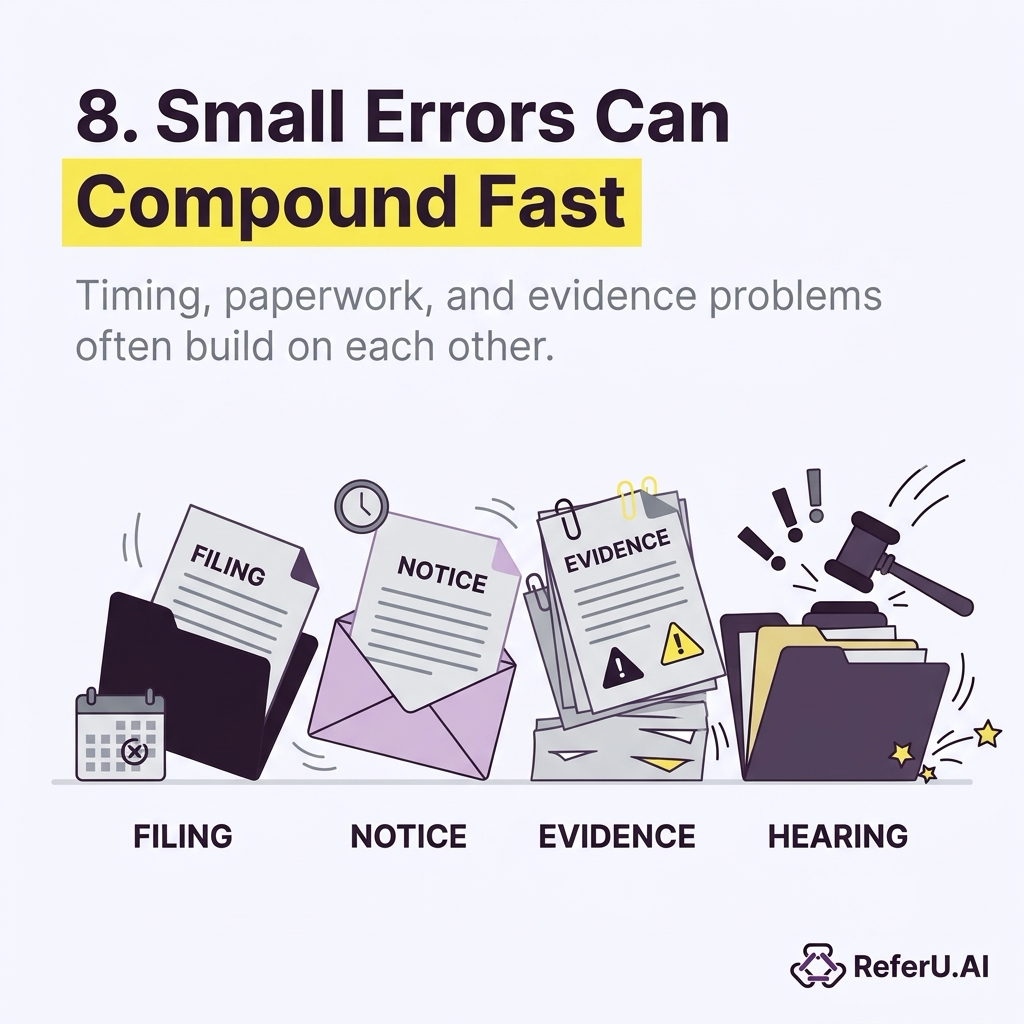
These errors can snowball quickly. A missed notice can become a missed hearing. A missed hearing can become an in absentia order. Then the case often shifts from asylum preparation to damage control.
A Final Tip: Small Errors Can Become Big Credibility Problems
The most important thing to understand about asylum filing mistakes is that they often compound.
A late filing can lead to extra litigation about the deadline. An incomplete form can delay receipt. Weak evidence can make normal memory issues look suspicious. A missed address update can cause a hearing to be missed. A story that was never carefully organized can later be labeled inconsistent.
That does not mean every mistake is irreversible. It does mean asylum cases often benefit from careful legal framing, accurate paperwork, and evidence that matches the facts and the law.
If you’re also sorting through initial questions before filing, it may help to read answers to the issues many people ask about before starting an asylum case. And if you’re trying to understand the process from a wider angle, this overview of the main asylum rules and pressure points is a good place to continue.
The Bottom Line
The seven mistakes above show how asylum claims can be damaged by timing errors, procedural errors, credibility problems, and underdeveloped evidence. Many of these issues are easier to spot early than to repair later. An attorney may be able to help evaluate deadlines, identify protected-ground theories, organize corroborating evidence, prepare declarations, and respond when the government raises inconsistencies or procedural objections.
Visit ReferU.AI to get matched with an attorney who has demonstrable experience in cases like yours — for free.
