Table of Contents
- Asylum: A Beginner’s Guide to Affirmative and Defensive Cases
- What Is Asylum?
- What Is The Difference Between Affirmative And Defensive Asylum?
- What Is An Affirmative Asylum Case?
- How The Affirmative Process Usually Works
- What The Interview Is Like
- Why Timing Matters In Affirmative Cases
- What Is A Defensive Asylum Case?
- How People End Up In Defensive Proceedings
- What Court Changes
- What Do Both Types Of Asylum Applicants Have To Prove?
- The Protected Ground Requirement
- Past Persecution Vs. Future Fear
- Credibility And Corroboration
- What Are Common Bars To Asylum?
- How Long Do Asylum Cases Take?
- What Happens If Asylum Is Not Granted?
- In An Affirmative Case
- In A Defensive Case
- Why Legal Representation Often Matters So Much In Asylum Cases
- A Short Summary For Beginners

Type
Great Grandchild
Status
Approved
Title (YouTube)
Images Failed (Social)
Images Failed (Social)
Do not index
Publish Date (TikTok)
Apr 25, 2027 13:45
Videos Post IDs (Social)
Hashtags (Social)
#LegalAdvice #LegalHelp #Immigration #Asylum
Caption
Caption X
Cover

OG Image

Alt Image Text
Flat vector illustration of asylum affirmative and defensive cases, showing an applicant choosing between a USCIS office path and an immigration court path.
Images


Videos
Publish Date (Social)
Feb 19, 2027 08:30
Scheduled (Social)
Scheduled (Social)
Images Posted (Social)
Images Posted (Social)
Videos Posted (Social)
Videos Posted (Social)
Featured
Created time
Apr 7, 2026 12:01 AM
Sub-item
Authors
CTA Practice Area (Social)
Immigration
TikTok Failed (Social)
TikTok Failed (Social)
Videos Post Links (Social)
TikTok Post Links (Social)
Images Post IDs (Social)
YT Post ID
Video Pending Manual (Social)
TikTok Posted (Social)
TikTok Posted (Social)
TikTok Post IDs (Social)
Video Cover (Social)
Images Post Links (Social)
First Comment (Social)
Videos Failed (Social)
Videos Failed (Social)
YT Embedded
Images Delete (Social)
Videos Delete (Social)
Carousel Video URL (Social)
Asylum: A Beginner’s Guide to Affirmative and Defensive Cases
If you’re trying to understand asylum in the United States, one of the first confusing questions is where the case is decided. Some cases begin with USCIS, outside of immigration court. Others are decided defensively in removal proceedings before an immigration judge. That difference can affect the timeline, the hearing format, the evidence strategy, and the role of legal representation.
The process can feel technical fast. Deadlines, filing rules, credibility issues, and procedural posture often matter a lot. In this post you’ll learn what asylum is, how affirmative and defensive cases differ, what both types of applicants usually have to prove, what happens after filing, and why legal help often becomes especially important when the facts are complicated or the stakes are urgent.
If you want a broader overview of filing deadlines, credibility, evidence, and the legal framework, this more detailed guide on how asylum claims are evaluated from start to finish can help as a companion resource.
Scroll to the bottom for every post in this series.
What Is Asylum?
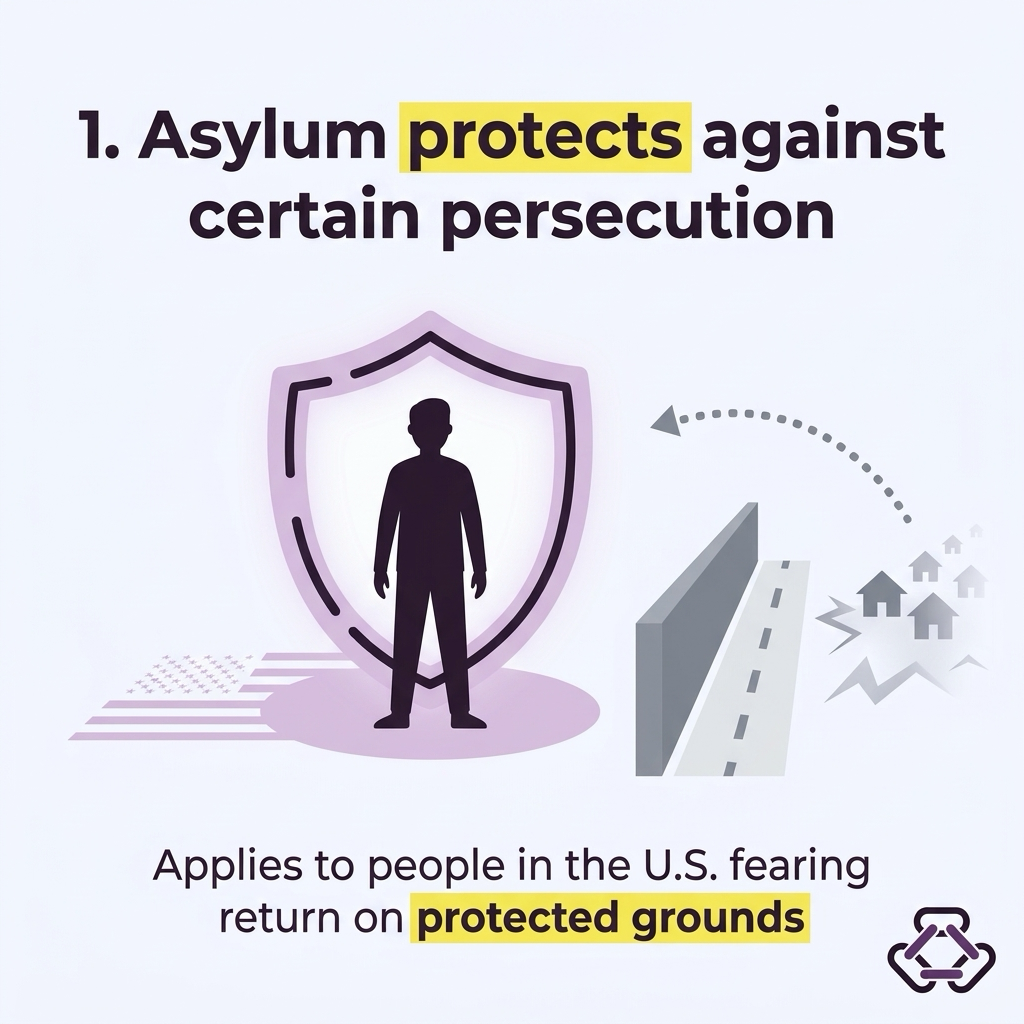
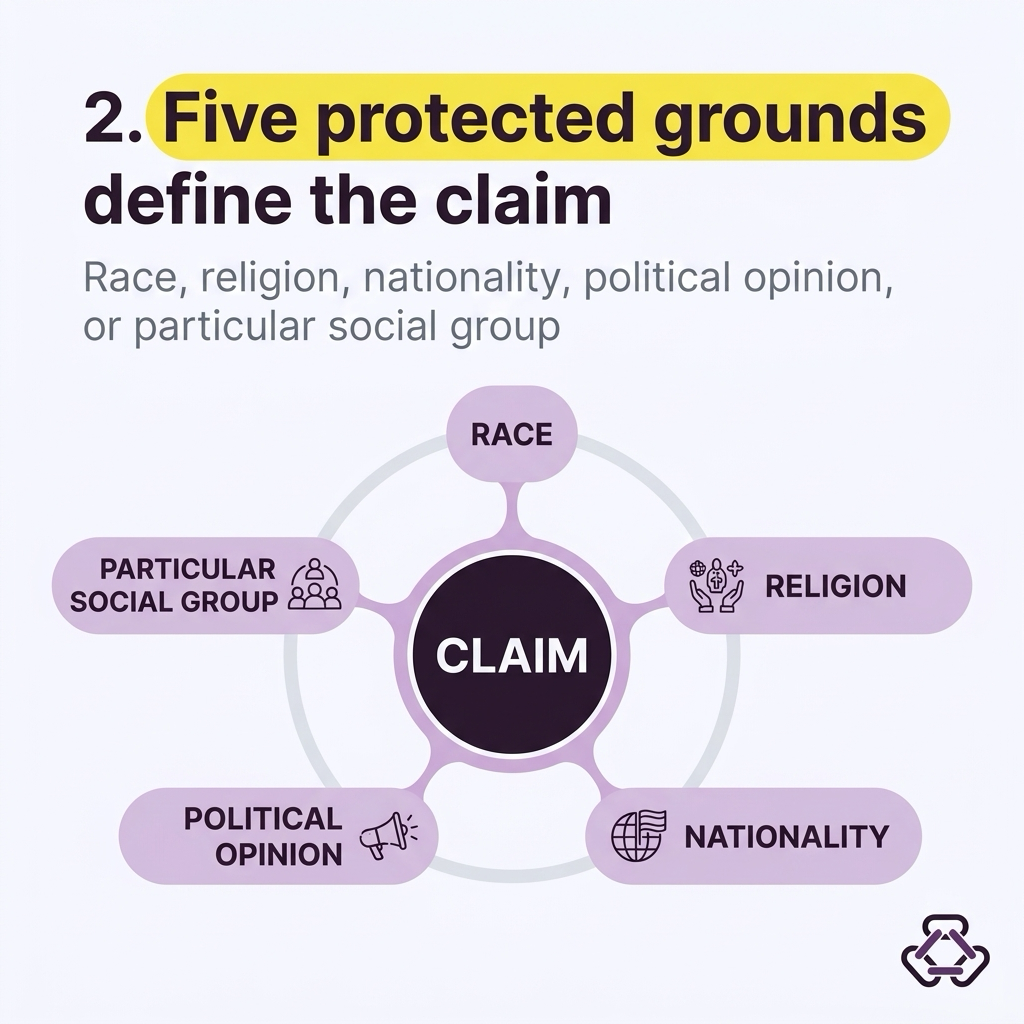
In general terms, asylum is a form of protection available to certain people who are physically present in the United States and cannot return to their home country because of past persecution or a well-founded fear of future persecution on account of one of five protected grounds: race, religion, nationality, political opinion, or membership in a particular social group. The basic legal framework comes from the Immigration and Nationality Act and U.S. asylum regulations, and it reflects international refugee protection principles recognized by UNHCR and the U.S. government’s own USCIS asylum guidance.
That definition sounds simple, but real cases often turn on difficult questions, such as:
- Was the harm serious enough to count as persecution?
- Who caused the harm?
- Was the government involved, unwilling, or unable to protect the person?
- Is there a link between the harm and a protected ground?
- Is the testimony detailed and consistent?
- Are there bars that could block asylum even if the fear is genuine?
Those questions appear in both affirmative and defensive cases.
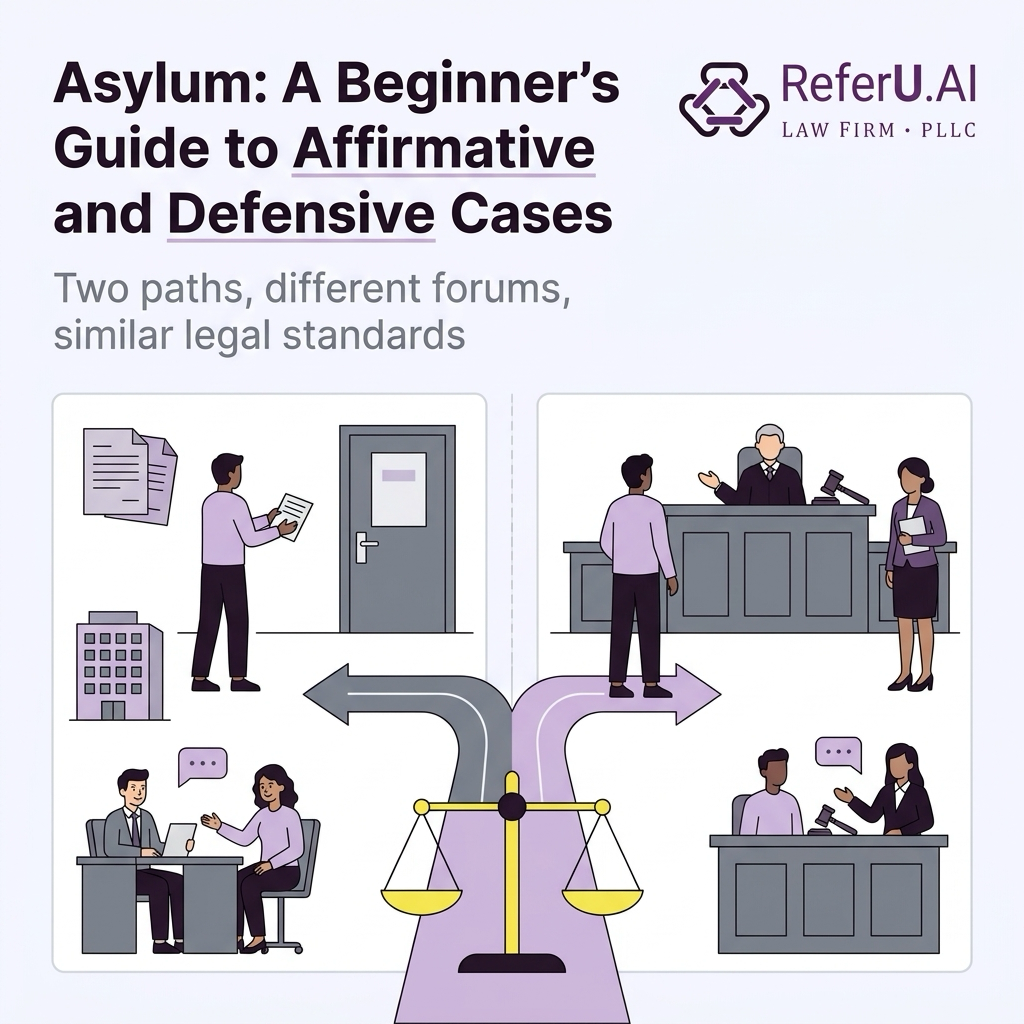
What Is The Difference Between Affirmative And Defensive Asylum?
The short version is this:
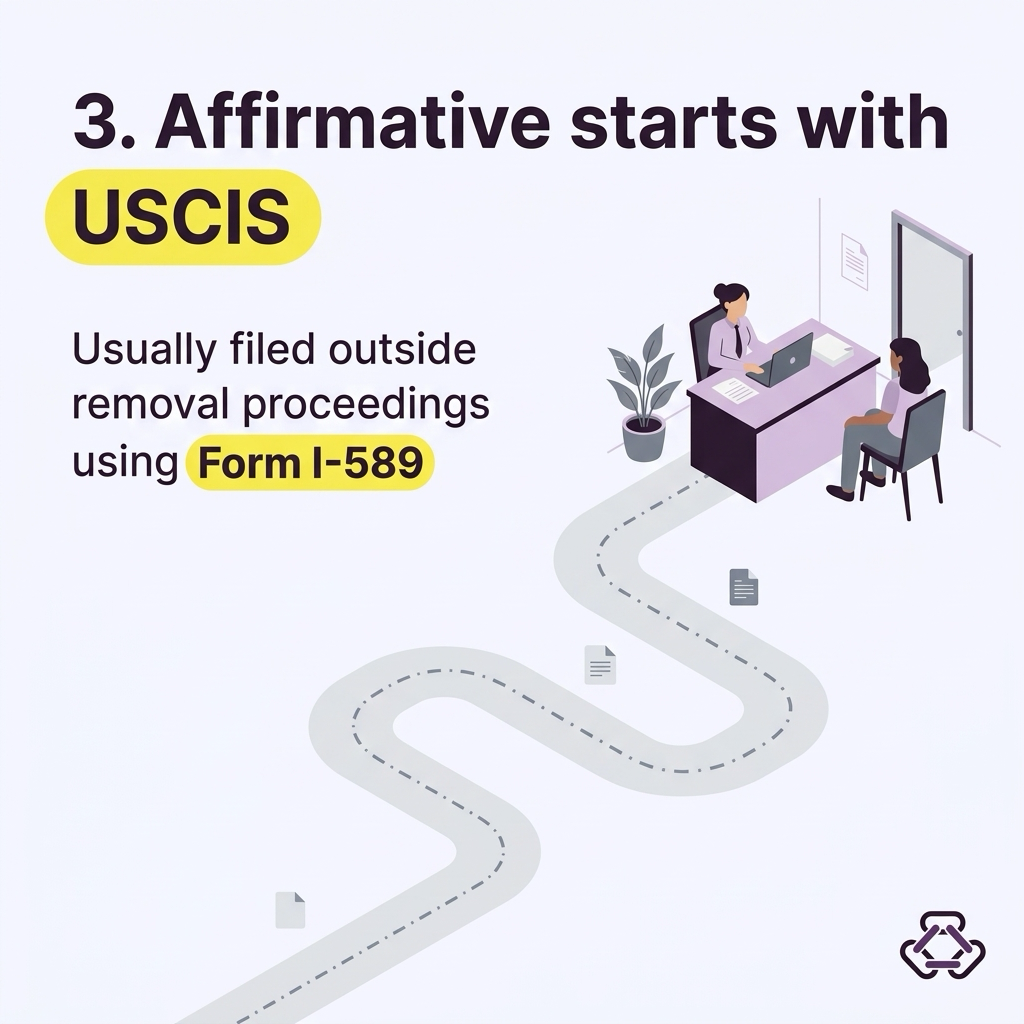
- Affirmative asylum usually means the person applies with USCIS while not in removal proceedings.
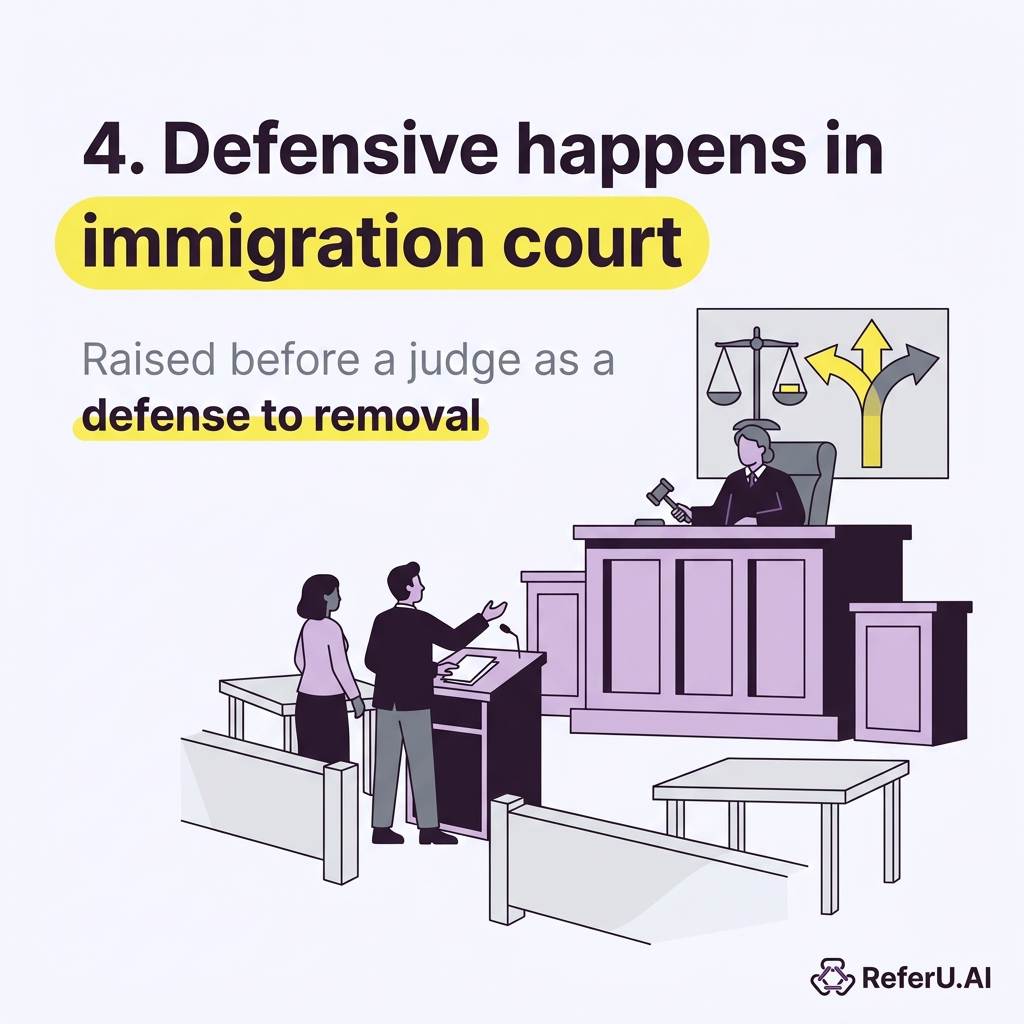
- Defensive asylum usually means the person asks for asylum before an immigration judge as a defense to removal.
USCIS explains the affirmative process on its official asylum page, while the Department of Justice explains court-based protection claims on its EOIR asylum overview.
That difference in forum matters because the case may look very different depending on where it is heard:
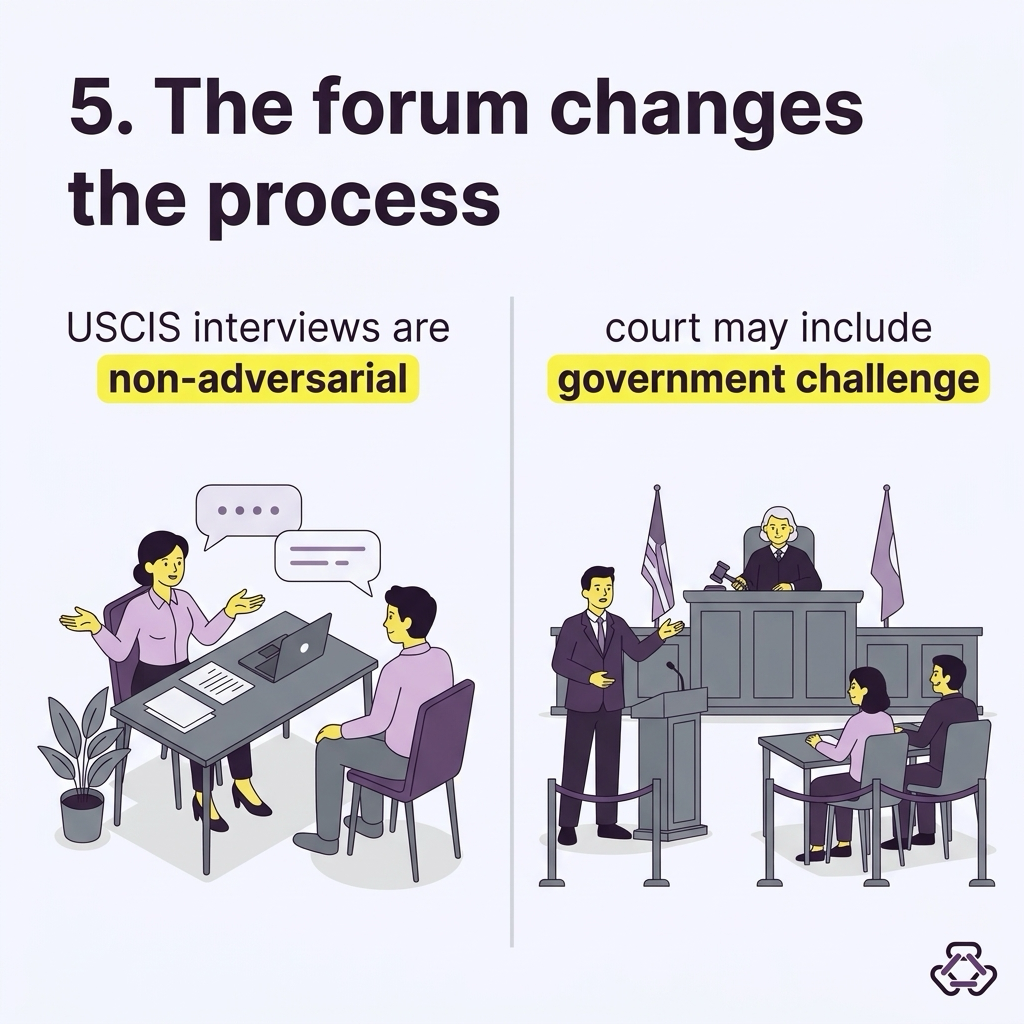
- In an affirmative case, the interview is generally non-adversarial and conducted by an asylum officer at USCIS.
- In a defensive case, the hearing takes place in immigration court, where a government attorney may challenge the claim and the judge decides the outcome.
A person can also start in the affirmative process and later end up in immigration court if USCIS does not grant asylum and instead refers the case to EOIR, depending on the person’s status and procedural posture, as described by USCIS.
What Is An Affirmative Asylum Case?
An affirmative asylum case generally begins when a person files Form I-589, Application for Asylum and for Withholding of Removal, with USCIS and is not currently in removal proceedings. USCIS states that a person seeking affirmative asylum generally files with the agency if they are physically present in the United States and meet jurisdictional requirements outlined on the Form I-589 page.
How The Affirmative Process Usually Works
At a basic level, the process often looks like this:
- The applicant files Form I-589 with USCIS.
- USCIS issues a receipt notice.
- USCIS schedules biometrics where applicable.
- The applicant is scheduled for an asylum interview.
- A USCIS asylum officer evaluates eligibility.
- USCIS either grants asylum, refers the case to immigration court, or otherwise issues a decision depending on the circumstances.
USCIS outlines these steps on its page about what happens after filing Form I-589 and its page on the affirmative asylum process.
What The Interview Is Like
In many affirmative cases, the key event is the asylum interview. This is not the same as a trial. The asylum officer asks questions about the written application, identity, family background, travel history, alleged harm, fear of return, and the reason the harm happened. Officers also evaluate whether the applicant is barred from asylum and whether the testimony is credible, sufficiently detailed, and legally connected to one of the protected grounds under the standards described by USCIS.
Although affirmative interviews are often described as less adversarial than court, they are still high-stakes. Small inconsistencies, omitted facts, translation problems, trauma-related memory gaps, and weak corroboration can all affect how the case is viewed.
Why Timing Matters In Affirmative Cases
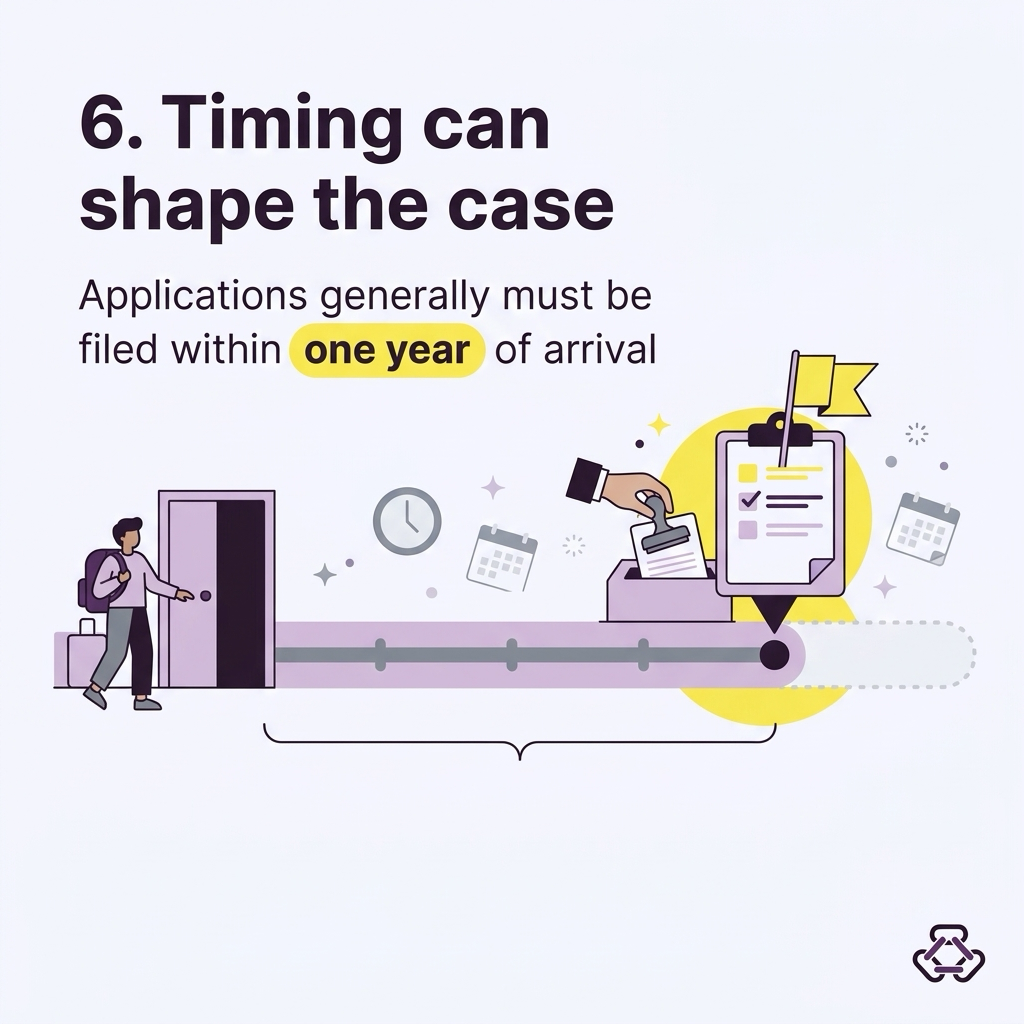
Federal law generally requires asylum applications to be filed within one year of the applicant’s last arrival in the United States, unless an exception applies. USCIS states this clearly on the affirmative asylum process page, and EOIR reflects the same one-year framework in its policy manual appendix on deadlines.
For many people, that filing deadline becomes one of the most important issues in the case. There are exceptions, but whether they apply can be legally fact-specific. In similar situations, people often look closely at the timeline with counsel because even a strong fear claim can become harder to pursue if the one-year issue is not handled carefully.
What Is A Defensive Asylum Case?
A defensive asylum case is raised in removal proceedings before the immigration court. The person is asking the judge not to remove them from the United States because they qualify for asylum or related protection. EOIR explains this framework on its page covering asylum, withholding of removal, and Convention Against Torture protection.
How People End Up In Defensive Proceedings
There are several common ways this happens:
- USCIS refers an affirmative case to immigration court rather than granting it.
- A person is placed directly in removal proceedings and files asylum defensively with the court.
- A person passes a credible fear screening after expedited removal processing and then seeks protection through later proceedings, depending on the case path described by USCIS and EOIR.
What Court Changes
In immigration court, the process is more formal and often more adversarial. There may be:
- Master calendar hearings, which are shorter procedural hearings
- Individual hearings, where testimony and evidence are presented in detail
- Filing deadlines set by the court
- Cross-examination by the government
- Rulings not only on asylum, but also on withholding of removal and Convention Against Torture protection
EOIR’s policy materials and case information resources explain that immigration judges manage filing deadlines and hearings, and respondents can also use the Respondent Access Portal for certain case information and filings where available.
For many applicants, this is where experienced representation becomes especially important. Court testimony often requires a clear legal theory, organized supporting evidence, preparation for cross-examination, and careful attention to what was previously said in border interviews, credible fear interviews, applications, declarations, and other records.
What Do Both Types Of Asylum Applicants Have To Prove?
Whether the case is affirmative or defensive, the core legal claim is similar. The applicant generally has to show they meet the refugee definition for asylum purposes. USCIS states that asylum officers evaluate whether the person meets the refugee definition and whether any bars apply, while immigration judges do the same in defensive cases under EOIR procedures. See USCIS and EOIR.
The Protected Ground Requirement
One of the most misunderstood parts of asylum law is that fear alone is not enough. The harm generally has to be connected to one of the five protected grounds:
- Race
- Religion
- Nationality
- Political opinion
- Membership in a particular social group
That connection is often called the nexus element. In practical terms, decision-makers often ask: Why was this person targeted? If the harm was caused by personal conflict, generalized crime, random violence, or economic pressure alone, the case may become harder unless the facts also tie the harm to a protected ground recognized under asylum law.
Past Persecution Vs. Future Fear
Some applicants rely on past persecution. Others rely on a well-founded fear of future persecution. Some rely on both. Evidence can include testimony, witness statements, medical records, police reports, threats, photographs, social media, expert opinions, and country conditions materials from sources such as the U.S. Department of State and UNHCR.
Credibility And Corroboration
A large number of asylum cases turn on credibility and corroborating evidence. Even truthful applicants may struggle if the written declaration is vague, the timeline is inconsistent, or important details are missing from earlier interviews. On the other hand, some applicants have very little documentation because they fled quickly or because obtaining records from the home country is dangerous. That tension appears often in asylum adjudication, and it is one reason many applicants spend substantial time preparing declarations and supporting materials before the interview or hearing.
What Are Common Bars To Asylum?
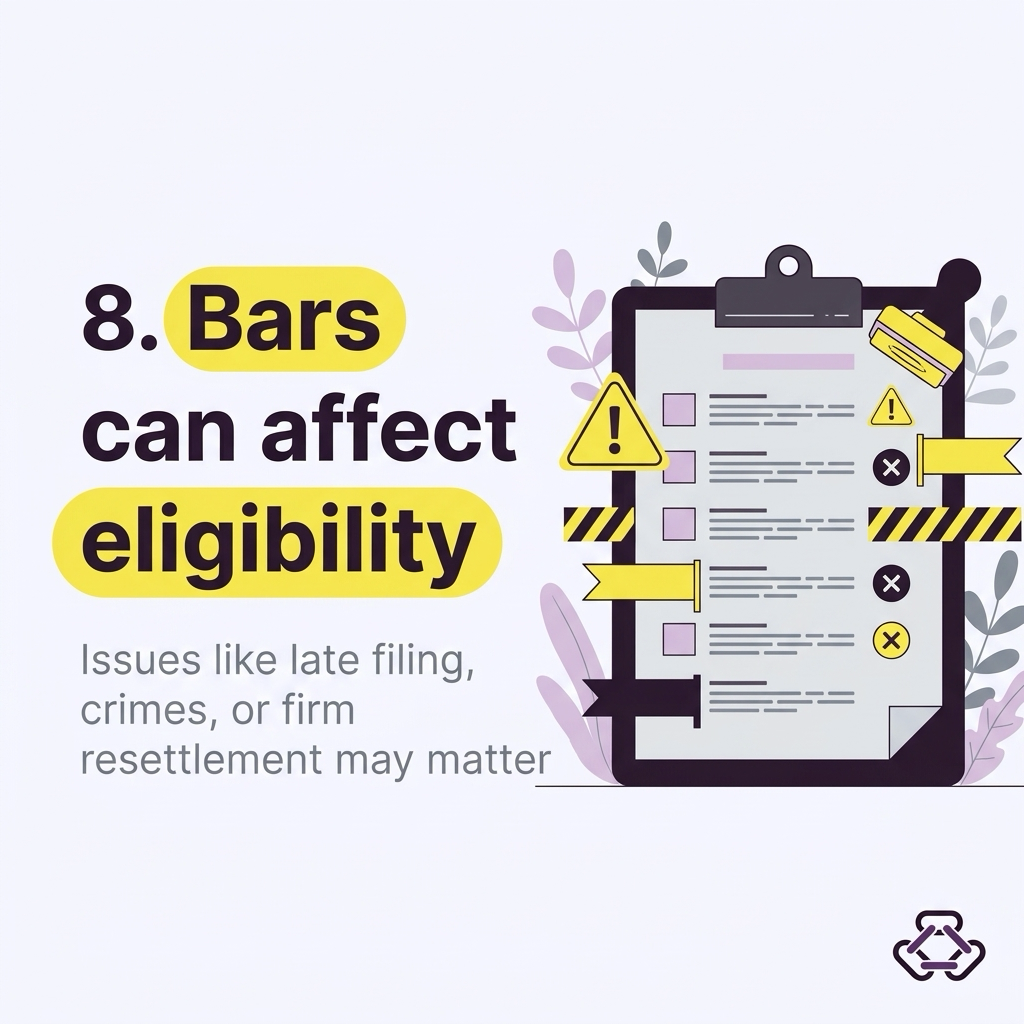
Even when someone fears persecution, there may be legal bars that affect eligibility. USCIS lists several asylum bars on its official Asylum Bars page, including issues involving the one-year filing deadline, prior denials in some circumstances, firm resettlement, persecutor involvement, certain serious crimes, serious nonpolitical crimes committed outside the United States, and national security-related grounds.
These issues can become highly technical. For example:
- A late filing issue may lead to disputes about exceptions.
- A criminal history may affect asylum differently than it affects other forms of relief.
- An applicant who is barred from asylum might still pursue withholding of removal or CAT protection in some situations, as EOIR explains on its protection overview page.
That is one reason a case that looks straightforward at first can become much more legally complex after a detailed screening.
How Long Do Asylum Cases Take?
The honest beginner-level answer is: often a long time. The timing varies widely based on the case type, court location, staffing levels, scheduling policy, security checks, and backlog conditions.
USCIS says affirmative interviews are scheduled under its current affirmative asylum interview scheduling approach, which includes a “last in, first out” structure and other tracks. At the same time, the Department of Homeland Security’s FY 2024 performance reporting described a backlog of more than 1 million asylum cases pending as of FY 2023, with over 786,000 pending longer than 180 days, reflecting the scale of delay affecting adjudications across the system, as summarized in the DHS FY 2024 Annual Performance Report materials.
In immigration court, timing can also vary dramatically from one court to another. Some defensive cases move quickly, especially detained matters. Others remain pending for years.
For applicants, that delay can affect housing, work authorization timing, family planning, trauma recovery, and the availability of evidence and witnesses. It can also make consistency even more important, because the testimony given years later is often compared to paperwork filed much earlier.
What Happens If Asylum Is Not Granted?
That depends on where the case is and what happened procedurally.
In An Affirmative Case
If USCIS does not grant an affirmative application, the agency may refer the case to immigration court if the applicant lacks lawful immigration status or is otherwise placed into removal proceedings, according to USCIS. That means the person may still continue pursuing asylum, but now in a defensive posture before a judge.
In A Defensive Case
If an immigration judge denies asylum, the applicant may in some cases seek review before the Board of Immigration Appeals, and related forms of protection like withholding of removal or CAT may also be litigated depending on the facts and legal issues. EOIR’s court system materials and policy manuals govern those procedures through the Department of Justice’s immigration adjudication framework, including the materials on asylum and related protections.
Because the consequences can be severe, many people facing denial issues look for representation with documented experience handling highly similar matters, especially where the record includes credibility disputes, deadline problems, criminal issues, or country-condition questions.
Why Legal Representation Often Matters So Much In Asylum Cases
Asylum law is one of those areas where facts and procedure are tightly connected. A person may have a compelling history and still run into problems if:
- the declaration leaves out key facts,
- dates do not line up,
- the protected ground theory is underdeveloped,
- corroborating records are not organized well,
- earlier interview notes contain inconsistencies,
- the filing deadline is disputed,
- or asylum bars may apply.
In court, those issues can become even more pronounced because the government may challenge weak points directly. In affirmative cases, the challenge may be quieter, but the stakes are still real.
That is why many applicants look for an attorney with demonstrable experience in asylum matters involving similar factual patterns, not just general immigration work. For example, someone with a gang-based persecution claim, a religion-based claim, an LGBTQ+ particular social group claim, or a politically motivated harm claim may want to understand whether counsel has handled closely related issues before. Fit matters. So does the ability to build a record based on evidence, country conditions, and a coherent legal theory.
A Short Summary For Beginners
Affirmative and defensive asylum cases rely on the same core protection principles, but they move through different decision-makers and different procedures. Affirmative asylum is generally filed with USCIS outside immigration court. Defensive asylum is raised before an immigration judge as a defense to removal. In both settings, the applicant generally has to show persecution or a well-founded fear of persecution tied to a protected ground, while also addressing credibility, corroboration, timing, and any possible bars.
For many people, the hardest part is not understanding the definition of asylum in the abstract. It is figuring out how that definition applies to their specific facts, their timeline, their documents, and the procedural path their case is already on.
Visit ReferU.AI to get matched with an attorney who has demonstrable experience in cases like yours — for free.
