Table of Contents
- 10 Questions People Ask Before Filing for Asylum
- 1. What Exactly Is Asylum?
- 2. Do I File With USCIS Or In Immigration Court?
- 3. Is There A Deadline To File For Asylum?
- 4. What Do I Have To Prove?
- 5. What If I Don’t Have A Police Report Or Other Official Documents?
- 6. Can I Work While My Asylum Case Is Pending?
- 7. Can My Spouse Or Children Be Included?
- 8. How Long Does The Asylum Process Take?
- 9. Are There Reasons Someone Can Be Denied Even If They Are Afraid To Return?
- 10. What Happens If Asylum Is Granted?
- Why People Often Talk To An Attorney Before Filing
- Final Thoughts

Type
Great Grandchild
Status
Approved
Title (YouTube)
Images Failed (Social)
Images Failed (Social)
Do not index
Publish Date (TikTok)
Apr 25, 2027 10:15
Videos Post IDs (Social)
Hashtags (Social)
#LegalAdvice #LegalHelp #Immigration #Asylum
Caption
Caption X
Cover

OG Image

Alt Image Text
Flat vector illustration of asylum filing questions with USCIS and immigration court symbols, documents, deadlines, and family-related elements in a minimal legal-help scene.
Images

Videos
Publish Date (Social)
Feb 19, 2027 06:30
Scheduled (Social)
Scheduled (Social)
Images Posted (Social)
Images Posted (Social)
Videos Posted (Social)
Videos Posted (Social)
Featured
Created time
Apr 7, 2026 12:01 AM
Sub-item
Authors
CTA Practice Area (Social)
Immigration
TikTok Failed (Social)
TikTok Failed (Social)
Videos Post Links (Social)
TikTok Post Links (Social)
Images Post IDs (Social)
YT Post ID
Video Pending Manual (Social)
TikTok Posted (Social)
TikTok Posted (Social)
TikTok Post IDs (Social)
Video Cover (Social)
Images Post Links (Social)
First Comment (Social)
Videos Failed (Social)
Videos Failed (Social)
YT Embedded
Images Delete (Social)
Videos Delete (Social)
Carousel Video URL (Social)
10 Questions People Ask Before Filing for Asylum
Filing for asylum can feel overwhelming, especially when the stakes are personal, urgent, and deeply tied to safety. Many people are not just trying to fill out a form — they are trying to understand whether the law fits what happened to them, what evidence matters, how long the process may take, and what risks can come with getting it wrong.
In this post you’ll learn the answers to 10 of the most common questions people ask before filing for asylum in the United States, along with practical context about deadlines, work permits, family members, court versus USCIS, and what happens after a decision. If you want a broader foundation on timing, proof, and how adjudicators evaluate claims, this overview of how asylum deadlines, credibility, evidence, and protection work can help frame the bigger picture.
Scroll to the bottom for every post in this series.
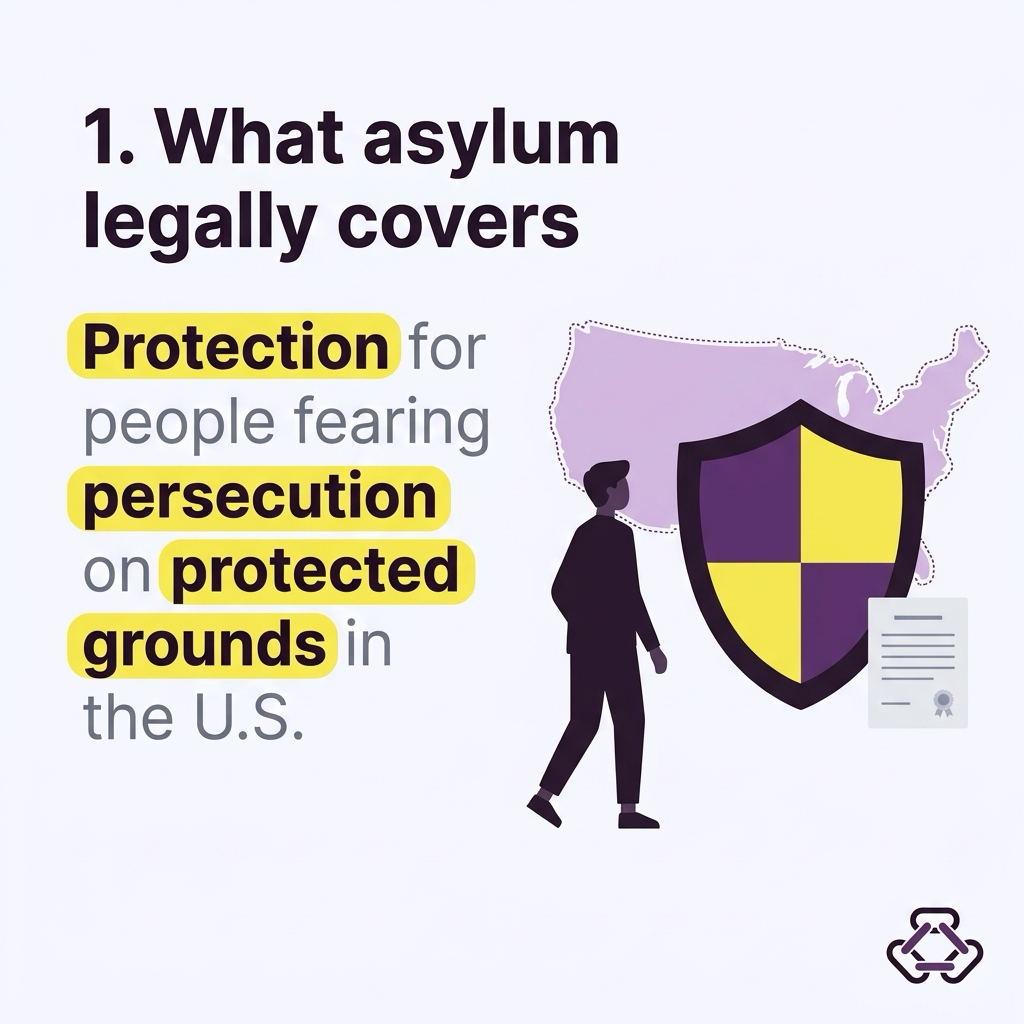
1. What Exactly Is Asylum?
Asylum is a form of protection available in the United States to some people who cannot return to their home country because of persecution or a well-founded fear of persecution. Under U.S. law, the claim generally relates to persecution tied to race, religion, nationality, political opinion, or membership in a particular social group, and the applicant must be physically present in the United States to apply. The U.S. government explains this through the affirmative asylum process and Form I-589 materials, while the UN refugee framework provides the broader protection context for people seeking refuge from persecution (USCIS, USCIS Form I-589, UNHCR).
A lot of confusion comes from the difference between an asylum-seeker and a refugee. In general terms, an asylum-seeker is asking for protection and waiting for the government to decide; a refugee is someone already recognized as qualifying for that protected status under the law (UNHCR, UNHCR Refugee Definition).
For many applicants, the harder question is not the definition itself, but whether their experience fits the legal categories in a way immigration officers or judges recognize. That is often where careful preparation becomes important.
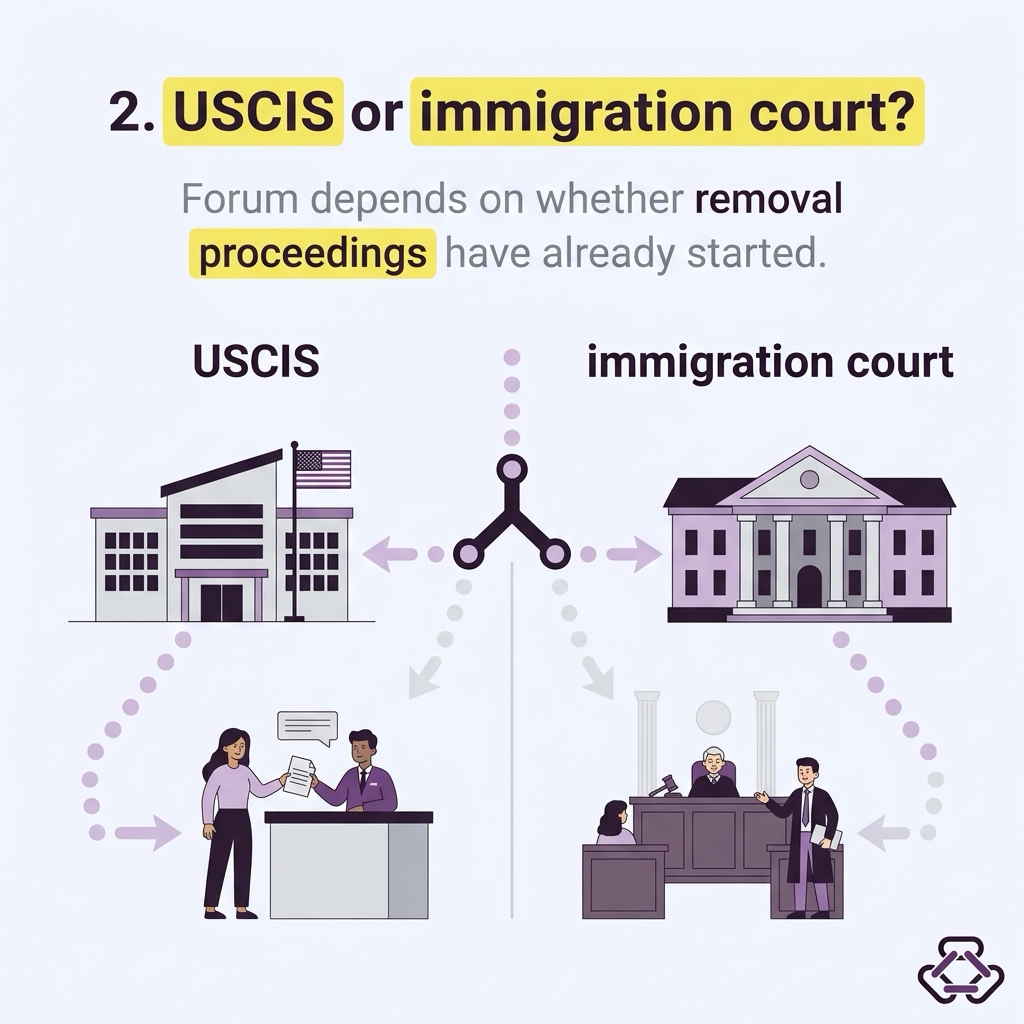
2. Do I File With USCIS Or In Immigration Court?
This is one of the first questions people ask, and it can shape the entire path of the case.
If a person is not in removal proceedings, they may be in the affirmative asylum process and file Form I-589 with USCIS. If a person is already in proceedings before the Executive Office for Immigration Review, the case is generally defensive asylum and is decided by an immigration judge (USCIS, USCIS Form I-589, EOIR Deadlines).
That distinction matters because the procedures, hearing structure, filing location, and even scheduling realities can look very different. People trying to understand the difference often benefit from reading more about the practical split between the two systems before they prepare anything. For a more focused breakdown, it may help to explore a guide on the difference between affirmative and defensive asylum cases.
It can also matter for address updates and notices. USCIS says asylum applicants with pending matters generally have to report address changes to USCIS within 10 days of moving, while people in immigration court generally update the court through Form EOIR-33/IC, and EOIR says changes to address or contact information are due within five working days of the change (USCIS Policy Manual, USCIS, EOIR).
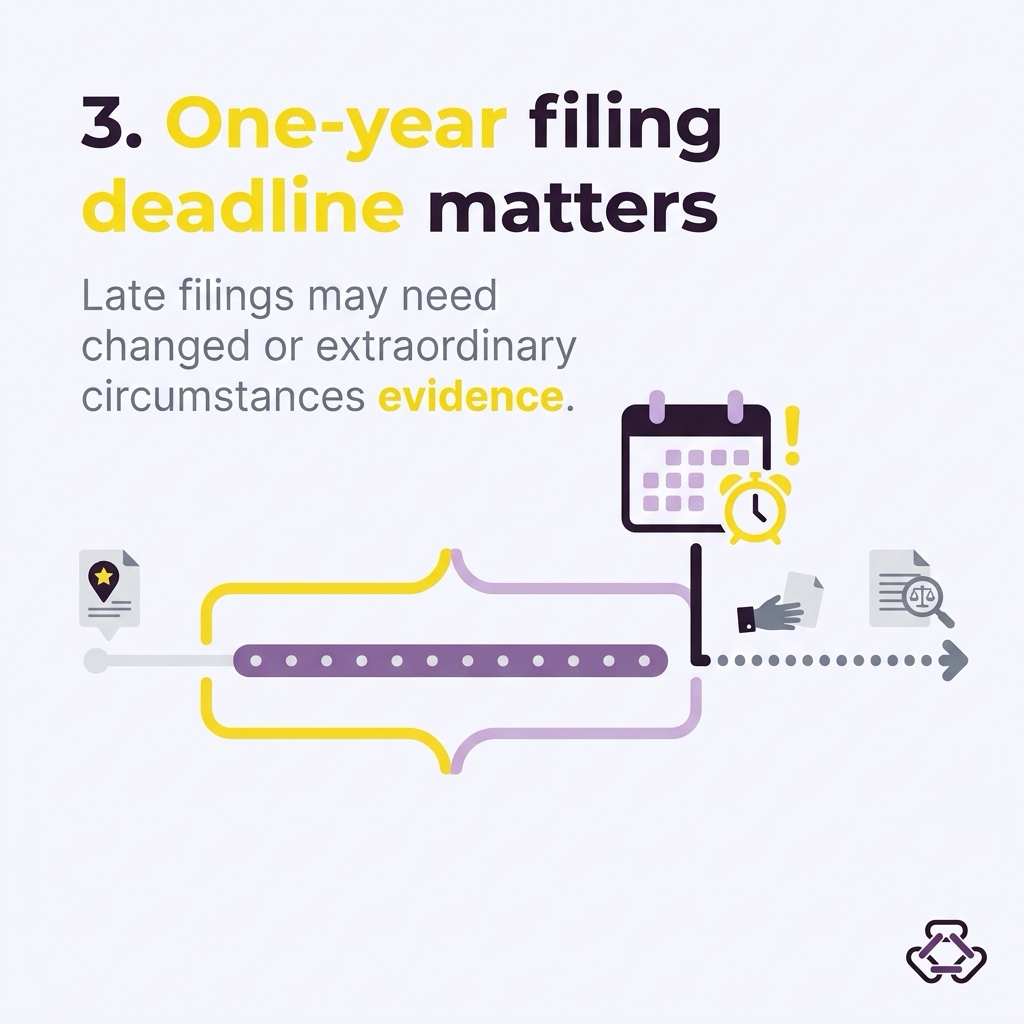
3. Is There A Deadline To File For Asylum?
Yes — and this is one of the most important issues in an asylum case.
USCIS states that a person generally files within one year of their last arrival in the United States, unless an exception applies. EOIR materials also reflect the same one-year timing rule in defensive cases (USCIS, USCIS, EOIR).
That does not mean every late-filed case automatically ends the same way. U.S. law recognizes some exceptions, including certain changed or extraordinary circumstances, but those issues can become heavily fact-specific and document-driven. In real cases, the timing question often turns into an evidence question: when did the person arrive, what changed, what prevented earlier filing, and what records support that explanation?
This is one reason many applicants spend a lot of time trying to understand dates, travel history, and documentary proof before anything gets submitted. People worried about timing often also want to learn more about common asylum filing mistakes that can seriously damage a claim, because deadline problems and inconsistent timelines frequently overlap.
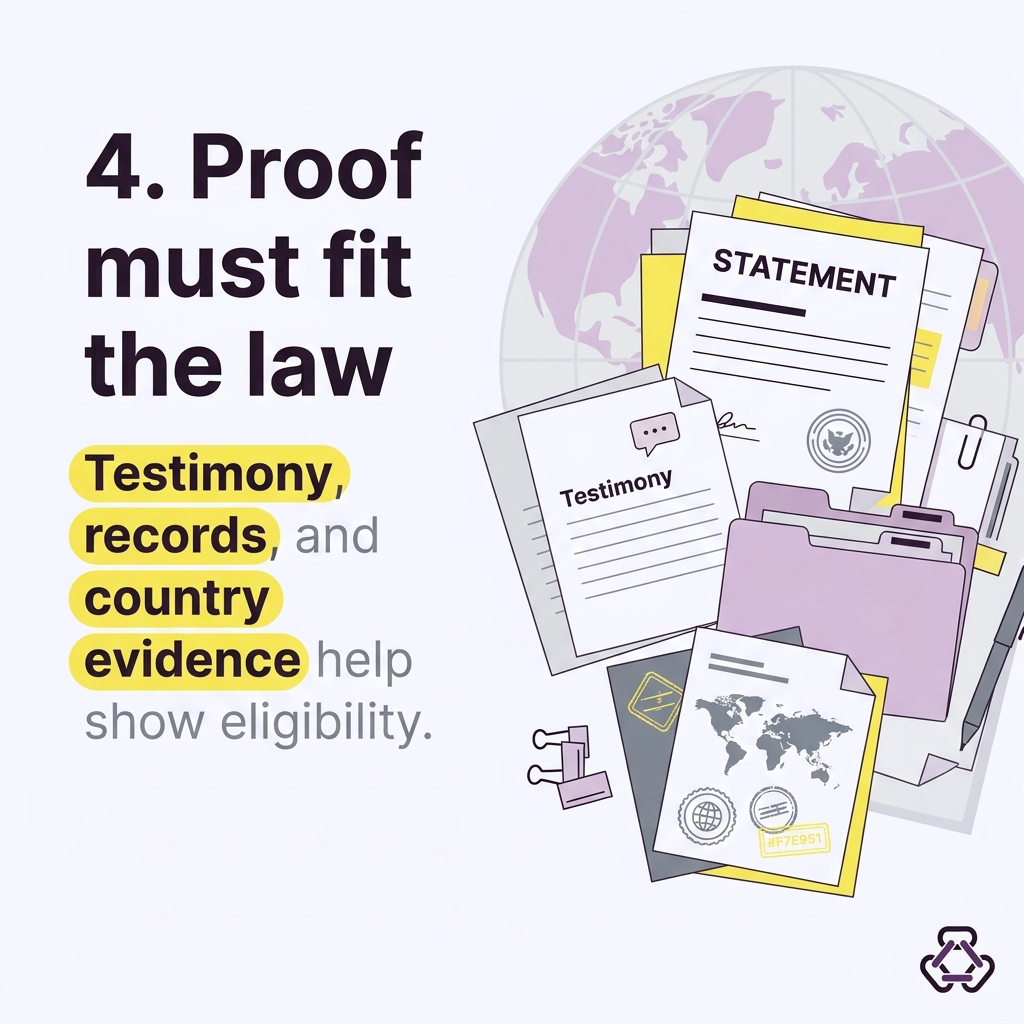
4. What Do I Have To Prove?
In simple terms, the applicant is trying to show that the harm they experienced — or reasonably fear — rises to the level recognized by asylum law, and that it is connected to one of the protected grounds.
USCIS explains that the adjudicator evaluates whether the applicant meets the refugee definition and whether any bars apply. That often involves testimony, documents, country-conditions evidence, identity records, and corroborating proof where available (USCIS, UNHCR).
People often ask whether they need “perfect” evidence. Usually, the reality is more nuanced. Some applicants have police reports, medical records, threatening messages, party membership cards, witness letters, or news articles. Others fled with very little. The law does not operate as if every genuine refugee had the same paper trail, but adjudicators often examine whether the story is detailed, internally consistent, and reasonably supported by whatever evidence is available.
That is why applicants frequently spend significant time learning how to gather supporting proof for an asylum claim and how credibility concerns can affect the outcome. Even when a case is truthful, missing dates, conflicting statements, or weak corroboration can create problems that become difficult to unwind later.
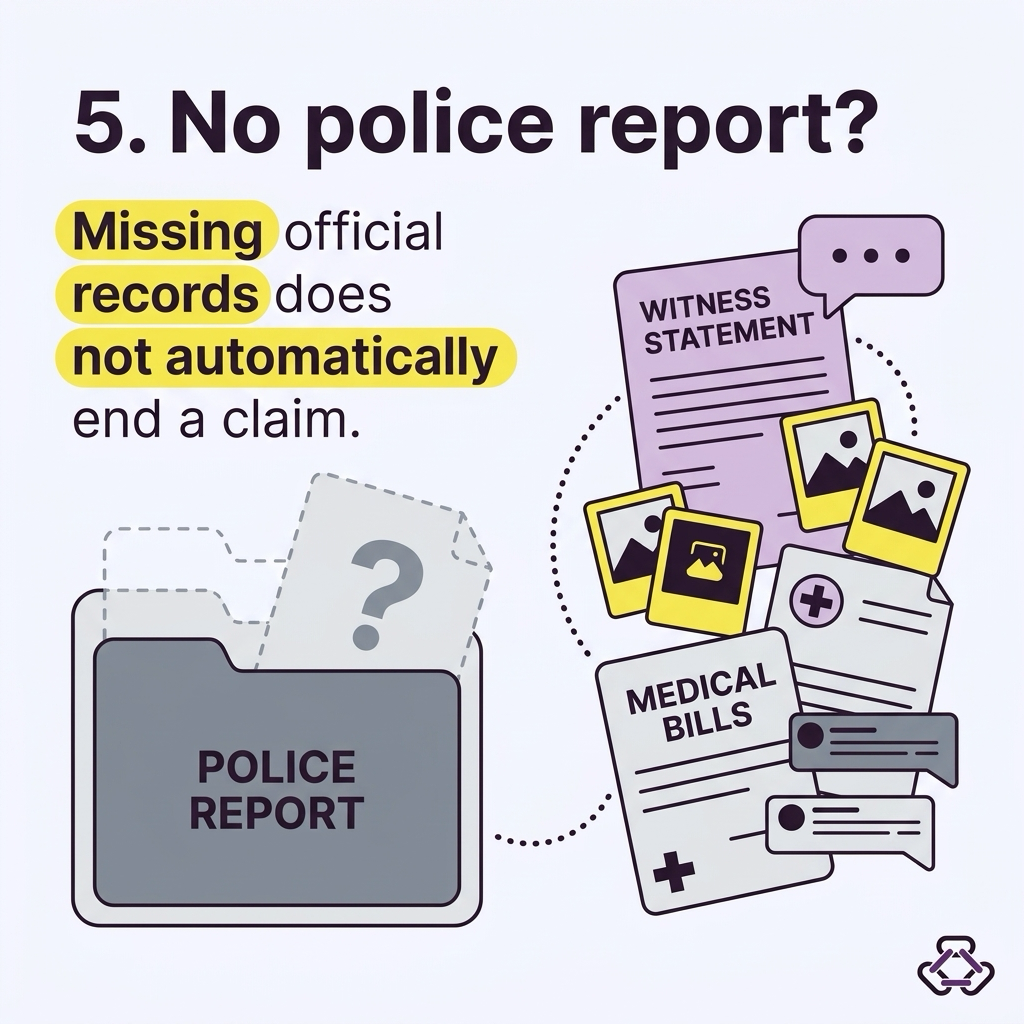
5. What If I Don’t Have A Police Report Or Other Official Documents?
This is extremely common.
Many people fleeing persecution never report harm to the police because the police were involved, the government could not protect them, or asking for help would have increased the danger. Others come from places where records are inaccessible, unreliable, or impossible to obtain.
That does not automatically end an asylum case. In general terms, asylum claims can be supported by a combination of materials such as sworn declarations, witness statements, medical or psychological records, photographs, threatening communications, membership records, media reports, and country-conditions documentation. USCIS and immigration courts regularly evaluate a mix of personal testimony and corroborating evidence rather than relying on one single “required” document (USCIS, USCIS FAQ).
What often matters is whether the file tells a coherent, supported story. If a document is missing, applicants often try to explain why it is missing and what alternative proof exists. That is one reason preparation can take time, especially where trauma, translation issues, and fear of contacting people back home all play a role.
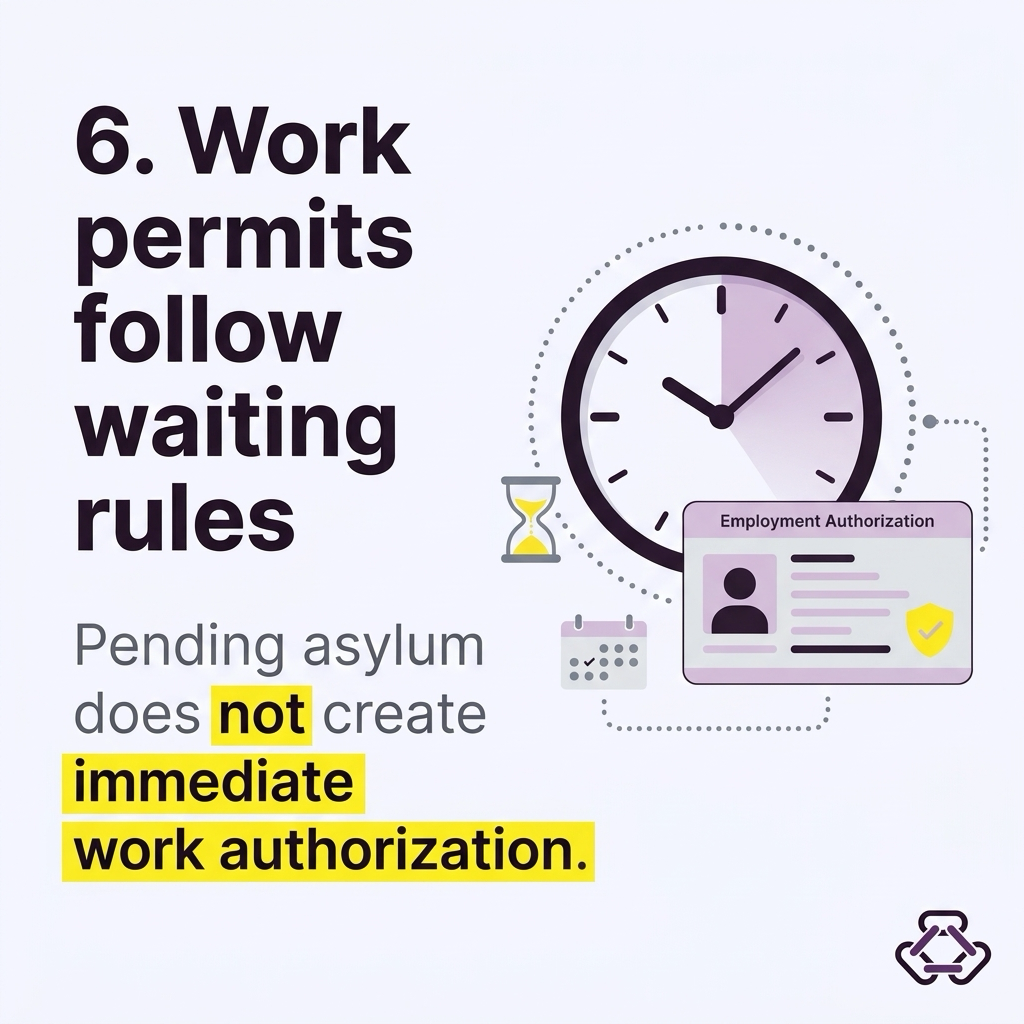
6. Can I Work While My Asylum Case Is Pending?
This is another question that comes up early, especially for people trying to support themselves and their families while waiting.
A pending asylum application does not create immediate work authorization. USCIS states that an applicant in the pending asylum category may file for employment authorization 150 days after filing the asylum application, and USCIS cannot grant that work authorization until 180 days have accrued on the asylum EAD clock, excluding certain applicant-caused delays (USCIS Asylum Clock Notice, USCIS Rosario Notice, USCIS Archived Alert).
USCIS also notes that missing an interview or causing certain delays can stop the clock, which can affect when work authorization becomes available (USCIS, USCIS FAQ).
There is also a newer fee issue people often overlook. USCIS currently says that applicants who filed or file Form I-589 after October 1, 2024 and whose application remains pending with USCIS for 365 days may be subject to an Annual Asylum Fee, with updated fee rules announced in July 2025 (USCIS Form I-589). Because fee rules can change, many applicants want current guidance right before filing.
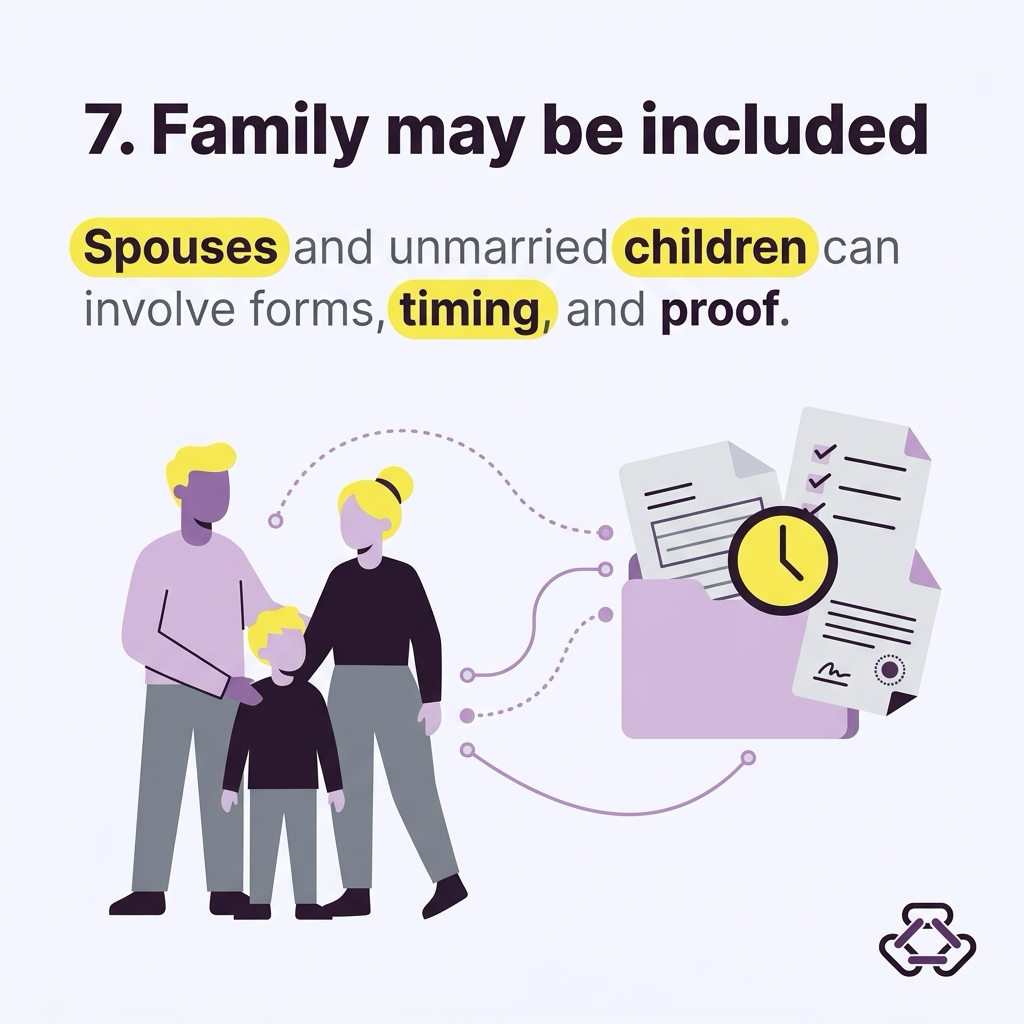
7. Can My Spouse Or Children Be Included?
Often, yes.
USCIS states that a person granted asylum may request derivative asylum status for a spouse and unmarried children, and the qualifying family relationship generally had to exist before the principal applicant was granted asylum. USCIS also says an asylee can file a Form I-730 petition for certain family members, generally within two years of the asylum grant unless humanitarian reasons excuse the delay (USCIS Family Of Refugees And Asylees, USCIS Asylum Page, USCIS Form I-730).
This is an area where details matter a lot: age-out concerns, marital status, location of the family member, prior immigration history, and documentary proof of the relationship can all affect timing and eligibility. People often assume family inclusion is automatic, but in practice there are forms, deadlines, and proof issues that may require careful handling.
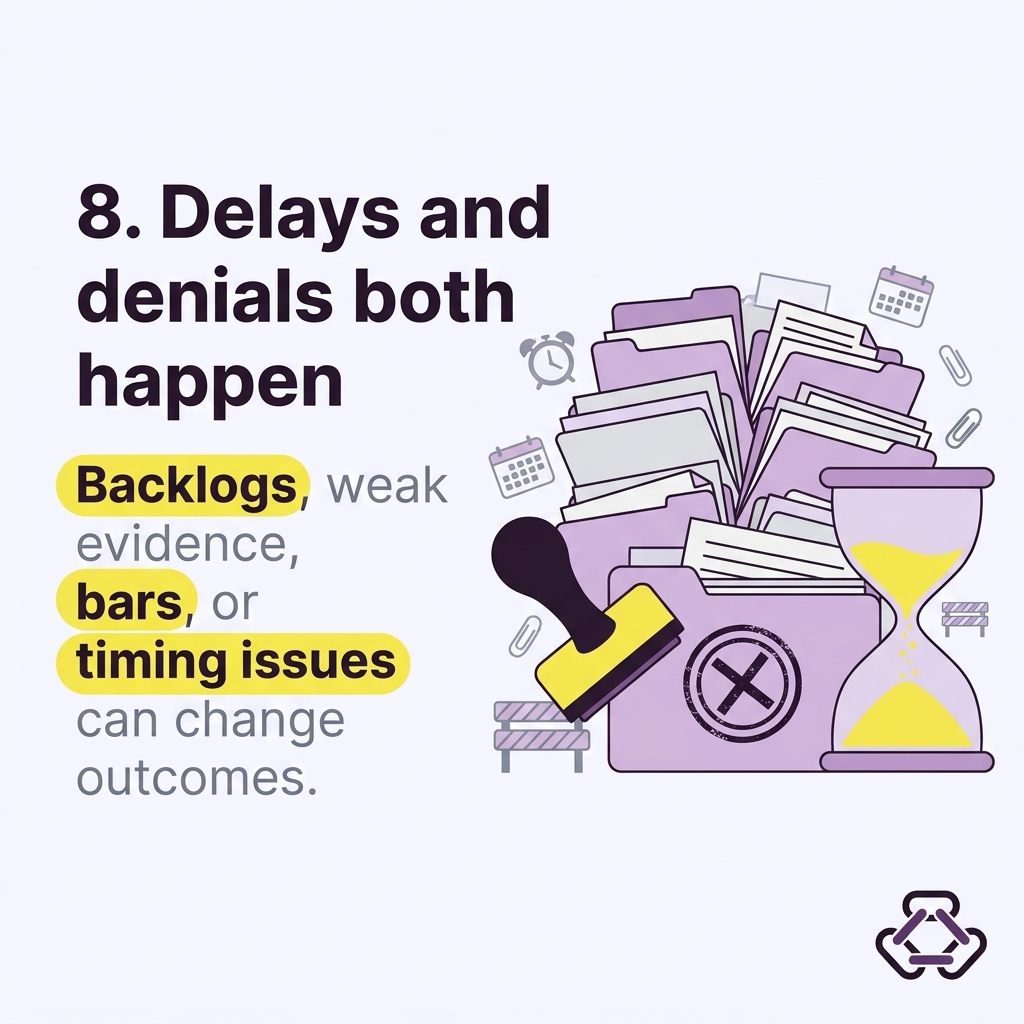
8. How Long Does The Asylum Process Take?
For most applicants, this is one of the hardest questions because the legal process and the real-world timeline are not always the same.
USCIS says a decision on an affirmative asylum application should generally be made within 180 days, absent exceptional circumstances. But USCIS also acknowledges that some cases take longer, and its interview-scheduling policies have evolved in response to backlog concerns (USCIS FAQ, USCIS Interview Scheduling).
On the court side, delays can be much longer. Independent immigration court data published by TRAC has documented a very large national backlog in removal proceedings, which helps explain why defensive asylum cases may remain pending for years in some jurisdictions (TRAC).
In practical terms, applicants often live in a space between legal standards and operational reality. A form may be filed quickly; a biometrics appointment may come next; an interview or hearing date may take much longer. That gap is one reason many people look for help with preparing an asylum application the right way the first time, since fixing errors later can be harder than building a careful record up front.
9. Are There Reasons Someone Can Be Denied Even If They Are Afraid To Return?
Yes. Fear alone is not always enough for an asylum grant.
A person may be found ineligible if the claim does not fit the legal definition, if the evidence is not persuasive, if the one-year deadline issue is not resolved, or if a statutory bar applies. USCIS materials identify bars such as persecution of others, conviction of a particularly serious crime, commission of a serious nonpolitical crime outside the United States, security-related grounds, and firm resettlement in another country before arrival in the United States (USCIS Affirmative Process, USCIS Asylum Overview PDF).
In some cases, applicants also ask about other forms of protection. Immigration law includes related but distinct protections such as withholding of removal and protection under the Convention Against Torture, which can involve different standards and different bars. EOIR educational materials describe those forms of relief as separate from asylum, even though they are often discussed together in the same case (EOIR).
That is often why legal screening matters. A person may have a serious fear of return, but the key issue becomes which protection theory fits the facts and procedural posture.
10. What Happens If Asylum Is Granted?
If asylum is granted, the person receives protected status in the United States, and USCIS states that asylees are authorized to work whether or not they have a separate EAD card in hand. USCIS also states that an asylee may apply for a Green Card after one year in the United States following the grant of asylum, subject to the adjustment rules and proof requirements (USCIS Benefits And Responsibilities Of Asylees, USCIS Asylum Page, USCIS Green Card For Asylees).
USCIS also explains that asylees may petition for qualifying family members and later pursue permanent residence. For adjustment, USCIS says the applicant must show one year of physical presence in the United States after the asylum grant when USCIS adjudicates the green card application (USCIS Green Card For Asylees, USCIS Alert On Physical Presence Guidance).
Travel questions often come up at this stage too. USCIS has separate rules and travel-document procedures for asylees and permanent residents, and people are often cautious about international travel because the facts of a case can make travel plans legally sensitive.
Why People Often Talk To An Attorney Before Filing
Asylum law is deeply fact-specific. Two people may both describe threats, assaults, political conflict, family-based violence, gang targeting, or religious persecution — but the legal analysis can differ sharply based on timing, prior entries, criminal history, family relationships, prior applications, court posture, evidence, and how the story is presented in the record.
That is part of why early case framing matters so much. In many asylum matters, the biggest risks are not always obvious at first. They can include:
- filing in the wrong forum
- missing a deadline or exception argument
- giving incomplete or inconsistent facts
- overlooking corroborating evidence
- creating EAD-clock issues through avoidable delays
- misunderstanding bars to asylum
- failing to plan for spouse or child derivative issues
For people in that situation, an attorney may help identify what the case is really about, what evidence gaps exist, and what procedural issues could shape the outcome long before the interview or hearing begins.
Final Thoughts
Before filing for asylum, most people are trying to answer a few urgent questions: Do I qualify? Am I on time? What proof do I need? Can I work? How long will this take? What happens to my family? Those are reasonable questions, and the answers often depend on details that are easy to overlook.
A careful asylum filing is often less about one dramatic fact and more about how the full record fits together: the timeline, the country conditions, the legal ground, the corroborating proof, and the consistency of the story from beginning to end.
Visit ReferU.AI to get matched with an attorney who has demonstrable experience in cases like yours — for free.
