Table of Contents
- 6 Consular Processing Delays Families Do Not See Coming
- 1. The Case Does Not Move To The NVC The Way Families Expect
- 2. Priority Dates And Visa Availability Create A Delay Even After Approval
- Approval And Visa Availability Are Different Things
- The Waiting Time Can Change Month To Month
- Country Of Chargeability Can Matter
- 3. Civil Documents Cause Delays Because “Having A Document” Is Not The Same As “Having The Right Document”
- 4. The Affidavit Of Support Becomes A Bigger Problem Than Families Anticipate
- Income That Looked Fine At First No Longer Qualifies
- Tax Documentation Is Incomplete
- A Joint Sponsor Is Added Late
- Household Size Was Calculated Incorrectly
- 5. Interview Scheduling Depends On More Than “Documentarily Complete”
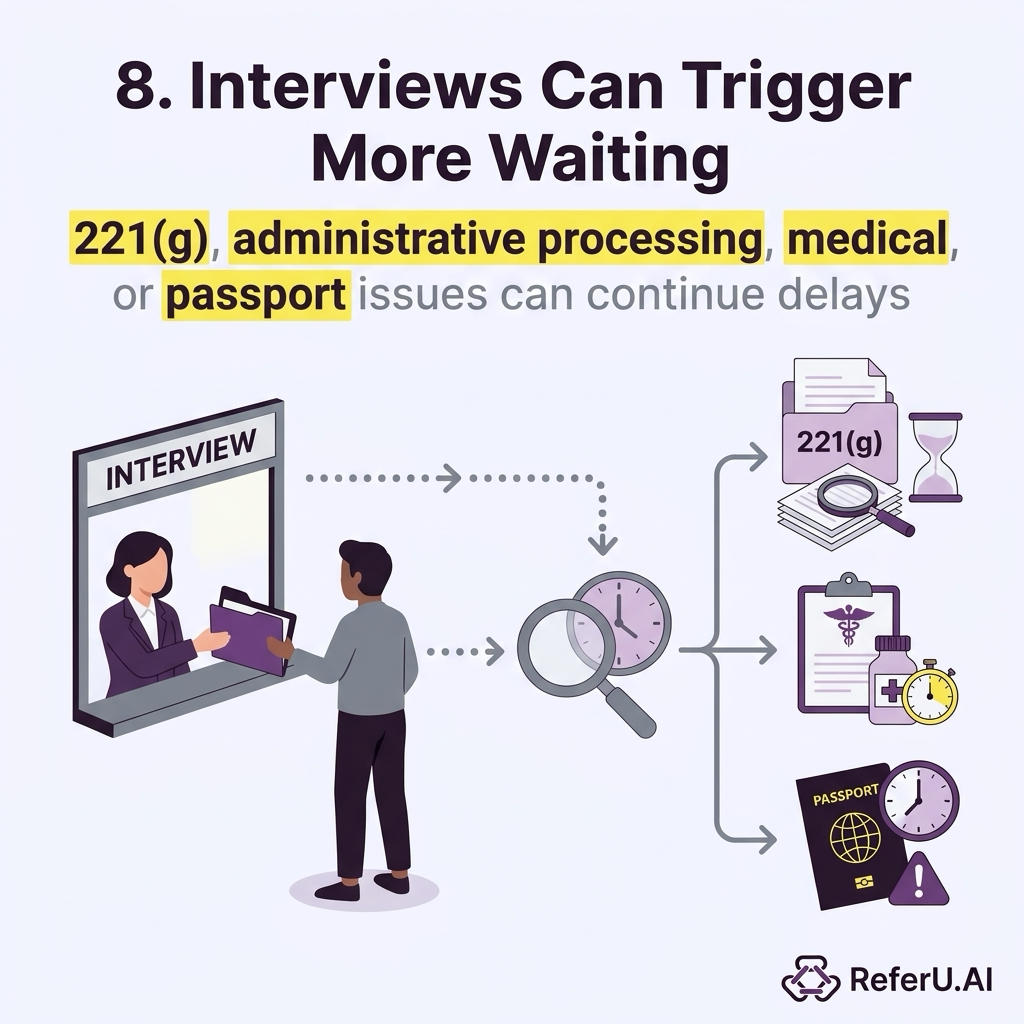
- 6. The Interview Is Not Always The End Because 221(g), Administrative Processing, And Medical Timing Can Add Another Layer Of Waiting
- Missing Or Updated Documents
- Administrative Processing
- Medical Exam Timing
- Passport Validity Problems
- Why These Delays Matter More Than Families Realize
- Final Takeaway

Type
Great Grandchild
Status
Approved
Title (YouTube)
Images Failed (Social)
Images Failed (Social)
Do not index
Parent item
Publish Date (TikTok)
Apr 28, 2027 08:15
Videos Post IDs (Social)
Hashtags (Social)
#LegalAdvice #LegalHelp #Immigration #ConsularProcessing
Caption
Caption X
Cover

OG Image

Alt Image Text
Flat vector illustration of a family navigating consular processing delays families do not see coming, with documents, passport review, scheduling obstacles, and a delayed case transfer scene.
Images

Videos
Publish Date (Social)
Feb 20, 2027 13:00
Scheduled (Social)
Scheduled (Social)
Images Posted (Social)
Images Posted (Social)
Videos Posted (Social)
Videos Posted (Social)
Featured
Created time
Apr 7, 2026 12:00 AM
Sub-item
Authors
CTA Practice Area (Social)
Immigration
TikTok Failed (Social)
TikTok Failed (Social)
Videos Post Links (Social)
TikTok Post Links (Social)
Images Post IDs (Social)
YT Post ID
Video Pending Manual (Social)
TikTok Posted (Social)
TikTok Posted (Social)
TikTok Post IDs (Social)
Video Cover (Social)
Images Post Links (Social)
First Comment (Social)
Videos Failed (Social)
Videos Failed (Social)
YT Embedded
Images Delete (Social)
Videos Delete (Social)
Carousel Video URL (Social)
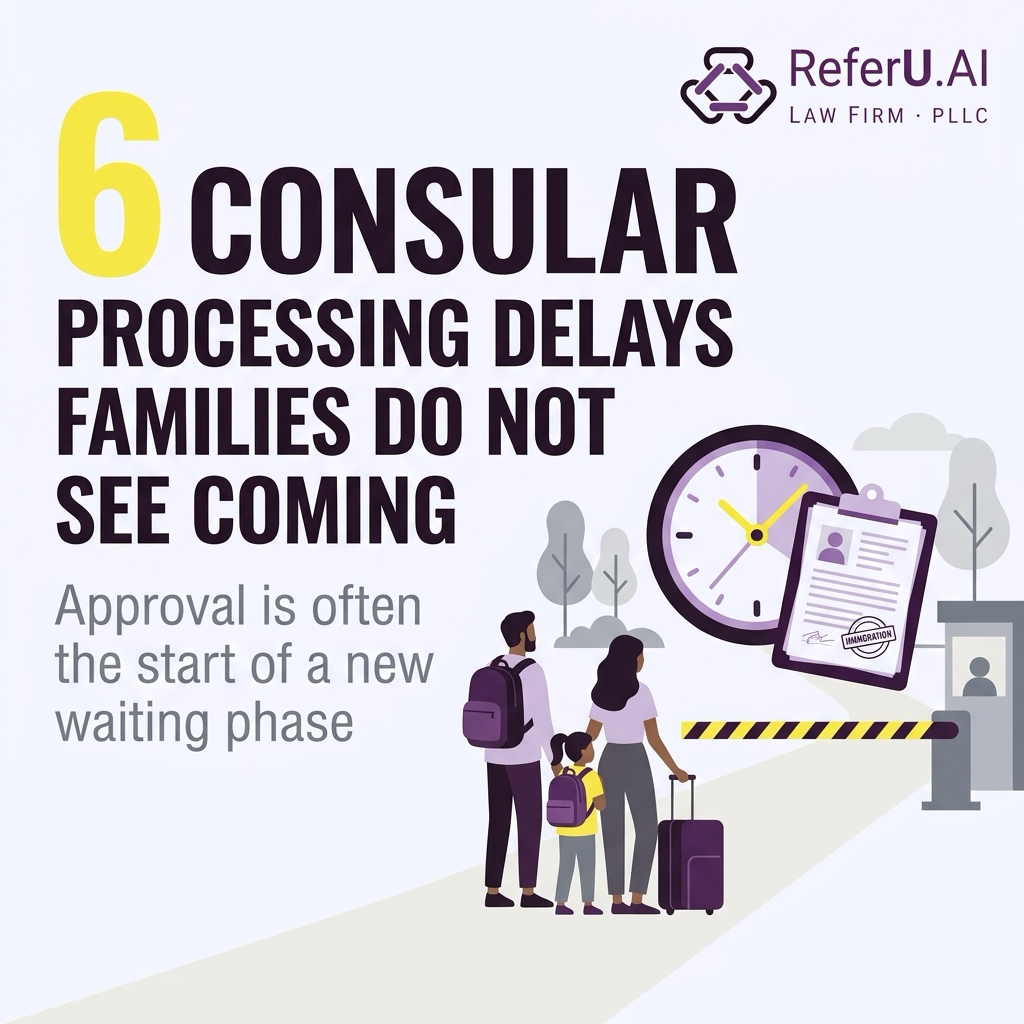
6 Consular Processing Delays Families Do Not See Coming
Consular processing can look straightforward on paper: petition approval, National Visa Center paperwork, interview, visa, entry to the United States. In real life, many families discover that the timeline slows down in places they did not expect.
That is part of what makes this stage so stressful. A family may feel like the hardest part is over once USCIS approves the petition. But approval is often just the handoff to a different agency, a new set of document rules, and post-specific scheduling realities. The U.S. Department of State explains that after USCIS approves a petition, the case moves to the National Visa Center, which holds it until the visa category is current and an interview can be scheduled at a U.S. embassy or consulate abroad (travel.state.gov, uscis.gov).
In this post you’ll learn about six delays families often do not anticipate, why they happen, and what they often look like in real cases. If you want a broader overview of the entire process from petition to U.S. entry, it may help to start with this plain-English walkthrough of the full consular path.
Scroll to the bottom for every post in this series.
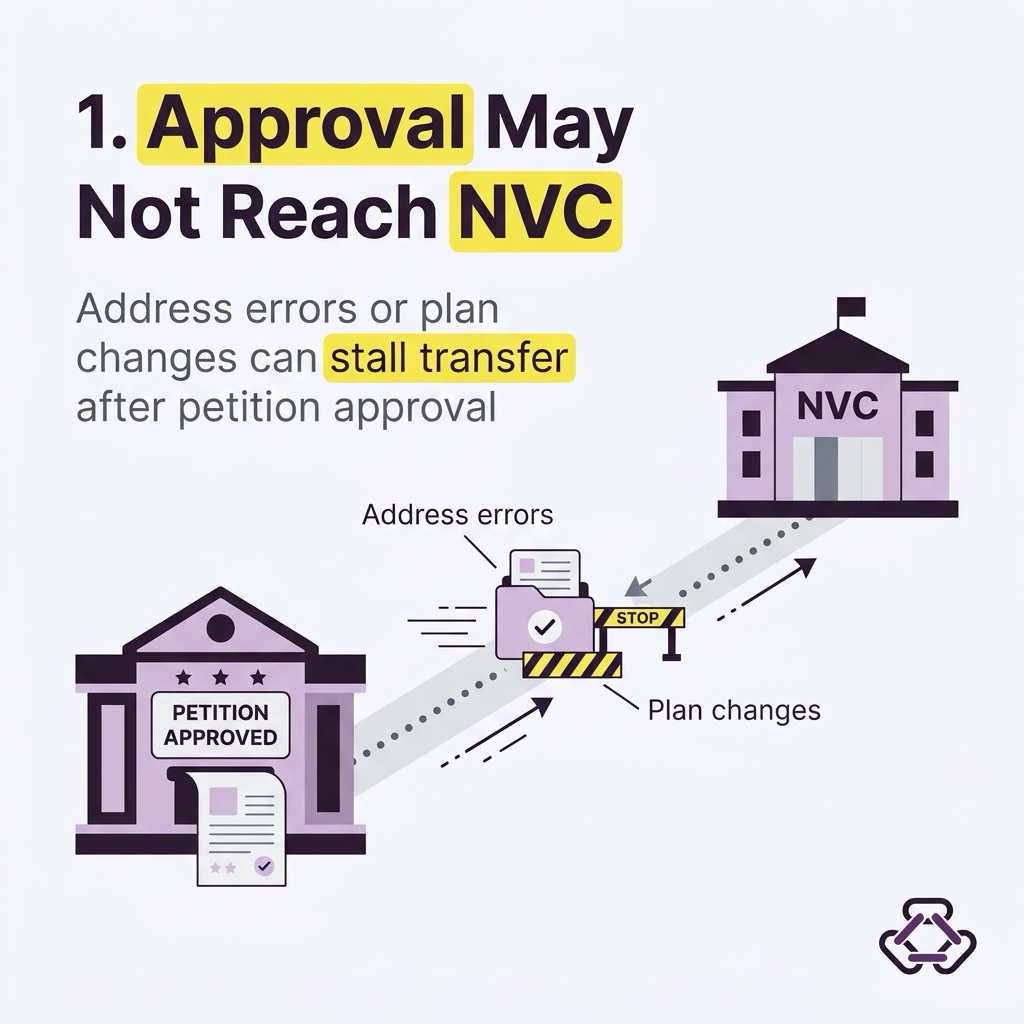
1. The Case Does Not Move To The NVC The Way Families Expect
One of the most overlooked delays happens before the NVC stage even begins.
USCIS updated its family-based immigrant visa guidance in May 2024 and emphasized that petitioners are expected to provide accurate information about the beneficiary’s address and whether the case is intended for consular processing or adjustment of status. If that information is unclear or inaccurate, USCIS may retain the approved petition instead of routing it to the NVC, and in some situations the petitioner may end up filing Form I-824 to request transfer for consular processing (USCIS guidance, Form I-130 page, Form I-824 page).
For families, this can feel confusing because the petition is “approved,” yet the consular case does not seem to start. Here’s what often causes the problem:
- The beneficiary’s address on the petition is outdated
- The petition did not clearly reflect that the immigrant visa would be processed abroad
- The family later changed plans from adjustment of status to consular processing
- A mailing or notice issue creates uncertainty about where the case is supposed to go
This is one reason many families spend weeks or months trying to figure out whether the case is with USCIS, the NVC, or in limbo between them. In general terms, the transition point between agencies is one of the least visible parts of the system.
For households comparing paths, this is also where understanding the difference between processing abroad and applying from inside the U.S. can matter, because the initial strategy often affects how the petition is routed and what extra filings may come into play if the plan changes.
2. Priority Dates And Visa Availability Create A Delay Even After Approval
Many families assume that once USCIS approves the petition, the interview is the next major milestone. That is true for some immediate relative cases, but not for many preference-category cases.
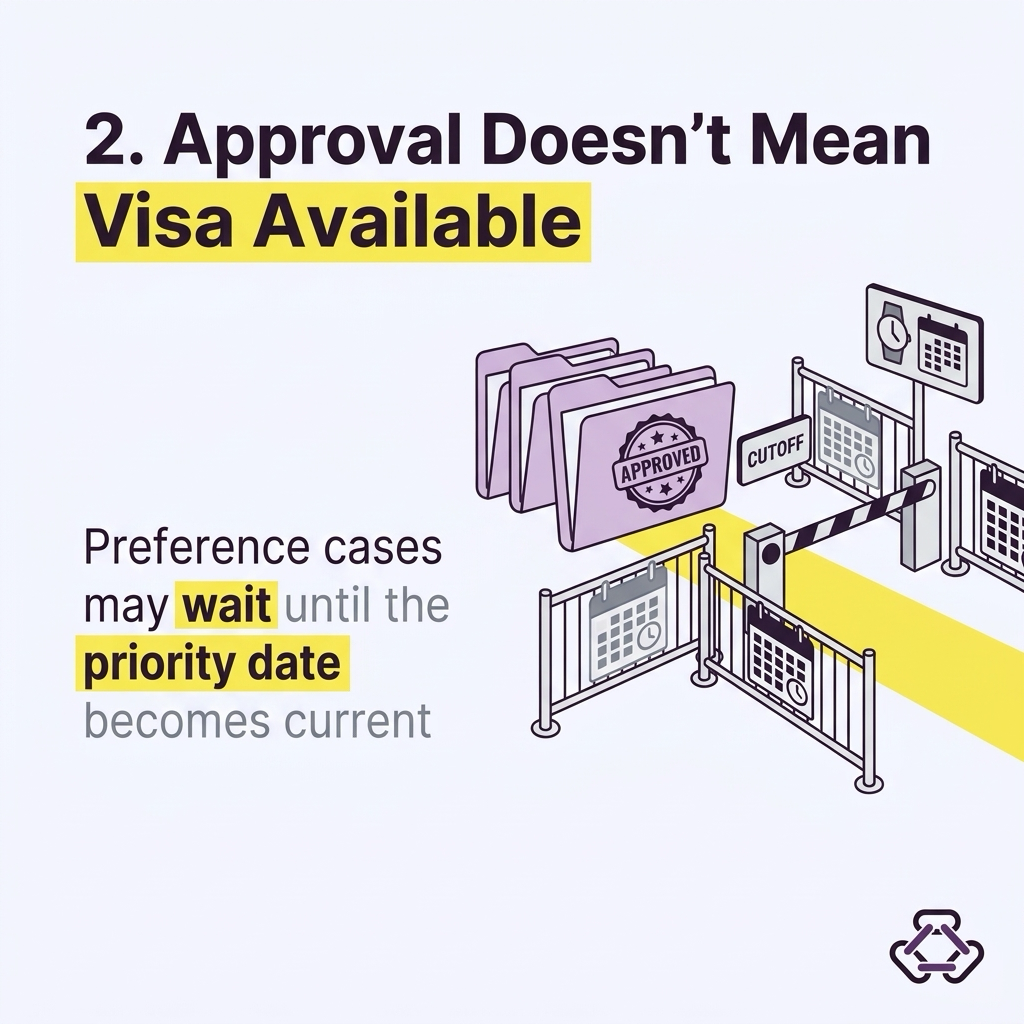
The State Department’s monthly Visa Bulletin controls when immigrant visa numbers are available for family-sponsored preference categories. The April 2026 Visa Bulletin, for example, shows that several family categories remain backlogged, with different cutoff dates depending on the category and country of chargeability (April 2026 Visa Bulletin, Visa Bulletin hub). The NVC also explains that it may hold a petition until the priority date matches the applicable cutoff date before full case processing moves forward (National Visa Center overview).
That delay can surprise families for a few reasons:
Approval And Visa Availability Are Different Things
USCIS approval confirms that the relationship or petition basis has been recognized. It does not automatically mean a visa number is available right away in a capped category.
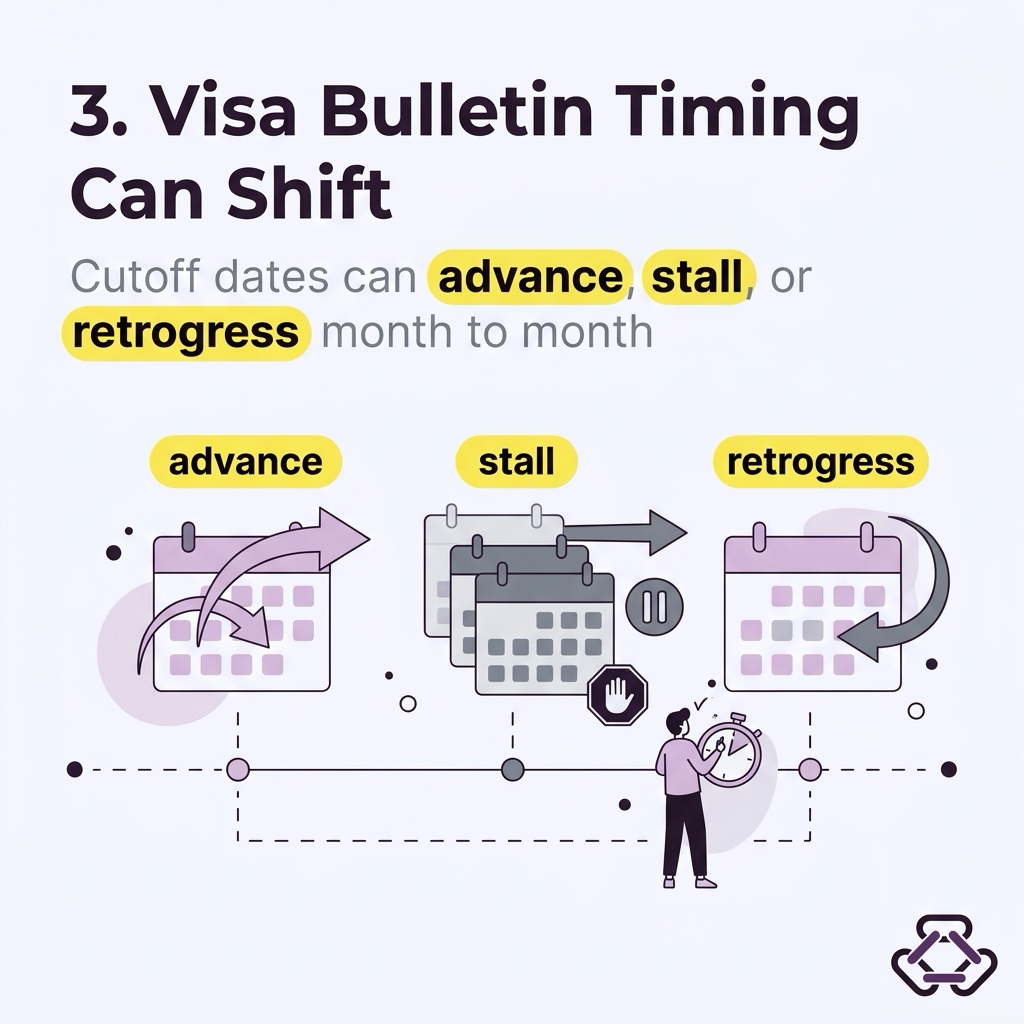
The Waiting Time Can Change Month To Month
The Visa Bulletin is updated monthly, and movement can advance, stall, or retrogress. Families sometimes build plans around an expected interview window, then discover the cutoff date did not move as hoped.
Country Of Chargeability Can Matter
Some categories have much longer waits for certain countries. Two families with the same petition type may experience very different timelines based on nationality and category.
This is one of the most emotionally difficult delays because it can feel invisible. Nothing appears “wrong” with the case, but nothing can be scheduled yet either.
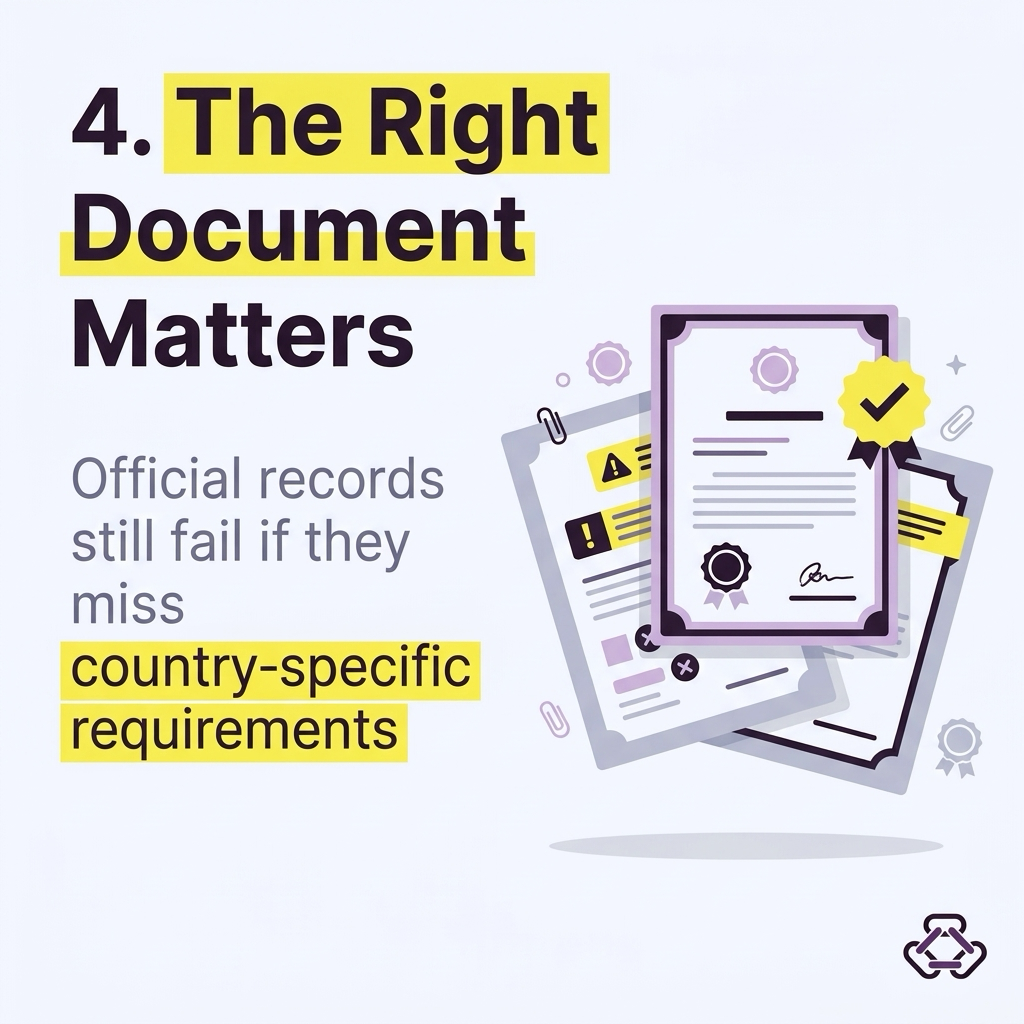
3. Civil Documents Cause Delays Because “Having A Document” Is Not The Same As “Having The Right Document”
Another common surprise is the civil document stage. Families may already have birth certificates, marriage records, divorce decrees, or police certificates in hand and assume that part is done. But the Department of State requires documents that match country-specific standards in its Reciprocity Schedule, and a document that seems perfectly official locally may still be insufficient for immigrant visa purposes (Civil Documents FAQs, Civil Documents step).
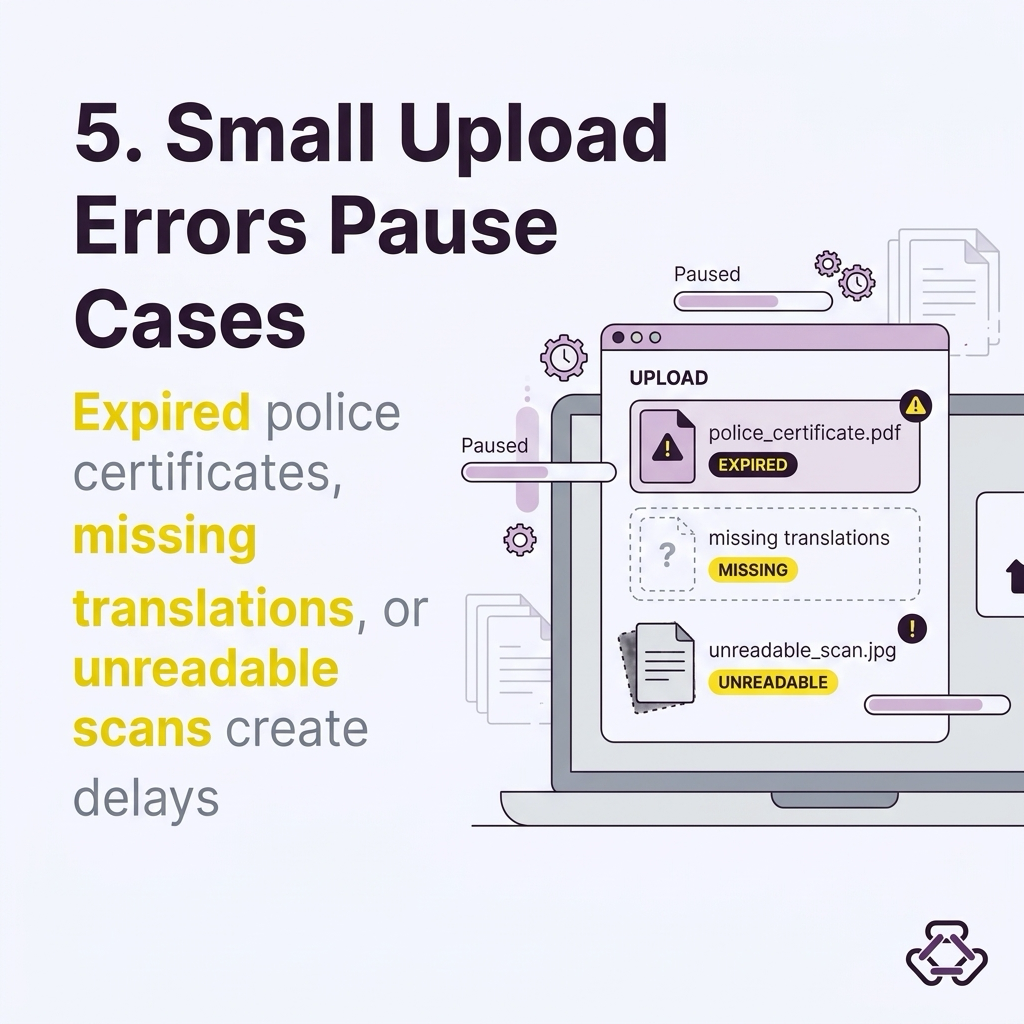
Here are some of the issues that regularly slow cases down:
- A birth certificate was issued by the wrong authority
- A police certificate has expired
- A translation is missing or incomplete
- A marriage or divorce record does not match the name used elsewhere in the file
- The applicant uploaded scans that are unreadable, cropped, or incomplete
- The country requires an alternative record because the standard record is unavailable
The State Department notes that police certificates generally expire after two years unless they were issued by a country of former residence that the applicant has not returned to since issuance (travel.state.gov civil documents guidance). It also maintains a document finder tool tied to the Reciprocity Table because accepted records vary by country (Civil Documents FAQs).
This category of delay catches families off guard because it feels technical rather than substantive. The relationship may be genuine, the petition may be approved, and the applicant may be fully eligible in principle. But if the record set does not meet the exact documentary standard, the case can pause anyway.
If you are trying to understand which records tend to matter most in this process, it may also help to read more about the documents that often carry the most weight in a consular case.
4. The Affidavit Of Support Becomes A Bigger Problem Than Families Anticipate
Financial sponsorship delays are extremely common, especially in family-based immigrant cases.
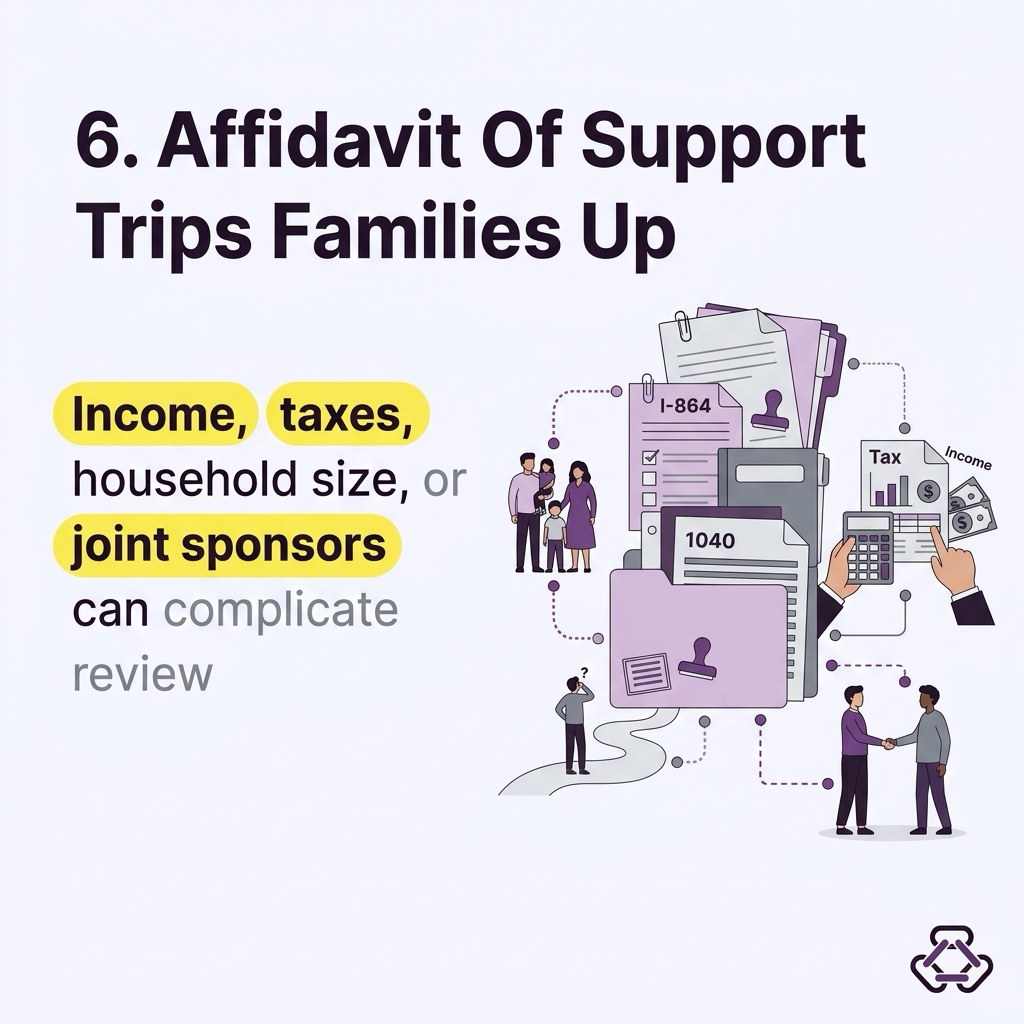
USCIS describes Form I-864, Affidavit of Support, as a legally binding contract used in most family-based immigrant cases to show that the intending immigrant has adequate means of financial support (USCIS I-864 page, USCIS Affidavit of Support overview). The State Department also maintains detailed I-864 guidance and a financial evidence assistant because this part of the process often raises case-specific questions (I-864 FAQs, Financial Evidence Assistant).
Families often do not see these issues coming:
Income That Looked Fine At First No Longer Qualifies
A sponsor may have changed jobs, had fluctuating self-employment income, or relied on income that is hard to document in the required format.
Tax Documentation Is Incomplete
USCIS notes that failure to provide a tax return or evidence showing the sponsor was not required to file can delay action on the relative’s permanent residence case (USCIS Affidavit of Support overview).
A Joint Sponsor Is Added Late
Sometimes families only discover near the NVC stage that a joint sponsor is necessary. That can create a second round of document gathering, identity proof, tax records, and household size analysis.
Household Size Was Calculated Incorrectly
The math around dependents, sponsored immigrants, prior I-864 obligations, and household members can become more complicated than families expected.
This delay matters because it often appears late enough in the process that people are already emotionally preparing for the interview. A small error in the sponsorship package can create outsized disruption.
5. Interview Scheduling Depends On More Than “Documentarily Complete”
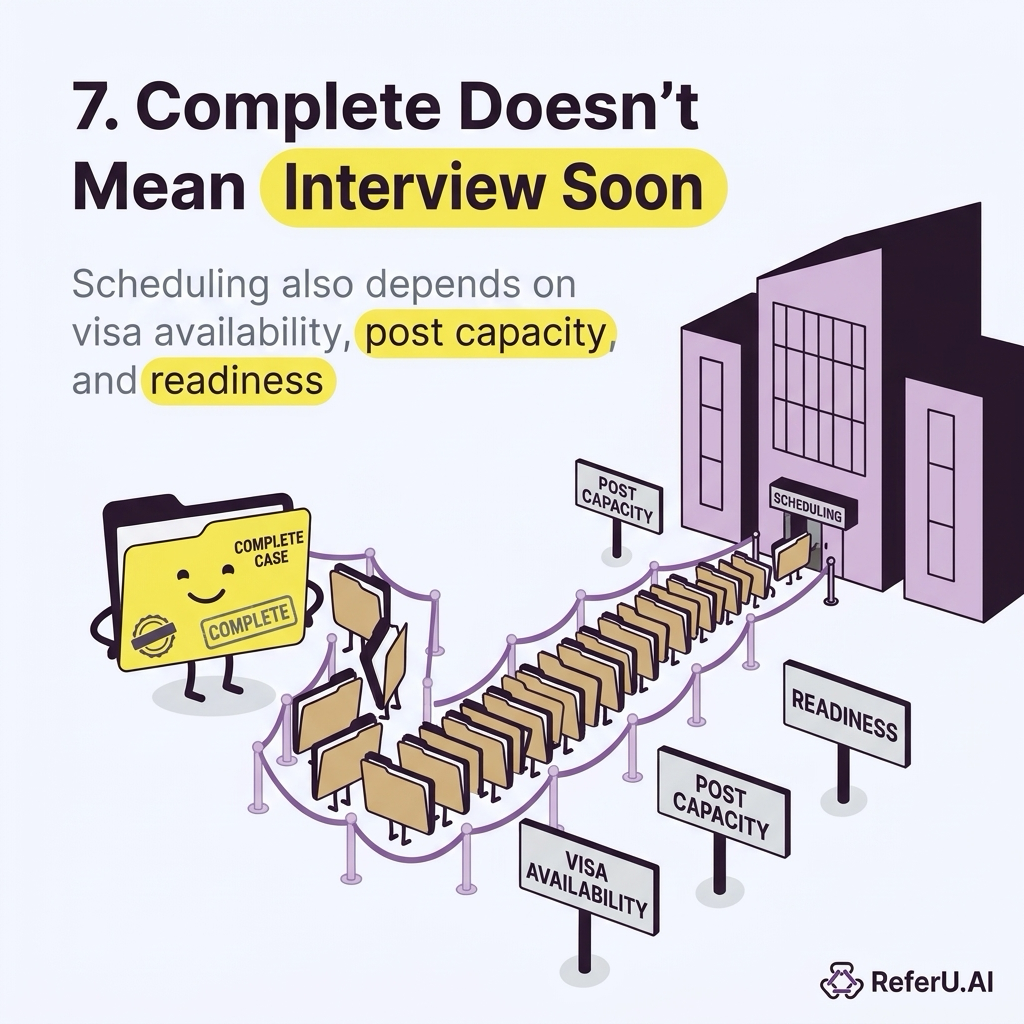
Even after the NVC accepts the file, families often imagine that the interview is right around the corner. In reality, scheduling depends on visa availability, post capacity, and local consular conditions.
The State Department’s immigrant visa scheduling status tool, updated April 2, 2026, notes that for preference visa cases, visa availability is governed by the monthly Visa Bulletin, and interview scheduling is also affected by case readiness and post-specific capacity (IV Scheduling Status Tool, April 2026 Visa Bulletin). The NVC likewise explains that it holds petitions and schedules interviews only when a case is ready and an appointment slot is available at the embassy or consulate (National Visa Center overview).
That means “documentarily complete” is important, but it is not the same thing as “interview imminent.”
Here’s what families often do not anticipate:
- Some consulates move faster than others
- Local staffing and volume affect appointment flow
- Preference-category applicants can be ready on paper but still wait on visa availability
- A transfer between posts can create additional lag
- Follow-up requests from the embassy can disrupt the expected schedule
This is also why broad internet anecdotes can be misleading. One family’s experience in one country may not reflect another family’s timeline at a different post, even with the same visa category.
For readers who are already approaching the interview phase, this guide to preparing for questions, documents, and logistics abroad may help frame what the next stage often looks like.
6. The Interview Is Not Always The End Because 221(g), Administrative Processing, And Medical Timing Can Add Another Layer Of Waiting
A lot of families view the interview as the finish line. In many cases, that is close to true. But some cases continue into another delay phase after the interview.
The State Department explains that a refusal under INA section 221(g) means the consular officer did not yet have all the information required to determine eligibility. That can happen because documentation is incomplete or because the case requires administrative processing. The government also notes that processing times vary based on individual circumstances (Visa Denials page). After the interview, the State Department advises applicants to wait at least 180 days from the interview date or document submission, whichever is later, before making status inquiries about administrative processing, absent emergency travel circumstances (After the Interview).
Several issues can drive this kind of post-interview delay:
Missing Or Updated Documents
If the officer asks for a new civil record, updated police certificate, or revised financial evidence, the case may pause until that material is submitted and reviewed.
Administrative Processing
This is one of the least predictable delay categories because it is highly case-specific. Families often leave the interview thinking a final answer is days away, only to find the case enters an extended review period.
Medical Exam Timing
Immigrant visa validity is often tied to the medical exam. State Department materials explain that immigrant visas are generally limited by medical validity for up to six months, and some post instructions note that certain medical conditions can shorten that period to three months (State Department archive on medical validity, Medical Examination FAQs, example post instructions).
Passport Validity Problems
The State Department’s interview guidance says each applicant generally needs an unexpired passport valid for six months beyond the intended date of entry to the United States (Applicant Interview guidance). A passport close to expiration can create avoidable complications at exactly the wrong moment.
This is the stage where many families feel the most emotional whiplash. They got the interview. They attended. They expected closure. Instead, the case may remain open while one more review, one more exam issue, or one more document request plays out.
Why These Delays Matter More Than Families Realize
Consular processing delays are not just administrative. They affect housing plans, school decisions, caregiving, work arrangements, and family reunification timelines. The legal system often treats each delay as a procedural issue, but for the family living through it, the practical effect can be enormous.
That is why counsel with relevant, documented experience in highly-similar matters can make such a difference. Not because any attorney can control government timing, and not because outcomes are ever certain, but because a lawyer familiar with the exact pressure points in consular processing may spot issues earlier, frame evidence more effectively, and help a family understand what is routine versus what may call for closer attention.
In general terms, the hardest consular delays are often the ones that do not look dramatic at first. A checkbox about where the case will be processed. A police certificate issued by the wrong office. A financial sponsor whose tax documents are incomplete. A post with limited interview capacity. A 221(g) notice that opens another round of waiting.
Final Takeaway
The six delays families often do not see coming are:
- The approved petition does not route to the NVC as expected
- Priority dates and visa availability hold the case after approval
- Civil documents turn out to be incomplete, expired, or country-incompatible
- The Affidavit of Support package creates financial-evidence issues
- Interview scheduling depends on post capacity, readiness, and visa availability
- The interview leads to 221(g), administrative processing, or medical-validity complications
If your family is dealing with consular processing uncertainty, an attorney with demonstrable experience based on court records and case similarity may help you evaluate where the delay is happening and what kind of response fits the facts of your case.
Visit ReferU.AI to get matched with an attorney who has demonstrable experience in cases like yours — for free.
