Table of Contents
- Consular Processing Explained: Immigrant Visa Steps, Interview Prep, and Entry to the United States
- What Consular Processing Means
- Step 1: The Case Usually Starts With An Approved Petition
- Step 2: The National Visa Center Collects Fees And Forms
- Step 3: Civil Documents Often Decide Whether The Case Moves Smoothly
- Step 4: Interview Scheduling Usually Happens After The Case Is Documentarily Complete
- Step 5: The Medical Exam Is A Required Part Of The Process
- Step 6: Interview Preparation Is About Accuracy, Consistency, And Calm
- Identity And Biographic Consistency
- Relationship And Sponsorship Questions
- Inadmissibility Concerns
- Country-Specific Logistics
- Step 7: The Interview Can End In Approval, Refusal, Or Additional Processing
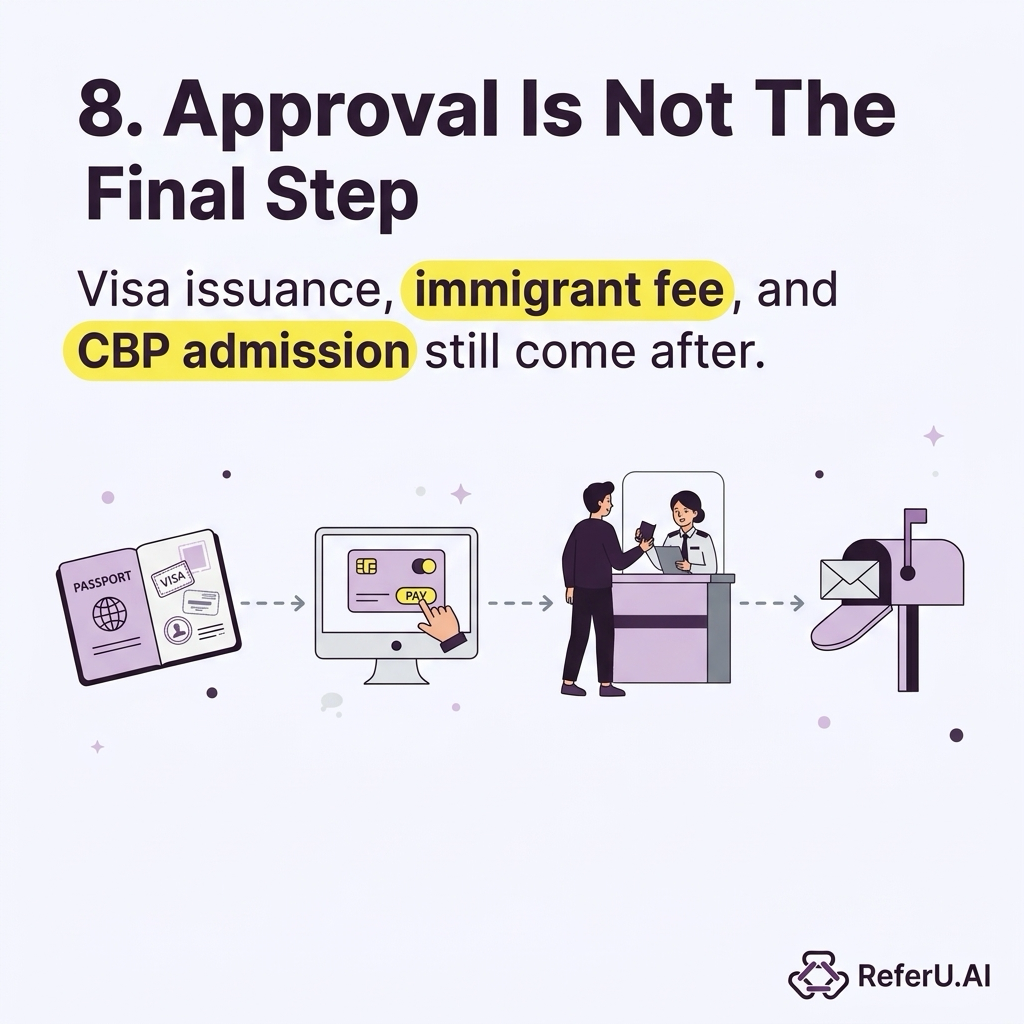
- Step 8: If The Visa Is Issued, There Are Still A Few Steps Left
- Step 9: Entry To The United States Is The Final Immigration Step In The Process
- Common Problems That Make Consular Processing More Complicated
- When People Often Start Looking For An Immigration Attorney
- Final Thoughts

Type
Grandchild
Status
Approved
Title (YouTube)
Images Failed (Social)
Images Failed (Social)
Do not index
Parent item
Publish Date (TikTok)
Apr 28, 2027 12:15
Videos Post IDs (Social)
Hashtags (Social)
#LegalAdvice #LegalHelp #Immigration #ConsularProcessing
Caption
Caption X
Cover

OG Image

Alt Image Text
Flat vector illustration of consular processing and immigrant visa steps, showing document preparation, embassy interview prep, and entry to the United States.
Images

Videos

Publish Date (Social)
Feb 21, 2027 06:00
Scheduled (Social)
Scheduled (Social)
Images Posted (Social)
Images Posted (Social)
Videos Posted (Social)
Videos Posted (Social)
Featured
Created time
Apr 7, 2026 12:00 AM
Authors
CTA Practice Area (Social)
Immigration
TikTok Failed (Social)
TikTok Failed (Social)
Videos Post Links (Social)
TikTok Post Links (Social)
Images Post IDs (Social)
YT Post ID
Video Pending Manual (Social)
TikTok Posted (Social)
TikTok Posted (Social)
TikTok Post IDs (Social)
Video Cover (Social)
Images Post Links (Social)
First Comment (Social)
Videos Failed (Social)
Videos Failed (Social)
YT Embedded
YT Embedded
Images Delete (Social)
Videos Delete (Social)
Carousel Video URL (Social)
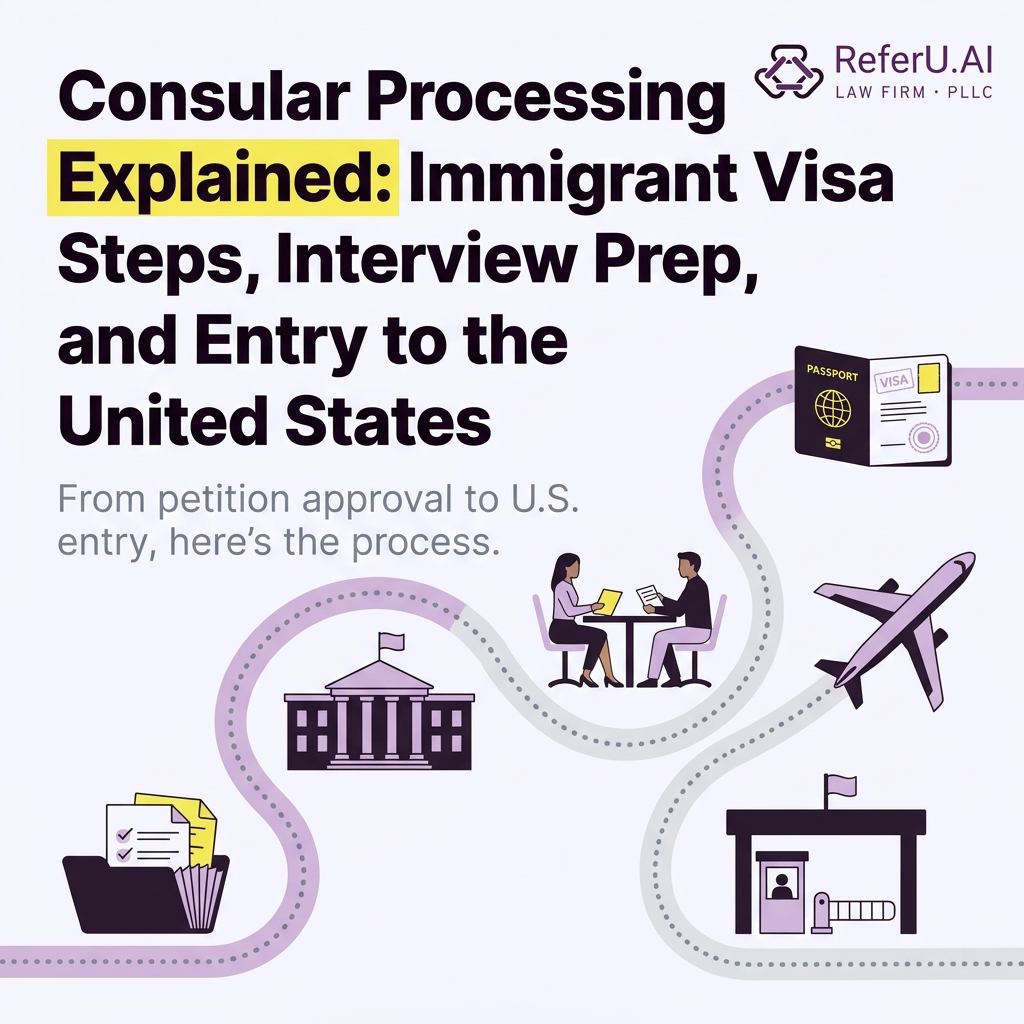
Consular Processing Explained: Immigrant Visa Steps, Interview Prep, and Entry to the United States
For many families, consular processing is the part of immigration law that feels the most abstract right up until it becomes urgent. A petition gets approved, the case moves to the National Visa Center, an interview is scheduled abroad, and suddenly the process involves fees, civil documents, medical exams, police certificates, and questions about what happens at the airport after the visa is issued.
In plain English, consular processing is the path many people use to get an immigrant visa through a U.S. embassy or consulate outside the United States. If that visa is approved and the person is admitted at a U.S. port of entry, they generally become a lawful permanent resident. The broad framework comes from USCIS’s overview of consular processing and the Department of State’s Immigrant Visa Process.
In this post, you’ll learn how consular processing works, what happens after petition approval, how interview preparation usually unfolds, what delays often look like, and what entry to the United States typically involves. If you want a broader foundation first, it may help to start with this overview of the immigration system and common case types.
Scroll to the bottom for every post in this series.
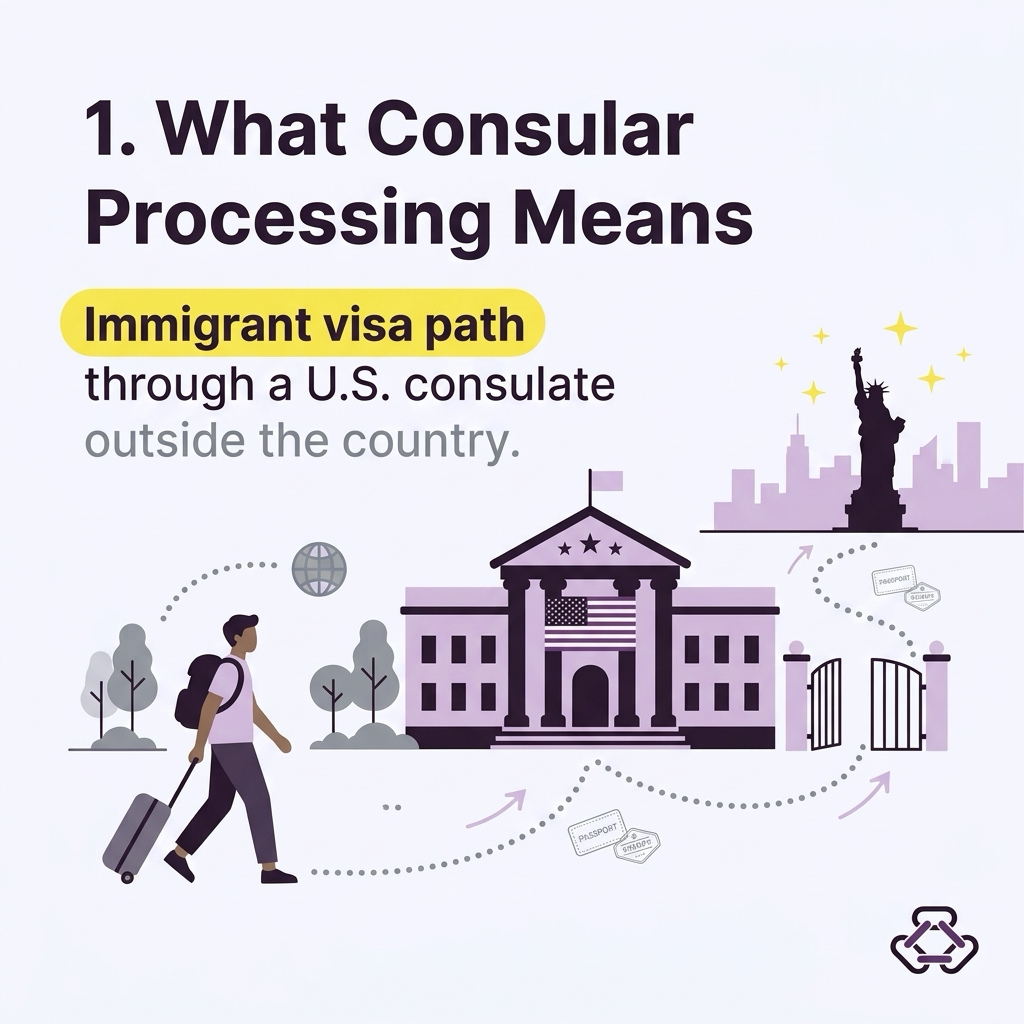
What Consular Processing Means
Consular processing is the immigrant visa route used when the intending immigrant applies from outside the United States at a U.S. embassy or consulate. USCIS explains that the process usually begins with an approved immigrant petition and then moves through visa availability, document collection, interview scheduling, consular adjudication, and admission at the port of entry. The Department of State handles the visa side of the case, while USCIS and Customs and Border Protection each handle different parts before and after issuance of the visa. See USCIS, the National Visa Center process, and CBP’s lawful permanent resident resources.
This is different from adjustment of status, which is the process used by some applicants already inside the United States. For readers trying to compare those two paths, this discussion about how people often weigh processing abroad versus applying from inside the U.S. can add useful context.
Step 1: The Case Usually Starts With An Approved Petition
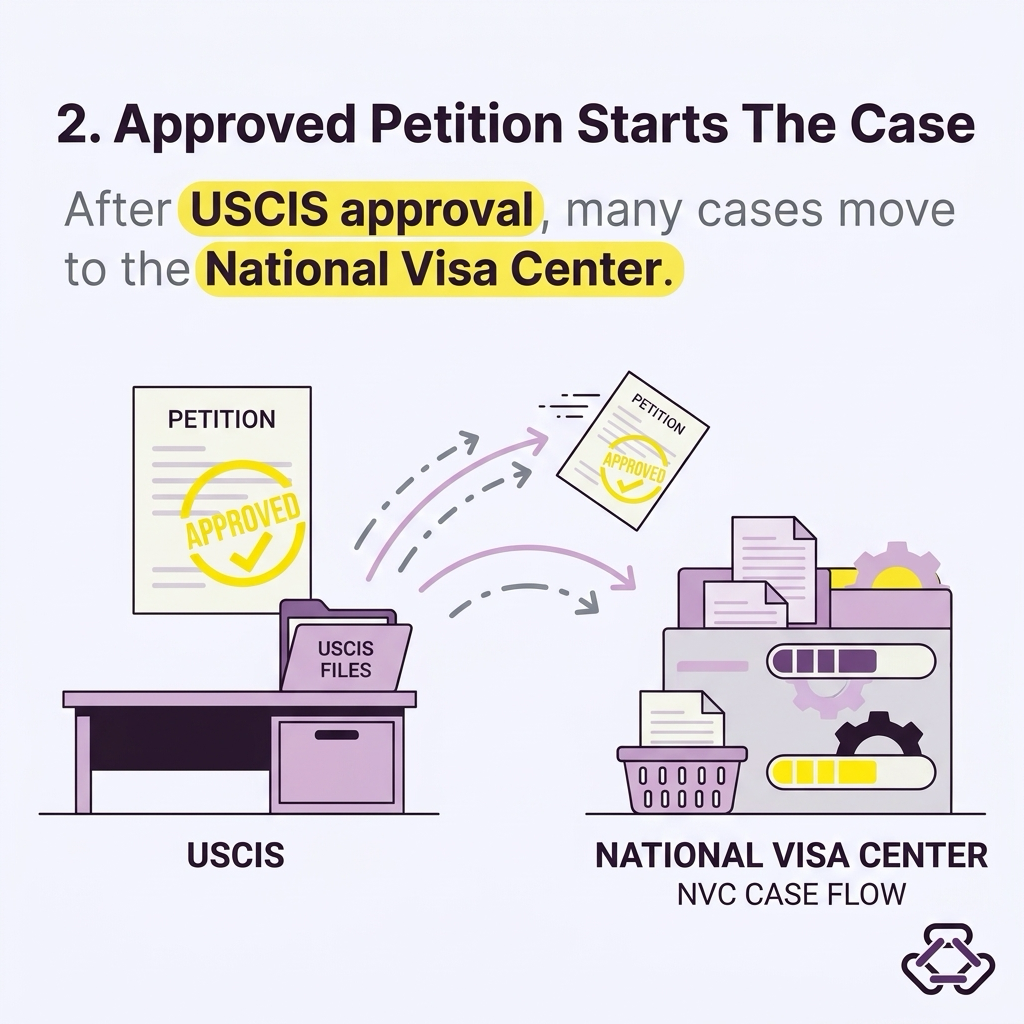
Most consular processing cases begin when a family member or employer files an immigrant petition with USCIS. After approval, the case is often transferred to the Department of State’s National Visa Center, commonly called the NVC. The NVC then collects fees, forms, and supporting documents before an interview can be scheduled at the appropriate embassy or consulate. The official outline appears in the Department of State’s step-by-step immigrant visa process.
For some family-based and employment-based categories, visa availability is tied to the monthly Visa Bulletin. In practical terms, that can mean an approved petition is only one milestone, not the finish line. Immediate relatives of U.S. citizens often move differently from preference-category cases, where priority dates matter.
Step 2: The National Visa Center Collects Fees And Forms
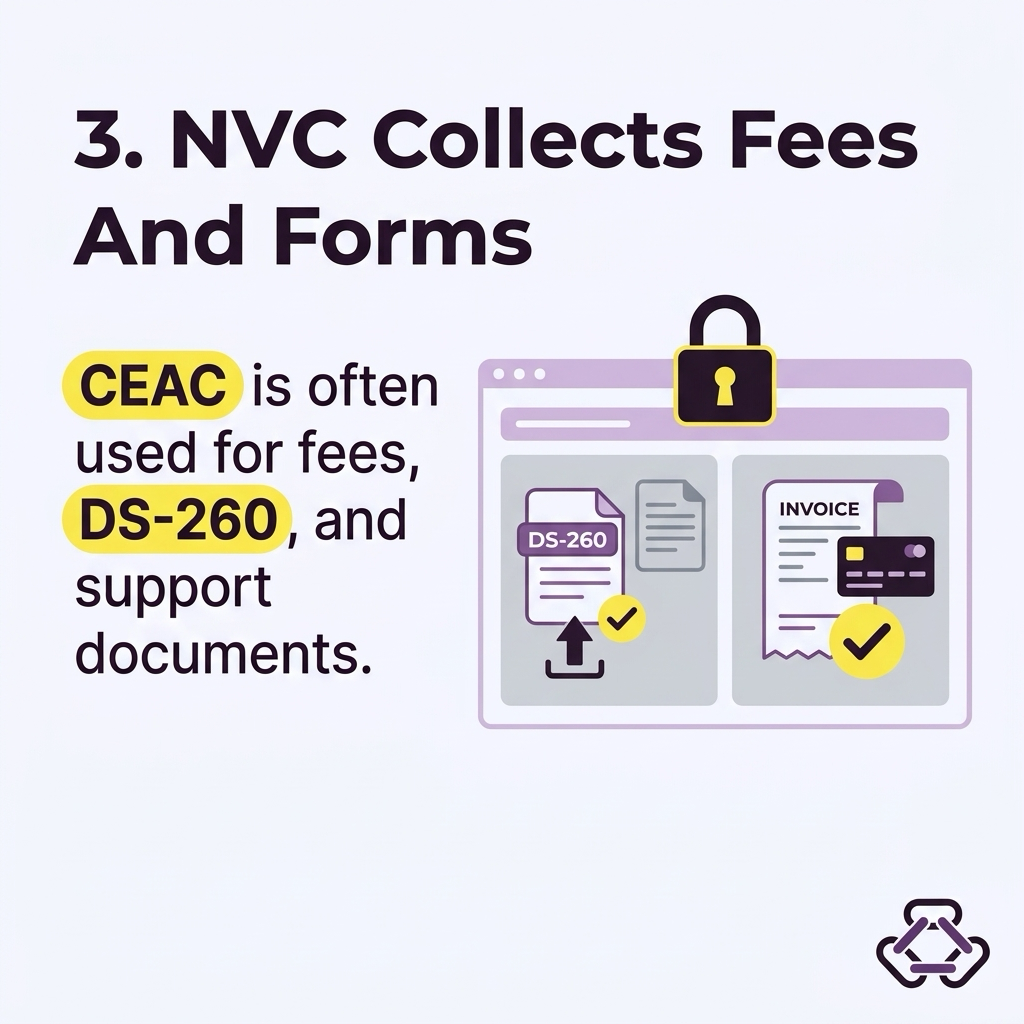
After NVC creates the case, the parties are typically asked to log into the Consular Electronic Application Center, or CEAC, to pay fees and submit materials. The Department of State explains that online processing in CEAC is used in many immigrant visa cases for fees, document uploads, and case tracking through the NVC stage. See the State Department’s page on CEAC electronic processing.
The two core items people often talk about most are:
- the immigrant visa application, usually Form DS-260; and
- the financial sponsorship package, often including Form I-864 Affidavit of Support in family-based cases.
The Department of State also notes that after fees are submitted online, processing can take time before the system permits the next steps, including document review and interview readiness. Its fee page notes a waiting period after payment processing.
Step 3: Civil Documents Often Decide Whether The Case Moves Smoothly
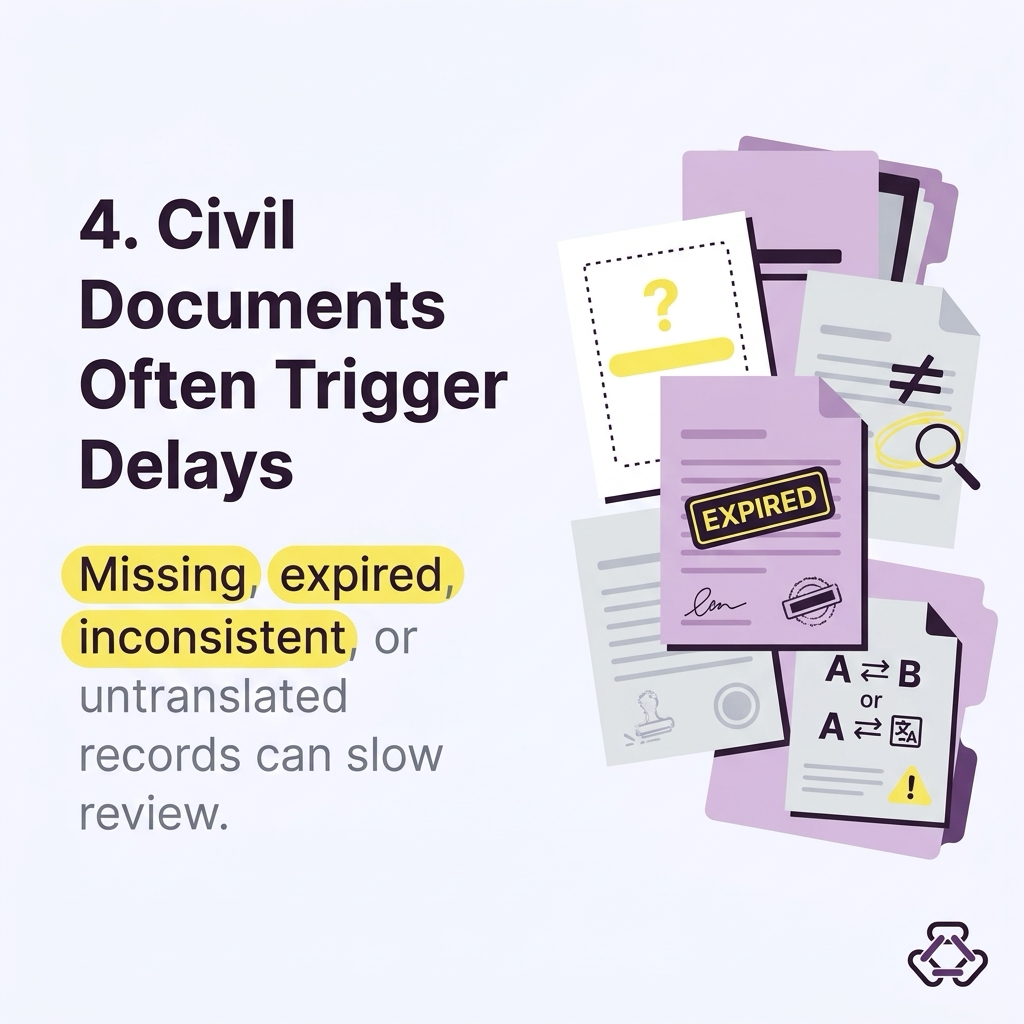
A surprising number of delays come down to documents that are missing, inconsistent, expired, untranslated, or uploaded incorrectly. That includes birth certificates, marriage certificates, divorce decrees, military records, police certificates, passport biographic pages, and court records where applicable. The Department of State’s document submission guidance and interview instructions emphasize that applicants later bring originals or certified copies of civil documents to the interview.
This is where a lot of families discover that a “small paperwork issue” is not always small. A document may exist but not be in the format the consulate expects. A police certificate may no longer be valid. A translation may be incomplete. A prior name variation may raise identity questions.
If you want a more focused checklist, this breakdown of the records that often matter most in a consular case is a helpful companion piece.
Step 4: Interview Scheduling Usually Happens After The Case Is Documentarily Complete
Once the NVC determines the required submissions are complete and a visa is available, the case can move toward interview scheduling. The Department of State explains that NVC sends an appointment notice when the immigrant visa interview is scheduled, including the date, time, and location. See the State Department’s appointment guidance.
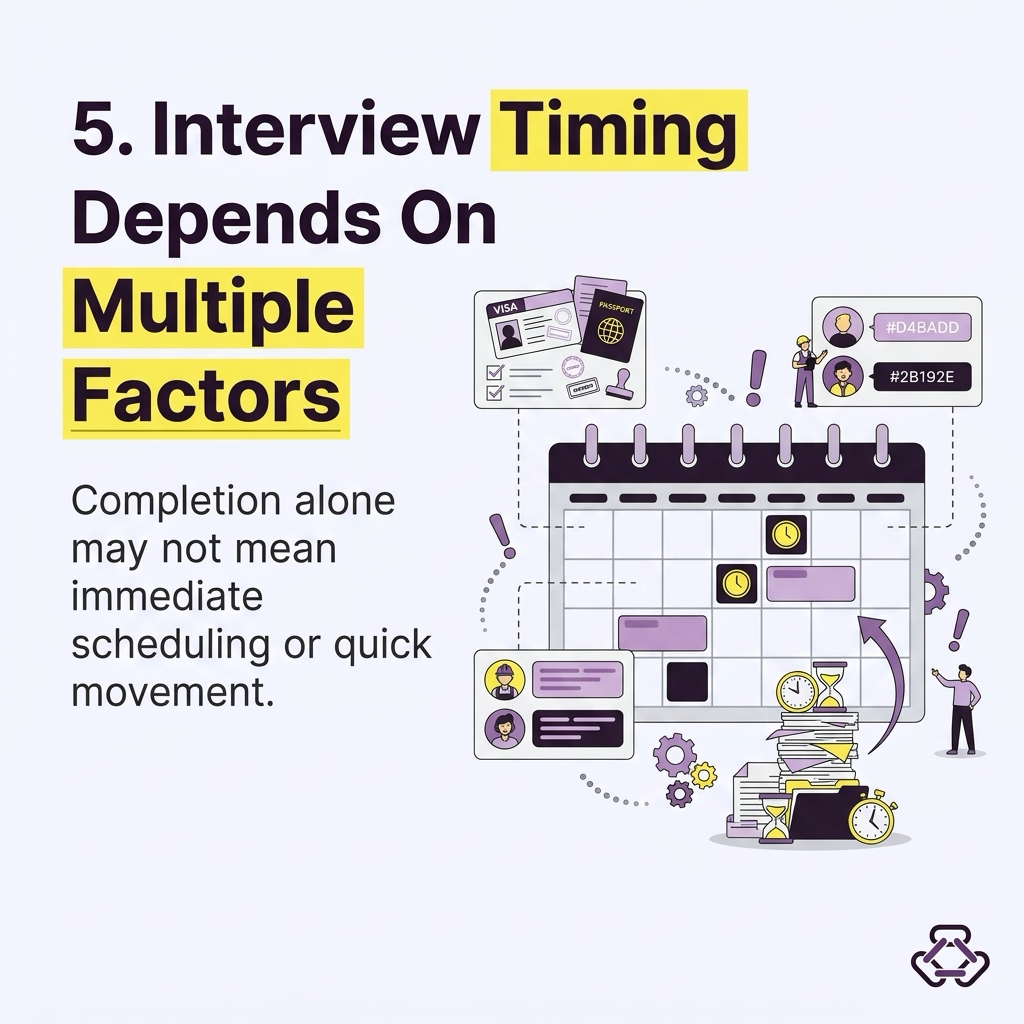
This stage is often where expectations and reality part ways. Many applicants assume that once documents are uploaded, the interview is right around the corner. In real life, scheduling may depend on visa category, visa availability, embassy capacity, staffing, local procedures, and post-specific backlogs. The State Department’s visa wait times page also notes that some cases go through additional administrative processing after interview.
Families trying to understand why a “complete” case is still not moving often find it useful to read more about the delays that can catch people off guard in immigrant visa processing.
Step 5: The Medical Exam Is A Required Part Of The Process
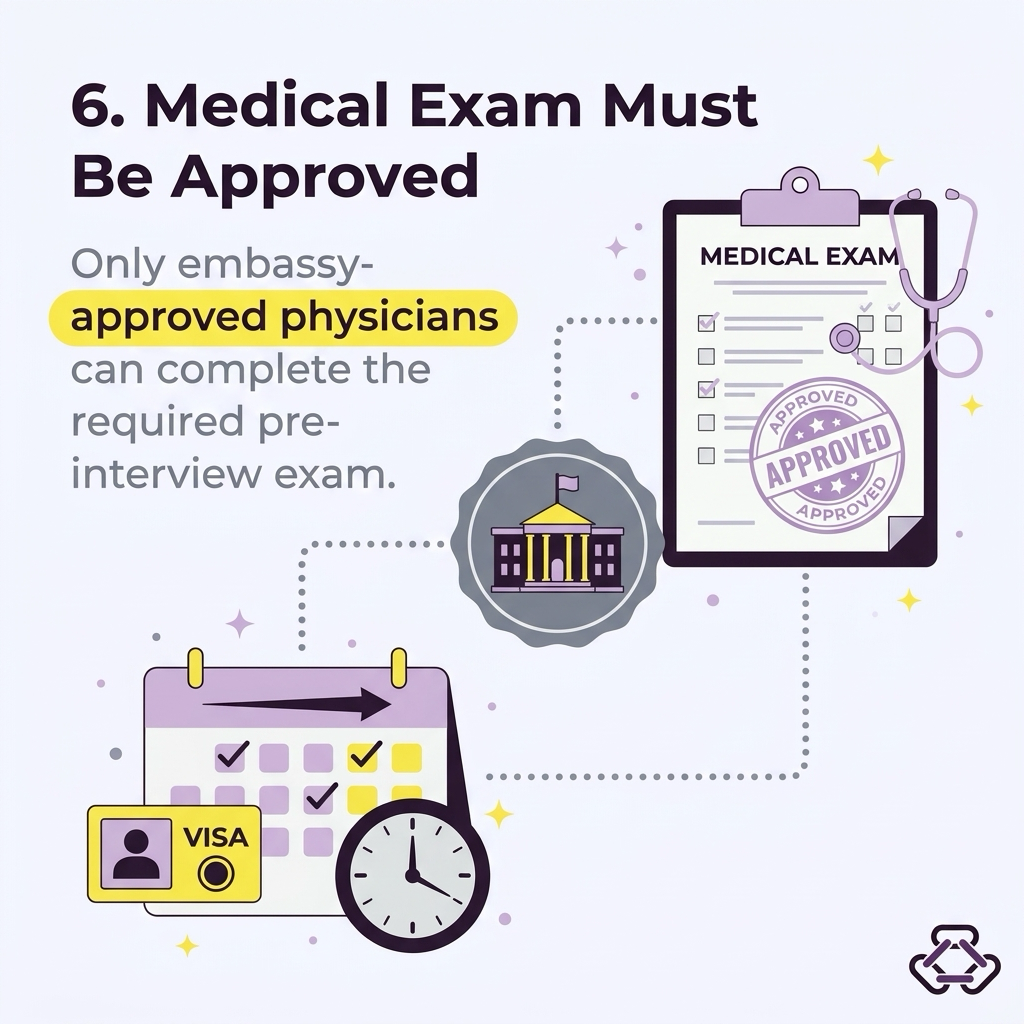
Before the interview, the applicant generally completes a medical exam with an embassy-approved panel physician. The Department of State is explicit on this point: exams by non-approved doctors are not accepted. It also notes that the medical exam and any required vaccinations are part of the pre-interview process, and that results may either be sent directly to the embassy or given to the applicant in a sealed envelope. See interview preparation instructions.
The exact mechanics vary by post. Some embassies publish local PDF instructions listing physicians, payment practices, vaccine requirements, and delivery methods for exam results. Because those instructions can be highly location-specific, many applicants benefit from reviewing the post’s supplemental directions as soon as the appointment letter arrives.
One point that often matters: visa validity can be tied to the medical exam’s expiration. The Department of State explains that an immigrant visa is usually valid for up to six months from issuance unless the medical exam expires sooner, which can shorten the window to travel. That detail appears on the State Department’s after the interview page.
Step 6: Interview Preparation Is About Accuracy, Consistency, And Calm
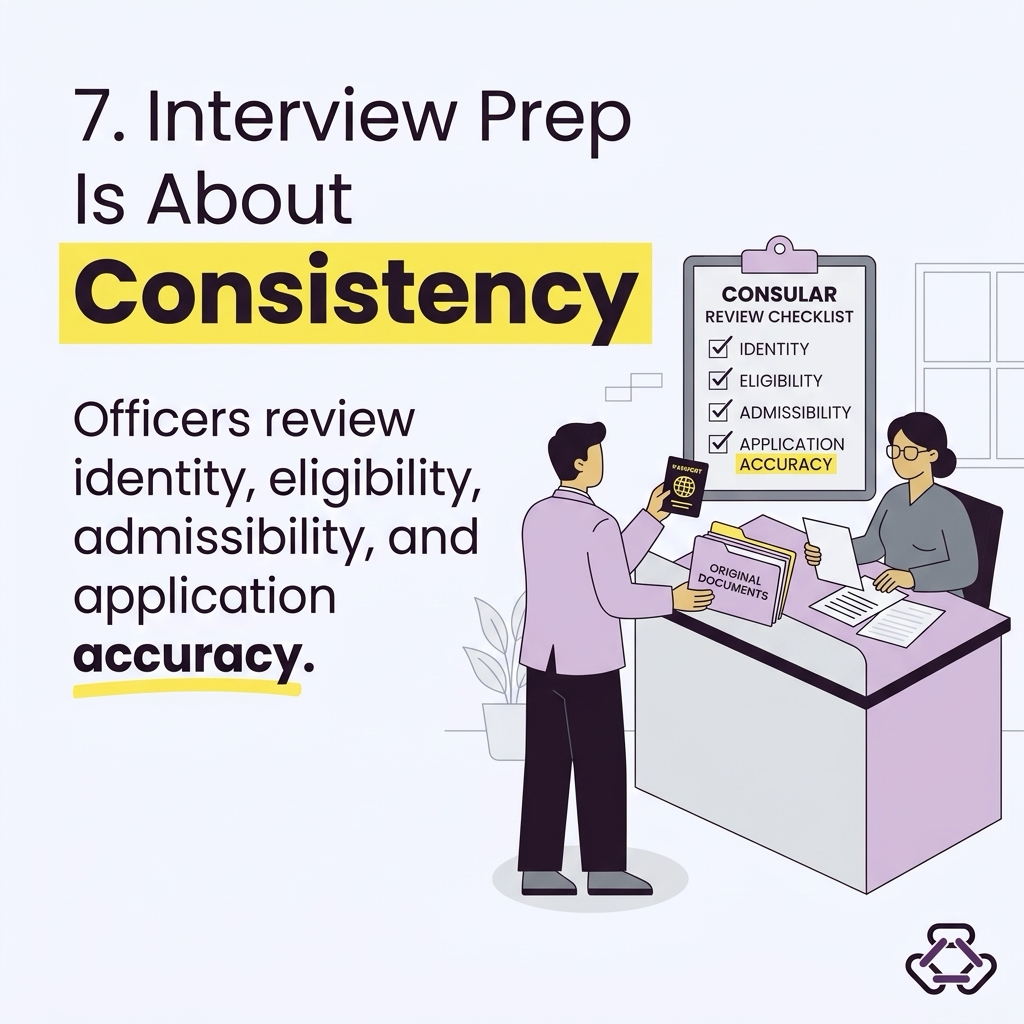
The immigrant visa interview is often the most stressful moment in the process, but the legal purpose is fairly concrete: the consular officer is confirming eligibility, identity, admissibility, and the truthfulness of the application. The Department of State’s interview preparation page explains that applicants generally bring their appointment letter, passport, photos, and original or certified copies of civil documents submitted to NVC.
In broad terms, interview prep often centers on a few recurring themes:
Identity And Biographic Consistency
Names, dates of birth, marital history, prior addresses, and children’s information often appear across many forms and records. If one record says one thing and another says something slightly different, that inconsistency may draw attention even when the underlying explanation is innocent.
Relationship And Sponsorship Questions
In family-based cases, the officer may explore the family relationship, prior marriages, sponsorship arrangements, and basic timeline issues. In employment-based matters, job offer details or underlying petition issues may come into focus.
Inadmissibility Concerns
Questions may touch on prior immigration history, unlawful presence, criminal records, prior removals, misrepresentation issues, medical grounds, and public-charge-related documentation where relevant. Some cases that look straightforward at the petition stage become much more complex once admissibility is examined at the visa interview stage.
Country-Specific Logistics
Some posts require courier registration, document pick-up registration, or local procedures before the interview. The State Department’s appointment and interview pages specifically note that applicants may need to complete post-specific pre-interview steps.
For a deeper look at what preparation often feels like in practice, including how people organize documents and handle common interview concerns, this article on getting ready for the visa interview abroad pairs naturally with this guide.
Step 7: The Interview Can End In Approval, Refusal, Or Additional Processing
At the interview, a consular officer may approve the case, refuse it for missing information or legal ineligibility, or place it into additional administrative processing. The Department of State’s after the interview guidance explains that not every case is resolved immediately and that some applicants are asked to wait while further processing occurs.
Administrative processing is one of the most misunderstood parts of the system. In general terms, it is not a final category by itself. It is often a holding phase while the government completes review steps, security checks, or requests additional documents. The State Department notes that, absent emergency travel circumstances, applicants are generally asked to wait at least 180 days from the interview or supplemental document submission before making status inquiries about administrative processing. See the official after the interview page.
That long timeline is one reason many families involve counsel when a case presents prior immigration violations, criminal history, old visa denials, name discrepancies, prior marriages, complicated custody issues, or possible waiver issues.
Step 8: If The Visa Is Issued, There Are Still A Few Steps Left
Visa issuance is a major milestone, but it is not the end of the process. The Department of State explains that after approval, the passport is returned with the immigrant visa, and the applicant may also receive instructions about any packet or electronic transfer associated with entry. In some locations, there may be no physical sealed packet because processing is electronic; in others, applicants are told not to open a sealed envelope if one is provided. Country-specific embassy instructions often spell this out. See the State Department’s spouse immigrant visa page and post-specific supplemental instructions.
Another important step is the USCIS Immigrant Fee. USCIS and the Department of State both note that USCIS uses this fee to process the immigrant visa record and produce the Permanent Resident Card. The official guidance states that USCIS will not issue the green card until that fee is paid. See USCIS’s consular processing page and the State Department’s after the interview page.
Step 9: Entry To The United States Is The Final Immigration Step In The Process
After receiving the immigrant visa, the person travels to the United States and presents themselves for inspection by Customs and Border Protection. USCIS explains that a CBP officer at the port of entry makes the admission decision. If admitted on an immigrant visa, the person generally becomes a lawful permanent resident at that point. See USCIS’s official overview.
Timing matters here. As noted above, the immigrant visa is often valid for up to six months, but the actual validity may be shorter if tied to the medical exam. The traveler generally wants to enter before the visa expires. The State Department’s after the interview page is the clearest official source on that point.
Once admitted, the green card is typically mailed later to the U.S. address on file after USCIS processes the immigrant fee and entry record. The same State Department guidance notes that applicants can also review Social Security number information through the Social Security Administration after arrival.
Common Problems That Make Consular Processing More Complicated
Consular processing is often described as a paperwork process, but many cases involve legal questions that go beyond ordinary document collection. Some of the more common complications include:
- prior unlawful presence in the United States
- past removal or deportation issues
- criminal records, even older or reduced charges
- fraud or misrepresentation concerns
- incomplete or inconsistent civil documents
- police certificates that are unavailable or expired
- sponsorship or income issues under the Affidavit of Support rules
- aging-out concerns for children in preference categories
- embassy-specific scheduling bottlenecks
In situations like these, the question is not just “what form comes next?” but “what legal issue is this fact pattern creating?” That is often where individualized attorney analysis becomes especially valuable.
For readers earlier in the learning curve, this plain-language beginner-friendly explanation of consular processing from start to finish can help tie the process together before diving into strategy questions.
When People Often Start Looking For An Immigration Attorney
Many people first look for counsel when the case feels stuck, but in reality attorney involvement often becomes relevant much earlier, especially when the facts are not clean and simple. That can include a past overstay, prior unauthorized employment, a marriage with prior divorce history, a criminal record, a complicated financial sponsor issue, a child nearing age-out, or concerns that a prior visa application contained mistakes.
A lawyer may help identify whether a document issue is only administrative or whether it points to a larger admissibility problem. An attorney may also help a family evaluate whether consular processing is even the right path compared with filing inside the United States, when that option exists. That comparison can be especially important in marriage-based and family-based matters.
Final Thoughts
Consular processing is often presented as a checklist, and in one sense it is: approved petition, NVC case creation, fees, DS-260, civil documents, medical exam, interview, visa issuance, immigrant fee, and entry to the United States. But for many families, the harder part is not understanding the order of the steps. It is understanding which facts in the case could trigger delays, requests for evidence, administrative processing, or admissibility concerns.
That is why people often look beyond generic directories when the stakes feel personal. A case involving prior immigration history, waiver questions, criminal records, or recurring document problems may call for a lawyer with documented experience in highly similar matters, not simply a lawyer who lists immigration as a practice area.
Visit ReferU.AI to get matched with an attorney who has demonstrable experience in cases like yours — for free.


