Table of Contents
- 9 Documents That Matter in a Consular Processing Case
- Table Of Contents
- 1. Passport Biographic Page
- 2. Birth Certificate
- 3. Marriage Certificate
- 4. Divorce Decrees Or Other Marriage Termination Records
- 5. Police Certificates
- 6. Court And Prison Records
- 7. Military Records
- 8. Affidavit Of Support And Financial Evidence
- 9. Medical Exam And Vaccination Records
- One More Document That Is Easy To Forget: The DS-260 Confirmation Page
- Final Tip: The Right Document Is Often The One The Country Page Accepts

Type
Great Grandchild
Status
Approved
Title (YouTube)
Images Failed (Social)
Images Failed (Social)
Do not index
Parent item
Publish Date (TikTok)
Apr 28, 2027 07:15
Videos Post IDs (Social)
Hashtags (Social)
#LegalAdvice #LegalHelp #Immigration #ConsularProcessing
Caption
Caption X
Cover

OG Image

Alt Image Text
Flat vector illustration of consular processing documents for an immigrant visa case, showing organized passport, civil records, financial evidence, and medical paperwork.
Images

Videos
Publish Date (Social)
Feb 20, 2027 12:30
Scheduled (Social)
Scheduled (Social)
Images Posted (Social)
Images Posted (Social)
Videos Posted (Social)
Videos Posted (Social)
Featured
Created time
Apr 7, 2026 12:00 AM
Sub-item
Authors
CTA Practice Area (Social)
Immigration
TikTok Failed (Social)
TikTok Failed (Social)
Videos Post Links (Social)
TikTok Post Links (Social)
Images Post IDs (Social)
YT Post ID
Video Pending Manual (Social)
TikTok Posted (Social)
TikTok Posted (Social)
TikTok Post IDs (Social)
Video Cover (Social)
Images Post Links (Social)
First Comment (Social)
Videos Failed (Social)
Videos Failed (Social)
YT Embedded
Images Delete (Social)
Videos Delete (Social)
Carousel Video URL (Social)
9 Documents That Matter in a Consular Processing Case
Consular processing can feel deceptively simple at first: file the petition, wait for the National Visa Center, attend the interview, get the visa, travel to the United States. In real life, many delays come down to paperwork. A missing civil record, an outdated police certificate, or an incomplete financial packet can stall a case that otherwise looks ready to move.
If you are still getting oriented, it may help to start with a broader overview of how the immigrant visa process through a U.S. consulate usually works. This post focuses on one narrow but important piece of that process: the documents that tend to matter most.
Below are 9 documents that often carry the most weight in a consular processing case, why they matter, and where applicants and sponsors often run into trouble.
Scroll to the bottom for every post in this series.
Table Of Contents
1. Passport Biographic Page
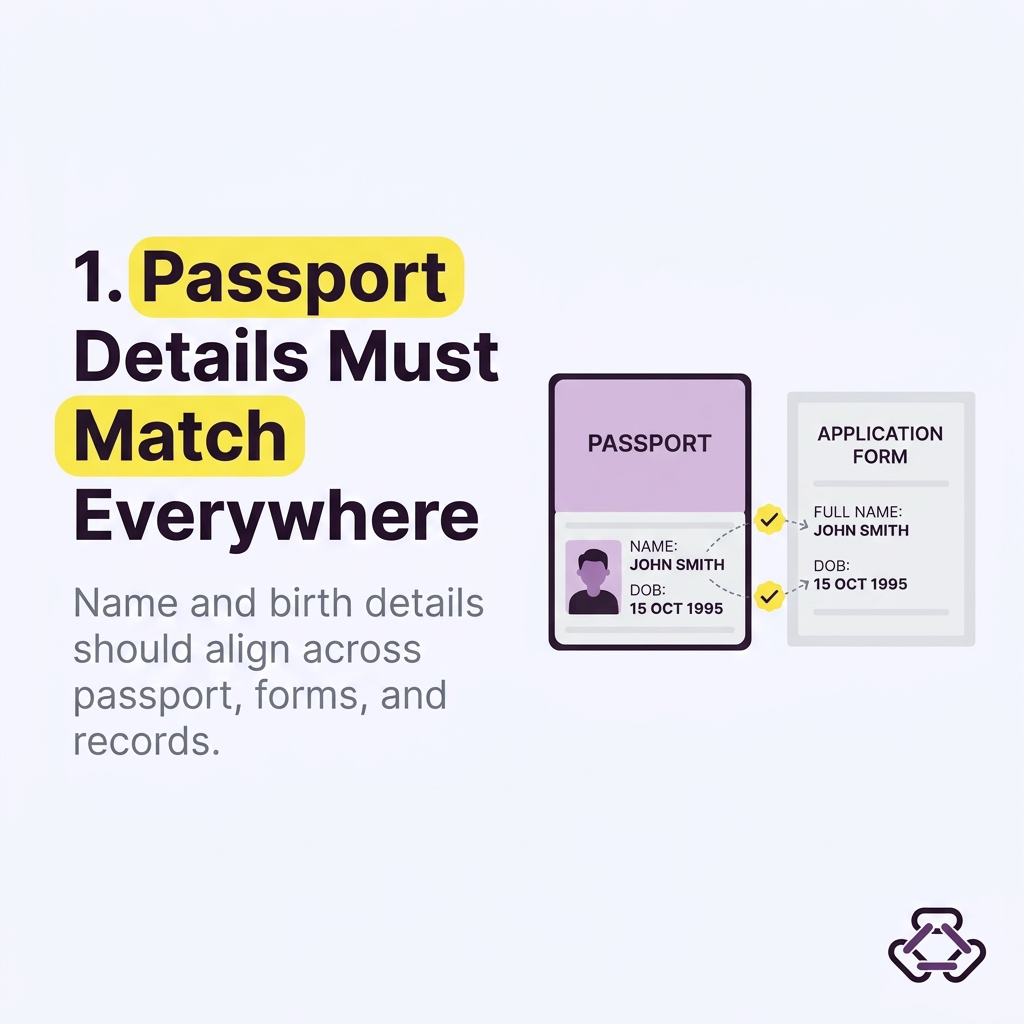
A valid passport is one of the most basic documents in a consular processing case, but it is also one of the easiest to underestimate. The U.S. Department of State says each applicant and immigrating family member submits a photocopy of the biographic data page of a currently valid passport as part of the civil document package. That page is the one showing the applicant’s photo, name, date of birth, and place of birth (State Department civil documents guidance).
In practical terms, the passport does more than prove identity. It also becomes the foundation for consistency across the rest of the file. If the passport spelling does not match the birth certificate, marriage certificate, police certificate, or DS-260, that inconsistency can trigger follow-up questions. Sometimes those issues are minor. Sometimes they turn into a document chase involving amended records, affidavits, or translations.
Another issue is validity period. Some posts abroad include local instructions asking for passports valid well beyond the interview date. Even when a passport is technically valid, short remaining validity can create logistical issues with visa issuance or travel planning. That is one reason applicants often review both the general State Department rules and the country-specific post instructions tied to the interview location and the State Department reciprocity page for country-specific document rules.
2. Birth Certificate
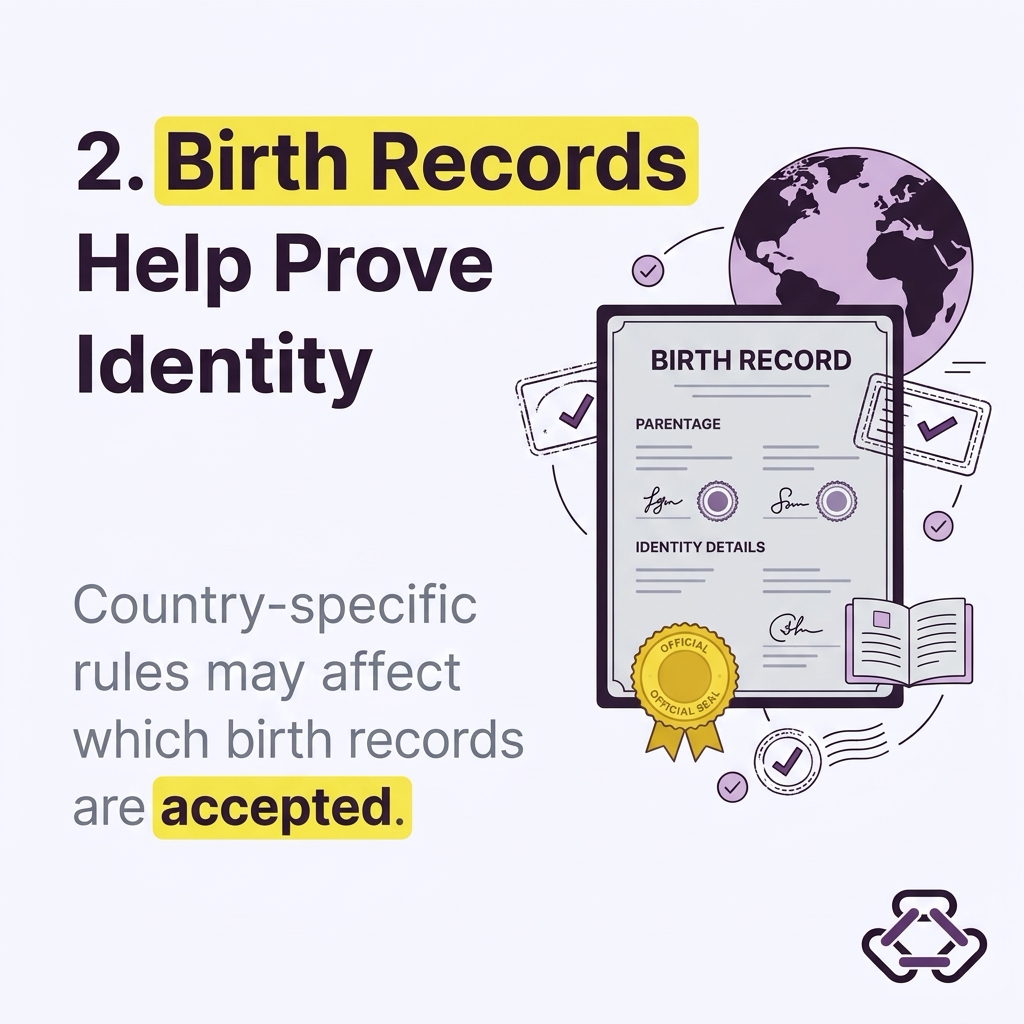
The birth certificate is often the key record used to establish identity, age, and parentage. The State Department says the applicant and each immigrating family member generally obtain an original birth certificate or certified copy (State Department civil documents guidance).
For family-based immigration, this document can be especially important because it often helps prove the claimed relationship to the petitioner. In a parent-child case, for example, the birth record may be one of the core documents connecting the applicant to the sponsoring relative. In sibling and parent petitions, the State Department also identifies petitioner-side birth records as required in certain categories (State Department civil documents guidance).
Where people run into problems is that not every birth certificate is considered acceptable. The State Department’s reciprocity schedule exists for exactly this reason: different countries issue different kinds of records, and not all are available or considered complete in the same way. A short-form certificate, church record, hospital certificate, or late-registered birth record may or may not satisfy the consulate depending on the country and circumstances. That is where country-specific guidance becomes critical.
If a birth record is missing, unavailable, or inconsistent, an attorney may help evaluate whether secondary evidence might be relevant and how that issue could affect timing and interview readiness.
3. Marriage Certificate
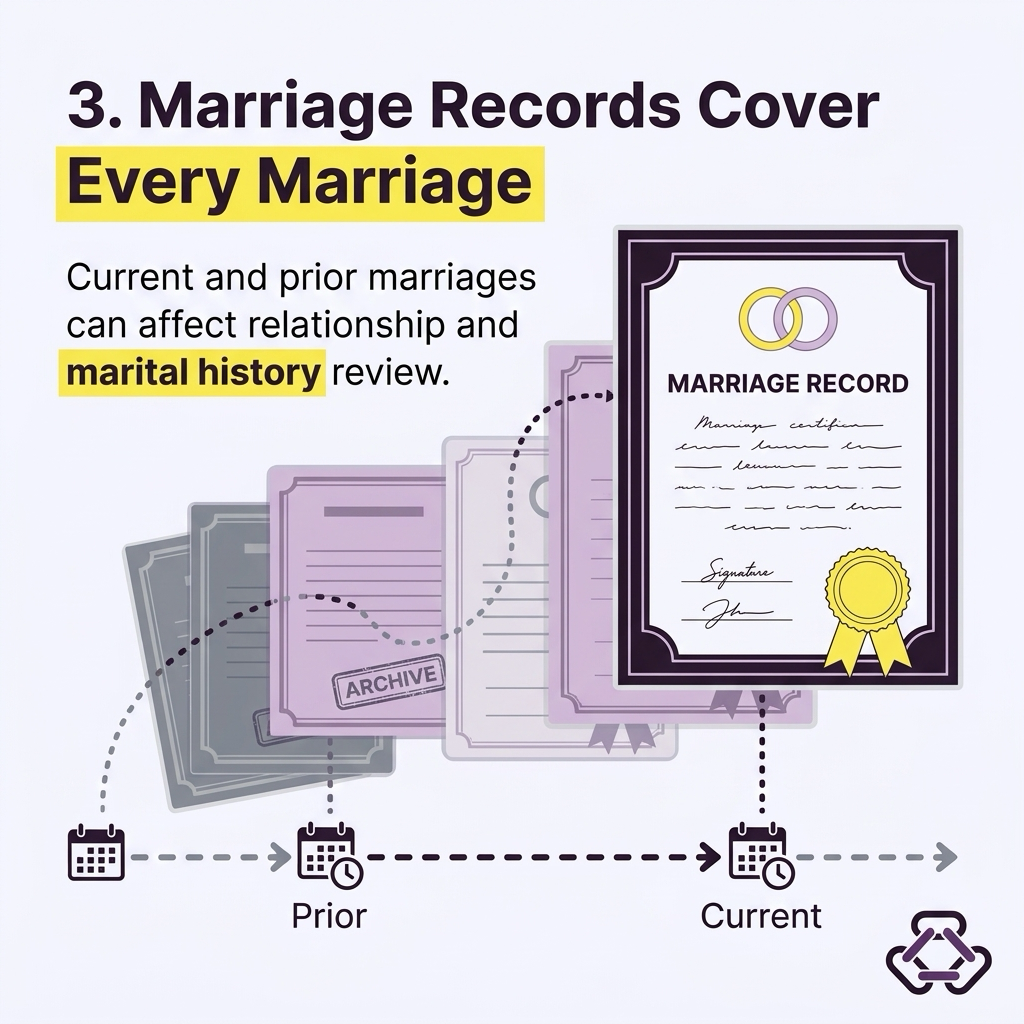
For marriage-based cases, the marriage certificate is one of the most central civil documents in the file. The State Department says that if the applicant is or has been married, they generally obtain original marriage certificate(s) or certified copies of every marriage (State Department civil documents guidance).
That “every marriage” language matters. Many people think only the current marriage is relevant. In practice, prior marriages can matter because the government is trying to understand legal capacity to marry and the accuracy of the applicant’s marital history across forms and records.
For a current spousal petition, the marriage certificate is also one of the documents that supports the existence of the qualifying relationship. It is not the only evidence that can matter in a marriage-based case, but it is usually one of the starting points.
A common issue here is submitting a document that is culturally familiar but not legally complete for U.S. immigration purposes. In some countries, religious marriage records, family book extracts, or local registry abstracts may be common, while the consulate may be looking for a specific civil registration format. Again, the reciprocity schedule often controls what is considered acceptable for that country.
Applicants preparing for the interview often benefit from reviewing document issues alongside interview preparation. If that is the stage you are in, this companion topic on getting ready for the visa interview abroad would usually fit naturally with the document review process.
4. Divorce Decrees Or Other Marriage Termination Records
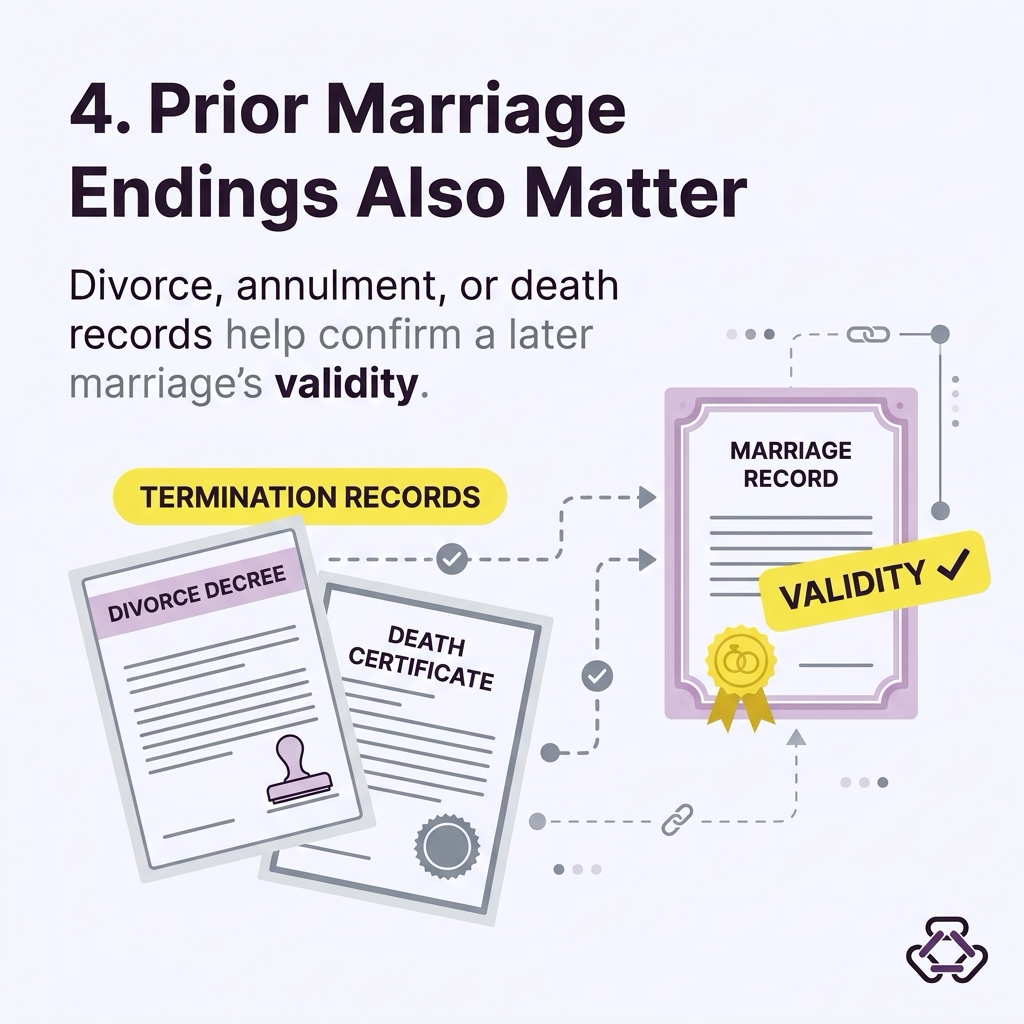
This category is easy to overlook and often causes outsized problems. The State Department says that if an applicant was previously married, they generally obtain proof of the termination of every prior marriage, such as a final divorce decree, death certificate, or annulment papers. In spousal cases, prior marriage termination records relating to the petitioning spouse can also be required (State Department civil documents guidance).
Why does this matter so much? Because the government is not just asking whether a person is married now. It is also trying to confirm that the current marriage was legally valid when it happened. If a prior marriage was never legally terminated, the later marriage may raise serious eligibility issues.
Even when there is no real dispute about the history, problems can arise when:
- the decree is incomplete,
- the copy is not certified,
- the record is from a country with unusual court formats,
- the names on the decree do not match the current passport,
- or the divorce occurred in one country while the marriage was registered in another.
In many family-based immigration cases, document inconsistency becomes a bigger issue than the underlying facts. That is one reason people comparing case strategies sometimes also look at the differences between consular processing and adjustment of status, because the procedural posture can affect how and when certain documentation questions surface.
5. Police Certificates
Police certificates are among the most frequent sources of delay. The State Department says applicants age 16 or older generally obtain police certificates from certain countries based on residence and arrest history. Broadly speaking, that can include the country of nationality, the current country of residence if different, countries where the applicant lived for 12 months or more after age 16, and places where the applicant was arrested. The State Department also notes that present and former residents of the United States do not submit U.S. police certificates for this purpose (State Department civil documents guidance).
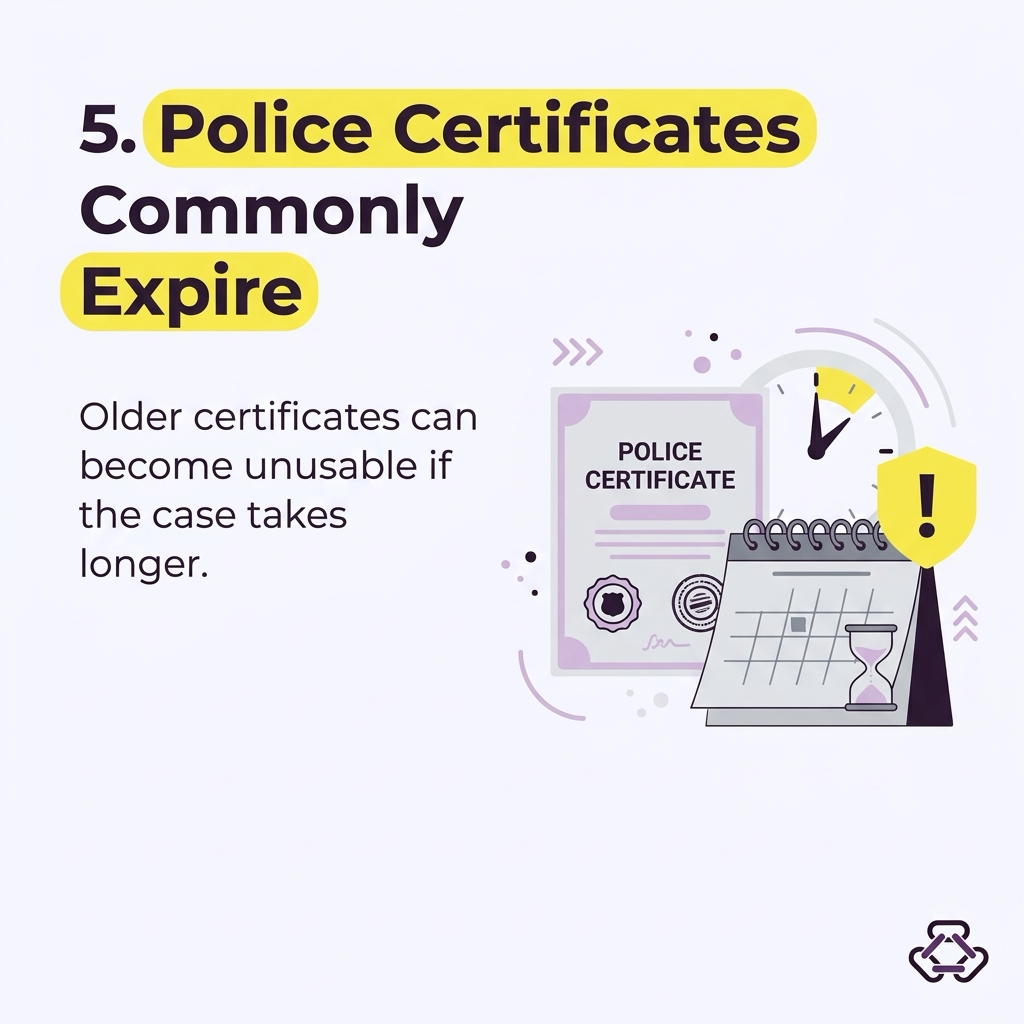
There is also an expiration rule that catches many families off guard: the State Department says police certificates expire after two years, unless the certificate came from a previous country of residence and the applicant has not returned there since it was issued (State Department civil documents guidance).
That means a police certificate can be perfectly valid when uploaded to the National Visa Center and no longer usable by the time of the interview if the case drags on. This is one of the classic examples of how consular processing delays can create a second wave of document problems. If timing issues are already surfacing in your case, it may help to read more about the delays families often do not see coming in consular processing.
Another challenge is country availability. Some countries issue national police certificates easily. Others have regional systems, limited records, or certificates that the reciprocity schedule classifies as unavailable. When a document is unavailable, the government may look for proof of unavailability or alternative evidence depending on the circumstances.
6. Court And Prison Records
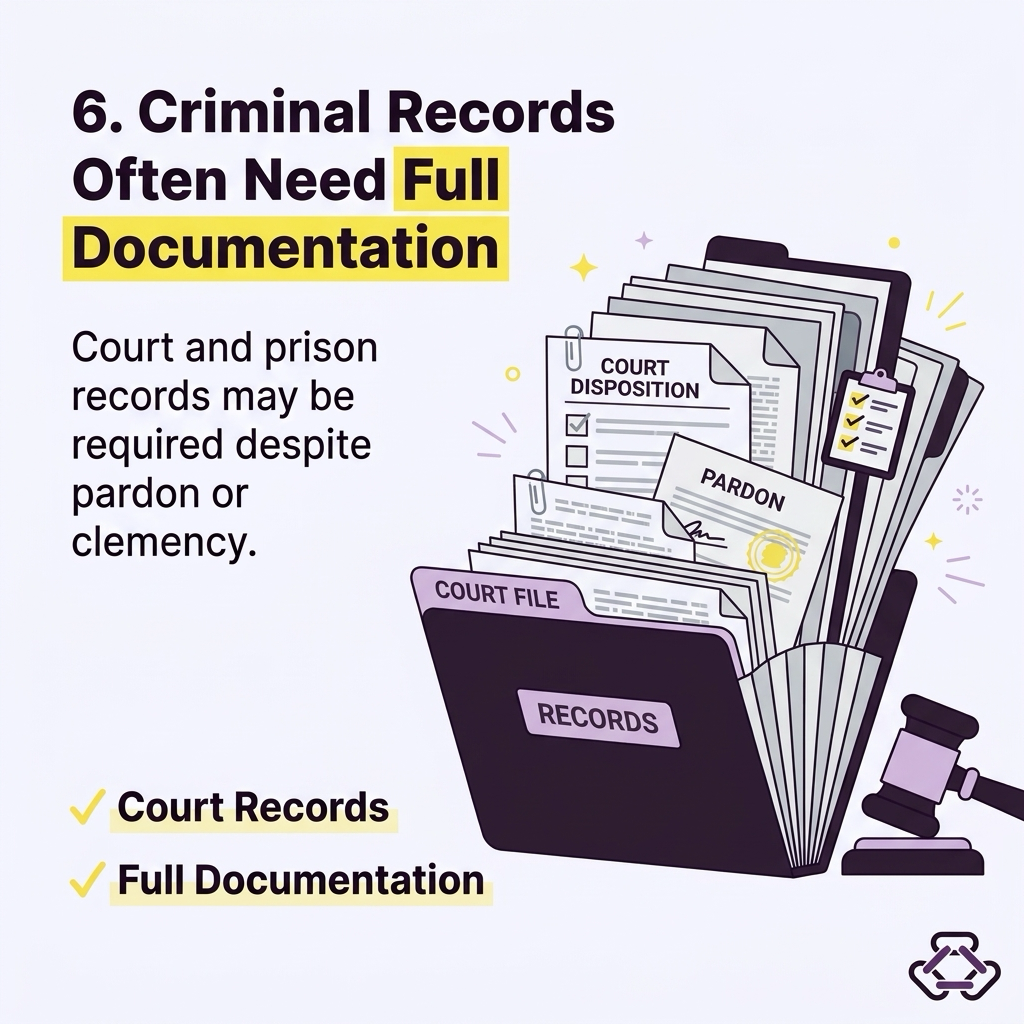
The State Department says that if an applicant was convicted of a crime, they generally obtain a certified copy of each court and prison record, even if they later received amnesty, a pardon, or other clemency (State Department civil documents guidance).
This is a category where applicants sometimes assume that an old case no longer matters because it was dismissed informally, expunged locally, pardoned, or considered minor in the home country. U.S. immigration screening often treats criminal history documentation differently from how a local employer or domestic agency would. The issue is frequently less about whether the applicant sees the matter as serious and more about whether the consular officer has enough reliable documentation to evaluate admissibility.
That makes completeness important. A one-page judgment may not tell the full story if the government wants the charging record, sentencing record, and proof of disposition. In some jurisdictions, prison records may be separate from court records. In others, no prison document exists because no custodial sentence was served.
An attorney can sometimes help frame what records exist, what records do not exist, and how foreign criminal dispositions might be understood under U.S. immigration law. That kind of issue can become highly fact-specific very quickly.
7. Military Records
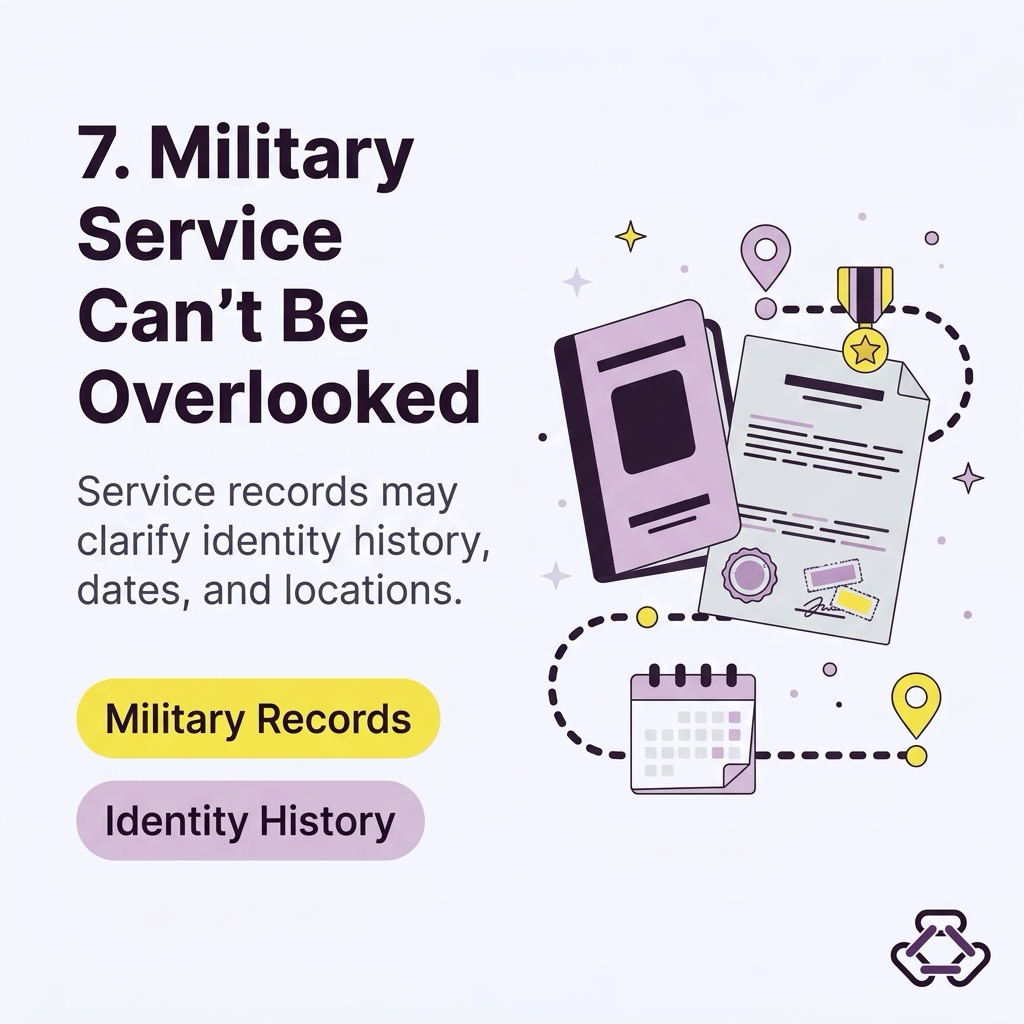
If the applicant served in the military of any country, the State Department says a military record is generally required if obtainable (State Department civil documents guidance).
This document often matters for identity history and background review. It can also help explain dates, locations, names used in service, and gaps that appear elsewhere in the file. In countries with mandatory conscription, applicants sometimes overlook this record because they view service as routine rather than notable. But from the government’s perspective, it is still part of the applicant’s official history.
Like other civil documents, the exact acceptable record can vary by country. A discharge certificate, service booklet, reserve paper, or military status letter may be the relevant document depending on the local system. The reciprocity schedule is usually the best place to confirm what the U.S. government expects for that country.
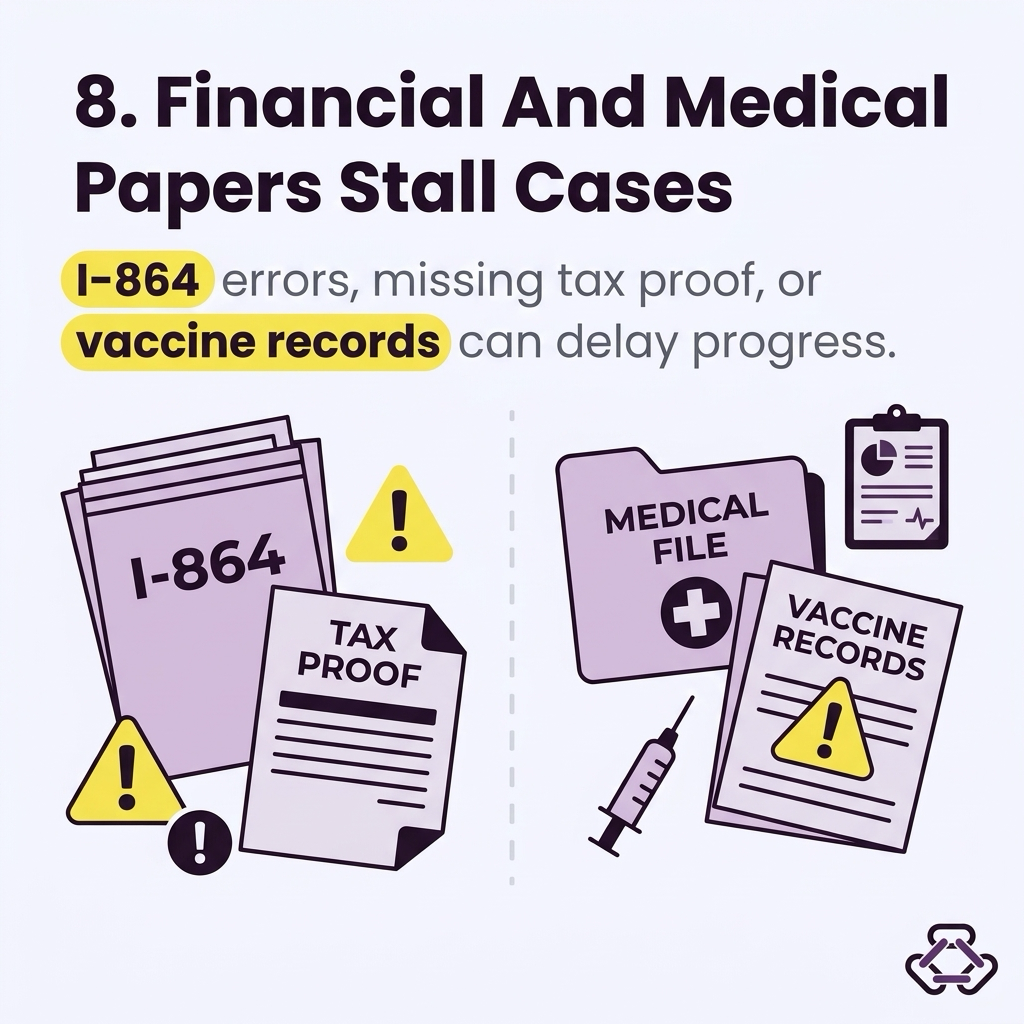
8. Affidavit Of Support And Financial Evidence
For many family-based immigrant visa cases, the financial sponsorship package is just as important as the applicant’s civil documents. USCIS describes Form I-864, Affidavit of Support, as a contract in which a sponsor agrees to use financial resources to support the intending immigrant named on the affidavit (USCIS Affidavit of Support overview). USCIS’s Form I-864 page also lists the sponsor’s required initial evidence, including a copy of the sponsor’s individual federal income tax return for the most recent tax year with W-2s, or an explanation and evidence showing why filing was not required; depending on the case, additional items can include proof of status, proof of current income, household member forms, or asset documentation (USCIS Form I-864 page).
The State Department likewise notes that the National Visa Center and the consular officer may request different or additional financial evidence depending on the situation (State Department Financial Evidence Assistant).
This packet creates problems for families in several recurring ways:
- the wrong household size is used,
- income is calculated incorrectly,
- tax records are incomplete,
- a joint sponsor is introduced without the matching supporting evidence,
- or the sponsor’s proof of status is missing.
Another common problem is assuming that the financial packet can be treated casually because the relationship is genuine. In reality, the relationship question and the financial admissibility question are separate. A case can look solid on the relationship side and still stall on I-864 issues.
Also important: the State Department says applicants generally submit photocopies of civil documents to NVC, not originals, but bring original civil documents to the visa interview (State Department NVC document submission guidance). That distinction can matter if a family believes everything already uploaded online is enough for the interview itself.
9. Medical Exam And Vaccination Records
The immigrant visa medical exam is not just an appointment; it is a required part of the process conducted by an approved panel physician, not by the applicant’s own doctor. The State Department explains that visa medical examinations for applicants pursuing immigrant visas abroad may not be done in the United States and must be completed by a panel physician approved by the issuing embassy or consulate (State Department medical exam FAQs).
Vaccination history is a major part of that exam. The State Department says immigrant visa applicants are required to obtain certain vaccinations before visa issuance unless medically inappropriate, and applicants are encouraged to bring vaccination records to the panel physician to help avoid delays (State Department vaccination guidance). The CDC’s technical instructions for panel physicians remain the governing framework for the medical exam and vaccination review (CDC panel physician technical instructions).
One important recent change is that, effective March 11, 2025, the CDC removed the COVID-19 vaccination requirement for immigrant visa applicants, and U.S. embassies and consulates no longer refuse immigrant visas for failure to present COVID-19 vaccination documentation alone (State Department announcement on the March 11, 2025 change). That date matters because older articles and forum discussions still reflect the prior rule.
At the same time, other vaccine requirements remain, and CDC instructions can include country-specific or disease-specific updates. For example, CDC guidance includes a polio addendum affecting immigrant visa applicants examined in certain at-risk countries (CDC polio addendum for panel physicians).
In practical terms, applicants often bring the wrong expectation to the medical exam. Some think it is a routine checkup. Others assume old vaccination memory is enough without records. The medical exam tends to go more smoothly when the applicant brings organized vaccination documentation and reviews the embassy-specific instructions in advance.
One More Document That Is Easy To Forget: The DS-260 Confirmation Page
Even though this post is built around nine major document categories, there is one extra item worth flagging because it gets forgotten surprisingly often: the DS-260 confirmation page. The State Department says that after submitting Form DS-260 online, the applicant prints the confirmation page and brings it to the interview (State Department online application guidance).
It is not usually the most complex document in the case, but it is part of interview readiness, and forgetting it can create unnecessary stress on an already high-pressure day.
Final Tip: The Right Document Is Often The One The Country Page Accepts
One of the biggest misconceptions in consular processing is that a document is acceptable simply because it exists. In many cases, the real question is narrower: is it the version that the U.S. government recognizes for that country and visa process?
That is why document review is often more than a checklist exercise. It is part identity verification, part procedural compliance, and part risk management. Families dealing with prior marriages, criminal history, missing records, old police certificates, or complicated financial sponsorship often discover that the hardest part is not collecting paper. It is figuring out whether the paper actually fits the rules.
In general terms, people facing uncertainty around consular processing often look for an immigration attorney with documented experience, relevant experience, and work on highly-similar matters. A better fit is often easier to identify when the search is based on objective criteria, case similarity, and court-record evidence, rather than advertising claims.
Visit ReferU.AI to get matched with an attorney who has demonstrable experience in cases like yours — for free.
