Table of Contents
- Consular Processing: A Beginner’s Guide to Getting a Green Card Through a U.S. Consulate
- What Is Consular Processing?
- Who Typically Uses Consular Processing?
- What Are The Basic Steps In Consular Processing?
- Step 1: The Immigrant Petition Starts The Case
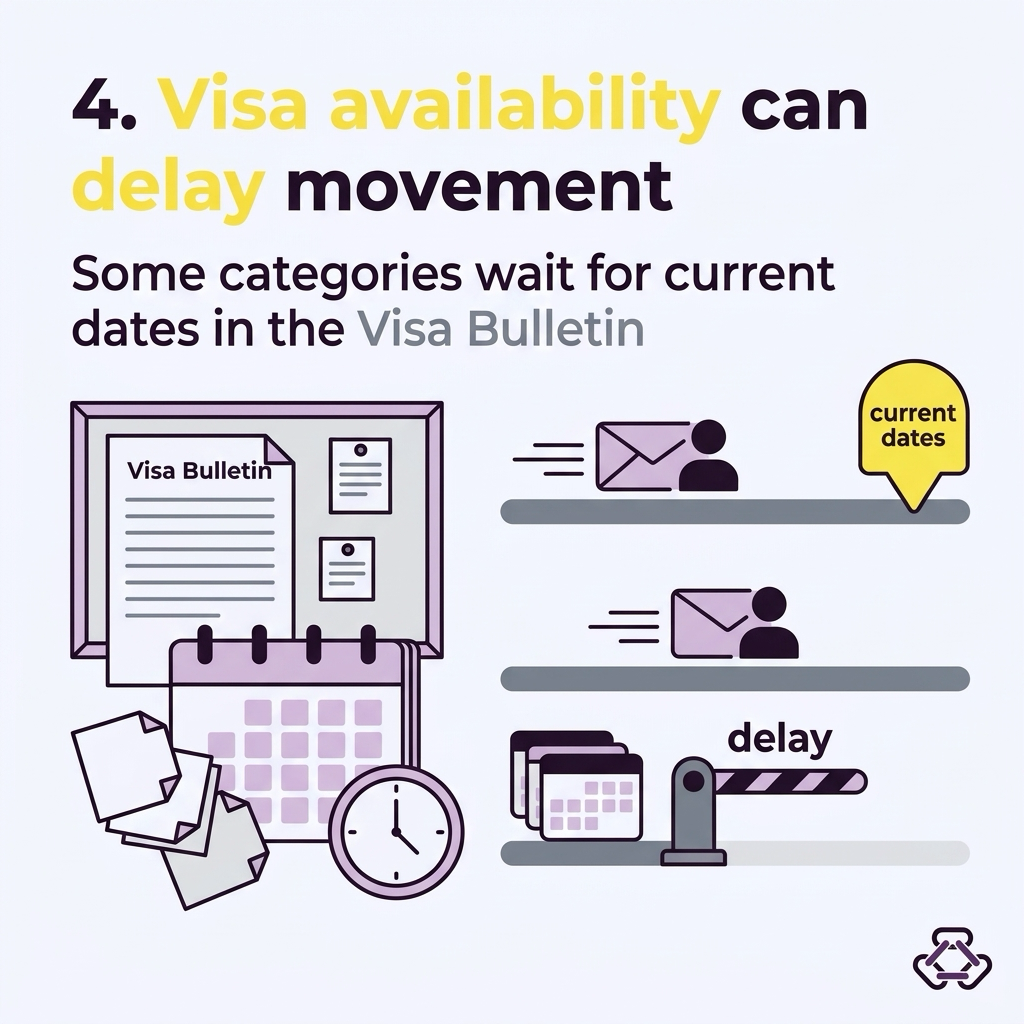
- Step 2: Visa Availability Can Control Timing
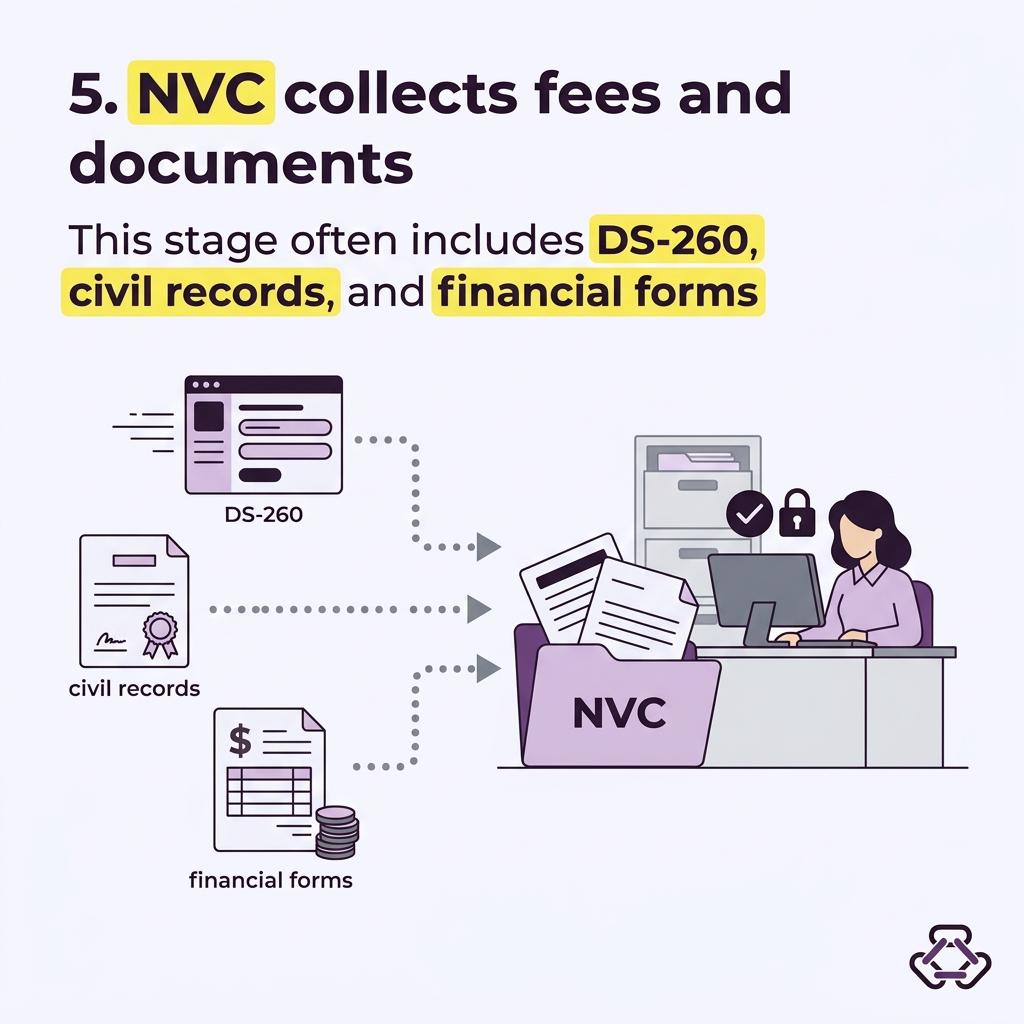
- Step 3: The National Visa Center Collects Fees And Documents
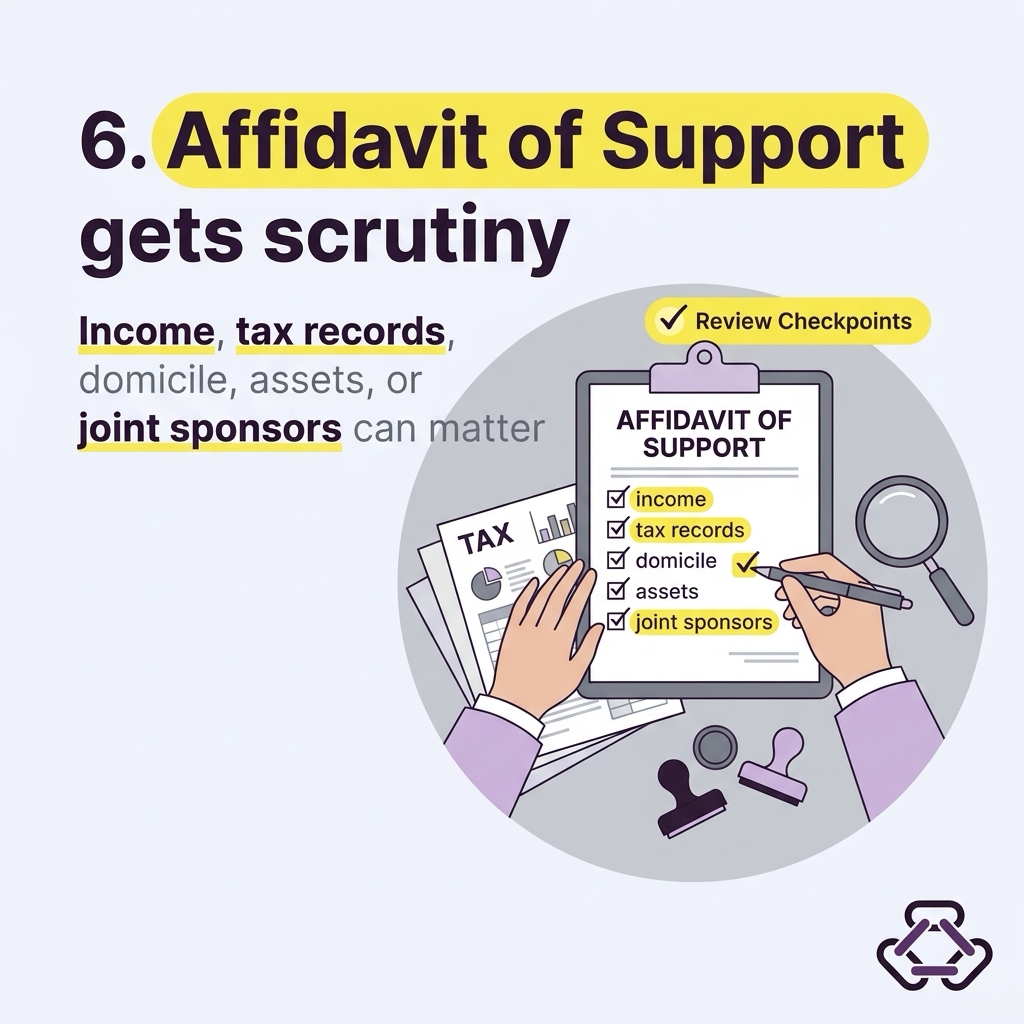
- Step 4: The Affidavit Of Support Is Often A Major Hurdle
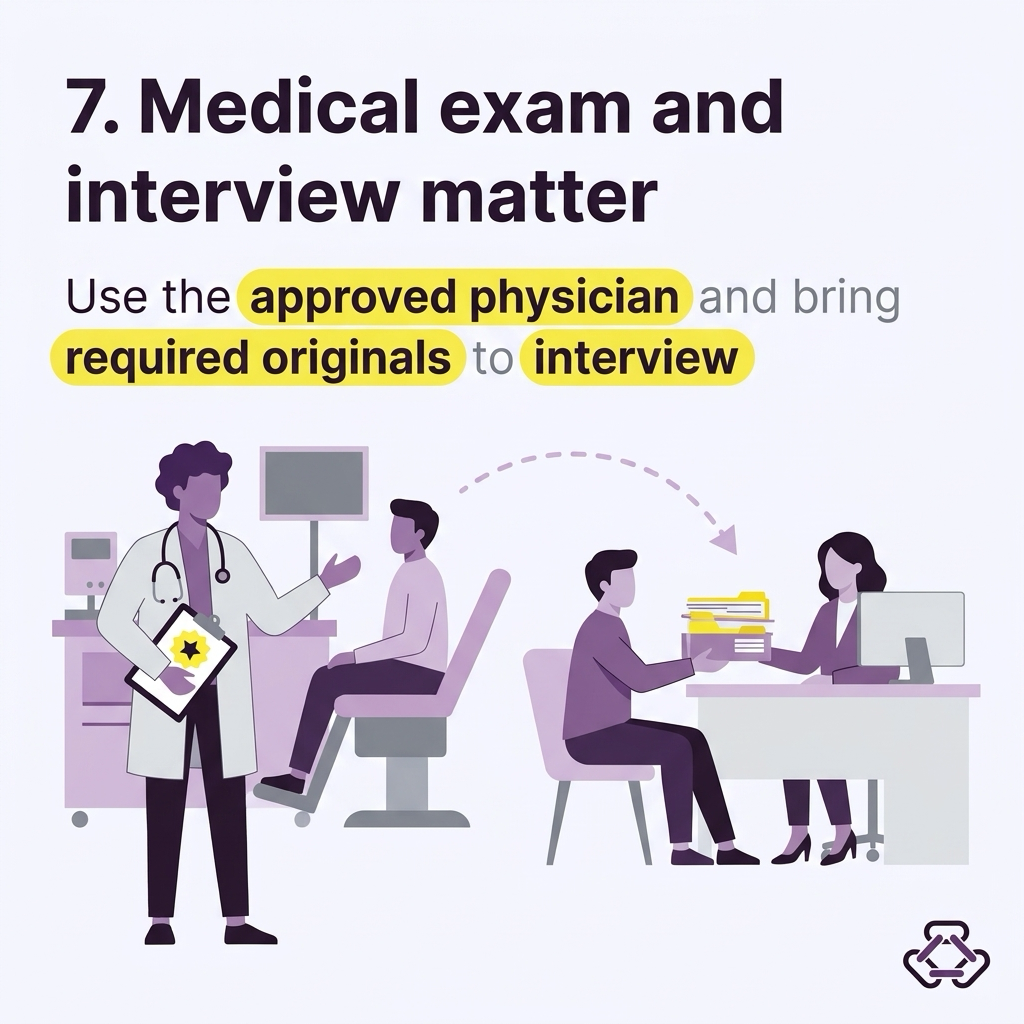
- Step 5: The Medical Exam Has To Be Done The Right Way
- Step 6: The Interview Is The Decision Point Many Families Worry About Most
- What Happens If The Case Is “Documentarily Complete”?
- What Happens After Approval?
- What Are The Most Common Reasons For Delay?
- Missing Or Inconsistent Civil Documents
- Financial Sponsorship Problems
- Medical Issues
- Interview Capacity And Post-Specific Backlogs
- Legal Inadmissibility Issues
- When Does Consular Processing Get Legally Complicated?
- Why Do Families Often Look For An Attorney Before The Interview?
- How Do You Find The Right Attorney For A Consular Processing Problem?
- A Short Summary For Beginners

Type
Great Grandchild
Status
Approved
Title (YouTube)
Images Failed (Social)
Images Failed (Social)
Do not index
Parent item
Publish Date (TikTok)
Apr 28, 2027 11:15
Videos Post IDs (Social)
Hashtags (Social)
#LegalAdvice #LegalHelp #Immigration #ConsularProcessing
Caption
Caption X
Cover

OG Image

Alt Image Text
Flat vector illustration of consular processing for a green card through a U.S. consulate, showing an immigrant applicant’s path from documents and visa interview abroad to U.S. entry.
Images

Videos
Publish Date (Social)
Feb 20, 2027 14:30
Scheduled (Social)
Scheduled (Social)
Images Posted (Social)
Images Posted (Social)
Videos Posted (Social)
Videos Posted (Social)
Featured
Created time
Apr 7, 2026 12:00 AM
Sub-item
Authors
CTA Practice Area (Social)
Immigration
TikTok Failed (Social)
TikTok Failed (Social)
Videos Post Links (Social)
TikTok Post Links (Social)
Images Post IDs (Social)
YT Post ID
Video Pending Manual (Social)
TikTok Posted (Social)
TikTok Posted (Social)
TikTok Post IDs (Social)
Video Cover (Social)
Images Post Links (Social)
First Comment (Social)
Videos Failed (Social)
Videos Failed (Social)
YT Embedded
Images Delete (Social)
Videos Delete (Social)
Carousel Video URL (Social)
Consular Processing: A Beginner’s Guide to Getting a Green Card Through a U.S. Consulate
For many families, the green card process starts with one big question: Will the person apply from inside the United States, or from abroad through a U.S. embassy or consulate? If the answer is “from abroad,” the path is usually called consular processing.
That phrase can sound technical, but the basic idea is straightforward. Consular processing is the system the U.S. government uses when an intending immigrant completes the immigrant visa process outside the United States and then enters the country as a lawful permanent resident. The process often involves USCIS, the National Visa Center (NVC), the Department of State, a medical exam, a consular interview, and finally inspection at a U.S. port of entry. The official framework is described by USCIS and the U.S. Department of State.
In this post you’ll learn what consular processing is, who uses it, how the steps work, what documents often matter, where delays happen, and when an attorney may help clarify the issues that can affect a family’s timeline. If you want a broader overview of the full immigrant visa path, this walkthrough of the process from petition to U.S. entry can help too.
Scroll to the bottom for every post in this series.
What Is Consular Processing?
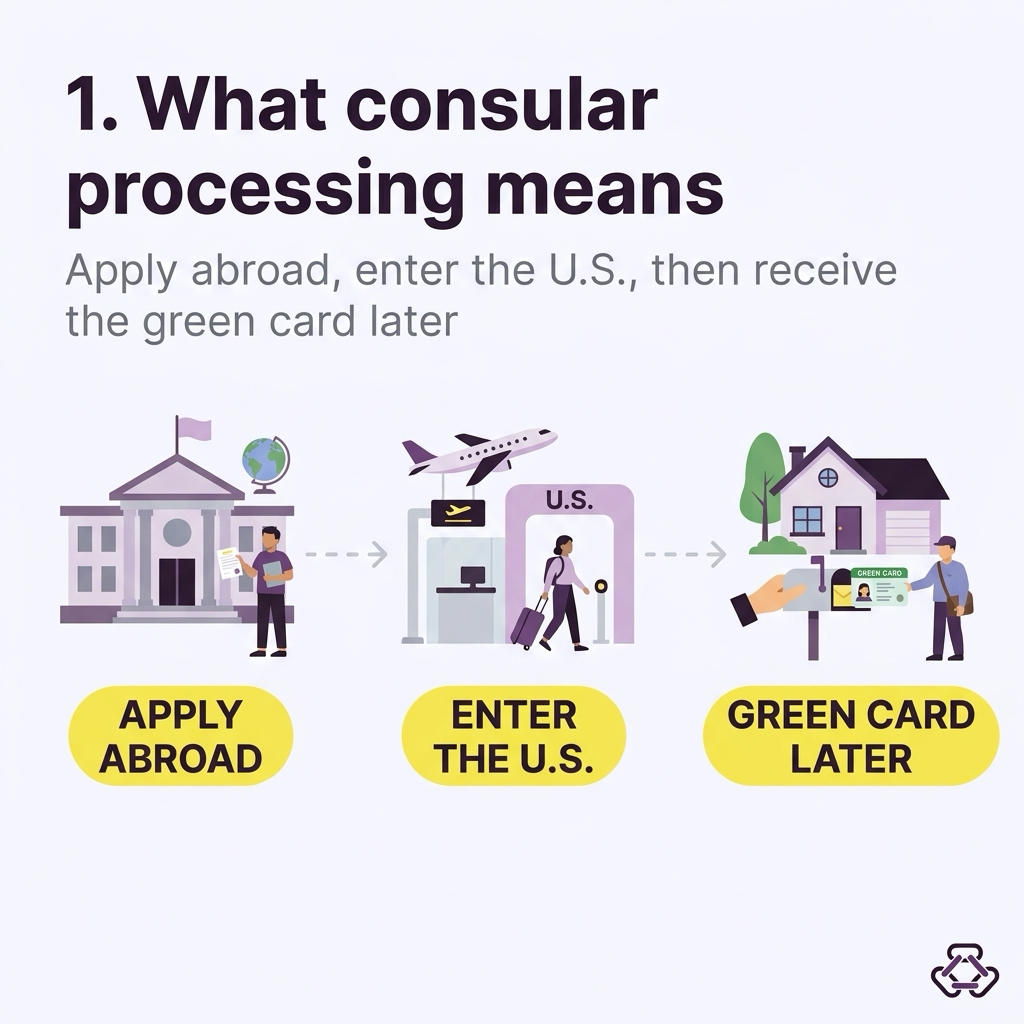
Consular processing is the process of applying for an immigrant visa at a U.S. consulate or embassy abroad and then entering the United States as a lawful permanent resident. In general terms, a person does not receive the physical green card at the consulate. Instead, the person receives an immigrant visa, travels to the United States, is admitted by U.S. Customs and Border Protection, and then the green card is produced and mailed after arrival if the required immigrant fee has been paid, as USCIS explains.
This is different from adjustment of status, which is the process used by certain applicants already in the United States. USCIS treats these as separate paths, and the right fit can depend on location, eligibility, timing, prior immigration history, and other case-specific facts. USCIS discusses the distinction in its green card process materials, and the State Department outlines the immigrant visa path through its NVC and interview guidance.
Who Typically Uses Consular Processing?
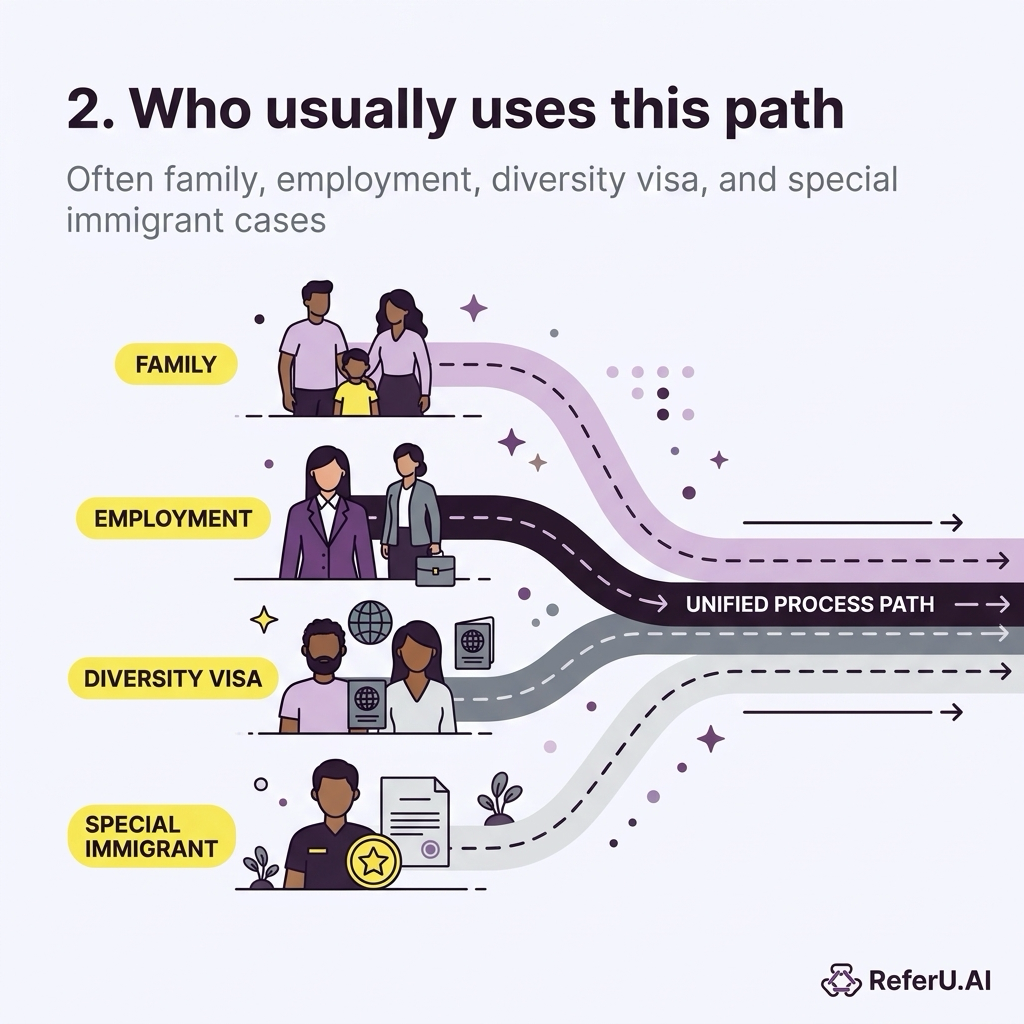
Consular processing commonly comes up in cases involving:
- Family-based immigration, such as spouses, parents, children, and siblings of U.S. citizens or permanent residents
- Employment-based immigration where the beneficiary is abroad
- Diversity visa cases
- Certain special immigrant categories
For many readers, the most familiar example is a family petition. A U.S. citizen or lawful permanent resident files a petition with USCIS. If USCIS approves it and a visa is available, the case often moves to the National Visa Center and then to the appropriate consulate abroad. The State Department’s immigrant visa process page breaks down those steps in sequence, including fee payment, document collection, and interview scheduling through NVC and the post abroad (State Department).
Whether a visa is immediately available depends on the immigrant category. Some relatives of U.S. citizens are considered immediate relatives, while many others fall into preference categories that are controlled by annual numerical limits. The government publishes those cut-off dates in the monthly Visa Bulletin.
What Are The Basic Steps In Consular Processing?
At a high level, consular processing often looks like this:
- Someone files an immigrant petition
- USCIS reviews and decides the petition
- The case goes to the National Visa Center
- Fees are paid and civil and financial documents are submitted
- A medical exam is completed with an approved panel physician
- The applicant attends an immigrant visa interview
- If approved, the applicant receives an immigrant visa
- The applicant travels to the United States
- After admission, USCIS produces the green card
That is the simple version. The details are where many families get stuck.
Step 1: The Immigrant Petition Starts The Case
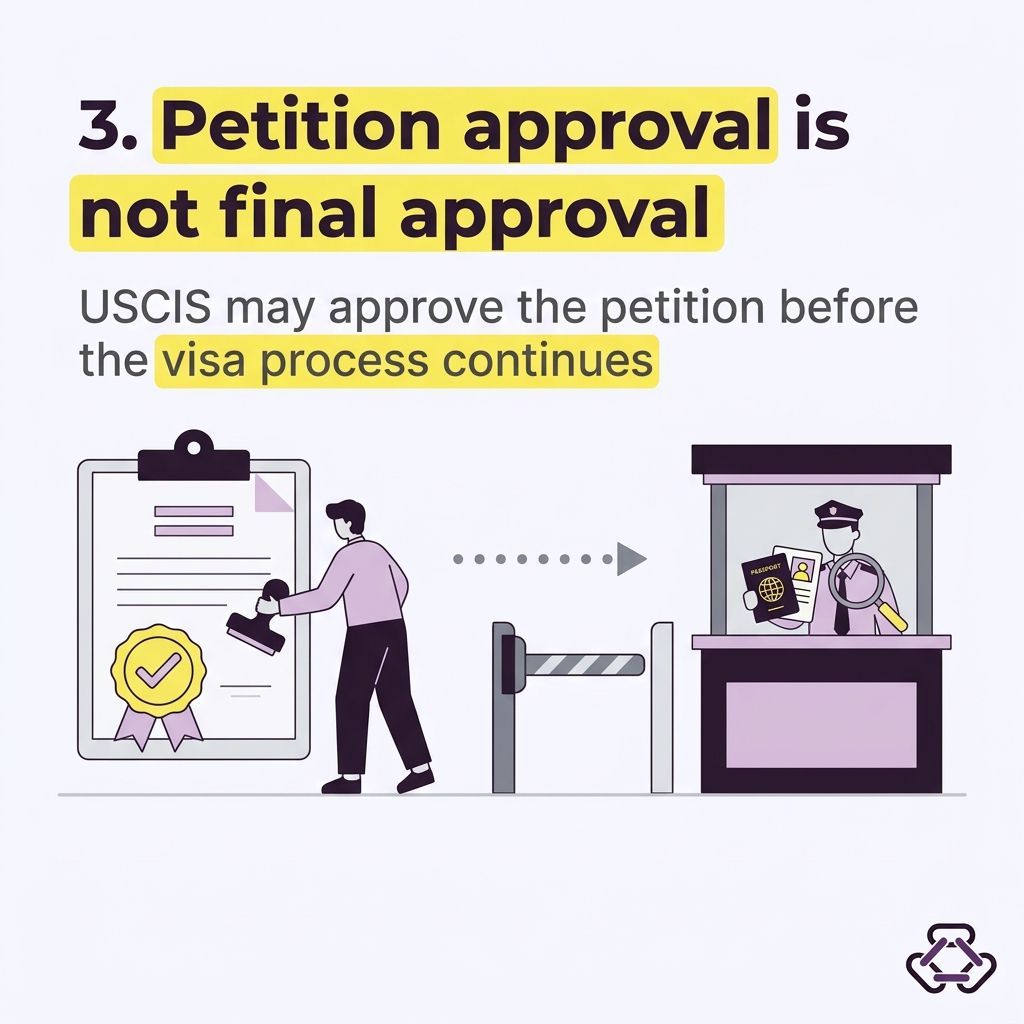
Most consular processing cases begin with a petition filed with USCIS, such as a family petition or employment petition. USCIS decides whether the relationship or qualifying basis has been established. USCIS identifies petition approval as an early milestone, but approval of the petition is not the same thing as approval of the immigrant visa itself. The visa process continues with the State Department after petition approval in many cases (USCIS).
That distinction matters. Some families understandably think “the case was approved” once they receive an I-130 approval notice. In many situations, that simply means the case is ready for the next stage.
Step 2: Visa Availability Can Control Timing
Not every approved petition moves straight to an interview. For many categories, the case also depends on visa availability. The State Department’s monthly Visa Bulletin sets out the relevant cut-off dates for family-sponsored and employment-based preference categories.
In practical terms, this can create long gaps between petition approval and NVC movement. Spouses of U.S. citizens often experience a very different timeline than siblings of U.S. citizens, for example, because they are in different legal categories. An attorney may help identify which category applies and whether any age-out, derivative, or cross-chargeability issue could affect timing.
Step 3: The National Visa Center Collects Fees And Documents
Once the petition is approved and a visa is or is nearly available, the National Visa Center usually becomes the central hub for document collection. The State Department explains that NVC handles fee processing, document intake, and case preparation before the interview is scheduled at the embassy or consulate (State Department).
This stage often includes:
- Paying the required immigrant visa processing fees through NVC’s system (fee payment guidance)
- Filing the DS-260, the immigrant visa application
- Uploading civil documents such as birth certificates, marriage certificates, police certificates, and passports
- Submitting financial support forms when required
If you want a broader look at the stages families often encounter after USCIS approval, this plain-English overview of immigrant visa steps and interview prep provides helpful context.
Step 4: The Affidavit Of Support Is Often A Major Hurdle
In many family-based cases, and some employment-based cases, the petitioner files Form I-864, Affidavit of Support. USCIS describes this form as a legally binding contract in which the sponsor agrees to use financial resources to support the intending immigrant. USCIS also notes that the obligation can carry significant consequences if the sponsored immigrant receives certain means-tested public benefits (USCIS I-864 page; USCIS Affidavit of Support overview).
That part is often underestimated. Families sometimes treat the I-864 like a routine financial form, but it can become one of the most scrutinized parts of the case. Common issues include:
- Income below the required threshold
- Missing tax returns or IRS documentation
- Household size miscalculations
- The possible use of assets
- The possible use of a joint sponsor
- Questions about domicile in the United States
USCIS publishes the current poverty-guideline framework used for many I-864 cases through its Form I-864 page. Because the financial review can become technical quickly, some families look for legal guidance when the sponsor is self-employed, living abroad, recently changed jobs, or using multiple household members’ income.
Step 5: The Medical Exam Has To Be Done The Right Way
Before the interview, immigrant visa applicants generally complete a medical exam with a panel physician approved by the U.S. embassy or consulate. The State Department explains that the exam is part of the immigrant visa process and must be done according to the post’s instructions, not with just any doctor (medical exam overview; medical exam FAQs).
Vaccination requirements are part of that medical screening. The State Department states that panel physicians verify whether applicants have met the applicable vaccination requirements or whether an exception applies (State Department vaccinations page). The CDC also publishes the technical instructions used by panel physicians in immigrant visa cases (CDC vaccination guidance).
One recent update is especially important: the State Department announced that, effective March 11, 2025, CDC removed the COVID-19 vaccination requirement for immigrant visa applicants (State Department update). That is a good reminder that consular processing rules can change, and current official guidance matters.
Step 6: The Interview Is The Decision Point Many Families Worry About Most
At the interview stage, the applicant appears at the U.S. embassy or consulate abroad. The consular officer reviews the application, asks questions, and determines whether the immigrant visa can be issued. The State Department explains that every applicant, regardless of age, brings certain required materials, including passport photos and the original or certified copies of civil documents that were submitted to NVC (interview preparation guidance).
This is the stage that creates the most anxiety, and not without reason. The interview can bring up issues involving:
- Identity and civil records
- Prior marriages and divorces
- Prior visa overstays or removals
- Criminal history
- Medical inadmissibility
- Public charge-related concerns
- Questions about the underlying family or employment relationship
- Missing or inconsistent documents
Some applicants are approved quickly. Others receive requests for more evidence or are placed into additional review. Families who want to better understand what the interview day often looks like may find it useful to read more about getting ready for the consular interview abroad, since preparation issues often start well before the appointment date.
What Happens If The Case Is “Documentarily Complete”?
Many applicants hear that their case is “documentarily complete” or “qualified” at NVC and assume the hard part is over. In general terms, that status means NVC believes it has the required fees, forms, and documents for pre-interview processing. It does not necessarily mean the visa is guaranteed, nor does it mean an interview will happen immediately. Interview scheduling still depends on consular capacity, visa availability, and post-specific conditions, according to the State Department’s immigrant visa process materials (State Department).
That gap between document qualification and interview scheduling is one reason families often experience uncertainty.
What Happens After Approval?
If the visa is approved, the applicant receives an immigrant visa and later travels to the United States. USCIS explains that after admission by Customs and Border Protection, the person becomes a lawful permanent resident, and the green card is mailed after arrival if the USCIS Immigrant Fee has been paid (USCIS consular processing page).
This is another point where timing confusion is common. The immigrant visa in the passport is often the travel document for entry. The actual physical green card usually comes later by mail.
What Are The Most Common Reasons For Delay?
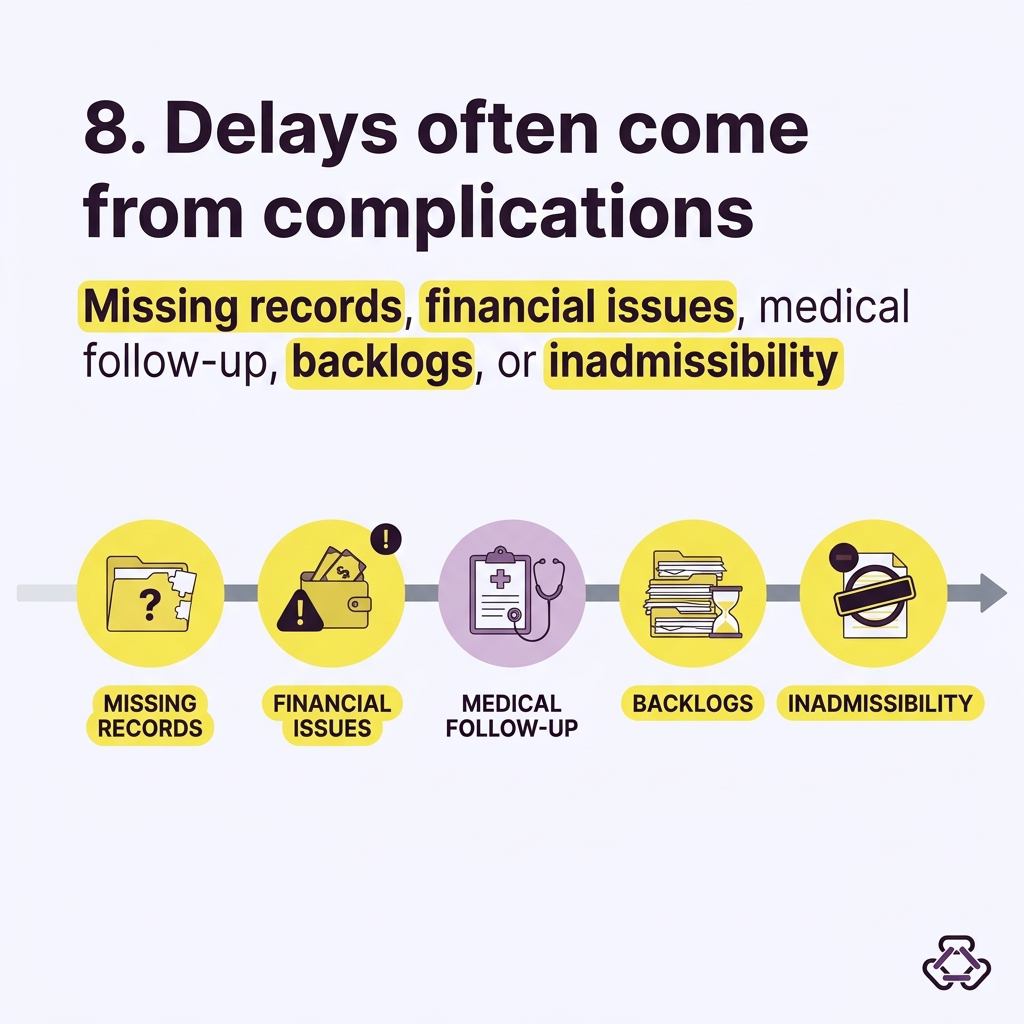
Consular processing delays can happen for many reasons, even in cases that look simple at first. Some of the most common include:
Missing Or Inconsistent Civil Documents
Birth certificates, marriage records, police certificates, translations, and divorce records can create problems if they are missing, expired, incomplete, or inconsistent across agencies. The State Department’s interview guidance emphasizes bringing original or certified versions of civil documents to the interview (State Department).
Financial Sponsorship Problems
I-864 issues are a major source of NVC checklists and consular questions. Income calculations, tax documentation, and domicile questions often create avoidable delays. USCIS highlights that the I-864 is more than a simple supporting letter; it is a formal sponsorship obligation (USCIS).
Medical Issues
Medical exam validity periods, vaccination records, and follow-up treatment requirements can interrupt scheduling or visa issuance. The State Department’s medical FAQs discuss scenarios involving prior treatment and additional medical evidence (medical exam FAQs).
Interview Capacity And Post-Specific Backlogs
Even after NVC processing is complete, interview timing can vary by consulate. Staffing, local conditions, and case volume all matter. That is one reason broad averages often do not tell the whole story.
Legal Inadmissibility Issues
A prior overstay, misrepresentation allegation, criminal record, unlawful presence issue, or prior removal order can shift a routine case into a much more technical one. In those situations, the question may no longer be just “When is the interview?” but “Is there a waiver issue?” or “How is this ground of inadmissibility analyzed?”
When Does Consular Processing Get Legally Complicated?
Consular processing can look administrative on the surface, but some cases become legally complex fast. An attorney may help evaluate the impact of facts such as:
- Prior unlawful presence in the United States
- Prior deportation or expedited removal
- Visa fraud or misrepresentation concerns
- Criminal arrests or convictions, even old ones
- Prior marriage-fraud allegations
- Child Status Protection Act issues
- Joint sponsor or domicile complications
- Public charge-related concerns
- Prior denials involving the same relationship
For families dealing with one or more of these issues, the challenge is often not just paperwork. It is understanding how a consular officer is likely to view the record and whether additional evidence or a waiver strategy may be part of the path.
Why Do Families Often Look For An Attorney Before The Interview?
Many consular cases move smoothly without litigation, but legal representation often becomes especially relevant where the facts are not clean, the records are inconsistent, or the stakes are high. People in similar situations often look for counsel to help with:
- Reviewing the record for red flags before submission
- Identifying gaps in civil or financial evidence
- Assessing waiver-related issues
- Preparing for possible consular questions
- Communicating clearly about past immigration history
- Reducing the risk that avoidable mistakes lead to longer delays
That does not guarantee a result, of course. But in practical terms, consular processing is one of those areas where a “small” mistake can trigger months of delay.
How Do You Find The Right Attorney For A Consular Processing Problem?
This is where many families get stuck. They may know they want legal help, but they do not know how to identify a lawyer with documented experience in highly similar matters.
In immigration law, details matter. A lawyer who regularly handles straightforward family petitions may not have the same experience with complex consular inadmissibility issues, public charge concerns, waivers, or post-specific consular complications. Some people look for attorneys based on advertising, office location, or general reputation. Others prefer a more evidence-based approach tied to relevant experience, case similarity, and court-record-based indicators where available.
That is the reason platforms like ReferU.AI can be valuable in the attorney search process. Rather than relying on broad marketing claims, users can look for a match based on objective criteria, documented experience, and fit for the type of legal problem involved.
A Short Summary For Beginners
Consular processing is the path many immigrants use to get permanent residence through a U.S. embassy or consulate abroad. The process usually starts with a USCIS petition, moves through the National Visa Center, includes fee payment and document collection, requires a medical exam, and ends with a consular interview and U.S. entry as a lawful permanent resident. Official guidance from USCIS, the State Department, and the CDC shows that the process is structured, but not always simple.
For beginners, the biggest takeaway is this: consular processing is often more than forms and appointments. Timing, visa availability, sponsorship rules, medical requirements, and prior immigration history can all affect how the case unfolds. And when a case involves unusual facts, prior denials, or possible inadmissibility issues, legal guidance may help clarify the options.
Visit ReferU.AI to get matched with an attorney who has demonstrable experience in cases like yours — for free.
