Table of Contents
- How to Prepare for an Immigrant Visa Interview Abroad
- Why The Immigrant Visa Interview Matters
- Step 1: Read The Appointment Notice And Post-Specific Instructions Carefully
- Step 2: Schedule The Medical Exam At The Right Time
- Step 3: Bring The Right Original Documents
- Step 4: Double-Check Financial Sponsorship Issues
- Step 5: Review Your DS-260 And Prior Immigration History
- Step 6: Expect Questions That Are Simple But Important
- Step 7: Plan For Day-Of Logistics
- Step 8: Understand Administrative Processing And Other Delays
- Step 9: Know When Legal Help May Be Especially Useful
- Step 10: Prepare Like The Interview Is A Record Check, Not A Performance
- A Short Summary Before Interview Day

Type
Great Grandchild
Status
Approved
Title (YouTube)
Images Failed (Social)
Images Failed (Social)
Do not index
Parent item
Publish Date (TikTok)
Apr 28, 2027 10:15
Videos Post IDs (Social)
Hashtags (Social)
#LegalAdvice #LegalHelp #Immigration #ConsularProcessing
Caption
Caption X
Cover

OG Image

Alt Image Text
Flat vector illustration of immigrant visa interview abroad consular processing preparation, showing an applicant organizing passport and documents before a U.S. embassy interview.
Images

Videos
Publish Date (Social)
Feb 20, 2027 14:00
Scheduled (Social)
Scheduled (Social)
Images Posted (Social)
Images Posted (Social)
Videos Posted (Social)
Videos Posted (Social)
Featured
Created time
Apr 7, 2026 12:00 AM
Sub-item
Authors
CTA Practice Area (Social)
Immigration
TikTok Failed (Social)
TikTok Failed (Social)
Videos Post Links (Social)
TikTok Post Links (Social)
Images Post IDs (Social)
YT Post ID
Video Pending Manual (Social)
TikTok Posted (Social)
TikTok Posted (Social)
TikTok Post IDs (Social)
Video Cover (Social)
Images Post Links (Social)
First Comment (Social)
Videos Failed (Social)
Videos Failed (Social)
YT Embedded
Images Delete (Social)
Videos Delete (Social)
Carousel Video URL (Social)
How to Prepare for an Immigrant Visa Interview Abroad
If you have an immigrant visa interview coming up at a U.S. embassy or consulate, it is completely normal to feel anxious. The interview is one of the last major steps in consular processing, and a lot can seem to depend on a very short appointment. In general terms, the process tends to go more smoothly when applicants know what the government is looking for, what documents are expected, and where delays often begin.
In this post you'll learn how to prepare for an immigrant visa interview abroad, what to bring, what the officer may ask about, and where families often run into problems. If you want a broader overview of the full path from petition approval through visa issuance and U.S. entry, this guide on the full consular processing timeline can help put the interview in context.
Scroll to the bottom for every post in this series.
Why The Immigrant Visa Interview Matters
For most family-based and some employment-based green card cases processed outside the United States, the interview is the point where a consular officer decides whether the applicant is eligible for an immigrant visa. The U.S. Department of State explains that after the National Visa Center schedules the appointment, the applicant has to complete the medical exam, review post-specific instructions, and bring the required original or certified civil documents to the interview at the embassy or consulate abroad (Department of State).
That sounds simple on paper. In practice, interviews often become stressful because applicants are balancing document collection, translations, medical appointments, police certificates, travel logistics, and family expectations all at once. Some people also discover late in the process that their local embassy has extra instructions beyond the general federal checklist. That is one reason interview prep is not just about practicing answers. It is also about making sure the file is complete and consistent.
Step 1: Read The Appointment Notice And Post-Specific Instructions Carefully
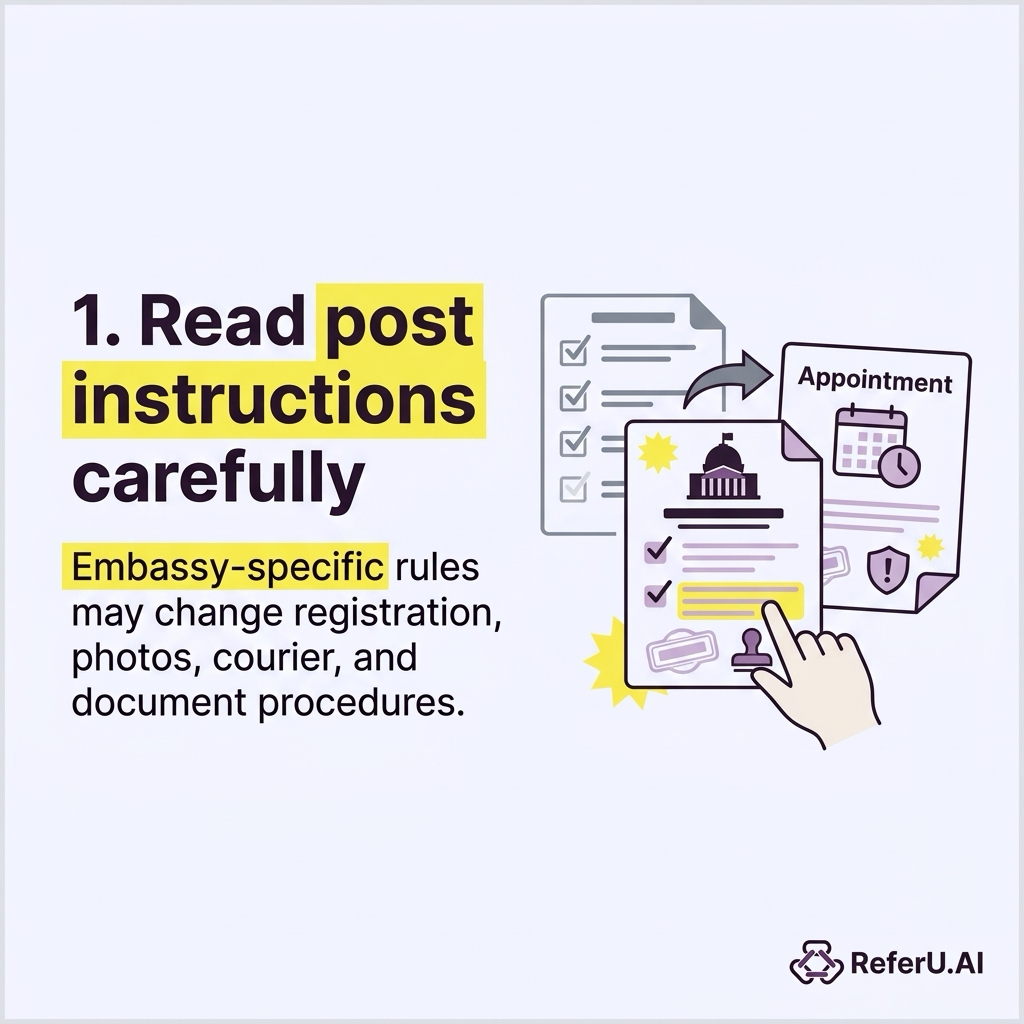
Once the National Visa Center schedules the interview, it sends an appointment notice to the applicant, petitioner, and any listed attorney or agent. The State Department also directs applicants to review the specific interview instructions for the city where the interview will take place, because each post may have different registration, courier, photo, and document procedures (Department of State).
This is where many avoidable delays start. One consulate may require courier registration before the interview. Another may want extra passport photos. Another may have different local translation or photocopy practices. The general checklist matters, but the embassy-specific supplement often controls the day-of process.
Families that are still trying to understand the overall mechanics of overseas green card processing often find it helpful to review a more complete explanation of how consular processing works from start to finish before focusing on interview day.
Step 2: Schedule The Medical Exam At The Right Time
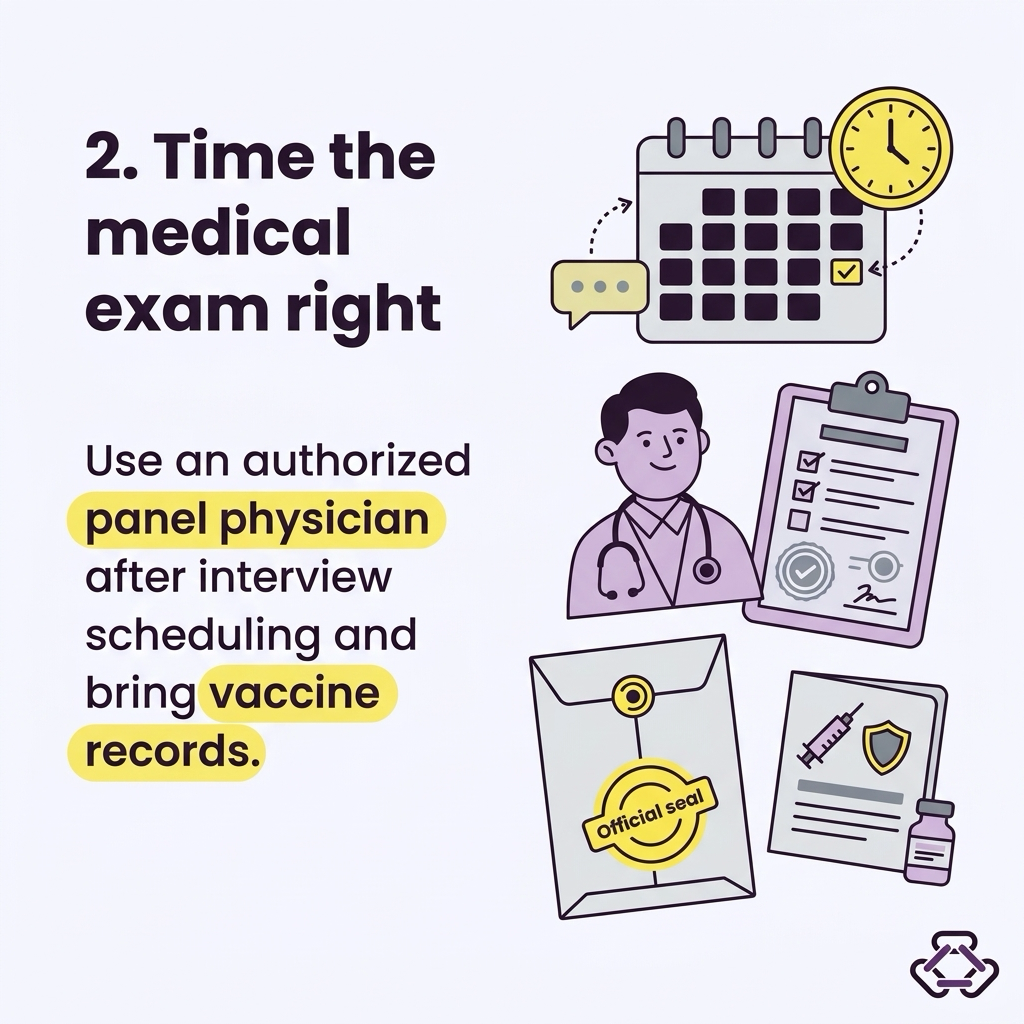
The immigrant visa medical exam is not a routine physical from your regular doctor. It has to be completed by an authorized panel physician approved for the embassy or consulate handling the case. The State Department says applicants are to complete the medical exam, including required vaccinations, before the visa interview, and CDC guidance explains that the panel physician is responsible for the immigration medical examination and related testing requirements (Department of State, CDC).
Timing matters here. The State Department also notes that applicants generally should not complete the medical exam until the interview has been scheduled (Department of State). Some embassies publish more specific timing windows. For example, certain post instructions indicate that the medical exam may need to be completed several days before the interview to allow results to arrive in time (Department of State post instructions).
Another issue that catches families off guard is vaccine documentation. CDC instructions for panel physicians say applicants are expected to present all available written vaccination records, and the physician reviews those records to determine what is still required for immigration purposes (CDC). If the panel physician gives you a sealed medical packet, the State Department says not to open it and to bring it directly to the interview (Department of State).
Step 3: Bring The Right Original Documents
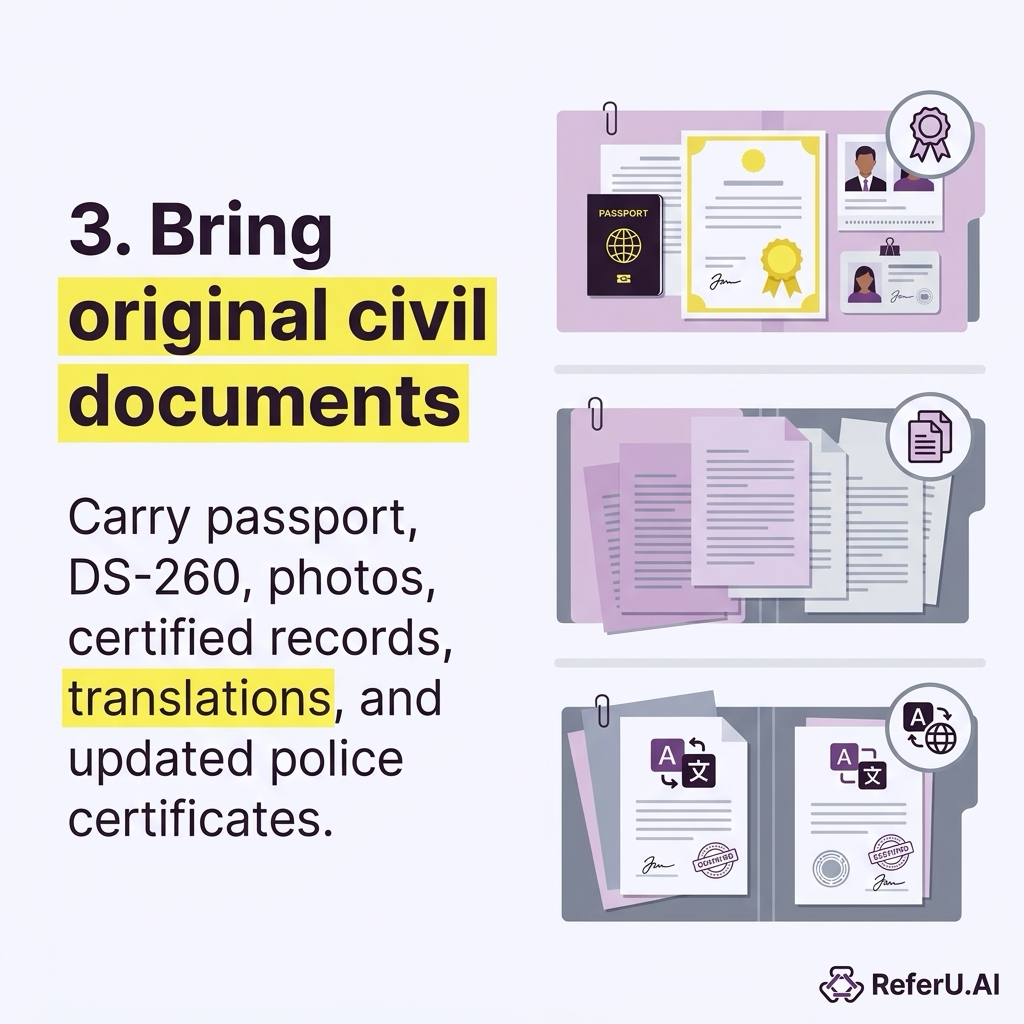
The State Department’s interview guidance is very clear that every immigrant visa applicant, regardless of age, is expected to bring certain items to the interview, including:
- An unexpired passport valid for six months beyond the intended date of entry in many cases
- Two color photographs that meet visa photo requirements
- The DS-260 confirmation page
- Original or certified copies of all civil documents submitted to the National Visa Center
- Any required English translations
- Updated police certificates when needed (Department of State, Department of State).
The government also states that original passports and original civil documents are not sent to NVC during document collection, but those originals are brought to the interview instead (Department of State).
In many cases, these civil documents include birth certificates, marriage certificates, divorce decrees, adoption papers, military records, and court or prison records if applicable. If a document is not in English, a certified English translation may be required unless the local post says otherwise for documents in the interview country’s language (Department of State).
A practical approach many applicants use is to create one folder for originals, one for photocopies, and one for translations. That kind of organization often helps when a consular staff member asks for documents quickly at the intake window.
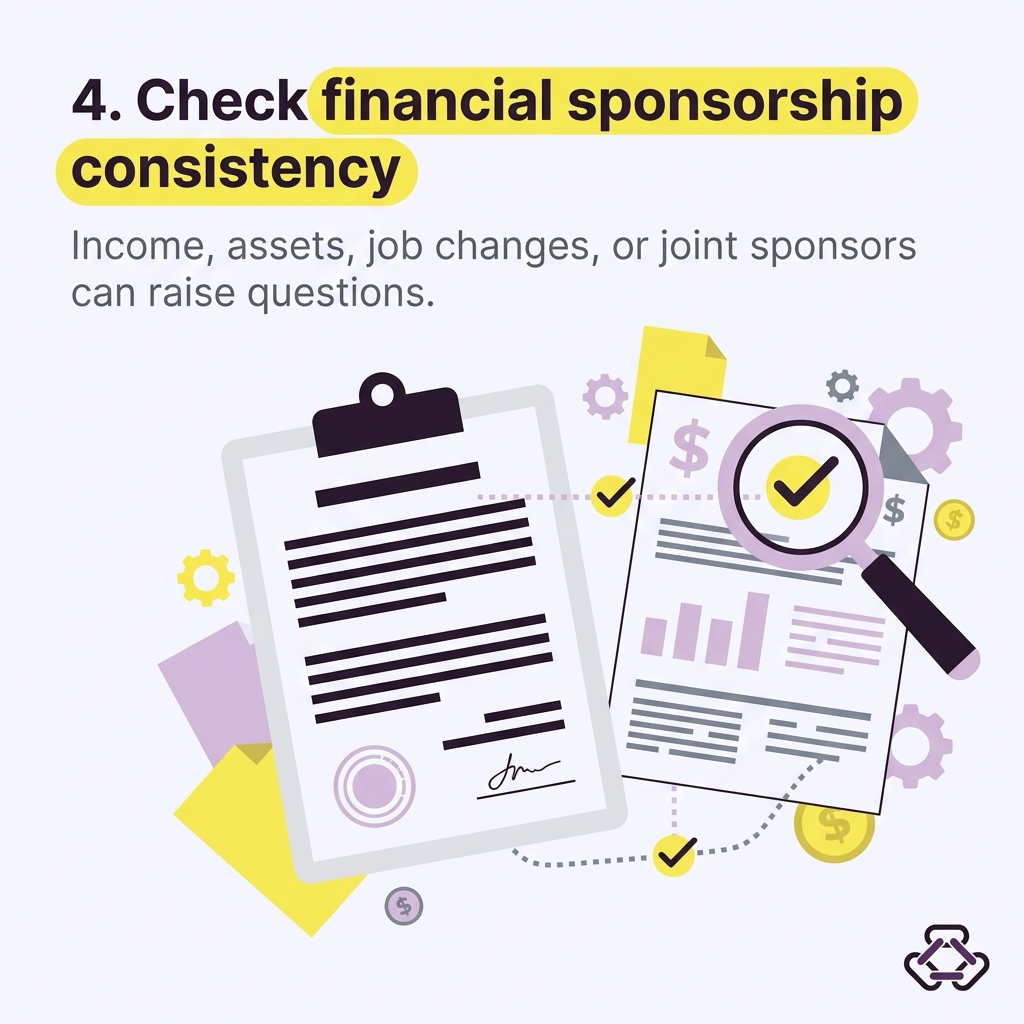
Step 4: Double-Check Financial Sponsorship Issues
In many family-based immigrant visa cases, the affidavit of support is part of the file. USCIS explains that Form I-864 is used in most family-based cases and certain employment-based cases to show that the intending immigrant has adequate means of financial support and is not likely to rely on the government for support (USCIS).
Although the State Department says applicants generally do not have to bring the affidavit of support or financial evidence already submitted to NVC, issues can still arise if income documentation is inconsistent, outdated, or incomplete in the case record (Department of State). USCIS publishes the poverty guideline figures used for Form I-864, and those figures change over time. The currently posted USCIS chart for 2025 became effective March 1, 2025 (USCIS).
This is one of the most common places where cases stall unexpectedly. If the petitioner changed jobs, had fluctuating income, used assets, or relied on a joint sponsor, an attorney may be able to assess whether the financial file still lines up with the current record before the interview takes place.
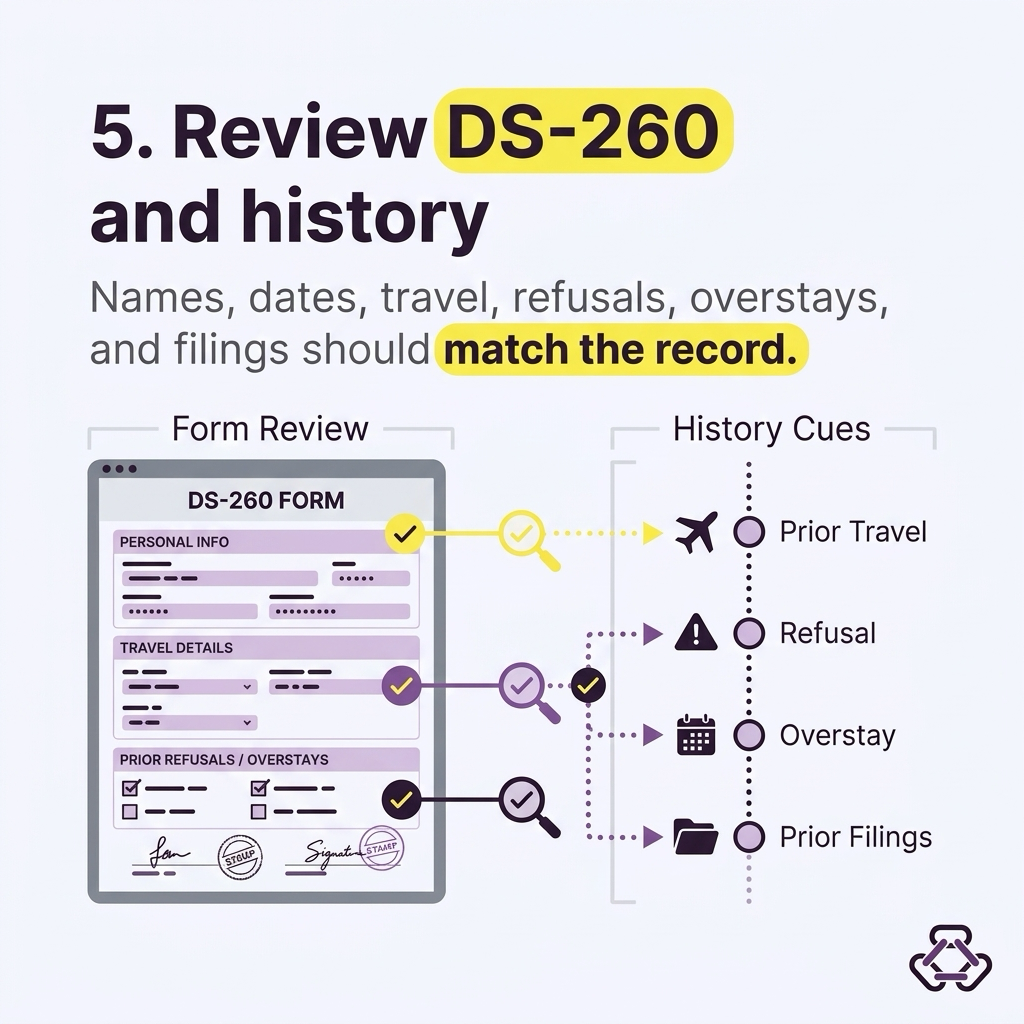
Step 5: Review Your DS-260 And Prior Immigration History
The interview is often short, but the officer may compare your live answers with what appears in the DS-260, the petition, civil documents, and prior immigration records. Inconsistencies do not always mean denial, but they often lead to additional questions and sometimes requests for more evidence.
It can help to review:
- Full legal names used in the case
- Dates of birth, marriage, divorce, and prior addresses
- Travel history to the United States
- Any prior visa refusals
- Prior overstays, removals, or immigration filings
- Criminal or court history, if any
- Employment and education history
- The timeline of the relationship in family-based cases
In marriage-based cases, officers often focus on whether the relationship is genuine and whether the couple’s timeline is consistent with the petition. In employment-based cases, questions may focus more on the job offer, qualifications, or petition details. If there are any prior immigration complications, this is often where legal guidance becomes especially valuable, because what looks like a simple discrepancy can sometimes raise questions about misrepresentation, unlawful presence, criminal inadmissibility, or prior-status issues.
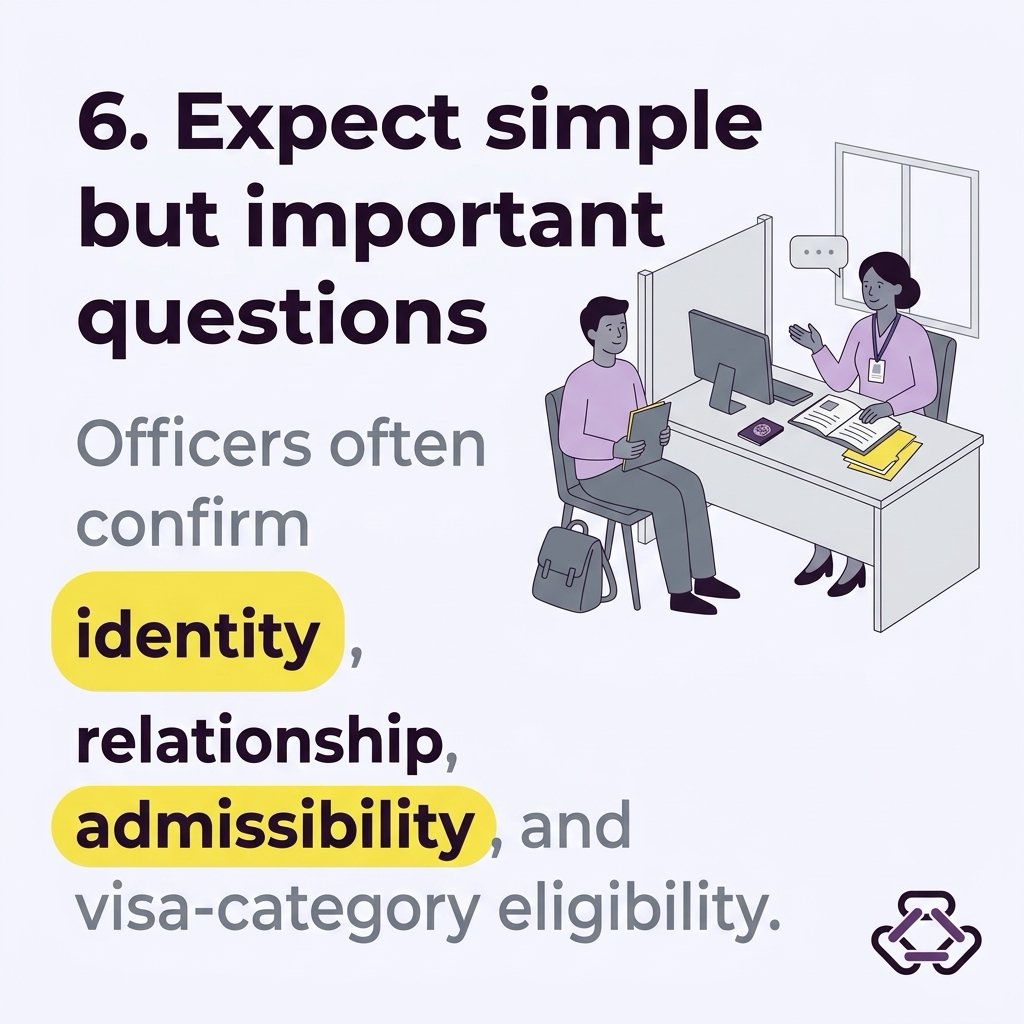
Step 6: Expect Questions That Are Simple But Important
Many applicants imagine the interview as aggressive cross-examination. Sometimes it is much more straightforward than that. A consular officer may ask basic but important questions to confirm identity, admissibility, and eligibility for the visa category.
Questions often relate to:
- Who filed the petition
- How you know the petitioner
- When and where the relationship began
- Where the petitioner lives and works
- Whether you have children
- Whether you have ever been arrested
- Whether you have ever been refused a U.S. visa
- Whether you have ever overstayed in the United States
- Whether your documents are genuine
- Whether your intent matches the visa category
The point is usually not to make the applicant memorize a script. It is to make sure the testimony matches the documentary record. Calm, accurate, direct answers tend to be more useful than overexplaining.
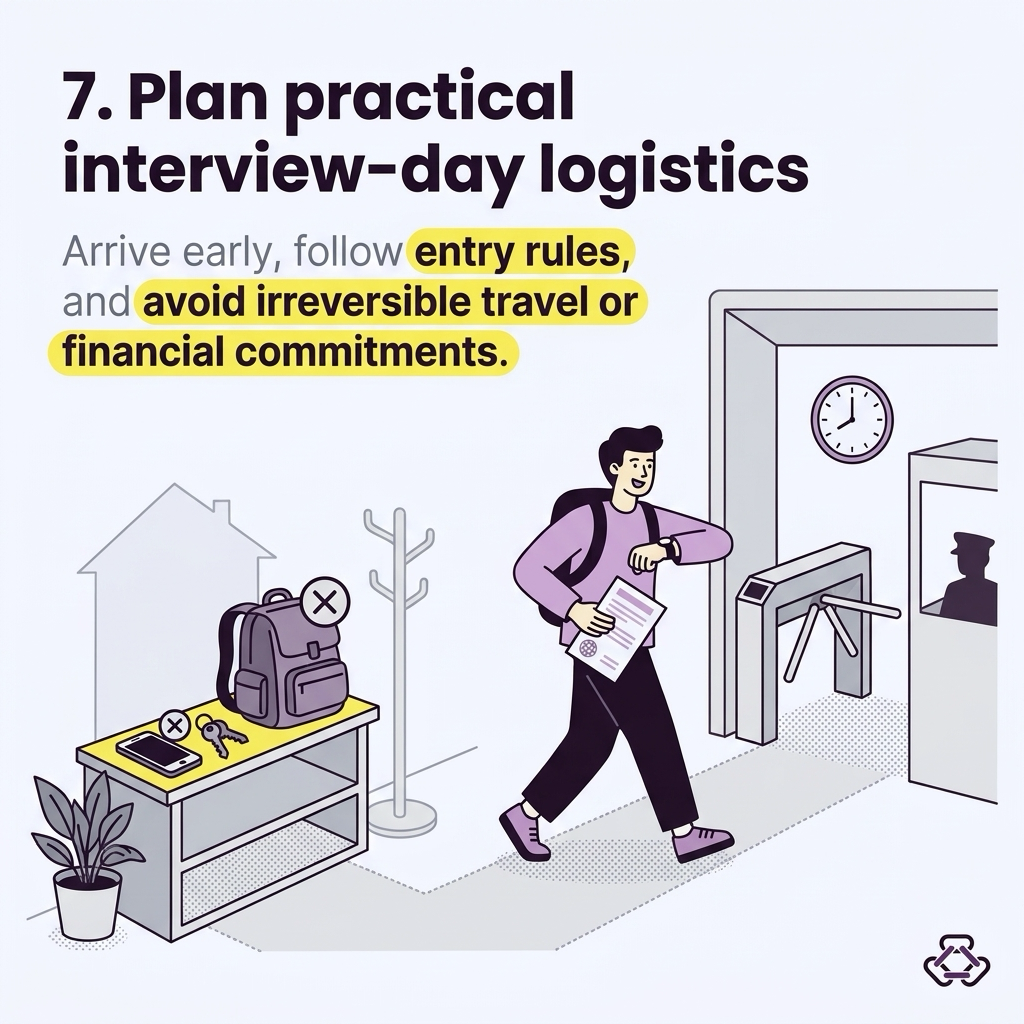
Step 7: Plan For Day-Of Logistics
Interview preparation is also practical. Applicants often travel long distances to a consulate city, book hotels, arrange childcare, and coordinate medical exam timing. The State Department cautions applicants against making permanent financial commitments, resigning from jobs, selling property, or making non-refundable travel arrangements before the immigrant visa is actually issued (Department of State).
That advice is easy to overlook, especially when families are eager to move quickly after approval. But visa issuance is not always same-day. Some cases are approved at the window and issued shortly after. Others go into additional review, document requests, or administrative processing.
Useful day-of planning often includes:
- Arriving early and confirming embassy entry rules
- Carrying appointment paperwork and passport accessibly
- Bringing exactly the required documents and photos
- Leaving prohibited electronics or items behind if the embassy limits them
- Keeping photocopies separate from originals
- Having a plan for passport delivery or pickup if the post uses a courier system
Step 8: Understand Administrative Processing And Other Delays
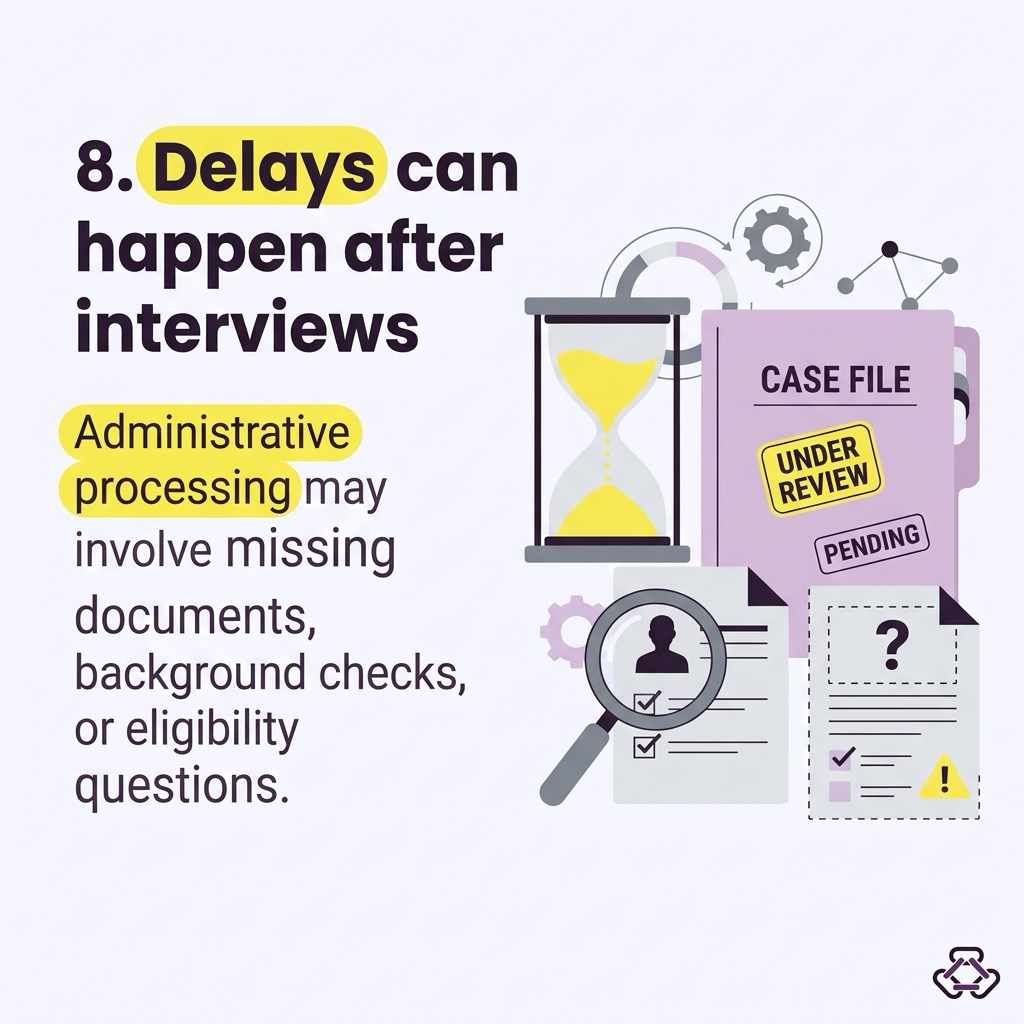
Not every interview ends with an immediate yes or no. Some cases are placed in administrative processing, which can happen for many reasons, including missing documents, additional background checks, or legal eligibility questions. Even when the interview seems to go well, the officer may still request further review before visa issuance.
This uncertainty is one reason families often look for legal help before the interview rather than after a delay notice arrives. A lawyer may be able to identify waiver issues, documentary gaps, or affidavit-of-support problems that are easier to address before the appointment than afterward.
This is also where many people start realizing how much of consular processing depends on seemingly small details. If you are trying to spot trouble areas early, it can help to compare your case against common bottlenecks discussed in articles about the kinds of delays families often overlook in consular cases and which documents tend to matter most once the interview is scheduled.
Step 9: Know When Legal Help May Be Especially Useful
Some interviews are routine. Others involve legal issues that are much more nuanced than they first appear. In general terms, attorney involvement can be particularly valuable when the case involves:
- Prior unlawful presence in the United States
- Prior visa denials or findings of fraud or misrepresentation
- Arrests, convictions, or unresolved criminal matters
- Prior deportation, removal, or expedited removal
- Health-related inadmissibility concerns
- Affidavit of support complications
- Questions about derivative children or age-out issues
- Marriage-fraud concerns from a prior filing
- Missing civil documents or inconsistent records across countries
- Waiver eligibility questions
When any of those issues are present, interview prep often becomes legal strategy, not just document organization. An attorney may be able to help evaluate whether the officer is likely to focus on inadmissibility, whether additional evidence would help, and whether a waiver path may exist if a problem is identified.
Step 10: Prepare Like The Interview Is A Record Check, Not A Performance
A helpful way to think about the immigrant visa interview is this: it is usually less about charisma and more about consistency. The officer has a file. Your answers, documents, and history are being checked against that file. Applicants often feel pressure to sound perfect, but the more important goal is to be accurate and prepared.
That often means:
- Reading the appointment letter closely
- Following local post instructions
- Completing the medical exam on time
- Bringing the correct original documents
- Reviewing the DS-260 for accuracy
- Being ready to explain prior immigration events honestly
- Understanding whether any legal inadmissibility issues may be present
For many families, the interview is the moment when the stakes finally feel real. That is also why legal representation can matter. A small issue that looks administrative can sometimes become a larger legal question once it reaches a consular officer’s desk.
A Short Summary Before Interview Day
Preparing for an immigrant visa interview abroad usually involves more than showing up with a passport and answering a few questions. It often includes embassy-specific instructions, a properly timed panel-physician exam, original civil documents, translations, current police certificates when required, and a case record that remains internally consistent from petition filing through interview day. Official guidance from the Department of State, USCIS, and the CDC provides the framework, but many real-world interview problems come from facts that are specific to one family, one embassy, or one prior immigration history.
If your case includes delays, prior denials, criminal history, waiver questions, or financial sponsorship concerns, an attorney with documented experience in highly similar matters may be able to clarify the risk areas before the interview.
Visit ReferU.AI to get matched with an attorney who has demonstrable experience in cases like yours — for free.
