Table of Contents
- How to Prepare for an Employment-Based Green Card Filing
- Why Preparation Matters Before Filing
- Step 1: Confirm The Correct Employment-Based Category
- Does The Case Require PERM Labor Certification?
- Does The Worker Meet The Minimum Requirements Before Filing?
- Is Self-Petitioning Available?
- Step 2: Map Out The Filing Path Early
- Step 3: Check Priority Date And Visa Bulletin Timing
- Step 4: Gather The Worker’s Qualification Documents
- Step 5: Gather The Employer’s Supporting Evidence
- Step 6: Prepare For PERM If The Category Requires It
- Job Description Drafting
- Minimum Requirements
- Recruitment Records
- Prevailing Wage Timing
- Step 7: Plan The I-140 Filing Package Carefully
- Step 8: Prepare For Adjustment Of Status Or Consular Processing
- Step 9: Review Timing, Expiration Dates, And Filing Windows
- Step 10: Pressure-Test The Case For Inconsistencies
- Common Preparation Mistakes That Cause Trouble
- Waiting Too Long To Evaluate The Category
- Treating The Job Description As Routine Paperwork
- Underestimating Document Collection Time
- Ignoring Visa Bulletin Reality
- Filing Without A Full Medical Strategy
- Missing Ability-To-Pay Issues
- When Legal Help Often Becomes Especially Important
- A Short Summary

Type
Great Grandchild
Status
Approved
Title (YouTube)
Images Failed (Social)
Images Failed (Social)
Do not index
Publish Date (TikTok)
Apr 26, 2027 08:15
Videos Post IDs (Social)
Hashtags (Social)
#LegalAdvice #LegalHelp #Immigration #EmploymentBasedGreenCards
Caption
Caption X
Cover

OG Image

Alt Image Text
Flat vector illustration of employment-based green card filing preparation process with employer and worker organizing immigration documents, timeline, and application steps.
Images

Videos
Publish Date (Social)
Feb 19, 2027 11:00
Scheduled (Social)
Scheduled (Social)
Images Posted (Social)
Images Posted (Social)
Videos Posted (Social)
Videos Posted (Social)
Featured
Created time
Apr 7, 2026 12:01 AM
Sub-item
Authors
CTA Practice Area (Social)
Immigration
TikTok Failed (Social)
TikTok Failed (Social)
Videos Post Links (Social)
TikTok Post Links (Social)
Images Post IDs (Social)
YT Post ID
Video Pending Manual (Social)
TikTok Posted (Social)
TikTok Posted (Social)
TikTok Post IDs (Social)
Video Cover (Social)
Images Post Links (Social)
First Comment (Social)
Videos Failed (Social)
Videos Failed (Social)
YT Embedded
Images Delete (Social)
Videos Delete (Social)
How to Prepare for an Employment-Based Green Card Filing
An employment-based green card case can look straightforward on paper: identify the category, collect documents, file the forms, and wait. In real life, the process often turns on timing, category selection, recruitment rules, priority dates, and whether the worker is filing inside the United States or through a consulate abroad.
That is why preparation matters so much.
For many employers and workers, the filing itself is only one part of the project. Long before anything is submitted, there may be questions about PERM recruitment, prevailing wage determinations, the worker’s qualifications, visa bulletin backlogs, and whether the employer can document its ability to pay the offered wage. The U.S. government’s own process reflects that complexity: some cases require a Department of Labor labor certification before a Form I-140 can be filed, while others do not, and adjustment applicants often cannot file Form I-485 until a visa number is available under the monthly Visa Bulletin published by the U.S. Department of State and used by USCIS for filing decisions (USCIS overview, USCIS priority dates guidance, State Department Visa Bulletin).
In this post you’ll learn how to prepare for an employment-based green card filing, what issues often slow cases down, and what workers and employers often gather before the first form is filed. If you want a broader overview of categories, backlogs, and planning choices, it may help to start with this guide to the bigger employment-based green card strategy.
Scroll to the bottom for every post in this series.
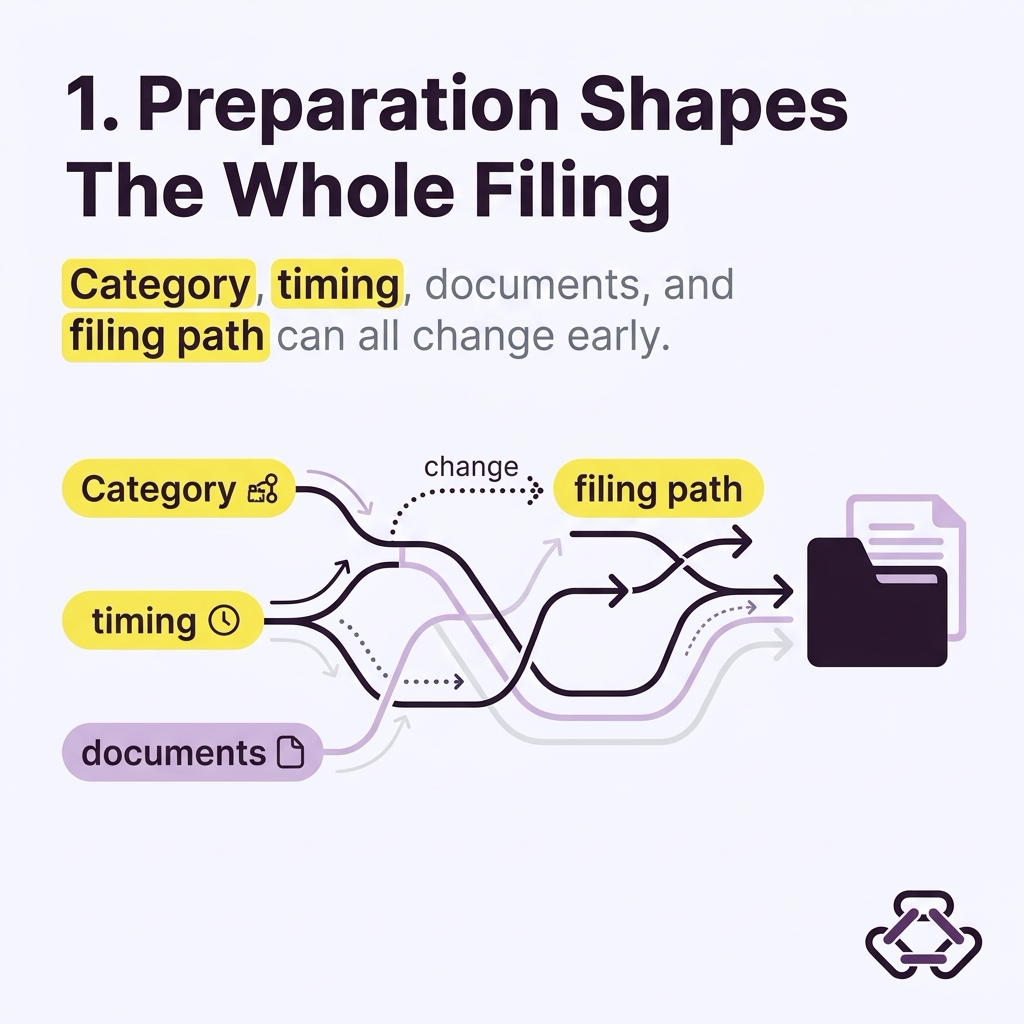
Why Preparation Matters Before Filing
Employment-based permanent residence is not a single application. It is often a sequence.
Depending on the category, the process may include a prevailing wage request, recruitment, a PERM labor certification application through the Department of Labor’s FLAG system, Form I-140 with USCIS, and then either adjustment of status in the United States or immigrant visa processing through the Department of State (DOL PERM program, USCIS Form I-140, USCIS Form I-485).
Preparation tends to affect:
- Which category fits the case
- Whether PERM is required
- Whether the worker’s credentials match the role
- When the filing can happen
- Whether the employer has the right supporting records
- Whether the worker can file Form I-485 now or later
For example, in the April 2026 Visa Bulletin, some employment-based categories are current for some countries, while others remain backlogged, including EB-2 and EB-3 for India and China in particular. That timing issue can shape the entire filing strategy (April 2026 Visa Bulletin).
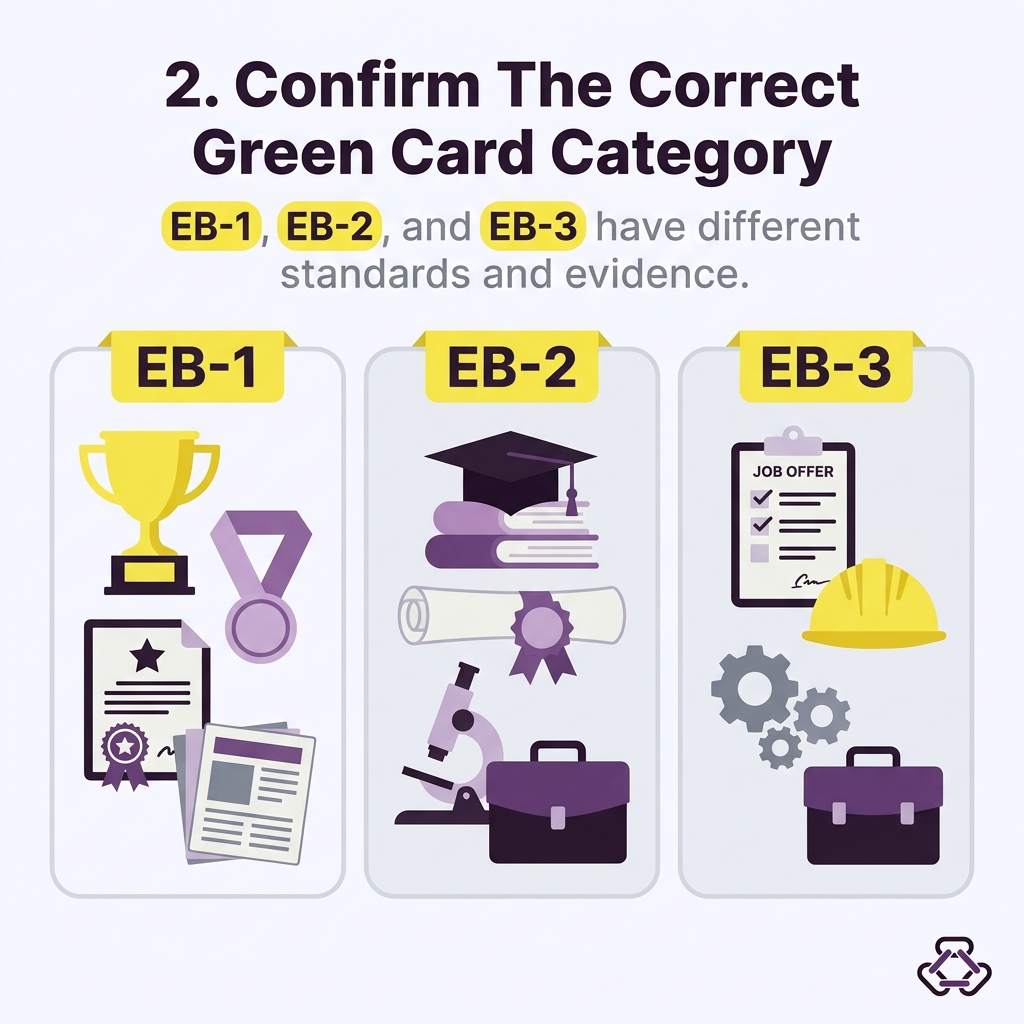
Step 1: Confirm The Correct Employment-Based Category
A good starting point is identifying the category before collecting documents. Different categories have different standards, different evidence, and different timelines.
USCIS recognizes several major employment-based categories, including EB-1, EB-2, and EB-3 for many professional workers. EB-1 covers priority workers such as individuals of extraordinary ability, outstanding professors and researchers, and certain multinational executives and managers. EB-2 often involves advanced-degree professionals or individuals of exceptional ability, and the national interest waiver can allow certain EB-2 applicants to file without a job offer or labor certification. EB-3 generally applies to professionals, skilled workers, and certain other workers (USCIS EB-1, USCIS Form I-140 instructions).
Some preparation questions often include:
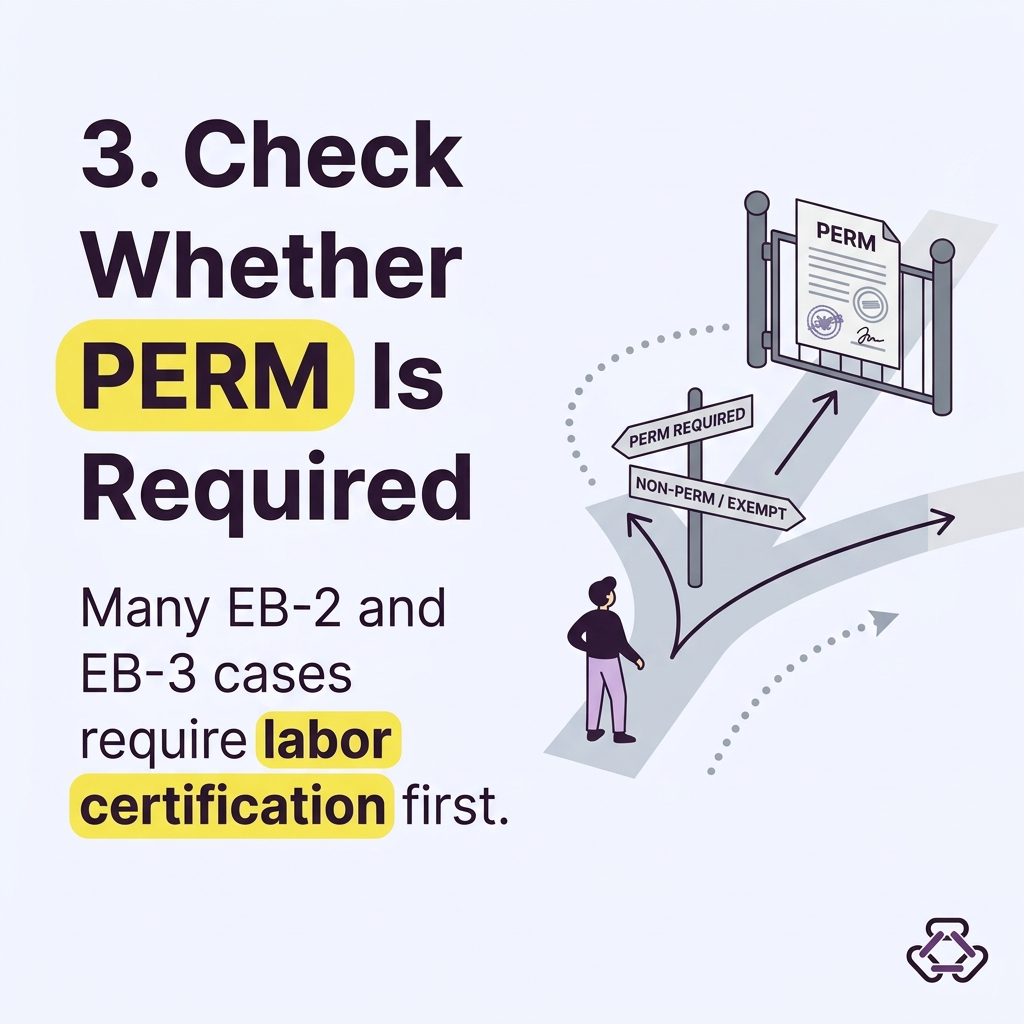
Does The Case Require PERM Labor Certification?
Many EB-2 and EB-3 employer-sponsored cases do. Some EB-1 cases and national interest waiver cases do not. If PERM is required, the Department of Labor process often becomes the first major milestone, not the I-140 filing (DOL PERM program).
Does The Worker Meet The Minimum Requirements Before Filing?
This can include degrees, transcripts, experience letters, licenses, publications, or evidence of managerial or specialized accomplishments, depending on category. In many cases, USCIS and the Department of Labor focus closely on whether the worker met the minimum job requirements as of the relevant filing date and whether those requirements were stated consistently across the case.
Is Self-Petitioning Available?
Certain categories, such as EB-1 extraordinary ability and EB-2 national interest waiver, may allow the beneficiary to file without a sponsoring employer (USCIS Form I-140 instructions).
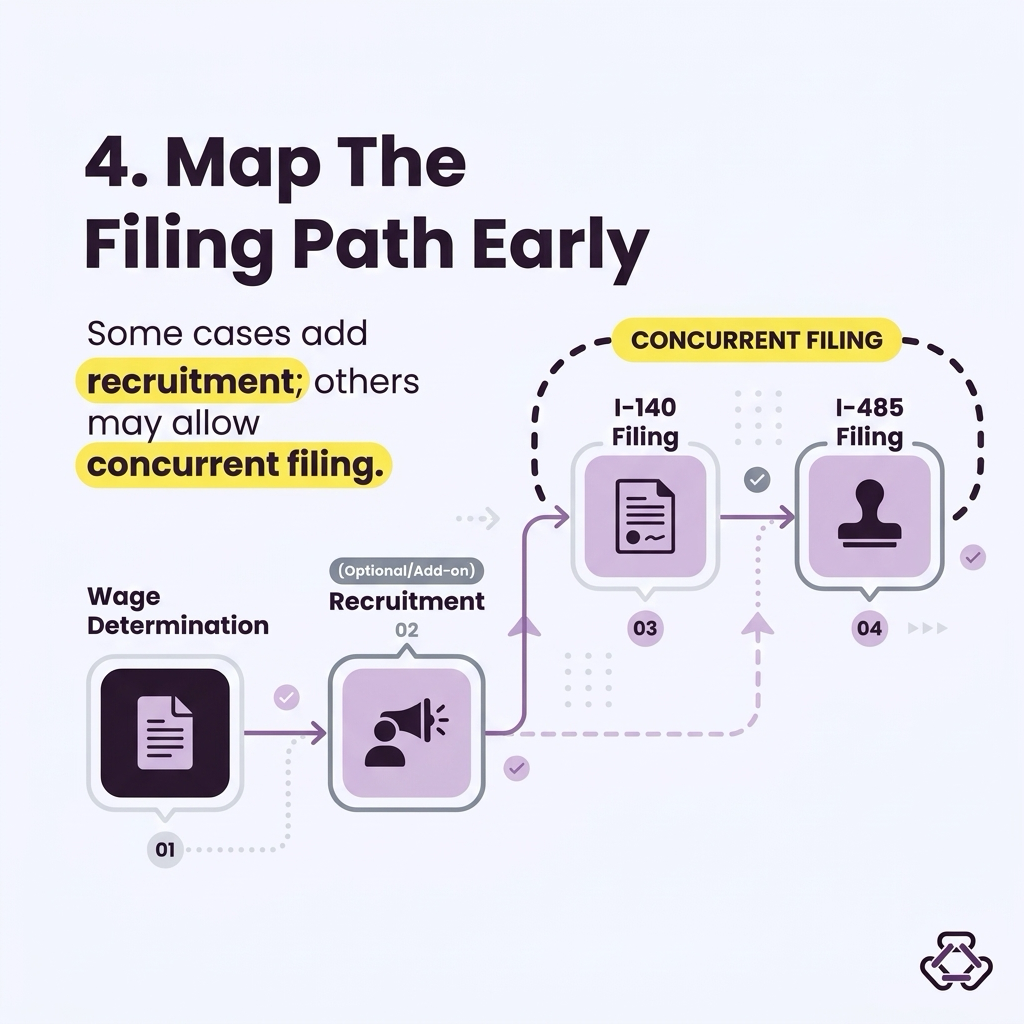
Step 2: Map Out The Filing Path Early
Once the likely category is identified, the next practical step is mapping the path from start to finish.
A typical employer-sponsored PERM case may look like this:
- Request prevailing wage from the Department of Labor
- Complete required recruitment
- File ETA Form 9089 for PERM
- File Form I-140 with USCIS after PERM approval
- File Form I-485 if adjustment is available, or process through a U.S. consulate if abroad (DOL Foreign Labor Certification, USCIS How To Apply For A Green Card)
A non-PERM case may move directly to Form I-140. Some applicants may be eligible to file Form I-140 and Form I-485 together when a visa number is immediately available, a process commonly called concurrent filing (USCIS Form I-485, USCIS priority dates guidance).
This is also where forum choice becomes important. Some workers are preparing for adjustment of status inside the United States, while others are preparing for consular processing. If that part of the plan is still unclear, it may help to review a discussion of filing from inside the U.S. versus using a consulate as part of the broader strategy analysis.
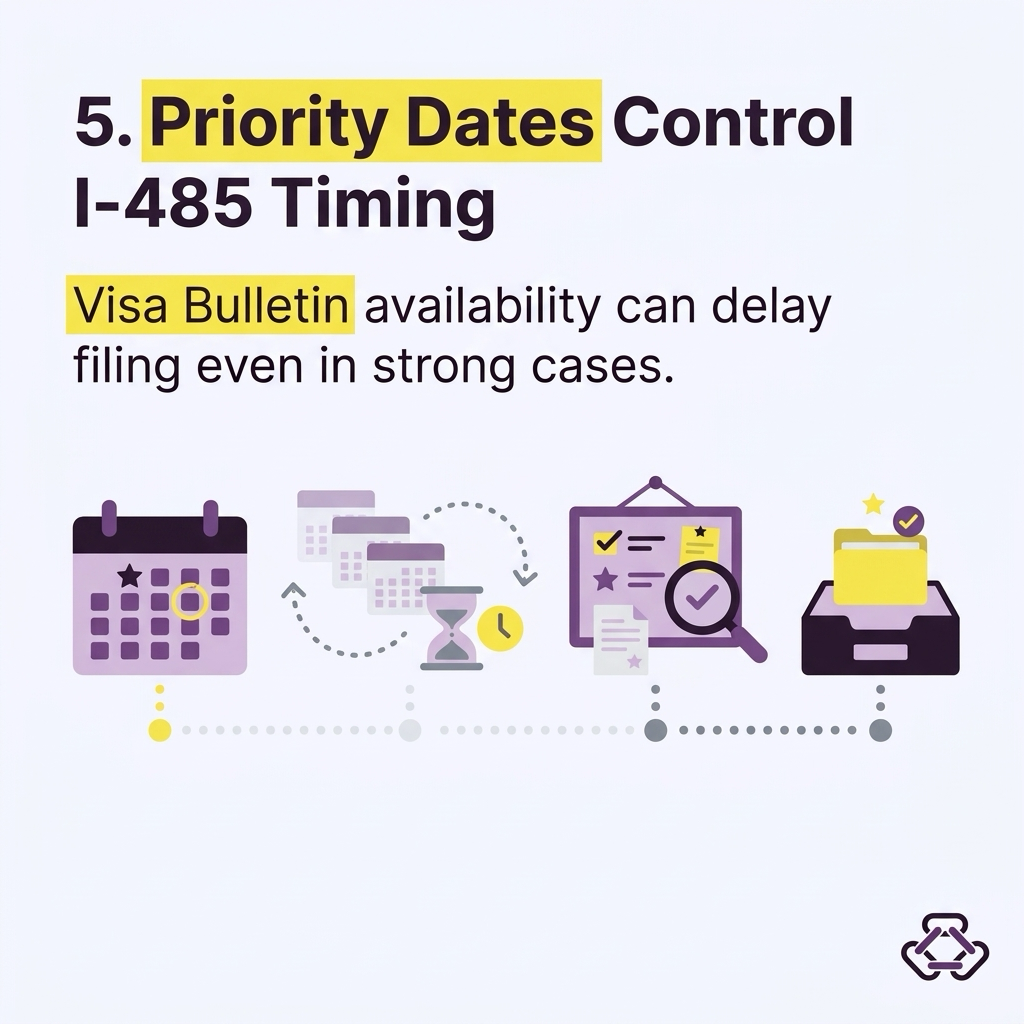
Step 3: Check Priority Date And Visa Bulletin Timing
One of the most misunderstood parts of employment-based green card preparation is timing.
Even when a worker is fully qualified and the employer is ready, the worker may still be waiting for a visa number to become available. USCIS explains that before filing Form I-485 in a family-sponsored or employment-based preference category, applicants generally look to visa availability and priority dates. USCIS also publishes monthly guidance on whether applicants may use the “Final Action Dates” chart or the “Dates for Filing” chart from the State Department’s Visa Bulletin (USCIS visa availability page, USCIS Form I-485, State Department Visa Bulletin).
For April 2026, for example:
- EB-1 is current for many chargeability areas, but not all
- EB-2 and EB-3 remain backlogged for India and China
- EB-3 for the Philippines shows a listed cutoff date rather than current availability
- Other Workers has separate cutoff dates from standard EB-3 (April 2026 Visa Bulletin)
Here’s what this often means in practical terms: preparation may begin long before Form I-485 can be filed. In some cases, the focus is building an approvable I-140 record now and preserving the earliest possible priority date.
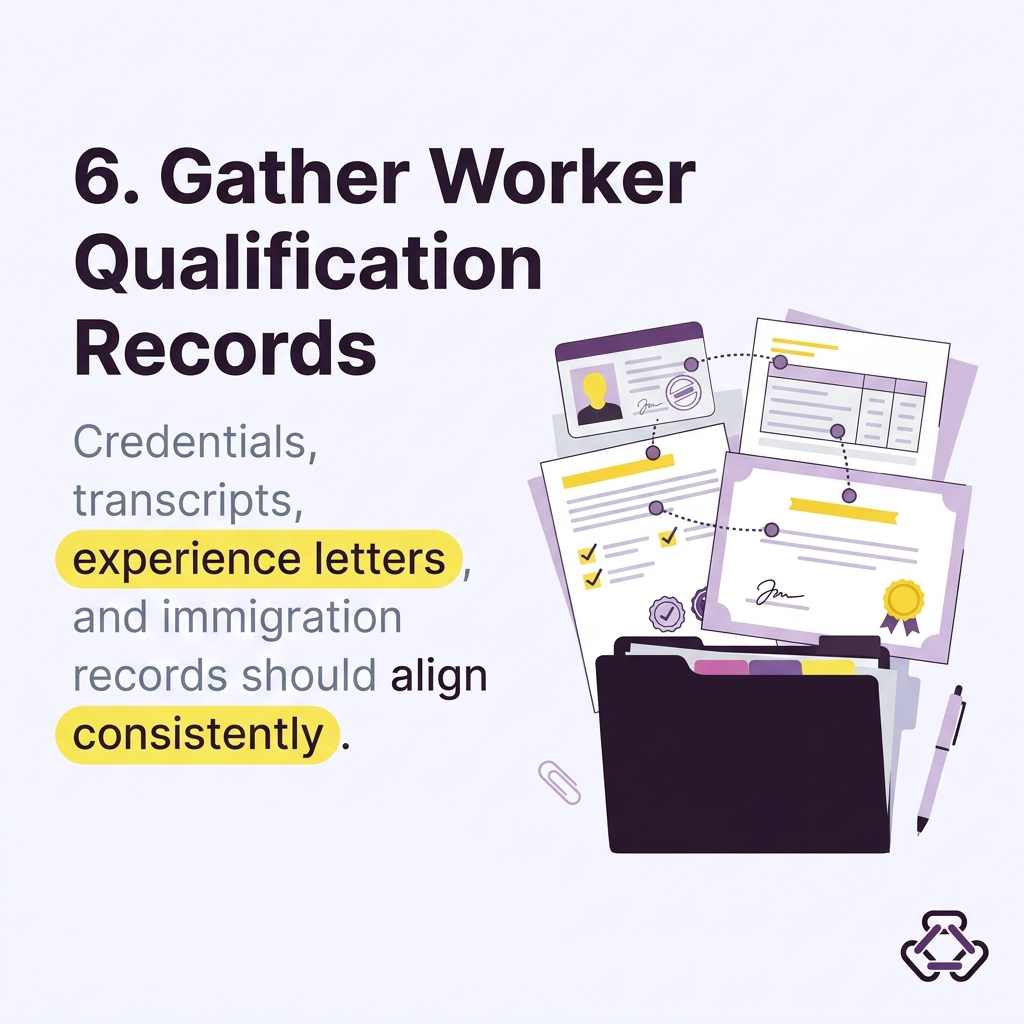
Step 4: Gather The Worker’s Qualification Documents
The documentary record usually starts with the worker’s credentials.
In general terms, employment-based green card cases often rely on a set of core records that prove the worker meets the category requirements and the position’s minimum qualifications. Those may include:
- Passport biographic page
- Current immigration documents, if the worker is in the United States
- Resume or CV
- Degree certificates
- Academic transcripts
- Credential evaluations, if the degree is foreign and equivalency is relevant
- Experience letters from prior employers
- Professional licenses or certifications
- Pay records, if relevant to current employment
- Marriage and birth records for derivative family members
Experience letters are often especially important in EB-2 and EB-3 cases. These letters commonly become a point of review if they do not clearly describe dates of employment, job duties, hours, or the employer’s identity.
In many filings, consistency matters almost as much as content. If the resume, PERM filing, and I-140 evidence describe different job duties or timelines, that discrepancy can create avoidable questions later.
If you want a more practical checklist approach, it may help to compare your case against a deeper discussion of the records employers and workers often gather before filing.
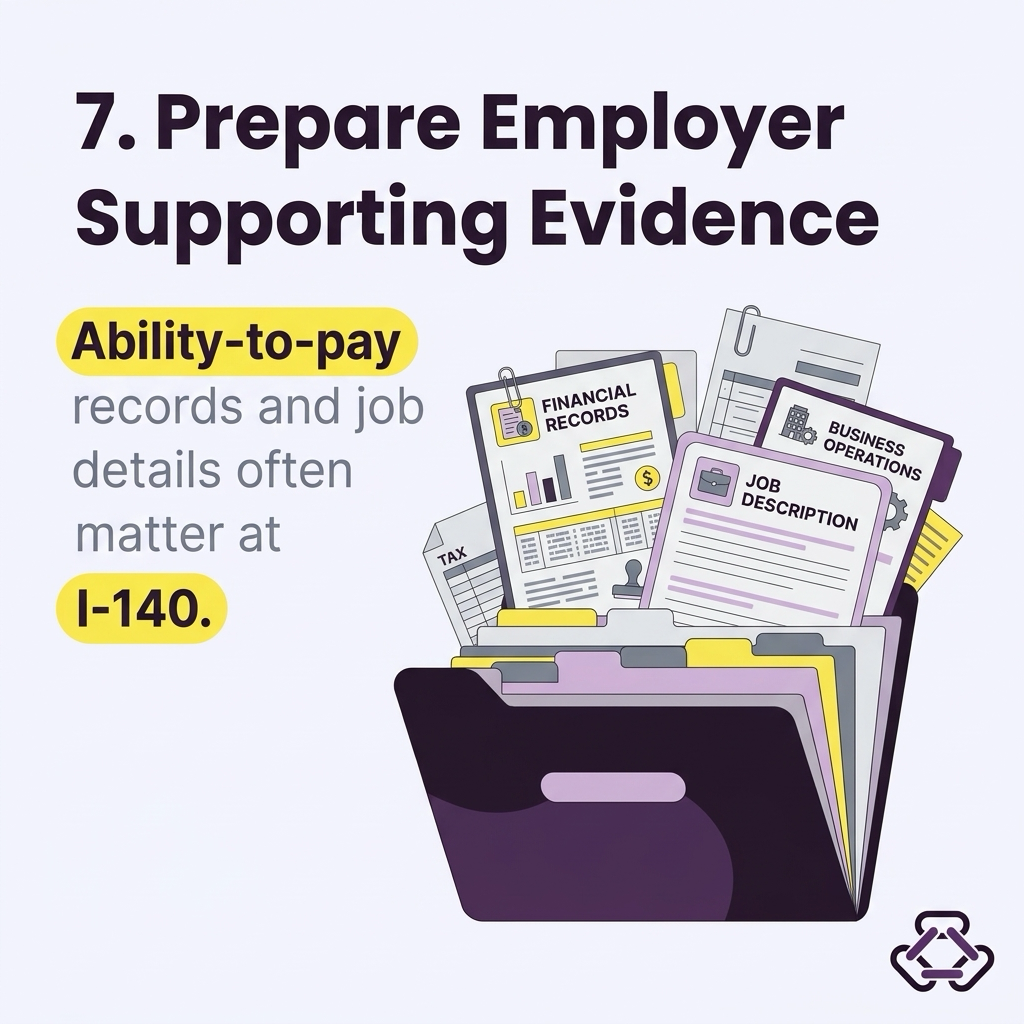
Step 5: Gather The Employer’s Supporting Evidence
For employer-sponsored cases, the employer’s records are just as important as the worker’s records.
USCIS states that, in relevant employment-based categories, an employer may use an annual report, federal income tax return, or audited financial statement to show continuing ability to pay the offered wage. That issue often becomes central in I-140 adjudication, especially where multiple sponsored workers are involved or where the offered wage is significantly higher than the worker’s current compensation (USCIS EB-1 page, USCIS ability-to-pay guidance).
Employer-side preparation often includes:
- Corporate formation documents
- Federal tax returns or audited financial statements
- Annual reports
- Organizational charts
- Payroll records
- Offered position description
- Evidence of current business operations
- Proof of worksite location
- Prior immigration filing history, where relevant
For PERM-based cases, employers also often prepare internal documents explaining the job requirements, minimum education, worksite, supervision, and whether travel or alternate requirements are involved. Small wording choices in the job description can affect the prevailing wage, recruitment plan, and later USCIS review.
Step 6: Prepare For PERM If The Category Requires It
If the case requires labor certification, the PERM phase often drives the timeline.
The Department of Labor explains that, before filing a PERM application, the employer generally obtains a prevailing wage determination. The employer also conducts required recruitment and files through the FLAG system. DOL also notes that a prevailing wage is required before filing and that recruitment and filing happen within a structured regulatory framework (DOL PERM program, DOL Foreign Labor Certification).
Preparation issues commonly include:
Job Description Drafting
The description often needs to be accurate enough for DOL review and consistent enough to support the later I-140 filing.
Minimum Requirements
PERM cases often turn on whether the requirements are truly the minimum for the role and whether the sponsored worker gained qualifying experience in a way that fits DOL rules.
Recruitment Records
Recruitment is not just an advertising step. It is an evidence step. Employers often retain copies of ads, posting records, job order information, resumes received, interview notes, and lawful, job-related reasons for non-selection.
Prevailing Wage Timing
A prevailing wage determination has a validity period, and timing can affect when recruitment and filing occur. DOL’s published guidance and FAQs discuss prevailing wage validity and the recruitment framework (DOL PERM FAQs).
This phase is also where many delay risks start. If you want a sense of where filings often run into trouble, it may help to review a broader look at common employment-based green card issues that trigger delay or denial.
Step 7: Plan The I-140 Filing Package Carefully
Form I-140 is the immigrant petition that often becomes the legal backbone of the case.
USCIS explains that Form I-140 is used for employment-based immigrant visa classifications, and if the petition is based on an approved labor certification, USCIS must receive the I-140 before the 180-day validity period of that labor certification expires (USCIS Form I-140).
Preparation for the I-140 package often includes:
- Correct classification selection
- Certified ETA 9089, if required
- Evidence of the worker’s qualifications
- Evidence of employer ability to pay, if applicable
- Filing fee review
- Correct filing location review
- Premium processing decision, if eligible
USCIS currently offers premium processing for certain Form I-140 classifications. The agency states that premium processing generally provides adjudicative action within set timeframes, including 15 business days for most covered classifications and 45 business days for EB-1 multinational executive/manager and EB-2 national interest waiver classifications (USCIS premium processing).
Some employers use premium processing for planning reasons, while others take a standard processing route and preserve flexibility for later.
Step 8: Prepare For Adjustment Of Status Or Consular Processing
After the immigrant petition stage, the case usually moves into either adjustment of status or consular processing, depending on where the worker is and whether a visa number is available.
If the worker is eligible to adjust status in the United States, USCIS states that Form I-485 is the application used to register permanent residence or adjust status. USCIS also notes that applicants in employment-based categories may file Form I-140 and Form I-485 together in some situations when visa availability allows (USCIS Form I-485).
Preparation for adjustment often includes:
- Confirming lawful entry and eligibility to adjust
- Reviewing current nonimmigrant status history
- Preparing government forms for principal applicant and dependents
- Gathering civil documents
- Reviewing travel plans and employment authorization timing
- Confirming whether concurrent filing is available
One recent change is especially important: USCIS revised Form I-485 instructions to require certain applicants who need a medical exam to submit Form I-693, Report of Immigration Medical Examination and Vaccination Record, together with Form I-485. USCIS announced that update in December 2024, and the revised I-485 materials reflect it (USCIS I-485 update, USCIS medical exam alert, USCIS civil surgeon guidance).
That seemingly small filing detail can affect readiness in a very practical way. If the medical exam is missing where required, a package may be rejected or delayed.
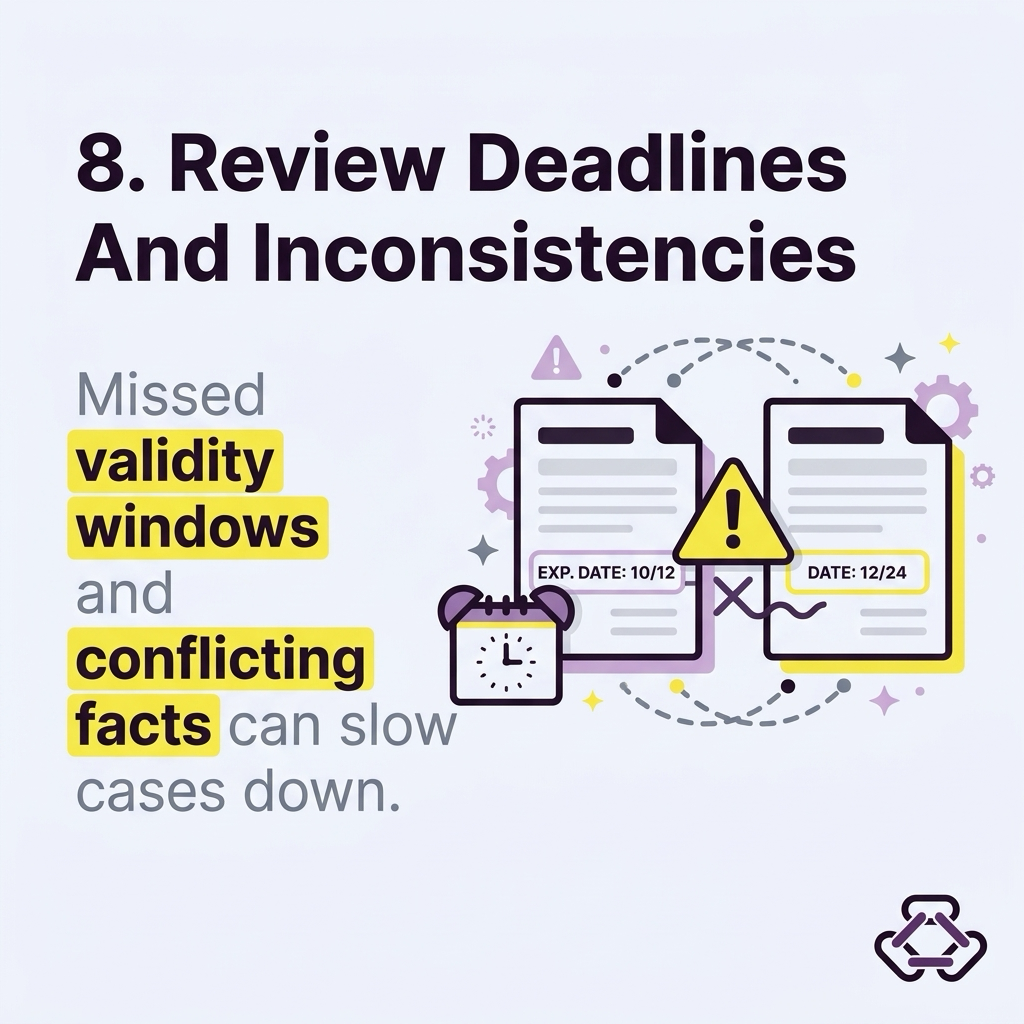
Step 9: Review Timing, Expiration Dates, And Filing Windows
A lot of filing problems are not legal theory problems. They are calendar problems.
Before submission, many employers and workers review:
- Passport validity
- Current visa and I-94 expiration
- PERM recruitment dates
- Prevailing wage validity
- Labor certification validity
- Priority date movement
- Medical exam timing
- Dependent document validity
- Employer financial document recency
USCIS states that a labor-cert-based I-140 must be received before the labor certification’s 180-day validity period ends (USCIS Form I-140). USCIS also directs applicants to check monthly filing-chart guidance to determine whether they may file Form I-485 using the applicable Visa Bulletin chart (USCIS priority dates guidance).
In practical terms, a case can be perfectly viable and still lose time because one filing window was missed.
Step 10: Pressure-Test The Case For Inconsistencies
Before filing, many people focus on forms and fees. It can also help to pressure-test the factual record.
This often includes questions like:
- Do all documents describe the same employer and job?
- Do degree records match the education claimed?
- Do experience letters cover every required year?
- Does the worker’s prior immigration history align with the current filing story?
- Is the offered job consistent across PERM, I-140, and adjustment records?
- Does the employer’s financial evidence support the offered wage?
These issues can matter because government review often compares documents across agencies and across filing stages. A case that looks organized from the beginning often has fewer avoidable credibility questions later.
Common Preparation Mistakes That Cause Trouble
A few issues show up again and again in employment-based green card filings:
Waiting Too Long To Evaluate The Category
A worker may spend months preparing for PERM even though a non-PERM route might exist, or may assume EB-2 fits when the facts line up more naturally with EB-3.
Treating The Job Description As Routine Paperwork
The job description influences wage level, recruitment, category fit, and later USCIS review.
Underestimating Document Collection Time
Experience letters, foreign transcripts, credential evaluations, and civil records often take longer than expected.
Ignoring Visa Bulletin Reality
A current employer-sponsored case can still face a long wait before Form I-485 becomes available.
Filing Without A Full Medical Strategy
Since USCIS now requires Form I-693 with Form I-485 for certain applicants, this has become a planning issue rather than a last-minute add-on (USCIS I-485 update).
Missing Ability-To-Pay Issues
This is often overlooked until USCIS requests more evidence.
When Legal Help Often Becomes Especially Important
Employment-based green card preparation can become more complex when the facts involve:
- Prior status gaps or unauthorized employment concerns
- Job changes during the process
- Corporate restructuring
- Multiple related entities
- Foreign education equivalency questions
- Experience gained with the sponsoring employer
- National interest waiver strategy
- Multinational manager or executive evidence
- Priority date retention or interfiling questions
In these situations, an attorney may help identify issues early, align the filings across agencies, and reduce the chance that the case is built around assumptions that later become expensive to fix.
A Short Summary
Preparing for an employment-based green card filing often starts well before the forms are signed. The strongest preparation usually involves confirming the right category, mapping the filing path, checking visa bulletin timing, gathering both worker and employer records, and reviewing expiration dates and consistency across the full case file.
For many workers and employers, the challenge is not just finding an immigration attorney. It is finding one with demonstrable experience in highly similar employment-based matters, based on objective criteria and court-record-backed fit rather than advertising claims.
Visit ReferU.AI to get matched with an attorney who has demonstrable experience in cases like yours — for free.
