Table of Contents
- Employment-Based Green Cards Explained: Categories, Priority Issues, and Filing Strategy
- What An Employment-Based Green Card Actually Is
- The Main Employment-Based Green Card Categories
- EB-1: Priority Workers
- EB-2: Advanced Degree Professionals And Exceptional Ability
- EB-3: Skilled Workers, Professionals, And Other Workers
- EB-4: Special Immigrants
- EB-5: Immigrant Investors
- Why Priority Dates Matter So Much
- The Visa Bulletin Controls Timing
- Country Of Chargeability Changes The Timeline
- Final Action Dates Vs. Dates For Filing
- PERM Labor Certification: Where Many Cases Slow Down
- Filing Strategy Often Starts With Category Selection
- When EB-1 May Be Worth Exploring
- When EB-2 NIW Changes The Equation
- When EB-2 Vs. EB-3 Becomes A Strategic Choice
- Concurrent Filing, Adjustment, And Consular Processing
- Premium Processing, Underlying Basis Transfers, And Other Timing Tools
- Premium Processing
- Transfer Of Underlying Basis
- Portability And Job Changes
- The Filing Record Often Matters As Much As Eligibility
- Common Filing Strategy Questions
- Is The Fastest Category Always The Best Choice?
- Can An Employer Start In One Category And Later Shift To Another?
- Does An Approved I-140 Mean The Green Card Is Coming Soon?
- Does The Same Strategy Work For Every Country?
- Why Attorney Matching Matters In Employment-Based Cases
- Final Takeaway

Type
Grandchild
Status
Approved
Title (YouTube)
Images Failed (Social)
Images Failed (Social)
Do not index
Parent item
Publish Date (TikTok)
Apr 26, 2027 10:15
Videos Post IDs (Social)
Hashtags (Social)
#LegalAdvice #LegalHelp #Immigration #EmploymentBasedGreenCards
Caption
Caption X
Cover

OG Image

Alt Image Text
Flat vector illustration of employment-based green cards and priority date filing strategy, showing professionals, documents, category icons, and a visa backlog timeline.
Images

Videos

Publish Date (Social)
Feb 19, 2027 12:00
Scheduled (Social)
Scheduled (Social)
Images Posted (Social)
Images Posted (Social)
Videos Posted (Social)
Videos Posted (Social)
Featured
Created time
Apr 7, 2026 12:01 AM
Authors
CTA Practice Area (Social)
Immigration
TikTok Failed (Social)
TikTok Failed (Social)
Videos Post Links (Social)
TikTok Post Links (Social)
Images Post IDs (Social)
YT Post ID
Video Pending Manual (Social)
TikTok Posted (Social)
TikTok Posted (Social)
TikTok Post IDs (Social)
Video Cover (Social)

Images Post Links (Social)
First Comment (Social)
Videos Failed (Social)
Videos Failed (Social)
YT Embedded
YT Embedded
Images Delete (Social)
Videos Delete (Social)
Carousel Video URL (Social)
Employment-Based Green Cards Explained: Categories, Priority Issues, and Filing Strategy
Employment-based green cards sit at the intersection of immigration law, employer planning, timing, and documentation. For many workers and companies, the process looks straightforward at first: find the right category, file the petition, and wait. In practice, it often involves category-specific rules, priority date backlogs, labor certification requirements, and strategic filing decisions that can affect timing by months or even years.
This post explains how employment-based green cards generally work, how the main categories differ, what “priority date” issues often look like, and how filing strategy can shape the path forward. If you want a broader overview of the immigration system first, it may help to start with this plain-English guide to green cards, visas, removal defense, and citizenship. If you want a more introductory walkthrough focused specifically on work-based permanent residence, this foundational overview of sponsorship and eligibility fills in the basics.
Scroll to the bottom for every post in this series.
What An Employment-Based Green Card Actually Is
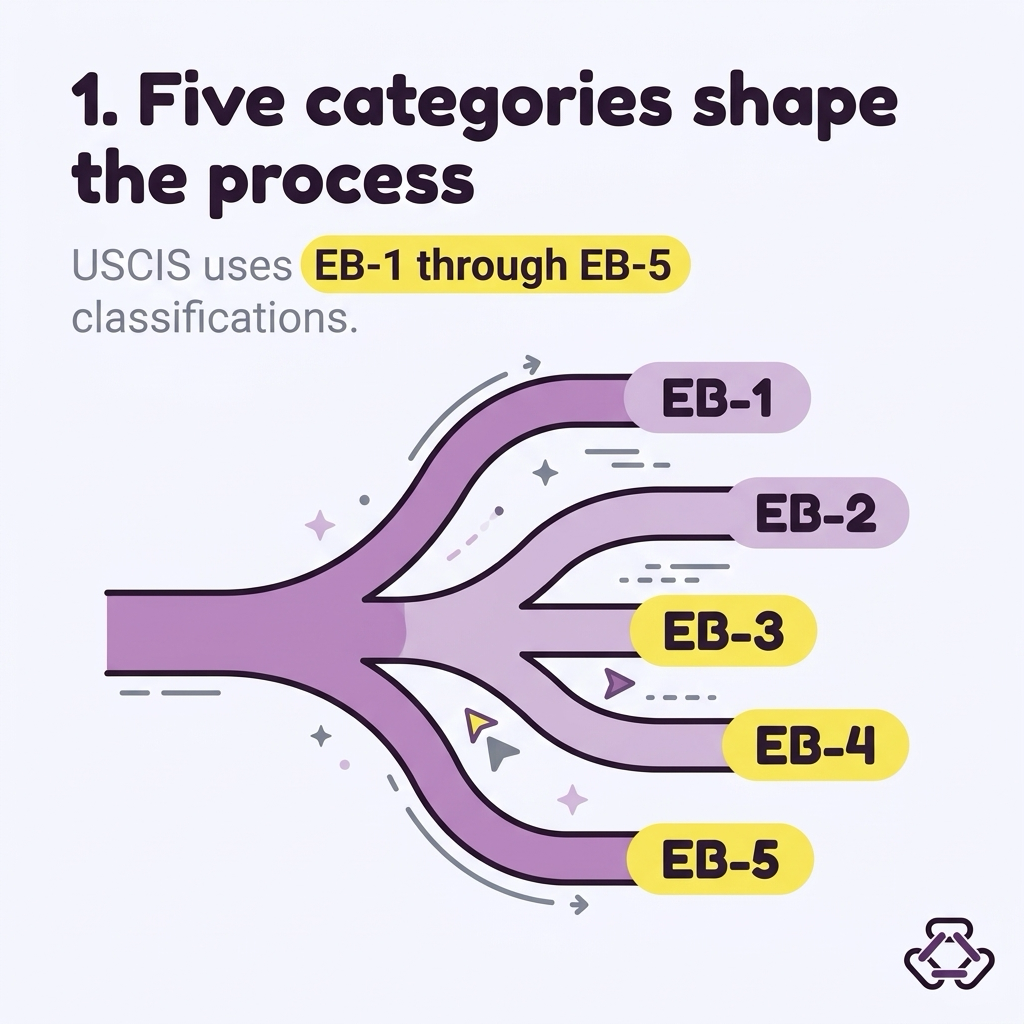
An employment-based green card is permanent resident status obtained through a qualifying work-related immigrant category. U.S. Citizenship and Immigration Services (USCIS) groups these categories into five preference classifications: EB-1, EB-2, EB-3, EB-4, and EB-5. The most common employment-based cases for professionals, researchers, executives, and skilled workers fall within EB-1 through EB-3. USCIS’s employment-based green card overview summarizes those classifications, while the Department of State’s Visa Bulletin controls visa number availability for numerically limited categories.
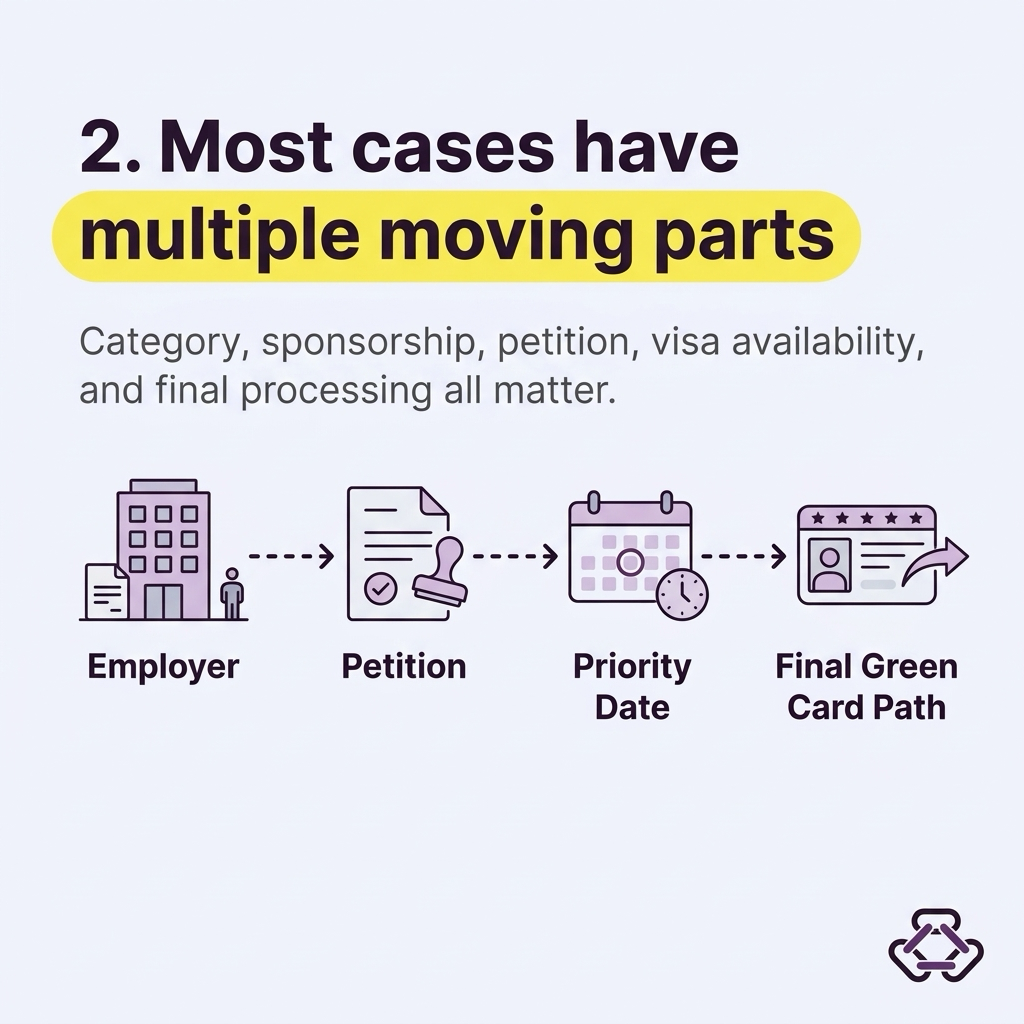
In general terms, an employment-based green card case often includes several moving parts:
- a sponsoring employer, unless a self-petition option applies
- a category analysis
- sometimes a PERM labor certification from the U.S. Department of Labor
- an immigrant petition, often Form I-140
- visa availability based on the worker’s priority date
- either adjustment of status inside the United States or immigrant visa processing through a consulate abroad
The specific route depends on the category, the worker’s background, the employer’s role, and current visa availability.
The Main Employment-Based Green Card Categories
EB-1: Priority Workers
The EB-1 category covers three distinct groups: people of extraordinary ability, outstanding professors or researchers, and certain multinational executives or managers, according to USCIS.
This category often gets attention because it can avoid some of the timing issues seen elsewhere:
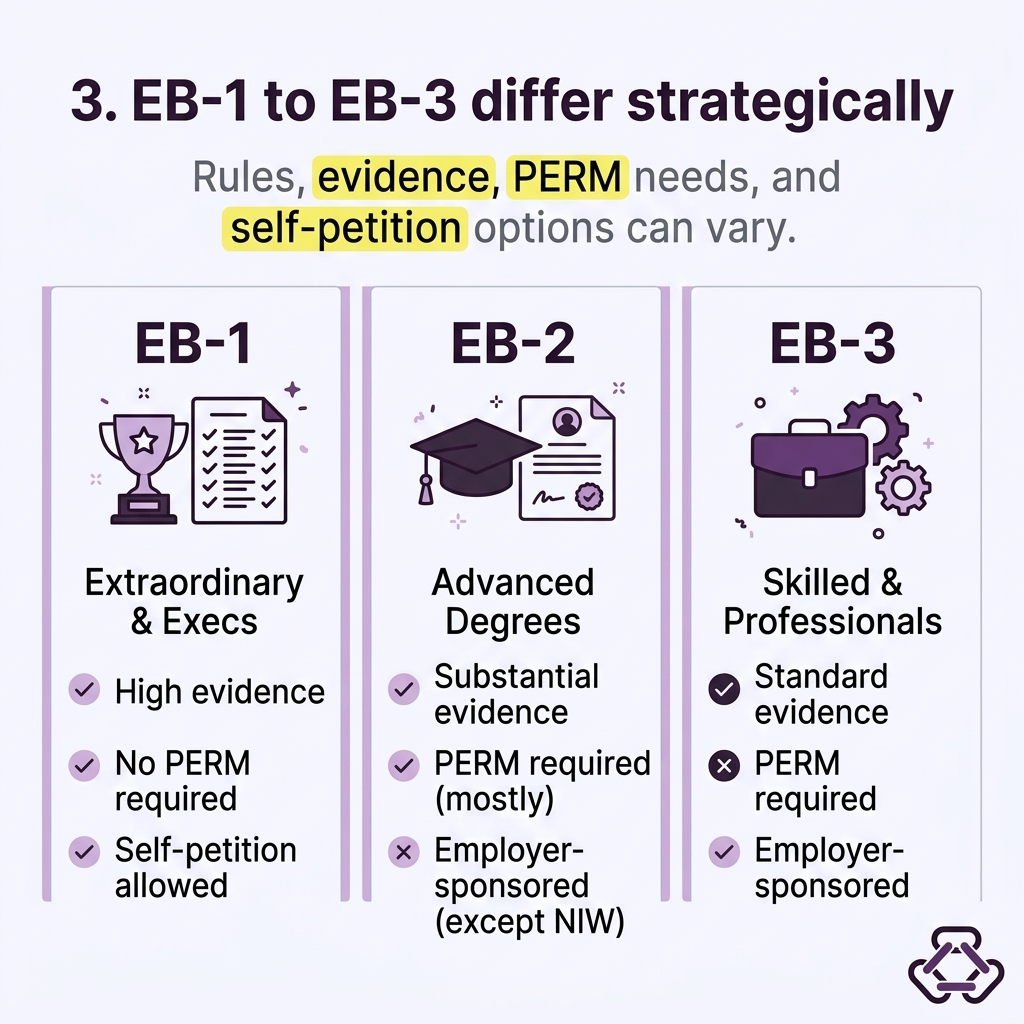
- EB-1A extraordinary ability may allow self-petitioning, which means no permanent job offer is required in the same way as employer-sponsored categories.
- EB-1B outstanding professor/researcher typically involves a permanent job offer and employer petition.
- EB-1C multinational manager/executive typically applies where a qualifying multinational company relationship exists.
For some applicants, EB-1 can be strategically attractive because it may move faster than EB-2 or EB-3 when visa bulletin backlogs are heavy. That said, the evidentiary burden can be substantial, especially in extraordinary ability cases.
EB-2: Advanced Degree Professionals And Exceptional Ability
The EB-2 category generally applies to professionals with advanced degrees or people with exceptional ability in the sciences, arts, or business, as described by USCIS.
A major feature of EB-2 is the National Interest Waiver (NIW). USCIS explains that NIW applicants may self-petition and do not need a Department of Labor labor certification if they meet the governing framework for showing that waiving the job offer and labor certification would be in the national interest. That makes NIW one of the more strategically important options for researchers, physicians, founders, and other professionals whose work may have broader national significance.
Standard EB-2 cases often require a PERM labor certification. NIW cases do not.
EB-3: Skilled Workers, Professionals, And Other Workers
The EB-3 category includes skilled workers, professionals, and certain “other workers,” according to USCIS.
This is a common route for employer-sponsored permanent residence, but it often comes with two realities:
- labor certification is usually required
- backlogs can be more severe, especially for certain countries of chargeability and for the “other worker” subcategory
For workers who do not clearly fit EB-1 or EB-2, EB-3 may be the practical path. For others, comparing EB-2 versus EB-3 can become a major strategy question, especially where the worker’s qualifications and the offered position could potentially support either category.
EB-4: Special Immigrants
The EB-4 category is for special immigrants, a group that includes certain religious workers and some other specialized classifications identified by USCIS.
This category is highly specialized and often depends on narrow statutory definitions. Because EB-4 has had periods of significant visa pressure and category-specific legislative complications, applicants in this area often benefit from careful timing analysis.
EB-5: Immigrant Investors
The EB-5 category covers qualifying immigrant investors. Although this post focuses primarily on worker-sponsored and self-petitioned employment categories, EB-5 remains one of the five employment-based preference categories under immigration law, as reflected in the USCIS employment-based overview.
Why Priority Dates Matter So Much
A lot of confusion in employment-based green card cases comes from one phrase: priority date.
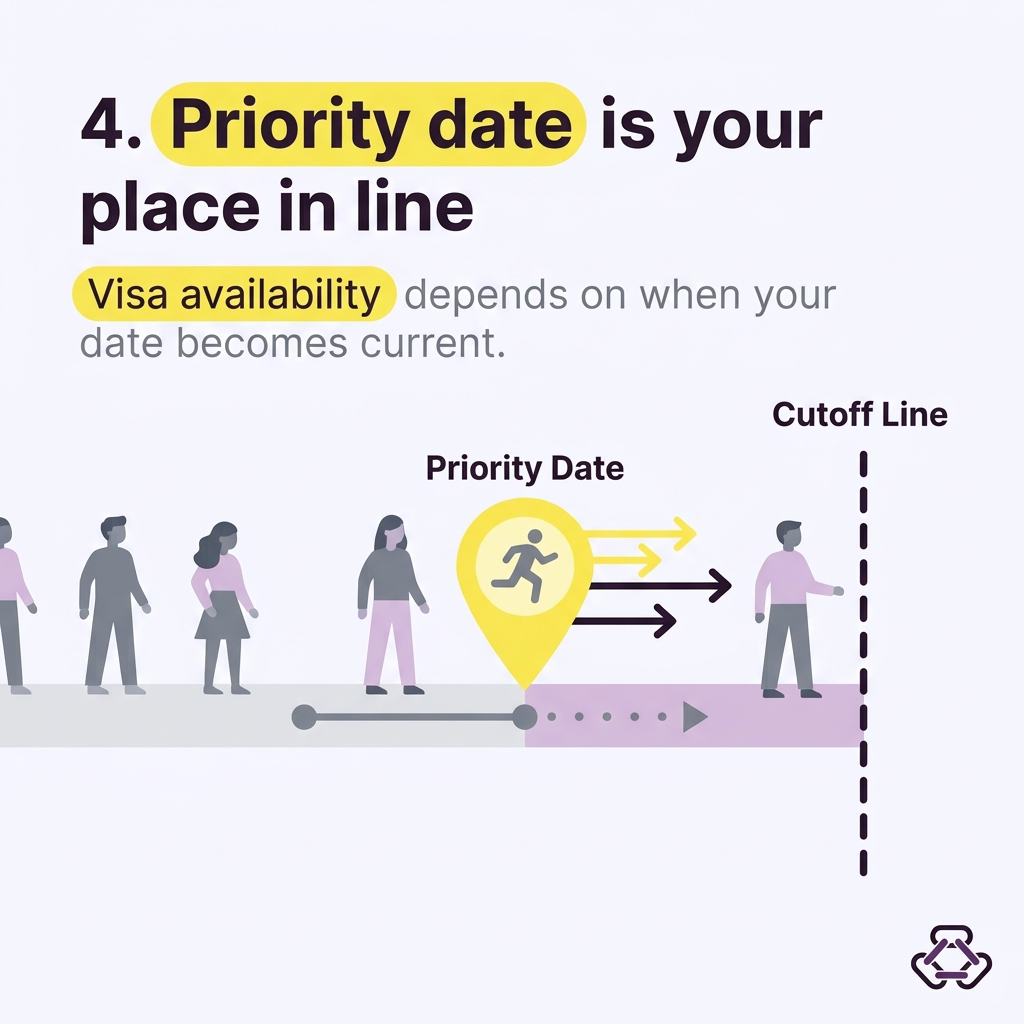
In simple terms, the priority date is the applicant’s place in line for a numerically limited immigrant visa. USCIS explains that a visa is available when the priority date is earlier than the applicable cut-off date in the Visa Bulletin. For many PERM-based cases, the priority date is typically the date the labor certification was filed. For some cases that do not require labor certification, it is generally the date USCIS receives the immigrant petition.
That date can become the center of the entire case strategy.
The Visa Bulletin Controls Timing
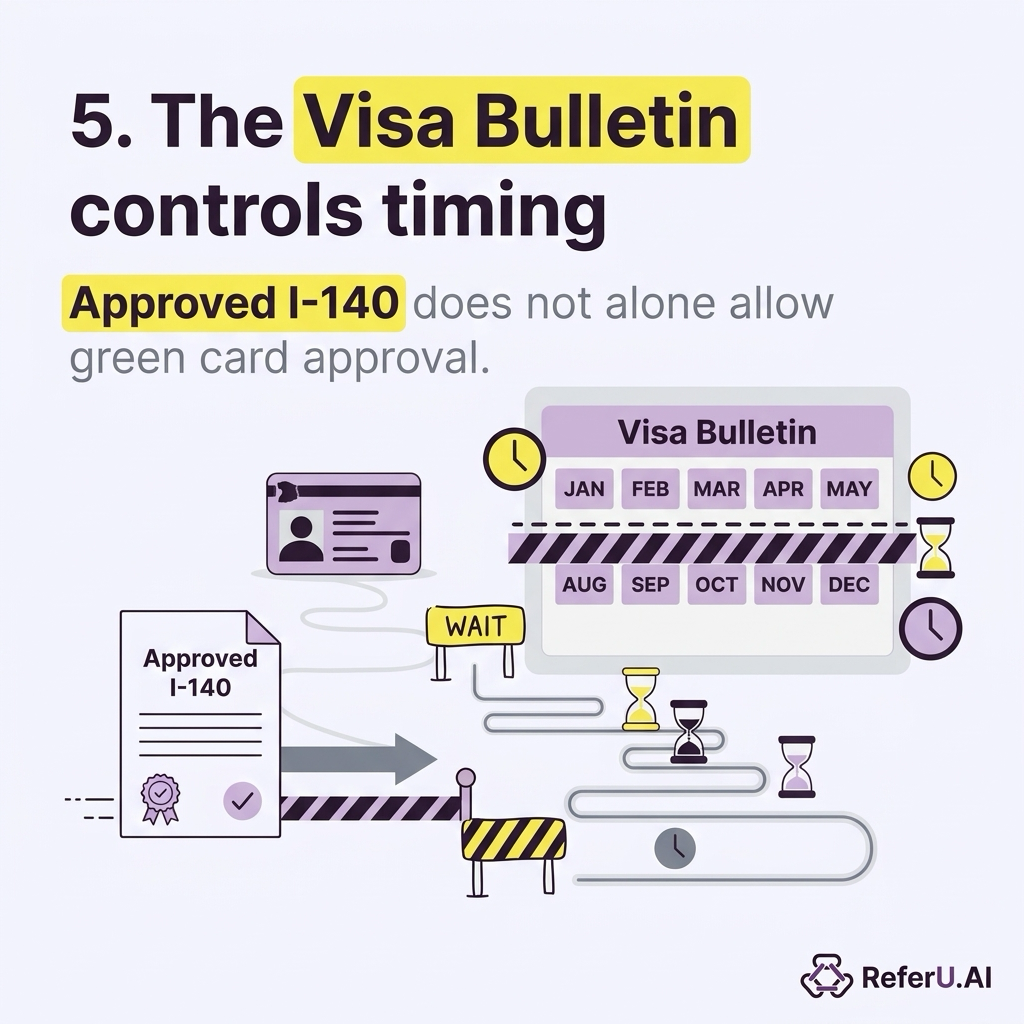
Every month, the Department of State publishes the Visa Bulletin, which lists cut-off dates by preference category and country of chargeability. For April 2026, the employment-based final action chart shows, among other things:
- EB-1 is current for most countries, but not for China and India
- EB-2 is current for most countries, but backlogged for China and India
- EB-3 is backlogged in several columns, including India and China, with “other workers” even further behind
- EB-4 is backlogged
- EB-5 unreserved is current for most countries, but not for China and India
Those date movements matter because a worker can have an approved I-140 and still wait a long time for the green card stage if the priority date is not current under the applicable chart.
Country Of Chargeability Changes The Timeline
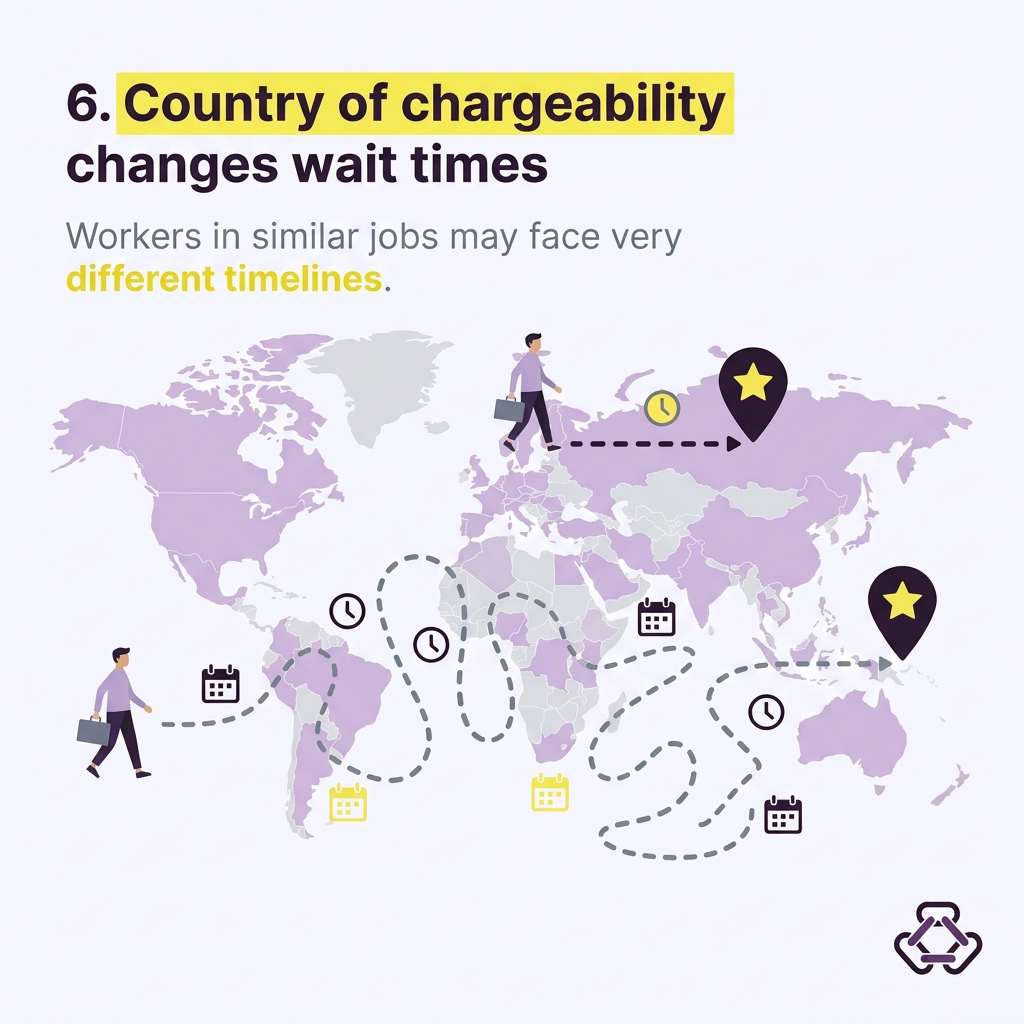
The law includes per-country limits. The Department of State notes in the April 2026 Visa Bulletin that the annual employment-based worldwide level is at least 140,000, and the per-country limit for preference immigrants is 7% of the combined family- and employment-based totals. In practical terms, that is why workers born in high-demand countries like India and China often face much longer waits than similarly situated workers born elsewhere.
This is one reason two employees in the same role, with similar qualifications and the same employer, may experience very different timelines.
Final Action Dates Vs. Dates For Filing
Another layer of complexity is the difference between the Visa Bulletin’s Final Action Dates chart and Dates for Filing chart. USCIS explains that, each month, it designates which chart adjustment applicants inside the United States may use.
That distinction can be significant because a person might be allowed to file Form I-485 earlier under the Dates for Filing chart even if a green card cannot yet be approved under the Final Action Dates chart. For many applicants, that earlier filing can open the door to interim benefits like employment authorization and advance parole while the case remains pending, subject to eligibility and current USCIS chart-selection guidance.
PERM Labor Certification: Where Many Cases Slow Down
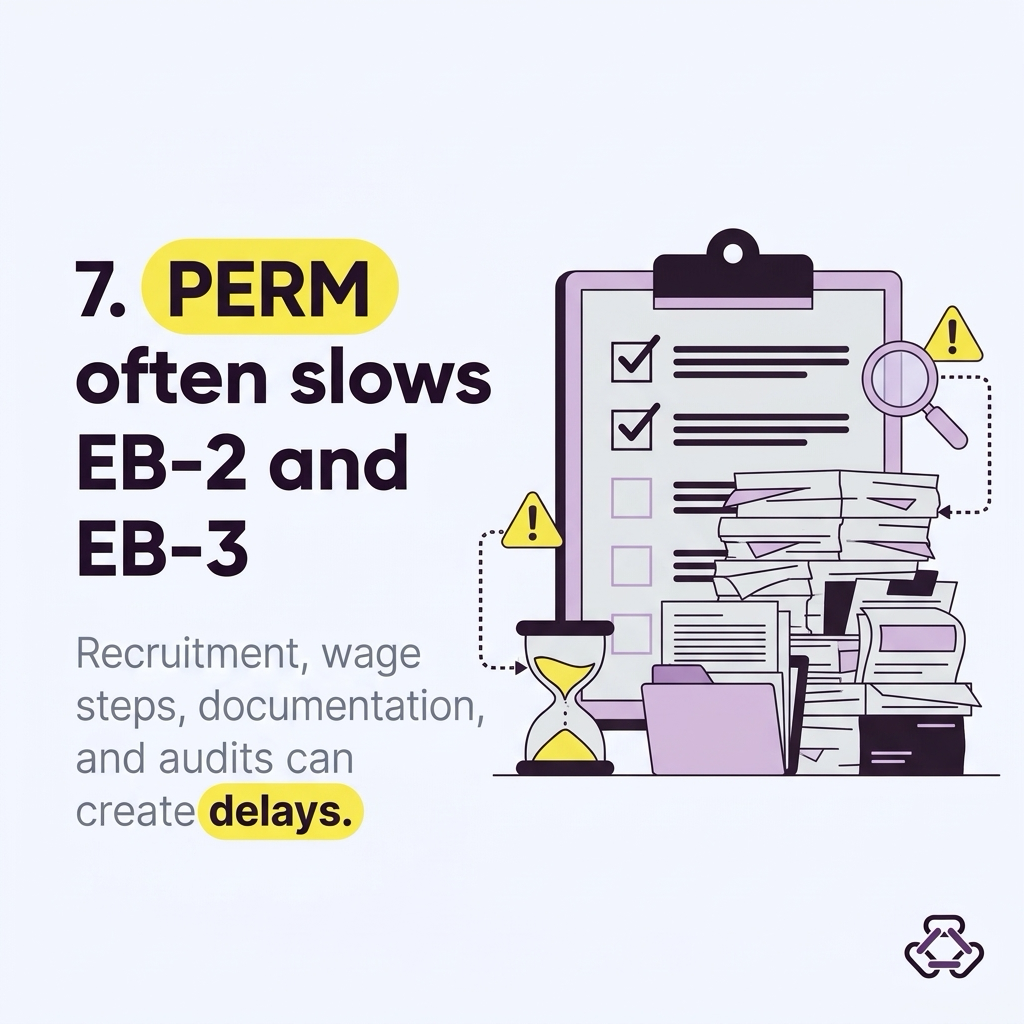
A large percentage of EB-2 and EB-3 cases involve PERM labor certification. The U.S. Department of Labor describes permanent labor certification as the process that allows an employer to hire a foreign worker permanently in the United States after completing the required labor market testing and related steps through the PERM system at DOL’s permanent labor certification page.
This part of the process often creates delay because it can involve:
- prevailing wage determination
- recruitment steps
- timing-sensitive advertising and documentation
- employer attestations
- possible audits
- careful alignment between the offered job, minimum requirements, and the worker’s background
In many cases, the green card conversation starts too late, after the employer and employee have already made assumptions about title progression, worksite location, remote arrangements, or job duties. Those details can materially affect PERM strategy. If you are trying to get organized early, this checklist on what workers and employers often gather before filing can help frame the documentation side of the process.
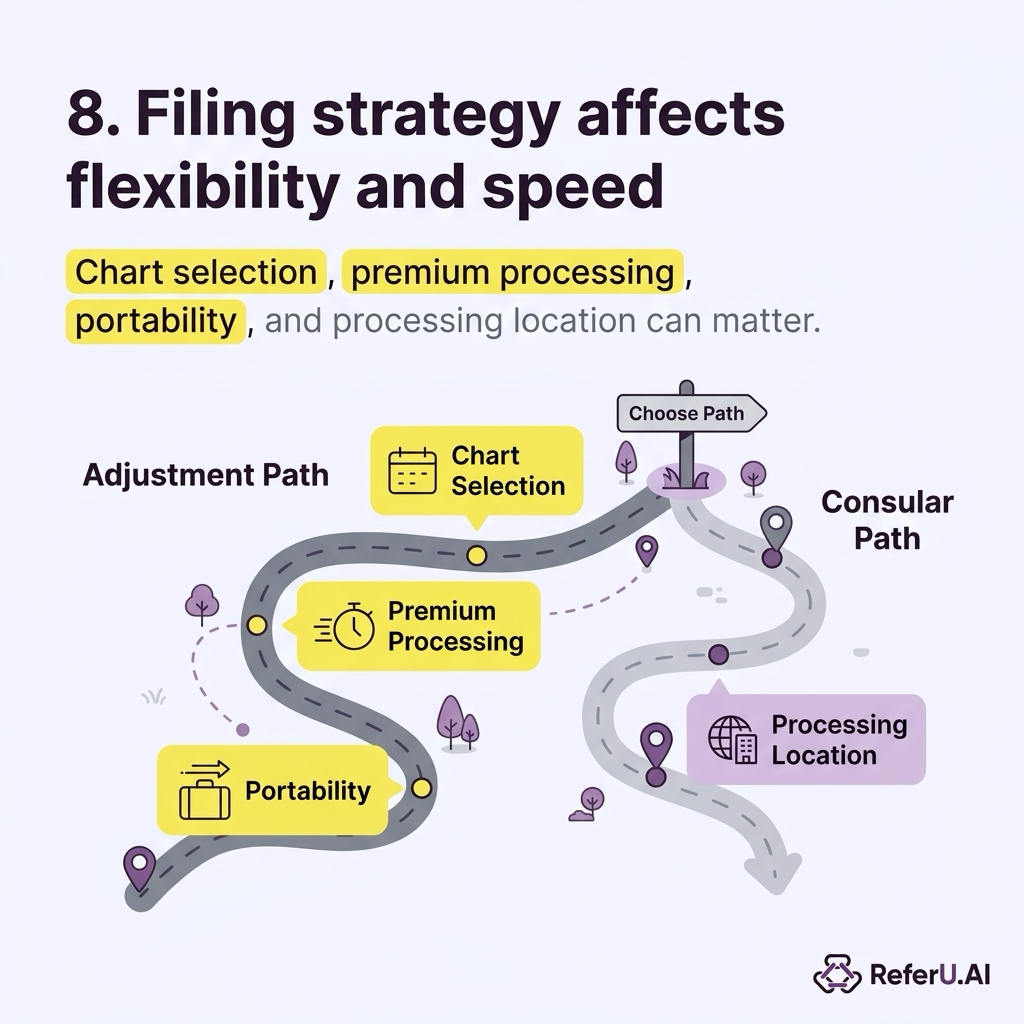
Filing Strategy Often Starts With Category Selection
Choosing the category is not just a legal label. It often shapes processing time, evidence standards, sponsorship requirements, and long-term flexibility.
When EB-1 May Be Worth Exploring
For executives, researchers, academics, artists, founders, and high-level professionals with unusually strong records, EB-1 may be worth a close look. In some fact patterns, the core strategic question is whether the applicant truly meets the demanding EB-1 standard, not whether EB-1 would be faster if approved.
Where EB-1 is plausible, an attorney may help compare the evidentiary lift against the possible timing advantage.
When EB-2 NIW Changes The Equation
NIW can be especially important for applicants whose work is not tied neatly to one employer, or whose professional contribution is broader than a single job offer. Founders, physicians, researchers, public-interest professionals, and technical specialists sometimes look at NIW because it removes both the labor certification requirement and the traditional employer sponsorship model, if the legal standard can be met under current USCIS policy.
When EB-2 Vs. EB-3 Becomes A Strategic Choice
Some workers qualify for advanced-degree roles that fit EB-2, while others may have a case that can only be supported in EB-3. In certain cases, both are potentially viable depending on the job requirements and the worker’s credentials.
The practical question is not just “Which category fits?” It is also “Which category fits accurately and sustainably?” Trying to engineer requirements around the employee rather than the bona fide job can create serious problems later.
Concurrent Filing, Adjustment, And Consular Processing
Once the immigrant petition stage is mapped out, the next strategy question is where the final green card application will happen.
If the worker is in the United States and a visa number is available under the chart USCIS designates for that month, there may be a path to file adjustment of status. If the worker is abroad, or if adjustment is unavailable for other reasons, the case may move through consular processing.
That choice can affect travel, timing, document collection, interview logistics, and family members’ planning. If you are sorting through that part of the process, this article on filing inside the United States versus going through a consulate breaks down the practical differences.
Premium Processing, Underlying Basis Transfers, And Other Timing Tools
Some filing tools do not eliminate visa backlogs, but they can still change the pace of a case.
Premium Processing
USCIS’s premium processing guidance states that premium processing is available for certain Form I-140 filings and requests adjudicative action within specified timelines. USCIS notes that the timeframe is generally 15 business days for most classifications, while EB-1C multinational executive/manager and EB-2 NIW petitions are subject to 45 business days.
This can accelerate the immigrant petition decision, but it does not make a priority date current. In other words, premium processing may speed up the petition stage without changing the visa bulletin wait.
Transfer Of Underlying Basis
In some situations, a worker with a pending adjustment application may seek to use a different approved or pending employment-based petition as the basis for the same I-485. USCIS policy guidance on transfer of underlying basis explains that this can be available in qualifying circumstances before adjudication.
This strategy often comes up when a worker has more than one possible immigrant category, such as an earlier EB-3 case and a later EB-2 or EB-1 petition. It can be helpful, but it is highly fact-specific and procedural details matter.
Portability And Job Changes
USCIS also explains in the same policy manual chapter that certain adjustment applicants with approved EB-1, EB-2, or EB-3 petitions may change jobs or employers after the I-485 has been pending at least 180 days, if the new job is in the same or similar occupational classification under AC21 portability rules. That can create flexibility, but only in the right circumstances, and not every employment change fits safely within the portability framework.
The Filing Record Often Matters As Much As Eligibility
A surprising number of cases do not stall because the worker picked the wrong broad category. They stall because the filing record does not line up cleanly.
Examples include:
- inconsistent job descriptions across forms and support letters
- weak proof of degree equivalency or experience
- outdated corporate records
- inability-to-pay concerns for sponsoring employers
- misalignment between PERM requirements and the beneficiary’s qualifications
- filing while visa availability is misunderstood
- travel or status complications during adjustment
That is where preparation matters. This practical guide on getting an employment-based green card case ready to file covers the kind of early organization that often makes later stages more manageable. And if you want a focused look at recurring trouble spots, this post on common issues that trigger delay or denial is a useful companion.
Common Filing Strategy Questions
Is The Fastest Category Always The Best Choice?
Not necessarily. A faster-moving visa bulletin category can be attractive, but the legal fit still has to be real. A category that looks quicker on paper can become slower overall if the evidence is weak or the legal theory is stretched.
Can An Employer Start In One Category And Later Shift To Another?
Sometimes, yes. In some fact patterns, a new filing in a different category becomes possible as the worker’s background develops or as the company’s needs change. But that often involves preserving timelines, understanding whether a prior priority date can be retained, and coordinating multiple filings carefully.
Does An Approved I-140 Mean The Green Card Is Coming Soon?
Not always. Approval of the immigrant petition is important, but visa availability still governs whether permanent residence can actually be granted. In backlogged categories, the approved petition may only be one milestone in a much longer process.
Does The Same Strategy Work For Every Country?
No. Country of chargeability often changes the entire timeline analysis. That is particularly true in EB-2 and EB-3 cases involving India and China, where the Visa Bulletin may create dramatically different waiting periods than in the worldwide columns.
Why Attorney Matching Matters In Employment-Based Cases
Employment-based immigration combines immigration law, employment structure, documentary proof, and procedural timing. The legal issues can look deceptively administrative from the outside, especially where the worker is already employed and everyone assumes the company can “just sponsor” the case.
In reality, category selection, PERM design, evidence framing, visa bulletin timing, portability, and consular-versus-adjustment strategy all interact. A lawyer handling a PERM-heavy multinational manager case, for example, may bring a very different background than one who frequently handles NIW filings for physicians or researchers.
That is one reason many workers and employers look for counsel with demonstrable experience in highly similar matters, not just general immigration practice. Matching based on documented experience, relevant case patterns, and objective criteria based on court records and related legal data may help narrow the search in a more evidence-based way.
Final Takeaway
Employment-based green cards are not one process. They are a group of different legal pathways with different standards, timelines, and strategic tradeoffs. EB-1, EB-2, EB-3, EB-4, and EB-5 each serve different types of applicants. Priority dates and the Visa Bulletin can shape the timeline as much as the strength of the underlying case. PERM, chart selection, premium processing, and adjustment-versus-consular decisions all add another layer.
For workers and employers trying to plan around job changes, sponsorship structure, backlog pressure, or filing sequence, an attorney may help evaluate category fit and process design in a more tailored way.
Visit ReferU.AI to get matched with an attorney who has demonstrable experience in cases like yours — for free.


