Table of Contents
- 6 Employment-Based Green Card Problems That Cause Delay or Denial
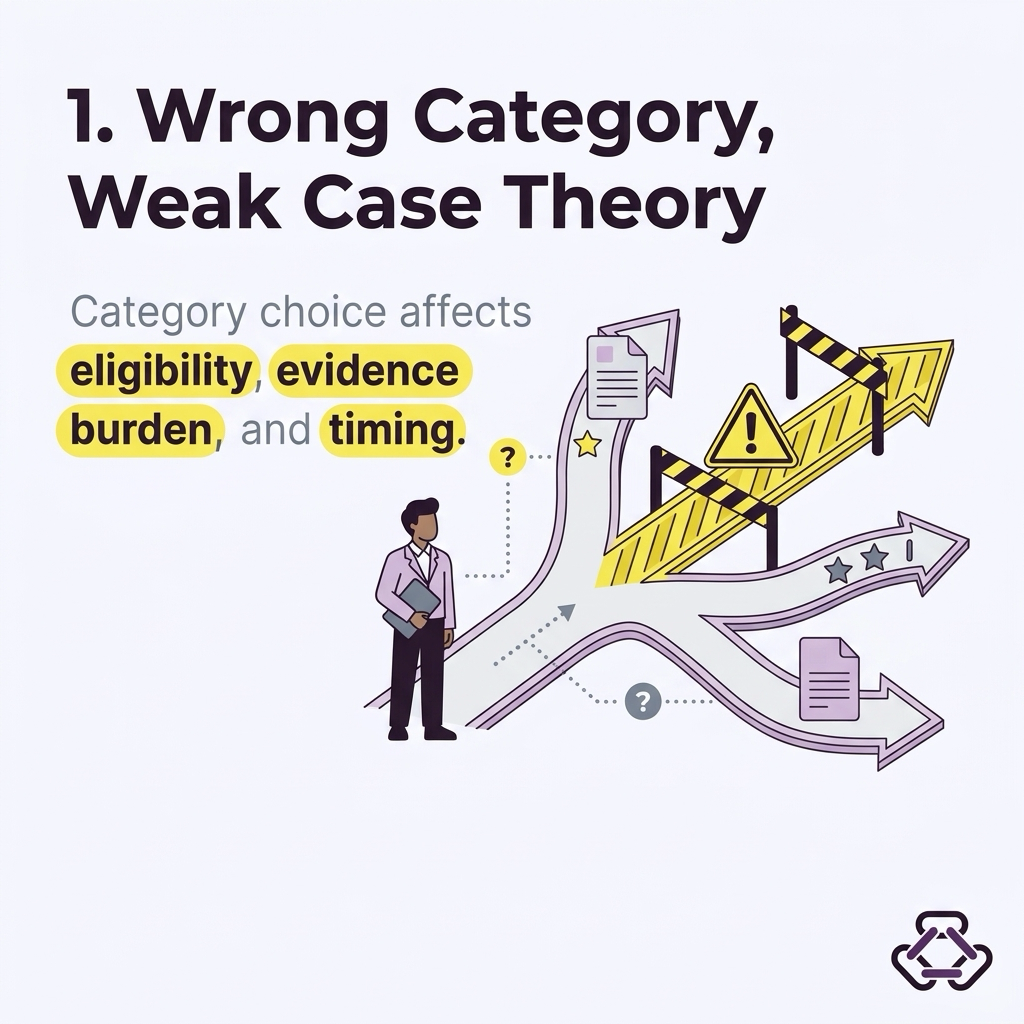
- 1. The Wrong Category Or A Weak Eligibility Theory
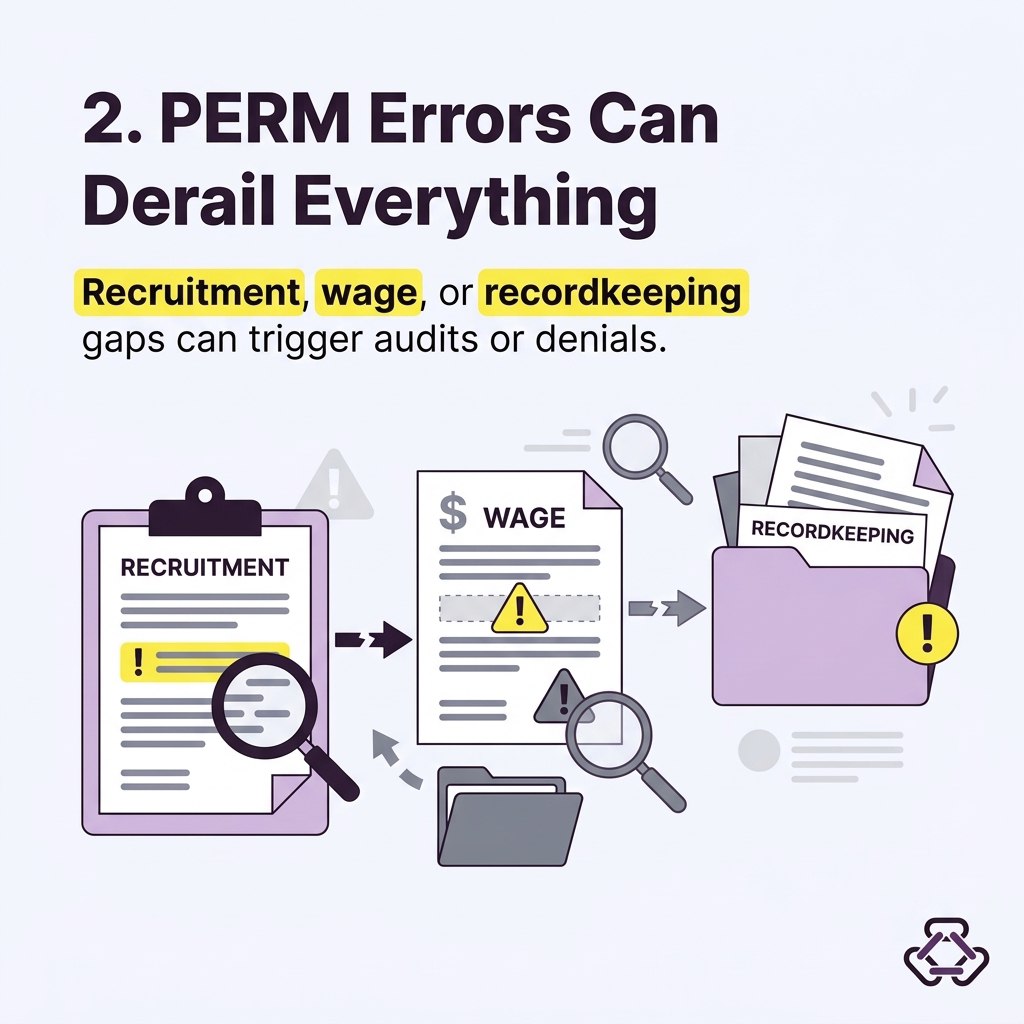
- 2. PERM Labor Certification Errors And Recruitment Problems
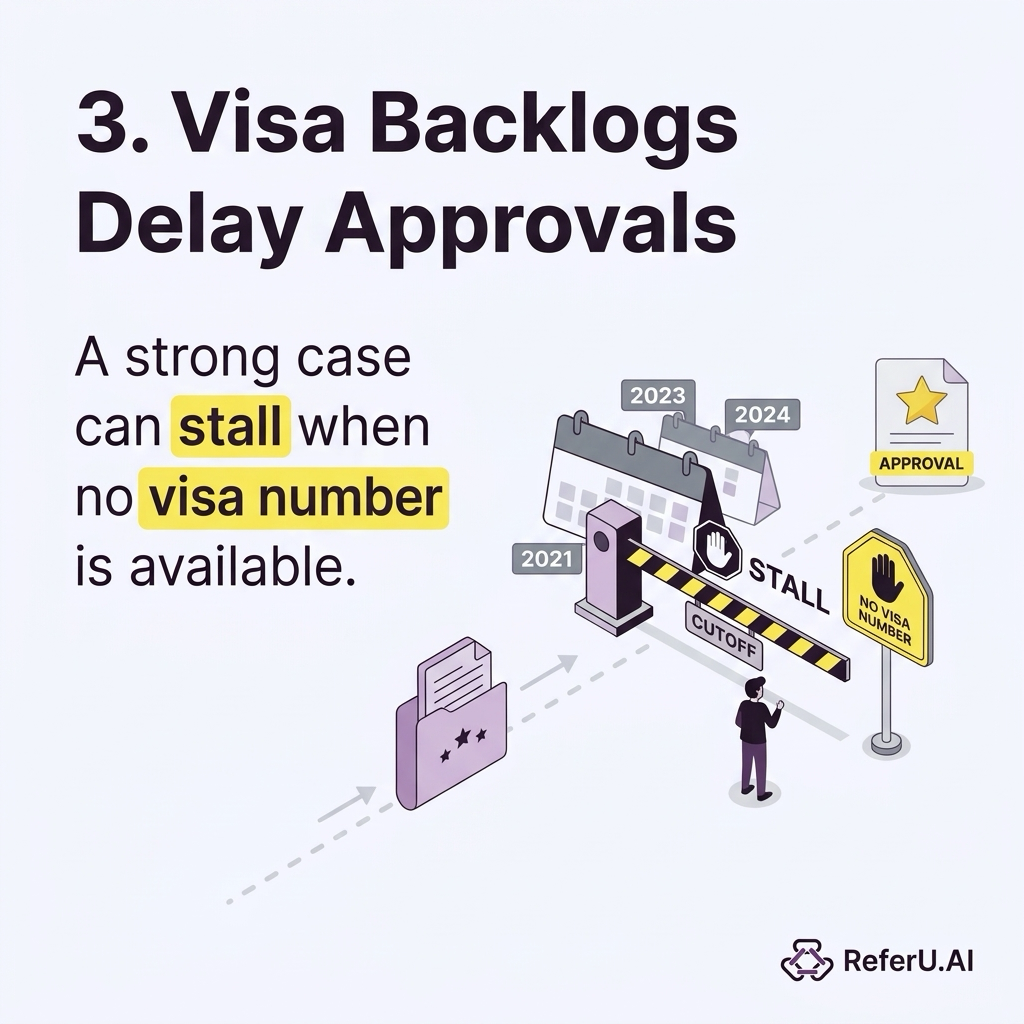
- 3. Priority Date Backlogs And Visa Bulletin Confusion
- Filing Eligibility Is Not The Same As Final Approval
- A Current Date Can Move Backward
- Country Of Chargeability Matters
- 4. Status Violations, Unlawful Presence, And Adjustment Bars
- 5. Medical, Inadmissibility, And Background Issues
- 6. Job Changes, Employer Changes, And Invalid Underlying Sponsorship
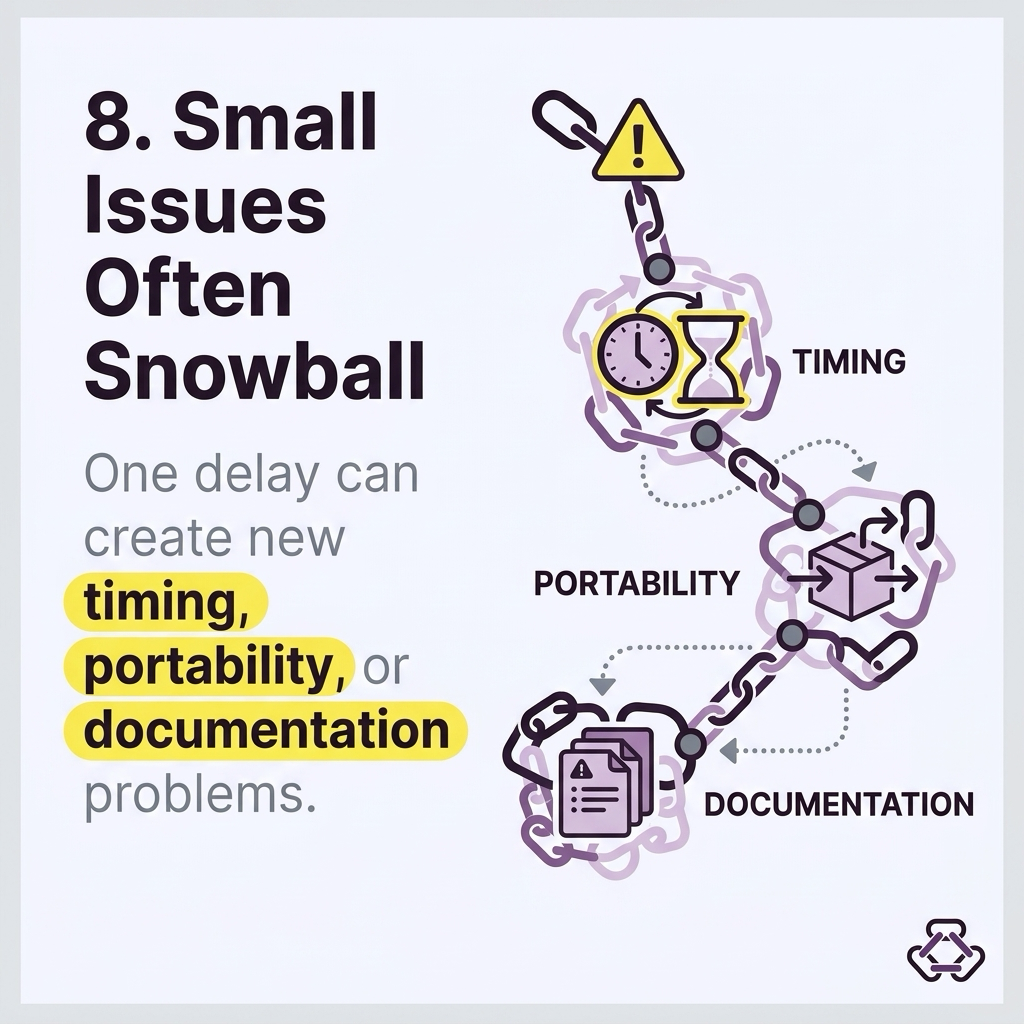
- Why These Problems Often Snowball
- A Practical Way To Think About Risk
- Eligibility Problems
- Procedural Problems
- Admissibility And Strategy Problems
- Final Takeaway

Type
Great Grandchild
Status
Approved
Title (YouTube)
Images Failed (Social)
Images Failed (Social)
Do not index
Publish Date (TikTok)
Apr 26, 2027 06:15
Videos Post IDs (Social)
Hashtags (Social)
#LegalAdvice #LegalHelp #Immigration #EmploymentBasedGreenCards
Caption
Caption X
Cover

OG Image

Alt Image Text
Flat vector illustration of employment-based green card problems causing delay or denial, with a worker and employer facing document, timing, and eligibility obstacles.
Images

Videos
Publish Date (Social)
Feb 19, 2027 10:00
Scheduled (Social)
Scheduled (Social)
Videos Posted (Social)
Videos Posted (Social)
Videos Failed (Social)
Videos Failed (Social)
Created time
Apr 7, 2026 12:01 AM
Sub-item
Authors
CTA Practice Area (Social)
Immigration
TikTok Failed (Social)
TikTok Failed (Social)
Videos Post Links (Social)
Content Updated
May 6, 2026
Images Posted (Social)
Images Posted (Social)
Featured
TikTok Post Links (Social)
Images Post IDs (Social)
YT Post ID
Video Pending Manual (Social)
TikTok Posted (Social)
TikTok Posted (Social)
TikTok Post IDs (Social)
Video Cover (Social)
Images Post Links (Social)
First Comment (Social)
YT Embedded
Images Delete (Social)
Videos Delete (Social)
6 Employment-Based Green Card Problems That Cause Delay or Denial
Employment-based green cards can look straightforward on paper: a qualifying job, the right category, a filed petition, and a path to permanent residence. In practice, many cases slow down or fall apart because of issues that seem small at first but become major once the government reviews the record.
For workers and employers alike, the hard part is often not just eligibility. It is timing, documentation, consistency, and understanding where the process can break. If you are still getting familiar with the big picture, it may help to start with a broader overview of how these cases are categorized and timed.
In this post, you’ll learn about six common employment-based green card problems that often lead to delay or denial, why they happen, and what an attorney often looks at when trying to prevent them.
Scroll to the bottom for every post in this series.
1. The Wrong Category Or A Weak Eligibility Theory
One of the earliest problems in an employment-based green card case is choosing a category that does not line up well with the worker’s background, the offered job, or the evidence available.
USCIS explains that employment-based green cards are divided into preference categories, including EB-1, EB-2, EB-3, EB-4, and EB-5, with different eligibility rules for each one. The employment-based annual worldwide level is at least 140,000, and visa numbers are allocated by category and country of chargeability, which means category choice affects both eligibility and timing (USCIS, Department of State).
This issue often appears in a few ways:
- A worker may be presented as qualifying for EB-2 when the job and credentials fit EB-3 more naturally
- An employer may describe a role in a way that creates avoidable questions about minimum requirements
- A self-petition theory, such as a national interest waiver, may be filed with evidence that does not fully support the legal standard
- The petition may rely on titles rather than detailed proof of duties, experience, education, or industry impact
When the case theory is weak, USCIS may issue a Request for Evidence, a Notice of Intent to Deny, or a denial. Even if a petition is not denied outright, weak framing can create months of delay.
This is one reason many employers and workers spend significant time on category analysis before filing. In similar cases, attorneys often compare the worker’s documented background, the offered role, prior immigration history, and the evidentiary burden attached to each category before deciding on strategy.
2. PERM Labor Certification Errors And Recruitment Problems
For many EB-2 and EB-3 cases, the labor certification process is where delays begin. The Department of Labor’s PERM system is highly technical, and small mistakes can trigger audits, denials, or the need to start over.
The Department of Labor’s PERM guidance explains that the agency examines whether recruitment and hiring were conducted in good faith and whether U.S. worker applicants were considered properly. The agency may audit cases and, in some situations, require supervised recruitment in future filings (DOL PERM Guidance). The DOL Office of Inspector General has also reported concerns around PERM adjudication and denials, underscoring how closely these applications are scrutinized (DOL OIG Report).
Common PERM-related problems include:
- Inaccurate job requirements
- Recruitment steps that do not match the regulations
- Wage or worksite inconsistencies
- Poor recordkeeping
- A job description that appears tailored too narrowly to the sponsored worker
- Layoff-related issues or incomplete consideration of available U.S. workers
Sometimes the problem is not fraud or bad intent. It is a documentation gap. If the recruitment file does not clearly show what happened and why, the employer may have difficulty defending the filing later.
Because PERM can shape the rest of the case, many businesses treat this stage as a document-intensive compliance project rather than a simple form filing. That is also why workers often benefit from understanding the practical side of getting the filing package ready before submission, even when the employer is leading the process.
3. Priority Date Backlogs And Visa Bulletin Confusion
A case can be fully approvable and still sit in limbo because no immigrant visa number is available.
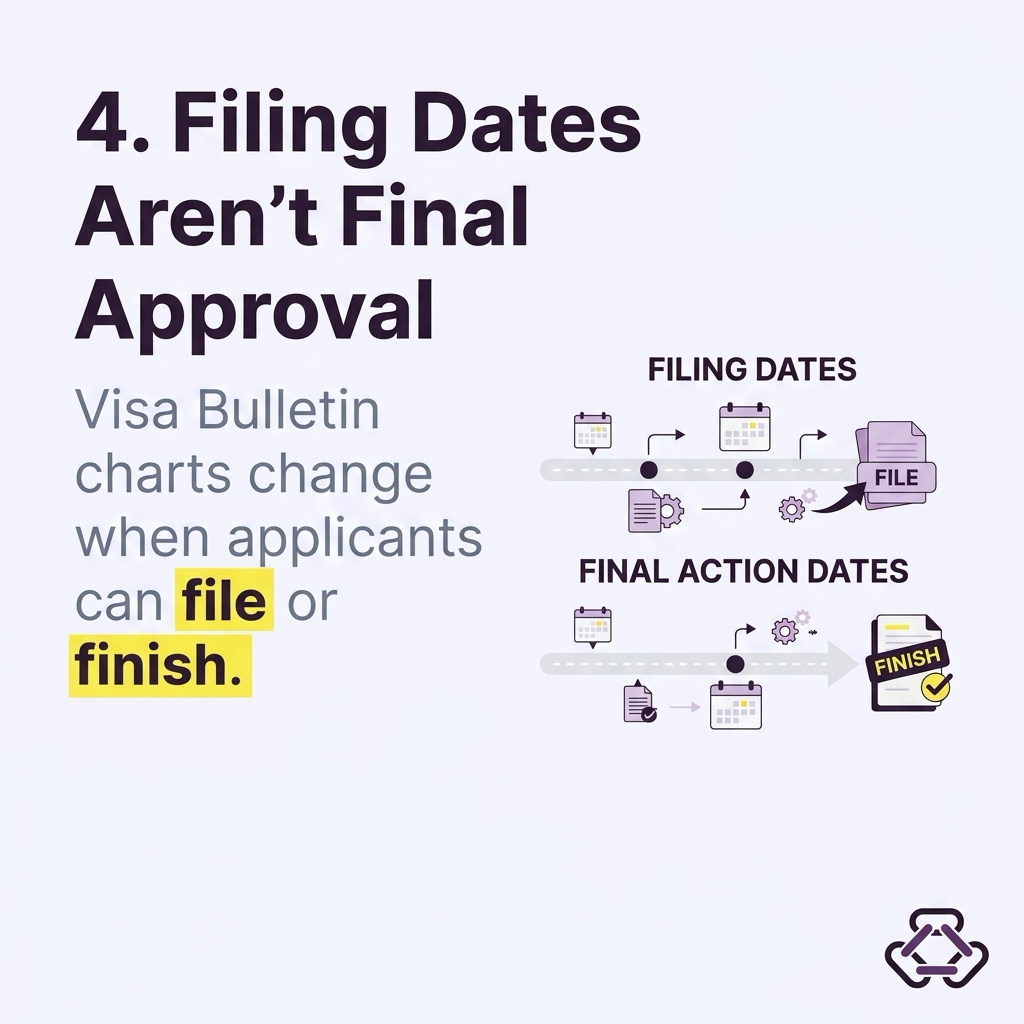
The Department of State’s Visa Bulletin controls when many applicants can move forward or receive final approval. The March 2026 Visa Bulletin, for example, continues to show employment-based final action cut-off dates for several categories and countries, reflecting ongoing backlogs rather than a simple first-filed, first-approved system (Department of State). The State Department also explains that cut-off dates can retrogress if demand becomes too high during the monthly allocation process (Visa Bulletin Overview).
This creates a few common misunderstandings:
Filing Eligibility Is Not The Same As Final Approval
In some months, USCIS allows adjustment applicants to use the “Dates for Filing” chart. In other months, applicants have to rely on the “Final Action Dates” chart. That difference can affect whether someone may file Form I-485 now or wait longer (Department of State).
A Current Date Can Move Backward
Retrogression is one of the most frustrating parts of the process. A worker may appear close to approval, then see the priority date move backward because demand surged in that category or country.
Country Of Chargeability Matters
Per-country limits play a major role in wait times. The Immigration and Nationality Act sets country caps, and the Visa Bulletin reflects how those limits affect employment-based queues (Department of State).
When people ask why a “perfectly fine” case is delayed, this is often the answer. The issue is not the petition itself. The issue is visa availability.
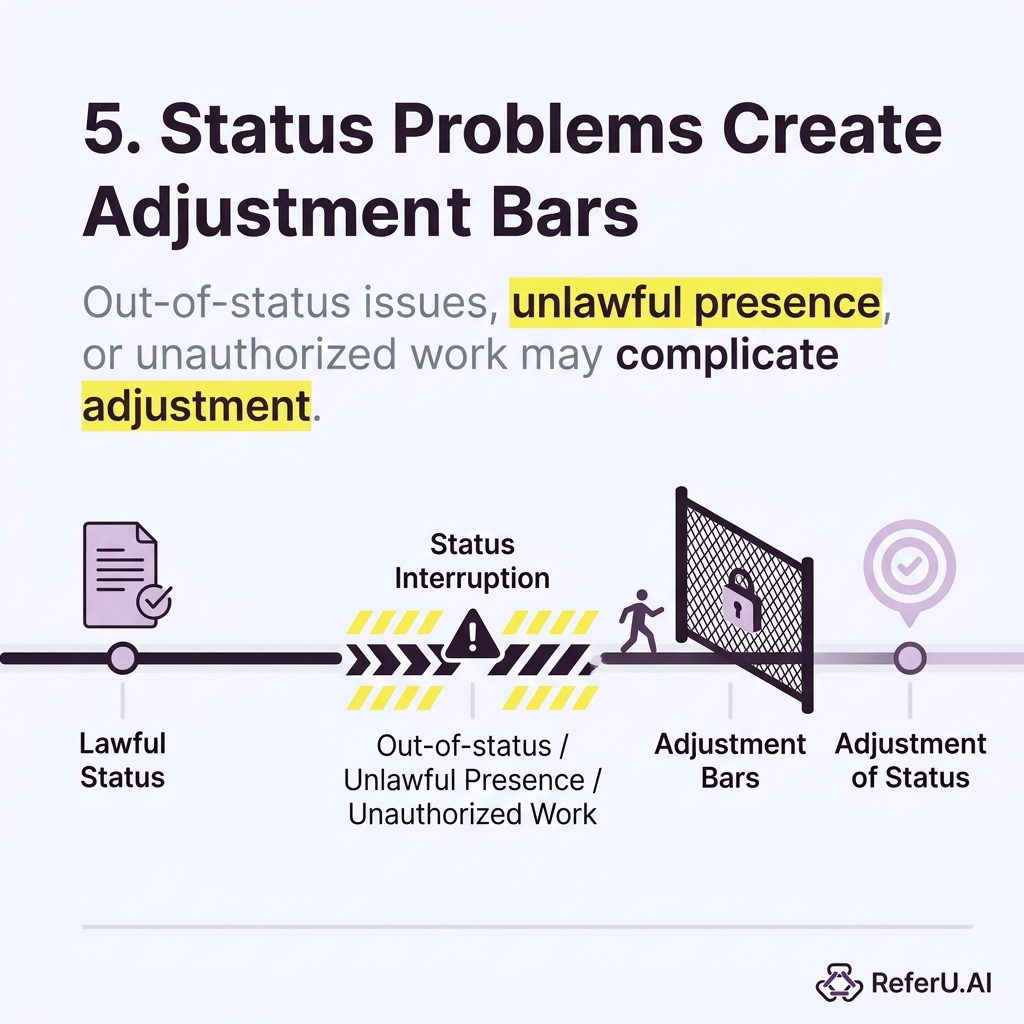
4. Status Violations, Unlawful Presence, And Adjustment Bars
Another major problem appears when a worker assumes an approved I-140 automatically clears the way to permanent residence. It does not.
USCIS states that employment-based adjustment applicants can be barred from adjusting status if they are not in lawful nonimmigrant status at the time of filing, even if they are otherwise lawfully present. USCIS also explains that adjustment applicants are generally ineligible if adjustment bars or grounds of inadmissibility apply, subject to limited exceptions such as INA 245(k) in some employment-based cases (USCIS Policy Manual, USCIS Policy Manual).
This area gets especially complicated because several different concepts overlap:
- Out of status
- Unlawful presence
- Unauthorized employment
- Adjustment bars
- Grounds of inadmissibility
- Consular processing consequences after departure
USCIS notes that if unlawful presence reaches certain thresholds and the person departs the United States, a three-year or ten-year bar may be triggered in many situations (USCIS). USCIS also explains that INA 245(i) is narrow, does not function as a broad amnesty, and does not erase all inadmissibility issues or protect someone from removal simply because a qualifying filing exists (USCIS).
This is where otherwise promising cases can become risky very quickly. A person may be eligible for the immigrant petition but not eligible to adjust status in the United States. In some matters, the strategic question becomes whether adjustment or consular processing creates fewer complications, and that is often a fact-specific legal analysis.
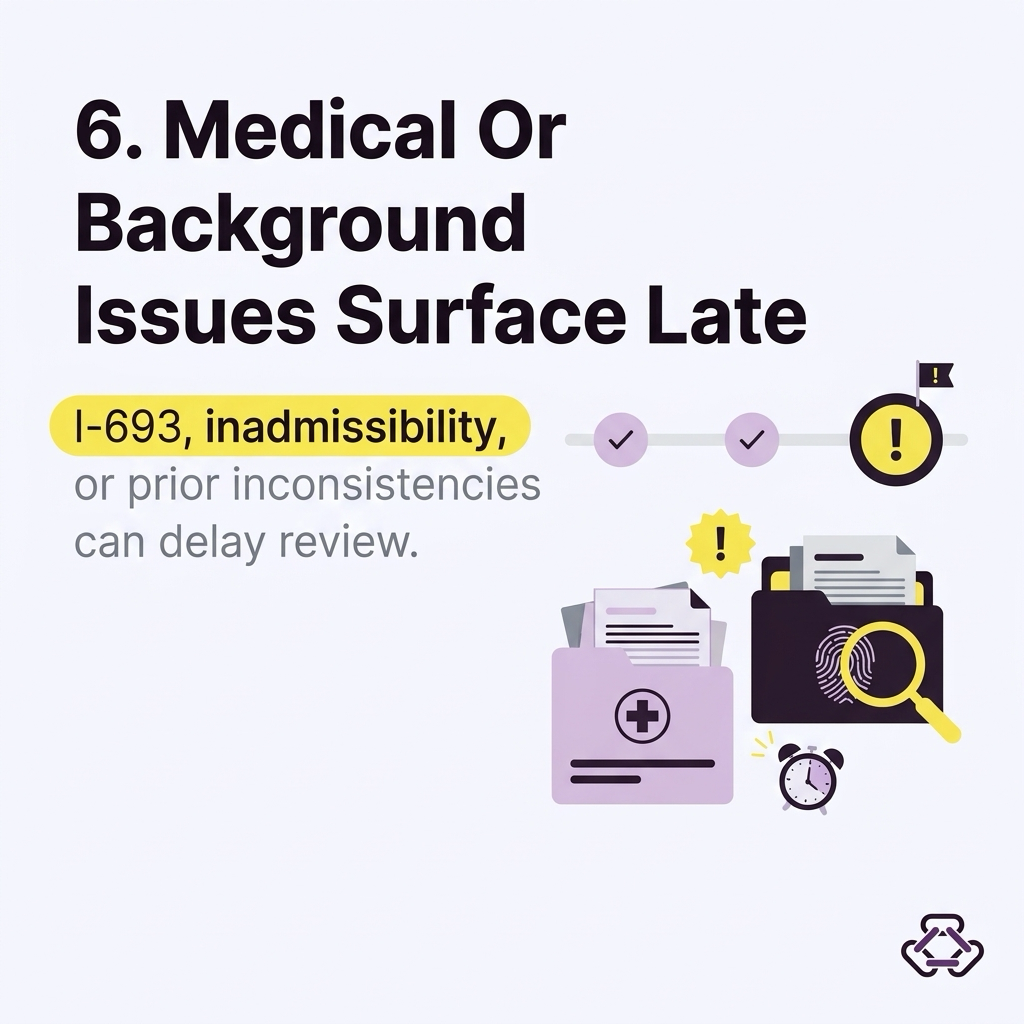
5. Medical, Inadmissibility, And Background Issues
Many people think the hardest part is proving the job offer or the worker’s qualifications. Sometimes the harder part is clearing the admissibility review attached to Form I-485 or immigrant visa processing.
USCIS states that an employment-based green card applicant generally can only be approved if no ground of inadmissibility applies, and in some cases a waiver may be available depending on the issue (USCIS). These issues can involve prior immigration violations, misrepresentation, certain criminal matters, health-related grounds, security concerns, or other statutory bars.
A frequent delay point is the medical exam. USCIS currently requires certain applicants to submit a properly completed Form I-693 with Form I-485, and USCIS has clarified that for forms signed on or after November 1, 2023, the medical exam remains valid only while the application it was submitted with is pending (USCIS Alert, USCIS Alert, USCIS Form I-693 Page).
That sounds simple, but in practice several things can go wrong:
- The medical is missing or incomplete
- Vaccination documentation is not handled correctly
- USCIS believes the exam no longer reflects the applicant’s current condition
- A prior statement on an older immigration filing creates a consistency question
- A criminal or immigration history issue surfaces during biometrics or review
USCIS has said officers may request new or updated medical evidence if there is reason to believe the original exam no longer accurately reflects the applicant’s condition (USCIS).
In real cases, this category can be broader than applicants expect. A filing that looks employment-based on the front end may be denied on admissibility grounds that have nothing to do with the employer or the offered job.
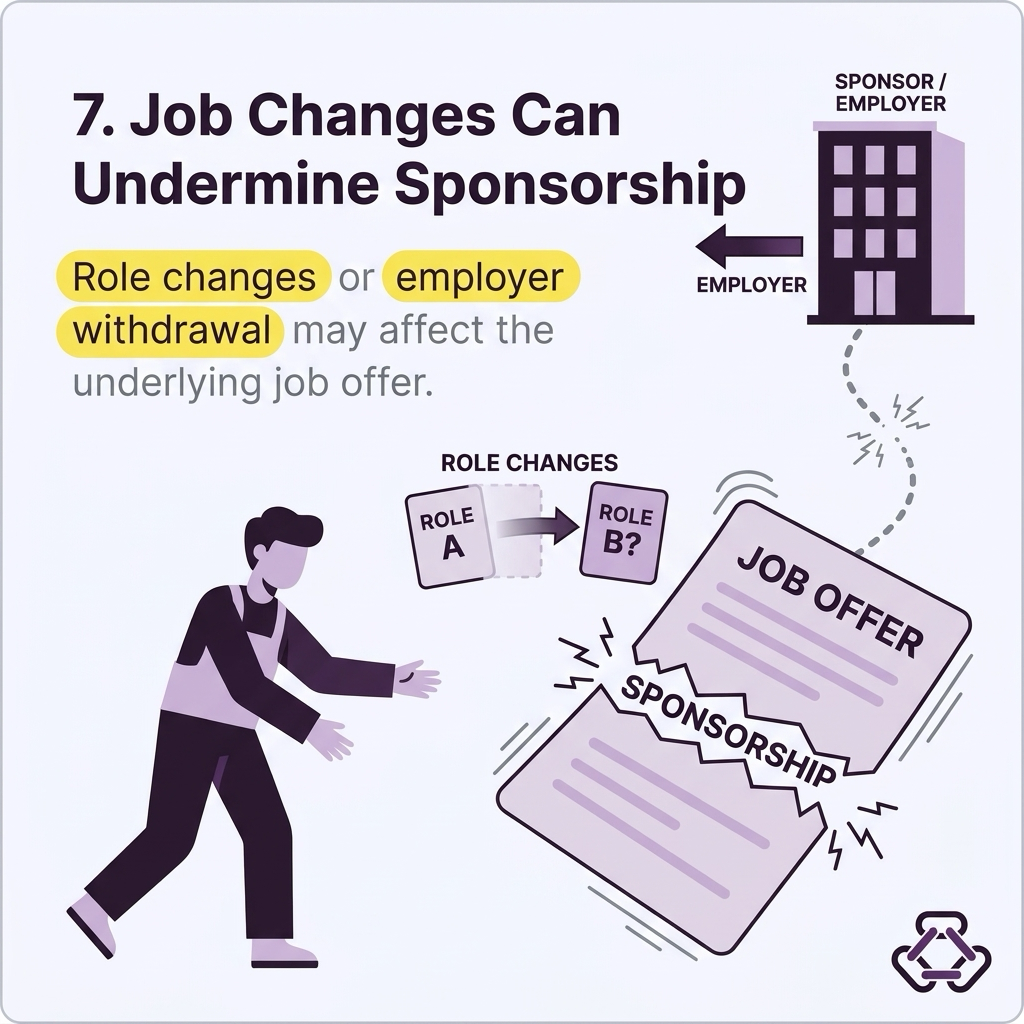
6. Job Changes, Employer Changes, And Invalid Underlying Sponsorship
Employment-based green card cases are built around a real qualifying job opportunity. If that job changes materially, the sponsoring employer withdraws support, or the business changes course, the case may be delayed or derailed.
USCIS explains that when adjustment is based on an underlying immigrant petition, officers confirm that a qualifying job offer still exists in employment-based cases. The agency notes that withdrawal of a job offer or failure of the petitioner’s business may affect eligibility (USCIS Policy Manual).
This comes up often when:
- The employer restructures
- The worker gets promoted into a meaningfully different role
- The offered job no longer exists
- The employer withdraws the I-140
- The worker wants to move to a new employer before the case reaches a safe portability stage
There is some flexibility here, but the timing matters. USCIS says that if a Form I-485 based on employment has been pending for 180 days or more, the worker may be able to port to a new job offer in the same or similar occupational classification under AC21, typically through Form I-485 Supplement J (USCIS, USCIS Policy Manual). USCIS also explains that if an approved I-140 has been approved for at least 180 days, or if the associated I-485 has been pending at least 180 days, an employer withdrawal does not automatically result in revocation for priority date retention and portability purposes, although important exceptions still apply (USCIS FAQ).
But there are limits. USCIS says earlier priority dates may not be retained in later petitions if the original approval was revoked because it was approved in error, tied to a revoked or invalidated labor certification, or involved fraud or willful misrepresentation (USCIS Policy Manual).
So while job mobility can be possible, it is not automatic, and the details of the old role and new role can matter more than the title alone.
Why These Problems Often Snowball
What makes employment-based green card issues so difficult is that they rarely stay isolated.
A PERM problem can affect the I-140. A visa backlog can push the case into a period where the worker changes jobs. A job change can raise portability questions. A delay can also make medical timing, maintenance of status, or travel strategy more complicated.
That is why many applicants and employers look for immigration counsel early, especially where there is any history of prior status violations, inconsistent filings, category uncertainty, or business changes during the sponsorship process.
For people trying to figure out the process generally, it can also help to read a broader explanation of how sponsorship, eligibility, and the overall path usually work before focusing on one isolated filing step.
A Practical Way To Think About Risk
In general terms, employment-based green card delay and denial issues tend to fall into three buckets:
Eligibility Problems
These involve the worker, the job, or the immigrant category itself.
Procedural Problems
These include filing mistakes, missing records, PERM compliance issues, and timing errors.
Admissibility And Strategy Problems
These include unlawful presence, adjustment bars, medical issues, consular processing risks, and changes in employment after filing.
An attorney may help assess all three at once, instead of looking at each form as a separate event. That broader view is often where major problems are identified before USCIS or a consulate identifies them first.
Final Takeaway
Employment-based green card cases are often delayed or denied for reasons that are more technical than people expect: the wrong category, PERM recruitment errors, visa bulletin misunderstandings, status problems, inadmissibility issues, or job changes that affect the underlying sponsorship.
None of those issues automatically ends every case. But each one can change the strategy, the timeline, and the available options in a meaningful way. When a filing involves changing employers, prior immigration complications, or a case that has already been delayed, many people find it helpful to speak with counsel who can evaluate the facts against current rules, court records, and agency guidance.
Visit ReferU.AI to get matched with an attorney who has demonstrable experience in cases like yours — for free.
