Table of Contents
- How to Decide Whether to File From Inside the United States or Through a Consulate
- What The Two Paths Actually Mean
- Adjustment Of Status
- Consular Processing
- Why This Decision Matters More Than Many People Expect
- When Filing Inside The United States Often Looks More Attractive
- 1. Interim Benefits May Be Available
- 2. Concurrent Filing May Move The Case Earlier
- 3. Leaving The United States May Introduce Separate Risks
- When Consular Processing May Be The Better Fit
- 1. The Applicant Is Outside The United States
- 2. Adjustment Eligibility May Be Unclear Or Unavailable
- 3. Some Applicants Prefer A Single Final Step Abroad
- The Timing Question: Faster Is Not Always Predictable
- USCIS Timing
- Consular Timing
- The Visa Bulletin Often Drives The Entire Strategy
- Practical Questions That Often Tip The Balance
- Are You In Valid Status Right Now?
- Do You Expect To Travel Internationally During The Process?
- Which Consulate Would Actually Handle The Case?
- Would Interim Work Authorization Help Your Household?
- Is There Any Unlawful Presence Or Prior Immigration Violation In The Background?
- Common Misunderstandings
- “Consular Processing Is Always Faster”
- “Adjustment Is Always Safer”
- “You Can Freely Switch Anytime”
- A Simple Way To Think About The Decision
- Final Thoughts

Type
Great Grandchild
Status
Approved
Title (YouTube)
Images Failed (Social)
Images Failed (Social)
Do not index
Publish Date (TikTok)
Apr 26, 2027 07:15
Videos Post IDs (Social)
Hashtags (Social)
#LegalAdvice #LegalHelp #Immigration #EmploymentBasedGreenCards
Caption
Caption X
Cover

OG Image

Alt Image Text
Flat vector illustration of an employment-based green card applicant deciding between adjustment of status inside the United States and consular processing abroad.
Images

Videos
Publish Date (Social)
Feb 19, 2027 10:30
Scheduled (Social)
Scheduled (Social)
Images Posted (Social)
Images Posted (Social)
Videos Posted (Social)
Videos Posted (Social)
Featured
Created time
Apr 7, 2026 12:01 AM
Sub-item
Authors
CTA Practice Area (Social)
Immigration
TikTok Failed (Social)
TikTok Failed (Social)
Videos Post Links (Social)
TikTok Post Links (Social)
Images Post IDs (Social)
YT Post ID
Video Pending Manual (Social)
TikTok Posted (Social)
TikTok Posted (Social)
TikTok Post IDs (Social)
Video Cover (Social)
Images Post Links (Social)
First Comment (Social)
Videos Failed (Social)
Videos Failed (Social)
YT Embedded
Images Delete (Social)
Videos Delete (Social)
Carousel Video URL (Social)
How to Decide Whether to File From Inside the United States or Through a Consulate
For many employment-based green card applicants, one of the most important strategy questions is also one of the least intuitive: Do you file from inside the United States through adjustment of status, or complete the process abroad through consular processing?
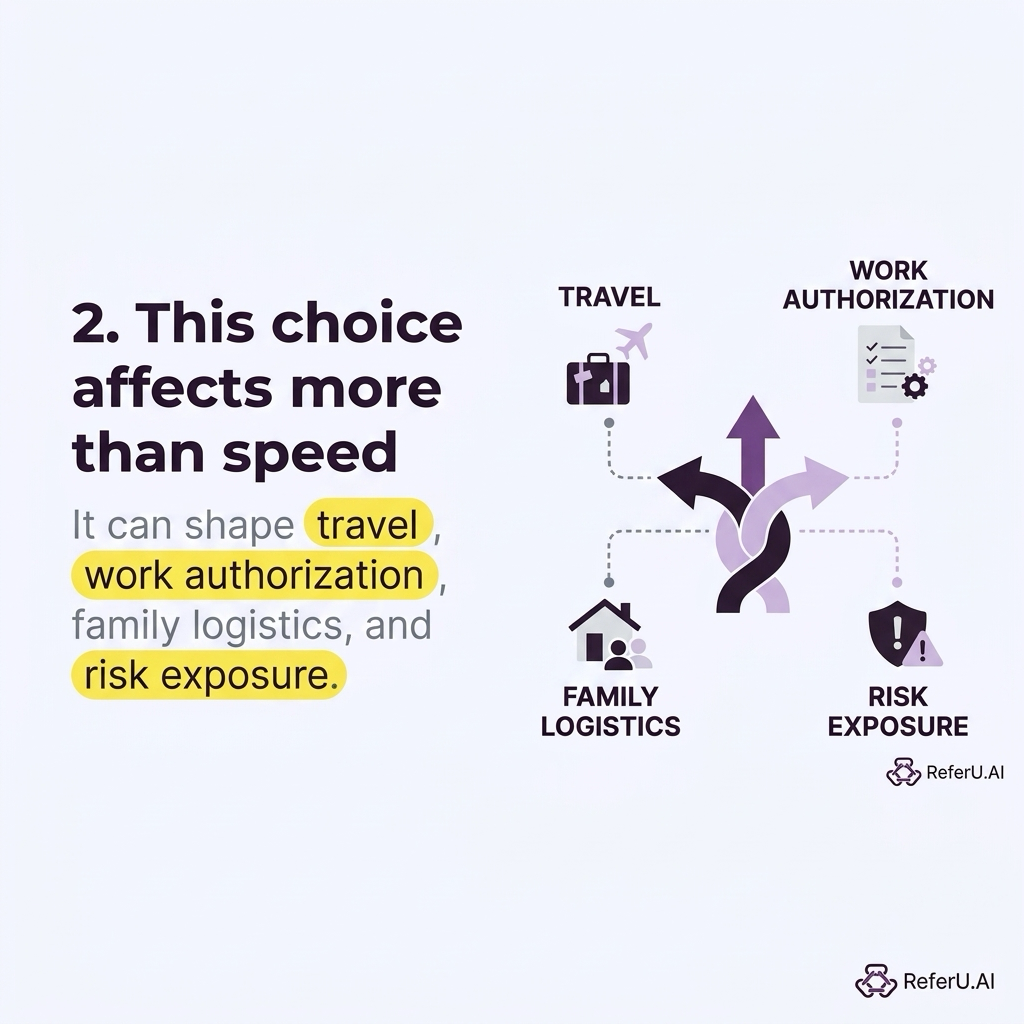
That choice can affect timing, travel, work authorization, family logistics, and even risk exposure if there are prior status issues in the record. It is not just a paperwork preference. In many cases, it becomes a broader filing strategy question tied to visa availability, current immigration status, country of chargeability, and where the applicant is physically located when the time comes to move forward.
In this post you’ll learn how adjustment of status and consular processing work, what practical tradeoffs often matter most, where processing delays tend to appear, and how to think about the question in a way that fits the facts of your case. If you want a broader foundation first, it may help to start with this overview of employment-based green card categories, priority-date issues, and filing strategy.
Scroll to the bottom for every post in this series.
What The Two Paths Actually Mean
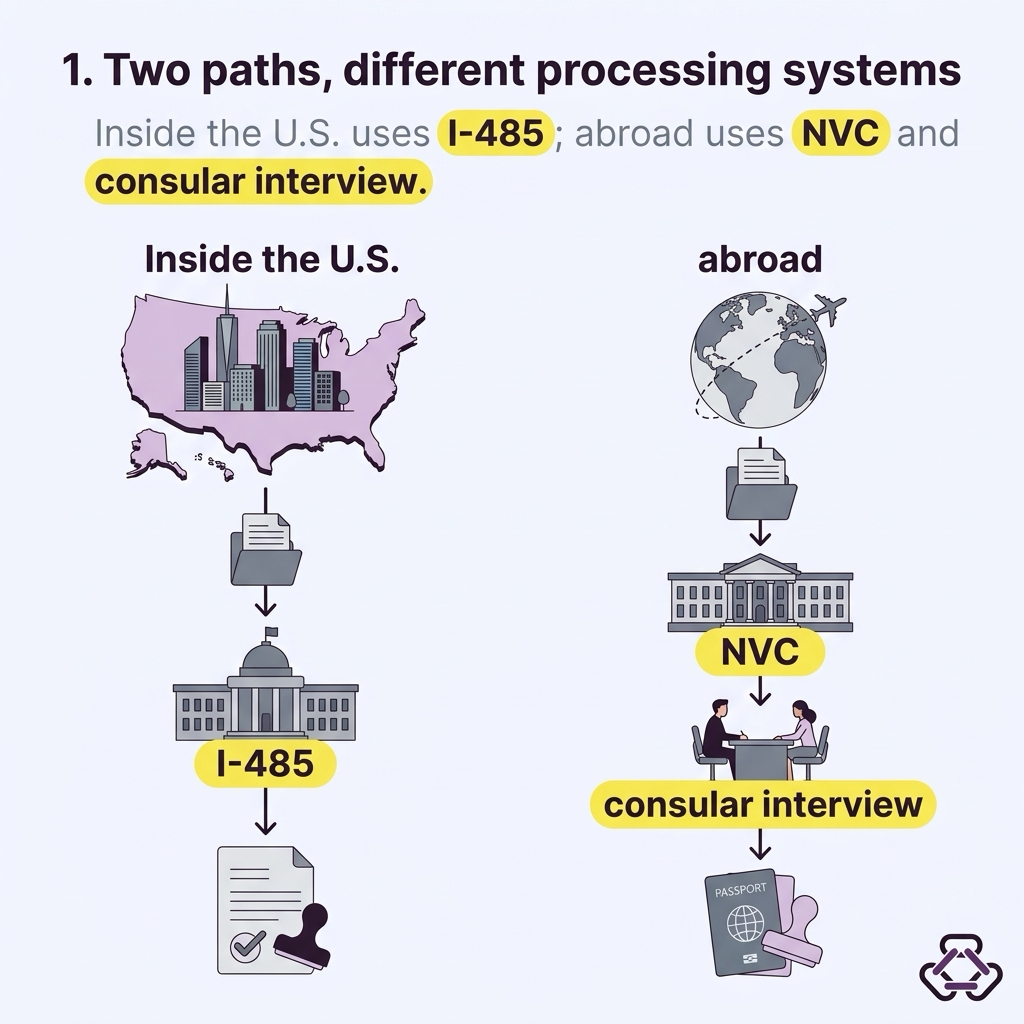
In general terms, there are two main ways to become a lawful permanent resident through an employment-based case once an immigrant visa is available.
Adjustment Of Status
If the applicant is physically present in the United States and otherwise eligible, the person may apply to adjust status by filing Form I-485 with USCIS. USCIS explains that concurrent filing may be available in many employment-based cases when a visa number is immediately available, and that this option exists only for applicants seeking adjustment of status inside the United States, not for consular cases. USCIS also ties adjustment filing to the monthly Visa Bulletin process and its separate “when to file” chart determinations. USCIS’s visa-availability guidance and the Department of State’s April 2026 Visa Bulletin are the current official references for whether an employment-based category is current enough to move forward.
Consular Processing
If the applicant will complete immigrant visa processing outside the United States, the case typically goes from USCIS approval to the National Visa Center and then to a U.S. embassy or consulate abroad. The Department of State describes this as the immigrant visa process handled through the National Visa Center and the consular interview stage, where a consular officer decides visa eligibility at interview. The State Department also explains that interview scheduling depends on both visa availability and post capacity at the assigned embassy or consulate, with current interview scheduling data published in the IV Scheduling Status Tool and interview procedures outlined in its immigrant visa interview guidance.
Why This Decision Matters More Than Many People Expect
A lot of applicants initially frame the question as: Which option is faster? That is understandable, but it is often incomplete.
A more practical version of the question is:
- Where is the applicant now?
- Is the applicant eligible to adjust status in the United States?
- Is a visa number available now, or likely to become available soon?
- Does the applicant want interim benefits like work authorization or travel permission while the green card case is pending?
- Are there prior status violations, unlawful presence concerns, or travel issues that could become more serious if the person leaves the United States?
- Which consular post would handle the case, and what does that post’s current employment-based scheduling picture look like?
The last point has become especially important. The Department of State announced that, effective November 1, 2025, immigrant visa applicants are generally scheduled in the consular district of their residence, or in their country of nationality if requested, with limited exceptions. That can narrow flexibility for applicants who were hoping to process at a faster third-country post. The current policy appears in the State Department’s notice on adjudicating immigrant visa applicants in their country of residence.
When Filing Inside The United States Often Looks More Attractive
Adjustment of status often becomes appealing for applicants who are already in the United States in valid status and want to keep as much continuity as possible.
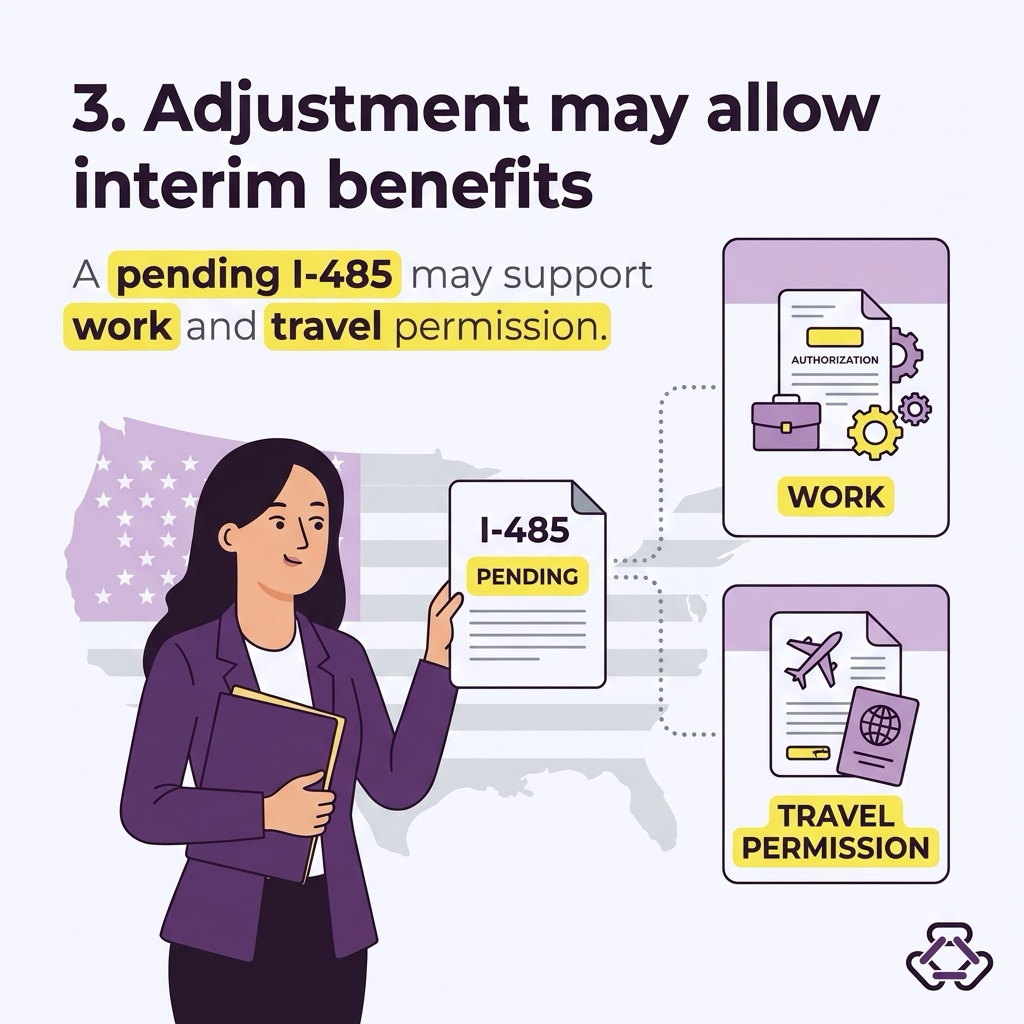
1. Interim Benefits May Be Available
A pending I-485 can open the door to related benefits, including an Employment Authorization Document and, in many cases, advance parole travel permission through concurrent or later filing with the adjustment case. USCIS’s Form I-485 page and filing instructions describe those options.
For workers whose nonimmigrant status is expiring, or for families trying to avoid a long period without work authorization for a spouse, that can be a major practical consideration. Some people comparing the two paths focus heavily on the final green card approval date and overlook the value of what happens while the case is pending.
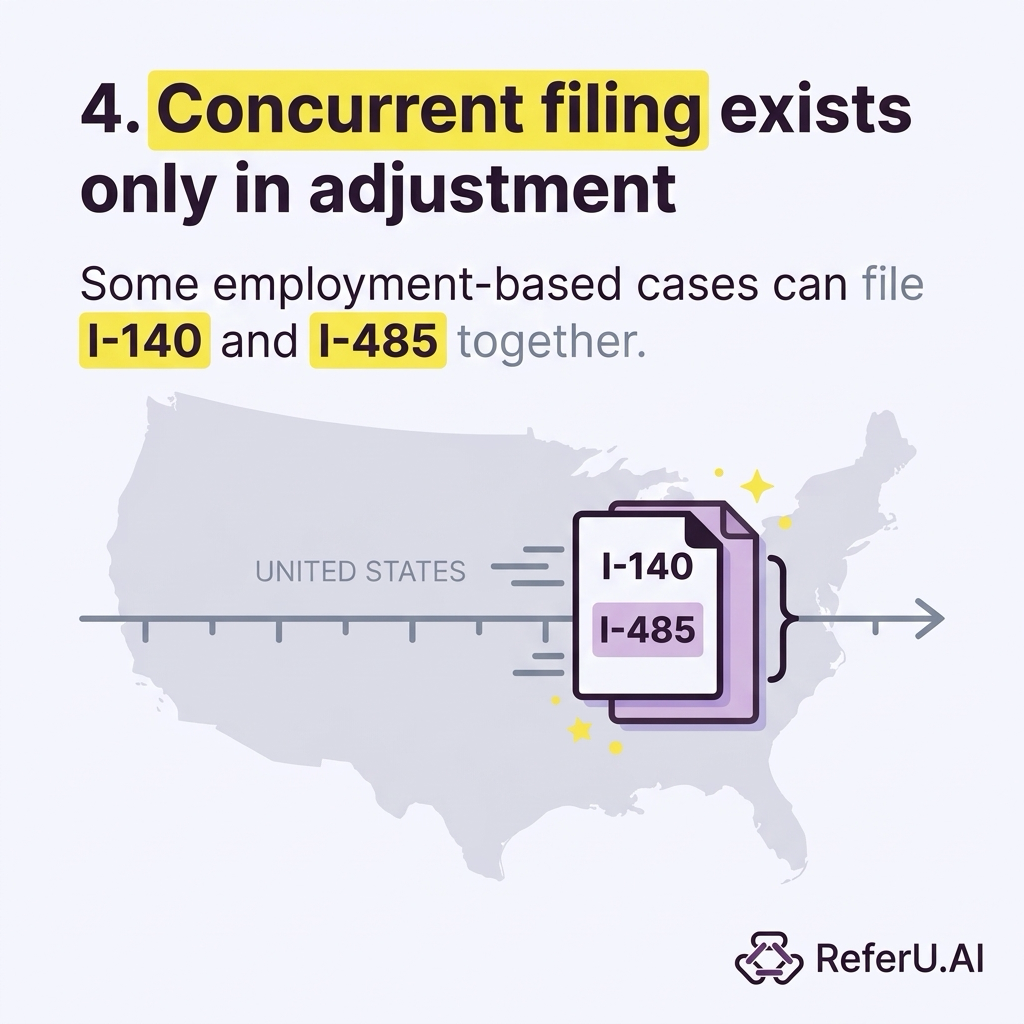
2. Concurrent Filing May Move The Case Earlier
If the underlying employment petition and visa availability line up, many employment-based applicants can file the I-140 and I-485 together. USCIS states clearly that concurrent filing is available only in adjustment cases, not in consular processing cases. That can affect the overall timing of when the permanent residence application actually gets in line with USCIS. See the official USCIS page on concurrent filing of Form I-485.
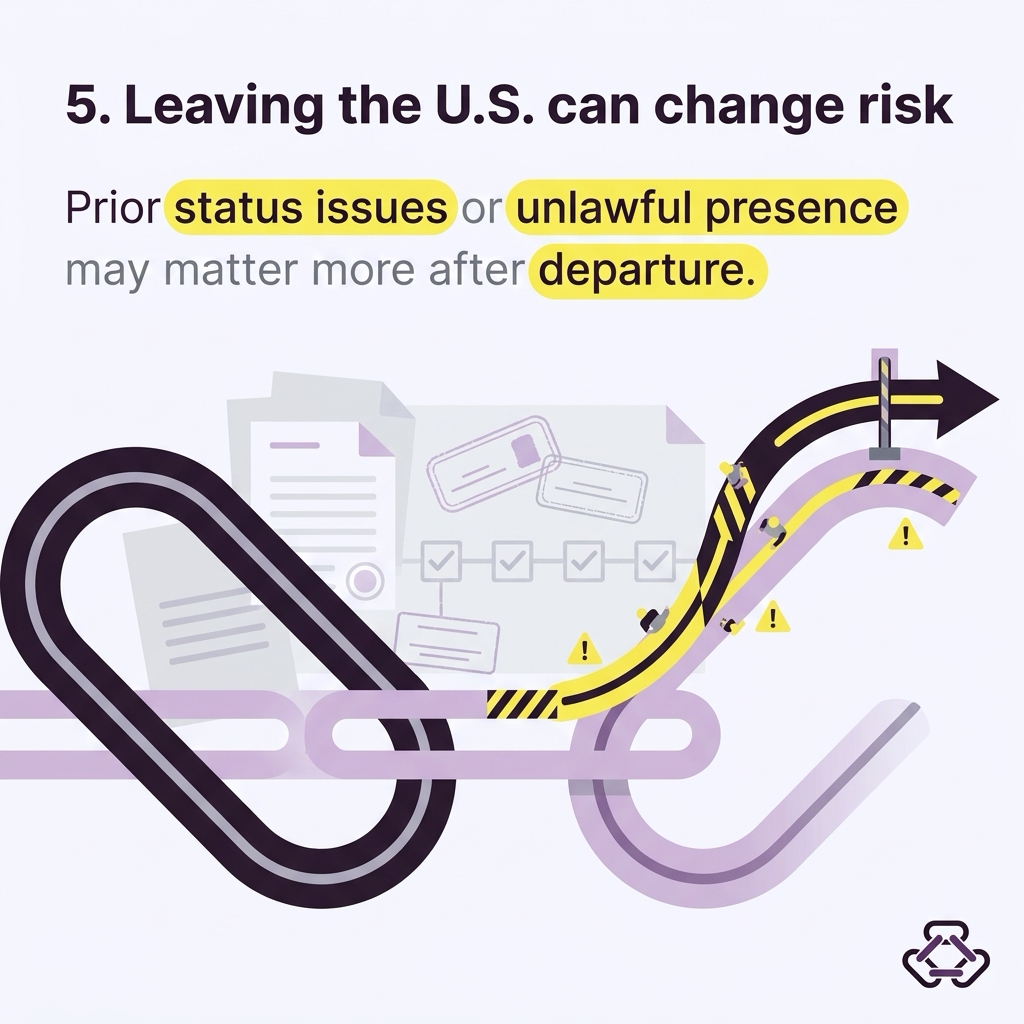
3. Leaving The United States May Introduce Separate Risks
For some applicants, especially those with complicated status history, the question is not simply convenience. It may involve admissibility issues triggered by departure. USCIS explains that accruing 180 days or more of unlawful presence and then departing can trigger three- or ten-year bars, depending on the facts. That issue is discussed in USCIS resources on unlawful presence and inadmissibility and INA 245(i).
That does not mean every person with a past status issue is barred from adjustment. USCIS policy also recognizes important exceptions, including the INA 245(k) framework for some employment-based applicants, which may soften certain status-related bars where the total period of violations remains within the statutory allowance. USCIS discusses those issues in its Policy Manual sections on unlawful status at filing and employment-based applicants not in lawful nonimmigrant status.
In practical terms, this is one of the biggest reasons strategy often benefits from attorney review before choosing a path.
When Consular Processing May Be The Better Fit
Consular processing is not just the “outside the U.S.” version of the same case. In some situations, it may be the more workable path.
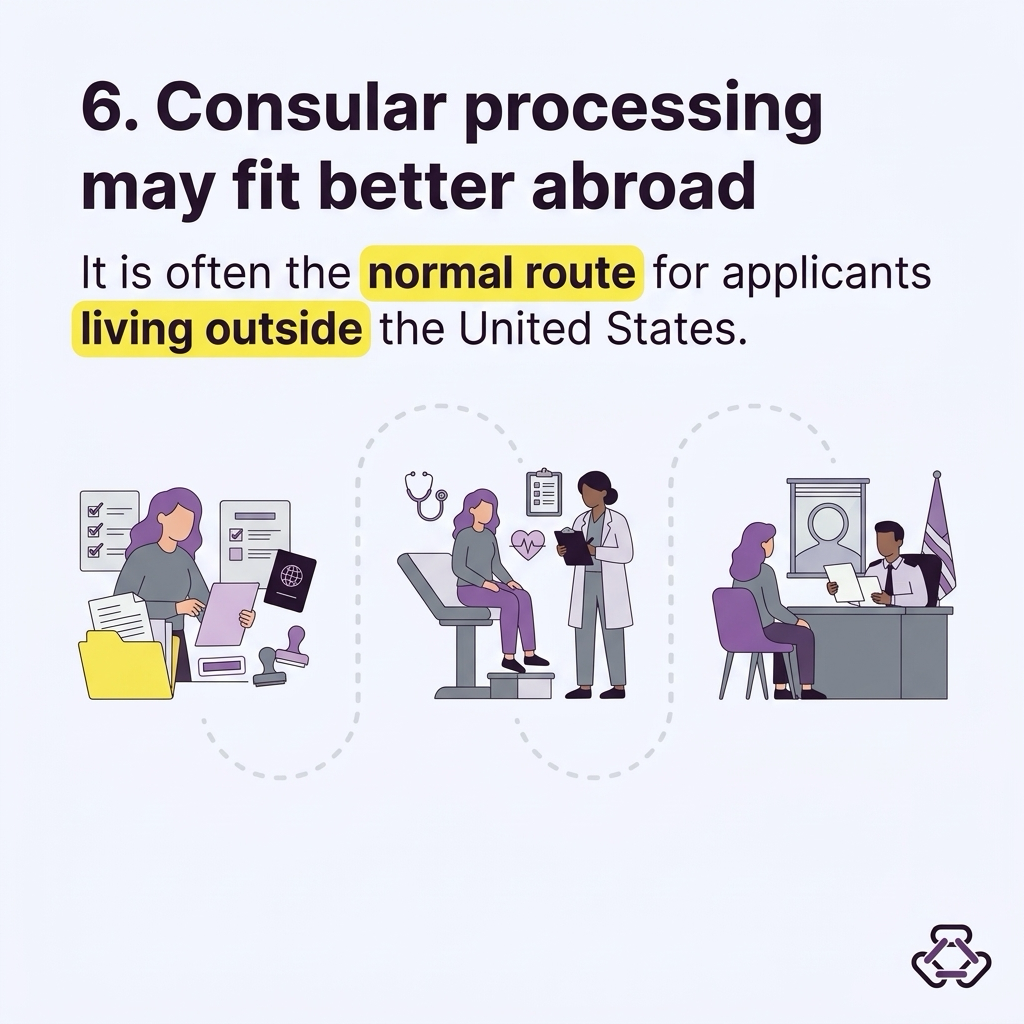
1. The Applicant Is Outside The United States
This is the most straightforward scenario. If the worker lives abroad, consular processing is often the normal route after the I-140 approval and visa availability. The case proceeds through NVC processing, document collection, medical exam requirements, and then the immigrant visa interview abroad.
2. Adjustment Eligibility May Be Unclear Or Unavailable
Some applicants are physically in the United States but may not be eligible to adjust because of entry issues, status history, unauthorized employment concerns, or other statutory barriers. USCIS’s Policy Manual lays out several adjustment bars and exceptions in its chapter on eligibility requirements.
Where adjustment is unavailable, consular processing may remain the only viable route to permanent residence. That said, the departure step can carry its own consequences, which is why the analysis often turns on details that look small on paper but matter a great deal in practice.
3. Some Applicants Prefer A Single Final Step Abroad
A few workers and families simply prefer to complete the final stage through a consulate because they are already relocating, working internationally, or do not want a long pending I-485 inside the United States. In those cases, consular processing may feel administratively cleaner, even though the timeline still depends heavily on visa availability and post scheduling.
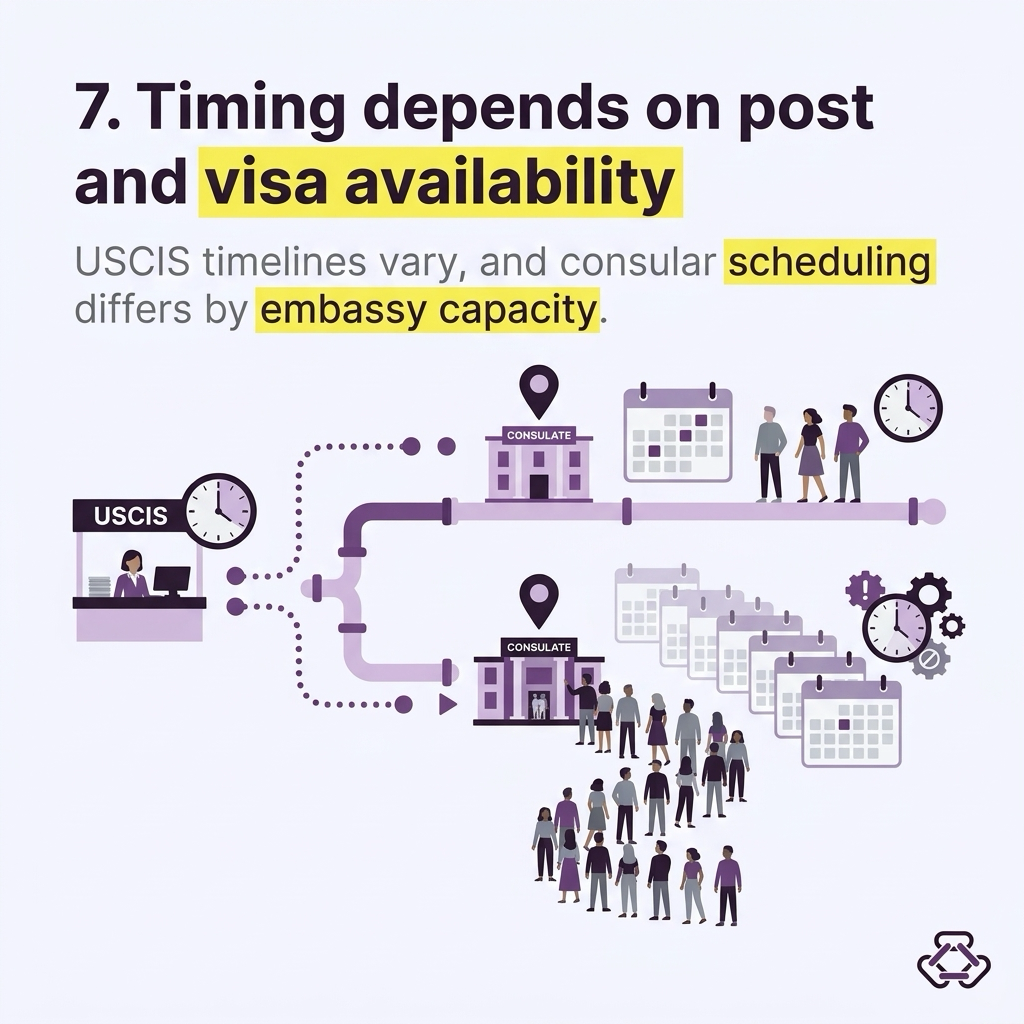
The Timing Question: Faster Is Not Always Predictable
It is tempting to ask whether adjustment of status or consular processing is “faster.” The more accurate answer is that timing is highly fact-specific.
USCIS Timing
USCIS processing times vary by form type, field office, service center, and category. USCIS has published recent material showing broader progress in processing times across several form types, but that kind of national summary does not eliminate local variation in individual I-485 adjudications. See USCIS’s recent fact sheet on progress on processing times.
Consular Timing
Consular cases add a separate layer: the assigned post’s scheduling capacity. The Department of State’s IV Scheduling Status Tool now gives applicants an official way to compare when documentarily complete employment-based cases are being scheduled at specific posts. As of April 2026, some posts are scheduling employment-based cases that became documentarily complete in April 2026, while others lag much further behind. For example, the published tool shows substantial variation among posts such as Amsterdam, Ankara, Abu Dhabi, and Accra. That makes broad statements like “consular is always faster” or “adjustment is always slower” hard to support across all cases.
This is one reason filing strategy often works best when it is tied to a real consular post, a real visa category, and a real priority date—not just general internet anecdotes.
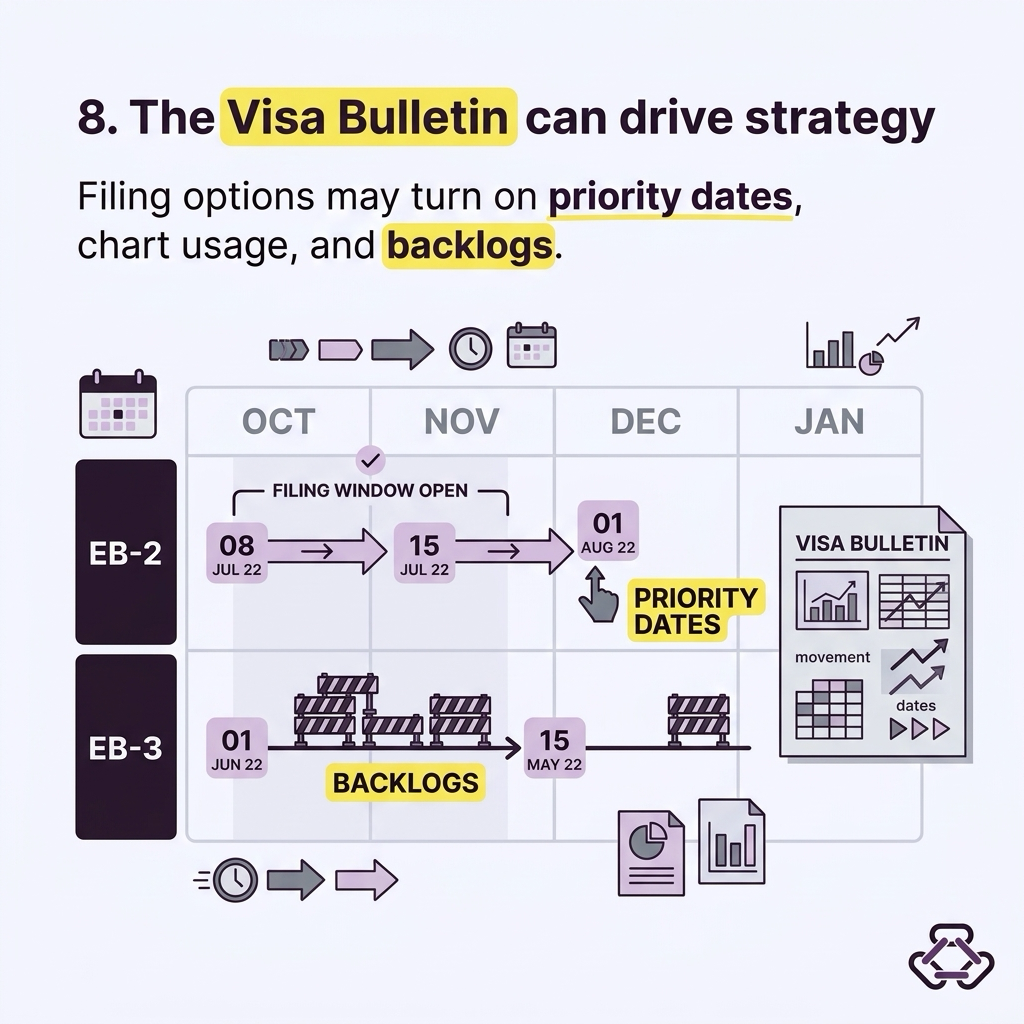
The Visa Bulletin Often Drives The Entire Strategy
For employment-based cases, the monthly Visa Bulletin is frequently the hidden engine behind the adjustment-versus-consular decision. The April 2026 Visa Bulletin shows that some categories remain current for many chargeability areas, while others—especially certain India- and China-born categories—continue to face significant backlogs. USCIS separately announces each month whether adjustment applicants may use the Dates for Filing chart or the Final Action Dates chart through its visa availability and priority dates guidance.
That matters because adjustment applicants may, in some months, file the I-485 earlier than final adjudication would be possible if USCIS allows use of the Dates for Filing chart. Consular processing uses the State Department’s immigrant visa process through NVC, and NVC can generally schedule preference-category interviews only when a visa is available under the applicable framework and post capacity exists. The State Department explains this in its IV Scheduling Status Tool page.
If you are still sorting out priority dates, categories, and backlogs, this broader guide to employment-based green card strategy and timing issues gives more context around how the filing calendar shapes the case.
Practical Questions That Often Tip The Balance
Here are the questions attorneys often explore when analyzing whether adjustment or consular processing is the cleaner path.
Are You In Valid Status Right Now?
If you are in the United States, current nonimmigrant status often becomes the starting point for the analysis. USCIS policy describes bars that may apply to applicants who are in unlawful status at filing or who failed to continuously maintain lawful status, while also recognizing exceptions in some employment-based cases. See the USCIS Policy Manual sections on unlawful status at filing and eligibility requirements.
Do You Expect To Travel Internationally During The Process?
A pending I-485 creates its own travel rules. USCIS states in the I-485 instructions that departing while adjustment is pending can create problems unless an exception applies, such as approved advance parole or certain continuing dual-intent statuses. For some applicants with frequent work travel, this becomes a major planning issue.
Which Consulate Would Actually Handle The Case?
Because the State Department now generally expects immigrant visa applicants to process in their country of residence or nationality, the specific post matters more than it used to. The rule update appears in the Department of State notice on country-of-residence adjudication. Before assuming consular processing will be faster, many applicants find it useful to review the current employment-based interview scheduling picture by post.
Would Interim Work Authorization Help Your Household?
If a spouse or principal worker is relying on a pending adjustment to seek an EAD, that can materially change the family’s planning timeline. USCIS confirms that a pending I-485 can support an employment authorization application.
Is There Any Unlawful Presence Or Prior Immigration Violation In The Background?
This is often where generalized online advice becomes risky. The consequences of leaving the United States can differ dramatically depending on unlawful presence, prior departures, prior denials, removal issues, or unauthorized employment history. USCIS discusses these topics in its guidance on unlawful presence and inadmissibility.
Common Misunderstandings
“Consular Processing Is Always Faster”
Sometimes it is. Sometimes it is not. Current Department of State data shows meaningful differences across posts, and visa bulletin movement can reshape both options from month to month.
“Adjustment Is Always Safer”
Not always. Adjustment has advantages, but it also has eligibility rules, travel constraints, and discretionary components. USCIS describes adjustment as a discretionary benefit in its employment-based I-485 materials, and the statutory bars can be technical.
“You Can Freely Switch Anytime”
In some cases, the case strategy can be changed, but changing direction is not always seamless. It can involve communication with USCIS, NVC, or both, and timing consequences may follow. USCIS also has policy guidance on the transfer of underlying basis, which is a different but related example of how procedural changes can add complexity.
A Simple Way To Think About The Decision
A useful framework is this:
- Adjustment of status is often attractive when the applicant is in the United States, eligible to adjust, and values interim benefits and continuity.
- Consular processing is often attractive when the applicant is abroad, adjustment is unavailable, or the assigned consular route is more practical for the person’s location and plans.
- Attorney analysis becomes especially valuable where there are any status problems, prior unlawful presence, travel concerns, family timing issues, or uncertainty about how a particular consular post is functioning in practice.
Final Thoughts
Choosing between filing from inside the United States and processing through a consulate is not just an administrative fork in the road. It is a strategic decision that can affect timing, mobility, work authorization, and immigration risk in ways that are not always obvious from the forms alone.
For some applicants, adjustment of status offers flexibility and continuity. For others, consular processing may be the more workable route. The facts that usually matter most are the applicant’s location, current status, visa availability, travel plans, and whether leaving the United States could trigger additional issues.
Visit ReferU.AI to get matched with an attorney who has demonstrable experience in cases like yours — for free.
