Table of Contents
- How to Prepare a Family Petition Without Missing Core Evidence
- Why Evidence Matters So Much In A Family Petition
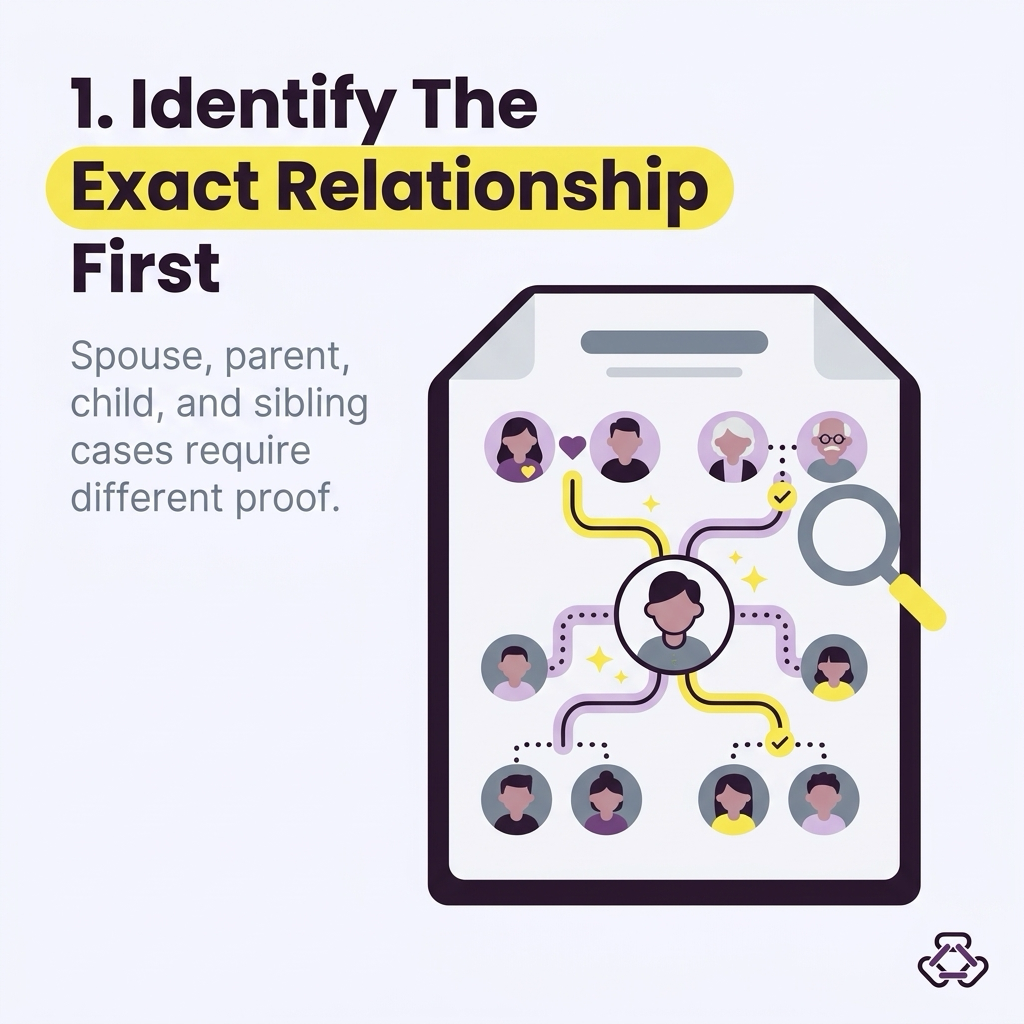
- Step 1: Confirm Exactly Which Family Relationship You Are Proving
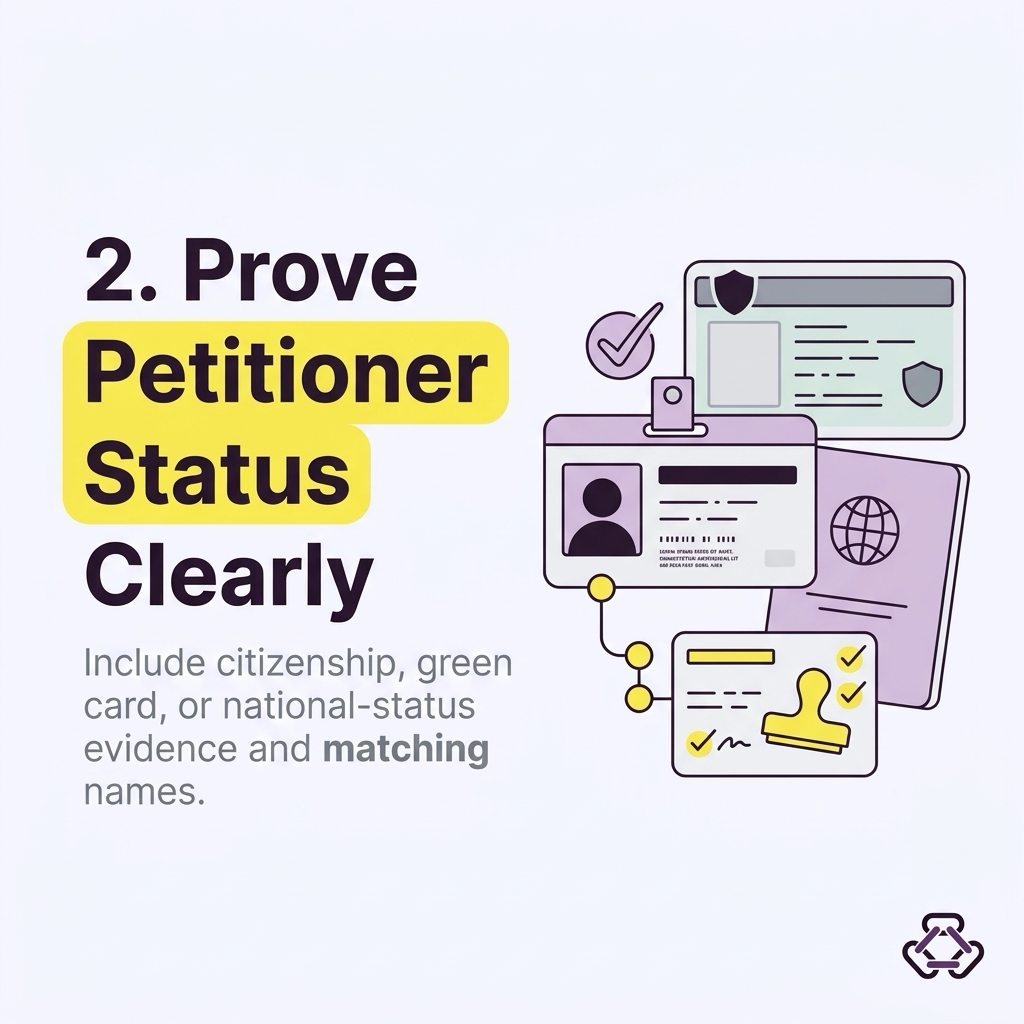
- Step 2: Prove The Petitioner’s Immigration Status First
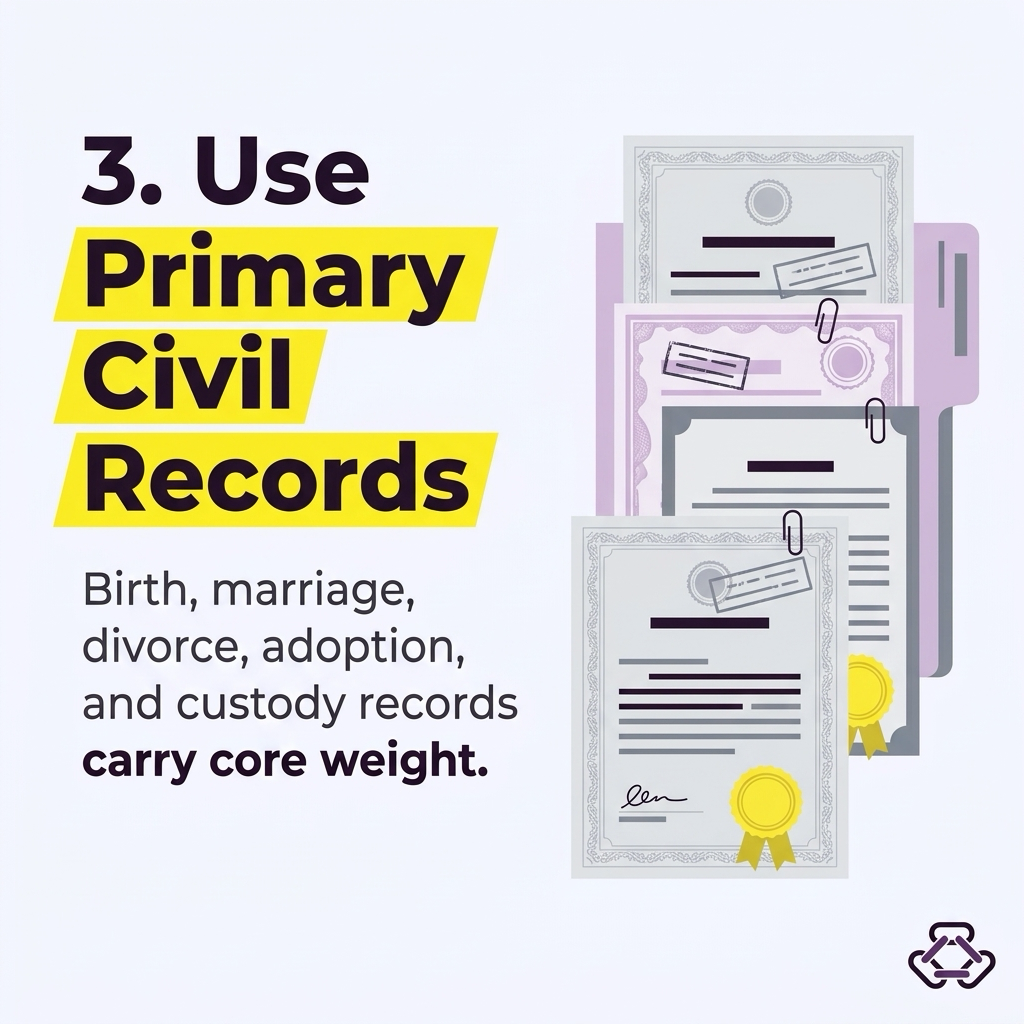
- Step 3: Gather Primary Civil Records For The Relationship
- Common Civil-Record Problems
- Step 4: In Spouse Cases, Separate “Valid Marriage” From “Real Marriage”
- Examples Of Bona Fide Marriage Evidence
- Step 5: Prepare For Cases Where Primary Evidence Is Hard To Get
- Step 6: Organize The Petition Like A Record, Not A Stack Of Papers
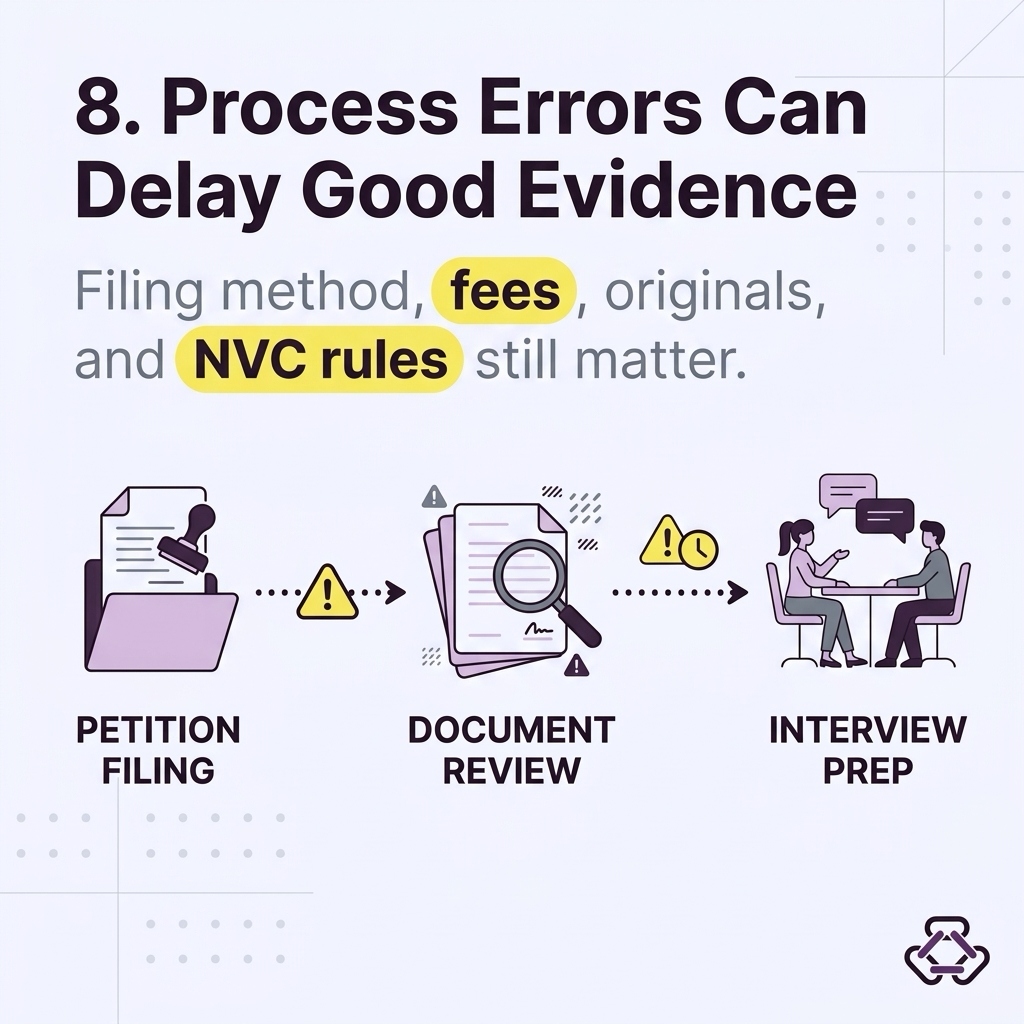
- Step 7: Watch For Process Errors That Delay Even Good Evidence
- Step 8: Double-Check The Most Frequently Missed Core Evidence
- Petitioner Identity And Status
- Relationship Records
- Prior Marriage Records
- Spousal Relationship Evidence
- Translation And Formatting Issues
- Later-Stage Civil Documents
- When Missing Evidence May Signal A More Serious Legal Issue
- A Short Summary Before You File

Type
Great Grandchild
Status
Approved
Title (YouTube)
Images Failed (Social)
Images Failed (Social)
Do not index
Publish Date (TikTok)
Apr 27, 2027 08:15
Videos Post IDs (Social)
Hashtags (Social)
#LegalAdvice #LegalHelp #Immigration #FamilyImmigration
Caption
Caption X
Cover

OG Image

Alt Image Text
Flat vector illustration of a family preparing a family petition with organized core evidence documents, highlighting missing paperwork and careful review.
Images

Videos
Publish Date (Social)
Feb 20, 2027 07:30
Scheduled (Social)
Scheduled (Social)
Images Posted (Social)
Images Posted (Social)
Videos Posted (Social)
Videos Posted (Social)
Featured
Created time
Apr 7, 2026 12:01 AM
Sub-item
Authors
CTA Practice Area (Social)
Immigration
TikTok Failed (Social)
TikTok Failed (Social)
Videos Post Links (Social)
TikTok Post Links (Social)
Images Post IDs (Social)
YT Post ID
Video Pending Manual (Social)
TikTok Posted (Social)
TikTok Posted (Social)
TikTok Post IDs (Social)
Video Cover (Social)
Images Post Links (Social)
First Comment (Social)
Videos Failed (Social)
Videos Failed (Social)
YT Embedded
Images Delete (Social)
Videos Delete (Social)
Carousel Video URL (Social)
How to Prepare a Family Petition Without Missing Core Evidence
Starting a family-based immigration petition often feels deceptively simple. A form appears straightforward, the relationship seems obvious, and the goal is deeply personal: helping a spouse, parent, child, or sibling immigrate legally. But many delays begin with one problem that sounds small and turns out to be central: the filing package does not include the right evidence, in the right format, for the right relationship.
That is especially true with Form I-130, Petition for Alien Relative, which U.S. Citizenship and Immigration Services uses to evaluate whether a qualifying family relationship exists. USCIS explains that petitioners must submit evidence of their status, evidence of the family relationship, and in spousal cases, evidence that the marriage is genuine and ongoing, not just legally valid on paper (USCIS Form I-130). If the case later moves through consular processing, the National Visa Center separately reviews civil and financial documents and generally expects everything to be uploaded or submitted together, with originals brought to the interview rather than mailed in (Department of State NVC guidance).
In this post you’ll learn how to prepare a family petition step by step, what counts as core evidence, which documents often get overlooked, and where families commonly lose time. If you want broader context on sponsorship categories and how these cases fit into the immigration system, it may help to start with this overview of family sponsorship rules.
Scroll to the bottom for every post in this series.
Why Evidence Matters So Much In A Family Petition
A family petition is not just a request. It is a documented claim that a legally recognized relationship exists between the petitioner and the beneficiary.
USCIS reviews these petitions based on the record submitted, and its Policy Manual notes that the petitioner is expected to provide the required evidence in line with the form instructions (USCIS Policy Manual). That often means the difference between approval and delay is not whether the relationship is real in everyday life, but whether the file contains the exact records the agency expects to see.
Here’s what that often looks like in practice:
- A U.S. citizen filing for a spouse may include a marriage certificate but leave out divorce decrees from prior marriages.
- A petitioner filing for a parent may include the parent’s passport but omit the petitioner’s birth certificate showing the parent-child link.
- A family may send scans of civil records issued by the wrong authority, which can create problems later with the Department of State’s document review (Civil Documents FAQ).
- A spouse petition may contain almost no relationship evidence beyond the marriage certificate, even though USCIS specifically looks for proof of a bona fide marriage (USCIS Form I-130).
The result is often a Request for Evidence, delay, rejection for filing errors, or additional scrutiny later in the process.
Step 1: Confirm Exactly Which Family Relationship You Are Proving
Before gathering evidence, it helps to identify the precise relationship category in the petition. The documents that matter most depend on whether the beneficiary is a spouse, parent, child, or sibling.
USCIS lists different relationship evidence for each type of family petition. In general terms:
- Spouse petitions center on a valid marriage certificate, proof that prior marriages ended if applicable, and evidence the marriage is genuine.
- Child petitions often rely on the child’s birth certificate and may involve extra issues if there is adoption, legitimation, stepchild status, or questions about custody.
- Parent petitions usually depend on the petitioner’s birth certificate to show the link to the parent.
- Sibling petitions often require both siblings’ birth certificates to connect them through at least one common parent (USCIS Form I-130).
This is also the stage where families often realize that category matters beyond evidence. Some relatives are “immediate relatives,” while others fall into preference categories with annual visa limits. As of April 2026, the Department of State’s Visa Bulletin shows that several family-preference categories remain backlogged, while the F2A category is listed as current in that month’s chart (Visa Bulletin for April 2026). For a fuller explanation of those distinctions, this primer on immediate relatives, preference categories, and sponsorship issues gives useful background.
Step 2: Prove The Petitioner’s Immigration Status First
One of the most basic filing problems is overlooking evidence about the petitioner rather than the beneficiary.
USCIS states that Form I-130 filers generally include evidence of U.S. citizenship, lawful permanent resident status, or U.S. national status. Depending on the situation, that may include a U.S. birth certificate, naturalization certificate, certificate of citizenship, Consular Report of Birth Abroad, unexpired U.S. passport, or a copy of both sides of a green card (USCIS Form I-130).
This is “core evidence” because without it, USCIS may not be able to confirm that the person filing is eligible to petition for that relative.
Some common mistakes here include:
- Sending an unclear copy of a passport biographic page
- Leaving out the back of a green card
- Using a document that reflects an old legal name without also including name-change proof
- Assuming USCIS can figure out identity discrepancies from the rest of the file
If the petitioner’s name appears differently across documents, adding proof of legal name change often helps the file read more cleanly. USCIS specifically includes legal name-change evidence in its checklist materials for I-130 preparation (USCIS I-130 checklist).
Step 3: Gather Primary Civil Records For The Relationship
For most family petitions, the strongest starting point is primary civil evidence issued by a government authority.
That generally includes:
- Birth certificates
- Marriage certificates
- Divorce decrees
- Adoption decrees
- Legitimation orders
- Court records showing parentage or custody, where relevant
USCIS identifies birth and marriage records as key evidence for proving qualifying family relationships (USCIS Form I-130). The Department of State separately notes that civil documents for immigrant visa processing must come from the official issuing authority in the relevant country (State Department civil documents guidance).
This is where some families run into trouble with documents that are technically real but procedurally weak:
Common Civil-Record Problems
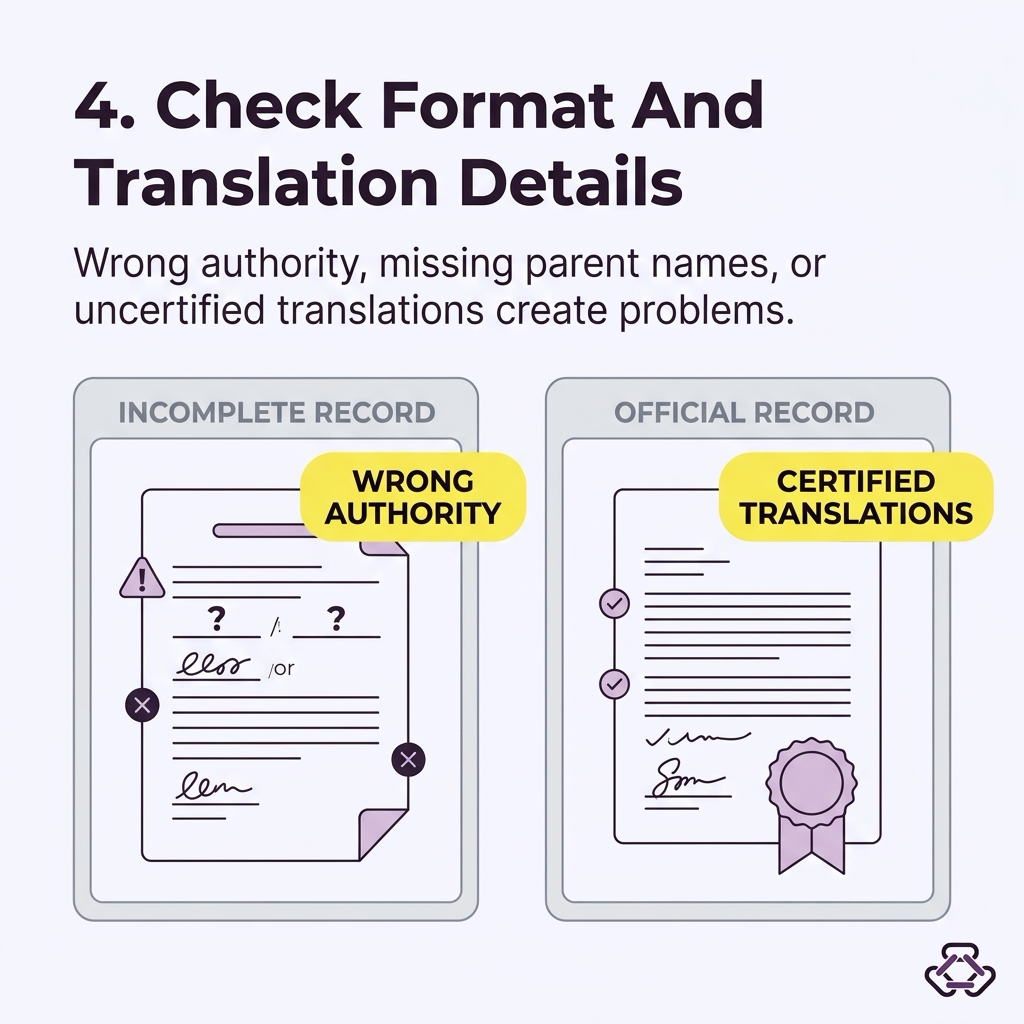
- The birth certificate is short-form rather than long-form and does not list parents
- The certificate was issued by a hospital, church, or local office that is not the recognized civil authority
- The record is damaged, incomplete, or difficult to read
- The family submits a translation without a proper certification
- The dates of birth, spellings, or names do not match other records
USCIS says that if documents are in a foreign language, a full English translation and translator certification are part of the filing package (USCIS Form I-130). For many families, a careful document comparison before filing can help uncover inconsistent names, date formats, or missing parent names that later trigger questions.
Step 4: In Spouse Cases, Separate “Valid Marriage” From “Real Marriage”
This is one of the most important distinctions in family-based immigration.
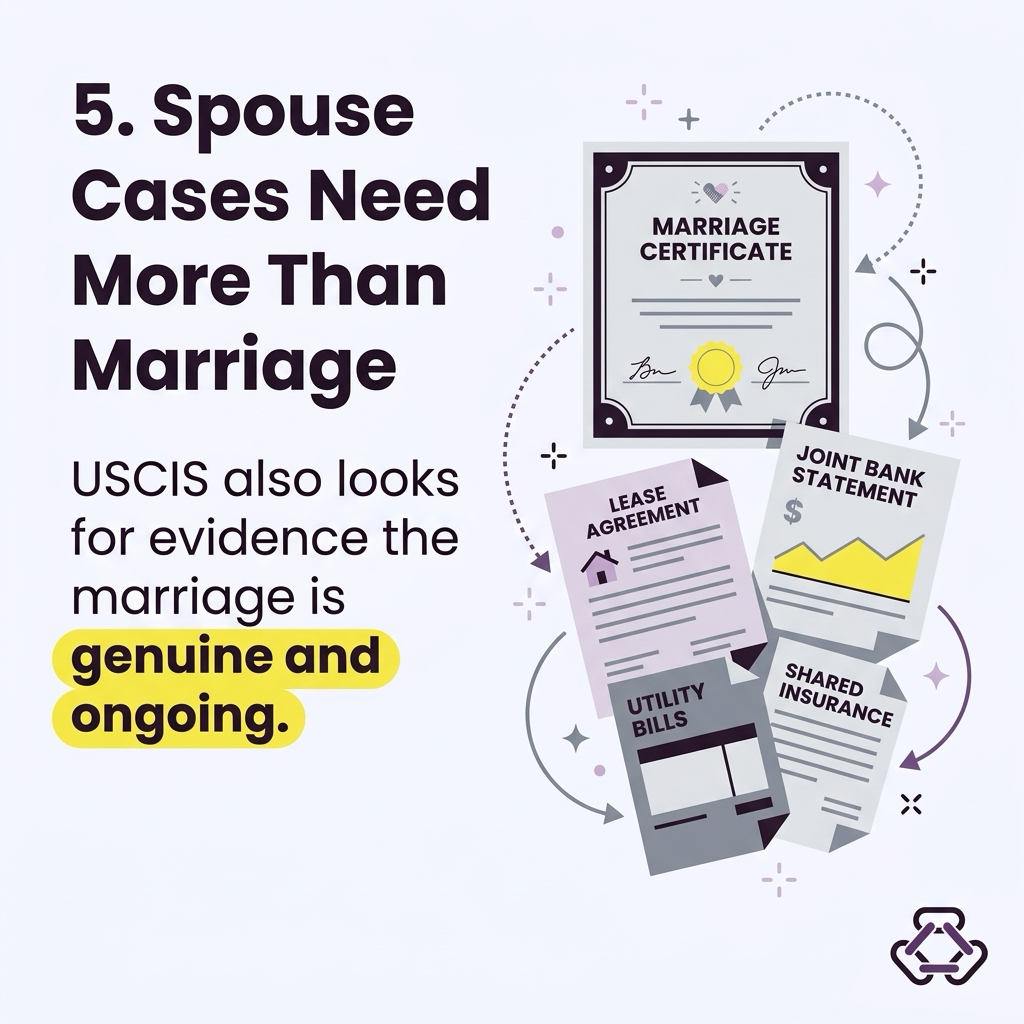
A marriage certificate proves that a marriage took place. It does not, by itself, fully address whether USCIS views the marriage as bona fide for immigration purposes. USCIS specifically lists examples of evidence used to show a genuine marital relationship, including joint property ownership, a lease showing joint tenancy, documents reflecting combined financial resources, children’s birth certificates, third-party affidavits, and other records showing an ongoing marital union (USCIS Form I-130).
That means spouse petitions often benefit from a package that shows not just legality, but shared life.
Examples Of Bona Fide Marriage Evidence
- Joint bank account statements
- Lease or mortgage with both names
- Utility or insurance records showing shared residence
- Tax records filed together, where available
- Health, auto, or life insurance showing one spouse as beneficiary or dependent
- Photos across different dates and settings
- Travel records taken together
- Messages or correspondence reflecting an ongoing relationship
- Affidavits from people with personal knowledge of the marriage
Affidavits can help, but USCIS tends to describe them as one option among many, not a substitute for documentary proof. In many cases, objective records created in ordinary life carry more weight than letters written for the petition.
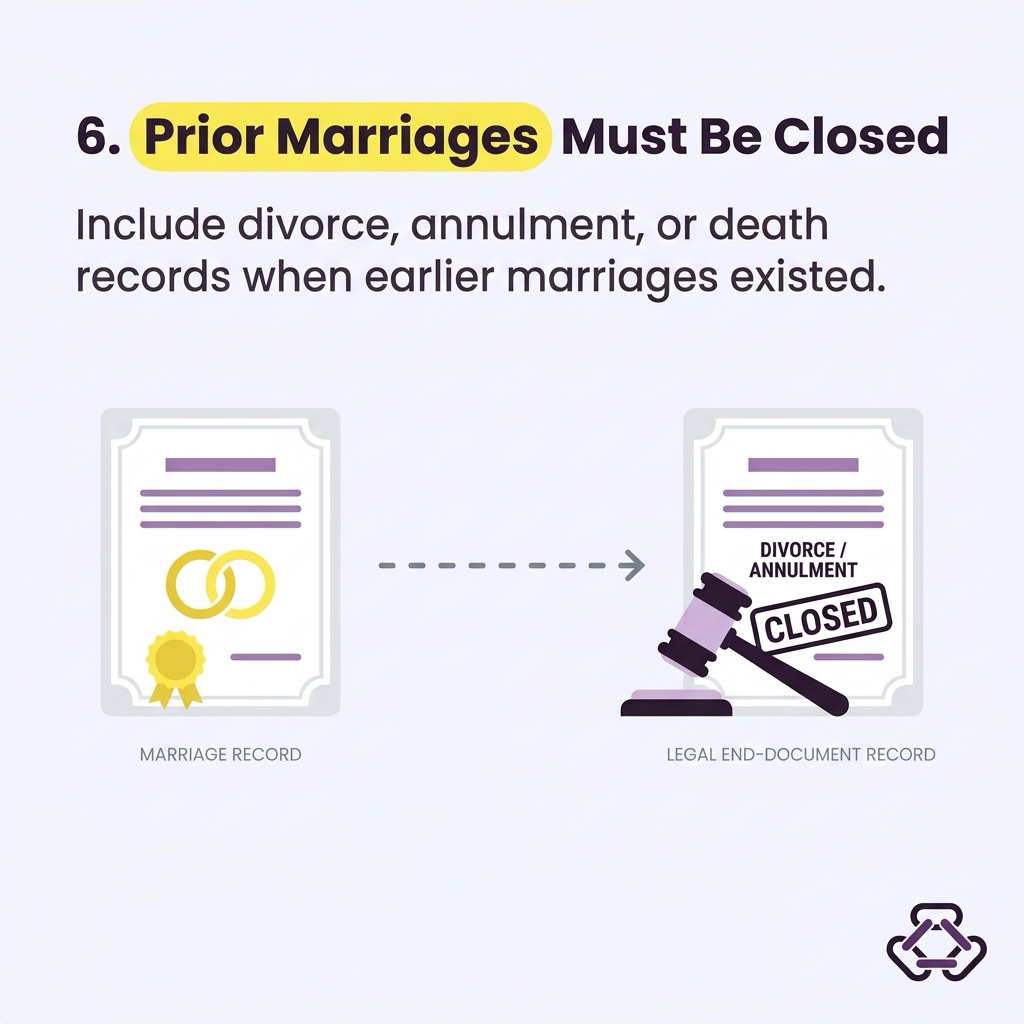
Another issue families sometimes overlook: if either spouse had a prior marriage, USCIS expects evidence that the prior marriage ended legally, such as a divorce decree, annulment order, or death certificate (USCIS Form I-130).
Step 5: Prepare For Cases Where Primary Evidence Is Hard To Get
Not every family has perfect records. Some people were born in places where civil registration was inconsistent. Some records were lost. Some names changed informally over time. Some families rely on records from countries with complex documentation systems.
When primary civil documents are missing or unavailable, the analysis becomes more nuanced. The Department of State explains that required civil documents must come from the proper issuing authority, and when a document truly cannot be obtained, applicants may submit an explanation with the rest of the file for National Visa Center review (State Department civil documents guidance).
In situations like that, families often turn to:
- Secondary school or baptismal records
- Census or household registration records
- Early medical records
- Court records
- Sworn statements from relatives or others with firsthand knowledge
The challenge is that these cases are often highly fact-specific. An attorney can sometimes help evaluate whether the evidence gap is truly a missing document problem, a country-conditions issue, a name-discrepancy issue, or a deeper eligibility issue.
Step 6: Organize The Petition Like A Record, Not A Stack Of Papers
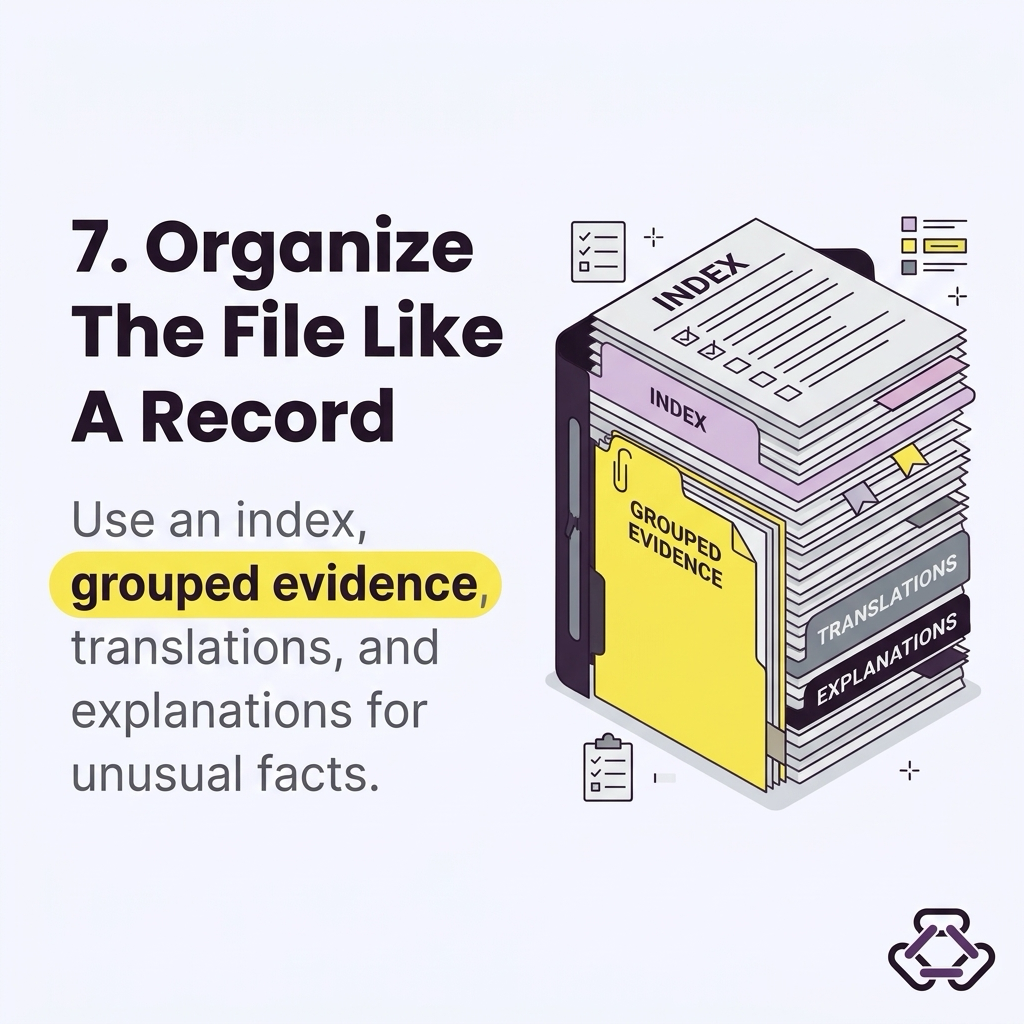
A strong filing package usually reads like a story told through documents.
That doesn’t mean adding unnecessary volume. It often means presenting evidence in a way that makes the relationship easy to verify. USCIS provides filing instructions and optional checklist tools, but the burden remains on the petitioner to submit a complete and coherent package (USCIS Form I-130; USCIS Policy Manual).
A cleanly organized petition often includes:
- Cover letter or index
- Filing fee and form package
- Proof of petitioner’s status
- Proof of relationship
- Proof of prior marriage termination, if relevant
- Name-change documents, if relevant
- Bona fide marriage evidence in spouse cases
- Certified translations
- Supporting explanations for unusual facts
This kind of structure can be especially helpful where there are:
- blended families
- adoptions
- different spellings of names
- foreign documents from multiple countries
- prior immigration filings
- criminal or removal-history concerns
- prior denials
Step 7: Watch For Process Errors That Delay Even Good Evidence
Some family petitions are delayed not because the evidence is weak, but because the filing process was incomplete.
USCIS currently allows Form I-130 to be filed online or by mail, and notes that there is a $50 online filing discount for Form I-130 in eligible situations (USCIS Form I-130; USCIS fee FAQ). USCIS also warns that fees can change and that incorrect payment can lead to rejection, so current filing-fee guidance matters at the time of submission (USCIS Filing Fees).
Other process points that often get overlooked:
- USCIS generally advises not sending original documents unless specifically requested (USCIS Form I-130)
- If filing online, related forms may still have separate filing rules
- The National Visa Center generally expects applicants to submit all required civil and financial documents together when instructed, and to bring originals to the visa interview rather than mailing them (Department of State NVC guidance)
- Preference-category cases may involve waiting for visa availability under the monthly Visa Bulletin (Visa Bulletin main page)
This is part of why families often benefit from understanding the full process early rather than treating the I-130 as the whole case. If you’re trying to get oriented on the bigger picture, this explanation of family immigration categories and sponsorship complications can help connect the petition stage to what may come next.
Step 8: Double-Check The Most Frequently Missed Core Evidence
If you want a short practical checklist, these are some of the items families most often overlook:
Petitioner Identity And Status
- Proof of U.S. citizenship or green card status
- Clear copies of both sides of permanent resident card, where applicable
- Name-change records if names differ across documents
Relationship Records
- Correct birth certificate with parent names
- Marriage certificate from the proper authority
- Both siblings’ birth certificates in sibling cases
- Adoption or legitimation records where relevant
Prior Marriage Records
- Divorce decrees
- Annulment records
- Death certificates for former spouses
Spousal Relationship Evidence
- Joint residence documents
- Combined financial records
- Insurance or tax records
- Children’s birth certificates, if applicable
- Affidavits with enough detail to show personal knowledge
Translation And Formatting Issues
- Full English translations
- Translator certification
- Legible copies
- Consistent spellings and dates
Later-Stage Civil Documents
- Passport biographic page
- Police certificates or civil documents for consular processing, where later required
- Originals preserved for interview presentation rather than mailing, if NVC directs uploads or copies (Department of State NVC guidance)
When Missing Evidence May Signal A More Serious Legal Issue
Sometimes an evidence problem is really an eligibility problem in disguise.
For example:
- A child may not qualify under the immigration definition being assumed
- A marriage may be legally valid in one place but complicated by prior unresolved marital history
- An adoption case may involve Hague Convention restrictions or timing rules
- A petitioner may have a background issue that affects family-based petitioning in specific circumstances
USCIS policy guidance in recent years has also emphasized additional screening and vetting in family-based petitions, underscoring that filing the petition itself does not grant lawful status or erase other immigration problems (USCIS family-based policy update).
When a case includes unusual facts, prior denials, inconsistencies, or unavailable records, an attorney may be able to help identify whether the problem is just documentation, or something deeper involving eligibility, admissibility, or strategy.
A Short Summary Before You File
Preparing a family petition without missing core evidence usually comes down to a few core ideas:
- Identify the exact qualifying relationship
- Prove the petitioner’s status clearly
- Use primary civil records whenever possible
- In spouse cases, document the real-life relationship, not just the marriage certificate
- Translate and organize everything carefully
- Look ahead to NVC and visa-availability issues where relevant
Family petitions can look simple from the outside, but they often involve document strategy, relationship proof, category analysis, and timing questions all at once. When a filing package is incomplete, the delay can ripple through the rest of the case.
If your family’s case involves missing records, prior marriages, complex parent-child issues, or concerns about whether the evidence is strong enough, it may help to speak with an attorney whose experience is based on court records and highly similar matters, rather than advertising claims.
Visit ReferU.AI to get matched with an attorney who has demonstrable experience in cases like yours — for free.
