Table of Contents
- How to Tell Whether Your Case Is Immediate Relative or Family Preference
- Why This Classification Matters
- Step 1: Identify The Petitioner’s Immigration Status
- If The Petitioner Is A U.S. Citizen
- If The Petitioner Is A Lawful Permanent Resident
- Step 2: Look At The Exact Family Relationship
- Immediate Relative Cases
- Family Preference Cases
- Step 3: Check Age Carefully
- Step 4: Check Marital Status
- Step 5: Ask Whether A Visa Is Immediately Available
- Step 6: Understand The Role Of Priority Dates
- Step 7: Watch For Derivative Beneficiaries
- Common Examples That Help Clarify The Difference
- U.S. Citizen Filing For A Spouse
- U.S. Citizen Filing For A 19-Year-Old Unmarried Son
- U.S. Citizen Filing For A 24-Year-Old Unmarried Daughter
- U.S. Citizen Filing For A Married Daughter
- U.S. Citizen Filing For A Parent
- U.S. Citizen Filing For A Brother Or Sister
- Lawful Permanent Resident Filing For A Spouse
- Lawful Permanent Resident Filing For An Unmarried 25-Year-Old Child
- Situations That Commonly Cause Confusion
- Stepparent And Stepchild Relationships
- Adoption Cases
- Widow Or Widower Cases
- Petitioner Naturalizes During The Case
- Children Turning 21
- A Quick Self-Check For Families
- When The Category Question Calls For Attorney Review
- The Bottom Line

Type
Great Grandchild
Status
Approved
Title (YouTube)
Images Failed (Social)
Images Failed (Social)
Do not index
Publish Date (TikTok)
Apr 27, 2027 09:15
Videos Post IDs (Social)
Hashtags (Social)
#LegalAdvice #LegalHelp #Immigration #FamilyImmigration
Caption
Caption X
Cover

OG Image

Alt Image Text
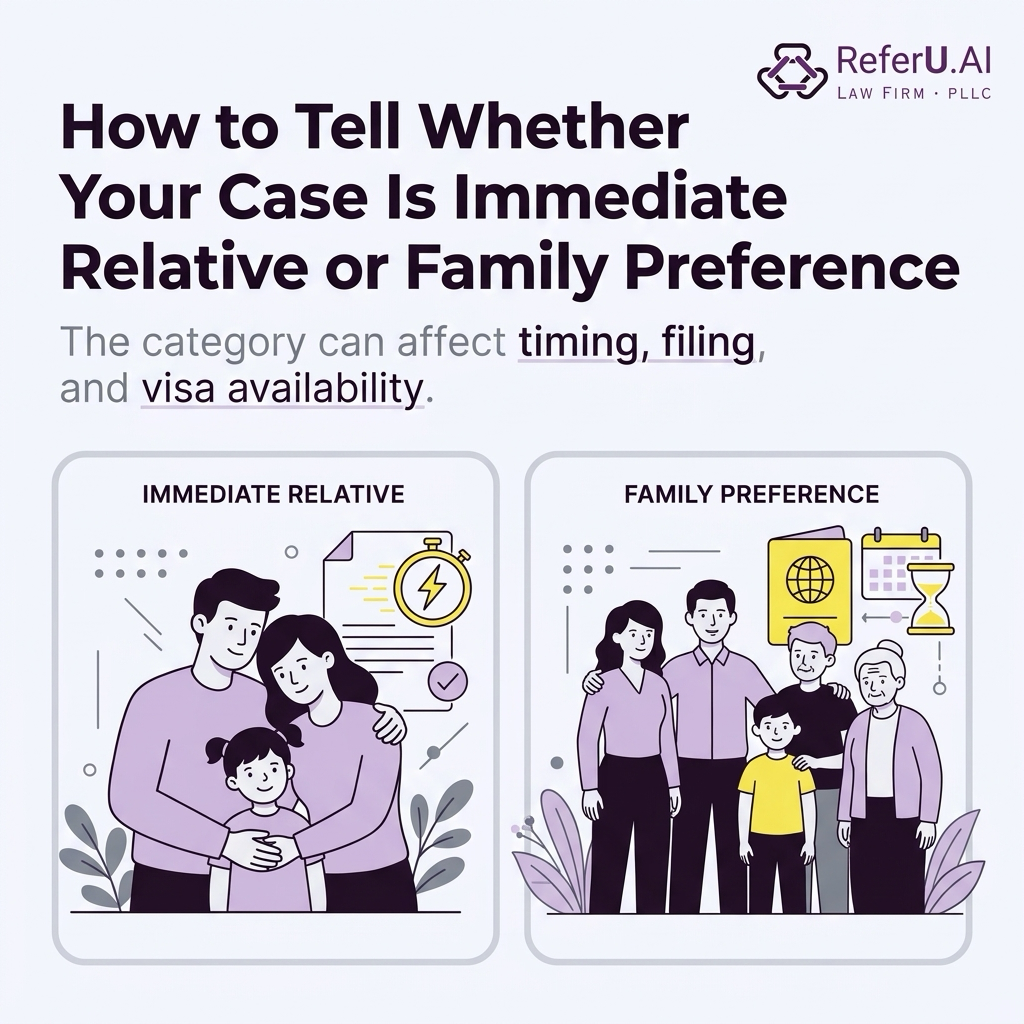
Flat vector illustration showing immediate relative and family preference family immigration categories with a split case pathway, family groups, and timeline symbols.
Images

Videos
Publish Date (Social)
Feb 20, 2027 08:00
Scheduled (Social)
Scheduled (Social)
Images Posted (Social)
Images Posted (Social)
Videos Posted (Social)
Videos Posted (Social)
Featured
Created time
Apr 7, 2026 12:01 AM
Sub-item
Authors
CTA Practice Area (Social)
Immigration
TikTok Failed (Social)
TikTok Failed (Social)
Videos Post Links (Social)
TikTok Post Links (Social)
Images Post IDs (Social)
YT Post ID
Video Pending Manual (Social)
TikTok Posted (Social)
TikTok Posted (Social)
TikTok Post IDs (Social)
Video Cover (Social)
Images Post Links (Social)
First Comment (Social)
Videos Failed (Social)
Videos Failed (Social)
YT Embedded
Images Delete (Social)
Videos Delete (Social)
Carousel Video URL (Social)
How to Tell Whether Your Case Is Immediate Relative or Family Preference
Figuring out where a family-based immigration case fits can feel simple at first — until terms like immediate relative, preference category, priority date, and visa bulletin start showing up in government instructions. For many families, that classification shapes the timeline, the filing strategy, and the kind of evidence that becomes especially important.
In this post you'll learn how to tell whether a case falls into the immediate relative group or the family preference system, why the distinction matters, and which issues often complicate the analysis. If you want a broader overview of how these categories work together, this guide on family sponsorship basics and category differences gives helpful background before or after reading this post.
Scroll to the bottom for every post in this series.
Why This Classification Matters
In general terms, immediate relative cases are treated differently from family preference cases because immigrant visa availability works differently for each group.
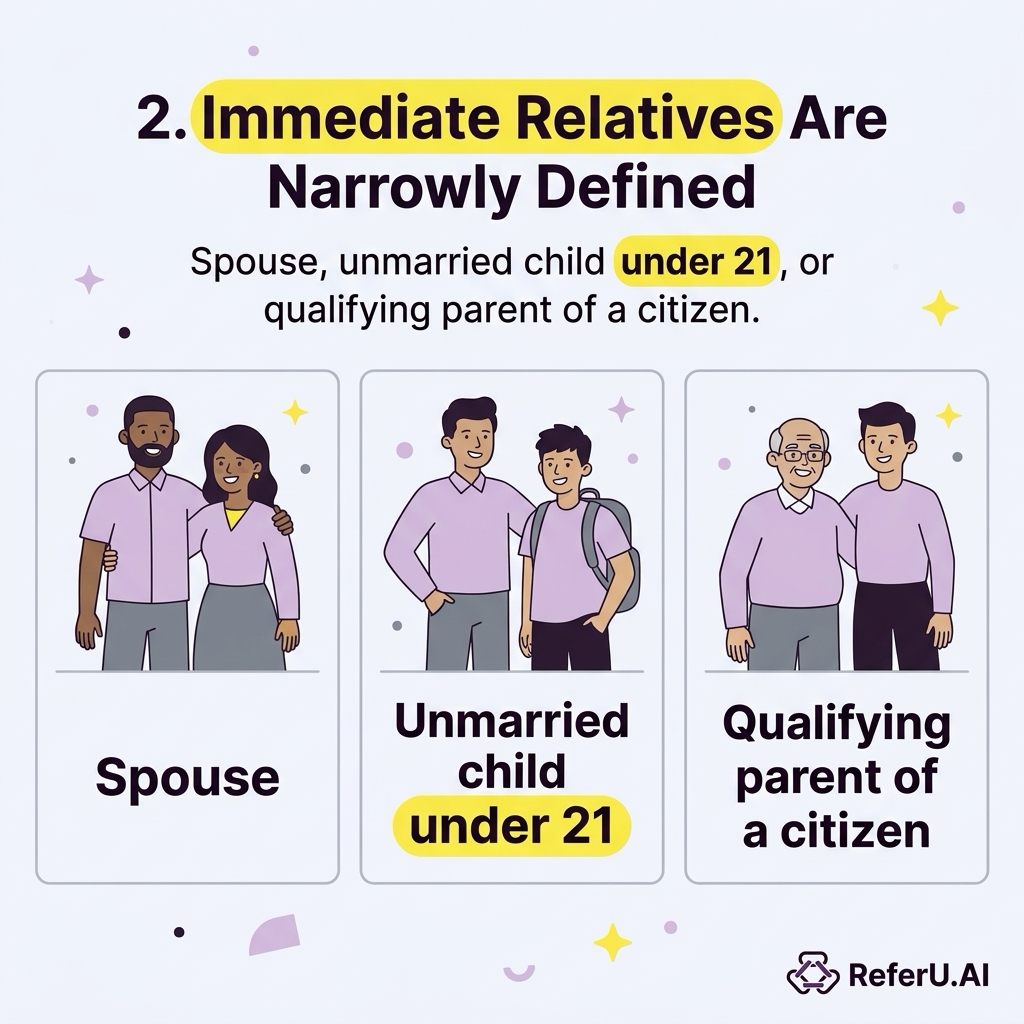
According to USCIS, immediate relatives of U.S. citizens include:
- a spouse of a U.S. citizen
- an unmarried child under 21 of a U.S. citizen
- a parent of a U.S. citizen, if the U.S. citizen is at least 21
USCIS also explains that immigrant visas for these immediate relatives are not numerically capped, so visas are “always available” in that category. By contrast, USCIS’s visa availability guidance explains that family-sponsored preference categories are numerically limited, which is why those cases often involve waiting for a priority date to become current through the Department of State Visa Bulletin.
That one classification often affects:
- whether a visa is immediately available
- whether a person may be able to file multiple forms at the same time
- whether derivative beneficiaries may be included
- whether long visa backlogs are part of the case
- how age and marital status changes can affect eligibility
Step 1: Identify The Petitioner’s Immigration Status
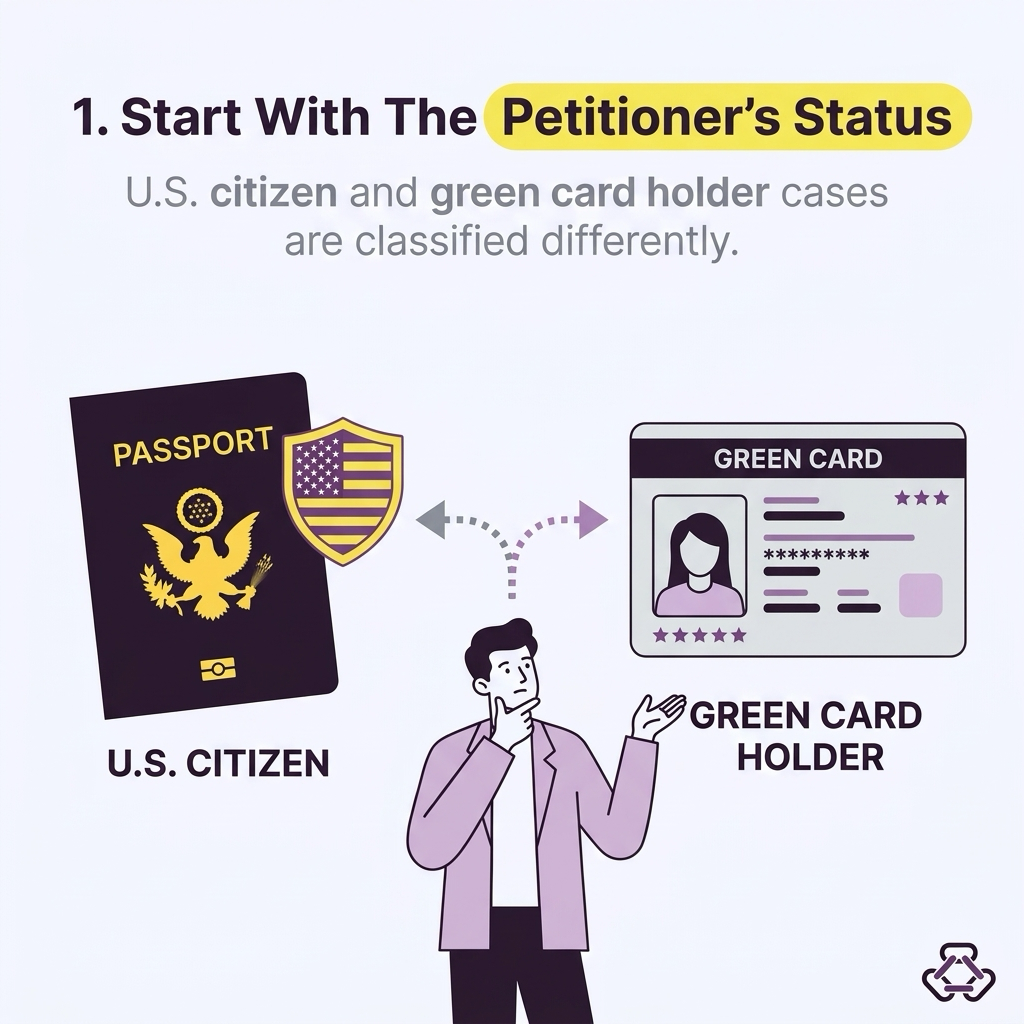
A useful starting point is the status of the person filing the family petition.
Under the Form I-130 instructions from USCIS, both U.S. citizens and lawful permanent residents may file petitions for certain qualifying relatives. But only some relatives of U.S. citizens fall into the immediate relative category.
Here’s the practical distinction:
If The Petitioner Is A U.S. Citizen
The beneficiary may fall into either:
- Immediate relative, or
- Family preference
It depends on the exact relationship and, in some cases, age and marital status.
If The Petitioner Is A Lawful Permanent Resident
The case is generally not an immediate relative case. Instead, it is usually in a family preference category. USCIS explains that permanent residents may petition for certain spouses and unmarried children, but those petitions are subject to the family-based preference system rather than the immediate relative rules, as described on USCIS’s page for families of green card holders.
So if the sponsor is a green card holder rather than a U.S. citizen, that fact alone often points strongly toward family preference.
Step 2: Look At The Exact Family Relationship
After identifying the petitioner’s status, the next question is the relationship between the petitioner and beneficiary.
Immediate Relative Cases
Per USCIS, these are the core immediate relative relationships:
- Spouse of a U.S. citizen
- Unmarried child under 21 of a U.S. citizen
- Parent of a U.S. citizen, if the citizen is 21 or older
If the case fits one of those descriptions, it is generally an immediate relative case.
Family Preference Cases
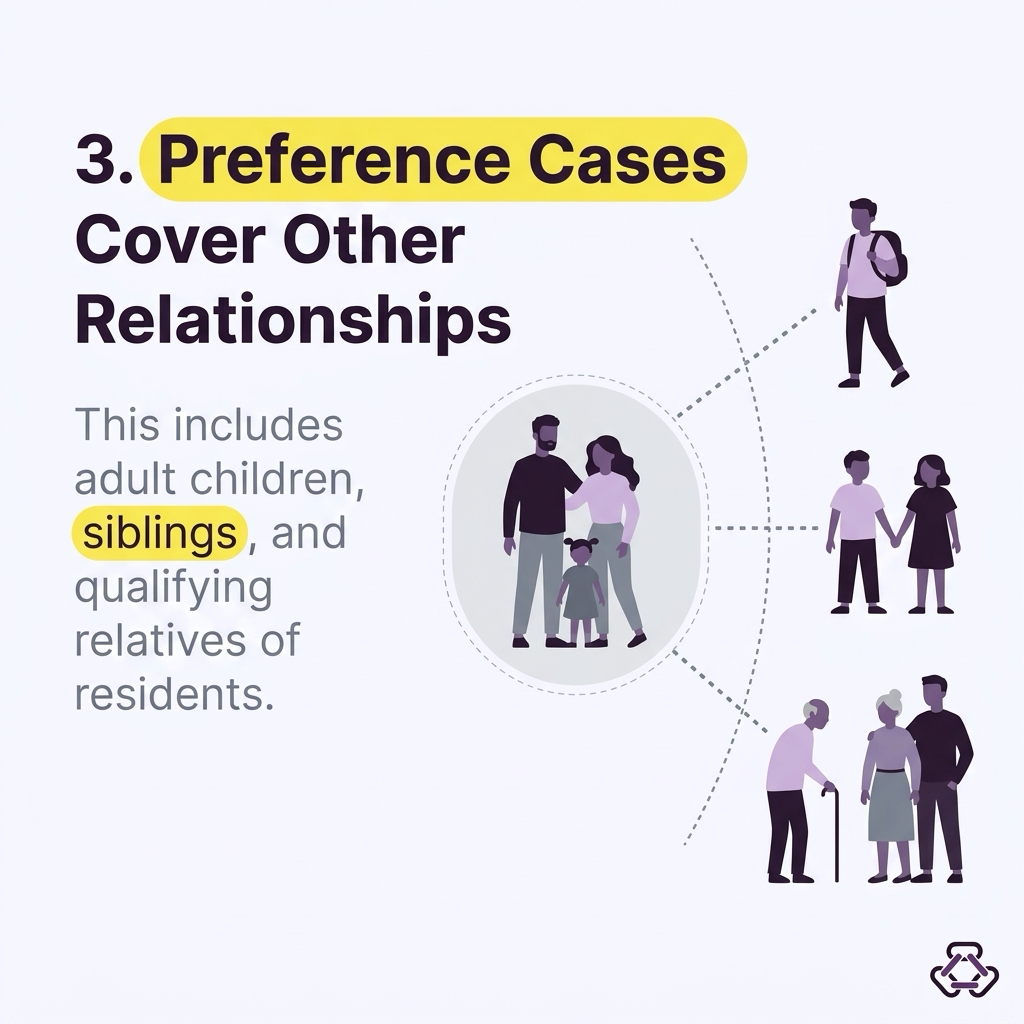
If the case does not fit the immediate relative definition, it may fall into one of the family-sponsored preference categories. USCIS summarizes those categories in its general eligibility guidance and related family-based materials:
- F1: unmarried sons and daughters 21 or older of U.S. citizens
- F2A: spouses and unmarried children under 21 of lawful permanent residents
- F2B: unmarried sons and daughters 21 or older of lawful permanent residents
- F3: married sons and daughters of U.S. citizens
- F4: brothers and sisters of U.S. citizens, if the U.S. citizen is 21 or older
USCIS’s I-130 instructions also describe this divide: spouses, unmarried children under 21, and parents of U.S. citizens are treated as immediate relatives, while siblings, married sons and daughters, adult unmarried sons and daughters of U.S. citizens, and qualifying relatives of permanent residents are assigned to preference categories.
Step 3: Check Age Carefully
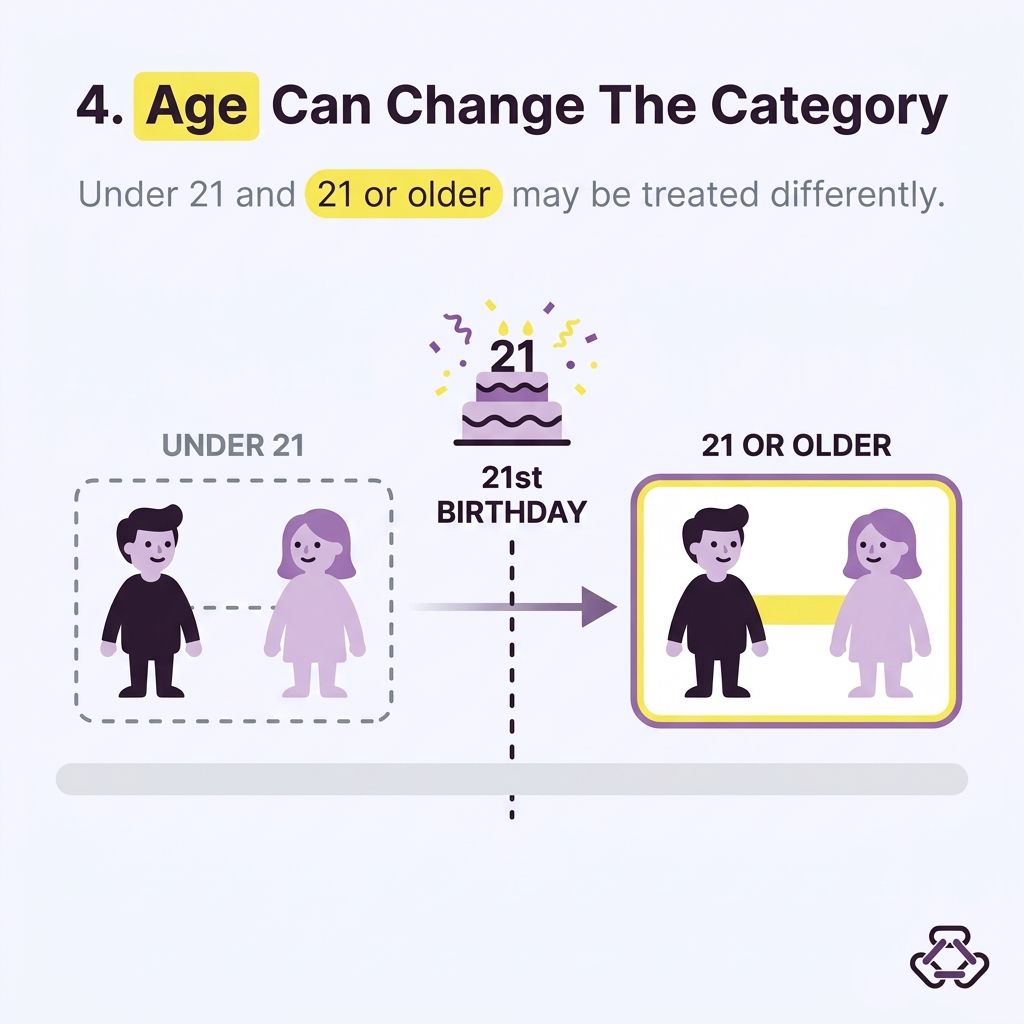
Age can change the category even when the relationship sounds similar.
For example:
- A child under 21 of a U.S. citizen may be an immediate relative
- An unmarried son or daughter 21 or older of a U.S. citizen is generally F1 family preference
- An unmarried child under 21 of a permanent resident is generally F2A family preference
- An unmarried son or daughter 21 or older of a permanent resident is generally F2B family preference
That is one reason families often get tripped up by the terms child and son or daughter. In immigration law, those words often carry technical meanings tied to age and marital status. USCIS uses “child” in many contexts to refer to an unmarried person under 21, while “son or daughter” often refers to a qualifying child relationship where the person is now 21 or older or married, depending on category definitions in the petition context, as reflected across USCIS family-based guidance and the I-130 instructions.
In real cases, age-out issues can become more complicated than they first appear. Some families also look into Child Status Protection Act questions, priority date timing, and document strategy when a beneficiary is close to turning 21.
Step 4: Check Marital Status
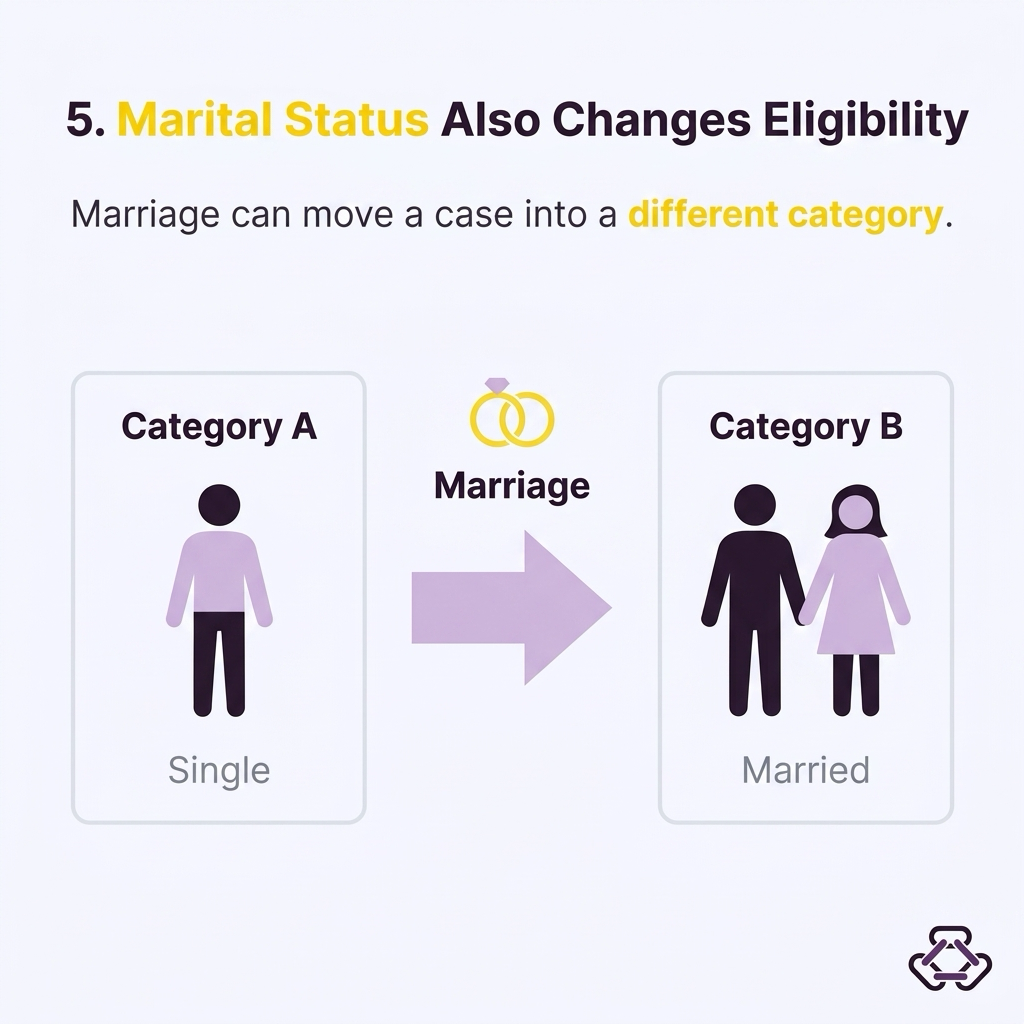
Marital status can move a case out of immediate relative treatment or into a different preference category.
A few common examples:
- An unmarried child under 21 of a U.S. citizen may be an immediate relative
- If that same person marries, the case is no longer in that immediate relative category
- A married son or daughter of a U.S. citizen is generally F3
- A married child of a lawful permanent resident is generally not eligible in the same way under the standard family preference categories available to permanent residents
This is one of the most important checkpoints in family cases because a change in marital status can reshape eligibility entirely. If a family is trying to map out the petition process from the beginning, it may help to also review practical filing issues like avoiding common family-petition evidence problems and understanding the types of sponsorship complications that can delay or derail a case. Those issues often show up alongside classification questions.
Step 5: Ask Whether A Visa Is Immediately Available
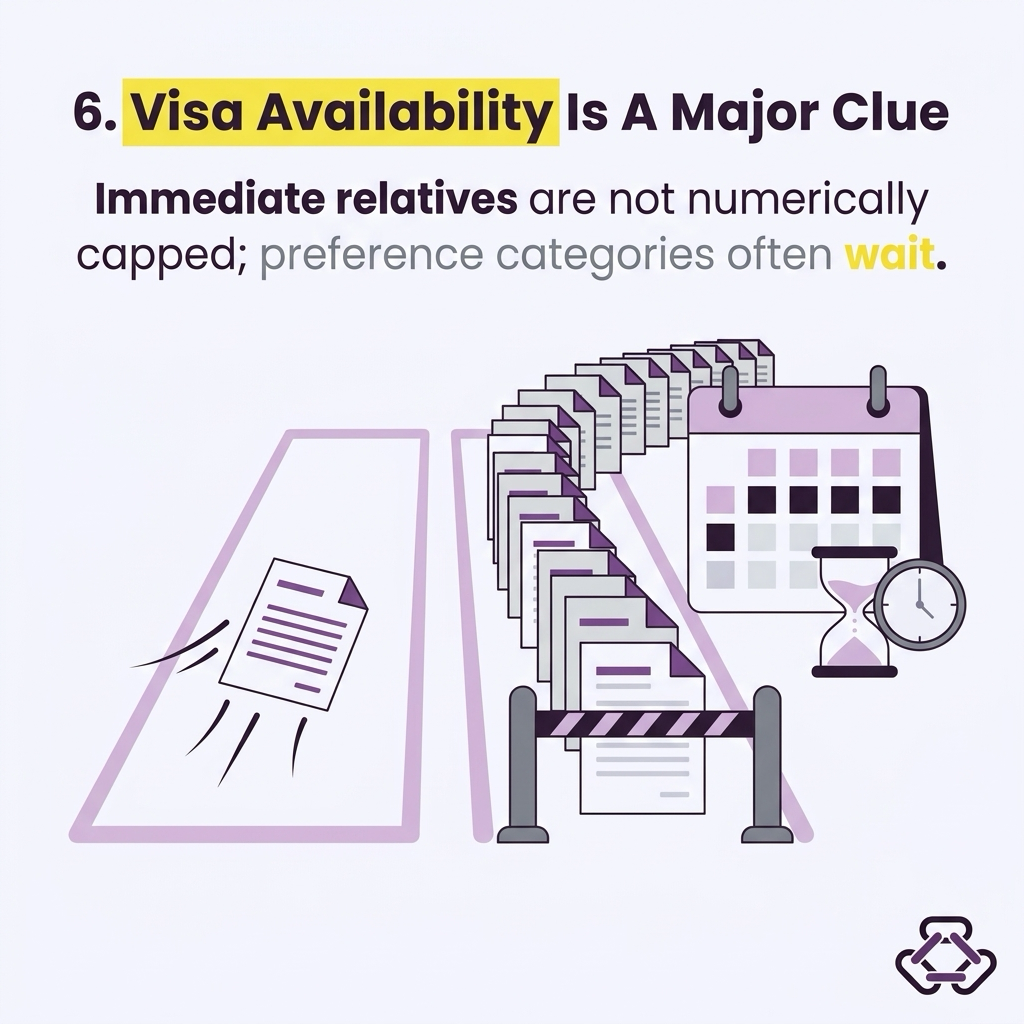
One of the fastest ways to sense the category is to ask: Is a visa considered immediately available, or is there a wait for a priority date?
According to USCIS, immigrant visas for immediate relatives of U.S. citizens are unlimited, which means they are always available. For family-sponsored preference cases, visas are numerically limited and can be delayed by annual caps and country-based limits.
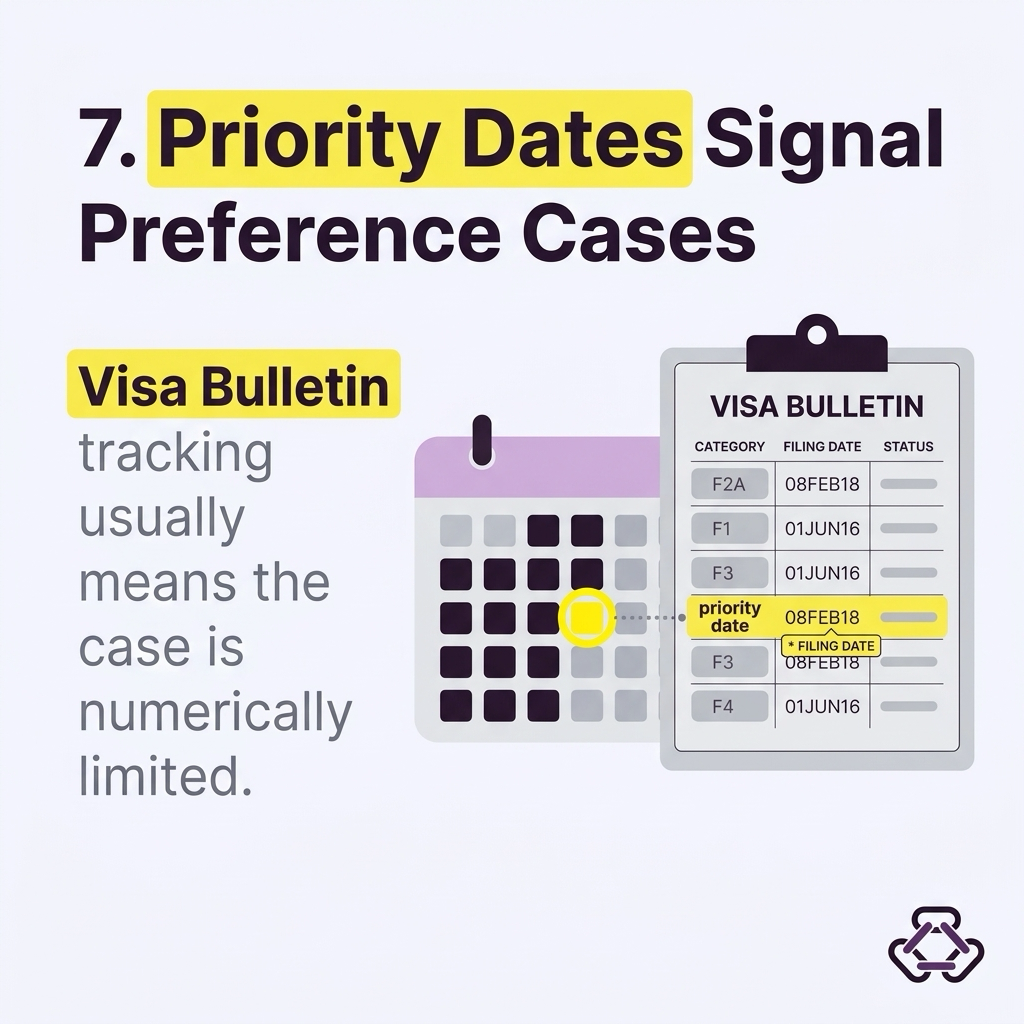
The Visa Bulletin, published by the U.S. Department of State, tracks when preference-category visa numbers become available. If a family is checking a priority date against the Visa Bulletin each month, that is usually a sign the case is in a family preference category rather than an immediate relative case.
Step 6: Understand The Role Of Priority Dates
A priority date is generally the date the petition was properly filed, and it matters most in numerically limited categories. USCIS explains on its visa availability and priority dates page that family-sponsored preference immigrants often wait until their priority date is earlier than the applicable cut-off date in the Visa Bulletin.
That creates a useful rule of thumb:
- Immediate relative case: priority date usually is not the main waiting issue because visas are immediately available
- Family preference case: priority date often becomes a central part of the timeline
So if someone says, “We are waiting for our priority date to become current,” the case is very likely in a family preference category.
Step 7: Watch For Derivative Beneficiaries
Derivative beneficiaries are another clue.
USCIS explains that the spouse or child of an immediate relative generally does not derive status through that immediate relative’s application and must independently qualify. By contrast, USCIS’s family preference page states that the spouse or unmarried child under 21 of a family-based principal applicant may in some cases apply as a derivative applicant.
This often surprises families. For example:
- In an immediate relative case, each qualifying person may need their own independent basis
- In a family preference case, certain spouses and children may be able to accompany or follow to join as derivatives
That difference can materially affect how a family plans timing and paperwork.
Common Examples That Help Clarify The Difference
Sometimes the easiest way to tell the category is to walk through examples.
U.S. Citizen Filing For A Spouse
This is generally an immediate relative case. USCIS lists the spouse of a U.S. citizen as an immediate relative on its green card eligibility page.
U.S. Citizen Filing For A 19-Year-Old Unmarried Son
Even though many families say “son,” if the beneficiary is unmarried and under 21, this usually falls into the immediate relative category.
U.S. Citizen Filing For A 24-Year-Old Unmarried Daughter
This is generally F1 family preference, not immediate relative, because the beneficiary is 21 or older.
U.S. Citizen Filing For A Married Daughter
This is generally F3 family preference.
U.S. Citizen Filing For A Parent
This is generally an immediate relative case if the U.S. citizen petitioner is at least 21 years old, according to USCIS.
U.S. Citizen Filing For A Brother Or Sister
This is generally F4 family preference, and the petitioner must be at least 21, as reflected on USCIS’s sibling petition page.
Lawful Permanent Resident Filing For A Spouse
This is generally F2A family preference, not immediate relative.
Lawful Permanent Resident Filing For An Unmarried 25-Year-Old Child
This is generally F2B family preference.
Situations That Commonly Cause Confusion
Family-based immigration categories sound straightforward, but certain cases become more nuanced very quickly.
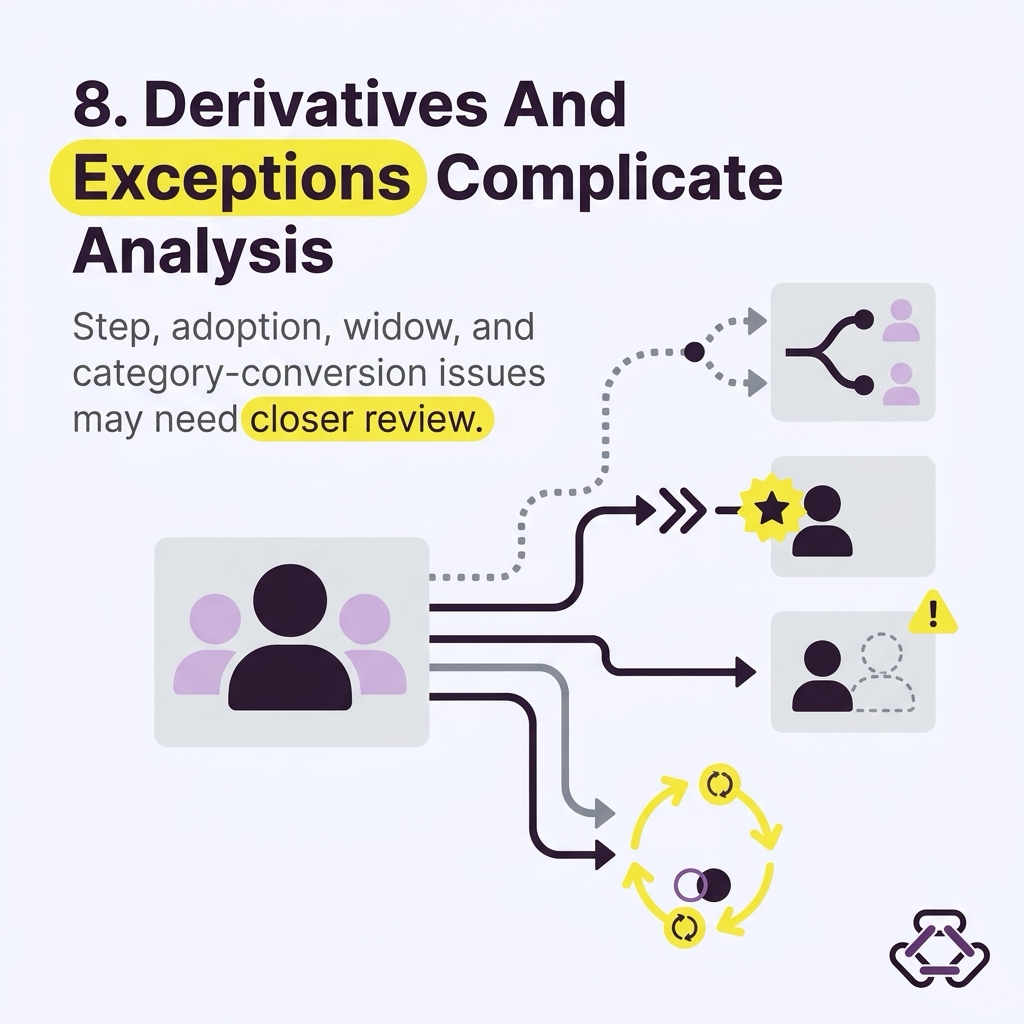
Stepparent And Stepchild Relationships
A step relationship may qualify in some circumstances, but the exact timing of the marriage that created the relationship can matter. USCIS policy materials note that category classification can depend on whether the legal relationship satisfies immigration definitions. This is often less about “immediate relative versus preference” in the abstract and more about whether the relationship qualifies at all.
Adoption Cases
Adoption-based petitions can involve additional statutory requirements and timeline questions. The existence of a parent-child relationship for immigration purposes may require a separate legal analysis from the simpler biological-family examples.
Widow Or Widower Cases
USCIS states that some widow or widower cases may proceed through immediate relative treatment using Form I-360, which can surprise families who assume every spousal case begins and ends with Form I-130.
Petitioner Naturalizes During The Case
USCIS explains in its eligibility guidance that a petition may be converted to a different category if circumstances change. One common example is when a lawful permanent resident becomes a U.S. citizen while a family petition is pending. That can move a case into a different family-based category and, in some situations, improve visa availability.
Children Turning 21
This issue often creates the most anxiety. Once a beneficiary crosses the age-21 line, the case may move from one category to another unless a protective rule applies. Families dealing with this type of timing issue often look for legal help because a small date difference can change strategy in a meaningful way.
A Quick Self-Check For Families
If you're trying to classify a case at a high level, these questions can help:
- Is the petitioner a U.S. citizen or a green card holder?
- Is the beneficiary a spouse, parent, child under 21, adult son/daughter, or sibling?
- Is the beneficiary married or unmarried?
- Is the beneficiary under 21 or 21 and older?
- Is the family waiting on a Visa Bulletin date, or is a visa immediately available?
- Are there derivative family members involved?
In many cases, those six questions point pretty clearly toward either immediate relative or family preference.
When The Category Question Calls For Attorney Review
Some cases are easy to label. Others involve overlapping facts that make the classification less obvious, including:
- age-out concerns
- prior marriages and stepchild questions
- adoption-based family relationships
- petitioner naturalization during the process
- unlawful presence or inadmissibility concerns
- adjustment-of-status timing issues
- derivative-beneficiary strategy
- category conversion after a change in family circumstances
In those situations, families often want more than a generic attorney directory. They may be looking for someone with documented experience in highly similar family-immigration matters, including petitions involving category disputes, timing questions, and sponsorship complications. An attorney can help evaluate how the relationship is classified, what evidence matters most, and whether any change in age, marital status, or sponsor status could affect the path forward.
The Bottom Line
To tell whether a family-based immigration case is immediate relative or family preference, the key questions are usually who is filing, what the family relationship is, how old the beneficiary is, and whether the beneficiary is married.
In general terms:
- Immediate relative usually means:
- spouse of a U.S. citizen
- unmarried child under 21 of a U.S. citizen
- parent of a U.S. citizen who is at least 21
- Family preference usually includes:
- adult unmarried sons and daughters of U.S. citizens
- married sons and daughters of U.S. citizens
- siblings of U.S. citizens
- spouses and qualifying children of lawful permanent residents
If a case involves priority dates, Visa Bulletin waiting, or derivative beneficiaries, it is often in the family preference system. If a visa is immediately available because the beneficiary is a close qualifying relative of a U.S. citizen, it is often an immediate relative case.
For families trying to sort out the difference, the classification question is often the first sign that a case may benefit from a closer legal review — especially when timing, evidence, and sponsor eligibility all intersect.
Visit ReferU.AI to get matched with an attorney who has demonstrable experience in cases like yours — for free.
