Table of Contents
- 10 Questions Couples Ask Before Choosing the K-1 Route
- Table Of Contents
- 1. Are We Even Eligible For A K-1 Visa?
- 2. Is The K-1 Faster Than Getting Married First?
- 3. Do We Have To Get Married Within 90 Days?
- 4. What Evidence Does USCIS And The Consulate Look For?
- 5. How Much Does The K-1 Route Really Cost?
- 6. Can My Fiancé(e) Work Or Travel Right Away After Arrival?
- 7. What Happens After The Wedding?
- 8. What If One Of Us Has Immigration Or Criminal History?
- 9. What Happens If The Case Is Delayed Or We Get A Request For More Evidence?
- 10. When Does It Make Sense To Talk To An Attorney?
- Final Tip Before Choosing The K-1 Route

Type
Great Grandchild
Status
Approved
Title (YouTube)
Images Failed (Social)
Images Failed (Social)
Do not index
Publish Date (TikTok)
Apr 27, 2027 12:15
Videos Post IDs (Social)
Hashtags (Social)
#LegalAdvice #LegalHelp #Immigration #FianceVisa
Caption
Caption X
Cover

OG Image

Alt Image Text
Flat vector illustration of a couple reviewing documents, passport, calendar, and rings while planning the K-1 fiancé visa route and considering key K-1 route questions.
Images

Videos
Publish Date (Social)
Feb 20, 2027 09:30
Scheduled (Social)
Scheduled (Social)
Images Posted (Social)
Images Posted (Social)
Videos Posted (Social)
Videos Posted (Social)
Featured
Created time
Apr 7, 2026 12:01 AM
Sub-item
Authors
CTA Practice Area (Social)
Immigration
TikTok Failed (Social)
TikTok Failed (Social)
Videos Post Links (Social)
TikTok Post Links (Social)
Images Post IDs (Social)
YT Post ID
Video Pending Manual (Social)
TikTok Posted (Social)
TikTok Posted (Social)
TikTok Post IDs (Social)
Video Cover (Social)
Images Post Links (Social)
First Comment (Social)
Videos Failed (Social)
Videos Failed (Social)
YT Embedded
Images Delete (Social)
Videos Delete (Social)
10 Questions Couples Ask Before Choosing the K-1 Route
If you and your partner are deciding whether the K-1 fiancé visa makes sense, you’re not alone. Many couples start in the same place: excited, overwhelmed, and trying to figure out whether this path fits their timeline, finances, and long-term immigration plans.
The K-1 route can look simple on the surface. A U.S. citizen files a petition, the foreign fiancé(e) applies for a visa, the couple marries in the United States within 90 days of entry, and then the noncitizen spouse applies for permanent residence. But in real life, couples often have deeper questions about timing, evidence, costs, travel limits, work authorization, and whether marrying first might make more sense instead. The official framework is set out by USCIS and the U.S. Department of State, but choosing between immigration paths often comes down to details.
In this post, you’ll learn the 10 questions couples ask before choosing the K-1 route, what those questions often reveal, and where an immigration attorney may help spot delay risks before they become expensive problems. If you want a broader overview first, it may help to start with this guide to how the fiancé visa process works from petition through marriage and what comes next.
Scroll to the bottom for every post in this series.
Table Of Contents
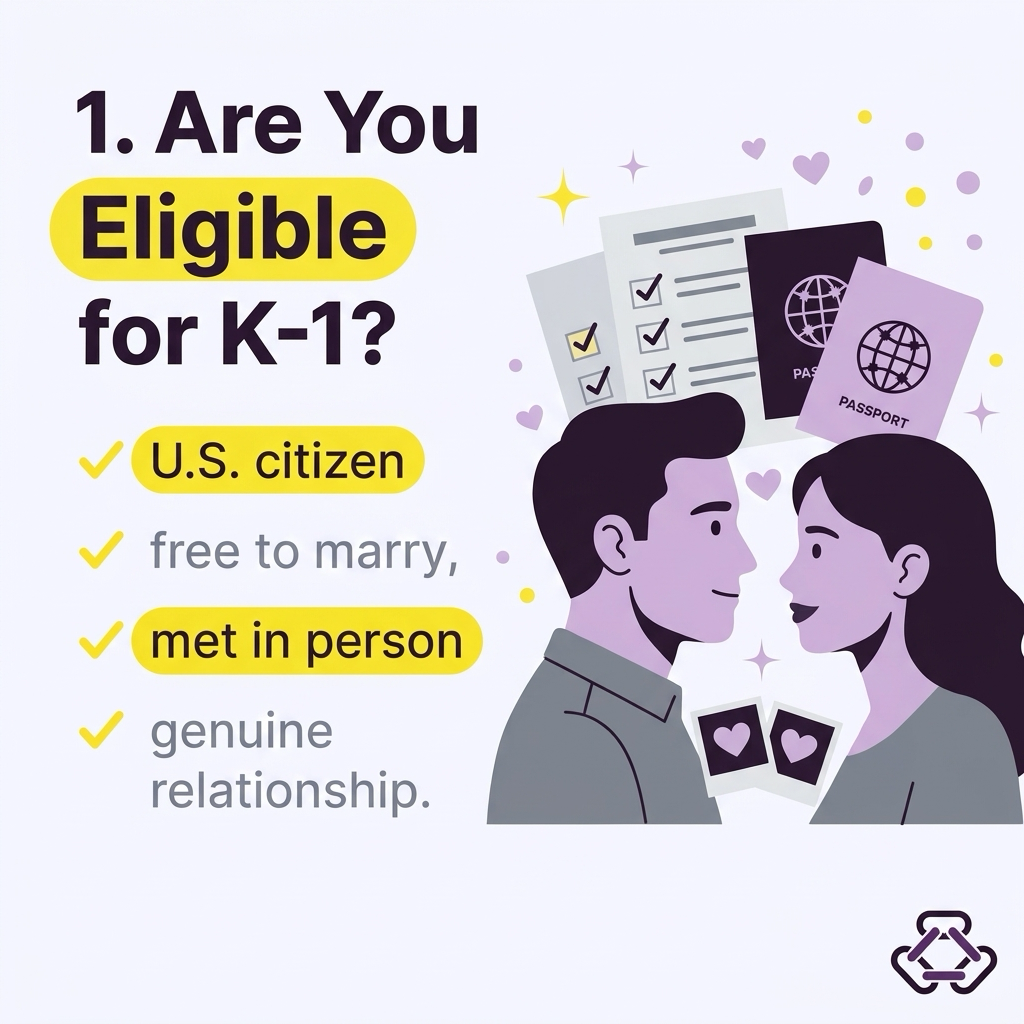
1. Are We Even Eligible For A K-1 Visa?
At the most basic level, the K-1 is available when a U.S. citizen wants to bring a foreign-citizen fiancé(e) to the United States for marriage. USCIS states that the couple must intend to marry within 90 days of the fiancé(e)’s admission, both people must be legally free to marry, and they generally must have met in person at least once during the two years before filing, unless a narrow waiver applies for certain cultural customs or extreme hardship. USCIS
That last point often catches couples off guard. Long-distance relationships can be very real, but immigration agencies still focus heavily on documented facts: citizenship, legal capacity to marry, an in-person meeting history, and evidence that the relationship is genuine. The Department of State also notes that the consular process includes review of relationship evidence, civil documents, police certificates, and a medical exam before visa issuance. Travel.State.Gov
If you’re still sorting out the basics, some couples find it helpful to read a simpler walkthrough on getting oriented with the fiancé visa process from the beginning before comparing strategy options.
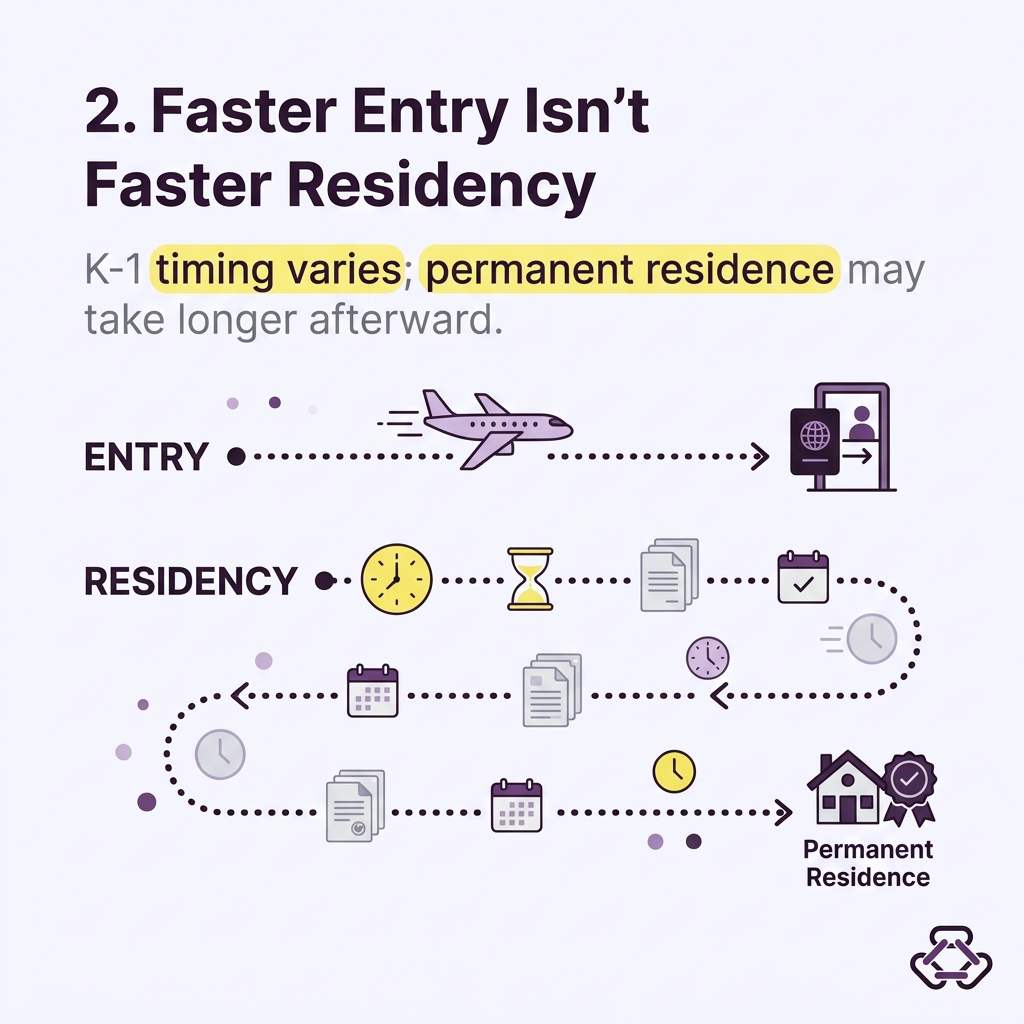
2. Is The K-1 Faster Than Getting Married First?
This is one of the biggest questions couples ask, and it rarely has a one-size-fits-all answer.
Historically, many couples viewed the K-1 as the “faster” option. In current practice, timing can vary widely based on USCIS workload, National Visa Center handling, embassy-specific scheduling, security checks, and the country where the interview takes place. USCIS maintains a processing times tool because wait times change over time, and the Department of State makes clear that consular steps also depend on local post procedures and interview availability. Travel.State.Gov
What many couples eventually realize is that “faster to enter the U.S.” and “faster to get permanent residence” are not always the same thing. A K-1 can lead to entry first and green card processing later through adjustment of status. A marriage-first strategy abroad often starts with a spousal immigrant visa path instead, which can mean the foreign spouse enters the United States already as a permanent resident or close to that status, depending on the category. The State Department’s page on spousal immigrant visas helps illustrate that contrast.
Here’s what this often means in practical terms: a couple choosing the K-1 may be prioritizing being together in the United States sooner, while a couple choosing a marriage-first route may be prioritizing a more direct path to work/travel flexibility after entry. An attorney may help compare those tradeoffs based on current case facts rather than old forum advice.
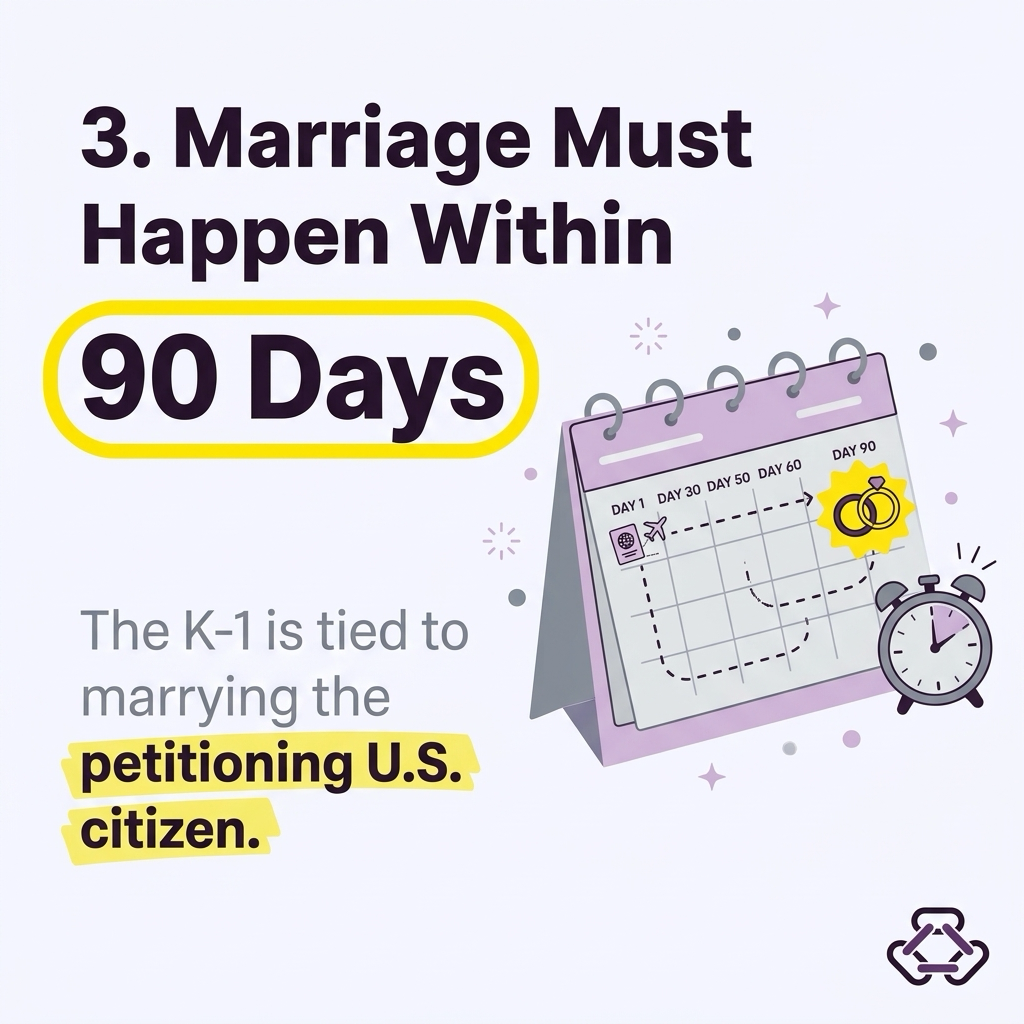
3. Do We Have To Get Married Within 90 Days?
Yes, that 90-day window is a core feature of the K-1 process. USCIS states that the couple must intend to marry within 90 days of the fiancé(e)’s admission to the United States, and the Department of State says the same on its K-1 visa page. USCIS Travel.State.Gov
The detail that matters here is who the K-1 entrant marries. The marriage is tied to the same U.S. citizen petitioner who filed the case. If the couple does marry within the required period, the K-1 entrant may then pursue adjustment of status through that marriage. USCIS
For couples planning around venues, family travel, or religious ceremonies, this question can become more practical than legal. Some people imagine they can enter on a K-1, spend time deciding, or postpone the wedding indefinitely. That assumption can create major problems. In general terms, the K-1 route works best when both partners are already confident about marriage timing and logistics.
4. What Evidence Does USCIS And The Consulate Look For?
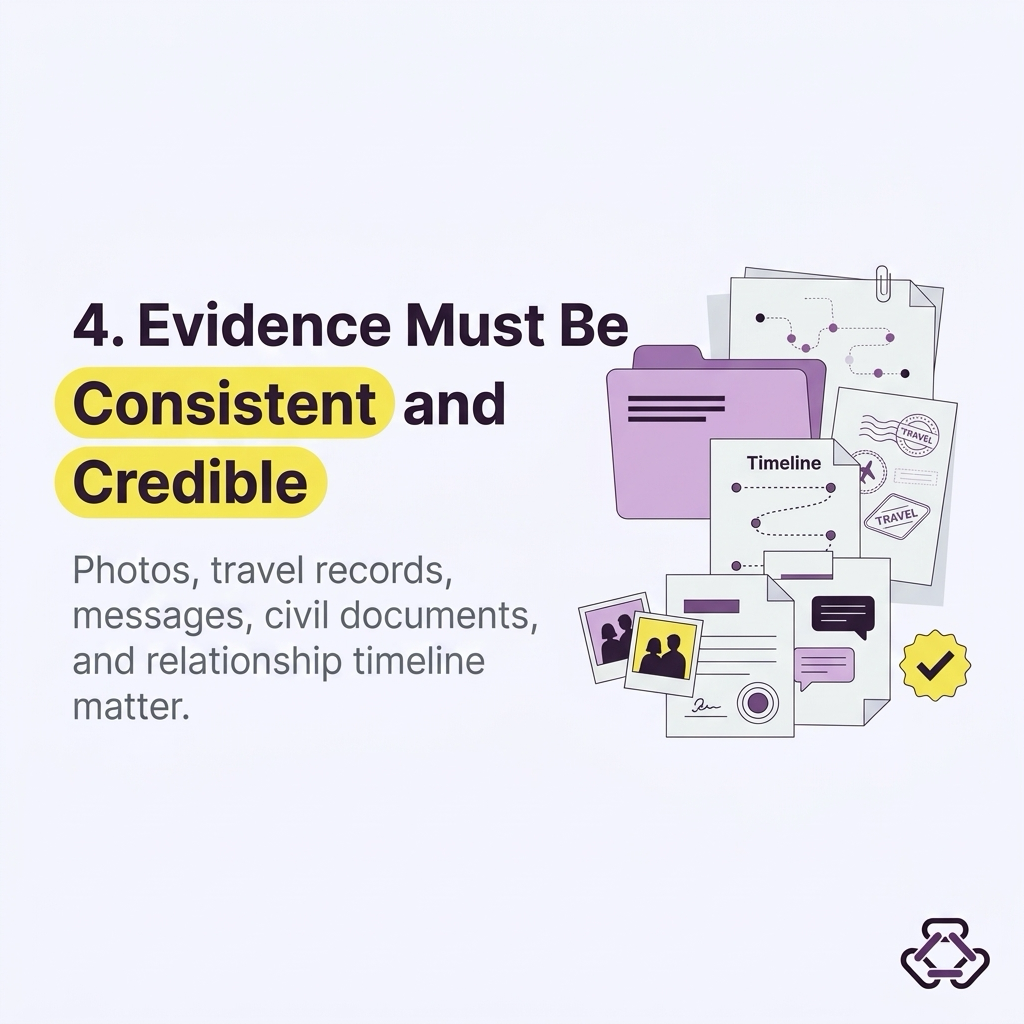
A K-1 case is not just about filling out forms. It is also about showing a bona fide relationship with consistent, credible evidence.
USCIS explains that the couple must have a genuine intent to establish a life together and that the relationship cannot exist solely for an immigration benefit. The Department of State says K-1 applicants may be asked to bring evidence showing the relationship is genuine, including photographs and other proof, along with civil records, police certificates, and the results of the required medical examination. USCIS Travel.State.Gov
Common examples of relationship evidence include:
- Photos together over time
- Travel records showing in-person visits
- Messages, call logs, and communication history
- Engagement evidence
- Statements explaining the relationship timeline
- Divorce decrees or death certificates from prior marriages
- Proof of wedding plans, in some cases
What matters is usually consistency and credibility, not just volume. If dates conflict, prior marriages are unclear, or the relationship history is hard to follow, even a real couple can face delays. That’s one reason many people spend time organizing a fiancé case before filing so the timeline and evidence are easier to follow.
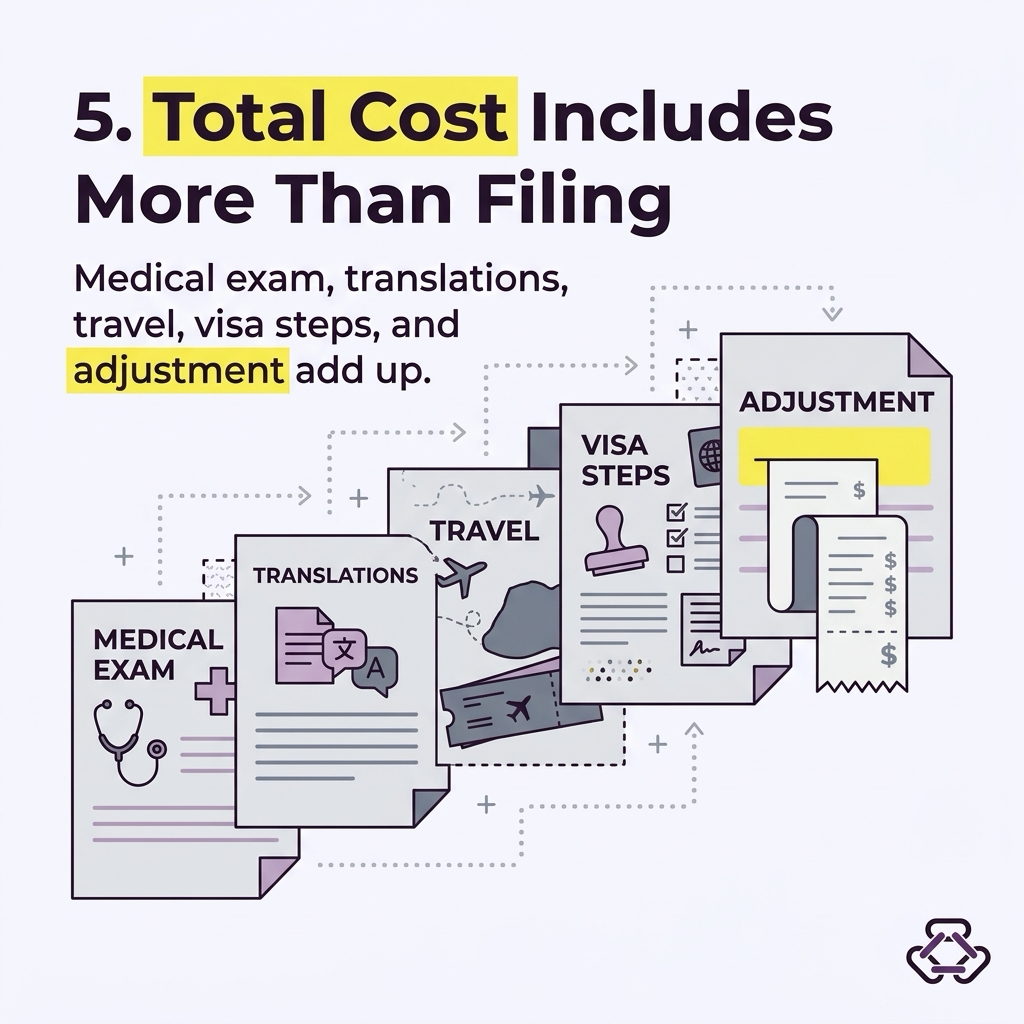
5. How Much Does The K-1 Route Really Cost?
This question is often broader than people expect.
There are government filing fees, but there can also be costs for the visa application, medical exam, document collection, translations, travel, and then a separate round of filings after marriage for adjustment of status. USCIS’s filing fees page and Form I-485 page make clear that adjustment-stage costs are separate, and USCIS also notes that, for adjustment filings made on or after April 1, 2024, Form I-765 and Form I-131 generally involve additional fees rather than being bundled with the I-485 filing fee. USCIS USCIS USCIS
The State Department also notes that K-1 applicants typically deal with interview-stage documentation and fees as part of the consular process. Travel.State.Gov
So when couples ask, “Is the K-1 cheaper?” the answer is often: not necessarily. The K-1 route can involve more stages after arrival, and that can affect the overall budget. An attorney may help map out the likely total cost so the couple is comparing full-process expenses rather than just the first filing.
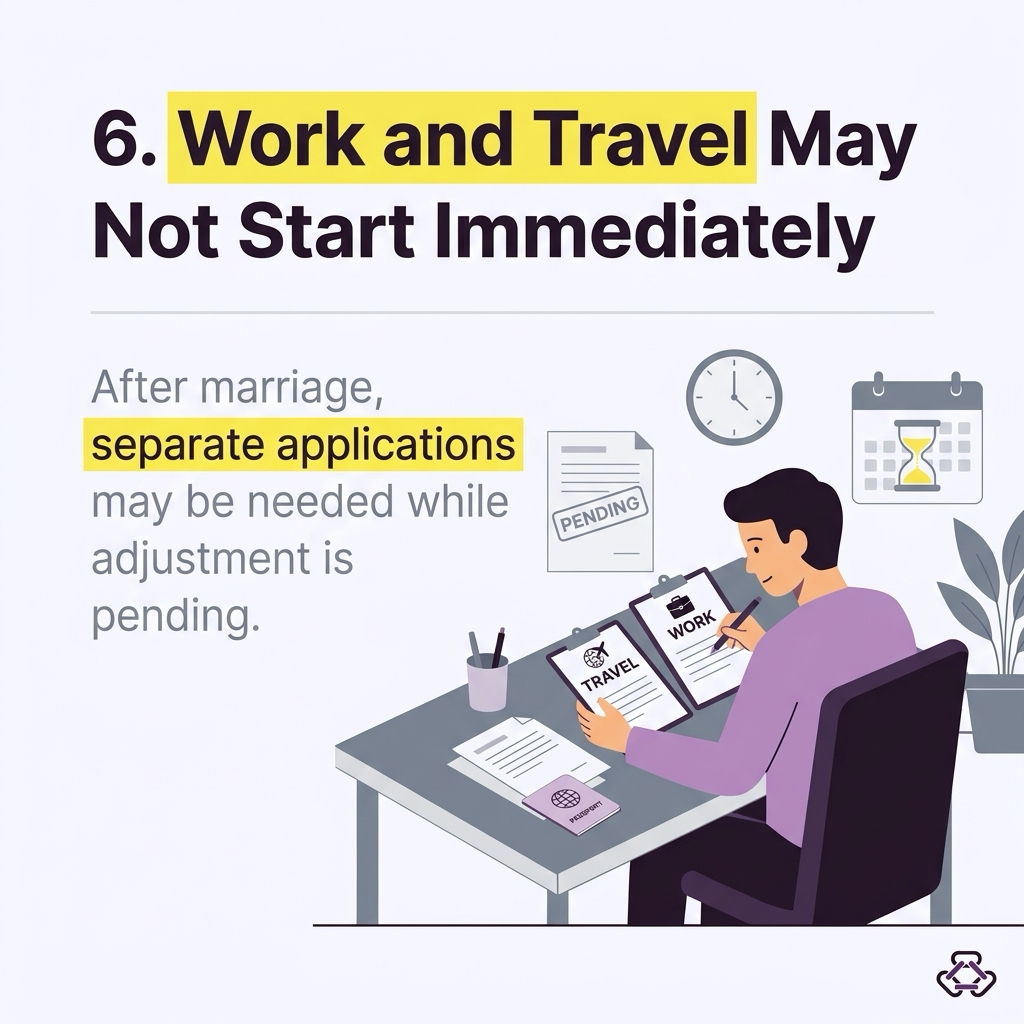
6. Can My Fiancé(e) Work Or Travel Right Away After Arrival?
This is where many couples discover the biggest practical tradeoff of the K-1 route.
A K-1 visa allows entry to marry the U.S. citizen petitioner within 90 days. It is not the same as arriving as a permanent resident. After the wedding, the foreign spouse typically applies for adjustment of status, and if they want work authorization or advance permission to travel while that case is pending, those applications are commonly filed with or after the adjustment packet. USCIS explains that K-1 entrants who marry the petitioner within 90 days may apply for a green card through Form I-485. USCIS
The Department of State also draws a distinction between the K-1 interview stage, where a consular officer may request Form I-134 as financial support evidence, and the later green card stage, where the U.S. citizen spouse files Form I-864 with USCIS. Travel.State.Gov USCIS similarly notes that for a K-1 case, the affidavit of support tied to permanent residence comes later during adjustment of status. USCIS
In everyday terms, couples often ask this question because they are really asking: “Will we be living on one income for a while?” In many K-1 cases, that is a possibility worth planning around.
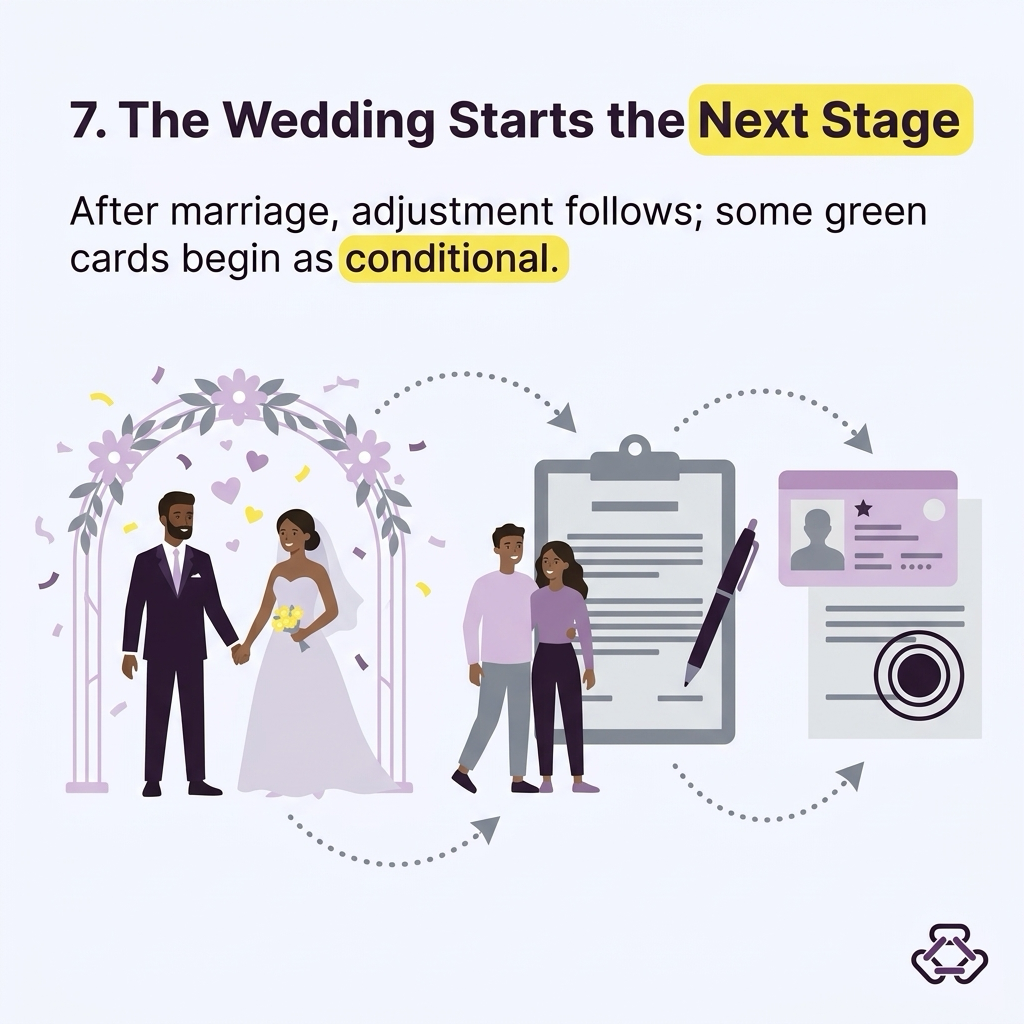
7. What Happens After The Wedding?
The wedding is not the end of the immigration process. For many couples, it is the beginning of the second major stage.
After marrying within 90 days, the K-1 entrant may apply for lawful permanent residence by filing Form I-485, assuming the eligibility requirements are met. USCIS has a page specifically addressing green cards for fiancé(e)s of U.S. citizens. If permanent residence is granted before the couple’s second wedding anniversary, the resulting residence is generally conditional, and the couple later files to remove conditions through Form I-751. USCIS explains that marriage-based permanent residence is conditional when the marriage was less than two years old on the date permanent residence was obtained. USCIS
This is why many couples eventually ask not just “How do we get the visa?” but “What does the full timeline look like from engagement to green card?” If that’s your question, it may help to read more on moving from the K-1 stage into marriage-based adjustment after the wedding.
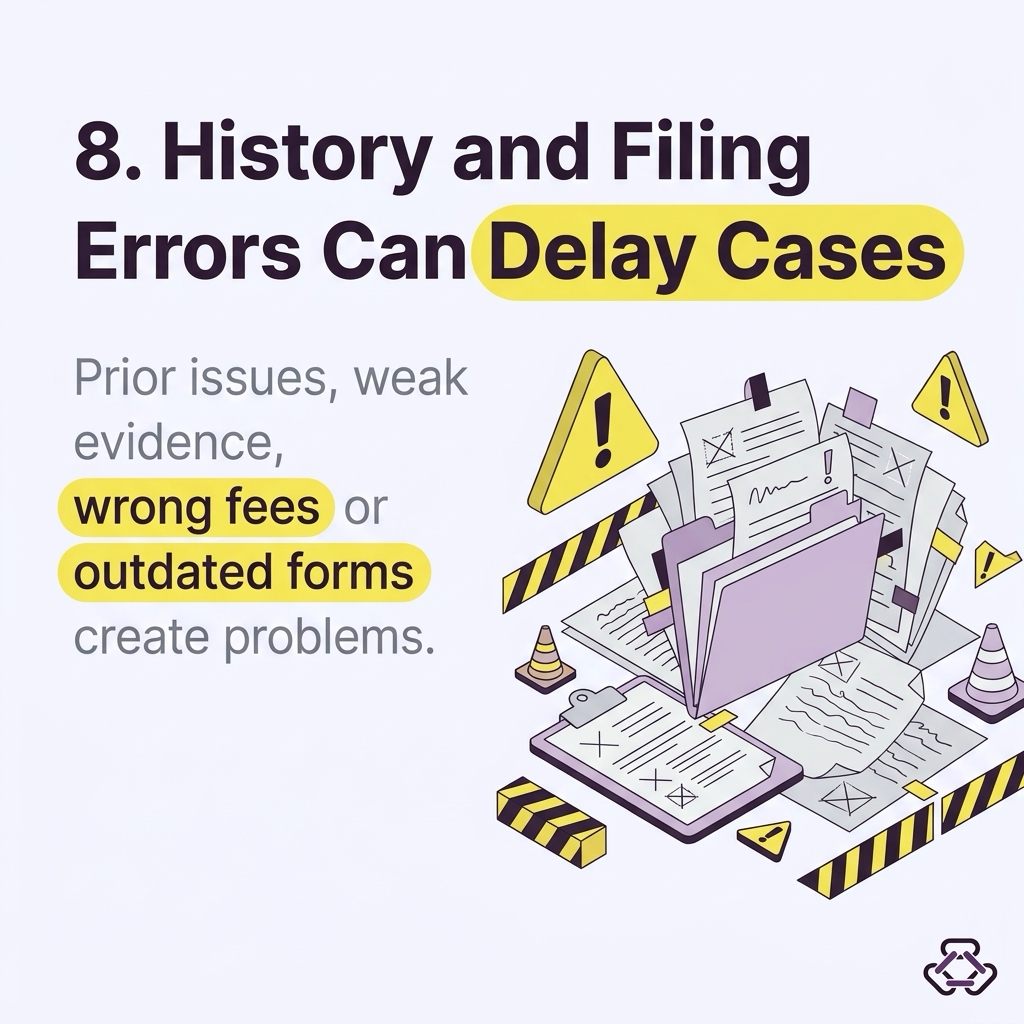
8. What If One Of Us Has Immigration Or Criminal History?
This is often the question couples ask quietly, after spending weeks reading general guides that don’t quite address their situation.
Prior visa overstays, prior removals, past petition filings, arrests, convictions, allegations of marriage fraud, or certain disclosures under the International Marriage Broker Regulation Act can all affect how a K-1 case is reviewed. The Department of State’s K-1 page confirms that police certificates, medical review, and admissibility issues are part of the visa process. Travel.State.Gov USCIS also flags marriage fraud concerns and directs the public to report suspected fraud. USCIS
Not every prior issue blocks a case. Some problems are manageable, some call for extra documentation, and some may point toward a different strategy. But these are the kinds of facts that often make a self-prepared filing riskier. An attorney can review whether a prior event is a minor complication, a major admissibility problem, or a sign that another visa path may fit better.
9. What Happens If The Case Is Delayed Or We Get A Request For More Evidence?
Delays happen for many reasons: missing signatures, inconsistent dates, weak relationship documentation, embassy backlogs, security checks, outdated forms, fee issues, or incomplete civil records. USCIS notes that filing fees and form editions matter, and it has warned that forms submitted with incorrect fees can be rejected. USCIS also announced that only the 10/24/24 edition of Form I-485 is accepted as of February 10, 2025. USCIS USCIS
USCIS also has an expedite request policy, but an expedite request is not the same as a guaranteed faster outcome; it simply asks the agency to consider handling the matter out of normal order under specific criteria. USCIS
A request for evidence, or RFE, does not automatically mean a case is doomed. In many situations, it means the agency wants clearer support. The bigger issue is often whether the original filing was organized well enough to avoid the question in the first place. Couples trying to reduce that risk often benefit from learning more about the filing mistakes that commonly create expensive fiancé visa delays.
10. When Does It Make Sense To Talk To An Attorney?
For some couples, the answer is “before filing anything.” For others, it’s when one of the following shows up:
- Prior marriages with incomplete records
- Immigration violations or visa denials
- Criminal history
- Children immigrating as K-2 derivatives
- Limited evidence of in-person meetings
- Income concerns for affidavit of support issues
- Confusion about K-1 versus spouse visa strategy
- A prior RFE, denial, or returned petition
- Country-specific interview complications
- Pressure to make travel or wedding plans before approvals are in place
The Department of State specifically warns applicants not to make non-refundable travel arrangements until the visa is issued, a reminder that K-1 timing can be uncertain. Travel.State.Gov
An immigration attorney may help identify issues that are easy to miss in online checklists: whether the evidence tells a coherent story, whether a prior event raises inadmissibility concerns, whether a marriage-first route may be a better fit, and whether the couple’s long-term goals line up with the visa strategy they are considering. That kind of early review can be especially useful when the case involves facts outside the “standard” engagement timeline.
Final Tip Before Choosing The K-1 Route
The K-1 process is not just a visa choice. It is a relationship timeline choice, budgeting choice, evidence choice, and post-marriage immigration choice all at once.
For some couples, the K-1 route feels like the most practical way to start life together in the United States. For others, marrying first and using a spousal path may line up better with work authorization, travel flexibility, or total process cost. The right answer often depends less on internet folklore and more on the couple’s actual facts.
If your situation includes prior immigration history, unusual timing, financial questions, or any concern that your case may face extra scrutiny, an attorney may help you evaluate the options using objective criteria and documented experience with highly similar matters.
Visit ReferU.AI to get matched with an attorney who has demonstrable experience in cases like yours — for free.
