Table of Contents
- Fiancé Visa Explained: K-1 Petition, Timing, Marriage, and Next Steps
- What Is A K-1 Fiancé Visa?
- How The K-1 Process Actually Works
- 1. The U.S. Citizen Files Form I-129F
- 2. USCIS Approves The Petition
- 3. The Foreign Fiancé(e) Applies For The Visa Abroad
- 4. Entry To The United States On The K-1 Visa
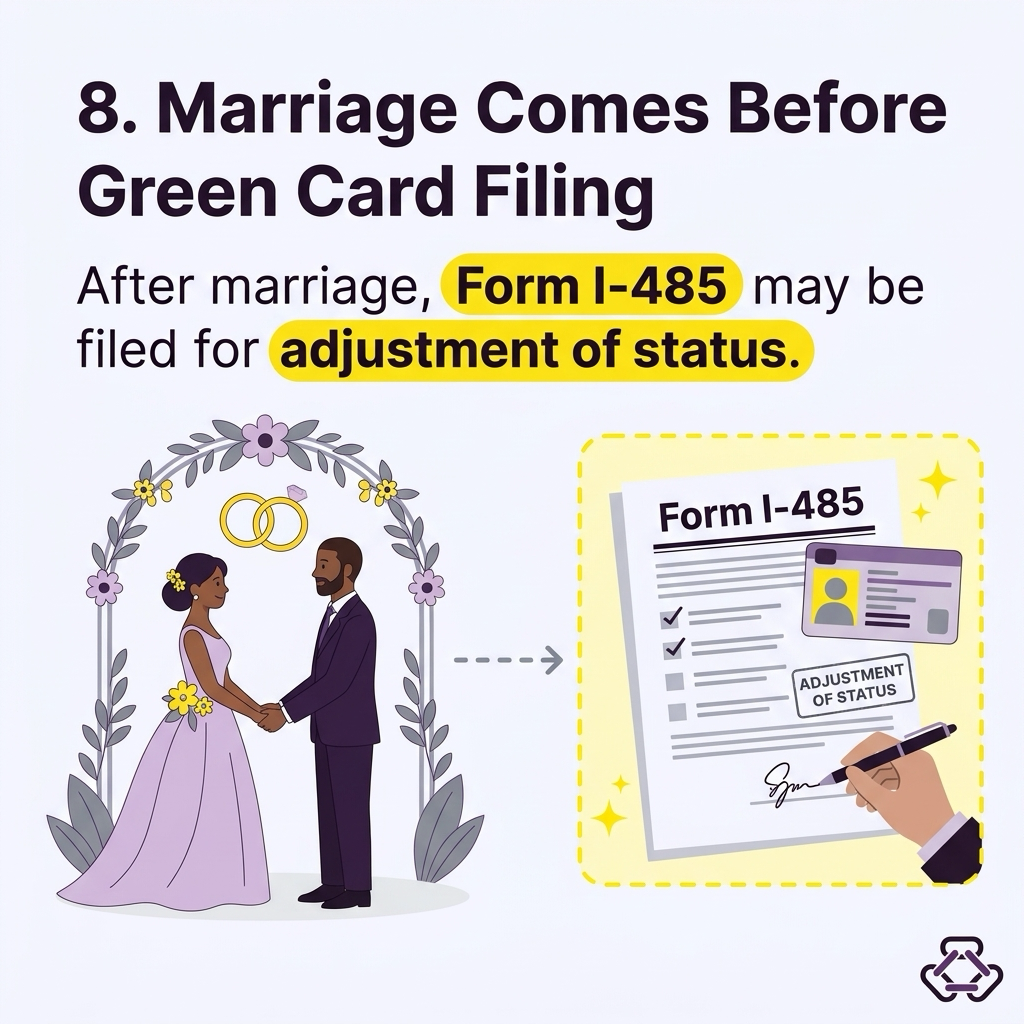
- 5. Marriage Within 90 Days And Then Adjustment Of Status
- What Does The I-129F Petition Prove?
- The Petitioner Is Eligible
- The Couple Intends To Marry
- The Couple Is Legally Free To Marry
- The Couple Met In Person Recently
- How Long Does A K-1 Case Take?
- What Happens At The Consular Interview?
- What Happens After Entry And Marriage?
- Can A K-1 Visa Holder Work Or Travel Right Away?
- What If The Couple Does Not Marry Within 90 Days?
- Common K-1 Problems That Create Delays
- Is The K-1 Route Better Than Getting Married First?
- When Does It Make Sense To Talk With An Immigration Attorney?
- The Bottom Line On K-1 Petitions, Timing, Marriage, And Next Steps

Type
Grandchild
Status
Approved
Title (YouTube)
Images Failed (Social)
Images Failed (Social)
Do not index
Parent item
Publish Date (TikTok)
Apr 28, 2027 06:15
Videos Post IDs (Social)
Hashtags (Social)
#LegalAdvice #LegalHelp #Immigration #FianceVisa
Caption
Caption X
Cover

OG Image

Alt Image Text
Flat vector illustration of the K-1 fiancé visa and I-129F process, showing a couple, petition filing, visa steps, travel, marriage within 90 days, and green card next steps.
Images

Videos

Publish Date (Social)
Feb 20, 2027 12:00
Scheduled (Social)
Scheduled (Social)
Images Posted (Social)
Images Posted (Social)
Videos Posted (Social)
Videos Posted (Social)
Featured
Created time
Apr 7, 2026 12:00 AM
Authors
CTA Practice Area (Social)
Immigration
TikTok Failed (Social)
TikTok Failed (Social)
Videos Post Links (Social)
TikTok Post Links (Social)
Images Post IDs (Social)
YT Post ID
Video Pending Manual (Social)
TikTok Posted (Social)
TikTok Posted (Social)
TikTok Post IDs (Social)
Video Cover (Social)

Images Post Links (Social)
First Comment (Social)
Videos Failed (Social)
Videos Failed (Social)
YT Embedded
YT Embedded
Images Delete (Social)
Videos Delete (Social)
Carousel Video URL (Social)
Fiancé Visa Explained: K-1 Petition, Timing, Marriage, and Next Steps
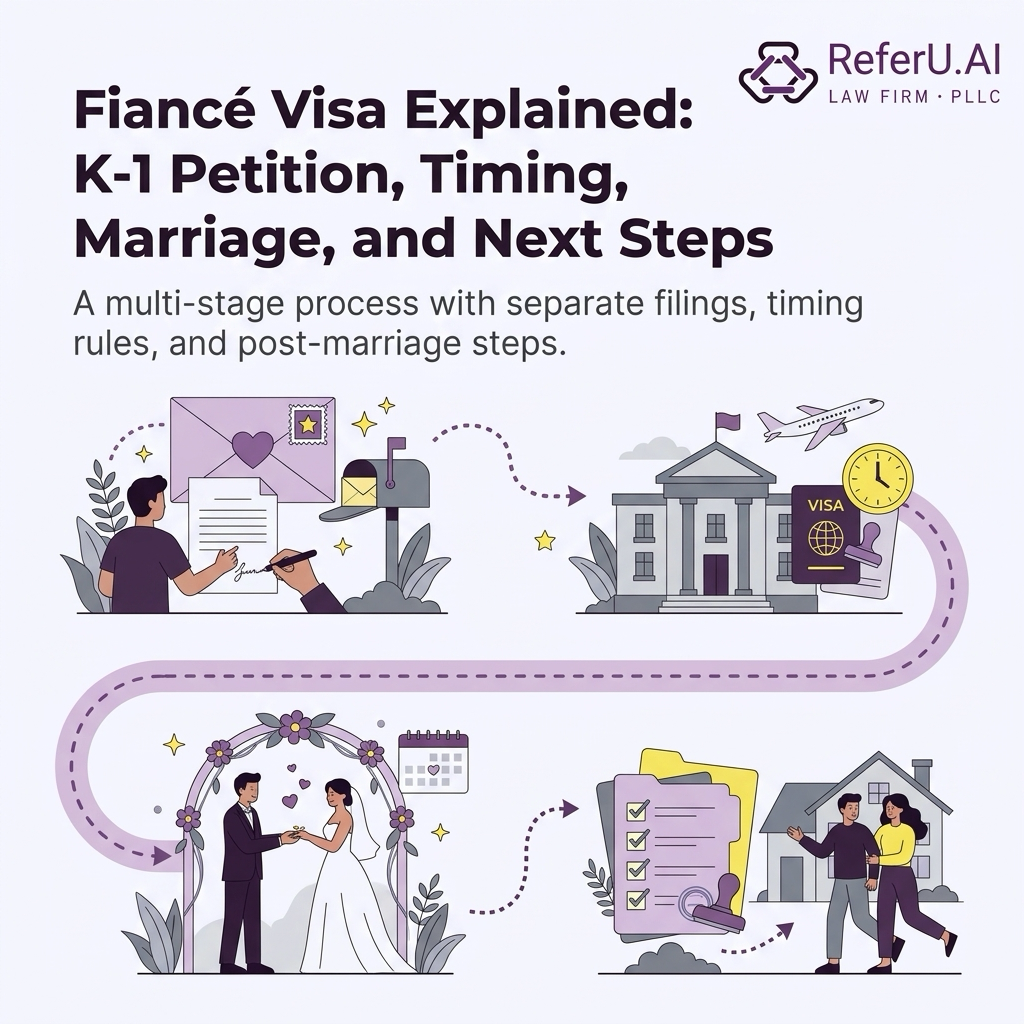
For many couples, the K-1 fiancé visa feels simple at first: file a petition, get a visa, get married, and move forward together. In practice, the process often involves multiple agencies, several filing stages, strict timing rules, and a second major immigration filing after the wedding.
This is where confusion tends to start. People often mix up the petition stage, the consular visa stage, the 90-day marriage rule, and the green card stage that comes afterward. In general terms, the K-1 route is less like one application and more like a sequence of connected steps, each with its own evidence and deadlines.
In this post you’ll learn what a K-1 fiancé visa is, how the I-129F petition works, how long the process may take, what happens after entry to the United States, and what the next steps often look like after marriage. If you’re looking for a broader overview of family-based immigration options, it may also help to start with this plain-English overview of immigration pathways.
Scroll to the bottom for every post in this series.
What Is A K-1 Fiancé Visa?
A K-1 visa is a nonimmigrant visa for the foreign-citizen fiancé(e) of a U.S. citizen. Its purpose is narrow: it allows the foreign fiancé(e) to travel to the United States to marry the U.S. citizen petitioner within 90 days of arrival. After the marriage, the foreign national may apply for adjustment of status to become a lawful permanent resident. The official framework appears on the USCIS fiancé(e) visa page and the State Department’s K-1 visa guidance.
A few basics matter right away:
- The petitioner is a U.S. citizen, not a green card holder.
- The couple generally must be legally free to marry when the petition is filed and remain so through the process.
- The couple generally must have met in person within the two years before filing, though limited exceptions can exist.
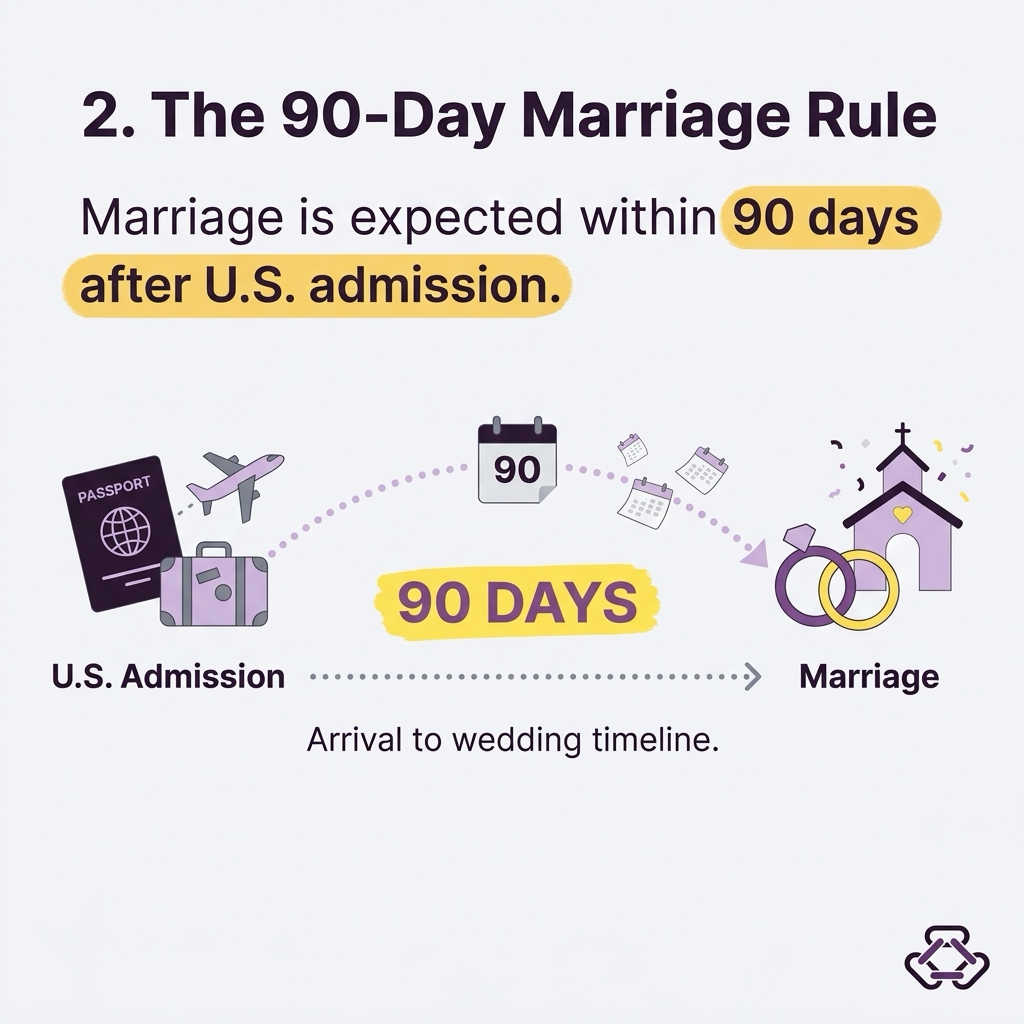
- The marriage is expected to occur within 90 days after admission to the United States on K-1 status.
If you want the shorter version before diving into details, this more focused guide on how the K-1 process works from start to finish can be a useful companion.
How The K-1 Process Actually Works
The K-1 route usually unfolds in five broad stages.
1. The U.S. Citizen Files Form I-129F
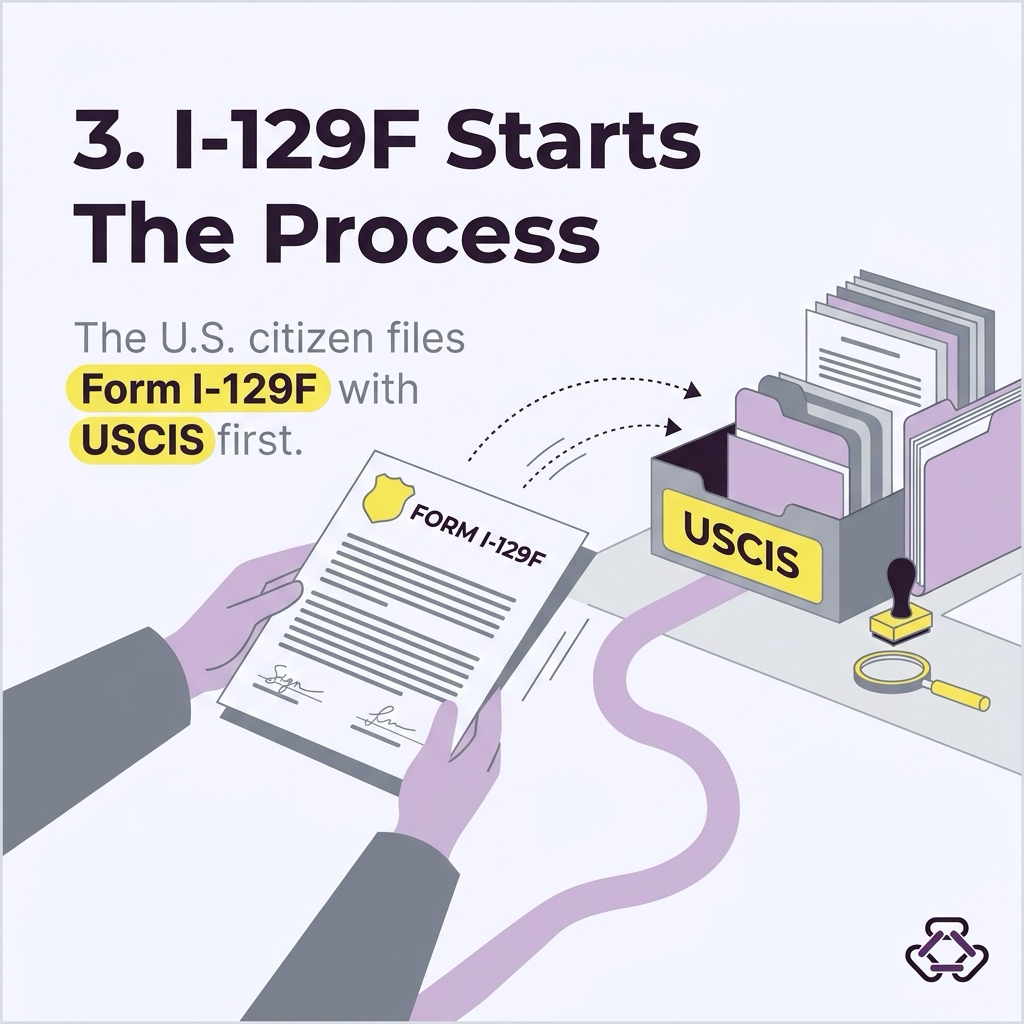
The process starts when the U.S. citizen files Form I-129F, Petition for Alien Fiancé(e) with USCIS. According to the State Department, this petition cannot be filed at a U.S. embassy or consulate abroad.
At this stage, USCIS is reviewing whether the relationship appears to qualify under the statute and whether the required initial evidence is there. Typical evidence often includes:
- proof of U.S. citizenship
- proof both parties are legally free to marry
- evidence of having met in person within the prior two years, if applicable
- signed statements of intent to marry
- evidence suggesting the relationship is genuine
A lot of avoidable delay begins here. Missing divorce records, inconsistent timelines, weak evidence of the in-person meeting, or sloppy organization can all complicate review. For that reason, some couples like to work through a more detailed checklist on preparing the case before filing.
2. USCIS Approves The Petition
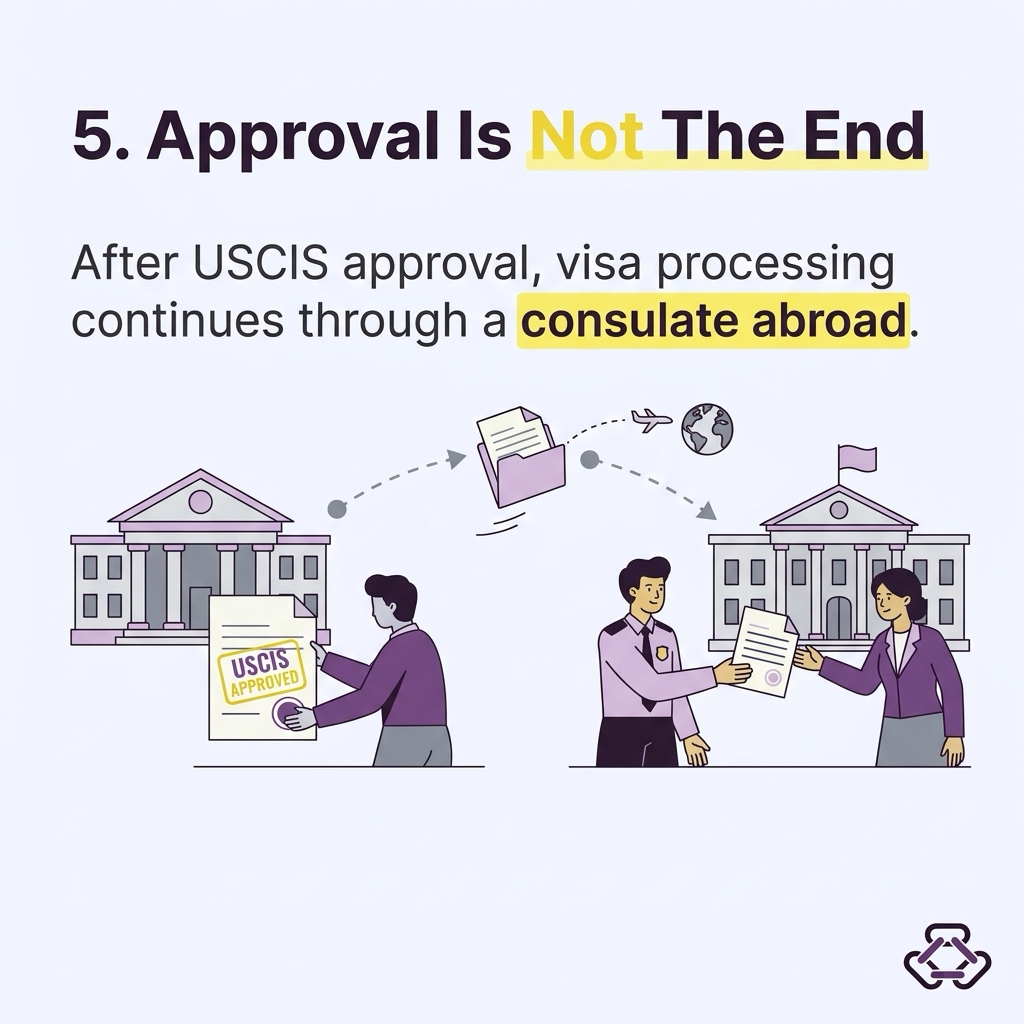
If USCIS approves the I-129F, the case moves forward for consular processing. USCIS notes that an approved K-1 petition is part of the process, not the end of it, because the visa still has to be issued by the Department of State through a U.S. embassy or consulate abroad, as explained on the USCIS fiancé(e) visa page.
3. The Foreign Fiancé(e) Applies For The Visa Abroad
At the embassy or consulate stage, the foreign fiancé(e) completes the visa application steps, attends the medical exam, gathers civil records, and appears for the visa interview. The State Department’s K-1 page lists common required items, including:
- Form DS-160 confirmation
- passport
- birth certificate
- divorce or death certificates for prior spouses, if relevant
- police certificates from qualifying jurisdictions
- medical examination results
- financial support evidence, which may include Form I-134
- proof the relationship is genuine
The same State Department guidance also notes that a consular officer may request additional relationship evidence and that incomplete submissions can create delays.
4. Entry To The United States On The K-1 Visa
If the visa is issued, the foreign fiancé(e) may travel to the United States and request admission. A visa does not guarantee entry; Customs and Border Protection makes the final admission decision at the port of entry, as the State Department explains.
The K-1 visa is generally for a single admission, and the State Department states that the visa validity will be a maximum of six months from issuance.
5. Marriage Within 90 Days And Then Adjustment Of Status
After admission, the couple has 90 days to marry each other. USCIS states that if the marriage occurs within that 90-day period, the K-1 entrant may file Form I-485 to apply for a green card through adjustment of status, as explained on the USCIS green card page for a fiancé(e) of a U.S. citizen.
That “within 90 days” rule is one of the most important parts of the entire process, and it leads to one of the biggest misunderstandings people have about K-1 cases.
What Does The I-129F Petition Prove?
The I-129F petition is not the green card application. It is the first formal filing that asks the government to recognize a qualifying fiancé relationship for K-1 processing.
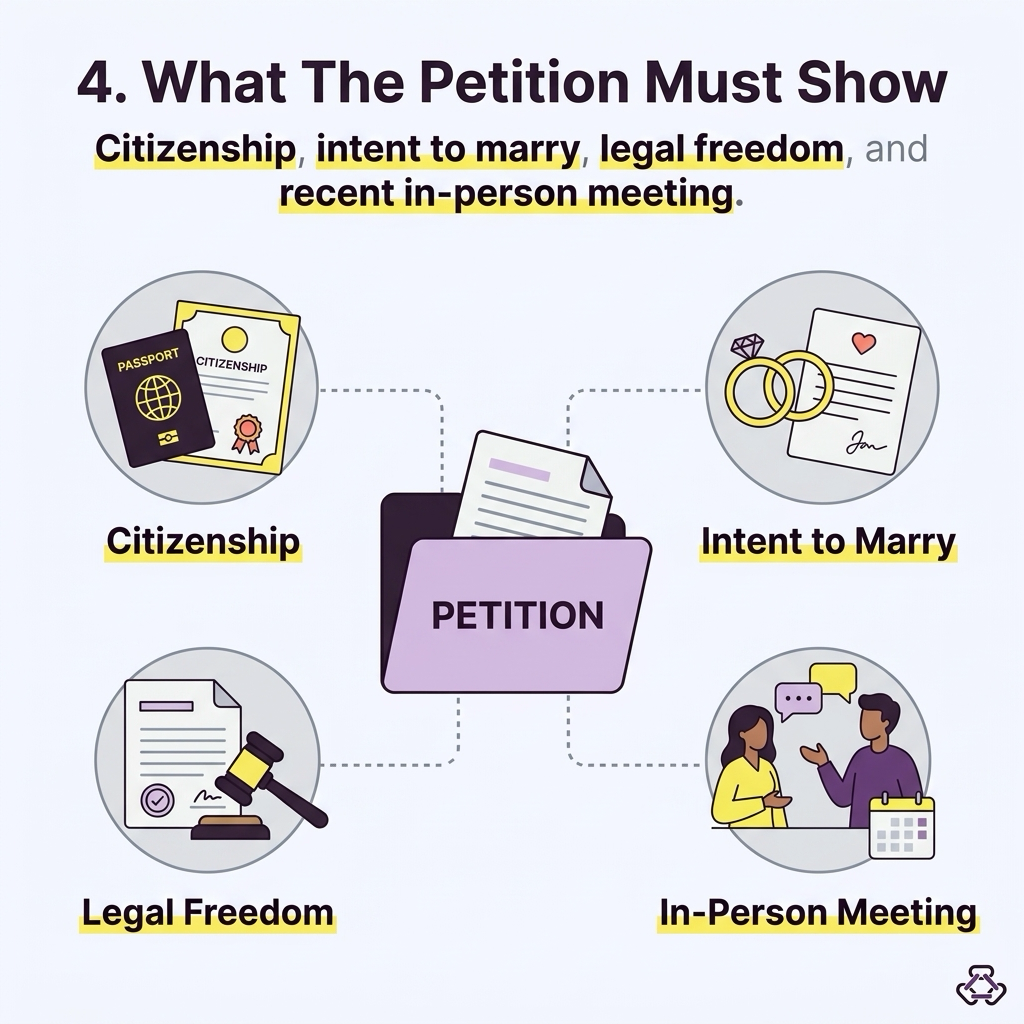
In practical terms, the I-129F packet is often trying to show four things:
The Petitioner Is Eligible
The petitioner generally has to be a U.S. citizen. The K-1 category is not the fiancé route for lawful permanent residents. USCIS describes the K-1 as a visa for the fiancé(e) of a U.S. citizen on its official overview page.
The Couple Intends To Marry
The government is looking for evidence that the couple genuinely plans to marry, not merely visit or delay. Signed intent letters are common, but other evidence often helps show the relationship is real and ongoing.
The Couple Is Legally Free To Marry
If either person has a prior marriage, documentary proof showing the marriage ended legally is usually essential. This is one of the most common evidence gaps in family-based filings generally.
The Couple Met In Person Recently
The State Department explains that, in general, the couple must have met in person within the previous two years, subject to limited exceptions such as extreme hardship or certain cultural practices. That rule appears in the official K-1 visa instructions.
Because this stage carries so much weight, couples often spend extra time on consistency. Travel dates, chat logs, engagement dates, prior marriages, and address history all tend to matter more when they don’t line up.
How Long Does A K-1 Case Take?
This is often the first question couples ask, and it’s also the hardest one to answer with precision.
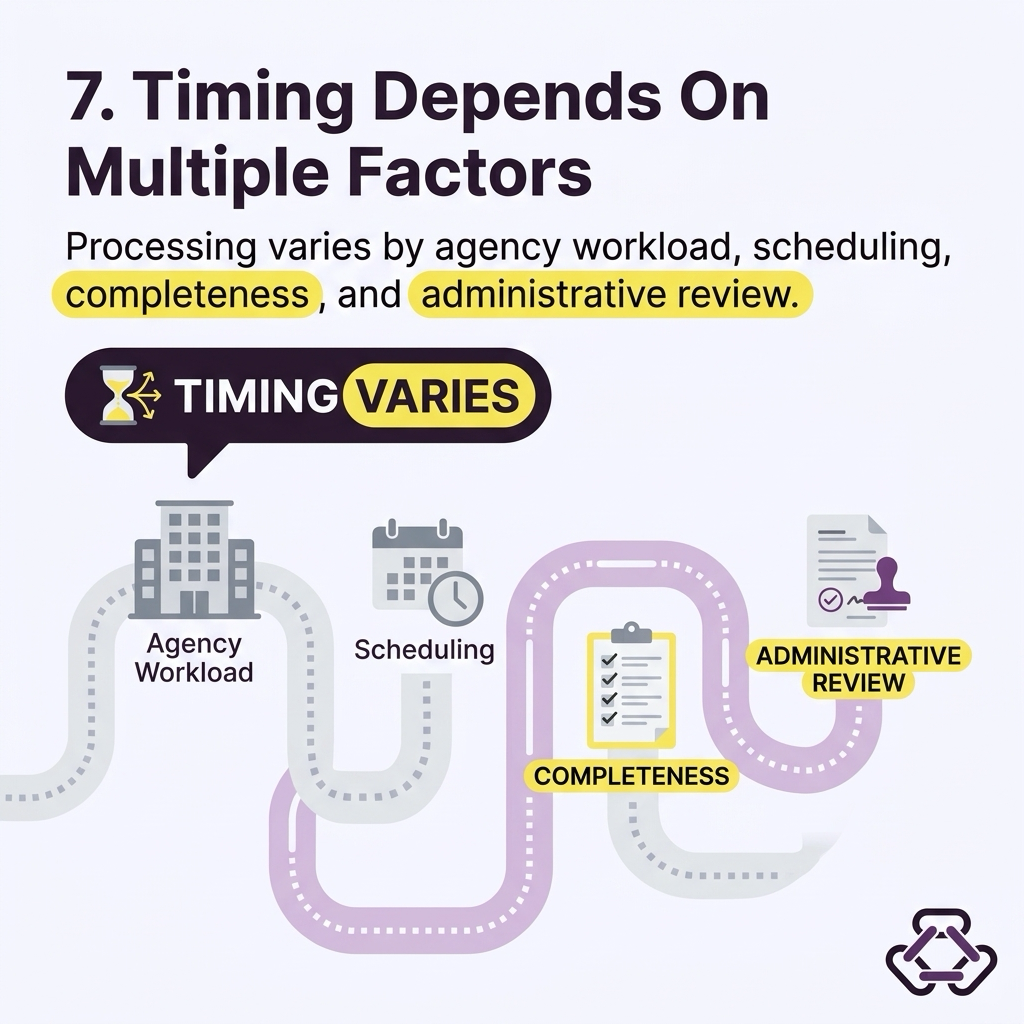
In general terms, K-1 timing depends on several moving parts:
- USCIS processing of Form I-129F
- transfer through the National Visa Center
- the embassy or consulate’s workload
- medical exam scheduling
- interview availability
- administrative processing, if any
- whether the case packet is complete and internally consistent
The State Department specifically notes that timing varies by case and that some visa applications are delayed because applicants do not follow instructions carefully or because additional administrative processing is required after the interview.
So when people ask, “How long does a fiancé visa take?” the honest answer is usually that there is no single fixed timeline. Some cases move relatively smoothly. Others take much longer because of document issues, post-specific backlogs, background screening, or requests for more information.
There is also a newer procedural consideration worth noting: the State Department announced in March 2026 that it is expanding online presence review to additional visa classes, including K-1 and K-2 applicants, effective March 30, 2026, according to its official announcement on expanded screening and vetting. For some couples, that may become another part of interview preparation and case review.
If timing is a major concern, it may help to compare the K-1 route with the spouse-based path and think through the common questions couples ask before picking this option.
What Happens At The Consular Interview?
The consular interview is where the government often tests whether the case is documentarily complete and whether the relationship appears bona fide.
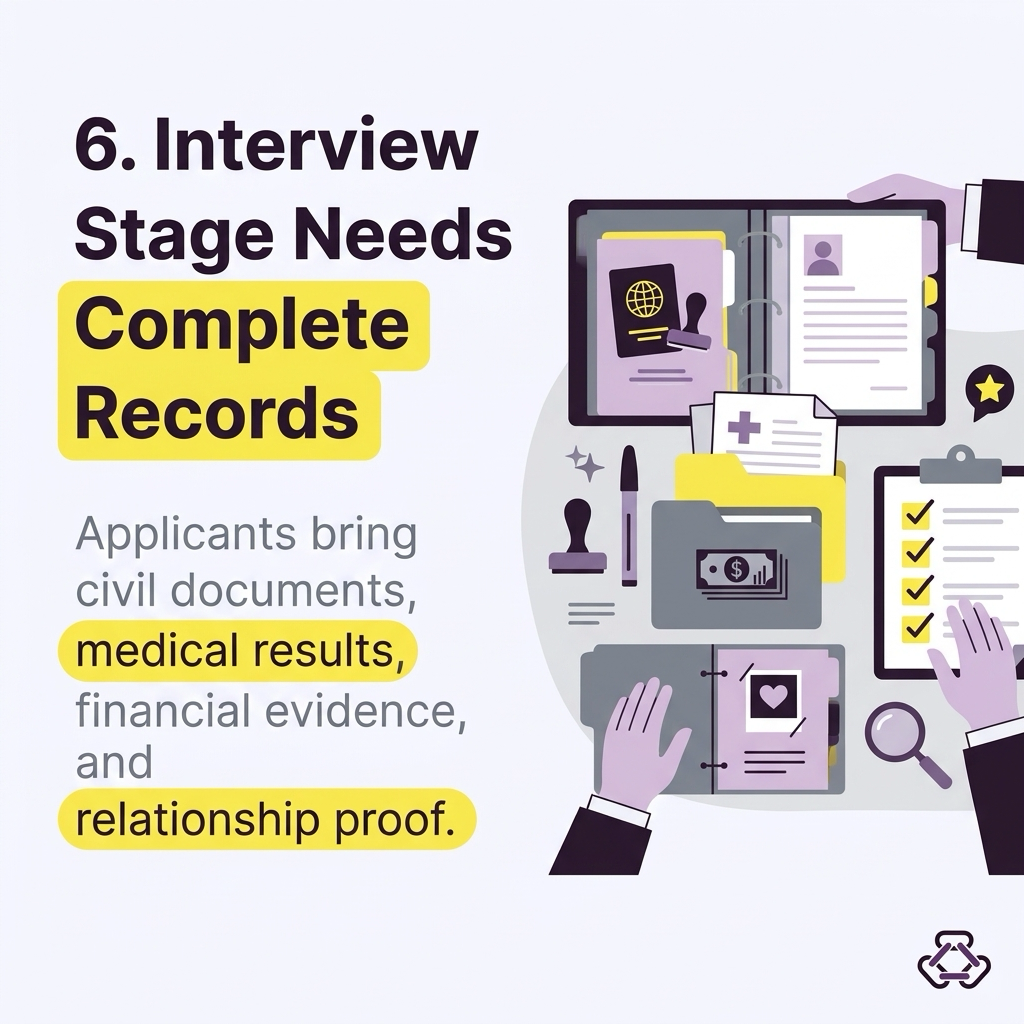
The State Department’s K-1 guidance explains that applicants commonly bring civil records, police certificates, medical exam results, and financial support evidence, and that officers may ask for photographs or other proof showing the relationship is genuine.
Questions often focus on:
- how the couple met
- when they met in person
- relationship timeline
- wedding plans
- prior marriages
- family awareness of the relationship
- work and living arrangements
- communication history
This is not just a paperwork review. It is also a credibility review. That is one reason vague, inconsistent, or overly polished answers can create problems even when the relationship is real.
What Happens After Entry And Marriage?
This is where many people assume the hard part is over. In reality, getting the K-1 visa is not the same thing as getting permanent residence.
USCIS states that when a K-1 entrant marries the U.S. citizen petitioner within 90 days of admission, the person may apply for a green card by filing Form I-485, Application to Register Permanent Residence or Adjust Status, as described on the USCIS K-1 green card page.
That filing typically includes evidence such as:
- Form I-485
- copy of the I-129F approval notice
- marriage certificate
- identity documents
- birth certificate
- passport and K-1 visa page
- I-94 admission record
- additional required forms and supporting documentation depending on the case
USCIS also explains on its Affidavit of Support page that for K-1 beneficiaries, the binding affidavit of support generally comes later, at the adjustment stage, rather than with the initial I-129F petition.
If you want a dedicated walkthrough of that second filing phase, here’s a more detailed article on moving from K-1 status into the marriage-based green card process.
Can A K-1 Visa Holder Work Or Travel Right Away?
This is an area where a lot of confusion tends to surface.
The State Department explains that information for K-1 and K-2 holders about working, adjustment, and travel is handled through USCIS after entry, and points readers to USCIS resources on those subjects in its official K-1 visa page.
In practical terms, many K-1 entrants file for benefits connected to the adjustment process, such as employment authorization and advance parole, after marriage and after the I-485 package is prepared. Since USCIS fee rules changed in recent years, the fee structure for forms filed with adjustment applications is no longer the older bundled system for many applicants. USCIS states in its filing fee guidance and fee rule FAQ that separate fees may apply to forms such as I-765 and I-131 when filed with or after adjustment applications, depending on the filing date and category.
Because filing fees, edition dates, and acceptance rules can change, couples often check the USCIS fee page and the specific form pages shortly before submitting anything.
What If The Couple Does Not Marry Within 90 Days?
This is one of the highest-stakes issues in a K-1 case.
USCIS states that if the fiancé(e) is admitted as a K-1 nonimmigrant, the couple has 90 days to marry each other, and the green card path described for K-1 entrants is tied to marrying the same U.S. citizen petitioner within that window, according to the USCIS fiancé(e) page and the USCIS K-1 green card eligibility page.
This often means the 90-day period is not a soft guideline. It is a central condition of the K-1 framework. Cases involving delayed weddings, relationship breakdowns, prior overstays, or alternate immigration options can become legally complicated very quickly. In that setting, an attorney may help evaluate risks, timing, and whether any other pathway may exist.
Common K-1 Problems That Create Delays
Many delays do not come from one dramatic issue. They come from a series of smaller problems that add up.
Examples often include:
- old forms or incorrect filing fees
- inconsistent relationship timelines
- missing divorce decrees
- inadequate proof of the in-person meeting
- poor document translation
- weak interview preparation
- forgetting to include children properly for K-2 processing
- waiting too long after marriage to organize the adjustment filing
The State Department also notes that some cases are delayed because instructions were not followed carefully or because additional administrative processing becomes necessary after interview. That appears directly in the official visa guidance.
For a deeper look at preventable issues, this article on mistakes that often trigger costly delays in K-1 cases can help frame what tends to go wrong.
Is The K-1 Route Better Than Getting Married First?
There is no universal answer.
Some couples prefer the K-1 route because they want the wedding in the United States and want to begin the process before marriage. Others find that marrying first and pursuing the immigrant spouse route may fit their facts better. That comparison often turns on timing, travel flexibility, finances, children, embassy logistics, and how the couple wants to structure the next stage of life together.
That is why this choice is less about “which route is better in general” and more about “which route fits this couple’s facts.” If you’re weighing those tradeoffs, this discussion of the questions many couples ask before choosing the K-1 path may be useful.
When Does It Make Sense To Talk With An Immigration Attorney?
K-1 cases can look straightforward from the outside while still carrying issues that are easy to miss, including:
- prior visa denials
- criminal history
- prior marriages with unclear termination records
- age-out concerns for children
- questions about financial sponsorship
- prior overstays or unlawful presence
- possible inadmissibility issues
- inconsistent prior immigration filings
- embassy-specific delays or complications
In general terms, these issues do not automatically mean a case cannot proceed. They often mean the strategy, evidence, and sequencing matter more.
An attorney can also help identify whether the K-1 route is actually the right filing path, or whether a spouse petition, waiver analysis, or different timing approach may fit better.
The Bottom Line On K-1 Petitions, Timing, Marriage, And Next Steps
The K-1 fiancé visa is a multi-stage immigration process, not a single approval. It starts with Form I-129F, moves through consular processing, requires marriage within 90 days of admission, and usually continues with a separate adjustment of status filing after the wedding. Official guidance from USCIS, the State Department, and USCIS’s K-1 green card page all point to the same basic structure: petition, visa processing, entry, marriage, then green card filing.
For couples facing a case with timing concerns, prior immigration history, missing records, waiver issues, or unusual facts, attorney guidance can make the process easier to understand and more organized from the beginning.
Visit ReferU.AI to get matched with an attorney who has demonstrable experience in cases like yours — for free.


