Table of Contents
- 7 K-1 Fiancé Visa Mistakes That Create Expensive Delays
- Why Small K-1 Errors Can Become Big Problems
- 1. Filing Before The Couple Is Actually Eligible
- 2. Weak Proof Of The In-Person Meeting Requirement
- 3. Sending Incomplete Civil Records Or Missing Prior-Marriage Documents
- 4. Forgetting That Embassy-Specific Instructions Matter
- 5. Problems With Police Certificates, Translations, And Expired Documents
- 6. Medical Exam And Vaccination Mistakes
- 7. Treating The Interview Like A Formality Instead Of A Legal Screening
- Why These Delays Get So Expensive
- When An Immigration Attorney May Be Especially Helpful
- Final Takeaway

Type
Great Grandchild
Status
Approved
Title (YouTube)
Images Failed (Social)
Images Failed (Social)
Do not index
Publish Date (TikTok)
Apr 27, 2027 13:15
Videos Post IDs (Social)
Hashtags (Social)
#LegalAdvice #LegalHelp #Immigration #FianceVisa
Caption
Caption X
Cover

OG Image

Alt Image Text
Flat vector illustration of a couple facing K-1 fiancé visa mistakes and expensive delays with documents, passport, calendar, embassy, and warning icons.
Images

Videos
Publish Date (Social)
Feb 20, 2027 10:00
Scheduled (Social)
Scheduled (Social)
Images Posted (Social)
Images Posted (Social)
Videos Posted (Social)
Videos Posted (Social)
Featured
Created time
Apr 7, 2026 12:01 AM
Sub-item
Authors
CTA Practice Area (Social)
Immigration
TikTok Failed (Social)
TikTok Failed (Social)
Videos Post Links (Social)
TikTok Post Links (Social)
Images Post IDs (Social)
YT Post ID
Video Pending Manual (Social)
TikTok Posted (Social)
TikTok Posted (Social)
TikTok Post IDs (Social)
Video Cover (Social)
Images Post Links (Social)
First Comment (Social)
Videos Failed (Social)
Videos Failed (Social)
YT Embedded
Images Delete (Social)
Videos Delete (Social)
7 K-1 Fiancé Visa Mistakes That Create Expensive Delays
The K-1 fiancé visa process can look simple on the surface: file a petition, attend an interview, enter the United States, get married within 90 days, and move on to adjustment of status. In real life, though, many couples run into delays that are frustrating, expensive, and emotionally draining.
A K-1 case moves through multiple agencies, including USCIS, the National Visa Center, and a U.S. embassy or consulate abroad. Each stage has its own document rules, timing issues, and practical traps. A small mistake at the beginning can quietly turn into months of extra waiting later.
If you’re still getting oriented, it may help to start with a broader overview of how the K-1 process works from petition to marriage and what comes next. This post focuses on something narrower: the mistakes that often create avoidable delays and extra costs.
In this post, you’ll learn the 7 K-1 fiancé visa mistakes that most often slow cases down, why they happen, and where an immigration attorney may add value when the facts are complicated.
Scroll to the bottom for every post in this series.
Why Small K-1 Errors Can Become Big Problems
A K-1 filing is not just about filling in forms. It is also about presenting a consistent, documented case across different stages of immigration review.
USCIS states that the U.S. citizen starts the process by filing Form I-129F, and the couple must intend to marry within 90 days of the foreign fiancé’s entry to the United States. USCIS also notes that if a consular officer does not believe the relationship is bona fide, the visa may not be issued and the petition can be returned to USCIS. The K-1 visa itself is generally valid for a single entry for up to 6 months after issuance, which adds another layer of timing pressure once the visa is approved. USCIS
That structure creates a common problem: couples often focus on “getting approved” at the first step, but the case really has to hold together from filing through interview and then into the post-marriage green card process.
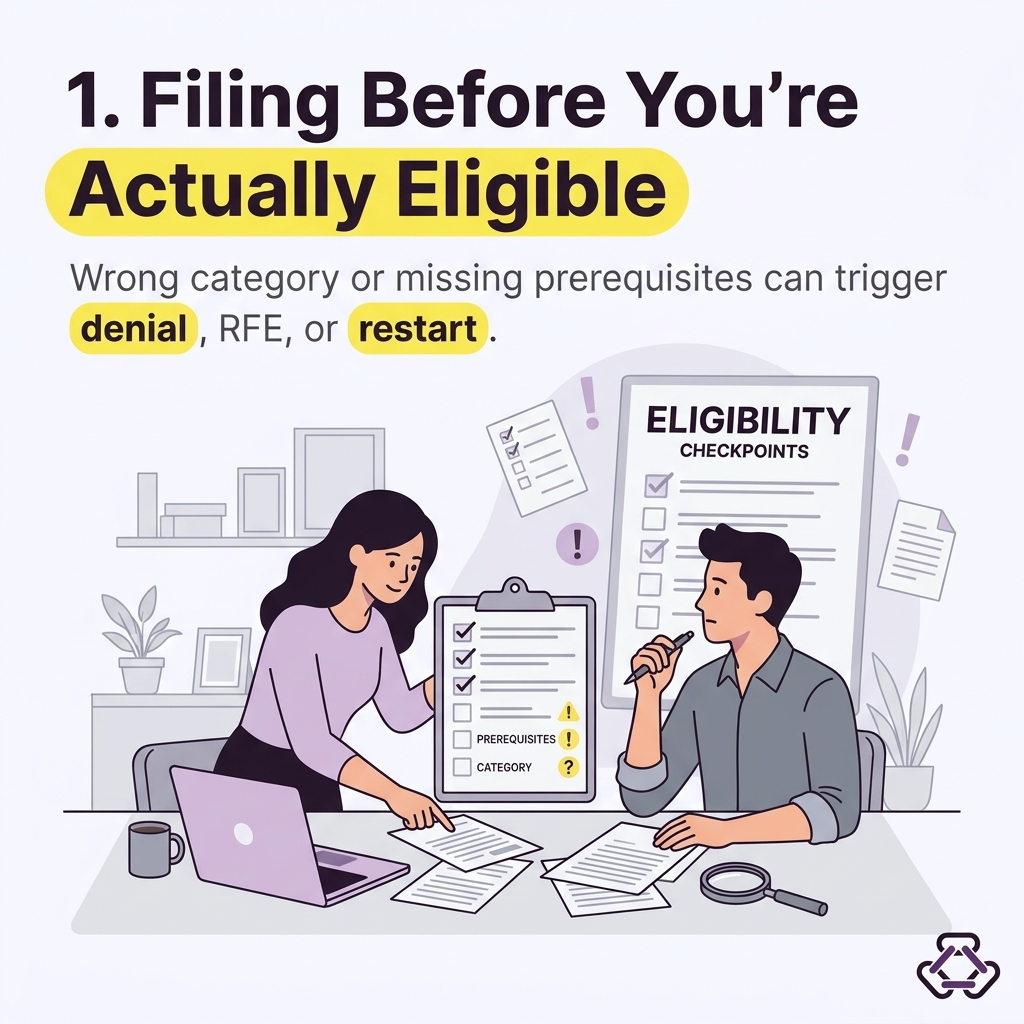
1. Filing Before The Couple Is Actually Eligible
One of the most expensive delays starts before the petition is even mailed: filing when the legal prerequisites are not fully in place.
Under USCIS rules, a K-1 case is for a U.S. citizen petitioning for a foreign fiancé, not for a lawful permanent resident. The couple also has to intend to marry within 90 days after entry, and the relationship has to be genuine rather than created only for immigration purposes. USCIS
There are a few versions of this mistake:
- One person is still legally married to someone else
- The petitioner is not a U.S. citizen
- The couple already married, making the K-1 category the wrong path
- The foreign fiancé is already in the U.S. in a way that makes another route more appropriate
- The couple cannot clearly document a real plan to marry within 90 days
These issues often trigger denials, requests for evidence, or a forced restart under a different immigration category. And restarting is rarely cheap. It can involve fresh filing fees, new translations, updated civil records, and another round of waiting.
This is one reason many couples spend time upfront on organization and evidence. If you’re earlier in the process, it may help to read more about getting a K-1 case ready before filing so the petition is built on the right facts from the beginning.
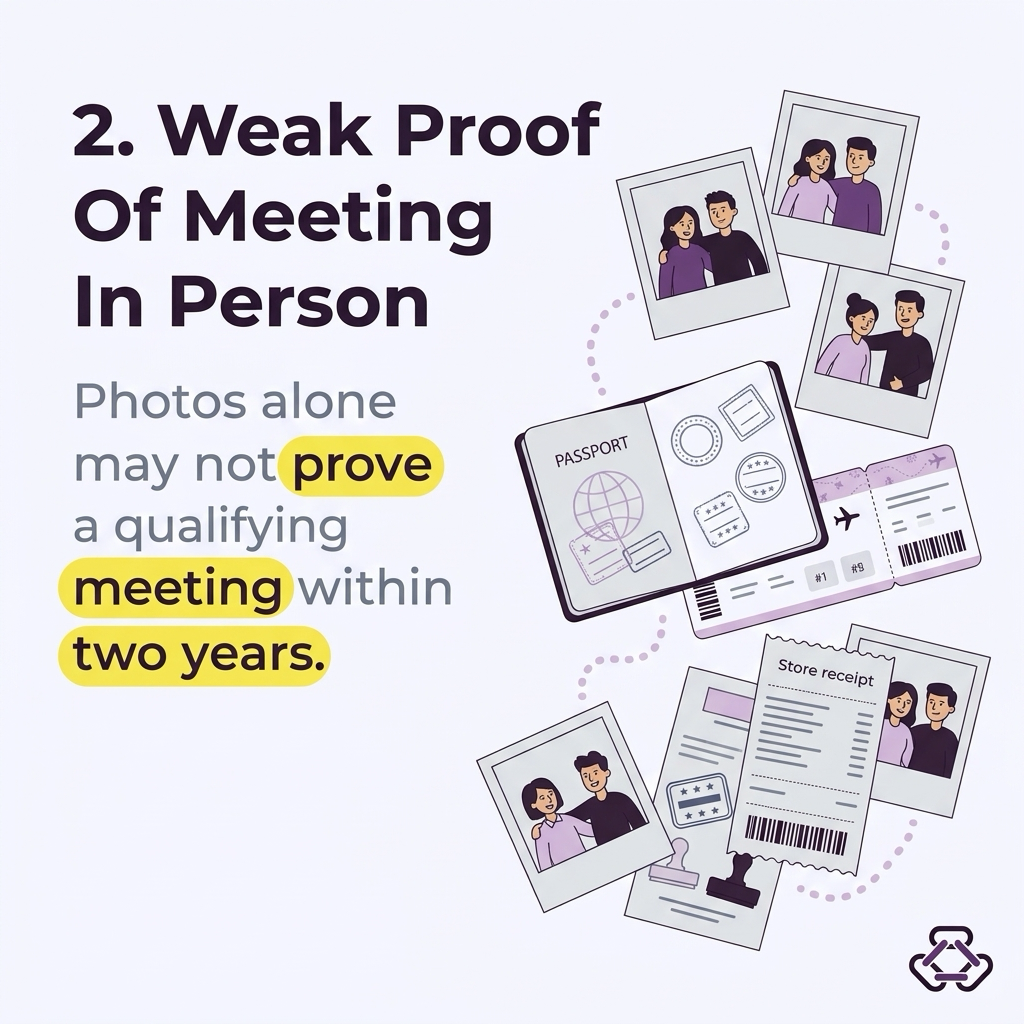
2. Weak Proof Of The In-Person Meeting Requirement
USCIS’s current Form I-129F instructions continue to require evidence that the couple met in person during the two years immediately before filing, unless a narrow waiver applies. That sounds straightforward, but many filings include only a few casual photos and a short personal statement.
That can be risky.
Photos can help, but they rarely tell the whole story by themselves. Officers often look for a paper trail showing the trip or visit actually happened and occurred within the required timeframe. In many cases, stronger evidence may include:
- Passport stamps
- Flight itineraries or boarding passes
- Hotel receipts
- Restaurant or activity receipts
- Time-stamped photos
- Entry/exit records where available
- Messages discussing travel plans and the visit
The delay problem here is not always immediate. A petition with thin proof may still move forward, but the weakness can reappear at the consular interview when the relationship history is examined more closely. If the record looks incomplete or inconsistent, the case can stall while the officer asks for more proof or returns the petition.
An attorney may help identify whether the evidence actually proves the legal point USCIS is looking for, as opposed to merely showing that the couple has photos together.
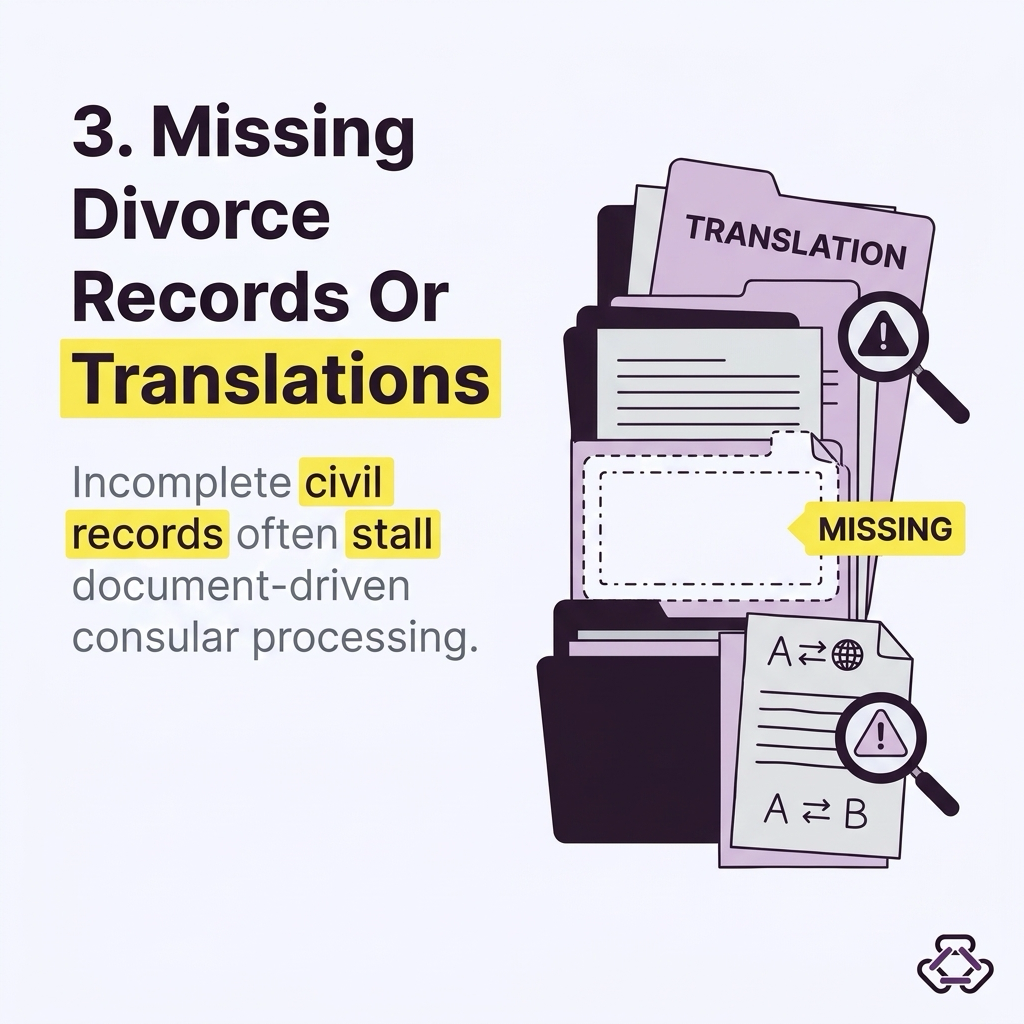
3. Sending Incomplete Civil Records Or Missing Prior-Marriage Documents
Another common delay comes from incomplete personal-history documents, especially where one or both partners were previously married.
The State Department’s civil document guidance states that applicants generally need official civil records issued by the proper authority, and documents not in English or the official language of the processing country generally require certified translations. The same guidance also explains that applicants with prior marriages usually have to provide proof of the termination of every prior marriage, such as a final divorce decree, annulment papers, or a death certificate. Travel.State.Gov
This mistake appears in several forms:
- A divorce judgment is missing pages
- A document is unofficial or not certified
- A translation is incomplete
- The couple forgets an older marriage
- Names do not match across passports, birth records, and divorce records
- A legal name change is not documented
These details may seem minor, but consular processing is document-driven. If the consulate asks for a corrected civil record, the applicant may face delays tied to local bureaucracy in their home country, and that often means paying again for certified copies, translations, courier fees, or another medical exam if enough time passes.
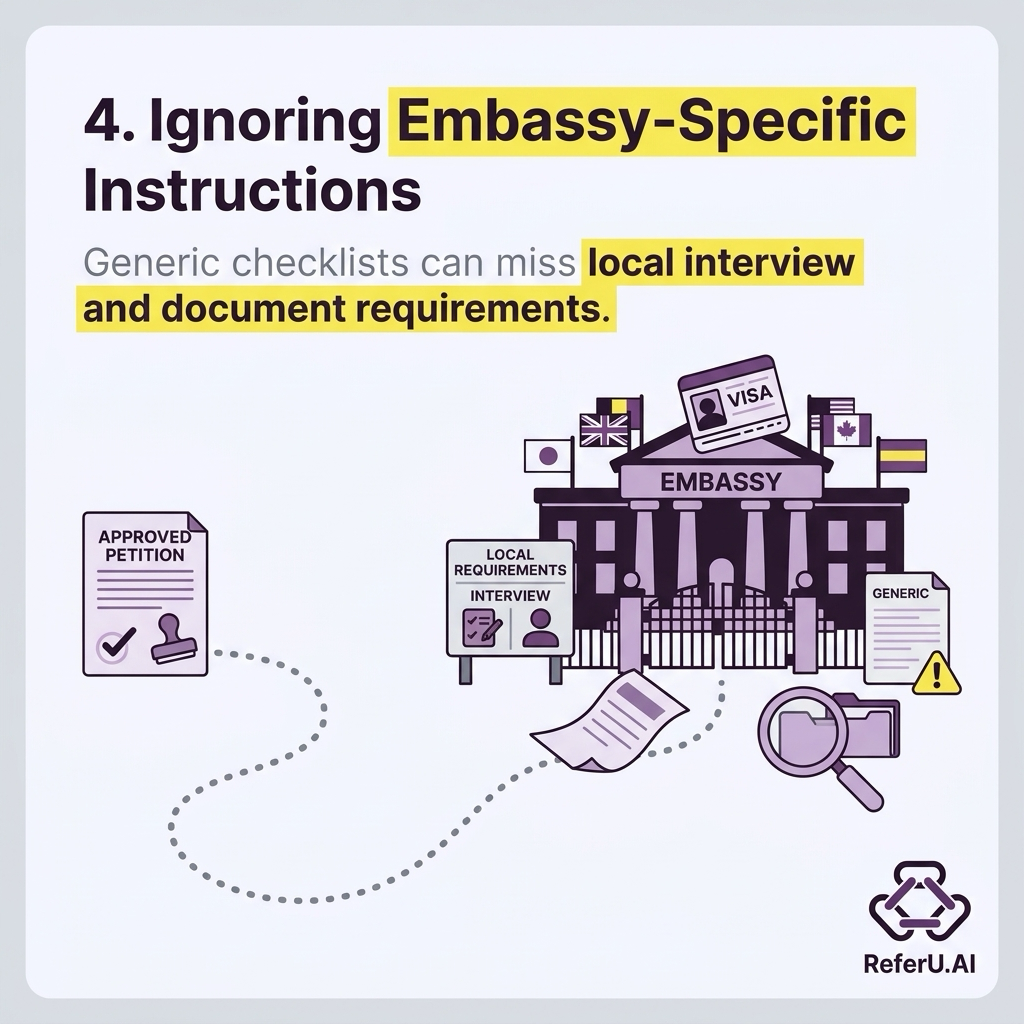
4. Forgetting That Embassy-Specific Instructions Matter
Many couples treat the K-1 interview stage as if every embassy runs the exact same process. In practice, embassies and consulates often publish their own case-prep instructions, document expectations, and scheduling workflows.
The State Department explains that after USCIS approves the petition, the case goes to the National Visa Center (NVC) for pre-processing before interview scheduling, and applicants can track status through the Consular Electronic Application Center. The State Department also notes that interview timing depends on the availability of appointments at the specific embassy or consulate. Travel.State.Gov
That means local instructions matter a lot. Some posts emphasize:
- when to complete the DS-160,
- how to schedule the medical exam,
- how passport return works,
- whether extra copies are expected,
- and which civil documents or police certificates are commonly overlooked.
A couple can be perfectly fine at the USCIS stage and still lose weeks because they followed a generic checklist instead of the post-specific one.
In general terms, this is one of the strongest reasons to treat the K-1 process as a sequence of separate phases rather than one filing event. A lawyer familiar with consular processing may help spot embassy-level issues that generic online checklists miss.
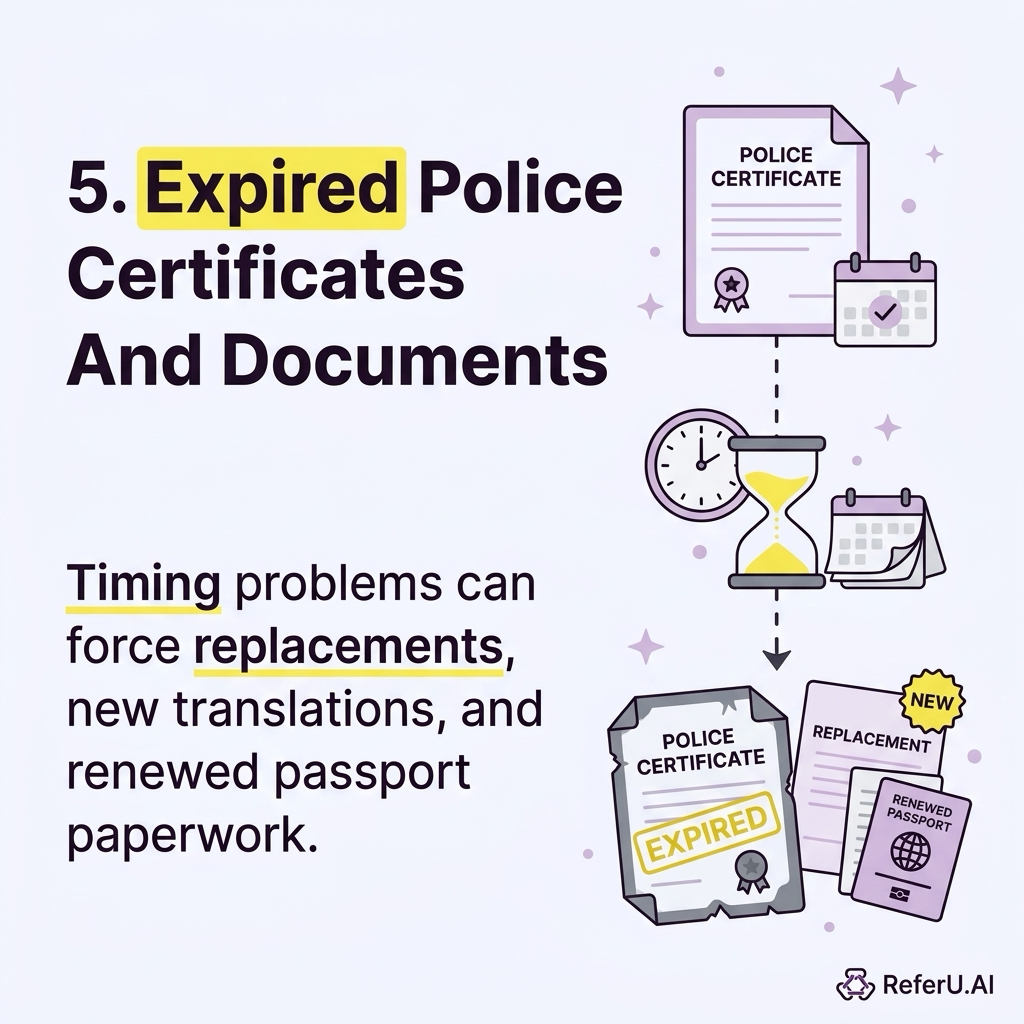
5. Problems With Police Certificates, Translations, And Expired Documents
Document timing is a major source of delay, especially at the visa stage.
The State Department’s civil document guidance says that applicants age 16 or older may need police certificates from certain countries where they have lived, and it specifically notes that police certificates expire after two years, unless the certificate came from a previous residence and the applicant has not returned there since issuance. The same guidance also says documents not written in English or the official language of the processing country generally need certified translations. Travel.State.Gov
This becomes expensive because police records and translations are not always quick to replace. Delays commonly happen when:
- A police certificate was obtained too early and expires before interview
- The applicant lived in multiple countries and misses one required certificate
- The translation certification is defective
- The passport is close to expiration
- The couple brings copies when originals or certified versions are expected
There is also a practical timing issue: if a case takes longer than expected, several documents may “age out” together. Couples can end up repaying for police certificates, translations, passport renewals, and document shipping all at once.
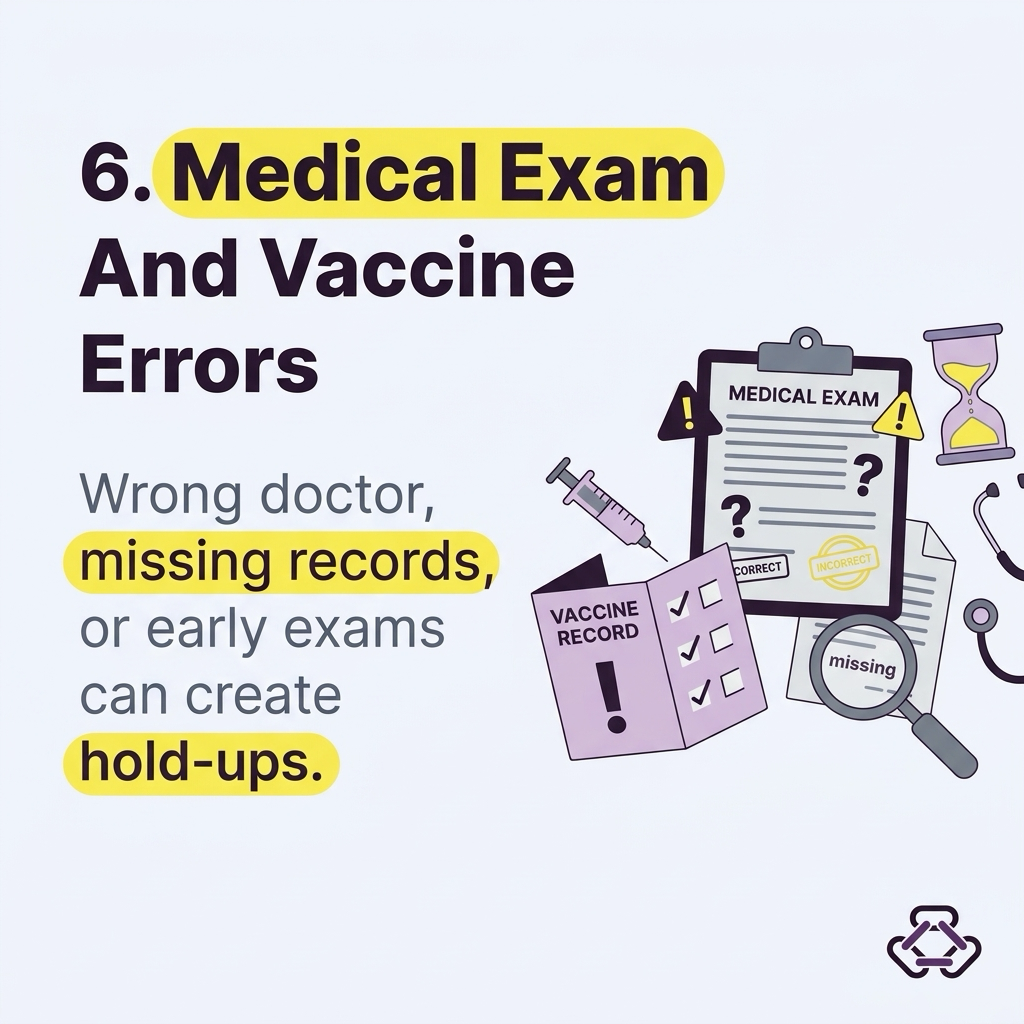
6. Medical Exam And Vaccination Mistakes
The immigration medical exam causes a surprising number of avoidable hold-ups.
Current CDC guidance for immigration medical exams says panel physicians review the applicant’s vaccination history, determine what age-appropriate vaccines are required, complete the DS-3025 vaccination record, and give the applicant a copy. CDC also states that self-reported vaccines without written documentation are not acceptable; the applicant is generally expected to present available written vaccination records. CDC
There has also been an important recent change: the State Department announced that effective March 11, 2025, CDC removed the COVID-19 vaccination requirement for immigrant visa applicants, and embassies and consulates would no longer refuse an immigrant visa application for failure to present COVID-19 vaccination documentation. Travel.State.Gov
Even with that change, medical exam delays still happen often because:
- The applicant goes to the wrong doctor instead of an authorized panel physician
- Vaccination records are missing or incomplete
- The exam is scheduled too early and risks expiring
- The applicant misunderstands local panel physician procedures
- A follow-up is required for a missing vaccine or lab issue
This area can get even more complicated if the person later applies for permanent residence after marriage. If you’re thinking beyond the visa itself, it may help to learn more about moving from K-1 entry to a marriage-based green card case, because medical documentation and timing decisions can affect that next stage too.
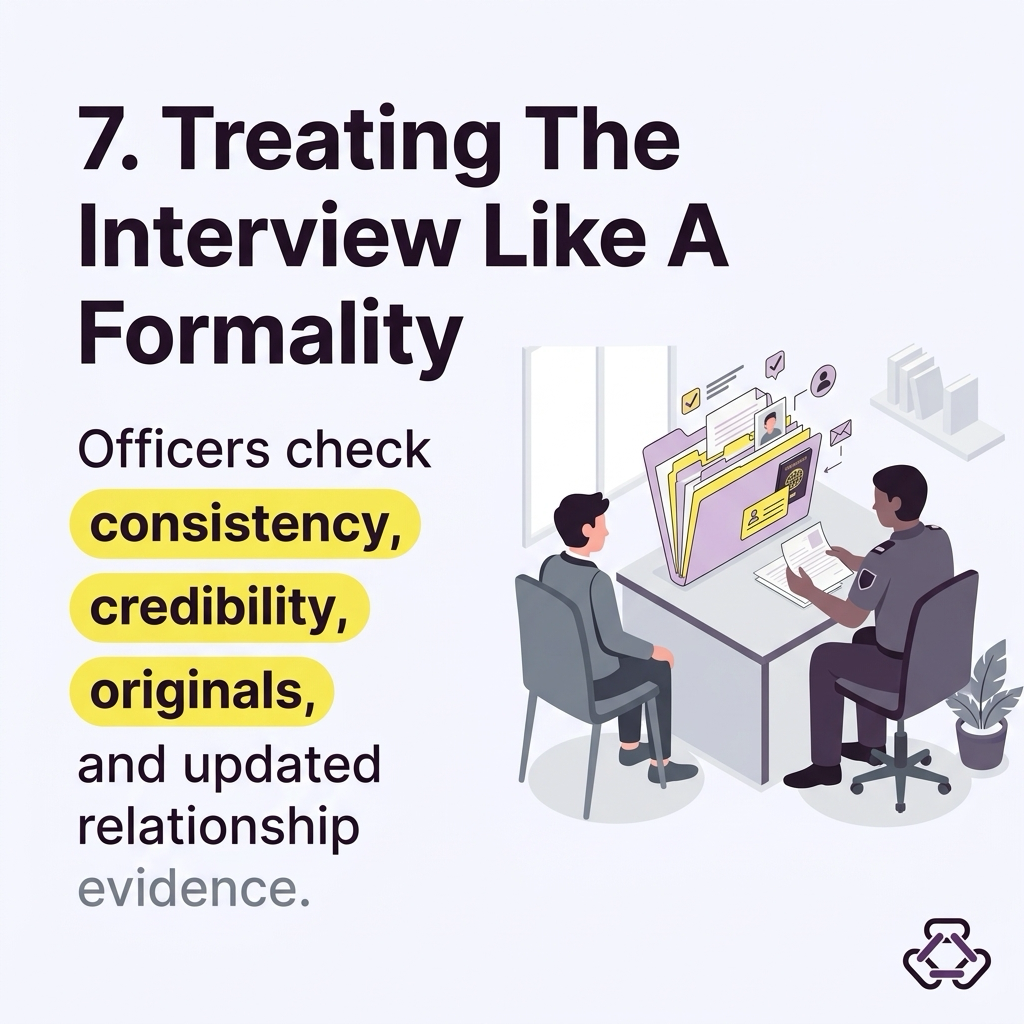
7. Treating The Interview Like A Formality Instead Of A Legal Screening
A lot of couples prepare heavily for the petition and then underprepare for the interview, as if approval is mostly inevitable once USCIS says yes. That assumption can create very costly delays.
USCIS explicitly notes that at the visa stage, a consular officer decides whether the foreign fiancé qualifies for the K-1 visa, and if the officer does not find the relationship bona fide, the visa is not issued and the petition may be returned to USCIS. USCIS
The interview often focuses on consistency and credibility. Common problems include:
- The couple gives different answers about how they met
- One person is vague about prior marriages, children, work history, or travel history
- The timeline in messages and travel records does not match the petition
- The applicant arrives without required originals
- The relationship evidence is outdated by the time of interview
In general terms, the interview is where the government checks whether the story in the file still holds up in real life. If the officer sees contradictions, the case may pause for administrative processing, a document request, or a return of the petition.
For some couples, especially those with prior denials, criminal history, immigration complications, large age gaps, language barriers, or limited in-person contact, attorney preparation can be especially valuable. The goal is not to script the relationship. It is to identify legal weak points and factual inconsistencies before they become a delay.
Why These Delays Get So Expensive
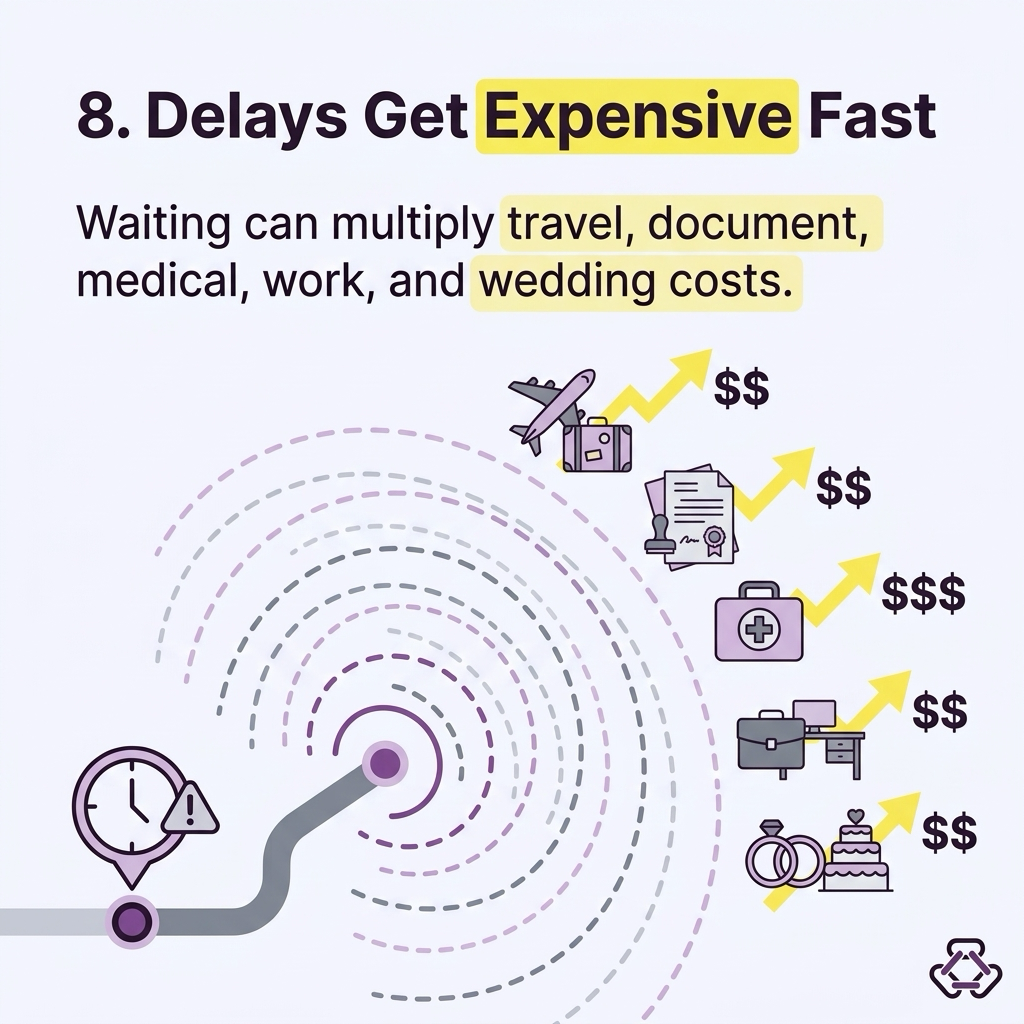
K-1 delays are not just about waiting. They often create ripple effects across the couple’s finances and life plans.
A longer case can involve:
- repeat travel costs for visits,
- updated police certificates,
- new translations,
- second medical-related expenses,
- time off work,
- housing changes,
- wedding rescheduling,
- and extra filing costs once the couple moves into adjustment of status.
There is also an emotional cost. Prolonged separation can put enormous pressure on couples, especially when a delay could have been avoided with better upfront preparation.
When An Immigration Attorney May Be Especially Helpful
Some K-1 filings are relatively straightforward. Others involve facts that can change the risk profile dramatically.
Legal help may be worth considering when the case includes:
- prior immigration violations,
- criminal history,
- prior visa refusals,
- prior petition filings,
- limited in-person meeting evidence,
- complicated divorce history,
- difficult foreign document retrieval,
- or concerns that the embassy may examine the relationship closely.
An attorney may help evaluate whether the K-1 route is even the right route, what supporting evidence is likely to matter most, and how to prepare for the later green card stage so the couple is not solving one problem only to create another.
If you’re still weighing the broader decision, some couples also find it useful to review common concerns about whether the K-1 path makes sense for their situation before spending more time and money on the process.
Final Takeaway
The biggest K-1 delays often come from things that look small at first: filing under the wrong facts, weak meeting evidence, missing divorce records, embassy-specific instructions being overlooked, expired police certificates, medical exam issues, and poor interview preparation.
None of those problems automatically ends a case. But each one can add time, stress, and extra cost. In many situations, the real value of an immigration attorney is not just filling out forms. It is helping the couple identify hidden risk points early, organize evidence around the actual legal standards, and avoid preventable delays that become expensive later.
Visit ReferU.AI to get matched with an attorney who has demonstrable experience in cases like yours — for free.
