Table of Contents
- How to Prepare a K-1 Fiancé Case Before Filing
- Step 1: Confirm That The K-1 Route Fits Your Situation
- Step 2: Check The Core Eligibility Rules Early
- Step 3: Build A Clear Relationship Timeline
- Step 4: Gather Proof That You Met In Person Within Two Years
- Step 5: Document That The Relationship Is Genuine
- Step 6: Collect Civil Documents Before They Become A Problem
- Step 7: Review The Form Edition, Filing Location, And Fees
- Step 8: Prepare Signed Statements With Care
- Step 9: Audit The Case For Red Flags Before USCIS Does
- Step 10: Plan For The Consular Stage Before Filing The Petition
- Step 11: Think Beyond Entry To The United States
- Step 12: Know When An Attorney May Add Real Value
- Short Summary

Type
Great Grandchild
Status
Approved
Title (YouTube)
Images Failed (Social)
Images Failed (Social)
Do not index
Publish Date (TikTok)
Apr 27, 2027 15:15
Videos Post IDs (Social)
Hashtags (Social)
#LegalAdvice #LegalHelp #Immigration #FianceVisa
Caption
Caption X
Cover

OG Image

Alt Image Text
Flat vector illustration of a couple preparing a K-1 fiancé case with organized documents, timeline planning, and evidence review before filing a K-1 visa petition.
Images

Videos
Publish Date (Social)
Feb 20, 2027 11:00
Scheduled (Social)
Scheduled (Social)
Images Posted (Social)
Images Posted (Social)
Videos Posted (Social)
Videos Posted (Social)
Featured
Created time
Apr 7, 2026 12:00 AM
Sub-item
Authors
CTA Practice Area (Social)
Immigration
TikTok Failed (Social)
TikTok Failed (Social)
Videos Post Links (Social)
TikTok Post Links (Social)
Images Post IDs (Social)
YT Post ID
Video Pending Manual (Social)
TikTok Posted (Social)
TikTok Posted (Social)
TikTok Post IDs (Social)
Video Cover (Social)
Images Post Links (Social)
First Comment (Social)
Videos Failed (Social)
Videos Failed (Social)
YT Embedded
Images Delete (Social)
Videos Delete (Social)
Carousel Video URL (Social)
How to Prepare a K-1 Fiancé Case Before Filing
A K-1 fiancé case often looks simple from far away: prove the relationship, file Form I-129F, wait for approval, and move forward. In practice, many delays start before the petition is ever mailed. Missing divorce records, weak evidence of the relationship, inconsistent timelines, outdated forms, or confusion about what the government is actually looking for can turn a straightforward filing into months of extra stress.
That is why preparation matters so much. The K-1 process is built around documentation, credibility, and timing. U.S. Citizenship and Immigration Services (USCIS) explains that the process starts with Form I-129F, Petition for Alien Fiancé(e), and that the couple must intend to marry within 90 days of the foreign fiancé(e)’s entry to the United States. The Department of State also notes that the K-1 visa is generally issued for a single entry and can be valid for up to six months from issuance, after which the couple marries in the United States and the foreign national may apply for adjustment of status to permanent residence through USCIS (USCIS, Department of State).
In this post you’ll learn how to prepare a K-1 fiancé case before filing, what evidence couples often gather first, where people run into avoidable trouble, and when an immigration attorney may help clarify risk. If you want a broader overview of the full process from petition through arrival and marriage, this complete walkthrough of the fiancé visa process and what comes after can help frame the big picture.
Scroll to the bottom for every post in this series.
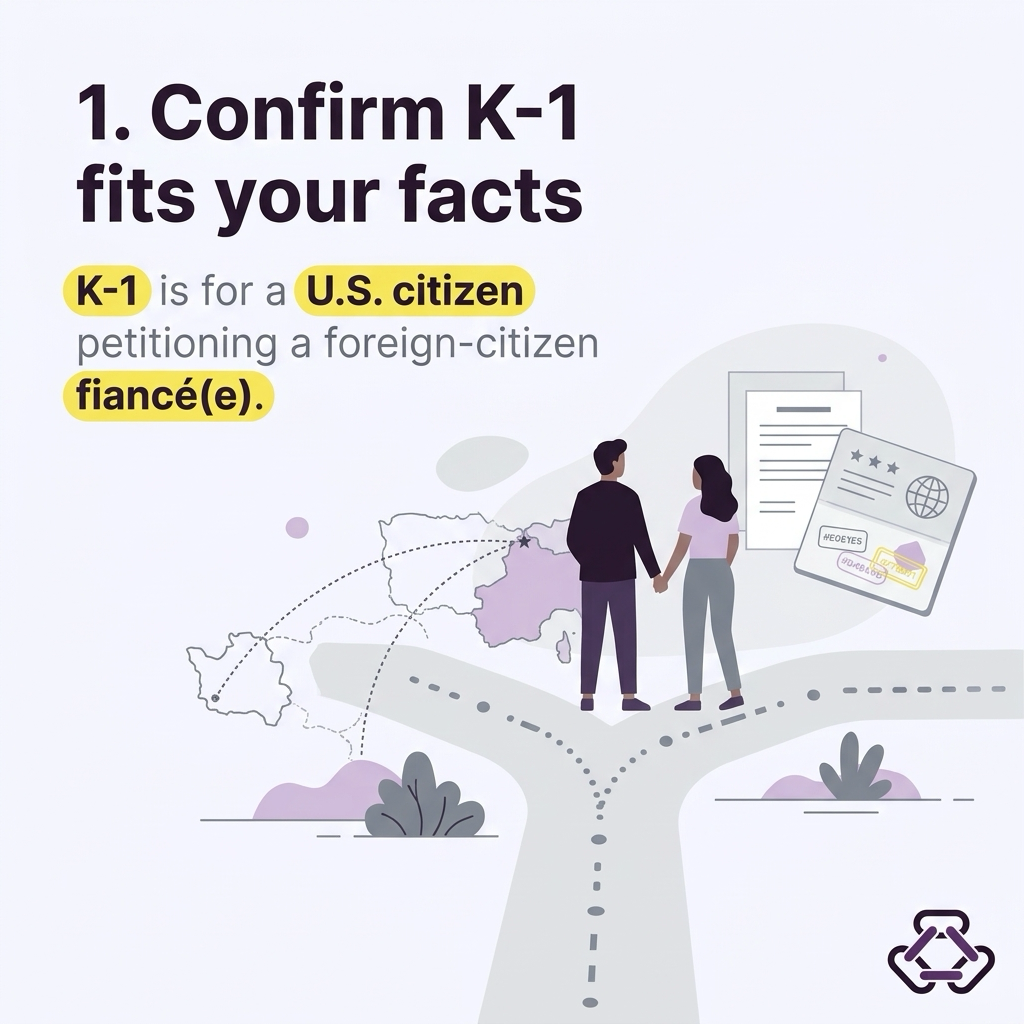
Step 1: Confirm That The K-1 Route Fits Your Situation
Before collecting documents, it helps to confirm that the K-1 category fits the facts of the relationship.
According to USCIS, the K-1 path is for a U.S. citizen petitioning for a foreign-citizen fiancé(e). It is not the right route for every couple. USCIS notes that if the couple is already married, plans to marry outside the United States, or the foreign fiancé(e) is already residing legally in the United States, the fiancé visa may not be the proper option (USCIS).
That early distinction matters because couples sometimes spend weeks preparing a K-1 package when a marriage-based process may fit better. In general terms, this first step is less about paperwork and more about case strategy:
- Is the petitioner a U.S. citizen, not just a lawful permanent resident?
- Are both people legally free to marry?
- Is the plan to marry in the United States after entry on the K-1?
- Is the relationship genuine and well documented?
- Are there immigration, criminal, or prior-marriage facts that may complicate review?
If any of those questions raise uncertainty, an attorney may help evaluate whether the K-1 path is the cleanest fit before filing fees and months of processing time are committed.
Step 2: Check The Core Eligibility Rules Early
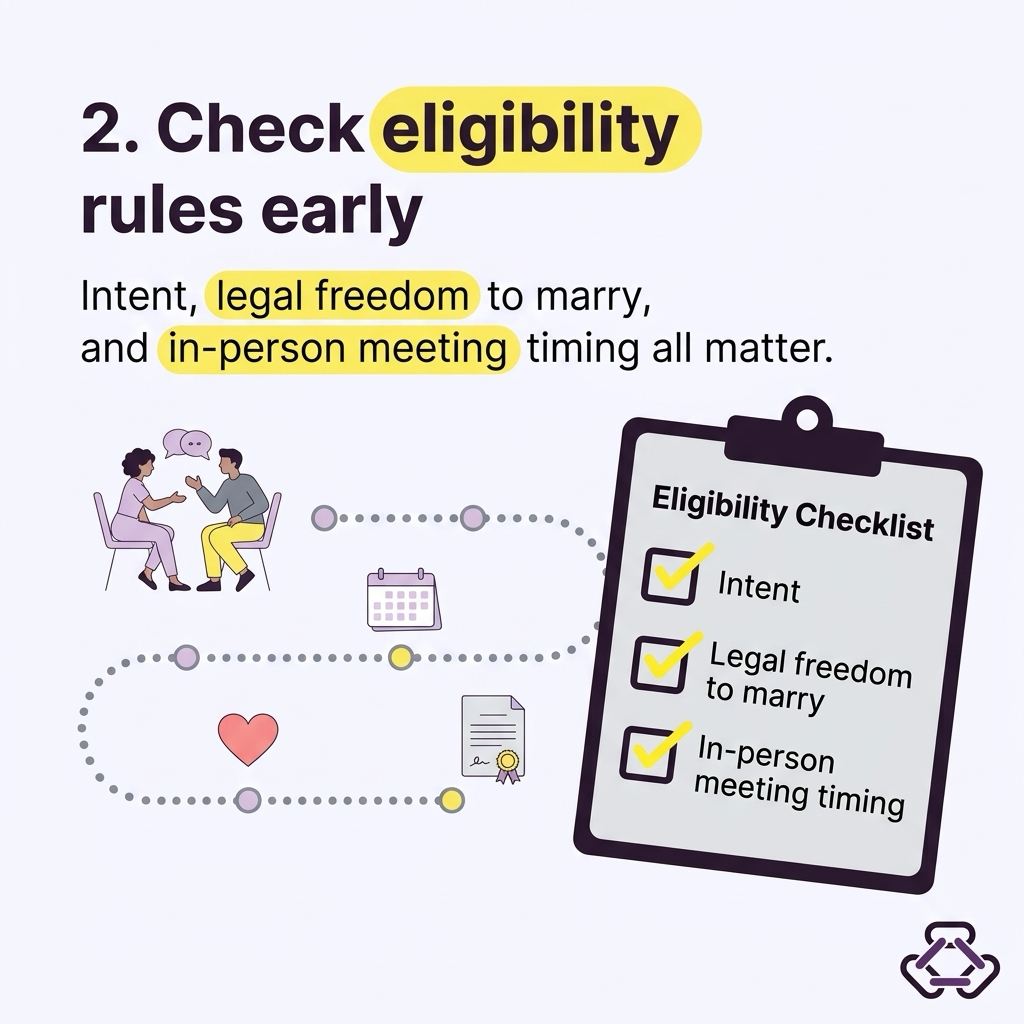
A strong K-1 filing usually starts with the non-negotiable eligibility rules.
USCIS explains that the couple generally must have a bona fide intent to establish a life together, and the marriage cannot be for the sole purpose of obtaining an immigration benefit (USCIS). The Department of State’s Foreign Affairs Manual similarly tells consular officers that if they conclude the relationship is a sham entered into only for immigration benefits, the visa can be refused and the petition returned to USCIS with a recommendation for revocation (9 FAM 502.7).
Another major issue is the in-person meeting requirement. K-1 cases generally require proof that the couple met in person within the two years before filing, subject to limited waiver situations recognized in immigration law and regulations. USCIS administrative decisions show that petitions can be denied where the evidence of meeting is vague, incomplete, or lacks enough detail to confirm the timing and nature of the meeting (USCIS AAO decision).
This often means couples may want to identify early:
- the exact dates and places of in-person meetings,
- the documents that support those meetings,
- whether either person was still legally married during any part of the relationship timeline,
- and whether there are prior petitions or prior visa denials that may appear in the record.
Step 3: Build A Clear Relationship Timeline
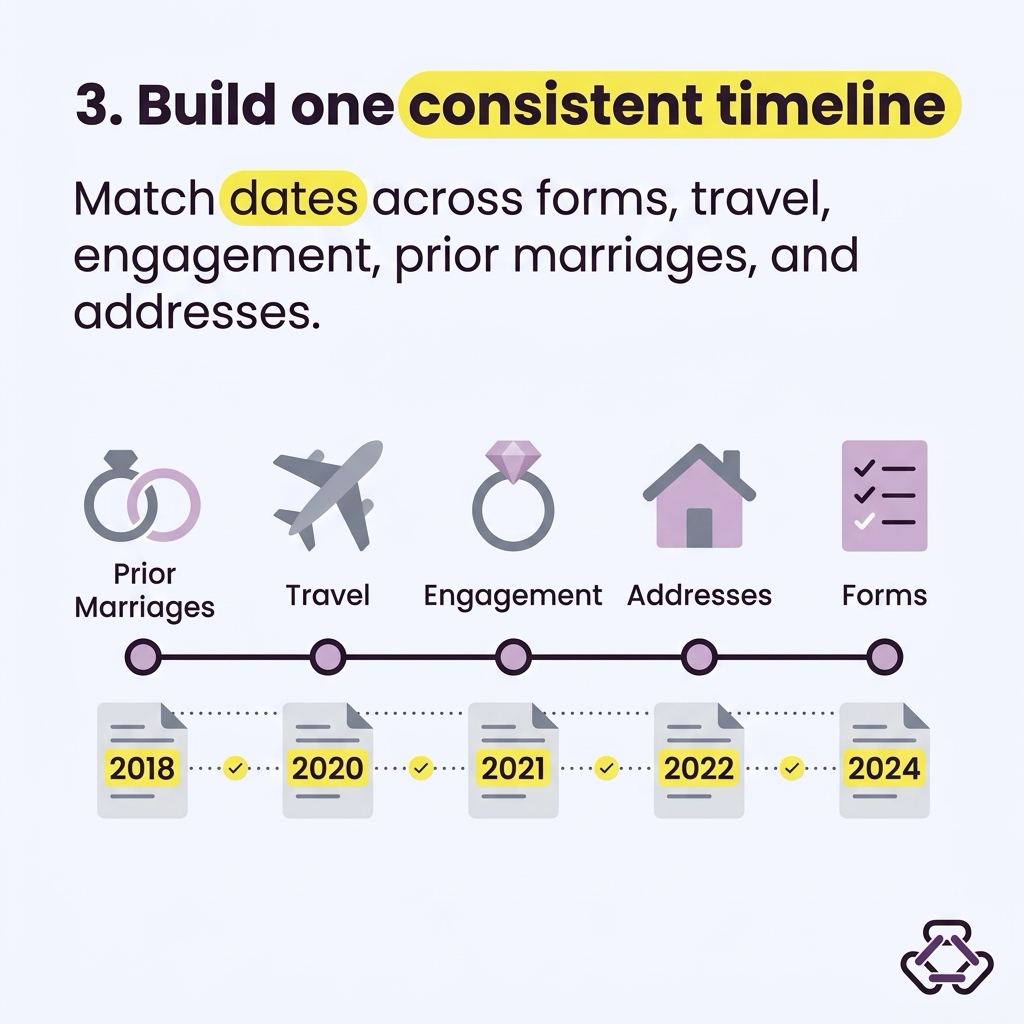
One of the most useful things a couple can do before filing is create a master timeline.
This does not go on a government form exactly as written, but it often becomes the backbone of the entire case. A timeline can help organize:
- when and how you met,
- first in-person meeting,
- subsequent visits,
- engagement date,
- communication milestones,
- prior marriages and divorce dates,
- address history,
- travel history,
- and planned marriage arrangements in the United States.
Why does this matter? Because many K-1 problems are really consistency problems. The petition, supporting letters, interview answers, visa application, and adjustment-of-status paperwork all tell versions of the same story. If one document says you met in June 2023, another says July 2023, and airline records show August 2023, the case may draw extra scrutiny even if the relationship is genuine.
A detailed timeline also makes it easier to spot red flags before USCIS or a consular officer spots them first.
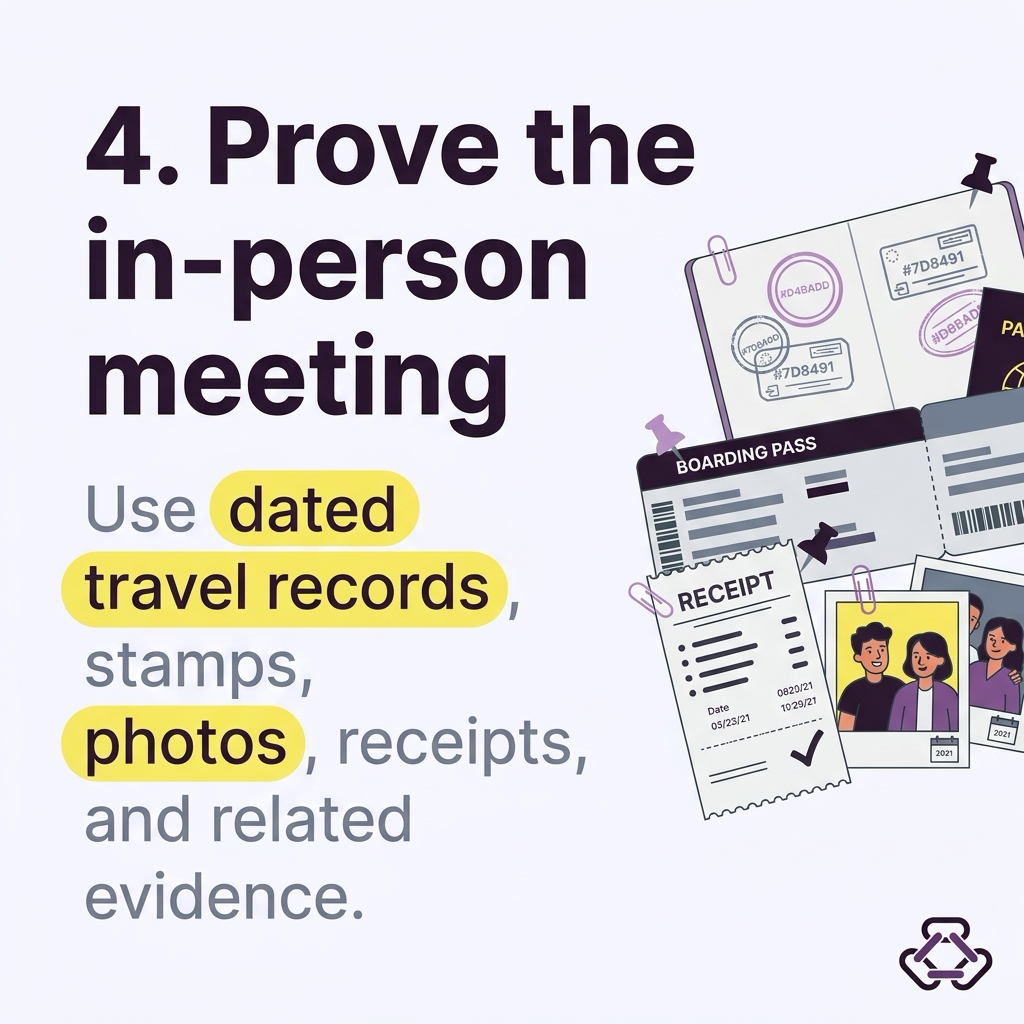
Step 4: Gather Proof That You Met In Person Within Two Years
For many couples, this is the most important evidentiary step.
USCIS and related adjudications place real weight on proving that the in-person meeting requirement was satisfied. Broad statements like “we visited each other several times” often carry less value than specific, dated evidence showing exactly where and when the couple met.
Useful evidence often includes:
- passport stamps,
- airline itineraries and boarding passes,
- hotel records,
- photos with recognizable dates and locations,
- receipts tied to travel,
- entry/exit records where available,
- and affidavits that support, rather than replace, documentary evidence.
The stronger approach is usually layered proof. For example, one trip might be supported by flight confirmations, passport stamps, a few photos, and a hotel receipt. That creates a cleaner factual record than photos alone.
An attorney may help when the meeting history is more complicated, such as when:
- the travel documents are incomplete,
- the meeting happened close to the two-year cutoff,
- the couple met in multiple countries,
- or the petitioner is considering a waiver of the in-person meeting requirement.
Step 5: Document That The Relationship Is Genuine
A K-1 case is not approved just because the couple met once. USCIS and the Department of State both focus on whether the relationship is real.
USCIS says the couple must have a bona fide intent to establish a life together, and the State Department guidance allows consular officers to refuse a visa if they determine the relationship is not bona fide (USCIS, 9 FAM 502.7).
That often leads couples to gather evidence such as:
- photos across time, not just one visit,
- call logs or screenshots showing ongoing communication,
- engagement evidence,
- gifts, cards, or mailing records,
- statements from friends or family who know about the relationship,
- wedding planning discussions,
- venue inquiries or ceremony planning notes,
- proof of visits with each other’s families,
- and any records that show the relationship developed in a normal, ongoing way.
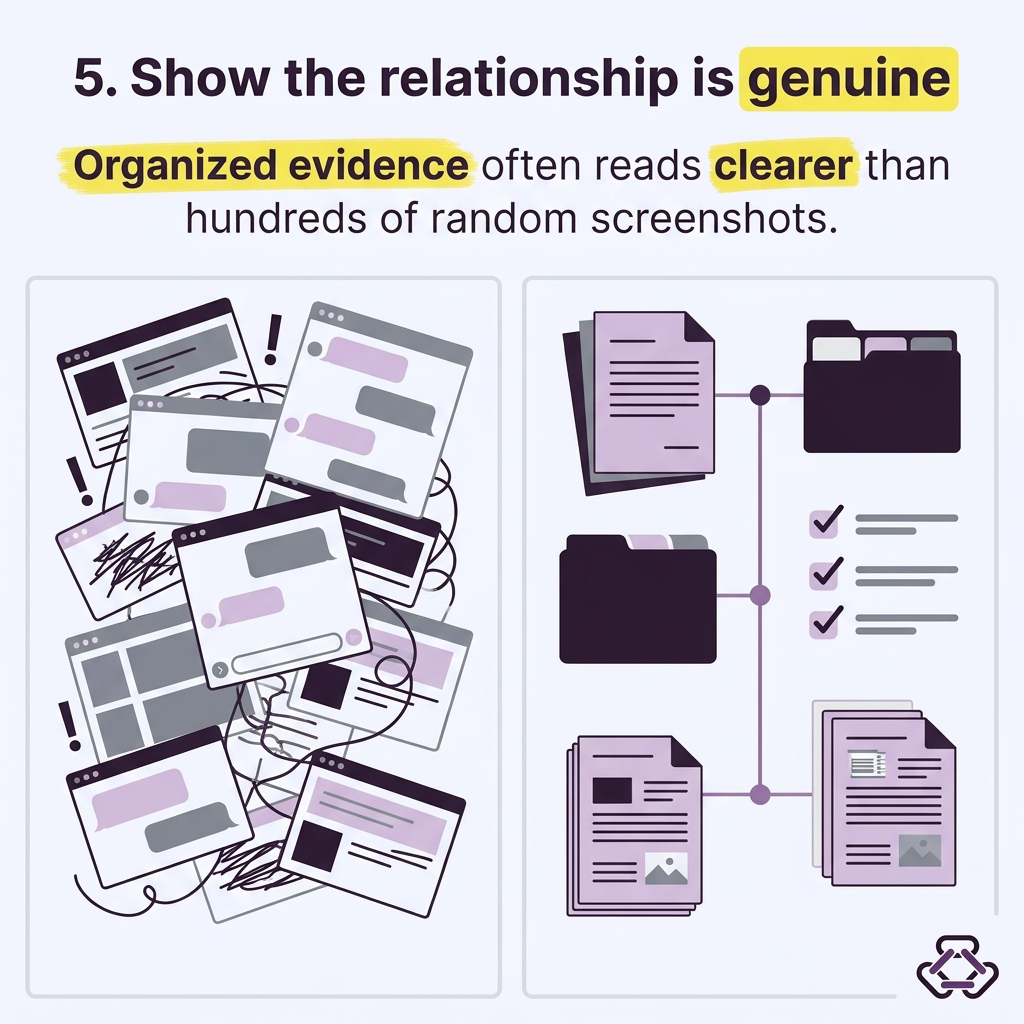
The goal is not to overwhelm the file with hundreds of random pages. The goal is to show a coherent, believable relationship narrative backed by documents.
In many cases, quality beats volume. Fifty pages of organized, chronological evidence often tells a clearer story than 400 pages of disorganized screenshots.
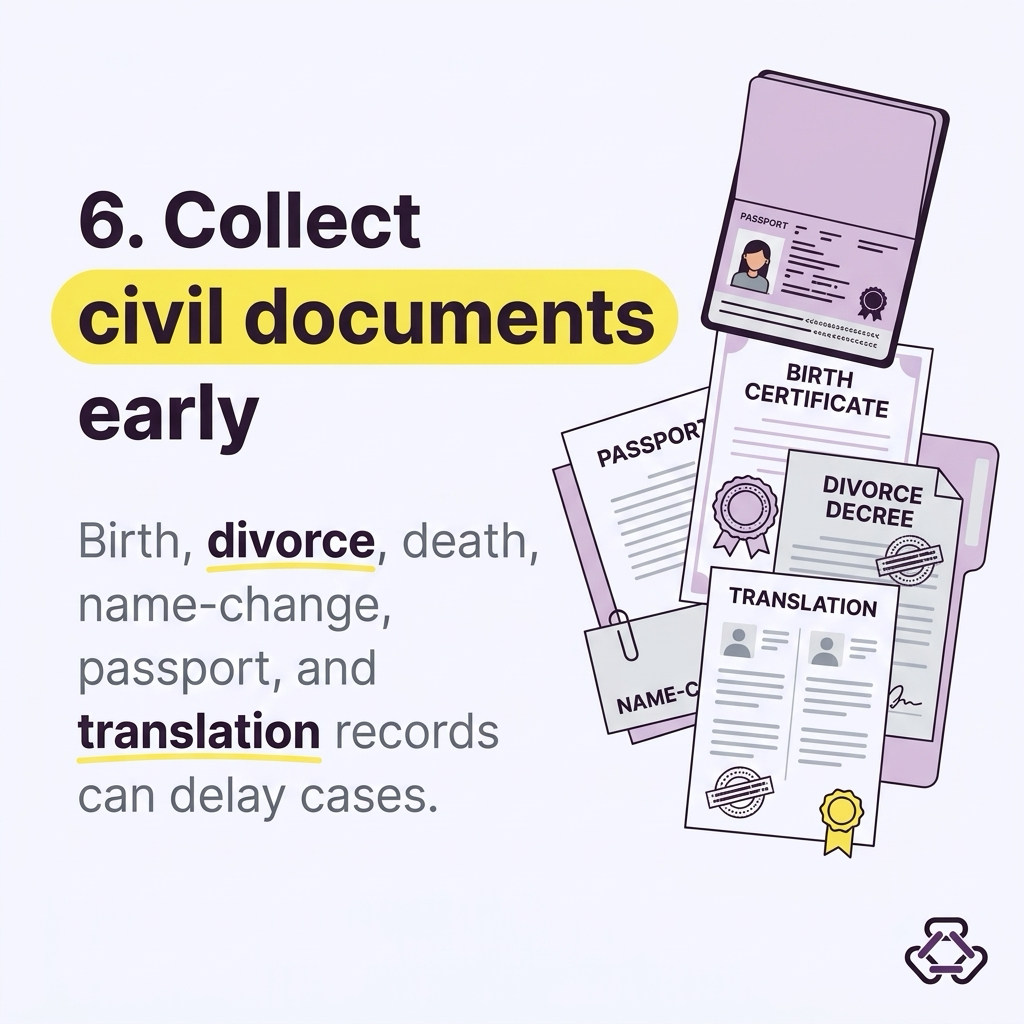
Step 6: Collect Civil Documents Before They Become A Problem
A surprising number of delays come from records couples assume will be easy to retrieve later.
Before filing, it often helps to identify and obtain:
- birth certificates,
- divorce decrees,
- annulment records,
- death certificates for prior spouses if applicable,
- legal name change records,
- passport biographic pages,
- and any certified translations if documents are not in English.
USCIS requires that prior marriages be legally terminated before the K-1 petition can be approved. If either person has a complex marital history, gathering those records early may avoid requests for evidence or consular processing issues later.
This is also the stage where many couples discover practical issues:
- the foreign fiancé(e)’s birth certificate is unavailable in the expected format,
- a prior divorce record contains a name discrepancy,
- a translation is incomplete,
- or an old passport with key travel stamps was lost.
Those issues are often manageable, but they are easier to address before the filing package is sent.
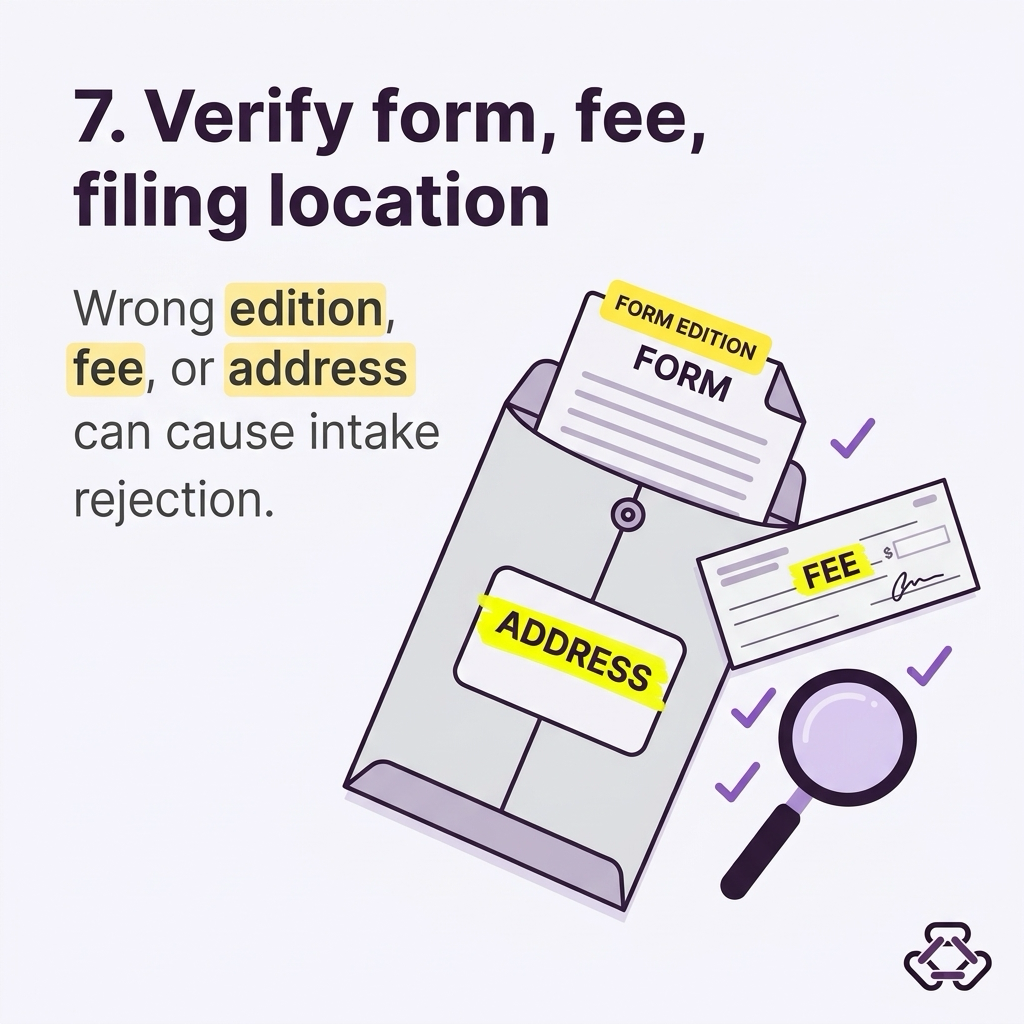
Step 7: Review The Form Edition, Filing Location, And Fees
Even a well-prepared K-1 case can be rejected at intake if the packet uses the wrong form edition, wrong fee, or wrong filing method.
USCIS currently lists Form I-129F with edition date 01/20/25 on its form page and directs paper filings to the Dallas Lockbox address listed there (USCIS Form I-129F page). USCIS also warns on its filing-fees page that forms submitted without the proper fee can be rejected, and that filers should always confirm the current amount before mailing (USCIS Filing Fees).
That matters because immigration filing fees and payment rules do change. USCIS’s published fee schedule reflects the current post-fee-rule structure, and later phases of the K-1 journey can involve significant additional costs. For example, USCIS materials tied to the current fee framework show Form I-485 carries a substantial filing fee under the present schedule, which is relevant because many couples focus on the initial petition and underestimate the cost of the green-card stage that follows marriage (USCIS Fee Rule Materials, USCIS I-485 page).
Before filing, couples often benefit from checking:
- current USCIS fee amounts,
- accepted payment methods,
- whether separate payments are required for separate forms,
- the exact lockbox address,
- the current form edition date,
- and the latest form instructions.
Those details may sound minor. In practice, they can decide whether a packet is accepted or sent back unopened.
Step 8: Prepare Signed Statements With Care
K-1 packages often include signed statements of intent to marry. These letters are simple, but they still matter.
A useful statement is usually short, specific, and consistent with the rest of the record. It often includes:
- the full names of both parties,
- a brief statement that they intend to marry within 90 days of K-1 entry,
- a reference to the genuine nature of the relationship,
- date and signature.
What tends to create problems is not the concept of the letter itself, but inconsistencies around it. If the statement says the wedding is planned for one city and other documents point elsewhere, or if one party’s letter gives a relationship history that conflicts with the petition, the case may look less reliable than it actually is.
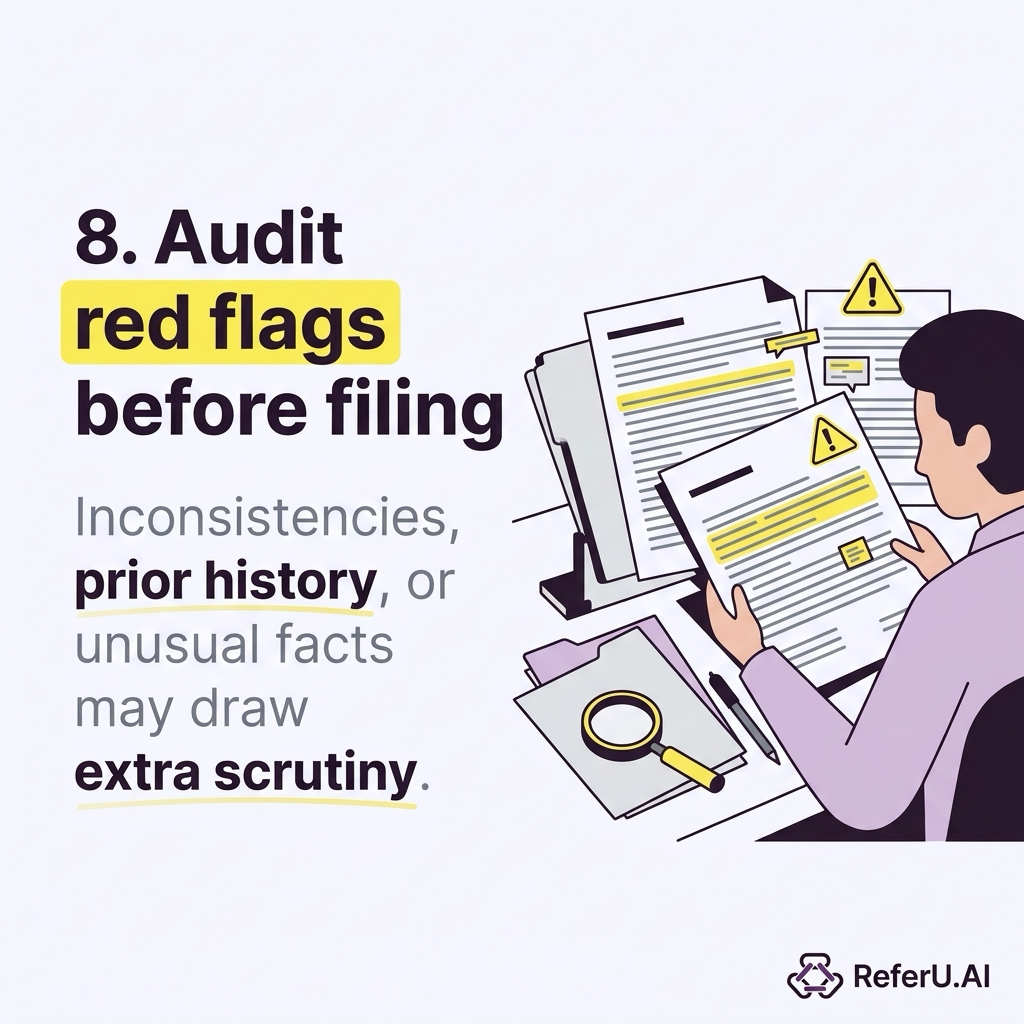
Step 9: Audit The Case For Red Flags Before USCIS Does
Some K-1 cases are approved smoothly. Others attract deeper review because of facts the government may see as unusual.
That does not automatically mean anything improper is happening. It often means the case may benefit from more careful preparation. Examples can include:
- a large age difference,
- very limited shared language,
- short courtship before engagement,
- few in-person meetings,
- inconsistent answers in prior visa applications,
- prior immigration violations,
- prior petition filings,
- criminal history,
- or a relationship that began while one party was still legally married to someone else.
The State Department also notes that some visa cases are delayed by incomplete documentation or administrative processing after the interview (Department of State).
A pre-filing red-flag review can help couples think in advance about how the file reads to a stranger. If a fact looks unusual on paper, it may help to support it with organized records and a consistent explanation rather than hoping it will be ignored.
Step 10: Plan For The Consular Stage Before Filing The Petition
Many people treat the I-129F petition as one isolated step. In reality, the petition is only the first phase.
Once USCIS approves the petition, the case goes through the National Visa Center and then to the U.S. embassy or consulate handling the K-1 interview. The Department of State explains that timing after transfer can vary by post and by case circumstances, and some applications face added delay due to incomplete submissions or administrative processing (Department of State).
That is why pre-filing preparation often includes questions like:
- Which consulate will handle the interview?
- Are country-specific civil documents difficult to obtain?
- Are police certificates likely to take time?
- Is there any prior visa history that could come up at interview?
- Are there local post instructions that commonly trip people up?
Thinking ahead does not eliminate uncertainty, but it may reduce avoidable surprises.
Step 11: Think Beyond Entry To The United States
The K-1 visa is not the end of the process. USCIS states that after the fiancé(e) enters the United States and the couple marries within 90 days, the foreign national may apply for permanent residence through adjustment of status (USCIS). The Department of State says the same in its K-1 overview (Department of State).
That future stage affects how people prepare the case now. A relationship record built carefully for the K-1 filing often becomes useful again later. Marriage records, joint residence proof, and continued evidence of the relationship typically matter after entry as well.
If you are thinking ahead to that second phase, it may help to read more about moving from a fiancé visa to the green card process after marriage so your documentation strategy starts early rather than after the wedding.
Step 12: Know When An Attorney May Add Real Value
Some couples prepare and file a K-1 case on their own. Others find that even a seemingly simple case becomes stressful once they start organizing records and comparing forms, timelines, and legal requirements.
An attorney may be especially helpful when the case involves:
- prior visa denials,
- criminal history,
- prior marriages with hard-to-find records,
- prior immigration violations,
- children with derivative K-2 issues,
- complicated international travel history,
- questions about waivers,
- or concerns that the relationship may face extra scrutiny.
This is also where finding the right lawyer matters. Many consumers search broadly for “immigration lawyer” and end up with marketing-heavy results that reveal little about actual case fit. In a case like a K-1 fiancé matter, some people prefer to look for an attorney with documented experience in highly similar matters, based on objective criteria and court-record-backed evidence, rather than advertising.
Short Summary
Preparing a K-1 fiancé case before filing is really about building a credible, organized, and internally consistent record. That often includes confirming the K-1 route fits the couple’s facts, proving the in-person meeting within two years, documenting a bona fide relationship, collecting civil records early, checking the current form edition and fee rules, and identifying red flags before the government identifies them first.
For many couples, the biggest challenge is not one missing form. It is understanding how all the pieces fit together and whether the file tells a clear story from the first petition through the later interview and green-card stage. If your case feels complicated, or if you want help finding counsel with relevant, verified experience, Visit ReferU.AI to get matched with an attorney who has demonstrable experience in cases like yours — for free.
