Table of Contents
- 7 Appeal Mistakes That Can Cost You Time, Options, or Status
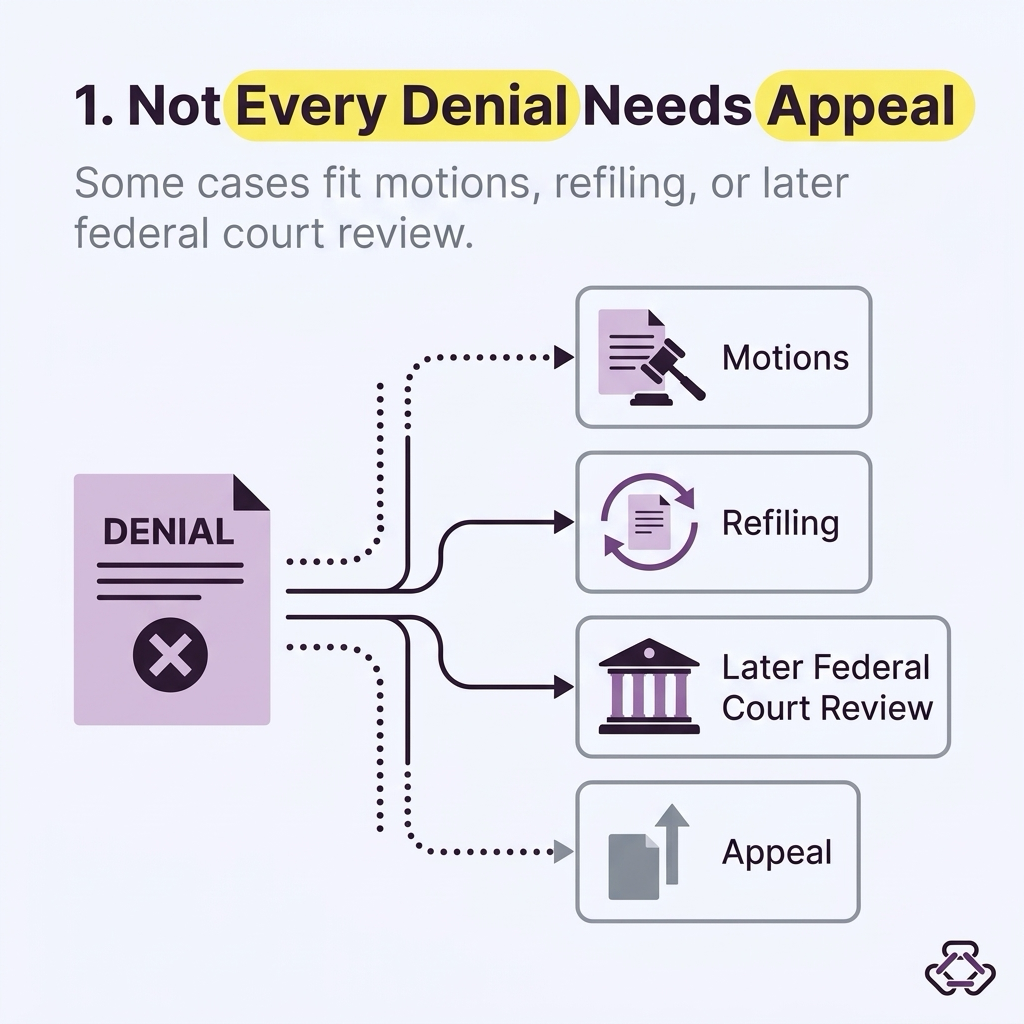
- 1. Treating Every Denial As If It Calls For An Appeal
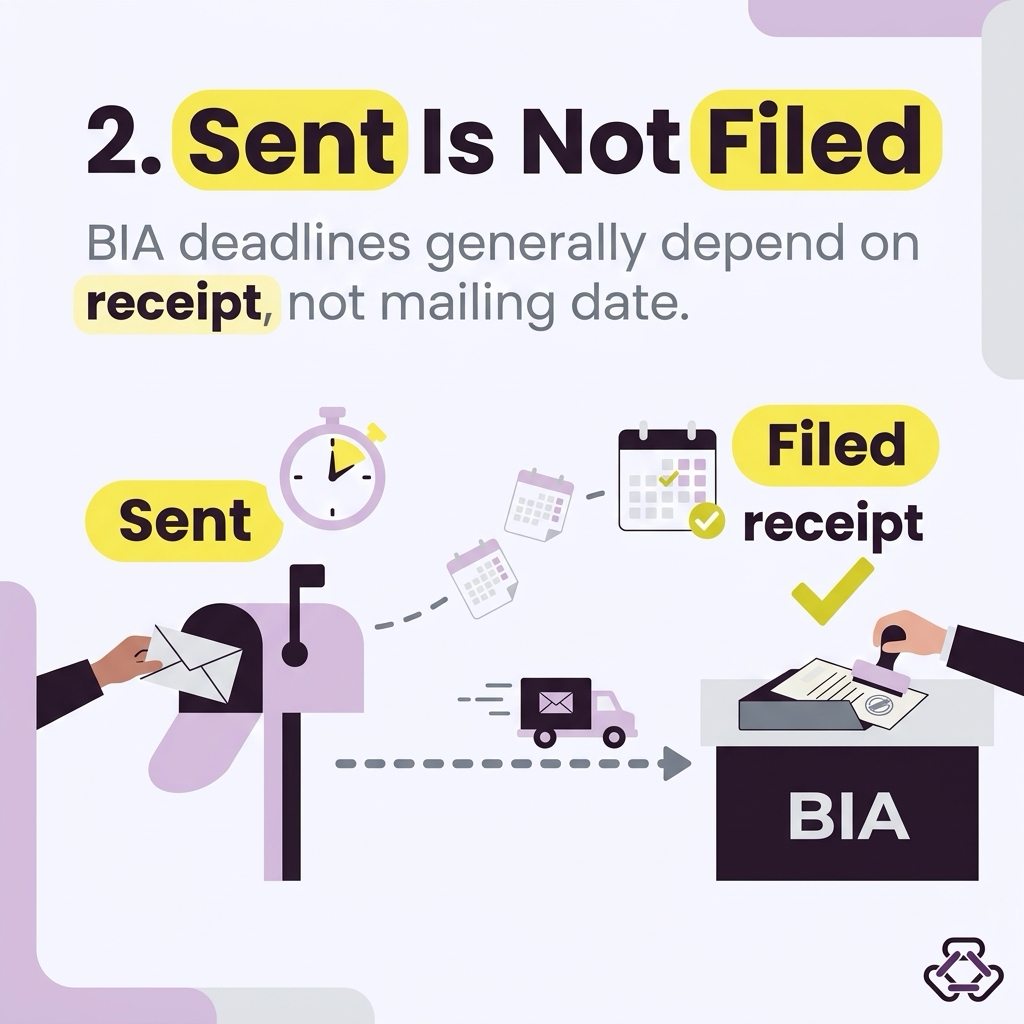
- 2. Missing The Deadline Because “Sent” Is Not The Same As “Filed”
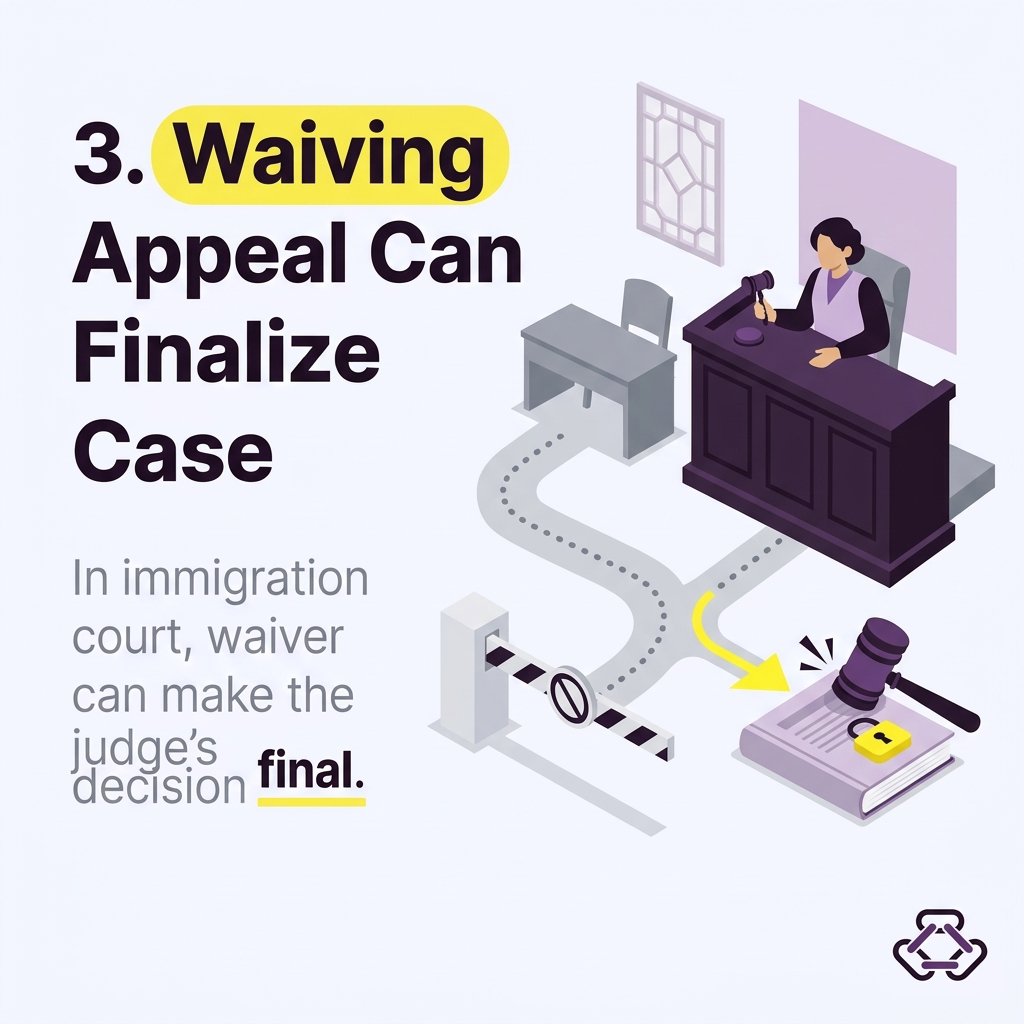
- 3. Waiving Appeal Without Understanding The Consequences
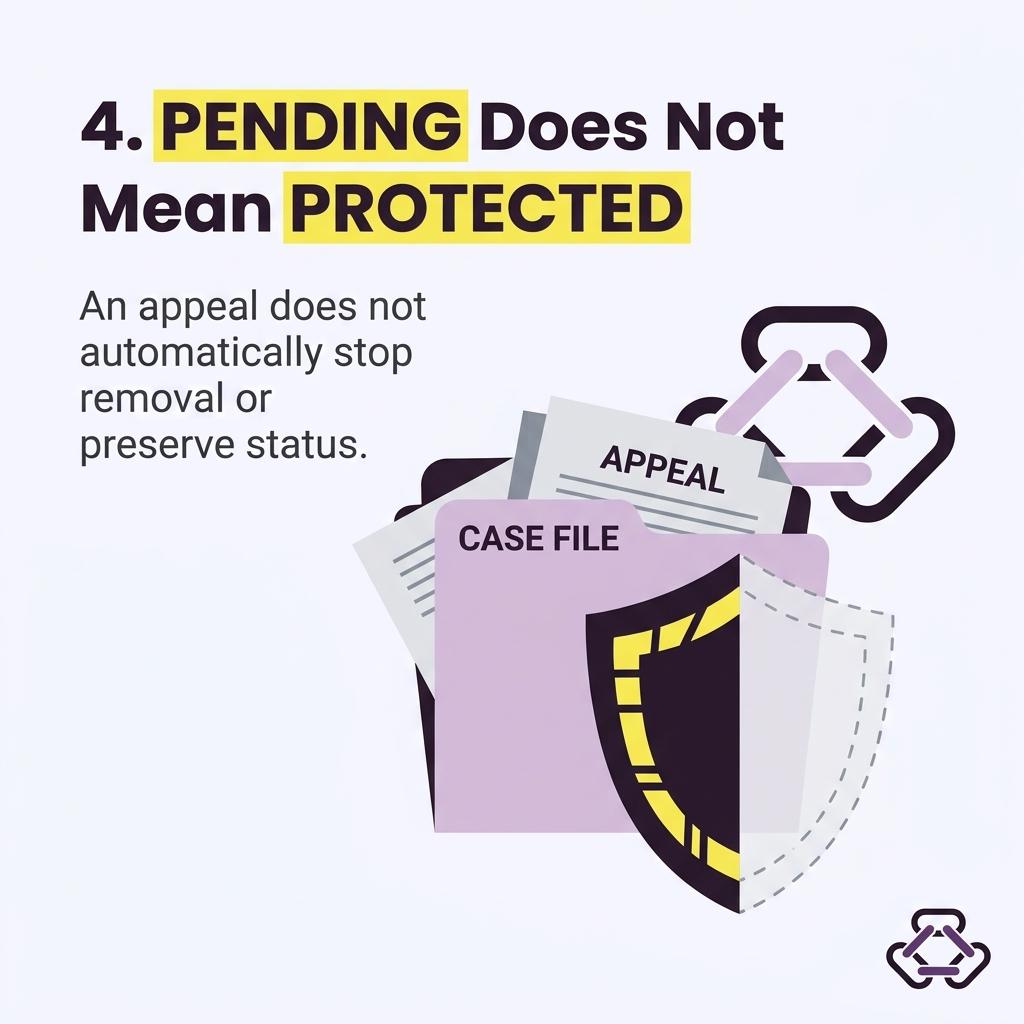
- 4. Assuming An Appeal Automatically Stops Removal Or Protects Status
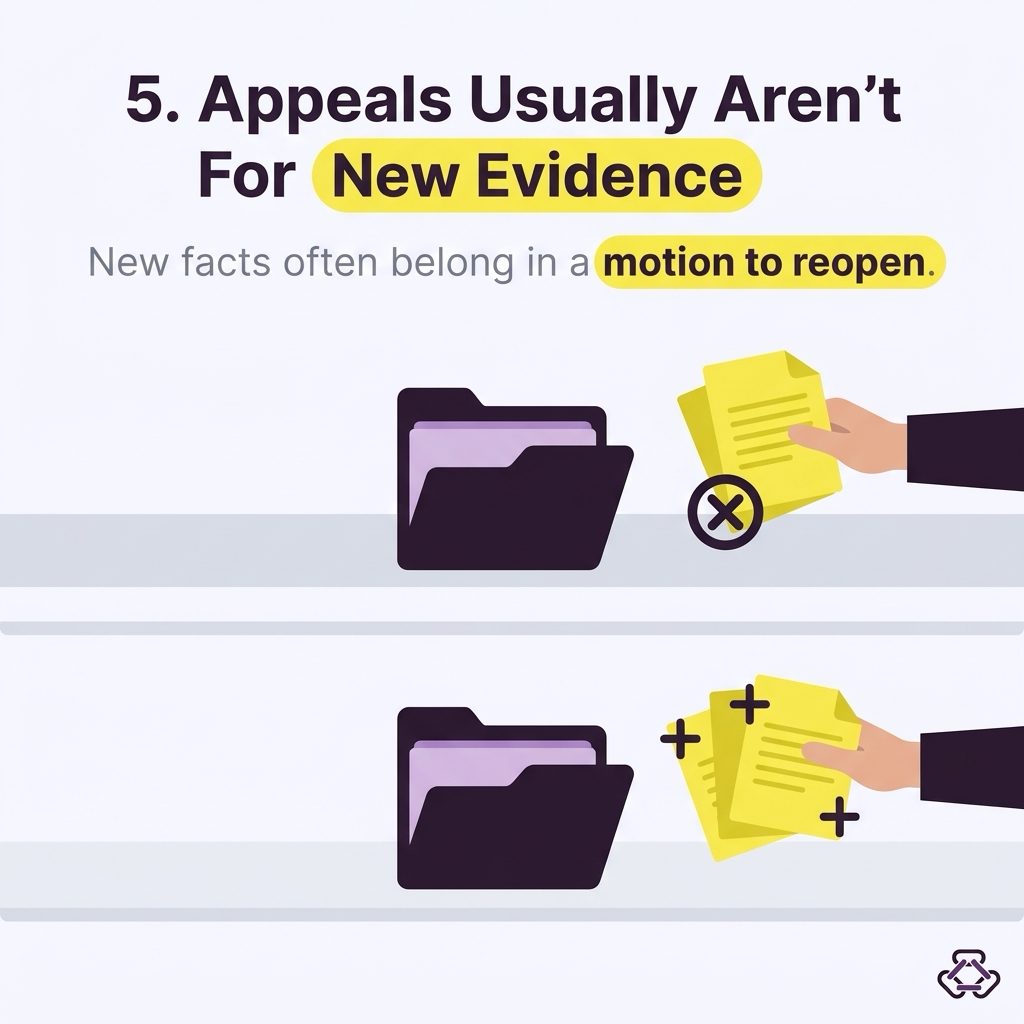
- 5. Using The Appeal To Submit New Evidence Instead Of Challenging Legal Or Factual Error
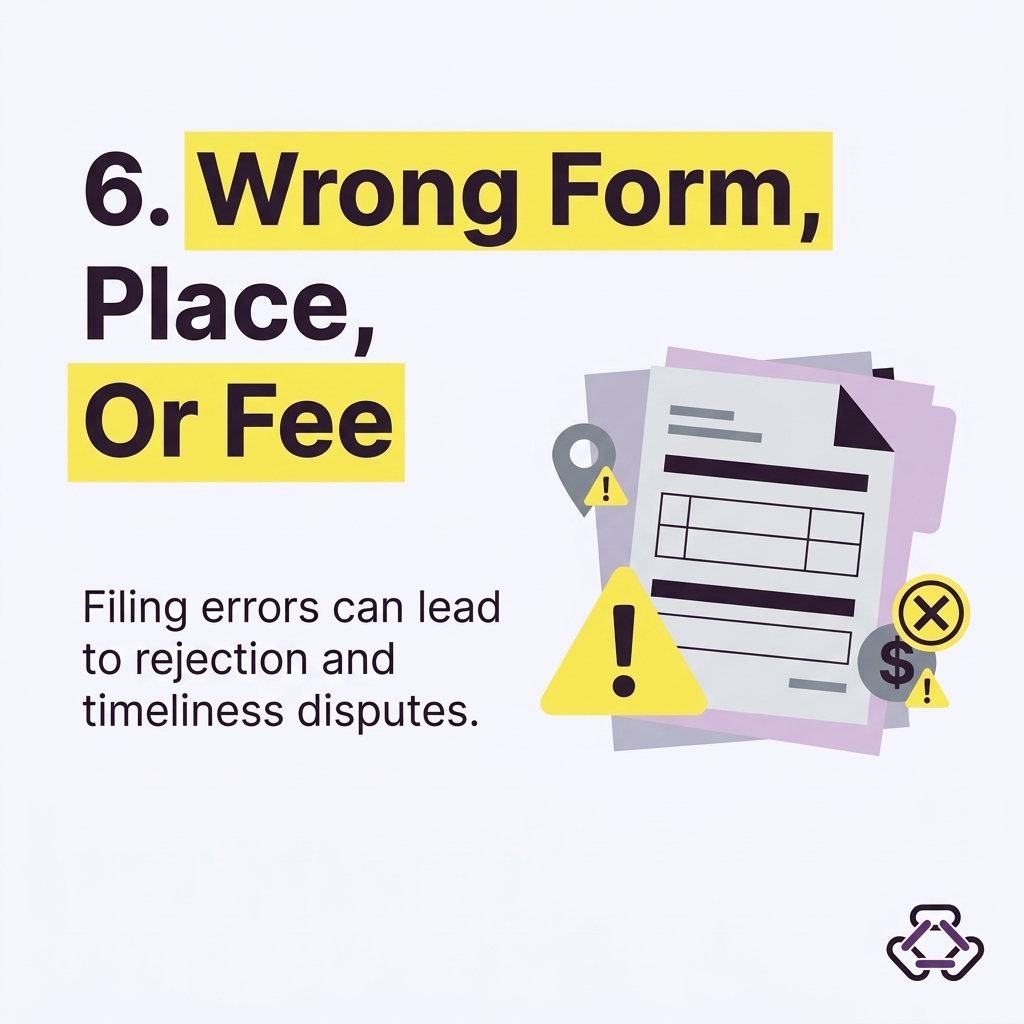
- 6. Filing In The Wrong Place, With The Wrong Form, Or With The Wrong Fee
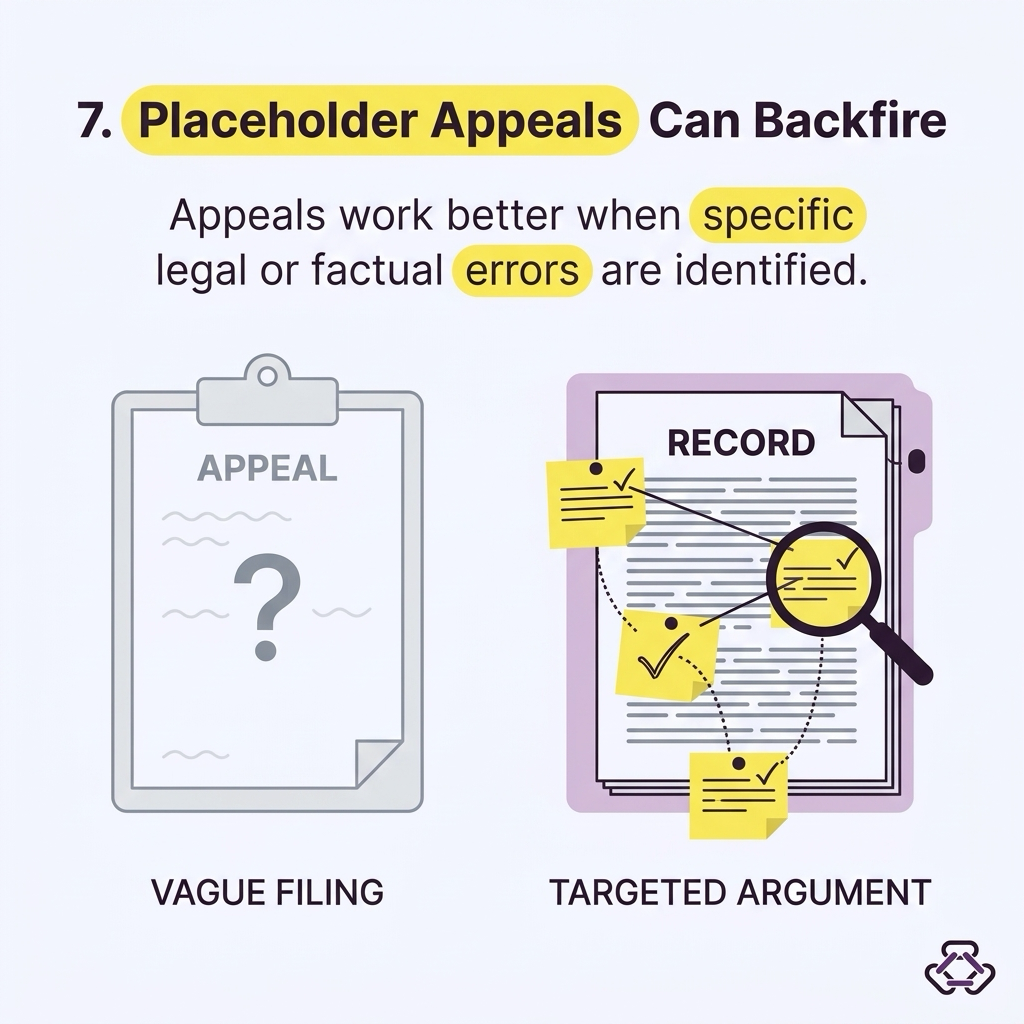
- 7. Filing A Placeholder Appeal Without A Real Theory Of Error
- Why These Mistakes Matter So Much In Immigration Cases
- A Short Takeaway

Type
Great Grandchild
Status
Approved
Title (YouTube)
Images Failed (Social)
Images Failed (Social)
Do not index
Publish Date (TikTok)
Apr 22, 2027 08:15
Videos Post IDs (Social)
Hashtags (Social)
#LegalAdvice #LegalHelp #Immigration #ImmigrationAppeals
Caption
Caption X
Cover

OG Image

Alt Image Text
Flat vector illustration of immigration appeal mistakes with deadline pressure, branching legal options, and status risk after a denial
Images

Videos
Publish Date (Social)
Feb 17, 2027 07:30
Scheduled (Social)
Scheduled (Social)
Images Posted (Social)
Images Posted (Social)
Videos Posted (Social)
Videos Posted (Social)
Featured
Created time
Apr 7, 2026 12:03 AM
Sub-item
Authors
CTA Practice Area (Social)
Immigration
TikTok Failed (Social)
TikTok Failed (Social)
Videos Post Links (Social)
TikTok Post Links (Social)
Images Post IDs (Social)
YT Post ID
Video Pending Manual (Social)
TikTok Posted (Social)
TikTok Posted (Social)
TikTok Post IDs (Social)
Video Cover (Social)
Images Post Links (Social)
First Comment (Social)
Videos Failed (Social)
Videos Failed (Social)
YT Embedded
Images Delete (Social)
Videos Delete (Social)
7 Appeal Mistakes That Can Cost You Time, Options, or Status
Immigration appeals can look deceptively simple from a distance: file a form, explain what went wrong, and wait for review. In real life, appeals often turn on timing, procedure, jurisdiction, and the exact kind of error that happened in the first place. A single misstep can shrink available options, delay review, or affect a person’s ability to remain in the United States while the case is pending.
In this post, you’ll learn about seven common appeal mistakes that can create serious problems in immigration cases, especially after an immigration judge or USCIS denial. If you want a broader overview first, it may help to start with this guide to what happens after an immigration appeal is filed. The goal here is practical: identify where people lose time, options, or status, and explain what an attorney often examines before anything is filed.
Scroll to the bottom for every post in this series.
1. Treating Every Denial As If It Calls For An Appeal
One of the most common mistakes is assuming that a denial automatically leads to an appeal.
In immigration law, “appeal” is only one possible response. Depending on the agency, form type, and reason for denial, a case might call for:
- an appeal,
- a motion to reopen,
- a motion to reconsider,
- a new filing with stronger evidence,
- or a federal court strategy after administrative review is exhausted.
That distinction matters because the forum and the deadline can change dramatically. For example, an appeal from an immigration judge’s decision generally goes to the Board of Immigration Appeals (BIA) on Form EOIR-26, and it generally has to be received within 30 calendar days after the immigration judge renders an oral decision or mails a written one, according to EOIR’s appeal guidance and policy manual. The BIA also does not use a mailbox rule for that deadline; receipt controls, not mailing date. EOIR’s appeal page, BIA deadline guidance, and the EOIR policy manual appendix on deadlines all reinforce that point.
USCIS cases are different. Some denials are appealable to the Administrative Appeals Office (AAO) using Form I-290B, while others are not. USCIS explains that the list of eligible case types is limited, and in many cases the filing is a motion rather than an appeal. In general, the filing period for many I-290B appeals or motions is 30 days, or 33 days if the decision was mailed, but eligibility depends on the specific benefit type. See the USCIS I-290B page, the USCIS page on when Form I-290B is available, and the AAO Practice Manual.
Here’s what this often means in practice: if someone picks the wrong vehicle, the filing may not fix the underlying problem. In some cases, it can also consume the very time that could have been used for the correct remedy.
2. Missing The Deadline Because “Sent” Is Not The Same As “Filed”
Another major mistake is treating the deadline as a postmark deadline when the agency treats it as a receipt deadline.
For BIA appeals from immigration judge decisions, EOIR states that Form EOIR-26 must be received by the BIA within 30 calendar days. The BIA “does not follow the mailbox rule,” which means overnighting the package on day 30 may still be too late if it arrives after the deadline. That rule appears in EOIR’s appeal instructions, the Board practice chapter on appeal deadlines, and the delivery-and-receipt guidance.
This is one of those procedural details that can feel minor until it isn’t. People often focus on writing the strongest possible explanation and leave the filing mechanics for last. But with appeals, timing is often part of the substance. A late filing can lead to dismissal without any review of the underlying immigration issue.
USCIS timing rules are different in form, but just as strict in effect. USCIS states that many appeals and motions on Form I-290B are due within 30 days, or 33 days if the decision was mailed, and the appeal or motion has to be filed according to the instructions for that case type. See the USCIS I-290B page and the USCIS Policy Manual chapter on appeals and motions.
For many people, the practical lesson is simple: counting days incorrectly, waiting for a transcript, waiting for records, or assuming regular mail is enough can narrow options fast. If you’re trying to understand the bigger framework behind those timelines, this article on how BIA appeals and motions fit into the larger process gives useful context.
3. Waiving Appeal Without Understanding The Consequences
In immigration court, what happens at the hearing itself can be just as important as what gets filed later.
EOIR explains that if a person tells the immigration judge they waive the right to appeal, the immigration judge’s decision becomes final. EOIR’s public appeal page states that if you waive appeal, or fail to file EOIR-26 within 30 days, the immigration judge’s decision becomes final. See the EOIR appeal page.
That creates a serious issue because many people do not fully appreciate what “waive appeal” means in the moment. Hearings move quickly. Interpreters may be involved. Stress is high. Some respondents think they are simply acknowledging the judge’s ruling, not giving up a procedural right.
There can also be downstream effects on removal protection. EOIR’s practice manual explains that after an immigration judge issues a final merits decision, the order is automatically stayed during the 30-day appeal period, unless appeal was waived. If a timely merits appeal is filed, the order is generally automatically stayed while the BIA decides the appeal. But that automatic stay rule does not apply across every kind of proceeding. EOIR’s automatic stay guidance and the BIA process chapter explain those distinctions.
In general terms, waiving appeal can change the timeline immediately. An attorney often looks closely at the hearing transcript, the oral advisals, the interpreter record, and whether the waiver was considered knowing and voluntary.
4. Assuming An Appeal Automatically Stops Removal Or Protects Status
People often hear that “an appeal gives you a stay” and assume that’s universally true. It isn’t.
There are situations where a timely appeal creates an automatic stay of removal. EOIR states that when a party timely appeals an immigration judge’s decision on the merits of the case, the order of removal is automatically stayed during BIA adjudication. But EOIR also explains that there is no automatic stay in various other contexts, including many motions to reopen or reconsider and certain appeals involving denials of motions. See EOIR Chapter 8.2 on automatic stays and Chapter 8.3 on discretionary stays.
That distinction matters because people sometimes file the wrong post-decision request under the assumption that any pending filing preserves the same protections. In reality, whether someone remains protected from removal, keeps work authorization, or preserves some other status-related benefit can depend on:
- what kind of case it is,
- which agency issued the decision,
- whether the filing is an appeal or a motion,
- and whether a separate stay request is available or necessary.
USCIS cases can be even more confusing because a denied petition, revoked approval, or dismissed benefit request does not automatically create the same kind of procedural posture as a removal-case appeal before the BIA. The USCIS appeals resources page notes, for example, that a FOIA request does not extend filing timeframes, which is another reminder that parallel steps do not automatically preserve rights.
Here’s what this often means: “pending” and “protected” are not the same thing. An attorney may help determine whether a filing carries an automatic stay, whether a discretionary stay request is available, and how the person’s current status or exposure interacts with the appeal timeline.
5. Using The Appeal To Submit New Evidence Instead Of Challenging Legal Or Factual Error
Appeals are often misunderstood as a chance to “send in everything again plus more.” In many immigration cases, that is not how appellate review works.
Before the BIA, the basic function of an appeal is to challenge the immigration judge’s decision based on claimed legal or factual error in the existing record. The Board generally does not consider new evidence on appeal. EOIR’s practice materials reflect that distinction, and motions to reopen exist for a reason: they are the usual vehicle for presenting new facts or evidence after a final decision. See the EOIR deadlines appendix and the BIA motions-to-reopen guidance.
USCIS follows a similar structural distinction between appeals and motions. The AAO Practice Manual explains that appeals and motions serve different purposes, and that motions to reopen generally involve new facts supported by documentary evidence, while motions to reconsider typically argue that the decision was incorrect based on the existing record and law. See the AAO Practice Manual chapter on motions and the USCIS Policy Manual chapter on appeals and motions.
This is where many filings lose force. If the real problem is that key documents were missing, a witness declaration was unavailable, country-conditions evidence changed, or prior counsel failed to submit material proof, a motion-based strategy may fit better than an appeal standing alone. On the other hand, if the judge or officer applied the wrong legal standard, ignored controlling authority, or made a factual finding unsupported by the record, an appeal may be the more direct vehicle.
The hard part is that many cases involve both legal error and missing evidence. That is one reason people often spend time on a filing that only solves half the problem.
6. Filing In The Wrong Place, With The Wrong Form, Or With The Wrong Fee
This sounds administrative, but it routinely becomes outcome-determinative.
EOIR states that an appeal from an immigration judge’s decision must be filed directly with the BIA using Form EOIR-26. Filing it with DHS or the immigration court is not proper filing with the Board. That rule appears in the BIA practice materials and EOIR’s public guidance. See the EOIR appeal page and the BIA practice manual excerpts available through EOIR materials.
Fees matter too. EOIR’s current fee page states that, as of February 23, 2026, EOIR no longer accepts checks or money orders for immigration fees paid to EOIR, and immigration fees must be submitted electronically through the EOIR Payment Portal. The same page lists the EOIR-26 appeal fee as $1,030 and notes that fee waiver requests may be available in appropriate cases. See EOIR’s current appeals, motions, and required fees page and the EOIR forms page.
USCIS has its own filing locations, form versions, fee rules, and jurisdiction limits for I-290B filings. USCIS warns that an incorrect edition, incorrect fee, missing signature, or filing by the wrong party can trigger rejection. See the USCIS I-290B page.
This category of mistake tends to frustrate families because it feels procedural rather than substantive. But in appeals, procedure often controls access to review. If a filing is rejected after the deadline has passed, the person may be left arguing over timeliness instead of the actual immigration issue.
7. Filing A Placeholder Appeal Without A Real Theory Of Error
A final common mistake is filing a bare-bones appeal that says, in substance, “the judge was wrong” without identifying a coherent legal or factual basis.
That approach can backfire for several reasons.
First, appellate bodies are not redoing the entire case from scratch just because someone disagrees with the result. They are reviewing for specific errors. Strong appeals usually identify what happened, where in the record it happened, what law applies, and how the decision went off track.
Second, briefing deadlines can come quickly. EOIR’s deadlines appendix reflects that a motion response brief before the BIA is generally due within 21 days, and older BIA practice materials also reflect briefing schedules on appeal that move on a relatively short clock. See the EOIR deadlines appendix. In practice, a thin notice of appeal may not leave much room to build a more thoughtful argument later, especially when transcripts, records, detention issues, language access problems, or prior counsel concerns are in play.
Third, some appeals are weakened by arguments that are emotional but legally underdeveloped. Saying the result was unfair may be understandable, but appellate review usually turns on things like:
- application of the wrong legal standard,
- failure to consider material evidence already in the record,
- unsupported credibility findings,
- due process concerns,
- misreading the statute or regulations,
- or inconsistency with controlling precedent.
That is also why case evaluation matters before filing. In some situations, the stronger path is not “appeal faster,” but “analyze more carefully first.” People comparing those options often find it helpful to read a broader explanation of how appeals, motions, and alternative filing strategies differ, then map the facts of their own case against the actual procedural rules.
Why These Mistakes Matter So Much In Immigration Cases
Appeal mistakes are costly in almost every area of law, but immigration cases carry a different kind of pressure because the consequences are often layered.
A single error can affect more than one thing at once:
- the right to review,
- the ability to remain in the United States during review,
- the finality of a removal order,
- the possibility of reopening the record later,
- the availability of fee waivers or corrected filings,
- and the person’s broader immigration strategy going forward.
That’s why immigration appeals are rarely just paperwork problems. They are strategy problems, timing problems, and jurisdiction problems all at once.
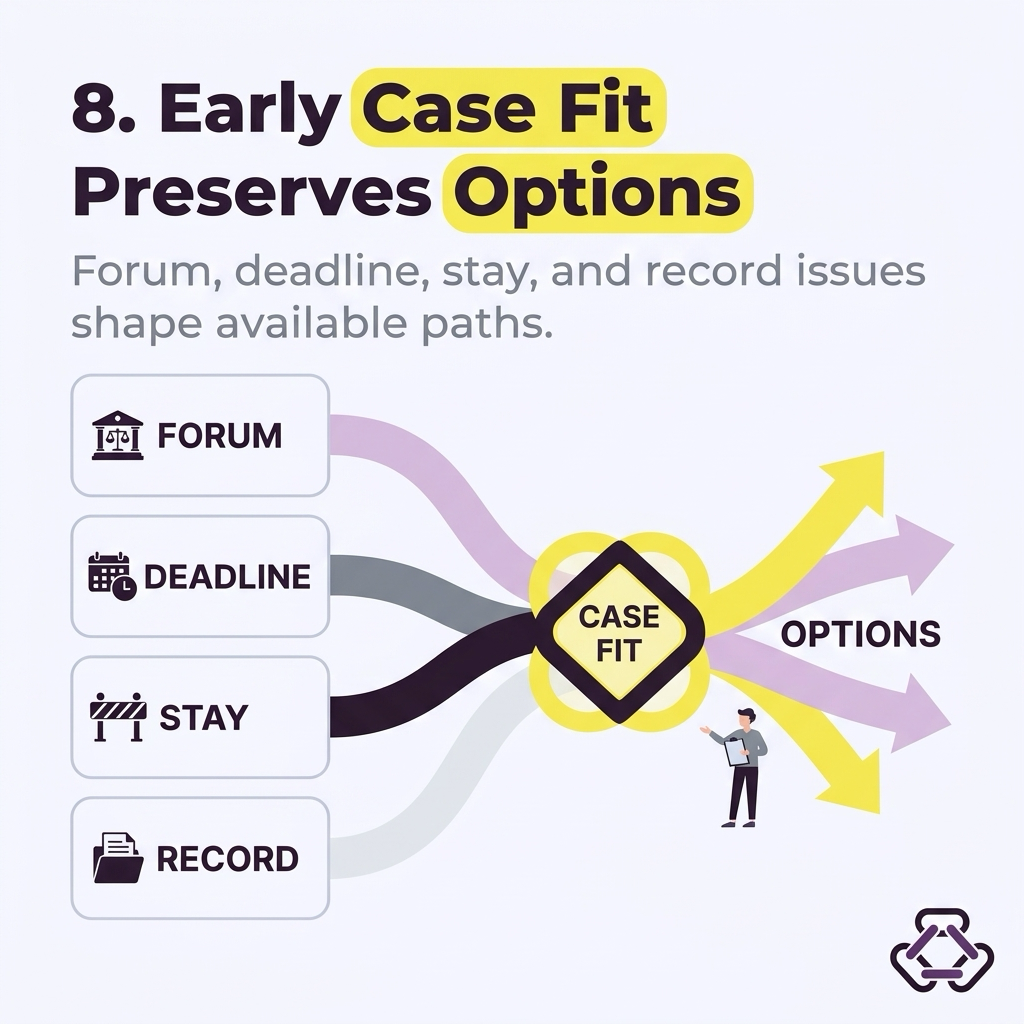
For families, employers, and noncitizens trying to make sense of a denial, the hardest part is often figuring out which error matters most right now. Is the immediate problem a deadline? A waived appeal? A missing stay? A record issue? A wrong forum? A non-appealable denial? Those questions often shape the available path more than the merits alone.
A Short Takeaway
An immigration appeal can be powerful, but it is not a cure-all. Some of the most damaging mistakes happen before the appellate body ever reaches the merits: filing the wrong thing, filing too late, misunderstanding the effect on removal, waiving appeal at the hearing, or trying to use an appeal to introduce evidence that belongs in a motion.
In general terms, the earlier a case is evaluated for fit, jurisdiction, deadline risk, and documented procedural posture, the more options tend to remain on the table.
Visit ReferU.AI to get matched with an attorney who has demonstrable experience in cases like yours — for free.
