Table of Contents
- Immigration Appeals Explained: BIA Appeals, Motions to Reopen, and What Happens Next
- What Counts As An Immigration Appeal?
- What Is A BIA Appeal?
- Common Situations That Lead To A BIA Appeal
- How Long Do You Have To File A BIA Appeal?
- What Does The BIA Appeal Filing Require?
- What Happens After A BIA Appeal Is Filed?
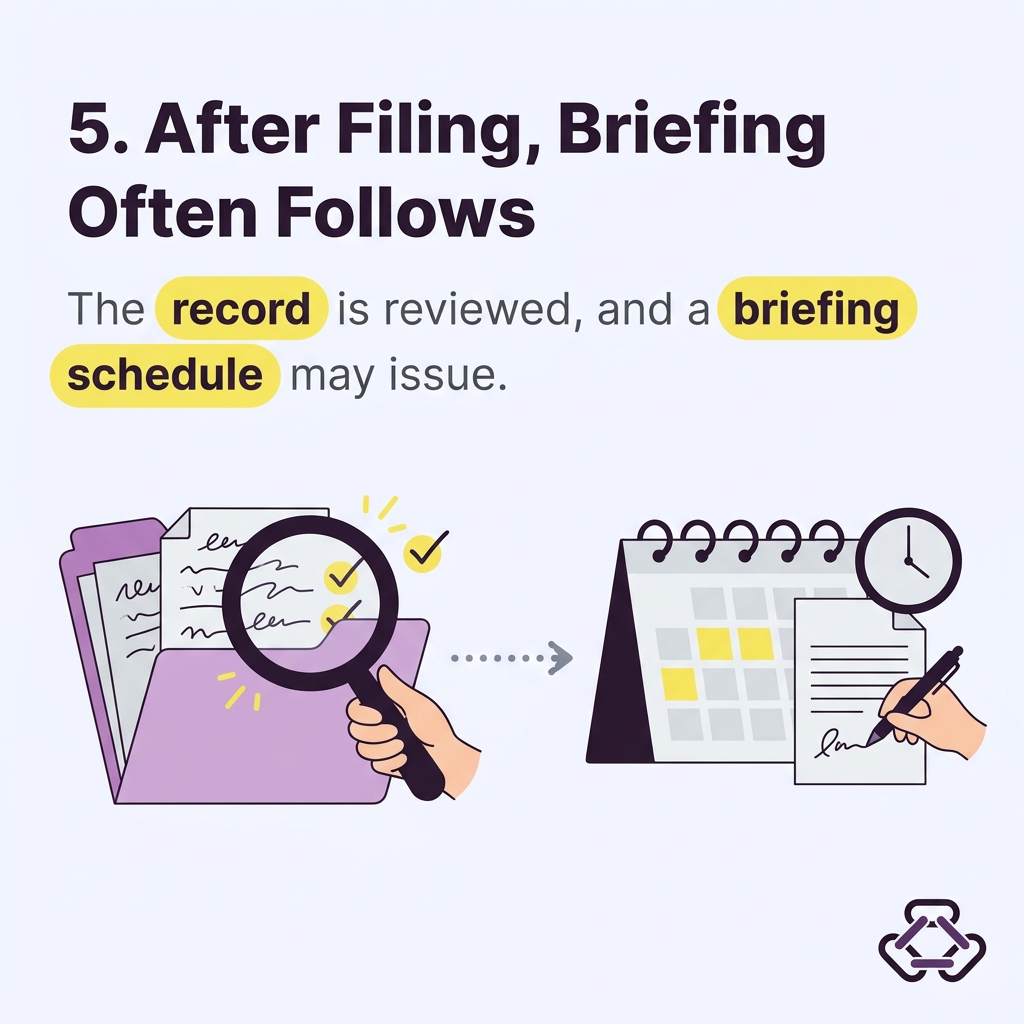
- The Record Is Sent Up For Review
- A Briefing Schedule May Be Issued
- The BIA Can Dismiss, Sustain, Or Remand
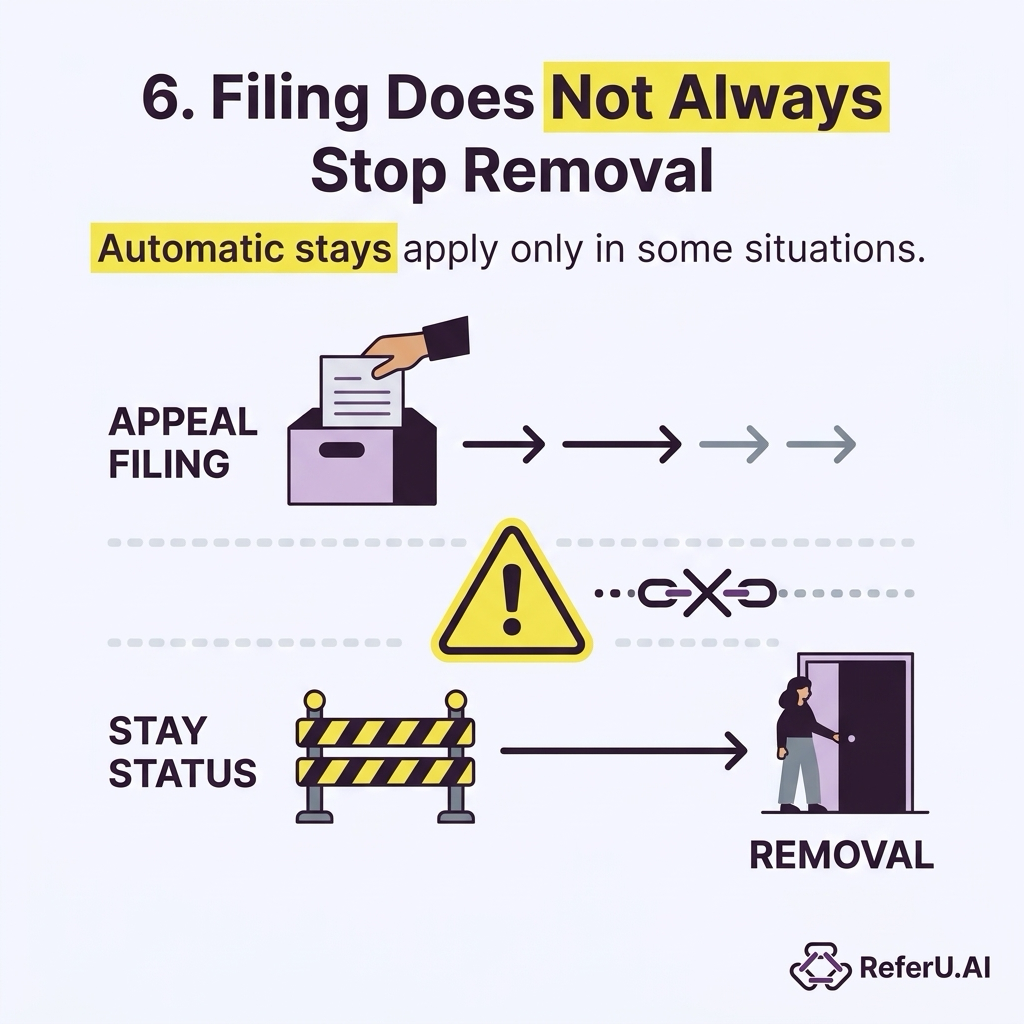
- Does Filing A BIA Appeal Stop Removal?
- What Is A Motion To Reopen?
- When A Motion To Reopen Often Comes Up
- What Is A Motion To Reconsider?
- BIA Appeal Vs. Motion To Reopen Vs. Motion To Reconsider
- A BIA Appeal
- A Motion To Reopen
- A Motion To Reconsider
- Sometimes The Real Answer Is A New Filing
- What Happens After You File A Motion With USCIS?
- What Happens Next If The Appeal Or Motion Is Granted?
- What Common Mistakes Create Problems In Immigration Appeals?
- What Questions Do People Usually Ask Right After A Denial?
- Why Attorney Fit Matters So Much In Appeals And Motions
- A Short Summary Of What To Keep In Mind

Type
Grandchild
Status
Approved
Title (YouTube)
Images Failed (Social)
Images Failed (Social)
Do not index
Parent item
Publish Date (TikTok)
Apr 22, 2027 12:15
Videos Post IDs (Social)
Hashtags (Social)
#LegalAdvice #LegalHelp #Immigration #ImmigrationAppeals
Caption
Caption X
Cover

OG Image

Alt Image Text
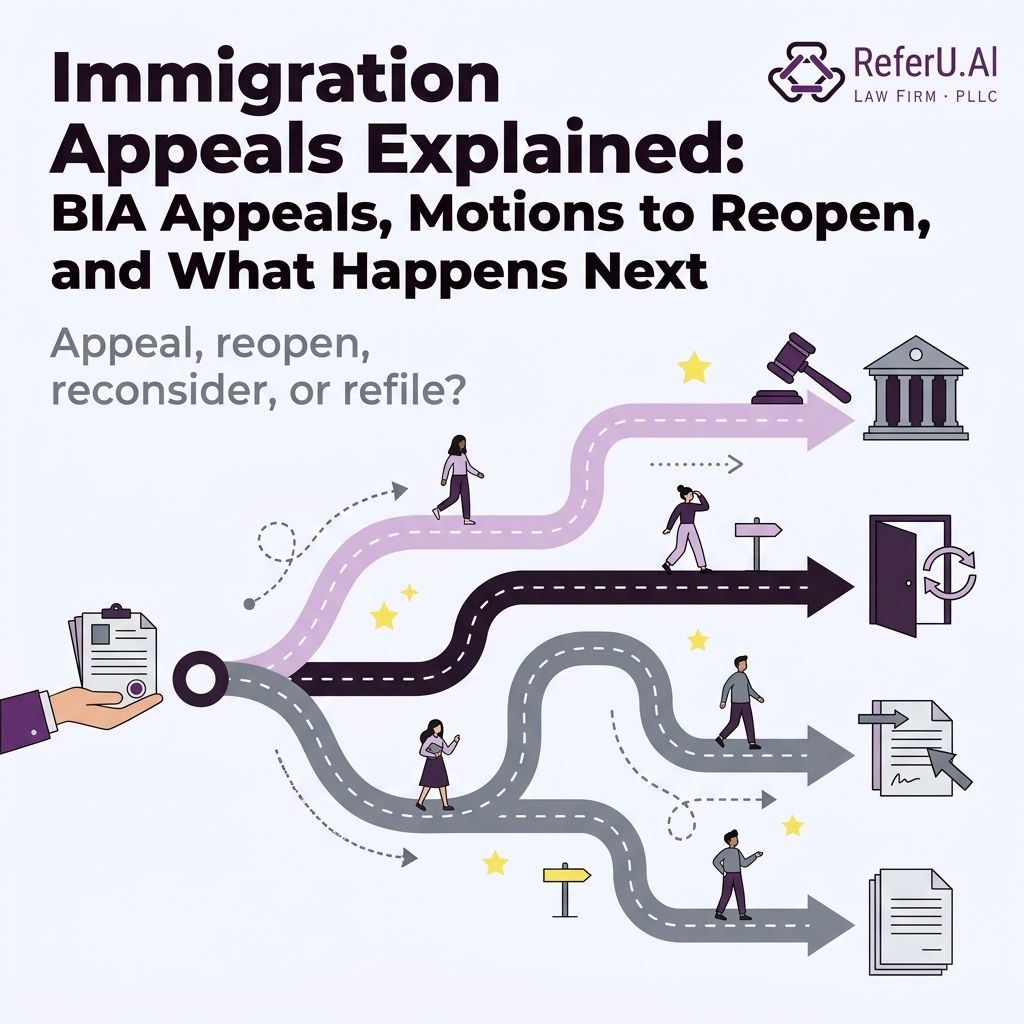
Flat vector illustration of immigration appeals showing BIA appeals and motions to reopen as different legal pathways after a denial.
Images

Videos

Publish Date (Social)
Feb 17, 2027 09:30
Scheduled (Social)
Scheduled (Social)
Images Posted (Social)
Images Posted (Social)
Videos Posted (Social)
Videos Posted (Social)
Featured
Created time
Apr 7, 2026 12:03 AM
Authors
CTA Practice Area (Social)
Immigration
TikTok Failed (Social)
TikTok Failed (Social)
Videos Post Links (Social)
TikTok Post Links (Social)
Images Post IDs (Social)
YT Post ID
Video Pending Manual (Social)
TikTok Posted (Social)
TikTok Posted (Social)
TikTok Post IDs (Social)
Video Cover (Social)

Images Post Links (Social)
First Comment (Social)
Videos Failed (Social)
Videos Failed (Social)
YT Embedded
YT Embedded
Images Delete (Social)
Videos Delete (Social)
Carousel Video URL (Social)
Immigration Appeals Explained: BIA Appeals, Motions to Reopen, and What Happens Next
An immigration denial can feel final in the moment. In many cases, though, it is not the end of the road. Depending on what happened, the next step may involve an appeal to the Board of Immigration Appeals, a motion to reopen, a motion to reconsider, or a completely different filing strategy.
That is where a lot of people get stuck. The words sound similar. The deadlines can be short. And the “right” procedural move often depends on who issued the decision, what kind of error happened, and whether new evidence exists.
This post explains the big picture in plain English: what a BIA appeal is, how motions to reopen and reconsider work, and what often happens after you file. If you want a broader overview of the immigration system first, it may help to start with this general guide to immigration processes and defense options. If you are just getting oriented after a denial, you may also find it useful to read this overview of challenging an unfavorable immigration decision.
Scroll to the bottom for every post in this series.
What Counts As An Immigration Appeal?
In general terms, an appeal asks a higher authority to review a decision that has already been made. In the immigration context, that higher authority may be the Board of Immigration Appeals (BIA) or, for some USCIS matters, the Administrative Appeals Office (AAO). USCIS explains that certain decisions can be appealed, while others can only be challenged through a motion filed with the office that made the decision (USCIS Form I-290B overview; USCIS appeals and motions Q&A).
The BIA is part of the U.S. Department of Justice’s Executive Office for Immigration Review. It reviews certain decisions made by immigration judges and some decisions made by DHS officers (EOIR appeal information).
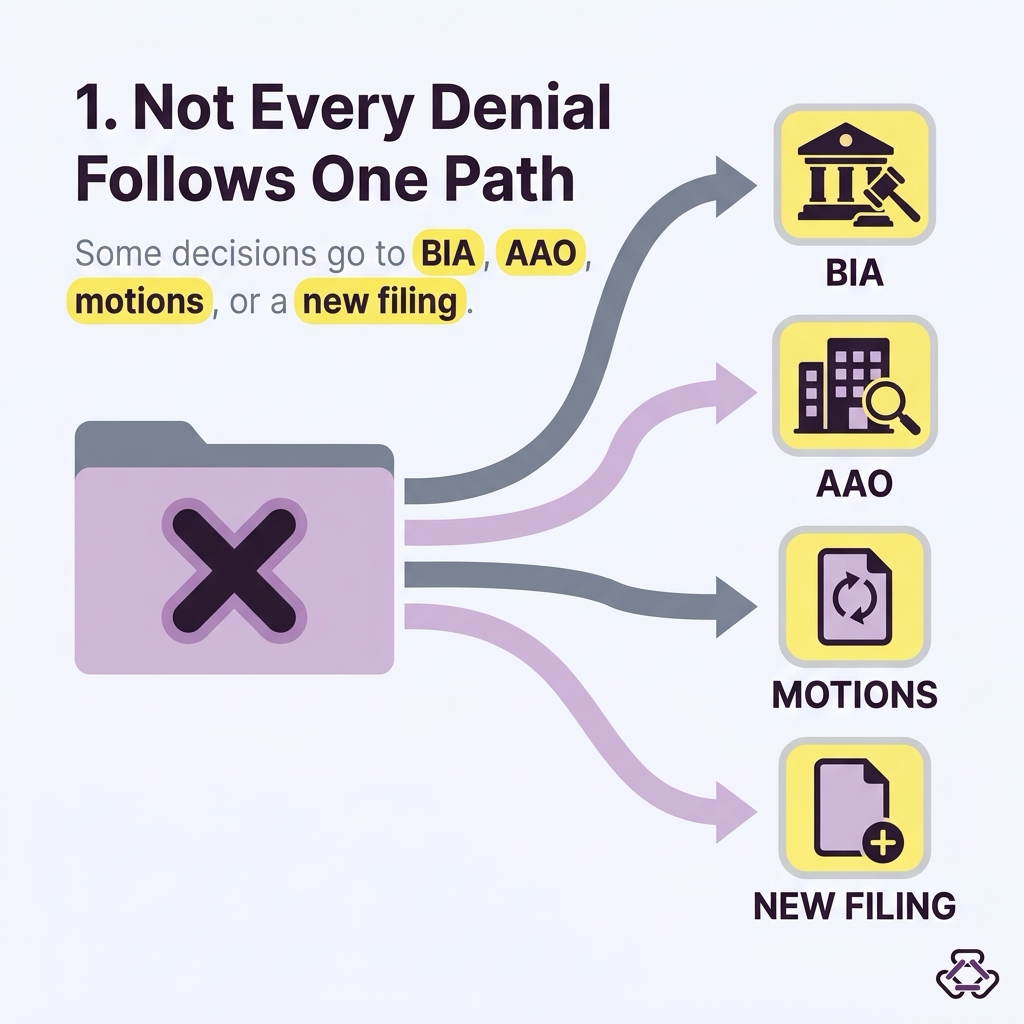
That distinction matters because not every denial goes to the same place:
- Some immigration court decisions are appealed to the BIA
- Some USCIS decisions are appealed to the AAO
- Some denials are not appealable, but a motion may still be possible
- In some situations, a new application or new filing strategy may be more practical than either an appeal or motion
If you are trying to sort out which procedural path fits your situation, this breakdown on whether an appeal, motion, or new filing may fit better can help frame the issue.
What Is A BIA Appeal?
A BIA appeal usually comes up after an immigration judge issues a decision in removal proceedings. If the person appealing believes the judge made a legal or factual error, the BIA can review that decision (EOIR appeal information).
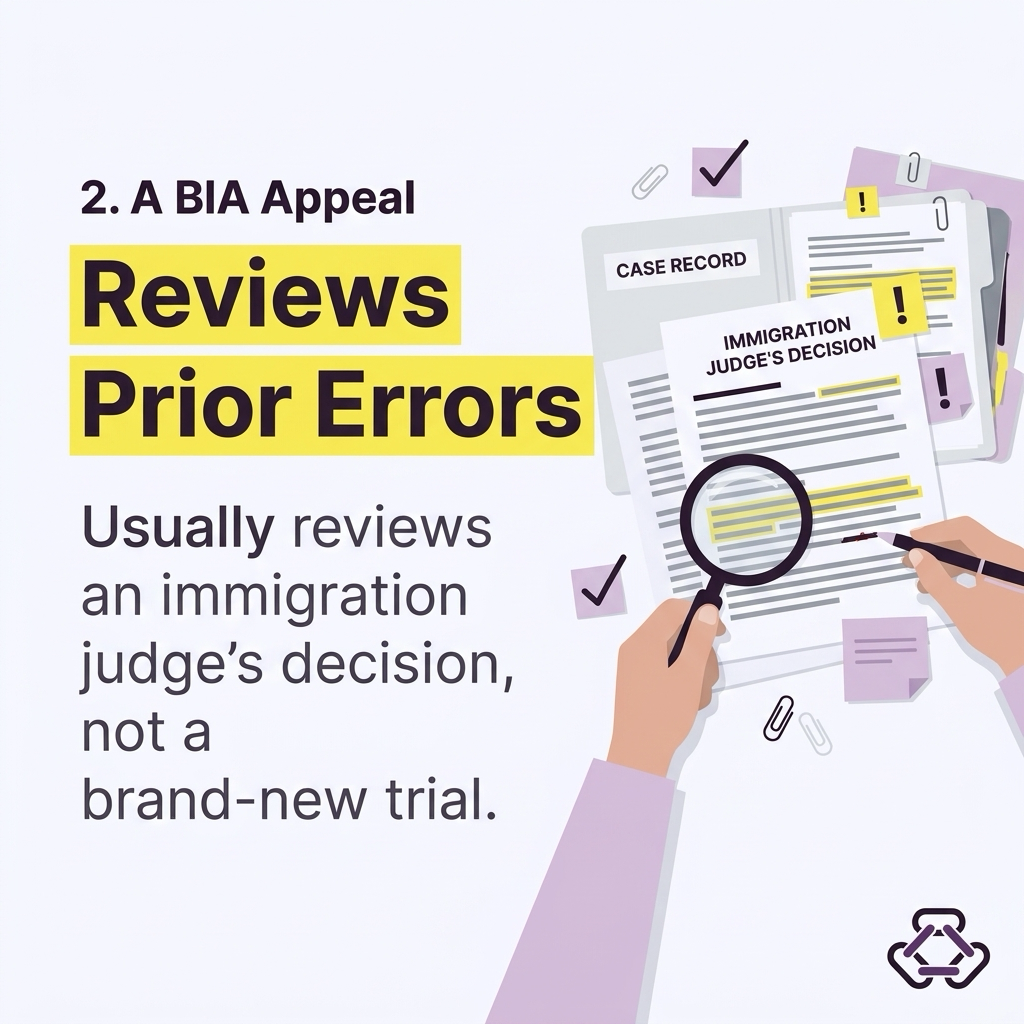
A BIA appeal is not typically a brand-new trial. It is generally a review of what happened before the immigration judge. The Board looks at the record, the notice of appeal, the written arguments, and the applicable law. In many cases, there is no in-person hearing at the appeal stage.
Common Situations That Lead To A BIA Appeal
A BIA appeal may come up after an immigration judge:
- orders removal
- denies asylum, cancellation of removal, adjustment of status, or another form of relief
- denies a motion in immigration court
- issues a bond-related ruling in some contexts
EOIR notes that the BIA can review certain immigration judge decisions on removability, relief eligibility, and bond, but not every type of proceeding is appealable through the BIA route (EOIR appeal information).
How Long Do You Have To File A BIA Appeal?
This is one of the most important parts of the process: the deadline is very short.
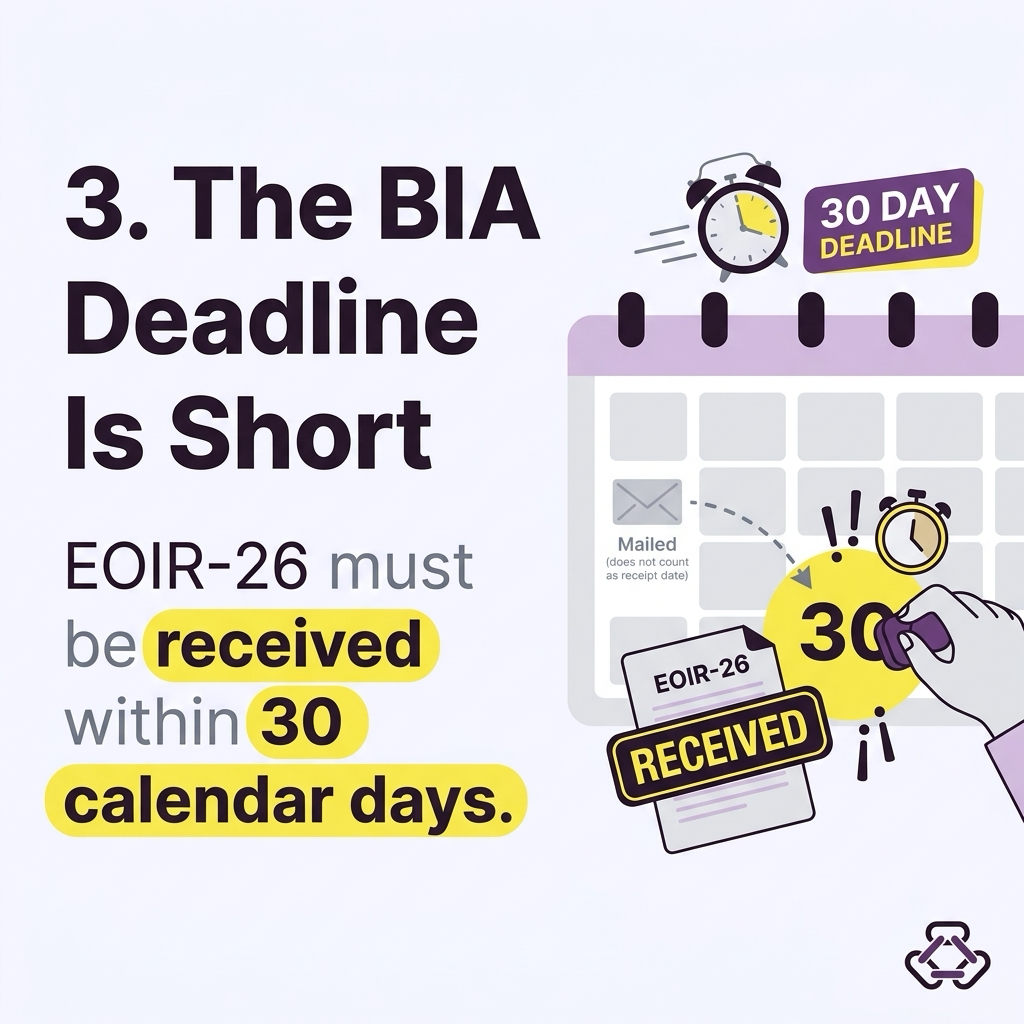
For an appeal from an immigration judge’s decision, Form EOIR-26 must be received by the BIA no later than 30 calendar days after the immigration judge renders an oral decision or mails a written decision (EOIR BIA deadline rules; EOIR appeal page).
A few details often surprise people:
- the deadline is 30 calendar days, not business days
- the Board generally calculates based on receipt, not mailing
- EOIR says it does not apply a mailbox rule for these filings
- the BIA does not have general authority to extend the filing deadline for the notice of appeal (EOIR BIA deadline rules)
That is one reason missed deadlines can be so damaging. If timing is a concern, this article on preparing an immigration appeal without losing critical time goes deeper on practical deadline issues.
What Does The BIA Appeal Filing Require?
EOIR states that a person appealing an immigration judge’s decision generally files Form EOIR-26 with the BIA and includes either the required filing fee or a fee waiver request on Form EOIR-26A if eligible (EOIR appeal page; EOIR forms and fees).
As of February 23, 2026, EOIR says immigration fees are paid electronically through the EOIR Payment Portal, and the listed fee for an appeal from an immigration judge decision is $1,030, with no fee for certain bond appeals (EOIR forms and fees).
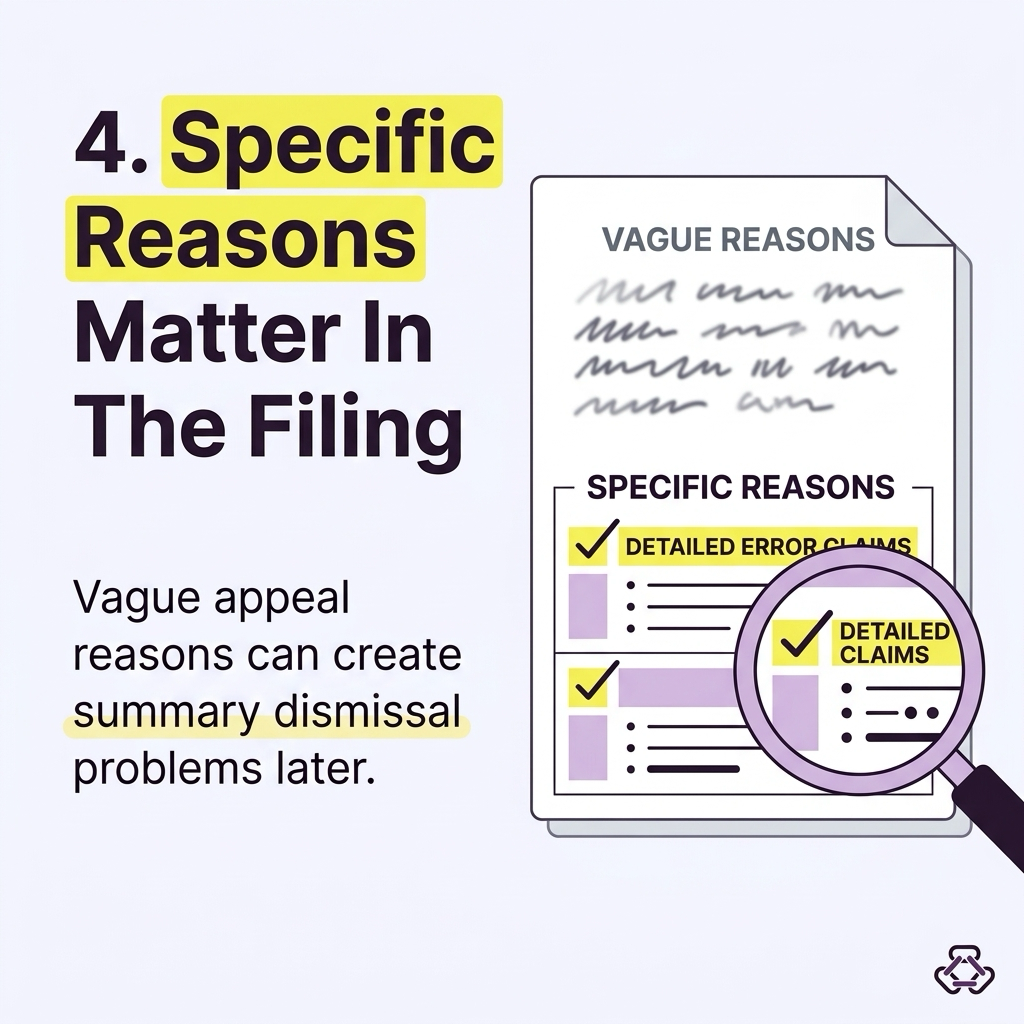
The notice of appeal is not just a placeholder. The Board’s procedures make clear that the filing has to identify the reasons for the challenge with enough specificity to show what errors are being claimed. Vague filings can create problems later, including possible summary dismissal issues under BIA procedures (EOIR Board Practice Manual).
What Happens After A BIA Appeal Is Filed?
Once a BIA appeal is properly filed, several things may happen.
The Record Is Sent Up For Review
The Board generally receives the case file and reviews the immigration judge’s decision and the existing record. The appeal is usually focused on whether the immigration judge made a legal or factual error based on that record.
A Briefing Schedule May Be Issued
EOIR’s policy manual states that the appealing party is generally given 21 days from the date of the briefing notice to file an appeal brief in non-detained and detained cases, subject to the Board’s rules and possible extensions in some settings (EOIR briefing deadlines; EOIR deadline appendix).
This written brief often becomes one of the most important parts of the appeal. It is where the legal arguments are developed in detail.
The BIA Can Dismiss, Sustain, Or Remand
At the end of the process, the BIA may:
- dismiss the appeal and leave the immigration judge’s decision in place
- sustain the appeal
- remand the case back to the immigration judge for further proceedings
What happens next depends heavily on which of those outcomes occurs.
Does Filing A BIA Appeal Stop Removal?
People often assume an appeal automatically freezes everything. The reality is more complicated.
EOIR’s rules discuss automatic stays in some situations, but they also make clear that not every appeal or motion creates automatic protection from removal, and the exact effect can depend on the type of proceeding and posture of the case (EOIR automatic stay guidance; EOIR immigration court reference materials).
Here’s what this often means in practice: whether filing changes your exposure to enforcement, departure obligations, or the finality of the order can be highly case-specific. That is one area where an attorney may help determine what protections exist, if any, and whether additional stay-related action is available.
What Is A Motion To Reopen?
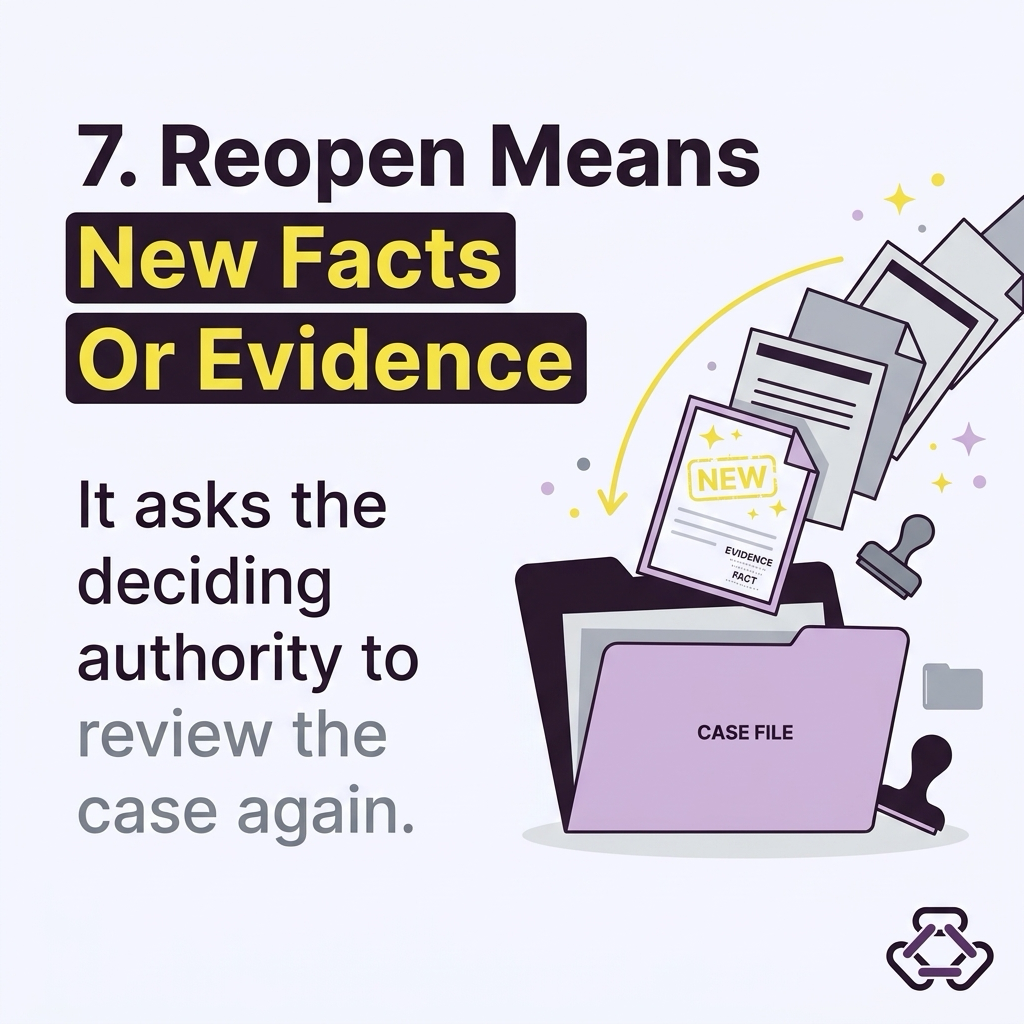
A motion to reopen is different from an appeal. Instead of asking a higher body to review the old decision for error, it generally asks the deciding authority to reopen the case because there are new facts or evidence that were not previously available.
USCIS explains this distinction clearly: appeals ask a different authority to review and reverse a decision, while motions ask the authority that issued the latest decision to review the case again (USCIS AAO Practice Manual, motions chapter).
When A Motion To Reopen Often Comes Up
A motion to reopen may be relevant when:
- important new evidence surfaced after the decision
- changed country conditions affect an asylum-based claim
- a person missed a hearing under circumstances the law recognizes
- documents or facts that were not available earlier materially change the case
For BIA motions, EOIR says that as a general rule, a motion to reopen must be filed within 90 days of the Board’s final administrative decision, and only one motion to reopen is generally permitted, subject to limited exceptions (EOIR motion to reopen rules; EOIR deadline appendix).
EOIR also recognizes exceptions in certain circumstances, including some claims based on changed circumstances related to asylum, withholding, or CAT protection (EOIR motion to reopen rules).
What Is A Motion To Reconsider?
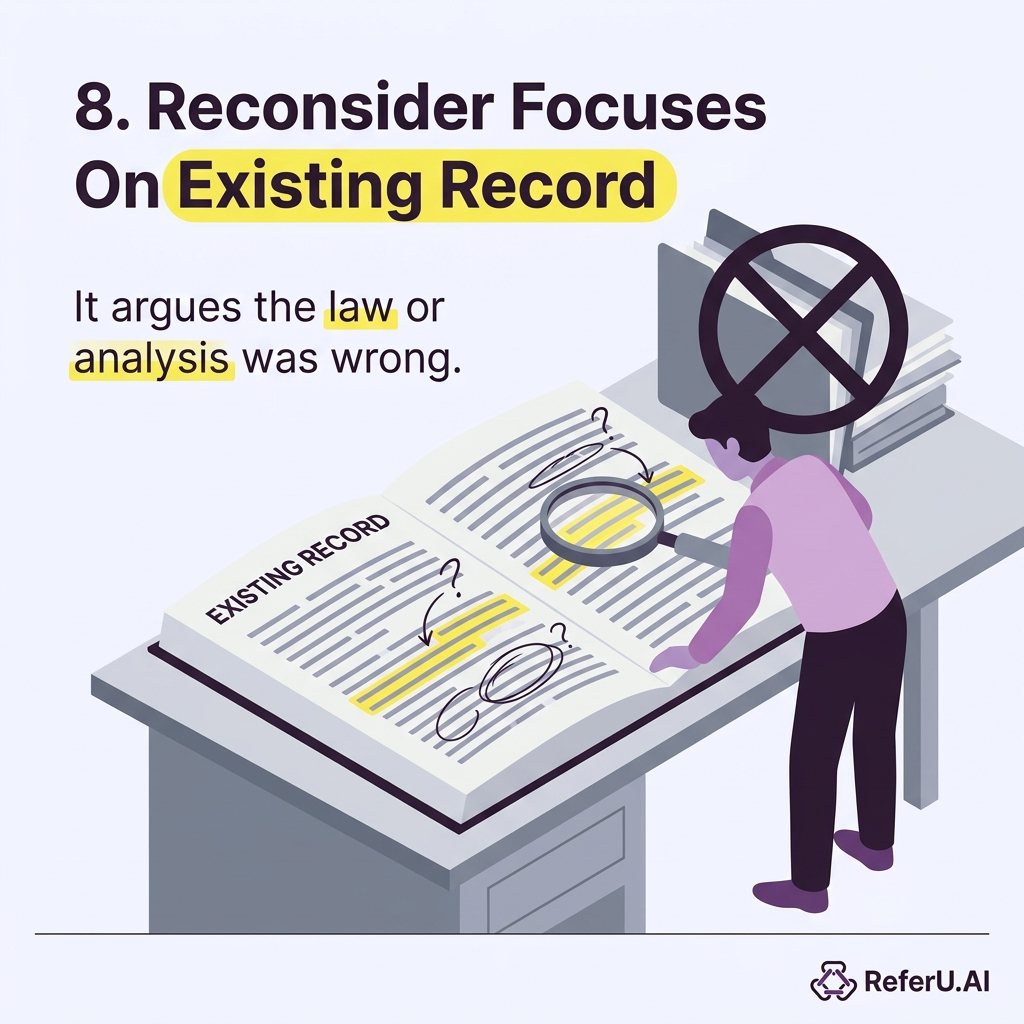
A motion to reconsider usually argues that the original decision got the law or analysis wrong based on the record that already existed. It is less about new evidence and more about legal or factual error in the prior ruling.
For BIA practice, EOIR lists the general deadline for a motion to reconsider as 30 days from the BIA’s final administrative order (EOIR deadline appendix).
For many USCIS matters, the agency explains that a motion to reopen or reconsider is filed on Form I-290B, usually within 30 days of the unfavorable decision, or 33 days if the decision was mailed (USCIS I-290B page; USCIS AAO Practice Manual, motions chapter).
BIA Appeal Vs. Motion To Reopen Vs. Motion To Reconsider
These three options are related, but they are not interchangeable.
A BIA Appeal
A BIA appeal usually asks a higher tribunal to review an immigration judge’s decision for error.
A Motion To Reopen
A motion to reopen usually says: there are important new facts or evidence that were not previously available, and the case should be reopened.
A Motion To Reconsider
A motion to reconsider usually says: the decision-maker misapplied the law or misunderstood the record that already existed.
Sometimes The Real Answer Is A New Filing
In some situations, the more efficient path may be to file a new application, supplement an existing strategy, or address an eligibility issue outside the appeal framework. That depends on the procedural posture, the type of denial, and whether the issue is fixable through evidence, law, timing, or a new basis for relief.
What Happens After You File A Motion With USCIS?
For USCIS decisions, a motion is often filed with the office that issued the latest decision using Form I-290B (USCIS I-290B page).
USCIS says:
- a late-filed appeal may be rejected unless the issuing office treats it as meeting motion requirements
- a late motion is generally denied, though USCIS may excuse an untimely motion to reopen if the delay was reasonable and beyond the filer’s control
- field offices and service centers try to adjudicate motions within 90 days
- the AAO strives to complete its review of motions within 180 days from receipt of a complete file (USCIS I-290B page; USCIS appeals and motions Q&A; USCIS AAO processing times)
That does not mean every case moves on that timetable. Some take longer because the record has to be completed or the issues are more complex.
What Happens Next If The Appeal Or Motion Is Granted?
If an appeal or motion succeeds, the case does not always end on the spot.
Depending on the type of filing, the next step may involve:
- sending the case back to the immigration judge
- reopening proceedings for additional evidence or testimony
- a fresh adjudication by USCIS
- another round of requests for evidence, briefing, or hearings
- a new written decision
In other words, winning the procedural fight often reopens the merits fight. That can be valuable, but it can also mean the case is entering another detailed phase rather than reaching an immediate final resolution.
What Common Mistakes Create Problems In Immigration Appeals?
A lot of appeal-related setbacks happen for procedural reasons, not because the underlying argument had no merit.
Common examples include:
- missing the filing deadline
- filing in the wrong forum
- using an appeal when the issue actually calls for a motion
- relying on new evidence in an appeal that is supposed to focus on the existing record
- submitting vague reasons for appeal
- assuming filing alone pauses removal or fixes status issues
- waiting too long to gather the transcript, order, exhibits, and prior filings
If you want a focused list of pitfalls, this piece on appeal mistakes that can cost people time, options, or immigration status covers the most common ones.
What Questions Do People Usually Ask Right After A Denial?
After an immigration judge or USCIS denial, people often ask:
- Is this decision final?
- Can I appeal it?
- Is a motion better than an appeal?
- What if I have new evidence?
- What if the judge misunderstood the facts?
- Does filing stop removal?
- How long will this take?
- Can I file something else instead?
Those are normal questions, and the answers often depend on details that are easy to miss in the written notice. If you want a quick companion resource, this FAQ-style article on what people often ask after a denial can help you spot the next issues to evaluate.
Why Attorney Fit Matters So Much In Appeals And Motions
Appeals and motions are often more technical than the original filing. The case may turn on:
- the exact source of the denial
- whether the issue is legal, factual, or evidentiary
- whether the record is closed
- whether new facts are allowed
- whether a filing goes to EOIR, the BIA, USCIS, or the AAO
- whether a stay issue exists
- whether the client is in removal proceedings, detained, or facing a separate deadline
That is why many people look for counsel with documented experience in highly similar matters, not just general immigration experience. A lawyer who regularly handles family-based filings may not handle BIA briefing. A litigator comfortable with removal defense may approach motions differently than counsel focused on affirmative USCIS practice.
In appeals work especially, fit is less about broad labels and more about relevant experience based on court records, procedural setting, and issue type.
A Short Summary Of What To Keep In Mind
Immigration appeals are really a group of different procedures, not one single process.
A BIA appeal usually asks the Board of Immigration Appeals to review an immigration judge’s decision. A motion to reopen usually focuses on new facts or evidence. A motion to reconsider usually argues that the prior decision got the law or analysis wrong. For many USCIS matters, those motions are filed on Form I-290B with the office that issued the decision, and the deadlines can be very short. For immigration court appeals, EOIR states that the notice of appeal to the BIA generally has to be received within 30 calendar days (EOIR BIA deadline rules; USCIS I-290B page).
When the stakes involve status, removal exposure, work authorization, travel, or future eligibility, the procedural choice can shape everything that follows. In many cases, an attorney may help evaluate the forum, the deadline, the record, and whether the strongest next step is an appeal, a motion, or a new strategy altogether.
Visit ReferU.AI to get matched with an attorney who has demonstrable experience in cases like yours — for free.


