Table of Contents
- How to Tell Whether You Need an Appeal, a Motion, or a New Filing Strategy
- Step 1: Start With The Type Of Decision You Received
- Step 2: Understand What An Appeal Actually Does
- Step 3: Know When A Motion To Reopen May Fit Better
- Step 4: Recognize When A Motion To Reconsider Is The Better Match
- Step 5: See When A New Filing Strategy May Be Smarter Than Fighting The Old Decision
- Step 6: Watch The Deadline Problem Closely
- Step 7: Ask What Problem You Are Really Trying To Fix
- Is The Problem Legal Error, Missing Evidence, Or Overall Case Design?
- Appeal Often Fits When
- Motion To Reopen Often Fits When
- Motion To Reconsider Often Fits When
- New Filing Strategy Often Fits When
- Common Situations Where People Get The Category Wrong
- Why Filing Strategy Matters More Than Labels
- What To Bring To An Attorney When You Are Comparing Options
- The Bottom Line

Type
Great Grandchild
Status
Approved
Title (YouTube)
Images Failed (Social)
Images Failed (Social)
Do not index
Publish Date (TikTok)
Apr 22, 2027 09:15
Videos Post IDs (Social)
Hashtags (Social)
#LegalAdvice #LegalHelp #Immigration #ImmigrationAppeals
Caption
Caption X
Cover

OG Image

Alt Image Text
Flat vector illustration showing appeal vs motion and new filing strategy in an immigration case, with a person choosing between legal pathways and document-based options.
Images


Videos
Publish Date (Social)
Feb 17, 2027 08:00
Scheduled (Social)
Scheduled (Social)
Videos Posted (Social)
Videos Posted (Social)
Videos Failed (Social)
Videos Failed (Social)
Created time
Apr 7, 2026 12:03 AM
Sub-item
Authors
CTA Practice Area (Social)
Immigration
TikTok Failed (Social)
TikTok Failed (Social)
Videos Post Links (Social)
Content Updated
May 6, 2026
Images Posted (Social)
Images Posted (Social)
Featured
TikTok Post Links (Social)
Images Post IDs (Social)
YT Post ID
Video Pending Manual (Social)
TikTok Posted (Social)
TikTok Posted (Social)
TikTok Post IDs (Social)
Video Cover (Social)
Images Post Links (Social)
First Comment (Social)
YT Embedded
Images Delete (Social)
Videos Delete (Social)
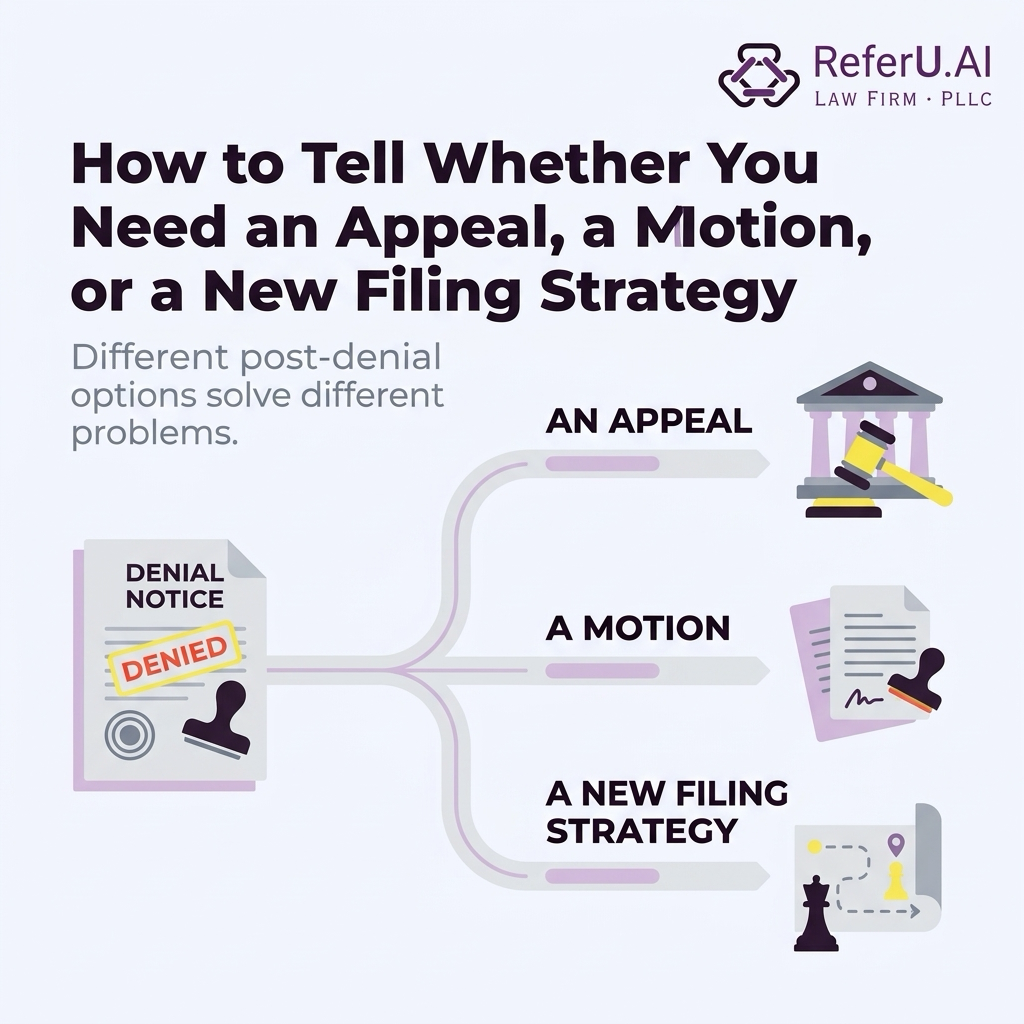
How to Tell Whether You Need an Appeal, a Motion, or a New Filing Strategy
An immigration denial can feel like everything stopped at once. In reality, several different paths may still exist after a bad decision — and choosing the wrong one can cost time, money, and sometimes legal options. The hard part is that “appeal,” “motion,” and “refile” are not interchangeable terms. Each one serves a different purpose, follows different deadlines, and fits different kinds of problems.
In this post you’ll learn how to tell the difference between an appeal, a motion to reopen, a motion to reconsider, and a new filing strategy. You’ll also see how these options tend to play out in immigration court, before the Board of Immigration Appeals, and in USCIS cases. If you are looking for a broader overview of what happens after a denial, this guide on what comes after an immigration appeal or reopening request can help add context.
Scroll to the bottom for every post in this series.
Step 1: Start With The Type Of Decision You Received
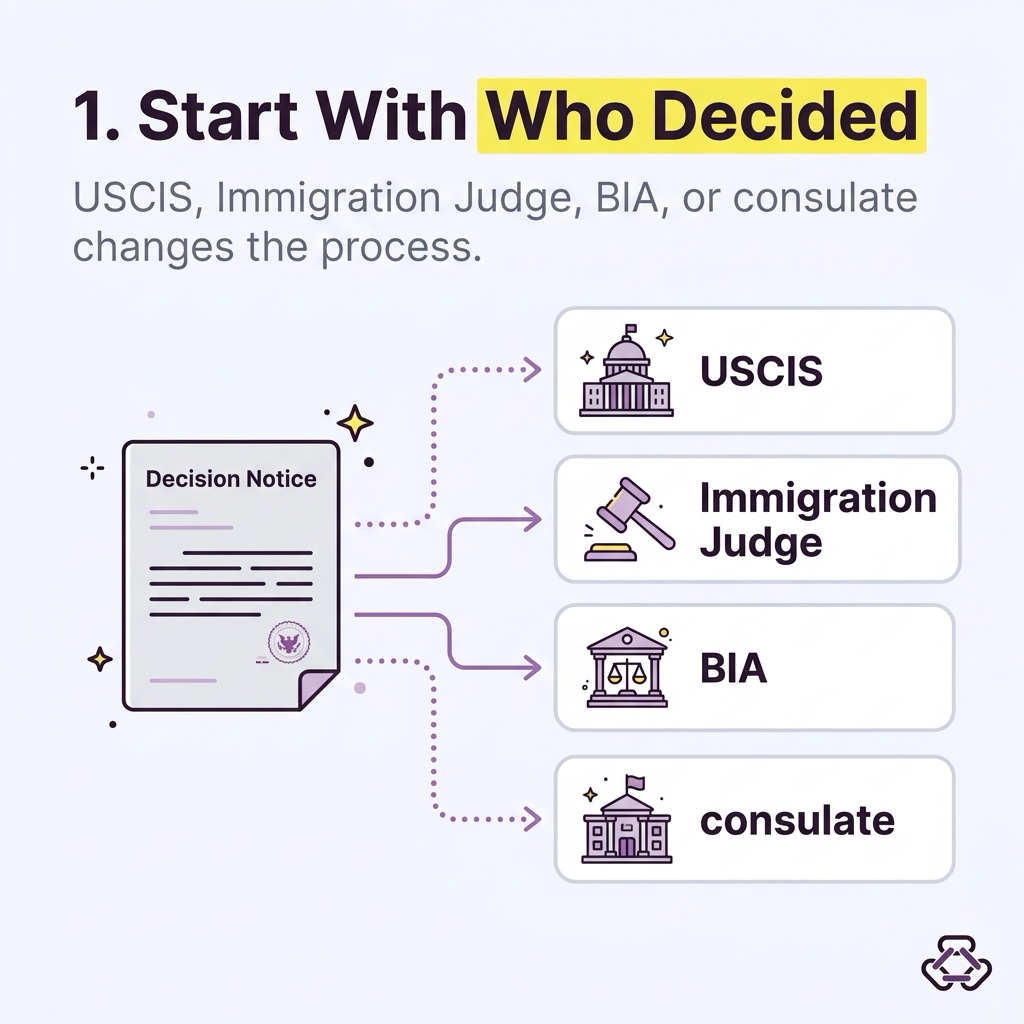
Before anyone can decide whether an appeal or motion makes sense, it helps to identify who made the decision.
That first question matters because the process changes depending on whether the denial came from:
- USCIS
- An Immigration Judge
- The Board of Immigration Appeals (BIA)
- A U.S. consulate abroad
For example, USCIS uses Form I-290B for many appeals and motions, but not all case types qualify for appeal, and some denials allow only a motion or a refiling option. USCIS explains that some decisions can be appealed to the Administrative Appeals Office (AAO), some can be challenged through a motion to reopen or reconsider, and some do not have an appeal route at all. USCIS, USCIS
If the decision came from an Immigration Judge, an appeal to the BIA is generally filed on Form EOIR-26, and the deadline is generally 30 calendar days from the oral decision or the mailing of the written decision. EOIR Policy Manual Appendix C, EOIR BIA Practice Manual
If the BIA already decided the appeal, the next issue often becomes whether a motion to reopen or motion to reconsider exists, rather than a second appeal to the same tribunal. EOIR BIA Practice Manual
Step 2: Understand What An Appeal Actually Does
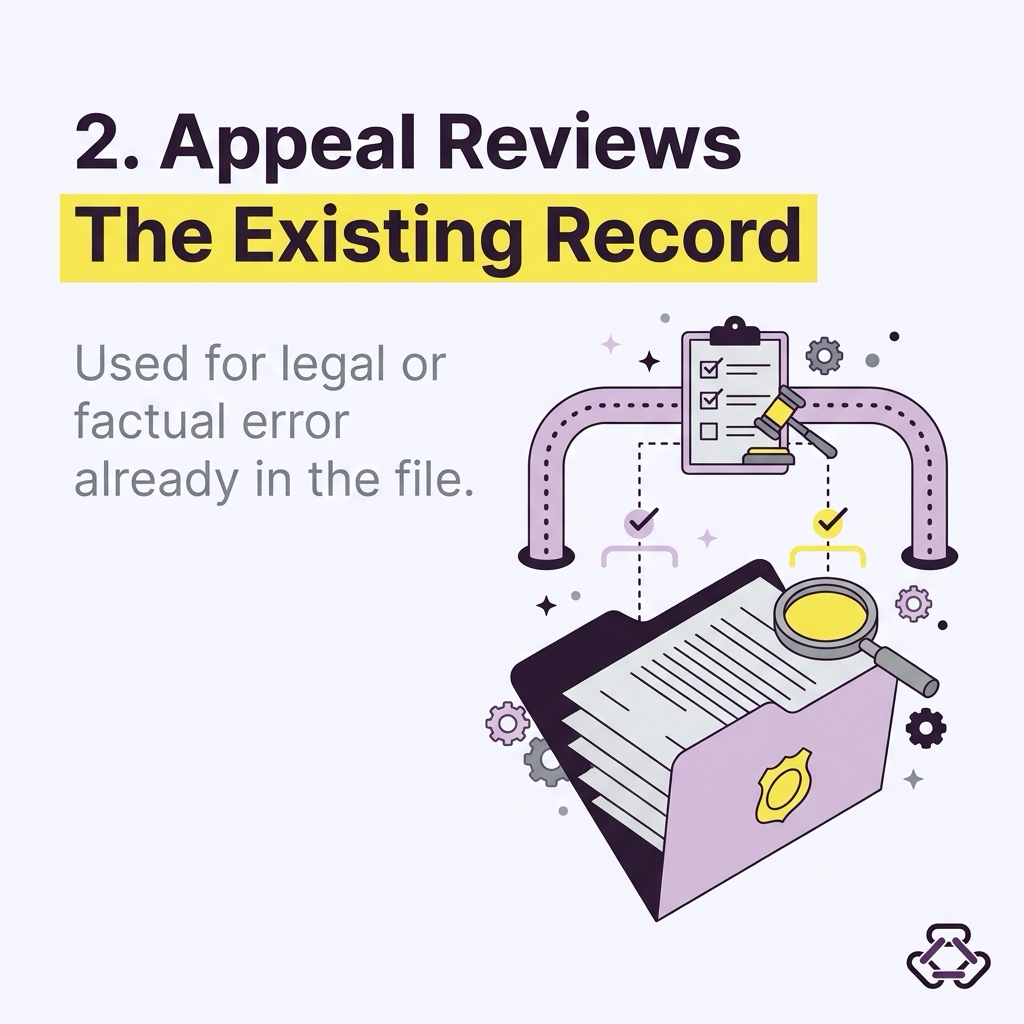
An appeal argues that the original decision-maker got something wrong and asks a higher authority to review that decision.
In immigration law, an appeal usually focuses on whether the earlier decision involved:
- a legal error,
- a factual error based on the record already submitted,
- or an incorrect application of the law to the facts.
That last part is important. Appeals are usually not the place to add brand-new evidence that never made it into the original record. If the real issue is missing documentation, changed facts, or new developments, an appeal may not be the cleanest procedural fit.
In USCIS matters, a timely appeal often goes through an initial field review first. USCIS states that the office that made the original decision reviews the filing and may treat it as a motion and take favorable action before forwarding it to the AAO. USCIS
In immigration court matters, an appeal to the BIA can be appropriate where the Immigration Judge may have:
- applied the wrong legal standard,
- misunderstood the record,
- made a harmful legal ruling,
- or denied relief despite evidence already in the record supporting eligibility.
If your case turns on whether the judge or officer got the law wrong based on what was already filed, that often points more toward an appeal than a new submission.
Step 3: Know When A Motion To Reopen May Fit Better
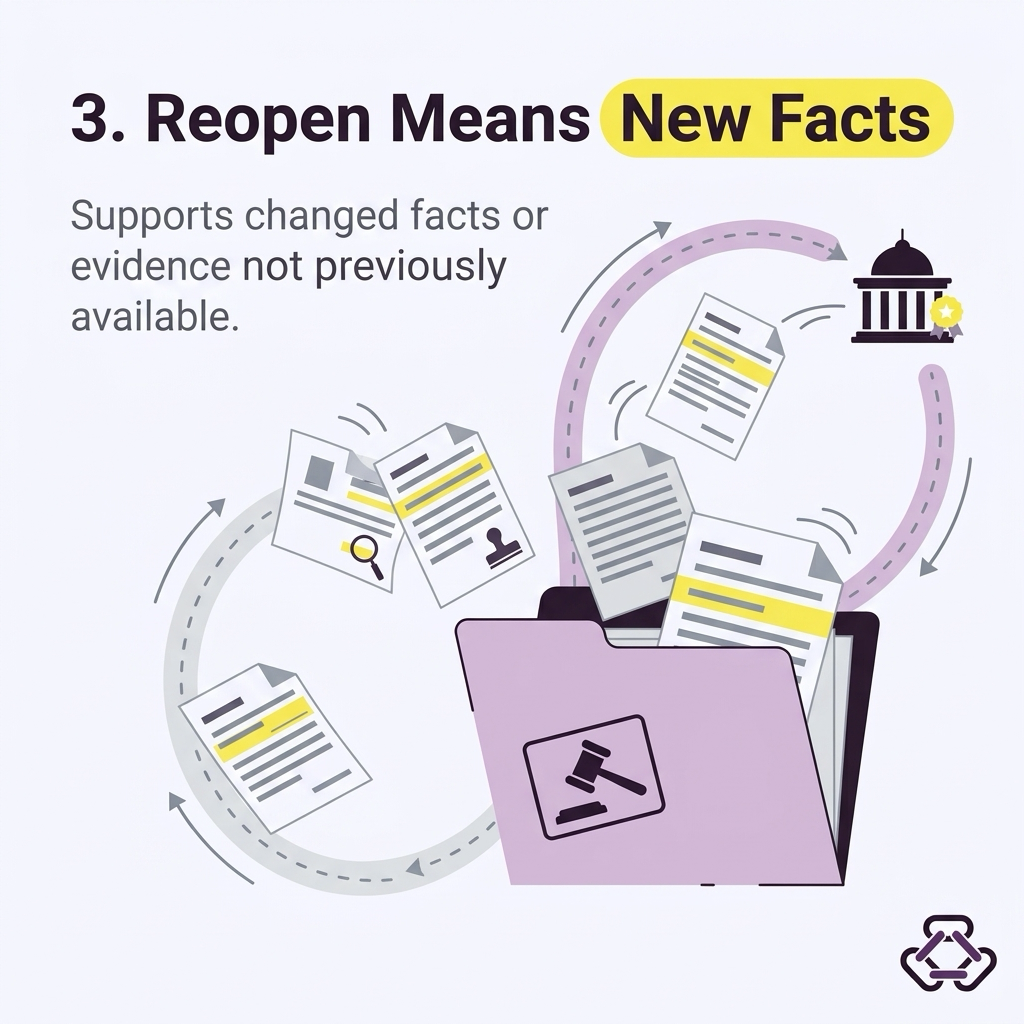
A motion to reopen is different from an appeal. It generally asks the same tribunal or agency to take another look because of new facts or new evidence that was not previously available.
The BIA describes a motion to reopen as a filing based on new facts supported by affidavits or other evidentiary material. In most BIA matters, such a motion is generally due within 90 days of the final administrative order, subject to exceptions. EOIR Policy Manual Appendix C, EOIR BIA Practice Manual
USCIS also recognizes motions to reopen where the filer is presenting new facts and supporting documentation. For many I-290B cases, the filing period is generally 30 days, or 33 days if the decision was mailed, and USCIS notes limited flexibility for some late-filed motions to reopen where the delay was reasonable and beyond the filer’s control. USCIS, USCIS
A motion to reopen often comes up where:
- evidence existed but was not reasonably available earlier,
- country conditions changed,
- a conviction was vacated or modified,
- a notice problem affected the hearing,
- or a key factual development happened after the denial.
Here is the practical shorthand:
Appeal = “The decision was wrong on the record.”
Motion to reopen = “The record changed, or important facts were missing for a valid reason.”
That distinction can be critical in immigration cases involving new hardship evidence, new qualifying relationships, updated country-condition materials, or corrected documentation.
Step 4: Recognize When A Motion To Reconsider Is The Better Match
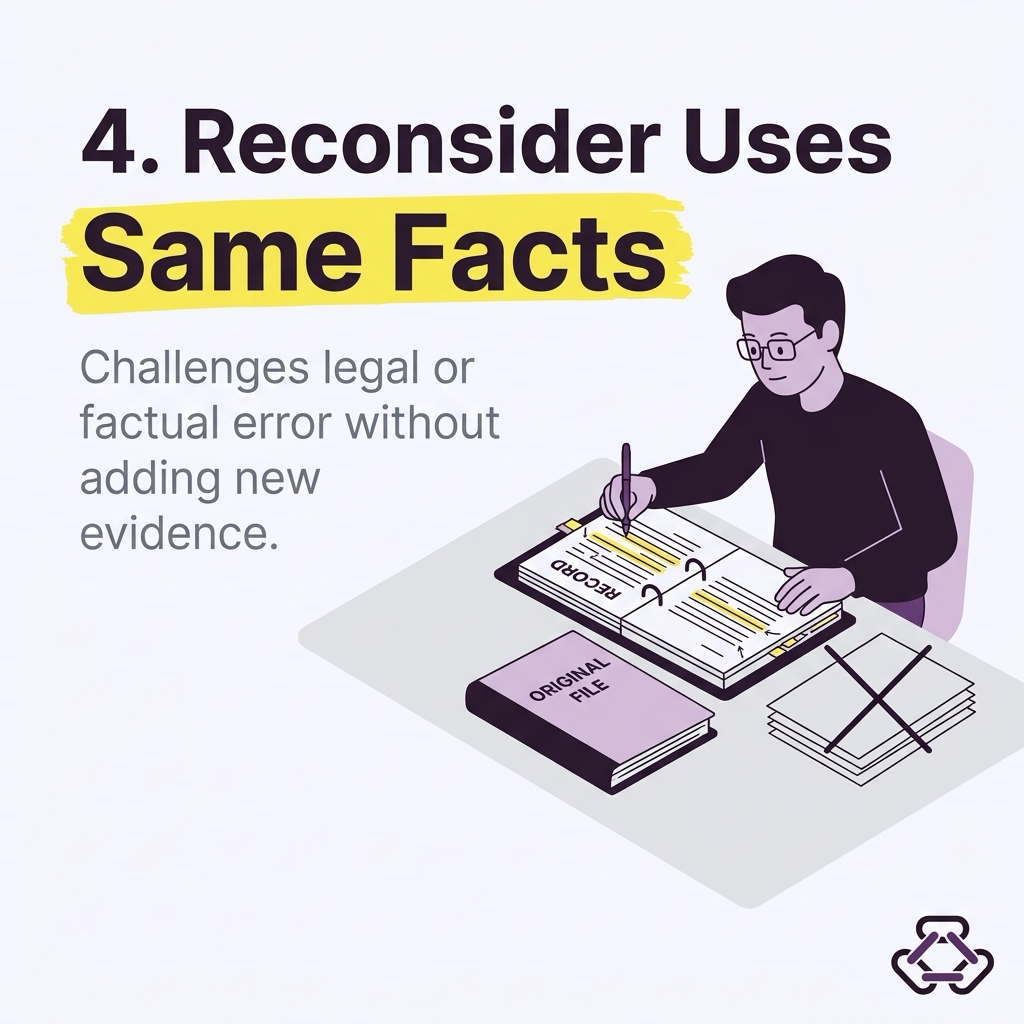
A motion to reconsider is narrower. It is not about new evidence. It is about arguing that the decision-maker made an error of law or fact based on the existing record.
The BIA states that a motion to reconsider identifies an error in law or fact in a prior Board decision, or identifies a change in law affecting that decision, and asks the Board to re-examine the ruling. It is based on the existing record and does not seek to introduce new facts or evidence. In general, it is due within 30 days of the BIA’s decision. EOIR BIA Practice Manual, EOIR Policy Manual Appendix C
USCIS follows a similar framework. A motion to reconsider on Form I-290B typically argues that the unfavorable decision was incorrect based on the evidence already in the record and the law or policy in effect at the time of decision. USCIS Policy Manual, USCIS AAO Practice Manual
A motion to reconsider may make more sense where:
- the officer cited the wrong statute or regulation,
- the judge applied the wrong legal test,
- the decision overlooked evidence already in the file,
- or a new case decision changed the controlling law.
In simple terms:
Motion to reopen = new facts
Motion to reconsider = same facts, legal or factual error on the existing record
Some filings combine both theories, but that only works where both actually apply.
Step 5: See When A New Filing Strategy May Be Smarter Than Fighting The Old Decision
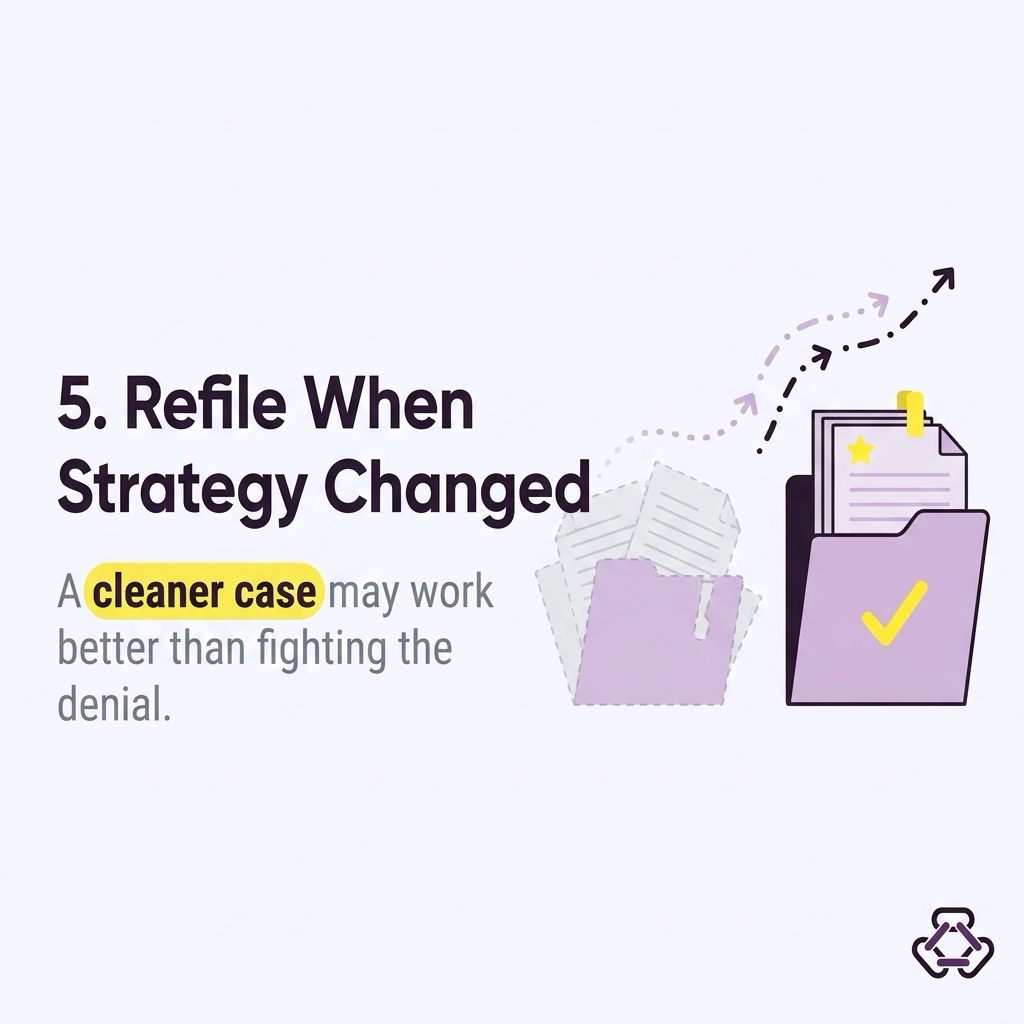
Sometimes the best path is not an appeal and not a motion. Sometimes the cleaner option is a new filing strategy.
That can happen where:
- the original filing was weak or incomplete,
- the applicant is now eligible under a different category,
- the denial was based on a curable technical issue,
- the prior record is difficult to defend on review,
- or the appeal timeline is technically available but strategically unattractive.
For example, if a petition was denied because the evidence package was thin, and the person now has stronger records, better affidavits, updated expert materials, or a different basis for eligibility, a new filing may produce a better procedural posture than arguing over the old denial.
The same idea sometimes appears in family-based, humanitarian, and employment-based matters. A person might refile with:
- stronger hardship evidence,
- clearer proof of bona fides,
- revised legal theory,
- updated country-condition evidence,
- or additional corroboration that addresses the exact reason for denial.
This is where strategy becomes less about “Can I challenge the denial?” and more about “Which path gives the facts the clearest presentation?”
An attorney may help compare:
- the standard of review on appeal,
- the evidentiary limits of a motion,
- filing fees and timing,
- ongoing status issues,
- and whether a new filing creates a cleaner, stronger record.
Step 6: Watch The Deadline Problem Closely
Immigration post-decision options often move on short timelines.
A few of the most important official deadlines include:
- BIA appeal from an Immigration Judge decision: generally 30 days from the oral or mailed decision. EOIR Policy Manual Appendix C
- BIA motion to reopen: generally 90 days from the final administrative order, with exceptions. EOIR Policy Manual Appendix C
- BIA motion to reconsider: generally 30 days from the Board’s decision. EOIR BIA Practice Manual
- Many USCIS I-290B appeals or motions: generally 30 days, or 33 days if mailed. USCIS, USCIS AAO Practice Manual
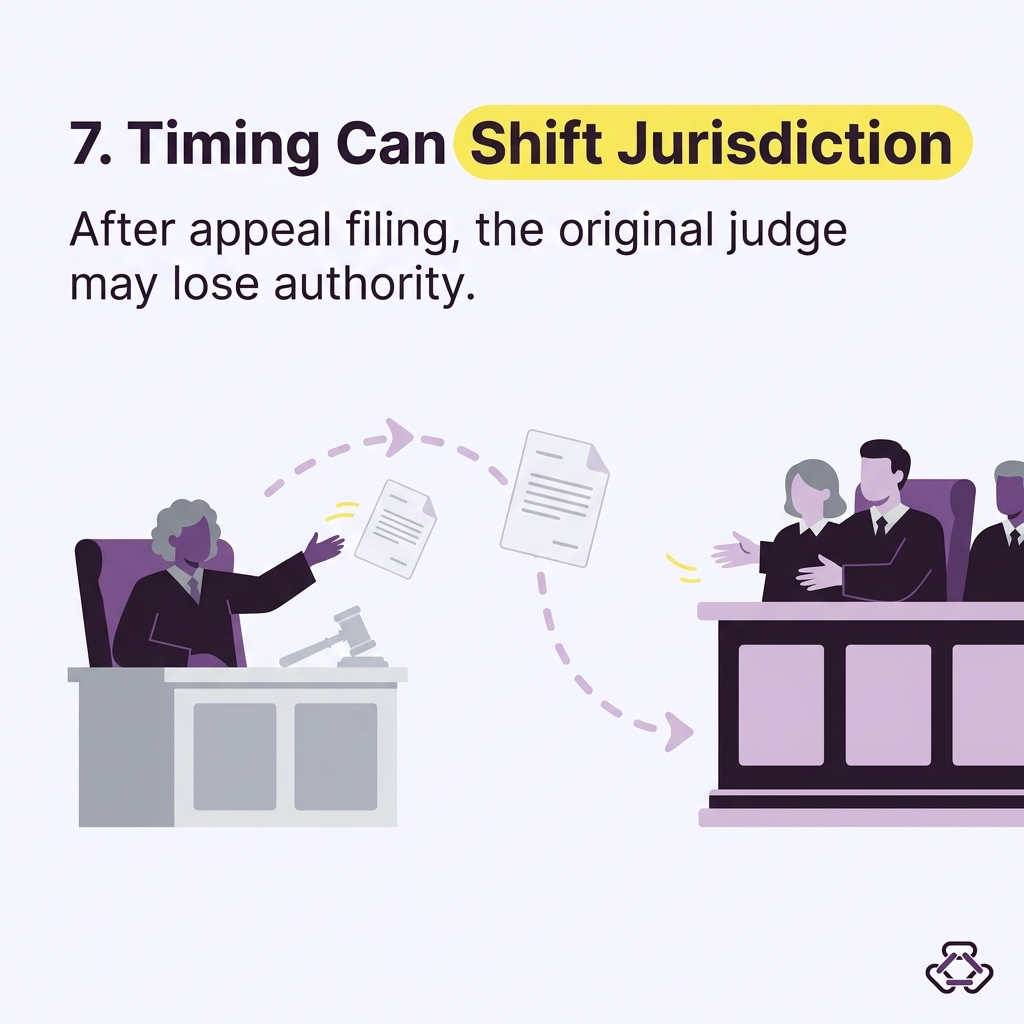
There is another procedural wrinkle people often miss: jurisdiction changes once an appeal is filed. EOIR explains that once an appeal is filed with the Board, the Immigration Judge generally no longer has jurisdiction to entertain a motion to reopen or reconsider in that same matter. A motion filed with the Board while an appeal is pending is often treated as a motion to remand instead. EOIR BIA Practice Manual, EOIR BIA Practice Manual
That is one reason timing and sequencing matter so much. The right filing in the wrong place, or at the wrong time, can create avoidable complications.
Step 7: Ask What Problem You Are Really Trying To Fix
A practical way to sort these options is to ask one direct question:
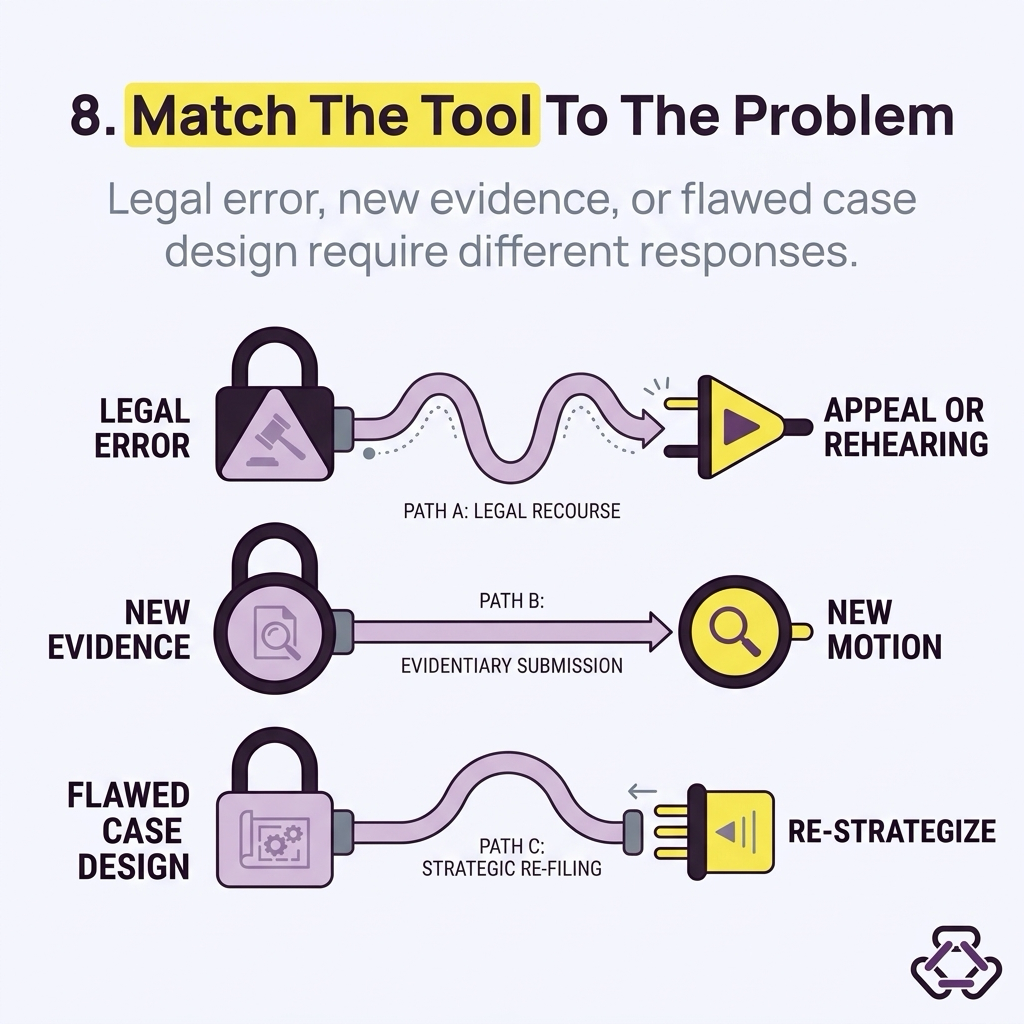
Is The Problem Legal Error, Missing Evidence, Or Overall Case Design?
If the answer is legal error, an appeal or motion to reconsider may be the stronger procedural fit.
If the answer is new evidence or changed facts, a motion to reopen may fit better.
If the answer is the entire presentation was flawed, a new filing strategy may be the more effective path.
Here is a simple framework:
Appeal Often Fits When
- the judge or officer applied the wrong law,
- the written decision misread the existing record,
- the denial contradicts the evidence already submitted,
- or the issue is primarily review of the prior decision.
Motion To Reopen Often Fits When
- important new evidence now exists,
- conditions changed after the decision,
- prior counsel or notice problems affected the record,
- or a factual development changes eligibility.
Motion To Reconsider Often Fits When
- there is a specific factual or legal error in the written decision,
- the law changed in a way that affects the decision,
- or the agency overlooked authority already in the record.
New Filing Strategy Often Fits When
- the prior application was poorly positioned,
- another case type offers a better fit,
- the denial is easier to solve with a cleaner evidentiary package,
- or review options exist but may not be the most efficient route.
Common Situations Where People Get The Category Wrong
One of the most common mistakes is filing an appeal when the real issue is missing evidence.
Another is filing a motion to reconsider and attaching lots of new documentation. That often clashes with the purpose of reconsideration, which is tied to the existing record rather than new facts. The BIA and USCIS both draw that distinction clearly. EOIR BIA Practice Manual, USCIS AAO Practice Manual
A third problem is assuming that every denial can be appealed. USCIS expressly notes that not every adverse decision has an appeal path, and in some categories a motion or a different filing route may be the only option. USCIS, USCIS
People also sometimes assume that filing something automatically stops removal or pauses the effect of the decision. In many contexts, that is not how it works. EOIR states that a motion to reconsider does not automatically stay removal, and stay requests follow separate rules. EOIR BIA Practice Manual, EOIR BIA Practice Manual
Why Filing Strategy Matters More Than Labels
A lot of people focus on the label: appeal, reopen, reconsider, refile. But the more important issue is often fit.
A strong immigration strategy usually lines up four things:
- The decision-maker
- The procedural tool available
- The actual problem in the prior case
- The evidence and timing available now
That kind of fit can be hard to see from the denial notice alone. Two people with similar-looking denials may have completely different next steps because one has a reviewable legal issue, while the other has new facts that were never presented, and a third may be better served by building a fresh record altogether.
This is especially true in immigration matters because the system is fragmented across USCIS, Immigration Courts, the BIA, the AAO, and sometimes federal court review after administrative options are exhausted. Each path comes with its own jurisdiction, deadlines, forms, fees, and evidentiary rules. EOIR also notes that there is no official BIA motion form for motions to reopen or reconsider, and the Notice of Appeal form is not used for motions before the Board. EOIR Forms, EOIR BIA Practice Manual
What To Bring To An Attorney When You Are Comparing Options
If you are trying to sort out appeal-versus-motion-versus-refile, an attorney can often evaluate the issue faster when they can review:
- the full denial or decision notice,
- the date on the decision and the date it was received,
- everything that was filed originally,
- any hearing transcript or briefing notice,
- new evidence that did not make it into the original record,
- prior counsel communications if relevant,
- and any upcoming deadlines, court dates, or reporting obligations.
The key question is not only whether a filing is possible. It is whether the filing fits the facts, the law, and the procedural posture of the case.
That is one reason many people look for counsel with documented experience in highly similar matters, not just general immigration practice. A post-decision strategy often turns on nuance: which tribunal has jurisdiction, whether the issue is record-based or evidence-based, whether a remand request is more appropriate than a motion, and whether a new filing creates a stronger path than trying to revive the old one.
The Bottom Line
An appeal, a motion, and a new filing strategy all sound like ways to “fight a denial,” but they do very different jobs.
- An appeal usually argues the decision was wrong based on the existing record.
- A motion to reopen usually brings in new facts or evidence.
- A motion to reconsider usually points to legal or factual error on the current record.
- A new filing strategy often comes into focus when the prior case needs a cleaner structure, stronger evidence, or a different legal path.
In general terms, the real issue is less about picking the most aggressive option and more about identifying the one that actually matches the problem in the case.
Visit ReferU.AI to get matched with an attorney who has demonstrable experience in cases like yours — for free.
