Table of Contents
- 10 Questions People Ask After an Immigration Judge or USCIS Denial
- 1. Is A Denial The Same Thing As A Final End To My Case?
- 2. Can I Appeal This Decision?
- 3. How Long Do I Have To Challenge The Denial?
- 4. What Is The Difference Between An Appeal, A Motion To Reopen, And A Motion To Reconsider?
- Appeal
- Motion To Reopen
- Motion To Reconsider
- 5. Does Filing An Appeal Or Motion Stop Removal, Deportation, Or Other Consequences?
- 6. What If The Government Made A Mistake Or Ignored Important Evidence?
- 7. Can I File Again Instead Of Appealing?
- 8. How Much Does An Immigration Appeal Cost?
- 9. How Do I Check The Status Of My Appeal Or Motion?
- 10. Do I Really Need An Immigration Lawyer After A Denial?
- Why Timing And Fit Matter So Much After A Denial
- Final Thoughts

Type
Great Grandchild
Status
Approved
Title (YouTube)
Images Failed (Social)
Images Failed (Social)
Do not index
Publish Date (TikTok)
Apr 22, 2027 07:15
Videos Post IDs (Social)
Hashtags (Social)
#LegalAdvice #LegalHelp #Immigration #ImmigrationAppeals
Caption
Caption X
Cover

OG Image

Alt Image Text
Flat vector illustration of immigration judge and USCIS denial appeal options, showing a person reviewing a denial letter with court, document, and deadline symbols.
Images




Videos
Publish Date (Social)
Feb 17, 2027 07:00
Scheduled (Social)
Scheduled (Social)
Images Posted (Social)
Images Posted (Social)
Videos Posted (Social)
Videos Posted (Social)
Featured
Created time
Apr 7, 2026 12:03 AM
Sub-item
Authors
CTA Practice Area (Social)
Immigration
TikTok Failed (Social)
TikTok Failed (Social)
Videos Post Links (Social)
TikTok Post Links (Social)
Images Post IDs (Social)
YT Post ID
Video Pending Manual (Social)
TikTok Posted (Social)
TikTok Posted (Social)
TikTok Post IDs (Social)
Video Cover (Social)
Images Post Links (Social)
First Comment (Social)
Videos Failed (Social)
Videos Failed (Social)
YT Embedded
Images Delete (Social)
Videos Delete (Social)
Carousel Video URL (Social)
10 Questions People Ask After an Immigration Judge or USCIS Denial
A denial from USCIS or an immigration judge can feel like everything stopped at once. For many people, the first reaction is confusion: Is this over? Can I appeal? Do I have to leave? Did the government make a mistake? Those questions are common, and the answers often depend on who issued the denial, what kind of case it was, and what the written decision actually says.
In this post, you’ll learn the 10 questions people ask most often after an immigration denial, how appeals and motions usually work, where the deadlines come from, and why small filing details can affect what options are still available. If you want a broader overview of the process, our guide to what happens after an adverse immigration decision and how appeals or motions fit in adds more context.
Scroll to the bottom for every post in this series.
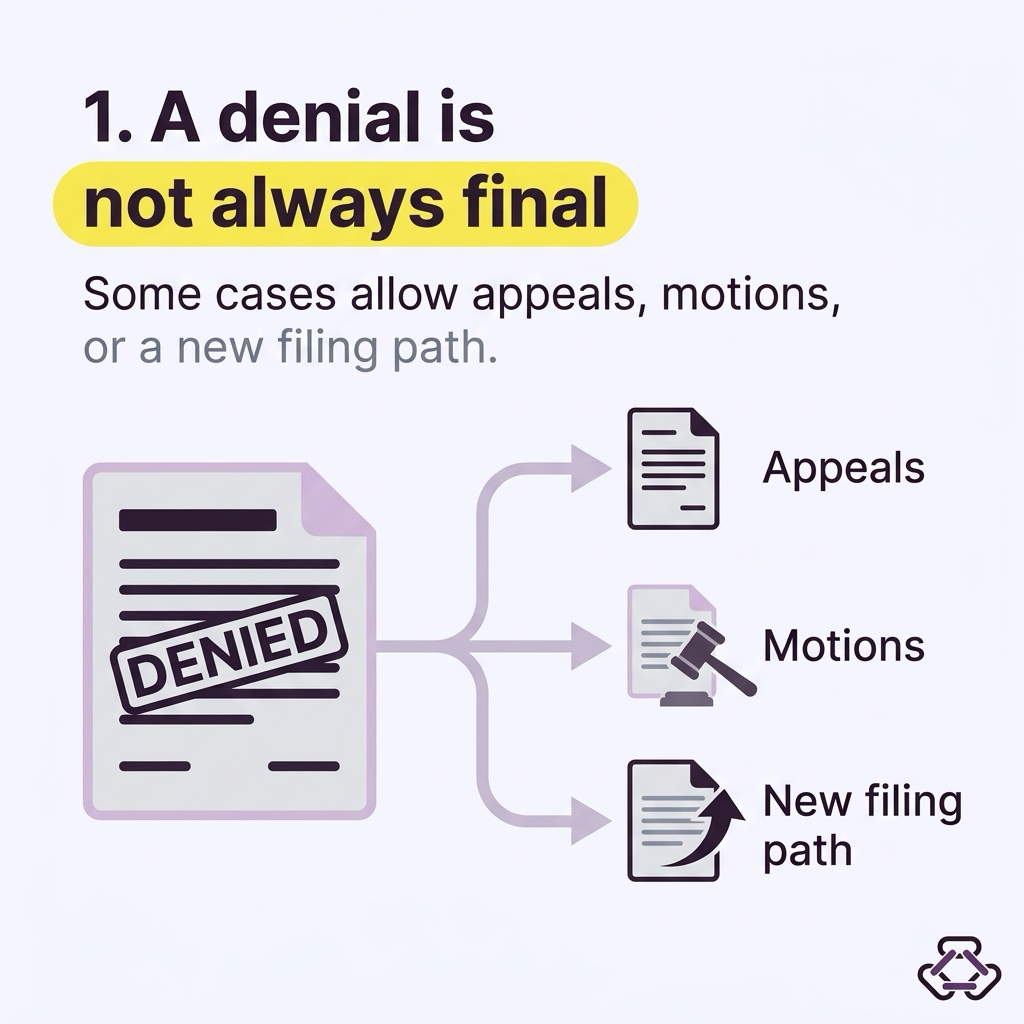
1. Is A Denial The Same Thing As A Final End To My Case?
Not always.
A denial is a negative decision, but it is not automatically the end of every possible path forward. In general terms, some denials can be challenged through an appeal, a motion to reopen, a motion to reconsider, or sometimes a new filing strategy. Which option exists often depends on the agency and the form involved.
For many USCIS decisions, the agency uses Form I-290B for certain appeals and motions. USCIS explains that a person may use that form to file an appeal with the Administrative Appeals Office (AAO) or a motion with the USCIS office that issued the decision, but USCIS also notes that not every denial is appealable. In some categories, a motion may be available even when an appeal is not. USCIS also maintains a page showing when Form I-290B can be used and for which benefit types and which benefit requests allow an appeal or motion.
For immigration court cases, an immigration judge’s decision may often be appealed to the Board of Immigration Appeals (BIA), but that process has its own form, filing rules, and deadlines through the Department of Justice’s Executive Office for Immigration Review (EOIR). The EOIR deadlines appendix lists 30 days for appealing an immigration judge’s decision to the BIA, measured from when the decision is rendered orally or mailed in writing. See the DOJ’s EOIR deadlines table and its page on appealing an immigration judge’s decision.
So the short answer is: a denial may be the end of one filing, but not necessarily the end of all legal options.
2. Can I Appeal This Decision?
Sometimes yes, sometimes no.
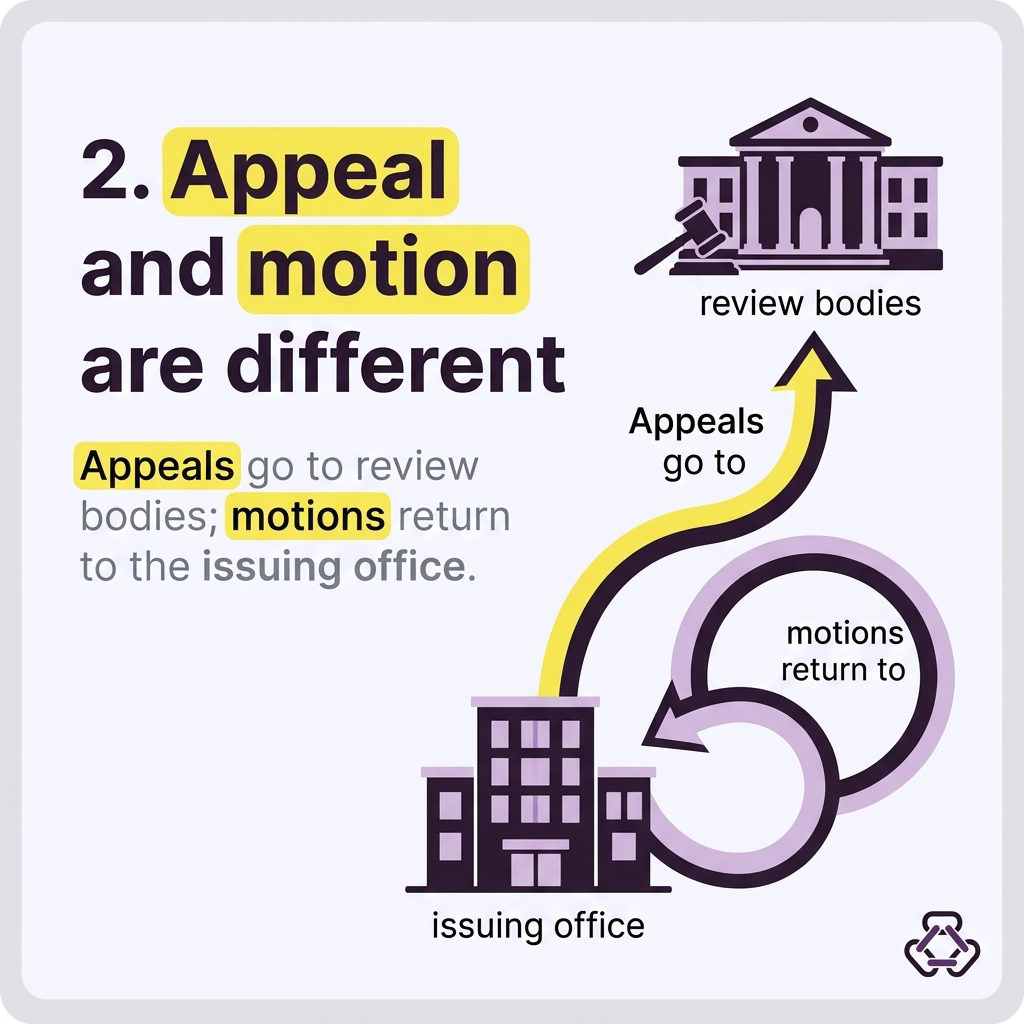
This is one of the biggest sources of confusion because people often use the word “appeal” to mean any challenge to a denial. Legally, though, an appeal is different from a motion.
For USCIS cases:
- An appeal usually asks a higher reviewing body, often the AAO, to review the denial.
- A motion to reopen usually asks the same office that denied the case to look at new facts or new evidence.
- A motion to reconsider usually argues that the office made a legal or policy error based on the existing record.
USCIS explains that distinction in its appeals and motions Q&A and in the AAO practice materials on motions to reopen and reconsider.
For immigration court cases, an appeal to the BIA is often available after an immigration judge’s decision, but the procedural rules are different from USCIS practice. That distinction matters because many people lose time by preparing the wrong filing in the wrong forum.
That’s one reason people often spend time comparing an appeal, a motion, or a fresh filing approach before sending anything out. In many denied cases, that choice affects timing, evidence strategy, and whether the case is even reviewable in the first place.
3. How Long Do I Have To Challenge The Denial?
Usually, not much time.
For many USCIS denials handled through Form I-290B, the filing deadline is 30 calendar days from the date of service, or 33 calendar days if USCIS mailed the decision. USCIS also notes some exceptions, including certain revocation appeals that have a shorter deadline. Importantly, USCIS says the “date of service” is generally the date the decision was mailed, not the date it was received. That detail appears on the official Form I-290B page.
For appeals from an immigration judge to the BIA, EOIR says Form EOIR-26 must be received no later than 30 calendar days after the immigration judge issues an oral decision or mails a written one. The DOJ repeats that rule on its appeal page and in the EOIR policy manual deadlines appendix.
Motions can have different deadlines. For example, the EOIR practice materials list 30 days for many motions to reconsider before the BIA and 90 days for many motions to reopen after a final administrative order. The BIA practice manual excerpts referenced by DOJ reflect those timelines in general terms through the agency’s policy materials and manuals.
Here’s what this often means in real life: people often think they have “about a month,” but the legal clock may start earlier than expected, and the deadline may be based on when the decision was issued or mailed, not when it finally arrived in hand.
4. What Is The Difference Between An Appeal, A Motion To Reopen, And A Motion To Reconsider?
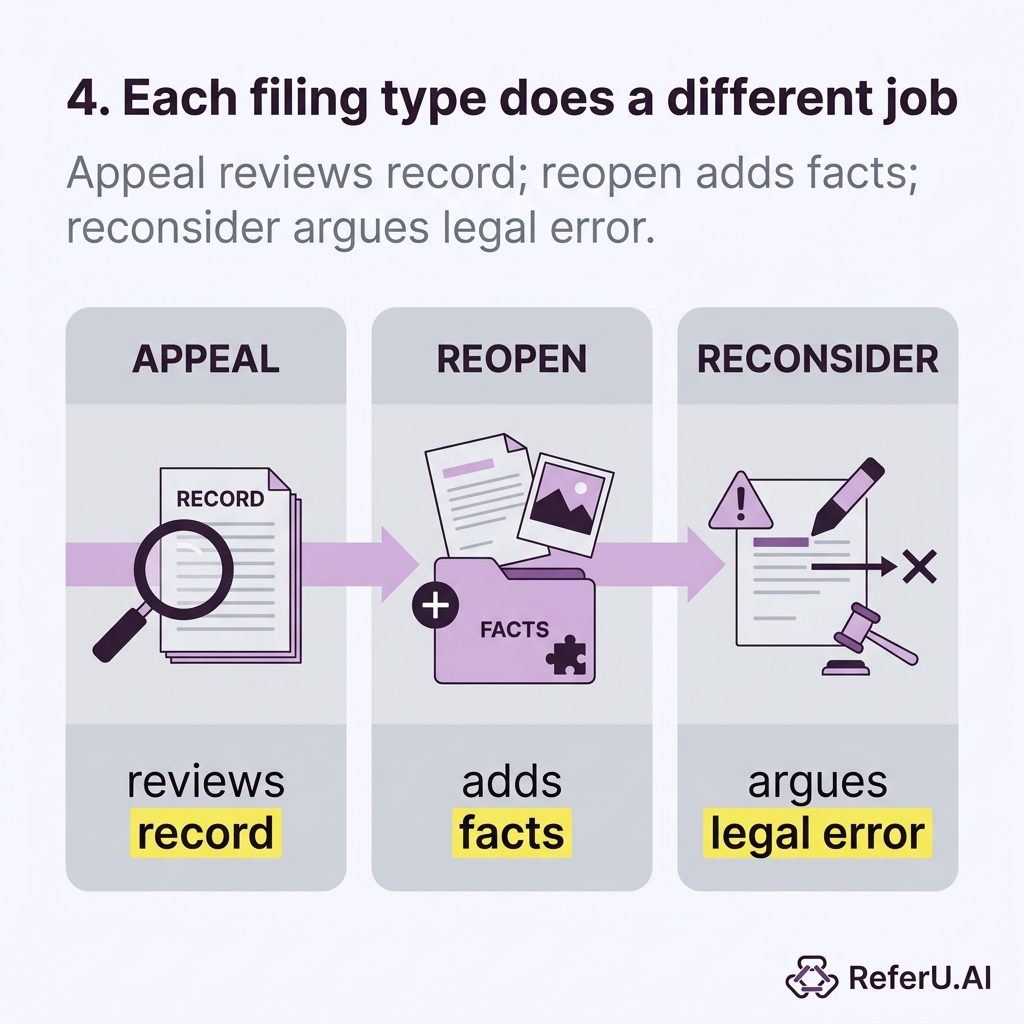
These terms sound similar, but they do very different jobs.
Appeal
An appeal generally asks a reviewing authority to decide whether the denial was wrong based on the existing record, legal standards, and arguments presented. In the USCIS context, that often means review by the AAO. In immigration court, it often means review by the BIA. USCIS describes appeals through Form I-290B, while EOIR explains BIA appeals through Form EOIR-26.
Motion To Reopen
A motion to reopen generally says: there are new facts, new evidence, or changed circumstances that were not adequately considered before. USCIS explains that motions are directed to the office that issued the unfavorable decision, and motions to reopen focus on new facts supported by documentary evidence. See USCIS’s appeals and motions Q&A and AAO practice manual section on motions.
Motion To Reconsider
A motion to reconsider generally says: the decision misapplied the law, policy, or record that already existed. USCIS describes reconsideration as a request for review based on an incorrect application of law or policy and supported by pertinent authority. That framework appears in the same USCIS motions guidance.
If you want a deeper walkthrough of how these paths differ, it often helps to read more about the difference between challenging a denial through an appeal versus reopening or reworking the case strategy before deciding which label actually fits the problem.
5. Does Filing An Appeal Or Motion Stop Removal, Deportation, Or Other Consequences?
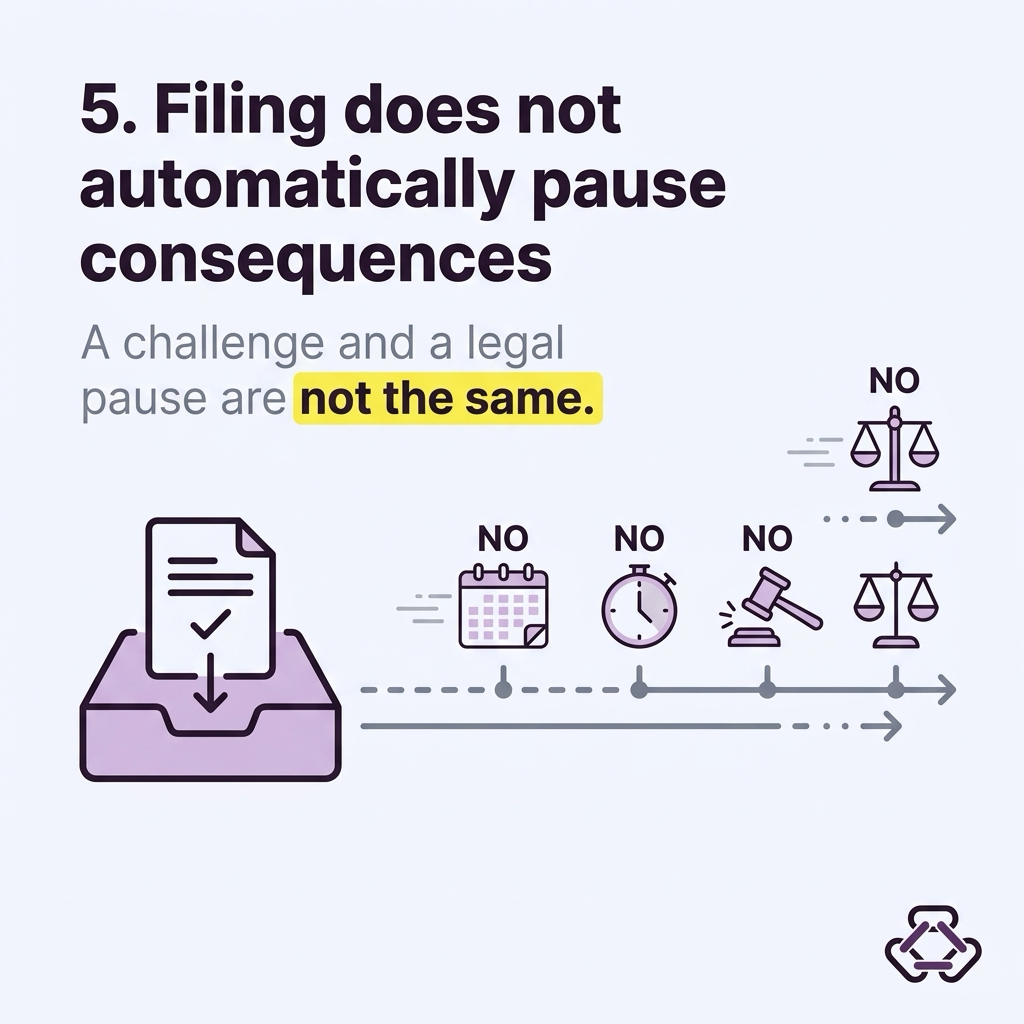
Not automatically.
This is one of the most sensitive questions after a denial, especially if the case involves removal proceedings, status expiration, work authorization, or travel.
USCIS states in its AAO practice materials that, unless USCIS directs otherwise, filing a motion to reopen or reconsider does not delay the execution of a decision or extend a previously set departure date. That language appears in USCIS’s AAO practice manual chapter on motions.
For immigration court matters, filing an appeal to the BIA can affect whether an immigration judge’s order is considered final for enforcement purposes, but the specific effect can vary based on the type of order, procedural posture, and whether the filing is timely and properly made. Because those details can change the practical consequences, people often look closely at the written order and the court record before assuming they are protected simply because something was filed.
In other words, a filed challenge and a legal “pause” are not always the same thing.
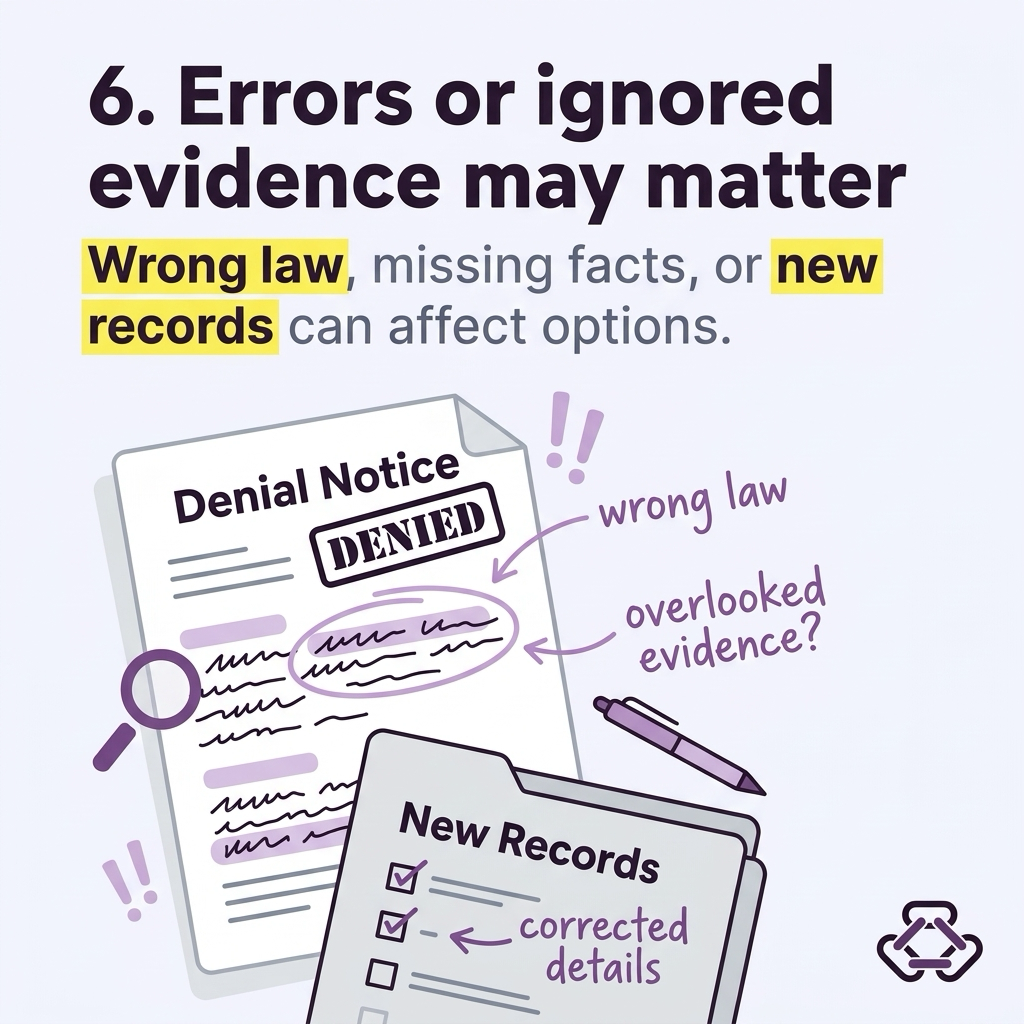
6. What If The Government Made A Mistake Or Ignored Important Evidence?
That may be exactly why appeals and motions exist.
Denials can happen for many reasons: missing evidence, credibility concerns, filing defects, legal interpretation disputes, agency misunderstandings, or changed facts that were never fully documented. Sometimes the issue is obvious from the denial notice. Sometimes it is buried in a short paragraph that cites regulations without much explanation.
A motion to reconsider may fit situations where the argument is, in general terms, “the law or policy was applied incorrectly.” A motion to reopen may fit situations where the issue is new evidence, corrected records, or additional facts. An appeal may fit where a reviewing body can examine whether the denial was legally or factually unsupported under the applicable record.
USCIS also explains that when a timely appeal is filed, the reviewing office conducts an initial field review and may either treat the filing as a motion and approve the case or forward the appeal to the AAO for a new decision. That process is described in USCIS’s appeals and motions Q&A.
That procedural detail matters because a denial is not always revisited in only one way. Sometimes the same filing can trigger a threshold review by the office that made the original decision.
7. Can I File Again Instead Of Appealing?
Sometimes that is the cleaner route.
Not every denied case is best addressed through an appeal or motion. In some matters, the better question is whether the original filing had a curable defect, missing evidence, timing problem, or eligibility issue that might be handled more effectively through a new application or petition.
That does not mean refiling is always available or wise. A new filing can create new timing issues, fee issues, unlawful presence concerns, or consistency problems if the record is not handled carefully. But in some cases, refiling may be more practical than spending months litigating a weak procedural posture.
USCIS itself distinguishes among categories where an appeal is available, where only a motion is available, and where special procedures apply. Its eligibility page for Form I-290B is a useful reminder that “denial” does not automatically equal “appeal.”
This is often where legal strategy becomes highly case-specific: Is the goal to correct the old record, challenge the legal reasoning, or build a stronger new one?
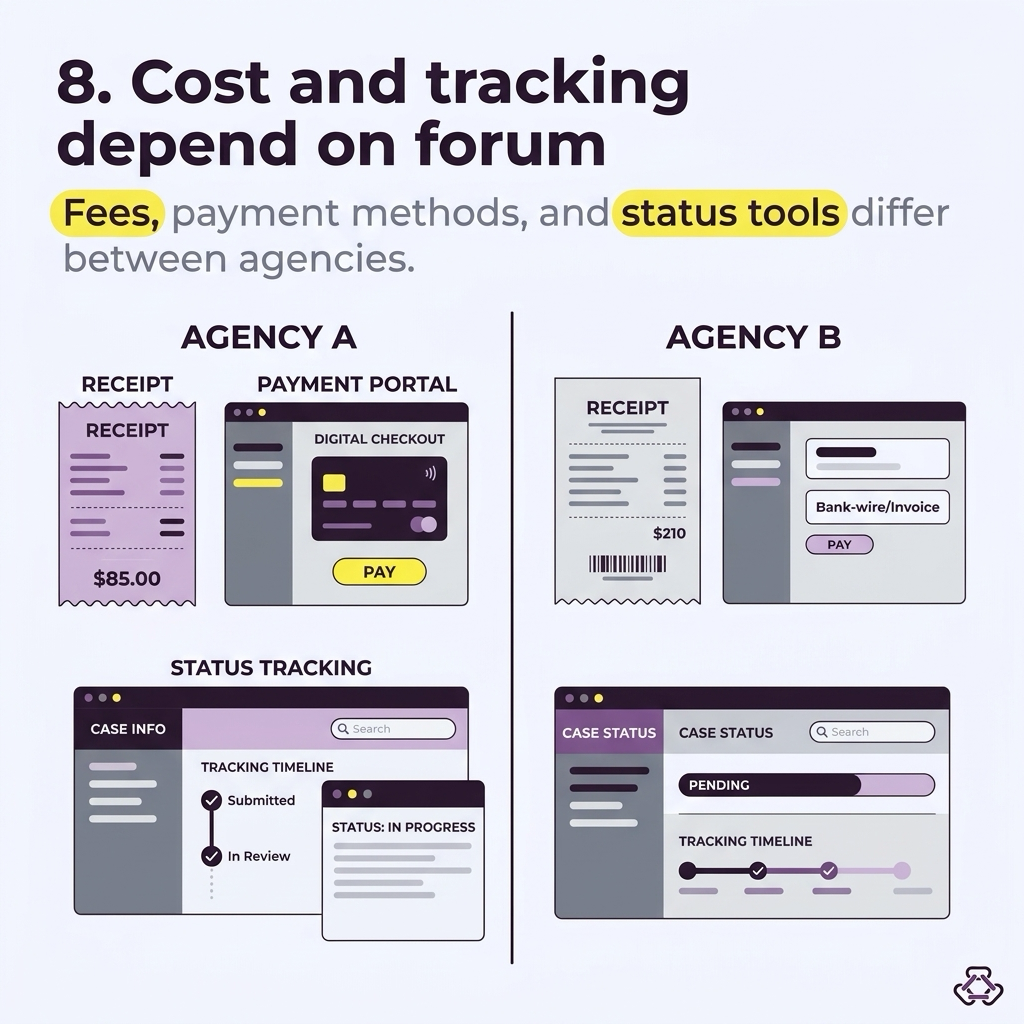
8. How Much Does An Immigration Appeal Cost?
The answer depends on where the case is pending and what kind of filing is being made.
For USCIS matters using Form I-290B, USCIS directs filers to the current Fee Schedule and notes that fees can change, certain cases may be fee exempt, and some filers may be able to request a fee waiver depending on the benefit type. USCIS explains this on the official Form I-290B page, its appeals and motions Q&A, and its fee waiver page.
For BIA appeals from an immigration judge’s decision, the DOJ’s current EOIR fees page lists a $1,030 filing fee for Form EOIR-26 as of early 2026, and DOJ notes that the appeal must be filed with the fee or a completed fee waiver request, Form EOIR-26A, where available. EOIR’s fee page also notes that, as of February 23, 2026, EOIR no longer accepts checks or money orders for immigration fees and instead requires payment through the EOIR Payment Portal. See DOJ’s types of appeals, motions, and required fees, forms and fees page, and appeal instructions for immigration judge decisions.
The larger cost issue, though, is often not just the filing fee. It may include transcripts, records, attorney time, translation, expert evidence, and the opportunity cost of choosing one strategy over another.
9. How Do I Check The Status Of My Appeal Or Motion?
For USCIS cases, many people begin with Case Status Online using the receipt number from their notice. USCIS also says its online tools can help users view processing times, submit certain inquiries, update addresses, and manage case activity through an online account. See USCIS’s pages on checking case status online and the USCIS Contact Center and online tools.
USCIS has also explained that some applicants can see milestone estimates through myProgress in their USCIS online account for certain forms, although those estimates are not the same thing as a final adjudication date. That feature was discussed in USCIS’s update on myProgress for Form I-765 and Form I-131.
For EOIR and BIA matters, status tracking can be less intuitive than the USCIS portal system, and many people rely on notices, attorney access systems, or EOIR case information channels tied to their specific proceeding.
One practical point: if a filing deadline was close, the question is often not just “What does the online status say?” but also “Was the filing actually received in the correct place, in the correct format, with the correct fee?”
10. Do I Really Need An Immigration Lawyer After A Denial?
A denial is often the point where legal representation becomes much more valuable, because post-denial strategy is usually less about filling in blanks and more about spotting procedural traps.
After a denial, the legal questions can include:
- whether the decision is appealable at all,
- whether a motion is more appropriate than an appeal,
- whether the filing deadline already started running,
- whether the denial creates status or removal risks,
- whether a new filing creates contradictions with prior evidence,
- whether the record contains admissions or omissions that now matter more.
Those are not just paperwork questions. They are strategy questions.
Some people first look for “any immigration lawyer.” But many denied cases involve much narrower issues: asylum, family-based petitions, waivers, employment petitions, adjustment problems, prior misrepresentation findings, criminal-history overlap, or removal-order consequences. That is where relevant experience matters. A lawyer who regularly handles highly similar matters may be better positioned to identify whether the next move is an appeal, a motion, or a different path entirely.
That’s also why people often spend time looking for counsel with documented experience based on court records and case similarity, rather than relying on ads or generic directory profiles.
Why Timing And Fit Matter So Much After A Denial
The hardest part after an immigration denial is that the clock can start running while a person is still trying to understand what happened. USCIS and EOIR both publish rules that are highly specific about forms, deadlines, payment methods, and filing locations. Missing one of those technical details can change the available options quickly. USCIS’s official pages on Form I-290B and DOJ’s pages on BIA appeal deadlines and filing requirements make that clear.
At the same time, “hire a lawyer” is often too vague to be useful. In denied immigration cases, people are often trying to find a lawyer with demonstrable experience in cases that look like theirs, not just a lawyer who practices in immigration generally. The difference between a family-based denial, an asylum denial, an adjustment denial, and an immigration judge’s removal order can be enormous.
Final Thoughts
After an immigration judge or USCIS denial, the first 10 questions people ask are usually the right ones: Is this final? Can I appeal? How long do I have? What filing fits my case? Does it stop consequences? Can I refile? How much does it cost? How do I track it? Who can actually help?
The answers often depend on the exact decision notice, the forum, the deadline, and whether the strongest next move is an appeal, a motion, or a different filing strategy. For people trying to understand the bigger picture, it can help to start with a plain-English overview of how immigration appeals, reopening, and next-step options usually work.
Visit ReferU.AI to get matched with an attorney who has demonstrable experience in cases like yours — for free.
