Table of Contents
- 6 Bond Hearing Mistakes That Hurt Release Chances
- Why Bond Hearings Can Turn On Preparation
- 1. Treating The Bond Hearing Like A Mini Trial On The Whole Immigration Case
- 2. Failing To Address Bond Eligibility Before Anything Else
- 3. Showing Up With Little Or No Evidence Of Community Ties
- 4. Ignoring Criminal Records, Arrest Reports, Or Old Incidents
- 5. Not Preparing A Realistic Plan For Release
- 6. Waiting Too Long To Get Legal Help Or Assuming Any Lawyer Will Do
- Other Smaller Mistakes That Still Matter
- Why Families Often Feel Blindsided
- Final Tip: Evidence And Attorney Fit Often Matter More Than Families Expect

Type
Great Grandchild
Status
Approved
Title (YouTube)
Images Failed (Social)
Images Failed (Social)
Do not index
Publish Date (TikTok)
Apr 24, 2027 10:15
Videos Post IDs (Social)
Hashtags (Social)
#LegalAdvice #LegalHelp #Immigration #ImmigrationBond
Caption
Caption X
Cover

OG Image

Alt Image Text
Flat vector illustration of bond hearing mistakes affecting release chances, showing a detained person, judge, and family preparing documents for an immigration bond hearing.
Images




Videos
Publish Date (Social)
Feb 18, 2027 10:30
Scheduled (Social)
Scheduled (Social)
Images Posted (Social)
Images Posted (Social)
Videos Posted (Social)
Videos Posted (Social)
Featured
Created time
Apr 7, 2026 12:02 AM
Sub-item
Authors
CTA Practice Area (Social)
Immigration
TikTok Failed (Social)
TikTok Failed (Social)
Videos Post Links (Social)
TikTok Post Links (Social)
Images Post IDs (Social)
YT Post ID
Video Pending Manual (Social)
TikTok Posted (Social)
TikTok Posted (Social)
TikTok Post IDs (Social)
Video Cover (Social)
Images Post Links (Social)
First Comment (Social)
Videos Failed (Social)
Videos Failed (Social)
YT Embedded
Images Delete (Social)
Videos Delete (Social)
Carousel Video URL (Social)
6 Bond Hearing Mistakes That Hurt Release Chances
When someone is in immigration detention, a bond hearing can feel like the first real opportunity to ask for release. It can also feel confusing, rushed, and deeply stressful for the detained person and their family. In many cases, the outcome turns on details that are easy to overlook.
A bond hearing is separate from the main removal case. The immigration judge is generally focused on a narrower set of questions, including whether the person is eligible for bond and, if so, whether release would present a danger, a flight risk, or a national security concern, as well as what bond amount may be appropriate. The Department of Homeland Security often sets an initial bond first, and then an immigration judge may revisit that decision in a custody redetermination hearing under the applicable regulations and court procedures (EOIR Policy Manual, 8 C.F.R. § 1236.1).
In this post, you’ll learn six bond hearing mistakes that can undercut a release request, why those mistakes matter, and what families often try to gather before the hearing. If you want a broader overview first, this guide on how detention, bond, release, and case strategy fit together gives useful background.
Scroll to the bottom for every post in this series.
Why Bond Hearings Can Turn On Preparation
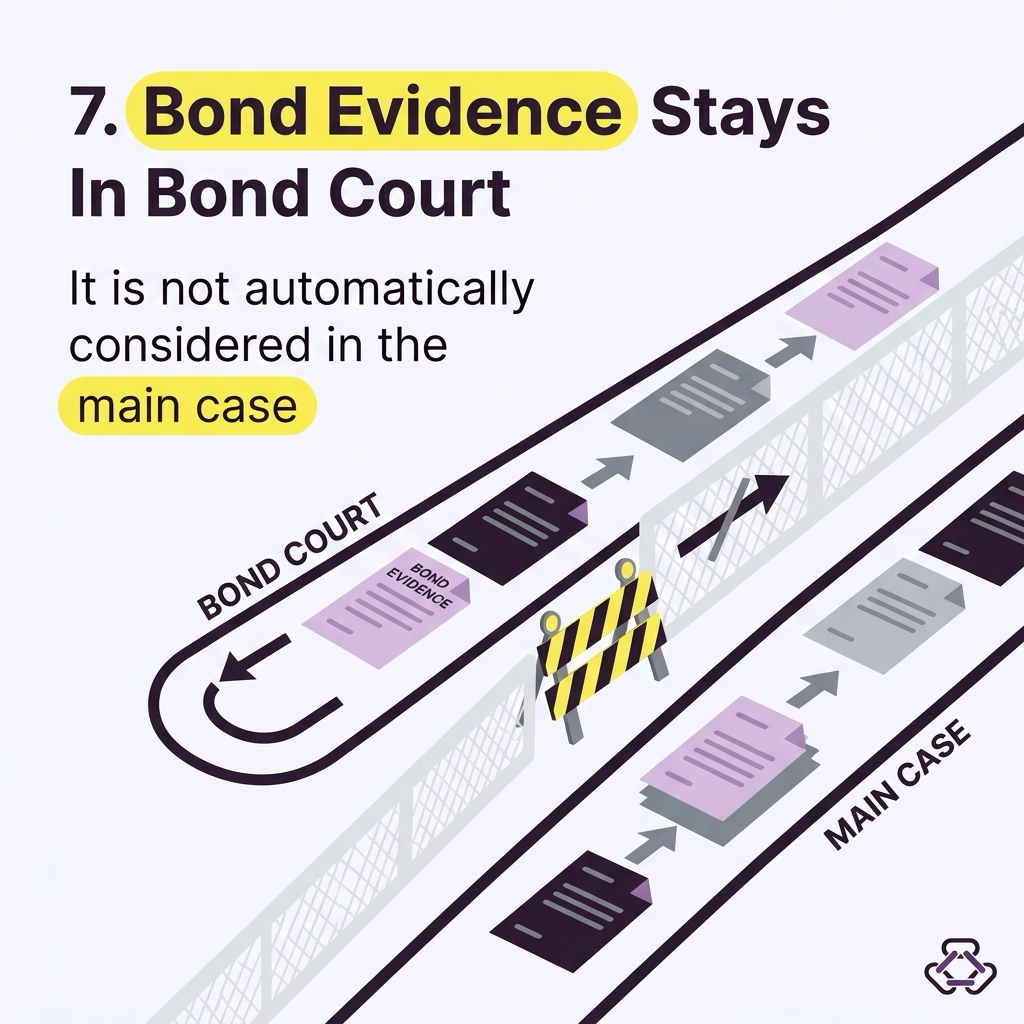
Bond hearings often move quickly. That matters because the judge may be making a release decision based on a limited record, sometimes with only a short window to review documents and hear argument. EOIR explains that bond proceedings are separate from removal proceedings, and evidence submitted in bond proceedings is not automatically considered in the main immigration case unless it is filed there too (EOIR Learn About the Immigration Court).
That separation creates a practical problem: families sometimes assume the judge already knows the person’s background, ties to the community, work history, or the context behind an arrest or immigration history. Often, the record is much thinner than people expect.
The six mistakes below come up again and again in detained immigration cases.
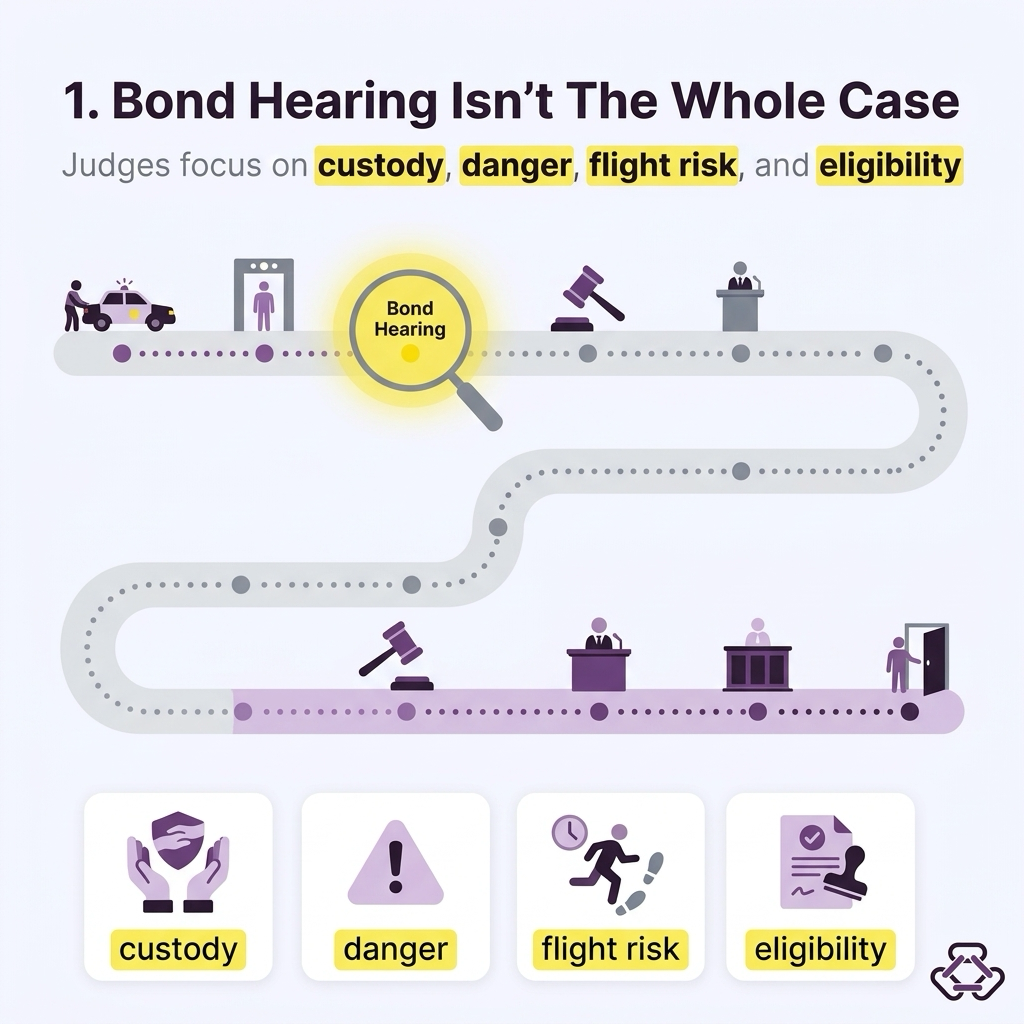
1. Treating The Bond Hearing Like A Mini Trial On The Whole Immigration Case
One common mistake is walking into bond court ready to argue only the underlying immigration case while giving very little attention to the custody issues the judge is actually deciding that day.
In general terms, bond hearings are not the same as merits hearings. EOIR states that the immigration judge considers bond eligibility first and then looks at whether release would pose a danger to persons or property, whether the person is likely to appear for future hearings, and whether there is any national security concern (EOIR Policy Manual).
That means a powerful asylum claim or strong cancellation case may be relevant in context, but it does not automatically answer the judge’s immediate custody questions. Some families spend all of their effort describing why the person fears return and almost none on practical issues like:
- where the person would live after release
- who would support them
- how they would get to future hearings
- whether they have a history of attending court
- whether there is evidence reducing concerns about danger or nonappearance
Here’s what this often means: even when the underlying case has meaningful relief issues, the bond hearing record may still fall short if it does not directly address detention-related concerns.
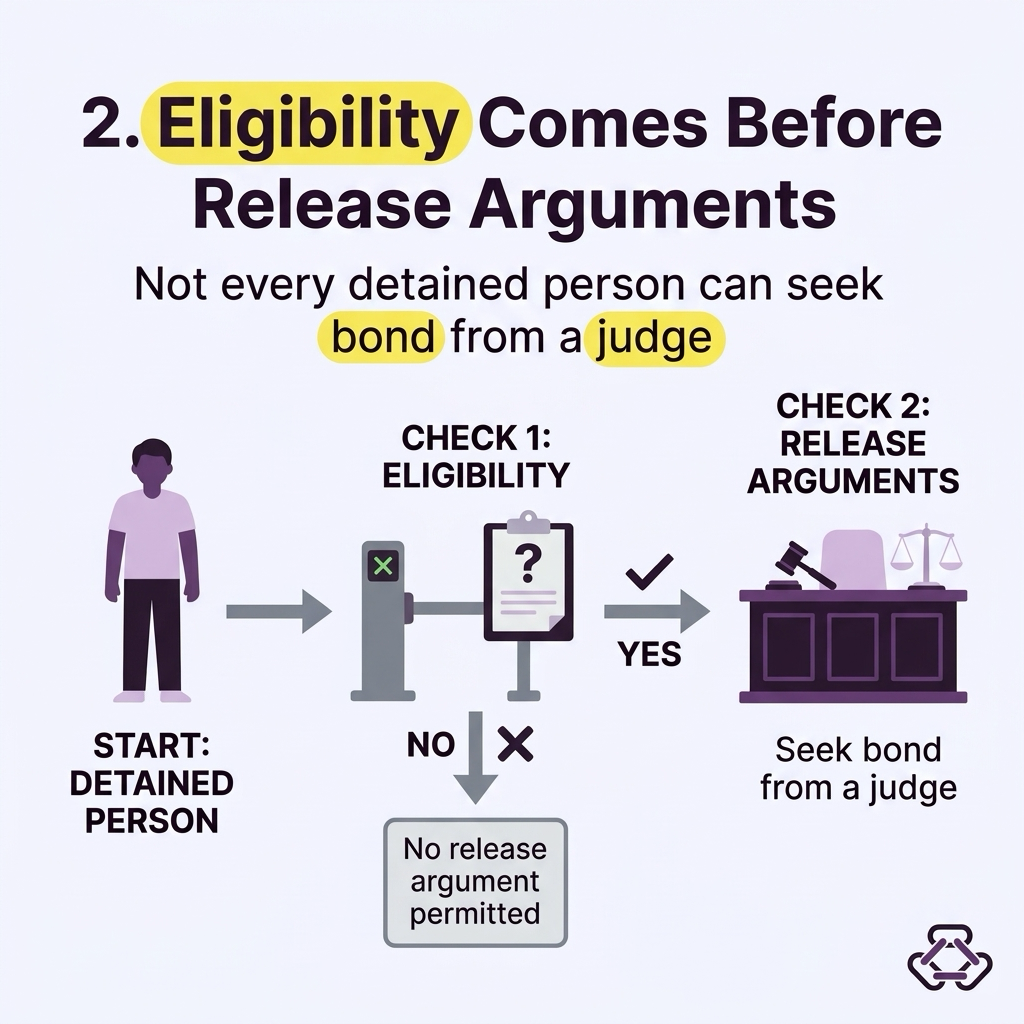
2. Failing To Address Bond Eligibility Before Anything Else
Another major mistake is assuming every detained noncitizen can ask an immigration judge for bond. Bond eligibility can be complicated, and in recent years it has become even more contested.
Under EOIR’s rules, immigration judges generally have authority to conduct bond hearings in certain detention situations, but not all. The regulations also place some people outside the immigration judge’s custody jurisdiction (8 C.F.R. § 1236.1, EOIR Policy Manual). On top of that, advocacy organizations and practice advisories have described ongoing litigation and policy disputes over whether some noncitizens, especially those the government places under INA § 235(b), can obtain bond hearings before immigration judges at all (American Immigration Council, NILC).
As of February 2026, NILC reported that despite a new ICE policy attempting to limit bond eligibility, federal litigation had preserved bond-hearing access in many circumstances while appeals continue (NILC). That is exactly the kind of fast-changing issue that can shape what happens in detention court.
This is one reason families often benefit from reviewing a more complete explanation of custody and release issues before the hearing, including questions about who is and is not eligible for bond, how parole may differ from bond, and how the detention posture affects strategy. If you want that larger picture, this article on understanding detention, custody, release paths, and hearing strategy can help frame the issue.
3. Showing Up With Little Or No Evidence Of Community Ties
A bond hearing is often won or lost on documentation. One of the most damaging mistakes is appearing with only general statements like “he has family here” or “she will go to court,” without exhibits that support those claims.
Bond decisions often turn on classic discretionary factors that immigration adjudicators have considered for years, including family ties in the United States, length of residence, employment history, property or business ties, and a record of appearing when required. Older Board precedent discussing custody factors highlights many of these issues directly (Matter of Guerra, Matter of Patel).
Useful evidence may include:
- letters from relatives, clergy, employers, or community members
- proof of address where the person would live
- birth certificates or marriage certificates showing family relationships
- pay stubs, tax records, or employer letters
- medical records if a family member depends on the detained person
- records showing prior court compliance
- school records for children
- evidence of long residence in the community
Families sometimes assume oral testimony alone will carry the day. Sometimes it helps, but documents often make the record more concrete.
Another practical point matters here: ICE notes that bond requests and related procedures can vary by field office, and detained individuals may also have access to attorney visitation resources that help with document gathering and communication (ICE Attorney Information and Resources). In real life, the mechanics of collecting records while someone is detained can be difficult, which is why preparation often starts as soon as detention begins.
4. Ignoring Criminal Records, Arrest Reports, Or Old Incidents
This is one of the most serious mistakes in any bond case.
If there is any criminal history, arrest history, or allegation of dangerousness, trying to skate past it often backfires. Immigration judges and government attorneys usually have access to records the family may not have seen yet. If the detained person offers a version of events that appears incomplete or inaccurate, credibility can suffer immediately.
In general terms, a criminal record does not end every bond case. But it often changes how the evidence has to be presented. The record may need context, updated court dispositions, proof of dismissal, evidence of rehabilitation, certificates from treatment programs, character letters, or documents clarifying what actually happened. Older immigration precedent recognizes that a criminal record may be relevant, but also points to the importance of examining the seriousness and recency of that conduct along with other equities (Matter of Guerra, Matter of Patel).
Here’s what this often means for families: silence can look worse than explanation. Where there are police reports, convictions, probation issues, dismissed charges, or protective-order allegations, many detained people benefit from having someone analyze exactly what the government is relying on and how to respond to it.
This same issue comes up in bond requests involving immigration violations too. A prior removal order, missed hearing, false claim allegation, or border-related accusation can affect how a judge views danger or flight risk, even if the person’s family sees the situation very differently.
5. Not Preparing A Realistic Plan For Release
Bond hearings are not just about whether the person is sympathetic. They are also about whether release looks structured, credible, and manageable.
A judge may want to know where the person would live, how they would travel to future hearings, who would help them comply with court dates, whether they have a stable sponsor, and whether the bond amount is financially realistic. The regulations authorize the immigration judge to determine the amount of bond, and the bond amount cannot be lower than the regulatory minimum in covered cases (8 C.F.R. § 1003.19, 8 C.F.R. § 103.6).
Families are often surprised to learn how operational some of these questions can be. ICE currently states that immigration bonds may be posted through ERO bond acceptance offices and through its CeBONDS system, with field-office procedures and hours that matter in practice (ICE Post a Bond, ICE Attorney Information and Resources).
A weak release plan can hurt in two different ways:
- It may increase the judge’s concern about future appearance.
- It may result in a bond amount the family cannot realistically post.
Some people in similar situations prepare sponsor declarations, housing letters, transportation plans, and proof of funds or family support. Even when the bond is granted, the post-hearing logistics can be stressful, especially if the family has not figured out who will serve as obligor, where payment can be made, or how fast release processing may happen.
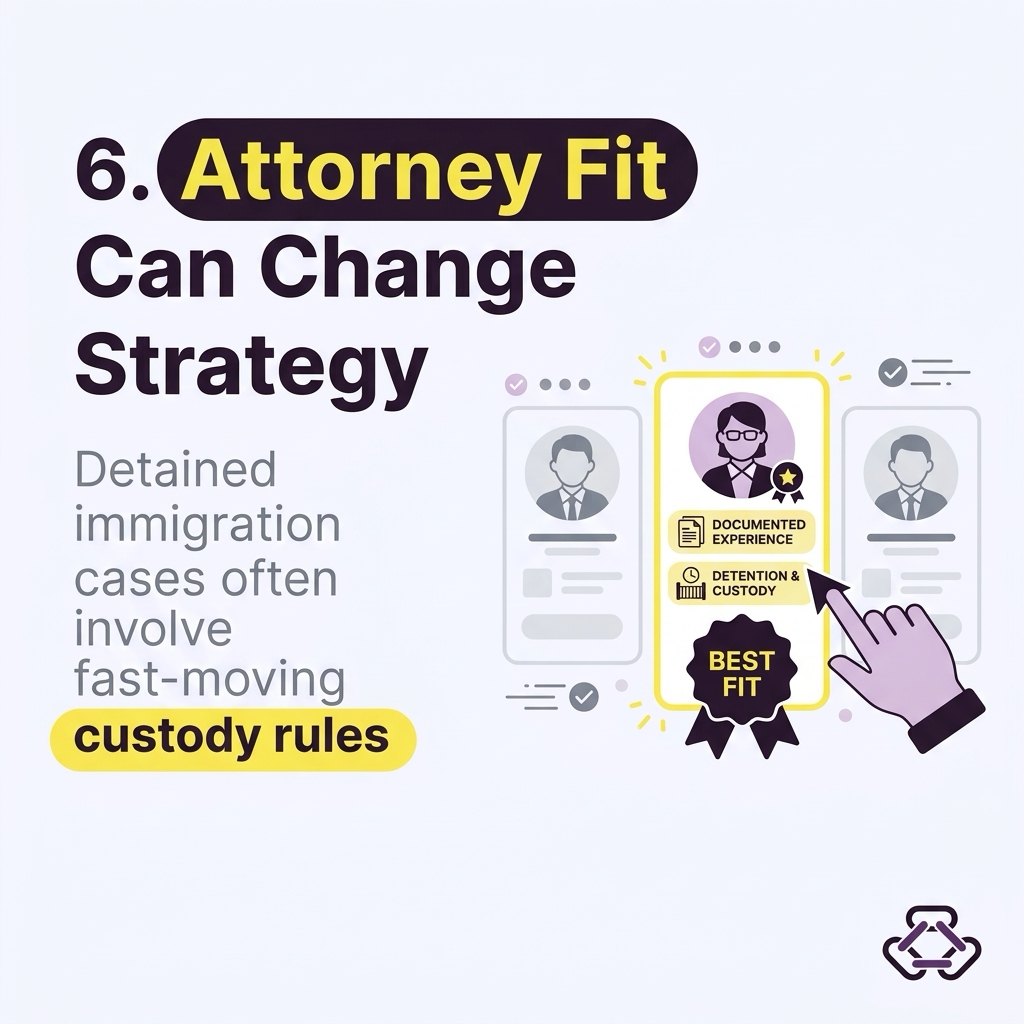
6. Waiting Too Long To Get Legal Help Or Assuming Any Lawyer Will Do
A final mistake is treating the bond hearing as simple because it is “just about getting out.” In reality, custody issues often intersect with complex questions about mandatory detention, arriving status, asylum procedures, prior orders, criminal grounds, and appellate stays.
EOIR states that a person in bond proceedings may be represented by counsel at no expense to the government, and either side may appeal a bond decision to the Board of Immigration Appeals (EOIR Policy Manual, EOIR Learn About the Immigration Court). The regulations also include stay rules in some custody appeals, which can affect when a release order actually takes effect (8 C.F.R. § 1003.6).
That makes attorney fit especially important. A lawyer who rarely handles detained immigration matters may approach the hearing very differently from one who regularly works on custody redeterminations, detention eligibility disputes, and fast-moving release requests. In a legal environment that has shifted significantly since early 2025, that documented experience can matter a great deal. The American Immigration Council reported that immigration detention expanded sharply after January 2025, and that discretionary release practices tightened, pushing more detained immigrants into bond litigation before immigration judges (American Immigration Council).
In plain terms, the hearing may look short, but the legal issues behind it often are not.
Other Smaller Mistakes That Still Matter
The six issues above tend to be the biggest, but several smaller mistakes can also hurt release chances:
- Submitting evidence only in bond proceedings and assuming it carries over later. EOIR says bond evidence is not automatically considered in the main case (EOIR Learn About the Immigration Court).
- Failing to update the court or counsel with contact information. That can complicate communication and hearing notice issues (EOIR Learn About the Immigration Court).
- Missing timing issues after release on bond. EOIR notes that if someone is released after paying a DHS-set bond, there can be a seven-day window to seek a bond redetermination from the immigration court in some circumstances (EOIR Policy Manual).
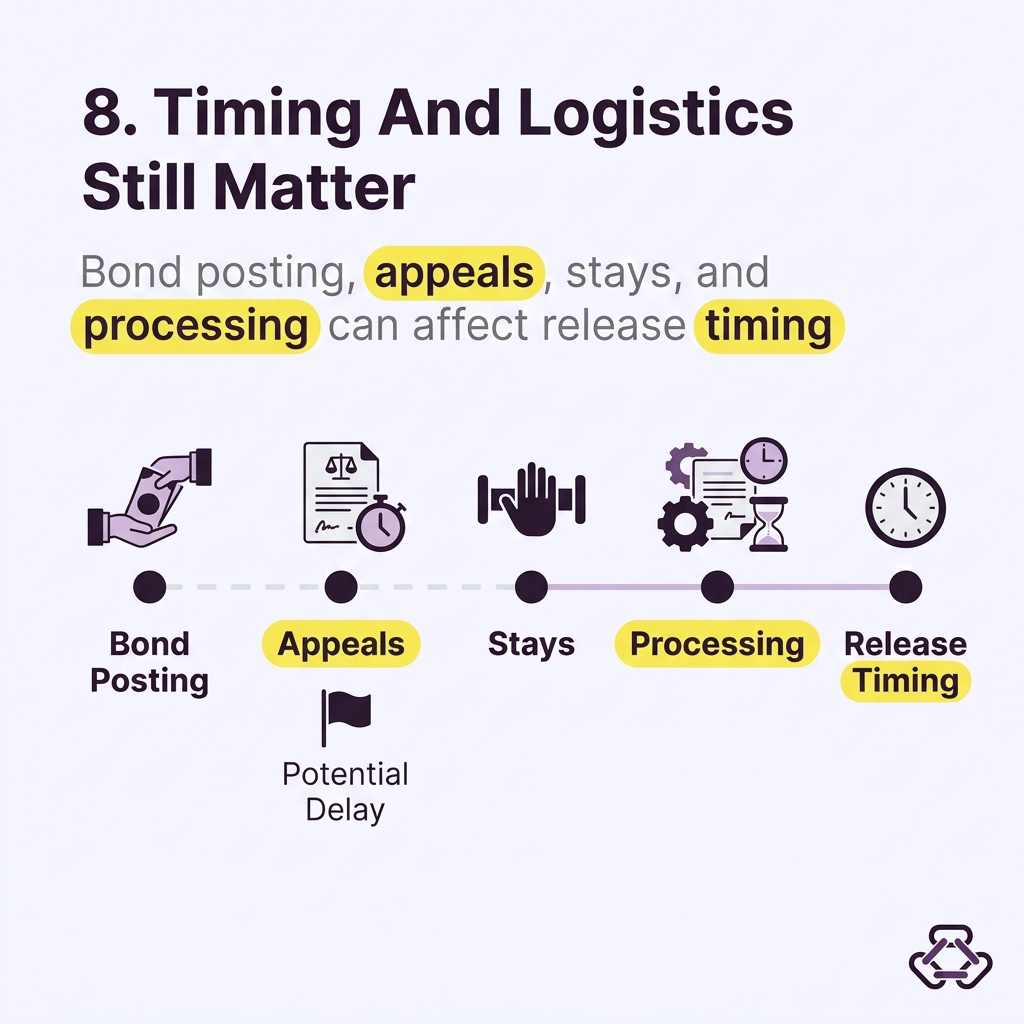
- Assuming release, once granted, is instantaneous. In practice, ICE processing, payment logistics, and any appeal or stay issues can affect timing (ICE Post a Bond, 8 C.F.R. § 1003.6).
Each of these may sound administrative, but detention cases often turn on administration as much as argument.
Why Families Often Feel Blindsided
Families commonly expect the bond hearing to be a straightforward conversation: explain that the person has children, a job, and no intention of fleeing, and release will follow. The system is rarely that simple.
The law and procedure draw distinctions between different categories of detainees. Eligibility itself can be disputed. Judges may focus on documentary proof instead of heartfelt explanation. Government attorneys may introduce records the family has never seen. And even a positive ruling can lead to additional waiting, posting procedures, or appeal complications.
That disconnect between expectation and reality is part of why detention cases feel overwhelming. It is also why many families start looking for an attorney only after a denial or after a bond amount comes back far higher than expected.
Final Tip: Evidence And Attorney Fit Often Matter More Than Families Expect
If there is one takeaway from these six mistakes, it is that bond hearings are rarely just about telling a good story. They are usually about presenting the right story, to the right decision-maker, with the right documents, under the right legal framework.
In general terms, families often look for counsel with documented experience in detained immigration cases, including custody redetermination hearings, release strategy, evidence preparation, and disputes over bond eligibility. That kind of relevant experience, based on court records and highly similar matters, can be hard to identify through ads or generic directory listings.
Visit ReferU.AI to get matched with an attorney who has demonstrable experience in cases like yours — for free.
