Table of Contents
- Immigration Detention and Bond Explained: Custody, Hearings, Release, and Case Strategy
- What Is Immigration Detention?
- What Is Immigration Bond?
- Who Decides Custody First: ICE Or The Immigration Judge?
- When Does The Immigration Court Have Bond Jurisdiction?
- What Happens At A Bond Hearing?
- What Evidence Often Helps Support Release?
- Can Someone Be Released Even If The Removal Case Is Still Pending?
- Can The Bond Amount Be Appealed?
- What Are Common Strategic Mistakes In Bond Cases?
- How Does Bond Strategy Connect To The Underlying Immigration Case?
- Can A Lawyer Handle Only The Bond Hearing?
- What Happens After Release?
- Why Families Often Look For Counsel Quickly In Detention Cases
- A Short Summary Of Immigration Detention And Bond

Type
Grandchild
Status
Approved
Title (YouTube)
Images Failed (Social)
Images Failed (Social)
Do not index
Parent item
Publish Date (TikTok)
Apr 24, 2027 14:15
Videos Post IDs (Social)
Hashtags (Social)
#LegalAdvice #LegalHelp #Immigration #ImmigrationBond
Caption
Caption X
Cover

OG Image

Alt Image Text
Flat vector illustration of immigration detention and immigration bond showing custody, a hearing process, possible release, and legal case strategy with family, attorney, courthouse, and bond symbols.
Images

Videos

Publish Date (Social)
Feb 18, 2027 12:30
Scheduled (Social)
Scheduled (Social)
Images Posted (Social)
Images Posted (Social)
Videos Posted (Social)
Videos Posted (Social)
Featured
Created time
Apr 7, 2026 12:02 AM
Authors
CTA Practice Area (Social)
Immigration
TikTok Failed (Social)
TikTok Failed (Social)
Videos Post Links (Social)
TikTok Post Links (Social)
Images Post IDs (Social)
YT Post ID
Video Pending Manual (Social)
TikTok Posted (Social)
TikTok Posted (Social)
TikTok Post IDs (Social)
Video Cover (Social)

Images Post Links (Social)
First Comment (Social)
Videos Failed (Social)
Videos Failed (Social)
YT Embedded
YT Embedded
Images Delete (Social)
Videos Delete (Social)
Carousel Video URL (Social)
Immigration Detention and Bond Explained: Custody, Hearings, Release, and Case Strategy
When a loved one is taken into immigration custody, the first questions usually come fast: Where are they? Can they be released? How soon is a hearing? What does bond even mean? The legal system can feel opaque at exactly the moment families are under the most pressure.
In simple terms, immigration detention is when the Department of Homeland Security, usually through ICE, holds a noncitizen while an immigration case is pending. Immigration bond is a financial guarantee that may allow release from custody while the person continues appearing in court. Not every detained person is eligible for bond, and the bond process is separate from the underlying removal case. The immigration judge looks at different issues in a bond hearing than in the main case, including whether release would pose a danger or whether the person is likely to appear for future proceedings. The official guidance from the Executive Office for Immigration Review explains that DHS sets bond first, and an immigration judge may later review that custody decision in a bond hearing if the court has jurisdiction (DOJ EOIR bond proceedings guidance).
In this post you’ll learn how immigration detention works, when bond is possible, what happens at a custody hearing, how release is handled, and how all of that connects to overall case strategy. If you’re looking for the broader picture beyond detention issues, it may also help to start with an overview of immigration cases and relief options.
Scroll to the bottom for every post in this series.
What Is Immigration Detention?
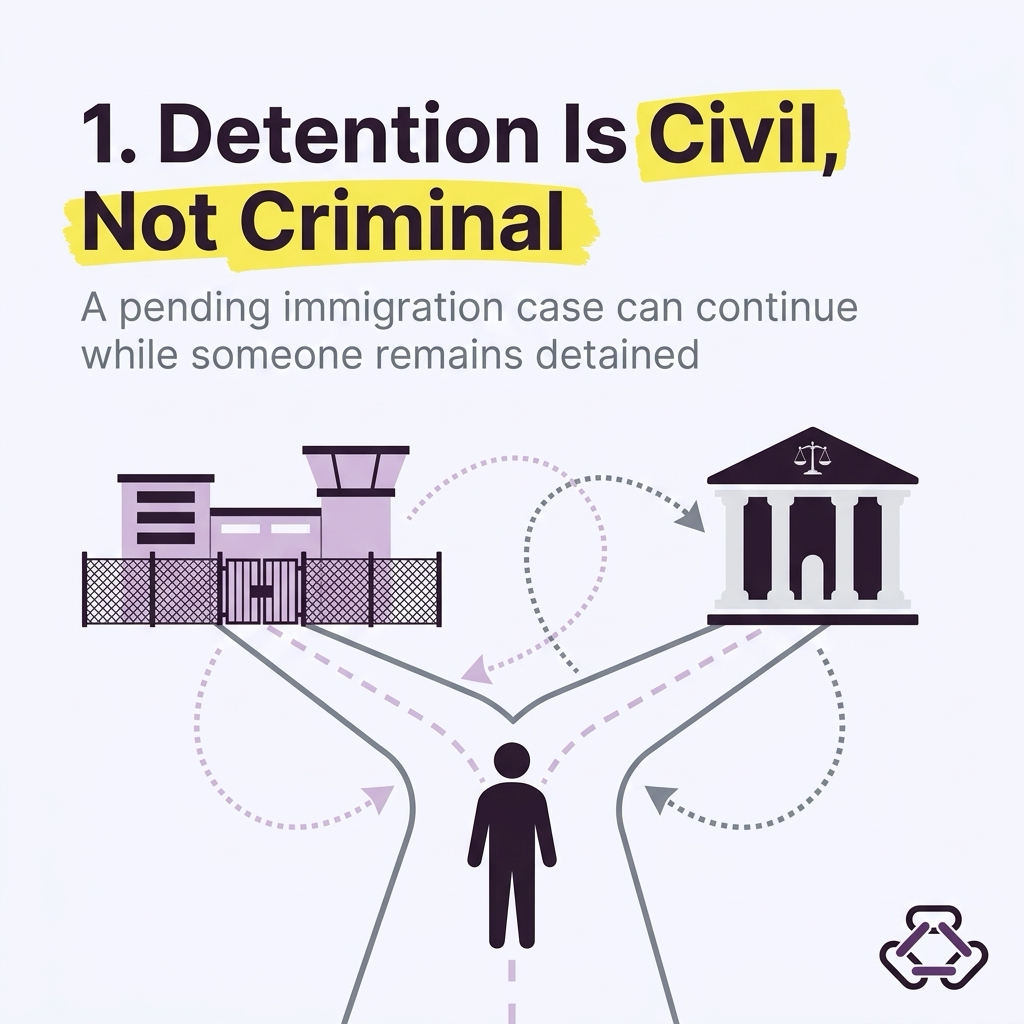
Immigration detention is civil detention, not a criminal sentence. A person may be detained during removal proceedings, after an arrest by immigration authorities, after transfer from another agency, or after release from criminal custody. The legal authority often comes from section 236 of the Immigration and Nationality Act, and the bond rules are further described in federal regulations and DOJ policy materials (DOJ EOIR bond proceedings guidance).
That distinction matters because families often hear “detained” and assume the case is over. In many situations, it is not. A detained person may still be pursuing asylum, cancellation of removal, adjustment, waivers, or other forms of relief, depending on the facts. If the person is already in court, detention and release questions often run alongside the defense in the removal case rather than replacing it.
ICE also maintains an Online Detainee Locator System that allows family members, attorneys, and the public to locate many people in immigration detention using identifying information such as the A-number, name, date of birth, and country of birth (ICE detention locator fact sheet). ICE’s Detention, Removals and Information Line is another official resource families often use while trying to confirm location or facility information (ICE contact page).
What Is Immigration Bond?
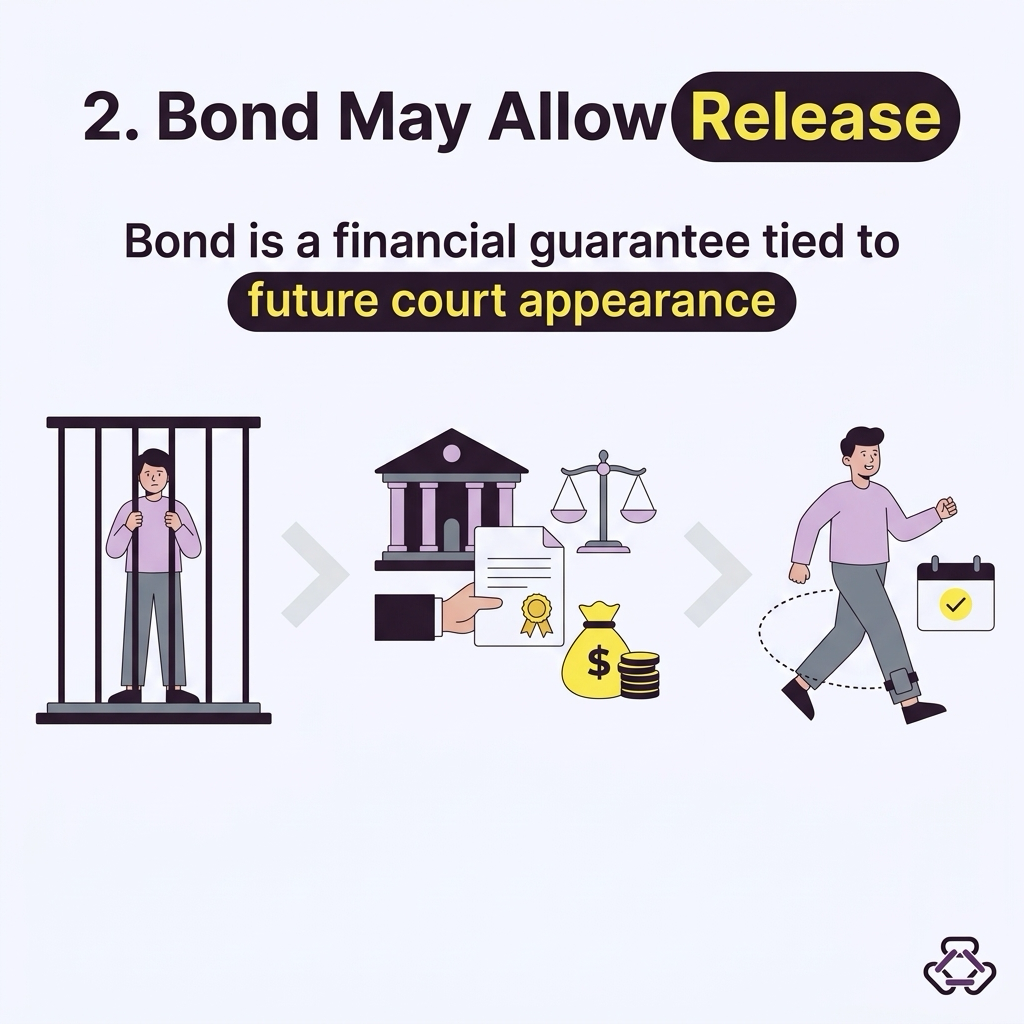
Immigration bond is a payment or financial undertaking tied to release from custody. In general terms, it functions as an assurance that the person will appear for future immigration proceedings and comply with release conditions. DHS usually sets the initial bond amount. After that, an immigration judge may be asked to hold a bond redetermination hearing and decide whether the amount stays the same, goes lower, goes higher, or whether the person remains detained (DOJ EOIR bond proceedings guidance).
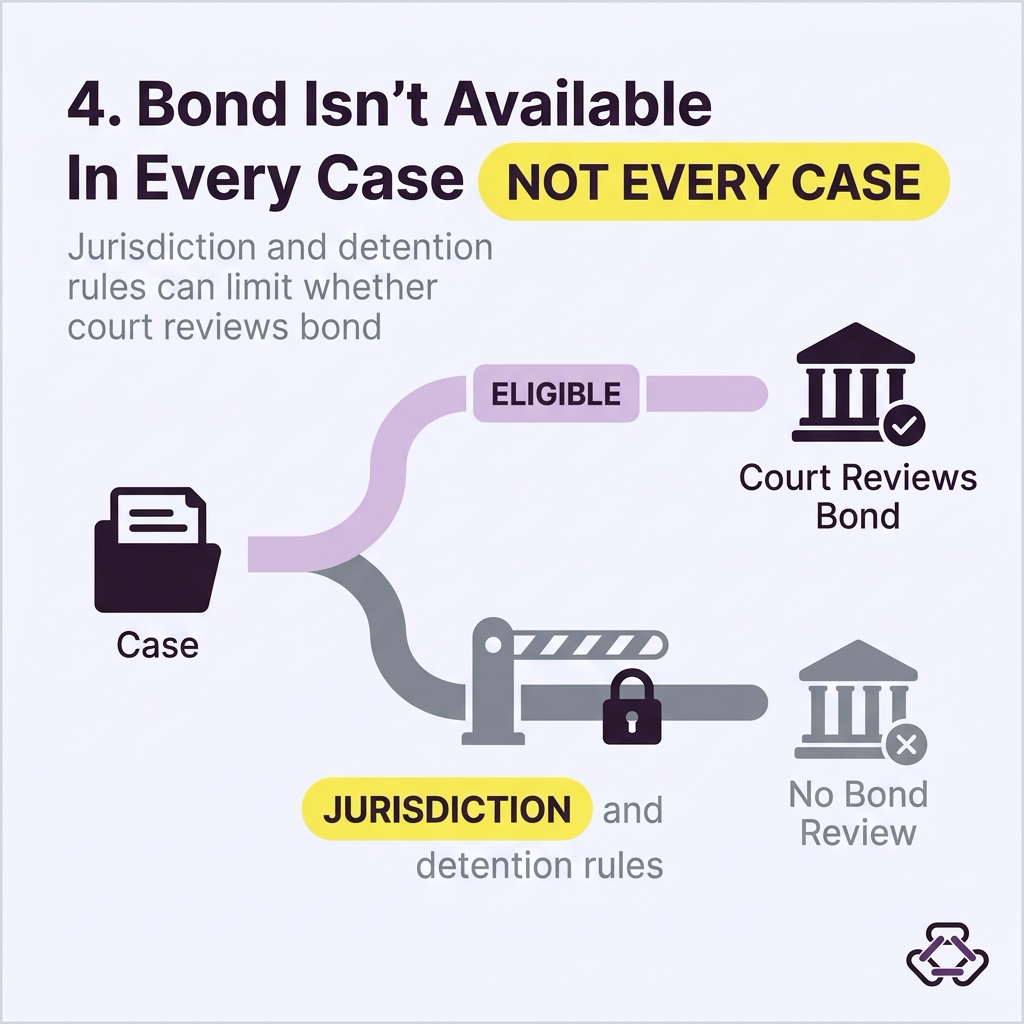
Bond is not available in every case. Some people are subject to mandatory detention, and some people fall into categories where the immigration judge lacks bond jurisdiction, including certain arriving aliens and some people with disqualifying criminal or security-related issues under the regulations (DOJ EOIR bond proceedings guidance). That is one reason early legal analysis can shape the entire strategy: before arguing about amount, someone has to determine whether the court can even hear the bond request.
If you want a more focused breakdown of release and detention basics, our guide on how immigration bond works from start to finish goes deeper on the mechanics.
Who Decides Custody First: ICE Or The Immigration Judge?
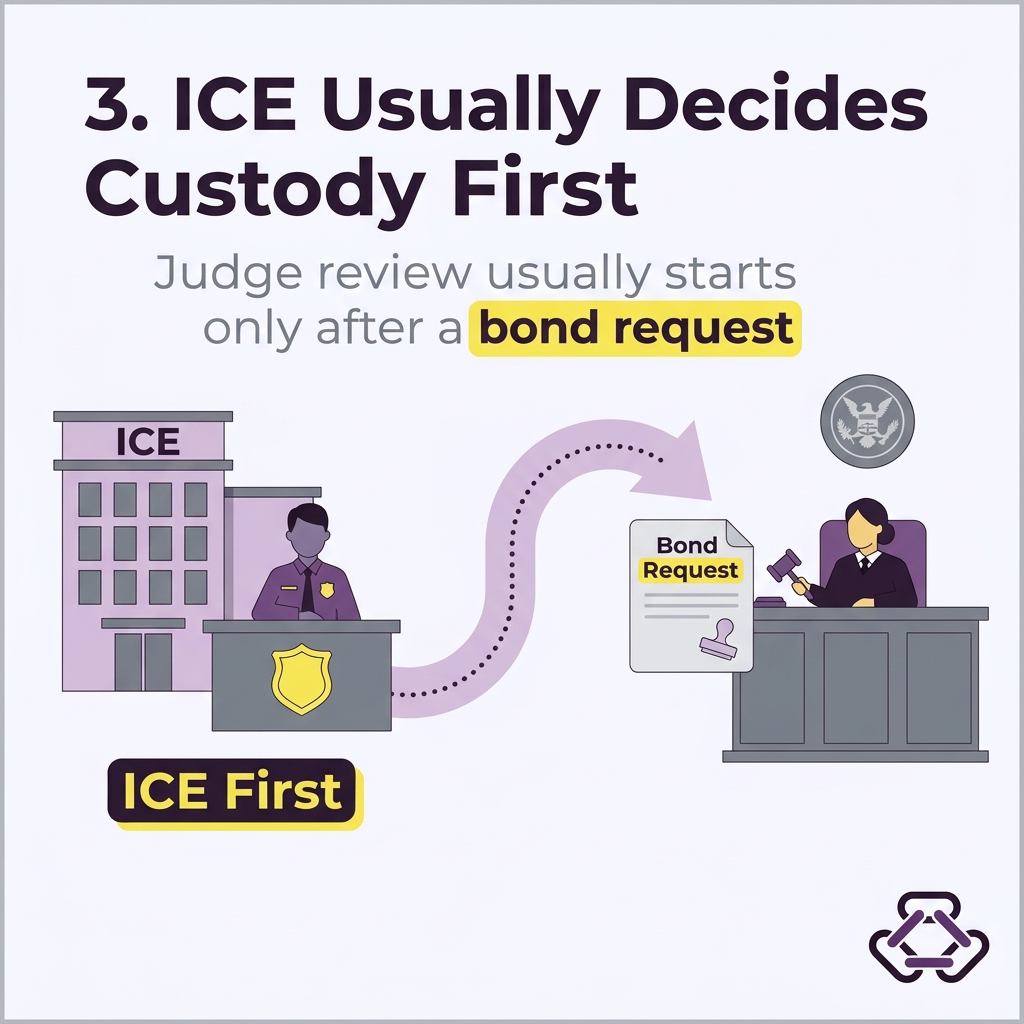
Usually, ICE decides custody first. That initial decision may be:
- detention without bond,
- detention with a bond amount, or
- release under another form of supervision.
After that initial DHS decision, a detained person may ask the immigration court for a bond hearing if the court has jurisdiction. EOIR’s policy manual states that the request can ordinarily be made in writing, and in some situations orally, with identifying information including the person’s full name, A-number, the bond set by DHS, and the detention location. There is no filing fee to request a bond hearing in immigration court (DOJ EOIR bond proceedings guidance).
This division of authority is important because many families understandably assume the immigration judge automatically reviews detention. That does not happen in every case. In practice, custody review often begins only after someone affirmatively requests it.
When Does The Immigration Court Have Bond Jurisdiction?
This is one of the most technical parts of the process, and it often drives the whole case.
EOIR explains that an immigration judge generally has jurisdiction to conduct a bond hearing if the person is in DHS custody. The judge may also retain jurisdiction in a narrower situation when a person is released after paying bond and files a request for bond redetermination within seven days of release. EOIR also states that a judge generally does not have bond jurisdiction over certain categories, including arriving aliens in removal proceedings and people ineligible for release on specified criminal or security-related grounds (DOJ EOIR bond proceedings guidance).
For families, this often means the first strategic question is not “How much is the bond?” but instead “Is this a case where bond is legally available?” If the answer is unclear, issues like criminal history, entry status, prior orders, parole history, and charging documents may all matter.
That’s also why detention strategy often overlaps with removal defense. A person fighting a charge of removability, an inadmissibility issue, or a criminal ground may be dealing with custody arguments at the same time. If you are trying to understand how the main court case fits with detention, our article on what happens in immigration court and removal defense can help connect those dots.
What Happens At A Bond Hearing?
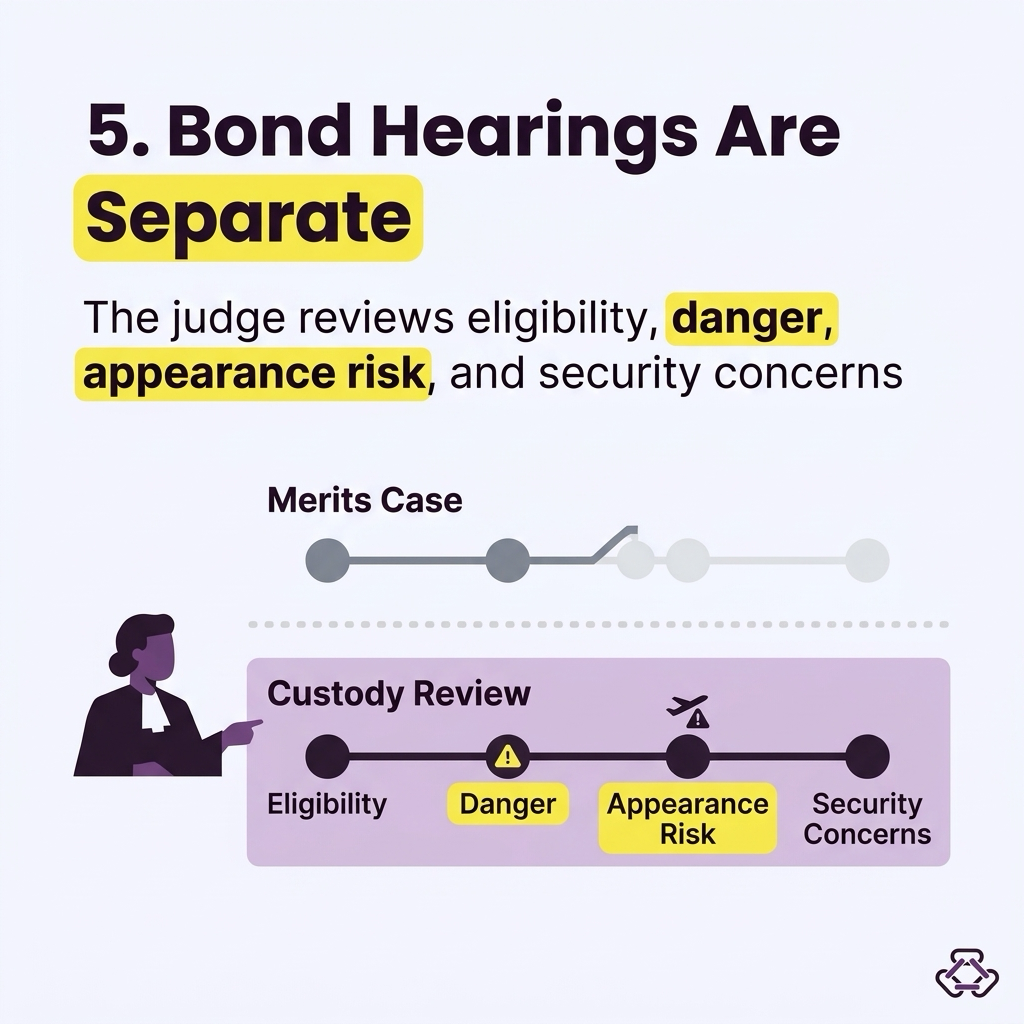
A bond hearing is separate from the merits of the removal case. EOIR says bond proceedings are kept apart from removal proceedings, and documents filed in the main case are not automatically part of the bond record. If a party wants the immigration judge to consider them in bond proceedings, those materials generally have to be submitted again for the bond file (DOJ EOIR bond proceedings guidance).
At the hearing, the immigration judge generally looks at:
- whether the person is eligible for bond
- whether release would pose a danger to persons or property
- whether the person is likely to appear for future immigration proceedings, and
- whether there are national security concerns (DOJ EOIR bond proceedings guidance).
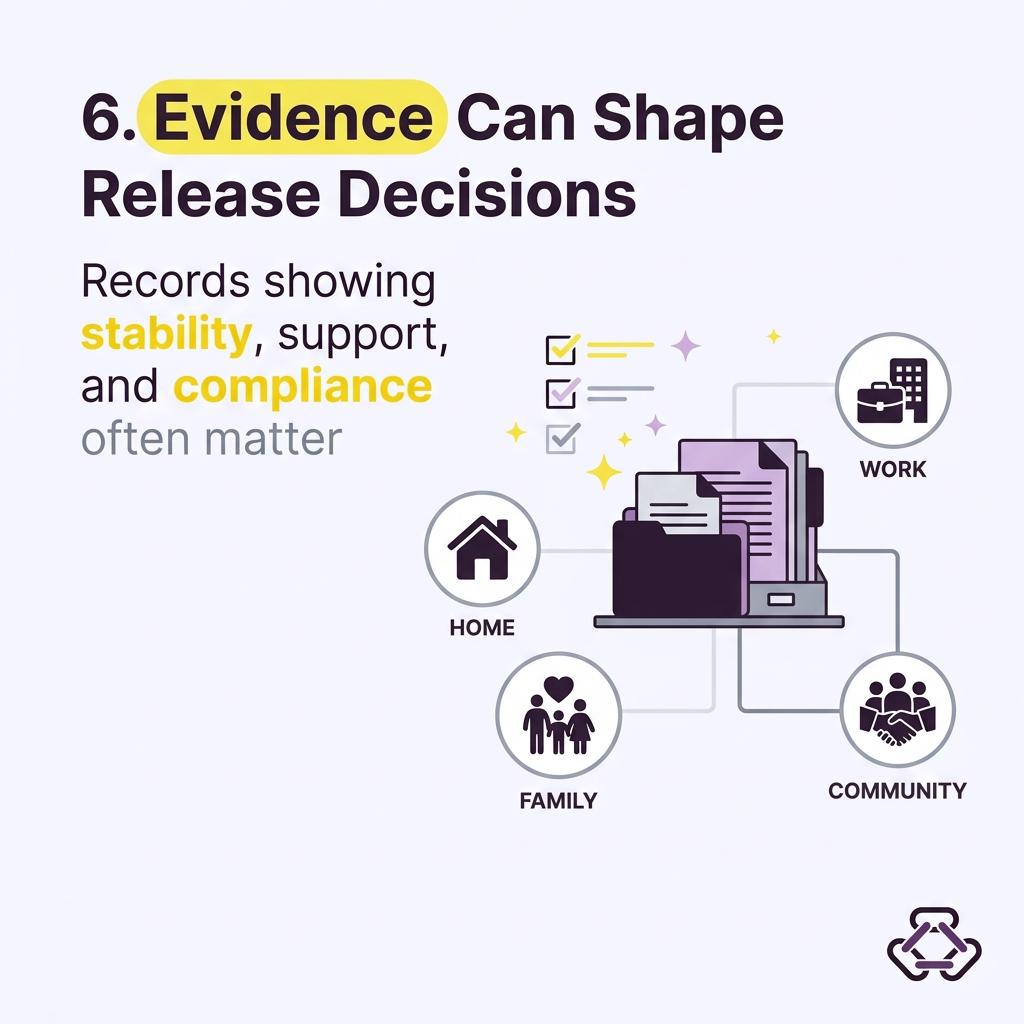
That framework can surprise families because a bond hearing is not just about sympathy or hardship. Judges often want facts that speak directly to risk, stability, and reliability:
- close family ties,
- a fixed address,
- employment history,
- community support,
- medical issues,
- rehabilitation evidence,
- compliance with past court or agency requirements, and
- any defenses to removal that may affect incentive to appear.
For a step-by-step breakdown of the actual hearing process, it may help to read more about getting ready for a custody hearing.
What Evidence Often Helps Support Release?
Bond cases are often won or lost on the quality of the record. Because the judge is looking at danger and flight risk, documents that show stability, accountability, and support tend to matter. Depending on the case, that may include:
- letters from family, clergy, employers, or community members,
- proof of residence,
- pay stubs or job letters,
- medical and mental health records,
- school records for children,
- proof of caregiving responsibilities,
- criminal case dispositions,
- probation completion records,
- treatment program records,
- certificates, rehabilitation materials, and
- declarations addressing mistakes, growth, and future compliance.
EOIR notes that documents for bond proceedings should be filed in the bond matter itself, and filings made in advance but separate from the bond request are typically labeled “BOND PROCEEDINGS” (DOJ EOIR bond proceedings guidance).
In real-world terms, this is where preparation often changes the tone of the case. A judge looking at a thin file may see uncertainty. A judge looking at a detailed packet may see a person with roots, structure, and reasons to appear. Our article on building the documents that support release covers the types of evidence families often gather in these situations.
Can Someone Be Released Even If The Removal Case Is Still Pending?
Yes. In many cases, release on bond means the person is out of detention but still in immigration proceedings. That distinction is central. Release is not the same as winning the case. It simply changes where the person waits while the case moves forward.
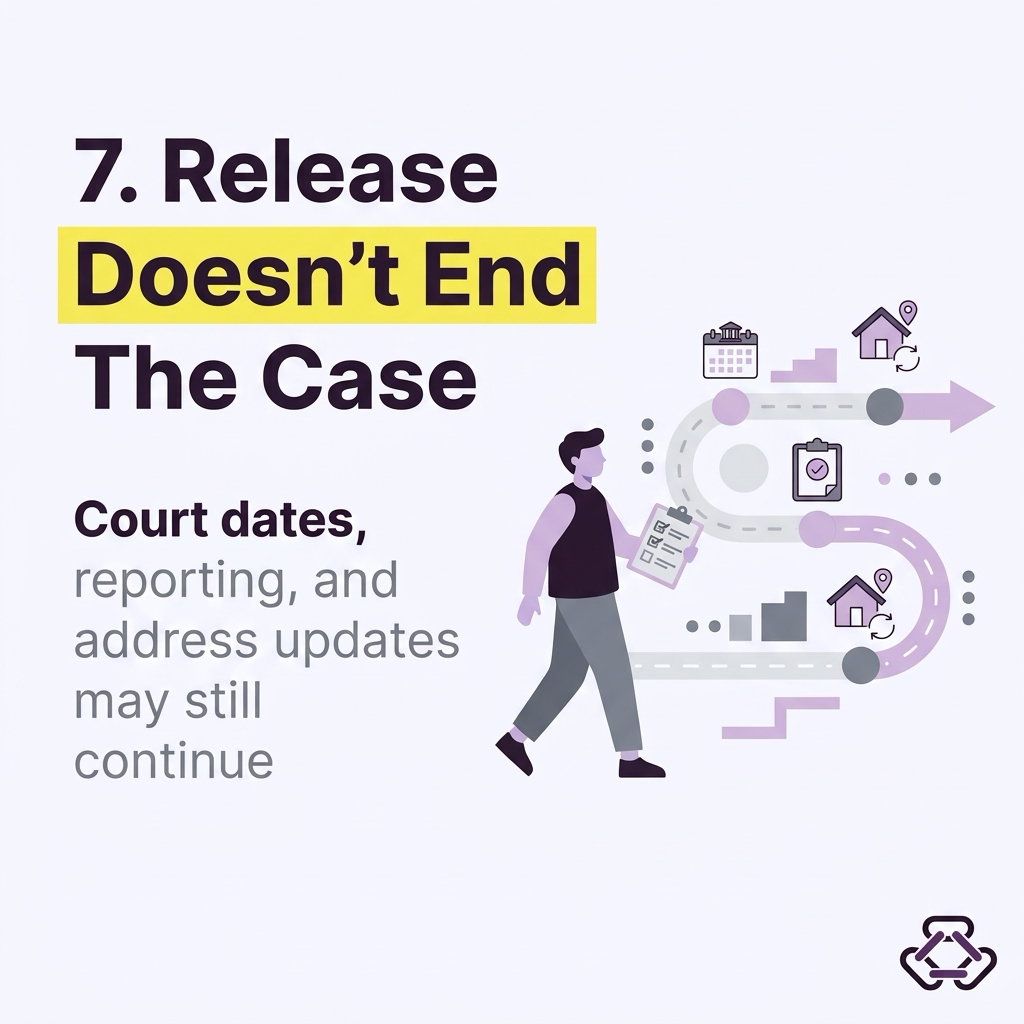
Once released, the person may still have:
- immigration court hearings,
- ICE reporting requirements,
- address update obligations,
- deadlines for applications and evidence, and
- potential consequences if they miss hearings or fail to comply.
ICE’s public information pages explain that individuals in removal proceedings can use ICE systems to manage reporting and certain appointment issues, and that case and check-in compliance still matter after release (ICE check-in information). ICE also notes that bonds may be posted at ERO bond acceptance offices during designated hours, and families often communicate with local ERO offices about bond logistics and refunds (ICE attorney information and resources).
Can The Bond Amount Be Appealed?
Yes. A bond decision by an immigration judge can be appealed to the Board of Immigration Appeals. EOIR’s current fee schedule states that a bond appeal uses Form EOIR-26 and has no filing fee (EOIR appeals and fee information).
But timing and effect matter. According to the BIA practice guidance, if the noncitizen appeals the bond decision, the immigration judge’s bond decision generally remains in effect while the appeal is pending. If DHS appeals in certain situations, however, the immigration judge’s decision may be automatically stayed. The BIA explains that this can happen when DHS had determined the person should not be released but the judge ordered release, or when DHS set bond at $10,000 or more and the judge lowered it. In those circumstances, DHS can trigger an automatic stay by filing Form EOIR-43 within one business day and then timely filing the appeal; the stay generally remains while the appeal is pending, subject to regulatory time limits (BIA bond appeal procedure).
This is one reason families sometimes hear “bond was granted” but do not see immediate release. The order may exist, but a stay or pending processing issue can delay actual discharge from custody.
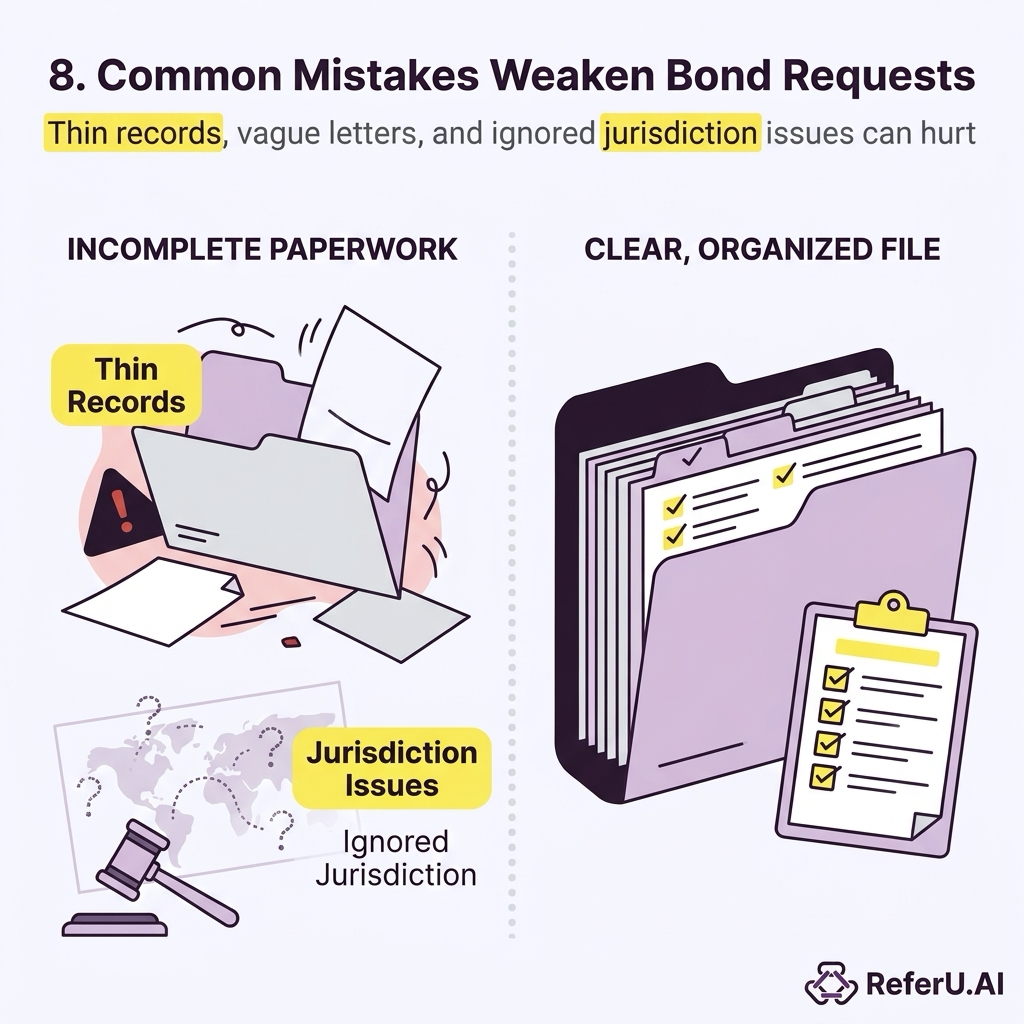
What Are Common Strategic Mistakes In Bond Cases?
A lot of bond problems are not dramatic legal errors. They’re often avoidable gaps in preparation.
Some common examples include:
- focusing only on hardship and not enough on appearance risk,
- failing to explain criminal records with certified dispositions,
- assuming the judge has jurisdiction without addressing it,
- submitting letters that are vague or repetitive,
- overlooking proof of housing and transportation,
- treating the bond hearing like the full merits hearing, or
- failing to connect release evidence to a larger case plan.
A bond hearing is often a fast-moving proceeding with limited room for improvisation. Judges may be deciding custody with incomplete records and little time. In that setting, organization matters. If you want a practical list of pitfalls, take a look at the release-hearing errors families and lawyers often try to avoid.
How Does Bond Strategy Connect To The Underlying Immigration Case?
This is where legal planning becomes especially important.
Bond hearings are separate from removal proceedings, but they are not isolated from overall case strategy. A strong release presentation often aligns with the broader case by showing:
- long-term community ties,
- credible relief options,
- organized documentation,
- good faith compliance, and
- a stable plan if released.
For example, a person pursuing asylum may use custody evidence to reinforce ties, vulnerability, trauma history, and the seriousness of the claim. A person pursuing cancellation or adjustment may use bond evidence to highlight family ties, employment history, and equities that also matter in the main case. In some cases, the same facts that help explain why someone is not a flight risk also help show why the case deserves careful litigation rather than rushed decision-making.
That does not mean bond is a mini-trial on the entire case. EOIR is explicit that bond proceedings are separate (DOJ EOIR bond proceedings guidance). But in practice, an attorney often thinks about the two together: what gets said at bond, what evidence gets submitted now, what records might later be used in the merits case, and what issues are better reserved for later.
If your family is trying to make sense of the first wave of urgent questions, this collection of answers families often look for when someone is detained may also be useful.
Can A Lawyer Handle Only The Bond Hearing?
Yes. EOIR states that a person in immigration court may be represented by an attorney of their choosing at no expense to the government, and that representation may cover all proceedings or only bond proceedings (EOIR legal representation information).
That can be a major practical issue for families. Sometimes a detention case moves faster than the family’s ability to retain full merits counsel right away. In other situations, the same attorney handles both detention and the removal case from the beginning. Either way, clarity about scope matters. A family may assume the lawyer handling the bond hearing is also preparing the asylum case, cancellation application, or appeal, when the engagement is actually narrower.
What Happens After Release?
Once someone is released, the case usually enters a different phase rather than ending. The person may have to:
- appear at future immigration court hearings,
- maintain updated address information,
- report to ICE if required,
- comply with any supervision terms, and
- continue preparing the defense case.
Missing a hearing can create severe consequences, including an in absentia removal order in some circumstances. Release often gives a family room to breathe, but it also creates a new administrative checklist.
That is why many attorneys view bond strategy as part of case management strategy. Release may allow someone to gather records, meet with counsel more consistently, care for children, continue treatment, work within legal limits if authorized, and present a more complete defense. But those benefits depend on follow-through.
Why Families Often Look For Counsel Quickly In Detention Cases
Detention compresses time. Evidence has to be gathered fast. Facility transfers can complicate communication. Jurisdiction questions can narrow options. Criminal records may need certified copies. Sponsors may need to show housing and support immediately. And when a person may be eligible for bond, the framing of the first hearing can shape the rest of the case.
That does not mean every detention matter is the same. Some cases turn on mandatory detention. Some turn on discretionary release factors. Some are really about the strength of the underlying removal defense. But in nearly every version, the stakes are personal and immediate: where the person sleeps, how the family functions, and how the legal case gets built from the start.
A Short Summary Of Immigration Detention And Bond
Immigration detention and bond proceedings sit at the intersection of custody, court procedure, and long-term defense strategy. ICE often makes the first custody decision. In many cases, an immigration judge can later review that decision in a bond hearing. The court looks at eligibility, danger, and whether the person is likely to appear. Not everyone qualifies for bond, and a grant of bond is not the same as winning the immigration case. Evidence, preparation, and timing often make a significant difference.
For families facing detention, the early questions are usually the right ones: Where is the person? Is bond legally available? What evidence supports release? How does the custody issue connect to the larger case? An attorney with relevant, documented experience in highly-similar matters may help evaluate those issues using objective criteria and case-specific facts.
Visit ReferU.AI to get matched with an attorney who has demonstrable experience in cases like yours — for free.


