Table of Contents
- How to Gather Evidence That Supports Release From Detention
- Why Evidence Matters In A Detention Release Case
- What A Strong Bond Evidence Packet Often Tries To Show
- 1. Start With Proof Of Identity And Immigration Custody Information
- 2. Gather Proof Of A Stable Release Address
- What The Housing Letter Can Say
- 3. Collect Evidence Of Family Ties
- What Family Letters Often Do Well
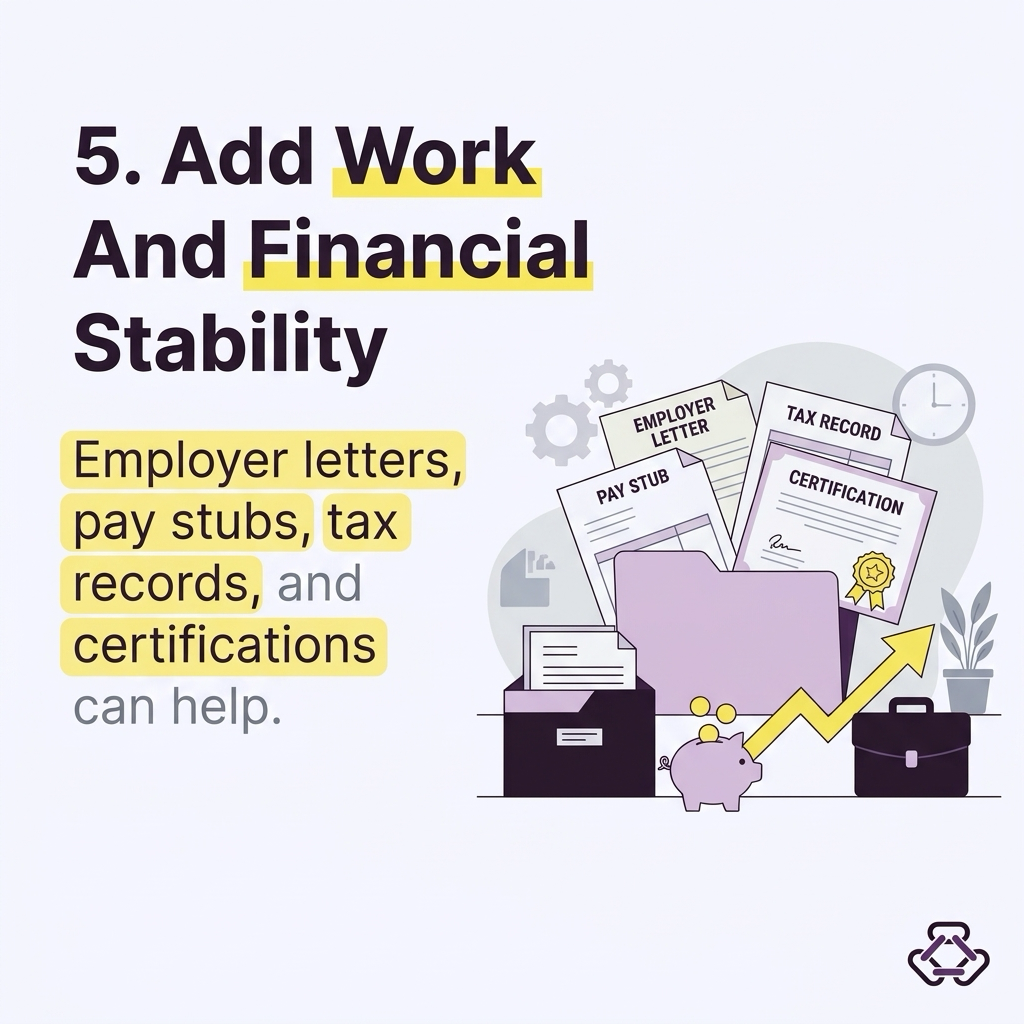
- 4. Add Employment And Financial Records
- What An Employer Letter Can Cover
- 5. Document Community Ties Beyond Family
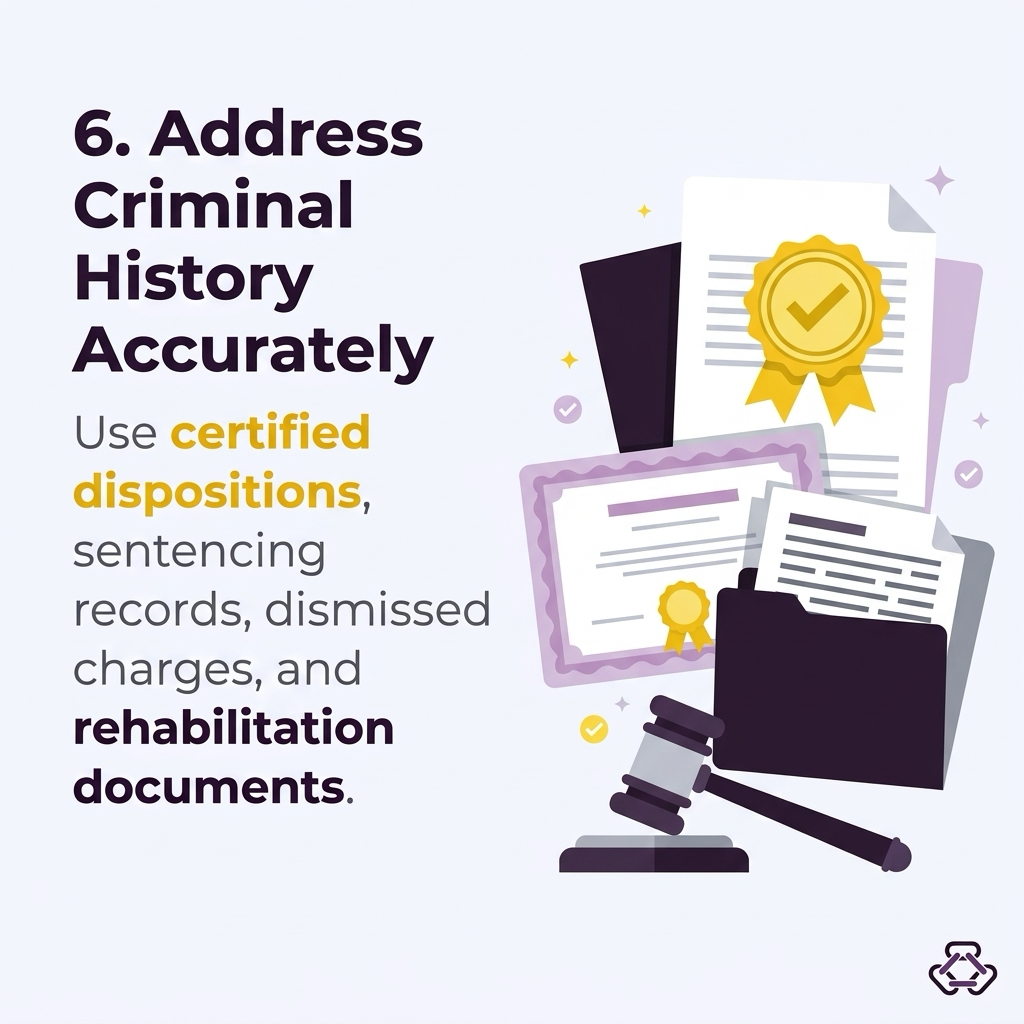
- 6. Address Criminal History With Certified And Accurate Records
- If There Is A Criminal Record, Context Often Matters
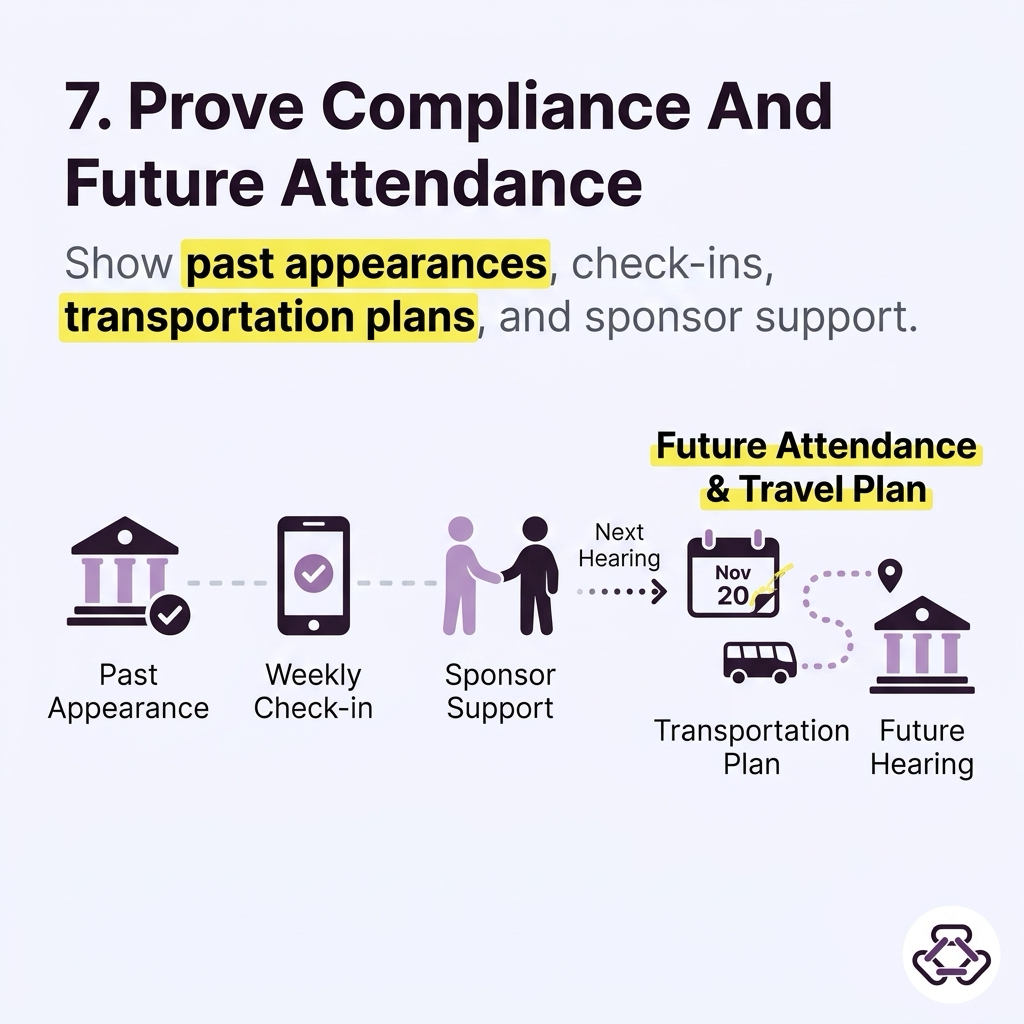
- 7. Show A History Of Appearing For Court Or Complying With Requirements
- 8. Include Evidence Of Immigration Relief When Relevant
- 9. Use Sworn Statements Carefully And Clearly
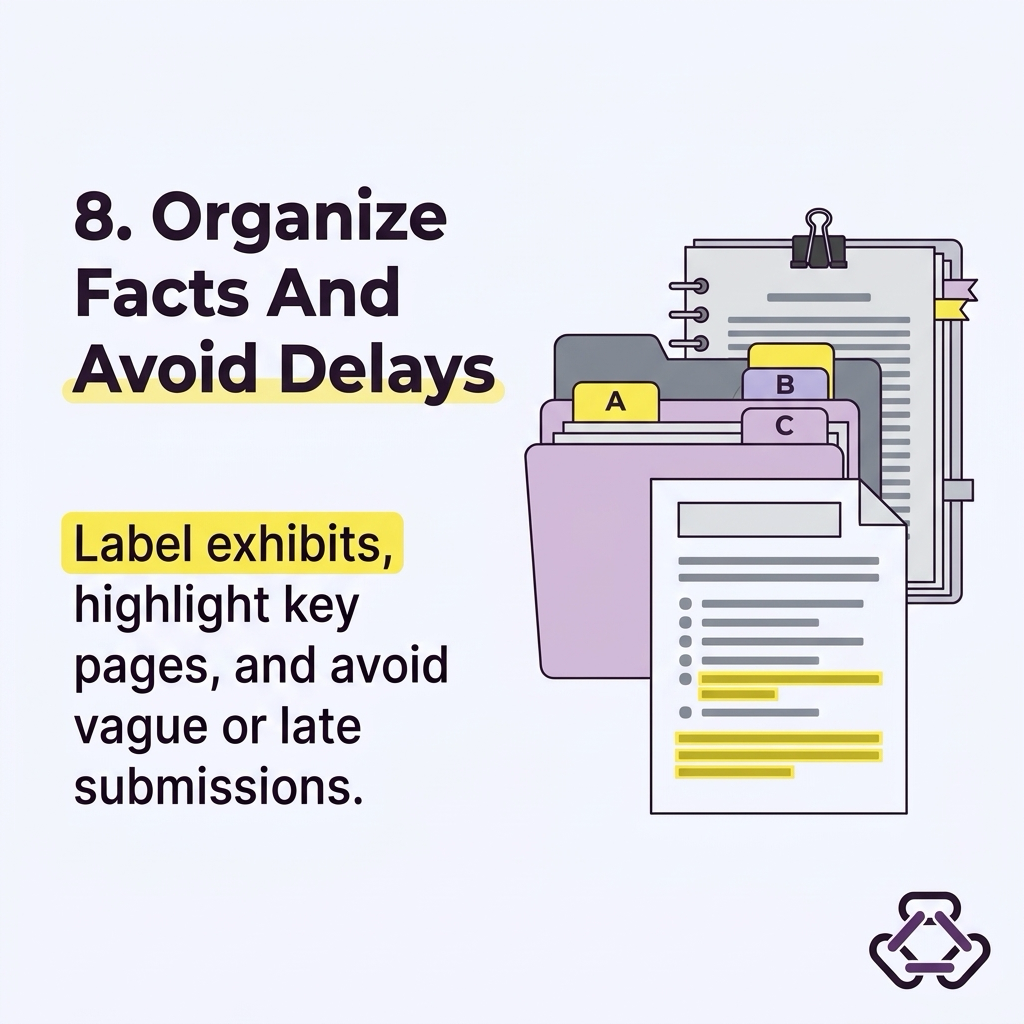
- 10. Organize The Packet So The Judge Can Follow It Quickly
- Cover Page
- Exhibit List
- Label Every Page
- Highlight Key Parts
- Make Copies
- Common Evidence Mistakes Families Make
- Waiting Too Long To Start
- Sending General Character Letters Only
- Ignoring Bad Facts
- Using Unverified Internet Printouts
- Failing To Connect The Evidence To The Bond Standard
- When An Attorney Can Change The Quality Of The Evidence
- A Simple Checklist For Families
- Final Thoughts

Type
Great Grandchild
Status
Approved
Title (YouTube)
Images Failed (Social)
Images Failed (Social)
Do not index
Publish Date (TikTok)
Apr 24, 2027 11:15
Videos Post IDs (Social)
Hashtags (Social)
#LegalAdvice #LegalHelp #Immigration #ImmigrationBond
Caption
Caption X
Cover

OG Image

Alt Image Text
Flat vector illustration of a family organizing an evidence packet that supports release from detention, with documents, calendar, home, and community tie symbols for a bond evidence packet.
Images


Videos
Publish Date (Social)
Feb 18, 2027 11:00
Scheduled (Social)
Scheduled (Social)
Videos Posted (Social)
Videos Posted (Social)
Videos Failed (Social)
Videos Failed (Social)
Created time
Apr 7, 2026 12:02 AM
Sub-item
Authors
CTA Practice Area (Social)
Immigration
TikTok Failed (Social)
TikTok Failed (Social)
Videos Post Links (Social)
Content Updated
May 6, 2026
Images Posted (Social)
Images Posted (Social)
Featured
TikTok Post Links (Social)
Images Post IDs (Social)
YT Post ID
Video Pending Manual (Social)
TikTok Posted (Social)
TikTok Posted (Social)
TikTok Post IDs (Social)
Video Cover (Social)
Images Post Links (Social)
First Comment (Social)
YT Embedded
Images Delete (Social)
Videos Delete (Social)
How to Gather Evidence That Supports Release From Detention
When someone is in immigration detention, families often feel like everything is moving fast while answers come slowly. One of the biggest questions is what kind of proof can actually help support release. In general terms, bond and custody decisions often turn on evidence that shows a person is likely to appear for future hearings and does not present a danger to people or property. The challenge is that useful evidence is rarely just one document. It is usually a package.
In this post you’ll learn how to gather evidence that supports release from detention, what documents tend to matter most, how to organize them, and where families sometimes lose time. If you’re looking for a broader overview of custody, hearings, and release strategy, this guide on how detention and bond decisions usually work can help provide context.
Scroll to the bottom for every post in this series.
Why Evidence Matters In A Detention Release Case
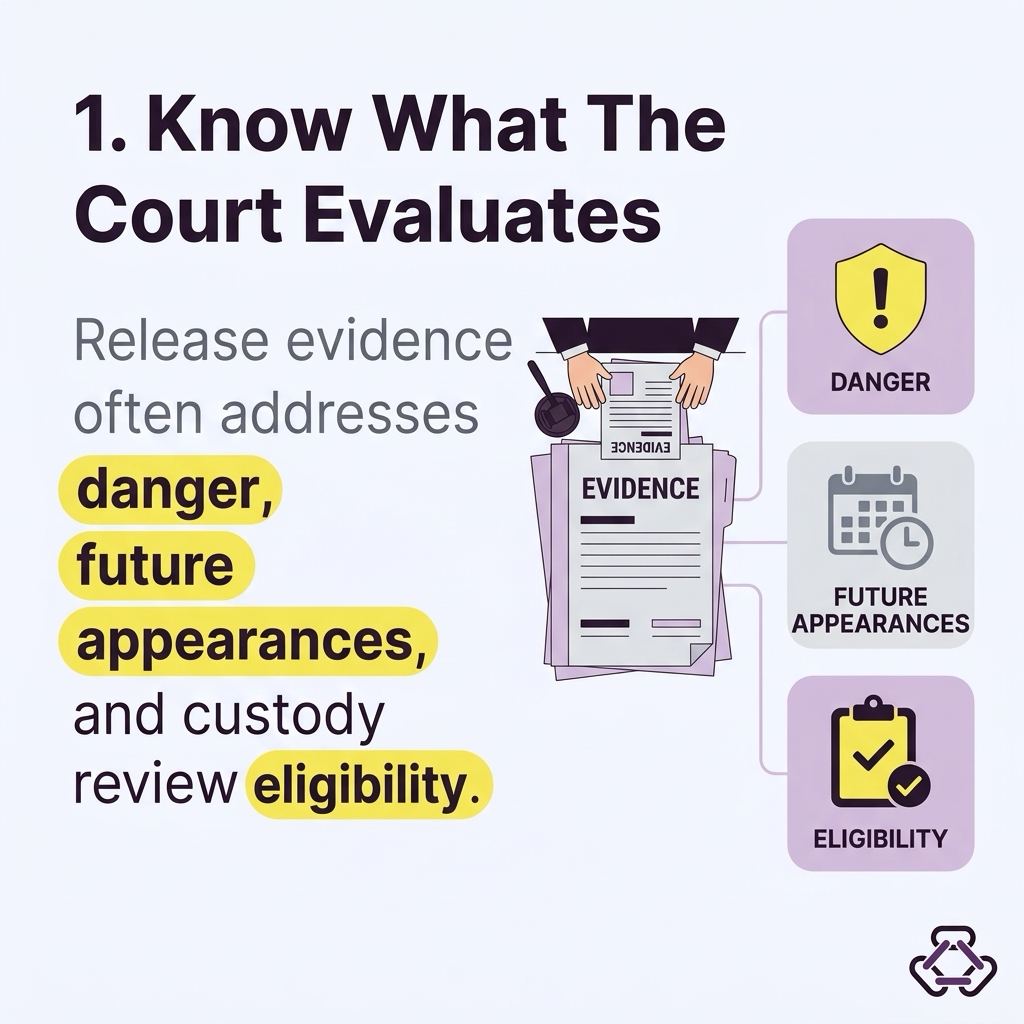
In immigration bond proceedings, the immigration judge first looks at whether the court has authority to review custody. If the person is eligible for bond, the judge then considers whether release is appropriate, including whether the person poses a danger to property or persons and whether the person is likely to appear for future immigration proceedings, according to the Executive Office for Immigration Review (EOIR) and the governing detention regulations. EOIR’s bond procedures and 8 C.F.R. § 1236.1 both reflect those core issues.
That is why evidence gathering is not just administrative paperwork. It is the process of showing stability, accountability, and ties to the community in a way the court can evaluate. The Board of Immigration Appeals explained in Matter of Guerra, 24 I&N Dec. 37 (BIA 2006) that immigration judges may consider a range of factors, including family ties, employment history, immigration history, criminal record, prior appearances in court, and community connections.
What A Strong Bond Evidence Packet Often Tries To Show
A useful evidence packet usually tries to tell a simple, documented story:
- The person has a real place to live
- The person has people who will support compliance with court dates
- The person has meaningful family and community ties
- The person has a work history or other proof of stability
- Any criminal or immigration history is accurately explained with records
- If there are humanitarian concerns, those are backed up by documents
- There is a realistic plan for release
That framework lines up closely with the factors immigration courts often consider. Some standing orders and practice materials used in bond cases list evidence such as a fixed address, sponsor information, family ties, employment records, property ties, history of appearing in court, and sworn statements supporting possible relief from removal. One published immigration court standing order produced through FOIA gives a useful example of the kinds of documents many courts expect to see.
1. Start With Proof Of Identity And Immigration Custody Information
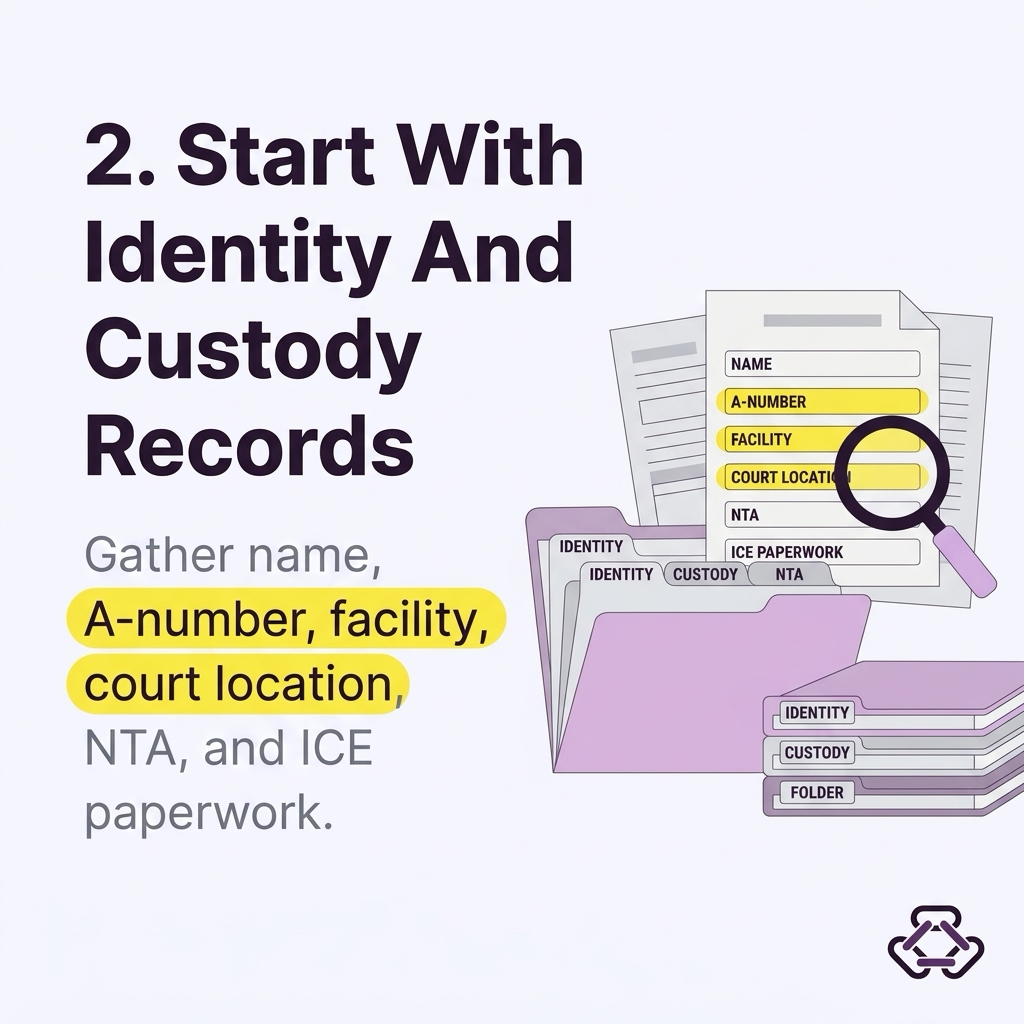
Before building a larger packet, families often gather the basic identifiers that let an attorney or accredited representative match the evidence to the detained person’s file:
- Full legal name
- A-number
- Date of birth
- Country of birth
- Detention facility name
- Immigration court location
- Notice to Appear, if available
- ICE custody paperwork, if available
This information sounds basic, but it often affects whether documents are filed correctly and tied to the right person. EOIR’s practice guidance on filings and documents also emphasizes proper identifying information and organized submissions. See EOIR’s document rules.
2. Gather Proof Of A Stable Release Address
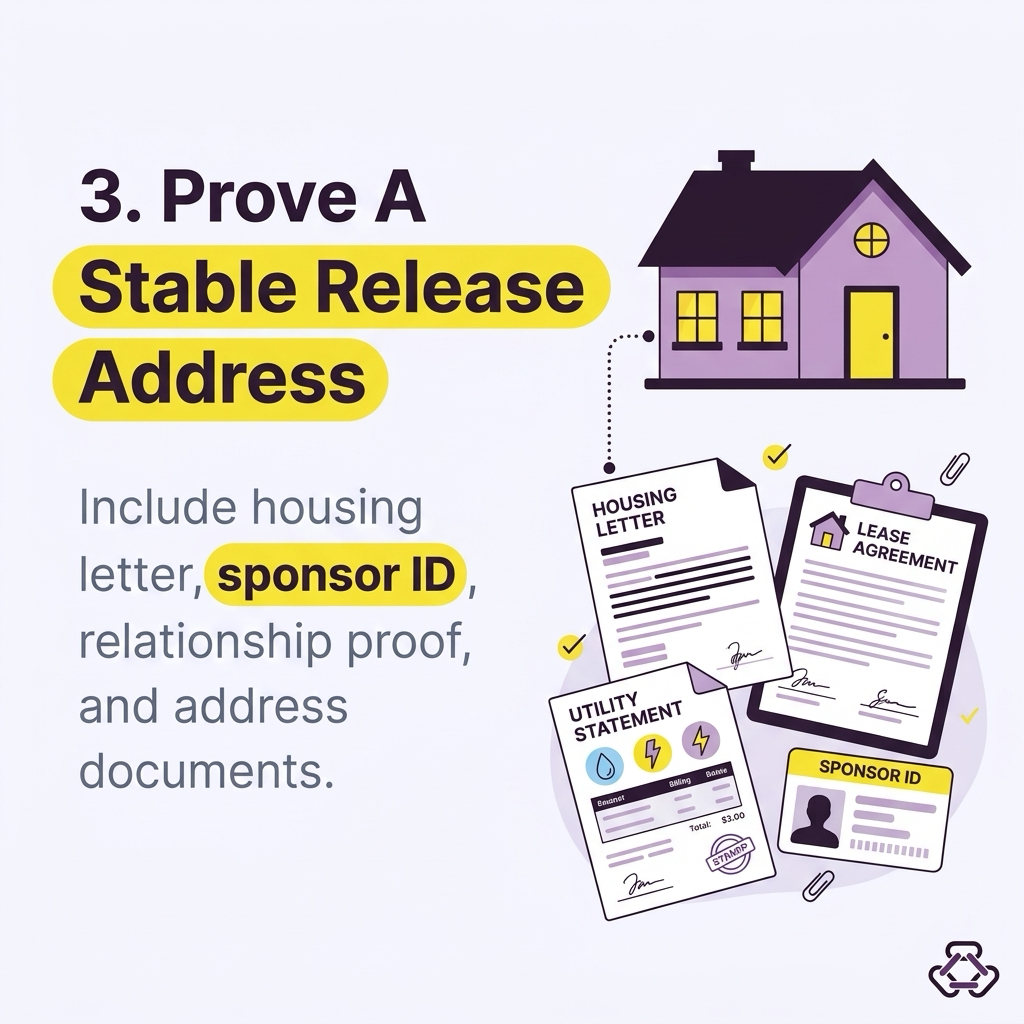
One of the most practical parts of a release request is showing where the person will live if released. Courts often want to see that the address is real, stable, and connected to a sponsor or family member.
Helpful documents may include:
- A letter from the person offering housing
- Copy of the sponsor’s ID
- Proof of the sponsor’s immigration status, if relevant
- Utility bill, lease, mortgage statement, or property tax record
- Proof of the relationship between sponsor and detainee
Some immigration court materials specifically mention a fixed address and proof connected to the sponsor as relevant bond evidence. That standing-order example lists utility bills and sponsor information as examples of proof for a release address.
What The Housing Letter Can Say
A simple housing letter often includes:
- The writer’s full name
- Their address
- Their relationship to the detained person
- A statement that the detained person can live there
- How long the housing is available
- Contact information
- Signature and date
If possible, the facts in the letter are easier to evaluate when they are supported by documents like a lease, deed, or utility bill.
3. Collect Evidence Of Family Ties
Family ties often matter because they can help show that the person has roots in the community and practical reasons to attend future hearings. Matter of Guerra identifies family ties as one of the factors immigration judges may weigh. See Matter of Guerra.
Useful family-related evidence may include:
- Marriage certificate
- Birth certificates of children
- School records for children
- Medical records showing caregiving responsibilities
- Photos labeled with names and dates
- Letters from spouse, parents, siblings, or adult children
- Evidence of financial support sent to family members
If the detained person is a parent or legal guardian of a minor child, that fact may also be relevant in detention-related advocacy. ICE has a directive concerning detained parents and legal guardians of minor children, which can be relevant in some cases involving family separation concerns. See ICE’s detained parents materials.
What Family Letters Often Do Well
The most persuasive family letters are usually concrete rather than emotional alone. For example, a letter may explain:
- how long the writer has known the person,
- where the person would live after release,
- what childcare or eldercare role the person plays,
- how the writer plans to help the person get to hearings,
- and why the writer believes the person will comply with court requirements.
4. Add Employment And Financial Records
Employment evidence can help show day-to-day stability and community ties. It can also support an argument that a lower bond amount is more realistic if a bond is set.
Documents that may help include:
- Employer letter
- Pay stubs
- W-2s or 1099s
- Tax returns
- Work schedule history
- Proof of professional training or certifications
A released immigration court standing order often asks for employment history with pay stubs and W-2s, while NIJC’s detention guidance also mentions recent tax returns as useful supporting documents. See the standing-order example and NIJC’s detained adults manual.
What An Employer Letter Can Cover
An employer letter may include:
- job title,
- dates of employment,
- whether the job remains available,
- whether the employee was reliable,
- and who can be contacted to verify the information.
Even when formal employment records are limited, some people gather proof of self-employment, invoices, client messages, business records, or community references that reflect consistent work history.
5. Document Community Ties Beyond Family
Community ties can matter because they help show a person is not isolated and has a support structure outside detention.
Examples include:
- Letters from religious leaders
- Volunteer records
- Letters from community organizations
- School enrollment documents
- Certificates from classes or programs
- Records showing membership in local groups
NIJC’s know-your-rights materials specifically mention letters from community organizations, volunteer groups, and religious institutions as examples of evidence that may support a bond request. See NIJC’s guide.
These letters often help most when they describe specific participation, such as volunteer activities, regular attendance, or the person’s role in a congregation or community program.
6. Address Criminal History With Certified And Accurate Records
If criminal allegations or convictions are part of the case, accuracy matters a great deal. In many detention cases, the government may rely on arrest information, police reports, charging papers, or conviction records. But not every arrest leads to a conviction, and not every record carries the same weight in every case.
Families often try to gather:
- Certified dispositions
- Charging documents
- Plea paperwork
- Sentencing records
- Probation completion documents
- Certificates from treatment or counseling programs
- Letters documenting rehabilitation
- Records showing dismissed charges, if any
The risk of relying on incomplete or misleading law-enforcement documents is real. The National Immigrant Justice Center has written about how police reports can be prejudicial and unreliable in detention and deportation decisions, especially when allegations were never proven in criminal court. See NIJC’s policy brief on police reports.
If There Is A Criminal Record, Context Often Matters
A bond packet may be stronger when it does not ignore difficult facts. Instead, it may include records and letters that give context, such as:
- how old the offense is,
- whether probation was completed,
- whether treatment was completed,
- whether there has been steady work since the incident,
- and whether family or community members have seen meaningful change.
NIJC’s detention manual specifically lists rehabilitation evidence such as substance-use treatment, counseling statements, coursework completed while detained, letters from probation officers, and proof of work while incarcerated. See NIJC’s manual.
7. Show A History Of Appearing For Court Or Complying With Requirements
One of the court’s key questions is whether the person is likely to appear for future proceedings. That makes past compliance important.
Helpful evidence may include:
- Records showing attendance at prior immigration hearings
- Proof of past compliance with probation or parole
- Proof of check-ins with ICE, if applicable
- Proof the person appeared in prior criminal court matters
- Transportation plan for future hearings
- Sponsor statement explaining how travel to hearings will work
That same FOIA-released standing order lists the respondent’s record of appearances in court as a factor that may be considered in bond proceedings. See the standing-order document.
If the person has no prior hearing history, the packet can still present a forward-looking compliance plan: where they will live, how they will receive mail, who will remind them of dates, and how they will get transportation.
8. Include Evidence Of Immigration Relief When Relevant
In some cases, evidence relating to the underlying immigration case can also matter in detention proceedings. For example, if the person may be seeking asylum, cancellation of removal, or another form of relief, that can help explain why they have a reason to appear and pursue the case.
Some immigration court guidance asks for a sworn statement identifying the form of relief the person intends to pursue and the facts supporting that claim. See the standing-order example.
This is one area where an attorney can be especially helpful, because the evidence for release and the evidence for the immigration case often overlap, but they are not identical.
9. Use Sworn Statements Carefully And Clearly
Affidavits or declarations can help connect the documents into a coherent story. Common authors include:
- the detained person,
- spouse or partner,
- parent,
- adult child,
- sponsor,
- employer,
- pastor or religious leader,
- counselor,
- probation officer,
- community organizer.
A good declaration often focuses on facts the writer personally knows. For example:
- “She lived with me from 2022 to 2026.”
- “He drove his son to medical appointments twice a month.”
- “I employed him full time from March 2023 through January 2026.”
- “I am willing to provide housing and transportation to court.”
Detailed facts tend to carry more value than vague praise.
10. Organize The Packet So The Judge Can Follow It Quickly
Even strong evidence can lose impact when it is disorganized. EOIR’s practice manual gives useful filing guidance, including identifying information for exhibits and requirements for published or internet materials. See EOIR’s document guidance.
A practical packet often includes:
Cover Page
- Name
- A-number
- Detention location
- Hearing date, if known
Exhibit List
- Exhibit 1: Sponsor letter
- Exhibit 2: Lease and utility bill
- Exhibit 3: Marriage certificate
- Exhibit 4: Children’s birth certificates
- Exhibit 5: Employer letter and pay stubs
- Exhibit 6: Church letter
- Exhibit 7: Certified criminal disposition
- Exhibit 8: Rehabilitation certificate
- Exhibit 9: Tax returns
- Exhibit 10: Personal declaration
Label Every Page
Put the person’s name and A-number on each exhibit if possible.
Highlight Key Parts
EOIR’s guidance notes that relevant portions of background documents should be highlighted. That can make long records easier to review. See EOIR’s rule on source materials and highlighting.
Make Copies
NIJC’s detained adults manual notes that families bringing documents to court may bring three copies so the immigration judge, DHS trial attorney, and detained person each have one. See NIJC’s manual.
Common Evidence Mistakes Families Make
Families often work incredibly hard on bond evidence, but a few problems show up again and again:
Waiting Too Long To Start
NIJC notes that a person can usually only request one bond hearing, which is one reason preparation matters so much. See NIJC’s detained adults FAQ.
Sending General Character Letters Only
Letters that only say someone is “good” or “hardworking” may carry less weight than letters with facts, dates, and firsthand observations.
Ignoring Bad Facts
If there is a conviction, missed court date, prior removal order, or conflicting paperwork, silence rarely makes the problem disappear. Some people in similar situations work with counsel to present records and context directly.
Using Unverified Internet Printouts
When internet or publication evidence is submitted, EOIR expects identifying details such as title, date, page numbers, and the complete internet address. See EOIR’s publication rules.
Failing To Connect The Evidence To The Bond Standard
A thick stack of documents is not always the same thing as a persuasive release packet. The evidence usually works best when it directly answers the court’s central concerns: danger, appearance at hearings, and realistic release conditions.
When An Attorney Can Change The Quality Of The Evidence
A detention release packet often looks simple from the outside, but the legal framing can be complicated. Questions about mandatory detention, criminal record interpretation, asylum-related facts, prior immigration history, and bond appeals can change what evidence matters most. The American Immigration Council explains that not everyone in immigration custody is eligible for bond, and bond challenges may involve both ICE decisions and immigration court review. See the Council’s fact sheet on release from detention.
An attorney may help by:
- identifying whether bond jurisdiction exists,
- spotting missing records,
- correcting government paperwork,
- presenting rehabilitation evidence effectively,
- tying the release packet to the person’s larger immigration defense,
- and preparing testimony if the facts are disputed.
That can be especially important where criminal records, prior removal issues, or mandatory detention questions are involved.
A Simple Checklist For Families
If you are trying to build a detention release packet quickly, this checklist can help organize the search:
- A-number and detention information
- Sponsor letter
- Proof of release address
- Sponsor ID and status documents, if available
- Family relationship documents
- Employment letter, pay stubs, tax records
- Community and religious support letters
- Medical or caregiving records
- Court appearance history
- Certified criminal case records
- Rehabilitation records
- Personal declaration from the detained person
- Copies organized as labeled exhibits
Final Thoughts
Gathering evidence for release from detention is often less about finding one perfect document and more about building a credible, organized record. In general terms, the most useful packets tend to show stability, support, compliance, and context through documents that can be checked and understood quickly. For many families, that process also reveals how much of a detention case turns on detail: names, dates, certified records, and consistent explanations.
If your family is trying to prepare for release, bond, or a custody hearing, it may help to connect with counsel whose documented experience includes highly similar detention matters and bond proceedings based on court records and objective criteria.
Visit ReferU.AI to get matched with an attorney who has demonstrable experience in cases like yours — for free.
