Table of Contents
- Immigration Bond: A Beginner’s Guide to Detention, Release, and Court Preparation
- What Is An Immigration Bond?
- Who Decides Whether A Bond Is Available?
- Is Everyone In Detention Eligible For Bond?
- How Do You Ask For A Bond Hearing?
- What Happens At A Bond Hearing?
- What Evidence Often Helps Support Release?
- How Much Is Immigration Bond?
- How Is The Bond Paid?
- What Happens After Someone Is Released?
- How Do You Prepare For Court After Release?
- Keep Track Of Every Hearing And Deadline
- Update Address Information Promptly
- Separate The Bond Issue From The Main Case
- Use Reliable Court Resources
- Get Help From Counsel With Relevant Experience
- Can A Bond Decision Be Appealed?
- What Are Common Problems Families Run Into?
- Confusing Bond With The Main Immigration Case
- Assuming Everyone Qualifies For Bond
- Submitting Too Little Evidence
- Missing Deadlines After Release
- Focusing Only On Cost
- A Short Summary For Beginners

Type
Great Grandchild
Status
Approved
Title (YouTube)
Images Failed (Social)
Images Failed (Social)
Do not index
Publish Date (TikTok)
Apr 24, 2027 12:45
Videos Post IDs (Social)
Hashtags (Social)
#LegalAdvice #LegalHelp #Immigration #ImmigrationBond
Caption
Caption X
Cover

OG Image

Alt Image Text
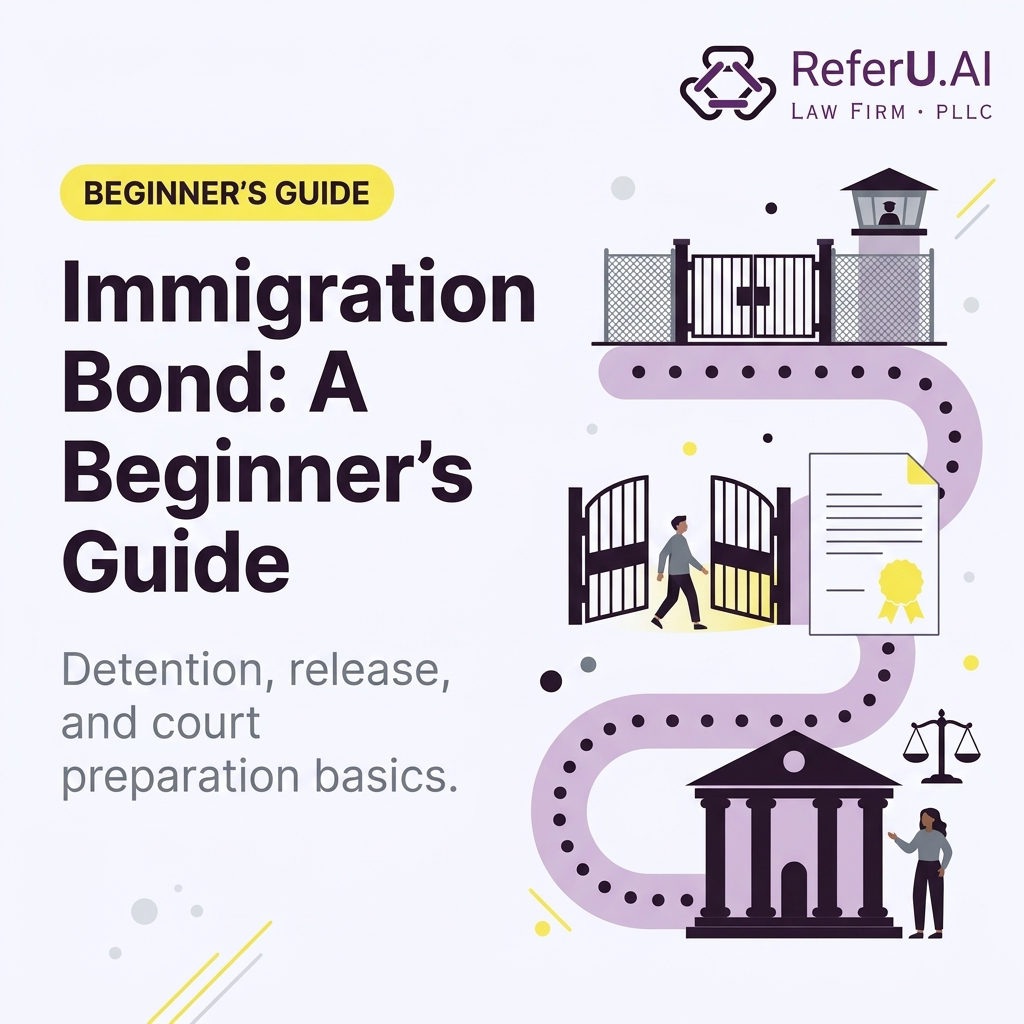
Flat vector illustration of immigration bond, detention release, and court preparation with a family, legal advocate, release gate, bond paperwork, and courthouse scene.
Images

Videos
Publish Date (Social)
Feb 18, 2027 12:00
Scheduled (Social)
Scheduled (Social)
Images Posted (Social)
Images Posted (Social)
Videos Posted (Social)
Videos Posted (Social)
Featured
Created time
Apr 7, 2026 12:02 AM
Sub-item
Authors
CTA Practice Area (Social)
Immigration
TikTok Failed (Social)
TikTok Failed (Social)
Videos Post Links (Social)
TikTok Post Links (Social)
Images Post IDs (Social)
YT Post ID
Video Pending Manual (Social)
TikTok Posted (Social)
TikTok Posted (Social)
TikTok Post IDs (Social)
Video Cover (Social)
Images Post Links (Social)
First Comment (Social)
Videos Failed (Social)
Videos Failed (Social)
YT Embedded
Images Delete (Social)
Videos Delete (Social)
Carousel Video URL (Social)
Immigration Bond: A Beginner’s Guide to Detention, Release, and Court Preparation
When someone is taken into immigration detention, families often have the same first questions: Can they be released? How does immigration bond work? What happens next in court? Those questions can feel even harder when the system moves fast, uses unfamiliar terms, and separates custody issues from the main immigration case.
An immigration bond is one possible path to release for some people in ICE custody. But not everyone qualifies, and the process can involve both ICE and the immigration court. In general terms, understanding the basics early can make it easier to organize documents, prepare for a bond hearing, and avoid common mistakes.
In this post you’ll learn what immigration bond is, who may be eligible, what happens at a bond hearing, how families often prepare evidence for release, and what court preparation may look like after someone gets out. If you want a broader overview of detention, custody decisions, hearings, and case planning, it may help to start with this plain-language overview of the detention and bond process.
Scroll to the bottom for every post in this series.
What Is An Immigration Bond?
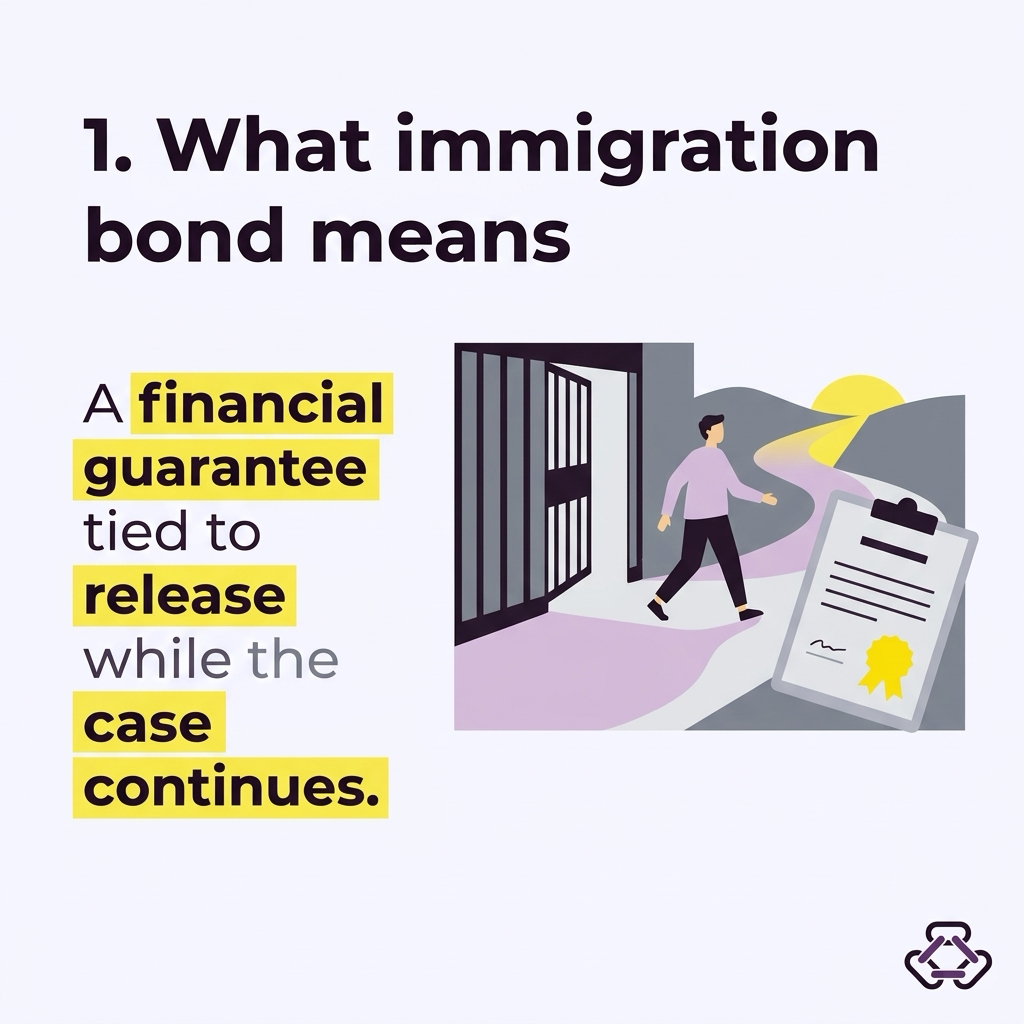
An immigration bond is a financial guarantee tied to release from ICE detention while a person’s immigration case continues. In many cases, the bond’s purpose is to help ensure the person appears for future hearings and complies with the terms of release. ICE explains that a bond may be posted for eligible detained noncitizens, and the controlling agreement is the immigration bond form itself, Form I-352, which sets out the obligor’s responsibilities and the circumstances under which the bond may be canceled or breached (ICE bond information, Form I-352).
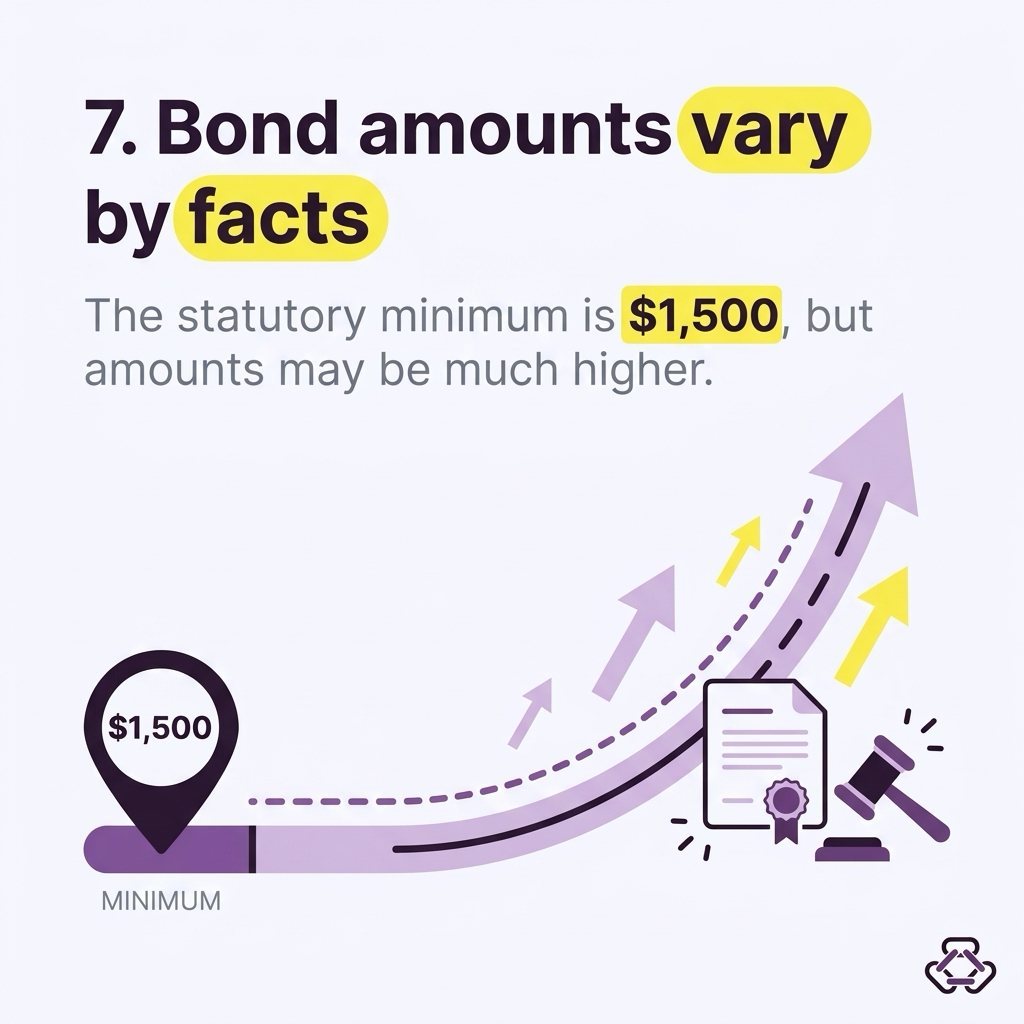
Under federal immigration law, when detention falls under INA § 236(a), DHS may continue detention or release someone on bond or, in some situations, on recognizance. A Congressional Research Service overview notes that for this discretionary custody category, the bond amount is at least $1,500 by statute, although actual bond amounts can be much higher depending on the facts of the case (CRS overview).
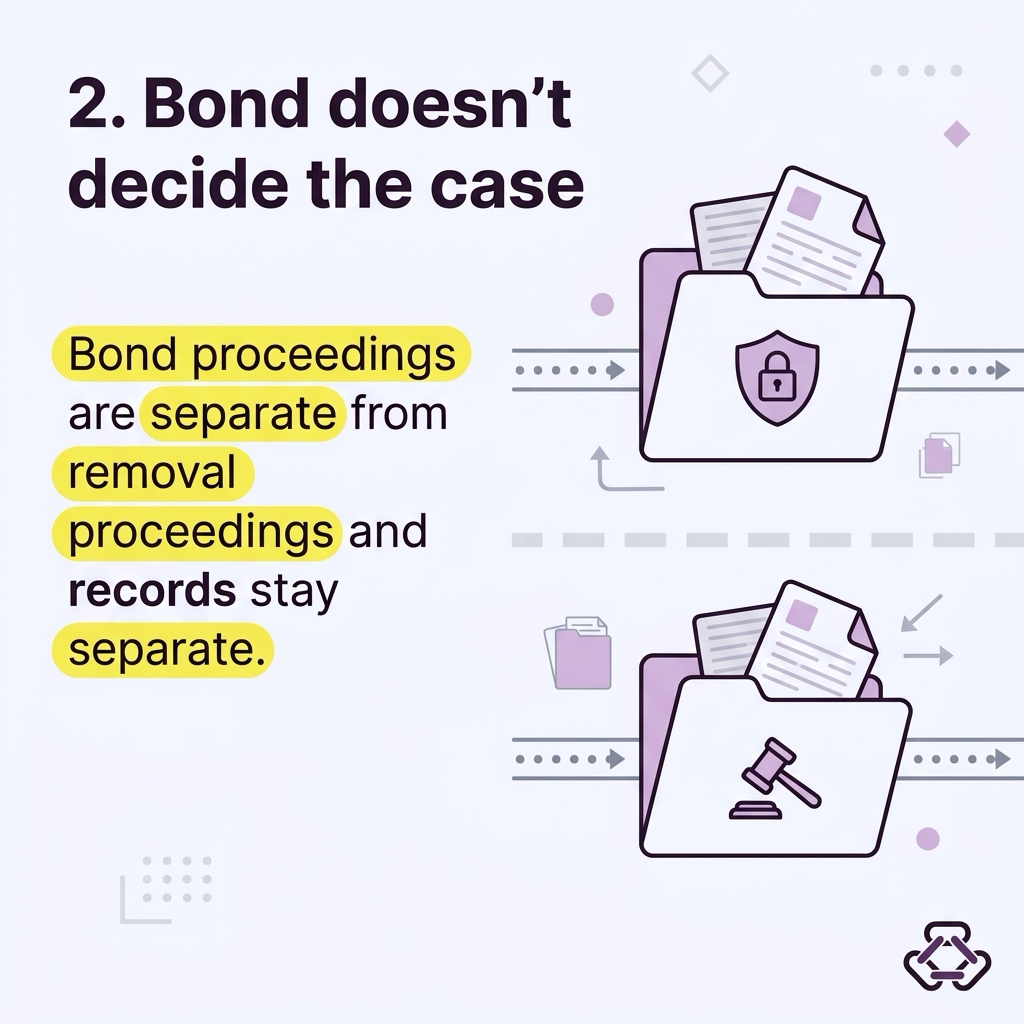
That said, a bond is not the same as winning the immigration case. Bond proceedings are separate from removal proceedings. The immigration court’s own policy manual explains that evidence submitted in bond proceedings is handled separately, and documents filed in the main case are not automatically considered in the bond matter unless they are submitted there too (EOIR Policy Manual, Bond Proceedings).
Who Decides Whether A Bond Is Available?
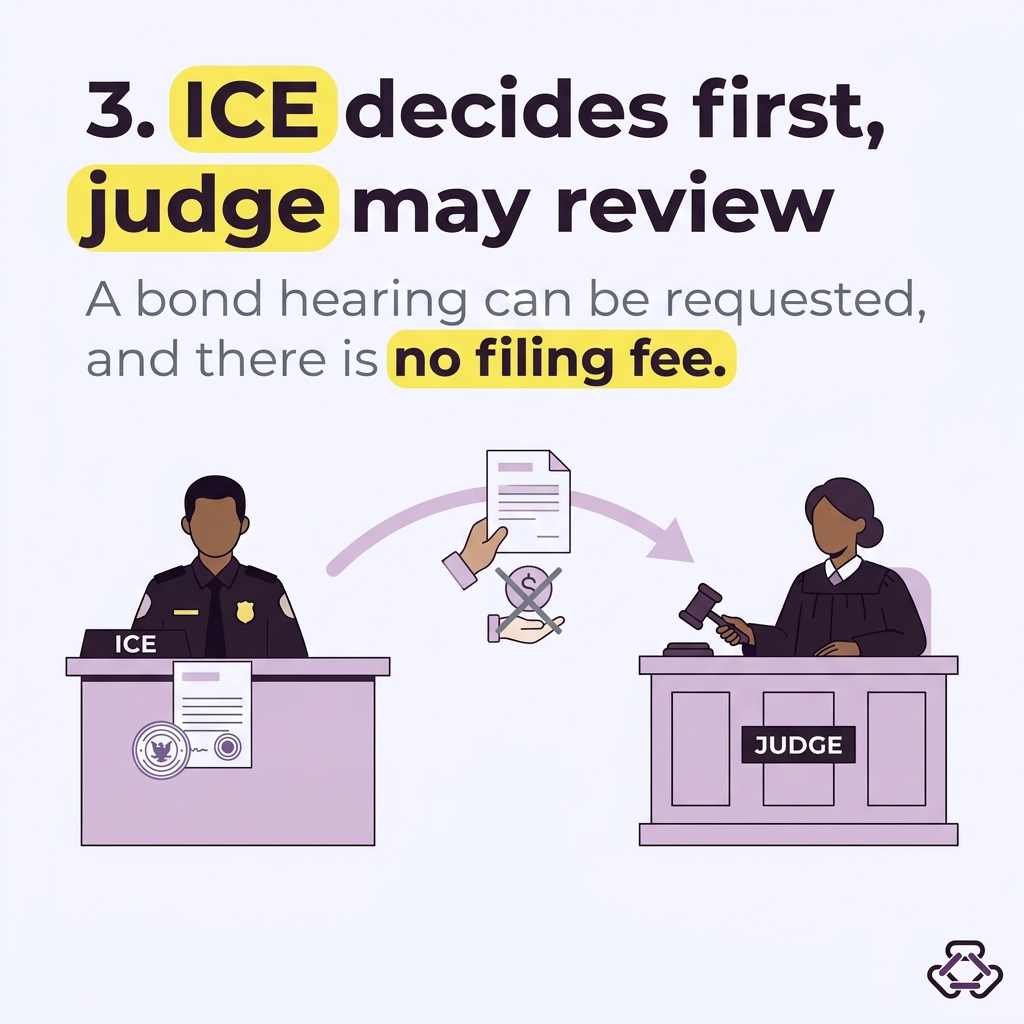
The answer is often ICE first, then sometimes an immigration judge.
ICE commonly makes the initial custody decision. After that, a detained person may ask an immigration judge for a bond redetermination hearing, where the judge considers eligibility for bond and, if bond is available, the appropriate amount. EOIR explains that a bond hearing can be requested in writing, and in some situations it can also be requested orally in court. There is no filing fee to request a bond hearing (EOIR Learn About the Immigration Court, EOIR Policy Manual).
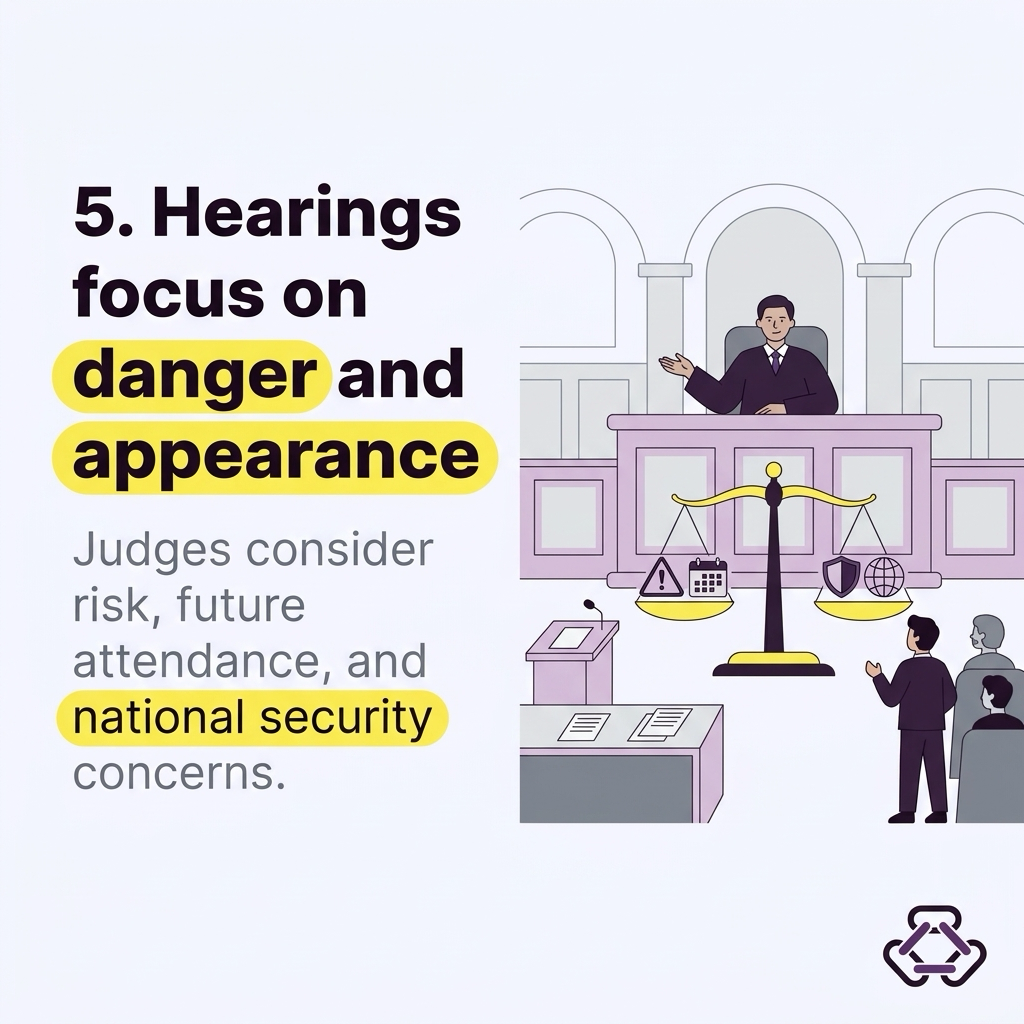
In bond proceedings, the immigration judge considers whether release would pose a danger to persons or property, whether the person is likely to appear for future proceedings, and whether there are national security concerns. The hearing is generally less formal than the main removal case, but evidence still matters a great deal (EOIR Policy Manual).
Is Everyone In Detention Eligible For Bond?
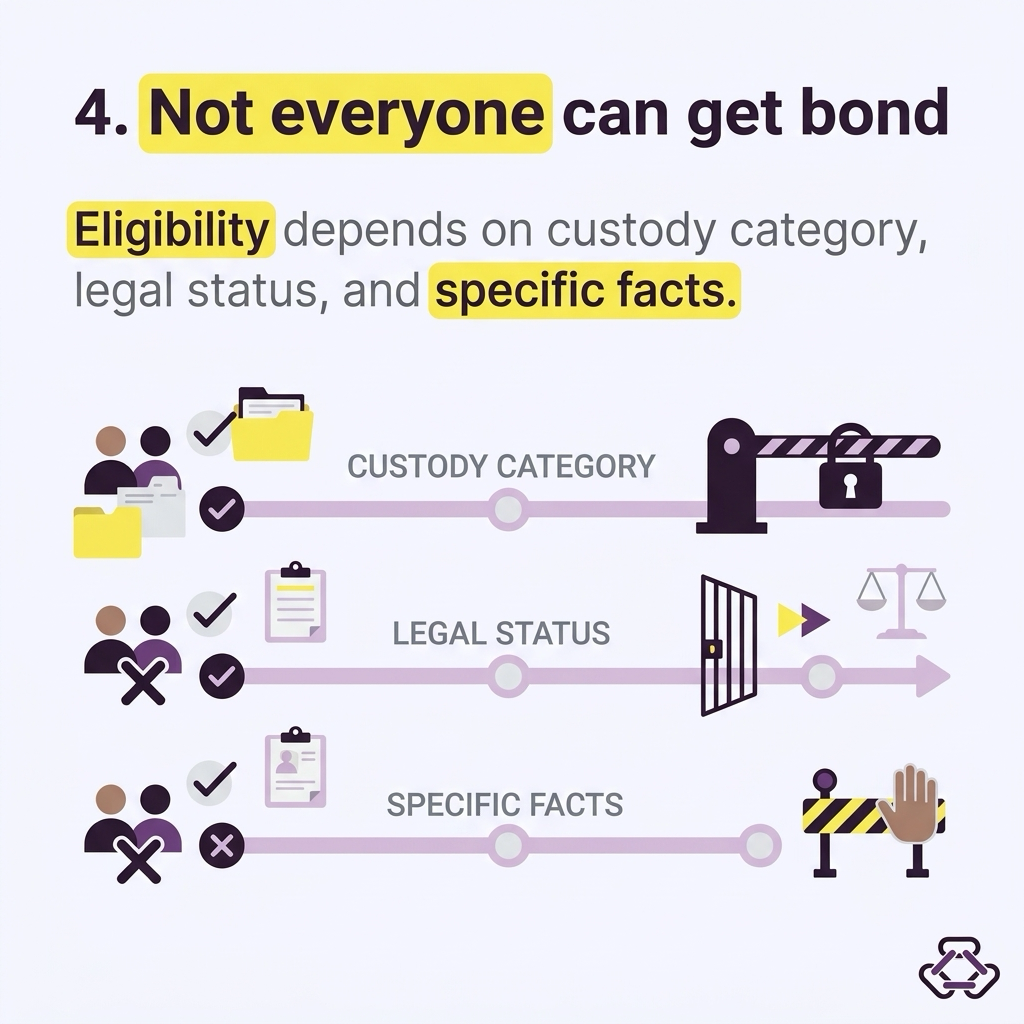
No. One of the most important things families learn is that not everyone in immigration detention can ask an immigration judge for bond.
EOIR states that immigration judges generally do not have jurisdiction over bond hearings for certain categories, including many arriving aliens, some people in exclusion proceedings, and people who are ineligible for release on certain criminal or security-related grounds (EOIR Policy Manual).
In addition, some people are held under mandatory detention, especially in cases involving certain criminal grounds under INA § 236(c). In those cases, the ordinary bond process may not be available, although legal arguments over custody classification can be important. The Congressional Research Service describes this distinction between discretionary detention under § 236(a) and mandatory detention under § 236(c) (CRS overview).
There has also been important litigation in this area. EOIR’s case information page currently includes a class action notice tied to Maldonado Bautista v. Santacruz, and the National Immigration Law Center reported in February 2026 that a federal district court ordered the government to stop denying many immigrants the right to ask for bond, at least while that ruling remains in effect. That development may affect eligibility questions in some cases, but the exact impact can depend on the person’s custody posture and legal category (EOIR case information, NILC update).
Because eligibility can turn on highly specific facts, this is one of those areas where families often find that a detention lawyer’s documented experience with highly similar matters can make a real difference in identifying what arguments are actually available.
How Do You Ask For A Bond Hearing?
In general terms, the request goes to the immigration court with jurisdiction over the detention facility, or in some situations to the court with administrative control over the case. EOIR says a written request ordinarily includes:
- the person’s full name
- the A-number
- the bond amount set by DHS, if any
- the location of the detention facility if the person is still detained (EOIR Policy Manual)
If someone has already had a bond decision, a later request usually has to be in writing and generally must show a material change in circumstances since the last ruling. That is one reason families often spend time gathering updated evidence on community ties, medical issues, changed family circumstances, or new case developments before asking again (EOIR Policy Manual).
What Happens At A Bond Hearing?
A bond hearing focuses on custody, not on the final decision in the immigration case.
According to EOIR, at the hearing:
- DHS may explain whether it set a bond and why it chose that amount
- the detained person or their attorney may make an oral presentation addressing danger, flight risk, and other relevant issues
- documents can be submitted for the judge to consider
- witnesses may testify if the judge allows it (EOIR Policy Manual)
Bond hearings are generally not recorded, and the bond record is kept separate from the main removal case. That detail often surprises families. It also means organized preparation matters: if a birth certificate, medical record, proof of address, or employment letter is important for bond, it usually helps to submit it directly in the bond proceeding rather than assuming the court will already have it from somewhere else (EOIR Policy Manual).
What Evidence Often Helps Support Release?
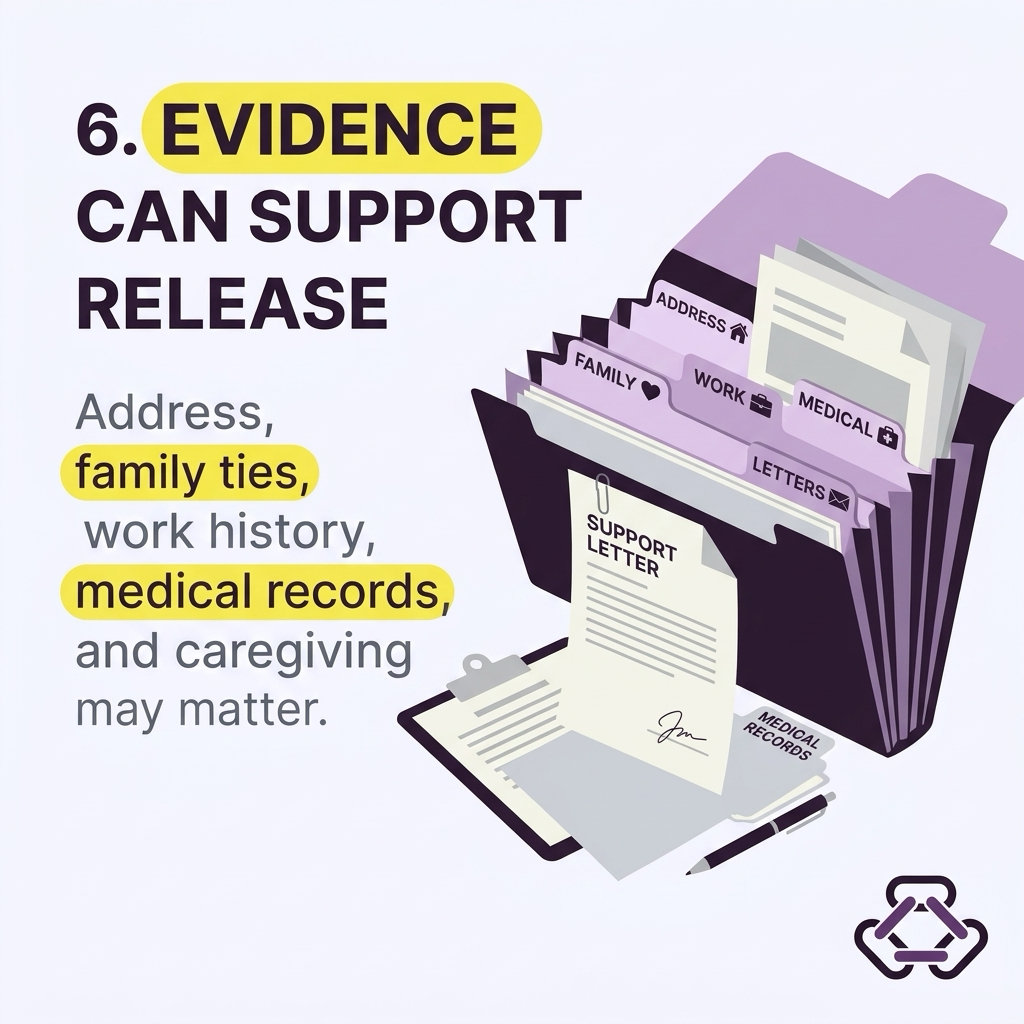
Every case is different, but judges commonly look for evidence tied to appearance in court and community stability.
Examples may include:
- proof of a stable address
- letters of support from family, employers, religious leaders, or community members
- evidence of long-term residence in the United States
- proof of caregiving responsibilities
- employment history
- medical records
- documents showing eligibility for immigration relief, where relevant to the custody analysis
- records addressing criminal history or rehabilitation, if criminal issues are part of the case
EOIR notes that parties are expected to submit relevant evidence and address danger and likelihood of appearing for future hearings (EOIR Policy Manual).
This is also where preparation can become very practical. Families often start by making a simple evidence folder: identification documents, proof of family relationships, housing information, and any records that help explain why release would support stability and court attendance. If you are trying to think through that process, it may help to read about how families often build documents that support release from detention once you have that companion resource ready on your site.
How Much Is Immigration Bond?
There is no single standard amount that fits every case. Federal law sets a minimum of $1,500 for bond under INA § 236(a), but immigration judges and ICE may set bond amounts much higher depending on the facts (CRS overview).
In practice, bond amount discussions often center on issues like:
- prior immigration history
- missed court appearances
- criminal allegations or convictions
- family and community ties
- length of residence
- likelihood of appearing for future hearings
The judge can deny bond, keep the same amount, lower it, or raise it. Even when a person is legally eligible for bond, the amount can still be difficult for families to manage.
How Is The Bond Paid?
ICE now uses CeBONDS, its online cash bond system, for eligible bond payments. ICE’s public bond page explains that users can verify bond information and post eligible bonds electronically through CeBONDS. ICE also lists bond posting hours as 9 a.m. to 3 p.m. local time where the person is detained and notes that the local ERO field office can provide guidance in some situations (ICE Post a Bond).
ICE also maintains a page listing ERO bond acceptance facilities, which can be helpful when families are trying to confirm where bond-related processing takes place (ICE bond acceptance facilities).
Once bond is posted, release is often not instantaneous. Processing time can vary by facility and case circumstances. ICE’s materials indicate that prospective obligors may want to review the bond agreement carefully because the person posting bond takes on ongoing responsibilities under Form I-352 (ICE Post a Bond, Form I-352).
What Happens After Someone Is Released?
Release from detention is a major step, but it is not the end of the case.
EOIR explains that if a person is released or moves, they may need to file a motion to change venue if they want the case transferred to a different immigration court, and they also may need to file Form EOIR-33/IC to update their address. EOIR warns that filing a motion to change venue does not excuse attendance at already scheduled hearings unless the motion is granted (EOIR Learn About the Immigration Court).
ICE separately advises people to keep their address updated so they do not miss important communications or deadlines (ICE Check-In).
This stage is where court preparation becomes crucial. A person who has just been released may now be balancing check-ins, address updates, possible ankle monitor or supervision terms, and deadlines in the underlying immigration matter. Many families focus intensely on getting out of detention, then realize a week later that they also need a plan for the main case.
How Do You Prepare For Court After Release?
Court preparation usually becomes easier once it is broken into smaller tasks.
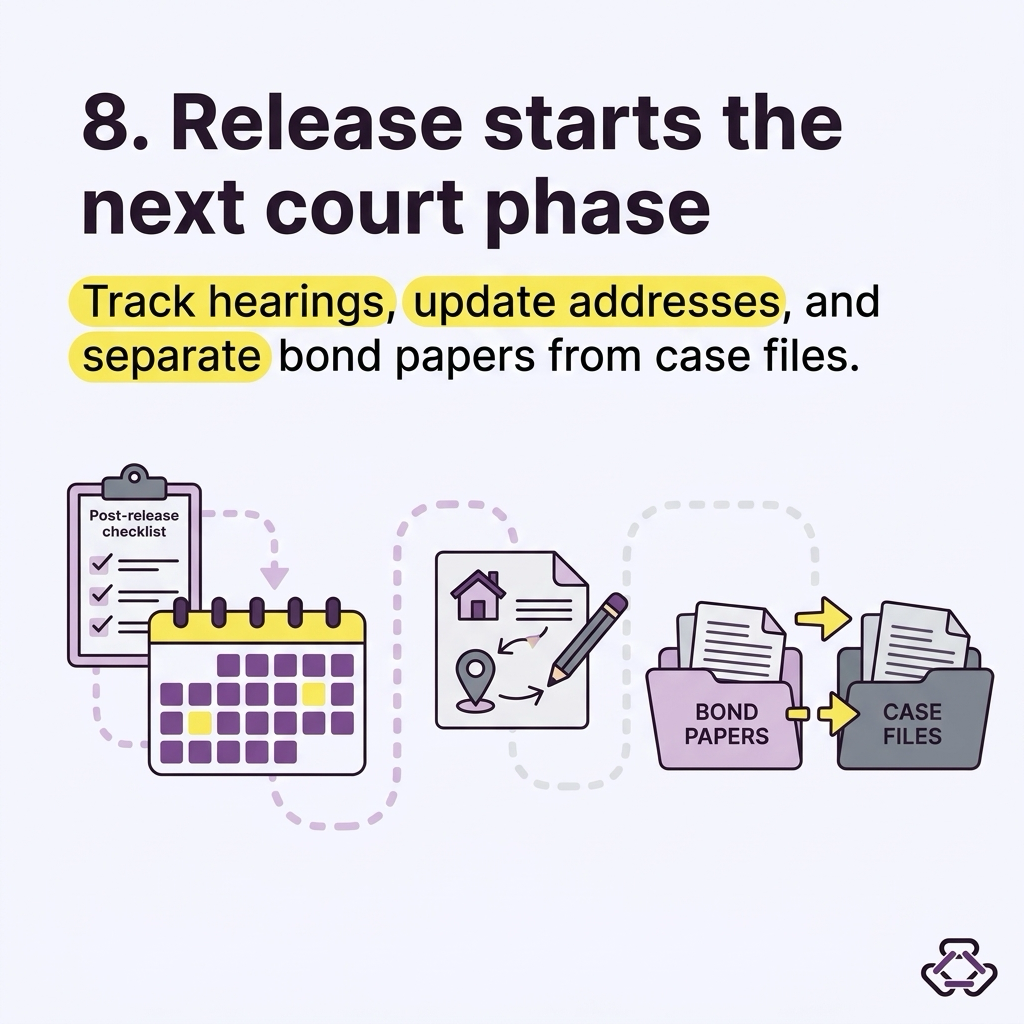
Keep Track Of Every Hearing And Deadline
EOIR provides an Automated Case Information System and online case tools that allow respondents to check case status, and it notes that hearing notices remain the official source of court dates (EOIR case information, EOIR operational status).
Update Address Information Promptly
A missed hearing can create very serious problems, including an in absentia removal order in some circumstances. One common source of missed hearings is outdated mailing information rather than intentional absence. EOIR and ICE both publish address-update guidance (EOIR Learn About the Immigration Court, ICE Check-In).
Separate The Bond Issue From The Main Case
Because bond proceedings are separate, families often benefit from keeping two files:
- a custody file for release-related documents
- a merits file for asylum, cancellation, adjustment, or other relief-related evidence
That separation can reduce confusion and help an attorney identify what still needs to be submitted in the main case.
Use Reliable Court Resources
EOIR’s Immigration Court Online Resource and self-help materials provide basic guidance on what happens at hearings, how to prepare, and how to locate legal resources (EOIR self-help materials).
Get Help From Counsel With Relevant Experience
Detention and bond work can move quickly, and custody strategy often overlaps with relief strategy, criminal issues, and venue questions. Some families look for a lawyer based on advertising or a general local reputation. Others prefer a more evidence-based approach focused on documented experience, case similarity, and whether the lawyer has handled highly similar matters involving detention, bond redeterminations, and removal defense.
Can A Bond Decision Be Appealed?
Yes, in many situations. EOIR explains that bond decisions may be appealed to the Board of Immigration Appeals, and the general EOIR guidance notes that Form EOIR-26 is used to appeal certain immigration judge decisions, including bond rulings, within 30 calendar days of the oral decision or mailing of the written decision (EOIR Learn About the Immigration Court).
Appeals can be technical, and timing can matter. In some cases, families also explore whether a renewed bond request based on changed circumstances may be available instead of, or in addition to, an appeal.
What Are Common Problems Families Run Into?
A few issues come up again and again:
Confusing Bond With The Main Immigration Case
Winning bond does not resolve removability or guarantee future relief. It simply changes custody status while the case continues.
Assuming Everyone Qualifies For Bond
Eligibility is one of the first major legal questions, especially where criminal history, border-entry issues, or “arriving alien” classifications may be involved.
Submitting Too Little Evidence
A short hearing can still turn on documents. Judges often want concrete proof, not just general statements.
Missing Deadlines After Release
Address changes, venue issues, and hearing notices can become urgent very quickly after a person leaves detention.
Focusing Only On Cost
Families understandably worry about bond amount, but a lower bond is only one part of the picture. The broader issue is often whether the legal strategy is well matched to the person’s actual custody category and immigration defenses.
If your content plan includes the related sibling pages listed in your hierarchy, this guide naturally pairs with posts on preparing for the hearing itself, gathering release evidence, avoiding mistakes that hurt release chances, and answering the practical questions families ask while someone is detained.
A Short Summary For Beginners
Immigration bond is a pathway to release for some, but not all, people in ICE detention. ICE often makes the first custody decision, and an immigration judge may later review bond eligibility and amount in a separate bond proceeding. At that hearing, the court generally looks at danger, appearance in court, and related factors. If release is granted and bond is posted, the immigration case still continues, which makes court preparation, address updates, and case tracking extremely important.
For families, the hardest part is often not just understanding the law, but figuring out which attorney has relevant, demonstrable experience with detention and bond cases like theirs. Visit ReferU.AI to get matched with an attorney who has demonstrable experience in cases like yours — for free.
