Table of Contents
- 9 Questions Families Ask When Someone Is in Immigration Detention
- Why Families Feel Lost So Quickly
- 1. Where Is My Relative Being Held?
- 2. Can We Talk To Them Right Away?
- 3. Is Immigration Detention The Same As Being In Jail For A Crime?
- 4. Will They Get A Bond Hearing?
- 5. How Fast Can They Be Deported?
- 6. Can They Have A Lawyer, And How Do We Find One?
- 7. What Papers Or Information Should The Family Gather?
- 8. Can We Send Money, Visit, Or Help With Daily Needs?
- 9. How Do We Avoid Mistakes That Make Things Worse?
- Waiting Too Long To Confirm Where The Person Is
- Treating The Case Like Criminal Court
- Hiring The First Person Who Answers The Phone
- Assuming Bond Is Automatic
- Forgetting That Documentation Drives The Case
- Why Early Attorney Matching Can Matter So Much In Detention Cases
- Final Thoughts

Type
Great Grandchild
Status
Approved
Title (YouTube)
Images Failed (Social)
Images Failed (Social)
Do not index
Publish Date (TikTok)
Apr 24, 2027 09:15
Videos Post IDs (Social)
Hashtags (Social)
#LegalAdvice #LegalHelp #Immigration #ImmigrationBond
Caption
Caption X
Cover

OG Image

Alt Image Text
Flat vector illustration of a family using a device to locate a loved one in immigration detention, with detainee locator and legal guidance symbols.
Images


Videos
Publish Date (Social)
Feb 18, 2027 10:00
Scheduled (Social)
Scheduled (Social)
Images Posted (Social)
Images Posted (Social)
Videos Posted (Social)
Videos Posted (Social)
Featured
Created time
Apr 7, 2026 12:02 AM
Sub-item
Authors
CTA Practice Area (Social)
Immigration
TikTok Failed (Social)
TikTok Failed (Social)
Videos Post Links (Social)
TikTok Post Links (Social)
Images Post IDs (Social)
YT Post ID
Video Pending Manual (Social)
TikTok Posted (Social)
TikTok Posted (Social)
TikTok Post IDs (Social)
Video Cover (Social)
Images Post Links (Social)
First Comment (Social)
Videos Failed (Social)
Videos Failed (Social)
YT Embedded
Images Delete (Social)
Videos Delete (Social)
Carousel Video URL (Social)
9 Questions Families Ask When Someone Is in Immigration Detention
When a family member is taken into immigration detention, the first few hours can feel chaotic. People often do not know where their loved one is, whether they can call them, how bond works, or how fast deportation can happen. The confusion gets worse because immigration detention is a civil process, not a criminal one, so many families expect one set of rules and run into another.
In this post you’ll learn the answers to nine of the most common questions families ask when someone is in immigration detention, along with practical context from official government sources and current immigration data. If you want a broader overview of custody, release options, and strategy, it may also help to read this guide on how detention, bond, and release decisions often fit together.
Scroll to the bottom for every post in this series.
Why Families Feel Lost So Quickly
A big part of the confusion is structural. ICE uses detention facilities around the country, and a person can sometimes be transferred after arrest. ICE says family members and legal representatives can use its Online Detainee Locator System to find someone in custody, and the agency notes that the system can also show people released from ICE custody within the last 60 days according to its privacy guidance from ICE. At the same time, advocacy groups and researchers have documented how detention can make it much harder to find counsel and defend a case effectively, including recent analysis from the American Immigration Council.
1. Where Is My Relative Being Held?
This is usually the first question, and often the most urgent one.
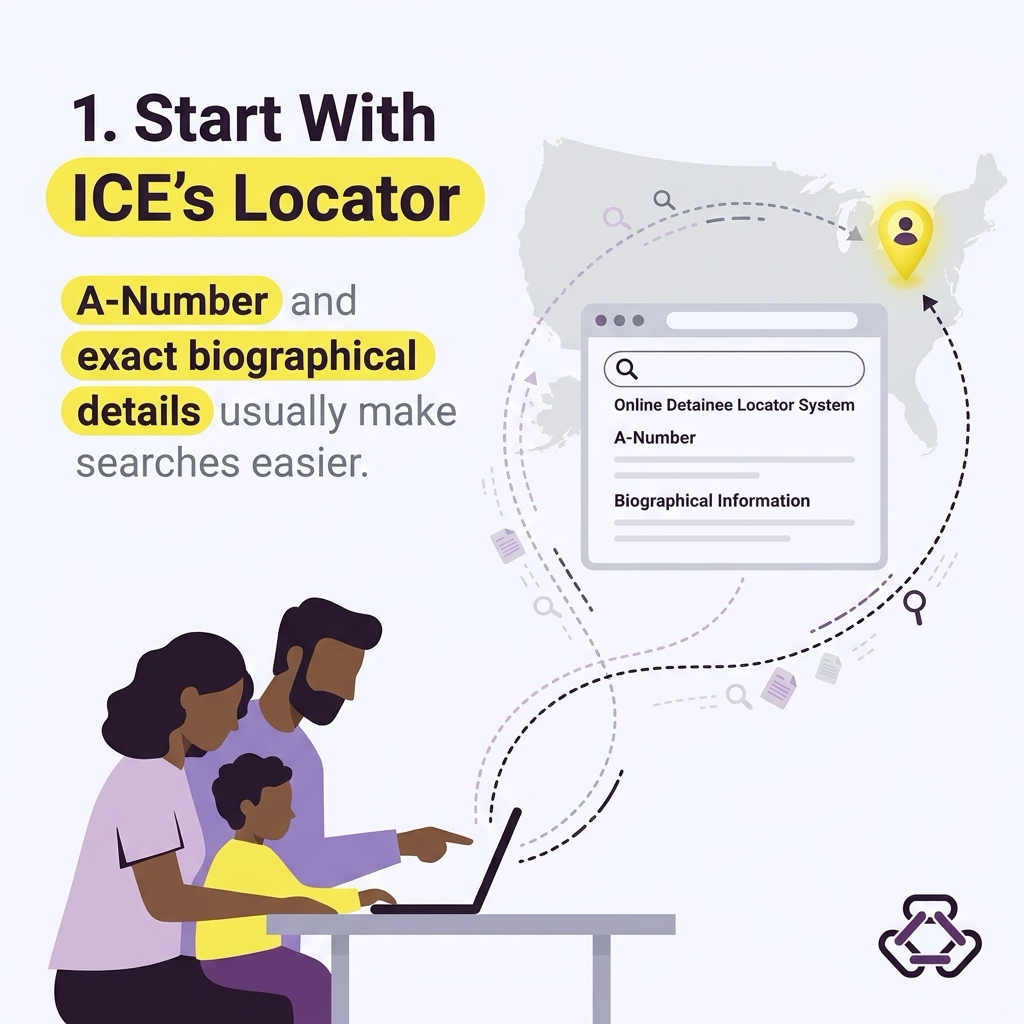
ICE’s official position is that the public can search for a detained person through the Online Detainee Locator System. The search generally works best if the family has the person’s A-Number and exact biographical information. ICE also explains that if the person does not appear in the locator, families can contact the relevant local Enforcement and Removal Operations field office through ICE channels listed on its attorney and family resources page.
A few things often make this harder in real life:
- names may be entered differently
- the person may have been booked recently
- the person may have been transferred
- the person may be in another agency’s custody before transfer to ICE
If the detained person is a parent of minor children, ICE also maintains guidance about detained parents and family contact in its parental interest materials.
For many families, the location question is not just about visiting. It affects legal access, mailing documents, money deposits, and whether the immigration court handling the case is nearby or hundreds of miles away.
2. Can We Talk To Them Right Away?
Sometimes yes, sometimes not right away.
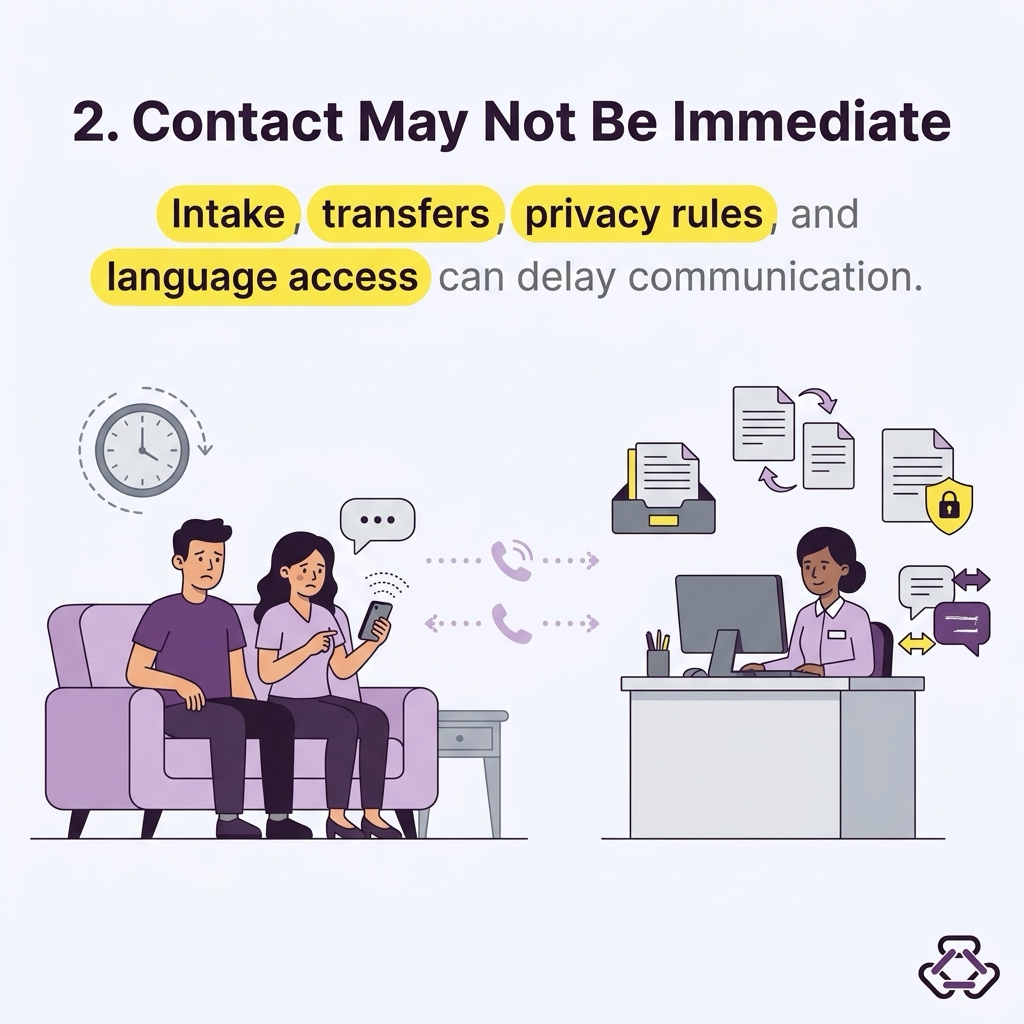
ICE’s National Detainee Handbook says people in custody receive information about facility rules, communications, legal access, visitation, and available services. In practice, contact often depends on intake processing, facility procedures, transfers, language access, and whether the family knows where the person is.
Families often ask whether they can call the facility directly. In many situations, the facility can confirm procedures, but privacy rules may limit the details staff will share. ICE notes on its privacy page that there are legal limits on disclosure of detainee information in some circumstances through ICE Privacy Guidance.
If children are involved, family contact may be especially important. ICE has published a document on facilitating visits between detained parents and minor children, which discusses in-person and remote visitation options in certain situations.
3. Is Immigration Detention The Same As Being In Jail For A Crime?
Not exactly.
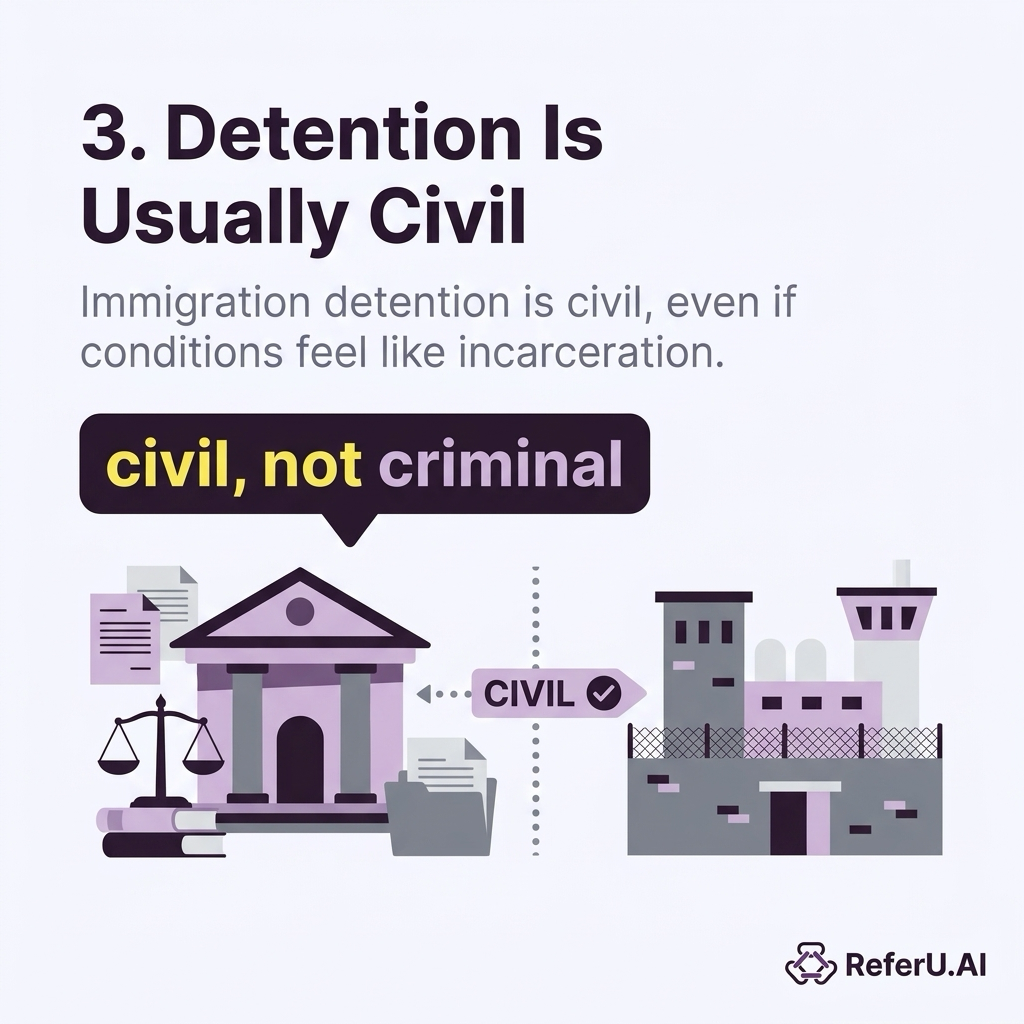
Immigration detention is generally part of a civil enforcement system, even though the conditions can feel very similar to incarceration. ICE describes its detention network as a civil detention system on its detention management page. That distinction matters because families often assume criminal-court protections automatically apply in the same way here, and they often do not.
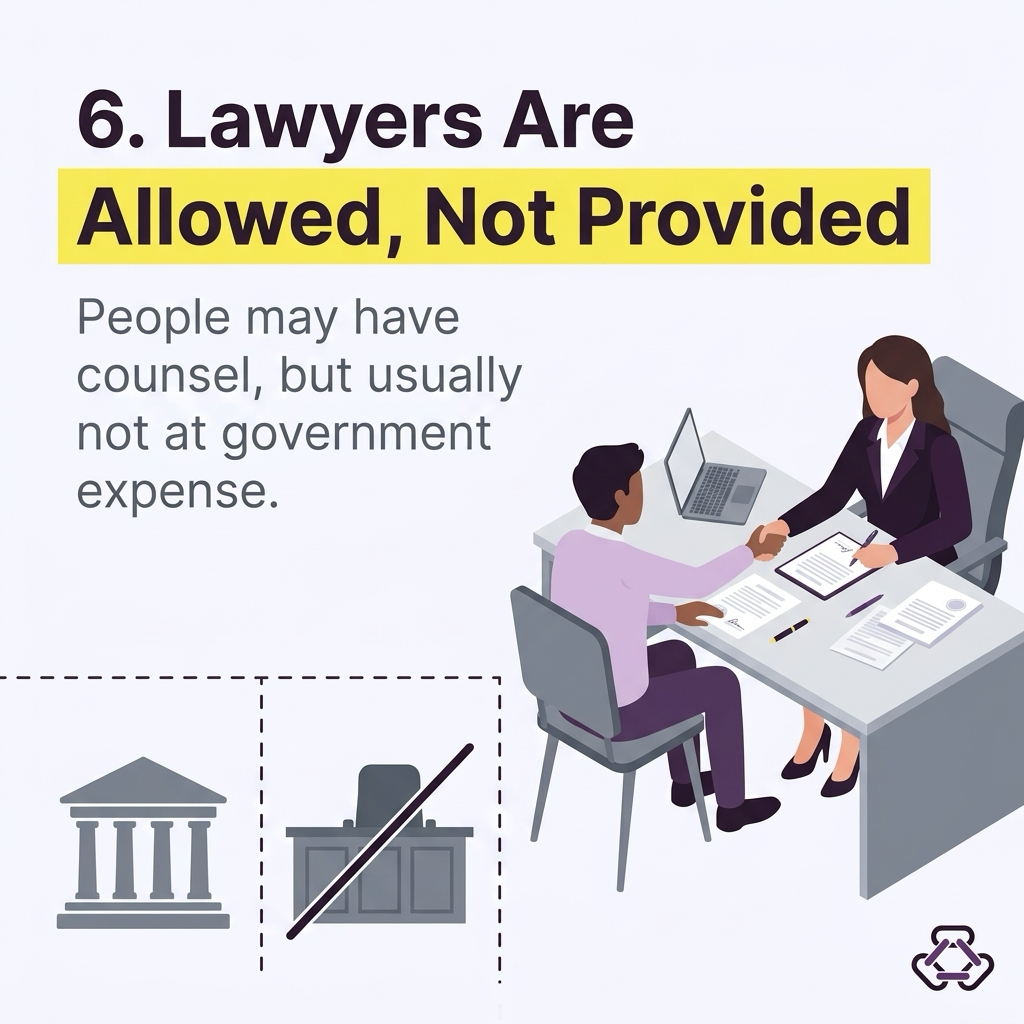
One of the biggest differences involves legal representation. In immigration court, people may be represented by counsel, but typically not at government expense. USCIS warns families to seek help from a licensed attorney or DOJ-accredited representative in its immigration scam guidance, and EOIR explains who is authorized to appear in immigration matters on its representation guidance page.
This gap in representation is a major issue. The American Immigration Council reports that people held in detention without lawyers were 3.6 times less likely to win their case than people outside detention who were represented. Separate Council research also found detained immigrants are far less likely to obtain counsel at all, according to its updated access to counsel findings.
4. Will They Get A Bond Hearing?
Sometimes, but not everyone in immigration detention is eligible.
This is one of the most misunderstood parts of detention. Some detained noncitizens may ask an immigration judge for bond. Others may fall into categories the government treats as mandatory detention, where release options can be much narrower. The current legal landscape has also been changing through agency policy and litigation, which is one reason families often benefit from current case-specific advice.
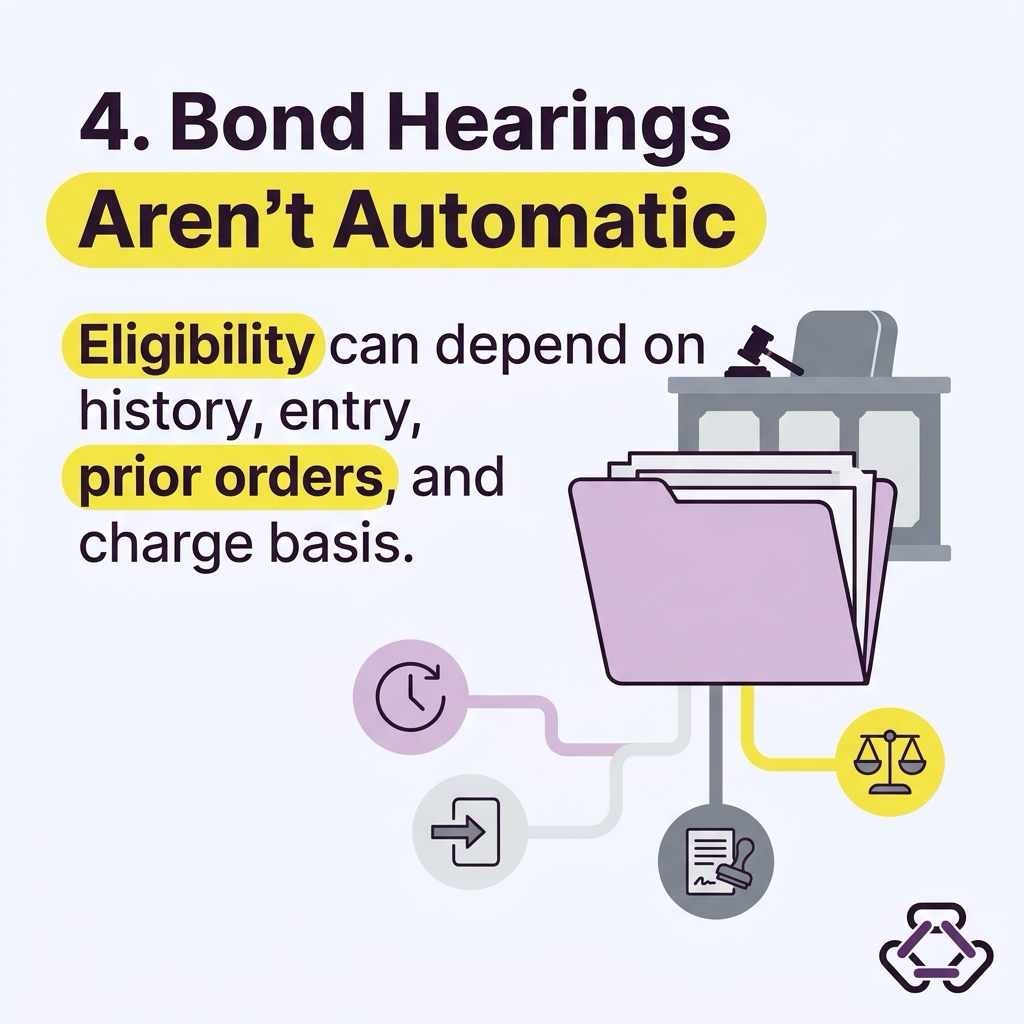
EOIR provides Automated Case Information so families can track hearing information, and EOIR’s court resources can help identify which immigration court is handling the case. But eligibility for bond usually depends on the person’s immigration history, manner of entry, prior orders, criminal history if any, and the specific charge basis in the Notice to Appear.
Recent reporting has described sharp disputes over who is entitled to bond hearings and when. For example, the Associated Press reported in July 2025 that ICE moved to expand detention without bond hearings for some groups, while later federal court rulings challenged parts of that approach in some contexts, as reported by the Associated Press.
For families trying to understand the bigger picture, it may help to read more about how custody status, hearings, release, and legal strategy often interact. In many cases, the key question is not just “Is bond possible?” but “What evidence and legal posture affect release?”
5. How Fast Can They Be Deported?
Potentially very fast in some cases, and much more slowly in others.
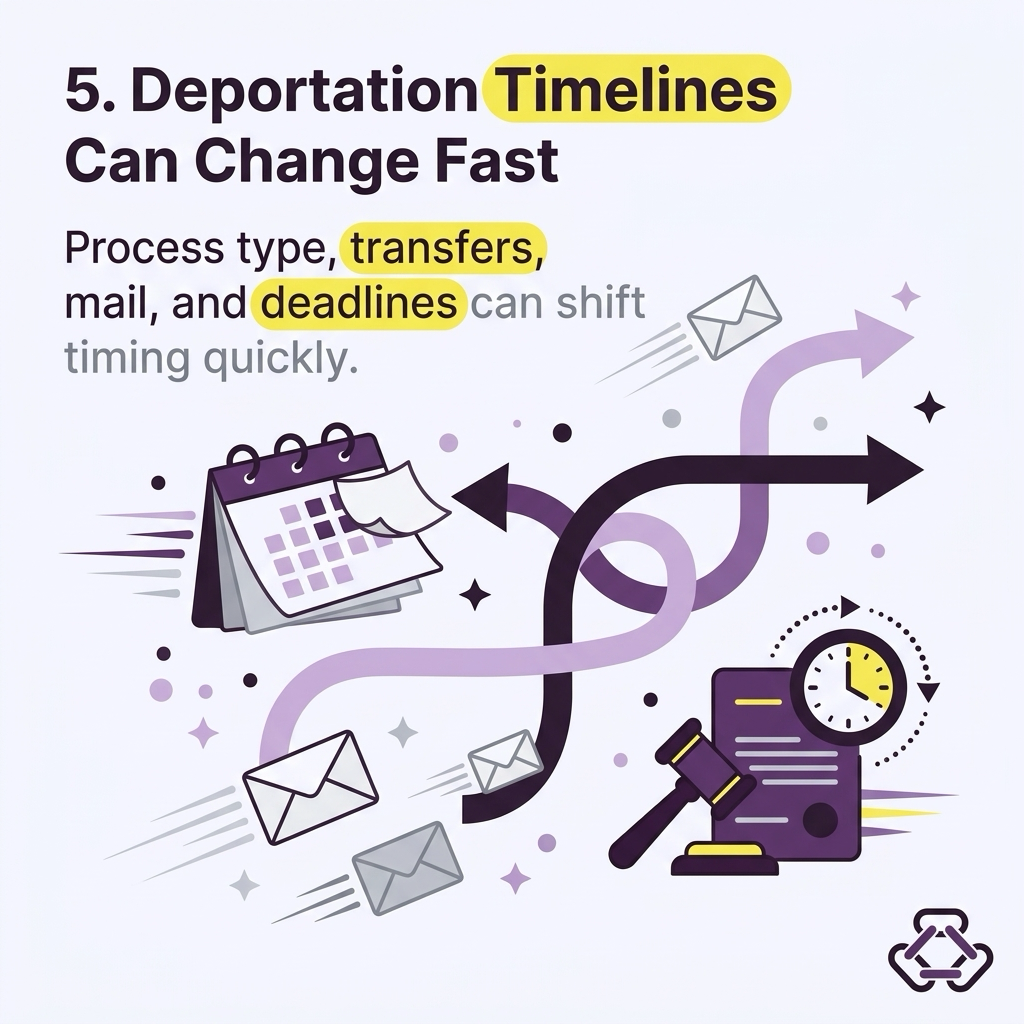
The pace often depends on whether the person is in regular removal proceedings before an immigration judge, subject to a prior removal order, facing reinstatement, or placed into another fast-moving process. Families are often surprised to learn that immigration timelines can change quickly after transfer, missed mail, or procedural deadlines.
One practical tool is EOIR’s Automated Case Information system, which can help track hearing dates and case status for matters in immigration court. If there is no immigration court case listed, that can sometimes signal that the person’s process is happening elsewhere or is at an earlier stage.
This is also why early legal review often matters. Not every detained person has the same defenses, the same release options, or the same procedural protections. Some may have asylum-related claims, lawful status issues, family-based relief possibilities, or arguments tied to prior proceedings. Others may be in a far narrower posture.
6. Can They Have A Lawyer, And How Do We Find One?
Yes, they can have a lawyer or accredited representative, but the government generally does not provide one for free in ordinary immigration detention cases.
USCIS says people seeking legal advice on immigration matters may want to work with an attorney or an accredited representative from a DOJ-recognized organization, and warns against notario fraud and unauthorized practice in its Avoid Scams page. EOIR also provides information on who may represent someone before the immigration court.
This matters because detention makes self-representation much harder. According to the American Immigration Council, representation rates are significantly lower in detained cases, and that gap is tied to much poorer outcomes. Another Council resource reports that 86 percent of detained immigrants attended court without an attorney in the dataset it analyzed, underscoring how common unrepresented detention cases remain in practice, according to the Council’s 2025 access-to-counsel report.
Families often start by calling lawyers at random. In general terms, a more focused approach may be more useful: finding counsel with documented experience in highly similar detention and removal matters, including bond issues, asylum-related detention work, criminal-immigration overlap if relevant, prior-order cases, or family-based relief strategy. The right fit often depends on the exact detention posture, not just the broad label “immigration lawyer.”
7. What Papers Or Information Should The Family Gather?
Families often feel powerless here, but this is one area where organized information can make a real difference.
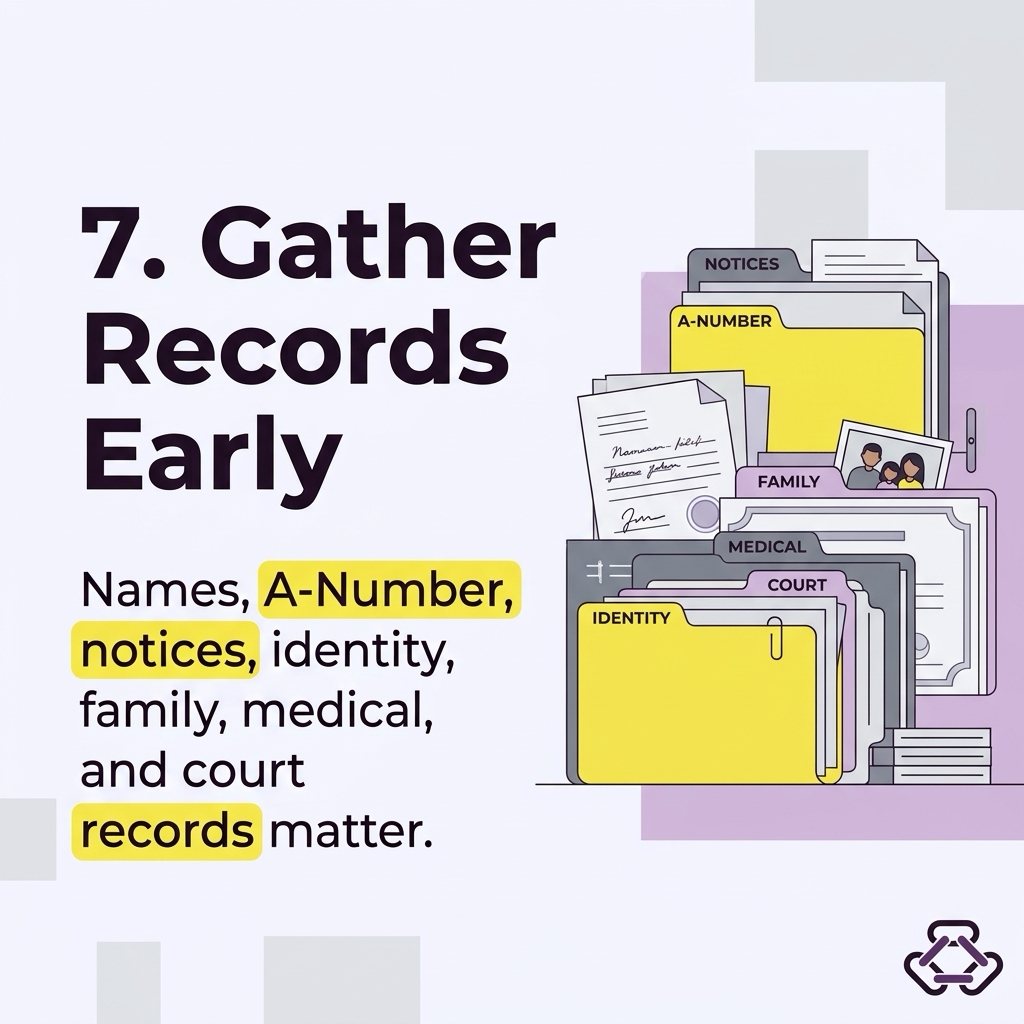
The exact documents vary by case, but families often begin gathering:
- the person’s full legal name and any alternate spellings
- A-Number
- date of birth and country of birth
- copies of immigration notices, especially the Notice to Appear
- proof of identity
- records showing family ties in the United States
- proof of long-term address history
- employment history and letters
- medical records where relevant
- criminal case records, if any exist
- documents tied to fear of return, asylum, or prior applications
If release is legally available, supporting records often become central to that effort. If the case involves children, custody issues, or caregiving responsibilities, those facts can also be highly important. ICE’s detained-parent guidance recognizes the special issues that arise when a detained parent is trying to stay involved with minor children through ICE parental interest materials.
Families sometimes wait to collect records until a lawyer asks for them. In many cases, beginning that process early can save time later, especially if detention transfers make communication harder.
8. Can We Send Money, Visit, Or Help With Daily Needs?
Often yes, but the details depend on the facility.
ICE’s National Detainee Handbook explains that facilities provide local supplements covering items like visitation procedures, communication rules, and facility-specific processes. Because ICE uses different kinds of facilities, daily logistics can vary a lot from one location to another.
Families commonly help by:
- learning the facility’s visitation rules
- adding money to commissary or communication accounts where allowed
- mailing legal or personal documents correctly
- keeping a reliable timeline of transfers, calls, and case updates
- identifying medical or mental health concerns that may affect detention conditions or legal strategy
If a lawyer is involved, ICE also has a Detention Facility Appointment Scheduler for certain legal visits. That tool is mainly for legal representatives, but it shows how formal and facility-dependent access can be.
9. How Do We Avoid Mistakes That Make Things Worse?
Families often worry about doing the wrong thing, and that concern is understandable.
One recurring issue is relying on unofficial advice from social media, detention rumors, or unlicensed “consultants.” USCIS explicitly warns people about immigration scams, fake legal services, and unauthorized practitioners on its official scam prevention page. Another common problem is assuming that all immigration cases move the same way. They do not.
Here are some of the mistakes families often run into:
Waiting Too Long To Confirm Where The Person Is
A transfer can complicate everything from attorney access to court venue. Using the official ICE detainee locator early often helps establish a baseline.
Treating The Case Like Criminal Court
Because immigration detention is civil, some familiar expectations do not line up the same way. The absence of appointed counsel in most cases is one example, reflected in EOIR and USCIS guidance on authorized representation and legal services through EOIR and USCIS.
Hiring The First Person Who Answers The Phone
Many lawyers handle immigration law, but not all have the same level of relevant detention experience. Families often benefit from comparing fit based on objective criteria, including prior work in highly similar matters, familiarity with the detention facility or court, and demonstrated experience in release-related proceedings.
Assuming Bond Is Automatic
Bond may be available in some cases and unavailable in others. Even when a bond hearing is possible, the legal and factual preparation can matter a lot.
Forgetting That Documentation Drives The Case
A family may know the person is a caregiver, a long-time resident, or someone with community ties. Immigration court and detention review processes usually work through documents, declarations, records, and evidence.
Why Early Attorney Matching Can Matter So Much In Detention Cases
Immigration detention cases often turn on speed, accuracy, and fit. The family is trying to locate a loved one, understand what process applies, identify release options, and preserve legal arguments, often while the person is being moved between facilities or facing fast deadlines.
That is one reason generic lawyer directories can feel inadequate in detention matters. Families are not just looking for any attorney with an immigration practice. They are often looking for counsel with demonstrable experience in highly similar detention cases, whether that means bond hearings, asylum-related detention, prior removal orders, detention after local arrest, or parent-child separation issues. A good match is often about case similarity and documented experience, not advertising claims.
Final Thoughts
When someone is in immigration detention, families usually want answers to the same urgent questions: Where are they? Can we speak to them? Will they get bond? How fast can removal happen? How do we find the right lawyer? Those questions are normal, and the answers are often more complicated than families expect.
The official tools from ICE, EOIR, and USCIS can help families get oriented. But orientation and legal strategy are not the same thing. In detention cases, small factual details can affect release, timing, and available forms of relief in major ways. If you want a deeper primer on the detention-and-release framework, this article on what families often want to know about custody, release, hearings, and case planning may be a helpful next step.
Visit ReferU.AI to get matched with an attorney who has demonstrable experience in cases like yours — for free.
